
Article

European Approach to Fire Safety in Rolling Stock

by
Jolanta Radziszewska-Wolińska
,
Adrian Kaźmierczak
* and
Danuta Milczarek
Instytut Kolejnictwa, 50, Chlopicki Street, 04-275 Warsaw, Poland
*
Author to whom correspondence should be addressed.
Appl. Sci. 2025, 15(23), 12671; https://doi.org/10.3390/app152312671
Submission received: 15 October 2025 / Revised: 17 November 2025 / Accepted: 27 November 2025 / Published: 29 November 2025
(This article belongs to the Special Issue Research Advances in Rail Transport Infrastructure)

Abstract

Public surface transport (which includes rail) is considered relatively safe. However, in the event of a fire, conditions for people inside the vehicles deteriorate rapidly, particularly due to the emission of smoke and its toxic components, which make evacuation very difficult and cause panic. The increased fire risk in rail vehicles has increased with the expansion of plastics used in their construction and equipment, which occurred in the second half of the 20th century, along with increased travel speeds and increased passenger interest in this mode of transport. The measures taken in the 1980s to ensure fire safety in the railway industry are undergoing systematic changes resulting from advances in vehicle design and production technologies, the introduction of new power sources, and safety systems. The aim of this article was to summarize the current knowledge regarding fire hazards in rail vehicles and methods for preventing them. The causes of fires occurring in trains are discussed, taking into account also the potential threats resulting from the introduction of alternative power sources. We also present efforts to develop tools for assessing the severity of the threat and then preventing it, including the contribution of the Railway Research Institute to the development of research methods and Polish and European standardization. Passive and active safety measures required by applicable regulations (TSI, EN standards) aimed at limiting the occurrence of fire and minimizing its consequences were described. As part of passive protection measures, the results of tests carried out at the Railway Institute regarding the fire properties of materials according to current European requirements are presented and discussed. The RAMS approach to risk assessment is also described. Furthermore, the impact of these measures on improving fire safety in rolling stock is analyzed, and new challenges that the development of new technologies poses to the railway industry and related fire protection engineering are presented.

1. Introduction

The growing popularity of railways, which became a mass means of transport in the second half of the 20th century, along with the simultaneous expansion of plastics, revealed that new materials, in addition to their many advantages, also had disadvantages, the most serious of which was their flammability. At the same time, it turned out that a fire in railway rolling stock poses an exceptionally high risk to the health and life of the people inside. This stems from the specific nature of these fires, which are clearly different from fires in buildings. This is primarily due to the fact that trains are in motion, and the braking distance at a speed of 160 km/h is approximately 1 km. Fires in rolling stock cause direct material losses, as well as indirect losses resulting from interruptions in service. The increasingly frequent occurrence of fires in passenger rolling stock has led to the search for tools to assess fire risk and determine directions for fire prevention.

2. Requirements for Flammability and Smoke Properties

The characteristics of a fire in a train differ from those in a building. This is due to the vehicle’s elongated shape and its good thermal insulation, which accumulates heat and therefore causes a significant temperature increase due to the vehicle’s small cubic capacity. Fire and smoke spread significantly faster than in a single-story building. Evacuation from a burning train is significantly more difficult than from a burning building. Significant obstacles include narrow corridors, doors that do not open during movement, and windows that do not open, which are common in air-conditioned trains. Among other things, research within the TRANSFEU project confirmed that a fire in a wagon is a very complex phenomenon, the course of which is influenced by many factors [1].
Additional difficulties in rescue operations arise if an accident occurs in difficult-to-access areas, such as away from access roads, on a bridge, or especially in a tunnel where, due to forced airflow and limited heat dissipation, special conditions exist. Rescue and firefighting operations in underground facilities are among the most difficult and demanding [2,3,4,5]:
In this case, the most significant problems include the following:
  • Smoke obscuring visibility and containing toxic components;
  • High temperature.
The most common causes of fires in rail vehicles include failures in the power supply systems (short circuits, overvoltages) and braking systems, and until recently, these were either unintentional or deliberate arson. However, the greatest losses occur in fires resulting from railway accidents, when multiple ignition sources can occur simultaneously.
An analysis of fires in the rolling stock of metro and trains shows that the main causes include the following [4,5,6,7]:
  • Failure of cooling devices in the brake chamber;
  • Leakage current in the rear clutch system;
  • Earth fault in the last car of the train;
  • Electric motor defect;
  • Short circuit in an external electrical wire;
  • Contact broken by an external factor in the header assembly;
  • Unintentional or deliberate arson;
  • Ground fault in the cable between the fuse and the battery;
  • Dap changer stuck in the transition position between the switched taps;
  • Operation of the locomotive with low or no oil level in the tap changer or transformer;
  • Heating of the smoothing reactor to high temperatures caused by a short circuit;
  • Accidental or deliberate arson;
  • Sabotage/terrorist attacks;
  • Collisions and derailments where the fire is a secondary event, caused by, for example, ruptured diesel fuel tanks in railcars or short circuits in electrical systems.
Moreover, the interest in alternative fuels resulting from the search for new energy sources, despite their initial implementation, has revealed further potential threats to rail transport [8]. New technologies include lithium and electric batteries, natural gas, hydrogen, and hybrid power.
On-board lithium batteries in rail vehicles are used as the main power source, as well as energy storage for hydrogen-powered vehicles. They are also increasingly used as batteries in on-board electronic devices. However, Li-ion batteries also have drawbacks. These include fires and explosions resulting from anode–cathode short circuits, as have occurred in cell phones, electric scooters, and Tesla cars. However, the largest fire involving discharged lithium batteries intended for recycling, which occurred on a Union Pacific train in 2017, posed a significant challenge for rescue and firefighting services and demonstrated the need for a combination of extinguishing the burning electrolyte and simultaneously cooling the cell [9,10]. Battery energy storage systems (BESS) have long served as the primary power source for electric vehicles. The systematic improvement of BESS technologies in passenger vehicles has enabled their wider application, including in electric city buses. Therefore, it is assumed that experience in the road vehicle sector can be applied to the rail industry, despite its specific requirements of unique designs, operational practices, and emergency response. Therefore, the Transportation Technology Center (USA) initiative to organize the TTC Battery Safety Summit on 19–20 May 2026 is considered valuable. The event aims to bring together stakeholders to discuss and achieve progress in battery safety [11].
Hydrogen fueling has also begun to be implemented in rail vehicles. This gas, considered the fuel of the future, has its drawbacks, however. It is colorless and odorless, yet extremely flammable and highly explosive when mixed with air. Furthermore, its flame burning in atmospheric air is invisible. Another alternative fuel source for trains is natural gas, used in compressed (CNG) or liquefied (LNG) form. In this case, the fire hazard is primarily related to the potential explosion and spread of fire in the event of a leak in the gas system [12].
Examples of vehicles powered by the aforementioned alternative power sources, as well as the advantages and disadvantages of these systems, were extensively discussed by J. Radziszewska-Wolińska in [11]. It should be emphasized, however, that replacing petroleum-derived fuels with new types of power sources has a positive impact on the environment and will become more common each year. This requires the development of European regulations regarding the fire safety of rail vehicles using alternative fuels. These requirements are particularly important for passenger rolling stock passing through tunnels, but they should also cover freight rolling stock carrying such loads, including electric scooters, bicycles, and motorcycles. A standard for testing and classification of Ni-Cd batteries used in rolling stock is already under development (information in Chapter 3 of this article). However, it should be assumed that the increasingly widespread implementation of new sources will reveal further aspects requiring standardization.
Furthermore, additional requirements for railway infrastructure related to the supply/refueling of new power sources must also be considered. The Railway Research Institute is currently conducting work on hazard analysis and a systematic risk management approach to the introduction of hydrogen technologies in the railway sector. It should be noted that, compared to commonly used hydrogen solutions, for example, in road transport, hydrogen technologies in the railway sector pose specific risks that must be considered. When introducing hydrogen solutions to the railway sector, the following issues should be considered:
  • The total amount of hydrogen to be stored;
  • The operational period (in the railway sector, the operational period of vehicles is significantly longer than in the automotive sector);
  • Different pressure cycle characteristics compared to automotive applications;
  • Different vibration characteristics and accident loads;
  • Higher refueling frequency.
Statistical data on the occurrence of fires in rail vehicles in Poland between 1980 and 2010, obtained from the National Headquarters of the State Fire Service (taking into account all fire incidents requiring intervention by their services), show an approximately 5.5-fold decrease in the number of recorded incidents (from 410 per year to 75 per year). Data for the years 2010–2016 obtained from the Polish State Railways (PKP PLK) indicate that the total number of fires on tracks in Poland over 7 years was 264 (i.e., about 38 cases per year), confirming a further decline in such incidents. EUROSTAT data [13] indicate that in Europe, overall, fires in rolling stock increased by 17.7% in 2023 compared to 2022. However, there are no data on the distribution of these statistics in individual countries.
Nevertheless, taking into account the increase in passenger kilometers by 11.2% (in 2023, 429 billion passenger kilometers (pkm) were registered in rail transport, compared to 386 billion in 2022), it can be assumed that the level of fire safety is maintained at a comparable level [14].
Several examples of fires that have occurred in Europe and North America in recent years are discussed below.
In December 2018, a fire broke out on a German ICE high-speed train carrying 510 passengers between Cologne and Munich (Figure 1). The fire broke out in the penultimate carriage and then spread to the rear of the train. At least two carriages were destroyed. As a result of the quickly initiated evacuation of passengers from the train, no one was seriously injured, and only five people suffered minor injuries. Approximately 250 firefighters and 50 paramedics were present at the scene. The probable cause of the fire was a technical fault in a transformer [15].
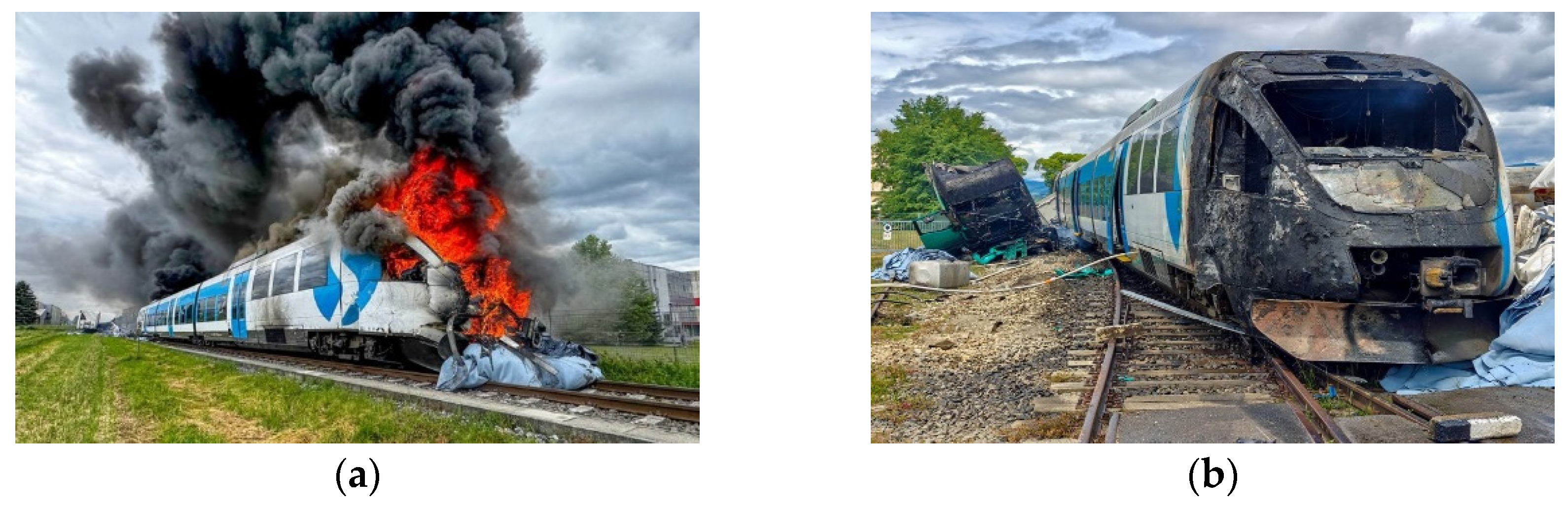
On 26 May 2025, a collision between a truck and a train occurred at a level crossing in Wollsdorf, Styria, Austria (Figure 2). A passenger train traveling on the Gleisdorf–Weiz line collided with a road freight vehicle. Four people sustained injuries, with one classified as serious (a woman sustained serious injuries and was transported to the hospital by rescue helicopter). The remaining passengers on the train were evacuated without injuries. After the collision, both the truck and the train burst into flames. [16].
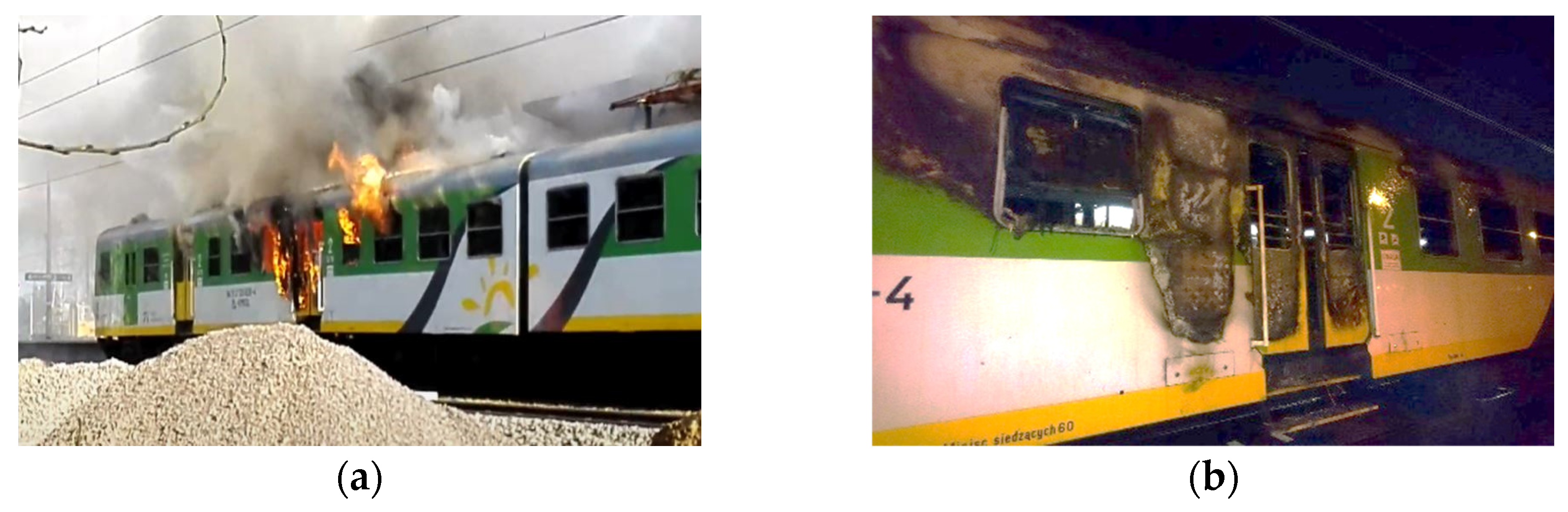
In March 2017, a train belonging to the Polish carrier Koleje Mazowieckie caught fire near the Zielonka station (Figure 3). Witnesses reported that the fire started in the restroom. The train crew, upon spotting the fire, attempted to extinguish the blaze, but the rapid spread of the flames prevented it from being contained. The fire department arrived at the scene. No one was injured in the blaze [17].
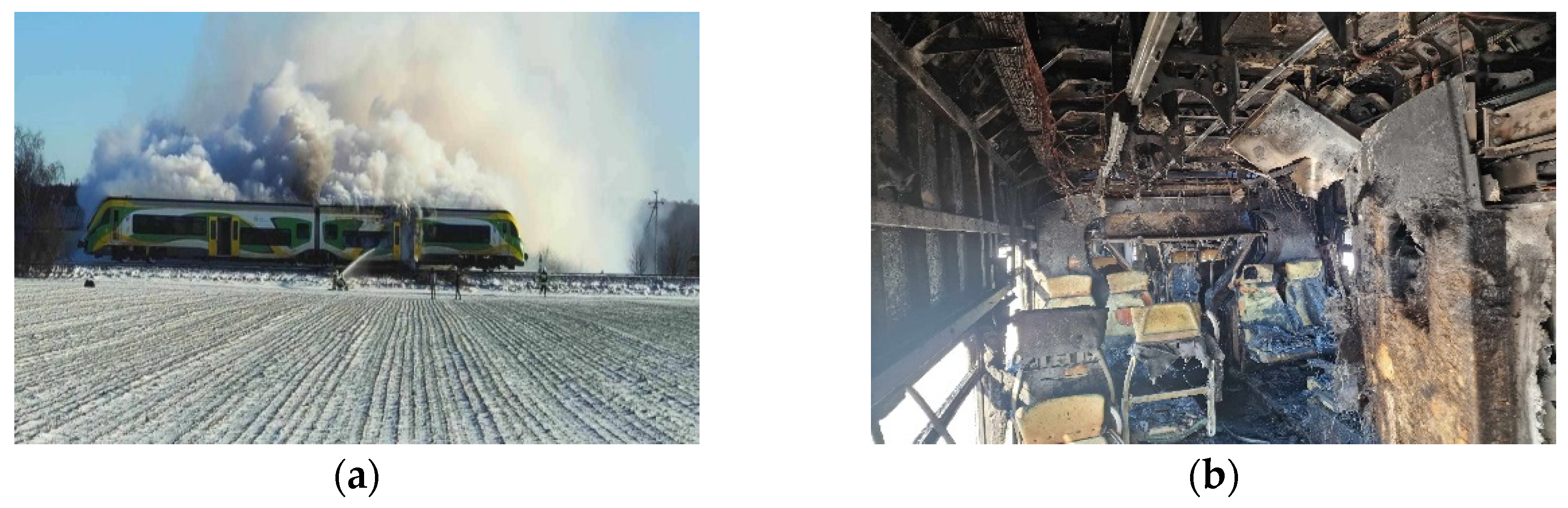
In January 2024, a fire occurred on a Koleje Mazowieckie railbus near Raciąż (Poland) (Figure 4). Two people (the driver and the conductor) were traveling in the vehicle, which was being taken for a technical inspection. They safely exited the burning railbus. As a result, the passenger section of the vehicle burned completely [18].
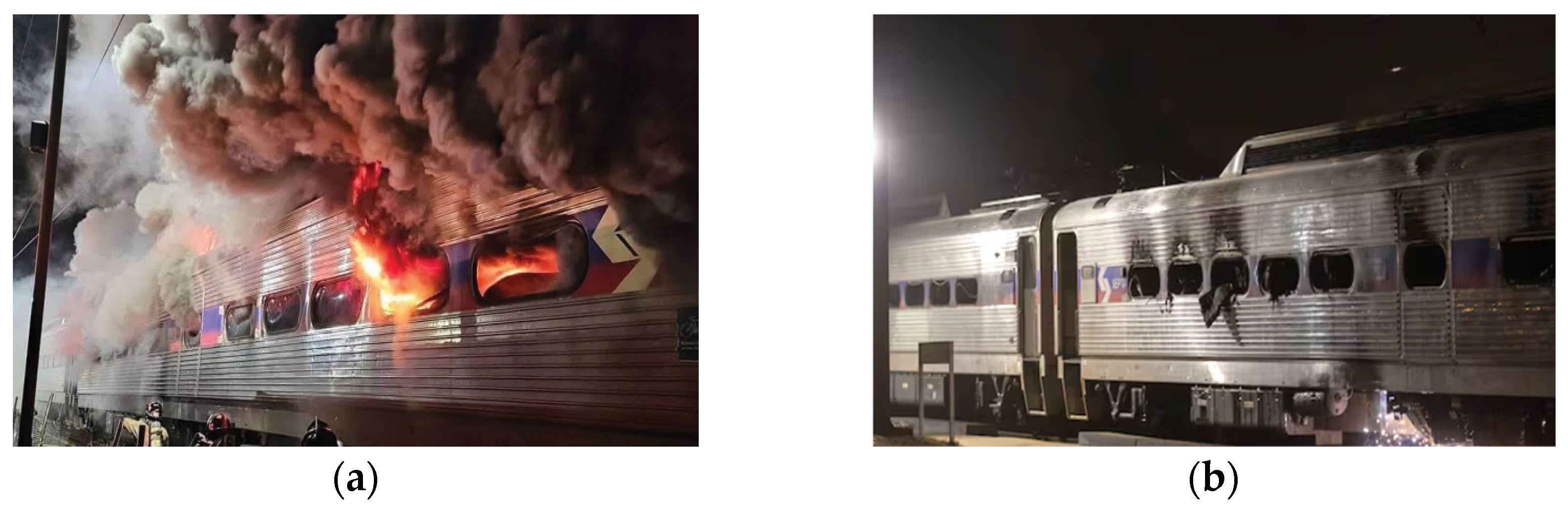
A train traveling from Philadelphia to Wilmington in Delaware County, Pennsylvania, went up in flames (Figure 5). It happened near the Crum Lynne Station in Ridley Park, Pennsylvania. The six-car train was carrying roughly 350 people when it caught fire [19]. The train was evacuated, and no injuries were reported. Service to Wilmington has been halted at this time.
The examples presented in this section confirm that the most common causes of fires in rolling stock include technical faults in electrical installations and collisions with other vehicles. Other causes include external factors such as collisions and arson, as well as the inappropriate selection of interior materials, which can contribute to the rapid spread of fire once it breaks out.
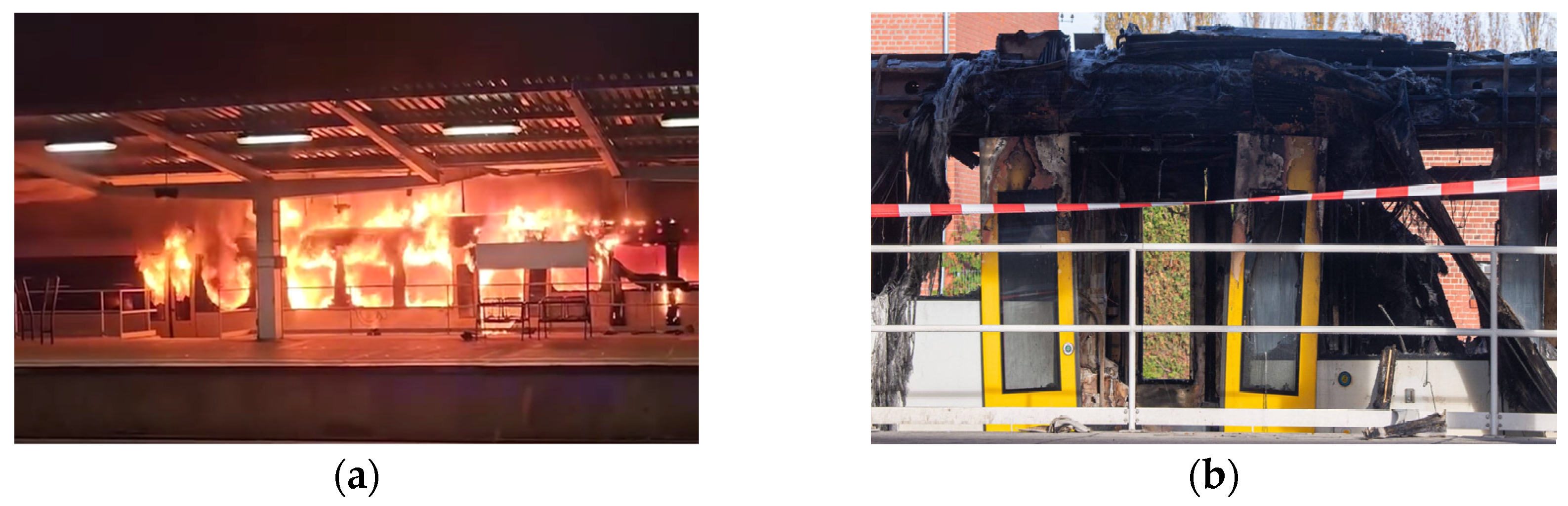
Figure 5. Fire of a train traveling from Philadelphia to Wilmington in Delaware County, Pennsylvania: (a) during the fire; (b) after the fire.On the outskirts of Berlin (Germany), a serious fire occurred in the diesel-powered passenger train carrying several passengers (Figure 6). There were no casualties or injuries. All passengers on board were evacuated after a call from the driver and conductor. Firefighters who arrived at the scene quickly attempted to extinguish the fire, but due to the rapid spread of the flames, they were unable to contain the fire. The train fire paralyzed all regional traffic and the S-Bahn line. As a result, the train suffered significant structural damage, including station and rail infrastructure. An investigation has been launched into the cause of the fire [20].
Applsci 15 12671 g005

3. Fire Safety Requirements in the Area of Railway Interoperability

Research and standardization work aimed at assessing the magnitude of fire hazards, defining directions for their prevention, and developing research methods and classification systems were undertaken simultaneously in various countries. In Poland, the pioneer was the Railway Scientific and Technical Centre (current name: Railway Research Institute), which developed one of the first standards in Europe, the Polish Standard PN-K-02500:1984 [21], established by the Polish Committee for Standardization (PKN) in 1984, concerning fire safety in rail vehicles. The requirements introduced at that time were significantly more lenient than the current ones. However, with the analysis of subsequent cases of fires in rolling stock and the systematic development of research, the scope of research expanded, and the requirements tightened. At the same time, in other European countries, sometimes significantly different test methods and requirements were developed, which addressed the most common causes of fires in rail vehicles in a given country. Standards were established in countries such as the following:
  • German: E DIN 5510:1991-04 [22];
  • France: NF F 16-101:1988/NF F 16-102:1992 [23,24];
  • Italian: UNI CEI 11170-1 1993 [25];
  • Great Britain: BS 6853:1999 [26].
However, the functioning of the European Union and the systematic development of the European railway market have forced actions to facilitate cooperation.
In 1995, in order to develop unified requirements for individual subsystems of the European railway network, which is a patchwork of diverse systems of the member states, the AEIF (Association Europeenne pour L’Interoperabilite Ferroviaire) European Association for Railway Interoperability was established. The Agency’s main objective is to act as the European rail market regulator in the technical field and to provide EU Member States with technical support for rail interoperability and safety. A number of Technical Specifications for Interoperability (TSIs) have been developed to enable the free movement of interoperable trains under harmonized safety conditions on the TEN network. However, the existing level of safety cannot be lowered in any country. However, Member States may maintain more stringent requirements, provided they do not prevent the operation of trains that meet TSI requirements. The following two specifications primarily address fire protection for rail vehicles: the LOC&PAS TSI [27] and its requirements, referenced in the SRT TSI [28] in the Rolling Stock area.
The requirements presented in TSI LOC&PAS [27] are intended to minimize the impact of a potential fire on passengers and train crew.
These requirements, formulated in the PN-EN 45545 [29,30,31,32,33,34,35] series of standards, cover the areas described below.
  • Fire Prevention Measures
This section outlines fire performance requirements for non-metallic materials and components used in the construction and equipment of vehicles. It also includes requirements for equipping vehicles with measures to prevent the occurrence and spread of fire resulting from leaks of flammable liquids or gases, as well as measures to detect hot axle bearings.
  • Fire detection and extinguishing measures
    The next section of the LOC&PAS TSI [27] concerns requirements for the following:
    -
    Portable fire extinguishers;
    -
    Fire detection systems;
    -
    Automatic fire suppression systems for diesel-powered freight railway vehicles;
    -
    Fire control and containment systems for passenger rolling stock;
    -
    Fire prevention measures for freight locomotives and self-propelled freight railway vehicles.
  • Emergency requirements
    This section covers requirements in the following areas:
    -
    Emergency lighting;
    -
    Smoke control;
    -
    Passenger alarm and communication;
    -
    Capability to navigate with a fire on board.
  • Evacuation requirements
    This section specifies requirements for the following:
    -
    Passenger emergency exits;
    -
    Driver’s cab emergency exits.
Detailed interpretations and explanations of the principles for meeting the above TSI requirements are provided in the ERA Guide for the application of the LOC&PAS TSI [27], which cites individual provisions of the EN 45545 [29,30,31,32,33,34,35] series of standards: Railway applications. Fire protection of railway vehicles.
The EN 45545 series of standards comprises seven Parts, described below.
  • EN 45545 Part 1 [29]
Part 1 specifies the vehicles covered by the entire series of Parts 1–7. These include the following rail-based public land passenger transport vehicles: locomotives, dedicated powered self-propelled vehicles, multiple units, railway wagons, powered trailers, light rail vehicles, metro vehicles, trams, luggage and mail wagons incorporated into passenger trains, passenger-occupied motor transport vehicles, rail buses, magnetic levitation vehicles, and trolleybuses (only for electrical equipment). Part 1 also includes terms and definitions used in all parts of the standard, ignition models, and a classification of rail vehicles, including design and operational categories. At the same time, as part of the conformity assessment, a condition was set that all laboratory tests required by subsequent Parts of this standard should be performed in laboratories accredited according to the EN ISO/IEC 17025 [30] standard.
  • EN 45545 Part 2 [31]
Part 2, version contains fire reaction requirements for materials and components used in rail vehicles defined in Part 1. It includes a classification of fire hazard levels (HLs) depending on the vehicle design and operational category, as well as general rules for handling specific cases, requirements for specified materials/components (test types and required values) classified from R1 to R28, rules for grouping unspecified materials, and methods of preparing samples for testing.
  • EN 45545 Part 3 [32]
Part 3 presents the classification and requirements for fire barriers depending on the rolling stock category and their location within the vehicle, as well as fire resistance testing methods.
  • EN 45545 Part 4 [33]
Part 4 addresses all aspects that should be considered when designing railway vehicles to minimize the risk of fire, and in the event of a fire, minimize the spread of fire and smoke inside and outside the vehicle. The requirements cover catering and galley areas, passenger spaces, luggage compartments, and storage spaces, preventing access to areas with a high fire risk, means of evacuation, and the ability to travel with a fire on board.
  • EN 45545 Part 5 [34]
Part 5 presents fire safety requirements for electrical equipment, including design, operation, modernization, and required laboratory tests. The purpose of this part of the standard is to reduce the possibility of a fire occurring in a vehicle due to a malfunction of electrical equipment (regardless of its cause) and to ensure the necessary operating time of emergency electrical equipment required for evacuation.
  • EN 45545 Part 6 [35]
Part 6 specifies requirements for fire detection and extinguishing, information and communication systems, and alarm systems, including lighting and braking. These functions enable appropriate action to protect vehicle occupants in the event of a fire.
  • EN 45545 Part 7 [36]
Part 7 defines requirements for flammable liquids and liquefied petroleum gas installations used in power, heating, or cooking systems. However, these requirements do not cover technical fluids except in the event of malfunction (e.g., leakage, splashing).
Due to the diverse experiences of individual countries, the development of the EN 45545 [29,30,31,32,33,34,35,36] series of standards took the longest in the history of European standardization. After its establishment in 2013 (after 23 years of work), the process of revising individual parts began, which is still ongoing today, led by Working Group CEN/TC 256/WG01. This resulted from the recent accelerated development of knowledge and experience gained regarding the phenomena occurring during the spread of fire in a moving vehicle, as well as the emergence of new materials on the market, whose behavior during some tests prevented the unambiguous determination of the parameter being measured and the qualification of the product. The development of a holistic method for measuring and classifying combustion product toxicity, taking into account fire engineering principles, was considered particularly important and, at the same time, most difficult to assess when estimating the realistic evacuation time of passengers in the event of a fire. This method allows for the reflection of real-world conditions while simultaneously achieving more flexible and economically viable alternative fire protection solutions using innovative technologies and materials. It should also be noted that implementing the requirements of the EN 45545-1-7 [29,30,31,32,33,34,35,36] series of standards into practice was not easy. It required the purchase of specialized testing equipment, the development and implementation of testing procedures, and principles for classifying and assessing materials, rolling stock components, and entire vehicles using the provisions of individual parts of EN45545 [29,30,31,32,33,34,35,36].
Particular difficulties arise when assessing the following:
  • Complex electrical equipment that previously did not require fire safety testing according to national standards;
  • Components requiring use due to the need to meet functional parameters (according to point 4.7 of the EN 45545-2 standard [31]);
  • Applications of FCCS systems other than fire barriers;
  • Alternative power supply systems.
As part of the revision of the EN 45545 1-7 [29,30,31,32,33,34,35,36] series of standards, an attempt was also made to develop an additional part covering the requirements for testing and acceptance of fire containment control systems. However, due to the widely divergent approaches across countries, it was deemed necessary to conduct numerous studies to refine the details of the test methodology and classification criteria. As a result of the work to date, the Technical Report TR FCCS [37] was developed. To develop requirements for Ni-Cd batteries used in railway rolling stock due to the observed risk of battery fire initiated by the battery itself, e.g., loss of electrical insulation, CEN/CENELEC established the CLC TC9X WG31 research group, tasked with developing a new standard. Pending the development of this standard, the TR 50718:2025 guidelines [38] were introduced to avoid differing interpretations of the EN 45545-2 [31] provisions by designers, manufacturers, researchers, and certification bodies. This document provides an acceptable procedure according to the requirements of EN 45545-2 [31], taking into account test methods and criteria for individual hazard levels, as well as requirements for spare parts management with regard to substitution within the framework of preventive or corrective maintenance, upgrade, or renewal.
Furthermore, the CLC/TC 9X Working Group “Electrical and electronic applications for railways” developed document TR 50750:2025 [39]. It reports on available experience and best practices in the application of the EN 45545-2 [31] and EN 45545-5 [34] standards to electronic equipment in railway rolling stock. This report was developed by the established CLC TC9X WG29 Working Group with the aim of standardizing the interpretation of the provisions of these standards by all interested parties (designers, manufacturers, researchers, and certification bodies).

4. Passive Safety Measures

The development of standardization in the field of fire protection for rolling stock included passive and active safety measures aimed at limiting the occurrence of fire and minimizing its effects should it occur. Passive measures include the following:
  • Fire resistance of the structure, i.e., the use of materials with the required flammability and smoke characteristics (according to the requirements of EN 45545-2 [31]) and fire-resistant barriers (according to the requirements of EN 45545-3 [32]);
  • Properly designed, marked, and lit escape routes (according to the requirements of EN 45545-4 [33]);
  • Protection and proper maintenance of electrical systems (according to the requirements of EN 45545-5 [34]).
The EN 50553 [40] standard also addresses requirements in the passive area, focusing on ensuring the vehicle’s ability to drive in the event of an on-board fire and provides recommendations regarding vehicle design aspects (power supply and availability), but does not provide solutions for combating an on-board fire.
The introduction of new fire testing methods according to the EN 45545-2 [31] standard in the European Union has created a significant challenge for manufacturers of materials for the construction and equipment of rolling stock in the EU. The problem of adapting materials to the new requirements has largely affected countries, including Poland, which had separate and different testing methods compared to those contained in the EN 45545-2 [31] standard.
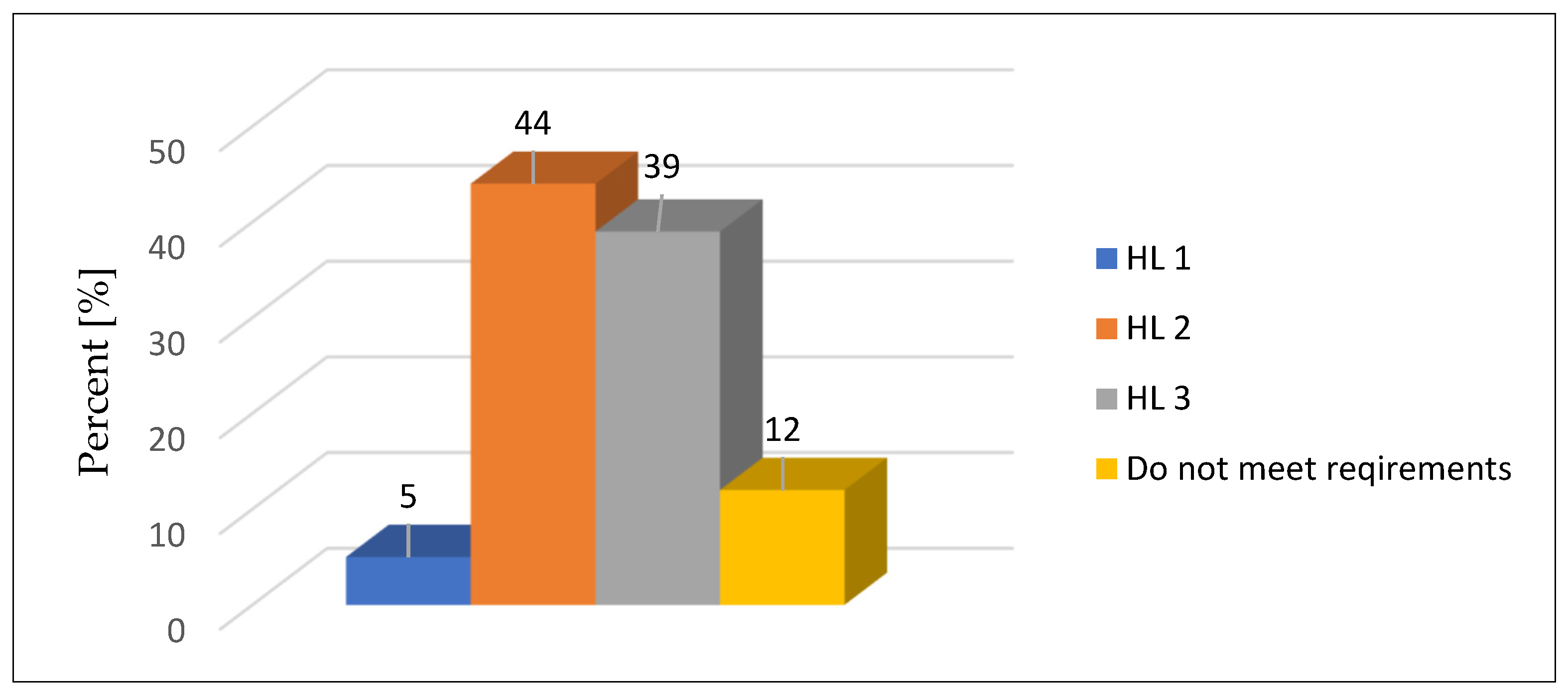
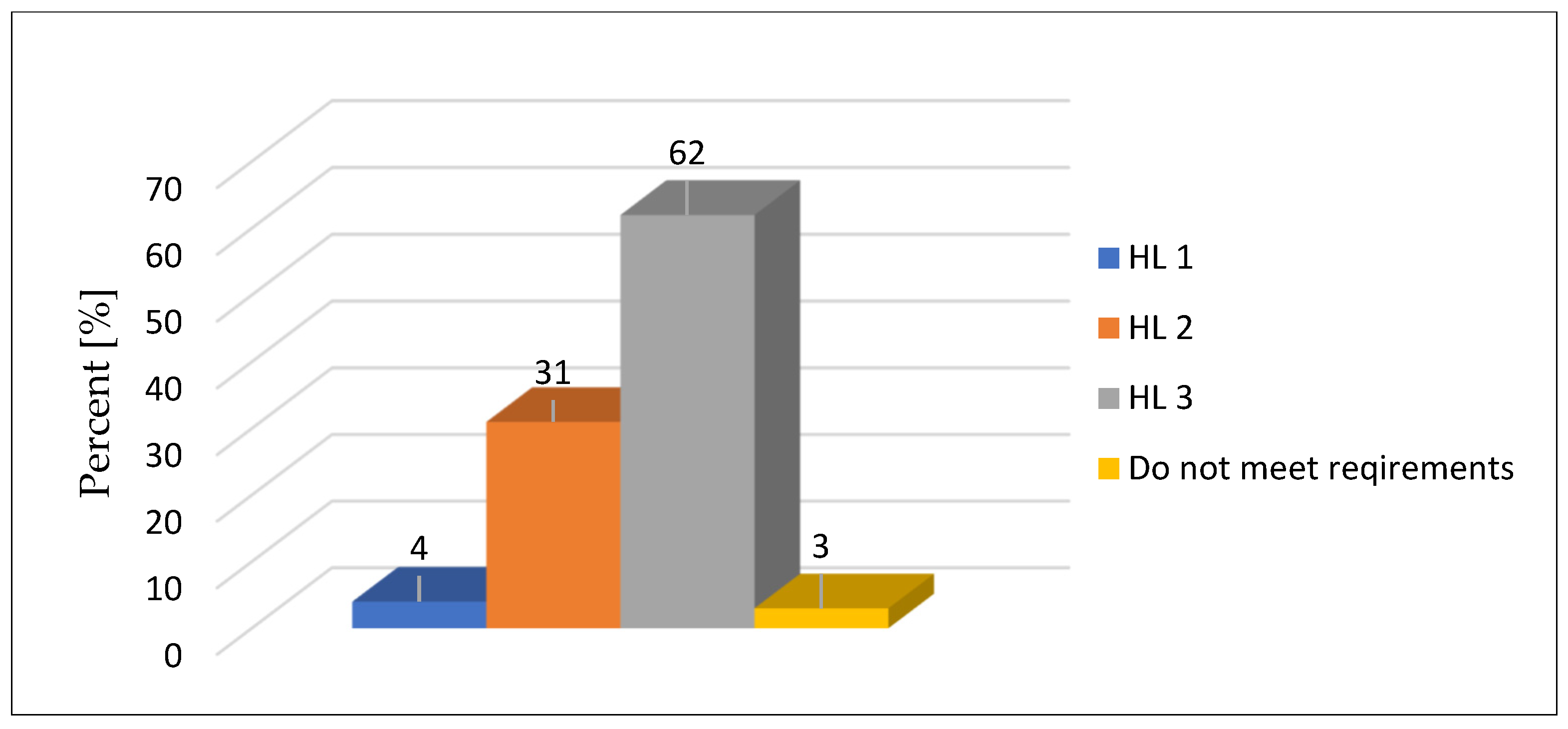
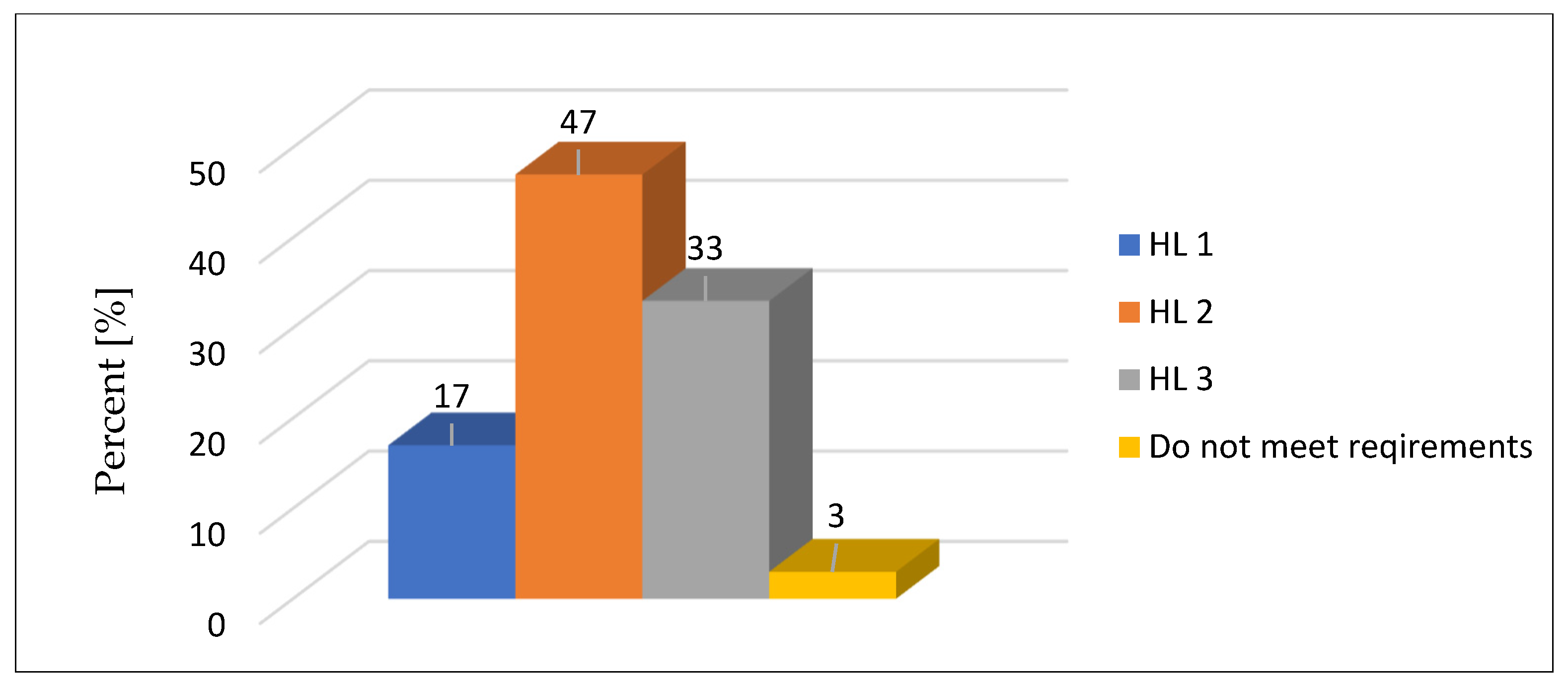
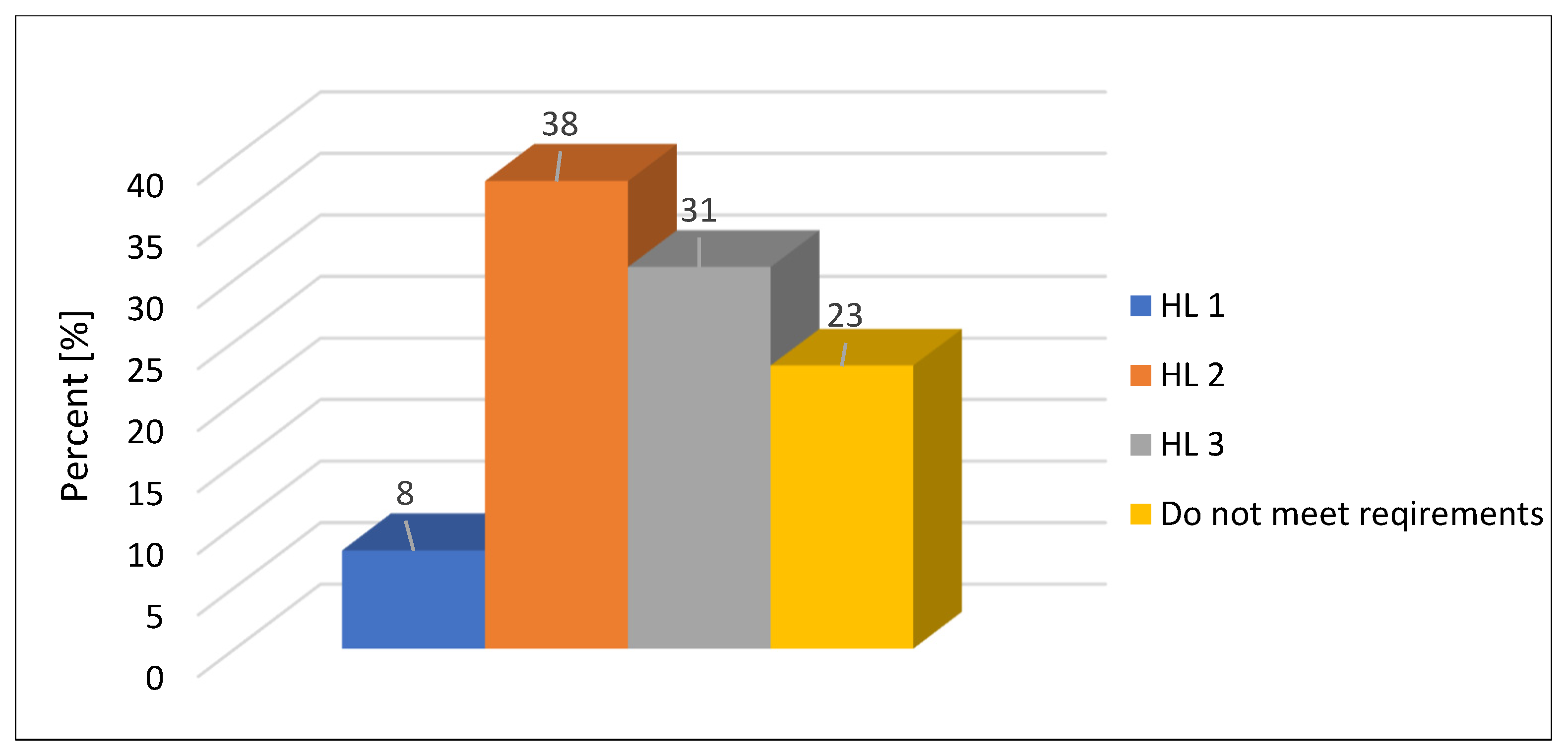
The EN 45545-2 [31] standard specifies 28 sets of tests assigned to individual product groups, taking into account their location in the vehicle and specific hazards that may occur in specific places on the train. The Materials and Structure Laboratory conducts tests for all material groups. A summary of results, along with the assigned hazard levels for selected material groups, is presented in Figure 7, Figure 8, Figure 9 and Figure 10.
The tests were conducted in 2017–2019 at the Materials and Structure Laboratory on random samples produced by Polish and foreign manufacturers to evaluate the equipment of rail vehicles. The test was performed on the following test samples:
  • Samples for the requirement set R21-30 (upholstery of passenger seats);
  • Samples for the requirement set R18-20 (complete passenger seats);
  • Samples for the requirement set R1-40 (polyester–glass laminates);
  • Samples for the requirement set R7-30 (paint coatings with filler).
As can be seen from the graphs above, not all tested materials meet the requirements of the EN 45545-2 [31] standard.
The obtained test results, as well as the classification carried out in accordance with the EN 45545-2 [31] standard, show that the best properties were obtained for passenger seats (the most results classified as HL3 and the fewest as non-compliant). However, the highest percentage of non-compliant materials occurred for products tested according to R7 (paint coatings with filler).
It should be emphasized, however, that the negative results obtained motivated many manufacturers to modify the technological processes of their products by using flame retardants or other components.
However, manufacturers of rubber products still face a significant challenge, as flame retardancy is difficult, resulting in a weakening of their mechanical properties. These products are currently approved based on their functional necessity after conducting an appropriate risk assessment.

5. Active Safety Measures

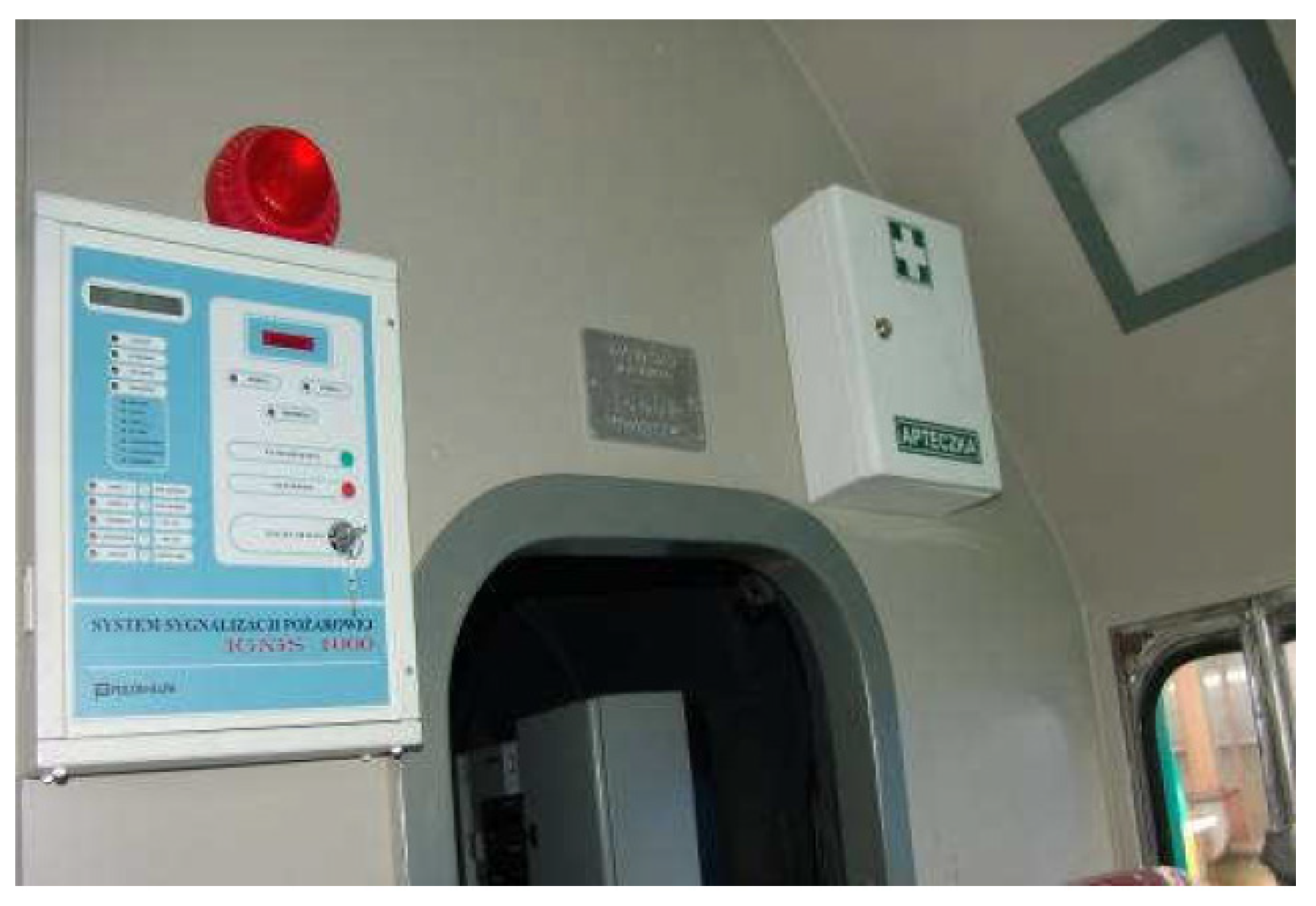
Active safety measures, on the other hand, include fire detection, signaling, and extinguishing in the initial stage of its development (according to the requirements of EN 45545-6 [35], ARGE guide [41], and TR FCCS [37]). These systems offer enormous potential for increasing the safety level of rail vehicles. Currently, with the growing demand for fire protection and emerging technical standards in the area of active safety systems (at the level of individual entities and organizations), new technologies using fire detection and suppression systems are increasingly being used. Active fire protection systems in rail rolling stock have been gaining importance over the last few years [42].
The technology and design of fire extinguishing systems vary greatly and depend primarily on the level of risk, which is influenced by the route type and terrain, including the presence of tunnels, through which the rail vehicle will operate. Fire detection and suppression systems are becoming increasingly common in newly designed and constructed trains. International and national regulations, as well as Technical Specifications for Interoperability, define minimum requirements for vehicle safety, but do not provide any guidelines for assessing the performance of such systems [42].
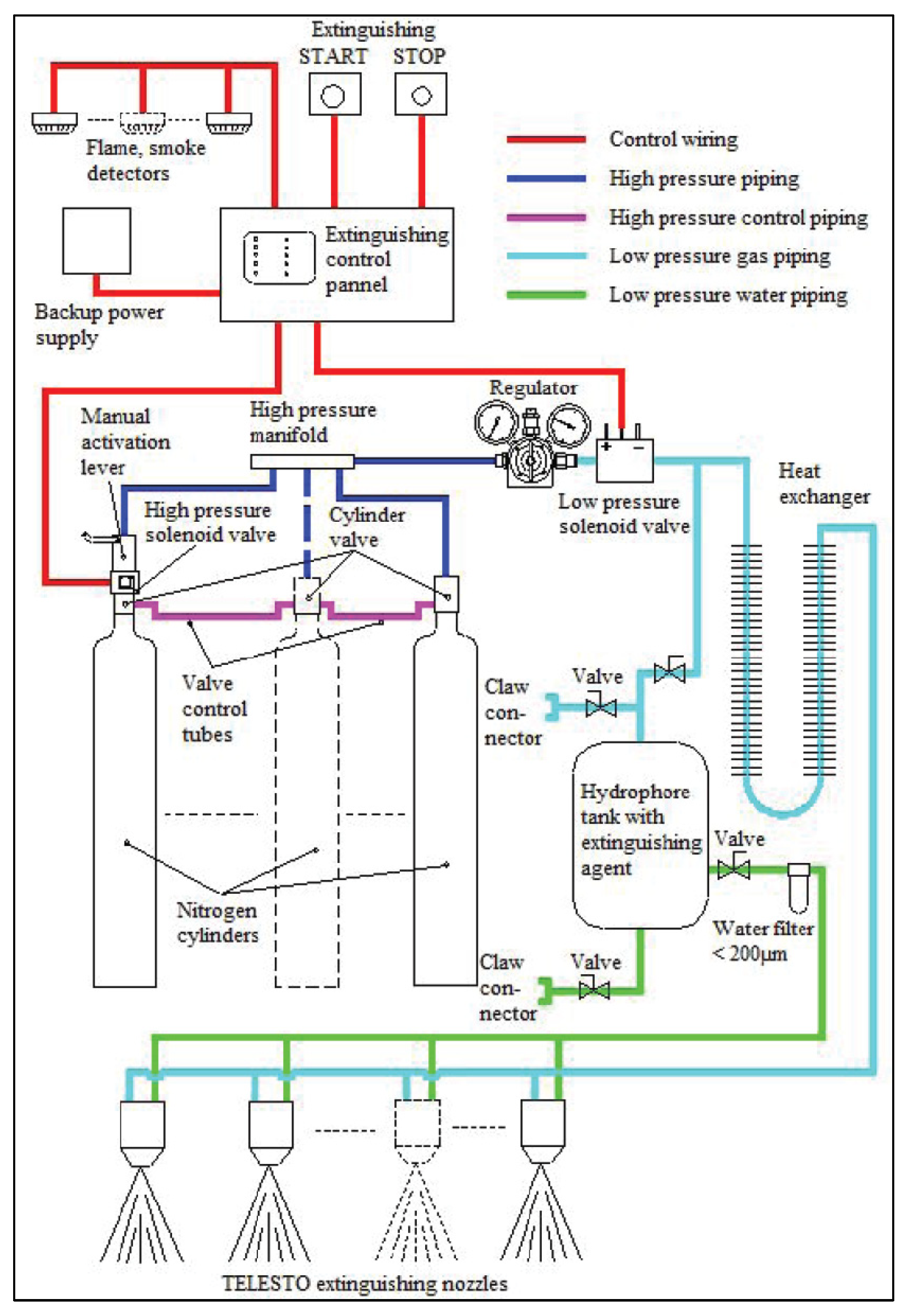
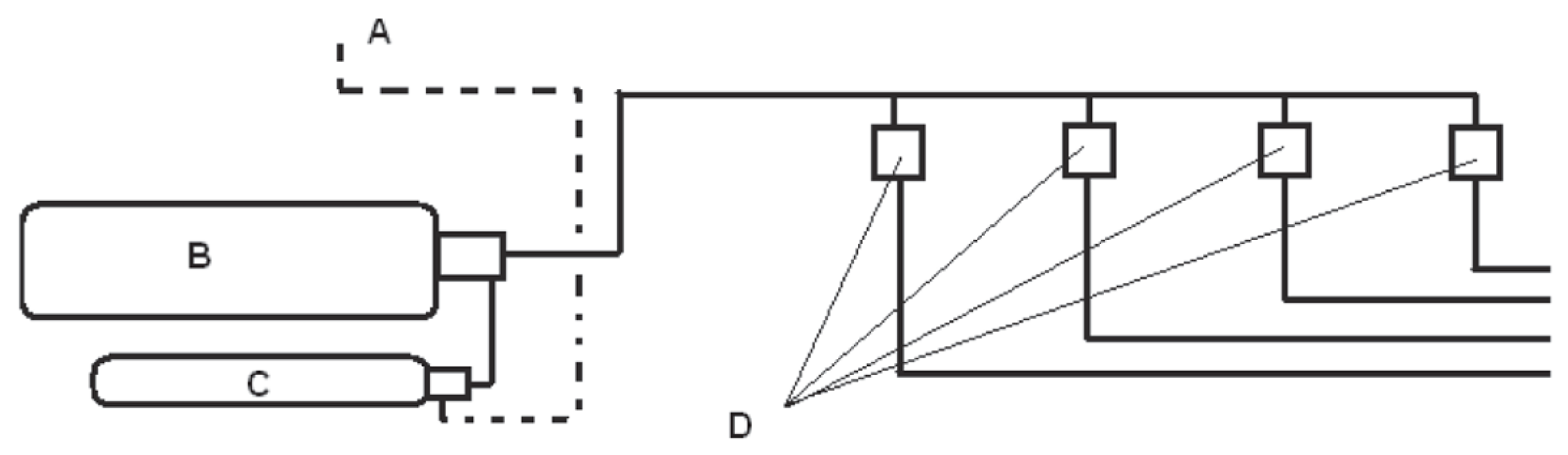
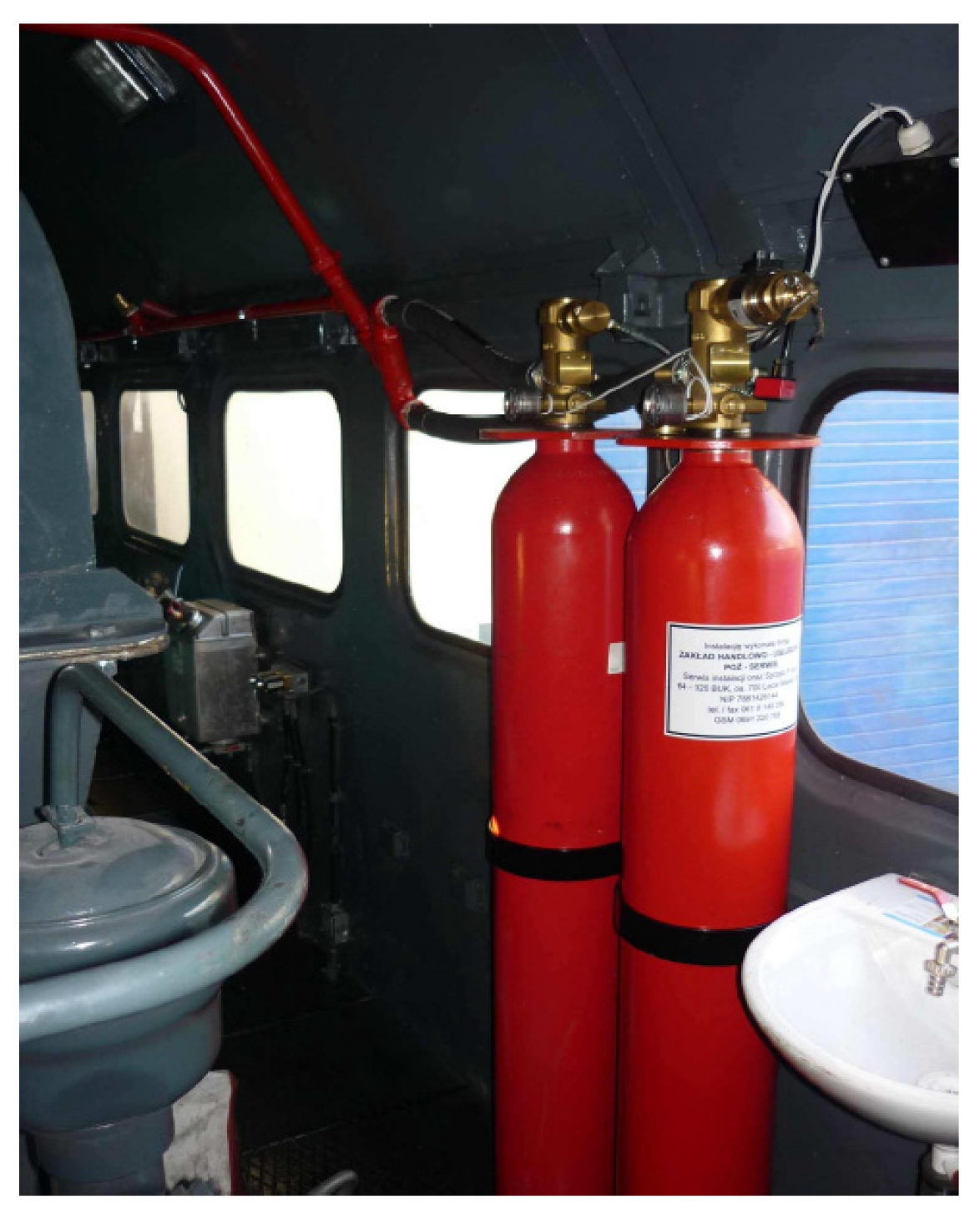
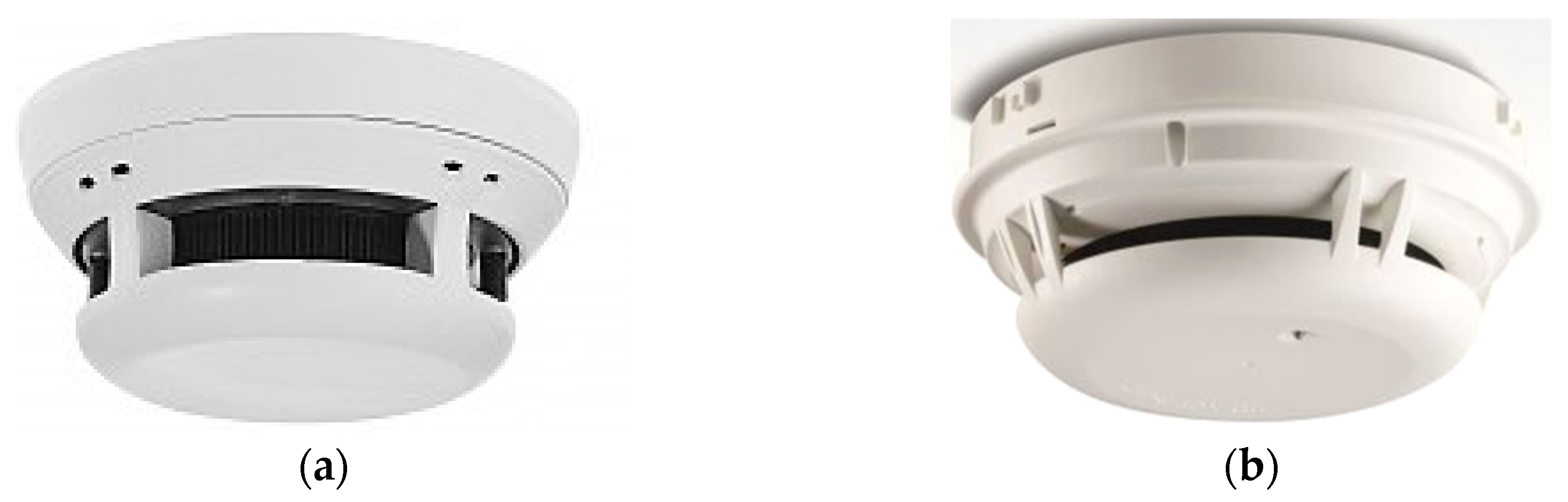
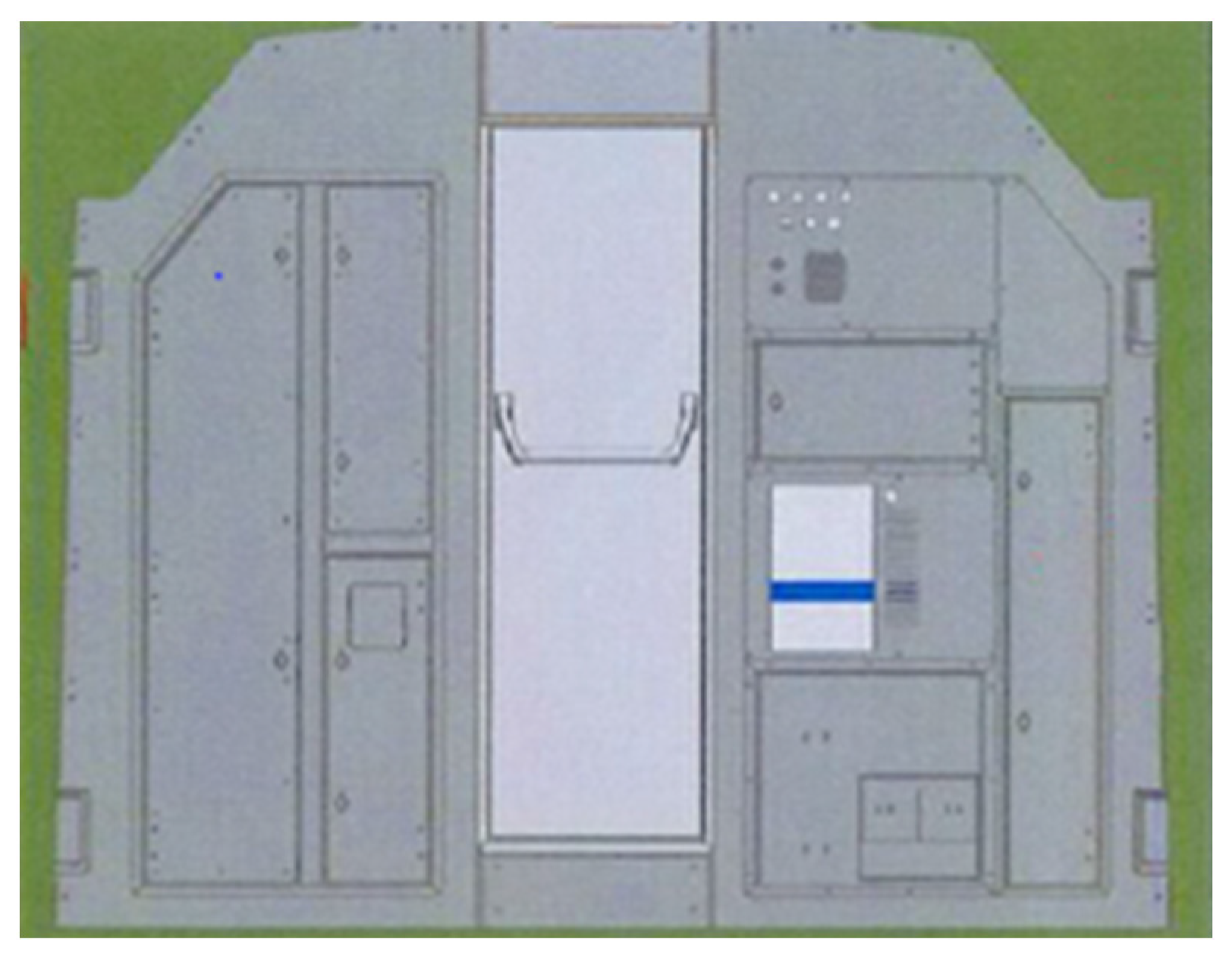
Example solutions are shown in Figure 11, Figure 12, Figure 13, Figure 14, Figure 15, Figure 16 and Figure 17 including an example design of a fire barrier separating the driver’s cab from the passenger compartment.
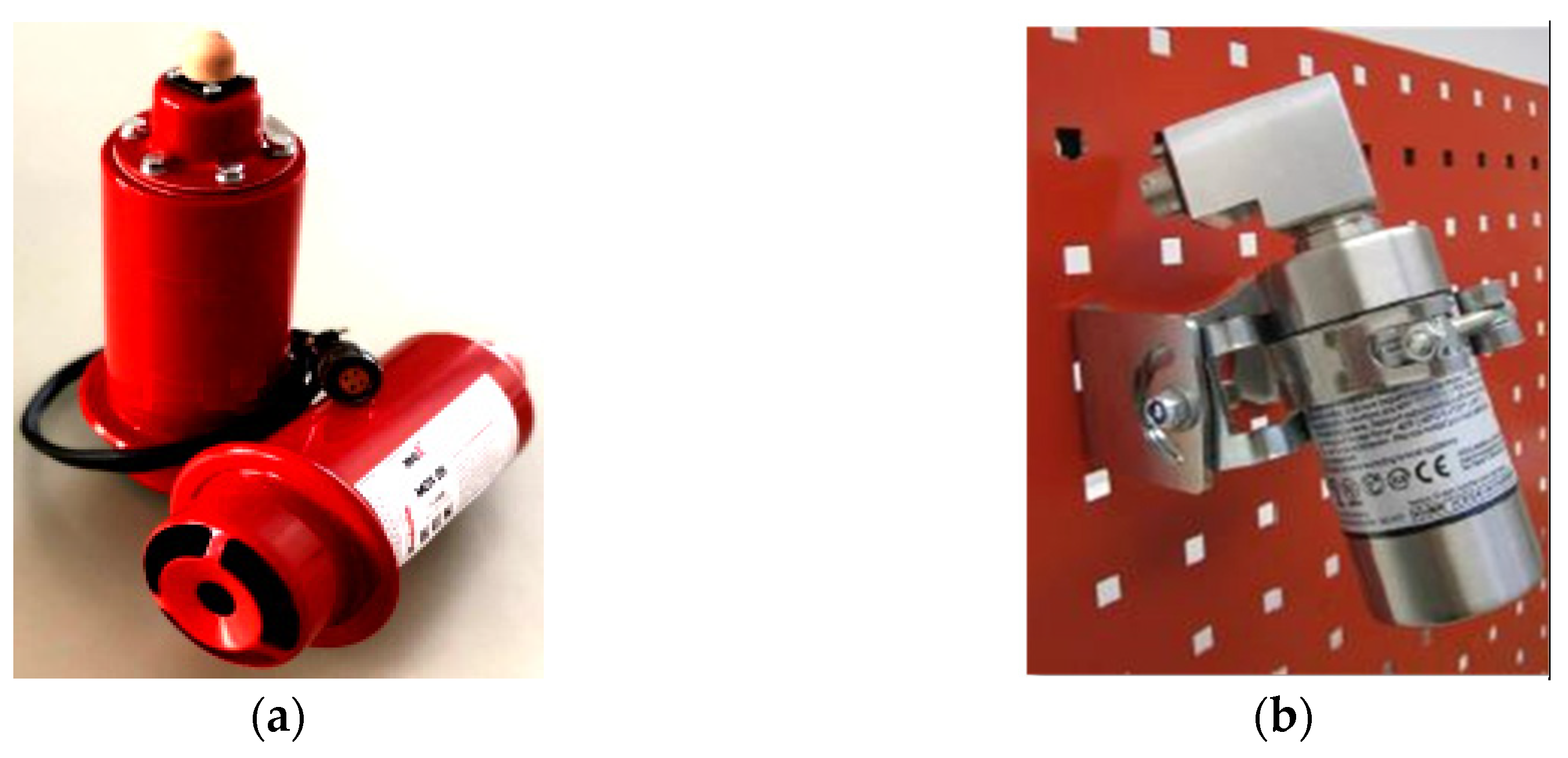
Another fire protection solution used in railway vehicles as an alternative to existing safeguards is the use of extinguishing aerosol generators (Figure 14). These devices are used to protect engine compartments and electrical equipment cabinets in rail vehicles. The principle of operation of extinguishing aerosols is based on interrupting the chain of physical and chemical combustion reactions by binding combustion free radicals with a highly efficient and effective extinguishing aerosol resulting from the transformation of a solid material. This method does not reduce the oxygen level in the air and leaves behind only trace amounts of pollutants.
The use of active safety systems is a key element influencing the fire safety of rail vehicles. Equipping vehicles with active safety measures certainly contributes to improving passenger and crew safety. However, it should be noted that the use of active measures does not exempt vehicle manufacturers from using fire-retardant materials in the construction and equipment of rolling stock.

6. The Use of Risk Assessment and RAMS Standards in Rail Transport in the Area of Fire Safety

The currently applicable Directive 2016/797 [44] of 16 May 2016 on the interoperability of the rail system within the European Union requires ensuring safety, including fire safety. The essential requirements in Annex III include the following provision in point 1.1.4: “The design of fixed installations and rolling stock and the choice of materials used must be aimed at limiting the generation, propagation, and effects of fire and smoke in the event of a fire.” Tools for assessing the risk of a “hot incident” used in various phases of the application lifecycle include the documents listed below.
  • EN 45545 [29,30,31,32,33,34,35,36] series of standards, widely used in the production of railway rolling stock;
  • EN 50553:2012 [40] standard, which can be used for risk assessment both for investment purposes and for making strategic decisions during the operational phase;
  • Technical Interoperability Specifications: LOC&PAS TSI [27] and SRT TSI [28].
According to the LOC&PAS TSI [27], the safety requirements that are relevant for hot incidents concern, in particular, the following scenarios (point 4.2.5.3.5):
  • “(1) failure in the passenger alarm system leading to the impossibility for a passenger to initiate the activation of brake in order to stop the train when train departs from a platform”;
  • “(2) failure in the passenger alarm system leading to no information given to the driver in case of activation of a passenger alarm”.
According to the LOC&PAS TSI [27], it should be demonstrated that the risk is controlled to an acceptable level, considering that the functional failure has a typical credible potential to lead directly to ‘single fatality and/or severe injury’. The demonstration of conformity (conformity assessment procedure) is described in clause 6.2.3.5 of this TSI. The principles for both the development of risk analysis documents and gathering evidence of their acceptability, as well as the principles for independent verification of such documents, are detailed in the RAMS standards. They include five standards (EN 50126-1 [45] & EN 50126-2 [46], EN 50128 [47], EN 50129 [48], EN 50159 [49]) describing both a holistic approach and individual tools dedicated to ex ante risk acceptance. The RAMS standards define the relationship between reliability, availability, maintainability, and safety in rail transport.
Risk acceptance, which takes place after detailed analyses, is covered by a legal framework. The basic document in this respect is the European Commission Regulation 402 [50], in force since 2013. This regulation is one of six defining the so-called common safety methods CSM (safety certification of operators, safety authorization of infrastructure managers, safety monitoring by managers and operators, safety supervision by national authorities, definition and ex post control of common safety objectives, i.e., individual risk levels, and principles of ex ante risk analysis and acceptance, i.e., a common safety method for risk evaluation and assessment CSM RA (CSM for Risk Acceptance) [50].
Both Regulation 402 (CSM RA) [50] and RAMS standards define three approaches to risk analysis, valuation, and acceptance:
  • Codes of practice;
  • Reference systems;
  • Explicit risk assessment, where explicit risk assessment can be carried out as a qualitative or quantitative assessment.
We often encounter the need to make decisions regarding fire risks during the operational phase. This applies in particular to the following:
  • Assessing the feasibility of operating transport services using rolling stock with a lower fire rating or without a defined fire rating using railway tunnels, or
  • Assessing the need and scale of the need to adapt such rolling stock to these needs, or
  • Assessing the need and scale of the need for potential retrofitting or reconstruction of tunnels.
Risk management processes require rail industry entities to apply a qualitative and quantitative approach to hazards and risk acceptance, and to provide this information in the form of documents to rail operators and rail infrastructure managers. Documents describing the procedures can be used for various types of hazards, including those related to fire safety.

7. Conformity Verification According to PN-EN 50553:2012

This standard specifies requirements for the capability to run a passenger vehicle with a fire on board. It supplements the requirements given in EN 45545 [29,30,31,32,33,34,35,36] (for performance categories 2, 3, and 4) and in the SRT TSI [28] (for fire safety categories A and B). The standard also specifies the procedure for assessing the conformity of rolling stock with the SRT TSI [28] by a notified body. The described assessment takes into account fires (due to technical causes and arson) that could cause serious injury and/or develop into life-threatening fires. This extension of applicability significantly increases the number of system functions potentially at risk and therefore requires extending the rules of what is “reasonably and practicable” to these new conditions. For proper analysis, the standard provides a fire classification scheme and recommends applying a flowchart to each system function under consideration. A train is considered compliant when all relevant system functions are considered, and compliance is determined for each based on a case-by-case assessment [51].

8. Conclusions

By far the greatest impact on the scale of a fire, its course, and especially the intensity of smoke emissions and the toxicity of its components, lies in the type, quantity, and distribution of non-metallic materials. The analysis of test results carried out for 120 materials from four groups (upholstery of passenger seats, complete passenger seats, polyester-glass laminates, paint coatings with filler) showed that the highest percentage of non-compliant materials occurred for paint coatings with filler.
Therefore, the use of materials should be preceded by an analysis of all the requirements for the designed component and the careful selection of the appropriate material. A compromise between flammability and smoke properties and the functional properties of the product is essential. However, this compromise should be applied by experts and contribute to the further development of new plastics production technologies, taking into account the latest trends in flame retardancy, utilizing nanotechnologies, and computer modeling. Such challenging materials include rubber.
The aim of this reference document review was to adapt the acceptance criteria, taking a holistic approach that reflects real-world conditions while simultaneously achieving more flexible and economically viable alternative fire protection solutions using innovative technologies and materials.
The above, as shown by statistical data, has contributed to reducing the most common cause of ignition years ago, which was arson.
The rapid development of rail transport, and consequently, new fire protection technologies, contributes to the continuous improvement of safety levels. Innovative fire protection systems introduced in rail vehicles directly impact the safety of passengers and crew. Fire safety in rail vehicles is primarily based on preventing and limiting fire development, including through active fire detection and extinguishing systems. It should be noted that the costs of such fire protection systems are a negligible percentage compared to the value of the entire vehicle, while significantly improving safety.
Technical progress and railway development mean not only improving existing solutions but also adapting them to emerging risks in the railway sector. Identifying new risks in rail transport should lead to the development of methods and tools for managing them. To this end, continued work is needed to improve research methods that will meet the current needs of rolling stock.
The development of new technologies, including increased speed and the implementation of alternative power sources, poses further challenges for the railway industry and related fire protection engineering. The emerging new threats require the development of European regulations in this area.
This also requires conducting risk assessment processes in accordance with the CSM RA regulation [50].
Progress in fire protection in rolling stock is also based on detailed analysis of incidents, fire evacuation simulations using specialized software (as described in [52]), rescue and firefighting exercises (on a small and large scale, such as the international ones described in [53]), and the implementation of conclusions drawn from them. Knowledge dissemination also plays a significant role in improving fire safety in rail transport. Regular international conferences, publications, and training sessions addressed to representatives of government administration, research institutions, operators, rolling stock manufacturers, producers of non-metallic materials, vehicle components, and fire extinguishing systems play a particularly important role here.

Author Contributions

Conceptualization, J.R.-W.; Methodology, J.R.-W. and D.M.; Validation, J.R.-W. and D.M.; Data curation, A.K. and D.M.; Writing—review & editing, J.R.-W. and A.K.; Visualization, A.K. All authors have read and agreed to the published version of the manuscript.

Funding

This research received no external funding.

Data Availability Statement

The original contributions presented in the study are included in the article, further inquiries can be directed to the corresponding author.

Conflicts of Interest

The authors declare no conflict of interest.

References

  1. Guillaume, E.; Camillo, A.; Sainrat, A. Application of fire safety engineering to rolling stock. Probl. Kolejnictwa 2013, 160, 51–75. [Google Scholar]
  2. Radziszewska-Wolińska, J. Passenger train fire in a tunnel. In Proceedings of the Second International Conference Long Road and Rail Tunnels, Hong Kong, 9–11 May 2002; Tunnel Management International Ltd.: Kempston, UK, 2002; Volume 5. [Google Scholar]
  3. Gierski, E. Problemy Działań Ratowniczo-Gaśniczych w Tunelach Kolejowych; Szkoła Aspirantów Państwowej Straży Pożarnej: Kraków, Poland, 1996. [Google Scholar]
  4. Hoj, N.P. Zagrożenia w tunelach. In Fire Protection and Safety Measures in Rail, Road and Metro Tunnels; FEiTR: Warszawa, Poland, 2006; pp. 40–49. [Google Scholar]
  5. Kamiński, A.; Gierski, E. Taktyka Działań Ratowniczo—Gaśniczych w Warszawskim Metrze; FIREX: Warszawa, Poland, 1996. [Google Scholar]
  6. Zhang, J.; Wenhui, J.; Zhongyuan, Y.; Yanping, Y. Pyrolysis, combustion, and fire spread characteristics of the railway train carriages: A review of development. Energy Built Environ. 2023, 4, 743–759. [Google Scholar] [CrossRef]
  7. Dinmore, N. Train Fires: Understanding the Risks and Controlling Them. Available online: https://www.globalrailwayreview.com/article/122673/train-fires-risks-controlling/ (accessed on 26 November 2025).
  8. Davis, J. How Do Trains Cause Wildfires? 2024. Available online: https://beta.cottagelife.com/outdoors/cottage-qa-how-do-trains-cause-wildfires/ (accessed on 26 November 2025).
  9. Hubskyi, P.; Pawlik, M.; Kaźmierczak, A. Risk Assessment Regarding Use of Hydrogen in Railway Transport. In Proceedings of the 28th International Scientific Conference, Transport Means, Kaunas, Lithuania, 2–4 October 2024; Available online: https://drive.google.com/file/d/1EPL8v_zIHysYNvW1w4tWAzt19HaMJlrW/view (accessed on 26 November 2025).
  10. Dempsey, M. Houston Chronicle. Available online: https://www.chron.com/news/houston-texas/houston/article/Train-explosion-leads-to-chemical-release-in-11095738.php (accessed on 26 November 2025).
  11. Radziszewska-Wolińska, J. Fire Hazard in Rail Vehicles with Alternative Power Sources. In Modren Trends in Fire Procection of Railway Rolling Stock; Instytut Kolejnictwa: Warszawa, Poland, 2024; pp. 130–143. [Google Scholar]
  12. Dick, M. Battery Safety in Rail Transportation. Locomotives. 2025. Available online: https://www.railwayage.com/mechanical/locomotives/battery-safety-in-rail-transportation/ (accessed on 26 November 2025).
  13. Eurostat. Railway Safety Statistics in the EU. Available online: https://ec.europa.eu/eurostat/statistics-explained/index.php?title=Railway_safety_statistics_in_the_EU (accessed on 14 October 2025).
  14. Eurostat. Railway Safety Statistics in the EU. Available online: https://ec.europa.eu/eurostat/web/products-eurostat-news/w/ddn-20241030-1 (accessed on 26 November 2025).
  15. Global News. German High Speed Train Catches Fire. Available online: https://globalnews.ca/video/4541801/german-high-speed-train-catches-fire (accessed on 14 October 2025).
  16. Rail Market News. Passenger Train Hits Truck in Wollsdorf, Austria, Four People Injured. Available online: https://railmarket.com/news/passenger-rail/33773-passenger-train-hits-truck-in-wollsdorf-austria-four-people-injured (accessed on 14 October 2025).
  17. Rynek Kolejowy. The Burned-Out Koleje Mazowieckie Train Will Be Back on the Tracks (Original Title: Spalony Pociąg Kolei Mazowieckich Wróci na Tory). Available online: https://www.rynek-kolejowy.pl/wiadomosci/spalony-pociag-kolei-mazowieckich-wroci-na-tory-81342.html (accessed on 14 October 2025).
  18. Obserwator Logistyczny. Railcar Fire near Warsaw! The Carriage Was Completely Destroyed! (Original Title: Pożar Szynobusu Nieopodal Warszawy! Wagon Całkowicie Spłonął!). Available online: https://obserwatorlogistyczny.pl/2024/01/16/pozar-szynobusu-nieopodal-warszawy-wagon-calkowicie-splonal/#google_vignette (accessed on 14 October 2025).
  19. Eyewitnes News. Train Goes Up in Flames near Philadelphia. Available online: https://abc7.com/post/septa-train-fire-philadelphia-wilmington-ridley-park-delaware-county-350-passengers-evacuated/15874695/ (accessed on 14 October 2025).
  20. Rail Tech. Berlin Passenger Train Bursts into Flames, Cause Unclear. Available online: https://www.railtech.com/all/2024/11/04/berlin-passenger-train-bursts-into-flames-cause-unclear/?gdpr=deny (accessed on 14 November 2025).
  21. PN-K-02500:1984; Tabor Kolejowy Pasażerski. Wymagania i badania materiałów pod względem ochrony przeciwpożarowej, Polski Komitet Normalizacyjny: Warszawa, Poland, 1984.
  22. DIN 5510-2:1991-04; Preventive Fire Protection in Railway Vehicles; Part 2: Fire Behaviour and Fire Side Effects of Materials and Parts, Classification, Requirement and Test Methods. Deutsches Institut für Normung: Berlin, Germany, 1991.
  23. NF F 16-101:1988; Rolling Stock. Fire Behaviour. Materials Choosing. Bureau de Normalisation des Chemins de Fer: Paris, France, 1988.
  24. NF F 16-102:1992; Railway Rolling Stock. Fire Behaviour. Materials Choosing, Application for Electric Equipment. Bureau de Normalisation des Chemins de Fer: Paris, France, 1992.
  25. UNI CEI 11170-1 1993; Railway and Tramway Vehicles—Guidelines for Fire Protection of Railway, Tramway and Guided Path Vehicles—General Principles. Instituto Italiano di Normazione: Roma, Italy, 1992.
  26. BS 6853:1999; Code of Practice for Fire Precautions in the Design and Construction of Passenger Carrying Train. British Standards Institution: London, UK, 1999.
  27. Commission Regulation (EU) No 1302/2014 of 18 November 2014 Concerning a Technical Specification for Interoperability Relating to the Rolling Stock—Locomotives and Passenger Rolling Stock Subsystem of the Rail System in the European Union—As Amended. Available online: https://eur-lex.europa.eu/eli/reg/2014/1302/oj/eng (accessed on 14 October 2025).
  28. Commission Regulation (EU) No 1303/2014 of 18 November 2014 Concerning the Technical Specification for Interoperability Relating to ‘Safety in Railway Tunnels’ of the Rail System of the European Union. Available online: https://eur-lex.europa.eu/eli/reg/2014/1303/oj/eng (accessed on 3 November 2025).
  29. EN 45545-1:2013; Railway Applications—Fire Protection on Railway Vehicles—Part 1: General. European Committee for Standardization: Brussels, Belgium, 2013.
  30. ISO/IEC 17025; Testing and Calibration Laboratories. International Organization for Standardization: Geneva, Switzerland, 2017.
  31. EN 45545-2:2013; Railway Applications—Fire Protection on Railway Vehicles—Part 2: Requirements for Fire Behaviour of Materials and Components. European Committee for Standardization: Brussels, Belgium, 2013.
  32. EN 45545-3:2024; Railway Applications—Fire Protection on Railway Vehicles. Fire Resistance Requirements for Fire Barriers. European Committee for Standardization: Brussels, Belgium, 2024.
  33. EN 45545-4:2024; Railway Applications—Fire Protection on Railway Vehicles. Fire Safety Requirements for Rolling Stock Design European Committee for Standardization: Brussels, Belgium, 2024.
  34. EN 45545-5:2013; Railway Applications—Fire Protection on Railway Vehicles—Part 5: Fire Safety Requirements for Electrical Equipment Including That of Trolley Buses, Track Guided Buses and Magnetic Levitation Vehicles. European Committee for Standardization: Brussels, Belgium, 2013.
  35. EN 45545-6:2024; Railway Applications—Fire Protection on Railway Vehicles—Part 6: Fire Control and Management System. European Committee for Standardization: Brussels, Belgium, 2024.
  36. EN 45545-7:2013; Railway Applications—Fire Protection on Railway Vehicles—Part 7: Fire Safety Requirements for Flammable Liquid and Flammable Gas Installations. European Committee for Standardization: Brussels, Belgium, 2013.
  37. prTR FCCS:2019; Railway Applications—Fire Protection on Railway Vehicles—Assessment of Fire Containment and Control Systems for Railway Vehicles. Comité européen de normalization: Brussels. Belgium, 2019.
  38. TR 50718:2025; Technical Report—Guidelines for the Use of EN 45545-2 for Ni-Cd Batteries on Board Rolling Stock. European Committee for Elektrotechnical Standarization: Brussels, Belgium, 2025.
  39. TR 50750:2025; Technical Report—Report on the Use of EN 45545-2 and EN 45545-5 for Electronic Equipment. Comité Européen de Normalisation Électrotechnique: Brussels, Belgium, 2025.
  40. EN 50553:2012/A2:2020; Railway Applications—Requirements for Running Capability in Case of Fire on Board of Rolling Stock. European Committee for Elektrotechnical Standarization: Brussels, Belgium, 2025.
  41. ARGE Guideline—Part 2 “Fire Fighting in Railway Vehicles” Functional Assessment for the Efficiency of Fire Suppression and Extinguishing Systems in Passenger and Staff Areas, Electric Cabinets and in Areas with Combustion Engines. Available online: https://www.tuvsud.com/th-th/-/media/global/pdf-files/brochures-and-infosheets/rail/tuvsud-argeguidelinepart2firefightinginrailwayvehiclesv41.pdf (accessed on 26 October 2025).
  42. Kaźmierczak, A. Role of Active Fire Protection Systems in Ensuring an Acceptable Level of Safety of Rolling Stock. Probl. Kolejnictwa 2021, 193, 77–82. [Google Scholar] [CrossRef]
  43. Bargali, M. Rolling Stock and Fire Protection—An Overview of Aspects, Solutions and Requirements. Master’s Thesis, Mechanical Engineering, Sesto Fiorentino, Italy, 2011. [Google Scholar]
  44. Directive (EU) 2016/797 of the European Parliament and of the Council of 11 May 2016 on the Interoperability of the Rail System Within the European Union (Recast). Available online: https://eur-lex.europa.eu/legal-content/EN/TXT/PDF/?uri=CELEX:32016L0797 (accessed on 26 October 2025).
  45. PN-EN 50126-1:2018-02; Railway Applications—The Specification and Demonstration of Reliability, Availability, Maintainability and Safety (RAMS)—Part 1: Generic RAMS. Polski Komitet Normalizacyjny:: Warszawa, Poland, 2018.
  46. PN-EN 50126-2:2018-02; Railway Applications—The Specification and Demonstration of Reliability, Availability, Maintainability and Safety (RAMS)—Part 2: Systems Approach to Safety. Polski Komitet Normalizacyjny: Warszawa, Poland, 2018.
  47. PN-EN 50128:2011; Railway Applications. Communication, Signalling and Processing Systems. Software for Railway Control and Protection Systems. Polski Komitet Normalizacyjny: Warszawa, Poland, 2011.
  48. PN-EN 50129:2019-01; Railway Applications—Communication, Signalling and Processing Systems—Safety Related Electronic Systems for Signalling. Polski Komitet Normalizacyjny: Warszawa, Poland, 2011.
  49. PN-EN 50159:2011; Railway Applications—Communication, Signalling and Processing Systems—Safety-Related Communication in Transmission Systems. Polski Komitet Normalizacyjny: Warszawa, Poland, 2019.
  50. COMMISSION IMPLEMENTING REGULATION (EU) No 402/2013 of 30 April 2013 on the Common Safety Method for Risk Evaluation and Assessment and Repealing Regulation (EC) No 352/2009. Available online: https://eur-lex.europa.eu/legal-content/EN/TXT/PDF/?uri=CELEX:32013R0402 (accessed on 26 October 2025).
  51. Pawlik, M.; Radziszewska-Wolińska, J. Risk Assesment in Rail Vehicle Fire Safety—Legal and Standardisation Requirements. In Modern Trends in Fire Procection of Railway Rolling Stock; Instytut Kolejnictwa: Warszawa, Poland, 2024; pp. 40–64. [Google Scholar]
  52. Chen, H.; Zhang, C.; Zhang, J.; Shu, Y.; Qi, X.; Jiang, C. Simulation of fire emergency evacuation in a large-passenger-flow subway station based on the on-site measured data of Shenzhen Metro. Transp. Saf. Environ. 2024, 6, tdad006. [Google Scholar] [CrossRef]
  53. Cash, A. The Planning, Conduct and Evaluation of Emergency Exercises in Rail Transport. In Modern Trends in Fire Procection of Railway Rolling Stock; Instytut Kolejnictwa: Warszawa, Poland, 2024; pp. 101–115. [Google Scholar]
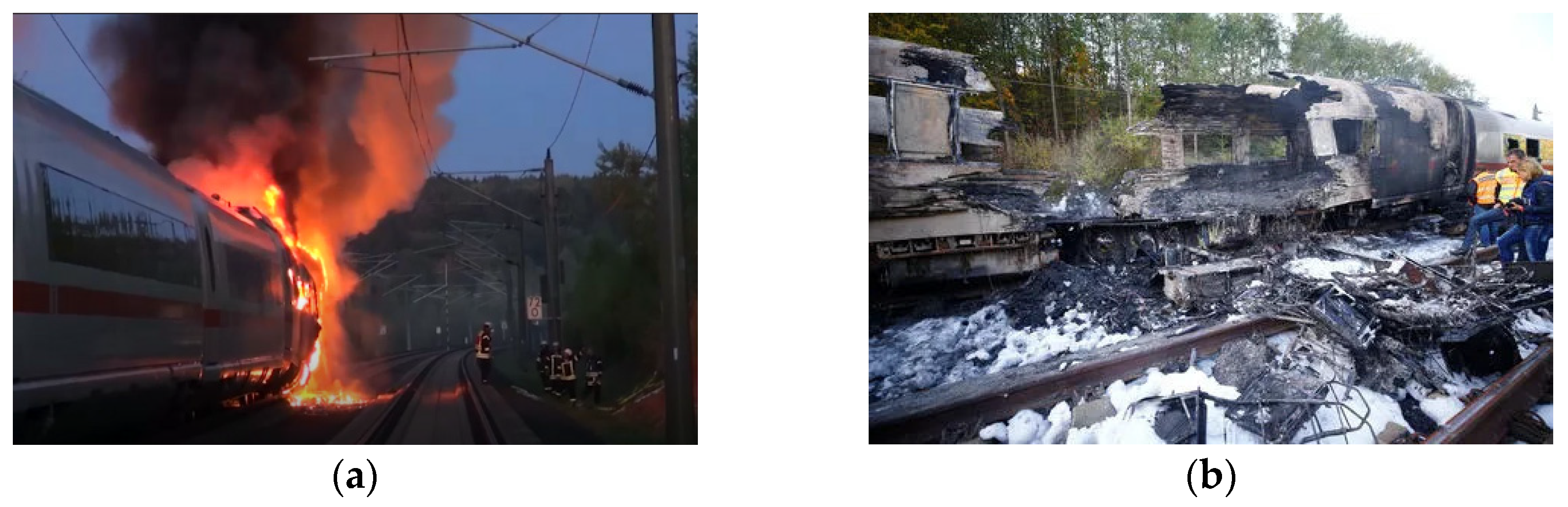
Figure 1. Fire on a German ICE high-speed train: (a) during the fire; (b) after the fire.
Applsci 15 12671 g001
Figure 2. Fire of an Austrian passenger train after collision with a road freight vehicle: (a) during the fire; (b) after the fire.
Applsci 15 12671 g002
Figure 3. Fire of a Polish passenger train: (a) during the fire; (b) after the fire.
Applsci 15 12671 g003
Figure 4. Fire of a Polish passenger train: (a) during the fire; (b) after the fire.
Applsci 15 12671 g004
Figure 6. Fire of the train at the Ahrensfelde commuter train station in Berlin: (a) during the fire; (b) after the fire.
Applsci 15 12671 g006
Figure 7. Percentage of products tested according to the R21 set of requirements of the EN 45545-2 [31] standard.
Applsci 15 12671 g007
Figure 8. Percentage of products tested according to the R18 set of requirements of the EN 45545-2 [31] standard.
Applsci 15 12671 g008
Figure 9. Percentage of products tested according to the R1 set of requirements of the EN 45545-2 [31] standard.
Applsci 15 12671 g009
Figure 10. Percentage of products tested according to the R7 set of requirements of the EN 45545-2 [31] standard.
Applsci 15 12671 g010
Figure 11. Example installation diagram of the SuGM system powered by gas cylinders and a water tank [43].
Applsci 15 12671 g011
Figure 12. Basic high-pressure system functional schematics [43]: (A) input from detection system; (B) water cylinder; (C) nitrogen cylinder; (D) electrically driven section valves.
Applsci 15 12671 g012
Figure 13. Example of a remote extinguishing system (FM200 gas cylinders, pipe, and nozzle system) [source: IK].
Applsci 15 12671 g013
Figure 14. Example of extinguishing aerosol generators [source: (a) IK; (b) credit photo by Fogtec].
Applsci 15 12671 g014
Figure 15. Example of a signaling and control system (fire alarm control panel, acoustic–optical signaling device) [source: IK].
Applsci 15 12671 g015
Figure 16. An example of a sensor installed in rail vehicles [source: (a) IK; (b) credit photo by Siemens].
Applsci 15 12671 g016
Figure 17. Sample fire barrier design [source: IK].
Applsci 15 12671 g017
Disclaimer/Publisher’s Note: The statements, opinions and data contained in all publications are solely those of the individual author(s) and contributor(s) and not of MDPI and/or the editor(s). MDPI and/or the editor(s) disclaim responsibility for any injury to people or property resulting from any ideas, methods, instructions or products referred to in the content.