Article

Analyzing Grip Strength Disparities Between Dominant and Non-Dominant Hands: Influence of Sex and Age in the Polish Population

1
Department of Clinical Engineering, Academy of Silesia, 40-555 Katowice, Poland
2
Department of Biomechatronics, Faculty of Biomedical Engineering, Silesian University of Technology, 41-800 Zabrze, Poland
3
Faculty of Biomedical Engineering, Silesian University of Technology, 41-800 Zabrze, Poland
4
Department of Computational Mechanics and Engineering, Silesian University of Technology, 44-100 Gliwice, Poland
*
Author to whom correspondence should be addressed.
Appl. Sci. 2025, 15(23), 12657; https://doi.org/10.3390/app152312657
Submission received: 21 October 2025 / Revised: 25 November 2025 / Accepted: 27 November 2025 / Published: 28 November 2025
(This article belongs to the Special Issue Sarcopenia and Dynapenia)

Abstract

Handgrip strength (HGS) is a key indicator of muscular fitness and physical health. Recently, attention has focused on HGS asymmetry as a potential marker of functional impairment. The aim of the study was to analyze differences in handgrip strength between the dominant and non-dominant limbs and to assess the influence of age and sex on asymmetry levels within the Polish population. A total of 341 participants (170 women and 171 men) were divided into two groups: younger (18–35 years) and older (50+). HGS was measured using a Noraxon digital dynamometer, and asymmetry was defined as the ratio of dominant to non-dominant handgrip strength. Most of the participants (approximately 70%) exhibited greater strength in their dominant hand, with a mean asymmetry values ranging from 17% to 19%. Older adults showed lower overall HGS than younger adults, however, the asymmetry did not differ significantly between sexes or age groups. A small asymmetry (≤10%) was the most common among participants. The Polish adult population shows moderate asymmetry in handgrip strength, with a predominance of the dominant hand, regardless of age or gender. Measuring grip strength asymmetry may provide useful information for assessing the function of the upper limbs and could be important for monitoring physical fitness, identifying neuromuscular disorders, and preventing the decline of motor function in older adults.

1. Introduction

The upper limb plays a fundamental role in human functioning, enabling the precise execution of complex manipulative activities such as grasping, lifting, holding, and rotating objects. Due to the wide range of performed tasks and their significant mobility, the structures of the upper limb are particularly susceptible to overload and injury [1]. Handgrip strength (HGS) is an important factor in assessing physical fitness because it is a simple, non-invasive, and widely used indicator of muscular function [2]. Numerous studies have shown that handgrip strength is a measure not only of local upper limb strength, but also of muscle performance and general health [2]. Low handgrip strength is commonly associated with an elevated risk of falls, disability, reduced health-related quality of life, prolonged hospital stay, and increased mortality [3].
In recent years, research on handgrip strength has become increasingly important in clinical diagnostics, biomechanics, and physiotherapeutic practice [4,5]. This measure is not yet widely recognized as a reliable diagnostic tool for assessing patient health, but is considered a promising, rapidly developing assessment technique. Advances in digital technology and increasingly sophisticated software now enable precise analysis of grip strength parameters, significantly expanding its potential applications in assessing muscle function [2].
Handgrip strength has many advantages, which is why it is a widely used and practical tool for assessing muscle strength [6]. It is a convenient, safe, non-invasive, reliable, and easy-to-perform method across various age groups. Its additional advantage is the possibility of measurement performed by personnel with minimal training, while simultaneously allowing easy interpretation of the results obtained [7,8]. This strength capacity has moderate to high construct validity and lower rates of exclusion and dropout rates in epidemiological studies compared to more complex assessments of total body strength and major muscle groups [8]. Moreover, modern dynamometers are becoming increasingly accessible, and the results obtained with cheaper devices are comparable to those provided by standard equipment [8].
In recent years, handgrip strength has been used to assess the progression of various diseases and functional disorders, including sarcopenia [9], which is an idiopathic, age-related, progressive, and generalized skeletal muscle disease characterized by an accelerated loss of muscle mass and function, and physical performance below a specified threshold. This is associated with an increased risk of falls, physical frailty, prolonged hospitalization, dependency, physical disability and impairment, limited mobility, reduced quality of life, and increased mortality [3,10,11]. HGS also offers potential support to evaluate the advancement of osteoporosis, which is a major public health problem with an increased risk of mortality after osteoporotic fractures in the elderly population. Furthermore, many studies have shown that weaker HGS is associated with low bone mineral density (BMD), a higher risk of osteoporosis and fractures, and reduced bone health, which is important for adult health [12]. Handgrip strength also has a direct connection with the overall nutritional status. A decrease in HGS usually comes with muscle mass loss and is an early sign of malnutrition. Caloric restriction and fasting can seriously affect skeletal muscle function, even if standard nutritional indicators do not show deficiencies. A reduction in muscle strength and endurance can appear earlier than changes in biochemical test results, thus serving as an early signal of malnutrition [13]. In addition, HGS is also a key indicator of health outcomes. Patients with reduced handgrip strength are at an increased risk of developing postoperative complications and are characterized by a higher probability of rehospitalization. A low HGS value is also correlated with increased mortality in both the short and long term [14].
Although the maximum reduction in maximum grip strength is undoubtedly clinically significant and is a reliable indicator of overall muscle strength, it does not fully reflect another important aspect of musculoskeletal function—muscle strength symmetry. Maintaining strength balance between the limbs is crucial for sustaining proper motor function, postural stability, and movement efficiency [15,16]. A growing body of research indicates that muscle strength asymmetry can be an early indicator of deteriorating muscle health, appearing even before a decline in maximum strength [17]. In this context, differences in grip strength between the dominant and non-dominant hand, commonly defined as exceeding 10% [9,17,18], are gaining increasing diagnostic importance. Therefore, HGS asymmetry may be a more sensitive and clinically relevant screening tool than maximum strength alone, allowing for the earlier detection of adverse changes in the muscular system. Furthermore, the latest scientific reports suggest that increased HGS asymmetry is associated with a higher risk of falls, limitation of functional capacity, and a deterioration of overall physical performance [19]. In recent years, studies on handgrip strength asymmetry have primarily concentrated on clinical populations, including individuals with sarcopenia [9] or multiple sclerosis [20], as well as older adults [17,21] and athletes [22,23,24]. There are also extensive population studies in the literature that cover more than 18,000 Americans more than the age of 50 [17] and over 9000 people aged 18–92 [9], which present the results of the measurements of handgrip strength asymmetry. However, studies presenting normative values and patterns of handgrip strength asymmetry among healthy adult European populations are still lacking, particularly those that focus on the Polish population. Previous studies based on Polish samples have mainly involved measuring handgrip strength in children and adolescents aged 3–19 [25], university students [26], and people over 50 years of age [25,27]. However, none of these studies analyzed differences in grip strength between dominant and non-dominant hands, nor did they compare results across different age groups (young and older adults), representing a significant research gap. The few studies that analyzed handgrip strength asymmetry in the Polish population focused exclusively on physically active individuals, such as handball players [23] and bodybuilders [24]. Due to their regular physical activity, these individuals can expect to exhibit increased limb specialization. Therefore, the results of these studies cannot be extrapolated to the general healthy adult Polish population. The aim of the study was to analyze the differences in handgrip strength between the dominant and non-dominant hand using a digital dynamometer among healthy Polish adults, including a group of young adults and people over 50 years of age. This study attempts to fill an identified research gap by providing normative data on handgrip strength asymmetry in a population that has been overlooked in such analyses to date. It was hypothesized that greater handgrip strength asymmetry might be present in older individuals, manifesting as a more pronounced dominance of the dominant limb over the non-dominant one. Additionally, it was assumed that the magnitude of asymmetry between the dominant and non-dominant limb might be dependent on the sex of the participants.

2. Materials and Methods

2.1. Participants

A total of 341 individuals participated in the handgrip strength test, including 170 women and 171 men, of which two age groups were selected: young adults—18–35 years old (95 females, 127 males) and older adults—over 50 years old (75 females, 44 males). The age limit for qualification for the older group was set at 50 years, in accordance with the publication by Beenakker et al. [28]. The 18–35 age group, on the other hand, includes people who are in a period of typical, stable, and high physical fitness.

2.2. Procedure

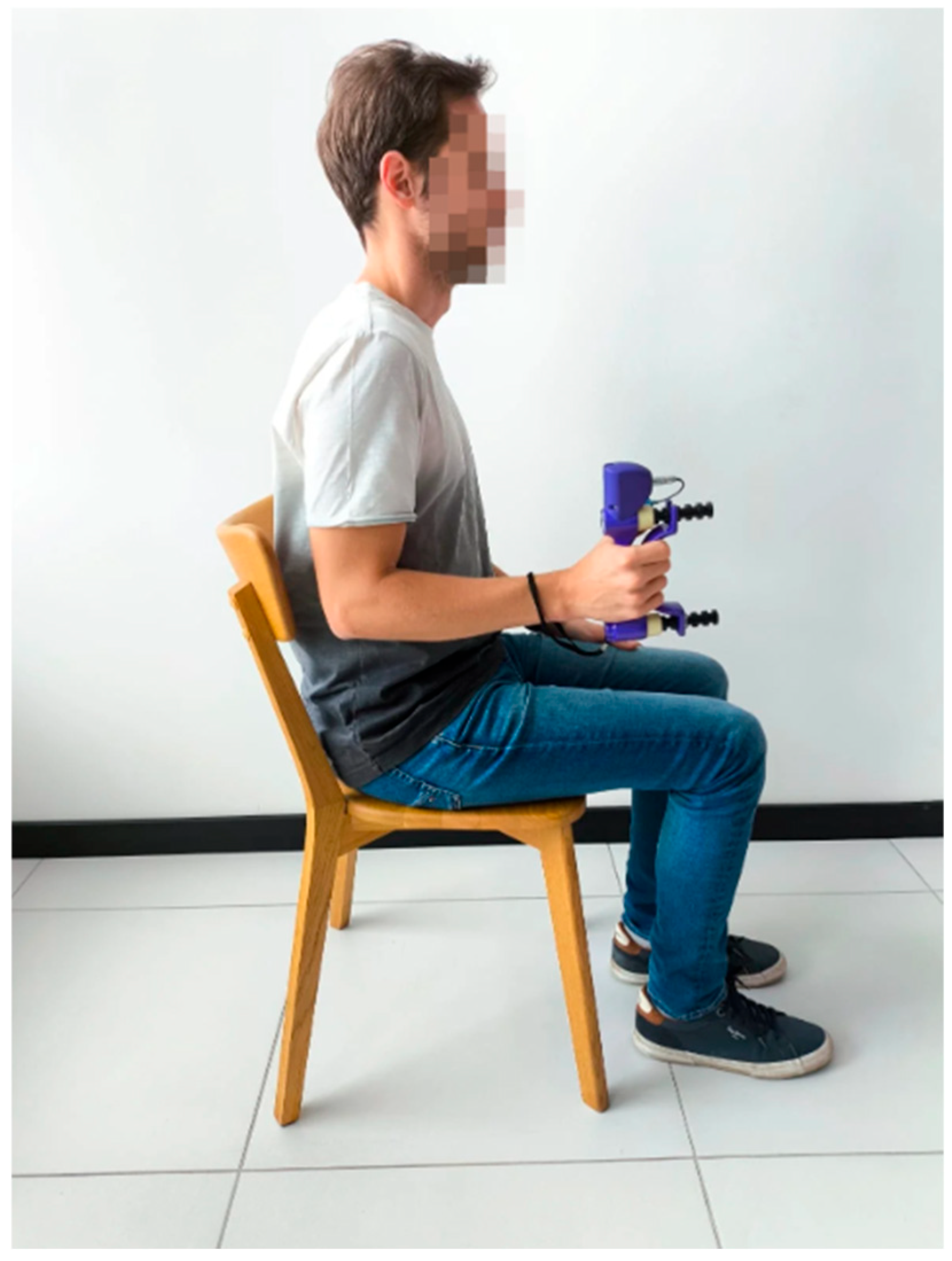
Handgrip strength was assessed using a Noraxon digital dynamometer (Noraxon Inc., Scottsdale, AZ, USA). The device was calibrated according to the manufacturer’s instructions before each use, i.e., before testing each participant. According to the manufacturer, the measurement accuracy is 0.1 N. Measurements were carried out according to the recommendations of the American Society of Hand Therapists, with participants seated in chairs without armrests, the shoulder adducted, elbow flexed at 90°, and the forearm and wrist in a neutral position (Figure 1) [29]. The participants sat on chairs without armrests. Participants were instructed to perform three maximal 3 s handgrip trials for each hand, avoiding any sudden movements, with 15 s rest intervals between attempts. During the measurement, participants did not see the result but received standard verbal encouragement from the person conducting the test, for example “start… Squeeze as hard as you can… three seconds… end,” to generate their maximum grip strength. For further statistical analysis, the highest value of the three trials for each hand was used. The dominant hand was defined as the one that the participant uses when writing or performing other typical manual activities. During the assessment, information about hand dominance was also gathered. Individuals were excluded from the study if they had: current upper limb injuries (e.g., fractures, sprains, dislocations), rheumatic or neurological diseases that could affect upper limb function, chronic pain in the hand, wrist, elbow, or shoulder, recent surgical procedures in the upper limb area (within <6 months), or inability to correctly perform a test according to the protocol. Participants were voluntarily recruited from local community and universities through open announcements. Inclusion criteria were: age 18–35 years for the younger group and ≥50 years for the older group, self-reported good general health, and absence of conditions affecting grip performance.

2.3. Statistical Analysis

All calculations were performed with MATLAB R2025a (MathWorks, Natick, MA, USA) and Statistica 14.0 (TIBCO Inc., Palo Alto, CA, USA). Data distribution was assessed using the Shapiro–Wilk test. Since the data were not normally distributed, differences in handgrip strength between the dominant and non-dominant hand were analyzed using the Wilcoxon test, while differences between the younger (18–35) and older (50+) groups were evaluated using the Mann–Whitney U test. Statistical significance was set at p < 0.05. Descriptive statistics are presented as N (number of participants), mean ± standard deviation (SD), median (Mdn), minimum (Min) and maximum (Max).
Comparisons between groups were made to examine the effect of age and sex on grip strength asymmetry.

3. Results

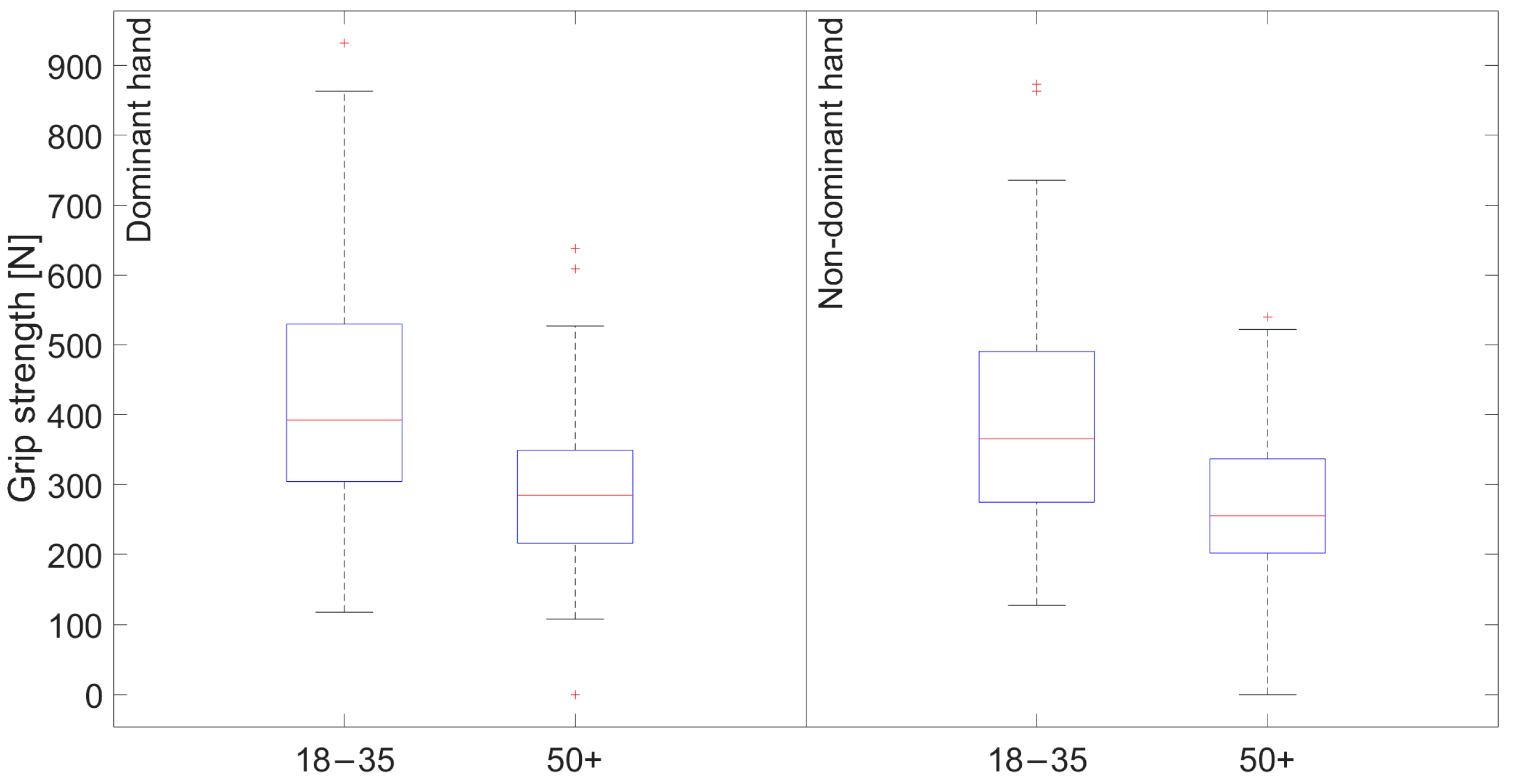
Figure 2 and Table 1 present the handgrip strength values for the dominant and non-dominant hand, considering the division of participants into two age groups (18–35 years and 50+ years). The overall mean handgrip strength across all participants was 377 ± 138 N for the dominant hand and 346 ± 132 N for the non-dominant hand.
When analyzed by age group, higher handgrip strength were observed among young adults. In this group, the mean strength of the dominant hand was 419 ± 138 N, while the non-dominant hand averaged 383 ± 133 N. In participants over 50 years of age, the corresponding values were notably lower— 300 ± 101 N for the dominant hand and 278 ± 97 N for the non-dominant hand, representing a decrease of approximately 40 % compared to the younger group.
Statistical analysis revealed significant differences between the dominant and non-dominant limbs in all examined groups ( p = 0.00 ). The mean difference in handgrip strength between the dominant and non-dominant limbs ranged from 22 to 35 N, while in extreme cases differences as large as 343 N were recorded (Table 2).
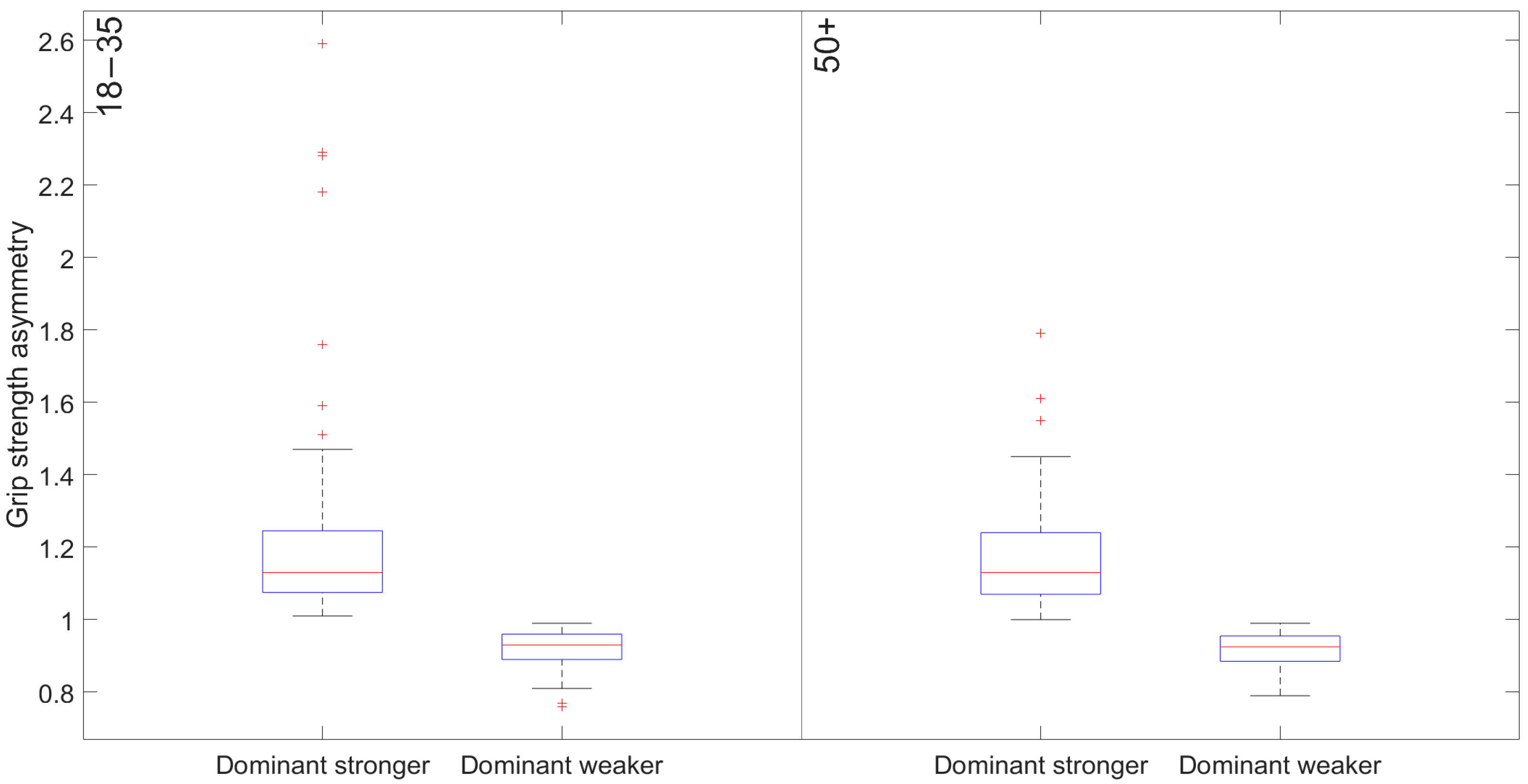
Figure 3 and Table 3 present the values of muscle strength asymmetry, expressed as the ratio of dominant to non-dominant hand strength (dominant/non-dominant), in two age groups: 18–35 and 50+ years. Within each group, participants were classified into three categories: those with a stronger dominant limb (“dominant stronger”), those with a stronger non-dominant limb (“dominant weaker”), and those with approximately equal handgrip strength in both hands (“equal strength”).
Approximately 70 % of the participants demonstrated greater grip strength in the dominant hand. Equal strength between hands was observed in only about 6 % of the individuals. In cases where the dominant limb was stronger, the asymmetry between hands averaged 17 19 %, while in cases of a stronger non-dominant limb, it averaged 8 9 %.
Comparison between age groups (18–35 years and 50+ years), performed using the Mann–Whitney U test, revealed no statistically significant differences in handgrip strength asymmetry between the groups (whole group: p-value = 0.842, dominant stronger: p-value = 0.814, dominant weaker p-value = 0.637).
In Table 4, the percentage distribution of handgrip strength asymmetry levels is presented, considering participants with no asymmetry as well as those with asymmetry 10%, 20%, and > 20% in accordance with the classification proposed McGrath et al. [19]. Among participants with a stronger dominant limb, the largest proportion ( 42 45 %) exhibited asymmetry 10%, 31 35 % showed asymmetry 20%, and 20 27 % had asymmetry > 20%. On the contrary, among participants with a stronger non-dominant limb, a decreasing trend was observed: asymmetry 10% was recorded in 61 –69% of individuals, asymmetry 20% in 22 –29%, and asymmetry > 20% in only 9 11 % of cases.
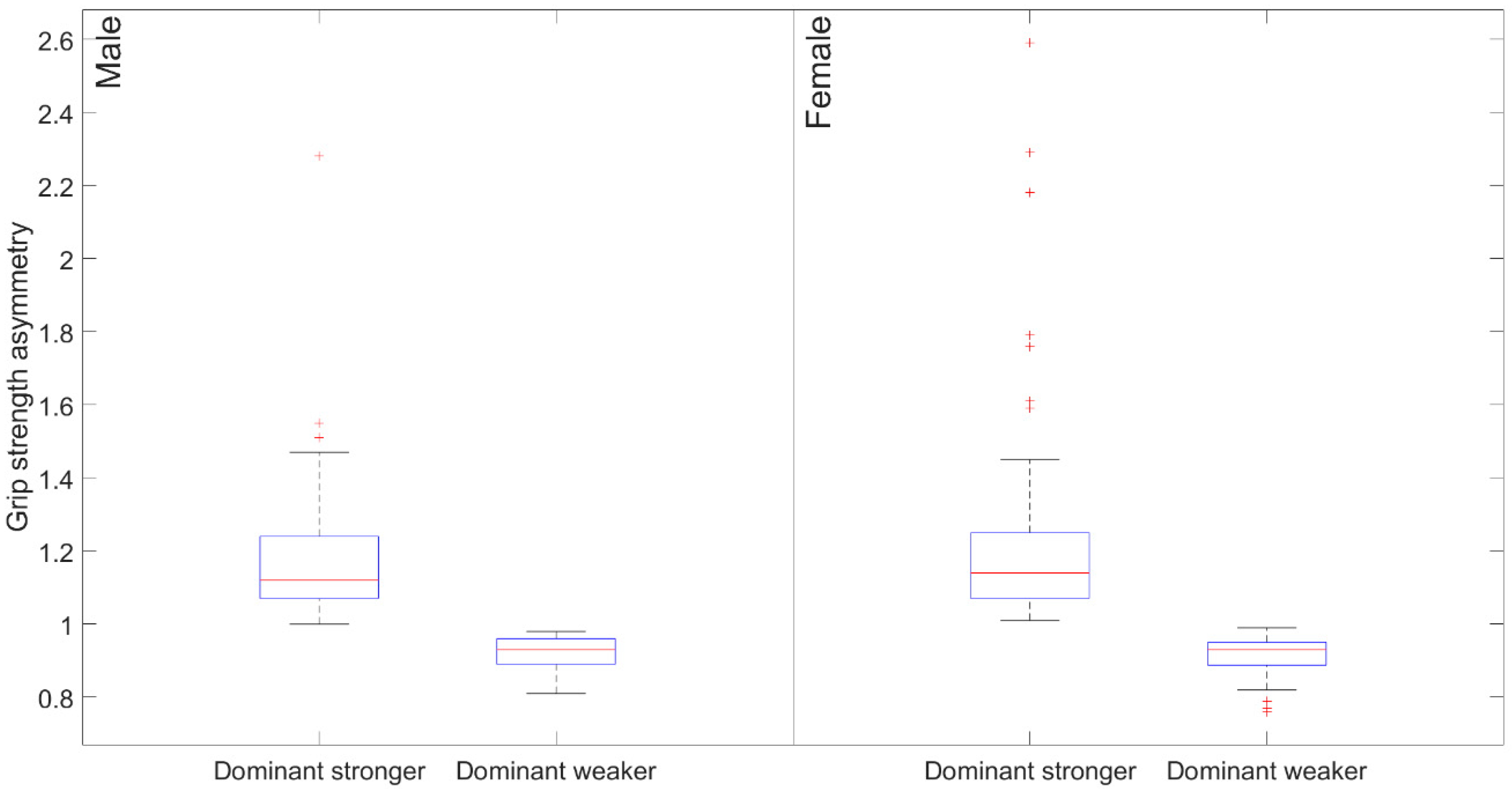
The influence of sex on handgrip strength asymmetry between the dominant and non-dominant limbs was also analyzed (Figure 4 and Table 5). As in the previous analyses, the participants were categorized into three groups: those with a stronger dominant limb (“dominant stronger”), those with a stronger non-dominant limb (“dominant weaker”), and those with approximately equal grip strength in both hands (“equal strength”).
In both women and men, approximately 70 % of the participants exhibited greater grip strength in the dominant hand. Among women with a stronger dominant hand, the mean asymmetry value was higher ( 21 % ± 14%) compared to men ( 16 % ± 12%). However, statistical testing revealed no significant differences between sexes (whole group: p-value = 0.883, dominant stronger: p-value = 0.264, dominant weaker p-value = 0.326). In the cases where the non-dominant hand was stronger, the mean asymmetry value range between 8 9 % for both women and men. The same strength of the handgrip was observed in both hands in 4% women and 7% of men.
When analyzing the percentage distribution of handgrip strength asymmetry levels by sex (Table 6), it was observed that both women and men most frequently exhibited asymmetry levels 10%. For participants with a stronger dominant hand, the percentage distribution was similar in both groups: asymmetry 10%, occurred in 44 46 % of individuals, asymmetry between 11 20 % in 23 26 %, and asymmetry > 20% in 30 35 % of participants. In contrast for those with a stronger non-dominant hand, sex-related differences were noted. Men more often demonstrated asymmetry 10%, while women more frequently showed asymmetry > 20% ( 13 % of women vs. 5 % of men).

4. Discussion

The purpose of this study was to analyze differences in handgrip strength between dominant and non-dominant limbs to assess the influence of age and sex on the level of muscle strength asymmetry in the Polish population. The results showed that, in both the group of young adults (18–35 years) and among people over 50 years of age, the vast majority of participants (approximately 70 %) demonstrated greater grip strength in the dominant hand. Only a small percentage of participants ( 4 7 %) exhibited equal grip strength in both hands, which is consistent with previous observations indicating that dominant limb superiority is a common phenomenon among healthy adults [30,31].
A comparison of the differences in grip strength between the dominant and non-dominant limbs in this study shows that the level of asymmetry observed in the Polish population is consistent with that reported in other international studies. In the 18–35 age group, the average difference was 12%, while in people over 50, it was 10%. These results are similar to those of a meta-analysis which showed that the dominant limb is, on average, 11.6% stronger than the non-dominant limb [32]. This convergence confirms that the level of dominance observed in this study corresponds to the typical physiological pattern described in healthy adults. However, it should be noted that the extent of asymmetry varies between populations. American studies have observed smaller differences in the range of 5.0–5.6%, which are modulated by sex and hand preference [33]. On the contrary, greater variability was observed in the Turkish population, with average differences ranging from 1.5 to 8%, depending on age and gender [34]. Comparing these results with the data presented in this study indicates that the asymmetry of handgrip strength in Poles not only aligns with the global trend of dominant limb superiority, but also falls within the widely described typical range of variability.
This consistency with the findings of studies conducted in other countries suggests that universal physiological and behavioral mechanisms characteristic of most populations may be the basis for the observed asymmetry. The etiology of handgrip strength asymmetry remains not fully understood, although the literature points to several factors that may contribute to its development. One of the most plausible explanations is the difference in the degree of limb use. Regular involvement of the dominant hand in everyday activities may lead to greater strength, while the non-dominant limb is used less frequently, which promotes a gradual decline in its functional capacity [35]. According to the findings of Bardo et al. [36], hand dominance and hand function may also be modified by lifestyle factors such as type of work, sports activities, or playing musical instruments. The study showed that the type of employment affects grip strength in men but not in women, probably related to the smaller number of women performing physical work that involves strength. Men employed in occupations requiring intensive manual labor had significantly greater grip strength than office workers, especially in their non-dominant hand, reflecting more frequent and strenuous use of both hands in physical work. A similar effect was observed in people who practice sports involving intense hand work, while playing musical instruments had no significant effect on grip strength [36]. These results suggest that regular manual activities involving strength promote more similar strength in both hands (greater symmetry), while people who perform office work or precision tasks are more likely to show greater asymmetry in grip strength. However, it should be emphasized that while in the case of people who regularly practice sports involving intensive hand work, this activity may contribute to a reduction in upper limb strength asymmetry, in the case of competitive athletes, the effect may be different. In professionals, frequent performance of repetitive, specialized unilateral movements—characteristic, for example, of handball players [23] or combat athletes (judo [24]) can lead to increased asymmetry resulting from the dominant load on one limb. In this group, excessive asymmetry may therefore be a consequence of both the specific nature of the discipline and the uneven development of strength and muscle mass between the sides of the body [23]. At the neurophysiological level, lateralization of motor control within the brain plays an important role in shaping asymmetry. The study by Dexheimer et al. [37] emphasized the role of hemispheric specialization—the left hemisphere primarily controls the right upper limb, while the right hemisphere controls the left—which provides a neuroanatomical basis for natural differences in strength and movement precision between hands. Therefore, this lateralization can contribute to the persistence of asymmetry of handgrip strength, regardless of behavioral factors. Furthermore, it has been shown that cerebral hemisphere may not only be associated with motor differences, but also with different levels of involvement in cognitive processes such as spatial attention and integration of sensory information integration [38]. Impairments in these functions can disrupt the balance between the hemispheres, resulting in less effective cooperation between the dominant and non-dominant hands. In the context of HGS, this suggests that deterioration in cognitive motor organization may exacerbate existing strength disparities between hands or hinder the ability to compensate for them [39].
Based on the above, it can be assumed that handgrip strength asymmetry reflects not only differences in limb usage, but also deeper neurophysiological mechanisms related to the organization and efficiency of motor control. Understanding these determinants can provide valuable insights into the processes of neuromuscular aging processes and potentially serve as a starting point for further research on asymmetry as a marker of early functional changes in adult and older populations.
The next aspect analyzed in this study was the influence of age on the asymmetry between the dominant and non-dominant limbs. The analyses carried out confirmed that older people (50+) exhibited significantly lower handgrip strength compared to younger adults. This result is consistent with the literature, which indicates a gradual decline in muscular strength with age [40], a consequence of physiological aging processes such as a decrease in the mass and quality of skeletal muscles, reduced physical fitness, and changes in the functioning of the neuromuscular system [41]. These phenomena are part of the broader process of sarcopenia, defined as age-related loss of muscle mass, strength, and function, which contributes significantly to the decrease in HGS [9]. Contrary to these observations, the hypothesis formulated in this study, that older people experience greater asymmetry in handgrip strength, with a more pronounced dominance of the dominant limb, was not confirmed. The average asymmetry between the dominant and non-dominant hand remained similar in both age groups, being around 17 19 % with a dominance of the dominant hand and 8 9 % with a dominance of the non-dominant hand. The lack of statistically significant differences in asymmetry between age groups (Mann–Whitney U test) suggests that the aging process mainly affects the overall decline in muscular strength, while the relative strength ratio between the limbs remains relatively constant. According to the observations of Binns et al. [42], the reduction in HGS may reflect the decrease in the overall strength of the body. Therefore, the results obtained may reflect the presence of compensatory mechanisms in the neuromuscular system that help maintain a balance of strength between the limbs despite the general decline in strength with age.
The analysis of the influence of gender showed that in the female group, the average asymmetry for stronger dominant hand was slightly higher ( 21 % ±   14 %) compared to men ( 16 % ± 12%), although these differences were not statistically significant. In the case of non-dominant hand dominance, the average asymmetry was 8 9 % for both women and men. The results of the percentage distribution of the levels of asymmetry indicate that, both in women and men, the most common occurrence was a small asymmetry ( 10 % ). A noteworthy observation is the elevated proportion of women exhibiting a dominant non-dominant hand when asymmetry exceeds 20%. This finding may imply heightened individual variability in this group or the influence of environmental factors, including daily activities, physical activity levels, and manual preference patterns. According to the observations of Janssen et al. [43], the occurrence of asymmetric strength patterns may result from fundamental differences in muscle mass distribution and composition between women and men. Thus, the results obtained did not confirm the hypothesis that gender significantly influences the degree of grip strength asymmetry. However, the observed trends suggest the possibility of subtle differences that require further research.
The results obtained confirm that the dominance of the dominant hand is a common phenomenon in the adult Polish population, regardless of age and sex. The frequent occurrence of slight asymmetry (≤10%) suggests that most healthy individuals maintain a relative balance of strength between their limbs. Such small asymmetry, around 10 % , is considered typical and results from the natural dominance of one hand in performing daily tasks [30,31,44]. The appearance of asymmetry between the limbs exceeding 10% may indicate a neuromuscular system disorder. It is reflected in results of research associating asymmetry of a handgrip strength with greater risk of occurrence of neurodegenerative diseases [45], functional disabilities [46], sarcopenia [9], depression [46], or an increased risk of falls [47]. Crucially, Sampaio et al. [48] proved that high levels of HGS asymmetry (>20%) was related to increased mortality among middle-aged or older Japanese men. Additionally, McGrath R. et al. [19] found that each 0.1 increase in the handgrip strength asymmetry index was associated with a 1.26 -fold higher likelihood of future falls. On the other hand, Pratt et al. [9] indicate that people over 50 years with asymmetric handgrip strength are 2.67 times more likely to have sarcopenia, 1.83 times more likely to have reduced grip strength, and 1.79 times more likely to have a low muscle mass index (SMI) than people with a more symmetric grip strength.
In light of these findings, the measurement of handgrip strength may form a valuable tool for the early diagnosis of muscle function impairments, as well as monitoring changes in the health state of adult and elderly populations. Analysis of differences between limbs provides not only information about maximal strength, but also information about the balance of the musculoskeletal system. Persistent or increasing asymmetry can indicate the beginning of pathological processes, such as progressive muscle weakness or impairments in neuromuscular coordination.
The results obtained are of practical importance to specialists involved in assessing and treating upper limb function [49]. Measuring handgrip strength asymmetry can complement the assessment of overall muscle fitness, monitor the effects of rehabilitation, and identify individuals at increased risk of loss of motor function [50]. From a physiological perspective, the presented results provide a basis for further research into the relationship between strength asymmetry and age- or activity-related changes.
In the context of preventive and therapeutic interventions, strength and proprioceptive training focused on the upper limbs has been shown to lead to significant improvements in hand grip strength and manual dexterity in healthy adults, and these effects are particularly pronounced in older individuals [51]. Such interventions may help reduce the development of strength asymmetry between the limbs and support the maintenance of functional capacity during the aging process.
For that reason, it is recommended to include an asymmetry assessment in a standard measurement protocol as the well as maximal handgrip strength value. This approach may contribute to early detection of physical condition decline and support the development of efficient prevention programs, as well as rehabilitation focusing on maintaining muscle strength symmetry between the limbs. Regular monitoring of HGS asymmetry may also play a crucial role in the evaluation of the effectiveness of therapeutic intervention and in long-term monitoring of changes in functional muscle condition in the aging process.

Limitations of This Work and Directions for Further Research

Certain limitations should be taken into account when interpreting the findings of the present study. First, the sample consisted exclusively of Polish participants, which constrains the generalizability of the results to populations of other ethnic or cultural backgrounds. Previous research indicates that handgrip strength may vary depending on geographical region and place of residence [52,53], suggesting that environmental and population-specific factors could influence the degree of asymmetry between the dominant and non-dominant hand [54]. Dodds et al. [55] demonstrated that there is considerable geographical variation in normative grip strength values. This indicates that populations in developing regions exhibit markedly lower results than those from developed regions. These findings underscore the importance of geographic and population-specific factors in shaping baseline grip strength, emphasizing the need to consider these factors when interpreting differences between populations.
Second, the study employed a cross-sectional design, which limits the ability to draw casual interferences regarding the determinants of handgrip strength or interlimb asymmetry. These factors include, among others, the level and type of physical activity, lifestyle characteristics (sedentary vs. active), dietary habits, body mass index (BMI), socioeconomic status, educational attainment, and occupational status (manual vs. non-manual work) [26,50,56]. Additionally, potential anatomical differences, such as the size, were not controlled for, despite evidence suggesting that they may influence measured strength values. Bardo et al. [36] demonstrated that hand morphology, including hand size and shape, significantly affects grip strength, confirming that anatomical variation can contribute meaningfully to differences between individuals. The absence of control for these variables may limit the precision of the conclusions and contribute to the variation in strength between the dominant and non-dominant hand.
Future research will address these limitations by incorporating a broader and more diverse sample, including additional age groups. An important direction for further inquiry will be the systematic measurement and statistical control of the aforementioned confounding variables. Moreover, longitudinal studies are proposed, involving repeated handgrip strength assessment in the same individuals over an extended period. Such an approach will enable long-term evaluation of changes in muscle strength and interlimb asymmetry, as well as the identification of factors that support the maintenance of muscle stability throughout the aging process [55].

5. Conclusions

The results of the study confirmed significant asymmetry in hand grip strength between the dominant and non-dominant hands of a population of healthy Polish adults, thus answering the research question. A clear advantage of the dominant limb was evident in over 70% of society. However, data analysis revealed no significant differences in the magnitude of this asymmetry depending on age or gender. This finding did not confirm the initial hypothesis that these factors influence the level of asymmetry. The lack of significant differences in the level of asymmetry of the strength of the handgrip between the age groups (18–35 years and 50+) suggests that in healthy individuals, the relative difference in strength between the upper limbs remains stable throughout adulthood. Measurement of handgrip strength, along with maximal grip strength, is a valuable tool for assessing muscle functions of the upper limb and may be useful in monitoring the risk of falls, injuries, or declines in physical activity among older people. Measuring handgrip strength asymmetry, as a simple and widely available indicator of muscle function, can support the assessment of the functional status and the monitoring the effectiveness of rehabilitation interventions. Interventions that aim to reduce the asymmetry of handgrip strength may help with maintaining functional independence and quality of life among older people. Including asymmetry assessment in standard handgrip strength protocols in clinical and population studies may enable a better understanding of its significance and allow the monitoring of the effectiveness of preventive and rehabilitative interventions.

Author Contributions

Conceptualization H.Z.; methodology H.Z. and P.S.; Formal Analysis, H.Z.; Investigation, H.Z. and P.S.; Data Curation and Collection: H.Z., K.N.-L., P.S., M.F., I.L., A.M., A.P., W.P., Z.P., M.P. and M.Z.; Writing—Original Draft Preparation, H.Z.; Writing—Review and Editing, H.Z., P.S. and K.N.-L.; Visualization, M.F. and W.P.; Supervision, K.N.-L. All authors have read and agreed to the published version of the manuscript.

Funding

The Article Processing Charge was co-financed under the European Funds for Silesia 2021–2027 Program co-financed by the Just Transition Fund—project entitled “Development of the Silesian biomedical engineering potential in the face of the challenges of the digital and green economy (BioMeDiG)”. Project number: FESL.10.25-IZ.01-07G5/23. And co-financed by a subvention from the Ministry of Science and Higher Education Poland to the Academy of Silesia in Katowice.

Institutional Review Board Statement

This study was conducted in accordance with the Declaration of Helsinki and was approved by the Ethics Committee of the Silesian University of Technology, Gliwice, Poland (protocol number 3/2025 dated 11 March 2025).

Informed Consent Statement

Informed consent was obtained from all subjects involved in the study.

Data Availability Statement

The raw data supporting the conclusions of this article will be made available by the authors on request.

Conflicts of Interest

The authors declare no conflicts of interest. The funders had no role in the design of the study; in the collection, analyses, or interpretation of data; in the writing of the manuscript; or in the decision to publish the results.

References

  1. Melchior, M.; Roquelaure, Y.; Evanoff, B.; Chastang, J.-F.; Ha, C.; Imbernon, E.; Goldberg, M.; Leclerc, A. Why Are Manual Workers at High Risk of Upper Limb Disorders? The Role of Physical Work Factors in a Random Sample of Workers in France (the Pays de La Loire Study). Occup. Environ. Med. 2006, 63, 754–761. [Google Scholar] [CrossRef]
  2. Szaflik, P.; Zadoń, H.; Michnik, R.; Nowakowska-Lipiec, K. Handgrip Strength as an Indicator of Overall Strength and Functional Performance—Systematic Review. Appl. Sci. 2025, 15, 1847. [Google Scholar] [CrossRef]
  3. Roberts, H.C.; Denison, H.J.; Martin, H.J.; Patel, H.P.; Syddall, H.; Cooper, C.; Sayer, A.A. A Review of the Measurement of Grip Strength in Clinical and Epidemiological Studies: Towards a Standardised Approach. Age Ageing 2011, 40, 423–429. [Google Scholar] [CrossRef] [PubMed]
  4. Piechura, J.; Skrzek, A.; Rozek, K.; Wróbel, E. Local Cryotherapy in Patients with the Painful Shoulder Syndrome. Physiotherapy 2010, 18, 19–25. [Google Scholar] [CrossRef]
  5. Dewir, I.M.; Abdel-Fattah, M.S.; Alamary, K.; Bakheet, M.A.; Alsuwat, F.S.; Algethemi, M.; Alzhrany, S.A.; Alotaibi, O.A.; Alsawat, B.O.; Alqourshi, I.; et al. The Immediate Effect of Kinesiotaping on Handgrip Strength in Young, Healthy Men. Rehabil. Med. 2022, 26, 45–49. [Google Scholar] [CrossRef]
  6. Strandkvist, V.; Larsson, A.; Pauelsen, M.; Nyberg, L.; Vikman, I.; Lindberg, A.; Gustafsson, T.; Röijezon, U. Hand Grip Strength Is Strongly Associated with Lower Limb Strength but Only Weakly with Postural Control in Community-Dwelling Older Adults. Arch. Gerontol. Geriatr. 2021, 94, 104345. [Google Scholar] [CrossRef]
  7. Bobos, P.; Nazari, G.; Lu, Z.; MacDermid, J.C. Measurement Properties of the Hand Grip Strength Assessment: A Systematic Review With Meta-Analysis. Arch. Phys. Med. Rehabil. 2020, 101, 553–565. [Google Scholar] [CrossRef]
  8. Benton, M.J.; Spicher, J.M.; Silva-Smith, A.L. Validity and Reliability of Handgrip Dynamometry in Older Adults: A Comparison of Two Widely Used Dynamometers. PLoS ONE 2022, 17, e0270132. [Google Scholar] [CrossRef]
  9. Pratt, J.; Pessanha, L.; Narici, M.; Boreham, C.; De Vito, G. Handgrip Strength Asymmetry as a New Biomarker for Sarcopenia and Individual Sarcopenia Signatures. Aging Clin. Exp. Res. 2023, 35, 2563–2571. [Google Scholar] [CrossRef] [PubMed]
  10. Vaishya, R.; Gupta, B.M.; Misra, A.; Mamdapurj, G.M.; Vaish, A. Global Research in Sarcopenia: High-Cited Papers, Research Institutions, Funding Agencies and Collaborations, 1993–2022. Diabetes Metab. Syndr. 2022, 16, 102654. [Google Scholar] [CrossRef] [PubMed]
  11. Nowakowska-Lipiec, K.; Zadoń, H.; Michnik, R.; Nawrat-Szołtysik, A. Progressive Loss of Muscle Strength: The Effects of Ageing and Sarcopenia on Muscle Function in Older Females. J. Clin. Med. 2025, 14, 7276. [Google Scholar] [CrossRef]
  12. Park, H.J.; Han, B.; Chang, S.Y.; Kang, S.H.; Lee, D.W.; Kang, S. Hand Grip Strength, Osteoporosis, and Quality of Life in Middle-Aged and Older Adults. Medicina 2023, 59, 2148. [Google Scholar] [CrossRef]
  13. Russell, D.M.; Leiter, L.A.; Whitwell, J.; Marliss, E.B.; Jeejeebhoy, K.N. Skeletal Muscle Function during Hypocaloric Diets and Fasting: A Comparison with Standard Nutritional Assessment Parameters. Am. J. Clin. Nutr. 1983, 37, 133–138. [Google Scholar] [CrossRef]
  14. Norman, K.; Stobäus, N.; Gonzalez, M.C.; Schulzke, J.D.; Pirlich, M. Hand Grip Strength: Outcome Predictor and Marker of Nutritional Status. Clin. Nutr. 2011, 30, 135–142. [Google Scholar] [CrossRef] [PubMed]
  15. Bond, C.W.; Cook, S.B.; Swartz, E.E.; Laroche, D.P. Asymmetry of Lower Extremity Force and Muscle Activation during Knee Extension and Functional Tasks. Muscle Nerve 2017, 56, 495–504. [Google Scholar] [CrossRef]
  16. Laroche, D.P.; Cook, S.B.; MacKala, K. Strength Asymmetry Increases Gait Asymmetry and Variability in Older Women. Med. Sci. Sports Exerc. 2012, 44, 2172–2181. [Google Scholar] [CrossRef]
  17. McGrath, R.; Vincent, B.M.; Jurivich, D.A.; Hackney, K.J.; Tomkinson, G.R.; Dahl, L.J.; Clark, B.C. Handgrip Strength Asymmetry and Weakness Together Are Associated With Functional Disability in Aging Americans. J. Gerontol. Ser. A 2021, 76, 291–296. [Google Scholar] [CrossRef] [PubMed]
  18. McGrath, R.; Lang, J.J.; Ortega, F.B.; Chaput, J.P.; Zhang, K.; Smith, J.; Vincent, B.; Piñero, J.C.; Garcia, M.C.; Tomkinson, G.R. Handgrip Strength Asymmetry Is Associated with Slow Gait Speed and Poorer Standing Balance in Older Americans. Arch. Gerontol. Geriatr. 2022, 102, 104716. [Google Scholar] [CrossRef] [PubMed]
  19. McGrath, R.; Clark, B.C.; Cesari, M.; Johnson, C.; Jurivich, D.A. Handgrip Strength Asymmetry Is Associated with Future Falls in Older Americans. Aging Clin. Exp. Res. 2021, 33, 2461–2469. [Google Scholar] [CrossRef]
  20. Grange, E.; Marengo, D.; Di Giovanni, R.; Brichetto, G.; Mueller, M.; Tacchino, A.; Bertoni, R.; Zagari, F.; Pappalardo, A.; Prosperini, L.; et al. Fatigue and Its Association with Upper Limb Function in People with Multiple Sclerosis. Neurol. Int. 2025, 17, 88. [Google Scholar] [CrossRef]
  21. McGrath, R.; Tomkinson, G.R.; LaRoche, D.P.; Vincent, B.M.; Bond, C.W.; Hackney, K.J. Handgrip Strength Asymmetry and Weakness May Accelerate Time to Mortality in Aging Americans. J. Am. Med. Dir. Assoc. 2020, 21, 2003–2007. [Google Scholar] [CrossRef] [PubMed]
  22. Lantis, K.D.; Saul, K.; Schmidt, D.J. Short-Term Effects of Running Exercise on Pinch Strength, Grip Strength, and Manual Dexterity of the Dominant and Non-Dominant Hands. Ergonomics 2024, 67, 1633–1643. [Google Scholar] [CrossRef] [PubMed]
  23. Lijewski, M.; Burdukiewicz, A.; Pietraszewska, J.; Andrzejewska, J.; Stachoń, A. Asymmetry of Muscle Mass Distribution and Grip Strength in Professional Handball Players. Int. J. Environ. Res. Public Health 2021, 18, 1913. [Google Scholar] [CrossRef]
  24. Burdukiewicz, A.; Pietraszewska, J.; Andrzejewska, J.; Chromik, K.; Stachoń, A. Asymmetry of Musculature and Hand Grip Strength in Bodybuilders and Martial Artists. Int. J. Environ. Res. Public Health 2020, 17, 4695. [Google Scholar] [CrossRef]
  25. Górecki, M.; Kazarców, M.; Protasewicz, A.; Czarnecki, P.; Romanowski, L. Population Norms for Hand Grip and Precision Grip Strengths in Polish Children and Adolescents Aged 3–19. J. Clin. Med. 2024, 13, 4833. [Google Scholar] [CrossRef] [PubMed]
  26. Lelonek, M.; Przychodni, A.; Lorger, M.; Cieśla, E.; Suliga, E. Handgrip Strength and Body Mass Index in Polish and Croatian Female University Students of Preschool and Primary Education. Med. Stud. 2022, 38, 287–294. [Google Scholar] [CrossRef]
  27. Wiśniowska-Szurlej, A.; Ćwirlej-Sozańska, A.; Kilian, J.; Wołoszyn, N.; Sozański, B.; Wilmowska-Pietruszyńska, A. Reference Values and Factors Associated with Hand Grip Strength among Older Adults Living in Southeastern Poland. Sci. Rep. 2021, 11, 9950. [Google Scholar] [CrossRef]
  28. Beenakker, K.G.M.; Ling, C.H.; Meskers, C.G.M.; de Craen, A.J.M.; Stijnen, T.; Westendorp, R.G.J.; Maier, A.B. Patterns of Muscle Strength Loss with Age in the General Population and Patients with a Chronic Inflammatory State. Ageing Res. Rev. 2010, 9, 431–436. [Google Scholar] [CrossRef]
  29. Scollard, T.M. Handgrip Strength Assessment: A Skill to Enhance Diagnosis of Disease-Related Malnutrition. Support Line 2017, 39, 7–13. [Google Scholar]
  30. Bohannon, R.W. Grip Strength: A Summary of Studies Comparing Dominant and Nondominant Limb Measurements. Percept. Mot. Skills 2003, 96, 728–730. [Google Scholar] [CrossRef]
  31. Ditroilo, M.; Forte, R.; Benelli, P.; Gambarara, D.; De Vito, G. Effects of Age and Limb Dominance on Upper and Lower Limb Muscle Function in Healthy Males and Females Aged 40–80 Years. J. Sports Sci. 2010, 28, 667–677. [Google Scholar] [CrossRef]
  32. Foley, R.C.A.; Callaghan, D.H.; Forman, G.N.; Graham, J.D.; Holmes, M.W.R.; La Delfa, N.J. A Comprehensive Scoping Review and Meta-Analysis of Upper Limb Strength Asymmetry. Sci. Rep. 2025, 15, 4636. [Google Scholar] [CrossRef]
  33. Wang, Y.C.; Bohannon, R.W.; Kapellusch, J.; Washburn, D.; Li, X.; Yen, S.C.; Rahman, M.H. Between-Side Differences in Hand-Grip Strength across the Age Span: Findings from 2011–2014 NHANES and 2011 NIH Toolbox Studies. Laterality 2019, 24, 697–706. [Google Scholar] [CrossRef] [PubMed]
  34. Ekşioğlu, M. Normative Static Grip Strength of Population of Turkey, Effects of Various Factors and a Comparison with International Norms. Appl. Ergon. 2016, 52, 8–17. [Google Scholar] [CrossRef]
  35. Pang, J.; Tu, F.; Han, Y.; Zhang, E.; Zhang, Y.; Zhang, T. Age-Related Change in Muscle Strength, Muscle Mass, and Fat Mass between the Dominant and Non-Dominant Upper Limbs. Front. Public Health 2023, 11, 1284959. [Google Scholar] [CrossRef]
  36. Bardo, A.; Kivell, T.L.; Town, K.; Donati, G.; Ballieux, H.; Stamate, C.; Edginton, T.; Forrester, G.S. Get a Grip: Variation in Human Hand Grip Strength and Implications for Human Evolution. Symmetry 2021, 13, 1142. [Google Scholar] [CrossRef]
  37. Dexheimer, B.; Sainburg, R.; Sharp, S.; Philip, B.A. Roles of Handedness and Hemispheric Lateralization: Implications for Rehabilitation of the Central and Peripheral Nervous Systems: A Rapid Review. Am. J. Occup. Ther. 2024, 78, 7802180120. [Google Scholar] [CrossRef]
  38. Bishop, N.A.; Lu, T.; Yankner, B.A. Neural Mechanisms of Ageing and Cognitive Decline. Nature 2010, 464, 529–535. [Google Scholar] [CrossRef]
  39. Peng, T.C.; Chiou, J.M.; Chen, Y.C.; Chen, J.H. Handgrip Strength Asymmetry and Cognitive Impairment Risk: Insights from a Seven-Year Prospective Cohort Study. J. Nutr. Health Aging 2024, 28, 100004. [Google Scholar] [CrossRef] [PubMed]
  40. Tomkinson, G.R.; Lang, J.J.; Rubín, L.; McGrath, R.; Gower, B.; Boyle, T.; Klug, M.G.; Mayhew, A.J.; Blake, H.T.; Ortega, F.B.; et al. International Norms for Adult Handgrip Strength: A Systematic Review of Data on 2.4 Million Adults Aged 20 to 100+ Years from 69 Countries and Regions. J. Sport Health Sci. 2025, 14, 101014. [Google Scholar] [CrossRef] [PubMed]
  41. Clark, B.C. Neuromuscular Changes with Aging and Sarcopenia. J. Frailty Aging 2019, 8, 7–9. [Google Scholar] [CrossRef] [PubMed]
  42. Binns, A.; Gray, M.; Glenn, J. Hand-Grip Strength Relates to Total-Body Muscle Strength Among Older Adults. Med. Sci. Sports Exerc. 2016, 48, 687. [Google Scholar] [CrossRef]
  43. Janssen, I.; Heymsfield, S.B.; Wang, Z.M.; Ross, R. Skeletal Muscle Mass and Distribution in 468 Men and Women Aged 18–88 Yr. J. Appl. Physiol. 2000, 89, 81–88. [Google Scholar] [CrossRef]
  44. Kilbreath, S.L.; Heard, R.C. Frequency of Hand Use in Healthy Older Persons. Aust. J. Physiother. 2005, 51, 119–122. [Google Scholar] [CrossRef]
  45. Chen, Z.; Ho, M.; Chau, P.H. Handgrip Strength Asymmetry Is Associated with the Risk of Neurodegenerative Disorders among Chinese Older Adults. J. Cachexia Sarcopenia Muscle 2022, 13, 1013–1023. [Google Scholar] [CrossRef]
  46. Collins, K.; Johnson, N.; Klawitter, L.; Waldera, R.; Stastny, S.; Kraemer, W.J.; Christensen, B.; McGrath, R. Handgrip Strength Asymmetry and Weakness Are Differentially Associated with Functional Limitations in Older Americans. Int. J. Environ. Res. Public Health 2020, 17, 3231. [Google Scholar] [CrossRef]
  47. McGrath, R.; Blackwell, T.L.; Ensrud, K.E.; Vincent, B.M.; Cawthon, P.M. The Associations of Handgrip Strength and Leg Extension Power Asymmetry on Incident Recurrent Falls and Fractures in Older Men. J. Gerontol. Ser. A 2021, 76, e221–e227. [Google Scholar] [CrossRef]
  48. Sampaio, R.A.C.; Nishita, Y.; Tange, C.; Zhang, S.; Tateishi, M.; Furuya, K.; Kubota, S.; Sewo Sampaio, P.Y.; Shimokata, H.; Arai, H.; et al. High Hand-Grip Strength Asymmetry and Mortality Risk in Community-Dwelling Japanese Middle-Aged and Older Adults: Results from the National Institute for Longevity Sciences-Longitudinal Study of Aging. Arch. Gerontol. Geriatr. 2025, 138, 105969. [Google Scholar] [CrossRef]
  49. Klawitter, L.; Vincent, B.M.; Choi, B.-J.; Smith, J.; Hammer, K.D.; Jurivich, D.A.; Dahl, L.J.; McGrath, R. Handgrip Strength Asymmetry and Weakness Are Associated With Future Morbidity Accumulation in Americans. J. Strength Cond. Res. 2022, 36, 106–112. [Google Scholar] [CrossRef]
  50. Vaishya, R.; Misra, A.; Vaish, A.; Ursino, N.; D’Ambrosi, R. Hand Grip Strength as a Proposed New Vital Sign of Health: A Narrative Review of Evidences. J. Health Popul. Nutr. 2024, 43, 7. [Google Scholar] [CrossRef] [PubMed]
  51. Akbaş, A. Hand-Focused Strength and Proprioceptive Training for Improving Grip Strength and Manual Dexterity in Healthy Adults: A Systematic Review and Meta-Analysis. J. Clin. Med. 2025, 14, 6882. [Google Scholar] [CrossRef] [PubMed]
  52. Günther, C.M.; Bürger, A.; Rickert, M.; Crispin, A.; Schulz, C.U. Grip Strength in Healthy Caucasian Adults: Reference Values. J. Hand Surg. Am. 2008, 33, 558–565. [Google Scholar] [CrossRef]
  53. Amaral, C.A.; Amaral, T.L.M.; Monteiro, G.T.R.; Vasconcellos, M.T.L.; Portela, M.C. Hand Grip Strength: Reference Values for Adults and Elderly People of Rio Branco, Acre, Brazil. PLoS ONE 2019, 14, e0211452. [Google Scholar] [CrossRef]
  54. McGrath, R.; Lang, J.J.; Clark, B.C.; Cawthon, P.M.; Black, K.; Kieser, J.; Fraser, B.J.; Tomkinson, G.R. Prevalence and Trends of Handgrip Strength Asymmetry in the United States. Adv. Geriatr. Med. Res. 2023, 5, e230006. [Google Scholar] [CrossRef]
  55. Dodds, R.M.; Syddall, H.E.; Cooper, R.; Kuh, D.; Cooper, C.; Sayer, A.A. Global Variation in Grip Strength: A Systematic Review and Meta-Analysis of Normative Data. Age Ageing 2016, 45, 209–216. [Google Scholar] [CrossRef] [PubMed]
  56. Bohannon, R.W. Grip Strength: An Indispensable Biomarker For Older Adults. Clin. Interv. Aging 2019, 14, 1681–1691. [Google Scholar] [CrossRef] [PubMed]
Figure 1. Position of the subject during the measurement of maximum handgrip strength.
Applsci 15 12657 g001
Figure 2. Comparison of handgrip strength between the dominant and non-dominant hands across different age groups (The red line represents the median. The red “+” symbol indicates an outlier).
Applsci 15 12657 g002
Figure 3. Comparison of handgrip strength asymmetry in younger and older age groups (The red line represents the median. The red “+” symbol indicates an outlier).
Applsci 15 12657 g003
Figure 4. Comparison of handgrip strength asymmetry in female and male by sex (The red line represents the median. The red “+” symbol indicates an outlier).
Applsci 15 12657 g004
Table 1. Handgrip strength [N] for the whole group and by age group (18–35 and 50+ years) (N—number of participants; Mean—group average; SD—standard deviation; Min—minimum value; Max—maximum value; Mdn—median, * statistical significance).
Handgrip Strength [N]
Age Group Dominant HandNon-Dominant HandWilcoxon Test
NMeanSDMinMaxMdnp-ValueNMeanSDMinMaxMdnp-Valuep-Value
Whole group341377138108932352<0.00134134613298873323<0.001<0.001 *
18–35222419138118932401<0.001222383133128873365<0.001<0.001 *
50+1193001011086382840.00111927897985402550.001<0.001 *
Table 2. Differences in handgrip strength [N] between the dominant and non-dominant hands (N—number of participants; Mean—group average; SD—standard deviation; Min—minimum value; Max—maximum value; Mdn—median).
Age GroupHandgrip Strength Differences: Dominant vs. Non-Dominant [N]
NMeanSDMinMaxMdn
Whole group3413155−10834328
18–352223562−10834329
50+1192236−5911820
Table 3. Handgrip strength asymmetry values (dominant vs. non-dominant) in age groups 18–35 and 50+ years (N—number of participants; Mean—group average; SD—standard deviation; Min—minimum value; Max—maximum value; Mdn—median).
Age Groups Asymmetry Dominant- vs. Non-Dominant
NMeanSDMinMaxMdn
18–35Whole group2221.120.230.762.591.08
Dominant stronger1561.190.231.012.591.13
Dominant weaker550.920.050.760.990.93
Equal strength111.000.001.001.001.00
50+Whole group1191.100.160.791.791.07
Dominant stronger831.170.141.001.791.13
Dominant weaker280.910.050.790.990.92
Equal strength81.000.001.001.001.00
Table 4. Percentage distribution of handgrip strength asymmetry levels (equal strength, 10%, 20%, and > 20%) in age groups 18–35 and 50+.
Age Percentage Distribution of Asymmetry Levels
Equal Strength 10 % 20 % > 20 %
18–35Whole group5%47%24%24%
Dominant stronger-42%27%31%
Dominant weaker-69%22%9%
50+Whole group7%45%21%27%
Dominant stronger-45%20%35%
Dominant weaker-61%29%11%
Table 5. Handgrip strength asymmetry (dominant vs. non-dominant) by sex (N—number of participants; Mean—group average; SD—standard deviation; Min—minimum value; Max—maximum value; Mdn—median).
Sex Dominant- vs. Non-Dominant Handgrip Strength Asymmetry
NMeanSDMinMaxMdn
FemaleWhole group1701.120.240.762.591.08
Dominant stronger1181.210.241.012.591.14
Dominant weaker450.910.060.760.990.93
Equal strength71.000.001.001.001.00
MaleWhole group1711.100.160.812.281.08
Dominant stronger1211.160.151.002.281.12
Dominant weaker380.920.050.810.980.93
Equal strength121.000.001.001.001.00
Table 6. Percentage distribution of handgrip strength asymmetry levels (equal strength, 10%, 20%, > 20%) by sex.
Sex Percentage Distribution of Asymmetry Levels
Equal Strength 10 % 20 % > 20 %
FemaleWhole group4%46%22%28%
Dominant stronger 42%23%35%
Dominant weaker 62%24%13%
MaleWhole group7%47%24%22%
Dominant stronger 44%26%30%
Dominant weaker 71%24%5%
Disclaimer/Publisher’s Note: The statements, opinions and data contained in all publications are solely those of the individual author(s) and contributor(s) and not of MDPI and/or the editor(s). MDPI and/or the editor(s) disclaim responsibility for any injury to people or property resulting from any ideas, methods, instructions or products referred to in the content.