Article

Emotional Revitalization of Traditional Cultural Colors: Color Customization Based on the PAD Model and Interactive Genetic Algorithm—Taking Liao and Jin Dynasty Silk as Examples


1
School of Textile Engineering, Taiyuan University of Technology, Taiyuan 030024, China
2
School of Architecture and Art, Taiyuan University of Technology, Taiyuan 030024, China
3
School of Artificial Intelligence, Taiyuan University of Technology, Taiyuan 030024, China
4
School of Software, Taiyuan University of Technology, Taiyuan 030024, China
5
Department of Materials, School of Natural Sciences, University of Manchester, Manchester M13 9PL, UK
*
Authors to whom correspondence should be addressed.
Appl. Sci. 2025, 15(23), 12565; https://doi.org/10.3390/app152312565
Submission received: 14 October 2025 / Revised: 23 November 2025 / Accepted: 23 November 2025 / Published: 27 November 2025
(This article belongs to the Section Computing and Artificial Intelligence)

Abstract

Amid evolving consumer demands, product design increasingly emphasizes the deeper needs for emotional resonance and cultural identity. Taking Liao–Jin dynasty silk as a case study, this study explores a digital regeneration pathway for traditional cultural colors, evolving from “form–color restoration” to “emotional awakening.” The study focuses on transforming the emotional imagery—such as “mighty” and “dignified”—embedded in the colors of Liao–Jin silk into perceptible, customizable color experiences for modern consumers. To achieve this, an emotional color customization system was constructed through the integration of Interactive Genetic Algorithms (IGA) with the PAD emotional model. Within this system, cultural emotional semantics (e.g., “Powerful,” “Victory”) were quantified as target anchor points in PAD space. The matching degree between color schemes and target emotions is calculated based on user feedback, and is utilized as a fitness function to drive evolution. An experiment was conducted with 48 volunteer evaluators using Liao–Jin silk. Results demonstrated that, compared to traditional IGA, this method achieved significant improvements in emotional matching accuracy: average fitness increased by 34.00%, maximum fitness rose by 10.76%, and the spiritual essence of Liao–Jin culture was more effectively translated into color schemes that evoke positive user emotions. This research offers an innovative solution for cultural heritage digitization, advancing from “form–color restoration” to “emotional and spiritual regeneration.” It also provides a viable approach for intelligent emotional design in fields such as apparel design, cultural creativity, and digital cultural heritage preservation.

1. Introduction

Product color is a pivotal factor in evoking consumers’ emotional resonance and aesthetic experience, directly influencing purchasing decisions and brand loyalty. With the rise of consumption upgrades and personalized demands, apparel and fabric design is shifting from functional orientation toward emotional and individualized expression [1]. However, existing color matching processes remain heavily reliant on designers’ experience, making it challenging to quantitatively characterize user emotional preferences while balancing customization efficiency with emotional alignment [2,3].
To enhance human–machine collaborative decision-making, Interactive Genetic Algorithms (IGA) have been introduced into color design, guiding solution space evolution through user evaluations [4]. Traditional IGA methods predominantly use subjective “preference” scores as fitness metrics, lacking decomposable and computable emotional dimensions. This results in unstable optimization directions and insufficient interpretability. Furthermore, repeated evaluations can cause user fatigue and introduce noise, compromising stability and convergence [5,6,7,8]. More critically, the absence of emotional semantic modeling tailored to specific cultural contexts makes such methods ill-suited for scenarios emphasizing cultural alignment, such as the digital regeneration of cultural heritage.
To address the aforementioned issues, this study introduces the PAD three-dimensional emotional model, proposed by Russell and Mehrabian (1974), as the core computational framework [9]. The PAD model represents emotions as an orthogonal vector of Pleasure (P), Arousal (A) and Dominance (D), which facilitates the quantification of abstract “aesthetic appeal” into computable target points within the optimization process. This approach provides IGA with explicit emotional guidance, improves convergence efficiency and interpretability, and enhances the emotional alignment with specific cultural objects.
Silks from the Liao and Jin dynasties are characterized by rich, saturated hues, striking contrasts, and a distinct preference for gold-dominant color schemes. These textiles convey emotional connotations of “Powerful, Dignified, and Mighty,” serving as vital carriers of the nomadic cultures and religious beliefs of northern China’s ethnic groups [10]. Existing research primarily focuses on color–form reconstruction from archaeological and art historical perspectives, with limited exploration of digital design and regeneration pathways for “emotional restoration” based on emotional computing [11,12]. Accordingly, this study proposed and addressed the following core question: How can the PAD emotional model be effectively integrated with IGA to develop an emotional color customization system that both responds to individual preferences and accurately conveys the semantic meaning of Liao–Jin culture?
The main contributions of this study are as follows:
  • Cultural Translation of Sentiment Models: We proposed a “Cultural Emotion Vocabulary-PAD Value Mapping” mechanism that translates core emotions within the Liao–Jin cultural context into computable PAD objectives. This formed an emotion quantification lexicon and reusable workflow tailored for cultural heritage scenarios, effectively bridging the gap between emotion computing and cultural semantics.
  • Innovation in Emotion-Driven Algorithm Mechanisms: We introduced an “emotion-target-driven” IGA optimization paradigm that replaces generic preference with PAD emotional distance as the fitness function. This approach enhances interpretability and convergence efficiency, thereby reducing the interference of user fatigue and enhancing evolutionary stability.
  • An empirical path from “Form–Color Restoration” to “Emotional Restoration”: Within cultural heritage digitization, this study responded to the academic trend of deepening restoration from “form–color” to “experience” and “spiritual” dimensions [13,14]. Using Liao–Jin dynasty silk as a case study, we demonstrated the effectiveness and scalability of our framework for digital regeneration, which is in step with the field’s evolving research trajectory.
In summary, this study proposed a color customization system integrating Interactive Genetic Algorithms (IGA) with the PAD emotional model. It provided a computable and interpretable emotional optimization pathway for innovative textile design in cultural heritage contexts, demonstrating practical significance and application potential in fields such as apparel design, cultural creativity, and digital heritage preservation.

2. Related Work

2.1. The Application of Intelligent Algorithms in Color Design

With the advancement of computer-aided design technology, apparel and fibric color matching has gradually shifted from reliance on designers’ subjective experience to data-driven intelligent algorithms [15]. Computer vision scholars have conducted extensive exploration in this field. For instance, Feng et al. (2024) proposed an image matching network-based modeling method for analyzing brocade color schemes to uncover color patterns in textiles excavated along the Silk Road [16]. Wang, S. et al. (2024) employed a 3D CNN cultural relic restoration network to learn features from near-infrared (NIR) spectra and spatial dimensions, reconstructing visible spectrum reflectance to reveal the authentic colors of ancient paintings and garments within their contexts [17]. Ni, M.N. et al. (2024) employed K-means clustering to segment images into color clusters, extracting representative hues from Zhuang brocade for segmentation and primary color retrieval [18]. Xu Pinghua et al. (2022) achieved automated color analysis and matching of traditional cultural elements using Peking Opera face masks as a case study [19]. These studies demonstrated that methods such as K-means clustering and color network modeling were highly effective in enhancing color matching efficiency and revealing color statistical patterns.
However, existing methods are limited by two primary issues: First, research predominantly focuses on objective color extraction and statistical analysis, with little attention paid to the coupling between color and users’ deep emotional needs, resulting in insufficient emotional matching in generated schemes; Second, within cultural heritage contexts, existing algorithms lack sensitivity to specific cultural emotional semantics carrying strong historical symbolism and cultural sentiment. This hinders the automatic generation of color schemes that embody cultural value and spiritual significance, failing to meet the dual demands of “cultural regeneration” and “emotional communication.”

2.2. Study on the Color Characteristics of Cultural Relics from the Liao–Jin Dynasty

From the 10th to the 13th century, the Khitan and Jurchen peoples successively established the Liao and Jin dynasties in northern China, shaping a multi-ethnic social fabric. Their silk patterns and color characteristics blended the bold, rugged aesthetic traditions of nomadic cultures with the gentle, refined traditions of the Central Plains agrarian civilization, gradually forming a distinctive visual language and emotional expression. Current research primarily focuses on two directions: First, color restoration studies in archaeology and art history. Through color testing and analysis of excavated artifacts (such as silk textiles from the tomb of King Jinqi in Acheng, Heilongjiang, and Liao-era tombs in Datong, Shanxi), scholars have identified a dominant palette of rich, saturated hues—vibrant vermilion, royal blue, and brownish-red—accented by precious metal colors. This has established a preliminary spectrum of typical colors for Liao and Jin silk textiles [10,20]. Such research provides invaluable empirical data and theoretical foundations for reconstructing historical authenticity. Second, interpretation of cultural symbols and symbolic meanings. Studies indicate that the colors of Liao and Jin dynasty silks served not only decorative functions but also carried symbolic significance related to hierarchical systems, religious beliefs, and national spirit [21,22]. For instance, imperial attire in gold and red symbolized supreme authority and dignified, while purple signified the exalted status of nobles and ministers. Azure and blue represented commoner attire. Brown and tan, derived from natural materials like wool, fur, and hides favored by nomadic peoples, embodied nature, strength, and ruggedness. These studies offered profound insights into the cultural codes embedded within color.
However, most of the aforementioned achievements remain confined to descriptive analysis and qualitative summaries, falling short of meeting the demands of contemporary digital translation and design regeneration. On one hand, the translation of abstract cultural attributes like “Mighty” and “Dignified” into quantifiable computational parameters represents a core unresolved challenge. On the other hand, no operational pathways exist to convert these unique historical-emotional values into intelligent resources for contemporary design. This very disconnect between technology and culture motivates our study and underscores the necessity of the methodological innovation we propose.

2.3. Limitations of IGA in Emotional Design

To incorporate user preferences into the design process, Interactive Genetic Algorithms (IGA) have been widely applied in product and color design. This method introduces users’ subjective evaluations as fitness functions, guiding the algorithm’s evolutionary progression through successive generations to generate solutions that better align with user preferences. It provides an actionable optimization framework for addressing implicit design metrics such as “emotional appeal” and “aesthetic quality” [23]. However, traditional IGAs suffer from several limitations in emotional design, particularly in the context explored in this study:
  • User Fatigue: The algorithm requires users to provide sustained ratings over numerous generations. Repeated operations lead to declining evaluation consistency and introduce significant noise.
  • Ambiguous Evaluation: Fitness is often measured by a vague “preference” score, lacking decomposition into specific emotional dimensions. This obscures optimization directions and hinders convergence.
  • Lack of cultural context: Generic IGA fails to embed specific cultural emotional semantics, making it difficult to generate solutions embodying the cultural semantic characteristics of Liao–Jin culture, such as “Majestic,” “Dignified,” and “Passionate.”
These limitations indicate that while IGA provides a foundational framework for human–computer interaction design, its emotional computing capabilities remain rudimentary. It struggles to meet demands in high-emotional-requirement scenarios like digital heritage regeneration. This gap underscores the necessity for more refined emotional modeling tools, establishing the theoretical and methodological rationale for the improved approach proposed in this study.

2.4. Emotional Computing and PAD Model

To achieve quantifiable representations of emotions, the field of emotional computing has continuously explored establishing computable emotional models [24]. Among numerous models, the Pleasure–Arousal–Dominance (PAD) model proposed by Russell and Mehrabian (1974) has seen the widest application [9]. This model maps discrete emotional states onto a continuous three-dimensional coordinate space, thereby providing a computable operational definition of emotion. Extensive research has validated its effectiveness in explaining color-induced emotional responses [25]. Within international Human–Computer Interaction (HCI) and emotional design fields, the PAD model serves as a crucial bridge connecting design stimuli to user emotional responses. For instance, Lai (2024) proposed the EMO-Space model in architectural space research, integrating Brain–Computer Interface (BCI) technology with PAD dimensions to analyze the interaction between spatial contexts and emotional responses [26]. Lee et al. (2023) examined user emotions and task performance in interior design through mixed reality environments and the PAD model. Results indicated higher levels of pleasure and dominance in personalized spaces, while disliked spaces elicited negative emotions [27]. These cases demonstrate the PAD model’s ability to effectively reveal the dynamic relationship between design and emotion.
Existing research has largely focused on contemporary and universal design objects, while the modeling and application of emotions associated with historical and cultural heritage remain under-explored. In other words, how to utilize the PAD model to interpret and drive cultural emotional characteristics within specific cultural objects—such as Liao and Jin dynasty silks—and further embed these into generative design processes remains an area in urgent need of expansion. This gap provides the theoretical entry point for this study.

2.5. Limitations of Existing Research and Innovations of This Study

Despite significant advancements in computer-aided color design, existing methods exhibit pronounced fragmentation: intelligent algorithms, such as clustering and color network models, are effective at extracting color statistical patterns but struggle to capture users’ deep emotional needs. Interactive genetic algorithms (IGA) incorporate user evaluations into the evolutionary process, yet they face limitations due to ambiguous evaluation criteria, user fatigue, and low convergence efficiency. Meanwhile, cultural studies of Liao and Jin dynasty silks predominantly focus on color’s hierarchical symbolism, religious connotations, and ethnic identity, while emotional computing research tends toward generic emotion modeling. These two fields have yet to achieve systematic integration. This has created a core gap: the absence of a computational framework capable of integrating cultural–emotional semantics with algorithmic optimization mechanisms.
To address this gap, this study proposes an improved IGA method based on the PAD emotional model, with its core innovations manifested in the following three aspects:
  • Theoretical Integration and Mechanism Innovation: Transforming the PAD model from a traditional “measurement tool” into an “emotional navigator” and fitness function within the IGA evolutionary process. This provides the algorithm with precise PAD values as optimization targets, fundamentally alleviating the issues of evaluation ambiguity and convergence difficulties in IGA, establishing a new optimization driven by cultural emotion.
  • Cultural Infusion and Application: Constructing a mapping table between Liao–Jin cultural semantic vocabulary and PAD values—such as Bold representing the mighty, fearless connotations of nomadic culture; Dignified embodying the dignified symbolism of imperial authority—translates abstract cultural traits into computable parameters. This enables IGA to generate color schemes that are both personalized and culturally distinctive, achieving deep application of emotional computing in the digital regeneration of cultural heritage.
  • Methodological Contribution: This study proposed an “emotion-driven” pathway for cultural heritage regeneration, transcending traditional “form-and-color replication” to achieve computational restoration and innovative expression of cultural spirit and emotional experience. This methodology offers novel perspectives for digital costume research while providing reusable empirical cases and cross-disciplinary methodological tools for the digital humanities.

3. Methods

3.1. Principles of IGA

The Interactive Genetic Algorithm (IGA) is an evolutionary computation technique that incorporates user feedback into the optimization process. Unlike traditional genetic algorithms, IGA utilizes human subjective evaluation as its fitness function. Users guide the evolutionary search by providing feedback on solutions in each generation, thereby steering the population toward outcomes that align with their preferences. The specific workflow is as follows:
  • Initialize the Population
    Generate an initial population based on the initial color scheme. Each individual in the population typically represents an encoded potential solution. Specifically
    P 0 = { x 1 , x 2 , , x n }
    Among them: P 0 is the initial population, x i is an individual in the population, and n is the population size.
  • Evaluation
    In the Interactive Genetic Algorithm, a predefined fitness evaluation strategy is used to assess the fitness of each individual. Specifically:
    f ( x i ) = Customer   Reviews ( x i )
    Among them: f ( x i ) is the fitness of an individual x i .
  • Population Evolution
    • Selection
      The selection process is based on the fitness of individuals, with more fit individuals having a higher probability of being selected to generate the next generation. Commonly used methods include Roulette Wheel Selection or Tournament Selection. Details are as follows:
      x = Selection ( P , f )
      Among them: P represents the population, a collection of multiple individuals. Each individual represents a potential solution, such as a color combination in a palette. The fitness function f is used to evaluate the quality of each individual.
    • Crossover
      Selected individuals undergo crossover operations to generate new individuals. This simulates the mating process in biological inheritance within genetic algorithms. The specific steps are as follows:
      ( y 1 , y 2 ) = Crossover ( x 1 , x 2 )
      Among them: x 1 and x 2 are the selected parent individuals, while y 1 and y 2 are the offspring produced through crossover.
    • Mutation
      To increase population diversity, modify a portion of an individual’s genes with a certain probability. The specifics are as follows:
      y = Mutation ( y )
      Among them: y represents individuals after crossing, y represents individuals after mutation. New populations are generated according to evolutionary rules.
  • Termination Criteria
    Repeat the above steps until the termination criteria are met, such as reaching the maximum iteration count, the fitness exceeding a certain threshold, or the emergence of a satisfactory individual. Figure 1 shows the flowchart of a traditional genetic algorithm. When human users participate in evaluation, it becomes the Interactive Genetic Algorithm.

3.2. The Principle of Color Gene Customization Based on Color Networks

Color network models represent color combinations as graph structures, offering a more stable expression method for consumers’ personalized color preferences [28,29,30]. In this study, users first provided personalized reference images. Subsequently, the k-means clustering algorithm was used to extract primary colors, and corresponding color network models were constructed based on these to quantify patterns between different colors. In the design process, to reproduce the color scheme patterns of the source image, several nodes must be selected from the color network and connected by valid links [31]. If certain nodes fail to form a connected relationship, candidate nodes that maintain connections with more nodes can be introduced to supplement the network. This ensures the structural integrity of the overall network and the continuity of the color scheme logic.
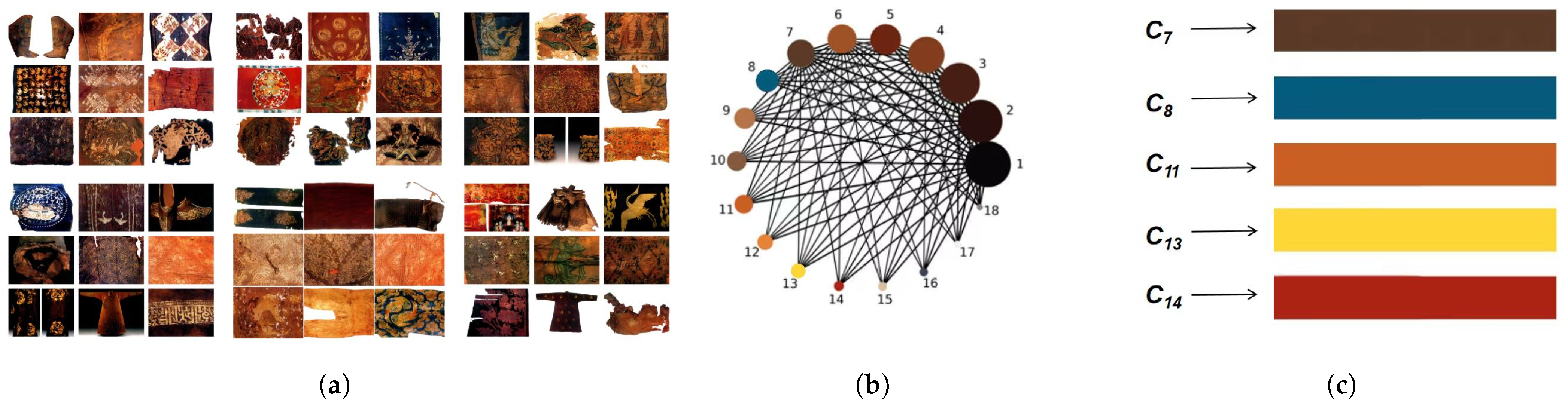
Actual images of Liao and Jin dynasty silk artifacts, sourced from The Art of Silk in Chinese History: Liao and Jin Dynasties [20] were utilized as input data Figure 2a. After extracting color information through cluster analysis, a color network model was constructed Figure 2b. Based on this model, a set of color genes (Number 7 , 8 , 11 , 13 , 14 ) exhibiting strong connectivity and embodying the “Bold” aesthetic characteristic of the Liao–Jin ethnic identity were further selected, as shown in Figure 2c. This process achieved a structured representation of color elements and provided computable inputs for subsequent emotional optimization.

3.3. Improved Interactive Color Scheme Design

3.3.1. Fitness Scoring Mechanism and PAD Emotional Space Analysis

Emotional assessment in this study was conducted using the three-dimensional PAD emotion model, as proposed by Mehrabian and Russell (1974) [9]. In this model, emotions were categorized into three orthogonal dimensions: Pleasure (P), reflecting the positivity or negativity of the emotional state; Arousal (A), measuring the level of physiological and psychological activation; and Dominance (D), indicating an individual’s sense of control over the situation and their own reactions. The PAD model enables the mapping of discrete emotion labels onto a continuous space, providing a formal representation for computational processing.
To establish an emotional evaluation system for this study, an emotional lexicon was constructed. Its sources comprise two parts: (1) The 151 foundational emotional terms proposed in the research by Russell and Mehrabian (1977) [32]; (2) Combining Liao–Jin cultural texts with expert interviews, we added 10 emotionally charged terms with distinct artistic connotations (e.g., Powerful, Victory, Dignified). These terms predominantly cluster in the “high pleasure–moderate arousal–high dominance” quadrant of the PAD three-dimensional space, effectively capturing the bold and dignified inherent in Liao–Jin silk textiles.
Subsequently, five experts in Liao–Jin culture and arts were invited to refine the lexicon through multiple rounds of the Delphi method, resulting in the final selection of 20 core emotional keywords. To facilitate computational processing, the PAD values were linearly transformed from the original range of (−1, 1) to (−4, 4), as shown in Table 1. This process ensured that emotional features can be embedded in algorithmic optimization workflows in a quantifiable format.
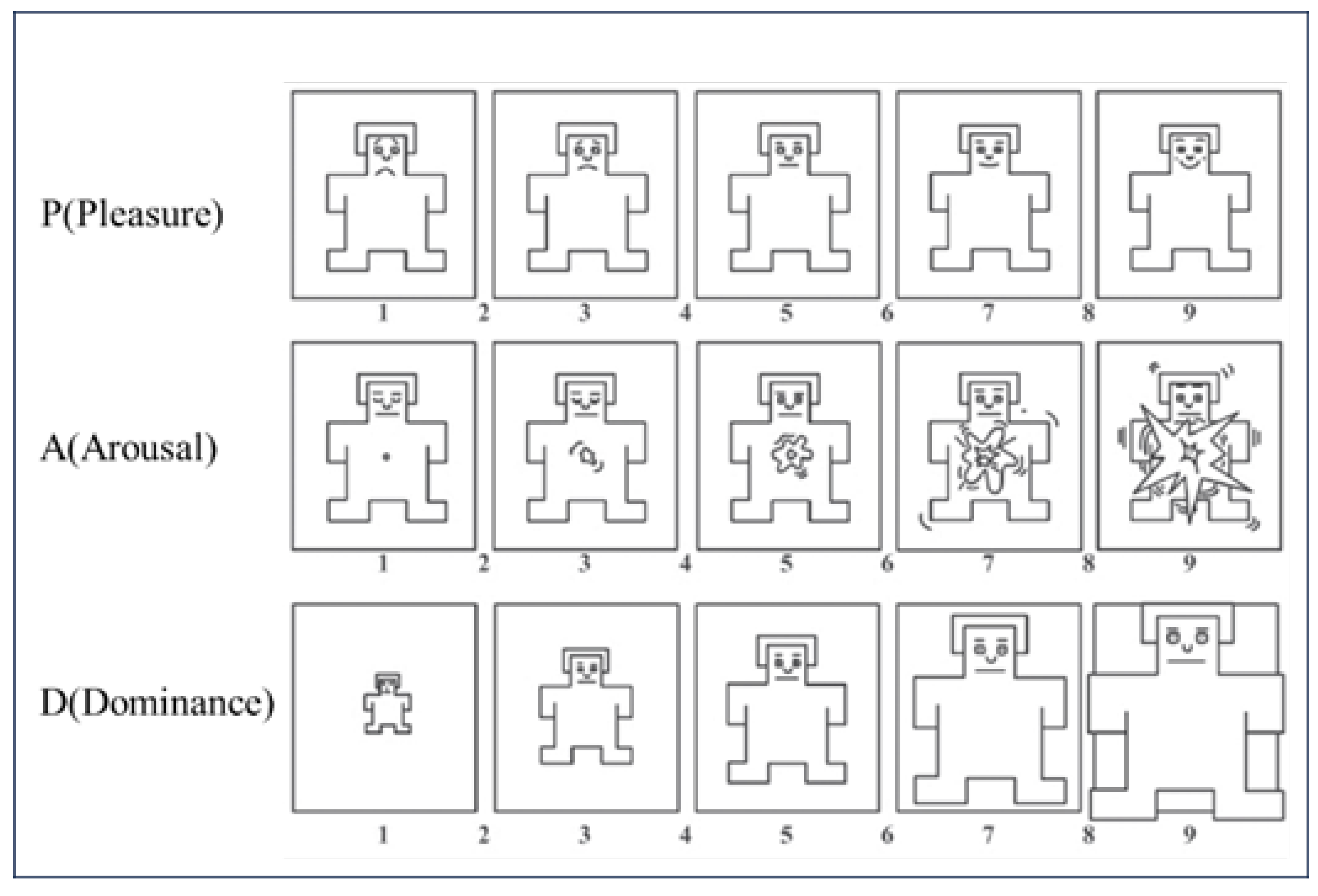
During the user evaluation phase, the Self-Assessment Manikin (SAM) was employed as a measurement tool for the PAD dimensions to collect emotional perception data on color schemes [33]. SAM is a non-verbal pictographic scale where users can rapidly report their feelings of pleasure, arousal, and dominance on a 9-point Likert scale through the selection of corresponding graphical Figure 3. This method offers advantages of operational simplicity and strong cross-cultural applicability, effectively reducing biases from linguistic comprehension differences and alleviating the burden on users caused by repeated evaluations during the IGA process.
In this system, the fitness score of each solution is determined by two core factors: the predefined target emotional PAD triplet (e.g., “Strong”: P = 2.32 , A = 1.92 , D = 2.48 ), serving as the “ideal point” for evolution and the PAD values of each solution in the current population measured by the SAM scale. Emotional matching is quantified by calculating the Euclidean distance between each individual solution and this target emotional point, which is then mapped to a corresponding fitness score.
For every individual in each generation of the population, the PAD value can be obtained through manual scoring, forming a set of distribution points for the population in the PAD space. Set the PAD value of the i-th individual be ( p i , a i , d i ), and the Euclidean distance between it and the target sentiment point ( p * , a * , d * ) be
distance i = ( p i p * ) 2 + ( a i a * ) 2 + ( d i d * ) 2
When a designer selects a fundamental emotion (such as “Strong”) within the interface, the system sets the standard PAD values for that emotion ( P = 2.32 , A = 1.92 , D = 2.48 ) as the reference point for the ideal emotional state. The fitness score is calculated based on the Euclidean distance between this point and the individual’s PAD triplet:
Score i = max ( 0 , 10 λ · distance i )
Among them, λ is defined as the score decay coefficient, which controls the intensity of the penalty applied to individuals based on their distance from the target center. The adjustment of λ allows for the modulation of score sensitivity. For instance, when λ is set to 5, the scores of individuals that are more distant from the target decrease rapidly, thereby widening the score differential.
In summary, the PAD distance scoring mechanism not only quantifies the alignment between a solution and the target emotion but also functions as a fitness function based on emotional spatial distance. Its geometric interpretation is clear and computationally efficient, rendering it well-suited for evaluating population evolution in interactive genetic algorithms.

3.3.2. Interactive Color Scheme Design Based on the PAD Emotion Model (PAD-IGA)

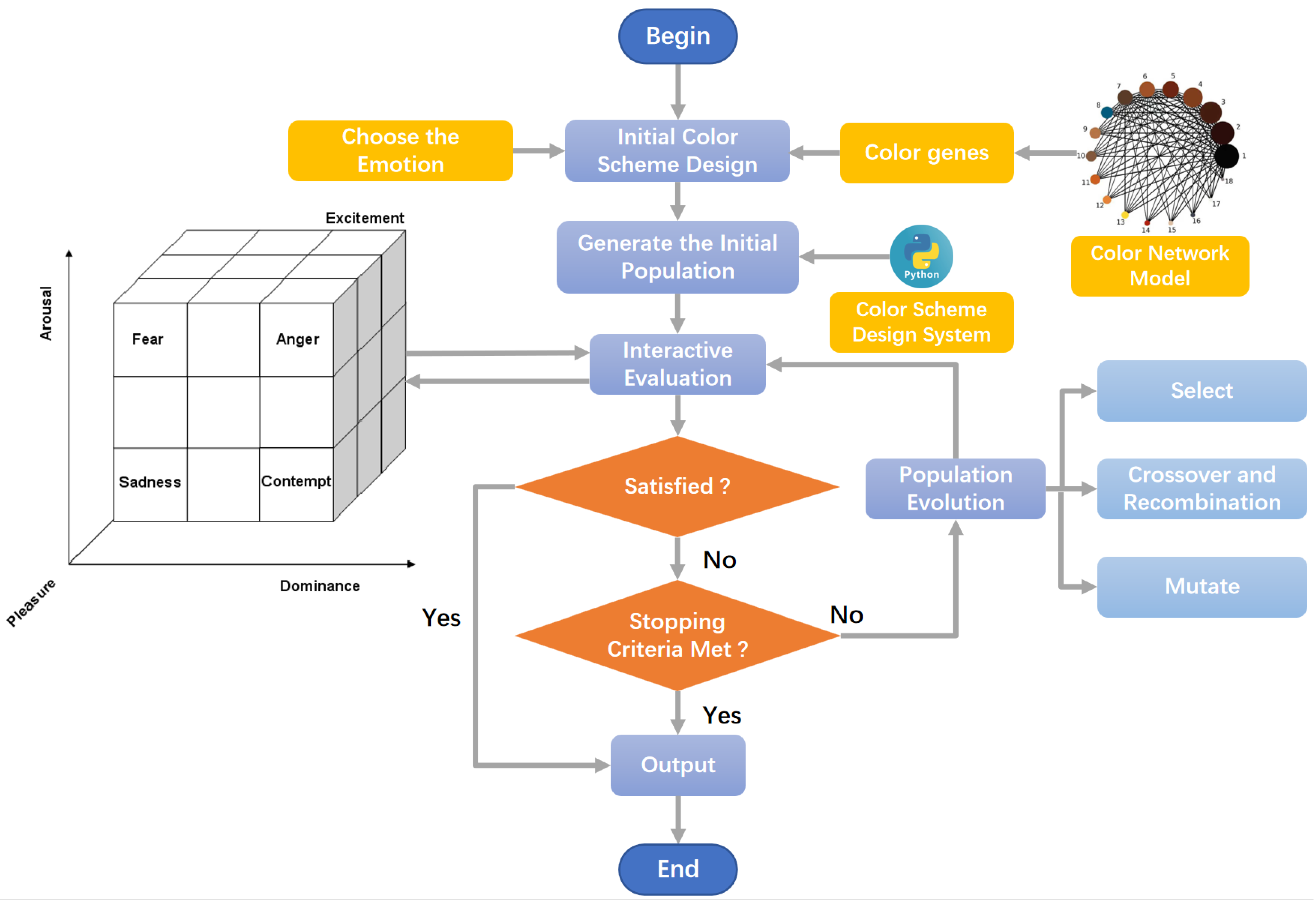
As shown in Figure 4, the PAD-IGA interactive color design process proposed in this study primarily consists of four steps:
  • Initial Population Generation. Multiple color schemes are generated based on user-specified color genes and the target design object (e.g., fabric or cultural and creative products), forming the initial population for the genetic algorithm. Each individual in the population corresponds to a candidate color combination.
  • Emotion Quantification and Fitness Calculation. For all color schemes in each generation, users are required to provide three-dimensional PAD emotion scores using the SAM scale. The fitness function is then computed as the Euclidean distance between the PAD values of the solution and the target emotional PAD vector, with closer distances corresponding to higher fitness and greater distances to lower fitness. This mechanism ensures that the evolutionary direction aligns with predefined cultural–emotional objectives.
  • Evolutionary Iteration. A new generation of the population is produced through the selection, crossover, and mutation operations of the genetic algorithm. Fitness is continuously updated based on the PAD distance in each iteration, enabling the progressive optimization of the emotional alignment of the color schemes.
  • Convergence and Early Termination. As evolution progresses, the population converges toward the target emotional point. The evolutionary process may be terminated early once the PAD value of a color scheme falls below a set threshold relative to the target vector, at which point the optimal solution that meets the requirements is output.
Through this process, the PAD model has been transformed from a mere emotional measurement tool into an “emotional navigator” within the IGA optimization process, enabling the quantitative embedding of user emotional preferences and cultural characteristics. This system significantly enhances the algorithm’s convergence efficiency and the cultural alignment of the resulting solutions, thereby establishing a methodological foundation for subsequent experimentation and validation.

3.3.3. Parameter Description

The preceding analysis has covered the core modules of PAD-IGA including emotional calibration and genetic operations. To ensure the algorithm effectively adapts to the cultural context of Liao–Jin silk trade and achieves a reasonable balance between evaluation efficiency and solution quality, we determined the following core parameters through preliminary experiments and conventional practices.
  • The population size was set to 25, referencing the conventional range (between 16 and 30) in IGA affective design. Preliminary experiments revealed that a population size of 16 resulted in insufficient diversity among generated schemes, failing to comprehensively cover cultural nuances; whereas expanding to 30 tended to induce user evaluation fatigue. After comprehensive evaluation, 25 proposals strike the optimal balance between maintaining diversity and controlling fatigue.
  • Regarding genetic operation probabilities, the crossover probability is set to 50% to ensure effective recombination of high-quality color genes. The mutation probability is set to 30% to moderately introduce new traits while preventing premature algorithm convergence.
  • Other key configurations include the implementation of a roulette selection strategy coupled with an elite retention mechanism. Specifically, the strategy retains only proposals with a fitness score of 7.5 or higher, thereby ensuring the effective transmission of high-quality cultural color traits.
The following pseudocode formally describes the complete execution flow of the Algorithm 1.
Algorithm 1 Color Scheme Evolutionary Algorithm.
  1:
// Initialization Phase
  2:
Extract K dominant colors from Liao–Jin silk image I → Color gene set C
  3:
Generate initial population P 0 = { S 1 , S 2 , , S N } by randomly selecting colors from C
  4:
Set current generation g 0
 
  5:
// Main Evolution Loop
  6:
while  g < G max and convergence condition not satisfied do
 
  7:
    // Step 1: Emotional Evaluation and Fitness Calculation
  8:
    for each color scheme S i P g  do
  9:
        User evaluates S i using SAM scale → ( P i , A i , D i )
10:
        // Calculate emotional matching degree (Equations (6) and (7) in manuscript)
11:
         distance [ ( P i P t ) 2 + ( A i A t ) 2 + ( D i D t ) 2 ]
12:
         fitness i exp ( λ × distance )         ▹ λ : score decay coefficient
13:
    end for
 
14:
    // Record evolutionary data
15:
    Update average fitness F avg and maximum fitness F max
16:
    Store PAD scores for generation g
 
17:
    // Step 2: Selection Operation (Roulette Wheel Selection)
18:
     P elite { S i fitness i θ }               ▹ Elite preservation strategy
19:
     P selected Selection ( P g , fitness )           ▹ Fitness-proportional selection
 
20:
    // Step 3: Crossover Operation
21:
     P offspring
22:
    while  | P offspring | < ( N | P elite | )  do
23:
         parent 1 , parent 2 Randomly select from P selected
24:
        if  random ( 0 , 1 ) < p c  then         ▹ p c : crossover probability (50%)
25:
            child Crossover ( parent 1 , parent 2 )
26:
            P offspring P offspring { child }
27:
        end if
28:
    end while
 
29:
    // Step 4: Mutation Operation
30:
    for each individual S P offspring  do
31:
        if  random ( 0 , 1 ) < p m then         ▹ p m : mutation probability (30%)
32:
            S Mutation ( S )
33:
        end if
34:
    end for
 
35:
    // Create new generation
36:
     P g + 1 P offspring P elite
37:
     g g + 1
 
38:
    // Check convergence condition
39:
    if  min ( distance ) < ε then            ▹ ε : convergence threshold
40:
        break
41:
    end if
 
42:
end while
 
43:
// Output optimal solution
44:
S * arg max S P g fitness ( S )
45:
return  S *

4. Experiment and Analysis

4.1. Experimental Subjects and Preparations

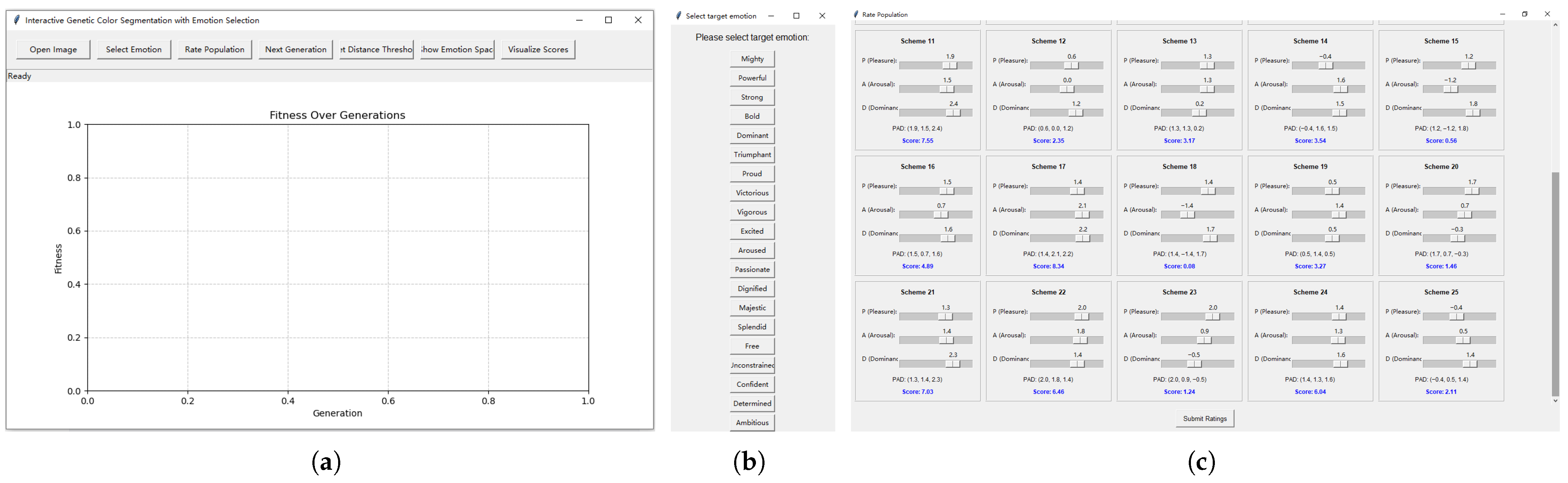
To validate the proposed PAD-IGA color matching method, the core emotional keyword “Bold” was selected from the aforementioned lexicon to define the target emotional intent, with Liao–Jin dynasty silk textiles employed as the primary design theme. The system was developed in Python (v1.1 Beta), and a user interface (Figure 5) was implemented to support key functional modules, including image import, initial population generation, emotion selection, and evaluation feedback.
A total of 48 volunteers (24 males, 24 females) were recruited for the experiment. The sample size was determined with reference to existing research in emotional computing and Human–Computer Interaction (HCI), where 30–50 participants are typically considered sufficient to ensure statistical power while maintaining experimental feasibility, with all participants recruited from regions historically influenced by Liao and Jin cultures. These regions included: Datong (Shanxi), the Western Capital; Beijing, the Southern Capital; Chifeng and Tongliao (Inner Mongolia), corresponding to the Supreme Capital (Shangjing); Shenyang and Chaoyang (Liaoning), the Eastern Capital (Dongjing); Ningcheng County (Inner Mongolia), the Central Capital (Zhongjing); and Harbin (Heilongjiang), the ancestral homeland of the Khitan and Jurchen peoples.
The professional backgrounds of the participants comprised: art and design practitioners (n = 14), faculty and students from art academies (n = 12), professionals in cultural heritage and conservation (n = 11), and members of the general public (n = 11). To ensure scientific rigor in color evaluation, all volunteers underwent a two-step screening process to exclude color vision deficiencies: first, a questionnaire was used to confirm the absence of any known history of color vision deficiency; second, the Ishihara Color Vision Test was administered. No color blindness or color vision deficiencies were identified in any volunteer, thus effectively eliminating potential interference from this factor.

4.2. Experimental Procedure

The experiment employs an interactive evolutionary process, primarily comprising the following steps:
  • Initial Population Generation. Users first import the Liao–Jin silk images and set the initial population size Figure 5a. Then color genes are automatically extracted by the system, and an initial population is generated to serve as the starting point for evolution. Subsequently, users select the target emotion in the emotion selection interface Figure 5b, providing emotional guidance for the subsequent evolutionary process.
  • Emotional Evaluation and Fitness Calculation. Each generation of color schemes generated by the system undergoes three-dimensional PAD emotional scoring using the SAM scale Figure 5c. The system calculates the Euclidean distance between each scheme’s PAD value and the target emotional vector, using this distance as the fitness function: a smaller distance indicates higher fitness.
  • Evolutionary Iteration. After user scoring, the system executes a “generation change” operation, generating a new population through selection, crossover, and mutation using genetic operators. As iterations proceed, the population gradually converges toward the target emotional point until a preset threshold is reached. During the experiments, all scoring tasks were completed by the volunteers based on their professional backgrounds and aesthetic preferences.

4.3. Results and Analysis

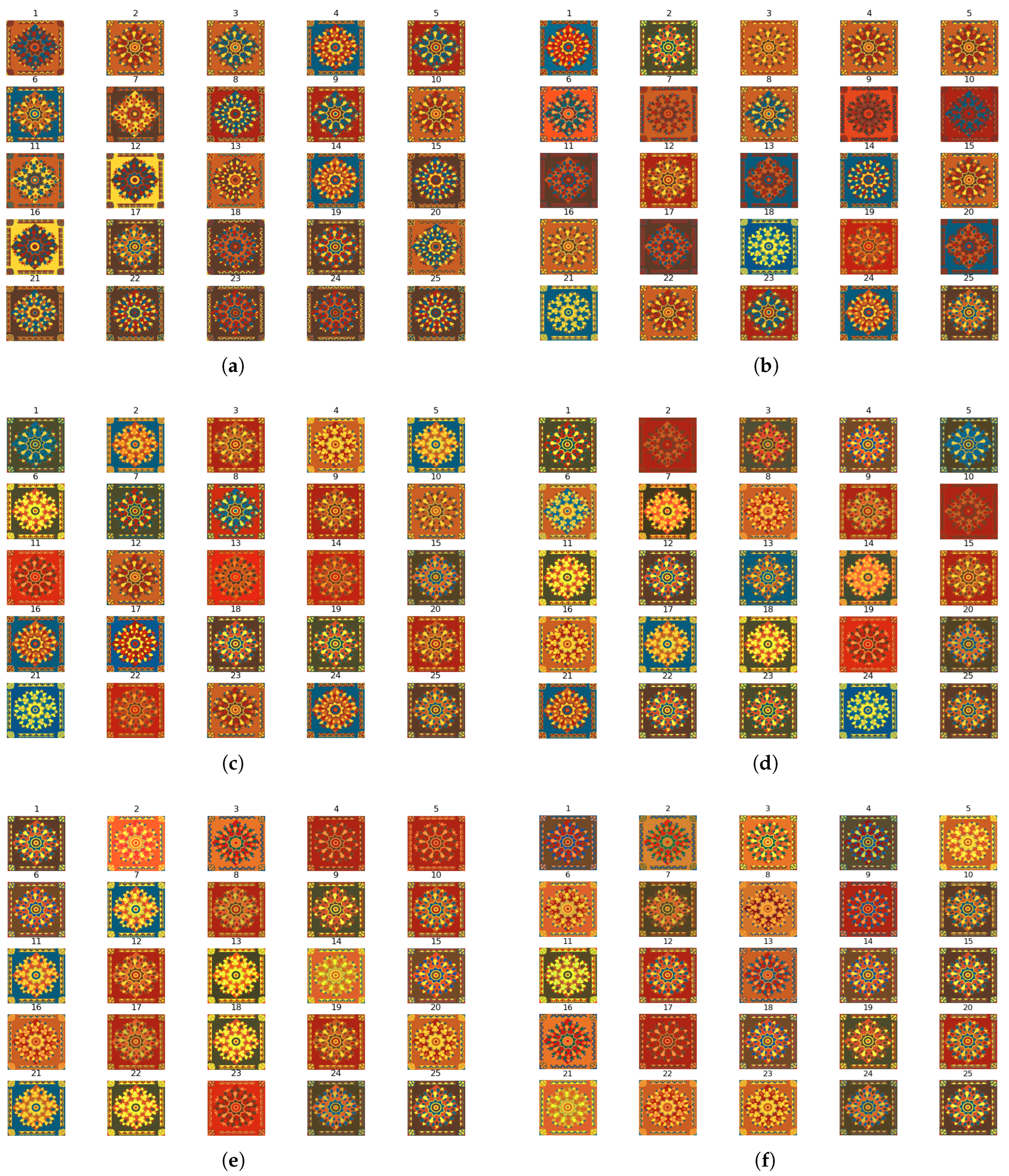
  • Evolutionary Process. Initial color scheme applied to the designed vector artwork. At the center of the artwork is the composite flower based on the Buddhist treasure flower motif, surrounded by two core elements: lotus petal patterns and auspicious cloud patterns. As shown in Figure 6, Figure 6a depicts the initial population, while Figure 6b–f correspond to generations 3, 6, 9, 12, and 15, respectively. The color schemes progressively optimize during the intergenerational evolution.
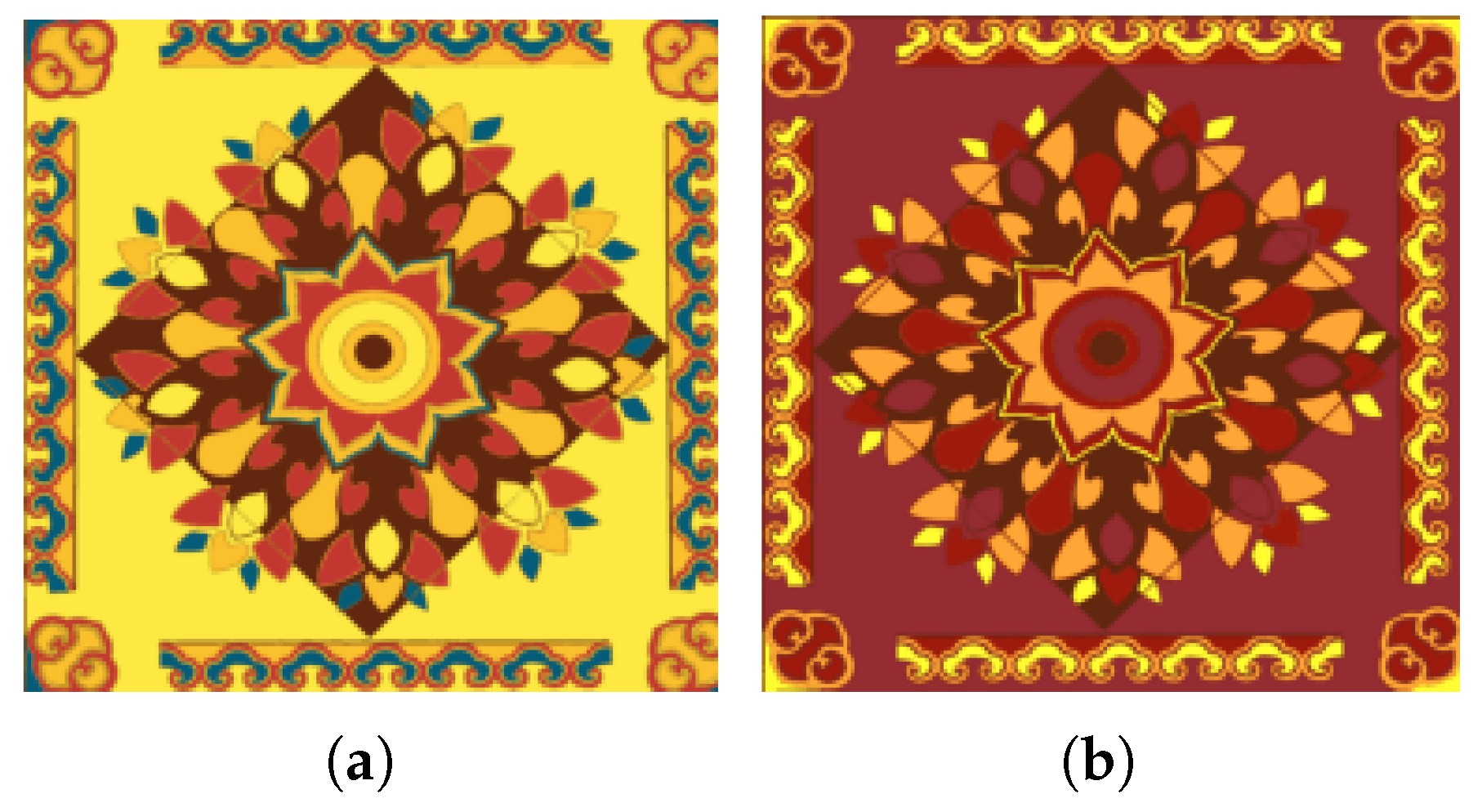
  • Example of a Satisfactory Solution. After multiple iterations, several color combinations that are highly aligned with the target emotion “Bold” were generated by the system. A representative satisfactory solution is presented in Figure 7, which conveys the “boldness and dignify” embodied in Liao–Jin silk while maintaining excellent color harmony, thereby providing intuitive evidence for the feasibility of the proposed method.
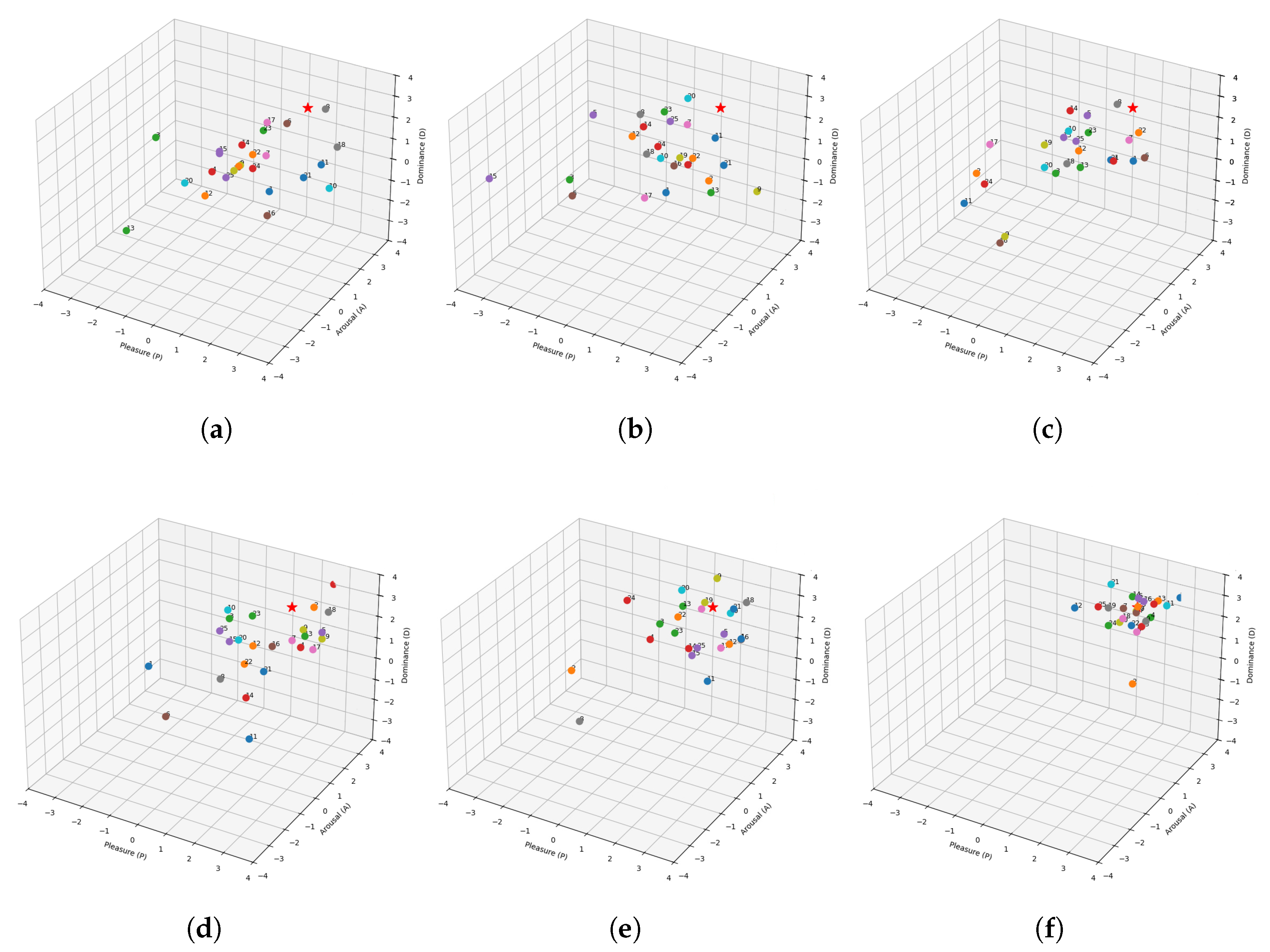
  • Convergence Trend. Figure 8a–f illustrates the dynamic evolution of individual distributions within the PAD three-dimensional space. From generations 1 , 3 , 6 , 9 , 12 to 15, the population progressively converges toward the target emotional anchor points, with different colors representing varying fitness levels. The overall trend indicates that PAD-IGA achieves stable convergence within a finite number of iterations, with a clear and consistent optimization direction that precisely reflects the population evolution trend under the PAD-IGA algorithm.
Comparative Analysis. To further validate the effectiveness of the PAD-IGA method, a comparative experiment with a traditional IGA was conducted. Both algorithms were executed under identical parameter configurations: a population size of 25, a crossover probability of 50%, a mutation probability of 30%, employing roulette wheel selection and an elite retention strategy, over 15 generations. The comparative experiments were independently performed by 48 volunteers using the same source images to ensure the fairness and reproducibility of the results.
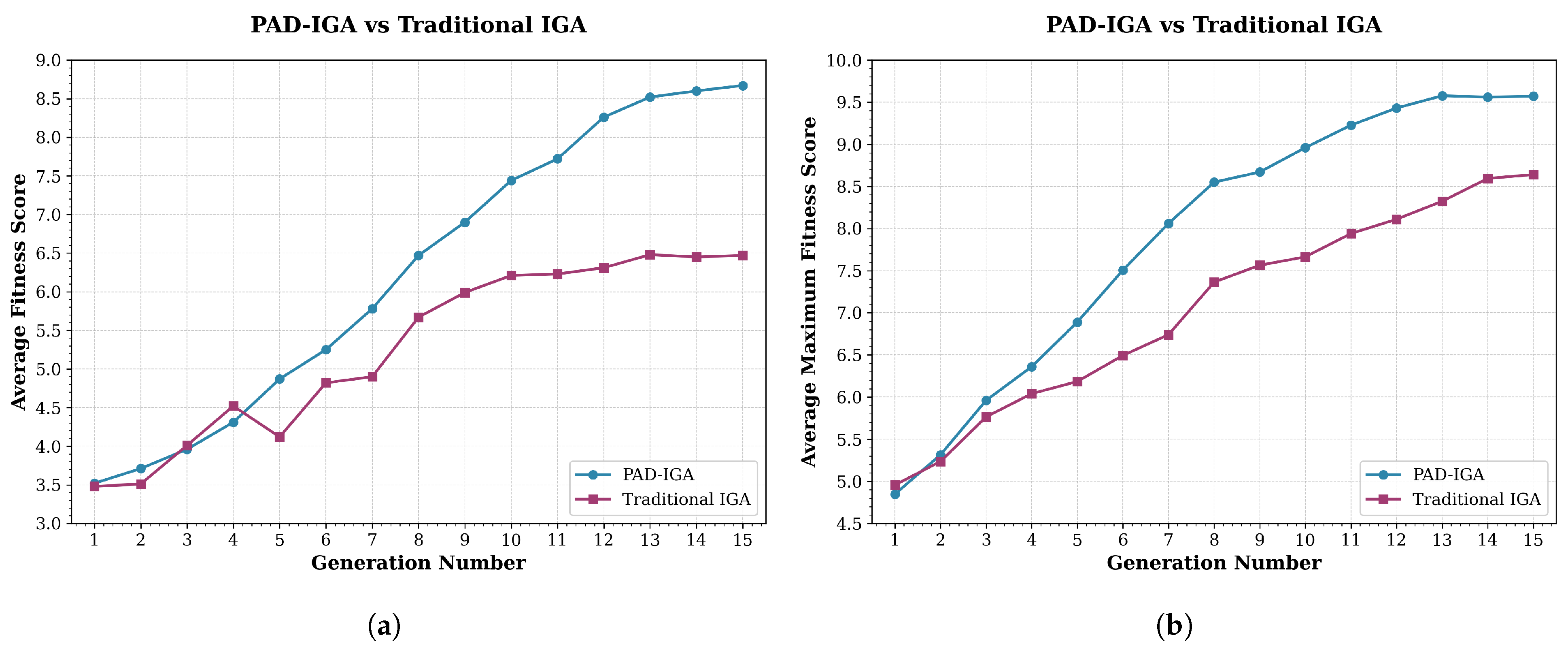
As shown in Figure 9, PAD-IGA significantly outperforms traditional IGA in both average fitness and maximum fitness. Figure 9a shows the “average fitness” calculated as the intergenerational mean of volunteer scores based on the single-volunteer single-generation scheme. Figure 9b presents the “average maximum fitness” as the intergenerational mean derived from the highest scores achieved by individual volunteers within the single-volunteer single-generation scheme. Together, these figures visually illustrate the population evolutionary trends of the two algorithm groups. Specifically, PAD-IGA achieved a final average fitness of 8.67, representing an 34.00% improvement over the traditional IGA’s 6.47. Its maximum fitness reached 9.57, compared to 8.64 for the traditional IGA, reflecting an overall 10.76% increase.
To verify the statistical reliability of the performance difference between the two algorithms, a paired t-test was conducted on the final-generation fitness data from 48 volunteers. The experimental design involved the same group of volunteers using both the PAD-IGA and traditional IGA algorithms. Each volunteer’s fitness at generation 15 was calculated as the arithmetic mean of their 25 scheme evaluations, yielding 48 paired data sets. The paired t-test results revealed that the mean fitness of PAD-IGA (M = 8.67, SD = 0.18) was significantly higher than that of traditional IGA (M = 6.47, SD = 0.49), with t(47) = 32.74, p < 0.001. Furthermore, the comparison of maximum fitness values revealed that the highest fitness achieved by PAD-IGA (9.57) was also markedly higher than that of traditional IGA (8.64). This result indicates that the improvement in emotional matching accuracy achieved by PAD-IGA is not a random fluctuation but is supported by reliable statistical evidence.
It should be noted that the t-test data and the line graph data in Figure 9 originate from the same dataset: the “average fitness” at generation 15 in the line graph represents the group mean of the final-generation fitness values from 48 volunteers, while the t-test data constitutes the original components of this group mean.
These results demonstrate that PAD-IGA not only offers superior convergence speed but also exhibits greater stability in guiding high-quality solutions. Compared to traditional methods, PAD-IGA can more rapidly and accurately approximate user-defined target emotions, providing robust empirical support for optimizing emotional design.
The aforementioned findings are considered to hold significant implications for design practice. A higher average fitness signifies a substantial enhancement in overall population quality, enabling designers to select from a greater number of high-quality candidate solutions. Consequently, design efficiency is improved and trial-and-error iterations are reduced. The improvement in maximum fitness confirms the algorithm’s enhanced capability to approach target emotions more rapidly and effectively. This capability is particularly valuable in scenarios demanding high-fidelity cultural–emotional expression, such as conveying the “bold” and “dignified” characteristics inherent to Liao–Jin dynasty silk. This provides robust support for the precise translation of cultural semantics.

4.4. Extended Validation

To further validate the effectiveness of the PAD-IGA method, a dual-approach framework—comprising fuzzy comprehensive evaluation [34,35] and consumer surveys—was employed for comprehensive validation.

4.4.1. Fuzzy Comprehensive Evaluation

We selected the optimal color application scheme from the 15th generation of evolution (Figure 6f), establishing the evaluation metric as = (Emotional Fidelity, Color Harmony, Color Fidelity). The assessment was conducted across three dimensions: (1) Emotional Fidelity: Whether the scheme accurately evokes the audience’s emotional resonance with the iconic imagery of Liao–Jin dynasty colors; (2) Color Harmony: The coordination and visual balance among colors within the palette; (3) Color Fidelity: the scheme’s fidelity to the original color characteristics of Liao–Jin silk. Evaluation employed a five-point scale to determine grades: V = ( v 1 , v 2 , v 3 , v 4 , v 5 ) = (Excellent, Good, Average, Poor, Very Poor). Three categories of experts were invited to assign weights to each indicator: Liao–Jin culture and art specialists, color designers and visual communication experts, and color science and data analysis specialists. Following thorough deliberation, the panel reached consensus on weighting coefficients W = ( 0.4 , 0.3 , 0.3 ) , ensuring the evaluation balanced cultural authenticity with design feasibility. The resulting fuzzy comprehensive evaluation matrix revealed that the scheme predominantly achieved ratings in the “Excellent” and “Good” tiers, providing theoretical and methodological support for the validity of the PAD-IGA framework.

4.4.2. Consumer Survey

A questionnaire-based consumer survey was administered at the Cultural and Creative Market Department of the Liao–Jin Cultural and Art Museum, with feedback collected from 135 consumers. To ensure scientific rigor, all participants were provided with training on relevant terminology and grading systems prior to the survey. Preliminary interviews and Ishihara color blindness tests confirmed their normal color recognition abilities. The survey was designed to focus on three core metrics: emotional fidelity, color harmony, and color accuracy, specifically including the following:
  • Emotional Authenticity: The extent to which the color scheme accurately evokes emotional resonance with specific imagery of Liao–Jin culture, such as the mighty spirit of nomadic peoples, the majestic dignity of imperial dignified, or the fervent celebrations of victory. This reflects the authenticity and impact of color design in conveying cultural emotions.
  • Color Harmony: The coordination and visual balance among colors within the palette, encompassing contrast, gradation, and equilibrium, are assessed.
  • Color Fidelity: The faithfulness of the color scheme in reflecting the original chromatic characteristics of Liao and Jin dynasty silks, thereby embodying their historical and artistic value, is evaluated.
The survey employed a questionnaire format to collect evaluation data for each indicator. The survey results are presented in Table 2.
The fuzzy comprehensive evaluation matrix R can be obtained from Table 2. The comprehensive evaluation value of the color application scheme B is calculated using the following formula:
B = W R
In the formula, W represents the weight coefficient, and R denotes the fuzzy comprehensive evaluation matrix. Substituting numerical values yields B = [0.415, 0.419, 0.12, 0.036, 0.01]. Survey results indicate that 41.5% of consumers rated the proposal as “Excellent,” 41.9% as “Good,” 12% as “Average,” while only 3.6% and 1% rated it as ‘Poor’ and “Very Poor,” respectively. Overall, 83.4% of consumers gave the generated proposal a rating of “Good or above,” validating the method’s broad recognition for its applicability in conveying cultural sentiment and visual design.
In summary, it is demonstrated through both expert evaluation and consumer feedback that the PAD-IGA method not only achieves emotion-driven optimization at a technical level but also exhibits strong applicability in cultural semantic representation and market acceptance. This outcome further highlights the method’s potential value in cultural heritage digital regeneration, cultural and creative product design, and interdisciplinary applications.

5. Discussion

This study addresses the emotional and personalized demands of contemporary consumers in fabric and costume design. To overcome issues such as excessive reliance on subjective experience and insufficient emotional alignment in traditional color matching methods, we propose a color customization approach based on the PAD emotional model and interactive genetic algorithm (PAD-IGA). Using Liao–Jin silk as a case study, the research first established a mapping relationship between cultural emotional vocabulary and the three dimensions of the PAD model. Emotional matching degree was then adopted as the fitness function to develop an emotion-oriented color matching system tailored to specific cultural contexts. Experimental results demonstrate that the system effectively captures user emotional preferences, generating color schemes that integrate cultural significance and aesthetic value. It significantly outperforms traditional IGA methods in both average and maximum fitness metrics.
Compared with existing emotional design methods, the proposed PAD-IGA framework offers distinct advantages. In contrast to color generation methods based on Generative Adversarial Networks (GANs), PAD-IGA demonstrates superior controllability and interpretability in cultural–emotional semantics. While GAN-based approaches can generate visually rich color combinations, they lack explicit emotional navigation mechanisms, making it challenging to precisely control the cultural emotional characteristics of the generated outcomes. Furthermore, compared with the traditional Valence-Arousal Model, the PAD model, through the incorporation of the Dominance dimension, more accurately captures emotional imagery related to social hierarchy and sense of control in Liao–Jin culture. This capability is particularly important for the emotional regeneration of cultural heritage.
The key contributions of this research include the following: (1) An integrated framework combining cultural–emotional semantics with the PAD model is proposed, transforming it from a “measurement tool” into an “evolutionary navigation mechanism” and enriching the theoretical foundation of affective computing. (2) A culturally semantic-driven IGA framework was established, effectively mitigating user fatigue and evaluation inconsistencies while providing a computable pathway for emotion-driven design. (3) We offer novel insights for the digital regeneration of cultural heritage, elevating color restoration beyond mere form to convey cultural spirit and emotional experience, with practical applications in costume design, cultural and creative development, and digital museum construction.
Although this study achieved its anticipated outcomes, several limitations remain. First, while the volunteer sample exhibits some geographical and cultural representativeness, its size remains limited. Future research could enhance the generalizability of findings by expanding the sample and incorporating cross-cultural comparisons. Second, PAD annotation of emotional vocabulary still relies heavily on expert judgment. Subsequent work could validate and refine this approach by integrating crowd-sourced perception data and large-scale user studies. Third, while the current experiments primarily used the SAM scale as emotional input, future work could integrate multimodal physiological data such as eye tracking and EEG to enhance the robustness and accuracy of emotion recognition. Finally, the model developed in this study has inherent limitations in its cultural and historical applicability. Constructing a universally applicable emotion-color mapping model for China’s entire population across different historical periods is extremely challenging. This stems from China’s geographical, ethnic, and cultural diversity, as well as variations in aesthetic standards and color symbolism across eras. Future research could leverage large language models’ text comprehension and reasoning capabilities to systematically analyze textual materials from specific dynasties and summarize the emotional associations of colors during those periods.

6. Conclusions

This study provides a novel computational framework for emotional color design and offers methodological support for the contemporary interpretation of traditional cultural elements. It also establishes reference value for fields including apparel design, cultural innovation, and digital heritage. Future study will explore the application potential of this method in emerging scenarios such as color therapy, virtual try-on, and Metaverse fashion, thereby expanding its practical impact at both cultural and industrial levels.

Author Contributions

Conceptualization, Q.X. and J.W.; methodology, Q.X.; software, Q.X., P.J. and M.X.; investigation, D.M. and H.L.; writing—original draft preparation, Q.X. and J.W.; writing—review and editing, Q.X. and S.X.; funding acquisition, Y.F. and P.H.; supervision, Y.F. and P.H. All authors have read and agreed to the published version of the manuscript.

Funding

This study was funded by the Shanxi Province Philosophy and Social Science Planning Office under the Shanxi Province Philosophy and Social Science Planning Project (No. 2024QN036) and by the Department of Higher Education, Ministry of Education of China University-Industry Collaborative Education Program (No. 231002458084115), https://cxhz.hep.com.cn/, accessed on 22 November 2025.

Institutional Review Board Statement

Not applicable.

Informed Consent Statement

Not applicable.

Data Availability Statement

The original contributions presented in this study are included in the article. Further inquiries can be directed to the corresponding authors.

Acknowledgments

The author would like to thank the tutors, editors, and anonymous reviewers for their helpful suggestions.

Conflicts of Interest

The authors declare no conflicts of interest.

Abbreviations

The following abbreviations are used in this manuscript:
PADPleasure–Arousal–Dominance
IGAInteractive Genetic Algorithm
HCIHuman–Computer Interaction
BCIBrain–Computer Interface
SAMSelf-Assessment Manikin
PAD-IGAInteractive Color Scheme Design Based on the PAD Emotion Model

References

  1. Kodžoman, D.; Cuden, A.P.; Cok, V. Emotions and fashion: How garments induce feelings to the sensory system. Ind. Textila 2023, 74, 346–355. [Google Scholar] [CrossRef]
  2. Zhu, Y.N.; Xu, B.Q.; Liu, X.J. Reference Image Assisted Color Matching Design Based on Interactive Genetic Algorithm. Packag. Eng. 2020, 41, 181–188. [Google Scholar]
  3. Zhang, L.; Li, M.; Wang, Y.; Xing, B.; Liu, X.; Tang, Z.; Shi, L. Emocolor: An assistant design method for emotional color matching based on semantics and images. Color Res. Appl. 2023, 48, 312–327. [Google Scholar] [CrossRef]
  4. Ma, X.; Chen, Y.; Liang, Q.; Wang, J. Wardrobe Furniture Color Design Based on Interactive Genetic Algorithm. BioResources 2024, 19, 6230–6246. [Google Scholar] [CrossRef]
  5. Wang, D.; Xu, X. 3D Vase Design Based on Interactive Genetic Algorithm and Enhanced XGBoost Model. Mathematics 2024, 12, 1932. [Google Scholar] [CrossRef]
  6. Gypa, I.; Jansson, M.; Wolff, K.; Bensow, R. Propeller optimization by interactive genetic algorithms and machine learning. Ship Technol. Res. 2023, 70, 56–71. [Google Scholar] [CrossRef]
  7. Huang, D.; Xu, X.; Zhang, Y.; Xia, X. Improved Interactive Genetic Algorithm for Three-Dimensional Vase Modeling Design. Comput. Intell. Neurosci. 2022, 2022, 6315674. [Google Scholar] [CrossRef]
  8. Zeng, D.; Guan, M.; He, M.; Tian, Z. An interactive evolutionary design method for mobile product customization and validation of its application. Int. J. Comput. Intell. Syst. 2022, 15, 16. [Google Scholar] [CrossRef]
  9. Mehrabian, A.; Russell, J.A. An Approach to Environmental Psychology; MIT: Cambridge, MA, USA, 1974. [Google Scholar]
  10. Ge, R.; Cong, L.; Fu, Y.; Wang, B.; Shen, G.; Xu, B.; Hu, M.; Han, Y.; Zhou, J.; Yang, L. Multi-faceted analysis reveals the characteristics of silk fabrics on a Liao Dynasty DieXie belt. Herit. Sci. 2023, 11, 315. [Google Scholar] [CrossRef]
  11. Malik, U.S.; Micoli, L.L.; Caruso, G.; Guidi, G. Integrating quantitative and qualitative analysis to evaluate digital applications in museums. J. Cult. Herit. 2023, 62, 304–313. [Google Scholar] [CrossRef]
  12. Lieto, A.; Pozzato, G.L.; Striani, M.; Zoia, S.; Damiano, R. Degari 2.0: A diversity-seeking, explainable, and affective art recommender for social inclusion. Cogn. Syst. Res. 2023, 77, 1–17. [Google Scholar] [CrossRef]
  13. Pak, H. Reiterating the Spirit of Place: A Framework for Heritage Site in VR. Int. J. Adv. Smart Converg. 2025, 13, 337–354. [Google Scholar]
  14. Lenzerini, F. The spirit and the substance. The human dimension of cultural heritage from the perspective of sustainability. In Cultural Heritage, Sustainable Development and Human Rights; Routledge: London, UK, 2023; pp. 46–65. [Google Scholar]
  15. Liu, S.; Liu, Y.K.; Lo, K.C.; Kan, C. Intelligent techniques and optimization algorithms in textile colour management: A systematic review of applications and prediction accuracy. Fash. Text. 2024, 11, 13. [Google Scholar] [CrossRef]
  16. Feng, H.; Sheng, X.; Zhang, L.; Liu, Y.; Gu, B. Color Analysis of Brocade from the 4th to 8th Centuries Driven by Image-Based Matching Network Modeling. Appl. Sci. 2024, 14, 7802. [Google Scholar] [CrossRef]
  17. Wang, S.; Cen, Y.; Qu, L.; Li, G.; Chen, Y.; Zhang, L. Virtual Restoration of Ancient Mold-Damaged Painting Based on 3D Convolutional Neural Network for Hyperspectral Image. Remote Sens. 2024, 16, 2882. [Google Scholar] [CrossRef]
  18. Ni, M.; Huang, Q.; Ni, N.; Zhao, H.; Sun, B. Research on the Design of Zhuang Brocade Patterns Based on Automatic Pattern Generation. Appl. Sci. 2024, 14, 5375. [Google Scholar] [CrossRef]
  19. Jia, J.; Cao, J.W.; Xu, P.H.; Lin, R.; Sun, X. Automatic color matching of clothing patterns based on image colors of Peking Opera facial makeup. J. Text. Res. 2022, 43, 160–166. [Google Scholar] [CrossRef]
  20. Zhao, F. Chinese Silk Art Through the Ages: Liao and Jin Dynasties; Zhejiang University Press: Hangzhou, China, 2020. [Google Scholar]
  21. Huo, Q. An Archaeological Study of Female Costumes in the Song, Liao, and Jin Dynasties. Master’s Thesis, Zhengzhou University, Zhengzhou, China, 2021. [Google Scholar]
  22. He, F. Clothing Culture of the Khitan and Jurchen Peoples in the Songyuan Area during the Liao and Jin Dynasties. J. Jilin Prov. Inst. Educ. 2013, 29, 11–15. [Google Scholar]
  23. Yang, Y.; Tian, X. Combining users’ cognition noise with interactive genetic algorithms and trapezoidal fuzzy numbers for product color design. Comput. Intell. Neurosci. 2019, 2019, 1019749. [Google Scholar] [CrossRef]
  24. García-Hernández, R.A.; Luna-García, H.; Celaya-Padilla, J.M.; García-Hernández, A.; Reveles-Gómez, L.C.; Flores-Chaires, L.A.; Delgado-Contreras, J.R.; Rondon, D.; Villalba-Condori, K.O. A systematic literature review of modalities, trends, and limitations in emotion recognition, affective computing, and sentiment analysis. Appl. Sci. 2024, 14, 7165. [Google Scholar] [CrossRef]
  25. Jin, D.; Jiang, W.; Chen, X.; Xu, Z.; Yan, X. Investigation on Decorative Materials for Wardrobe Surfaces with Visual and Tactile Emotional Experience. Coatings 2025, 15, 386. [Google Scholar] [CrossRef]
  26. Lai, I.-C. EMO-SPACE: A computational model for interaction between emotions and space. In Proceedings of the 29th International Conference of the Association for Computer-Aided Architectural Design Research in Asia (CAADRIA 2024), Hong Kong, China, 20–25 April 2024; Volume 3, pp. 401–410. [Google Scholar]
  27. Lee, K.-T.; Park, C.-H.; Kim, J.-H. Examination of User Emotions and Task Performance in Indoor Space Design Using Mixed-Reality. Buildings 2023, 13, 1483. [Google Scholar] [CrossRef]
  28. Yang, M.; Li, J.S.; Wang, Y.Y. Construction and Application Design of Color Network Model of Dunhuang Traditional Murals. Packag. Eng. 2020, 41, 222–228. [Google Scholar]
  29. Ran, Y.X.; Hou, W.J.; Sheng, Q.; Jin, Y.; Liu, X. Research on traditional aromatherapy packaging design based on synesthesia experiment and color network. Packag. Eng. 2023, 44, 232–241. [Google Scholar]
  30. Ren, Y.B.; Jiang, C.; Wang, J.Q.; Yu, L.; Wang, Y.Y. Butterfly color analysis and application based on clustering algorithm and color network. J. Text. Res. 2021, 42, 103–108. [Google Scholar]
  31. Wang, X.T.; Liu, W.B.; Wang, Y.W.; Liu, F. Color analysis and application of Chaoyuan Painting costume based on network models. Adv. Text. Technol. 2024, 32, 125–134. [Google Scholar]
  32. Russell, J.A.; Mehrabian, A. Evidence for a three-factor theory of emotions. J. Res. Personal. 1977, 11, 273–294. [Google Scholar] [CrossRef]
  33. Alonso-Valerdi, L.M.; Ramirez-Lechuga, S.; Ibarra-Zarate, D.I. Audiovisual virtual reality for emotion induction: A dataset of physiological responses. Sci. Data 2025, 12, 1387. [Google Scholar] [CrossRef]
  34. Xie, X.-H.; Xu, Y.; Guo, S.; Zhu, H.; Yan, H. Evaluation and Decision of a Seat Color Design Scheme for a High-Speed Train Based on the Practical Color Coordinate System and Hybrid Kansei Engineering. Systems 2024, 12, 316. [Google Scholar] [CrossRef]
  35. Huang, Z.; Shi, Y.; Lu, F.; Li, Q.; Xue, Z. Digital Restoration of Ladies’ Costumes in Palace Music Painting. J. Text. Res. 2024, 6, 155–164. [Google Scholar] [CrossRef]
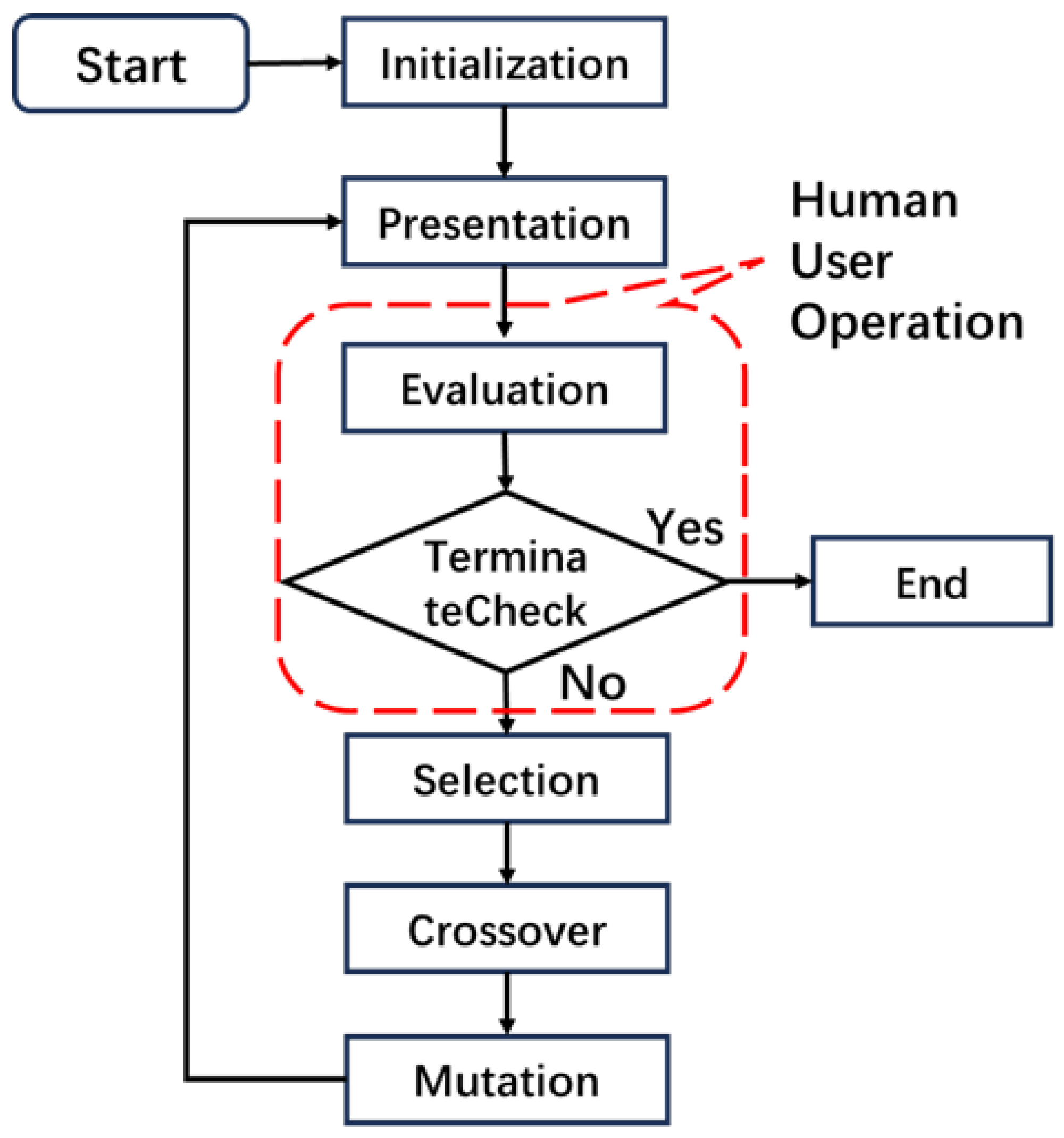
Figure 1. Flowchart of normal and interactive genetic algorithms (if it is an interactive genetic algorithm, a human user performs the process shown with an red line display).
Applsci 15 12565 g001
Figure 2. Color Gene Customization: (a) Actual Images of Liao and Jin Dynasty Silk Artifacts; (b) Color Network Model; (c) Selected Color Gene.
Applsci 15 12565 g002
Figure 3. SAM Scale.
Applsci 15 12565 g003
Figure 4. Color scheme optimization process.
Applsci 15 12565 g004
Figure 5. System Operation Interface: (a) Color Interactive Application System User Interface; (b) Emotion Selection Interface; (c) Rating Interface.
Applsci 15 12565 g005
Figure 6. Color Scheme Designed by a Test Subject: (a) Initial Population; (bf) Corresponding to Generations 3, 6, 9, 12, and 15.
Applsci 15 12565 g006
Figure 7. Satisfactory color scheme: (a) Satisfactory Solution I; (b) Satisfactory Solution II.
Applsci 15 12565 g007
Figure 8. Individual Distribution Scatter Plot in 3D PAD Space: (a) First generation; (bf) Corresponding to Generations 3, 6, 9, 12, and 15.
Applsci 15 12565 g008
Figure 9. Fitness Change Trend: (a) Comparison of the average fitness; (b) Comparison of the average maximum fitness.
Applsci 15 12565 g009
Table 1. Emotions and PAD Values.
EmotionPleasure (P)Arousal (A)Dominance (D)
Mighty1.922.042.76
Powerful2.161.802.92
Strong2.321.922.48
Bold1.762.442.64
Dominant0.921.602.32
Triumphant2.762.282.52
Proud3.081.522.60
Victory2.762.282.52
Vigorous2.322.441.96
Excited2.483.001.52
Aroused0.962.280.88
Passionate2.322.481.52
Dignified2.120.882.44
Majestic2.161.802.92
Splendid3.041.921.40
Free3.240.961.84
Unconstrained3.121.001.64
Confident2.801.122.44
Determined1.881.362.64
Ambitious1.642.522.48
Table 2. Color scheme evaluation scoring.
U v 1 v 2 v 3 v 4 v 5
u 1 0.430.380.150.030.01
u 2 0.420.470.090.020.00
u 3 0.390.420.110.060.02
Disclaimer/Publisher’s Note: The statements, opinions and data contained in all publications are solely those of the individual author(s) and contributor(s) and not of MDPI and/or the editor(s). MDPI and/or the editor(s) disclaim responsibility for any injury to people or property resulting from any ideas, methods, instructions or products referred to in the content.