Fault Knowledge Graph Construction Method for Hydraulic Turbine Speed Control System Based on BERTWWM-BiLSTM-MHA-CRF Model

Abstract
1. Introduction
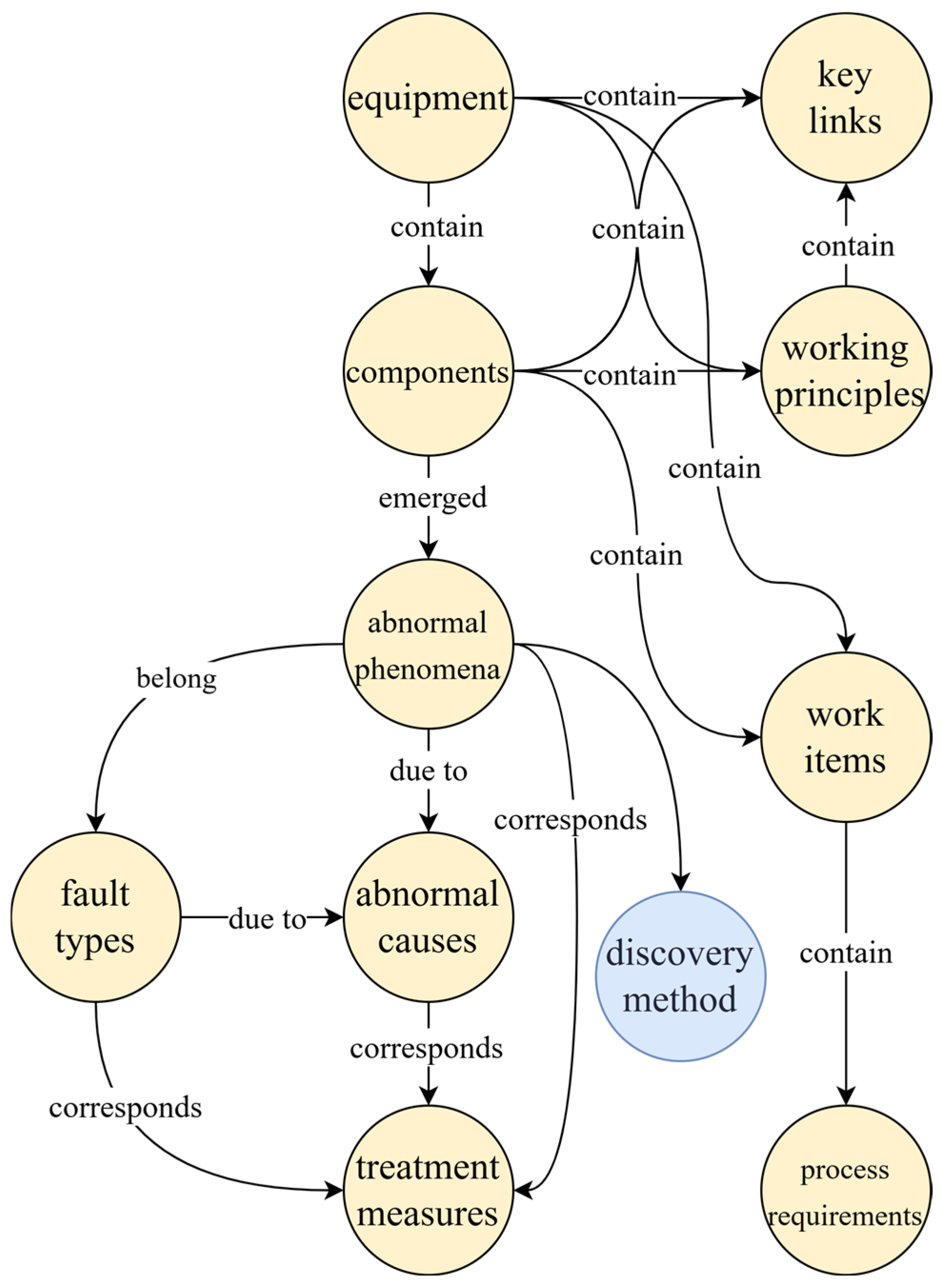
- We construct the turbine governor system fault knowledge graph by integrating structured, semi-structured, and unstructured data with the BERTWWM-BiLSTM-MHA-CRF model for entity extraction.
- We propose an application process of fault auxiliary decision-making for the turbine governor system that provides reference for on-site operation and maintenance personnel to enhance the operation and maintenance level of hydropower stations.
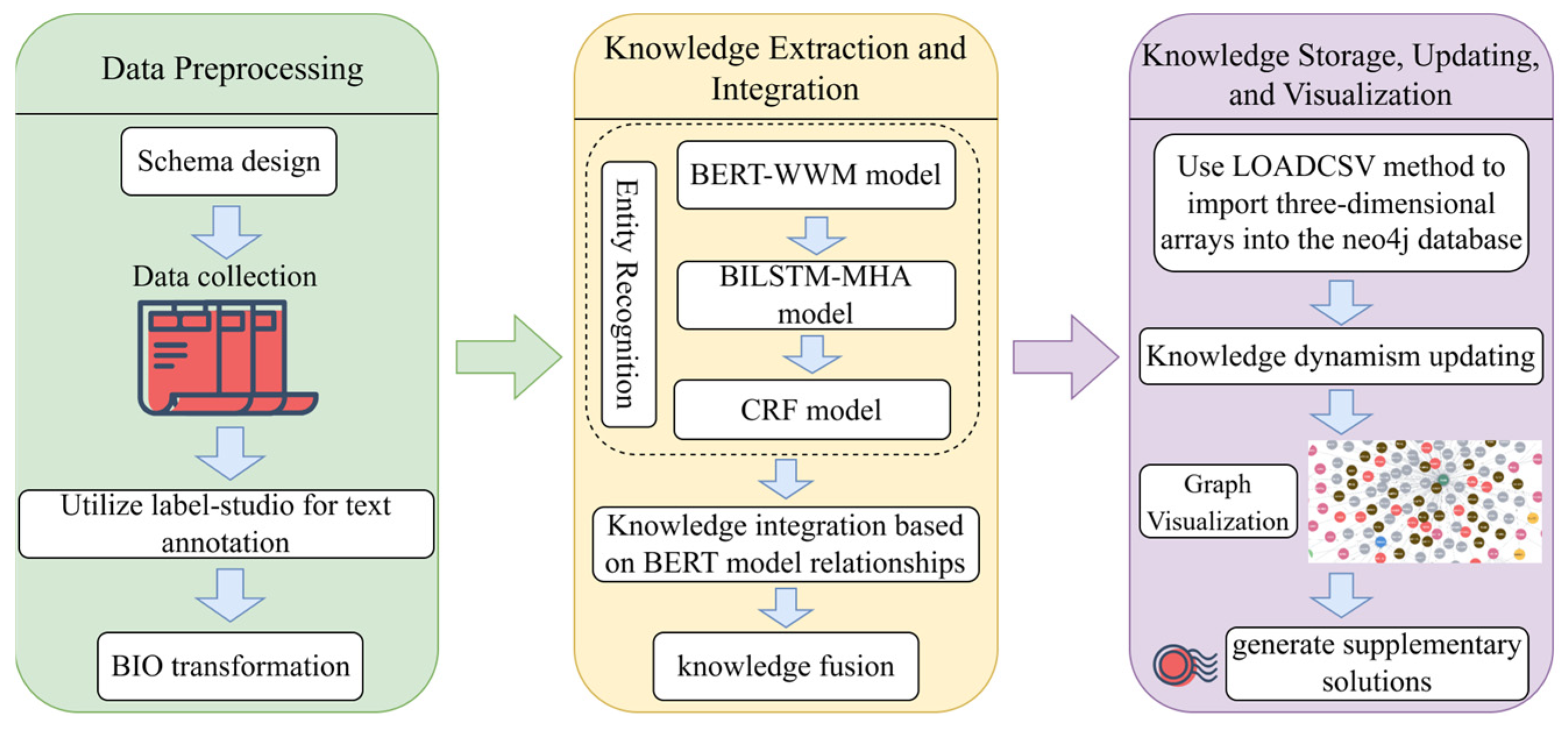
2. Knowledge Graph Construction Architecture
3. Data Acquisition and Processing
3.1. Data Sources
3.2. Schema Design
3.3. Labeling Methods
- (1)
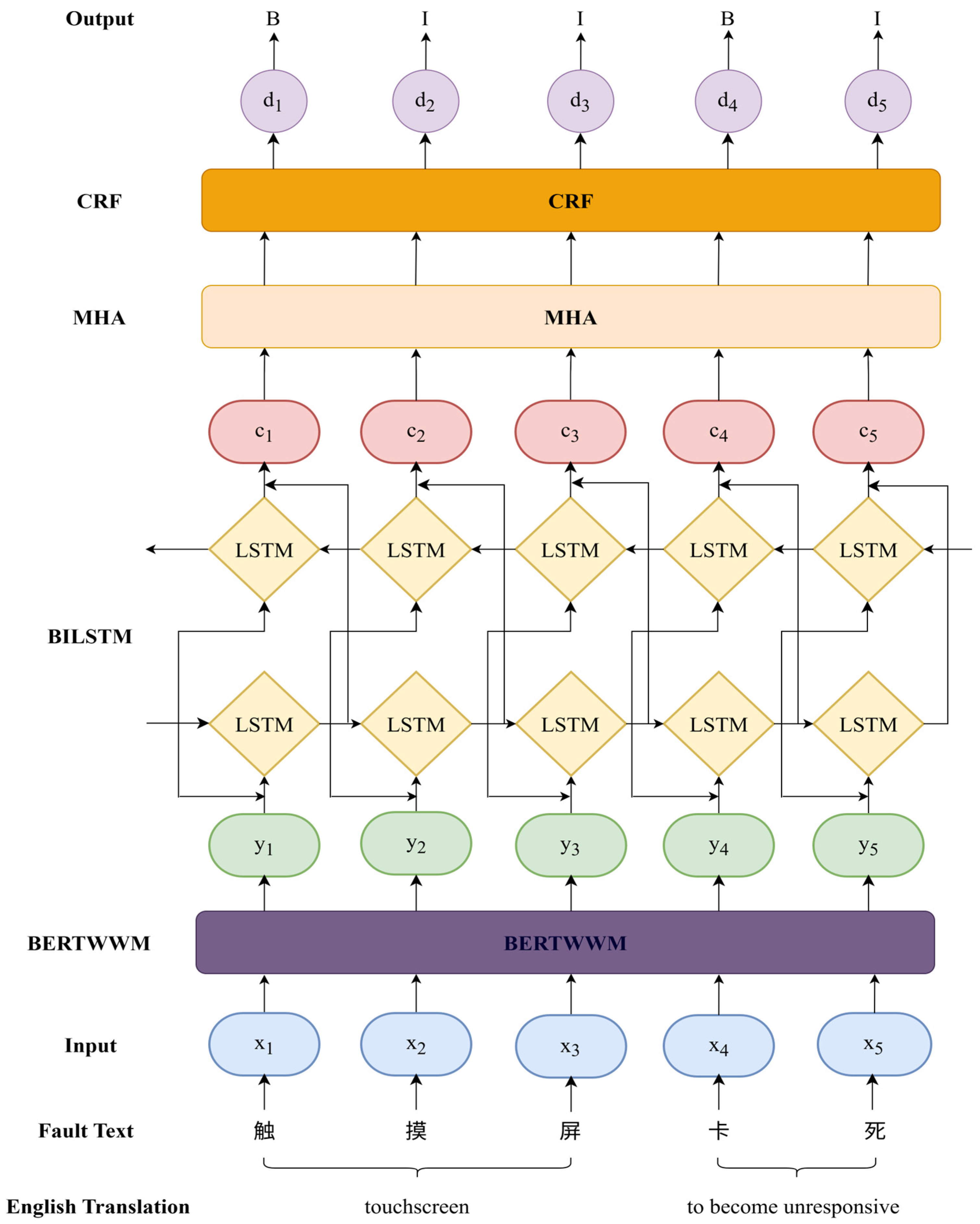
- “B-”: indicates the beginning of the entity. For example, in “the touch screen suddenly jammed”, “touch” is labeled as “B-COM”;
- (2)
- “I-”: Indicates the interior of an entity, as in the sentence, “touch screen” will be labeled as “I-COM”;
- (3)
- “O”: Indicates that the word does not belong to any entity, as in the sentence. “Suddenly” will be labeled as “O”. Examples of labeling styles are shown in Table 2.
4. Named Entity Recognition Methods
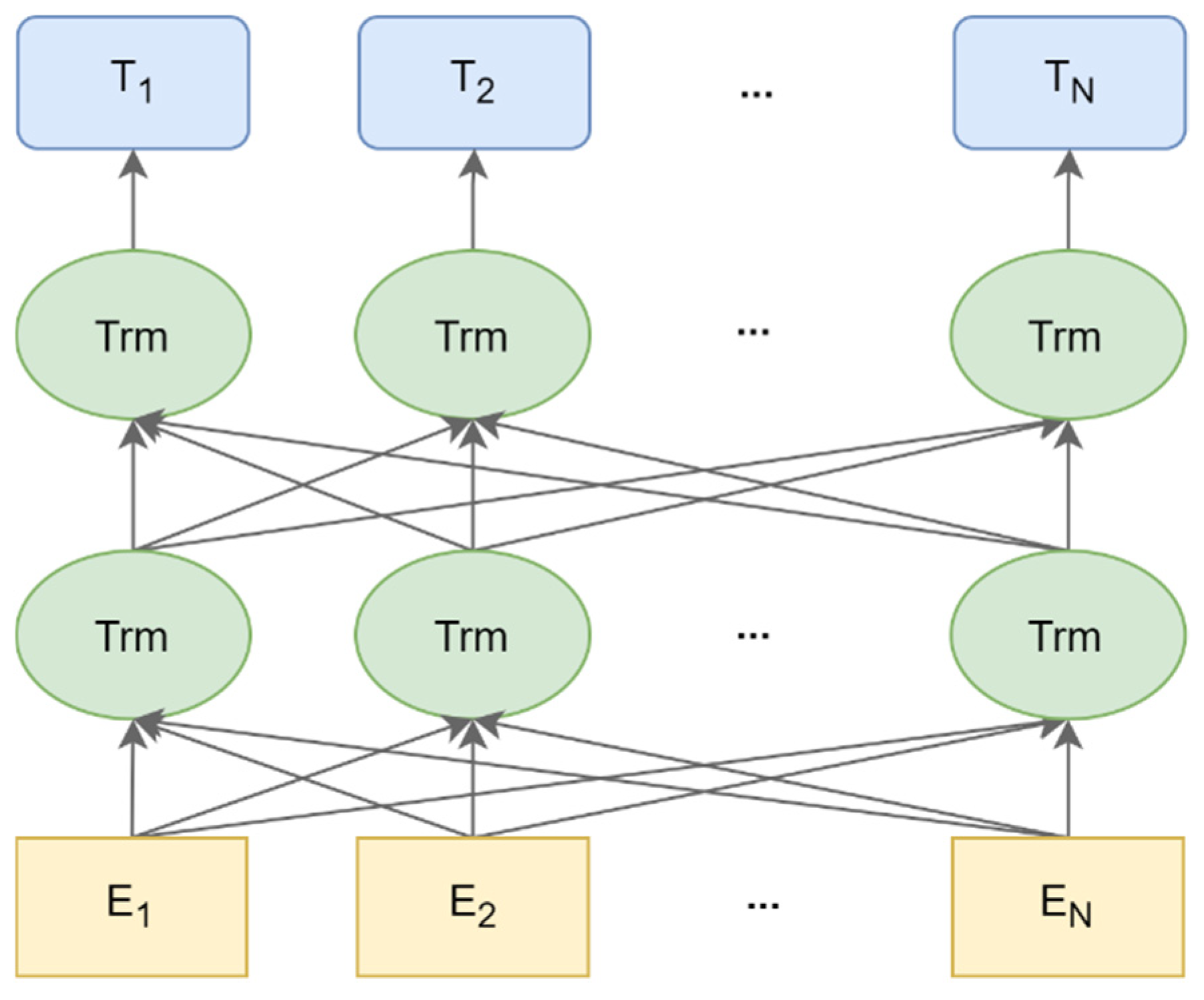
4.1. The BERT-WWM Model
4.2. BiLSTM-MHA Modeling
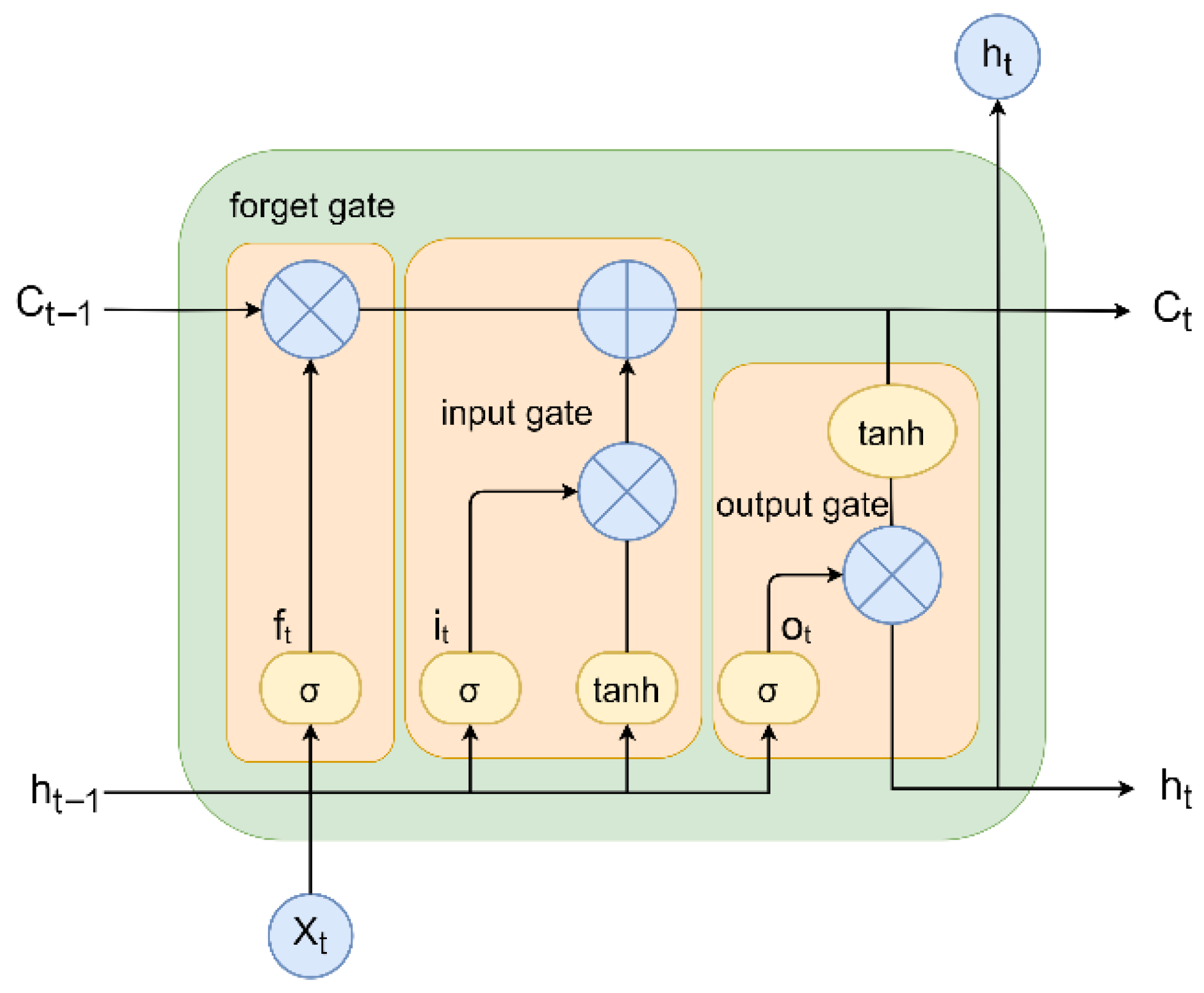
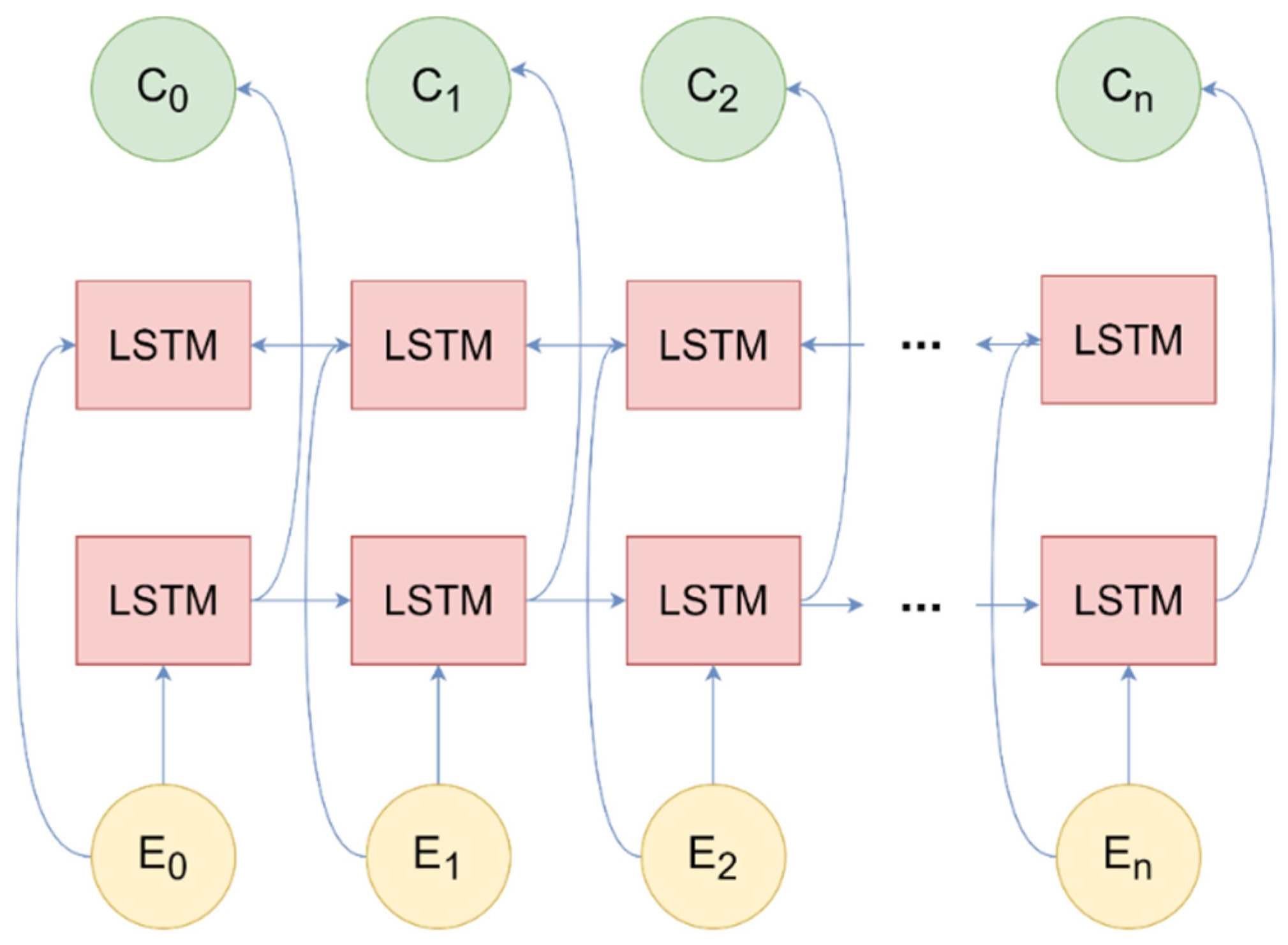
4.2.1. Bi-LSTM Based Faulty Text Feature Coding
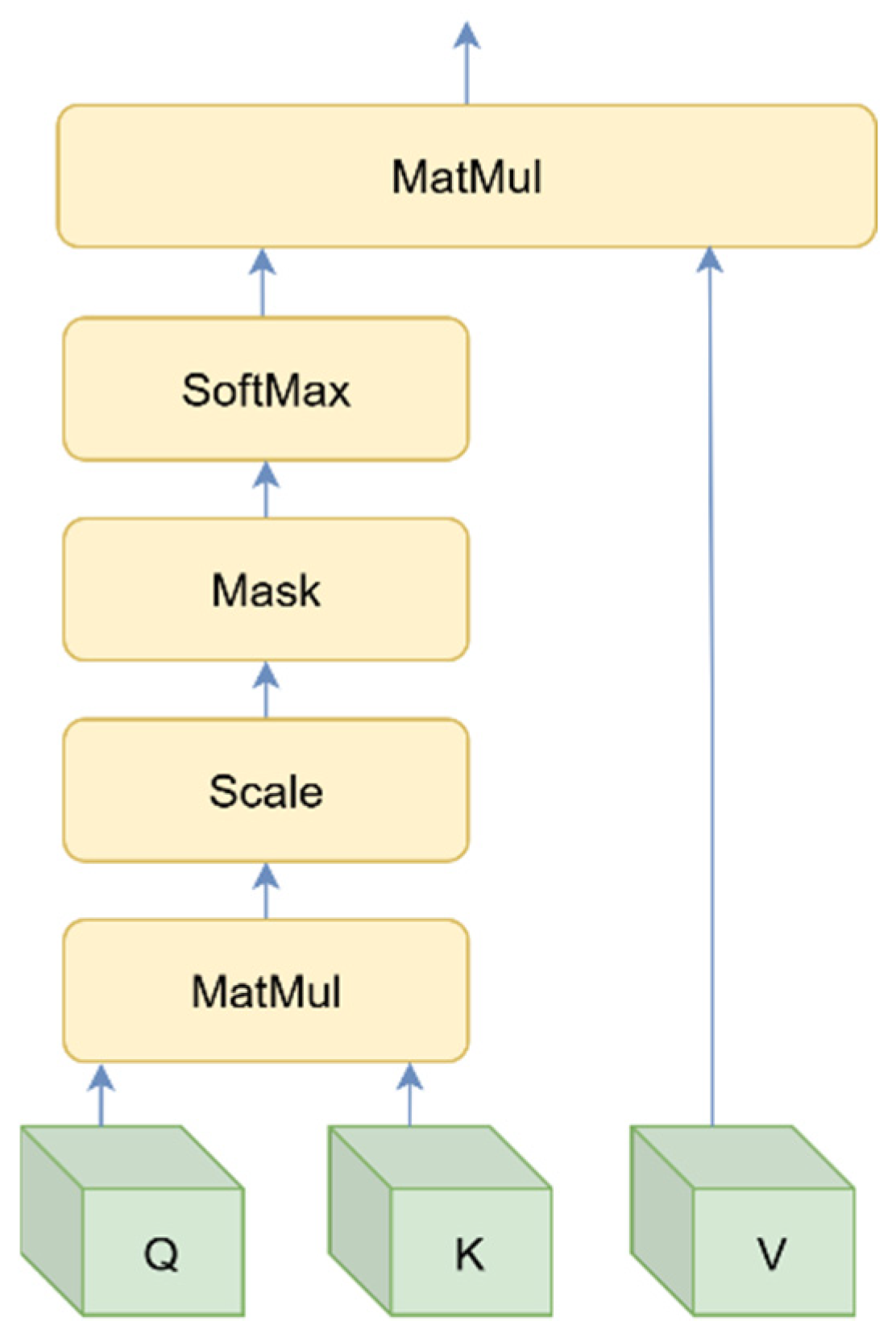
4.2.2. Multi-Headed Self-Attention Mechanism MHA
4.3. CRF to Obtain the Global Optimal Sequence
5. Hydraulic Turbine Governor Fault Knowledge Graph Construction
5.1. Entity Layer Construction
5.1.1. Entity Extraction
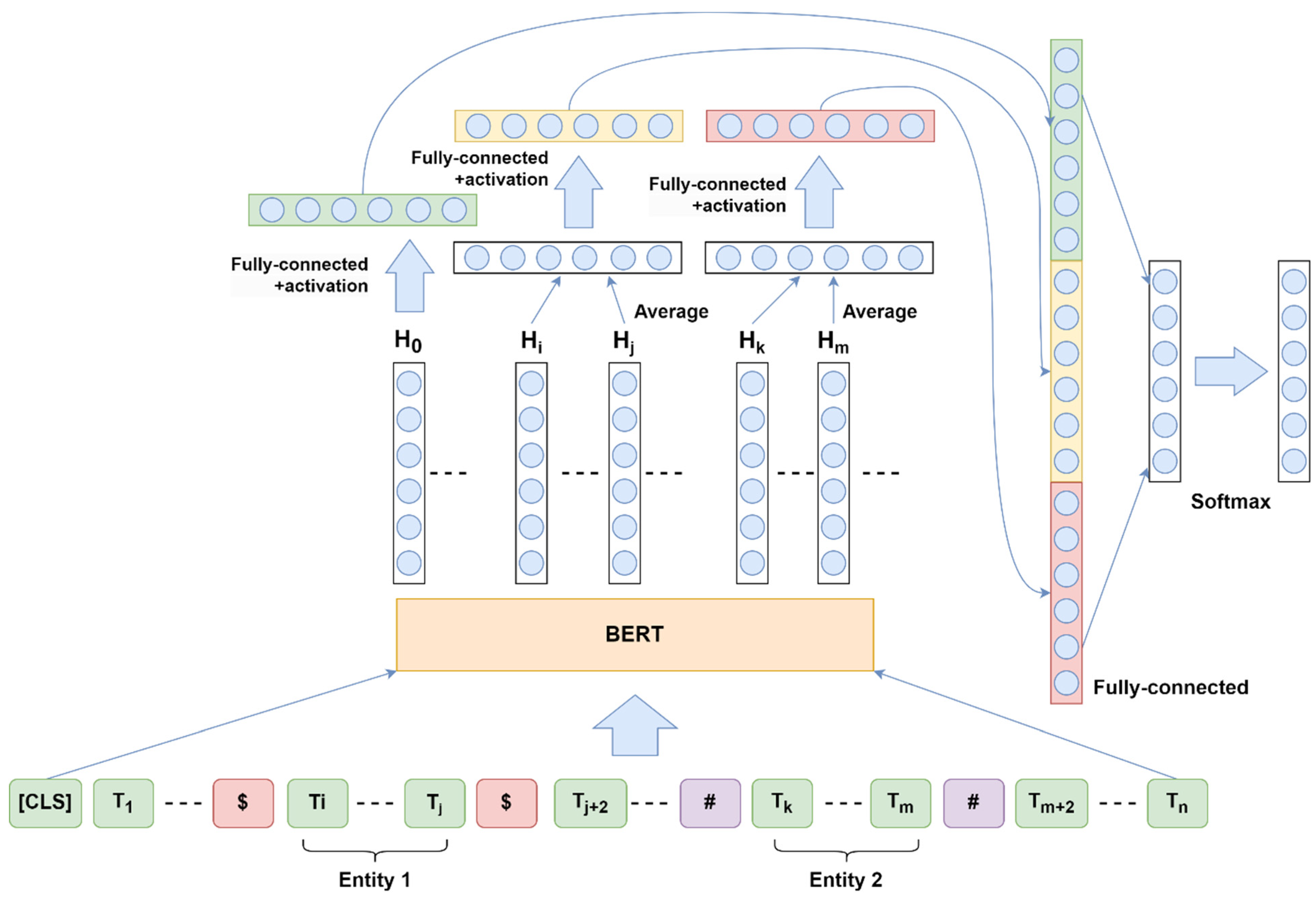
5.1.2. Relationship Extraction
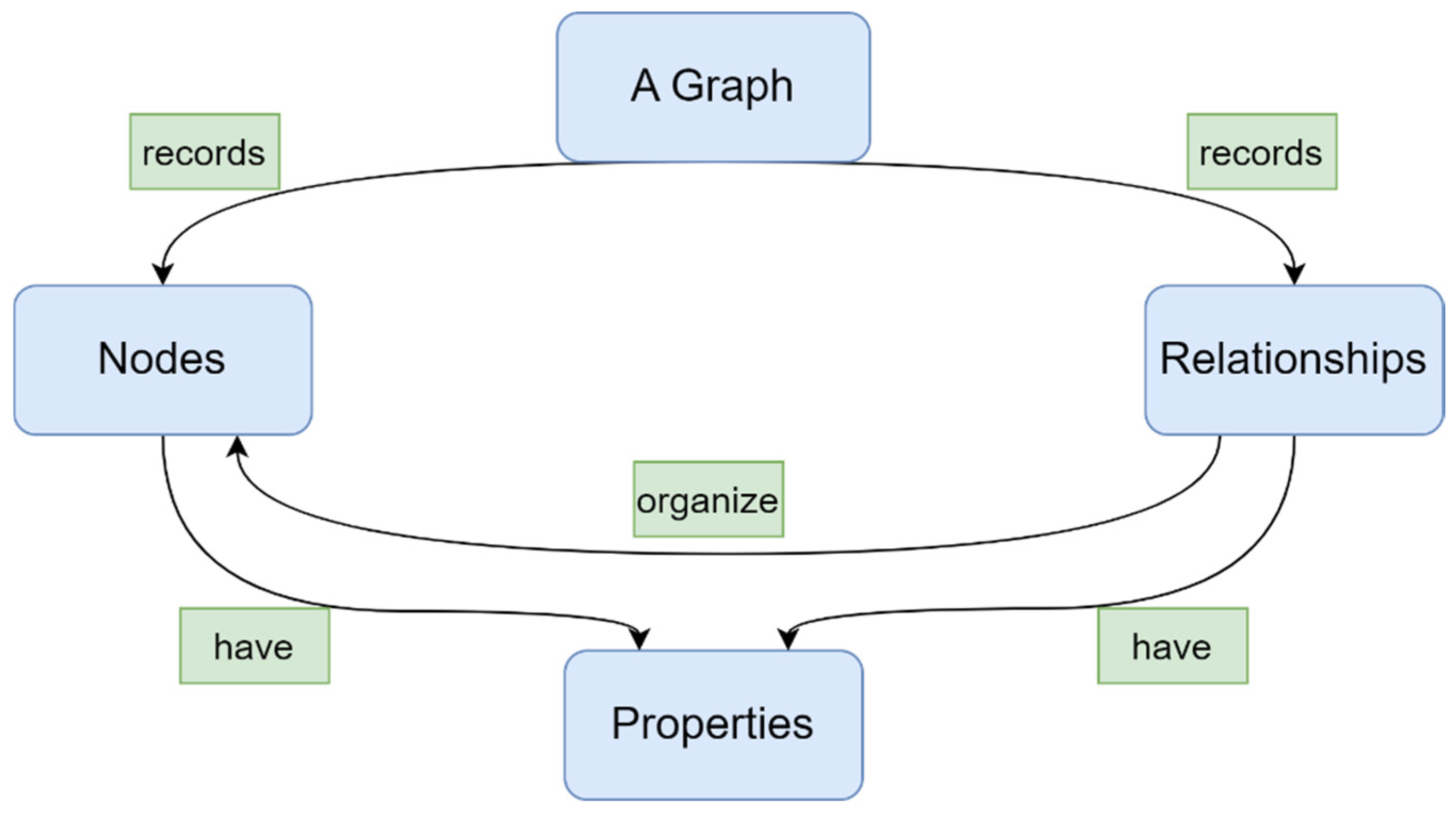
5.2. Knowledge Fusion and Storage
- (1)
- To address the newly appeared entity types in the fault text of the hydraulic turbine speed control system, the schema is updated after experts summarize the relationships between the newly added entities and the original entities, including any subordinate relationships;
- (2)
- Knowledge extraction and fusion of the added entities are performed according to the schema to complete the update of the entity layer;
- (3)
- The py2neo development framework is used to link to the Neo4j graph database, allowing for the addition and modification of the knowledge module based on the original knowledge graph to facilitate the update of the knowledge graph.
6. Example Analysis
6.1. Knowledge Extraction Experiment Results and Analysis
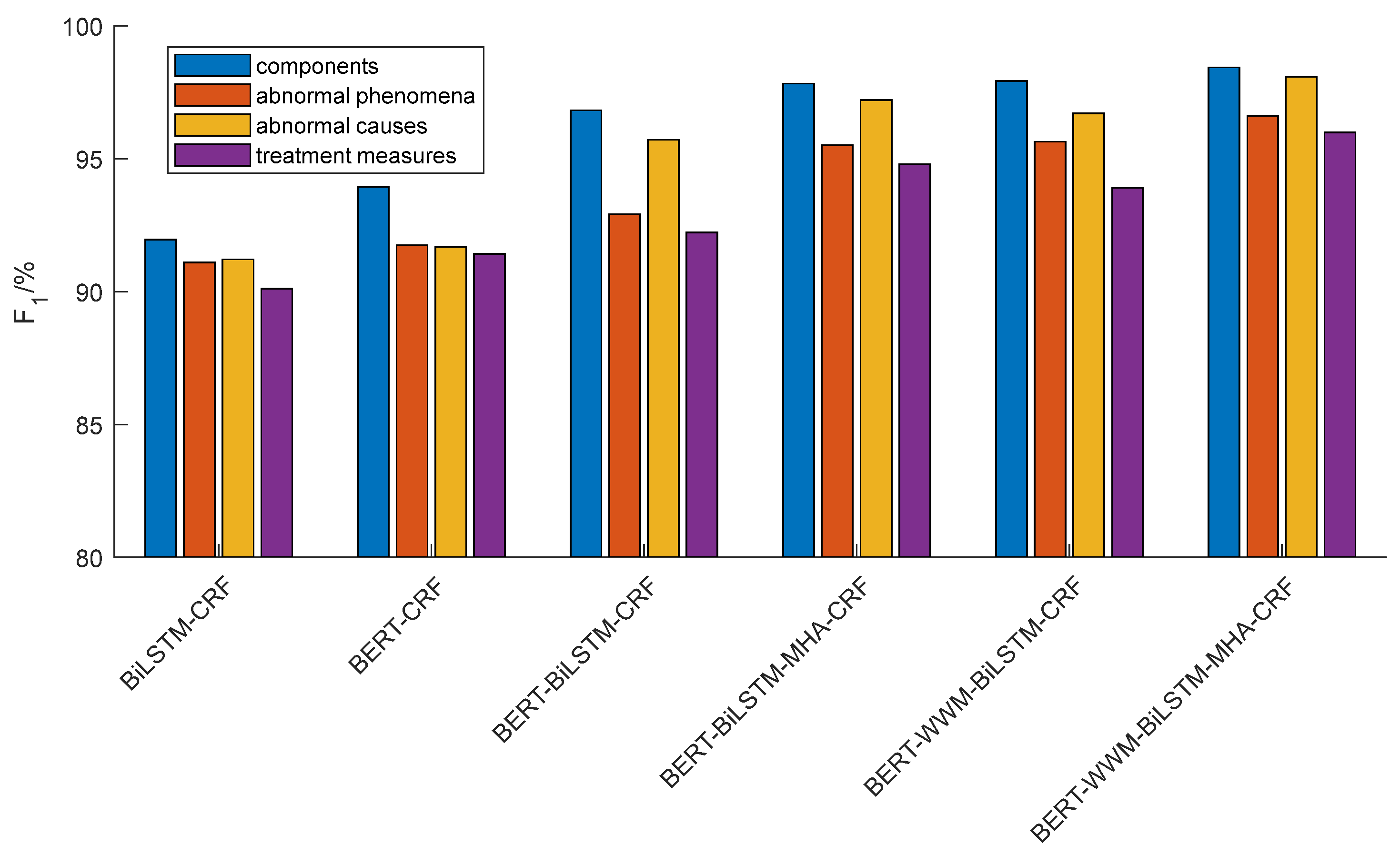
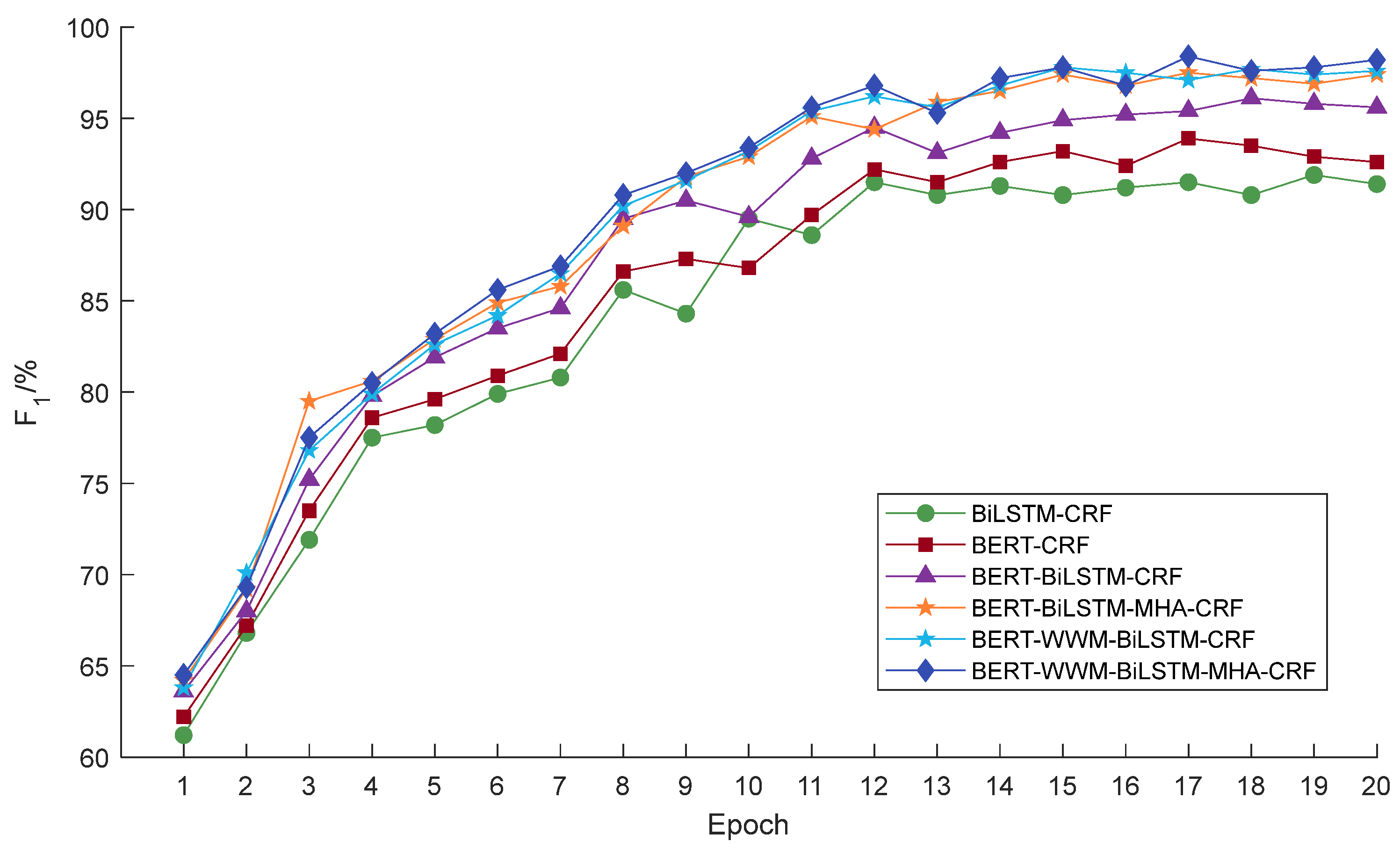
6.1.1. Comparison and Analysis of Entity Extraction Results with Traditional Entity Recognition Models
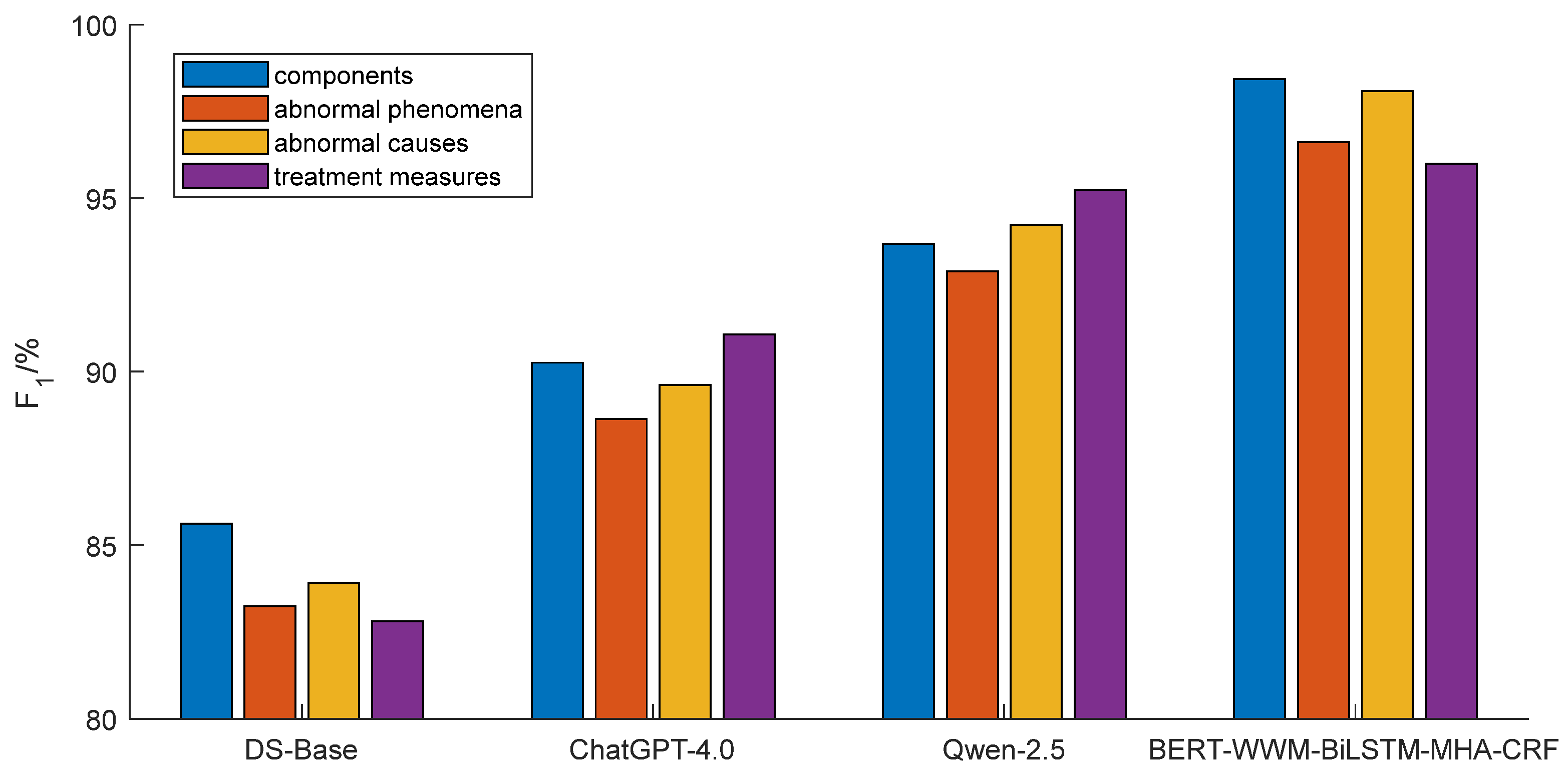
6.1.2. Comparison and Analysis of Entity Extraction Results with Mainstream Large Language Models
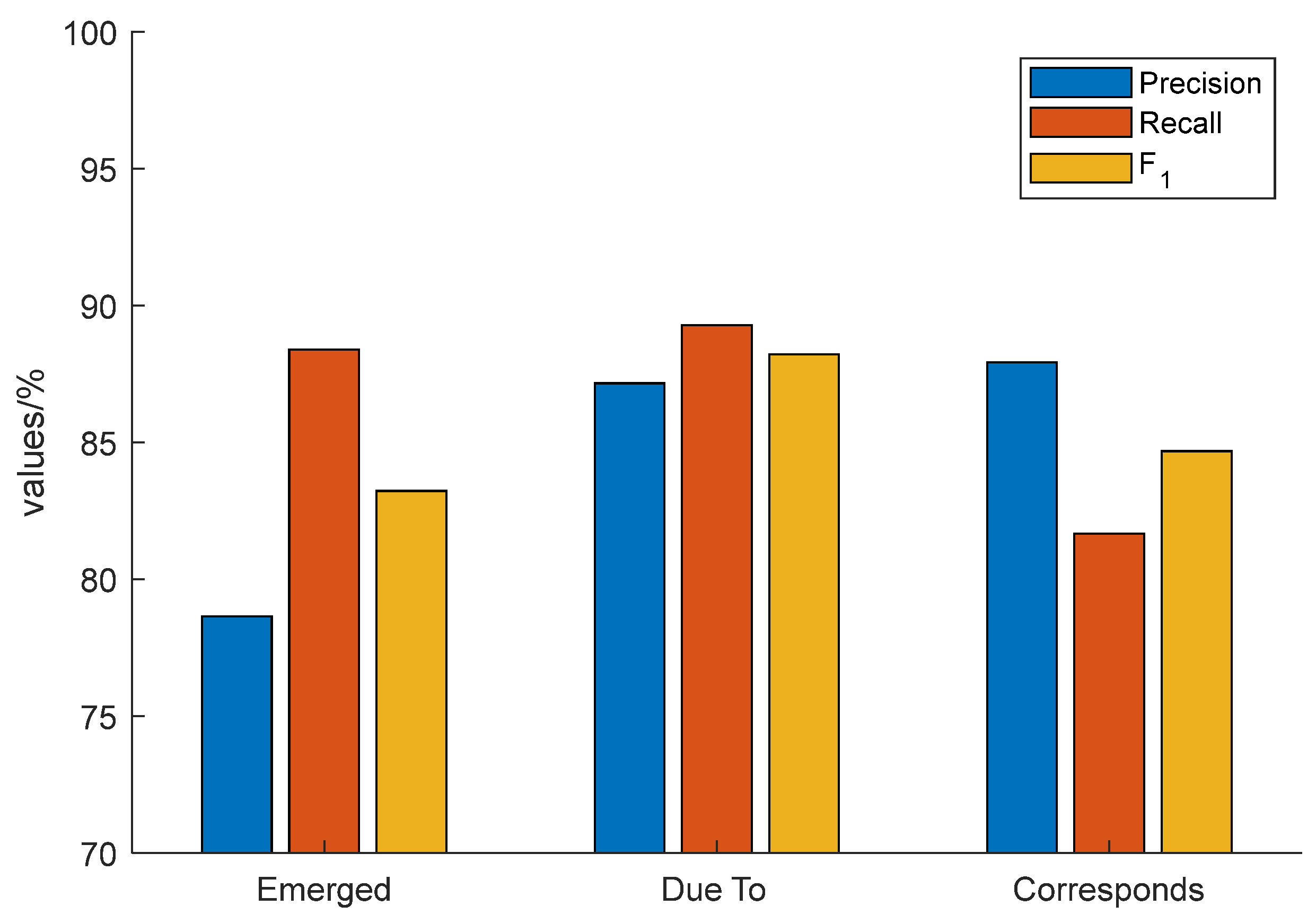
6.1.3. Relationship Extraction Results
6.2. Knowledge Fusion Experimental Results
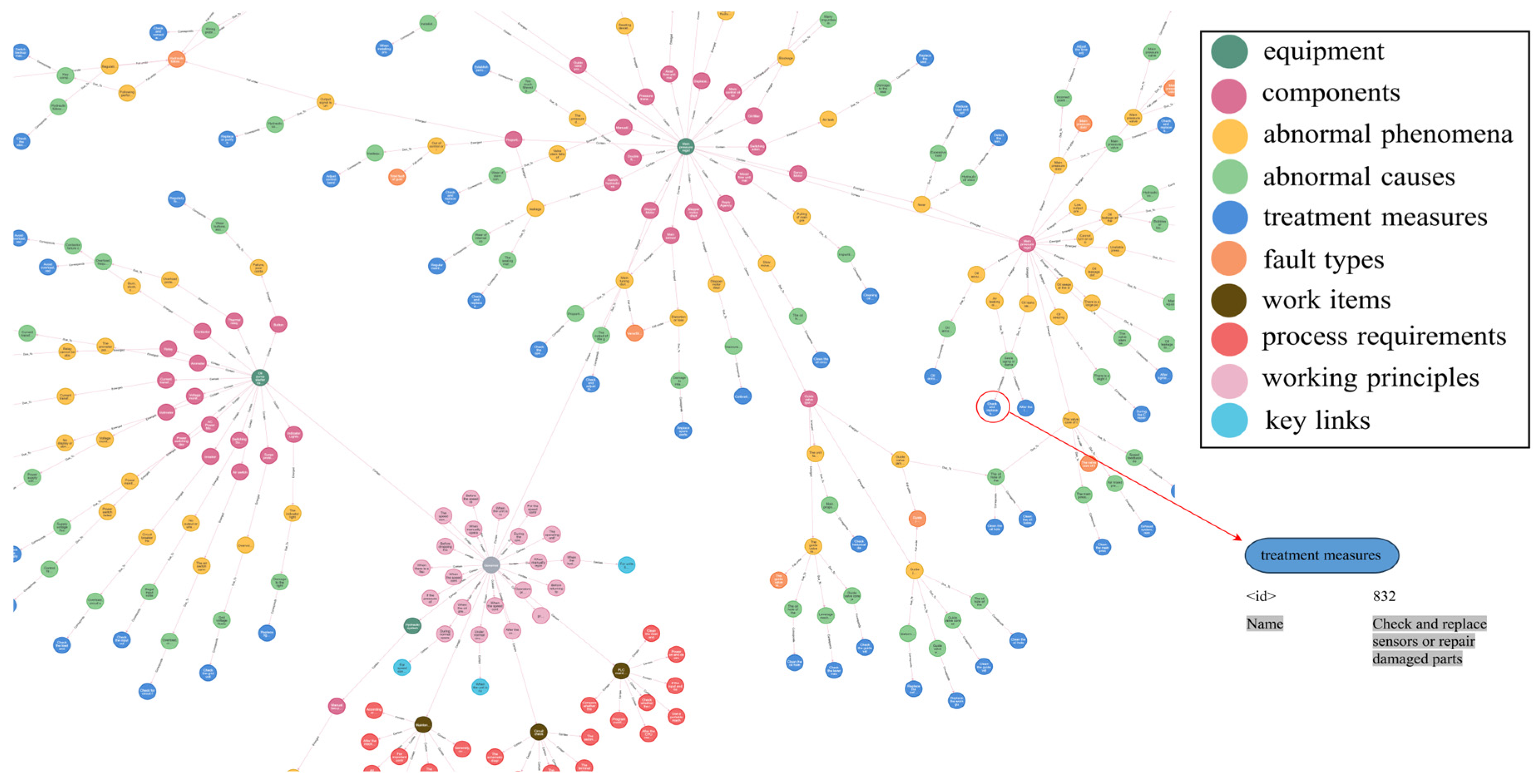
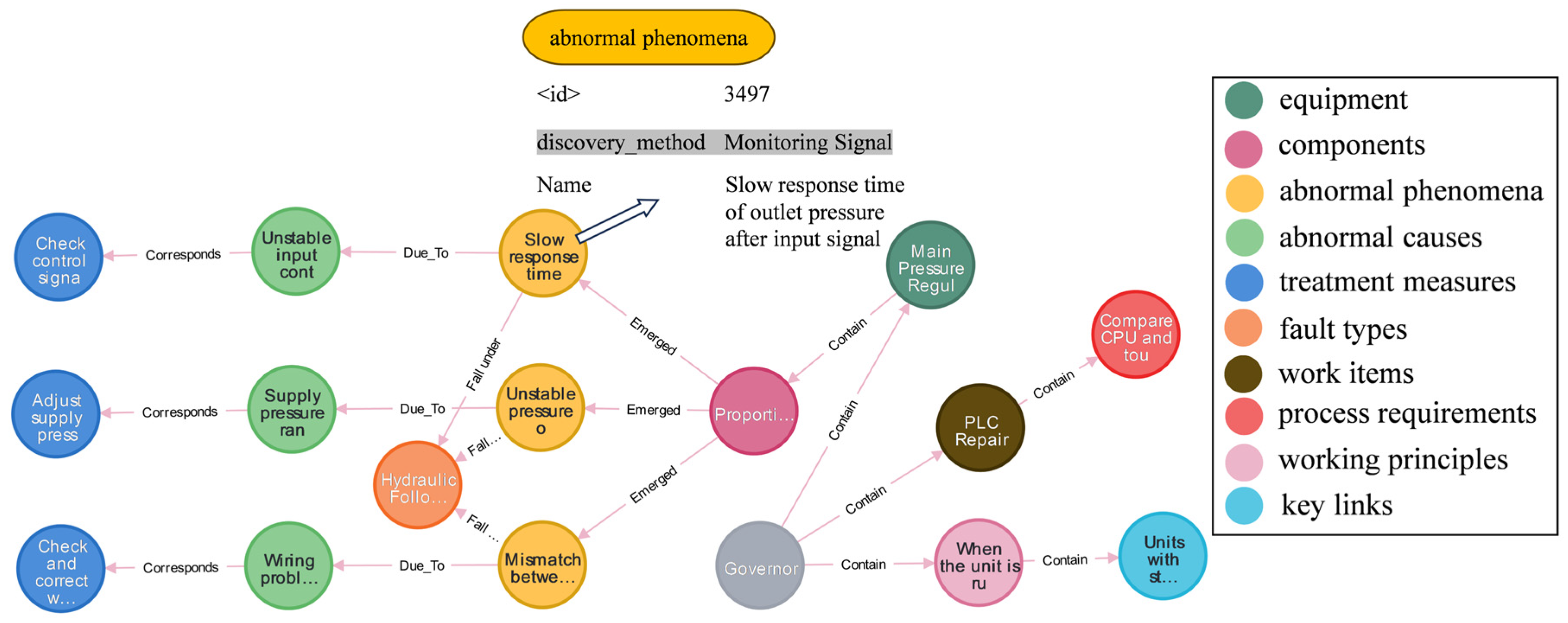
6.3. Fault Knowledge Map Construction Results of Water Motor Speed Control System
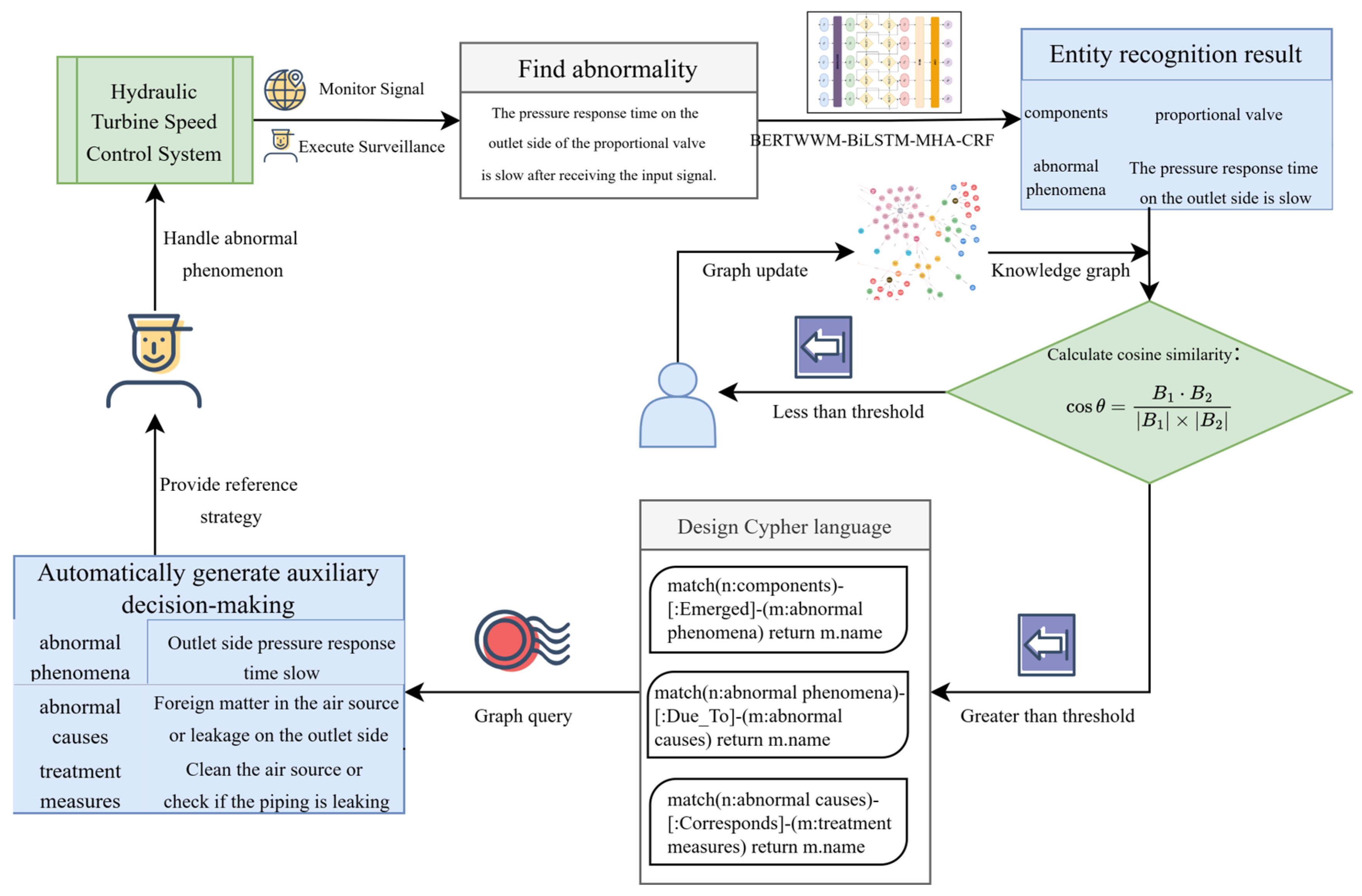
6.4. Application Framework for Fault Knowledge Mapping of Hydraulic Turbine Speed Control System
7. Conclusions
- (1)
- Characterize the fault text of the hydraulic turbine speed control system, and collect and annotate unstructured data based on the analysis results to improve the quality and utilization of the defective text training dataset.
- (2)
- The BERT-WWM-BiLSTM-MHA-CRF model is constructed, offering improved entity extraction capabilities and accurately recognizing entity information in the fault text of the hydraulic turbine speed control system compared to the BERT-BiLSTM-CRF model and mainstream large Language models. Additionally, a relationship extraction method based on BERT is proposed, which collaborates with the entity recognition model to complete the entity extraction task for the fault text.
- (3)
- A method for updating the fault knofwledge map of the hydraulic turbine speed control system and the application process for utilizing the knowledge map in assisted decision-making are proposed. This method can reason through the fault parts, causes, and treatment measures based on the fault content, providing references for field operation and maintenance personnel and improving the operation and maintenance level of the hydraulic turbine speed control system.
Author Contributions
Funding
Institutional Review Board Statement
Informed Consent Statement
Data Availability Statement
Conflicts of Interest
References
- Singhal, A. Introducing the knowledge graph: Things, not strings. Official Google Blog, 2 May 2012; 5. [Google Scholar]
- Zhang, D.; Liu, Z.; Jia, W.; Liu, H.; Tan, J. An overview of the current research status and application prospect of knowledge graph in intelligent manufacturing. J. Mech. Eng. 2021, 57, 90–113. [Google Scholar] [CrossRef]
- Liu, Q.; Li, Y.; Duan, H.; Liu, Y.; Qin, Z. A review of knowledge graph construction techniques. Comput. Res. Dev. 2016, 53, 582–600. [Google Scholar]
- Shu, J.; Yang, T.; Geng, Y.; Yu, J. A Joint Extraction Method for Overlapping Entity Relationships in Power Knowledge Graph Construction. High Volt. Technol. 2024, 50, 4912–4922. [Google Scholar] [CrossRef]
- Yang, H.; Yu, H.; Sun, Z.; Liu, J.; Yang, H.; Zhang, S.; Sun, H.; Jiang, X.; Yu, Y. Entity-Relationship Extraction for Fisheries Standards Based on a Dual Attention Mechanism. Trans. Chin. Soc. Agric. Eng. 2021, 37, 204–212. [Google Scholar]
- Hao, Z.; Liu, C.; Qin, L. Joint Entity and Relationship Extraction from Food Inspection Announcements Based on Chinese Character Adjacency Graphs. Trans. Chin. Soc. Agric. Eng. 2023, 39, 283–292. [Google Scholar]
- Deng, N.; Yu, Z.; Dan, W.; Chen, X.; Liu, S. A Joint Entity-Relationship Extraction Model for Traditional Chinese Medicine Patent Texts Integrating Semantic Features and Multi-layer Cross-attention Mechanism. Data Anal. Knowl. Discov. 2025, 9, 141–153. [Google Scholar]
- Zhang, Y.; Li, S. A Joint Entity-Relationship Extraction Model for Apple Cultivation Domain in Low-resource Scenarios. Trans. Chin. Soc. Agric. Eng. 2024, 40, 188–195. [Google Scholar]
- Ibrahim, N.; Aboulela, S.; Ibrahim, A.; Kashef, R. A survey on augmenting knowledge graphs (KGs) with large language models (LLMs): Models, evaluation metrics, benchmarks, and challenges. Discov. Artif. Intell. 2024, 4, 76–103. [Google Scholar] [CrossRef]
- Edge, D.; Trinh, H.; Cheng, N.; Bradley, J.; Chao, A.; Mody, A.; Truitt, S.; Metropolitansky, D.; Ness, R.O.; Larson, J. From local to global: A graph rag approach to query-focused summarization. arXiv 2024. [Google Scholar] [CrossRef]
- Gutiérrez, B.J.; Shu, Y.; Qi, W.; Zhou, S.; Su, Y. From RAG to memory: Non-parametric continual learning for large language models. In Proceedings of the Forty-Second International Conference on Machine Learning, Vancouver, BC, Canada, 13–19 July 2025; pp. 1–19. [Google Scholar]
- Wei, Y.; Ren, Y.; Zhao, H.; Fan, J.; Fang, W.; Yan, S. Construction of a knowledge graph for selection and breeding research of new potato varieties in China based on GraphRAG. J. Plant Genet. Resour. 2025, 26, 1229–1241. [Google Scholar] [CrossRef]
- Yu, T.; Li, J.; Yu, Q.; Tian, Y.; Sun, X.; Xu, L.; Zhang, Z. Construction and application of knowledge mapping for Chinese medicine and health care. China Digit. Med. 2017, 12, 64–66. [Google Scholar]
- Chen, Q. Construction and Application of Knowledge Graph for Tobacco Rebaking. Master’s Thesis, University of Electronic Science and Technology, Chengdu, China, 2022. [Google Scholar] [CrossRef]
- Ding, H.-C.; Wang, Z.-M. Ontology-based construction and application of Chinese knowledge map for oil tea. World For. Res. 2020, 33, 50–55. [Google Scholar] [CrossRef]
- Nie, T.; Zeng, J.; Cheng, Y.; Ma, L. Knowledge graph construction technique and application for aircraft power system fault diagnosis. J. Aeronaut. 2022, 43, 46–62. [Google Scholar]
- Han, X.; Wang, Z. Research on intelligent auxiliary diagnosis system for thermal power units. Therm. Power Gener. 2021, 50, 8–14. [Google Scholar] [CrossRef]
- Xu, Q. CNC Fault Diagnosis System Based on Knowledge Graph. Master’s Thesis, Beijing University of Posts and Telecommunications, Beijing, China, 2020. [Google Scholar] [CrossRef]
- Wang, S.; Sheng, S.; Wang, Y.; Zhai, Y.; Chen, K. Hydraulic Turbine Fault Diagnosis Based on ICEEMDAN-VMD and a Simple Recurrent Unit Combined with Attention Mechanism. Chin. Rural. Water Conserv. Hydropower 2024, 11, 166–173+178. Available online: https://link.cnki.net/urlid/42.1419.tv.20240514.1034.012 (accessed on 15 May 2024).
- Sun, S.; Li, B.; Nie, X. Research on Hydraulic Turbine Fault Diagnosis Based on Bayesian Networks. J. Hydraul. Power Energy Sci. 2023, 41, 190–194. [Google Scholar]
- Zhao, X.; Jia, Y.; Li, A.; Chang, C. A review of research on multi-source knowledge fusion technology. J. Yunnan Univ. (Nat. Sci. Ed.) 2020, 42, 459–473. [Google Scholar]
- Alokaili, A.; Menai, M.E.B. SVM ensembles for named entity disambiguation. Computing 2020, 102, 1051. [Google Scholar] [CrossRef]
- Rong, F.; Qu, Y.; Zhang, Y.; Tong, X.; Hu, J. Analyzing the ideas and characteristics of Hu Jingqing’s treatment of dementia by constructing a knowledge graph based on Neo4j. World Sci. Technol.-Mod. Tradit. Chin. Med. 2023, 25, 826–834. [Google Scholar]










| Fault Text |
|---|
| 1. The connecting rod of the main connector sensor is detached or the circuit is faulty, the governor regulation mode is cut from the power mode to the open mode, and the report is “guide vane following fault”, check the connecting rod on the spot or check the signal circuit. 2. Closed-loop dead zone and gain coefficient is not set properly, the unit grid-connected operation, the receiver occurs small frequent jerking, appropriate to reduce the closed-loop gain coefficient, increase the closed-loop starting and stopping dead zone, through the test to find the appropriate PID parameters, can be appropriately reduce the speed of regulation. 3. Failure of the unit frequency measurement circuit and the control program does not accurately determine the Frequent fluctuations in the unit frequency during grid-connected operation lead to fluctuations in the unit load. Observe the unit frequency signal and unwire the frequency measuring circuit for abnormal fluctuations. 4. The main proportional valve or guide valve is stuck, and the unit is overspeed during start-up, check the historical data, analyze the action of the main proportional valve guide spool, find out the point of stuckness, contact the host division to replace it, and check the oil quality. |
| English Translation | Fault Text | Entity Labeling |
|---|---|---|
| touchscreen | 触 | B-COM |
| 摸 | I-COM | |
| 屏 | I-COM | |
| suddenly | 突 | O |
| 然 | O | |
| to become unresponsive | 卡 | B-ABP |
| 死 | I-ABP |
| Type of Header Entity | Tail Entity Type | Relationship Category | Define |
|---|---|---|---|
| components | abnormal phenomenon | Emerged | Emerged |
| abnormal phenomenon | abnormal causes | Due To | Due To |
| abnormal causes | Treatment measures | Corresponds | Corresponds |
| - | - | irrelevant | NA |
| Masking Method | Example Text |
|---|---|
| original text | the touchscreen of the control cabinet is frozen |
| mask of a single character | the control [MASK] touch [MASK] frozen |
| full-word mask | [MASK] [MASK] [MASK] touchscreen [MASK] [MASK] |
| Parameter Type | Detailed Configuration |
|---|---|
| Epoch | 20 |
| Batch_size | 32 |
| Learning_rate | 0.00003 |
| LSTM_units | 128 |
| weight_decay | 0.01 |
| Max_length | 512 |
| Model | Components F1 Score/% | Abnormal Phenomena | Abnormal Causes | Treatment Measures |
|---|---|---|---|---|
| F1 Score/% | F1 Score/% | F1 Score/% | ||
| BiLSTM-CRF | 91.96 | 91.10 | 91.21 | 90.11 |
| BERT-CRF | 93.95 | 91.75 | 91.69 | 91.42 |
| BERT-BiLSTM-CRF | 96.82 | 92.92 | 95.71 | 92.23 |
| BERT-BiLSTM-MHA-CRF | 97.83 | 95.51 | 97.21 | 94.80 |
| BERT-WWM-BiLSTM-CRF | 97.93 | 95.64 | 96.71 | 93.90 |
| BERT-WWM-BiLSTM-MHA-CRF | 98.44 | 96.61 | 98.09 | 95.99 |
| Model | Parameter Scale | Input Method | Invocation/Training Method |
|---|---|---|---|
| BERT-WWM-BiLSTM-MHA-CRF | 150 M | Text encoded by BERT-WWM as embedding input | Local full-parameter training, trained for 20 epochs |
| ChatGPT-4.0 | Officially undisclosed | Structured message list input (JSON format) | API call, tailored prompt specifications by task type |
| Qwen-2.5 | 32 B | Plain text prompt input or dialogue history list input | API call, using the instruction-optimized version, tailored prompt specifications by task type |
| DS-Base | 32 B | Raw text input | No prompt strategy and domain fine-tuning |
| Model | Components F1 Score/% | Abnormal Phenomena | Abnormal Causes | Treatment Measures |
|---|---|---|---|---|
| F1 Score/% | F1 Score/% | F1 Score/% | ||
| DS-Base | 85.62 | 83.24 | 83.92 | 82.81 |
| ChatGPT-4.0 | 90.26 | 88.64 | 89.62 | 91.08 |
| Qwen-2.5 | 93.68 | 92.89 | 94.23 | 95.23 |
| BERT-WWM-BiLSTM-MHA-CRF | 98.44 | 96.61 | 98.09 | 95.99 |
| Relationship Category | Precision/% | Recall/% | F1 Score/% |
|---|---|---|---|
| Emerged | 78.64 | 88.39 | 83.23 |
| Due_To | 87.16 | 89.28 | 88.21 |
| Corresponds | 87.92 | 81.67 | 84.68 |
| Irregular Entities | Word Vectors of Irregular Entities | Matched Entities | Word Vectors of Matched Entities | Cosine Similarity | True/False |
|---|---|---|---|---|---|
| sensor | (0.269, 0.015, −0.007, …, 0.046) | power sensor | (−0.186, −0.012, −0.047, …, 0.106) | 0.964 | true |
| power supply device | (0.703, −0.018, −0.007, …, 0.017) | power transfer switch | (0.431, 0.013, −0.007, …, 0.059) | 0.978 | true |
| cpu module | (0.764, −0.087, −0.019, …, 0.052) | CPU module | (0.333, 0.029, 0.049, …, −0.046) | 0.875 | false |
| the operation light is off | (0.342, −0.015, −0.001, …, 0.033) | the operation light is not illuminated | (0.679, −0.067, −0.058, …, 0.126) | 0.926 | true |
| Sample Inspection Report | Entity | Relation |
|---|---|---|
| In the 31F unit’s shutdown state, the active power mechanical meters on the governor’s electrical cabinet (PG1) and the hydraulic system control cabinet both showed −100 MW. Please check and address this issue. The inspection work for the active power mechanical meter anomaly of the 31F governor has been completed. It was found that the abnormal reading of the active power meter for the 31F unit was due to a mismatch with the zero point in the PLC program. The zero point has now been corrected. After this adjustment, the power meter correctly reflects the simulated power of the unit, displaying normal values. The work area has been cleared, and personnel have evacuated. | {“Equipment”: [(“Governor”, 3, 5)], “Components”: [(“Mechanical Meter”, 10, 12)], “Anomalous Phenomena”: [(“Mismatch with Zero Point”, 149, 153)], “Mitigation Measures”: [(“Correct Zero Point”, 157, 160)]} | [(“Governor”, “Mechanical Meter”, “includes”), (“Mismatch with Zero Point”, “Indication Meter Anomaly”, “caused by”), (“Mismatch with Zero Point”, “Correct Zero Point”, “action taken”)] |
| The cushion fastening bolts for the pressure oil pipe of the 14F governor relay (located at the turbine instrument cabinet) have loosened, causing the cushion to separate from the pipeline and resulting in failure of the cushion. Please check and address this issue. | {“Equipment”: [(“Governor”, 3, 6)], “Components”: [(“Relay Pressure Oil Pipe”, 7, 15)], “Anomalous Phenomena”: [(“Loose Cushion Fastening Bolts”, 16, 23)], “Fault Types”: [(“Cushion Separation from Pipeline, Cushion Failure”, 74, 85)], “Anomalous Causes”: [(“Loose or Detached Fasteners”, 160, 168)]} | [(“Governor”, “Relay Pressure Oil Pipe”, “includes”), (“Loose Cushion Fastening Bolts”, “Cushion Separation from Pipeline, Cushion Failure”, “caused by”)] |
Disclaimer/Publisher’s Note: The statements, opinions and data contained in all publications are solely those of the individual author(s) and contributor(s) and not of MDPI and/or the editor(s). MDPI and/or the editor(s) disclaim responsibility for any injury to people or property resulting from any ideas, methods, instructions or products referred to in the content. |
© 2025 by the authors. Licensee MDPI, Basel, Switzerland. This article is an open access article distributed under the terms and conditions of the Creative Commons Attribution (CC BY) license (https://creativecommons.org/licenses/by/4.0/).
Share and Cite
Liu, S.; Zhang, K.; Zhang, T.; Wang, Z.; Ai, X. Fault Knowledge Graph Construction Method for Hydraulic Turbine Speed Control System Based on BERTWWM-BiLSTM-MHA-CRF Model. Appl. Sci. 2025, 15, 12377. https://doi.org/10.3390/app152312377
Liu S, Zhang K, Zhang T, Wang Z, Ai X. Fault Knowledge Graph Construction Method for Hydraulic Turbine Speed Control System Based on BERTWWM-BiLSTM-MHA-CRF Model. Applied Sciences. 2025; 15(23):12377. https://doi.org/10.3390/app152312377
Chicago/Turabian StyleLiu, Sheng, Kefei Zhang, Tianbao Zhang, Zhong Wang, and Xun Ai. 2025. "Fault Knowledge Graph Construction Method for Hydraulic Turbine Speed Control System Based on BERTWWM-BiLSTM-MHA-CRF Model" Applied Sciences 15, no. 23: 12377. https://doi.org/10.3390/app152312377
APA StyleLiu, S., Zhang, K., Zhang, T., Wang, Z., & Ai, X. (2025). Fault Knowledge Graph Construction Method for Hydraulic Turbine Speed Control System Based on BERTWWM-BiLSTM-MHA-CRF Model. Applied Sciences, 15(23), 12377. https://doi.org/10.3390/app152312377