Article

Photocatalytic Degradation of Methyl Orange, Eriochrome Black T, and Methylene Blue by Silica–Titania Fibers


by
Omar Arturo Aldama-Huerta
1,
Nahum A. Medellín-Castillo
2,
Francisco Carrasco Marín
3 and
Simón Yobanny Reyes-López
1,*
1
Laboratory of Nanostructured Hybrid Materials, Department of Chemical-Biological Sciences, Institute of Biomedical Sciences, Autonomous University of Ciudad Juárez, Envolvente del PRONAF y Estocolmo s/n, Ciudad Juárez, Chihuahua 32300, Mexico
2
Centro de Investigación y Estudios de Posgrado, Facultad de Ingeniería, Universidad Autónoma de San Luis Potosí, San Luis Potosí 78290, Mexico
3
Facultad de Ciencias, Universidad de Granada, Avd. de Fuente Nueva, s/n, 18071 Granada, Spain
*
Author to whom correspondence should be addressed.
Appl. Sci. 2025, 15(22), 12084; https://doi.org/10.3390/app152212084
Submission received: 12 September 2025 / Revised: 10 November 2025 / Accepted: 11 November 2025 / Published: 13 November 2025
(This article belongs to the Special Issue Applications of Nanoparticles in the Environmental Sciences)

Abstract

The photocatalytic activity of silica–titania (S-T) fibers synthesized via sol–gel and electrospinning was evaluated using methyl orange (MO), eriochrome black T (EB), and methylene blue (MB) as model dyes. Characterization by X-ray diffraction confirmed the presence of anatase and rutile TiO2 phases, while UV-Vis spectroscopy determined a bandgap energy of 3.2 eV. Scanning electron microscopy revealed fibers with an average diameter of 214 nm. Under UV irradiation, nearly complete dye removal (initial concentration: 30 mg/L; catalyst dosage: 0.1 g/L) was achieved within 8 h. The reaction kinetics followed the Langmuir–Hinshelwood model, with significant differences in apparent reaction rates (ka) among the dyes, attributable to their distinct structural and functional properties. This study establishes silica–titania fibers as a high-performance, highly versatile composite photocatalyst. Achieving 98% degradation efficiency, their key innovation is their fibrous morphology, which solves the critical problem of powder catalyst recovery. This enables a paradigm shift from simple lab efficiency to practical, sustainable application.

1. Introduction

Every year, the textile industry generates approximately 700,000 tons of waste related to the use of dyes and pigments. The washing of dyed or printed textiles contributes around 280,000 tons of discarded dyes annually, which are discharged into water bodies, negatively affecting wildlife, aquatic vegetation, and human health [1]. While the textile industry plays an essential role in the global economy, it also represents a significant source of environmental pollution.
Azo dyes, which became the most widely used synthetic colorants in the 20th century, are extensively employed in the textile, food, cosmetic, and pharmaceutical industries. However, their stability against detergents, sunlight, and temperature changes makes them persistent environmental pollutants. When discharged into water bodies, they reduce transparency and inhibit phytoplankton photosynthesis, thereby disrupting aquatic ecosystems. The environmental impact is compounded by their resistance to biodegradation, which is why the absence of advanced degradation methods like photocatalysis has severe consequences. This persistence not only deteriorates water quality but also allows for the release of toxic degradation products. The primary hazard of azo dyes lies not in the original molecules but in these breakdown products, such as the mutagenic and carcinogenic aromatic amines benzidine, aniline, and toluidine. Studies on animals and cell lines have demonstrated that these substances cause clastogenic effects and promote cancers in organs like the bladder and liver. Furthermore, these toxic compounds bioaccumulate in aquatic organisms, propagating harmful substances through the food chain and threatening entire ecosystems. Although many countries have banned or restricted certain azo dyes, their global use remains high due to production in regions with weaker regulations, globalized trade, and inadequate controls, perpetuating a significant environmental and public health challenge [2,3,4].
The limited adoption of advanced degradation methods, including photocatalysis, for treating dye-laden wastewater is a significant environmental challenge, leading to severe consequences across ecological and public health domains. In the environment, synthetic dyes, particularly azo dyes, persist in water bodies due to their resistance to biodegradation. This persistence not only deteriorates water quality but also reduces sunlight penetration in aquatic ecosystems, thereby disrupting photosynthesis and affecting essential organisms like algae [5]. Furthermore, toxic compounds derived from dyes bioaccumulate in aquatic organisms, spreading harmful substances through the food chain and threatening both species and entire ecosystems [6]. The inefficient degradation of dyes poses significant risks to human health and economic stability. Many dyes break down into carcinogenic and mutagenic metabolites, elevating the incidence of severe diseases, including cancer and genetic disorders, among populations using contaminated water sources [7]. Moreover, the contamination of surface and groundwater compromises drinking water supplies, exposing communities to hazardous chemicals [8]. From an economic perspective, the presence of untreated dyes escalates the cost of water purification for human consumption and wastewater treatment. Additionally, persistent water pollution detrimentally affects water-dependent industries such as fishing and tourism, thereby constraining economic development in affected communities [9].
Several processes or methods are available to mitigate the negative effects caused by dye pollution in water bodies. Effluent treatment processes are categorized as physicochemical, advanced chemical, biological, or a combination of the three. Advanced chemical treatments include advanced oxidation processes (AOPs), which encompass photocatalysis. Advanced Oxidation Processes (AOPs) have garnered significant attention for their ability to mineralize recalcitrant organic pollutants into harmless end products such as CO2 and H2O [10]. Photocatalysis is an advanced oxidation process that utilizes semiconductor materials activated by electromagnetic radiation—from high-energy UV to low-energy visible/IR light—to decompose organic molecules. Key semiconductors include titanium dioxide (TiO2), zinc oxide (ZnO), graphitic carbon nitride (g-C3N4), tungsten oxide (WO3), iron oxide (α-Fe2O3), cadmium sulfide (CdS), and various perovskites (BaTiO3, SrTiO3, …). Upon photon absorption, these materials generate electron–hole pairs (e/h+), triggering the formation of reactive oxygen species that drive the photocatalytic [11]. Despite their potential, widespread application is hindered by technical limitations such as rapid electron–hole recombination and the formation of impurity states, which diminish efficiency. To address these issues, composite materials like MoS2-coated titania nanobelts or CNT–titania hybrids have been developed. However, the complex and costly synthesis of these composites often poses significant barriers to their practical implementation [12]. Consequently, developing sustainable and efficient photocatalytic systems remains a critical research objective for effective environmental remediation.
According to Table 1 the most efficient and fast catalysts are typically TiO2-based composites, especially those modified with carbon materials (GO, rGO, CNTs), e.g., TiO2–CNT and B-GO-TiO2 achieving 100% efficiency in ≤180 min, or metal dopants (Cu, Ni, Fe, Ag), e.g., Cu-Ni/TiO2 (97% in 90 min). ZnO-based composites (e.g., Fe–ZnO, ZnO quantum dots) show good activity (89–97%). Other Oxides like α-Bi2O3 and α-Fe2O3 are promising for specific dyes. Green-synthesized NPs (e.g., Green CS-TiO2 NPs) combine high performance with eco-friendly synthesis. The fibrous structure is a major practical benefit. Unlike powders, which can be difficult to separate and recover from water, fibers are easier to handle, retrieve, and potentially reuse, reducing catalyst loss and operational costs.
The complex aromatic structures characteristic of synthetic dyes, particularly azo-based varieties, impart exceptional stability and resistance to degradation through conventional wastewater treatment processes, thereby complicating their remediation [13]. This research focuses on developing a silica–titanium dioxide (S-T) nanofibrous composite as a sustainable and efficient solution for degrading dyes and other organic pollutants. The findings indicate that this material not only enhances photocatalytic efficiency but also provides a cost-effective and accessible alternative for treating textile industry wastewater, directly mitigating the environmental impact of synthetic dyes. The S-T nanofibrous composite offers additional advantages, such as facile post-use recovery, thereby promoting process sustainability. The material exhibits high efficacy in the photodegradation of organic dyes including methyl orange, methylene blue, and eriochrome black T even under natural sunlight. Synthesized via sol–gel and electrospinning techniques, the composite allows for precise control over its structure and properties, optimizing its performance in environmental applications such as the treatment of textile-derived wastewater.

2. Methodology

2.1. Electrospun Fibers

The sol precursor was prepared by mixing titanium tetraisopropoxide (TTIP, 97% purity, Sigma-Aldrich®, St. Louis, MO, USA) and tetraethyl orthosilicate (TEOS, 98% purity, Sigma-Aldrich®, St. Louis, MO, USA) in a 3:7 volumetric ratio, respectively. Absolute ethanol and glacial acetic acid were then added to the TTIP-TEOS mixture in a 1:1:1 ratio. After stirring magnetic for 10 min at room temperature and 24 h of aging, the resulting material was obtained as a transparent, monolithic gel with a honey-like consistency. The gel exhibited excellent structural integrity, showing no phase separation, and remained stable throughout the subsequent electrospinning process according to Solorio-Grajeda et al. [14].
The gel precursor prepared for electrospinning, was mixed with polyvinyl pyrrolidone (PVP, MW: 1,300,000, Alfa Aesar®, Ward Hill, MA, USA) to achieve a final concentration of 10% w/v in the solution. The mixture was magnetically stirred for 30 min to ensure complete dissolution and homogeneity, followed by refrigeration for 30 min to optimize its viscosity and stability for fiber formation. The resulting gel-PVP was loaded into a 10 mL glass syringe equipped with a 0.2 mm diameter needle. Electrospinning was conducted at a flow rate of 1 mL/h, with the needle tip and collector set to +8 kV and −8 kV, respectively, following the methodology described by Solorio-Grajeda [14] to form green fibers of titanium tetraisopropoxide-tetraethyl orthosilicate-polyvinyl pyrrolidone (TTIP-TEOS-PVP).
Table 1. Studies for photocatalysis of dye.
PhotocatalystDyeTime (min)Efficiency (%)kappkapp
(min−1)
FormReference
SiO2-TiO2 FibersMethyl Orange 480~980.0021Fiber This work
SiO2-TiO2 FibersEriochrome Black T 480~980.0014Fiber This work
SiO2-TiO2 FibersMethylene Blue 480~980.0016Fiber This work
Cu-Ni/TiO2Rhodamine B9097.0-Powder[15]
Nanosized TiO2Methylene Blue6090-Powder [16]
GO/TiO2Methyl Orange24090-Powder[17]
Ag-MoO3-TiO2Methyl Orange30097-Powder[18]
Polymer modified-TiO2Methylene Blue9093-Powder[19]
TiO2-Fe2O3 nanocompositeMethylene Blue6079.1-Powder[20]
B-GO-TiO24-NitroPhenol180100-Powder[21]
TiO2–CNT RhB80100-Powder[22]
5% Fe/TiO2Eosine Blue11096.70-Powder[23]
Se-ZnS NCSMethyl Orange16095.00-Powder[24]
N-TiO2Methyl Orange20090.00-Powder[25]
α-Bi2O3Methyl Orange15095.00-Powder[26]
N-TiO2 nanorodsMethyl Orange25080.00-Powder[27]
α-Fe2O3 nanoparticlesMethyl Orange10095.31-Powder[28]
ZnO quantum dotsMethyl Orange16097.00-Powder[29]
ZnO nanopyramidMethyl Orange15095.00-Powder[30]
Fe–ZnOMethylene Blue18092-Powder[31]
GO/TiO2Methylene Blue240100-Powder[32]
Cd–ZnOMethylene Blue24089-Powder[33]
Fe3O4–ZnO NCSMethylene Blue18089.2-Powder[34]
N-Carbon quantum dots/TiO2Methylene Blue42082.00-Powder[35]
S-TiO2 nanorodsMethylene Blue24092.00-Powder[36]
Egg-NiOMethylene Blue24079.00-Powder[37]
TiO2rGOCdSMethyl Orange240100-Powder[38]
TiO2rGOCdSMethylene Blue360100-Powder[38]
CdS-TiO2 nanocompositesAcid Blue12095-Powder[39]
Green CS-TiO2 NPsMethylene Blue9098.5-Powder[40]

2.2. Thermal Treatment TTIP-TEOS-PVP Green Fibers

Electrospun sol–gel fibers are classified as “green” fibers because they represent an intermediate, unsintered state in the ceramic manufacturing process. At this stage, the fibers consist of a hybrid organic-inorganic composition, where a PVP polymer matrix provides structural integrity to the sol–gel precursor. The TTIP-TEOS-PVP green fibers are mechanically fragile, thermally unstable, and highly sensitive to moisture and solvents. Their transient nature necessitates a critical sintering step to decompose the organic components, densify the inorganic network, and achieve the final ceramic material with mechanical, thermal, and functional properties. The as-spun TTIP-TEOS-PVP green fibers were first dried at 100 °C for 24 h in an oven (Heratherm™, Thermo Scientific™, Langenselbold, Alemania) to remove residual solvents and moisture. Subsequently, a multi-stage thermal treatment was conducted in an electric muffle furnace (Thermo Scientific™, ™, Langenselbold, Germany) to convert the green fibers into ceramic silica–titania fibers. The process involved the following sequential steps: heating to 200 °C for 2 h at a ramp rate of 2 °C/min, followed by a hold at 400 °C for 2 h (5 °C/min), then at 600 °C for 2 h (5 °C/min), and a final calcination at 800 °C for 2 h (5 °C/min).

2.3. Characterization

Morphological characterization provides crucial insights into the structure and shape of the sample, which in this study were used to analyze the fibers. The Hitachi®Ltd., Tokyo, Japan, SU5000 scanning electron microscope was employed to examine the morphology of the fibers both before and after sintering. X-ray diffraction (XRD) techniques were used to analyze the chemical composition and crystalline structure of the composite. For the XRD analysis, a Cu-Kα radiation source with a wavelength of 1.5406 Å was employed. The measurements were conducted at room temperature, typically using a 2θ range from 10° to 80° with a step size of 0.02° and a scan rate of 1°/min. This approach provided comprehensive data for understanding the material’s crystalline nature.

2.4. Tauc Plot

The Tauc plot is a widely used method for determining the optical bandgap energy (Eg) of semiconductors. In this analysis, the equation describes the relationship between the absorption coefficient (α) and the incident photon energy (): Here, α represents the absorption coefficient, h is Planck’s constant, ν is the frequency of the incident photon, A is a proportionality constant. The critical term is the exponent γ, which denotes the nature of the electronic transition. Specifically, when γ = 2, it indicates an allowed direct transition; when γ = 1/2, it indicates an allowed indirect transition. For γ = 2/3, it represents a forbidden direct transition, and for γ = 1/3, a forbidden indirect transition. Typically, allowed transitions dominate basic absorption processes, resulting in either direct or indirect transitions. Thus, the fundamental procedure for a Tauc analysis involves acquiring optical absorbance data for a sample over an energy range spanning below to above the bandgap transition. Plotting (αhν)γ versus hν involves testing γ = 2 or γ = 1/2 to determine which provides the best fit and thereby identifying the correct type of transition. By comparing Tauc’s equation with the straight-line equation, setting the y-axis to zero intersects the x-axis. Solving energy, the extrapolation of the linear region of the plot on the x-axis yields the bandgap or edge energy [41]:
( α h v ) γ = A ( h v E g )
y = m x
0 = A h v E g

2.5. Photocatalytic Activity

The degradation kinetics were evaluated using solutions of methyl orange, methylene blue, and eriochrome black T at a concentration of 30 ppm. For each experiment, 0.01 g of fiber and 100 mL of the solutions (methyl orange, eriochrome black T, and methylene blue) were measured. Dye degradation measurements were taken at specific intervals: 1, 2, 3, 4, 5, 6, 7, 8, 10, 12, and 24 h with a 390 nm lamp, before initiating the photocatalytic degradation, the mixture of the photocatalyst and the dye solution were stirred in the dark for 30 min to establish the adsorption–desorption equilibrium.
Experimental pH: All photocatalytic experiments in this study were carried out at pH 7.0. This value was deliberately selected and adjusted using dilute NaOH or HCl solutions prior to the addition of the catalyst and the initiation of the reaction. The selected neutral pH is for several key reasons: Environmental Relevance: A pH near 7 is representative of many natural water bodies and typical wastewater streams, making our findings more directly applicable to potential real-world scenarios. Material Stability: The preliminary tests indicated that the silica–titania fibrous structure remains stable at neutral pH, avoiding potential dissolution or morphological changes that can occur under highly acidic or basic conditions. This work aimed to establish baseline performance of the newly synthesized fibrous catalyst under representative conditions. Using a controlled, constant pH allows for a clear and unambiguous comparison of its activity against the different dyes.

2.6. Langmuir–Hinshelwood Kinetic Model in Photocatalysis

The photocatalytic degradation kinetics were analyzed using the Langmuir–Hinshelwood (L-H) model, which is well-established for heterogeneous photocatalysis to evaluate the photocatalytic efficiency of materials. This model relates the substrate concentration to the reaction rate on a solid photocatalytic surface. When the product of the adsorption equilibrium constant (Kads) and the initial reactant concentration (C0) is greater than one, integrating the equation within the limits C/C0 at t = 0 and C/C0 at t = t, the L-H expression simplifies to:
l n ( C C 0 ) = k a p p t
where kapp is the apparent first-order rate constant. At low concentrations of organic compounds, the reaction can be described using this apparent first-order rate constant ka.
The L-H isotherm provides a relationship between substrate concentration and reaction rate, depicted as a curve describing photocatalytic reaction kinetics. By analyzing the slopes of these curves, photocatalytic efficiency was evaluated: steeper slopes indicated higher photocatalytic activity, while gentler slopes suggested lower activity [42].

3. Results and Discussion

Figure 1a displays the green TTIP-TEOS-PVP fibers, which exhibit a predominantly cylindrical morphology with an average diameter of 369 ± 134 nm. The fibers have a smooth and homogeneous surface and are randomly oriented. Figure 1c shows the fibers after the sintering process. The cylindrical morphology remains intact after sintering, and the surface continues to appear uniform, with no change in the random orientation. However, the diameter is reduced to 214 ± 71 nm, which is attributed to the loss of organic material and solvents used as precursors during the process [14]. Figure 1b,d is an EDX spectra of green and Silica–Titania fibers showing only carbon, nitrogen, oxygen, silica and titanium signals according to heat treatment for ceramic fibers.
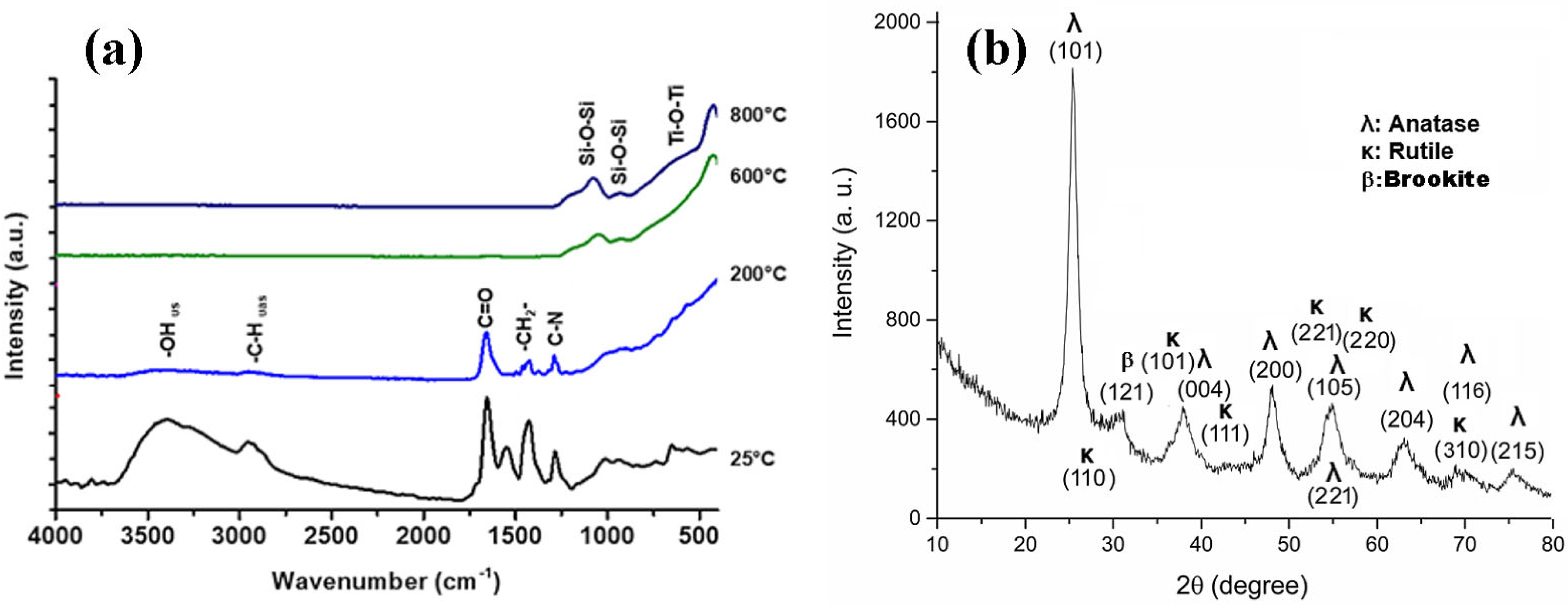
The FTIR spectra in Figure 2a shows the evolution of functional groups in the fibers treated at different temperatures. The spectrum of the untreated fibers displays characteristic bands of the PVP polymer and gel precursors: a broad band at ~3497 cm−1 (OH stretching from residual solvent and PVP), a band at 2953 cm−1 (asymmetric CH2 stretching), at 1421 cm−1 (C-H deformation of CH2), and at 1280 cm−1 (C-N bending from the pyrrolidone ring). Additionally, incipient bands are observed at 940 cm−1 and 420 cm−1, attributable to Si-O and Ti-O vibrations, respectively. As the treatment temperature increases to 200 °C and 600 °C, the intensity of all O-H, C-H, C-N bands decreases significantly. This is attributed to the onset of PVP decomposition, which begins around 180 °C. Concurrently, the inorganic framework develops, as evidenced by the emergence and intensification of bands at 1083 cm−1 and 1204 cm−1 asymmetric Si-O-Si stretching, 934 cm−1 Si-O stretching, and 635 cm−1 Ti-O-Ti stretching. The persistence of a band near 3236 cm−1, assigned to OH vibrations, indicates the presence of residual hydroxyl groups and incomplete condensation at lower temperatures. The general intensification of the Si-O and Ti-O bands with increasing temperature suggests progressive polycondensation, leading to the formation of longer Si-O-Si and Ti-O-Ti chains and signaling enhanced structural stability of the silica–titania ceramic material.
Figure 2b presents the X-ray diffraction (XRD) results for the Silica–Titania (S-T) fibrous material, revealing the crystalline anatase phase. The diffractogram highlights the observed peaks, including their corresponding angles (°2θ), relative intensities, and hkl indices associated with the respective crystal planes. The most prominent peak appears at 25.4° with an intensity of 100%, corresponding to the (101) crystal plane. Other significant peaks are located at 37.9°, 47.9°, 54.0°, 62.7°, 68.9°, and 75.1°, correspond to (004), (200), (105), (118), (204) and (215) crystal planes indicating the presence of distinct crystal planes associated with specific hkl indices of anatase [JCPS, No. 01-089-4921]. Rutile shows principal peaks at 2θ values of 27.5, 36.2, 41.1, 54.4, 56.8 and 69.1 corresponding to (110), (101), (111), (211), (220), and (112) planes for tetragonal phase according to the standard powder diffraction card of JCPDS, No. 03-065-0191. The presence of brookite is revealed by the peak at 30.8° that does not overlap with any peak from anatase or rutile [JCPS, No. 00-021-1272]. Quantification of phases reveals that the material is composed of 25 wt-% TiO2 in the anatase phase and 1.5 wt-% TiO2 in the rutile phase, confirming anatase as the dominant crystalline structure in the sample.
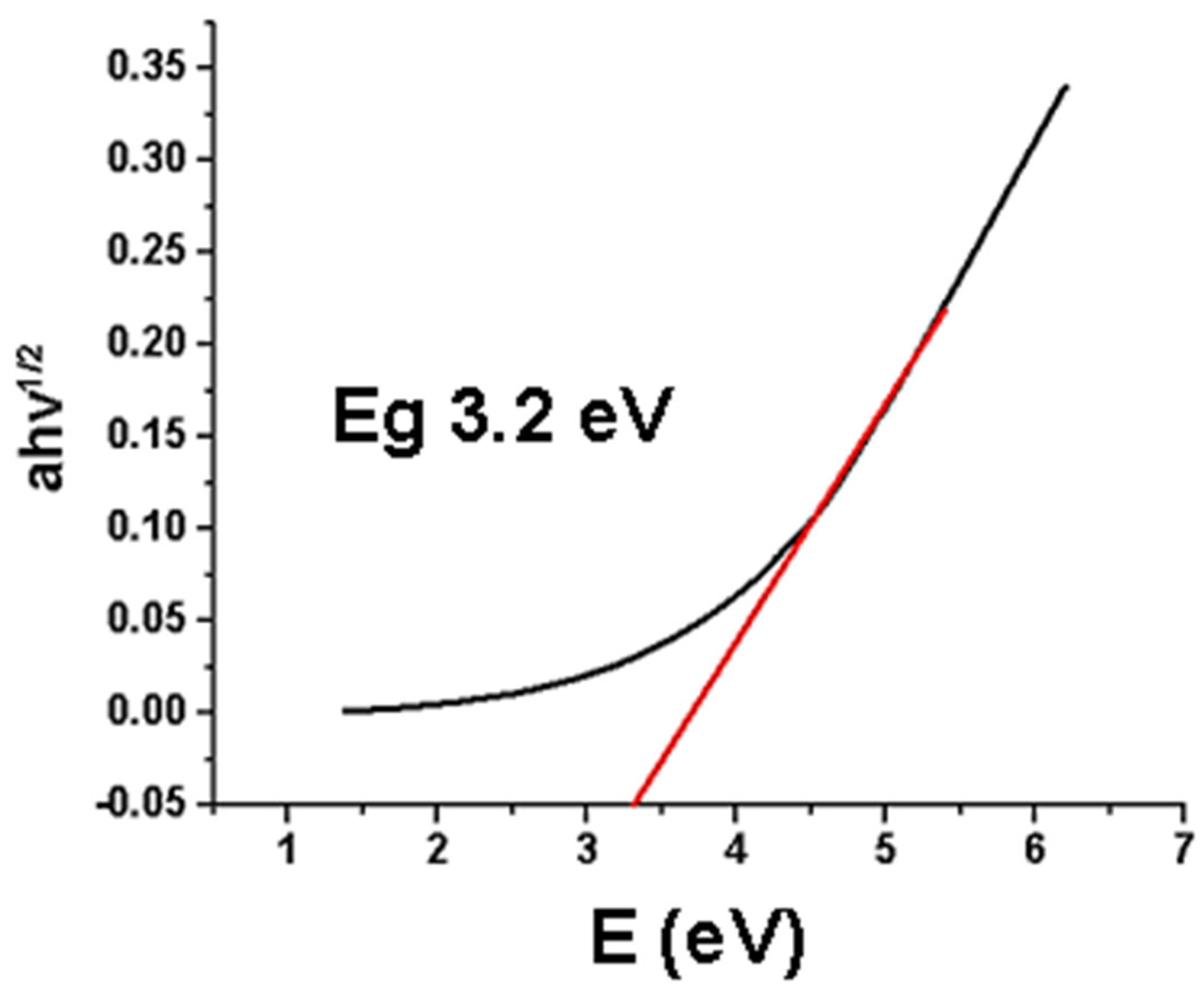
Figure 3 presents the Tauc plot analysis yielded an optical band gap of approximately 3.2 eV for the silica–titania composite fibers. This value is indicative of the photoactive titania phase within the composite and aligns with the characteristic band gap of anatase TiO2 [17,35]. While the silica matrix influences light scattering and surface properties, its wide band gap (~9 eV) means the primary optical absorption in the UV region is attributed only to the titania component. The observed value confirms the successful formation of a semiconductor phase with appropriate optical characteristics for photocatalytic activity under UV light.

3.1. Degradation of Methyl Orange

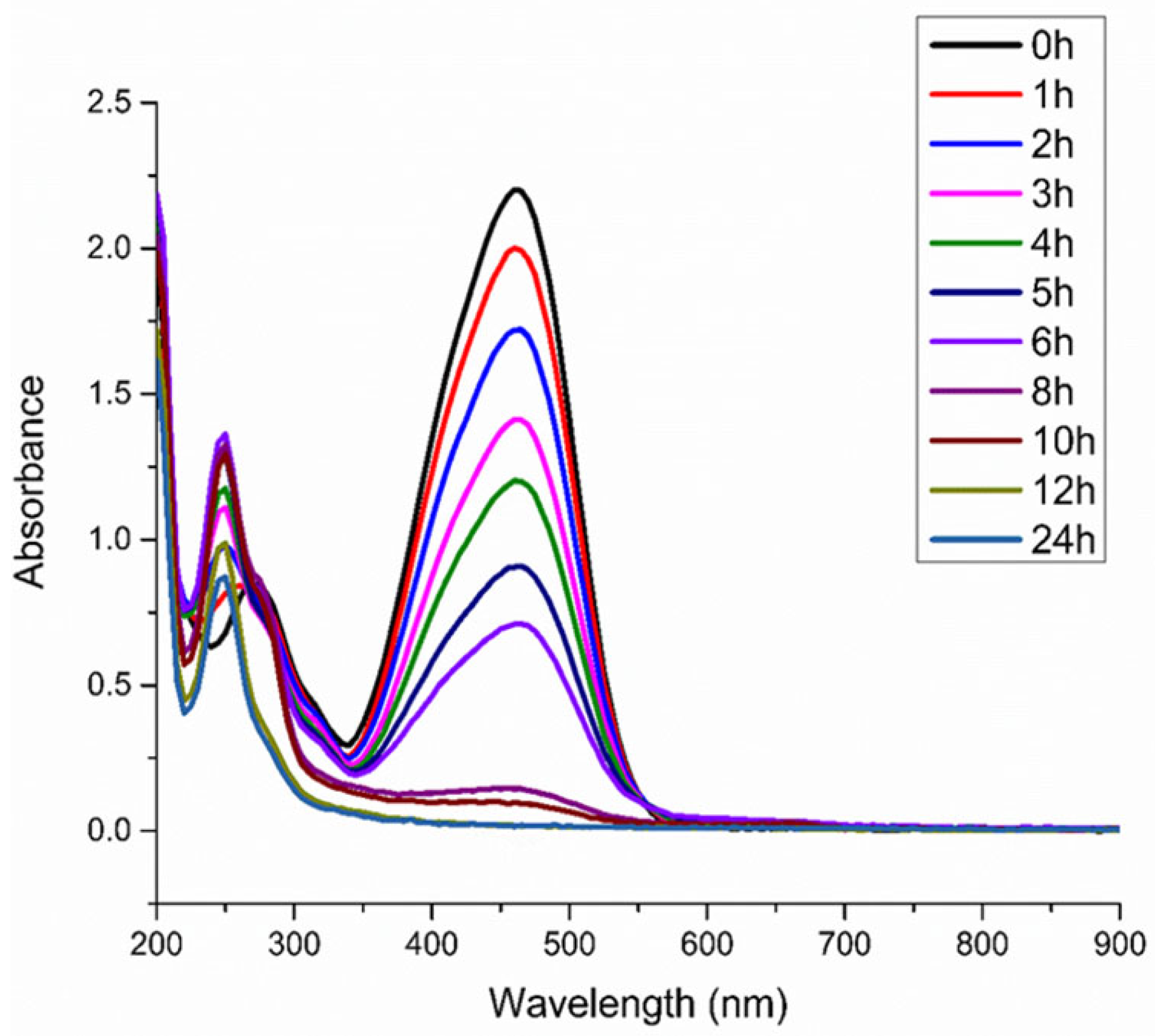
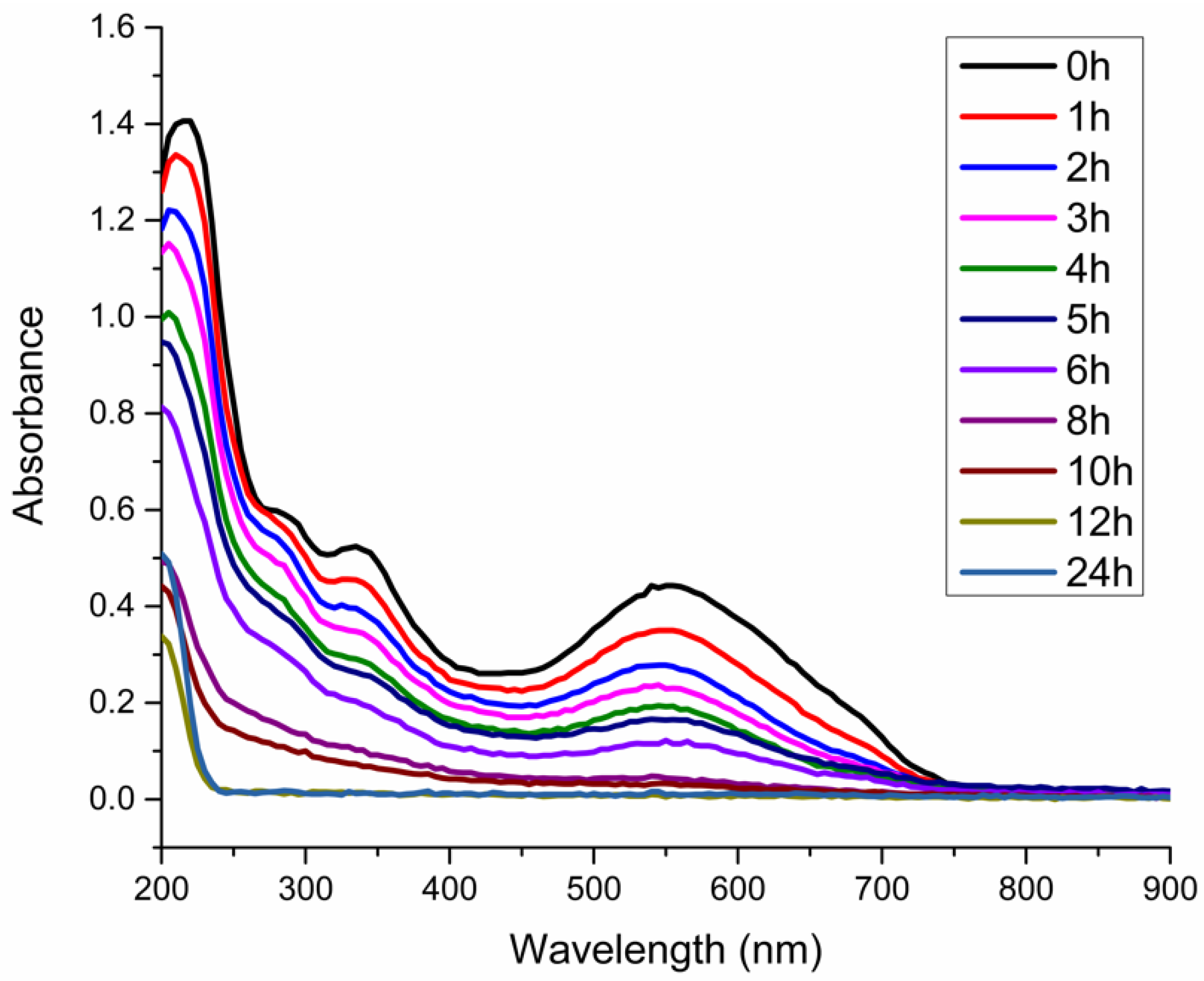
In the analysis of methyl orange degradation using S-T fibers, the UV-vis spectrum shown in Figure 4 follows a sequential decrease in absorbance signals consistent with the mechanism proposed by T. Chen et al. [43]. This mechanism explains how hydroxyl radicals (OH•), generated during photocatalysis, target specific bonds within the molecular structure of methyl orange, particularly the azo group (-N=N-) and the benzene rings. Initially, the UV-vis spectrum shows that the bands corresponding to the azo group at 460 nm gradually disappear, suggesting the breakdown of the primary chromophore. Subsequently, the bands associated with the benzene rings, within the 200–300 nm range, exhibit both bathochromic and hyperchromic shifts relative to their original position. These shifts are attributed to the hydroxylation of aromatic rings, indicating the presence of benzene-derived aromatic intermediates. According with degradation mechanism for methyl orange, consistent with literature reports, involves the formation of aromatic intermediates derived from azo dye benzene structures, like those identified by [44,45]. The subsequent breakdown of these compounds into simpler aliphatic acids and inorganic species like CO2 and H2O would account for the complete mineralization of the dye.
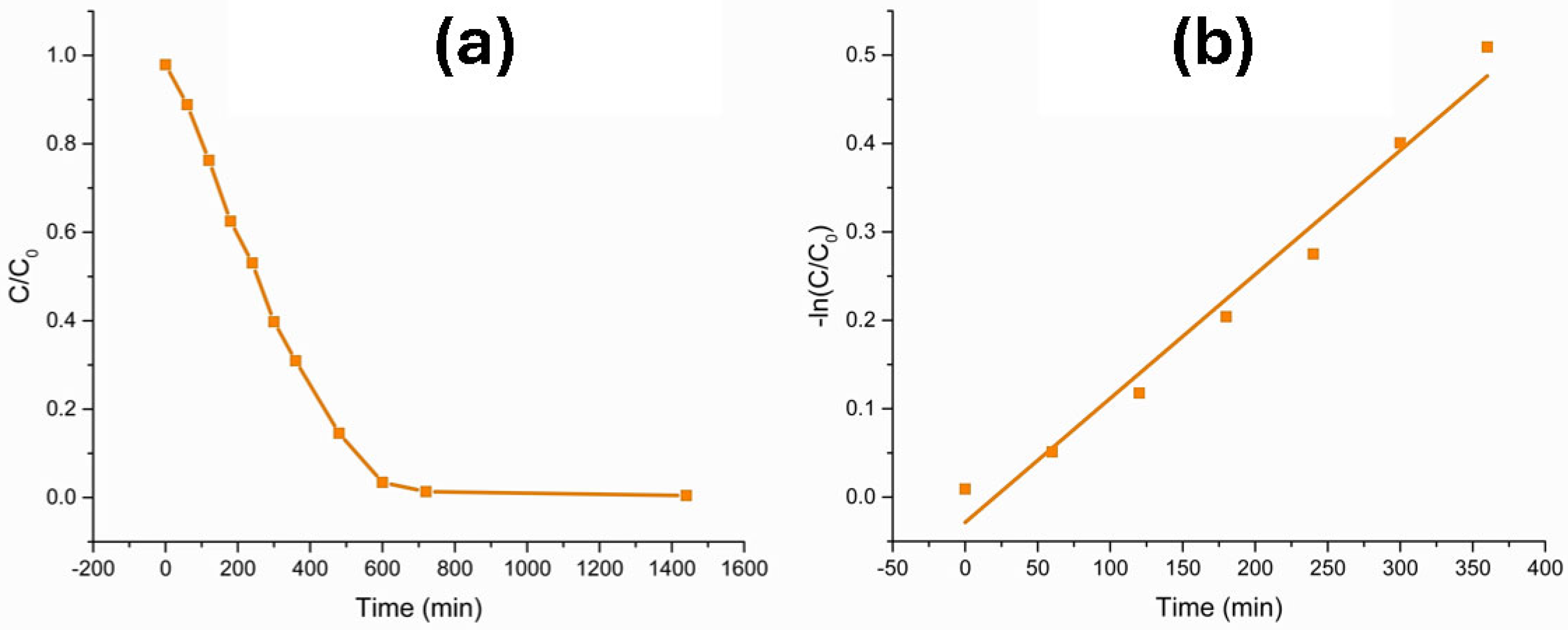
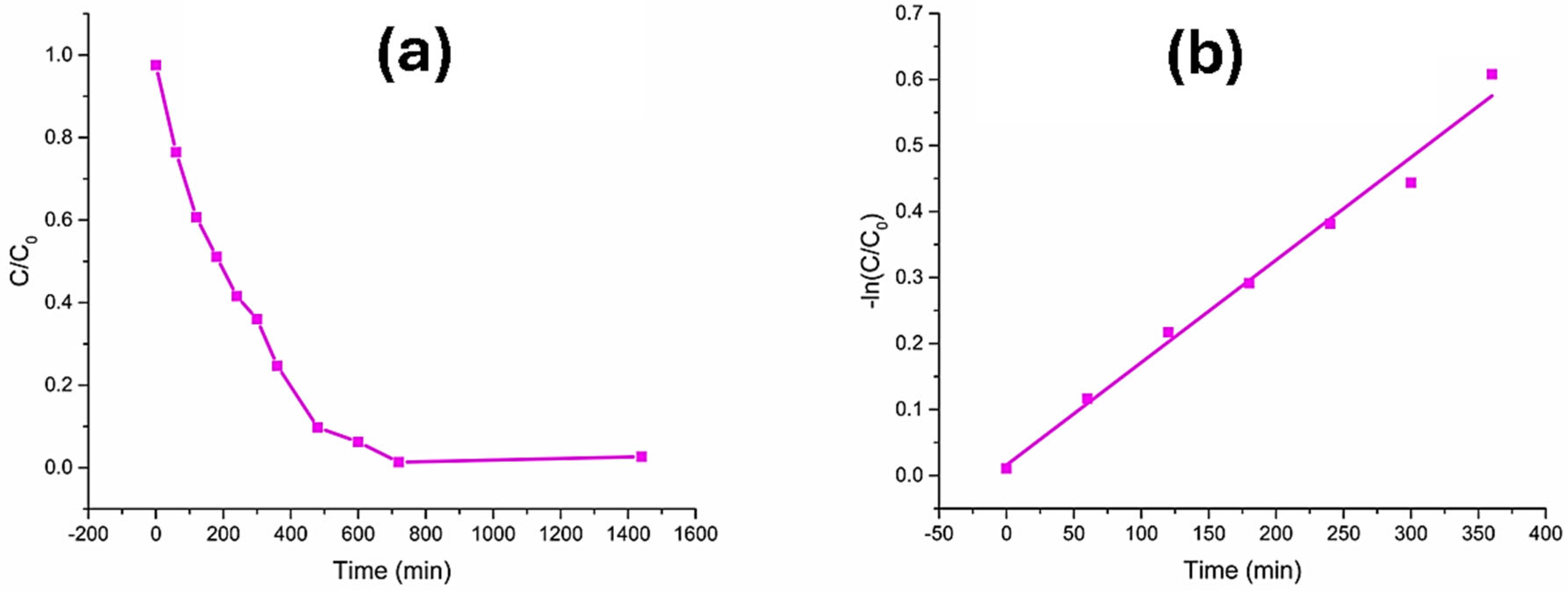
The degradation kinetics of methyl orange using S-T fibers, shown in Figure 5, were fitted to the Langmuir–Hinshelwood model, yielding a coefficient of determination (R2) of 0.9775. The slope obtained, corresponding to the apparent rate constant, is ka = 0.0014 min−1, reflecting a relatively slow degradation rate. This value suggests that the process is limited by the adsorption of the substrate onto the surface of the catalytic fibers, a common characteristic in heterogeneous systems. The low-rate constant may also be influenced by factors such as the affinity between the substrate and the active sites of the catalyst. The affinity for the substrate is a crucial factor in the effectiveness of the photocatalytic process. In S-T-based materials, the interaction of methyl orange with the catalytic sites depends on its chemical structure, particularly the functional groups of the azo dye and the polarity of the catalyst surface. Previous studies have demonstrated that the adsorption of azo compounds onto similar catalysts is influenced by the material’s surface charge, which varies with the pH of the medium, and by the interaction between the substrate’s polar groups and the hydroxylated surfaces of the catalyst [46]. In this case, the low-rate constant could be related to limited adsorption of methyl orange onto the fibers, possibly due to insufficient active site density or low specific affinity between the substrate and the catalyst.
The intercept of the linear equation, close to −0.0286, indicates that initial deviations do not significantly affect the model, reinforcing its ability to adequately describe the observed behavior. However, it is possible that further functionalization or surface modification of the S-T fibers may increase the affinity for the substrate, improving the overall efficiency of the process. In the context of photocatalysis, the Langmuir–Hinshelwood model not only emphasizes the importance of the interaction between methyl orange and the catalytic surface but also suggests the need to optimize the properties of the catalyst to maximize adsorption and, thus, the degradation rate [47]. As evidenced in previous research, more than 10 consecutive photocatalytic cycles have been achieved with similar silica-based electrospun materials in the degradation of pharmaceutical compounds. Critically, these materials could be effectively regenerated and reactivated for subsequent cycles by simple UV treatment, with minimal loss of photocatalytic activity [48].

3.2. Degradation of Eriochrome Black T

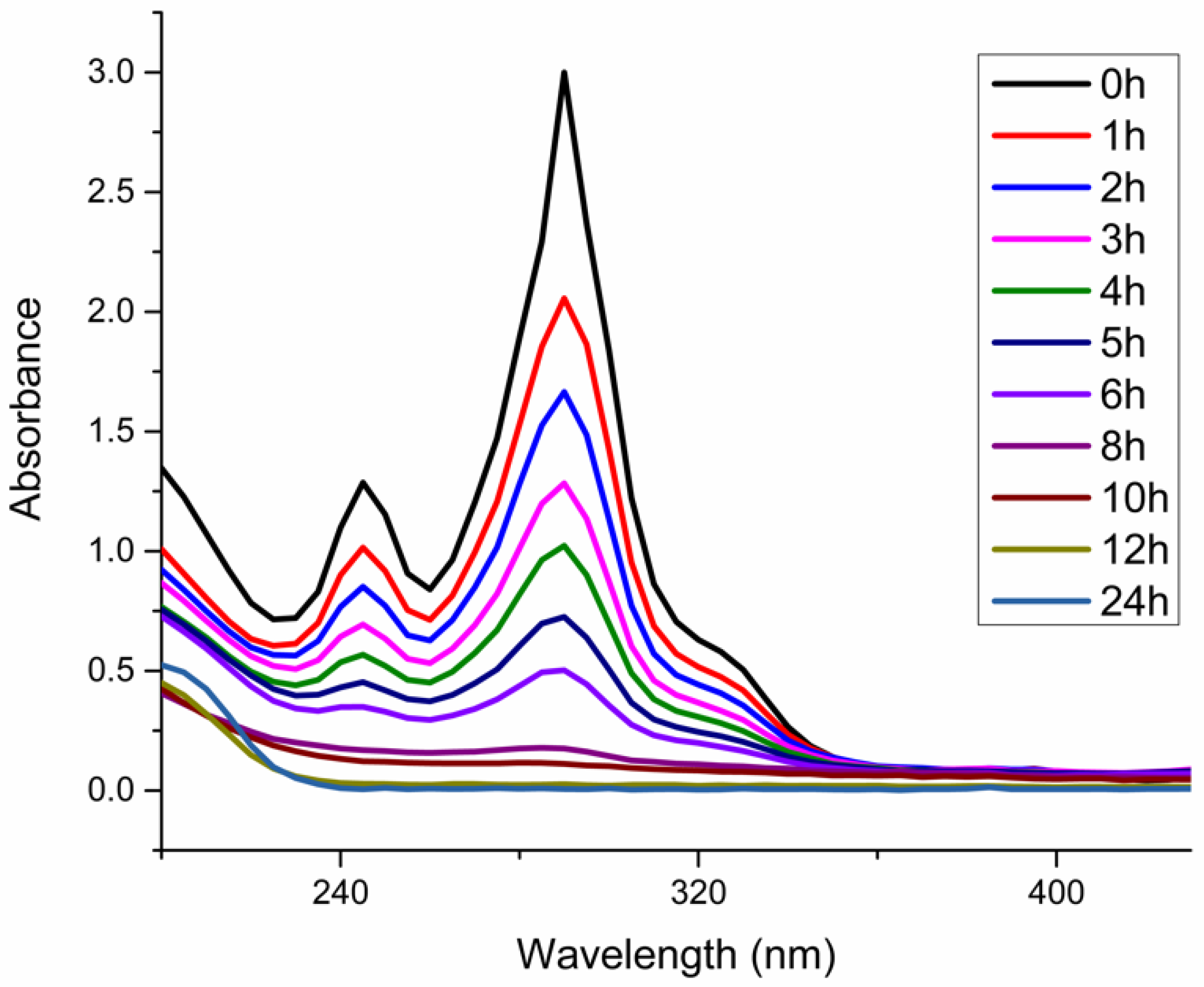
Spectroscopic analysis of Eriochrome Black T (EBT) during its degradation reveals a uniform decrease in all absorption bands in the UV-Vis spectrum. The degradation process simultaneously affects all chromophores groups in the molecule, without evidence of detectable intermediates in this spectral region. Unlike methyl orange, which shows hypsochromic shifts or the transient appearance of new bands, EBT appears to degrade directly into products with lower UV-Vis absorbance. Therefore, the degradation of this compound is likely governed by simultaneous radical attack mechanisms or concerted reactions that destabilize the entire molecular structure. Figure 6 presents the UV-Vis spectral analysis of EBT degradation, showing changes in the absorption profile over time. In the initial spectrum (0 h, black line), a high absorbance peak is observed in the UV region, around 200 to 400 nm, associated with the azo group and conjugated aromatic structures in the EBT molecule. As the reaction progresses, up to 24 h, a decrease in EBT absorbance is noted, suggesting progressive decomposition. The reduction in absorbance in the visible spectrum indicates the rupture of the azo group, which is responsible for the color of the compound, resulting in a gradual fading of the color over time. The degradation mechanism of Eriochrome Black T, including all its intermediates, is supported by the findings of Rani, who used mass spectrometry to identify that EBT degradation primarily occurs through hydroxyl radical attack on the azo group, leading to the formation of unstable intermediates such as 2-nitronaphthalene and naphthalene-1-ol [12].
The intermediates subsequently undergo ring-opening reactions, oxidation, and other advanced oxidation processes, resulting in the formation of smaller and safer molecules, eventually leading to complete mineralization of EBT. The presence of short-lived species, such as benzene-1,2,3-triol and hexa-1,3,5-trien-1-ol, suggests a rapid progression toward final mineralization. Figure 7 shows that the apparent rate constant is ka = 0.0016 min−1 for Eriochrome Black T, the graph exhibiting a slightly faster kinetics compared to methyl orange. This behavior could be attributed to differences in the structural and chemical properties of Eriochrome Black T, such as its higher polarity and the presence of additional functional groups, such as sulfonates (−SO3), which may enhance its adsorption on the catalyst surface under appropriate surface charge conditions [49]. The intercept of 0.0159, which is further from zero compared to methyl orange, suggests that although adsorption remains a critical step, the initial reaction may have a slight contribution independent of the complete saturation of the active sites. This effect could be related to the stronger interaction of Eriochrome Black T with the silica–titania fibers due to its greater tendency to form electrostatic and Van der Waals bonds on surfaces with hydroxylated or slightly negatively charged characteristics [50]. Furthermore, the excellent coefficient of determination of R2 = 0.9882 indicates that the model adequately describes the kinetics of the process. However, the steeper slope compared to methyl orange may imply a better overall affinity of Eriochrome Black T for the catalyst’s active sites. This affinity could be optimized by adjusting parameters such as pH or functionalizing the fiber surface to maximize interaction with highly polar azo compounds [51].

3.3. Methylene Blue Degradation

The photocatalytic degradation of methylene blue was monitored via UV-Vis spectroscopy, as shown in Figure 8. The spectrum reveals a progressive decrease in the maximum absorbance around 260 nm as the irradiation time increases, indicating a loss of color associated with the degradation of the molecule. This behavior suggests that the conjugated system of the methylene blue molecule is disrupted by the radicals generated during photocatalysis, which is consistent with results observed in previous studies on the photocatalytic degradation of dyes [52]. According to Jia et al. [53], the degradation mechanism of methylene blue indicates the formation of intermediates such as Azure B and Azure A. These intermediates are generated by the cleavage of the benzene and heterocyclic rings in the methylene blue structure. In the present study, the reduction in absorbance in the visible region at 260 nm suggests the destruction of the chromophore structure of methylene blue, which aligns with the degradation process observed via mass spectrometry. As the reaction progresses, residual peaks in the ultraviolet region (200–300 nm) also decrease, which is associated with the presence of degradation intermediates. These intermediates eventually transform into less complex and non-absorbing products, such as organic acids (acetic acid and oxalic acid) and inorganic substances (carbon dioxide and water), indicating the complete mineralization of the original molecule. These results support the notion that photocatalysis using S-T fibers can effectively break down methylene blue into harmless and non-toxic products.
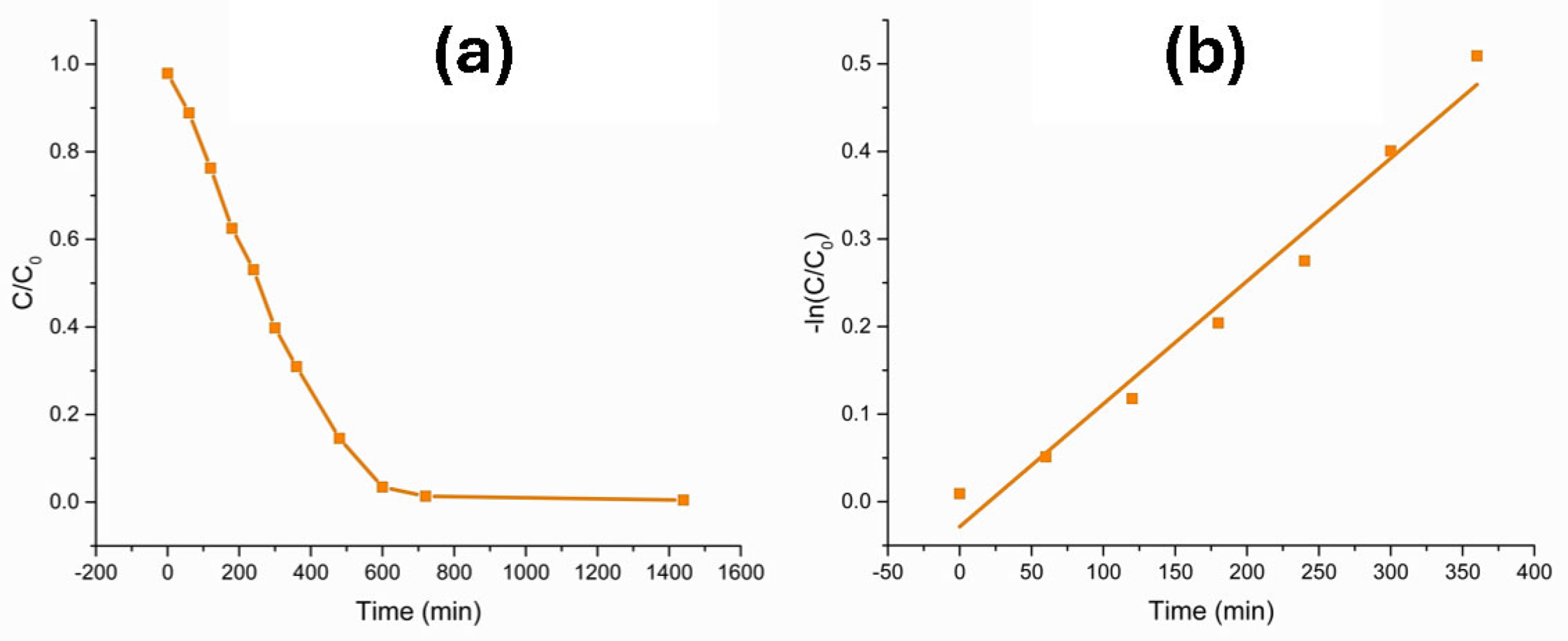
In the degradation of methylene blue (MB) using silica–titania fibers, the apparent rate constant k′ = 0.0021 is notably higher than that obtained for methyl orange (k′ = 0.0014) and eriochrome black (k′ = 0.0016). The increase in the rate constant suggests that MB undergoes faster degradation under the same experimental conditions, which could be related to its molecular structure or a higher affinity for the catalytic sites of the fibers. The molecular structure of MB, with positively charged amino groups, favors its adsorption on surfaces with negative zeta potential, optimizing the initial interaction with the catalyst [46]. The positive intercept of 0.0076 indicates a slight initial deviation, probably associated with a rapid adsorption process of MB on the catalyst surface during the initial stages of the reaction. This characteristic could be due to a high affinity between MB and the functional groups present in the fibers, allowing efficient adsorption before the surface equilibrium is reached. Additionally, the excellent determination coefficient of R2 = 0.9924 confirms that the Langmuir–Hinshelwood model adequately describes the degradation kinetics [54]. The behavior of MB reflects the importance of electrostatic interaction in heterogeneous systems. In particular, the higher rate constant compared to methyl orange and eriochrome black could result from less competition for active sites due to differences in molecular size and polarity of MB. Optimizing the catalyst design, for example, by adjusting pore size or surface functionalization, could further enhance the process’s efficiency for a range of similar compounds [55].
As shown in Figure 9a, the degradation of methylene blue was monitored for a total illumination period of 24 h. However, the linear fitting shown in Figure 9b was performed exclusively over the initial 300 min, which corresponds to the period in which the most significant degradation occurs. Beyond this time frame, the concentration of MB becomes nearly negligible, and no meaningful variation was observed, as the reaction approached completion and equilibrium was established. Therefore, the kinetic analysis was limited to the early stage of the process, where the pseudo-first-order model remains valid. Qutub et al. [39] investigated CdS/TiO2 nanocomposites for acid blue degradation under UV irradiation, achieving an efficiency of 95% in 120 min. Attributing to the formation of heterojunctions that promote charge separation and reduce electron recombination, improving photocatalytic activity. Khan et al. [56] analyzed the use of TiO2 and other metal catalysts in the degradation of textile wastewater dyes, highlighting the ability of these materials to generate highly reactive hydroxyl radicals under UV irradiation, reaching degradation efficiencies between 80% and 95%, with an apparent velocity constant kapp = 0.023 min−1. BinSabt et al. [40] synthesized TiO2 nanoparticles using Cannabis sativa extracts, achieving a degradation of 98.5% of methylene blue in 90 min by the generation of reactive oxygen species. The photocatalytic reaction follows pseudo-first-order kinetics and the apparent velocity constants (Kapp) determined for the 5 mg and 10 mg doses were 0.0141 min−1 and 0.0398 min−1, respectively.
The comparison of the results obtained using silica–titania fibers with other photocatalytic materials reported in the literature contextualizes the efficiency of the system developed in this study according to Table 1. Silica–titania fibers achieve an exceptional degradation efficiency (~98%) for all three dyes (Methyl Orange, Eriochrome Black T, and Methylene Blue), matching or surpassing most photocatalysts listed. However, this high efficiency is achieved over a significantly longer time (480 min) compared to other catalysts that reach similar efficiencies in 60–180 min. Advantage of Fibrous Morphology; while the vast majority of reported photocatalysts are in powder form, the fibers represent a distinct morphology. This offers potential practical advantages for easier recovery, reuse, and application in continuous-flow systems. The apparent rate constants are considerably lower than those typical for faster-acting powder systems. This confirms a slower kinetic profile but underscores the material’s high ultimate effectiveness. The fibers show consistent and high efficiency for three different dye structures, demonstrating remarkable versatility. This is a significant advantage over many studies that only report performance for a single pollutant. The 98% efficiency places of fibers among the most effective materials reported, performing comparably to more complex systems like TiO2–CNT (100%), B-GO-TiO2 (100%), and TiO2rGOCdS (100%), but with the added benefit of a fibrous morphology. In summary, While many reported materials employ catalysts in powder form, fibers offer significant advantages, such as greater ease of recovery and reuse, as well as improved light and oxygen distribution during the photocatalytic process. The unique structural characteristics of the fibers enhance their applicability in large-scale environmental treatments, where the separation and handling of powder catalysts can be more costly and less practical [57,58,59]. Furthermore, the results achieved with the silica–titania fibers demonstrate activity comparable to that of other catalytic systems, highlighting their potential as an efficient and sustainable alternative for the degradation of organic pollutants in water. Future work needed a systematic investigation of the effect of solution pH on the degradation efficiency and mechanisms, given its profound influence on the catalyst surface charge and the molecular state of the target pollutants [60]. While their kinetic performance is not competitive with the fastest powder-based catalysts, their form factor could make them more suitable for specific practical applications, such as fixed-bed reactors or reusable filters, where easy recovery is more critical than ultra-fast processing time. Future work could focus on enhancing the photocatalytic activity of these fibers to bridge this performance gap.

4. Conclusions

The use of Silica–Titania photocatalytic fibers present a significant advancement over traditional powder-based photocatalysts. The photocatalytic degradation of methyl orange, eriochrome black T, and methylene blue by fibers reveals complete degradation of these cationic and anionic dyes. The unique structural properties of fibers allow for easier recovery and reuse, making them more cost-effective for long-term applications. Additionally, fibers provide improved light and oxygen distribution during the photocatalytic process, enhancing their efficiency. These advantages make fibers particularly well-suited for large-scale environmental treatments, where handling powder catalysts can be challenging and costly. Overall, photocatalytic fibers offer a promising, sustainable, and efficient alternative for the degradation of organic pollutants in water, showcasing their potential for real-world applications in environmental remediation.

Author Contributions

Conceptualization, O.A.A.-H., N.A.M.-C., F.C.M. and S.Y.R.-L.; methodology, O.A.A.-H., N.A.M.-C., F.C.M. and S.Y.R.-L.; validation, O.A.A.-H. and S.Y.R.-L.; formal analysis, O.A.A.-H., N.A.M.-C., F.C.M. and S.Y.R.-L.; investigation, O.A.A.-H. and S.Y.R.-L.; resources, S.Y.R.-L.; data curation, O.A.A.-H. and S.Y.R.-L.; writing—original draft preparation, O.A.A.-H., N.A.M.-C., F.C.M. and S.Y.R.-L.; writing—review and editing, O.A.A.-H. and S.Y.R.-L.; visualization, O.A.A.-H. and S.Y.R.-L.; supervision, S.Y.R.-L.; project administration, S.Y.R.-L.; funding acquisition, S.Y.R.-L. The manuscript was written through contributions of all authors. These authors contributed equally. All authors have read and agreed to the published version of the manuscript.

Funding

This research received no external funding.

Data Availability Statement

The data that supports the findings of this study includes raw data, samples, and records and can be available from the corresponding author upon reasonable request.

Conflicts of Interest

The authors declare that they have no known competing financial interests or personal relationships that could have appeared to influence the work reported in this paper.

References

  1. Alzain, H.; Kalimugogo, V.; Hussein, K. A Review of Environmental Impact of Azo Dyes. Int. J. Res. Rev. 2023, 10, 64–689. [Google Scholar] [CrossRef]
  2. Chung, K.T. Azo dyes and human health: A review. J. Environ. Sci. Health Part C Environ. Carcinog. Ecotoxicol. Rev. 2016, 34, 233. [Google Scholar] [CrossRef]
  3. Brüschweiler, B.J.; Merlot, C. Azo dyes in clothing textiles can be cleaved into a series of mutagenic aromatic amines which are not regulated yet. Regul. Toxicol. Pharmacol. 2017, 88, 214–226. [Google Scholar] [CrossRef] [PubMed]
  4. Lellis, B.; Fávaro-Polonio, C.Z.; Pamphile, J.A.; Polonio, J.C. Effects of textile dyes on health and the environment and bioremediation potential of living organisms. Biotechnol. Res. Innov. 2019, 3, 275. [Google Scholar] [CrossRef]
  5. Katheresan, V.; Kansedo, J.; Lau, S.Y. Efficiency of various recent wastewater dye removal methods: A review. J. Environ. Chem. Eng. 2018, 6, 4676–4697. [Google Scholar] [CrossRef]
  6. Ngulube, T.; Gumbo, J.R.; Masindi, V.; Maity, A. An update on synthetic dyes adsorption onto clay based minerals: A state-of-art review. J. Environ. Manag. 2017, 191, 35–57. [Google Scholar] [CrossRef]
  7. Chen, D.; Cheng, Y.; Zhou, N.; Chen, P.; Wang, Y.; Li, K.; Huo, S.; Cheng, P.; Peng, P.; Zhang, R.; et al. Photocatalytic degradation of organic pollutants using TiO2-based photocatalysts: A review. J. Clean. Prod. 2020, 268, 121725. [Google Scholar] [CrossRef]
  8. Paździor, K.; Bilińska, L.; Ledakowicz, S. A review of the existing and emerging technologies in the combination of AOPs and biological processes in industrial textile wastewater treatment. Chem. Eng. J. 2018, 376, 120597. [Google Scholar] [CrossRef]
  9. Wang, H.; Li, X.; Zhao, X.; Li, C.; Song, X.; Zhang, P.; Huo, P.; Li, X. A review on heterogeneous photocatalysis for environmental remediation: From semiconductors to modification strategies. Chin. J. Catal. 2022, 43, 178–214. [Google Scholar] [CrossRef]
  10. Brillas, E. Solar photoelectro-Fenton: A very effective and cost-efficient electrochemical advanced oxidation process for the removal of organic pollutants from synthetic and real wastewaters. Chemosphere 2023, 327, 138532. [Google Scholar] [CrossRef]
  11. Naseri, A.; Samadi, M.; Pourjavadi, A.; Moshfegh, A.Z.; Ramakrishna, S. Graphitic carbon nitride (g-C3N4)-based photocatalysts for solar hydrogen generation: Recent advances and future development directions. J. Mater. Chem. A 2017, 5, 23406–23433. [Google Scholar] [CrossRef]
  12. Rani, M.; Keshu, N.; Shanker, U. Sunlight-induced photocatalytic degradation of organic pollutants by biosynthesized hetrometallic oxides nanoparticles. Environ. Sci. Pollut. Res. 2021, 28, 61760–61780. [Google Scholar] [CrossRef] [PubMed]
  13. Ngo, A.C.R.; Devanadera, M.K.P.; Dedeles, G.R. Decolorization of Selected Synthetic Textile Dyes by Yeasts from Leaves and Fruit Peels. J. Health Pollut. 2016, 6, 42–55. [Google Scholar] [CrossRef] [PubMed]
  14. Solorio-Grajeda, D.; Torres-Pérez, J.; Medellín-Castillo, N.; Reyes-López, S.Y. Surface enhanced Raman spectroscopy effect and acicular growth of copper structures on Titania-Silica fibers. Inorg. Chem. Commun. 2023, 150, 110484. [Google Scholar] [CrossRef]
  15. Malika, M.; Sonawane, S.S. Statistical modelling for the Ultrasonic photodegradation of Rhodamine B dye using aqueous based Bi-metal doped TiO2 supported montmorillonite hybrid nanofluid via RSM. Sustain. Energy Technol. Assess. 2021, 44, 100980. [Google Scholar] [CrossRef]
  16. Dariani, R.S.; Esmaeili, A.; Mortezaali, A.; Dehghanpour, S. Photocatalytic reaction and degradation of methylene blue on TiO2 nano-sized particles. Optik 2016, 127, 7143–7154. [Google Scholar] [CrossRef]
  17. Lin, C.; Gao, Y.; Zhang, J.; Xue, D.; Fang, H.; Tian, J.; Zhou, C.; Zhang, C.; Li, Y.; Li, H. GO/TiO2 composites as a highly active photocatalyst for the degradation of methyl orange. J. Mater. Res. 2020, 35, 1307–1315. [Google Scholar] [CrossRef]
  18. Neon, M.H.K.; Islam, M.S. MoO3 and Ag co-synthesized TiO2 as a novel heterogeneous photocatalyst with enhanced visible-light-driven photocatalytic activity for methyl orange dye degradation. Environ. Nanotechnol. Monit. Manag. 2019, 12, 100244. [Google Scholar]
  19. Sangareswari, M.; Meenakshi Sundaram, M. Development of efficiency improved polymer-modified TiO2 for the photocatalytic degradation of an organic dye from wastewater environment. Appl. Water Sci. 2017, 7, 1781–1790. [Google Scholar] [CrossRef]
  20. Chkirida, S.; Zari, N.; Achour, R.; Qaiss, A.E.K.; Bouhfid, R. Efficient hybrid bionanocomposites based on iron-modified TiO2 for dye degradation via an adsorption-photocatalysis synergy under UV-Visible irradiations. Environ. Sci. Pollut. Res. 2021, 28, 14018–14027. [Google Scholar] [CrossRef]
  21. Shokri, A.; Mahanpoor, K.; Soodbar, D. Evaluation of a modified TiO2 (GO–B–TiO2) photo catalyst for degradation of 4-nitrophenol in petrochemical wastewater by response surface methodology based on the central composite design. J. Environ. Chem. Eng. 2016, 4, 585–598. [Google Scholar] [CrossRef]
  22. Mohamed, M.M.; Osman, G.; Khairou, K.S. Fabrication of Ag nanoparticles modified TiO2–CNT heterostructures for enhanced visible light photocatalytic degradation of organic pollutants and bacteria. J. Environ. Chem. Eng. 2015, 3, 1847–1859. [Google Scholar] [CrossRef]
  23. Waghchaure, R.H.; Koli, P.B.; Adole, V.A.; Jagdale, B.S. Exploration of photocatalytic performance of TiO2, 5% Ni/TiO2, and 5% Fe/TiO2 for degradation of eosine blue dye: Comparative study. Results Chem. 2022, 4, 100488. [Google Scholar] [CrossRef]
  24. Ahluwalia, S.; Prakash, N.T.; Prakash, R.; Pal, B. Improved degradation of methyl orange dye using bio-co-catalyst Se nanoparticles impregnated ZnS photocatalyst under UV irradiation. Chem. Eng. J. 2016, 306, 1041–1048. [Google Scholar] [CrossRef]
  25. Bergamonti, L.; Predieri, G.; Paz, Y.; Fornasini, L.; Lottici, P.; Bondioli, F. Enhanced self-cleaning properties of N-doped TiO2 coating for Cultural Heritage. Microchem. J. 2017, 133, 1–12. [Google Scholar] [CrossRef]
  26. Balarabe, B.Y.; Paria, S.; Keita, D.S.; Baraze, A.R.I.; Kalugendo, E.; Tetteh, G.N.T.; Meringo, M.M.; Oumarou, M.N.I. Enhanced UV-light active α-Bi2O3 nanoparticles for the removal of methyl orange and ciprofloxacin. Inorg. Chem. Commun. 2022, 146, 110204. [Google Scholar] [CrossRef]
  27. Bakar, S.A.; Ribeiro, C. An insight toward the photocatalytic activity of S doped 1-D TiO2 nanorods prepared via novel route: As promising platform for environmental leap. J. Mol. Catal. A Chem. 2015, 412, 78–92. [Google Scholar] [CrossRef]
  28. Shah, R.K. Efficient photocatalytic degradation of methyl orange dye using facilely synthesized α-Fe2O3 nanoparticles. Arab. J. Chem. 2023, 16, 104444. [Google Scholar] [CrossRef]
  29. Khan, R.; Hassan, M.S.; Cho, H.S.; Polyakov, A.Y.; Khil, M.S.; Lee, I.H. Facile low-temperature synthesis of ZnO nanopyramid and its application to photocatalytic degradation of methyl orange dye under UV irradiation. Mater. Lett. 2014, 133, 224–227. [Google Scholar] [CrossRef]
  30. Khan, R.; Hassan, M.S.; Jang, L.W.; Yun, J.H.; Ahn, H.K.; Khil, M.S.; Lee, I.H. Low-temperature synthesis of ZnO quantum dots for photocatalytic degradation of methyl orange dye under UV irradiation. Ceram. Int. 2014, 40, 14827–14831. [Google Scholar] [CrossRef]
  31. Isai, K.A.; Shrivastava, V.S. Photocatalytic degradation of methylene blue using ZnO and 2%Fe–ZnO semiconductor nanomaterials synthesized by sol–gel method: A comparative study. SN Appl. Sci. 2019, 1, 1247. [Google Scholar] [CrossRef]
  32. Kurniawan, T.A.; Mengting, Z.; Fu, D.; Yeap, S.K.; Othman, M.H.D.; Avtar, R.; Ouyang, T. Functionalizing TiO2 with graphene oxide for enhancing photocatalytic degradation of methylene blue (MB) in contaminated wastewater. J. Environ. Manag. 2020, 270, 110871. [Google Scholar] [CrossRef] [PubMed]
  33. Qamar, M.A.; Shahid, S.; Javed, M.; Iqbal, S.; Sher, M.; Akbar, M.B. Highly efficient g-C3N4/Cr-ZnO nanocomposites with superior photocatalytic and antibacterial activity. J. Photochem. Photobiol. A Chem. 2020, 401, 112776. [Google Scholar] [CrossRef]
  34. Goyal, P.; Chakraborty, S.; Misra, S.K. Multifunctional Fe3O4-ZnO nanocomposites for environmental remediation applications. Environ. Nanotechnol. Monit. Manag. 2018, 10, 28–35. [Google Scholar] [CrossRef]
  35. Zhang, J.; Zhang, X.; Dong, S.; Zhou, X.; Dong, S. N-doped carbon quantum dots/TiO2 hybrid composites with enhanced visible light driven photocatalytic activity toward dye wastewater degradation and mechanism insight. J. Photochem. Photobiol. A Chem. 2016, 325, 104–110. [Google Scholar] [CrossRef]
  36. Bakar, S.A.; Byzynski, G.; Ribeiro, C. Synergistic effect on the photocatalytic activity of N-doped TiO2 nanorods synthesised by novel route with exposed (110) facet. J. Alloys Compd. 2016, 666, 38–49. [Google Scholar] [CrossRef]
  37. Sabouri, Z.; Akbari, A.; Hosseini, H.A.; Khatami, M.; Darroudi, M. Egg white-mediated green synthesis of NiO nanoparticles and study of their cytotoxicity and photocatalytic activity. Polyhedron 2020, 178, 114351. [Google Scholar] [CrossRef]
  38. Madduri, S.B.; Kommalapati, R.R. Photocatalytic Degradation of Azo Dyes in Aqueous Solution Using TiO2 Doped with rGO/CdS under UV Irradiation. Processes 2024, 12, 1455. [Google Scholar] [CrossRef]
  39. Qutub, N.; Singh, P.; Sabir, S.; Sagadevan, S.; Oh, W. Enhanced photocatalytic degradation of Acid Blue dye using CdS/TiO2 nanocomposite. Sci. Rep. 2022, 12, 1–18. [Google Scholar] [CrossRef]
  40. BinSabt, M.; Sagar, V.; Singh, J.; Rawat, M.; Shaban, M. Green synthesis of CS-TiO2 NPs for efficient photocatalytic degradation of methylene blue dye. Polymers 2022, 14, 2677. [Google Scholar] [CrossRef]
  41. Zanatta, A.R. Revisiting the optical bandgap of semiconductors and the proposal of a unified methodology to its determination. Sci. Rep. 2019, 9, 1–12. [Google Scholar] [CrossRef] [PubMed]
  42. Ollis, D.F. Kinetics of Photocatalyzed Reactions: Five Lessons Learned. Front. Chem. 2018, 6, 378. [Google Scholar] [CrossRef] [PubMed]
  43. Chen, T.; Zheng, Y.; Lin, J.; Chen, G. Study on the photocatalytic degradation of methyl orange in water using Ag/ZnO as catalyst by liquid chromatography electrospray ionization ion-trap mass spectrometry. J. Am. Soc. Mass Spectrom. 2008, 19, 997–1003. [Google Scholar] [CrossRef] [PubMed]
  44. Baiocchi, C.; Brussino, M.C.; Pramauro, E.; Prevot, A.B.; Palmisano, L.; Marcı̀, G. Characterization of methyl orange and its photocatalytic degradation products by HPLC/UV–VIS diode array and atmospheric pressure ionization quadrupole ion trap mass spectrometry. Int. J. Mass Spectrom. 2002, 214, 247–256. [Google Scholar] [CrossRef]
  45. Makota, O.; Dutková, E.; Briančin, J.; Bednarcik, J.; Lisnichuk, M.; Yevchuk, I.; Melnyk, I. Advanced photodegradation of azo dye methyl orange using H2O2-activated Fe3O4@ SiO2@ ZnO composite under UV treatment. Molecules 2024, 29, 1190. [Google Scholar] [CrossRef]
  46. Azeez, F.; Al-Hetlani, E.; Arafa, M.; Abdelmonem, Y.; Nazeer, A.A.; Amin, M.O.; Madkour, M. The effect of surface charge on photocatalytic degradation of methylene blue dye using chargeable titania nanoparticles. Sci. Rep. 2018, 8, 1–9. [Google Scholar] [CrossRef]
  47. Reza, K.M.; Kurny, A.; Gulshan, F. Parameters affecting the photocatalytic degradation of dyes using TiO2: A review. Appl. Water Sci. 2015, 7, 1569–1578. [Google Scholar] [CrossRef]
  48. Ruiz-Ramírez, L.R.; Torres-Pérez, J.; Medellin-Castillo, N.; Reyes-López, S.Y. Photocatalytic degradation of oxytetracycline by SiO2–TiO2–Ag electrospun fibers. Solid State Sci. 2023, 140, 107188. [Google Scholar] [CrossRef]
  49. Mansouri, F.E.; Pelaz, G.; Morán, A.; Da Silva, J.C.G.E.; Cacciola, F.; Farissi, H.E.; Tayeq, H.; Zerrouk, M.H.; Brigui, J. Efficient Removal of Eriochrome Black T Dye Using Activated Carbon of Waste Hemp (Cannabis sativa L.) Grown in Northern Morocco Enhanced by New Mathematical Models. Separations 2022, 9, 283. [Google Scholar] [CrossRef]
  50. Chibowski, S.; Wiśniewska, M.; Wawarzkiewicz, M.; Hubicki, Z.; Goncharuk, O. Electrokinetic properties of silica-titania mixed oxide particles dispersed in aqueous solution of C.I. Direct Yellow 142 dye—Effects of surfactant and electrolyte presence. Physicochem. Probl. Miner. Process. 2020, 56, 6–13. [Google Scholar] [CrossRef]
  51. Alamzeb, M.; Tullah, M.; Ali, S.; Ihsanullah, N.; Khan, B.; Setzer, W.N.; Al-Zaqri, N.; Ibrahim, M.N.M. Kinetic, Thermodynamic and Adsorption Isotherm Studies of Detoxification of Eriochrome Black T Dye from Wastewater by Native and Washed Garlic Peel. Water 2022, 14, 3713. [Google Scholar] [CrossRef]
  52. Waghchaure, R.H.; Adole, V.A.; Jagdale, B.S. Photocatalytic degradation of methylene blue, rhodamine B, methyl orange and Eriochrome black T dyes by modified ZnO nanocatalysts: A concise review. Inorg. Chem. Commun. 2022, 143, 109764. [Google Scholar] [CrossRef]
  53. Jia, P.; Tan, H.; Liu, K.; Gao, W. Synthesis, characterization and photocatalytic property of novel ZnO/bone char composite. Mater. Res. Bull. 2018, 102, 45–50. [Google Scholar] [CrossRef]
  54. Vasiljevic, Z.Z.; Dojcinovic, M.P.; Vujancevic, J.D.; Jankovic-Castvan, I.; Ognjanovic, M.; Tadic, N.B.; Stojadinovic, S.; Brankovic, G.O.; Nikolic, M.V. Photocatalytic degradation of methylene blue under natural sunlight using iron titanate nanoparticles prepared by a modified sol–gel method. R. Soc. Open Sci. 2020, 7, 200708. [Google Scholar] [CrossRef]
  55. Ulfa, M.; Afif, H.A.; Saraswati, T.E.; Bahruji, H. Fast Removal of Methylene Blue via Adsorption-Photodegradation on TiO2/SBA-15 Synthesized by Slow Calcination. Materials 2022, 15, 5471. [Google Scholar] [CrossRef]
  56. Khan, S.; Noor, T.; Iqbal, N.; Yaqoob, L. Photocatalytic Dye Degradation from Textile Wastewater: A Review. ACS Omega 2024, 9, 21751–21767. [Google Scholar] [CrossRef]
  57. Samia, N.; Usman, M.; Osman, A.I.; Khan, K.I.; Saeed, F.; Zeng, Y.; Motola, M.; Dai, H. Enhanced Visible-Light Photocatalytic Degradation of Organic Pollutants Using Fibrous Silica Titania and Ti3AlC2 Catalysts for Sustainable Wastewater Treatment. New J. Chem. 2024, 48, 17500–17515. [Google Scholar] [CrossRef]
  58. Farooq, M.H.; Aslam, I.; Shuaib, A.; Anam, H.S.; Rizwan, M.; Kanwal, Q. Band gap engineering for improved photocatalytic performance of CuS/TiO2 composites under solar light irradiation. Bull. Chem. Soc. Ethiop. 2019, 33, 561. [Google Scholar] [CrossRef]
  59. Herrmann, J. Heterogeneous photocatalysis: Fundamentals and applications to the removal of various types of aqueous pollutants. Catal. Today 1999, 53, 115–129. [Google Scholar] [CrossRef]
  60. Silva-Holguín, P.N.; Garibay-Alvarado, J.A.; Reyes-López, S.Y. Silver nanoparticles: Multifunctional tool in environmental water remediation. Materials 2024, 17, 1939. [Google Scholar] [CrossRef]
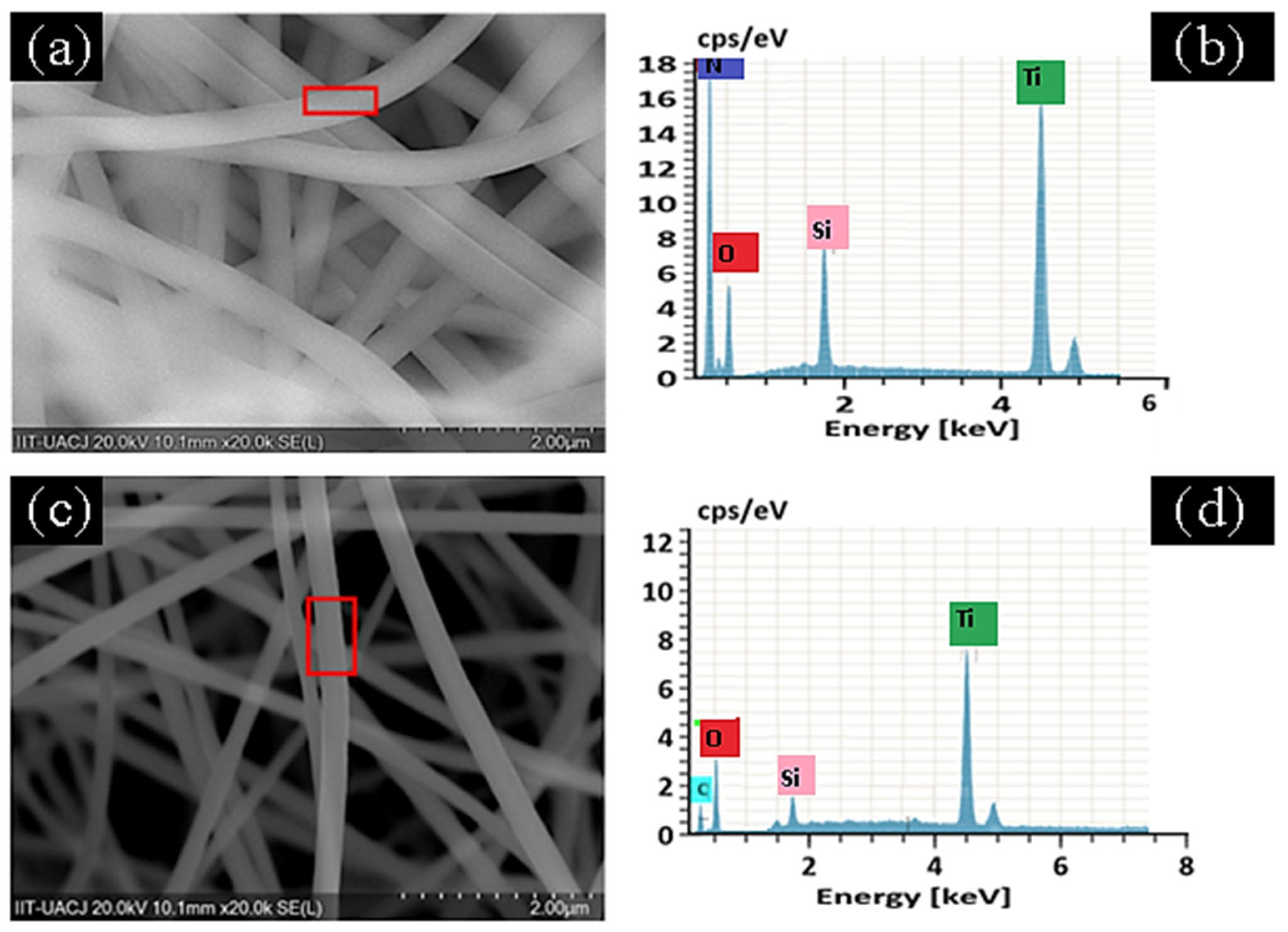
Figure 1. Silica–Titania Fibers Before and After Thermal Treatment at 20× Magnification. (a) SEM image of green Silica–Titania-PVP fibers, (c) SEM image of Silica–Titania fibers after sintering at 800 °C, EDX spectra of green (b) and Silica–Titania ceramic fibers (d).
Applsci 15 12084 g001
Figure 2. (a) Infrared spectra and (b) XRD analysis of the Silica–Titania Fibers.
Applsci 15 12084 g002
Figure 3. Tauc plot for band gap energy of the Silica–Titania fibers.
Applsci 15 12084 g003
Figure 4. Photocatalytic Degradation of Methyl Orange Using S-T Fibers.
Applsci 15 12084 g004
Figure 5. (a) Kinetics of methyl orange degradation using silica–titania fibers as a catalyst. (b) Fitted using the Langmuir–Hinshelwood isotherm.
Applsci 15 12084 g005
Figure 6. Photocatalytic Degradation of Eriochrome Black T Using S-T Fibers.
Applsci 15 12084 g006
Figure 7. (a) Kinetics of Eriochrome Black T degradation using silica–titania fibers as a catalyst. (b) Fitted using the Langmuir–Hinshelwood isotherm.
Applsci 15 12084 g007
Figure 8. Photocatalytic degradation of methylene blue using S-T fibers.
Applsci 15 12084 g008
Figure 9. (a) Kinetics of methylene blue degradation using silica–titania fibers as a catalyst. (b) Fitted using the Langmuir–Hinshelwood isotherm.
Applsci 15 12084 g009
Disclaimer/Publisher’s Note: The statements, opinions and data contained in all publications are solely those of the individual author(s) and contributor(s) and not of MDPI and/or the editor(s). MDPI and/or the editor(s) disclaim responsibility for any injury to people or property resulting from any ideas, methods, instructions or products referred to in the content.