Review

Revealing the Potential Use of Macro and Microalgae Compounds in Skin Barrier Repair

FA2 Research Group, Department of Applied Physics, University of Vigo, Campus Lagoas-Marcosende s/n, 36310 Vigo, Spain
*
Author to whom correspondence should be addressed.
Appl. Sci. 2025, 15(22), 11899; https://doi.org/10.3390/app152211899
Submission received: 15 September 2025 / Revised: 16 October 2025 / Accepted: 7 November 2025 / Published: 8 November 2025

Featured Application

This work is of interest to both the cosmetics industry and skin care experts, as well as to companies producing or processing macro and microalgae, as they will find in this review an additional avenue for applying their derivatives in cosmetics and cosmeceuticals.

Abstract

The skin barrier is essential for maintaining the body’s internal homeostasis and protecting against harmful external substances; its impairment may cause different dermatological diseases. Algae compounds are used for skin care with the aim of preventing skin aging, improving hydration, and protecting against environmental aggressors. In this context, it can be assumed that these compounds (polysaccharides, lipids, phenols, etc.) may serve to strengthen the skin barrier, and therefore, the purpose of this review is to test this hypothesis. This review surveys the literature on the potential of algae-derived compounds in skin care, focusing on skin barrier repair, hydration, and emollience. From the review of published studies, it can be concluded that polysaccharides, phenols, carotenoids, and extracts from macro and microalgae can indeed be effective in skin barrier maintenance and recovery after injuries.

1. Introduction

Skin is the largest organ of the human body, organized in layers of different origin: epidermis, dermis, and subcutaneous tissue, containing also cutaneous appendix as sebaceous glands, sweat glands, hair follicles, blood and lymphatic vessels, and nerves and muscles (arrector pili muscle). The skin exerts important functions such as protection against chemical and physical injuries, body temperature regulation, and also participates in immune function [1].
The skin barrier is essential for maintaining the body’s internal homeostasis, protecting against harmful external substances, and regulating water and electrolyte balance. Skin barrier impairment is linked to several chronic skin diseases as atopic dermatitis, contact dermatitis, and skin allergies [2,3]. Damage from environmental insults or genetic or inflammatory causes, can impair the skin barrier, increasing transepidermal water loss (TEWL), accompanied by scaling skin and, frequently, itching [4].
The “epithelial barrier theory” hypothesizes that these diseases are aggravated by an ongoing periepithelial inflammation triggered by exposure to a wide range of epithelial barrier-damaging insults that lead to “epithelitis” and the release of alarmins (endogenous immunomodulatory molecules, that recruit and activate the immune system). Furthermore, a permeable epithelial barrier allows the translocation of the microbiome from the periphery to the deeper interepithelial and subepithelial areas together with allergens, toxins, and pollutants. This can lead to a microbial dysbiosis, characterized by the colonization of opportunistic pathogenic bacteria and the loss of the skin microbiota biodiversity [5].
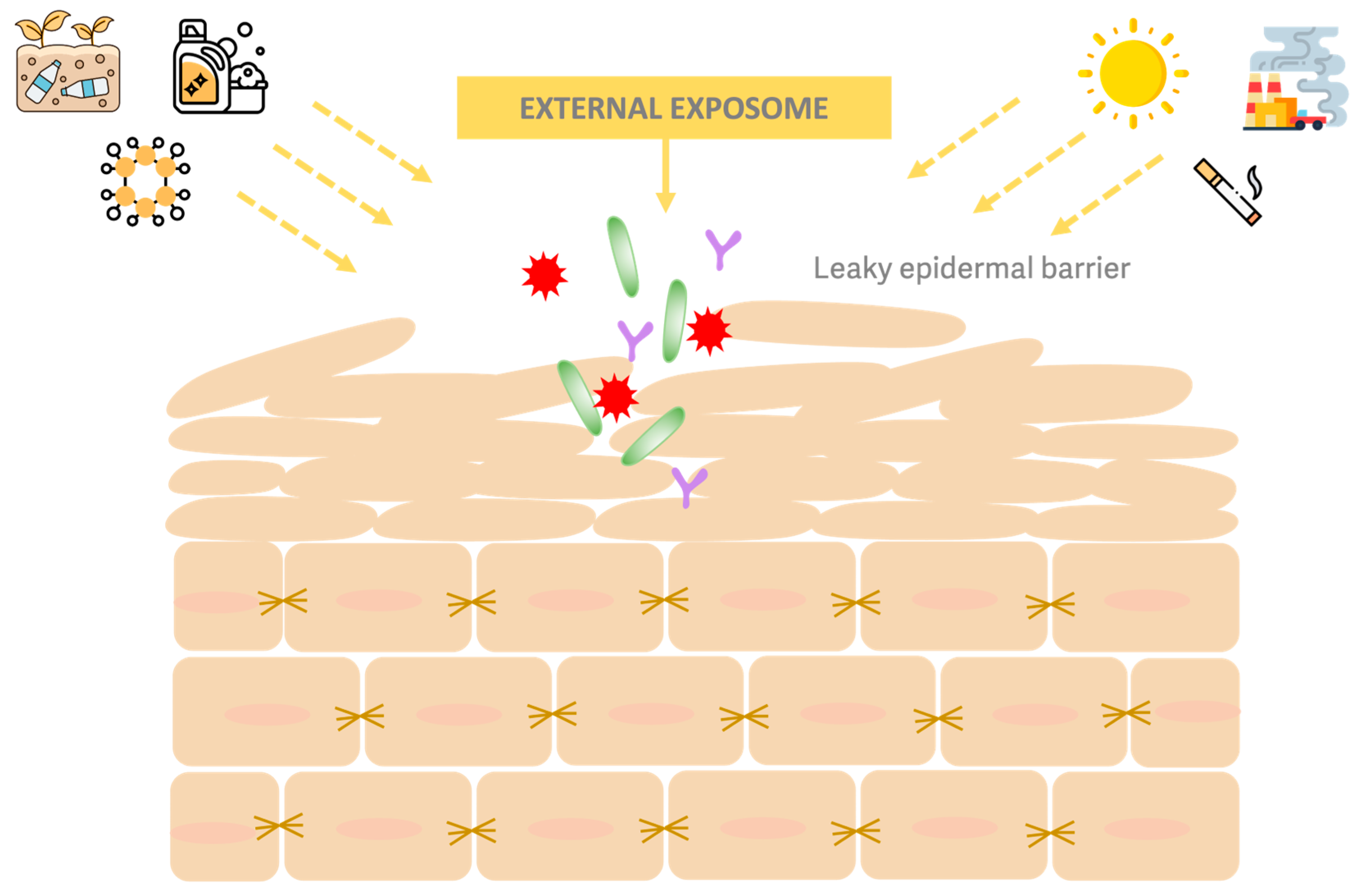
The external agents involved in skin barrier damage are mainly environment aggressors (pollution, particulate matter, ozone, sun radiation, etc.), including cigarette smoking, other pollutants derived from human activity such as microplastics or food additives, components of cosmetics or cleaning products, and bacteria, viruses, mites, fungi, and allergens in general [6]. Together they are called the external exposome, understood as the set of environmental and external exposures of a person throughout his or her life [7]. Changes in skin microbiota should also be taken into account, as have been shown that in some skin diseases, such as atopic dermatitis or rosacea, the microbial diversity disbalance is present, and several studies confirmed an important role of skin microbiota in the development of cutaneous tolerance and maintaining the skin barrier against allergens [1,8].
Figure 1 summarizes the external exposome factors that can damage the skin barrier.
The barrier function of the skin depends primarily on the structural and functional integrity of the stratum corneum (SC) and stratum granulosum (SG). The outermost structure of the SC is made up of keratinized cells filled primarily with keratin and keratin intermediate filament-associated proteins. The intercellular spaces of the corneocytes are filled with structural lipids (lamellar lipids) and proteins. These structures mentioned above are called the “brick and concrete structure” and compose the outer barrier of human skin. SC cells are filled with keratin and filaggrin, which provide them with some barrier function. In addition, tight junctions (TJs) seal the intercellular spaces of cells, thereby restricting the movement of water and hydrophilic molecules through intercellular pathways. During the keratinization process, the natural moisturizing factor (NMF) is formed from the degradation of filaggrin. Skin hydration therefore depends on the integrity of this barrier and on the presence of sufficient NMF and barrier lipids, but also on the integrity of the TJs of the SC [9,10].
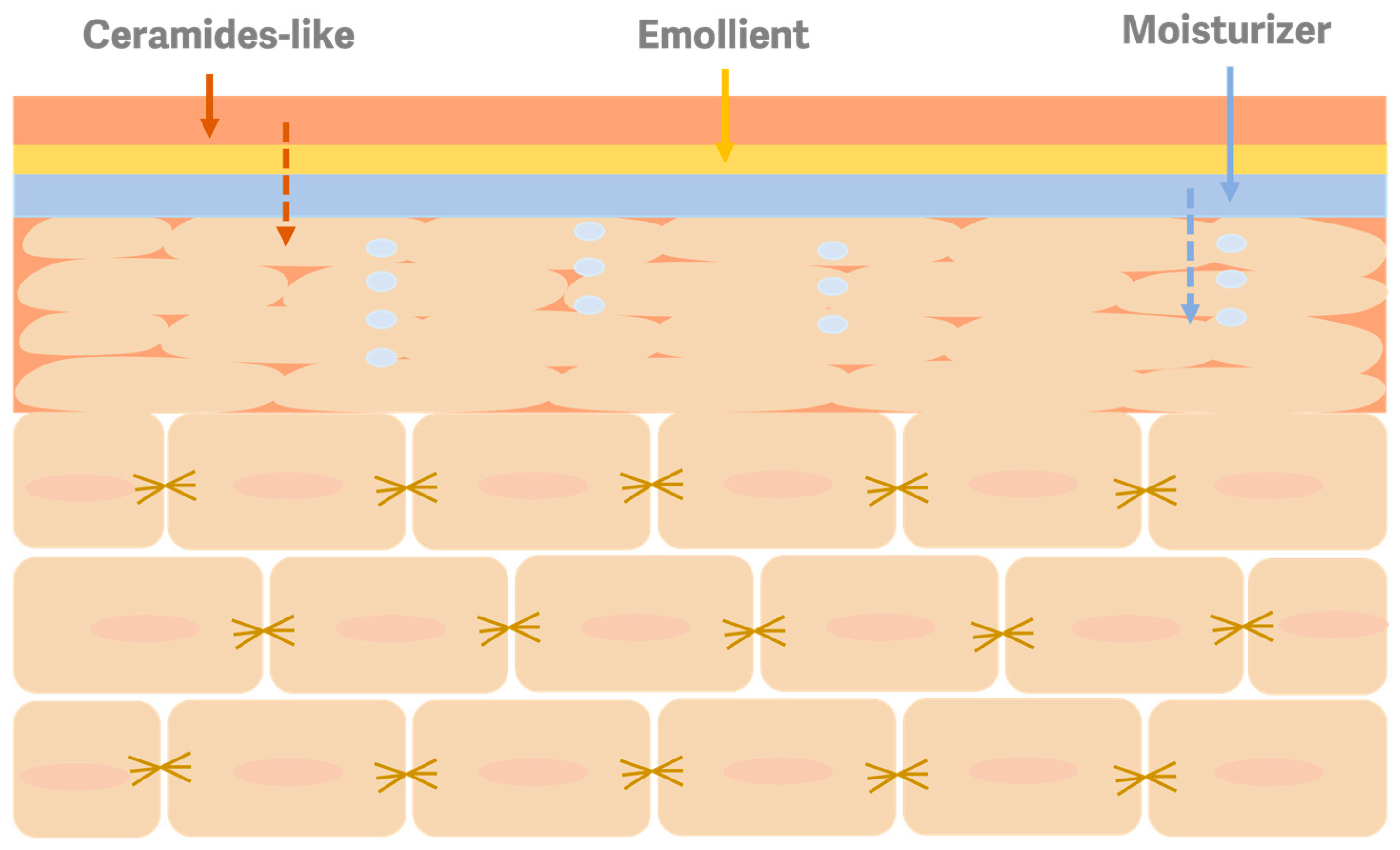
In this scenario, it is essential to repair the skin barrier and improve hydration, which is one of the first steps to reducing TEWL and skin scaling. Moisturizers and emollients are widely used in cosmetics, mainly in the treatment of dry skin, but also as adjuvants to reduce discomfort in skin affected by various skin conditions, such as psoriasis and certain dermatitis. Strugar et al., considering that dysfunction of the skin barrier can lead to atopic march, allergies, and contact dermatitis, proposed the use of emollients to improve the barrier function of the SC by providing water and lipids, which can also enhance ceramide synthesis, and restore the skin microbiota balance through skin care products containing prebiotics and thermal spring water [8]. For its part, Elias et al. postulated, in addition to emollients to repair the skin barrier, including moisturizers and ingredients that reduce the skin’s pH, which is increased in some disorders such as atopic dermatitis [11]. Rajkumar et al. suggested that a consistent and methodic moisturization may strengthen the immunologic skin barrier by reducing permeability and subsequent allergen penetration and sensitization [12]. Similarly, Madnani et al. claimed that a moisturizer based on biomimetic technology (i.e., containing skin-like lipids, such as ceramide-3 and hydrogenated lecithin, involved in bi-layer lipid-forming, together with squalene, glycerin, and triglycerides, resulting in mimicking the natural structure of the skin) is beneficial for the treatment of impaired skin barrier function [13].
Therefore, it can be summarized that the three pillars of skin barrier repair are the combination of emollients, moisturizers/humectants, and physiological lipids such as ceramides and other lipids that can mimic those of the skin lamellar lipids (Figure 2).
Macro and microalgae contain active ingredients that are of great interest in skin care, as they are easy to obtain and can be included in natural cosmetic products. Both produce primary and secondary metabolites that are used as active ingredients in cosmetics, such as proteins, polysaccharides, polyunsaturated fatty acids, polyphenols, pigments, vitamins, sterols, and other bioactive compounds, with a wide range of biological activities of interest in the cosmetic field, such as moisturizing, antioxidant, skin whitening, protection against UV radiation, or repairing the skin barrier [14]. Although macroalgae have been studied more, microalgae and cyanobacteria also offer great potential for exploitation for cosmetic uses due to their ease of cultivation.
Due to the increase in consumer demand for products that are more respectful of the skin and the environment, derivatives of macro and microalgae can provide solutions within the “natural”, “green”, and “eco-friendly” trends [15].
This review aims to discuss the role of bioactive compounds of macro and microalgae in skin barrier repair, highlighting their potential use in cosmetics, especially organic cosmetics, which benefit from marine resources to obtain high-quality active ingredients and excipients suitable for the most sensitive skin and even those with dermatological problems.

2. Materials and Methods

For the non-systematic literature review, PubMed, Web of Science databases, and Google Scholar searching system were all consulted, and relevant search terms such as “macroalgae”, “microalgae”, and “seaweed” were analyzed in association with other terms such as “skin care”, “cosmetics”, “moisturizer”, “emollient”, “skin hydration”, and “skin barrier repair”.
To ensure that relevant information was obtained to answer the research question, inclusion and exclusion criteria were established. The inclusion criteria were articles focusing on the problem being studied, articles describing the bioactive compounds of macro and microalgae in skin care or skin barrier dysfunction, and articles describing the different specific activities of the metabolites of algae reporting the dermo-therapeutic or cosmetic use. As an exclusion criterion, articles not related to the problem being studied and in which these bioactive compounds were related to pharmacological use or drug development were considered.
The data search was performed until September 2025.

3. Results and Discussion

Algae, especially seaweed, produce primary metabolites involved in the physiological functions of growth and development, as well as reproduction. These include polysaccharides (fucoidans, laminarin, etc.), proteins, lipids, and minerals. They also produce secondary metabolites, generally under stressful conditions such as temperature changes, salinity, or exposure to UV radiation or environmental toxins. Examples of these secondary metabolites include phenolic compounds, terpenes, and sterols. Many of these bioactive compounds may be of interest for cosmetic use, such as polysaccharides, proteins, fatty acids, amino acids, pigments, phenolic compounds, sterols, vitamins, and other bioactive agents [16].
Microalgae, depending on the genera and species, are rich in pigments (chlorophylls, carotenoids, and phycobiliproteins), polyphenols, polysaccharides, lipids (PUFAs), glycolipids, steroids, and short peptides and proteins [17,18].
To the best of our knowledge, there are no specific reviews related to skin barrier and algae. We have found articles related to the actions of certain algae compounds on the skin, but not specifically on the skin barrier. For example, Conde et al. [19] refer to algae lipids, but the review focuses on antioxidant and anti-inflammatory capacity, which is not exactly the objective of this review. We also include reviews and articles related to the photoprotective capacity of algae compounds as complementary information.
Table 1 summarizes the bioactive compounds of macro and microalgae that have shown to be effective in repairing skin barrier both related to skin hydration, and emollience. Among the bioactive compounds, polysaccharides, carotenoids, and phenols are the ones that have proven to be most effective in repairing the skin barrier, but also aqueous and oily extracts. In this review, compounds from Spirulina (Arthrospira sp., also known as Limnospira sp.) are also considered. Despite not been a microalga, as it has been classified as a cyanobacteria, it carries out photosynthesis, and it is one of the most cultivated genera to obtain biomass for food, and nutraceuticals, but also for its richness in bioactive compounds, such as phycocyanin, and proteins that are of interest for skin care. In the following subsections, selected research is discussed.
As mentioned above, the current trend towards consuming cosmetic products that are more skin-friendly and also sustainable and non-polluting, has led to an increase in research into natural [57], and eco-sustainable cosmetics [58], frequently referred to as “green cosmetics” [59]. This tendency also fits with the trend of circular economy, to maximize the exploitation of resources with minimum waste and energy costs, water use, etc. [60].
In the last two decades, a large amount of scientific literature has been generated regarding the bioactive compounds of algae and their use in cosmetics. Several authors highlight the great potential of algae in this field, especially providing bioactive antioxidant, anti-inflammatory, and UV light protective molecules, but also other classic uses such as stabilizers and thickeners [61,62,63,64,65,66,67,68]. Joshi et al. investigated the macroalgal species used in cosmetics, highlighting Chondrus crispus, Ulva lactuca, Fucus vesiculosus, Porphyra umbilicalis, and Ascophyllum nodosum, that are already used in the cosmetics industry [69], but since 2018 the market increased exponentially and other species have joined, such as Ecklonia cava, Undaria pinnatifida, Sargassum horneri, Palmaria palmata, and Neopyropia yezoensis (formerly Porphyra yezoensis), among others. And among microalgae, cyanobacteria, and diatom, the following stand out: Porphyridium cruentum, and P. purpureum, Phaeodactylum tricornutum, Haematococcus pluvialis (currently Haematococcus lacustris), Scenedesmus sp., Odontella aurita, Chlorella sp., Nannochloropsis sp., Tetraselmis sp., and Arthrospira sp. [68].
Several seaweeds’ molecules have already demonstrated a high potential as a cosmetic active ingredient (such as, fucoidan, phenolic compounds, pigments, and mycosporine-like amino acids) or to provide consistency (agar, alginate, carrageenan) [70,71]. For example, in marine brown algae, compounds like fucoxanthin, polysaccharides, mycosporine-like amino acids (MAAs), and phlorotannins have a variety of functions to combat ultraviolet radiation and protect human skin [72]. Fabrowska et al. investigated the cosmetics properties of algal bioactive compounds, finding that polysaccharides, alginates, carrageenans, and agar are mainly used as thickening agents; ulvans exert moisturizing and antioxidant properties; fucoidans and laminarans have antioxidant and anti-inflammatory activity; amino acids (histidine, taurine, glutamic acid, serine, alanine, and MAAs) may be used as moisturizers, antioxidants, and natural sunscreen; peptides as carnosine are potential radical scavengers; and lectins and cyclic peptides may exert antibacterial, antiviral, and antifungal activities. Lipids from algae are also used as emollients, while pigments (carotenoids, chlorophylls, and phycobiliproteins) may exert a wide range of activities, as antioxidant, anti-inflammatory, anti-photoaging, or antiallergic. Phenolic compounds (phlorotannins, bromophenols, and terpenoids) are also well-known for their antioxidant properties, among others [73].
Even though algal extracts are the most studied in the pharmacological and cosmeceutical field, recently, there has been an increasing interest in studying the health properties of various specific marine algae compounds, so polysaccharides, phlorotannins, carotenoids, and terpenes emerged as prominent compounds, collectively representing 42.4% of the investigated compounds [74].
Kalasariya et al. investigated the beneficial effect of marine macroalgae in moisturizing the skin (and photoprotection) finding that the most investigated algae were terpenoids, polysaccharides-fucoidan, carrageenan, and alginates [75]. These compounds have an additional advantage for the cosmetic industry, because they can be cheap and at the same time satisfy consumer demands for “natural” and “healthier” products [76].
Ersoydan et al. investigated the anti-inflammatory activity of various brown algae species, finding that fucoidan can ameliorate not only inflammation in atopic dermatitis but also hydration and itching. Phlorotannins also exert anti-inflammatory effects and can contribute to skin health by inhibiting enzymes such as collagenase and elastase, which are involved in the degradation of the skin structure and function, and impaired wound healing [77]. Photoprotective effect is also of interest to maintain the skin barrier, so the algae bioactive compounds as phlorotannins [78], and fucoidan [79] should be taken into consideration when formulating skin care cosmetics, as both have shown to protect skin against UV damage. Fucoxanthin from different macro and microalgae also showed anti-inflammatory activities [80].
Rye et al. compiled the applications of microalgae-derived active ingredients as cosmeceuticals, the results showed that the genera and species most frequently used in commercialized cosmetics are Spirulina sp., Arthrospira maxima, Chlorella vulgaris, Anacystis nidulans, Halymenia durvillei, Dunaliella salina, and Porphyridium sp. [81]. Later on, Castro et al. investigated the cosmetic applications of microalgae and cyanobacteria, finding that the main genera are Chlorella, Arthrospira, Tetraselmis, and Scenedesmus, being the crude extracts or bio-mass, pigments, and polysaccharides the based products are more reported [82].
However, the most studied activity of the bioactive compounds of algae is the antioxidant capacity, although for the case at hand, which is the repair of the skin barrier, the photoprotective capacity is of interest [83,84,85,86], which will also be discussed throughout this review.

3.1. Polysaccharides

Carbohydrates are the major and abundant constituent of marine algae and are used in cosmetic formulations as moisturizing and thickening agents [87,88], as well as for developing transdermal drug delivery systems [89]. In marine algae, polysaccharides vary according to the type of algae; thus, in brown algae (Ochrophyta, Phaeophyceae), fucoidans, laminarins and alginates predominate, while in red algae (Rhodophyta), carrageenan and porphyran stand out; and in green algae (Chlorophyta) ulvan and rhamnan sulfate predominate [90]. It can be said that one of the most studied compounds of algae are polysaccharides, which mainly focus on the antioxidant and photoprotection properties [91].
Thus, Patel et al. described the uses of algae in skin hydration, highlighting the polysaccharides of certain algae species, such as S. japonica, Chondrus crispus and Codium tomentosum, as they were observed to help maintain skin moisture, keeping the skin hydrated in extremely hot and dry environments, as well as providing a soothing effect [92]. And, poly- and oligosaccharide Ulva sp. fractions were able to modulate the extracellular matrix of human dermal fibroblast, showing that they may also be used to develop protective skin care cosmetics [93]. Furthermore, Ulva sp., possesses a representative content of rhamnose, a water-soluble sulfated polysaccharide with an important moisturizing action [94].
Several studies showed that macroalgae polysaccharides have a great moisture retention ability, in many cases higher than hyaluronic acid (HA). Some examples are described in Table 2. It can be summarized that sulfate and low molecular weight (LMW) polysaccharides have higher moisture retention ability than HA, glycerol or urea, and, in general, in brown algae it is higher than in red algae.
One brown algae Saccharina japonica, one red algae Porphyra haitanensis and three green algae Codium fragile, Enteromorpha linza, and Bryopsis plumose were investigated to evaluate their moisture retention ability. The moisture-absorption of polysaccharides extracted from these five algae was examined and compared with that of HA, showing that with a decrease in molecular weight, the moisture-absorption/retention ability increased, being higher in red algae compared to green algae, and demonstrating that all of them possess higher moisture retention capacity than HA [95].
The moisture-preserving property of the algae polysaccharide from Ulva lactuca was examined gravimetrically and compared with that of glycerol, resulting being higher for algae polysaccharide (43% vs. 34%) [96]. Li et al. investigated the moisture retentions of different polysaccharides obtained from Enteromorpha prolifera; results showed that all polysaccharides, both low molecular weight and sulfated types, achieved high moisture retention rates, and were close to that of HA. Furthermore, the higher the sulfate content, the higher the water retention [97].
A study conducted by Cai et al. investigated the moisture retention and absorption of powder and ooze of two macroalgae: Porphyra yezoensis and Sargassum horneri. The results showed that seaweed powder generally has a higher absorption capacity than ooze, and that S. horneri powder obtained the maximum moisture retention after 30 min (95%), while P. yezoensis powder had the highest moisture absorptions, up to 93% of that of glycerol. In addition, the polysaccharide extracted from S. horneri was superior to that of P. yezoensis in moisture retention [98]. Jesumani et al. studied the moisture absorption and retention abilities of a polysaccharide-rich extract from Sargassum vachellianum, showing that moisture retention is higher (65.84%) than of that of glycerol (51.35%) [99]. Other investigation found that polysaccharide from Caulerpa microphysa could also be useful for skin moisturizing. In terms of water-absorption capacity, C. microphysa extract was better than collagen, similar to HA, and poorer than urea. And the moisture-retention capacity over 24 h was better than that of collagen and HA, and similar to that of urea [100]. Finally, microalgae polysaccharides were also studied. In vitro moisture-absorption and moisture-retention properties of Nostoc polysaccharide were compared to chitosan and urea; moisture retention resulted in higher percentages (78.5%, 75.2%, and 62.7%, respectively) and, additionally, was able to improve water retention in mouse stratum corneum under dry conditions [28].
In addition to the interesting and useful studies related to moisture retention cited, various in vitro and in vivo studies support the use of algae polysaccharides in cosmetics for skin hydration and barrier repair. Fucoidan is the most studied polysaccharide in skin disorders, such as atopic dermatitis, mainly due to its anti-inflammatory activity [101]. Low molecular fucoidan fractions showed the ability to exert a significant recovery of skin barrier proteins and molecular mediators, indicating its potential for attenuating skin barrier dysfunction. In vitro study (HaCaT cells) demonstrated that a low molecular fucoidan fraction from the brown algae Sargassum confusum was able to suppress impairment of stratum corneum hydration in UVB irradiated cells, and causing a significant recovery of skin barrier proteins and molecular mediators. Authors postulated that the activation of MAPK and NF-κB mediators significantly declined following fucoidan low molecular fraction treatment and this could explain its protective functionality [20].
Fucoidan, derived from the seaweed Undaria pinnatifida, helps repair skin barrier disruption by promoting keratinocyte differentiation and increasing calcium-sensing receptor (CaSR) expression. Research suggested that fucoidan has potential as a skin-repairing agent by improving epidermal hyperplasia and increasing keratinocyte sensitivity to calcium through the ERK and p38 signaling pathways [21]. The research is based on a situation of low calcium levels, after having caused a disruption of the skin barrier in mice by tape stripping on their shaved back. Further clinical studies are needed to test this assumption in cases of eczema, psoriasis, and other dermatological disorders that alter the skin barrier. Considering that several studies have suggested that intracellular Ca2+ stores, such as the endoplasmic reticulum, are the main components of the epidermal calcium gradient, and endoplasmic reticulum calcium homeostasis is crucial for regulating keratinocyte differentiation, intercellular junction expression, and permeability barrier homeostasis [102], these types of studies represent another way to repair the skin barrier and confirm that fucoidan can be very useful in the treatment of dermatoses associated with skin barrier impairment.
Other studies focused on the interest of fucoidan in protecting the skin against environmental particles (fine particle matter, PM). This aspect must be considered in skin protection, especially in areas with high pollution. Two studies investigated the activity of low molecular fucoidan fractions in fine dust-stimulated HaCaT keratinocytes. Fine dust (FD) is considered the most adverse among ambient PM, which can easily penetrate the skin; FD exposure of keratinocytes results in ROS-dependent production of inflammatory cytokines, transmutes the differentiation and cornification of keratinocytes and influences the downregulation of skin barrier proteins in the stratum corneum thus causing defects in skin barrier function [103]. Low molecular fucoidan fraction from Sargassum horneri, in vitro study (FD-induced HaCaT keratinocytes) ameliorated key tight junction proteins and skin hydration factors, outlining the effects of fucoidan in reducing FD-induced inflammation and skin barrier deterioration [22]. Similarly, low molecular fucoidan fraction from Sargassum confusum was able to increase the cell viability of FD-induced HaCaT keratinocytes and to protect from inflammation, showing a significant downregulation in NF-κB/MAPK signaling [23]. Furthermore, fucoidan from Sargassum fusiforme, in vitro study (HaCaT cells and HDF cells) exerted a protective effect against PM pollution by inhibiting apoptosis via scavenging intracellular ROS, and reducing the secretion of pro-inflammatory factors and MMPs [24]. These in vitro and in vivo studies show that polysaccharides, especially low molecular weight fucoidan fractions, can exert important functions not only in protecting the skin against environmental pollutants, but also in repairing the skin barrier which, as indicated, is damaged in certain dermatological conditions such as dermatitis and eczema.
Other studies evaluated cosmetic formulations. For example, a cream with 1% fucoidan obtained for Sargassum horneri, clinical study, showed an improvement in skin barrier function and reduced TEWL after three weeks of use compared with a placebo [25].
Likewise, a mixture of sulfated polysaccharides and glucuronic acid from Sargassum fusiforme, in vivo study, decreased the skin moisture loss [26]; and sacran gel from the red algae Aphanothece sacrum showed to increase skin hydration and decrease TEWL as well as promoting normal epidermal differentiation and improvement of the maturation of corneocytes [27].
Finally, it should take into consideration that polysaccharides from microalgae could also be of interest; as has been mentioned before, polysaccharides from Nostoc have higher water retention than urea, in vitro study in mouse stratum corneum [28].
Oligosaccharides such as agaro-oligosaccharides and carrageenan-oligosaccharides (obtained from agar and carrageenan, respectively, by enzymatic and chemical hydrolysis) have shown in in vitro studies their water retention capacity, suggesting their potential use as skin moisturizers, and it has been suggested that they can also be used as prebiotics, as it has been proposed that the incidence of high-fat diet-induced gut dysbiosis can be reduced or even prevented by administering a mixture of prebiotic oligosaccharides, which could lead to a change in the composition of the gut microbiota [104].
Additionally, exopolysaccharides (EPS) from cyanobacteria and microalgae could be a good raw material for cosmetic use, as has been shown that, for example, sacran or spirulan from cyanobacteria Aphanothece sacrum or Arthrospira (Spirulina) sp. is an acidic extracellular EPS that has a high-water absorption property [105,106], and Parachlorella sp. is also able to produce a high number of EPS [107]. A recent review emphasizes the use of exopolysaccharides from microalgae and cyanobacteria that are exuded and released into the medium to be used in skin care formulations, both to improve techno-functional and sensorial properties, and as active ingredients (e.g., as moisturizer or anti-aging actives) [108].
Therefore, although these studies do not show the specific effects of EPS on skin barrier repair, the moisturizing effect is of great interest, since it is the first step, along with emollience, to prevent dehydration.

3.2. Carotenoids and Other Pigments

Algae are rich in pigments. Brown algae possess chlorophyll a, c, carotenoids, fucoxanthin, and other pigments, whereas red algae contain chlorophyll, phycobilin, carotenoids, carotene, lutein, phycocyanin, and phycoerythrin, and Chlorophyta possess chlorophyll-a, -b, and -c and carotenoids [58].
Algae carotenoids, despite not been directly involved in skin-barrier recovery, are of great interest in the field of cosmeceuticals as can exert antioxidant and anti-inflammatory activities; for example, astaxanthin is one of the strongest antioxidants, as well as β-carotene; furthermore, fucoxanthin is able to counteract oxidative stress caused by UV radiation, which is why it is currently used in cosmeceuticals. The carotenoid lutein protects skin structures against UV-induced oxidative damage, especially in combination with other antioxidant systems and immunoprotective substances [109].
Other examples are the following: Undaria pinnatifida fucoxanthin showed the ability to regulate filaggrin genes expression, and to restore the skin barrier by filaggrin stimulation, in in vitro and in vivo studies [29]; a clinical study demonstrated that zeaxanthin-based oral supplementation plus topical gel serum was able to improve skin hydration [30].
Moreover, given the high abundance of carotenoids in microalgae, they can be considered potential producers of carotenoids in biotechnology [110] and, therefore, a good source of active ingredients for cosmetics, easy to produce and cheap.

3.3. Phenols

Algae polyphenols are very well-known for their antioxidant activity [111], specifically, phlorotannins [112]. In addition to this protective function, it has been observed that other phenols can contribute to repairing the skin barrier. One of the most studied is fucosterol. For example, Hannan et al. investigated the pharmacological properties and health benefits of marine algae phytosterol, finding that, particularly fucosterol, possesses substantial health benefits. Among their many other properties, these sterols are attributed with antioxidant, anti-inflammatory, immunomodulatory, and cholesterol-lowering effects, as well as activity against obesity, Alzheimer’s disease, diabetes, cancer, aging, and liver protection, indicating their potential as leading therapeutic compounds. These sterols can participate in various cellular pathways, either interacting with enzymes or other proteins, especially in metabolism and homeostasis, apoptosis and cell survival, and the antioxidant defense system [113]. Hwang et al. assessed the effects of fucosterol from the brown algae Hizikia fusiformis on photodamage, finding that fucosterol significantly decreased the UVB-induced expression of several matrix metalloproteinases (MMPs) and interleukins, as MMP-1 and IL-6 [114].
Fucosterol from Sargassum fusiforme, an in vitro study, showed the ability to modulate MAPK in irradiated HaCaT cells [31]; Sargassum binderi fucosterol also demonstrated cytoprotective effects against xenobiotics (which can also be involved in certain dermatoses), by suppressing the production of MMP-1 and MMP-2 as well as reducing collagenase and elastase activity in HaCaT cell lysates in a dose-dependent manner [32]. Bromophenol (3-bromo-4,5-dihydroxybenzaldehyde) from Polysiphonia morrowii was able to increase the production of skin hydration proteins and tight junction proteins, in an in vitro study [33].

3.4. Other Compounds

Other research that combines different algae compounds deserve to be cited. A mixture of compounds including Fucus vesiculosus extract, Ulva lactuca extract, and Ectoine, in split-face clinical study, showed to increasing skin hydration and maintain the skin barrier function [34].
Recent research has studied the efficacy of polydeoxyribonucleotides (PDRNs) derived from Chlorella protothecoides, demonstrating a significant improvement in the proliferation and migration of skin cells, an increase in collagen synthesis by modulating the expression of type I alpha 1 collagen (COLIA1), and also enhancing angiogenesis by promoting the expression of vascular endothelial growth factor (VEGF), both of great interest for wound healing and skin repair [115].
On the other hand, Ferreira et al. investigated the ingredients of algae that have shown efficacy in the care of sensitive skin, highlighting that carotenoids, polysaccharides, and lipids are the chemical classes, but so are Ascophyllum nodosum, and Asparagopsis armata extracts [116]. Further clinical research is needed to confirm this assumption.
Microalgae also produce various bioactive compounds with potential therapeutic effects, including anti-inflammatory, antioxidant, antidiabetic, and anticancer activities. These bioactive compounds include carotenoids, chlorophylls, phycobiliproteins, fatty acids, and vitamins, many of which may be of interest in the treatment of inflammatory skin conditions [117], and, therefore, they could be an excellent source of active ingredients for skin care cosmetics. The activity of microalgae and cyanobacteria extracts will be analyzed later.
In addition, other algae compounds of interest for organic beauty products are chitin, terpenoids and vitamins [118]. For example, microalgae are rich in vitamins: Dunaliella tertiolecta synthesizes vitamins B12, B2, E, and beta-carotene, and Tetraselmis suecica produces vitamin C [119]. Microalgal species such as Thalassiosira sp., rich in amino acids, and Monodus subterraneus, with a high content of PUFA, could be able to reduce transepidermal water loss (TEWL). The genus Nannochloropsis sp., which are rich in linoleic acid, are good candidates as active ingredients for skin hydration [120].

3.5. Aquaous, Ethanolics and Oily Extracts

In addition to the bioactive compounds mentioned above, the cosmetic industry makes extensive use of macro and microalgae extracts, both aqueous, ethanolic and oily, as bioactive ingredients. For example, Sargassum spp. extracts and derivative compounds have excellent potential for skin care, as they exhibit skin health-promoting properties, including antioxidants, anti-inflammation, whitening, skin barrier repair, and moisturizing [121]. Another recent review deals with the skin protective effects, among others activities, of Antarctic algae, such as Micractinium sp., Chlamydomonas sp., Iridaea cordata, Curdiea racovitzae, and Phaeodactylum tricornutum, finding that most of them can produce quite a large amount of MMAs (porphyra-334, shinorine, and mycosporine-glycine) with interesting photo-protective activities in the UVR spectral range [122]. Cyanobacterial metabolites were also investigated finding that proteins and peptides (dry powder), methanolic extracts of exopolysaccharides, and other compounds such as vitamins A, C, B1, B2, B12 may improve skin hydration [123].
Macroalgae aqueous/oily extracts are widely used in the cosmetics industry to protect skin and increase hydration, prevent aging, or skin-barrier recovery. Doria et al. argues that “it is necessary to consider that overall action of an algal extract is most probably due to the joint action of different substances” [124]. Considering that this is one of the principles of skin care cosmetics, the synergy between bioactive compounds rather than a high concentration of a specific compound that could lead to irritation or alterations in skin homeostasis, algae extracts can be important allies in the protection and recovery of the skin barrier.
Choi et al. screened Laminaria japonica extracts for skin moisturizing activity, showing that skin hydration increased by 14.44% compared with a placebo; TEWL (using a test cream with 10% L. japonica extract) decreased to 4.01 g/cm2 (8 h after applying the cream), which was approximately 20% of that seen with the control [35]. The in vitro study (Human Primary Epidermal Keratinocytes, HPEK) demonstrated that Sargassum glaucescens extracts induced the expression of genes such as TGM1 (Transglutaminase 1) and KRT10 (Keratin 10) related to the skin barrier, as well as the gene expression of filaggrin, involved in the production of NMF, essential for maintaining hydration and skin barrier functions [36]. Recent studies performed by Jang et al. demonstrated that guanosine and uridine nucleosides-rich extracts from Codium fragile exerted anti-inflammatory effects by inhibiting inflammatory mediator and cytokines (such as iNOS, COX-2, IL-1β, IL-4, IL-6, and TNF-α) and also promoted the mRNA expression of factors related to skin barrier function in HaCaT cells. Specifically, they enhanced the expression of factors related to skin barrier function, filaggrin, involucrin, and loricrin [37].
Two studies of Sargassum horneri ethanolic extracts proved to be useful, too, in skin barrier improvement. Dias et al. conducted an in vitro study in FD-induced HaCaT keratinocytes and found that S. horneri ethanolic extract ameliorated filaggrin, involucrin, a lymphoepithelial Kazal-type-related inhibitor (LEKTI), signifying its beneficial effects on deteriorated skin hydration caused by FD-induced inflammation. Additionally, the extract exhibited skin protective effects by regulating the tight junction proteins; occludin, zonula occludens (ZO)-1, claudin-1, claudin-4, claudin-7, and claudin-23, while increasing the production of HA, therefore, minimizing skin damage [38]. Mihindukulasooriya et al. showed that S. horneri ethanolic extract directly inhibited the expression of keratinocyte-produced TSLP (thymic stromal lymphopoietin), which is known to exacerbate skin barrier impairment. Especially, the decrease in filaggrin observed in DNCB-induced atopic dermatitis mice was significantly improved when treated with S. horneri ethanolic extract [39]. Further clinical studies are needed to confirm the potential of these extracts.
Microalgae extracts have gained significant popularity in the cosmetics market due to their ease of cultivation. The Blue Lagoon is a prime example, as filamentous and coccoid algae extracts obtained from this thermal lake and the siliceous mud deposited at its bottom have been extensively studied in vitro and in vivo (clinical studies). Results in keratinocytes showed that stimulation with siliceous mud extracts increased steady-state mRNA levels of involucrin, filaggrin, and transglutaminase-1 in a time- and dose-dependent manner. Furthermore, the expression of keratinocyte differentiation markers also increased after cellular stimulation with coccoid algae extracts and, to a lesser extent, with filamentous algae extracts. Additionally, a clinical study was conducted with daily topical application, for four weeks, of a galenic formulation containing all three extracts. A significant increase was observed in the expression of mRNA of involucrin, filaggrin and transglutaminase-1 proteins involved in the formation of the skin’s protective barrier [40].
Buono et al. investigated the biological activities of dermatologic interest of the water extract from the microalga Botryococcus braunii, in vitro study, finding that 1% extract induced gene expression of proteins involved in the maintenance of skin cells water balance such as aquaporin-3 (AQP3), filaggrin, and involucrin, in addition to antioxidant activities [41].
Aqueous extracts from microalgae Neochloris oleoabundans were investigated to evaluate its antioxidant properties and cutaneous compatibility. For that, a gel with 1.0% N. oleoabundans aqueous extract was formulated and in vivo studies were performed. Results showed that, in addition to its anti-inflammatory properties, in vivo assay concluded that TEWL did not increase, so the formulation did not negatively affect the skin barrier function, and stratum corneum hydration was maintained in all the participants [42].
Microalgae ethanolic extracts were also investigated as ingredient in cosmetics. Six different polar microalgae Micractinium sp. (KSF0015 and KSF0041), Chlamydomonas sp. (KNM0029C, KSF0037, and KSF0134), Chlorococcum sp. (KSF0003) were collected from the Antarctic or Arctic regions, and aqueous extract were prepared and analyzed. The biological activity of polar microalgae extracts in protecting against damage induced by oxidative stress and UVB in human HaCaT keratinocyte cells was evaluated. Additionally, a murine model of imiquimod-induced psoriatic dermatitis was used to evaluate anti-inflammatory activity. The results showed that all polar microalgae extracts reduced oxidative stress in HaCaT cells. Furthermore, the extracts KNM0029C (from the genus Chlamydomonas sp.) and KSF0041 (from the genus Micractinium sp.) prevented the decrease in HaCaT cell viability caused by UVB radiation, suggesting that these polar microalgae contain cytoprotective substances for skin epithelial cells. Topical application of the KSF0041 extract was also tested in an animal model of psoriasis-like skin inflammation (C57BL/6 mice), resulting in almost complete relief of the main clinical symptoms, such as redness and scaling. This suggests that the KSF0041 extract reduces damage to the integrity of the skin barrier. The authors attributed the results to the presence of abundant and diverse fatty acids in the polar microalgae extracts (mainly docosahexaenoic acid methyl ester, linolenic acid methyl ester, 13-docosenamide (Z) and 4,7,10,13-hexadecatetraenoate methyl), which could play an important role in epithelial protection, since fatty acids promote the repair and maintenance of the integrity of the skin barrier [43].
Ethanolic extracts from Nannochloropsis sp., which main compounds were fatty acids 58.2%, carotenoids 1.6%, phenolics 7.7%, and flavonoids 2.0% (crude extract), in vitro study, enhanced the expression of HAS-2 (moisturizing-related gene) in a dose-dependent manner [44].
As has been mentioned before, emollients can improve the barrier function, and lipids from algae could be good allies. Macroalgae are rich in polyunsaturated ω-6 and ω-3 fatty acids (PUFAs), and other lipidic compounds. Rhodophyta and Phaeophyta have a high percentage of ω-3 fatty acids (linolenic, DHA, and EPA) and ω-6 fatty acids (linoleic acid, γ-linolenic acid, and arachidonic acid), and red and brown algae have high levels of ω-3 fatty acids (EPA) and ω-6 fatty acids (arachidonic acid and linoleic acid) [14]. Therefore, algae oils are particularly enriched with PUFAs, including DHA, which finds application in skin protection formulations. Microalgae can also produce various types of lipids such as triacylglycerols, phospholipids, glycolipids or phytosterols, mainly in oleaginous microalgae such as Chlorella sp., Nannochloropsis sp., Scenedesmus sp., and Dunaliella sp. [125]. Improving cultivation conditions, harvesting, and extraction methods may lead to microalgae being a sustainable and green source of lipids for the cosmetics industry. For example, during the last five years there has been an increase in extraction yields of fatty acids from Nannochloropsis sp. microalgae; depending on the extraction efficacy of the different technologies, various types of lipids and/or fatty acids are obtained, namely PUFA, including EPA [126]. Other example are extracts from the green algae Cladophora glomerata biomass containing unsaturated fatty acids, especially ω-3, ω-6, and ω-9 which are considered valuable materials for the production of cosmetic products, as these compounds may act as emollients, and prevent excessive TEWL [83].
Research into the role of algae-derived lipids in the epidermal barrier is scarce, although some studies on macroalgae can be cited, such as that of Kok et al. who studied the effects of Macrocystis pyrifera lipid extracts in three-dimensional cultures of HaCaT cells; results showed that M. pyrifera lipid pre-treatment reduced trans-epidermal leakage in cytokine-stimulated 3D epidermal constructs [45]. Additionally, a cream prepared with 0.5% carotenoid and phenolic-rich compounds of Cladophora glomerata oily extract showed, in a randomized clinical study, to be able to improve skin moisturizing [46]. The biological potential of the various bioactive compounds in polar marine algae extracts were also studied. Oily extracts from macroalgae Himantothallus grandifolius, Plocamium cartilagineum, Phaeurus antarcticus, and Kallymenia antarctica (currently Trematocarpus antarcticus), in addition to increasing cell viability, showed an ability to protect cells against inflammatory stimulation and increase the barrier integrity of cells damaged by lipopolysaccharide or ultraviolet radiation, both in intestine and skin [47].
Diatom Phaeodactylum tricornutum is very well-known for its high content on fucoxanthin, but is also rich in fatty acids; P. tricornutum extracts have been shown to exert anti-inflammatory properties [127], but the studies related to skin barrier improvement are scarce. An oily extract from P. tricornutum (fatty acids content up to 99% of and less than 1% of xanthophyll’s) showed the ability to stimulate 20S proteasome peptidases activities both in vitro and within human keratinocytes and to reduce the level of oxidized proteins [48], and it is therefore a potential candidate for protection of the skin barrier against environmental aggressions. Furthermore, encapsulated liposomal lipid extracts obtained from P. tricornutum, in combination with thermal spring water, seemed to contribute to repairing the altered skin barrier, increasing the skin’s resistance threshold in sensitive skin, calming the capsaicin-induced stinging and burning sensation (randomized, clinical split-face study) [49].
Lipid extract from Nannochloropsis oceanica, rich in phosphatidylcholine, and phosphatidylethanolamine, were investigated in human immortalized keratinocytes CDD 1102 KERTr exposed to UV radiation. After irradiation, the cells were treated with a lipid extract from N. oceanica algae in 0.1% DMSO (dimethyl sulfoxide) at concentrations ranging from 1 μg/mL to 1 mg/mL for 24 h. Results showed the ability of N. oceanica lipid extract to modulate the sphingomyelin-ceramide (SM-CER) pathway, accompanied by a significant upregulation of both classes of ceramides, non-hydroxy fatty acid/dihydrosphingosine base ceramide CER[NDS], and non-hydroxy fatty acid/sphingosine base ceramide CER[NS] [50].
Other algae lipids are used by cosmetic brands to improve the skin barrier. For example, a bio-based algae oil (INCI name Triolein), in an in vivo single-blind study, showed an ability to improve skin moisturizing, and also was able to reduce TEWL, which is an indicator of the skin’s barrier function [51].

3.6. Spirulina Compounds and Aqueous Extracts

In this review studies related to Spirulina (Arthrospira sp.) were selected considering its extensive exploitation for obtaining bioactive molecules, mainly for the food industry. Jang and Kim investigated the photoprotective effects of spirulina-derived C-phycocyanin against UVB radiation using keratinocytes (HaCaT cells). Results showed that 80 μg/mL C-phycocyanin increased involucrin, filaggrin, and loricrin expression by >25% [52].
Aqueous extract of Spirulina sp. (Arthrospira sp.) composed of 50 and 70% proteins (dry weight), 8 to 14% of polysaccharides, and about 6% of lipids was used to prepare a formulation containing 0.1% dry extract (w/w). A clinical study was performed to evaluate several skin parameters (skin hydration, TEWL, sebum content, skin microrelief, dermis thickness, and structural and morphological properties of the epidermis), showing that after 28 days of application of the formulation, a significant increase in the SC water content was observed in both groups (young and mature skin). This effect was more pronounced for the mature skin group. In addition, a reduction in the TEWL was observed in both groups; however, these results were significant only in the older group, when compared to the group that received the vehicle formulation. Furthermore, the skin microrelief was improved, observing a reduction in the surface roughness, and keratinocytes were more uniformly distributed and homogeneous [53]. Subsequently, similar studies were carried out with this same gel formulation based on spirulina extract, in Tertiary care Hospital, Bangladesh, observing a replication of the results [54].

3.7. Dry Extracts

Dry extracts of microalgae and cyanobacteria are also used as cosmetics ingredients. A double-blind, randomized, placebo-controlled clinical trial was performed applying a formulation containing olive oil and spirulina extract. After 12 weeks of application of the formulations, clinical evaluation using instrumental measurements showed an increase in skin hydration, an improvement in the skin barrier and in the morphological characteristics of the epidermis. A significant increase in the brightness of the stratum corneum was also observed, suggesting a film-forming effect [55], this is another aspect to take into consideration in the preservation of the skin barrier since excessive TEWL is prevented. Ma’or et al. evaluated the skin care effect of a cream composed by Dead Sea minerals (mineral-botanical complex) and Dunaliella salina dry extract, resulting in an improvement of 42.3% in skin roughness, and a slight improvement of skin hydration compared to the control (the same cream without D. salina extract) [56]. In this last study, the influence of Dead Sea salts in improving skin hydration must also be considered.

3.8. Potential of Other Algae Compounds in Skin-Barrier Recovery

Amino acids, peptides, and proteins from algae are also of great interest in skin care, as seaweed proteins are effective in their use as cosmeceuticals; they are excellent moisturizers for hair and body [62,128]. For example, Chondrus crispus contain several amino acids, including alanine, arginine, aspartic acid, citrulline, glutamic acid, glycine, histidine, isoleucine, leucine, serine, lysine, methionine, threonine, ornithine, tyrosine, phenylalanine, proline, taurine, valine, and also peptides [129]. And Chaetomorpha crassa was investigated, finding that is rich in aspartic acid, glutamic acid, hydroxyproline, glycine, and alanine [58]; therefore, it should also be considered as a potential source of cosmetic ingredients for skin hydration.
Thus, recently, the focus has been on research to obtain algal peptides for dermocosmetic use, arguing that cost-effective extraction and purification of bioactive peptides, specifically from red algae, will be promising for the wider application of algal oligopeptides. Enzymatic hydrolysis, in combination with other extraction methods, can provide peptides with reasonably high yield and good bioactivity [130]. Water-soluble hydrolysates, protein and peptides-rich from Chlorella vulgaris, have also been studied for their antioxidant properties [131]; considering that proteins can improve skin moisturizing, these hydrolysates could also be of interest in cosmetics for skin-barrier recovery.
Ectoine, (S)-2-methyl-1,4,5,6-tetrahydropyrimidine-4-carboxylic acid, is a cyclic amino acid naturally produced by extremophile microorganisms living under conditions of extreme salinity, drought, irradiation, pH, and temperature; the species which produce higher amounts of Ectoine are Halomonas elongata and Halomonas salina [132]. Ectoine provides multiple cosmetic benefits such as immune protection, cell protection, UV protection, and membrane protection, as well as decreases skin inflammation in atopic dermatitis [14]. For example, Kauth and Trusova investigated the effects of Ectoine topical application in inflammatory diseases associated with an impaired skin barrier, suggesting that topical formulations containing Ectoine could be a beneficial alternative as basic therapy or to increase the efficacy of the pharmacological treatment regimen for patients with inflammatory skin diseases, including infants and children [133]. Thus, Ectoine may be a good ally for treating impaired skin barrier diseases.
Another recent study highlights the production of retinol-like substances from microalgae. Retinol can activate retinoic acid receptors (RARs), which play a key role in regulating skin cell proliferation and differentiation, as well as in the synthesis of extracellular matrix (ECM) proteins, such as collagen. Retinoid-like compounds have attracted significant attention in dermatology and cosmetics due to their ability to replicate many of the cutaneous effects of traditional retinoids, often minimizing the associated side effects. In this study, microalgae-derived bioretinoid (MBR) obtained from Chlorella vulgaris extract (method not described) was investigated (clinical study), showing that 1% MBR for 28 days resulted in a statistically significant increase in skin moisturization (20.7%, p < 0.001), in addition to other effects as improvement of firmness, elasticity, and skin texture [134].
Algae and microalgae are also rich in minerals and trace elements, which can help to rebalance skin hydration and metabolism. Palmaria palmata, Fucus vesiculosus, Laminaria sp., and Ulva sp., among others, contain minerals such as Na, K, Ca, Mg, and also trace elements (Fe, Zn, Mn, Cu) [135]. For example, consuming 10 g of Ulva lactuca can provide more than half of your iron needs and 70% of your daily magnesium requirements [136]. Among microalgae species that can provide minerals and trace elements Tetraselmis chuii stands out with its high calcium (Ca) and manganese (Mn) content; Thalassiosira weissflogii, notable for its potassium (K) content; Chaetoceros muelleri for its sodium (Na), magnesium (Mg), and iron (Fe) content; and Tisochrysis lutea is characterized by possessing significant amounts of copper (Cu) and zinc (Zn) [137].
Another field of interest is the study of aeroterrestrial and extreme environment microalgae which need to adapt to extreme conditions and it is commonly accepted that these adaptations include a series of protective natural compounds, such us phenols, scytonemin, (a dimer of indolic and phenolic subunits), MAAs, bioactive peptides, glucans, etc. [138].
Other investigations related to improving wound healing with the aid of algae and microalgae are also of interest in skin care. The red seaweed Gelidium corneum aqueous extracts showed wound healing properties, among other activities [139]. Polysaccharides fractions from Gracilaria lemaneiformis promoted cell proliferation and migration through activation of PI3 K/aPKC signaling during human keratinocytes wound healing [140]. Lectin isolated from the red algae Bryothamnion seaforthii showed to improve wound healing effects [141]. A skin cream including 1.125% S. platensis (currently Arthrospira platensis) crude extract enhanced the wound healing effect on the HS2 keratinocyte cell line [142]. And Choi et al. investigated a microalgae-based biohybrid microrobot for accelerated diabetic wound healing [143], which constitutes a novel approach to the treatment of wounds and ulcers.
Finally, it is worth mentioning other research of great interest for enhancing cosmetic bioactive compounds through bio-vectors and nanoparticles of algae, specifically microalgae. Some examples are microspheres from purified Sargassum horneri alginate from [144], and nanoliposomal peptides derived from Spirulina platensis (A. platensis) protein which were able to accelerate to full-thickness wound healing [145]. In vitro research about Chitin-Hyaluronan nanoparticles entrapping different ingredients showed that it may lead to the development of more effective cosmetics that can be used in the cosmeceutical field but also in aesthetic medicine [146]. Another example is a spray drying microencapsulation of phytochemicals from berry pomaces with Spirulina protein which was incorporated into a cosmeceutical topical formulation to mitigate skin damage from pollution [147].

3.9. Cosmetic Patents Based on the Use of Algae and Spiruline for Skin Barrier Improvement

Several patents and commercial products from algae, which claim to be effective in skin barrier strengthening or improving skin hydration, can be found. Table 3 shows some examples.

4. Future Challenges and Conclusions

Cosmetic consumer behavior has changed during this century, more and more are searching for natural ingredients, clean labeling, and non-synthetic chemicals, mainly due to increased awareness of toxicity and chemical cocktails in cosmetic products [148]. The need to repair the skin barrier, whose deterioration is associated with various dermatological disorders, also promotes the search for new natural bioactive compounds, in which algae derivatives play a prominent role.
Marine resources, specifically marine algae, exist in vast numbers and show enormous diversity. As a result, there are likely many possible applications for algae marine molecules of interest in the cosmetic industry, whether as excipients or additives, but especially as active substances [149]. Microalgae and cyanobacteria are also a good source of compounds for the cosmetic industry [82], specifically in the formulation of organic cosmetics, making them excellent alternatives to synthetic products [150], so that investigations aimed at optimizing the production of bio-compounds and/or algae extracts constitutes a route to the production of cosmetics that are respectful of skin physiology and kinder to the environment in the line of green cosmetics and blue research, in addition to the search for the extensive use of renewable resources to produce more sustainable ingredients. In this scenario, it is important to decide which extraction method will be used and which biorefinery methods should be developed. Using more environmentally friendly technologies improves yields, reduces solvent use, and saves energy, while also facilitating automation. Examples include supercritical CO2 extraction, microwave-assisted extraction, subcritical water extraction, and pressurized liquid extraction [151]. Hence, there is a need to develop new efficient and innovative extraction procedures that surpass conventional technologies to obtain high quality biomolecules with higher yield [152].
Other important aspects that require study are those that are related to the more ecological extraction of bioactive compounds, their chemical and biological characterization, as well as their stabilization and delivery in new products [153]. Additionally, it has been proposed to optimize the minor compounds that might be discarded or lost during seaweed processing. The processing of algae to obtain bioactive compounds generally focuses on the major components—alginate, carrageenan, and agar—while the minor components are discarded. However, some of these minor components, such as phycocyanin, phycoerythrin, and MAAs, are now considered potential cosmetic ingredients. Therefore, integrated biorefinery concepts are currently being applied to algae processing to obtain various bioactive compounds that, although present in minor quantities, can have high added value in cosmetics [154,155]. On the other hand, biopolymers resulting from the use of waste from the industry linked to marine resources, including algae, create sustainable and value-added goods, it may be worthwhile to value these abundant and accessible biowastes [156]. Similarly, the possibility of harnessing the exopolysaccharides released by microalgae into the culture medium during the cultivation process has recently been considered, which would allow for other sources of cosmetic ingredients of interest for skin care [108]. Additionally, it has been proposed that different culture conditions, including the so-called OSMAC (One Strain Many Compounds) strategy in which specific stress is generated to induce the synthesis of products, can potentially trigger the activation of specific metabolic pathways and influence bioactivities [17]. So, new strategies to increase the profitability of the extraction process are also needed to improve the cosmetic industry interest, and in this context, biotechnology may present advantages by reducing the environmental impact from the exploitation of these resources. The challenges of profitable large-scale systems should also be taken into account considering the high investment up front, as well as operation and maintenance [157].
Additionally, it is essential to evaluate the presence of heavy metals like arsenic, mercury, lead and cadmium, and pesticides such as organochlorine, allergens, toxins, and other chemical contaminations in the algae samples, but also phototoxicity due to the presence of phototoxins or photoallergens [158].
Finally, it is important to note that it is necessary to evaluate the efficacy and safety of bioactive compounds through standardized in vitro assays [78,159] as is required from different cosmetics regulations. In this sense, Ramos et al., investigated the skin care products formulated with spirulina or its constituents, highlighting that comprehensive studies on cutaneous toxicity and allergenic potential are critical to ensure topical formulations containing spirulina’s long-term safety and efficacy [160].
This review showed the potential of macro and microalgae compounds in skin barrier repair, as well as for improving skin hydration, and acting as emollients. In addition to the aqueous, ethanolic and oily extracts, which can act through the synergy of their bioactive compounds, the polysaccharides stand out, especially fucoidan, among the carotenoids, fucoxanthin, and also among the phenols, fucosterol. The advancement in the discovery of new, natural, and versatile active ingredients for the cosmetics industry is linked to the research and improvement into extraction techniques, benefiting everyone linked to cosmetics and skin care—companies, scientists, dermatologists and skin care specialists—thus promoting cosmetic science.

Author Contributions

M.L.M.: Conceptualization, methodology, investigation, writing—original draft preparation, writing—review and editing. C.P.G.: Methodology, investigation, writing—review and editing. J.L.L.: Writing—review and editing, supervision. All authors have read and agreed to the published version of the manuscript.

Funding

This research received no external funding.

Institutional Review Board Statement

Not applicable.

Informed Consent Statement

Not applicable.

Data Availability Statement

No new data were created or analyzed in this study. Data sharing is not applicable to this article.

Conflicts of Interest

The authors declare no conflicts of interest.

Abbreviations

The following abbreviations are used in this manuscript:
TEWLTransepidermal Water Loss
FDFine dust
DNCB2,4-dinitrobenzene
TGM1Transglutaminase-1
KRT10Keratin-10
FLGFilaggrin
IVLInvolucrin
LORLoricrin
NHDFNormal Human Dermal Fibroblasts
MAPKMitogen-activated protein kinases
HAS2Hyaluronan Synthase 2
NMFNatural Moisturizing Factor
MAAsMycosporine-like amino acids
HAHyaluronic acid
LMWLow molecular weight
PDRNsPolydeoxyribonucleotides

References

  1. Harris-Tryon, T.A.; Grice, E.A. Microbiota and maintenance of skin barrier function. Science 2022, 376, 940–945. [Google Scholar] [CrossRef]
  2. Egawa, G.; Kabashima, K. Barrier dysfunction in the skin allergy. Allergol. Int. 2018, 67, 3–11. [Google Scholar] [CrossRef]
  3. Yang, J.; Guo, J.; Tang, P.; Yan, S.; Wang, X.; Li, H.; Xie, J.; Deng, J.; Hou, X.; Du, Z.; et al. Insights from Traditional Chinese Medicine for Restoring Skin Barrier Functions. Pharmaceuticals 2024, 17, 1176. [Google Scholar] [CrossRef]
  4. Yosipovitch, G.; Misery, L.; Proksch, E.; Metz, M.; Ständer, S.; Schmelz, M. Skin Barrier Damage and Itch: Review of Mechanisms, Topical Management and Future Directions. Acta Derm. Venereol. 2019, 99, 1201–1209. [Google Scholar] [CrossRef] [PubMed]
  5. Kucuksezer, U.C.; Ozdemir, C.; Yazici, D.; Pat, Y.; Mitamura, Y.; Li, M.; Sun, N.; D’Avino, P.; Bu, X.; Zhu, X.; et al. The epithelial barrier theory: Development and exacerbation of allergic and other chronic inflammatory diseases. Asia Pac. Allergy 2023, 13, 28–39. [Google Scholar] [CrossRef] [PubMed]
  6. Orioli, D.; Dellambra, E. Epigenetic Regulation of Skin Cells in Natural Aging and Premature Aging Diseases. Cells 2018, 7, 268. [Google Scholar] [CrossRef] [PubMed]
  7. Celebi Sozener, Z.; Ozdel Ozturk, B.; Cerci, P.; Turk, M.; Gorgulu Akin, B.; Akdis, M.; Altiner, S.; Ozbey, U.; Ogulur, I.; Mitamura, Y.; et al. Epithelial barrier hypothesis: Effect of the external exposome on the microbiome and epithelial barriers in allergic disease. Allergy 2022, 77, 1418–1449. [Google Scholar] [CrossRef]
  8. Strugar, T.L.; Bs, A.K.; Seité, S.; Lin, M.; Lio, P. Connecting the Dots: From Skin Barrier Dysfunction to Allergic Sensitization, and the Role of Moisturizers in Repairing the Skin Barrier. J. Drugs. Dermatol. 2019, 18, 581. [Google Scholar]
  9. Wickett, R.R.; Visscher, M.O. Structure and function of the epidermal barrier. Am. J. Infect. Control 2006, 34, S98–S110. [Google Scholar] [CrossRef]
  10. Baroni, A.; Buommino, E.; De Gregorio, V.; Ruocco, E.; Ruocco, V.; Wolf, R. Structure and function of the epidermis related to barrier properties. Clin. Dermatol. 2012, 30, 257–262. [Google Scholar] [CrossRef]
  11. Elias, P.M.; Wakefield, J.S.; Man, M.-Q. Moisturizers versus Current and Next-Generation Barrier Repair Therapy for the Management of Atopic Dermatitis. Skin Pharmacol. Physiol. 2019, 32, 1–7. [Google Scholar] [CrossRef] [PubMed]
  12. Rajkumar, J.; Chandan, N.; Lio, P.; Shi, V. The Skin Barrier and Moisturization: Function, Disruption, and Mechanisms of Repair. Skin Pharmacol. Physiol. 2023, 36, 174–185. [Google Scholar] [CrossRef] [PubMed]
  13. Madnani, N.; Deo, J.; Dalal, K.; Benjamin, B.; Murthy, V.V.; Hegde, R.; Shetty, T. Revitalizing the skin: Exploring the role of barrier repair moisturizers. J. Cosmet. Dermatol. 2024, 23, 1533–1540. [Google Scholar] [CrossRef] [PubMed]
  14. Mourelle, M.L.; Gómez, C.P.; Legido, J.L. Role of Algal Derived Compounds in Pharmaceuticals and Cosmetics. In Recent Advances in Micro and Macroalgal Processing; Rajauria, G., Yuan, Y.V., Eds.; Wiley: Hoboken, NJ, USA, 2021; pp. 537–603. ISBN 978-1-119-54258-2. [Google Scholar]
  15. Fonseca, S.; Amaral, M.N.; Reis, C.P.; Custódio, L. Marine Natural Products as Innovative Cosmetic Ingredients. Mar. Drugs 2023, 21, 170. [Google Scholar] [CrossRef]
  16. Pereira, L. Seaweeds as Source of Bioactive Substances and Skin Care Therapy—Cosmeceuticals, Algotheraphy, and Thalassotherapy. Cosmetics 2018, 5, 68. [Google Scholar] [CrossRef]
  17. Saide, A.; Martínez, K.A.; Ianora, A.; Lauritano, C. Unlocking the Health Potential of Microalgae as Sustainable Sources of Bioactive Compounds. Int. J. Mol. Sci. 2021, 22, 4383. [Google Scholar] [CrossRef]
  18. Cagney, M.H.; O’Neill, E.C. Strategies for producing high value small molecules in microalgae. Plant Physiol. Biochem. 2024, 214, 108942. [Google Scholar] [CrossRef]
  19. Conde, T.; Lopes, D.; Łuczaj, W.; Neves, B.; Pinto, B.; Maurício, T.; Domingues, P.; Skrzydlewska, E.; Domingues, M.R. Algal Lipids as Modulators of Skin Disease: A Critical Review. Metabolites 2022, 12, 96. [Google Scholar] [CrossRef]
  20. Fernando, I.P.S.; Dias, M.K.H.M.; Madusanka, D.M.D.; Han, E.J.; Kim, M.J.; Jeon, Y.-J.; Ahn, G. Fucoidan refined by Sargassum confusum indicate protective effects suppressing photo-oxidative stress and skin barrier perturbation in UVB-induced human keratinocytes. Int. J. Biol. Macromol. 2020, 164, 149–161. [Google Scholar] [CrossRef]
  21. Chen, Y.; Li, X.; Gan, X.; Qi, J.; Che, B.; Tai, M.; Gao, S.; Zhao, W.; Xu, N.; Hu, Z. Fucoidan from Undaria pinnatifida Ameliorates Epidermal Barrier Disruption via Keratinocyte Differentiation and CaSR Level Regulation. Mar. Drugs 2019, 17, 660. [Google Scholar] [CrossRef]
  22. Fernando, I.P.S.; Dias, M.K.H.M.; Madusanka, D.M.D.; Han, E.J.; Kim, M.J.; Heo, S.-J.; Lee, K.; Cheong, S.H.; Ahn, G. Low molecular weight fucoidan fraction ameliorates inflammation and deterioration of skin barrier in fine-dust stimulated keratinocytes. Int. J. Biol. Macromol. 2021, 168, 620–630. [Google Scholar] [CrossRef] [PubMed]
  23. Kirindage, K.G.I.S.; Jayasinghe, A.M.K.; Cho, N.; Cho, S.H.; Yoo, H.M.; Fernando, I.P.S.; Ahn, G. Fine-Dust-Induced Skin Inflammation: Low-Molecular-Weight Fucoidan Protects Keratinocytes and Underlying Fibroblasts in an Integrated Culture Model. Mar. Drugs 2022, 21, 12. [Google Scholar] [CrossRef]
  24. Wang, X.; Huang, C.; Yang, F.; Wang, K.; Cha, S.-H.; Mao, X.; Jeon, Y.-J.; Wang, L. Fucoidan isolated from the edible seaweed Sargassum fusiforme suppresses skin damage stimulated by airborne particulate matter. Algal Res. 2024, 77, 103339. [Google Scholar] [CrossRef]
  25. Kang, J.; Hyun, S.H.; Kim, H.; Park, S.; Lee, J.; Lee, I.; Bae, J. The effects of fucoidan-rich polysaccharides extracted from Sargassum horneri on enhancing collagen-related skin barrier function as a potential cosmetic product. J. Cosmet. Dermatol. 2023, 23, 1365–1373. [Google Scholar] [CrossRef]
  26. Ye, Y.; Ji, D.; You, L.; Zhou, L.; Zhao, Z.; Brennan, C. Structural properties and protective effect of Sargassum fusiforme polysaccharides against ultraviolet B radiation in hairless Kun Ming mice. J. Funct. Foods 2018, 43, 8–16. [Google Scholar] [CrossRef]
  27. Masaki, H.; Doi, M. Function of Sacran as an Artificial Skin Barrier and the Development of Skincare Products. Yakugaku Zasshi 2019, 139, 371–379. [Google Scholar] [CrossRef]
  28. Li, H.; Xu, J.; Liu, Y.; Ai, S.; Qin, F.; Li, Z.; Zhang, H.; Huang, Z. Antioxidant and moisture-retention activities of the polysaccharide from Nostoc commune. Carbohydr. Polym. 2011, 83, 1821–1827. [Google Scholar] [CrossRef]
  29. Matsui, M.; Tanaka, K.; Higashiguchi, N.; Okawa, H.; Yamada, Y.; Tanaka, K.; Taira, S.; Aoyama, T.; Takanishi, M.; Natsume, C.; et al. Protective and therapeutic effects of fucoxanthin against sunburn caused by UV irradiation. J. Pharmacol. Sci. 2016, 132, 55–64. [Google Scholar] [CrossRef]
  30. Schwartz, S.; Frank, E.; Gierhart, D.; Simpson, P.; Frumento, R. Zeaxanthin-based dietary supplement and topical serum improve hydration and reduce wrinkle count in female subjects. J. Cosmet. Dermatol. 2016, 15, e13–e20. [Google Scholar] [CrossRef] [PubMed]
  31. Kim, M.; Oh, G.; Kim, M.; Hwang, J. Fucosterol Inhibits Matrix Metalloproteinase Expression and Promotes Type-1 Procollagen Production in UVB -induced HaCaT Cells. Photochem. Photobiol. 2013, 89, 911–918. [Google Scholar] [CrossRef]
  32. Fernando, I.P.S.; Jayawardena, T.U.; Kim, H.-S.; Vaas, A.P.J.P.; De Silva, H.I.C.; Nanayakkara, C.M.; Abeytunga, D.T.U.; Lee, W.; Ahn, G.; Lee, D.-S.; et al. A keratinocyte and integrated fibroblast culture model for studying particulate matter-induced skin lesions and therapeutic intervention of fucosterol. Life Sci. 2019, 233, 116714. [Google Scholar] [CrossRef] [PubMed]
  33. Jayasinghe, A.M.K.; Han, E.-J.; Kirindage, K.G.I.S.; Fernando, I.P.S.; Kim, E.-A.; Kim, J.; Jung, K.; Kim, K.-N.; Heo, S.-J.; Ahn, G. 3-Bromo-4,5-dihydroxybenzaldehyde Isolated from Polysiphonia morrowii Suppresses TNF-α/IFN-γ-Stimulated Inflammation and Deterioration of Skin Barrier in HaCaT Keratinocytes. Mar. Drugs 2022, 20, 563. [Google Scholar] [CrossRef] [PubMed]
  34. Janssens-Böcker, C.; Wiesweg, K.; Doberenz, C. The Tolerability and Effectiveness of Marine-Based Ingredients in Cosmetics: A Split-Face Clinical Study of a Serum Spray Containing Fucus vesiculosus Extract, Ulva lactuca Extract, and Ectoin. Cosmetics 2023, 10, 93. [Google Scholar] [CrossRef]
  35. Choi, J.-S.; Moon, W.S.; Choi, J.N.; Do, K.H.; Moon, S.H.; Cho, K.K.; Han, C.-J.; Choi, I.S.; Center, R. Effects of seaweed Laminaria japonica extracts on skin moisturizing activity in vivo. J. Cosmet. Sci. 2013, 64, 193–205. [Google Scholar]
  36. Li, Z.; Yu, C.-H.; Lin, Y.-T.; Su, H.-L.; Kan, K.-W.; Liu, F.-C.; Chen, C.-T.; Lin, Y.-T.; Hsu, H.-F.; Lin, Y.-H. The Potential Application of Spring Sargassum glaucescens Extracts in the Moisture-Retention of Keratinocytes and Dermal Fibroblast Regeneration after UVA-Irradiation. Cosmetics 2019, 6, 17. [Google Scholar] [CrossRef]
  37. Jang, A.; Choi, J.; Rod-in, W.; Choi, K.Y.; Lee, D.-H.; Park, W.J. In Vitro Anti-Inflammatory and Skin Protective Effects of Codium fragile Extract on Macrophages and Human Keratinocytes in Atopic Dermatitis. J. Microbiol. Biotechnol. 2024, 34, 940–948. [Google Scholar] [CrossRef]
  38. Dias, M.K.H.M.; Madusanka, D.M.D.; Han, E.J.; Kim, H.-S.; Jeon, Y.-J.; Jee, Y.; Kim, K.-N.; Lee, K.; Fernando, I.P.S.; Ahn, G. Sargassum horneri (Turner) C. Agardh ethanol extract attenuates fine dust-induced inflammatory responses and impaired skin barrier functions in HaCaT keratinocytes. J. Ethnopharmacol. 2021, 273, 114003. [Google Scholar] [CrossRef] [PubMed]
  39. Mihindukulasooriya, S.P.; Dinh, D.T.T.; Herath, K.H.I.N.M.; Kim, H.J.K.; Han, E.-J.; Cho, J.; Jeon, Y.-J.; Ahn, G.; Jee, Y. Sargassum horneri extract containing polyphenol alleviates DNCB-induced atopic dermatitis in NC/Nga mice through restoring skin barrier function. Histol. Histopathol. 2022, 37, 839–852. [Google Scholar] [CrossRef]
  40. Grether-Beck, S.; Marini, A.; Jaenicke, T.; Brenden, H.; Felsner, I.; Aue, N.; Brynjolfsdottir, A.; Krutmann, J. Blue Lagoon Algae Improve Uneven Skin Pigmentation: Results from in vitro Studies and from a Monocentric, Randomized, Double-Blind, Vehicle-Controlled, Split-Face Study. Skin Pharmacol. Physiol. 2022, 35, 77–86. [Google Scholar] [CrossRef]
  41. Buono, S.; Langellotti, A.L.; Martello, A.; Bimonte, M.; Tito, A.; Carola, A.; Apone, F.; Colucci, G.; Fogliano, V. Biological activities of dermatological interest by the water extract of the microalga Botryococcus braunii. Arch. Dermatol. Res. 2012, 304, 755–764. [Google Scholar] [CrossRef]
  42. Morocho-Jácome, A.L.; Santos, B.B.D.; Carvalho, J.C.M.D.; Almeida, T.S.D.; Rijo, P.; Velasco, M.V.R.; Rosado, C.; Baby, A.R. Microalgae as a Sustainable, Natural-Oriented and Vegan Dermocosmetic Bioactive Ingredient: The Case of Neochloris oleoabundans. Cosmetics 2022, 9, 9. [Google Scholar] [CrossRef]
  43. Lim, Y.; Park, S.-H.; Kim, E.J.; Lim, H.; Jang, J.; Hong, I.-S.; Kim, S.; Jung, Y. Polar microalgae extracts protect human HaCaT keratinocytes from damaging stimuli and ameliorate psoriatic skin inflammation in mice. Biol. Res. 2023, 56, 40. [Google Scholar] [CrossRef]
  44. Kim, S.Y.; Kwon, Y.M.; Kim, K.W.; Kim, J.Y.H. Exploring the Potential of Nannochloropsis sp. Extract for Cosmeceutical Applications. Mar. Drugs 2021, 19, 690. [Google Scholar] [CrossRef]
  45. Kok, J.M.L.; Dowd, G.C.; Cabral, J.D.; Wise, L.M. Macrocystis pyrifera Lipids Reduce Cytokine-Induced Pro-Inflammatory Signalling and Barrier Dysfunction in Human Keratinocyte Models. Int. J. Mol. Sci. 2023, 24, 16383. [Google Scholar] [CrossRef]
  46. Fabrowska, J.; Kapuåci, A.; Feliksik-Skrobich, K.; Nowak, I. In vivo studies and stability study of cladophora glomerata extract as a cosmetic active ingredient. Acta Pol. Pharm. 2017, 74, 633–641. [Google Scholar]
  47. Ko, S.-H.; Lim, Y.; Kim, E.J.; Ko, Y.W.; Hong, I.-S.; Kim, S.; Jung, Y. Antarctic Marine Algae Extracts as a Potential Natural Resource to Protect Epithelial Barrier Integrity. Mar. Drugs 2022, 20, 562. [Google Scholar] [CrossRef]
  48. Bulteau, A.-L.; Moreau, M.; Saunois, A.; Nizard, C.; Friguet, B. Algae Extract-Mediated Stimulation and Protection of Proteasome Activity Within Human Keratinocytes Exposed to UVA and UVB Irradiation. Antioxid. Redox Signal. 2006, 8, 136–143. [Google Scholar] [CrossRef] [PubMed]
  49. Vitale, M.; Truchuelo, M.T.; Nobile, V.; Gómez-Sánchez, M.J. Clinical Tolerability and Efficacy Establishment of a New Cosmetic Treatment Regimen Intended for Sensitive Skin. Appl. Sci. 2024, 14, 6252. [Google Scholar] [CrossRef]
  50. Łuczaj, W.; Gęgotek, A.; Conde, T.; Domingues, M.R.; Domingues, P.; Skrzydlewska, E. Lipidomic assessment of the impact of Nannochloropsis oceanica microalga lipid extract on human skin keratinocytes exposed to chronic UVB radiation. Sci. Rep. 2023, 13, 22302. [Google Scholar] [CrossRef] [PubMed]
  51. Birjandi Nejad, H.; Blasco, L.; Moran, B.; Cebrian, J.; Woodger, J.; Gonzalez, E.; Pritts, C.; Milligan, J. Bio-based Algae Oil: An oxidation and structural analysis. Int. J. Cosmet. Sci. 2020, 42, 237–247. [Google Scholar] [CrossRef]
  52. Jang, Y.A.; Kim, B.A. Protective Effect of Spirulina-Derived C-Phycocyanin against Ultraviolet B-Induced Damage in HaCaT Cells. Medicina 2021, 57, 273. [Google Scholar] [CrossRef]
  53. Delsin, D.S.; Mercurio, S.G.; Fossa, M.M.; Campos, M. Clinical Efficacy of Dermocosmetic Formulations Containing Spirulina Extract on Young and Mature Skin: Effects on the Skin Hydrolipidic Barrier and Structural Properties. Clin. Pharmacol. Biopharm. 2015, 4, 144. [Google Scholar] [CrossRef]
  54. Mondal, K.A.; Ahmed, R. Clinical Profile of Spirulina on Skin Diseases-A Study in Tertiary care Hospital, Bangladesh. Glob. Acad. J. Med. Sci. 2021, 3, 54–62. [Google Scholar]
  55. D’Angelo Costa, G.M.; Maia Campos, P.M.B.G. Development of Cosmetic Formulations Containing Olive Extract and Spirulina sp.: Stability and Clinical Efficacy Studies. Cosmetics 2024, 11, 68. [Google Scholar] [CrossRef]
  56. Ma’Or, Z.; Meshulam-Simon, G.; Yehuda, S.; Gavrieli, J.A. Anti wrinkle and skin moisturizing effect of a mineral-algal-botanical complex. J. Cosmet. Sci. 2000, 51, 27–36. [Google Scholar]
  57. Guillerme, J.-B.; Couteau, C.; Coiffard, L. Applications for Marine Resources in Cosmetics. Cosmetics 2017, 4, 35. [Google Scholar] [CrossRef]
  58. Kalasariya, H.S.; Yadav, V.K.; Yadav, K.K.; Tirth, V.; Algahtani, A.; Islam, S.; Gupta, N.; Jeon, B.-H. Seaweed-Based Molecules and Their Potential Biological Activities: An Eco-Sustainable Cosmetics. Molecules 2021, 26, 5313. [Google Scholar] [CrossRef]
  59. Leong, H.J.-Y.; Teoh, M.-L.; Beardall, J.; Convey, P. Green beauty unveiled: Exploring the potential of microalgae for skin whitening, photoprotection and anti-aging applications in cosmetics. J. Appl. Phycol. 2024, 36, 3315–3328. [Google Scholar] [CrossRef]
  60. Lourenço-Lopes, C.; Fraga-Corral, M.; Jimenez-Lopez, C.; Pereira, A.G.; Garcia-Oliveira, P.; Carpena, M.; Prieto, M.A.; Simal-Gandara, J. Metabolites from Macroalgae and Its Applications in the Cosmetic Industry: A Circular Economy Approach. Resources 2020, 9, 101. [Google Scholar] [CrossRef]
  61. Bedoux, G.; Hardouin, K.; Burlot, A.S.; Bourgougnon, N. Bioactive Components from Seaweeds. In Advances in Botanical Research; Elsevier: Amsterdam, The Netherlands, 2014; Volume 71, pp. 345–378. ISBN 978-0-12-408062-1. [Google Scholar]
  62. Ariede, M.B.; Candido, T.M.; Jacome, A.L.M.; Velasco, M.V.R.; De Carvalho, J.C.M.; Baby, A.R. Cosmetic attributes of algae—A review. Algal Res. 2017, 25, 483–487. [Google Scholar] [CrossRef]
  63. Salehi, B.; Sharifi-Rad, J.; Seca, A.M.L.; Pinto, D.C.G.A.; Michalak, I.; Trincone, A.; Mishra, A.P.; Nigam, M.; Zam, W.; Martins, N. Current Trends on Seaweeds: Looking at Chemical Composition, Phytopharmacology, and Cosmetic Applications. Molecules 2019, 24, 4182. [Google Scholar] [CrossRef] [PubMed]
  64. Cikoš, A.-M.; Jerković, I.; Molnar, M.; Šubarić, D.; Jokić, S. New trends for macroalgal natural products applications. Nat. Prod. Res. 2021, 35, 1180–1191. [Google Scholar] [CrossRef]
  65. Dussably, J.; Mshvildadze, V.; Pichette, A.; Ripoll, L. Microalgae and Diatom—Potential Pharmaceutical and Cosmetic Resources—Review. J. Biomed. Res. Environ. Sci. 2022, 3, 1082–1092. [Google Scholar] [CrossRef]
  66. Kalasariya, H.S.; Pereira, L.; Patel, N.B. Pioneering Role of Marine Macroalgae in Cosmeceuticals. Phycology 2022, 2, 172–203. [Google Scholar] [CrossRef]
  67. Zhuang, D.; He, N.; Khoo, K.S.; Ng, E.-P.; Chew, K.W.; Ling, T.C. Application progress of bioactive compounds in microalgae on pharmaceutical and cosmetics. Chemosphere 2022, 291, 132932. [Google Scholar] [CrossRef]
  68. Yadav, A.; Kumar, S.; Deepak, B.; Bhateria, R.; Mona, S. Prospects of algal bioactive compounds in the cosmetic industry. In Algae Based Bioelectrochemical Systems for Carbon Sequestration, Carbon Storage, Bioremediation and Bioproduct Generation; Elsevier: Amsterdam, The Netherlands, 2024; pp. 69–76. ISBN 978-0-323-91023-1. [Google Scholar]
  69. Joshi, S.; Kumari, R.; Upasani, V.N. Applications of Algae in Cosmetics: An Overview. Int. J. Innov. Res. Sci. Eng. Technol. 2018, 7, 1269. [Google Scholar]
  70. Morais, T.; Cotas, J.; Pacheco, D.; Pereira, L. Seaweeds Compounds: An Ecosustainable Source of Cosmetic Ingredients? Cosmetics 2021, 8, 8. [Google Scholar] [CrossRef]
  71. Mendes, M.; Cotas, J.; Pacheco, D.; Ihle, K.; Hillinger, A.; Cascais, M.; Marques, J.C.; Pereira, L.; Gonçalves, A.M.M. Red Seaweed (Rhodophyta) Phycocolloids: A Road from the Species to the Industry Application. Mar. Drugs 2024, 22, 432. [Google Scholar] [CrossRef] [PubMed]
  72. Parikh, H.S.; Singh, P.K.; Tiwari, A. Algal biorefinery: Focus on cosmeceuticals. Syst. Microbiol. Biomanuf. 2024, 4, 1239–1261. [Google Scholar] [CrossRef]
  73. Fabrowska, J.; Łęska, B.; Schroeder, G.; Messyasz, B.; Pikosz, M. Biomass and Extracts of Algae as Material for Cosmetics. In Marine Algae Extracts; Kim, S., Chojnacka, K., Eds.; Wiley: Hoboken, NJ, USA, 2015; pp. 681–706. ISBN 978-3-527-33708-8. [Google Scholar]
  74. Silva, M.; Avni, D.; Varela, J.; Barreira, L. The Ocean’s Pharmacy: Health Discoveries in Marine Algae. Molecules 2024, 29, 1900. [Google Scholar] [CrossRef] [PubMed]
  75. Kalasariya, H.S.; Dave, M.; Yadav, V.K.; Patel, N.B. Beneficial effects of marine algae in skin moisturization and photoprotection. Int. J. Pharm. Sci. Healthc. 2020, 5, 2249–5738. [Google Scholar] [CrossRef]
  76. Pimentel, F.; Alves, R.; Rodrigues, F.; P. P. Oliveira, M. Macroalgae-Derived Ingredients for Cosmetic Industry—An Update. Cosmetics 2017, 5, 2. [Google Scholar] [CrossRef]
  77. Ersoydan, S.; Rustemeyer, T. Investigating the Anti-Inflammatory Activity of Various Brown Algae Species. Mar. Drugs 2024, 22, 457. [Google Scholar] [CrossRef]
  78. Freitas, R.; Martins, A.; Silva, J.; Alves, C.; Pinteus, S.; Alves, J.; Teodoro, F.; Ribeiro, H.M.; Gonçalves, L.; Petrovski, Ž.; et al. Highlighting the Biological Potential of the Brown Seaweed Fucus spiralis for Skin Applications. Antioxidants 2020, 9, 611. [Google Scholar] [CrossRef]
  79. Jing, R.; Guo, K.; Zhong, Y.; Wang, L.; Zhao, J.; Gao, B.; Ye, Z.; Chen, Y.; Li, X.; Xu, N.; et al. Protective effects of fucoidan purified from Undaria pinnatifida against UV-irradiated skin photoaging. Ann. Transl. Med. 2021, 9, 1185. [Google Scholar] [CrossRef]
  80. Mayer, A.; Mayer, V.; Swanson-Mungerson, M.; Pierce, M.; Rodríguez, A.; Nakamura, F.; Taglialatela-Scafati, O. Marine Pharmacology in 2019–2021: Marine Compounds with Antibacterial, Antidiabetic, Antifungal, Anti-Inflammatory, Antiprotozoal, Antituberculosis and Antiviral Activities; Affecting the Immune and Nervous Systems, and Other Miscellaneous Mechanisms of Action. Mar. Drugs 2024, 22, 309. [Google Scholar] [CrossRef]
  81. Ryu, B.; Himaya, S.W.A.; Kim, S.-K. Applications of Microalgae-Derived Active Ingredients as Cosmeceuticals. In Handbook of Marine Microalgae; Elsevier: Amsterdam, The Netherlands, 2015; pp. 309–316. ISBN 978-0-12-800776-1. [Google Scholar]
  82. Castro, V.; Oliveira, R.; Dias, A.C.P. Microalgae and cyanobacteria as sources of bioactive compounds for cosmetic applications: A systematic review. Algal Res. 2023, 76, 103287. [Google Scholar] [CrossRef]
  83. Messyasz, B.; Michalak, I.; Łęska, B.; Schroeder, G.; Górka, B.; Korzeniowska, K.; Lipok, J.; Wieczorek, P.; Rój, E.; Wilk, R.; et al. Valuable natural products from marine and freshwater macroalgae obtained from supercritical fluid extracts. J. Appl. Phycol. 2018, 30, 591–603. [Google Scholar] [CrossRef] [PubMed]
  84. Gürlek, C.; Yarkent, Ç.; Köse, A.; Oral, İ.; Öncel, S.Ş.; Elibol, M. Evaluation of Several Microalgal Extracts as Bioactive Metabolites as Potential Pharmaceutical Compounds. In CMBEBIH 2019; Badnjevic, A., Škrbić, R., Gurbeta Pokvić, L., Eds.; IFMBE Proceedings; Springer International Publishing: Cham, Switzerland, 2020; Volume 73, pp. 267–272. ISBN 978-3-030-17970-0. [Google Scholar]
  85. Yang, F.; Hyun, J.; Nagahawatta, D.P.; Kim, Y.M.; Heo, M.-S.; Jeon, Y.-J. Cosmeceutical Effects of Ishige okamurae Celluclast Extract. Antioxidants 2022, 11, 2442. [Google Scholar] [CrossRef] [PubMed]
  86. Yuan, M.; Wang, J.; Geng, L.; Wu, N.; Yang, Y.; Zhang, Q. A review: Structure, bioactivity and potential application of algal polysaccharides in skin aging care and therapy. Int. J. Biol. Macromol. 2024, 272, 132846. [Google Scholar] [CrossRef]
  87. Ruocco, N.; Costantini, S.; Guariniello, S.; Costantini, M. Polysaccharides from the Marine Environment with Pharmacological, Cosmeceutical and Nutraceutical Potential. Molecules 2016, 21, 551. [Google Scholar] [CrossRef] [PubMed]
  88. Kim, J.H.; Lee, J.-E.; Kim, K.H.; Kang, N.J. Beneficial Effects of Marine Algae-Derived Carbohydrates for Skin Health. Mar. Drugs 2018, 16, 459. [Google Scholar] [CrossRef]
  89. Lomartire, S.; Gonçalves, A.M.M. Algal Phycocolloids: Bioactivities and Pharmaceutical Applications. Mar. Drugs 2023, 21, 384. [Google Scholar] [CrossRef] [PubMed]
  90. Valado, A.; Cunha, M.; Pereira, L. Biomarkers and Seaweed-Based Nutritional Interventions in Metabolic Syndrome: A Comprehensive Review. Mar. Drugs 2024, 22, 550. [Google Scholar] [CrossRef]
  91. Wang, Z.; Man, M.-Q.; Li, T.; Elias, P.M.; Mauro, T.M. Aging-associated alterations in epidermal function and their clinical significance. Aging 2020, 12, 5551–5565. [Google Scholar] [CrossRef]
  92. Patel, N.B.; Tailor, V.; Rabadi, M.; Jain, D.A.; Kalasariya, H. Role of marine macroalgae in Skin hydration and photoprotection benefits: A review. Int. J. Bot. Stud. 2020, 5, 201–206. [Google Scholar]
  93. Fournière, M.; Bedoux, G.; Lebonvallet, N.; Leschiera, R.; Le Goff-Pain, C.; Bourgougnon, N.; Latire, T. Poly- and Oligosaccharide Ulva sp. Fractions from Enzyme-Assisted Extraction Modulate the Metabolism of Extracellular Matrix in Human Skin Fibroblasts: Potential in Anti-Aging Dermo-Cosmetic Applications. Mar. Drugs 2021, 19, 156. [Google Scholar] [CrossRef]
  94. Alves, A.; Sousa, R.A.; Reis, R.L. In Vitro Cytotoxicity Assessment of Ulvan, a Polysaccharide Extracted from Green Algae. Phytother. Res. 2013, 27, 1143–1148. [Google Scholar] [CrossRef]
  95. Wang, J.; Jin, W.; Hou, Y.; Niu, X.; Zhang, H.; Zhang, Q. Chemical composition and moisture-absorption/retention ability of polysaccharides extracted from five algae. Int. J. Biol. Macromol. 2013, 57, 26–29. [Google Scholar] [CrossRef] [PubMed]
  96. Shao, P.; Shao, J.; Han, L.; Lv, R.; Sun, P. Separation, preliminary characterization, and moisture-preserving activity of polysaccharides from Ulva fasciata. Int. J. Biol. Macromol. 2015, 72, 924–930. [Google Scholar] [CrossRef]
  97. Li, J.; Chi, Z.; Yu, L.; Jiang, F.; Liu, C. Sulfated modification, characterization, and antioxidant and moisture absorption/retention activities of a soluble neutral polysaccharide from Enteromorpha prolifera. Int. J. Biol. Macromol. 2017, 105, 1544–1553. [Google Scholar] [CrossRef]
  98. Cai, C.E.; Yang, Y.Y.; Cao, R.D.; Jia, R.; He, P.M. Derivatives from Two Algae: Moisture Absorption-Retention Ability, Antioxidative and Uvioresistant Activity. J. Biobased Mater. Bioenergy 2018, 12, 277–282. [Google Scholar] [CrossRef]
  99. Jesumani, V.; Du, H.; Pei, P.; Aslam, M.; Huang, N. Comparative study on skin protection activity of polyphenol-rich extract and polysaccharide-rich extract from Sargassum vachellianum. PLoS ONE 2020, 15, e0227308. [Google Scholar] [CrossRef]
  100. Lee, M.-C.; Yeh, H.-Y.; Shih, W.-L. Extraction Procedure, Characteristics, and Feasibility of Caulerpa microphysa (Chlorophyta) Polysaccharide Extract as a Cosmetic Ingredient. Mar. Drugs 2021, 19, 524. [Google Scholar] [CrossRef]
  101. Tian, T.; Chang, H.; He, K.; Ni, Y.; Li, C.; Hou, M.; Chen, L.; Xu, Z.; Chen, B.; Ji, M. Fucoidan from seaweed Fucus vesiculosus inhibits 2,4-dinitrochlorobenzene-induced atopic dermatitis. Int. Immunopharmacol. 2019, 75, 105823. [Google Scholar] [CrossRef] [PubMed]
  102. Lee, S.E.; Lee, S.H. Skin Barrier and Calcium. Ann. Dermatol. 2018, 30, 265. [Google Scholar] [CrossRef] [PubMed]
  103. Hänel, K.; Cornelissen, C.; Lüscher, B.; Baron, J. Cytokines and the Skin Barrier. Int. J. Mol. Sci. 2013, 14, 6720–6745. [Google Scholar] [CrossRef] [PubMed]
  104. Cheong, K.-L.; Qiu, H.-M.; Du, H.; Liu, Y.; Khan, B.M. Oligosaccharides Derived from Red Seaweed: Production, Properties, and Potential Health and Cosmetic Applications. Molecules 2018, 23, 2451. [Google Scholar] [CrossRef]
  105. Choi, J.; Kim, S.; Kim, S. Spirulan from Blue-Green Algae Inhibits Fibrin and Blood Clots: Its Potent Antithrombotic Effects. J. Biochem. Mol. Toxicol. 2015, 29, 240–248. [Google Scholar] [CrossRef]
  106. Ngatu, N.R.; Okajima, M.K.; Yokogawa, M.; Hirota, R.; Eitoku, M.; Muzembo, B.A.; Dumavibhat, N.; Takaishi, M.; Sano, S.; Kaneko, T.; et al. Anti-inflammatory effects of sacran, a novel polysaccharide from Aphanothece sacrum, on 2,4,6-trinitrochlorobenzene-induced allergic dermatitis in vivo. Ann. Allergy Asthma Immunol. 2012, 108, 117.e2–122.e2. [Google Scholar] [CrossRef]
  107. Sasaki, M.; Takagi, A.; Ota, S.; Kawano, S.; Sasaki, D.; Asayama, M. Coproduction of lipids and extracellular polysaccharides from the novel green alga Parachlorella sp. BX1.5 depending on cultivation conditions. Biotechnol. Rep. 2020, 25, e00392. [Google Scholar] [CrossRef] [PubMed]
  108. Mourelle, M.L.; Díaz-Seoane, F.; Inoubli, S.; Gómez, C.P.; Legido, J.L. Microalgae and Cyanobacteria Exopolysaccharides: An Untapped Raw Material for Cosmetic Use. Cosmetics 2025, 12, 200. [Google Scholar] [CrossRef]
  109. Sathasivam, R.; Ki, J.-S. A Review of the Biological Activities of Microalgal Carotenoids and Their Potential Use in Healthcare and Cosmetic Industries. Mar. Drugs 2018, 16, 26. [Google Scholar] [CrossRef]
  110. Chekanov, K. Diversity and Distribution of Carotenogenic Algae in Europe: A Review. Mar. Drugs 2023, 21, 108. [Google Scholar] [CrossRef] [PubMed]
  111. Jayawardhana, H.H.A.C.K.; Jayawardena, T.U.; Sanjeewa, K.K.A.; Liyanage, N.M.; Nagahawatta, D.P.; Lee, H.-G.; Kim, J.-I.; Jeon, Y.-J. Marine Algal Polyphenols as Skin Protective Agents: Current Status and Future Prospectives. Mar. Drugs 2023, 21, 285. [Google Scholar] [CrossRef]
  112. Aging Biomarker Consortium; Bao, H.; Cao, J.; Chen, M.; Chen, M.; Chen, W.; Chen, X.; Chen, Y.; Chen, Y.; Chen, Y.; et al. Biomarkers of aging. Sci. China Life Sci. 2023, 66, 893–1066. [Google Scholar] [CrossRef]
  113. Hannan, A.; Sohag, A.A.M.; Dash, R.; Haque, N.; Mohibbullah; Oktaviani, D.F.; Hossain, T.; Choi, H.J.; Moon, I.S. Phytosterols of marine algae: Insights into the potential health benefits and molecular pharmacology. Phytomedicine 2020, 69, 153201. [Google Scholar] [CrossRef]
  114. Hwang, E.; Park, S.-Y.; Sun, Z.; Shin, H.-S.; Lee, D.-G.; Yi, T.H. The Protective Effects of Fucosterol Against Skin Damage in UVB-Irradiated Human Dermal Fibroblasts. Mar. Biotechnol. 2013, 16, 361–370. [Google Scholar] [CrossRef]
  115. Park, J.M.; Nam, G.B.; Lee, E.-S.; Kim, H.-M.; Kim, H.; Myoung, K.; Lee, J.E.; Baek, H.S.; Ko, J.; Lee, C.S. Effects of Chlorella protothecoides-derived polydeoxyribonucleotides on skin regeneration and wound healing. Arch. Dermatol. Res. 2025, 317, 483. [Google Scholar] [CrossRef] [PubMed]
  116. Ferreira, M.S.; Resende, D.I.S.P.; Lobo, J.M.S.; Sousa, E.; Almeida, I.F. Marine Ingredients for Sensitive Skin: Market Overview. Mar. Drugs 2021, 19, 464. [Google Scholar] [CrossRef]
  117. Choo, W.-T.; Teoh, M.-L.; Phang, S.-M.; Convey, P.; Yap, W.-H.; Goh, B.-H.; Beardall, J. Microalgae as Potential Anti-Inflammatory Natural Product Against Human Inflammatory Skin Diseases. Front. Pharmacol. 2020, 11, 1086. [Google Scholar] [CrossRef] [PubMed]
  118. Mago, Y.; Sharma, Y.; Thakran, Y.; Mishra, A.; Tewari, S.; Kataria, N. Next-Generation Organic Beauty Products Obtained from Algal Secondary Metabolites: A Sustainable Development in Cosmeceutical Industries. Mol. Biotechnol. 2023, 67, 2881–2901. [Google Scholar] [CrossRef]
  119. Martínez-Ruiz, M.; Martínez-González, C.A.; Kim, D.-H.; Santiesteban-Romero, B.; Reyes-Pardo, H.; Villaseñor-Zepeda, K.R.; Meléndez-Sánchez, E.R.; Ramírez-Gamboa, D.; Díaz-Zamorano, A.L.; Sosa-Hernández, J.E.; et al. Microalgae Bioactive Compounds to Topical Applications Products—A Review. Molecules 2022, 27, 3512. [Google Scholar] [CrossRef] [PubMed]
  120. Couteau, C.; Coiffard, L. Microalgal Application in Cosmetics. In Microalgae in Health and Disease Prevention; Elsevier: Amsterdam, The Netherlands, 2018; pp. 317–323. ISBN 978-0-12-811405-6. [Google Scholar]
  121. Lee, M.-K.; Ryu, H.; Lee, J.Y.; Jeong, H.H.; Baek, J.; Van, J.Y.; Kim, M.-J.; Jung, W.-K.; Lee, B. Potential Beneficial Effects of Sargassum spp. in Skin Aging. Mar. Drugs 2022, 20, 540. [Google Scholar] [CrossRef]
  122. Lim, M.C.X.; Loo, C.T.; Wong, C.Y.; Lee, C.S.; Koh, R.Y.; Lim, C.L.; Kok, Y.Y.; Chye, S.M. Prospecting bioactivity in Antarctic algae: A review of extracts, isolated compounds and their effects. Fitoterapia 2024, 176, 106025. [Google Scholar] [CrossRef] [PubMed]
  123. Nowruzi, B.; Sarvari, G.; Blanco, S. The cosmetic application of cyanobacterial secondary metabolites. Algal Res. 2020, 49, 101959. [Google Scholar] [CrossRef]
  124. Doria, E.; Temporiti, M.; Verri, M.; Dossena, M.; Buonocore, D. Algae as Alternative Source of Bioactive Compounds for Cosmetics. EC Nutr. 2020, 15, 18–27. [Google Scholar]
  125. De Luca, M.; Pappalardo, I.; Limongi, A.R.; Viviano, E.; Radice, R.P.; Todisco, S.; Martelli, G.; Infantino, V.; Vassallo, A. Lipids from Microalgae for Cosmetic Applications. Cosmetics 2021, 8, 52. [Google Scholar] [CrossRef]
  126. Sousa, S.C.; Freitas, A.C.; Gomes, A.M.; Carvalho, A.P. Extraction of Nannochloropsis Fatty Acids Using Different Green Technologies: The Current Path. Mar. Drugs 2023, 21, 365. [Google Scholar] [CrossRef]
  127. Mosxou, D.; Letsiou, S. Exploring the Protective Effects of Phaeodactylum tricornutum Extract on LPS-Treated Fibroblasts. Cosmetics 2021, 8, 76. [Google Scholar] [CrossRef]
  128. Kalasariya, H.S.; Maya-Ramírez, C.E.; Cotas, J.; Pereira, L. Cosmeceutical Significance of Seaweed: A Focus on Carbohydrates and Peptides in Skin Applications. Phycology 2024, 4, 276–313. [Google Scholar] [CrossRef]
  129. Park, S.-J.; Sharma, A.; Lee, H.-J. An Update on the Chemical Constituents and Biological Properties of Selected Species of an Underpinned Genus of Red Algae: Chondrus. Mar. Drugs 2024, 22, 47. [Google Scholar] [CrossRef]
  130. Wani, H.M.U.D.; Chen, C.-W.; Huang, C.-Y.; Singhania, R.R.; Sung, Y.J.; Dong, C.-D.; Patel, A.K. Development of Bioactive Peptides Derived from Red Algae for Dermal Care Applications: Recent Advances. Sustainability 2023, 15, 8506. [Google Scholar] [CrossRef]
  131. Cunha, S.A.; Coscueta, E.R.; Nova, P.; Silva, J.L.; Pintado, M.M. Bioactive Hydrolysates from Chlorella vulgaris: Optimal Process and Bioactive Properties. Molecules 2022, 27, 2505. [Google Scholar] [CrossRef]
  132. Liu, M.; Liu, H.; Shi, M.; Jiang, M.; Li, L.; Zheng, Y. Microbial production of ectoine and hydroxyectoine as high-value chemicals. Microb. Cell Factories 2021, 20, 76. [Google Scholar] [CrossRef]
  133. Kauth, M.; Trusova, O.V. Topical Ectoine Application in Children and Adults to Treat Inflammatory Diseases Associated with an Impaired Skin Barrier: A Systematic Review. Dermatol. Ther. 2022, 12, 295–313. [Google Scholar] [CrossRef]
  134. Sánchez-Díez, S.; Lapeyre, A.; García-Delgado, N.; Ayats, J. Bioretinoids from microalgae: Boosting retinol performance and tolerability. Int. J. Cosmet. Sci. 2025, 1–15. [Google Scholar] [CrossRef]
  135. Leandro, A.; Pereira, L.; Gonçalves, A.M.M. Diverse Applications of Marine Macroalgae. Mar. Drugs 2019, 18, 17. [Google Scholar] [CrossRef] [PubMed]
  136. Khan, N.; Sudhakar, K.; Mamat, R. Eco-friendly nutrient from ocean: Exploring Ulva seaweed potential as a sustainable food source. J. Agric. Food Res. 2024, 17, 101239. [Google Scholar] [CrossRef]
  137. Čmiková, N.; Kowalczewski, P.Ł.; Kmiecik, D.; Tomczak, A.; Drożdżyńska, A.; Ślachciński, M.; Królak, J.; Kačániová, M. Characterization of Selected Microalgae Species as Potential Sources of Nutrients and Antioxidants. Foods 2024, 13, 2160. [Google Scholar] [CrossRef] [PubMed]
  138. Stoyneva-Gärtner, M.; Uzunov, B.; Gärtner, G. Enigmatic Microalgae from Aeroterrestrial and Extreme Habitats in Cosmetics: The Potential of the Untapped Natural Sources. Cosmetics 2020, 7, 27. [Google Scholar] [CrossRef]
  139. Matias, M.; Martins, A.; Alves, C.; Silva, J.; Pinteus, S.; Fitas, M.; Pinto, P.; Marto, J.; Ribeiro, H.; Murray, P.; et al. New Insights into the Dermocosmetic Potential of the Red Seaweed Gelidium corneum. Antioxidants 2023, 12, 1684. [Google Scholar] [CrossRef] [PubMed]
  140. Veeraperumal, S.; Qiu, H.-M.; Zeng, S.-S.; Yao, W.-Z.; Wang, B.-P.; Liu, Y.; Cheong, K.-L. Polysaccharides from Gracilaria lemaneiformis promote the HaCaT keratinocytes wound healing by polarised and directional cell migration. Carbohydr. Polym. 2020, 241, 116310. [Google Scholar] [CrossRef] [PubMed]
  141. Gonzaga Do Nascimento-Neto, L.; Carneiro, R.F.; Da Silva, S.R.; Da Silva, B.R.; Arruda, F.V.S.; Carneiro, V.A.; Do Nascimento, K.S.; Saker-Sampaio, S.; Da Silva, V.A.; Porto, A.L.F.; et al. Characterization of Isoforms of the Lectin Isolated from the Red Algae Bryothamnion seaforthii and Its Pro-Healing Effect. Mar. Drugs 2012, 10, 1936–1954. [Google Scholar] [CrossRef] [PubMed]
  142. Gunes, S.; Tamburaci, S.; Dalay, M.C.; Deliloglu Gurhan, I. In vitro evaluation of Spirulina platensis extract incorporated skin cream with its wound healing and antioxidant activities. Pharm. Biol. 2017, 55, 1824–1832. [Google Scholar] [CrossRef]
  143. Choi, H.; Kim, B.; Jeong, S.H.; Kim, T.Y.; Kim, D.; Oh, Y.; Hahn, S.K. Microalgae-Based Biohybrid Microrobot for Accelerated Diabetic Wound Healing. Small 2023, 19, 2204617. [Google Scholar] [CrossRef]
  144. Fernando, I.P.S.; Kirindage, K.G.I.S.; Jeon, H.N.; Han, E.J.; Jayasinghe, A.M.K.; Ahn, G. Preparation of microspheres by alginate purified from Sargassum horneri and study of pH-responsive behavior and drug release. Int. J. Biol. Macromol. 2022, 202, 681–690. [Google Scholar] [CrossRef]
  145. Mirzaei, H.; Sedighi, S.; Kouchaki, E.; Barati, E.; Dadgostar, E.; Aschner, M.; Tamtaji, O.R. Probiotics and the Treatment of Parkinson’s Disease: An Update. Cell. Mol. Neurobiol. 2022, 42, 2449–2457. [Google Scholar] [CrossRef]
  146. Morganti, P.; Palombo, M.; Fabrizi, G.; Guarneri, F.; Svolacchia, F.; Cardillo, A.; Ciotto, P.D.; Carezzi, F.; Morganti, G. New Insights on Anti-Aging Activity of Chitin Nanofibril-Hyaluronan Block Copolymers Entrapping Active Ingredients: In Vitro and In Vivo Study. J. Appl. Cosmetol. 2013, 31, 1–29. [Google Scholar]
  147. Hoskin, R.T.; Grace, M.H.; Guiotto, A.; Pecorelli, A.; Valacchi, G.; Lila, M.A. Development of Spray Dried Spirulina Protein-Berry Pomace Polyphenol Particles to Attenuate Pollution-Induced Skin Damage: A Convergent Food-Beauty Approach. Antioxidants 2023, 12, 1431. [Google Scholar] [CrossRef]
  148. Tang, S.; Chen, Y.; Song, G.; Liu, X.; Shi, Y.; Xie, Q.; Chen, D. A Cocktail of Industrial Chemicals in Lipstick and Nail Polish: Profiles and Health Implications. Environ. Sci. Technol. Lett. 2021, 8, 760–765. [Google Scholar] [CrossRef]
  149. Couteau, C.; Coiffard, L. Phycocosmetics and Other Marine Cosmetics, Specific Cosmetics Formulated Using Marine Resources. Mar. Drugs 2020, 18, 322. [Google Scholar] [CrossRef] [PubMed]
  150. Chinjoo, N.; Golzary, A. Microalgae: Revolutionizing skin repair and enhancement. Biotechnol. Rep. 2025, 47, e00911. [Google Scholar] [CrossRef]
  151. Hempel, M.D.S.S.; Colepicolo, P.; Zambotti-Villela, L. Macroalgae Biorefinery for the Cosmetic Industry: Basic Concept, Green Technology, and Safety Guidelines. Phycology 2023, 3, 211–241. [Google Scholar] [CrossRef]
  152. Hentati, F.; Tounsi, L.; Djomdi, D.; Pierre, G.; Delattre, C.; Ursu, A.V.; Fendri, I.; Abdelkafi, S.; Michaud, P. Bioactive Polysaccharides from Seaweeds. Molecules 2020, 25, 3152. [Google Scholar] [CrossRef]
  153. López-Hortas, L.; Flórez-Fernández, N.; Torres, M.D.; Ferreira-Anta, T.; Casas, M.P.; Balboa, E.M.; Falqué, E.; Domínguez, H. Applying Seaweed Compounds in Cosmetics, Cosmeceuticals and Nutricosmetics. Mar. Drugs 2021, 19, 552. [Google Scholar] [CrossRef]
  154. Sadhukhan, J.; Gadkari, S.; Martinez-Hernandez, E.; Ng, K.S.; Shemfe, M.; Torres-Garcia, E.; Lynch, J. Novel macroalgae (seaweed) biorefinery systems for integrated chemical, protein, salt, nutrient and mineral extractions and environmental protection by green synthesis and life cycle sustainability assessments. Green Chem. 2019, 21, 2635–2655. [Google Scholar] [CrossRef]
  155. Siahaan, E.A.; Agusman; Pangestuti, R.; Shin, K.-H.; Kim, S.-K. Potential Cosmetic Active Ingredients Derived from Marine By-Products. Mar. Drugs 2022, 20, 734. [Google Scholar] [CrossRef]
  156. Bose, I.; Nousheen; Roy, S.; Yaduvanshi, P.; Sharma, S.; Chandel, V.; Biswas, D. Unveiling the Potential of Marine Biopolymers: Sources, Classification, and Diverse Food Applications. Materials 2023, 16, 4840. [Google Scholar] [CrossRef]
  157. Novoveská, L.; Nielsen, S.L.; Eroldoğan, O.T.; Haznedaroglu, B.Z.; Rinkevich, B.; Fazi, S.; Robbens, J.; Vasquez, M.; Einarsson, H. Overview and Challenges of Large-Scale Cultivation of Photosynthetic Microalgae and Cyanobacteria. Mar. Drugs 2023, 21, 445. [Google Scholar] [CrossRef] [PubMed]
  158. Thiyagarasaiyar, K.; Goh, B.-H.; Jeon, Y.-J.; Yow, Y.-Y. Algae Metabolites in Cosmeceutical: An Overview of Current Applications and Challenges. Mar. Drugs 2020, 18, 323. [Google Scholar] [CrossRef] [PubMed]
  159. Bouafir, Y.; Bouhenna, M.M.; Nebbak, A.; Belfarhi, L.; Aouzal, B.; Boufahja, F.; Bendif, H.; Bruno, M. Algal bioactive compounds: A review on their characteristics and medicinal properties. Fitoterapia 2025, 183, 106591. [Google Scholar] [CrossRef] [PubMed]
  160. Ramos, S.D.P.; Bürck, M.; Costa, S.F.F.D.; Assis, M.; Braga, A.R.C. Spirulina as a Key Ingredient in the Evolution of Eco-Friendly Cosmetics. BioTech 2025, 14, 41. [Google Scholar] [CrossRef] [PubMed]
Figure 1. External exposome and skin epithelial barrier dysfunction. Environmental substances (detergents, microplastics, nanoparticles, etc.), environmental aggressors and lifestyle factors (sun radiation, pollution, tobacco smoke, etc.), opportunistic pathogens (bacteria, virus), allergens, etc., are involved in the leaky epidermal barrier [6,7].
Applsci 15 11899 g001
Figure 2. The three pillars of skin barrier repair. Ceramides, similar to the lamellar lipids, repair skin lamellar lipids; emollients form a water-repellent film that decreases TEWL; moisturizers and humectants retain TEWL.
Applsci 15 11899 g002
Table 1. Bioactive compounds/extracts from algae with potential application in skin barrier repair.
Bioactive Compound Group/ExtractSpecific Bioactive CompoundMacro/MicroalgaeType of StudyResultsReference
PolysaccharidesLow molecular fucoidan fractionSargassum confusumIn vitro
(HaCaT cells)
Moisture-preserving repair structural proteins in UVB-damaged HaCaT cells[20]
FucoidanUndaria pinnatifidaIn vivo
(ICR mice)
Promotion of the recovery of epidermal barrier disruption[21]
Low molecular fucoidan fractionSargassum horneriIn vitro
(FD-induced HaCaT keratinocytes)
Amelioration of key tight junction proteins and skin hydration factors
Reduction in FD-induced inflammation and skin barrier deterioration
[22]
Low molecular fucoidan fractionSargassum confusumIn vitro
(FD-induced HaCaT keratinocytes)
Increasing the
cell viability in FD-stimulated HaCaT keratinocytes
[23]
FucoidanSargassum fusiformeIn vitro
(HaCaT cells and HDF cells)
Protective effect against particular matter pollution[24]
Fucoidan
(cream with 1% fucoidan)
Sargassum horneriClinical trialImprovement in skin barrier function
Reduction in TEWL
[25]
Sulfated polysaccharides + Glucuronic acidSargassum fusiformeIn vivo
(Hairless Kun Ming mice)
Decreasing skin moisture loss[26]
Sacran gelAphanothece sacrumClinical studySkin hydration increase
TEWL decrease
Promotion of normal epidermal differentiation and improvement of the maturation of
corneocytes
[27]
Polysaccharide (specific type NR)Nostoc communeIn vitro
(Mouse stratum corneum)
Higher water retention than urea[28]
Carotenoids and other pigmentsFucoxanthinUndaria pinnatifidaIn vitro
In vivo
Regulation of filaggrin genes expression
Restoration of the skin barrier by filaggrin stimulation
[29]
Zeaxanthin-based oral supplementation + topical gel serumLaminaria and Porphyra extractsClinical studySkin hydration improvement[30]
PhenolsFucosterolSargassum fusiformeIn vitro
(HaCaT cells)
Modulation of MAPK in irradiated HaCaT cells[31]
FucosterolSargassum binderiIn vitro
(HaCaT keratinocytes)
Cytoprotective effects against xenobiotics[32]
Bromophenol
(3-bromo-4,5-dihydroxybenzaldehyde)
Polysiphonia morrowiiIn vitro
(HaCaT keratinocytes)
Increasing the production of skin hydration proteins and tight junction proteins[33]
Mixture of compounds
(Fucus vesiculosus extract, Ulva lactuca extract, and Ectoine)
Fucoidan, ulvans, and ectoineFucus vesiculosus
Ulva lactuca
Split-Face Clinical StudyIncreasing skin hydration
Maintenance of the skin barrier function
[34]
Aqueous extractsNRLaminaria japonica
(currently Saccharina japonica)
In vivoHydration increase
TEWL decrease
[35]
Aqueous extractsNRSargassum glaucescensIn vitro
(Human Primary Epidermal Keratinocytes, HPEK)
Induction of the expressions of skin barrier-related genes in HPEK
Increasing expression levels of TGM1, KRT10 and FLG
Promotion of NMF production
[36]
Aqueous extractsGuanosine and uridine nucleosidesCodium fragileIn vitro
(TNF-α/IFN-γ stimulated HaCaT keratinocytes)
Expression of factors related to skin barrier function, FLG, IVL, and LOR enhancement[37]
Ethanolic extractNRSargassum horneriIn vitro
(FD-induced HaCaT keratinocytes)
Amelioration of filaggrin, involucrin, and lymphoepithelial Kazal-type-related inhibitor (LEKTI)
Regulation of tight junction proteins
[38]
Ethanolic extractNRSargassum horneriIn vivo
(DNCB-induced AD)
Improvement of skin barrier function[39]
Aqueous extractsNRCoccoid and filamentous algaeIn vivoIncreasing mRNA expression for involucrin,
filaggrin and transglutaminase-1
[40]
Aqueous extractNRBotryococcus brauniiIn vitroInduction of gene expression of aquaporin-3, filaggrin and involucrin[41]
Aqueous extractNRNeochloris oleoabundansIn vivoNot skin barrier perturbation
Anti-inflammatory activity
[42]
Ethanolic extractDominant compounds: Docosahexaenoic acid methyl ester, linolenic acid methyl ester, 13-Docosenamide (Z)-, and methyl 4,7,10,13-hexadecatetraenoate Micractinium sp. (KSF0015 and KSF0041)
Chlamydomonas sp.
(KNM0029C, KSF0037, and KSF0134)
Chlorococcum sp.
(KSF0003)
In vivo
(C57BL/6 mice)
Reduction in barrier integrity damage[43]
Ethanolic extractMain compounds: fatty acids 58.2%, carotenoids 1.6%, phenolics 7.7%, flavonoids 2.0% (crude extract) Nannochloropsis sp.In vitro
NHDF cells
Enhance the expression of HAS2 in a dose-dependent manner[44]
Lipid extractMyristic acid, palmitoleic acid, and α-linolenic acidMacrocystis pyriferaIn vitro
Three-dimensional cultures of HaCaT cells
Barrier protective effect[45]
Oily extractRich in carotenoids and phenolic
compounds
(cream with 0.5% extract)
Cladophora glomerataRandomized clinical studyMoisturizing improvement[46]
Lipid extractPalmitic, oleic, myristic, stearic, and linoleic acids Himantothallus grandifolius, Plocamium cartilagineum, Phaeurus antarcticus, and Kallymenia antarcticaIn vitro
(HaCaT cells)
Protection of skin barrier function[47]
Oily extractUp to 99% of fatty acids + less than 1% of xanthophyll’sPhaeodactylum tricornutumIn vitro
Human keratinocytes
Stimulation and protection of proteasome peptidase activities[48]
Encapsulated (liposomal) lipid extractω-3
fatty acids, and standardized
to fucoxanthin levels
Phaeodactylum tricornutumRandomized, clinical split-face
study
Soothing effect
Barrier function improvement
[49]
Lipid extractRich in phosphatidylcholine, and phosphatidylethanolamineNannochloropsis oceanicaIn vitroDownregulation of sphingomyelin
Upregulation of ceramides CER[NDS] and CER[NS]
[50]
Oily extract
(Bio-Based Algae Oil)
Triglyceride (three
monounsaturated oleic acid chains with very low polyunsaturated
fatty acid content)
Not described
(INCI name Triolein)
In vivo
Single-blind study
Skin hydration increase
TEWL decrease
[51]
PhycocyaninSpirulina-derived C-phycocyaninSpirulina sp.
(Arthrospira sp.)
In vitro
(HaCaT cells)
Protection and maintaining
the expression of filaggrin, involucrin, and loricrin after UV radiation
[52]
Aqueous extract50 and 70% proteins (dry weight)
8–14% polysaccharides
Spirulina sp.
(Arthrospira sp.)
Clinical study
(Gel-cream formulation with 0.1% w/w spirulina extract)
Skin hydration increase
TEWL decrease
Skin microrelief improved
Reduction in the surface roughness
[53,54]
Dry extractNRSpirulina sp.
(Arthrospira sp.)
Double-blind, randomized, placebo-controlled clinical trial (Formulation containing olive oil and spirulina extract)Skin hydration increase
TEWL decrease
Skin barrier improvement
[55]
Dry extractNR
(Cream with 5% complex of Dead
Sea Mineral salts + algae extract + “desert plants”)
Dunaliella salinaClinical trialSkin roughness decrease
Skin moisturizing improvement
[56]
HaCaT, Human keratinocyte cell line. ICR mice, Institute for Cancer Research mice. UVB, Ultraviolet B radiation. HPEK, Human Primary Epidermal Keratinocytes. HDF, Human Dermal Fibroblast. TNF-α, Tumor Necrosis Factor-alpha, IFN-γ, Interferon-gamma. LEKTI, Lymphoepithelial Kazal-type-related inhibitor. AD, Atopic Dermatitis. HAS2, Hyaluronan Synthase 2. CER[NDS], Ceramide Non-hydroxy-fatty acid-dihydro-sphingosine. CER[NS], Ceramides Non-hydroxy-fatty acid Sphingosine. INCI, International Nomenclature Cosmetic Ingredient. FD, fine dust. NR, not reported. DNCB, 2,4-dinitrobenzene. TGM1, transglutaminase-1. KRT10, Keratin-10. FLG, filaggrin. IVL, involucrin. Loricrin, LOR. NMF, Natural Moisturizing Factor. NHDF, Normal Human Dermal Fibroblasts. MAPK, mitogen-activated protein kinases. HAS2, Hyaluronan Synthase 2. TEWL, Transepidermal Water Loss.
Table 2. Polysaccharides moisture retention capacity.
Polysaccharide TypeMoisture RetentionReference
LMW polysaccharides (brown algae)The lower the molecular weight, the greater the moisture retention capacity
Higher than HA
[95]
Sulfated polysaccharide (Ulva lactuca)Higher than glycerol
(43% vs. 34%)
[96]
Sulfated polysaccharides (Enteromorpha prolifera)The higher the sulfate content, the higher the water retention
Close to HA
[97]
Brown and red algae polysaccharides Higher in Sargassum horneri than in Porphyra yezoensis [98]
Sulfated polysaccharide (fucoidan-rich extract) (Sargassum vachellianum)Higher (65.84%) than glycerol (51.35%)[99]
Polysaccharides-rich extract (Caulerpa microphysa)Better than collagen and HA, and similar to urea[100]
Polysaccharides-rich extract (Nostoc)Higher (78.5%) than chitosan (75.2%), and urea (62.7%)[28]
LMW, Low molecular weight. HA, hyaluronic acid.
Table 3. Examples of patents related to the use of algae and Spirulina for skin barrier improvement.
CompoundSpecie/StrainClaimPatent Number
Protein and peptides (dry powder)Porphyra sp., Wakame sp., Spirulina sp., and Chlorella sp.Glossing and moisturizing skin (cream)EP1433463B1
ExtractsChondrus crispus and Codium tomentosum Skin moisturizingCN110339102A
Extracts of coccoid filamentous cyanobacteriaCyanobacterium sp.Enhancement of skin barrierUS8795679B2
LysateChlamydocapsa sp.Enhancement of skin barrierUS8206721B2
Cell algae or extractsGenus Prototheca, Auxenochlorella, Chlorella or ParachlorellaImprovement of skin hydrationUS20150352034A1
ExtractsSenedesmus sp.Protection against UV damage and moisturizingKR101825683B1
Liposomes or algaesomesDunaliella salinaMoisturizing agentKR102008870B1
ExtractLeptolyngbya tenuisPromoting the production of Aquaporine-3JP2022029111A
ExtractChlorella sorokinianaStrengthening the skin barrierFR3064481A1
Peptide extractSpirulinaRestructuring the cutaneous barrierFR2857978, 27
ExtractHaematococcus pluvialis
(H. lacustris)
Moisturizing maskCN106963670B
Disclaimer/Publisher’s Note: The statements, opinions and data contained in all publications are solely those of the individual author(s) and contributor(s) and not of MDPI and/or the editor(s). MDPI and/or the editor(s) disclaim responsibility for any injury to people or property resulting from any ideas, methods, instructions or products referred to in the content.