Stochastic Finite Element-Based Reliability Analysis of Construction Disturbance Induced by Boom-Type Roadheaders in Karst Tunnels


Abstract
1. Introduction
2. Framework for Reliability Analysis
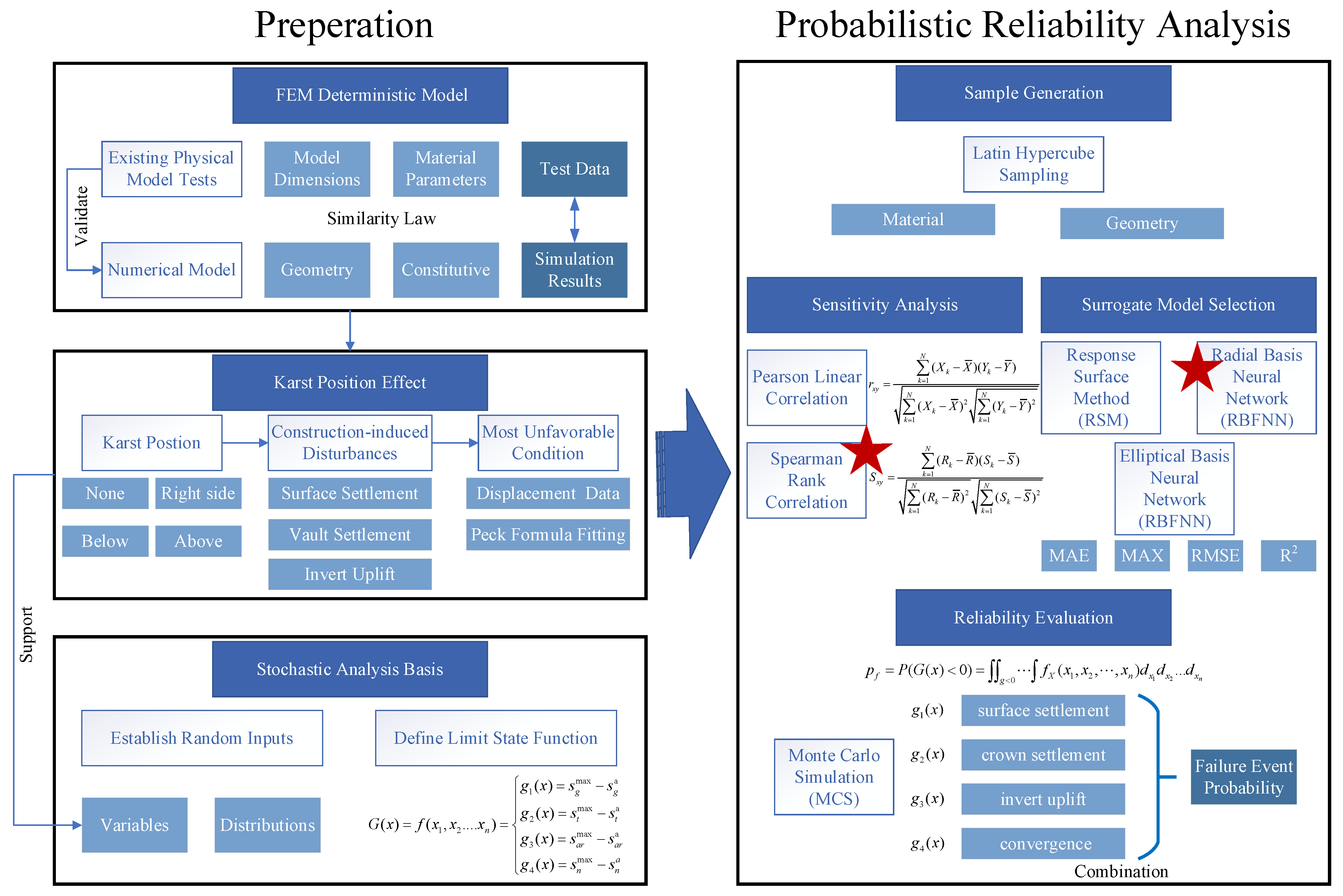
2.1. Overall Analysis Procedure
- Identification of Random Input Variables and Their Distributions: Based on in situ geotechnical mechanical tests and surface geophysical prospecting results from the supporting project, the statistical characteristics of geotechnical physical-mechanical parameters (e.g., elastic modulus, cohesion, unit weights) and karst cavity geometric parameters (e.g., lengths of major and minor axes, clear distance to tunnel cross-section) were obtained. Parameters follow normal or uniform distributions.
- Definition of Output Responses and Failure Criteria: According to specifications and engineering requirements, tunnel crown settlement, invert uplift, convergence, and surface settlement were selected as key output responses. Corresponding limit state functions were established to determine failure.
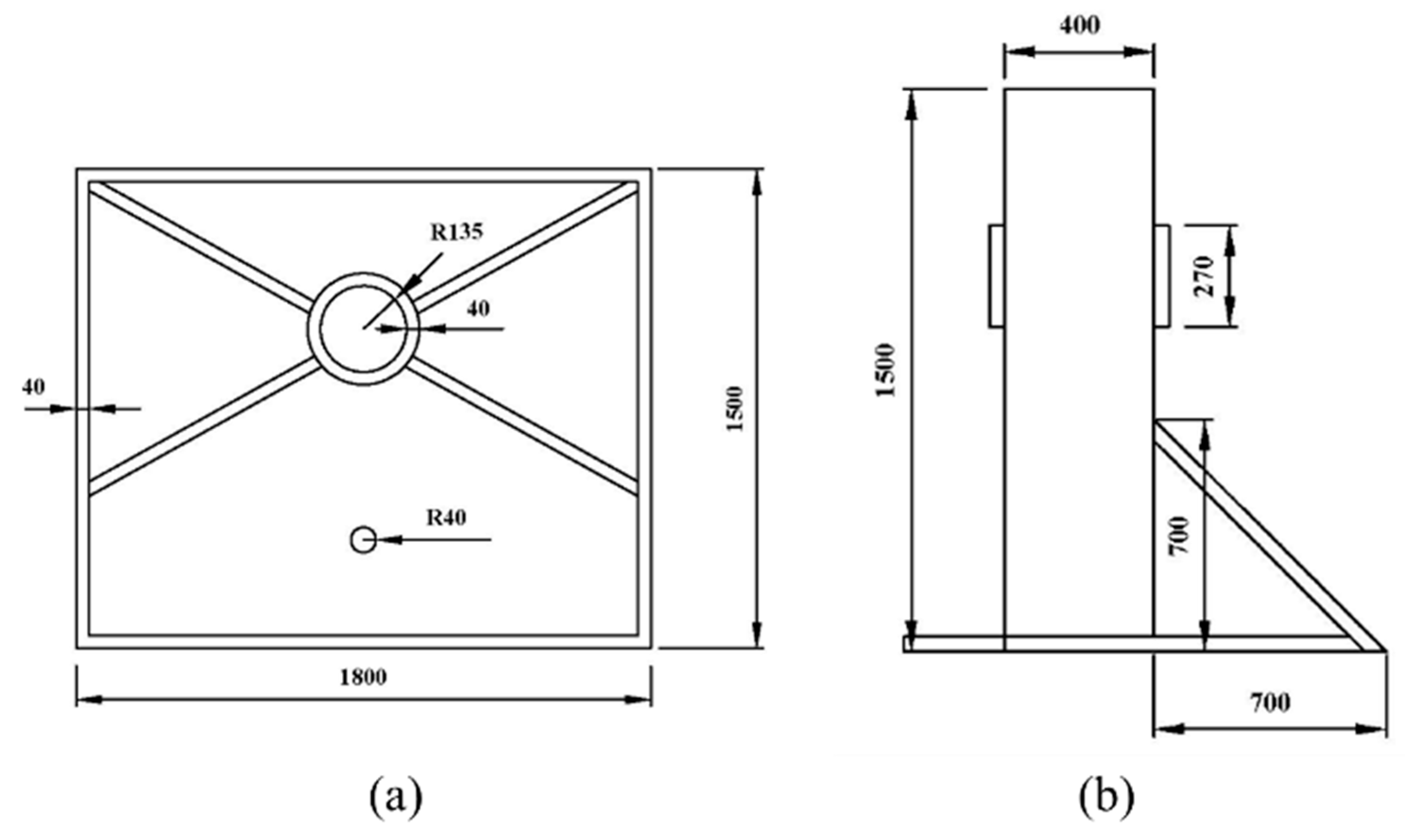
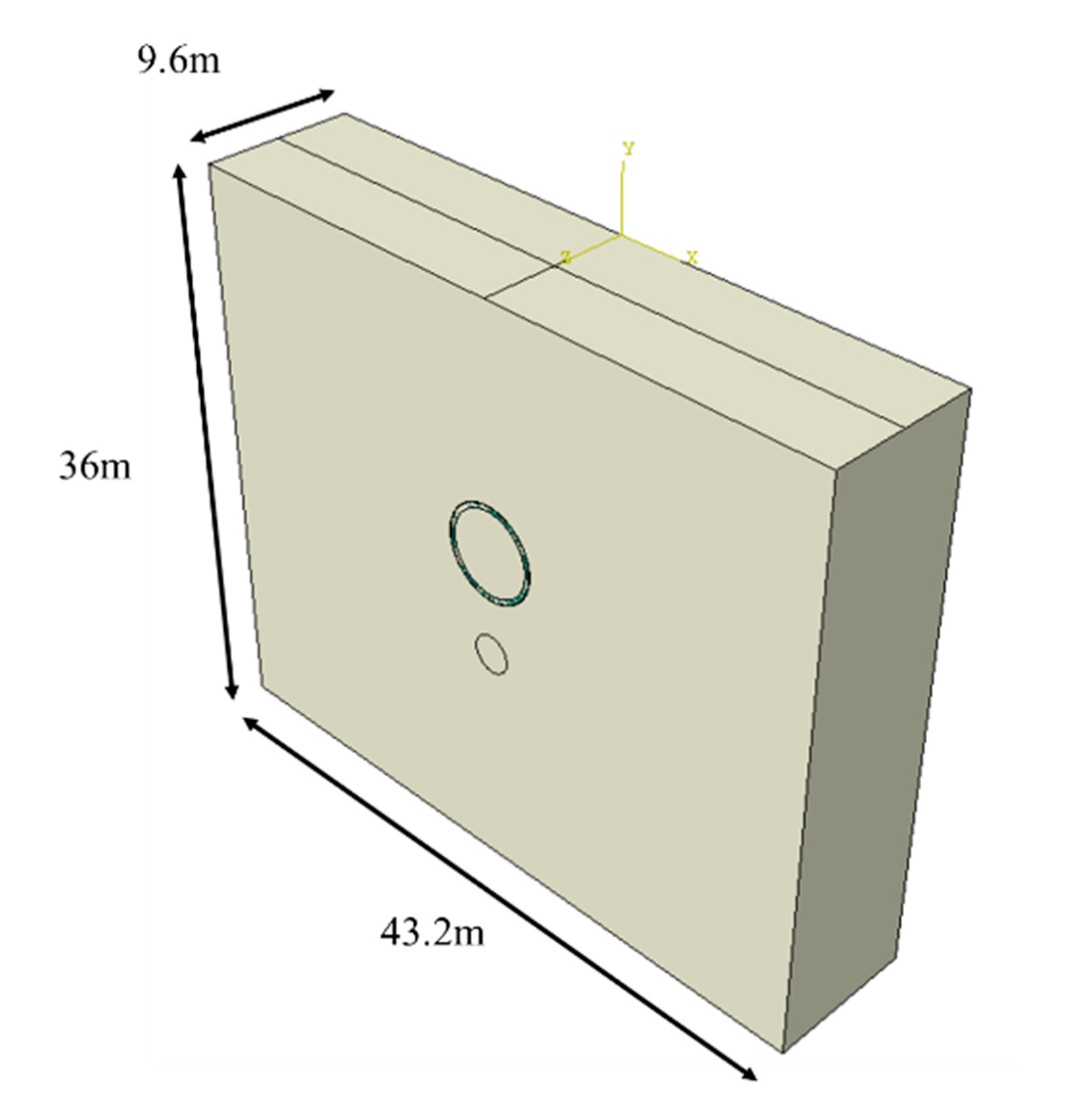
- Development of Numerical Model: Leveraging existing physical model tests, a finite element model for tunnel construction in karst areas was established in ABAQUS. Model dimensions, material parameters (using the Mohr–Coulomb constitutive model), boundary conditions, and karst location were strictly set according to similarity relationships.
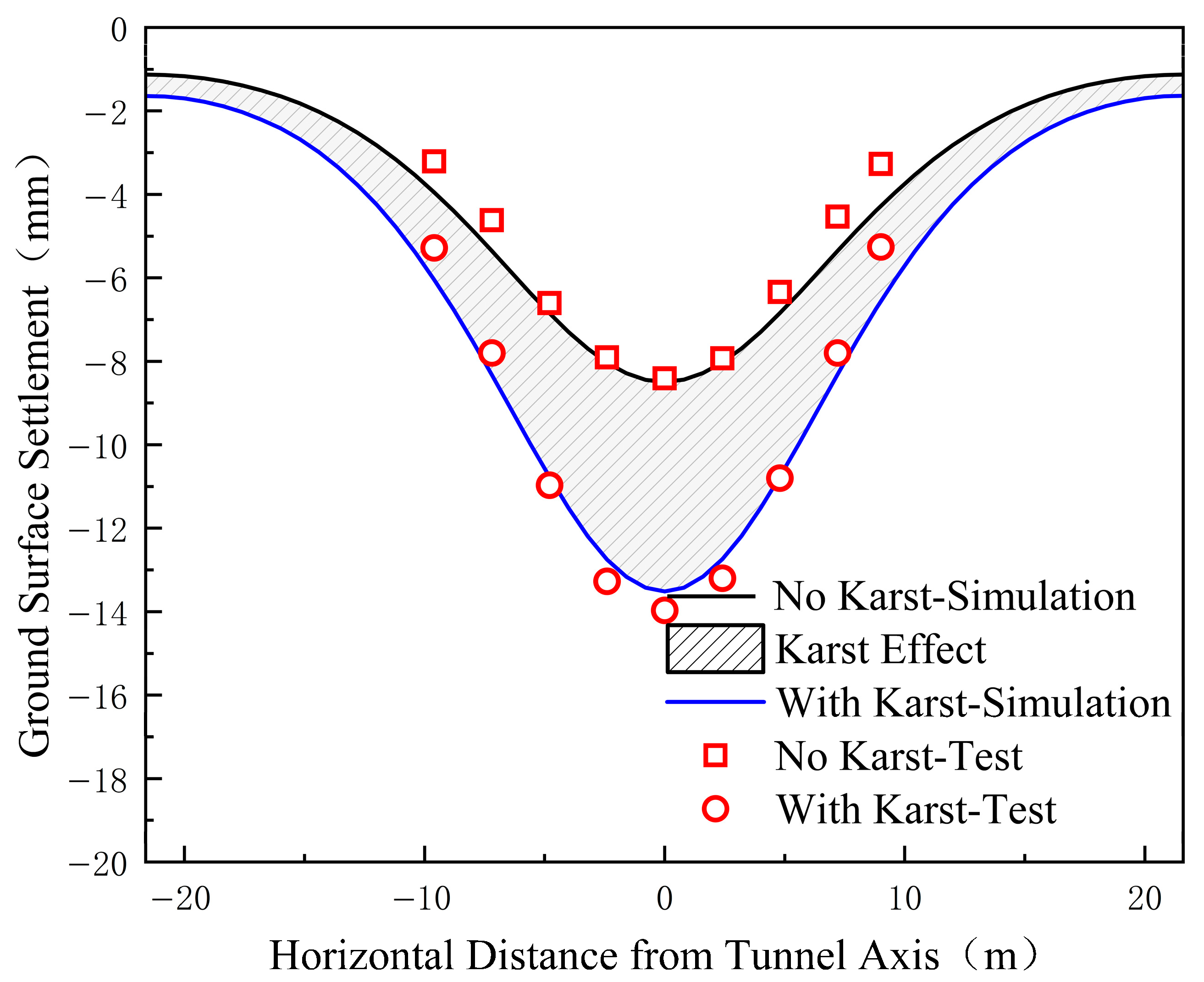
- Validation of Model Accuracy: The correctness and rationality of the established finite element model in simulating the disturbance patterns of tunnel excavation in karst areas were verified by comparing numerical simulation results with physical model test data on surface settlement under conditions with and without karst cavities. This validation step is the cornerstone of the credibility of all subsequent stochastic analyses.
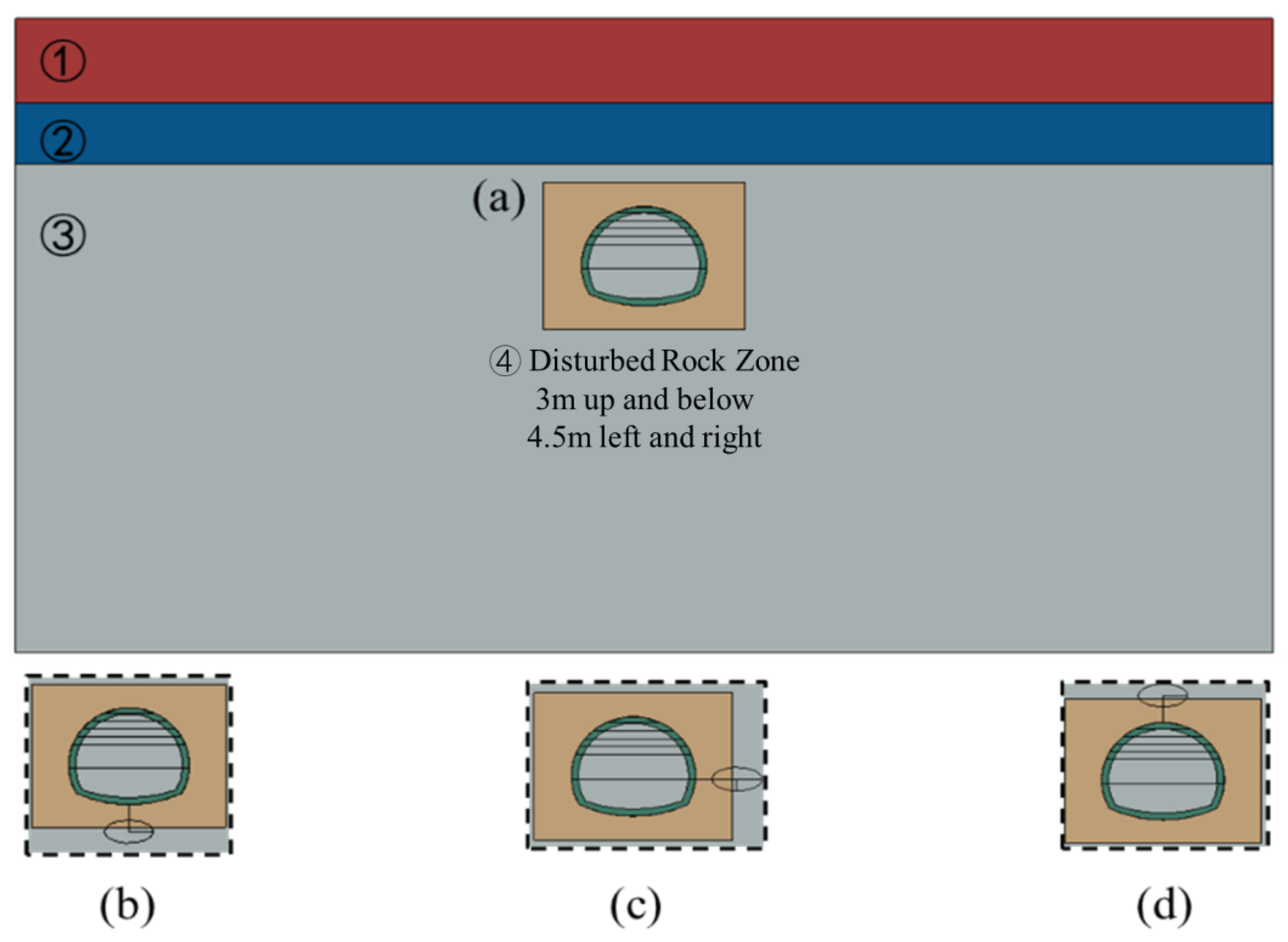
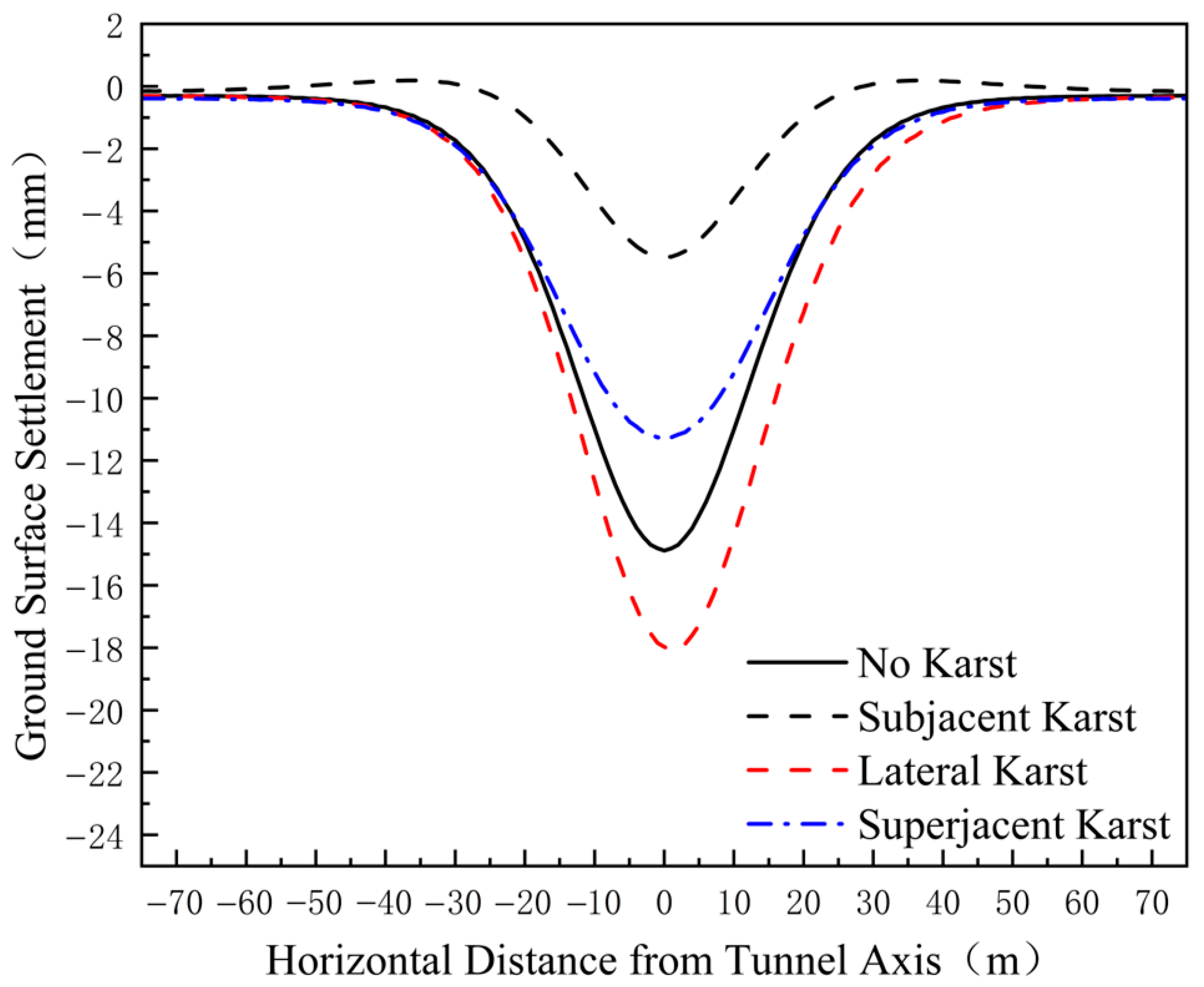
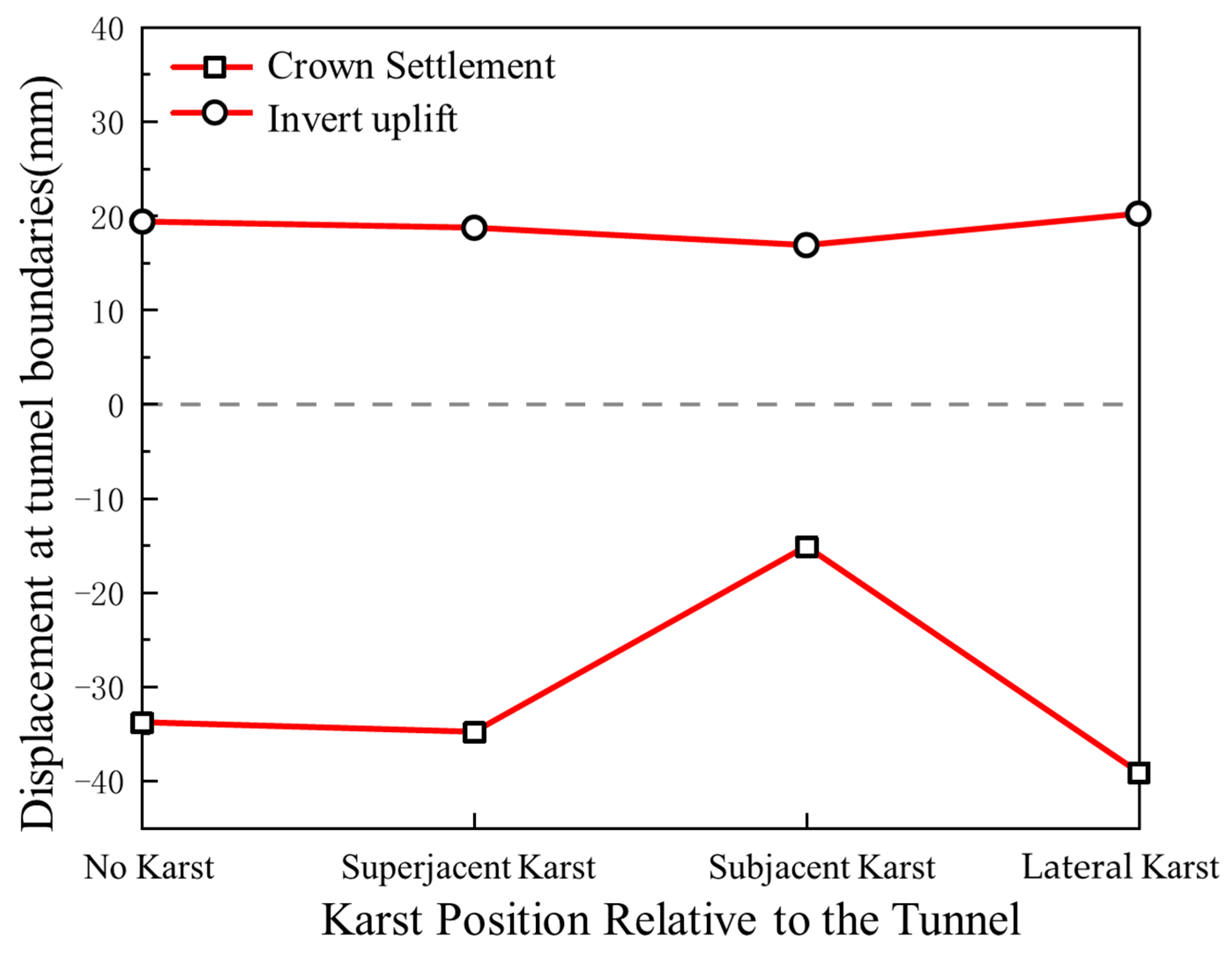
- Investigation of Key Influencing Factors: Utilizing the validated numerical model while maintaining constant geotechnical parameters, the effects of varying karst cavity positions relative to the tunnel (none, below, right side, above) on construction-induced disturbances were systematically analyzed.
- Determination of the Most Unfavorable Condition: Through quantitative analysis of displacement monitoring data and Peck formula fitting parameters across the four scenarios, the lateral karst condition was identified as exerting the most substantial influence on tunnel disturbance. Consequently, this condition was selected as the target scenario for subsequent stochastic reliability analysis.
- Sample Generation and Calculation: The Latin Hypercube Sampling (LHS) method was employed to perform sampling within the distribution ranges of each random variable. For each sample, the corresponding displacement response was obtained by executing finite element calculations.
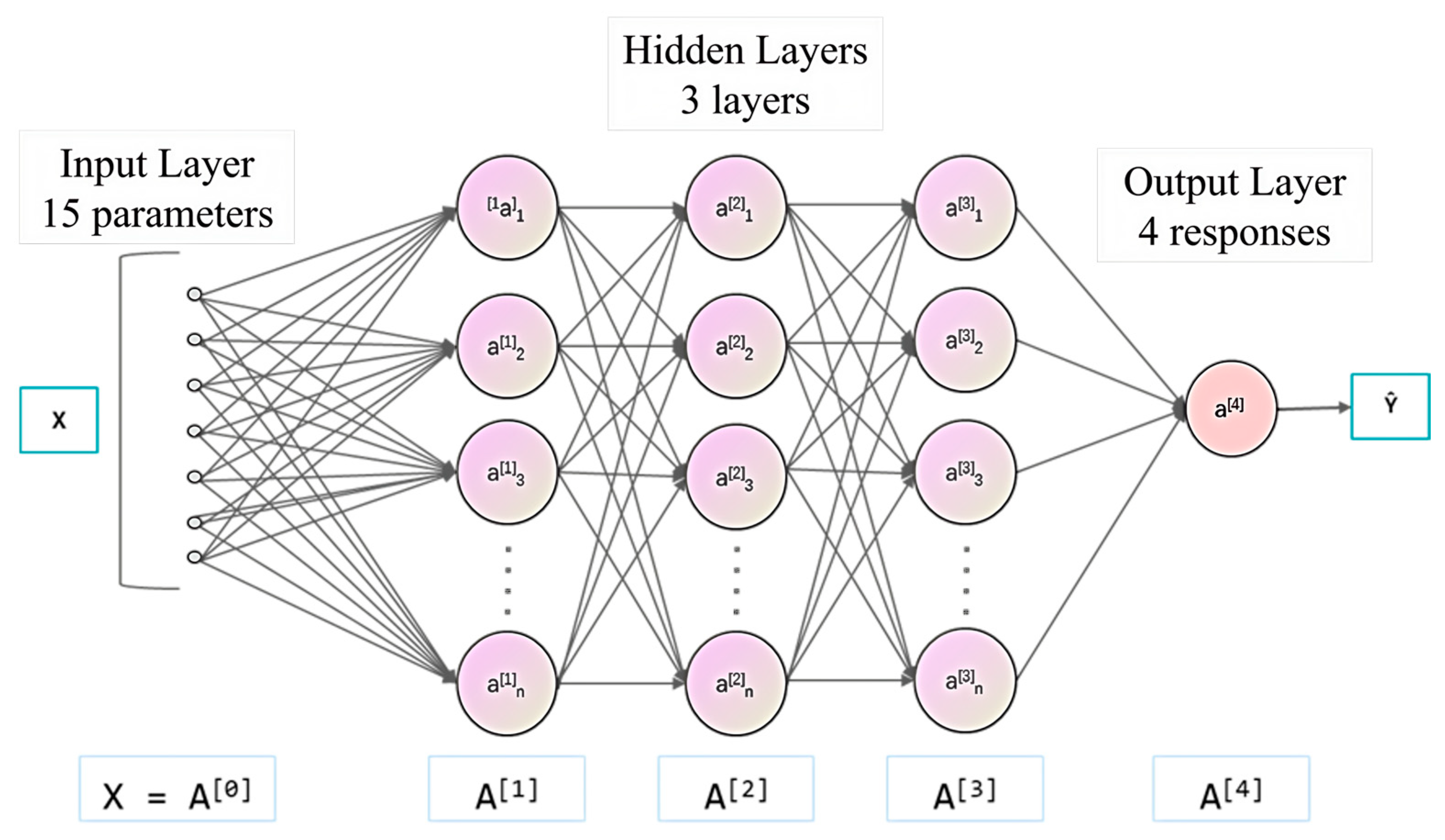
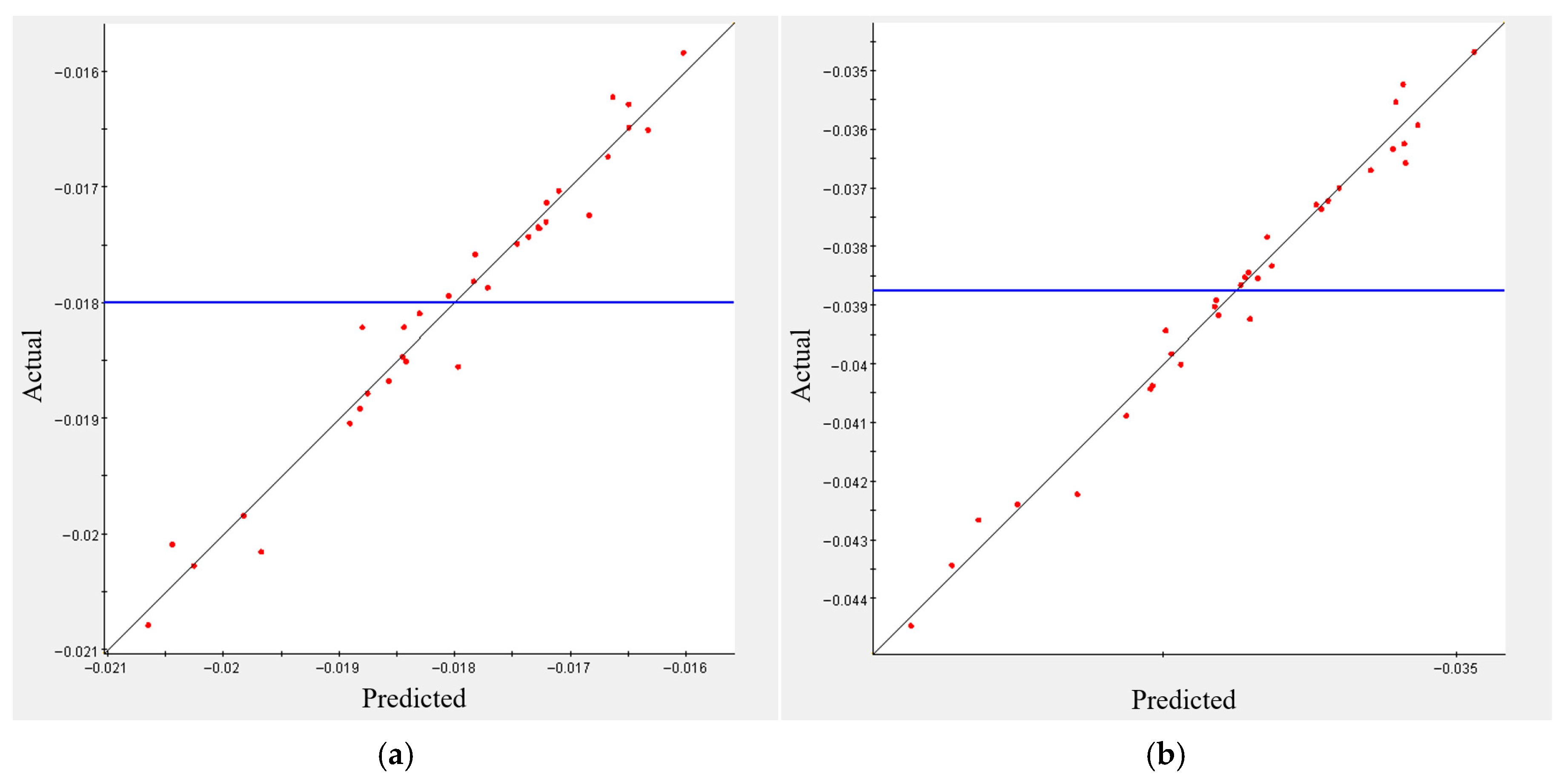
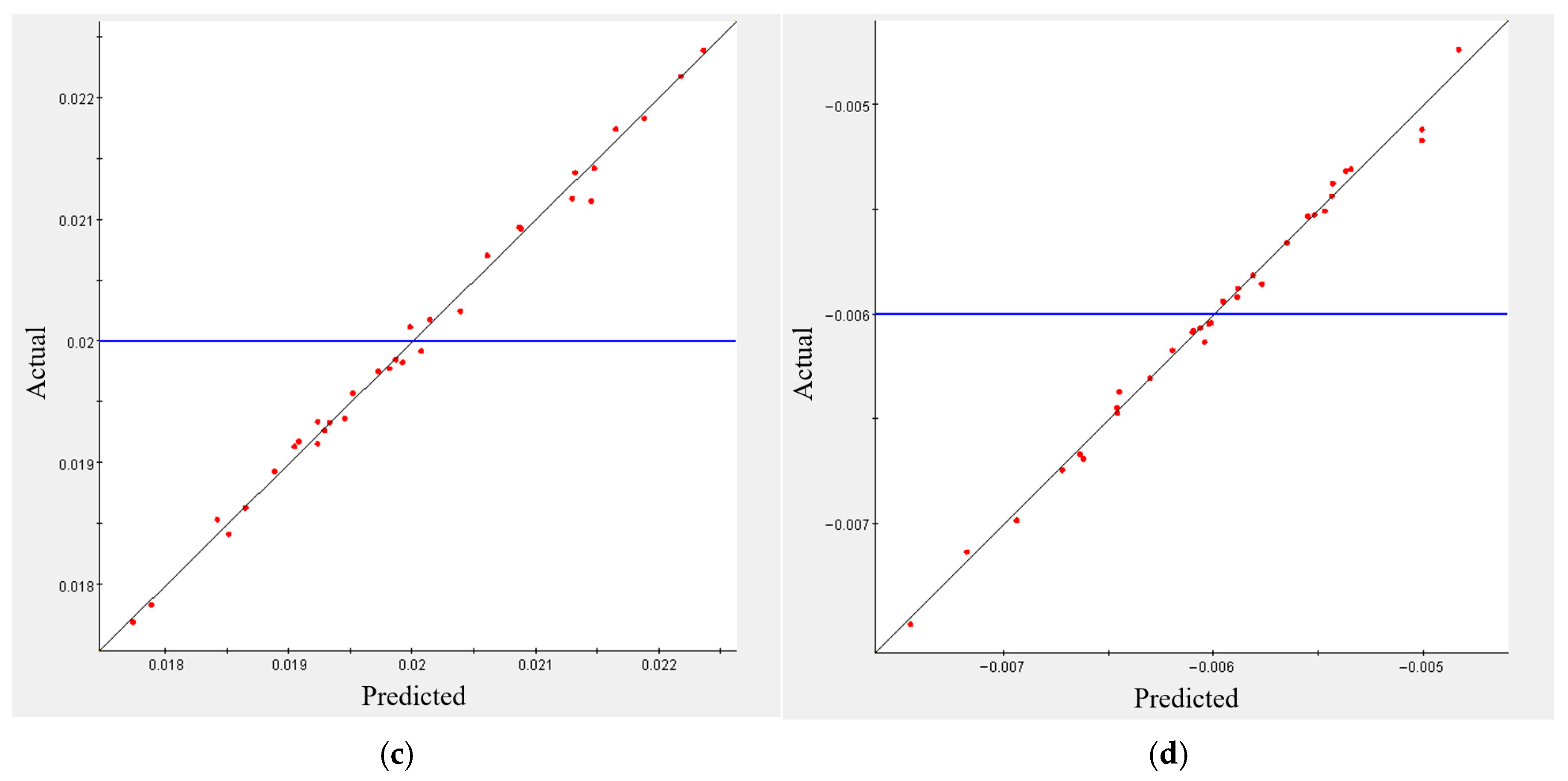
- Construction and Validation of Surrogate Model: To reduce the computational cost of large-scale sampling, the Response Surface Method (RSM) and Radial Basis/Elliptical Basis Neural Network methods were used to establish predictive models. Their accuracy was compared using an additional validation dataset (metrics including MAE, MAX, RMSE, R2, etc.). Ultimately, the Radial Basis Function Neural Network (RBFNN) was selected as the high-precision surrogate model for subsequent simulations.
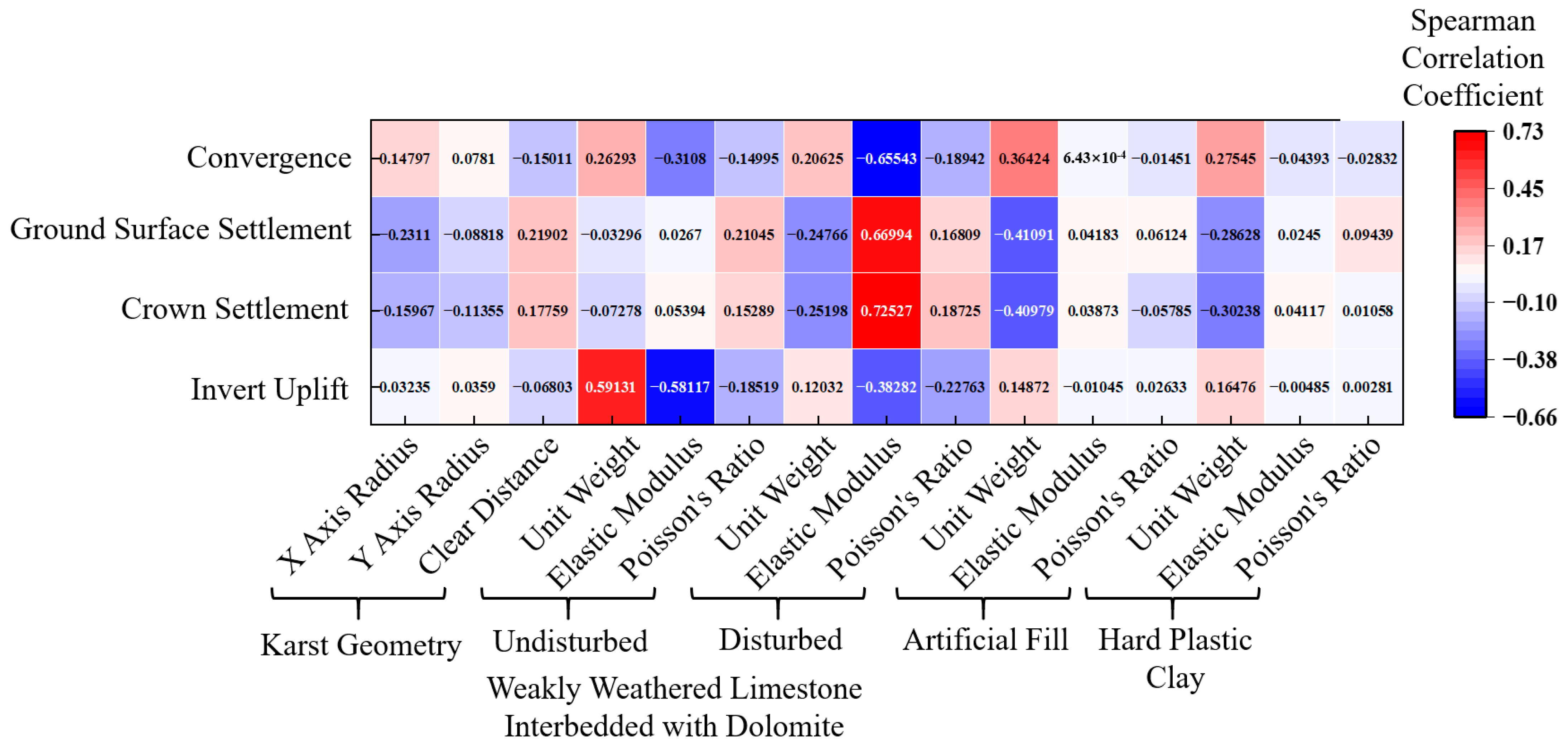
- Sensitivity Analysis: Based on the Spearman rank correlation coefficient, the correlation between all input random variables and output responses was analyzed to identify key parameters affecting the disturbance response (e.g., elastic modulus of the disturbed rock mass, clear distance between karst and tunnel) and clarify the influence of each parameter.
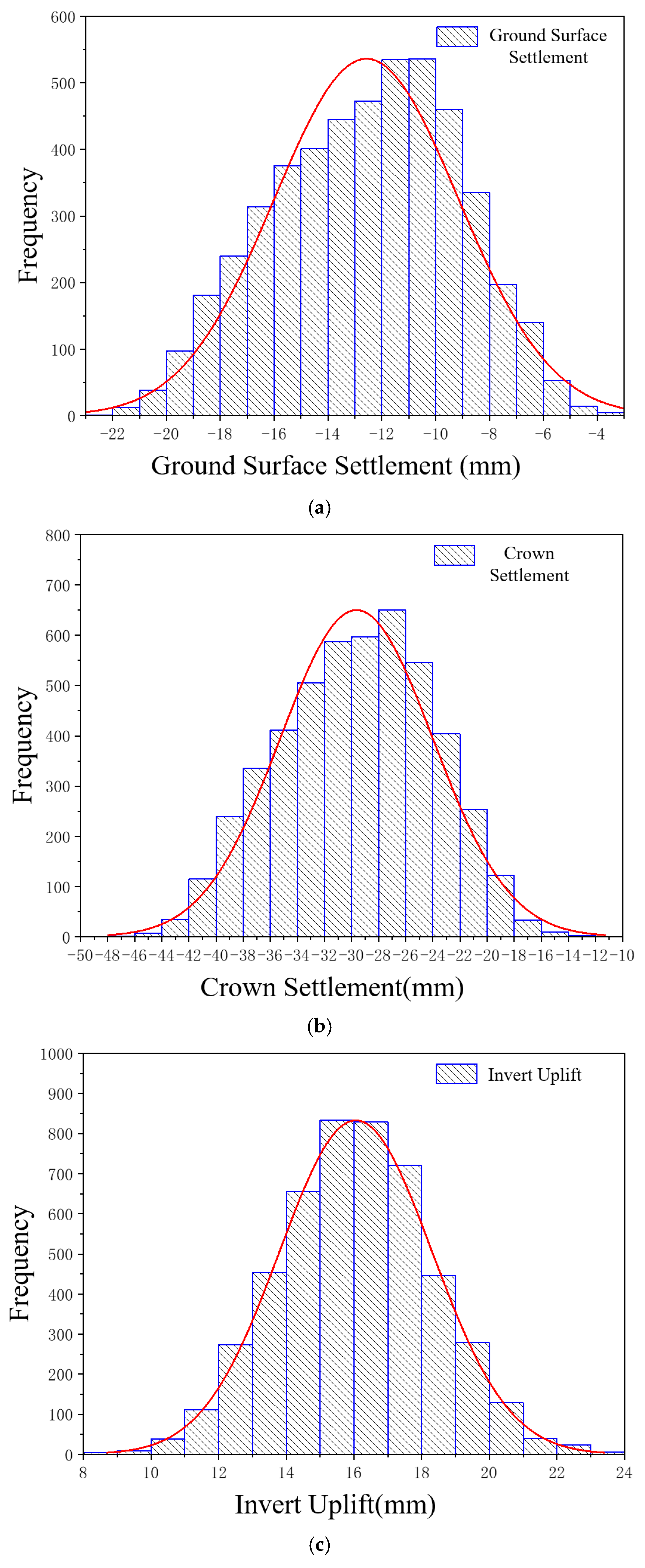
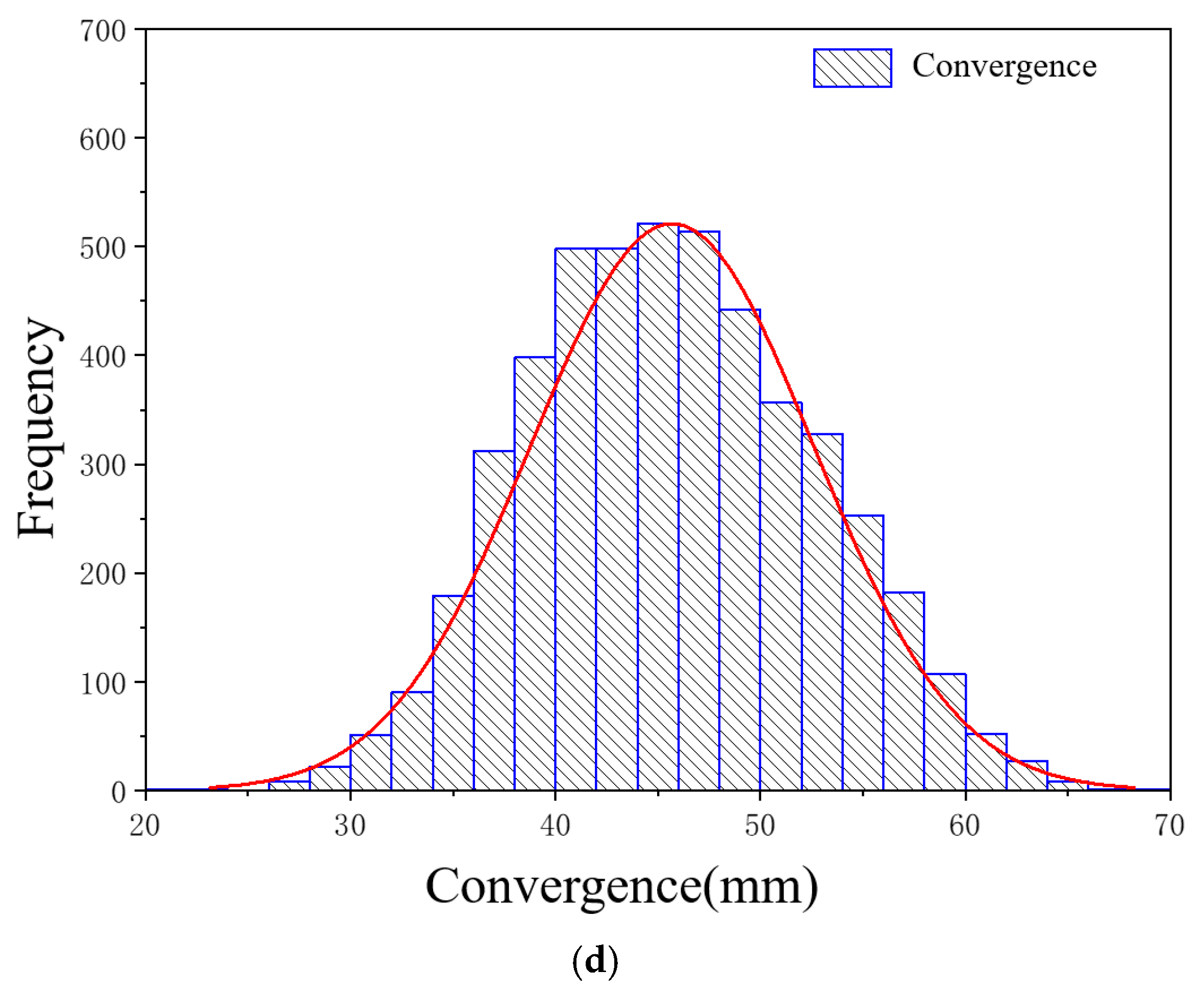
- Reliability Evaluation: Large-scale Monte Carlo simulation (10,000 times) was performed using the trained RBFNN surrogate model to calculate the probability distribution characteristics of the displacement responses. Finally, the failure probability of each failure mode and the overall system was quantitatively evaluated according to the limit state functions.
2.2. Limit State Equations
2.3. Parameter Sensitivity Analysis Method
2.4. Surrogate Model
- Response Surface Method (RSM)
- 2.
- Radial Basis (RBF)/Elliptical Basis (EBF) Neural Network Methods
2.5. Reliability Analysis
2.6. Monte Carlo Simulation
2.7. Summary
3. Validation of Numerical Simulation Method for Karst Formations
3.1. Model Overview and Assumptions
3.2. Material Constitutive Model
3.3. Validation Results and Analysis
4. Analysis of the Influence of Karst Spatial Location on Construction-Induced Disturbances
4.1. Model Configuration and Material Parameters
4.2. Simulation Condition Design
4.3. Analysis of Results
4.3.1. Surface Settlement Patterns
4.3.2. Tunnel Displacement
- Crown settlement:
- Invert uplift:
4.3.3. Discussion
5. Reliability Analysis Method for Tunnel Construction Based on Monte Carlo Simulation
5.1. Input Variables and Output Responses
- Input Variables
- 2.
- Output Responses
5.2. Surrogate Model Development and Validation
5.3. Parameter Sensitivity Analysis
5.4. Reliability Analysis of Construction Disturbance in Karst Tunnels Using Boom-Type Roadheaders
- The failure probability for crown settlement, , is the highest (3.26%), identifying it as the primary controlling failure mode, and the reliability index is 1.85 correspondingly.
- The failure probability for surface settlement, , is 1.05%. The reliability index is 2.31.
- The failure probabilities for invert uplift, , and convergence, . are extremely low (0.01%), and the reliability index is 3.72, indicating they do not constitute significant risk sources under the considered conditions.
- The overall system failure probability (i.e., the probability of any indicator exceeding its limit) for the tunnel construction disturbance is 3.31% (with the reliability index of 1.84). This value is predominantly governed by the failure probability of crown settlement.
6. Conclusions
Author Contributions
Funding
Institutional Review Board Statement
Informed Consent Statement
Data Availability Statement
Acknowledgments
Conflicts of Interest
Abbreviations and Notations
| the vector of input random variables | |
| the maximum allowable value of surface settlement | |
| the value of surface settlement | |
| the maximum allowable value of tunnel crown settlement | |
| the value of tunnel crown settlement | |
| the maximum allowable value of invert uplift | |
| the value of invert uplift | |
| the limit value of tunnel convergence | |
| the value of tunnel convergence | |
| the rank correlation coefficient | |
| the number of samples | |
| the rank value of the parameter | |
| the average rank of parameters | |
| the rank value of the target | |
| the average rank of target values | |
| the failure probability | |
| β | the reliability index |
| the maximum settlement value directly above the symmetric center of the settlment trough | |
| a | the major axis radius |
| b | the minor axis radius |
| x | the horizontal distance from the calculation point to the surface projection of the tunnel centerline |
| Vi | the volume loss rate |
| i | the width parameter of the settlement trough |
| E | Elastic Modulus |
| μ | Poisson’s Ratio |
| γ | Unit Weight |
| φ | Friction Angle |
| c | Cohesion |
| d | Clear Distance |
| EBFNN | Elliptical Basis Function Neural Network |
| LHS | Latin Hypercube Sampling |
| MAE | Mean Absolute Error |
| MAX | Maximum Absolute Error |
| MCS | Monte Carlo Simulation |
| probability density function | |
| R2 | Coefficient of Determination |
| RBFNN | Radial Basis Function Neural Network |
| RMSE | Root Mean Square Error |
| RSM | Response Surface Method |
| SFEM | Stochastic Finite Element Method |
References
- Rong, Y. Effects of Concealed Soil Cavities in Karst Areas on the Mechanical Behavior and Deformation of Operational Urban Rail Transit Shield Tunnels. Master’s Thesis, South China University of Technology, Guangzhou, China, 2019. [Google Scholar]
- Cai, Y. Research on Deformation and Failure Mechanisms of Cavity-Containing Strata under the Influence of Urban Tunnel Construction. Ph.D. Thesis, Beijing Jiaotong University, Beijing, China, 2020. [Google Scholar]
- GB 50068; Unified Standard for Reliability Design of Building Structures. Ministry of Housing and Urban-Rural Development of PRC and State Administration of Market Regulation: Beijing, China, 2018.
- Q/CR 9129-2018; Code for Design of Railway Tunnel (Limit State Method). China State Railway Group Co., Ltd.: Beijing, China, 2018.
- GB 50007-2011; Code for Design of Building Foundation. Ministry of Housing and Urban-Rural Development of the People’s Republic of China: Beijing, China, 2011.
- BS EN 1997-1; Eurocode 7: Geotechnical Design. Part 1. General Rules. British Standards Institution: London, UK, 2024.
- Li, Y.-S.; Yu, S.-X.; Deng, T. Comparing Three Design Approaches in En1997-1 Eurocode with Those in Chinese Geotechnical Design Code. Rock Soil Mech. 2012, 33, 105–110. [Google Scholar]
- Han, X. Research on Differences between Chinese and European (French) Standard Systems for Geotechnical Engineering. J. Railw. Eng. Soc. 2011, 28, 117–121. [Google Scholar]
- Liu, Z.; Ni, G.; Lin, C.; Huo, J. Study on the Differences between China and EU Railway Tunnel Standards and Proposals for Revision. Railw. Stand. Des. 2023, 67, 165–171. [Google Scholar] [CrossRef]
- de Koker, N.; Day, P.W. Reliability Analysis of En 1997 Design Approaches for Eccentrically Loaded Footings. Proc. Inst. Civ. Eng. Geotech. Eng. 2018, 172, 113–120. [Google Scholar] [CrossRef] [Scilit]
- Low, B.K.; Phoon, K.-K. Reliability-Based Design and Its Complementary Role to Eurocode 7 Design Approach. Comput. Geotech. 2015, 65, 30–44. [Google Scholar] [CrossRef] [Scilit]
- Xu, J.; Zheng, Y. Elastoplastic Stochastic Finite Element Analysis of Surrounding Rock of Tunnel and Its Application to Reliability Calculation. Rock Soil Mech. 2003, 24, 70–74. [Google Scholar] [CrossRef]
- Wang, Z.; Li, M.; Yu, Y.; Xu, S.; Xu, C.; Zheng, F.; Huang, W.; Wu, Z.; Wan, J. Analysis of Influence of Tunnel through Karst Cave on Deformationand Internal Force of Lining Structure. Water Resour. Hydropower Eng. 2024, 55, 435–446. [Google Scholar] [CrossRef]
- Phoon, K.-K.; Cao, Z.-J.; Ji, J.; Leung, Y.F.; Najjar, S.; Shuku, T.; Tang, C.; Yin, Z.-Y.; Ikumasa, Y.; Ching, J. Geotechnical Uncertainty, Modeling, and Decision Making. Soils Found. 2022, 62, 101189. [Google Scholar] [CrossRef] [Scilit]
- Sousa, R.L.; Einstein, H.H. Risk Analysis during Tunnel Construction Using Bayesian Networks: Porto Metro Case Study. Tunn. Undergr. Space Technol. 2012, 27, 86–100. [Google Scholar] [CrossRef] [Scilit]
- Mair, R.J.; Soga, K.; Wongsaroj, J. Tunnelling-Induced Consolidation Settlements in London Clay. Géotechnique 2013, 63, 1103–1115. [Google Scholar] [CrossRef] [Scilit]
- Wongsaroj, J.; Soga, K.; Mair, R.J. Modelling of Long-Term Ground Response to Tunnelling under St James’s Park, London. Géotechnique 2007, 57, 75–90. [Google Scholar] [CrossRef] [Scilit]
- Zhang, J.; Xu, M.; Cui, M.; Xin, Y.; Wang, H.; Su, P. Prediction of Ground Subsidence Caused by Shield Tunnel Construction Under Hidden Karst Cave. Geotech. Geol. Eng. 2022, 40, 3839–3850. [Google Scholar] [CrossRef] [Scilit]
- Gai, X. Effects of Concealed Karst Caves on Tunnel Surrounding Rock Stress and Surface Settlement: An Investigation. Constr. Mach. Maint. 2023, 1, 67–69. [Google Scholar]
- Fang, Z.; Ding, N.; Yang, W.; Dai, Z.; Wang, J.; He, J.; Ding, R.; Ba, X.; Zhou, Z. The Influence of Different Karst Cave Filling Material Strengths on Stratum Stability During Shield Tunneling. Geotech. Geol. Eng. 2023, 41, 1309–1323. [Google Scholar] [CrossRef] [Scilit]
- Yang, X. Numerical Simulation of Shield Tunnel under Different Karst Conditions. J. Liaoning Prov. Coll. Commun. 2022, 24, 13–16. [Google Scholar]
- Li, P.; Liu, J.; Su, F. Numerical Analysis on Effect of Karst Cave on Stability in Metro Tunnel excavation. Subgrade Eng. 2013, 4, 76–81. [Google Scholar]
- Fu, H.; Zhao, Y.; Ding, H.; Rao, Y.; Yang, T.; Zhou, M. A Novel Intelligent Displacement Prediction Model of Karst Tunnels. Sci. Rep. 2022, 12, 16983. [Google Scholar] [CrossRef] [Scilit]
- Zhang, K.; Lyu, H.; Shen, S.; Zhou, A.; Yin, Z. Data on Evolutionary Hybrid Neural Network Approach to Predict Shield Tunneling-Induced Ground Settlements. Data Brief 2020, 33, 106432. [Google Scholar] [CrossRef] [Scilit]
- Zhang, K.; Lyu, H.; Shen, S.; Zhou, A.; Yin, Z. Evolutionary Hybrid Neural Network Approach to Predict Shield Tunneling-Induced Ground Settlements. Tunn. Undergr. Space Technol. 2020, 106, 103594. [Google Scholar] [CrossRef] [Scilit]
- Kang, Y.; Kang, Y.; Geng, Z.; Geng, Z.; Lu, L.; Chen, L.; Liu, X.; Liu, B.; Huang, X. Compound Karst Cave Treatment and Waterproofing Strategy for Epb Shield Tunnelling in Karst Areas: A Case Study. Front. Earth Sci. 2021, 9, 761573. [Google Scholar] [CrossRef] [Scilit]
- Xu, H.; Xiao, C.; Liu, W.; Zuo, Y.; Wei, C. Numerical Study on Karst Treatment Technology of Wuhan Metro Line 6. IOP Conf. Ser. Earth Environ. Sci. 2020, 571, 012090. [Google Scholar] [CrossRef] [Scilit]
- Yan, Z.; Yan, B.; Zhang, J.; Jiang, X.; Dai, Y. Surface Control Techniques for Tunnels in Karst Areas under Airport Taxiways. Proc. Inst. Civ. Eng. Geotech. Eng. 2022, 176, 552–566. [Google Scholar] [CrossRef] [Scilit]
- GB 50911-2013; Code for Monitoring Measurement of Urban Rail Transit Engineering. China Architecture & Building Press (CABP): Beijing, China, 2013.
- Q/CR 9218-2024; Technical Specification for Monitoring Measurement of Railway Tunnel. China State Railway Group Co., Ltd.: Beijing, China, 2024.
- Zhang, W. Study on the Parameter Inversion and the Adjustment of the Predicted Deformation of Three-dimensional Foundation Pit Based on Isight Platform. Master’s Thesis, China University of Mining and Technology, Xuzhou, China, 2023. [Google Scholar]
- Lai, Y. Isight Parameter Optimization: Theory and Case Studies Explained in Detail; Jiang, X., Fang, L., Li, M., Eds.; Beihang University Press: Beijing, China, 2012. [Google Scholar]
- Luo, Y.; Zhao, Z. Research on the Algorithm of Aireraft Fuel Quantity Based on Rbf Neural Network. J. Air Force Eng. Univ. 2025, 26, 26–33. [Google Scholar]
- Xu, B. Research of the Fatigue Reliability of Prestressed Concretebeams under Corrosive Environment. Master’s Thesis, Dalian University of Technology, Dalian, China, 2011. [Google Scholar]
- Gong, J.; Wei, W. Principles of Reliability Design for Engineering Structures; China Machine Press: Beijing, China, 2007. [Google Scholar]
- Nguyen, V.U. Reliability index in geotechnics. Comput. Geotech. 1985, 1, 117–138. [Google Scholar] [CrossRef] [Scilit]
- Dudzik, A.; Potrzeszcz-Sut, B. Hybrid Approach to the First Order Reliability Method in the Reliability Analysis of a Spatial Structure. Appl. Sci. 2021, 11, 648. [Google Scholar] [CrossRef] [Scilit]
- Wang, E. Research on Compressive Behavior and Reliability of Round-Ended Steel Tube-Filled Concrete Column. Master’s thesis, Wuhan University of Technology, Wuhan, China, 2012. [Google Scholar]
- Su, P. Model Test Study on the Influence of Concealed Karst Caves on the Stability of Surrounding Rock in Shield Tunnels. Master’s Thesis, Dalian Jiaotong University, Dalian, China, 2020. [Google Scholar]
- Xiao, Y.; He, M.; Qiao, Y.; Cai, W.; Jiang, Y.; Zhu, H. A Novel Implementation Method of Gzz-Based Constitutive Model into Flac3d. Tunn. Undergr. Space Technol. 2024, 145, 105601. [Google Scholar] [CrossRef] [Scilit]
- Chen, P. Estimation of Equivalent Mohr-Coulomb Parameters of Slope Based on Hoek-Brown Criterion; Chang’an University: Xi’an, China, 2021. [Google Scholar]
- Mo, Y.; Hu, X.; Cui, D.; Gu, D.; Xie, Z.; Yang, Y. A Method for Determining Hoek-Brown Criterion Parameters and Estimating Mechanical Parameters of Arenated Dolomite Masse. Rock Soil Mech. 2025, 46, 257–265. [Google Scholar] [CrossRef]
- Pan, Q.; Zhang, Q.; Zhao, J.; He, Y.; Li, S. Analysis on Influence of Karst Distribution on Stability of Shield Tunnels. Mod. Tunn. Technol. 2018, 55, 466–474. [Google Scholar] [CrossRef]








| Rock Mass Grade | Tunnel Burial Depth (m) | ||
|---|---|---|---|
| h ≤ 50 | 50 < h ≤ 300 | 300 < h ≤ 500 | |
| III | 0.10–0.30 | 0.20–0.50 | 0.40–1.20 |
| IV | 0.15–0.50 | 0.40–1.20 | 0.80–2.00 |
| V | 0.20–0.50 | 0.40–1.60 | 1.00–3.00 |
| Physical Quantity | Similarity Relation | Similarity Constant |
|---|---|---|
| Geometric Dimensions | 24 | |
| Unit Weight | 1 | |
| Stress | 24 | |
| Strain | 1 | |
| Displacement | 24 | |
| Elastic Modulus | 24 | |
| Poisson’s Ratio | 1 |
| Material | Elastic Modulus E (MPa) | Poisson’s Ratio μ | Unit Weight γ (kN/m3) | Friction Angle φ (°) | Cohesion C (kPa) |
|---|---|---|---|---|---|
| Similitude Material | 22.30 | 0.25 | 22.35 | 40.56 | 80.61 |
| Simulated Material (Soft Rock) | 85.00 | 0.25 | 22.35 | 40.56 | 1934.64 |
| Part | Lithological Description | Thickness (m) | Elastic Modulus E (MPa) | Poisson’s Ratio μ | Unit Weight γ (kN/m3) | Friction Angle φ (°) | Cohesion c (kPa) |
|---|---|---|---|---|---|---|---|
| ① | Artificial Fill | 10.70 | 17.28 | 0.32 | 18.00 | 18 | 35 |
| ② | Hard Plastic Clay | 7.70 | 23.82 | 0.32 | 18.20 | 14.41 | 36.9 |
| ③ | Weakly Weathered Limestone Interbedded with Dolomite (Undisturbed) | 61.60 | 500 | 0.31 | 27.30 | 22.55 | 7.51 × 10³ |
| ④ | Weakly Weathered Limestone Interbedded with Dolomite (Disturbed) | - | 400 | 0.24 | 27.30 | 18.00 | 1502 |
| Lining | C35 Concrete | - | 31.5 × 10³ | 0.2 | 24.50 | - | - |
| Condition No. | Tunnel Depth (m) | Clear Distance (m) | Major Axis Radius (m) | Minor Axis Radius (m) | Relative Position |
|---|---|---|---|---|---|
| 1 | 23.7 | 2 | - | - | No karst |
| 2 | 23.7 | 2 | 3 | 1.5 | Below tunnel |
| 3 | 23.7 | 2 | 3 | 1.5 | Right side of tunnel |
| 4 | 23.7 | 2 | 3 | 1.5 | Above tunnel |
| Condition No. | Configuration | Smax (mm) | i (m) | Vi (%) | a (m) | c (mm) | R2 |
|---|---|---|---|---|---|---|---|
| 1 | Intact rock | −14.24 | 13.28 | −0.0031 | 0 | −0.4163 | 0.9992 |
| 2 | Subjacent karst | −5.55 | 10.78 | −0.0010 | 0 | 0.0273 | 0.9957 |
| 3 | Lateral karst | −17.27 | 13.73 | −0.0039 | −1.2970 | −0.5050 | 0.9989 |
| 4 | Superjacent karst | −10.88 | 14.87 | −0.0027 | 0 | 0.4420 | 0.9998 |
| Stratum Name | Statistical Parameter | Elastic Modulus E (MPa) | Poisson’s Ratio μ | Unit Weight γ (kN/m3) |
|---|---|---|---|---|
| Artificial Fill | Representative Value | 17.28 | 0.32 | 18 |
| Standard Deviation | 2.85 | 0.05 | 0.036 | |
| Coefficient of Variation | 0.16 | 0.15 | 0.02 | |
| Distribution Type | Normal | Normal | Normal | |
| Hard Plastic Clay | Representative Value | 23.82 | 0.32 | 18.2 |
| Standard Deviation | 3.09 | 0.05 | 0.036 | |
| Coefficient of Variation | 0.13 | 0.15 | 0.02 | |
| Distribution Type | Normal | Normal | Normal | |
| Weakly Weathered Limestone Interbedded with Dolomite (Undisturbed) | Representative Value | 500 | 0.31 | 27.3 |
| Standard Deviation | 115 | 0.05 | 0.5 | |
| Coefficient of Variation | 0.23 | 0.15 | 0.02 | |
| Distribution Type | Normal | Normal | Normal | |
| Weakly Weathered Limestone Interbedded with Dolomite (Disturbed) | Representative Value | 600 | 0.31 | 27.3 |
| Standard Deviation | / | / | / | |
| Coefficient of Variation | / | / | / | |
| Distribution Type | / | / | / | |
| Part Name | Parameter | X Axis Radius (m) | Y Axis Radius (m) | Clear Distance d (m) |
| Untreated Karst Cavity | Minimum Value | 3 | 2.5 | 2 |
| Maximum Value | 6 | 7.5 | 8 | |
| Distribution Type | Uniform | Uniform | Uniform |
| Surrogate Model | Output Response | MAE | MAX | RMSE | R2 |
|---|---|---|---|---|---|
| RSM | 0.035 | 0.18 | 0.051 | 0.949 | |
| 0.036 | 0.12 | 0.046 | 0.961 | ||
| 0.019 | 0.049 | 0.024 | 0.992 | ||
| 0.023 | 0.09 | 0.033 | 0.988 | ||
| RBFNN | 0.034 | 0.120 | 0.047 | 0.965 | |
| 0.026 | 0.076 | 0.034 | 0.980 | ||
| 0.016 | 0.064 | 0.020 | 0.994 | ||
| 0.018 | 0.071 | 0.031 | 0.989 | ||
| EBFNN | 0.036 | 0.141 | 0.048 | 0.966 | |
| 0.035 | 0.121 | 0.045 | 0.972 | ||
| 0.015 | 0.058 | 0.020 | 0.994 | ||
| 0.027 | 0.087 | 0.035 | 0.988 |
| Failure Event | Failure Probability pf | Reliability Index β |
|---|---|---|
| 0.0105 | 2.31 | |
| 0.0326 | 1.85 | |
| 0.0001 | 3.72 | |
| 0.0001 | 3.72 | |
| 0.0001 | 3.72 | |
(System Overall Failure) | 0.0331 | 1.84 |
Disclaimer/Publisher’s Note: The statements, opinions and data contained in all publications are solely those of the individual author(s) and contributor(s) and not of MDPI and/or the editor(s). MDPI and/or the editor(s) disclaim responsibility for any injury to people or property resulting from any ideas, methods, instructions or products referred to in the content. |
© 2025 by the authors. Licensee MDPI, Basel, Switzerland. This article is an open access article distributed under the terms and conditions of the Creative Commons Attribution (CC BY) license (https://creativecommons.org/licenses/by/4.0/).
Share and Cite
Ding, W.; Shen, Y.; Ding, W.; Guo, Y.; Qiao, Y.; Tang, J. Stochastic Finite Element-Based Reliability Analysis of Construction Disturbance Induced by Boom-Type Roadheaders in Karst Tunnels. Appl. Sci. 2025, 15, 11789. https://doi.org/10.3390/app152111789
Ding W, Shen Y, Ding W, Guo Y, Qiao Y, Tang J. Stochastic Finite Element-Based Reliability Analysis of Construction Disturbance Induced by Boom-Type Roadheaders in Karst Tunnels. Applied Sciences. 2025; 15(21):11789. https://doi.org/10.3390/app152111789
Chicago/Turabian StyleDing, Wenyun, Yude Shen, Wenqi Ding, Yongfa Guo, Yafei Qiao, and Jixiang Tang. 2025. "Stochastic Finite Element-Based Reliability Analysis of Construction Disturbance Induced by Boom-Type Roadheaders in Karst Tunnels" Applied Sciences 15, no. 21: 11789. https://doi.org/10.3390/app152111789
APA StyleDing, W., Shen, Y., Ding, W., Guo, Y., Qiao, Y., & Tang, J. (2025). Stochastic Finite Element-Based Reliability Analysis of Construction Disturbance Induced by Boom-Type Roadheaders in Karst Tunnels. Applied Sciences, 15(21), 11789. https://doi.org/10.3390/app152111789