Article

Tribological Performance of Direct Metal Laser Sintered 20MnCr5 Tool Steel Countersamples Designed for Sheet Metal Forming Applications


by
Krzysztof Żaba
1,
Marcin Madej
2,
Beata Leszczyńska-Madej
3,
Tomasz Trzepieciński
4 and
Ryszard Sitek
5,*
1
Department of Physical Chemistry and Metallurgy of Non-Ferrous Metals, Faculty of Non-Ferrous Metals, AGH University of Krakow, al. Adama Mickiewicza 30, 30-059 Kraków, Poland
2
Faculty of Metals Engineering and Industrial Computer Science, AGH University of Science and Technology, al. Adama Mickiewicza 30, 30-059 Kraków, Poland
3
Department of Materials Science and Engineering of Non-Ferrous Metals, Faculty of Non-Ferrous Metals, AGH University of Krakow, al. Adama Mickiewicza 30, 30-059 Kraków, Poland
4
Department of Manufacturing Processes and Production Engineering, Faculty of Mechanical Engineering and Aeronautics, Rzeszów University of Technology, al. Powstańców Warszawy 8, 35-959 Rzeszów, Poland
5
Faculty of Materials Science and Engineering, Warsaw University of Technology, Wołoska 141, 02-507 Warsaw, Poland
*
Author to whom correspondence should be addressed.
Appl. Sci. 2025, 15(15), 8711; https://doi.org/10.3390/app15158711
Submission received: 30 May 2025 / Revised: 29 July 2025 / Accepted: 31 July 2025 / Published: 6 August 2025

Abstract

This article presents the results of the tribological performance of 20MnCr5 (1.7147) tool steel countersamples produced by Direct Metal Laser Sintering (DMLS), as a potential material for inserts or working layers of sheet metal forming tools. Tribological tests were performed using a roller-block tribotester. The samples were sheet metals made of materials with significantly different properties: Inconel 625, titanium-stabilised stainless steel 321, EN AW-6061 T0 aluminium alloy, and pure copper. The samples and countersamples were analysed in terms of their wear resistance, coefficient of friction (COF), changes in friction force during testing, and surface morphology after tribological contact under dry friction conditions. The tests were performed on DMLSed countersamples in the as-received state. The largest gain of countersample mass was observed for the 20MnCr5/EN AW-6061 T0 friction pair. The sample mass loss in this combination was also the largest, amounting to 19.96% of the initial mass. On the other hand, in the 20MnCr5/Inconel 625 friction pair, no significant changes in the mass of materials were recorded. For the Inconel 625 sample, a mass loss of 0.04% was observed. The basic wear mechanism of the samples was identified as abrasive wear. The highest friction forces were observed in the 20MnCr5/Cu friction pair (COF = 0.913) and 20MnCr5/EN AW-6061 T0 friction pair (COF = 1.234). The other two samples (Inconel 625, 321 steel) showed a very stable value of the friction force during the roller-block test resulting in a COF between 0.194 and 0.213. Based on the changes in friction force, COFs, and mass changes in friction pair components during wear tests, it can be concluded that potential tools in the form of inserts or working layers manufactured using 3D printing technology, the DMLS method, without additional surface treatment can be successfully used for forming sheets of 321 steel and Inconel 625.

1. Introduction

Additive manufacturing (AM), or 3D printing refers to the process of adding material to an object. In AM, the creation of a real object is performed by building it layer by layer according to a specific strategy defined in the control programme. AM techniques provide flexibility in designing and manufacturing tools and moulds with complex shapes [1] and applying coatings [2]. Three-dimensional printing is an ideal solution for the production of tools and customised injection moulds [3]. AM provides a promising alternative to the conventional machining of low quantity components [4].
After the popularisation of the 3D printing of metal materials, additive manufacturing technology is increasingly used for the rapid production of tools in the metal forming industry [5]. Currently, conventional tools are manufactured from blocks, which are solid elements. Three-dimensional printing enables the production of entire dies or segmented dies with an optimised topological structure [6]. Three-dimensional printing methods can also be used to produce dies with an internal structure that cannot be produced using other methods [7]. AM enables the design of cooling systems with increased cooling efficiency in hot stamping tools [3]. It is also possible to manufacture tools with bodies made of cast iron and working elements manufactured by additive manufacturing [8]. In tool design, their properties such as resistance to abrasive wear, mechanical strength, and thermal resistance are of great importance [9,10]. In the case of hot stamping tools, corrosion, thermal fatigue, cracking, and indentation are some of the damages that should be avoided. Tools should be resistant to wear, impact loads, and a corrosion environment at working temperature [11,12]. Moreover, the surface roughness of tools is a fundamental factor in ensuring appropriate friction conditions and the surface finish of products [13].
Conventional manufacturing offers low costs at high production volumes, while AM is currently considered to be advantageous for single-unit and small-batch production [14,15]. However, AM can provide benefits when producing innovative tools that cannot be produced by other methods. Furthermore, it is believed that the development of AM will result in lower manufacturing costs per part produced [16,17].
Literature analysis confirmed that AM has found application in tool manufacturing in the metal forming industry. Asnafi et al. [8] investigated the industrial potential of the PBF technique for manufacturing dies for sheet metal stamping considering the mechanical properties of tools, cost, and lead time. It was found that lead time can be reduced by half at slightly higher costs compared to conventional tool manufacturing methods. The performance characteristics (hardness, surface roughness) of 3D-printed tools were similar to conventionally manufactured tools. In relation to L-PBF, aspects related to support structures, support angles, and part orientations during manufacturing were discussed in the works [18,19]. Asnafi et al. [8] manufactured tools by L-PBF for bending and blanking operations in the automotive industry. Test studies of the tools conducted on 2 mm-thick dual-phase DP5600 steel showed their technological effectiveness. The continuation of the studies presented in [8] is the work [20], which focused on the wear of L-PBFed U-bending tools. It was confirmed that 3D-printed tools behave like conventional tools. Müller et al. [21] implemented cooling systems in metalworking dies using die inserts manufactured using LBM technology. In this way, the forming cycle times needed to cool the tool were shortened and the geometric accuracy and repeatability of the products were improved. Żaba et al. [22] manufactured M300 maraging steel sheet metal bending tools using the L-PBF technique. It was concluded that tools without heat treatment show suitability for bending sheet metal ensuring the obtaining of elements of the required geometric quality. In another article, Żaba et al. [23] investigated the effect of surface finish and synthesis parameters on the corrosion properties of DMLS-printed M300 steel parts. It was found that DMLS-produced M300 steel is susceptible to corrosion in the case of operation in corrosive environments. Asnafi et al. [8] applied L-PBF to manufacture stamping tools with a honeycomb inner structure. Experimental tests have shown that 3D printing significantly improves material utilisation. However, AM results in higher costs in unit production compared to conventional tool manufacturing methods. Mueller et al. [24] investigated AMed tools for hot sheet metal forming. It was concluded that AM enables the increase of the cooling rate in hot forming tools by providing suitably optimised cooling channels. Leal et al. [25] applied DMLS to the production of tool inserts with the intention to eliminate the complicated casting process of these components. Tests of the tools under real industrial conditions led to the conclusion that AM provides significant reduction in tool preparation time. DMLS technology has been studied extensively by Craeghs et al. [26], Kruth et al. [27], Yasa and Kruth [28], and Mellor et al. [29], and it was used in the production of stamping tools or inserts assembled on stamping tools. Asnafi et al. [8] provided a comprehensive review of the applications of L-PBF in tool manufacturing.
Reducing the time of tool preparation is becoming particularly important in the automotive industry, where the forming of metal sheets and profiles is one of the main manufacturing processes of body panels. With the rapid introduction of new products as a result of increasing competitiveness among automotive manufacturers, it is becoming necessary to ensure rapid tool manufacturing via AM. The aim of the research presented in this article is to provide knowledge on the wear of DMLSed 20MnCr5 steel countersamples. Among many existing metal powders, the wear-resistant 20MnCr5 steel is held to be applicable in tool making for stamping operations. This study focuses on tool material intended for cold forming. To the best of the authors’ knowledge, this is the first time that a tribological study of DMLSed 20MnCr5 steel countersamples tested against samples made of typical materials with various mechanical and tribological properties (Inconel 625, titanium-stabilised stainless steel 321, EN AW-6061 T0 aluminium alloy and pure copper) is presented.
The motivation for conducting the research was to determine the wear resistance of maraging steel elements, which can potentially be used in the form of inserts or as a working layer made in 3D printing technology, using the DMLS method on a substrate made of substantially cheaper steel constituting the basis of the stamping tool. The advantage of such a solution is the reduction in costs related to materials intended for tools, tool production, and their regeneration, which will consist in printing the worn working layer.

2. Materials and Methods

2.1. Materials

The aim of the study was to determine the wear resistance, coefficient of friction (COF), surface roughness, and topography after wear tests for 20MnCr5 (1.7147) steel countersamples. The second material of the friction pair were samples cut from sheets of nickel alloy (Inconel 625), Fe-C alloy (titanium-stabilised stainless steel 321), aluminium alloy (EN AW-6061 T0), and pure copper. The thicknesses of the EN AW-6061 T0 aluminium alloy and pure copper sheets were 2 mm. The thickness of the remaining sheets was 1 mm. The 20MnCr5 steel countersamples for wear tests were obtained using direct metal laser sintering technology. The 20MnCr5 steel is characterised by high strength and hardness, very high fatigue strength, and good machinability. Table 1 presents the chemical composition of the powder used to produce DMLSed countersamples.

2.2. Characterisation of 20MnCr5 Steel Powder

The 20MnCr5 steel powder morphology and chemical composition of the powder were determined using a Hitachi SU-70 scanning microscope (Hitachi High-Technologies Corporation, Tokyo, Japan) equipped with an Energy Dispersive X-ray Spectrometer (EDS). The phase composition was measured using a Brucker Discover D8 X-ray diffractometer (Bruker Corporation, Karlsruhe, Germany) equipped with a Euler goniometer with a radius of 300 mm and a copper lamp with a wavelength of λ = 0.154 nm. A nickel filter was used to obtain a monochromatic beam on the secondary beam side. The measurements were performed with an angular step of 0.02°. As a result of the measurements, diffractograms with an angle range of 2θ from 30° to 100° were obtained. The noise of the obtained spectra was reduced using the Fourier transform. The material identification ICDD (The International Centre for Diffraction Data) PDF-4 + database was used to identify the phase composition.

2.3. DMLS Parameters of 20MnCr5 Steel Countersamples

The spherical powder of 20MnCr5 steel, characterised by a particle size distribution in the range of 20 to 90 μm, supplied by Electro Optical Systems GmbH (Krailling, Germany) together with a quality control certificate, was used for the tests. The 20MnCr5 steel countersamples were produced by the DMLS method on a 3D printer XM200C by Xact Metal (Xact Metal, State College, PA, USA), which uses a fibre optic laser to selectively combine thin layers of metal powder. The laser power was 110 W, the scanning distance of the laser beam was 100 μm, the diameter of the laser beam was 100 μm, the thickness of the metal powder layer was 20 μm, and the scanning speed was 600 mm/s. In the sample printing process, a meandering laser beam scanning strategy was used, consisting in changing the scanning angle of each of the individual powder layers by 67° each time. Three 20MnCr5 countersamples were used in the tests for each type of sheet. The test results are presented in the form of arithmetic averages and sample observations of the surface after abrasion.

2.4. Surface Roughness Testing

The analysis of the surface topography of the samples and countersamples was carried out before and after the wear tests. An Olympus LEXT OLS 4100 confocal microscope (Olympus Life Science, Tokyo, Japan) for observation in reflected light was used to assess surface topography. In this microscope, a UV laser light with a wavelength of 405 nm was used. In addition to the topography map of the surfaces, the average roughness Ra and the maximum height Rz of the surfaces were determined. The average values of these parameters were determined on the basis of three measurements performed on each sample.

2.5. Microstructure Observations

The analysis of the microstructure of the produced samples was carried out using a Zeiss Stemi 305 optical microscope (Carl Zeiss Microscopy GmbH, Oberkochen, Germany) and a Hitachi SU-70 scanning electron microscope (Hitachi High-Technologies Corporation, Tokyo, Japan). The material for the tests was prepared in the form of metallographic microsections, which were ground on abrasive paper (gradation from 200 to 4000 µm) and then polished on polishing cloths using DIADUO diamond pastes (gradation from 6 to 3 µm; Struers, Ballerup, Denmark). The final processing of the microsections consisted in polishing them in a colloidal suspension of silicon oxide (OPS).

2.6. Hardness Testing

The hardness measurements were performed using a Tukon hardness tester model 2500 (Wilson Hardness Group, Binghamton, NY, USA) on the HV scale under a load of 1 kg (9.81 N). In order to create a hardness distribution map in the tested samples, the indentations were made at fixed distances from each other equal to 0.5 mm in the horizontal and vertical directions.

2.7. Abrasive Wear Resistance Testing

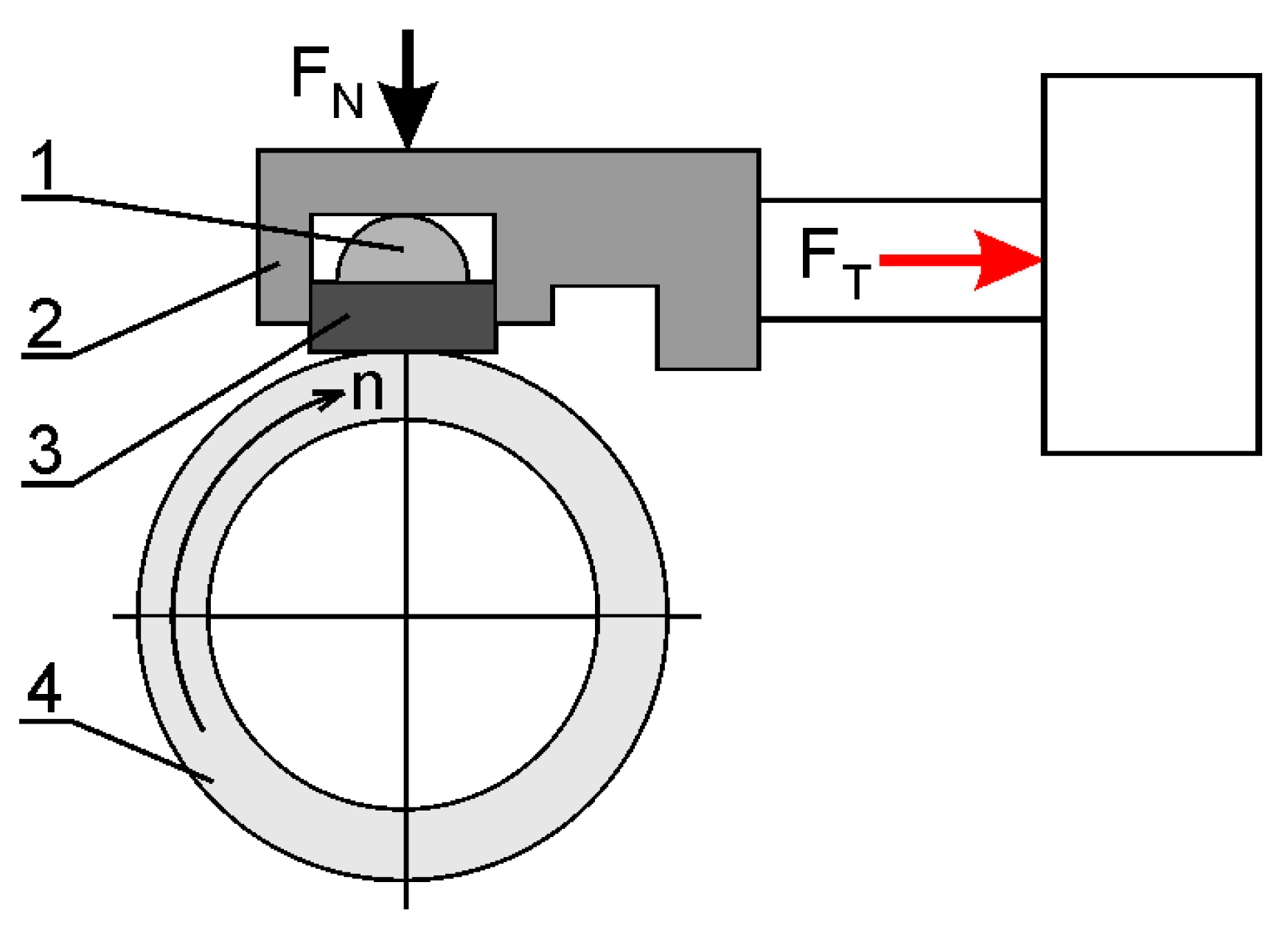
The abrasive wear resistance test of the 20MnCr5 steel countersample in a friction pair with different types of materials was carried out on a T-05 roller-block tester (Figure 1). The tests were carried out in dry friction conditions at ambient temperature with a humidity of about 30%. The block (3—Figure 1) is self-adjusted and mounted in the holder (2) by means of a hemispherical insert (1). Such mounting ensures a good adhesion of the block (sample) to the countersample (4) and uniform distribution of contact pressures. The wear test specimens had dimensions of 20 mm (length) × 4 mm (width). Countersamples (Figure 1) with an outer diameter of 49.5 mm were used in the test.
All measurements were performed at a constant ring rotational speed of n = 136 rpm. During the test, a load of FN = 50 N was applied, and the friction path was 100 m. During the wear test, the friction force FT was continuously recorded, and then used to determine the average value of the COF according to Equation (1)
C O F = F T F N
The following test parameters were used:
  • friction distance—100 metres
  • speed—136 rpm
  • contact force—50 N
  • test temperature—21 C
  • room humidity—35%
The measure of the abrasion resistance of a material is its mass loss. The mass loss of the sample material Δms (Equation (2)) is the difference between the initial mass of the sample mps and the final mass of the sample mks [30].
m s = m p s m k s
The percentage mass loss of the sample material Δmsr is defined by Equation (3) [31].
m s r = m p s m k s m p s × 100 %
In the case of countersamples, a mass gain Δmc was observed, which was determined as the difference between the final mass of the countersample mkc and the initial mass of the countersample mpc [30]
m c = m k c m p c
The percentage mass gain of the countersample material Δmcr is defined by Equation (5) [31].
m c r = m k c m p c m k c × 100 %

3. Results and Discussion

3.1. Characteristics of 20MnCr5 Steel Powder

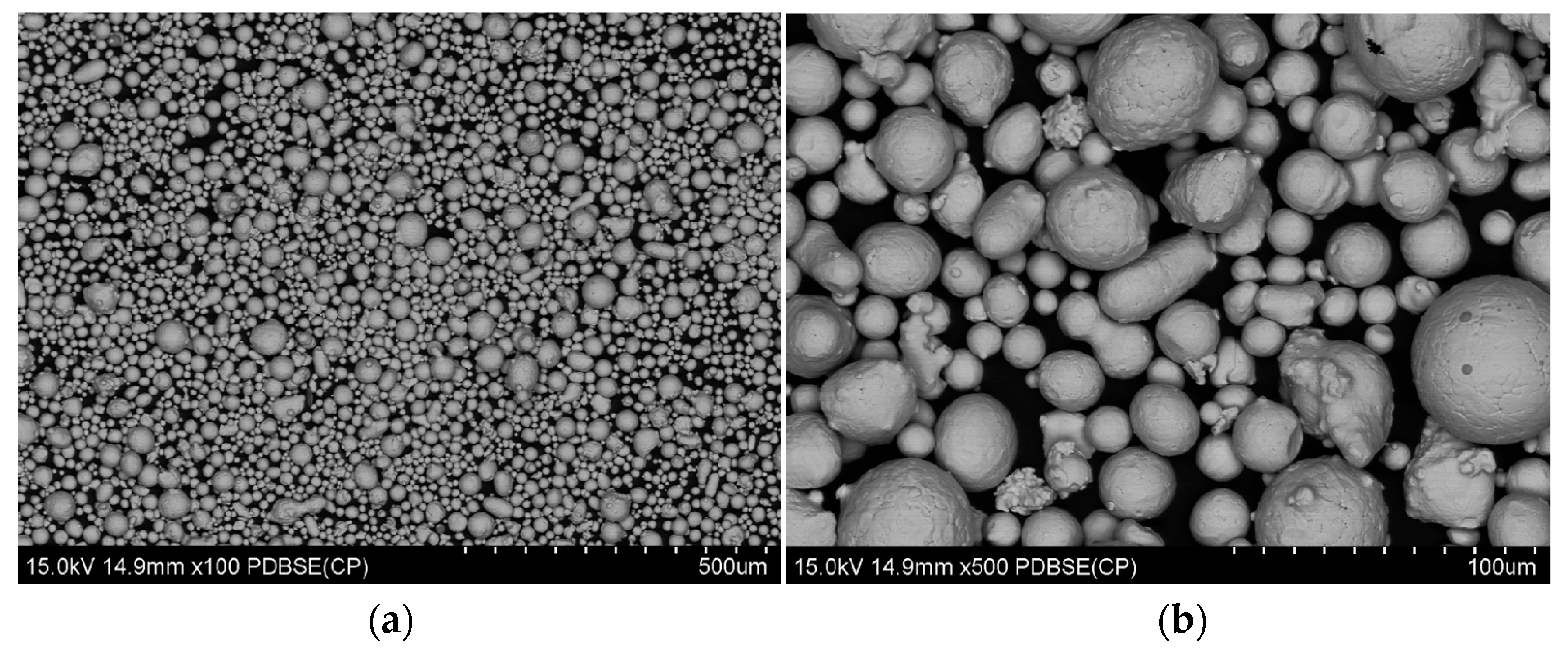
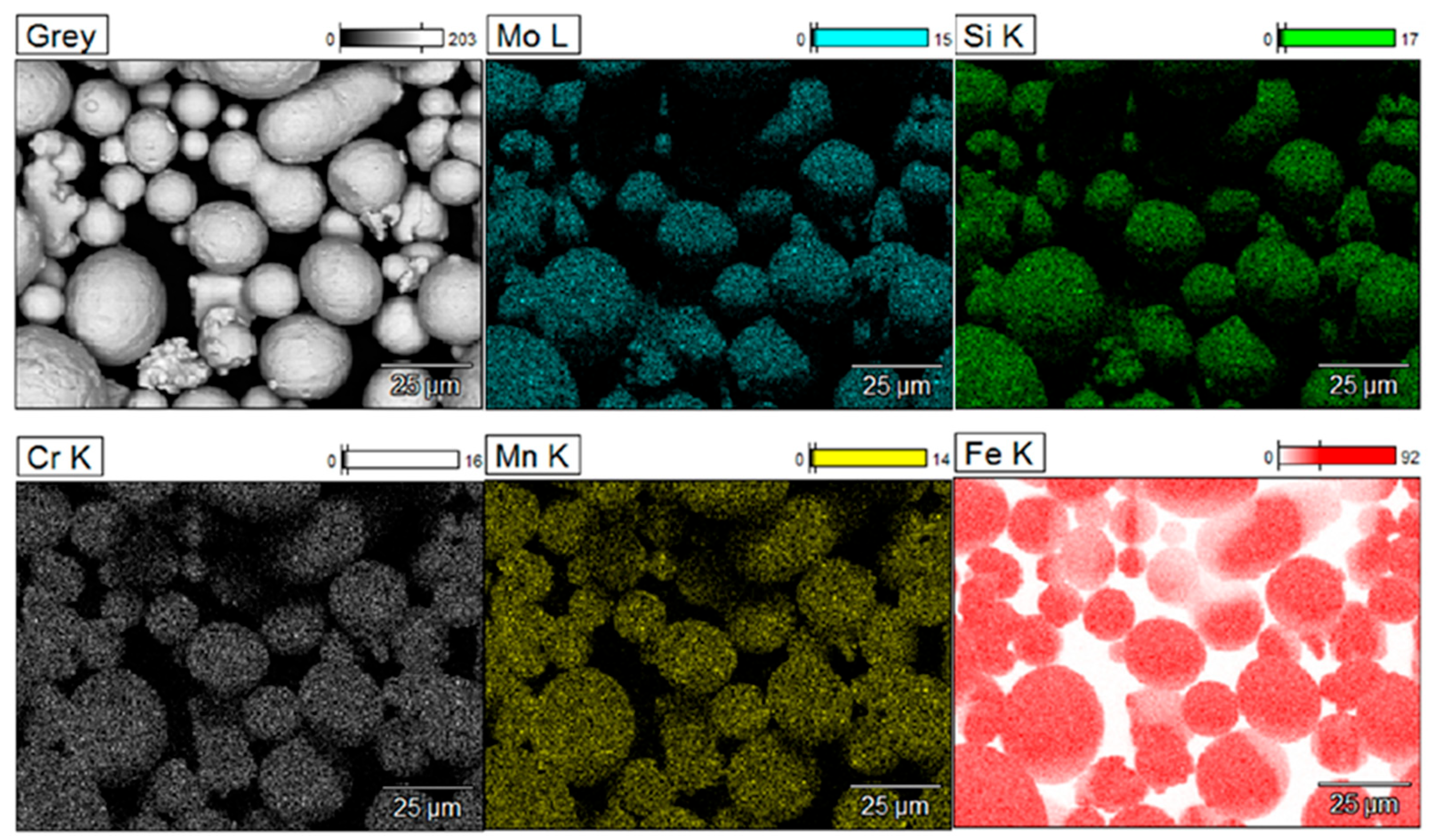
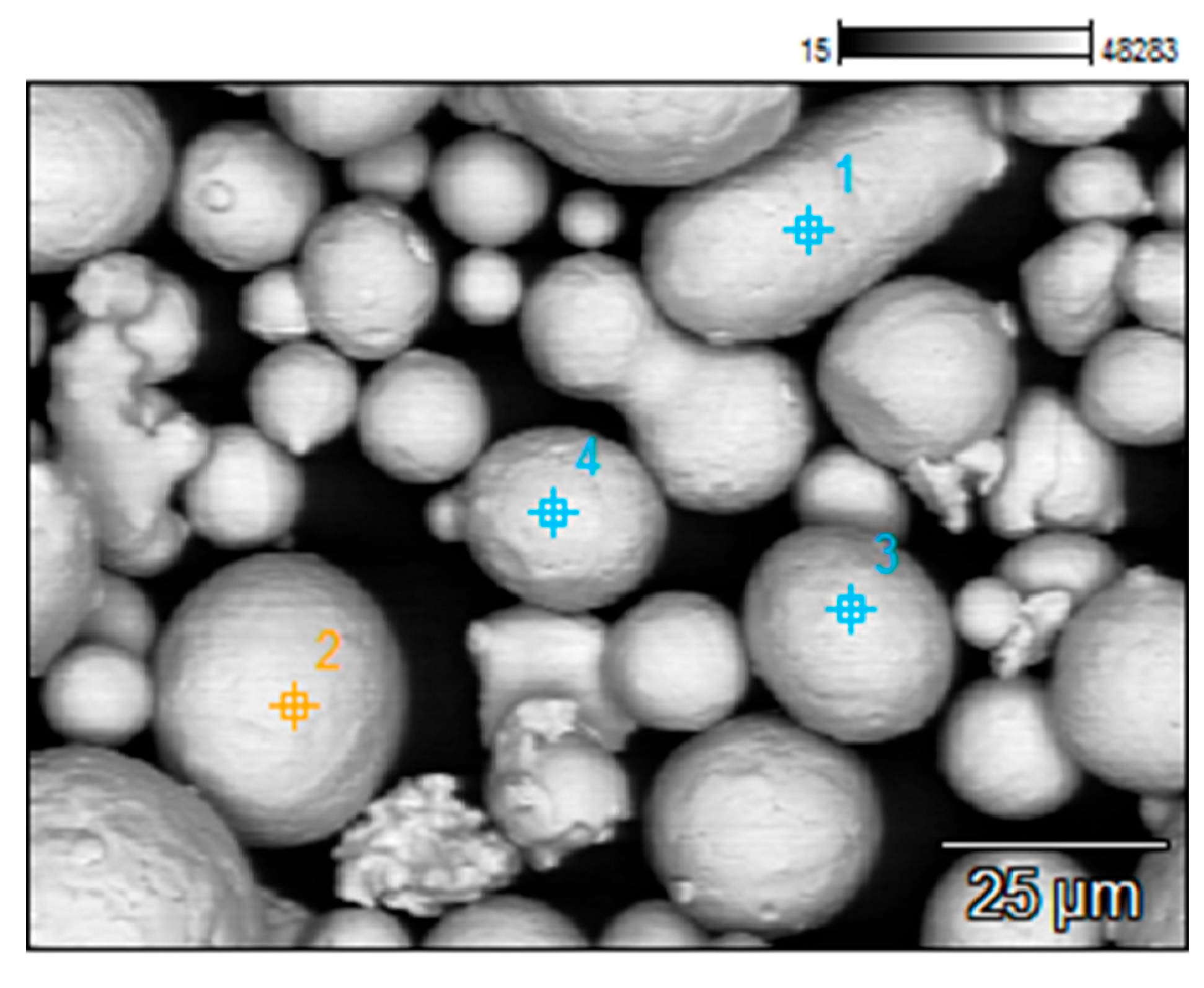
Figure 2 shows the SEM morphology of the analysed samples; the images were taken in BSE mode at magnifications from ×100 to ×500. The average diameter of globular particles calculated using ImageJ GPL v3+ 2.15.1 (FIJI) was 3.67 μm. Figure 3 shows the elemental distribution maps of 20MnCr5 steel powder. Figure 4 shows the morphology of 20MnCr5 powder with marked points of the chemical composition measurement on different particles.
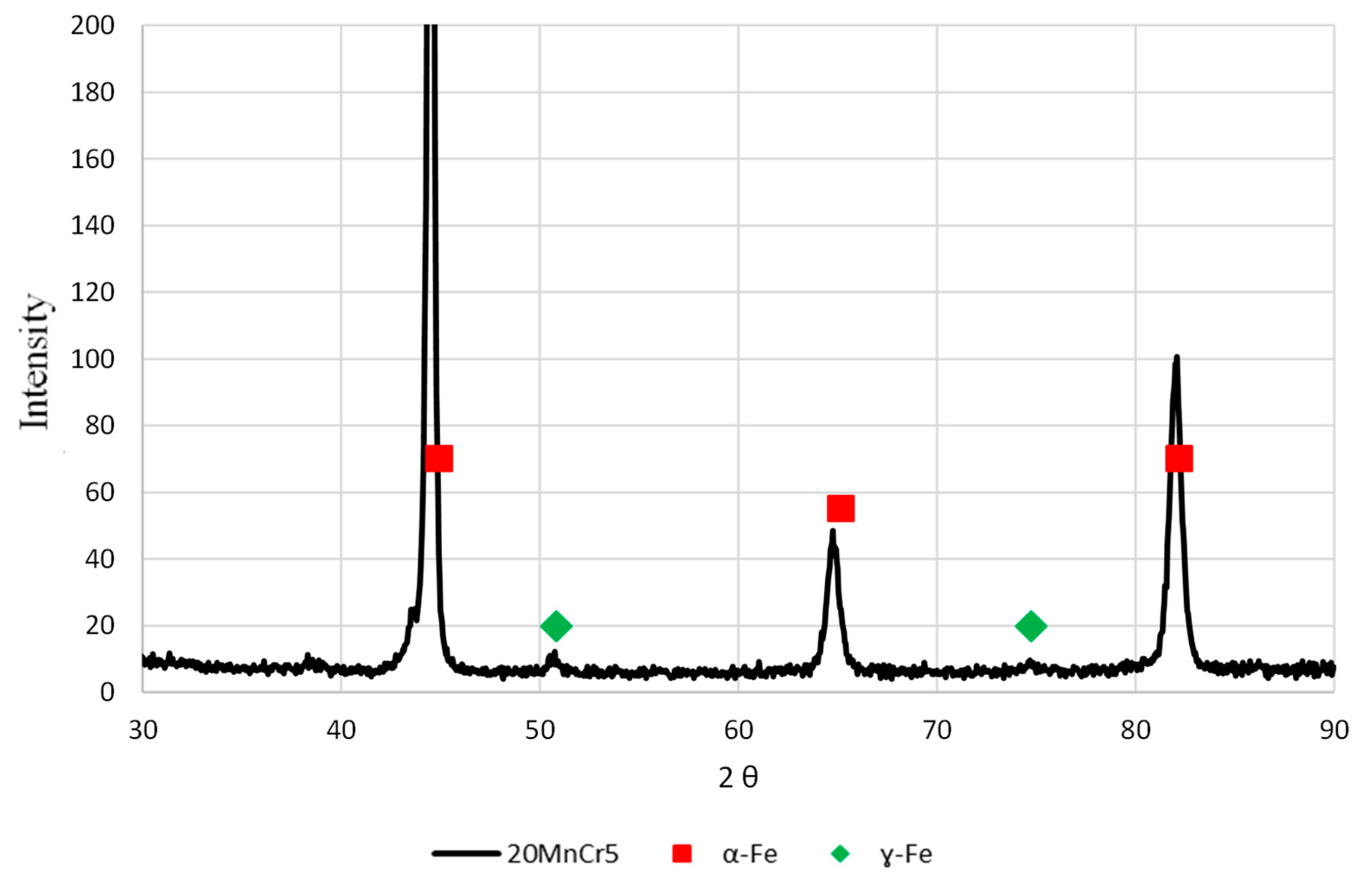
In these points, analysis of the chemical composition was performed by SEM/EDS. The average content of the main elements is as follows: C = 0.192 wt.%, Si = 0.365 wt.%, Cr = 1.24 wt.%, and Mo = 0.015 wt.% (Table 2). The values of the mass content of individual elements in all analysed points are quite similar. The standard deviations of the element contents range from 0.009 wt.% to 0.062 wt.%, depending on the chemical element type. Finally, the diffraction pattern of the 20MnCr5 sample is shown in Figure 5. Based on the reflection position and its intensity in the diffraction pattern, the results were compared with the diffraction patterns of the corresponding reference materials in the ICDD PDF-4+ database. In this way, two allotropic forms of pure iron were identified: α-Fe (ferrite) with a body-centred cubic lattice and γ-Fe (austenite) with a face-centred cubic lattice. The chemical composition studies did not reveal any undesirable inclusions in the analysed steel. All results were within the ranges of the appropriate standards for tool steels.

3.2. Results of DMLS Printing of 20MnCr5 Steel Countersamples

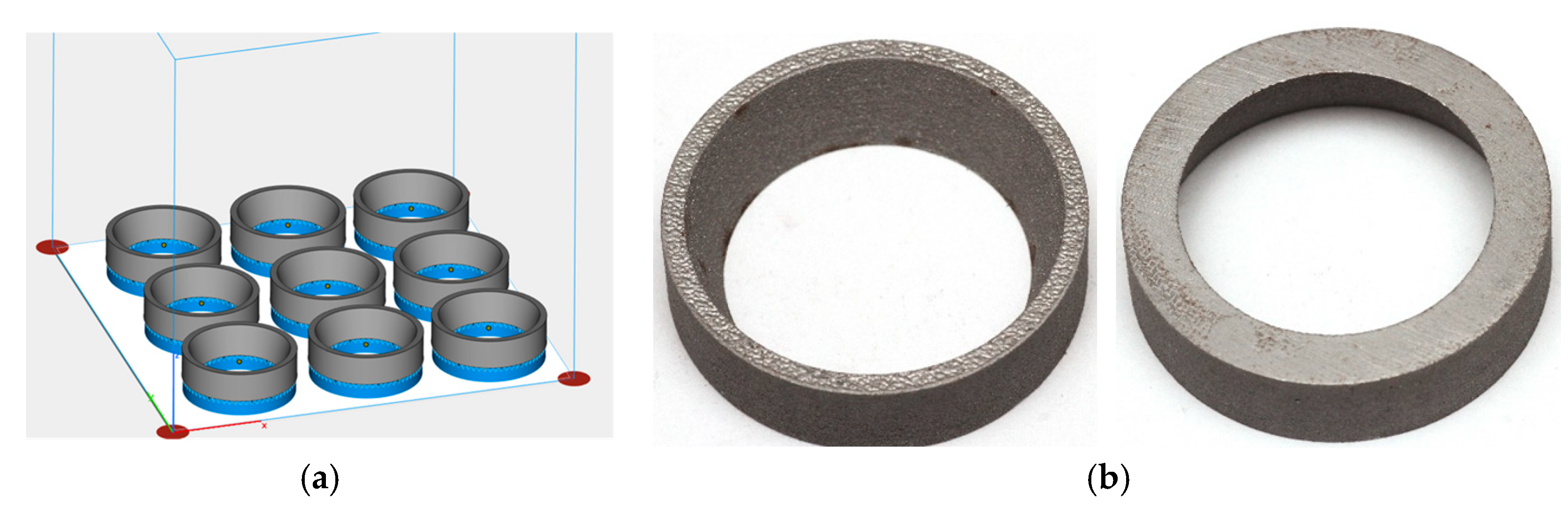
The 3D model of the test countersample is shown in Figure 6a and the DMLSed countersamples in the as-received state subjected to tribological tests are shown in Figure 6b.

3.3. Results of Roughness of 20MnCr5 Steel Countersamples

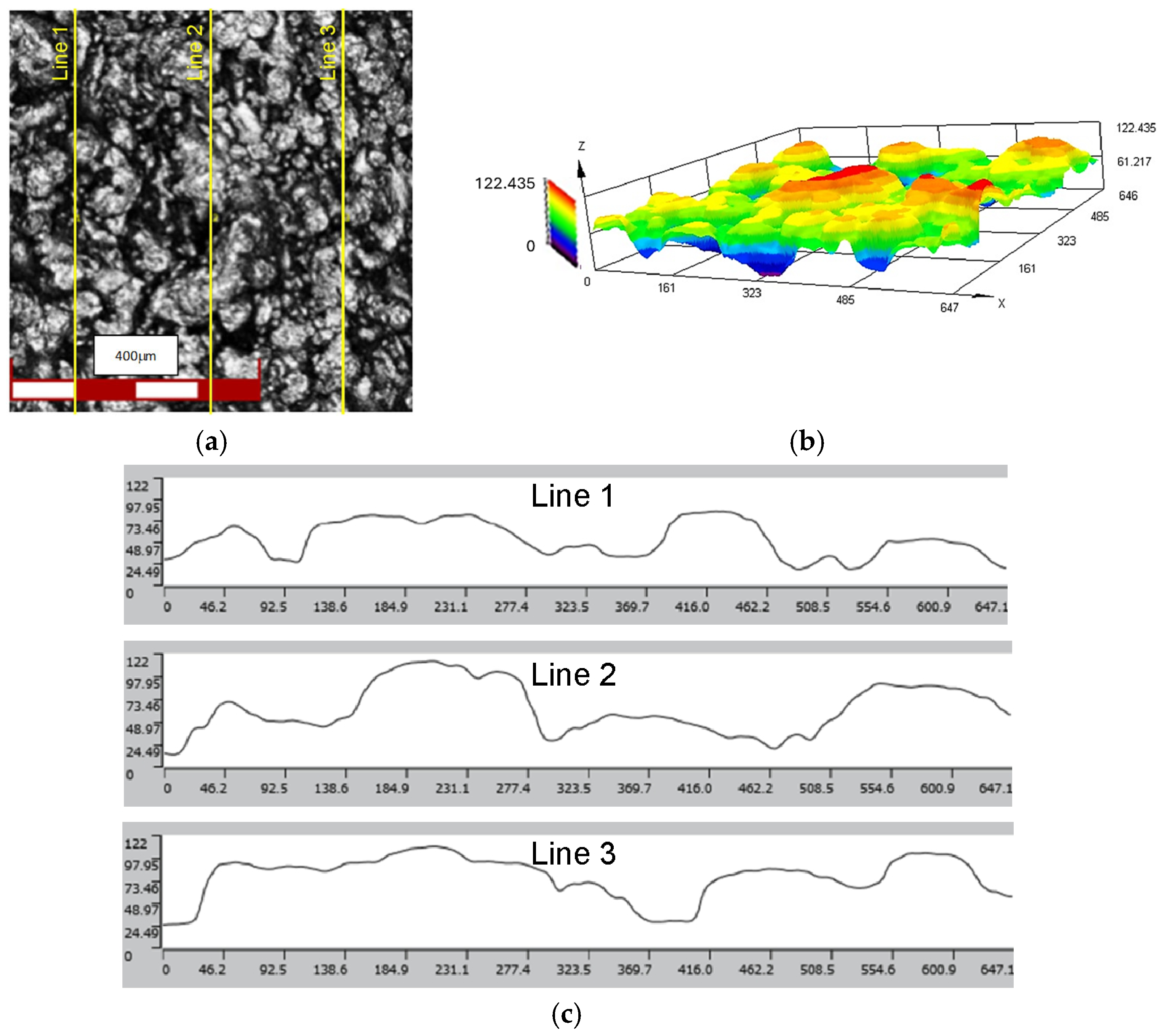
Figure 7a shows a view of the countersample surface with marked measurement lines for determining surface roughness parameters. Surface topography and surface roughness profiles are presented in Figure 7b and Figure 7c, respectively.
The average roughness Ra and the maximum height Rz of the countersample surface were determined using an Olympus LEXT OLS 4100 confocal microscope. Based on three measurements, the values of these parameters were determined as Ra = 19.49 μm and Rz = 86.39 μm.

3.4. Results of Microstructure Observation of 20MnCr5 Steel Countersample

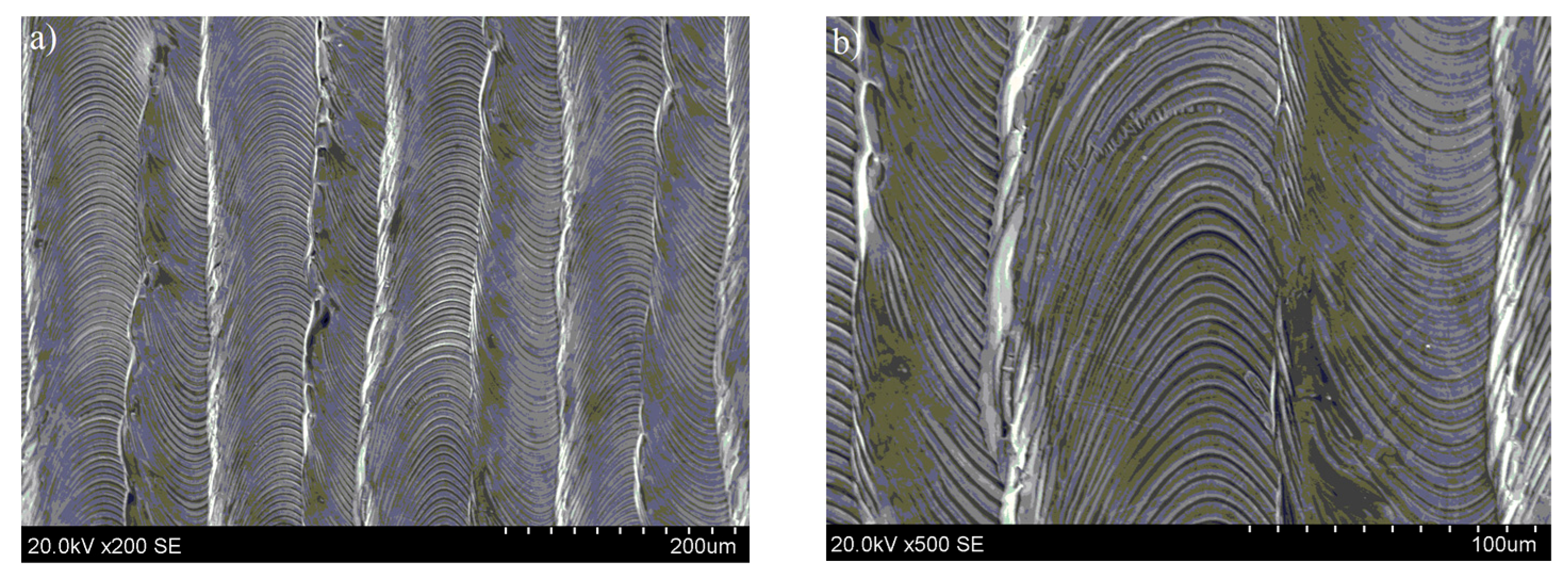
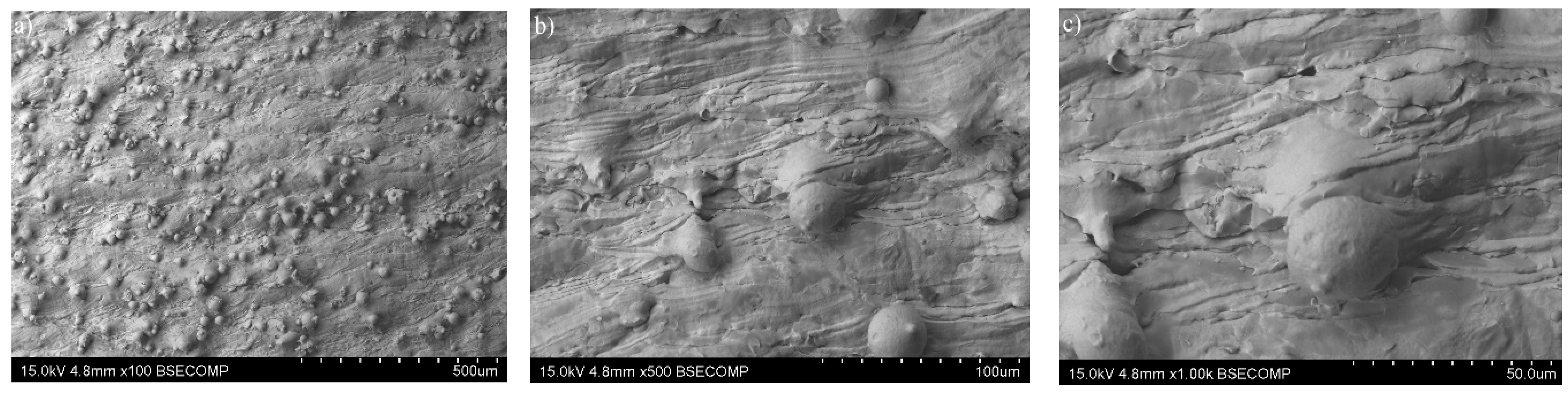
The results of observing the microstructure on the front surface and side surface of the countersample are shown in Figure 8 and Figure 9, respectively.
Depending on the plane of the 20MnCr5 steel countersample being tested, it can be seen that the SEM micrographs differ from each other. The layers of fused metal powder characteristic of the three-dimensional printing process are clearly visible (Figure 8), overlapping one another, which reflect the individual scanning paths of the laser beam. The semicircular cross-sections of the scanning layers, overlapping one another, create a characteristic shape of a fish scale. This semicircular shape is created by the formation of a melting pool, where the metal powder and part of the underlying substrate occur, under the influence of the laser beam. The lateral surface (Figure 9) shows the presence of the beam scanning paths in the form of wavy bands.

3.5. Results of Hardness of 20MnCr5 Steel Countersample

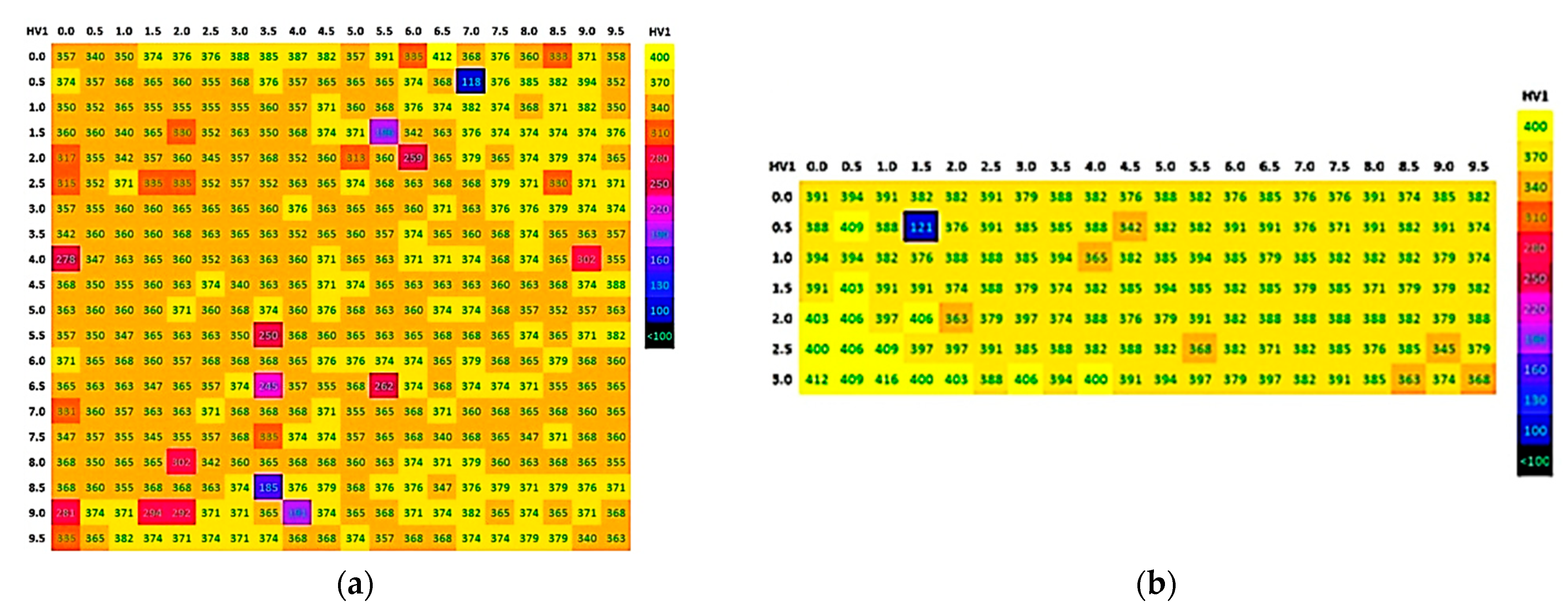
Figure 10 shows Vickers hardness distribution for the countersample for the contact surface in the friction pair with the sheet metal and for the lateral surface.
The Vickers hardness distribution for the countersample, printed using a laser power of 110 W, was in the range of 118–412 HV for the contact surface in the friction pair with the sheet metal and 121–416 HV, for the lateral surface. The average hardness values were 361 HV and 364 HV, respectively.

3.6. Results of Abrasive Wear Resistance

3.6.1. Coefficient of Friction

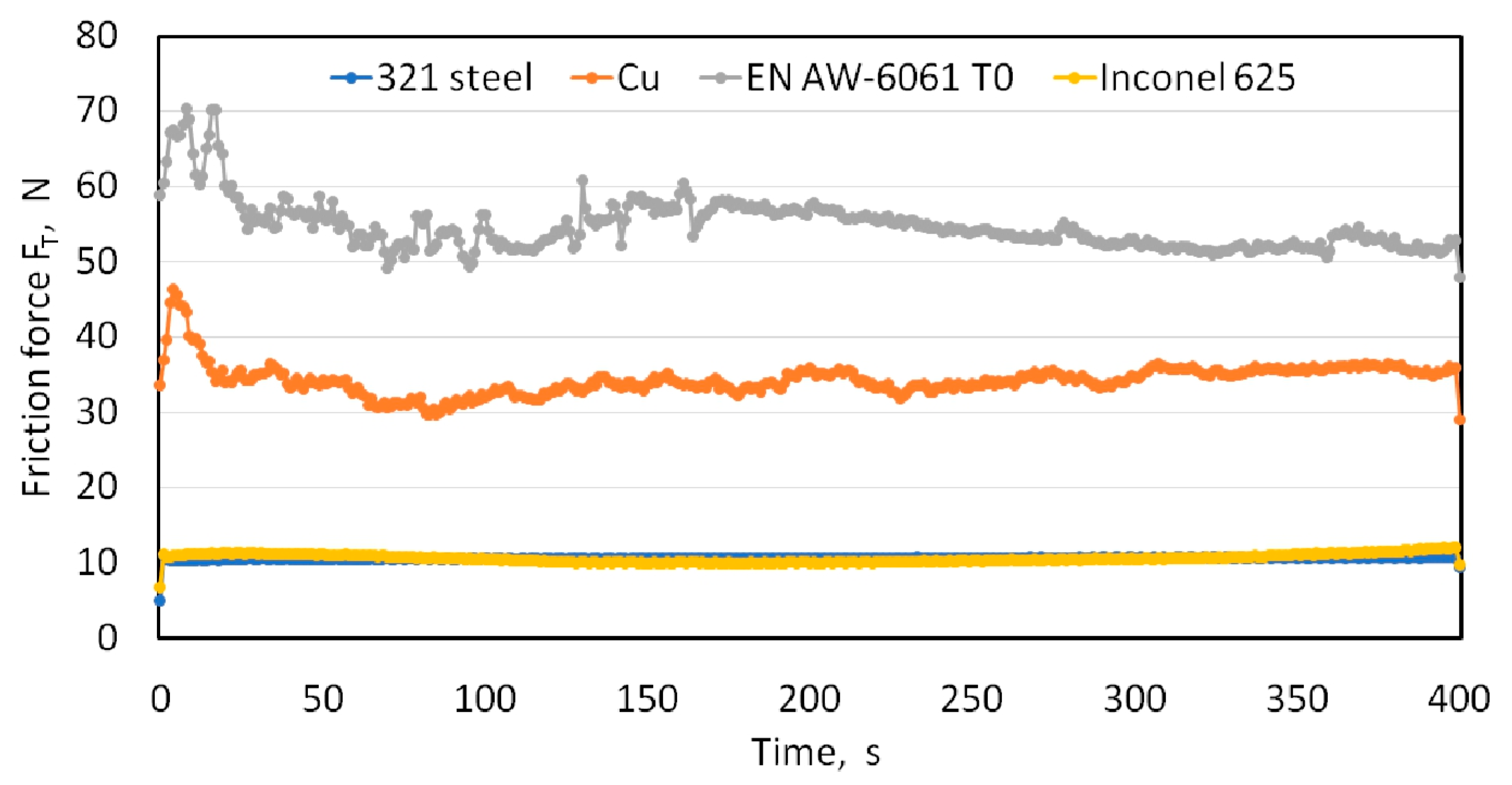
The tribological tests presented in Figure 11, Figure 12 and Figure 13 were conducted under a normal load of 50 N, a sliding speed of 136 rpm, and a total sliding distance of 100 m. Figure 11 shows a comparison of the variation in friction force during wear tests. For Inconel 625 and 321 steel sheets, the friction force during the entire test was very stable at about 10 N. The differences in friction force behaviour observed in Figure 11 are attributed to the distinct wear mechanisms involved in each material pair. For Inconel 625 and 321 steel, the dominant mechanism was abrasive wear, which resulted in stable friction force values throughout the test. In contrast, the 20MnCr5/EN AW-6061 T0 and 20MnCr5/pure copper pairs exhibited more complex tribological behaviour. In these cases, additional phenomena such as adhesion, plastic deformation, material transfer, and oxidation contributed to increased and fluctuating friction forces. These effects are associated with the formation and rupture of adhesive junctions, which require additional force to overcome, leading to higher average friction values and reduced stability.
Among the materials tested, these sheets are characterised by a relatively high yield stress and ultimate tensile strength (Table 3).
Stable friction force values during the wear test indicate no wear phenomena in the friction pair. The average COFs for the 20MnCr5/Inconel 625 and 20MnCr5/321 steel friction pairs were COF = 0.213 and COF = 0.194, respectively. Different behaviour was observed during testing pure copper and EN AW-6061 T0 sheet metals.
The highest friction force during the entire test was recorded for the 20MnCr5/EN AW-6061 T0 friction pair. As is commonly known, aluminium and aluminium alloy sheets are susceptible to galling due to increased plasticity and, therefore, the susceptibility of the surface asperities to flattening under the influence of load. This causes galling by pick-up on forming tools and subsequent scoring [34]. In addition, the brittle nature of the oxide layers, under the influence of load, causes the oxide layer to crack and exposes the pure metal [35]. The die surface topography is the dominant factor controlling galling in forming [36]. The average COF of the 20MnCr5/EN AW-6061 T0 friction pair was 1.234, which means that the friction force was greater than the normal force. Pure copper can be prone to galling during metal forming operations due to its low yield stress (Table 3) and tendency to adhere to tooling. The friction force in the wear test of the 20MnCr5/pure copper friction pair was about 40% lower than in the contact of EN AW-6061 T0 sheet with the 20MnCr5 steel countersample. The average COF during the testing of the pure copper sheet was 0.813. In the case of the 20MnCr5/EN AW-6061 T0 and 20MnCr5/pure copper friction pairs, a running-in stage can be observed, associated with an initial increase in the friction force and a subsequent decrease to stabilisation at a certain level. During the running-in period, a mutual adaptation of the tribological characteristics of contacting surfaces occurs [37]. In this period the topography of surfaces changes with time before reaching the steady wear regime [38].

3.6.2. Change in Mass of Samples and Countersamples

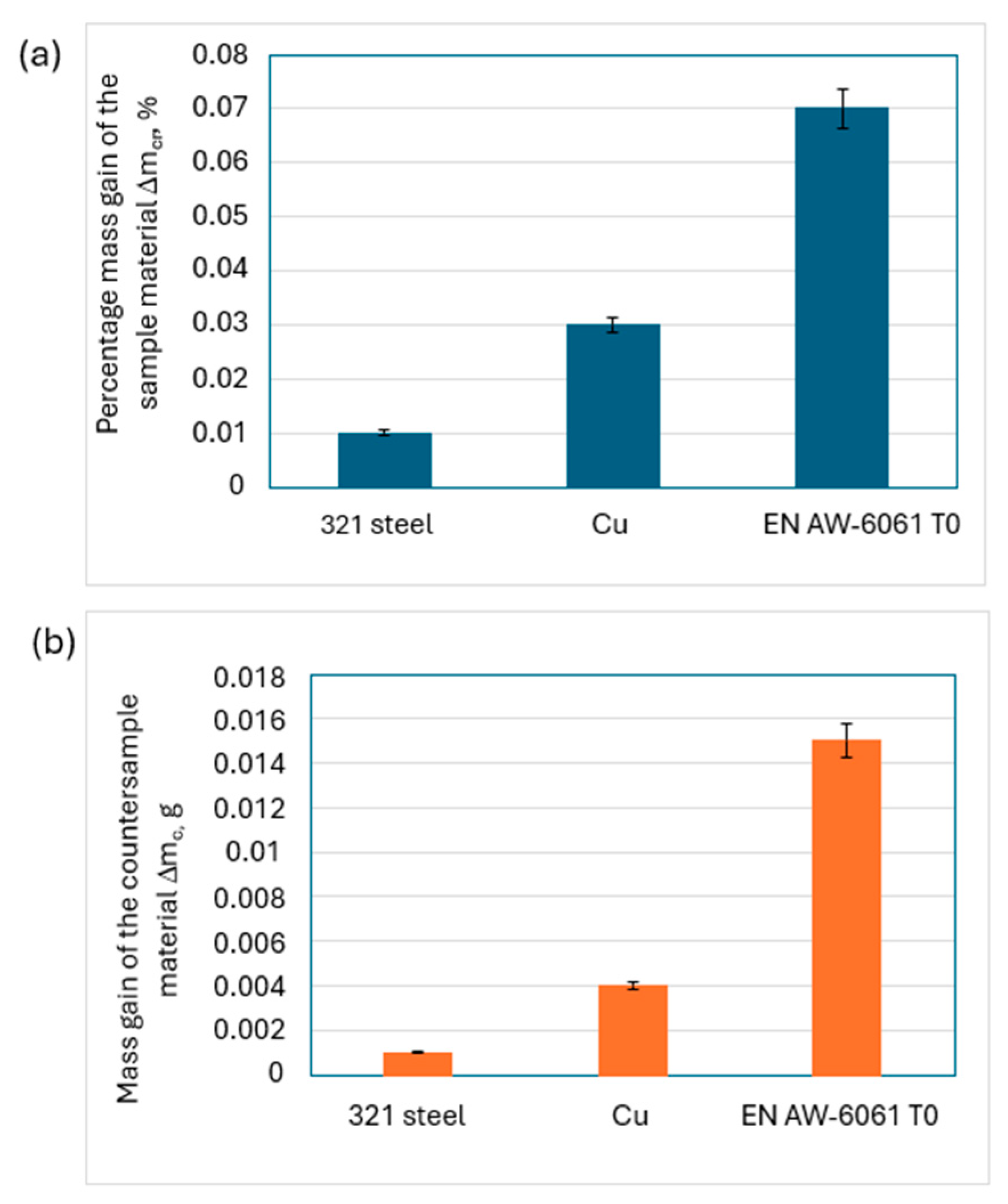
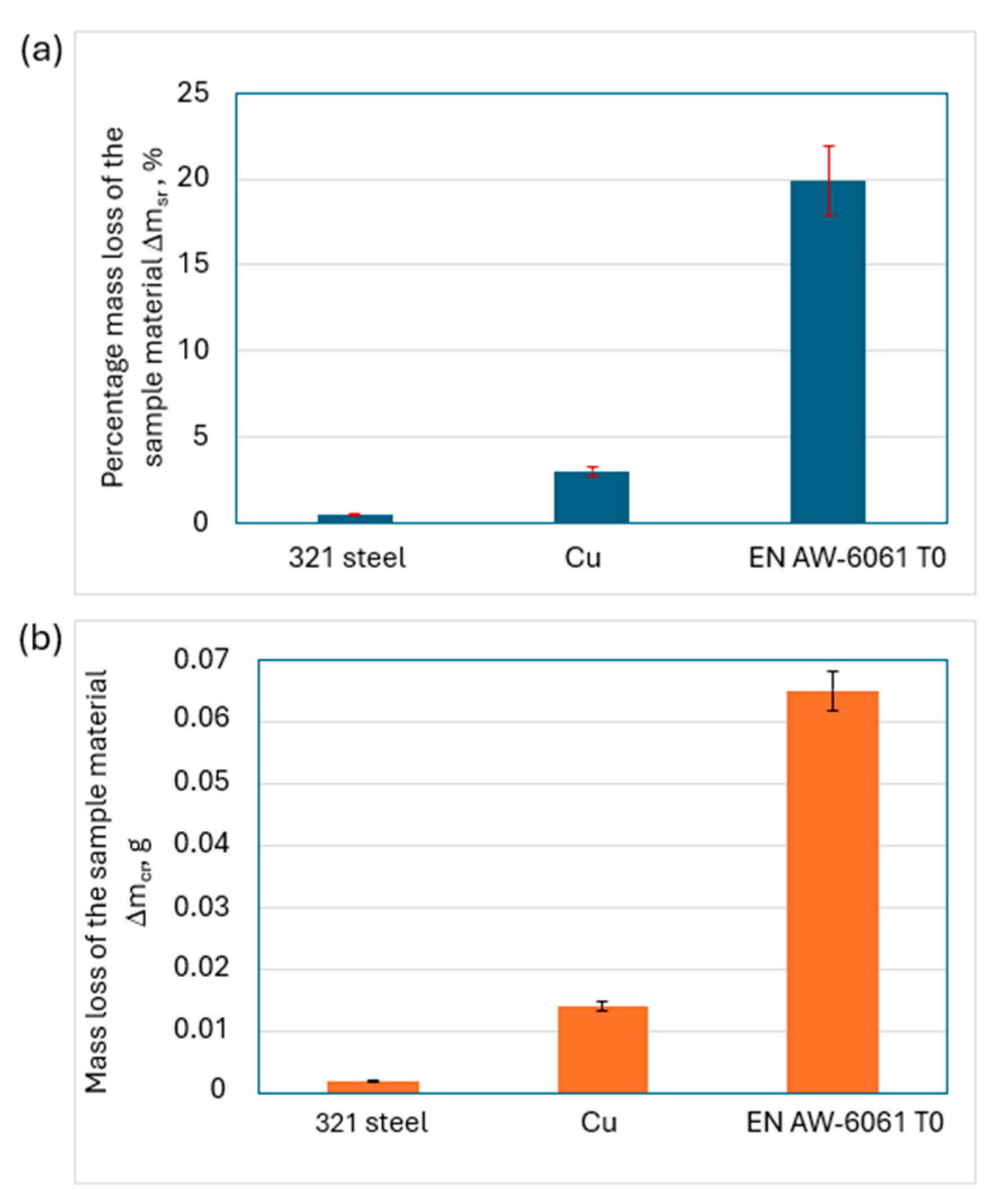
The tests carried out for the friction pair of the 20MnCr5 steel countersample with the sheet samples showed that in the case of the countersamples (Figure 12a), a mass gain was observed, while in the case of the samples, a mass loss was observed (Figure 12b). The mass loss of the EN AW-6061 T0 alloy sample is the largest, as it is 19.96% (Figure 13a,b) of the initial mass. Such a large mass loss indicates the cutting character of the wear mechanism, which may be reflected in large fluctuations in the friction force change during the wear test after the running-in stage (Figure 11).
The mass loss of the Inconel 625 alloy sample is the smallest (about 0.04%) compared to the other countersamples. The pure copper sample showed a mass loss of 2.79% (Figure 13b), which is more than six times smaller compared to the mass loss of the EN AW-6061 T0 sheet. Meanwhile, as shown in the previous section, the friction force for the 20MnCr5/pure copper friction pair was about 40% lower than in the contact of the EN AW-6061 T0 sheet with the 20MnCr5 steel countersample. This indicates a clear tendency of the aluminium alloy sheet to lose mass during friction with the 3D-printed 20MnCr5 countersamples. In the 20MnCr5/Inconel 625 friction pair, no significant increase in the countersample mass was recorded (0.00005 g), only in the case of the sample the minimal loss was 0.00017 g (0.04%). Despite the similar values of friction coefficients recorded during wear testing 20MnCr5/321 steel and 20MnCr5/Inconel 625 friction pairs, the mass increase in the countersample in the case of the first friction pair was about 20 times higher (0.00097 g) than for the second friction pair (0.00005 g).
In the quantitative aspect of sample mass loss and countersample mass gain, there is a direct relationship with friction force values (Figure 11): the higher the friction force, the greater the sample mass loss and, consequently, the greater the countersample mass gain. The intensity of material wear is a function of various types of interactions and the topography of interacting surfaces [39,40]. The relative resistance to abrasive wear of different metals depends on the properties of the cooperating materials, but in each of the individual cases this resistance is proportional to the strength of these materials. In the context of tool wear, the 3D-printed 20MnCr5 countersample is most suitable for forming Inconel 625 and 321 steel sheets. The results obtained for the 20MnCr5/Inconel 625 friction pair indicate that the increase in the mass of the countersamples in the remaining friction pairs is directly proportional to the mass loss of the samples.

3.6.3. Surface Roughness After Abrasive Wear Testing

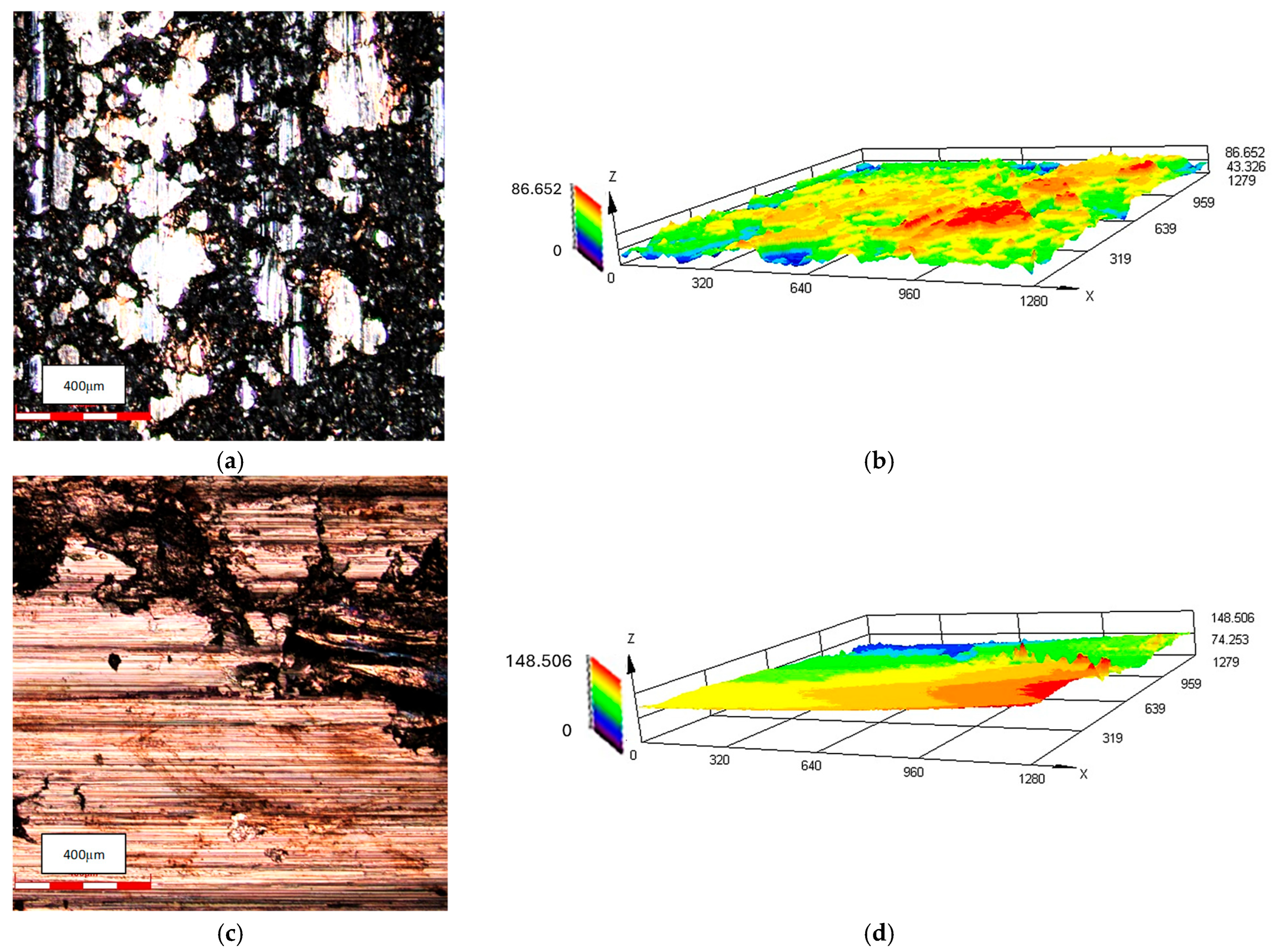
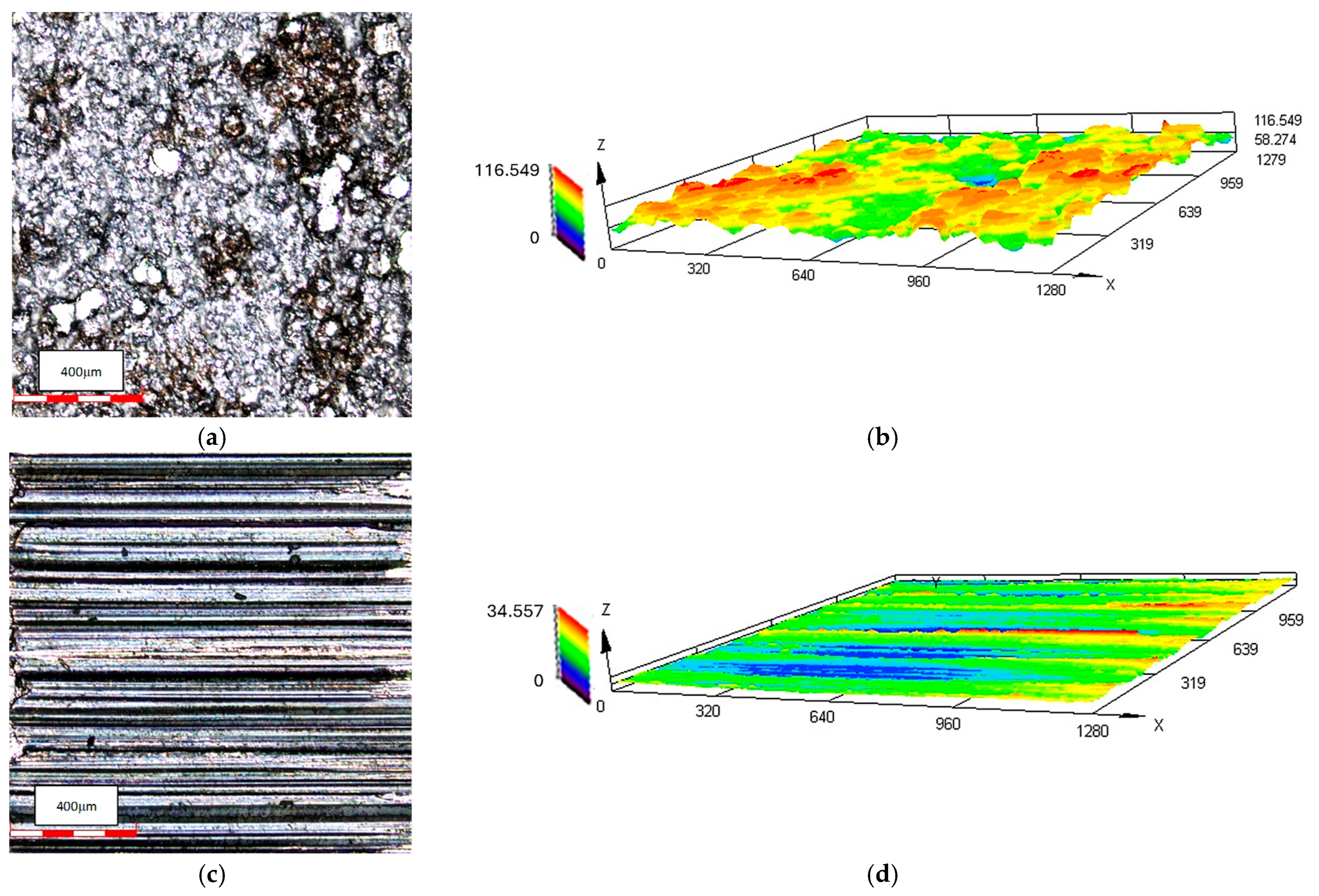
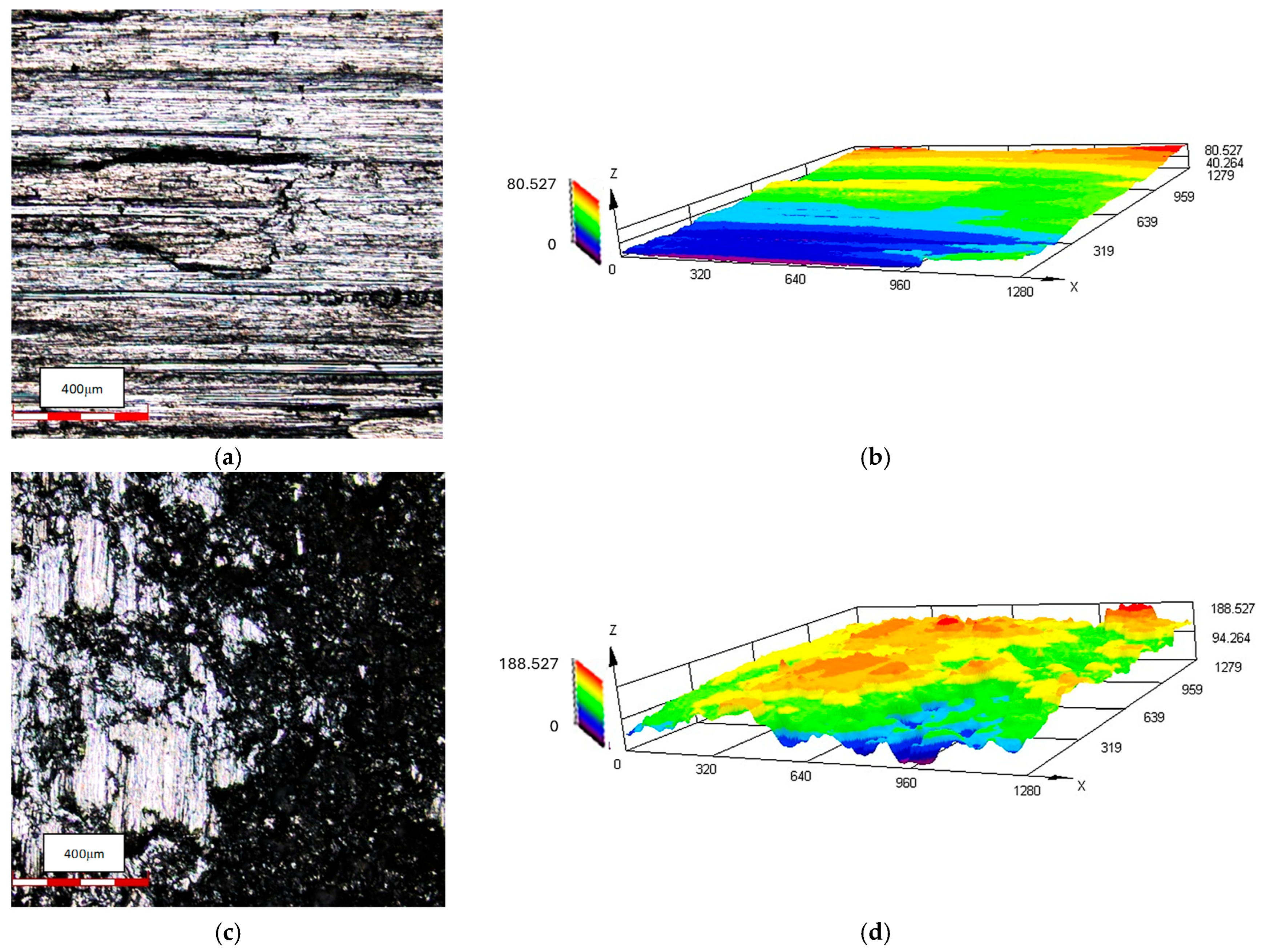
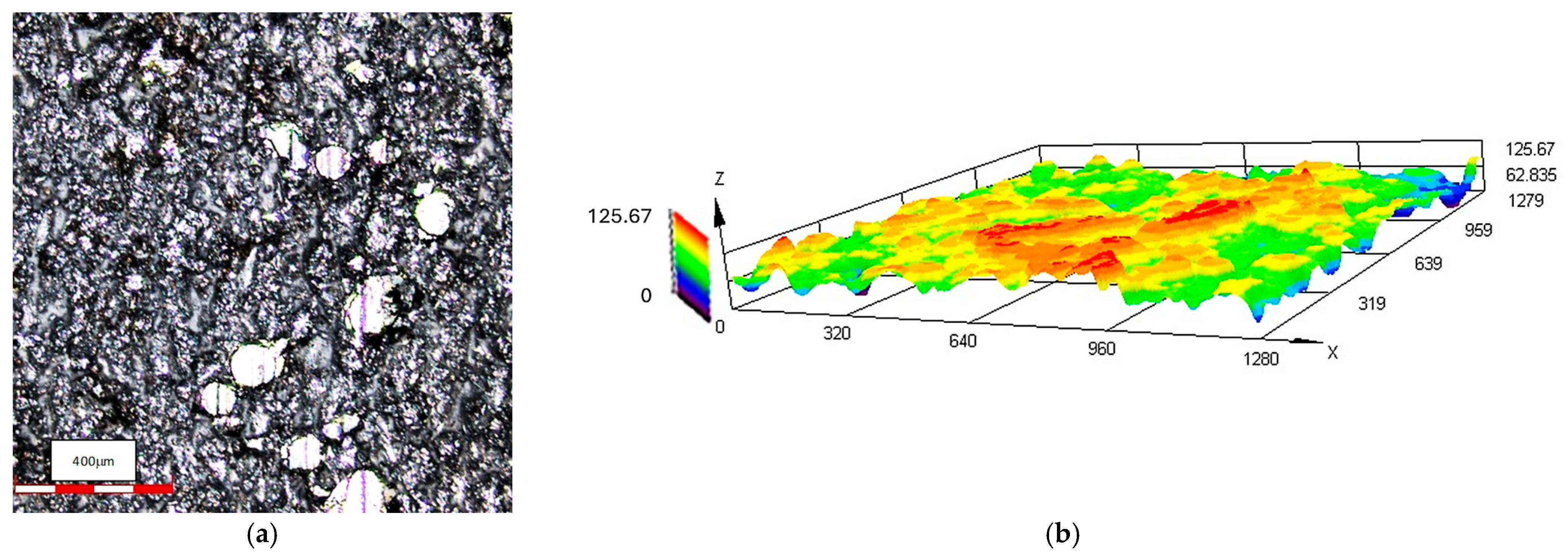
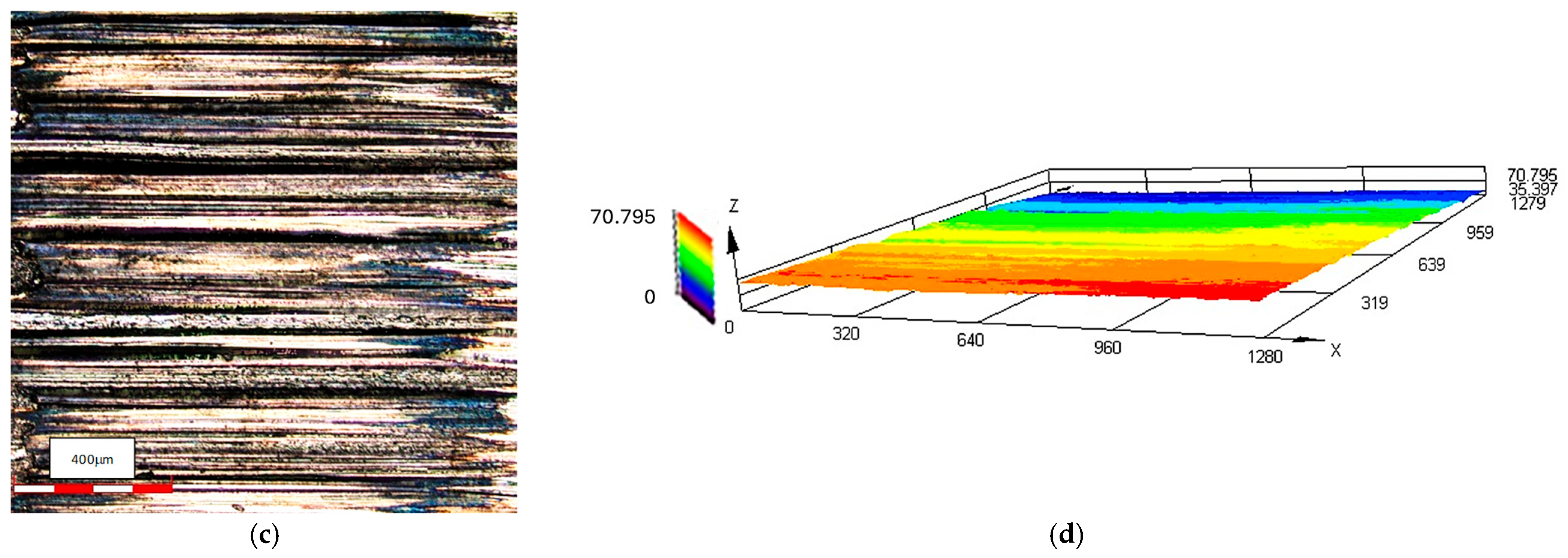
Figure 14, Figure 15 and Figure 16 show optical micrographs illustrating the surface of the countersamples and samples, and their surface topography after the wear test. Analysing the surfaces after the friction of the 3D-printed countersamples from 20MnCr5 steel, it can be concluded that due to their significant surface roughness (Ra = 19.49 μm and Rz = 86.39 μm) only the highest asperities were in contact with the surfaces of the samples during friction. Many friction studies on the mechanism of adhesion in frictional contact in sheet metal forming indicate that the concept of the real contact area becomes significant when taking into account the microscopic scale of the solid body surfaces [41]. This approach is the basis for texturing the tool surface, which leads to a decrease in the amount of frictional shear stresses and as a result the total frictional force in the process [42].
In the friction pairs of 20MnCr5/Inconel 625 and 20MnCr5/321 steel, the abrasive wear of the countersample asperities dominates (Figure 14a and Figure 17a). This results in low friction coefficients of these friction pairs (COF = 0.213 for the 20MnCr5/Inconel 625 configuration and COF = 0.194 for the 20MnCr5/321 steel friction pair) and the stability of the friction force throughout the friction process (Figure 11). The initial total roughness profile height of 122.435 mm did not change significantly. After the friction process of 20MnCr5/Inconel 625 and 20MnCr5/321 steel pairs, the total profile height of the countersamples was 125.67 μm (Figure 17a) and 116.549 μm (Figure 14a), respectively. Abrasive wear occurs when the material loss in the surface layer is caused by the separation of material particles due to micro-cutting, scratching or ploughing. The resistance to abrasive wear is dependent on the chemical composition, relative hardness (relative to the hardness of the worn material), specific contact pressures, sliding speed and many other parameters [43,44].
In the case of the steel samples, the dominant wear feature is abrasive scratching, characterised by distinct grooves aligned with the sliding direction. These scratches suggest a micro-cutting or ploughing mechanism, typical for harder counterface interactions.
For the Inconel samples, the wear traces are notably different. The surface exhibits shallower scratches and numerous grooves, but without significant material removal. This indicates a milder abrasive or surface fatigue mechanism, where deformation occurs without substantial mass loss. The presence of multiple shallow grooves may also suggest a combination of micro-ploughing and surface fatigue, possibly due to the higher hardness and oxidation resistance of Inconel, which limits adhesive interactions and material transfer.
These differences in wear morphology help explain the lower mass loss observed for Inconel, despite visible surface damage. The wear in this case is more superficial and does not result in a significant detachment of material, unlike in the steel samples.
A different situation occurred in the case of samples that were significantly worn (pure Cu and EN AW-6061 T0 aluminium alloy). Due to the high plasticity of these materials in relation to the countersample material, the sample material was transferred to the surface valleys of the countersample’s surface. Especially in the case of the friction of the aluminium alloy sheet, the valleys in the surface of the countersample were filled with the sheet material (Figure 16a). In the 20MnCr5/aluminium alloy friction pair, numerous oxidation products also occur on the surface of the 3D-printed countersample, which may be a mixture of Fe and Al oxides. The surface of the countersample was flattened, and scratches and grooves (Figure 16a), as well as local accumulations of material as a result of plastic deformations, are observed on its entire surface. A significant share of oxides can also be found on the surface of the countersample after the wear test with the participation of the aluminium alloy sheet, which is typical for steel-aluminium friction pairs. The surface of the aluminium alloy sample after the test was very strongly worn, which indicates a significant participation of adhesion. Additionally, the high COF of 1.234 for the 20MnCr5/EN AW-6061 T0 friction pair was observed. Therefore, adhesion must have dominated for a significant part of the wear test. Adhesive wear consists of the local metallic interlocking (adhesion) of friction surfaces in micro-areas of plastic deformation of the surface layer [45,46].

4. Conclusions

The conducted studies on the tribological properties of friction pairs composed of a DMLSed 20MnCr5 countersample and different types of metal sheets allowed to determine the changes in the character of the friction process depending on the type of these friction pairs. Based on the experimental studies, the following conclusions can be drawn:
  • The most stable friction force variations during wear tests were recorded for friction pairs of the 20MnCr5 countersample with Inconel 625 and 321 steel sheets. These sheets were characterised by the highest strength among all the analysed sheets. For these sheets, similar COFs were observed during the entire wear test (COF = 0.194−0.213). The remaining sheets with increased plasticity showed significantly higher values of the coefficient of friction (COF = 1.234 for the 20MnCr5/EN AW-6061 T0 friction pair and COF = 0.813 for the 20MnCr5/pure copper friction pair).
  • The largest gain of countersample mass was observed for the 20MnCr5/EN AW-6061 T0 friction pair. The sample mass loss in this combination was also the largest, amounting to 19.96% of the initial mass. A similar behaviour of friction pair materials was observed for the 20MnCr5/pure copper friction configuration. On the other hand, for the 20MnCr5/Inconel 625 friction pair, no significant changes in the mass of friction pair materials were observed.
  • During the friction of pure copper and the EN AW-6061 T0 sheet, the main friction mechanism resulting from the high plasticity of these materials was adhesive wear. In contrast, in the 20MnCr5/Inconel 625 and 20MnCr5/321 steel friction pairs, abrasive wear dominated.
  • Based on the changes in friction force, COFs, and mass changes in friction pair components during wear tests, it can be concluded that potential tools in the form of inserts or working layers manufactured using 3D printing technology, the DMLS method, without additional surface treatment can be successfully used for stamping sheets of 321 steel and Inconel 625. These sheets are characterised by a low mass loss, the lowest COFs, and stability of the friction force during the wear test.
Three-dimensional printing-aided rapid tooling is expected to have a major industrial impact on the design and production of stamping tools. The implementation of 3D metal printing can enhance the technology in flexible manufacturing systems according to the concept of Industry 5.0. Although the number of metal grades for use in DMLS is still limited, intensive work is underway on the development of new powders and the adaptation of existing technologies along with the expansion of the part design space.

Author Contributions

Conceptualization, K.Ż. and M.M.; Methodology, K.Ż., M.M., B.L.-M., T.T. and R.S.; Software, K.Ż., M.M. and B.L.-M.; Validation, K.Ż., M.M. and B.L.-M.; Investigation, K.Ż., M.M., B.L.-M., T.T. and R.S.; Data Curation, K.Ż., M.M. and B.L.-M.; Writing—Original Draft Preparation, K.Ż. and T.T.; Writing—Review and Editing, K.Ż., M.M., B.L.-M., T.T. and R.S.; Visualisation, M.M., B.L.-M. and T.T. All authors have read and agreed to the published version of the manuscript.

Funding

This research received no external funding.

Institutional Review Board Statement

Not applicable.

Informed Consent Statement

Not applicable.

Data Availability Statement

The original contributions presented in this study are included in the article. Further inquiries can be directed to the corresponding author.

Conflicts of Interest

The authors declare no conflicts of interest.

References

  1. Hölker-Jäger, R.; Tekkaya, A.E. 17—Additive manufacture of tools and dies for metal forming. In Laser Additive Manufacturing; Brandt, M., Ed.; Woodhead Publishing: Sawston, UK, 2017; pp. 439–464. [Google Scholar] [CrossRef]
  2. Kamuda, P.; Góral, M.; Ochał, K.; Nabel, D.; Kubaszek, T. Concept of 3D printed powder feeder for thermal spray process—A case study. Adv. Mech. Mater. Eng. 2025, 42, 41–48. [Google Scholar] [CrossRef]
  3. Asnafi, N.; Rajalampi, J.; Aspenberg, D.; Alveflo, A. Production tools made by additive manufacturing through laser-based powder bed fusion. Berg. Huettenmaenn. Monatsh. 2020, 165, 125–136. [Google Scholar] [CrossRef]
  4. Asnafi, N. Metal Additive Manufacturing—State of the Art 2020. Metals 2021, 11, 867. [Google Scholar] [CrossRef]
  5. Cao, J.; Brinkdmeier, E.; Fu, M.; Gao, R.X.; Liang, B.; Merklein, M.; Schmidt, M.; Yanagimoto, J. Manufacturing of advanced smart tooling for metal forming. CIRP Ann. 2019, 68, 605–628. [Google Scholar] [CrossRef]
  6. Yogeshwaran, K.; Das, S. Additive Manufacturing of Tools and Dies for Metal Forming Applications. In Additive Manufacturing with Novel Materials: Processes, Properties and Applications; Rajasekar, R., Moganapriya, C., Kumar, P.S., Eds.; John Wiley & Sons: Hoboken, NJ, USA, 2024. [Google Scholar] [CrossRef]
  7. Dardaei Joghan, H.; Hölker-Jäger, R.; Komodromos, A.; Tekkaya, A.E. Hybrid Additive Manufacturing of Forming Tools. Automot. Innov. 2023, 6, 311–323. [Google Scholar] [CrossRef]
  8. Asnafi, N.; Shams, T.; Aspenberg, D.; Öberg, C. 3D metal printing from an industrial perspective—Product design, production, and business models. Berg. Huettenmaenn. Monatsh. 2019, 164, 91–100. [Google Scholar] [CrossRef]
  9. Żaba, K.; Kuczek, Ł.; Puchlerska, S.; Wiewióra, M.; Góral, M.; Trzepieciński, T. Analysis of tribological performance of new stamping die composite inserts using strip drawing test. Adv. Mech. Mater. Eng. 2023, 40, 55–62. [Google Scholar] [CrossRef]
  10. Jonsson, C.J.; Stolt, R.; Elgh, F. Stamping Tools for Sheet Metal Forming: Current State and Future Research Directions. In Transdisciplinary Engineering for Complex Socio-Technical Systems—Real-Life Applications; Pokojski, J., Gil, M., Newnes, L., Stjepandić, J., Wognum, N., Eds.; IOS Press: Amsterdam, The Netherlands, 2020; pp. 281–290. [Google Scholar] [CrossRef]
  11. Klobčar, D.; Tušek, J.; Taljat, B. Thermal fatigue of materials for die-casting tooling. Mater. Sci. Eng. A 2008, 472, 198–207. [Google Scholar] [CrossRef]
  12. Sjöström, J. Chromium Martensitic Hot-Work Tool Steels—Damage, Performance and Microstructure. Ph.D. Thesis, Karlstad University Studies, Karlstad, Sweden, 2004; p. 52. [Google Scholar]
  13. Oliveira, E.S.; Damasceno, J.R.; Neto, A.S.; Amaral, E.C.; Gonçalves, K.A.M.B.; Luiz, V.D. The effect of the drawing die radius in the bending under tension test on the frictional behaviour of AISI 430 steel and AW-1100 aluminium alloy sheets. Adv. Mech. Mater. Eng. 2024, 41, 183–193. [Google Scholar] [CrossRef]
  14. Ismail, J.I.; Sanni, K. Exploring the Possibilities of Sheet Metal Forming via Plastic-Based Additive Manufacturing Moulding. Master’s Thesis, KTH IIP Laboratory, Stockholm, Sweden. Available online: https://www.diva-portal.org/smash/get/diva2:1741470/FULLTEXT01.pdf (accessed on 10 April 2025).
  15. Bambach, M.D.; Bambach, M.; Sviridov, A.; Weiss, S. New process chains involving additive manufacturing and metal forming—A chance for saving energy? Procedia Eng. 2017, 207, 1176–1181. [Google Scholar] [CrossRef]
  16. Jagadeesha, T.; Kunar, S. Integrating metal forming and additive manufacturing for enhanced product quality and efficiency. In Advances in Additive Manufacturing; Sandip Kunar, T., Jagadeesha, S., Rama Sree, K.V.S.R., Murthy, M., Sreenivasa, R., Eds.; John Wiley & Sons: Hoboken, NJ, USA, 2024. [Google Scholar] [CrossRef]
  17. Tondini, F.; Arinbjarnar, U.; Bassa, A.; Nielsen, C.V. 3D printing to facilitate flexible sheet metal forming production. Procedia CIRP 2021, 103, 93–96. [Google Scholar] [CrossRef]
  18. Witt, G.; Deiss, O.; van Kampen, J.; Münzer, J.; Ott, M. Optimization of media feed channels in laser beam melting. Proc. ASPE Berkeley 2014, 57, 13–18. [Google Scholar]
  19. ISO/ASTM 52911-1; Additive Manufacturing—Design—Part 1, Laser-Based Powder Bed Fusion of Metals. ISO: Geneva, Switzerland, 2019.
  20. Skåre, T.; Asnafi, N. Forming and trimming of 2-mm thick DP600 sheet steel in tools and dies 3D-printed in maraging steel by laser-based powder bed fusion. IOP Conf. Ser. Mater. Sci. Eng. 2020, 67, 12040. [Google Scholar] [CrossRef]
  21. Müller, B.; Gebauer, M.; Hund, R.; Malek, R.; Gerth, N. Metal Additive Manufacturing for tooling applications—Laser Beam Melting technology increases efficiency of dies and molds. In Proceedings of the Metal Additive Manufacturing Conference MAMC, Wien, Austria, 20–21 November 2014. [Google Scholar] [CrossRef]
  22. Żaba, K.; Balcerzak, M.; Kuczek, Ł.; Wiewióra, M.; Różycka, I.; Trzepieciński, T.; Mizera, J. Application of powder-bed fusion of metals using a laser for manufacturing of M300 maraging steel tools intended for sheet metal bending. Materials 2024, 17, 6185. [Google Scholar] [CrossRef] [PubMed]
  23. Żaba, K.; Szymański, K.; Balcerzak, M.; Różycka, I.; Kuczek, Ł.; Żabiński, P. Effect of surface finishing on the corrosion resistivity of 3D printed M300 Steel. Materials 2024, 17, 6047. [Google Scholar] [CrossRef] [PubMed]
  24. Mueller, B.; Hund, R.; Malek, R.; Gebauer, M.; Polster, S.; Kotzian, M.; Neugebauer, R. Added value in tooling for sheet metal forming through additive manufacturing. In Proceedings of the International Conference on Competitive Manufacturing, COMA ’13, Stellenbosch, South Africa, 30 January–1 February 2013. [Google Scholar]
  25. Leal, R.; Barreiros, F.M.; Alves, L.; Romeiro, F.; Vasco, J.C.; Santos, M.; Marto, C. Additive manufacturing tooling for the automotive industry. Int. J. Adv. Manuf. Technol. 2017, 92, 1671–1676. [Google Scholar] [CrossRef]
  26. Craeghs, T.; Bechmann, F.; Berumen, S.; Kruth, J.P. Feedback control of layerwise laser melting using optical sensors. Phys. Procedia 2010, 5, 505–514. [Google Scholar] [CrossRef]
  27. Kruth, J.; Mercelis, P.; Van Vaerenbergh, J.; Craeghs, T. Feedback control of selective laser melting. In Proceedings of the 3rd International Conference on Advanced Research, Istanbul, Turkey, 26–28 November 2007; pp. 1–7. [Google Scholar]
  28. Yasa, E.; Kruth, J.P. Application of laser re-melting on selective laser melting parts. Adv. Prod. Eng. Manag. 2011, 6, 259–270. [Google Scholar]
  29. Mellor, S.; Hao, L.; Zhang, D. Additive manufacturing: A framework for implementation. Int. J. Prod. Econ. 2014, 149, 194–201. [Google Scholar] [CrossRef]
  30. Sivaprakasam, P.; Hailum, T.; Elisa, G. Experimental investigation on wear behavior of titanium alloy (Grade 23) by pin on disc tribometer. Results Mater. 2023, 19, 100422. [Google Scholar] [CrossRef]
  31. Feng, K.; Li, K.; Si, Z.; Li, H.; Song, Q.; Shan, Y.; Wen, S. Microstructure and thermal shock resistance of SiC/CNT–SiC double-layer coating for carbon/carbon composites. Ceram. Int. 2014, 40, 13683–13689. [Google Scholar] [CrossRef]
  32. AISI Type 321 Stainless Steel, Annealed Sheet. Available online: https://asm.matweb.com/search/SpecificMaterial.asp?bassnum=mq321a (accessed on 10 May 2025).
  33. Copper, Cu; Annealed. Available online: https://www.matweb.com/search/datasheet_print.aspx?matguid=9aebe83845c04c1db5126fada6f76f7e (accessed on 10 May 2025).
  34. Daniel, D.; Guiglionda, G.; Litalien, P.; Shahani, R. Overview of forming and formability issues for high volume aluminum car body panels. Mater. Sci. Forum. 2006, 519–521, 795–802. [Google Scholar] [CrossRef]
  35. Bay, N. The state of the art in cold forging lubrication. J. Mater. Process Technol. 1994, 46, 19–40. [Google Scholar] [CrossRef]
  36. Zabala, A.; Galdos, L.; Childs, C.; Llavori, I.; Aginagalde, A.; Mendiguren, J.; Saenz de Argandoña, E. The interaction between the sheet/tool surface texture and the friction/galling behaviour on aluminium deep drawing operations. Metals 2021, 11, 979. [Google Scholar] [CrossRef]
  37. Barros, T.H.C.; Gonzaga, I.A.D.; Neto, A.S.; Amaral, E.C.; Gonçalves, K.A.M.B.; de Matos Rodrigues, P.C.; Dias Luiz, V. Influence of multi-pass forming on the tribological performance of AISI 430 steel sheet in deep drawing process. Adv. Mech. Mater. Eng. 2025, 42, 59–69. [Google Scholar] [CrossRef]
  38. Blau, P.J. On the nature of running-in. Tribol. Int. 2005, 38, 1007–1012. [Google Scholar] [CrossRef]
  39. Trzepieciński, T. Approaches for preventing tool wear in sheet metal forming processes. Machines 2023, 11, 616. [Google Scholar] [CrossRef]
  40. Trzepieciński, T.; Mezher, M.T.; Luiz, V.D.; Laouini, S.E.; Lemu, H.G. Application of feed-forward neural networks for modeling friction phenomena with presence of vegetable oil-based bio-lubricants. Adv. Mater. Sci. 2025, 25, 51–65. [Google Scholar] [CrossRef]
  41. Yamamoto, T. Mechanism of friction and real contact area. JTEKT Eng. J. Engl. Ed. 2007, 1003E, 2–8. [Google Scholar]
  42. Mousavi, A.; Sperk, T.; Gietzelt, T.; Kunze, T.; Lasagni, A.F.; Brosius, A. Effect of contact area on friction force in sheet metal forming operations. Key Eng. Mater. 2018, 767, 77–84. [Google Scholar] [CrossRef]
  43. Luiz, V.D.; de Matos Rodrigues, P.C. Design of a tribo-simulator for investigation of the tribological behavior of stainless-steel sheets under different contact conditions. Mater. Res. 2022, 25, e20210220. [Google Scholar] [CrossRef]
  44. Czapla, K.; Żaba, K.; Kot, M.; Nejman, I.; Madej, M.; Trzepieciński, T. Tribological performance of anti-wear coatings on tools for forming aluminium alloy sheets used for producing pull-off caps. Materials 2023, 16, 6465. [Google Scholar] [CrossRef]
  45. Luiz, V.D.; Santos, A.J.; Câmara, M.A.; Rodrigues, P.C.M. Influence of different contact conditions on friction properties of AISI 430 steel sheet with deep drawing quality. Coatings 2023, 13, 771. [Google Scholar] [CrossRef]
  46. Xu, Z.; Huang, J.; Mao, M.; Peng, L.; Lai, X. An investigation on the friction in a micro sheet metal roll forming processes considering adhesion and ploughing. J. Mater. Process. Technol. 2020, 285, 116790. [Google Scholar] [CrossRef]
Figure 1. Principle of operation of the T-05 tester: 1—hemispherical insert, 2—holder, 3—block, 4—countersample (ring).
Applsci 15 08711 g001
Figure 2. Morphology of the 20MnCr5 powder (BSE mode) at magnifications of (a) ×100 and (b) ×500.
Applsci 15 08711 g002
Figure 3. X-ray elemental maps of the 20MnCr5 steel powder.
Applsci 15 08711 g003
Figure 4. Morphology of the 20MnCr5 powder with marked chemical composition measurement points.
Applsci 15 08711 g004
Figure 5. Diffraction pattern of the 20MnCr5 sample obtained using the characteristic radiation of a copper X-ray tube with a wavelength of λ = 0.154 nm. α-fe, γ-fe.
Applsci 15 08711 g005
Figure 6. View of 3D models (a) and DMLSed 20MnCr5 steel countersamples (b).
Applsci 15 08711 g006
Figure 7. Surface characterisation of the 20MnCr5 steel countersample: (a) surface view obtained through an optical microscope, (b) surface topography, and (c) roughness profiles along the lines 1–3.
Applsci 15 08711 g007
Figure 8. SEM microstructure of the 20MnCr5 steel countersample—front surface (X) at a magnification of (a) ×200, (b) ×500.
Applsci 15 08711 g008
Figure 9. SEM microstructure of the 20MnCr5 steel countersample—lateral surface (Y), at a magnification of (a) ×100, (b) ×500, (c) ×1000.
Applsci 15 08711 g009
Figure 10. Vickers hardness distribution for the countersample for the contact surface in the friction pair with the sheet metal (a) and for the lateral surface (b).
Applsci 15 08711 g010
Figure 11. Variation in friction force during the wear test.
Applsci 15 08711 g011
Figure 12. Percentage mass (a) and mass increase (b) of 20MnCr5 steel countersamples after roller-block testing.
Applsci 15 08711 g012
Figure 13. Percentage mass (a) and mass loss (b) of samples after roller-block testing.
Applsci 15 08711 g013
Figure 14. (a) An optical micrograph illustrating the surface of the countersample and (b) its surface topography after the wear test involving the 321 steel sample; (c) an optical micrograph illustrating the surface of the 321 steel sample and (d) its surface topography after the wear test.
Applsci 15 08711 g014
Figure 15. (a) An optical micrograph illustrating the surface of the countersample and (b) its surface topography after the wear test involving the pure copper sample; (c) an optical micrograph illustrating the surface of the pure copper sample and (d) its surface topography after the wear test.
Applsci 15 08711 g015
Figure 16. (a) An optical micrograph illustrating the surface of the countersample and (b) its surface topography after the wear test involving the EN AW-6061 T0 sample; (c) an optical micrograph illustrating the surface of the EN AW-6061 T0 sample and (d) its surface topography after the wear test.
Applsci 15 08711 g016
Figure 17. (a) An optical micrograph illustrating the surface of the countersample and (b) its surface topography after the wear test involving the Inconel 625 sample; (c) an optical micrograph illustrating the surface of the Inconel 625 sample and (d) its surface topography after the wear test.
Applsci 15 08711 g017aApplsci 15 08711 g017b
Table 1. Chemical composition of the powder (wt.%).
MaterialNiAlSiCrMoMnCFe
20MnCr50.300.0350.401.150.121.150.18balance
Table 2. Results of the point analysis of chemical composition carried out at points 1–4 marked in Figure 5 (wt.%).
Measuring PointSi-KCr-KMn-KFe-KMo-L
10.361.261.2896.900.00
20.391.251.2596.890.03
30.391.211.2096.990.03
40.311.241.3596.900.00
Table 3. Basic mechanical properties of test sheets.
MaterialYield Stress, MPaUltimate Tensile Strength, MPaReference
EN AW-6061 T065115[22]
Inconel 625528.3958.8[22]
321 steel240620[32]
pure copper33.3210[33]
Disclaimer/Publisher’s Note: The statements, opinions and data contained in all publications are solely those of the individual author(s) and contributor(s) and not of MDPI and/or the editor(s). MDPI and/or the editor(s) disclaim responsibility for any injury to people or property resulting from any ideas, methods, instructions or products referred to in the content.