Article

Research on the Composite Scattering Characteristics of a Rough-Surfaced Vehicle over Stratified Media

1
School of Physics and Electronic Information, Yan’an University, Yan’an 716000, China
2
Shaanxi Key Laboratory of Intelligent Processing for Big Energy Data, Yan’an 716000, China
*
Author to whom correspondence should be addressed.
Appl. Sci. 2025, 15(15), 8140; https://doi.org/10.3390/app15158140
Submission received: 7 June 2025 / Revised: 18 July 2025 / Accepted: 19 July 2025 / Published: 22 July 2025

Abstract

To meet the requirements for radar echo acquisition and feature extraction from stratified media and rough-surfaced targets, a vehicle was geometrically modelled in CAD. Monte Carlo techniques were applied to generate the rough interfaces at air–snow and snow–soil boundaries and over the vehicle surface. Soil complex permittivity was characterized with a four-component mixture model, while snow permittivity was described using a mixed-media dielectric model. The composite electromagnetic scattering from a rough-surfaced vehicle on snow-covered soil was then analyzed with the finite-difference time-domain (FDTD) method. Parametric studies examined how incident angle and frequency, vehicle orientation, vehicle surface root mean square (RMS) height, snow liquid water content and depth, and soil moisture influence the composite scattering coefficient. Results indicate that the coefficient oscillates with scattering angle, producing specular reflection lobes; it increases monotonically with larger incident angles, higher frequencies, greater vehicle RMS roughness, and higher snow liquid water content. By contrast, its dependence on snow thickness, vehicle orientation, and soil moisture is complex and shows no clear trend.

1. Introduction

Accurate geometric modeling of targets and backgrounds, as well as precise characterization of their dielectric properties, is essential for in-depth analysis of the composite electromagnetic scattering characteristics arising from complex terrain surfaces and rough-surfaced targets. Such studies are particularly important in increasingly complex electromagnetic environments for detection and surveillance applications [1,2,3]. For example, in military scenarios, they can enhance the ability to detect targets, thereby improving radar detection accuracy for specific objects [4,5]. In civilian contexts, they can facilitate rapid rescue operations in snowy environments by mitigating clutter interference and improving signal transmission quality [6,7].
At present, various experts and researchers have proposed different methods and perspectives for investigating the composite electromagnetic scattering characteristics of targets and terrain surfaces. Wu Q. et al. [8] studied the electromagnetic forward scattering computation and full-wave inversion problem for two-dimensional inhomogeneous scatterers. M. Marvasti and H. Boutayeb [9] employed the finite-difference time-domain (FDTD) method to investigate electromagnetic wave propagation in various moving structures. Z. Guan et al. [10] focused on the two-dimensional electromagnetic scattering from multiple inhomogeneous, arbitrarily anisotropic scatterers embedded in a multilayered biaxially anisotropic elliptical cylinder. J. Li et al. [11] examined electromagnetic scattering and inverse scattering problems of isotropic and anisotropic two-dimensional inhomogeneous targets across multiple planar layers by improving the hybrid finite-element–boundary-integral (FEBI) method. A. He et al. [12] derived a theoretical model to calculate magnetic field transmission characteristics in ocean environments for submarine cable detection and analyzed the attenuation behavior in seawater, establishing a corresponding cable simulation model. H. Wu et al. [13] proposed a target-oriented adaptive frequency-domain finite-element method (FEM) to address electromagnetic radiation problems involving complex structures. Chiu C. C. et al. [14] proposed a deep convolutional learning network for solving the electromagnetic backscatter problem of buried conductors. In the aforementioned studies, the targets are mostly assumed to have smooth and ideal surfaces. However, such surfaces are rarely encountered in real-world scenarios, where targets often undergo deformation or exhibit surface roughness.
In the studies on composite electromagnetic scattering, the targets considered generally possess relatively simple geometries, and the corresponding geometric modeling methods are also relatively straightforward. However, real-world targets are often irregular in shape and have surface roughness, an aspect that has not been addressed in the above research [15]. Similarly, the backgrounds in these studies are mostly simplified as rough surfaces composed of two media, leading to correspondingly simplified background modeling. The background may also consist of complex stratified media. Therefore, the geometric modeling of both the target and the background becomes significantly more challenging. To address this challenge, this study introduces, for the first time, a method that integrates CAD modeling software (AutoCAD 2024) with Python-assisted techniques to construct a vehicle model with surface roughness. Leveraging Python (Python 3.12.3), the vehicle surface can be flexibly configured to represent both geometric deformations and varying roughness patterns. As a demonstration, a simulation experiment is conducted in which the vehicle surface roughness is generated according to the Monte Carlo algorithm.
The present study investigates the composite electromagnetic scattering characteristics of a three-layer system consisting of a rough-surface vehicle, a snow layer, and soil. A CAD-based approach is employed to model the rough surface of the vehicle. The Monte Carlo method is used to simulate the interfaces between air and snow, snow and soil, and the vehicle’s surface roughness. A four-component model is adopted to describe the dielectric properties of soil, while a mixed-medium dielectric model is used for snow. The finite-difference time-domain (FDTD) method is then applied to analyze the electromagnetic scattering behavior of the entire system.

2. Geometric Modeling Approaches

2.1. Modeling of Composite Electromagnetic Scattering from a Rough-Surface Vehicle over Snow-Covered Soil

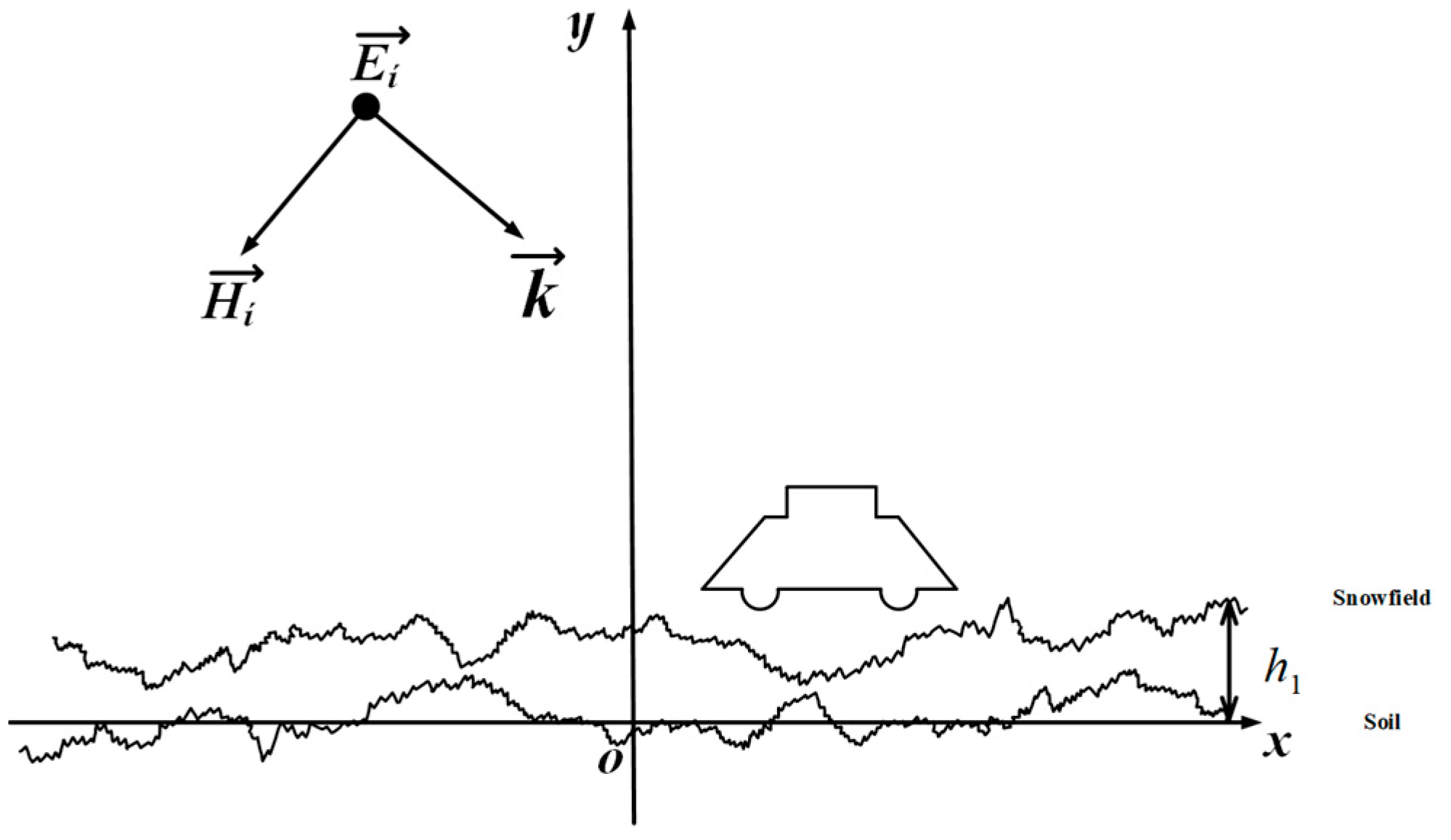
The geometric schematic of the composite electromagnetic scattering model used in this study is shown in Figure 1, which consists of a three-layer system: a rough-surface vehicle, a snow layer, and soil. In Figure 1, the upper curve represents the air–snow interface, where the rough-surface vehicle is positioned just in contact with the snow surface. The lower curve denotes the snow–soil interface. E i indicates the electric field component of the incident wave, H i represents the magnetic field component, k denotes the wave vector of the incident wave, and h 1 corresponds to the thickness of the snow layer.
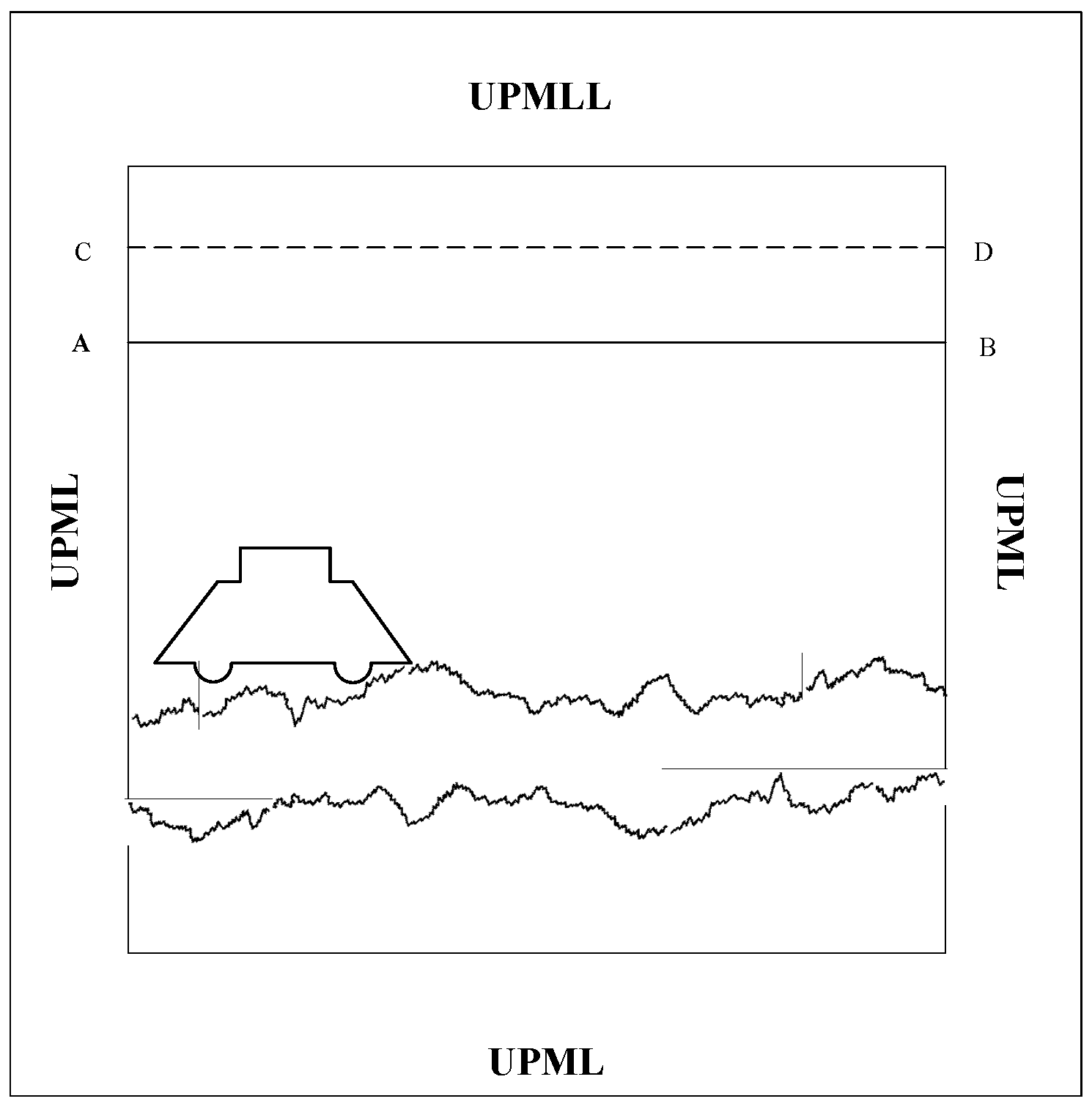
The FDTD model used in this study is illustrated in Figure 2. The connecting boundary AB is selected as a plane and extended outward to the absorbing boundary layer. The total field region is located below boundary AB, while the scattered field region lies above it. The incident wave is introduced into the total field region by applying an equivalent electromagnetic source along the connecting boundary AB. The output boundary CD is positioned within the scattered field region, parallel to boundary AB, and likewise extends into the absorbing layer. A uniaxial perfectly matched layer (UPML) is placed at the outermost boundary to suppress unwanted reflections and ensure the accuracy of the time-domain simulation.

2.2. Geometric Modeling of a Rough-Surface Vehicle over Snow-Covered Soil

2.2.1. CAD Modeling of a Rough-Surface Vehicle

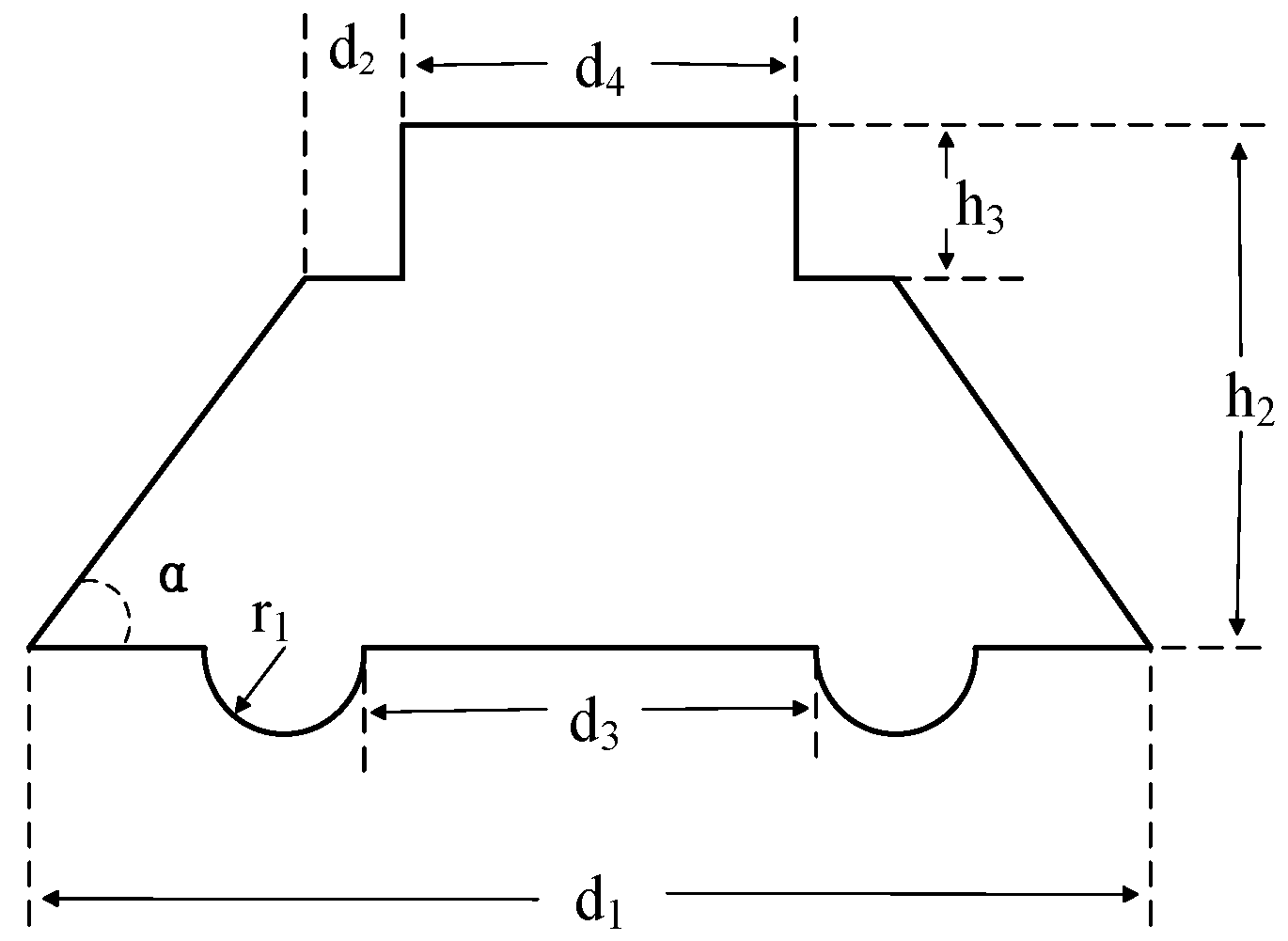
Computer-aided design (CAD) software is a computer program used for creating, modifying, analyzing, or optimizing designs. It has become an indispensable tool in modern engineering design, architectural planning, and manufacturing industries. CAD software not only improves design efficiency but also significantly enhances precision and quality. The earliest CAD system appeared in the 1960s, with Sketchpad developed by Ivan Sutherland, which is widely regarded as the first true CAD system [16]. Modern CAD platforms integrate precise geometric modeling, intuitive editing interfaces, automated design tools, and strong interoperability [17], enabling their widespread application across various professional fields [18,19,20]. The CAD model of the rough-surface vehicle is shown in Figure 3.
In Figure 3, d 1 represents 4.5 m, d 2 represents 0.1 m, d 3 represents 1.5 m, d 4 represents 1.5 m, h 2 represents 1.6 m, h 3 represents 0.5 m, the wheel radius r 1 is 0.5 m, and the angle α is 45 °.
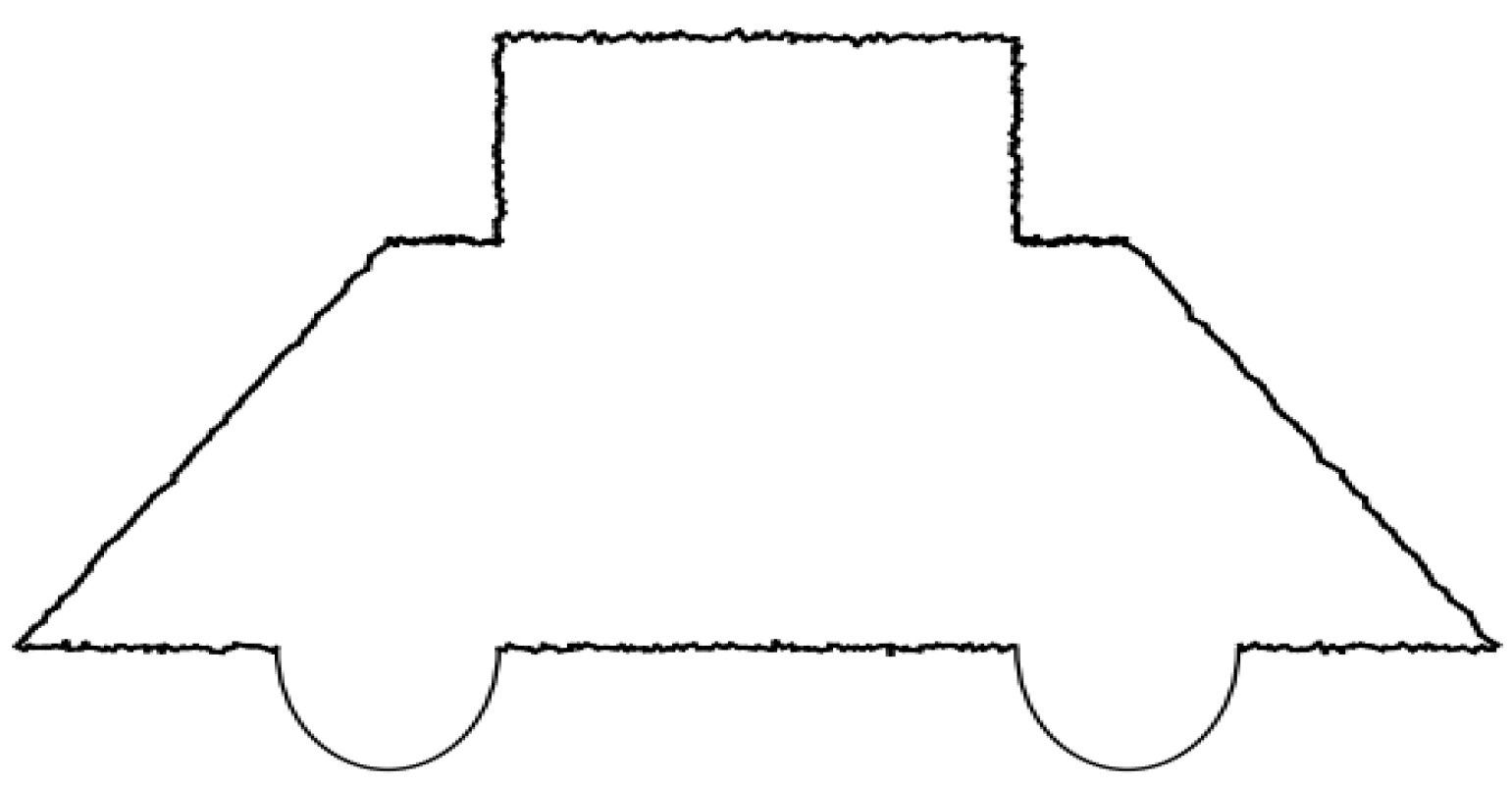
Figure 4 presents the rough-surface vehicle model. The CAD model was exported in DXF file. Drawing Exchange Format (DXF) [21], developed by Autodesk, is a file format for exchanging CAD data, enabling the sharing of vector graphics across different CAD software. It stores 2D/3D model geometric data (e.g., lines, arcs), layers, colors, and other metadata in plain text or binary format. Geometric information can be extracted from DXF files using Python. The straight sections of the vehicle were divided into 100-line segments. Monte Carlo curves were simulated using the Numpy library in Python to represent the roughness of the surface, with a root mean square (RMS) height of 0.05 λ . This approach enables the generation of a vehicle model with a rough surface.
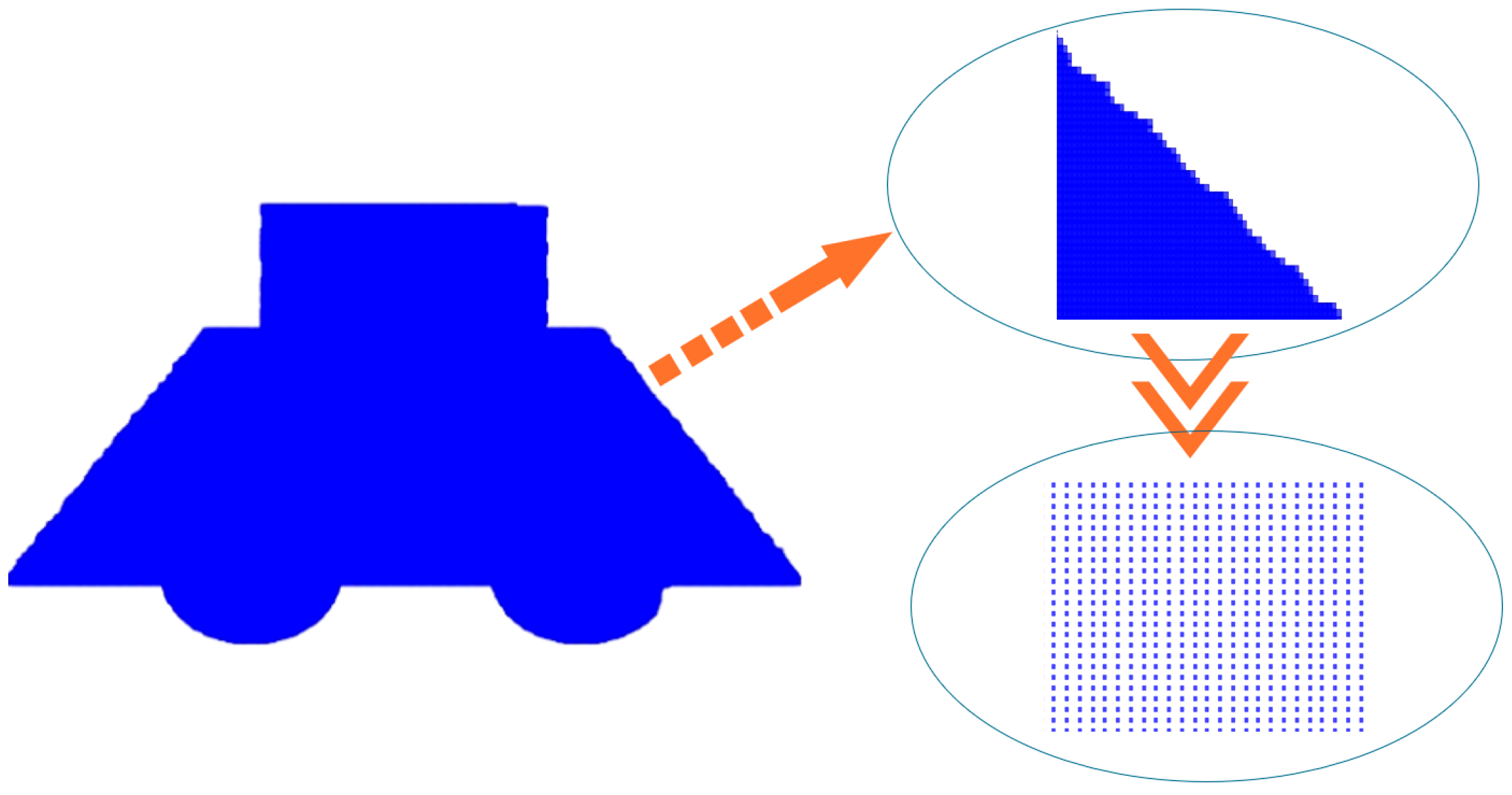
Figure 5 shows the point sampling on the rough-surface vehicle, where the horizontal and vertical spacing between points corresponds to the size of a simulation grid. This ensures that each point aligns with a single grid cell during the simulation.

2.2.2. Geometric Modeling of Snow-Covered Soil Surface

For one-dimensional rough surfaces, the Monte Carlo method [22] is commonly used for simulation. In this study, the Monte Carlo method is applied to model both the snow layer surface and the underlying soil surface. The length of the randomly generated rough surface is defined as L , which is discretized into n equal segments on average. The spacing between adjacent discrete points is Δ x . The n-th discrete point on the surface can be expressed as x n = n Δ x . The expression for the simulated rough surface profile is given in Equation (1).
f ( x n ) = 1 L j = N / 2 i = N / 2 F ( K j ) e x p ( i K j x n )
f ( x n ) represent the profile of the simulated rough surface. Its spatial Fourier transform is denoted as f ( k j ) , which is defined in Equations (2) and (3).
f ( k j ) = 2 π 2 Δ K W ( K j ) N ( 0 , 1 ) + i N ( 0 , 1 ) , j > 0
f ( k j ) = 2 π 2 Δ K W ( K j ) N ( 0 , 1 ) , j = 0
The roughness height in the spatial domain is denoted as f ( x n ) , while f ( k j ) and the Fourier coefficient F ( K j ) represent its frequency domain counterparts, where k j denotes the j-th frequency component and the power spectral density is represented by W ( K j ) . The frequency component Δ K is a randomly distributed value. The random variable N ( 0 ,   1 ) follows a normal distribution with a mean of 0 and a variance of 1. To reduce spectral aliasing when j < 0 , a conjugate symmetry condition is applied so that F ( K j ) = F ( K j ) . The power spectral density of the rough surface is given in Equation (4).
W ( K ) = 2 π δ h 2 l 2 ( 1 + K 2 l 2 ) 3 2

2.3. Modeling of Dielectric Constant of the Medium

2.3.1. Dielectric Property Modeling of the Snow Layer

According to the liquid water content, snow can be classified into three categories [23]: dry snow, moist snow, and wet snow. Dry snow is primarily composed of a mixture of air and ice, whereas wet snow is more complex and consists mainly of water, ice, air, and dry snow. The corresponding dielectric constant is expressed in Equation (5).
ε s   = V a + V i ε i + V w ε w
In Equation (5), V i , V w , and V a denote the volume fractions of ice, water, and air, respectively. ε w = 80 j 5 and ε i = 3.15 j 0.006 represent the dielectric constants of water and ice, respectively. ε i follows the formulation given in Equation (6).
ε i = 3.15 + 57.34 ( 1 f + 2.48 × 10 14 f ) · e x p ( 3.62 × 10 2 T )

2.3.2. Dielectric Property Modeling of Soil

The dielectric properties of soil are primarily determined by its volumetric water content. Commonly used empirical or semi-empirical models include the Topp model [24], the generalized refractive mixing dielectric model (GRMDM) [25], the Wang and Schmugge model [26], and the MICRO–SWEAT model [27]. Among them, the four-component model proposed by Wang and Schmugge demonstrates higher accuracy and applicability in estimating soil dielectric properties, as it accounts for factors such as temperature, bulk density of bare soil, and soil moisture content. Unlike traditional models that consider only soil moisture, this model incorporates soil composition and temperature, enabling a more comprehensive characterization of the soil’s dielectric constant. The influencing factors of each dielectric constant of soil are shown in Table 1.
When estimating the dielectric constant of soil using the four-component model, the soil is typically considered as a mixture of sand, clay, rock matrix, and water [28]. S % denote the sand content and C % represents the clay content in the soil, subject to the constraint S + C 100 . The soil moisture at the wilting point satisfies the relationship given in Equation (7).
W p = 0.06774 0.00064 × S + 0.00478 × C
The critical volumetric moisture content is empirically defined by Equation (8).
m t = 0.49 W p + 0.165
The parameters are defined according to Equation (9).
β = 0.57 W p + 0.481
Under typical conditions, the density of soil minerals is taken as ρ r = 2.6 g/cm3, and the bulk density of dry soil is assumed to be ρ b . The soil porosity can be calculated using Equation (10).
p = 1 ρ b ρ r
ρ b is determined by Equation (11).
ρ b = 3.455 / R 0.3018
The condition satisfied by R is given in Equation (12).
R = 25.1 0.21 × S + 0.22 × C
After determining the above parameters, the equivalent dielectric constant can be calculated based on soil moisture m v . When m v m t ,
ε x = ε i + ( ε w ε i ) m v m t β
When m v > m t ,
ε s = m t ε x + ( m v m t ) ε w + ( p m v ) ε a + ( 1 p ) ε r
The relationships satisfied by the coefficients in the above equations are given in Equation (15).
ε x = ε i + ( ε w ε i ) β
In the above equations, ε x is the dielectric constant of the soil. ε i represents the dielectric constant of ice; ε r is the dielectric constant of rock; ε a is the dielectric constant of air; and the dielectric constant of water, denoted as ε w , is calculated according to Equations (16)–(18).
ε w = 4.9 + ε w 0 4.9 1 + j 2 π f τ w
ε w 0 ( T ) = 88.045 0.4147 T + 6.295 × 10 4 T 2 + 1.075 × 10 5 T 3
2 π τ w ( T ) = 1.1109 × 10 10 3.824 × 10 12 T + 6.938 × 10 14 T 2 5.096 × 10 16 T 3
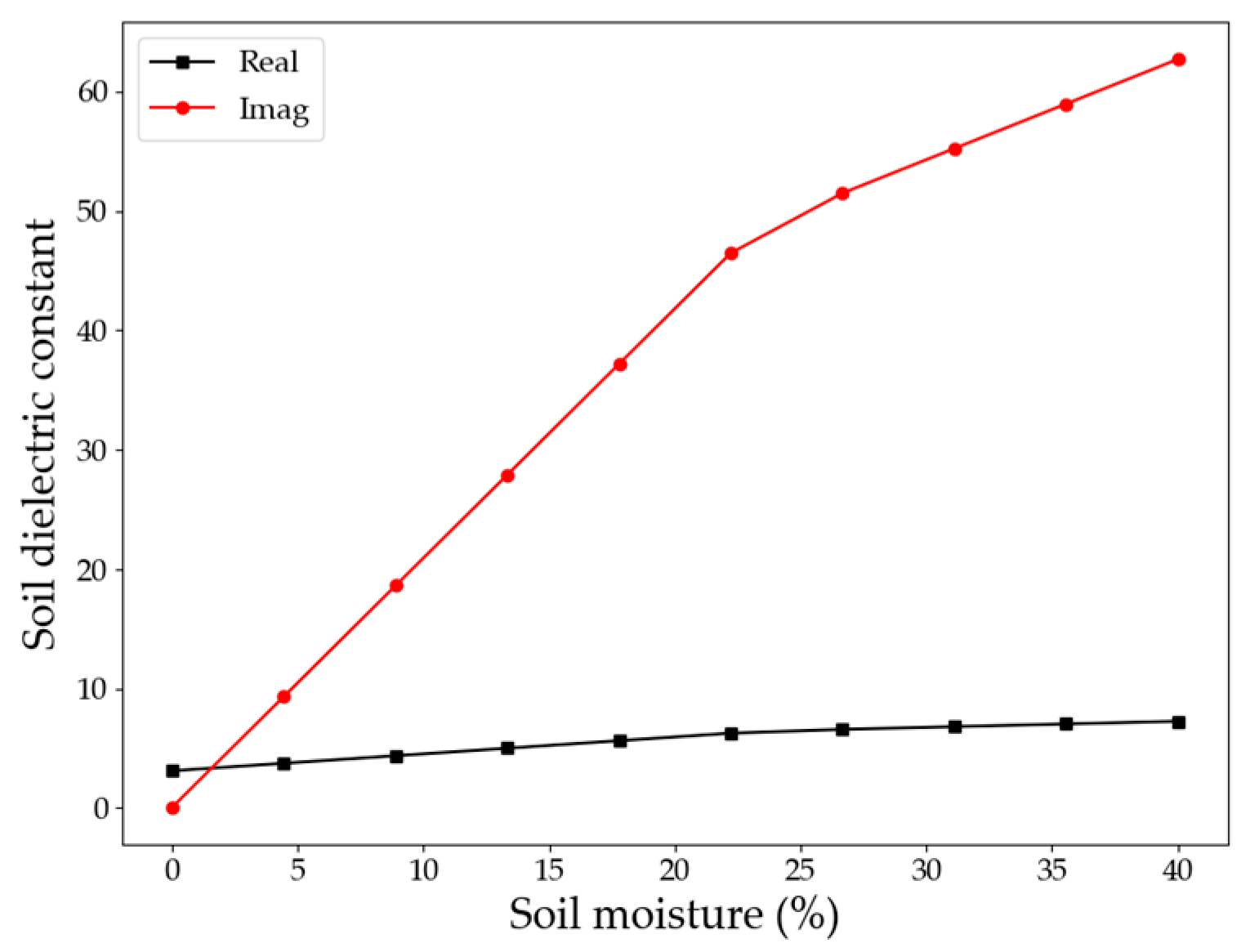
In the equation, τ w is the relaxation time of water, the soil Celsius temperature is denoted as T . When the other parameters in the equation are determined, the effective dielectric constant of the soil can be obtained. The variation in the soil complex dielectric constant with moisture content is shown in Figure 6.
As shown in Figure 6, at a frequency of f = 6 GHz and temperature T = 15 °C, the real part of the soil dielectric constant gradually increases with increasing soil moisture content, while the imaginary part increases rapidly as the soil moisture content rises.

3. Theory of Finite-Difference Time-Domain (FDTD) Method

For the two-dimensional case studied in this work, the physical quantities in Maxwell’s equations are independent of the z-axis. Typically, the incident electromagnetic waves are classified as either transverse magnetic (TM) or transverse electric (TE) waves. Taking TM waves as an example, according to the theory of the finite-difference time-domain (FDTD) method [29], the difference equations for TM waves in a two-dimensional electromagnetic field problem satisfy Equations (19)–(21).
H x n + 1 / 2 ( i , j + 1 / 2 ) = C P ( m ) · H x n 1 / 2 ( i , j + 1 / 2 ) C Q ( m ) · E z n ( i , j + 1 ) E z n ( i , j ) Δ y
H y n + 1 / 2 ( i + 1 / 2 , j ) = C P ( m ) · H y n 1 / 2 ( i + 1 / 2 , j ) + C Q ( m ) · E z n ( i + 1 , j ) E z n ( i , j ) Δ x
E z n + 1 ( i , j ) = C A ( m ) · E z n ( i , j ) + C B ( m ) · [ H y n + 1 / 2 ( i + 1 / 2 , j ) H y n + 1 / 2 ( i 1 / 2 , j ) Δ x H x n + 1 / 2 ( i , j + 1 / 2 ) H x n + 1 / 2 ( i , j 1 / 2 ) Δ y ]
In the above equations, m denotes the position of the FDTD grid node. The parameters C A ( m ) , C B ( m ) , C P ( m ) , C Q ( m ) satisfy Equations (22)–(25), respectively.
C A ( m ) = 1 σ ( m ) Δ t 2 ε ( m ) 1 + σ ( m ) Δ t 2 ε ( m ) ,
C B ( m ) = Δ t ε ( m ) 1 + σ ( m ) Δ t 2 ε ( m ) ,
C P ( m ) = 1 σ m ( m ) Δ t 2 μ ( m ) 1 + σ m ( m ) Δ t 2 μ ( m ) ,
C Q ( m ) = Δ t μ ( m ) 1 + σ m ( m ) Δ t 2 μ ( m ) .
In introducing the incident wave at the connection boundary, a projection method is employed to determine the wave values along the boundary. Given that the projected y coordinates may fall outside the predefined sampling points within the computational domain, linear interpolation is utilized to estimate the amplitude of the incident wave at a specified distance d.
E i n c ( d ) = [ 1 d + f l o o r ( d ) ] E i n c [ f l o o r ( d ) ] + [ d f l o o r ( d ) ] E i n c [ f l o o r ( d ) + 1 ]
H i n e ( d ) = [ 1 d + f l o o r ( d ) ] H i n e [ f l o o r ( d ) ] + [ d f l o o r ( d ) ] H i n e [ f l o o r ( d ) + 1 ]
In the equation, floor denotes the floor function, which rounds a value down to the nearest integer. The field value of the incident wave at the boundary is given by:
E z ( r ) = E i n c ( d )
H x ( r ) = H i n c ( d ) cos θ i
H y ( r ) = H i n c ( d ) sin θ i ( 25 )
In the finite-difference time-domain (FDTD) region, Δx, Δy represent the discrete grid spacings in x, y directions, respectively. A perfectly matched layer (PML) is applied at the outer boundary of the computational domain to absorb outgoing waves. According to Maxwell’s curl equations, the transverse magnetic (TM) mode satisfies Equations (31)–(33).
E z y = j ω μ 1 s y s x H x
E z x = j ω μ 1 s x s y H y
H y x H x y = ( j ω ε 1 + σ 1 ) s x s y E z
In the above equations, the dielectric permittivity is denoted by ε 1 , the magnetic permeability by μ 1 , and the electrical conductivity by σ 1 , which are used to characterize the material properties within the computational domain. The uniaxial parameters in the x , y directions are represented by s x and s y , respectively, and can be expressed as shown in Equation (34).
s x = k x σ x / j ω ε 0 ,   s y = k y σ y / j ω ε 0
Among them, σ x and K x follow Equations (35) and (36), respectively.
σ x ( x ) = σ max ( | x x 0 | n ) / d n
k x ( x ) = 1 + ( k max 1 ) ( | x x 0 | n ) / d n
In the above equations, d represents the thickness of the uniaxial perfectly matched layer (UPML), and the optimal absorption performance is achieved when n = 4 , with σ max = ( n + 1 ) / ( ε r 150 π δ ) and k max = 5 11 denoting the corresponding uniaxial parameters. After the FDTD simulation reaches a steady state, the near-field data on the output boundary are recorded. The far-field scattered field can then be obtained using the time-harmonic field extrapolation method. The composite scattering coefficient of the rough-surfaced vehicle over snow-covered soil is described by Equation (37).
σ s = 10 lg ( N R C S ) d B
In the above expression, the normalized radar cross section (NRCS) N R C S follows Equation (38).
N R C S = lim r 2 π r L | E s | 2 | E i | 2
r ,   E s and E i represent the distance from the observation point to the origin and the far-field scattered electric field relative to the incident wave electric field, respectively, while L denotes the sampling length of the soil surface. Based on the above equations, the FDTD algorithm is implemented using Fortran. Additionally, modules for data reading and conditional checks are incorporated into the code to meet the modeling requirements of a rough-surface vehicle within the algorithm.

4. Computational Experiments and Analysis

Considering that a higher frequency of identical target components increases the algorithm’s computational complexity, and that the vehicle’s surface roughness must closely match real-world conditions, the incident wave is set to a frequency of f = 6 GHz. Unless otherwise specified, the following simulation settings are used throughout this study: the incident angle is θ i = 30 °, and the vehicle body material is M g 3 F e , with a calculated dielectric constant of ε = 121.6 j 28.8 . The wheel material is N i , and its dielectric constant, as computed in [30], is ε = 29 j 8.9 . The root mean square (RMS) height of the vehicle surface roughness is δ = 0.05 λ . The snow layer has a depth of 15 λ and a moisture content of 30 % , corresponding to a dielectric constant [23] of ε = 14.8 j 0.65 . The soil moisture content is 30 % , from which the relative dielectric constant [28] of the soil is calculated to be ε s = 8.0 j 37.7 . The rough surface scattering is simulated over 30 independent realizations.

4.1. Validation of the FDTD Algorithm

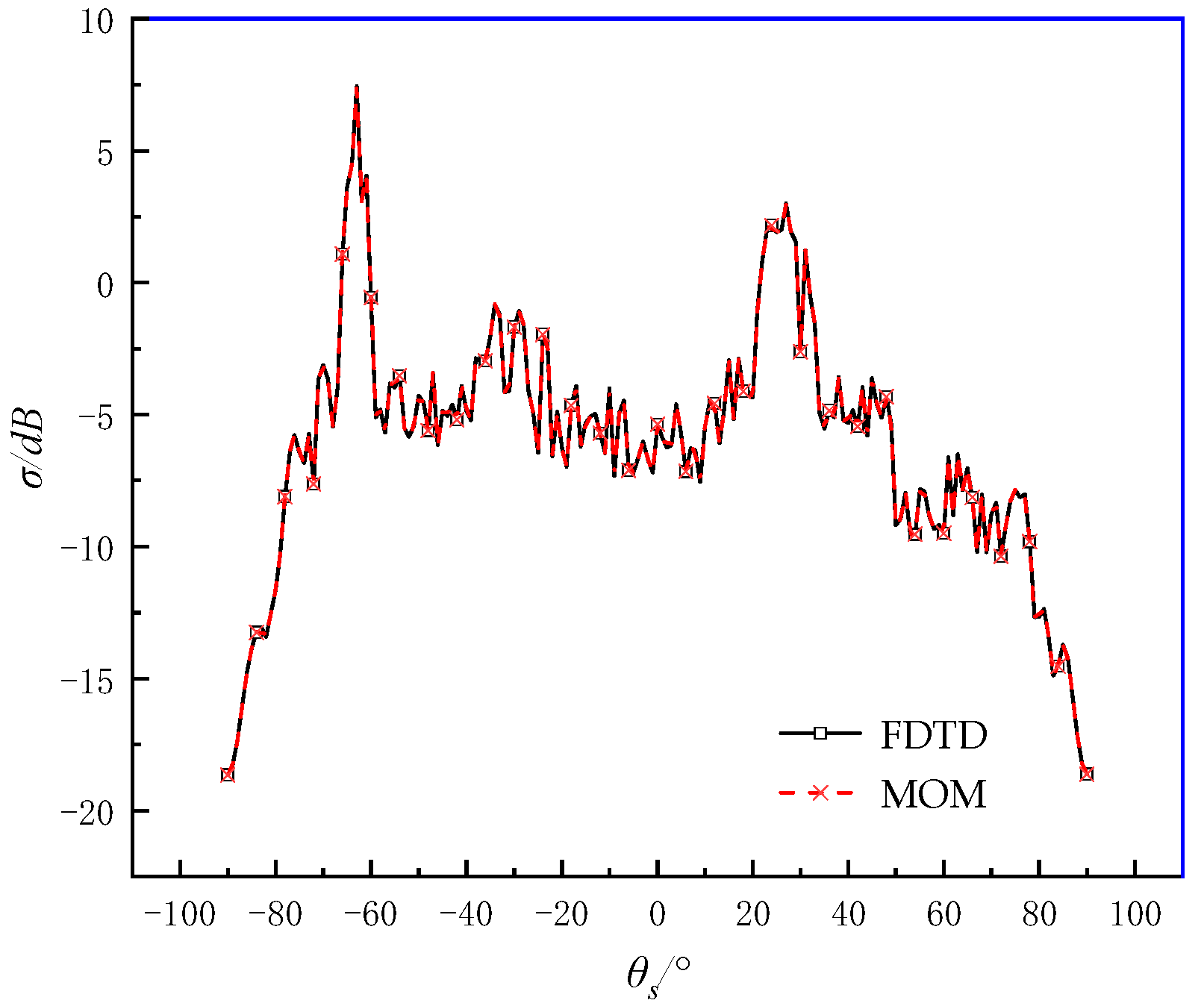
To validate the effectiveness of the FDTD algorithm employed in this study, the composite scattering coefficients of an exponential rough surface and the target above it were computed using the FDTD method and compared with the results obtained from the method of moments (MOM). The comparison results are presented in Figure 7. In the simulation, the frequency was set to f = 6 GHz, and the incident angle was θ i = 30 ° . The dielectric constant of the vehicle body was ε = 121.6 j 28.8 , and that of the wheels was ε = 29 j 8.9 . The snow layer had a depth of 15 λ and a thickness of ε = 14.8 j 0.65 , while the dielectric constant of the soil was set to ε s = 8.0 j 37.7 . The rough surface scattering was simulated over 30 independent realizations to ensure statistical reliability. As shown in Figure 7, the angular distribution curves obtained from the two algorithms exhibit excellent agreement, which demonstrates the accuracy of the FDTD algorithm.

4.2. Analysis of Composite Scattering Coefficient as a Function of Incident Angle

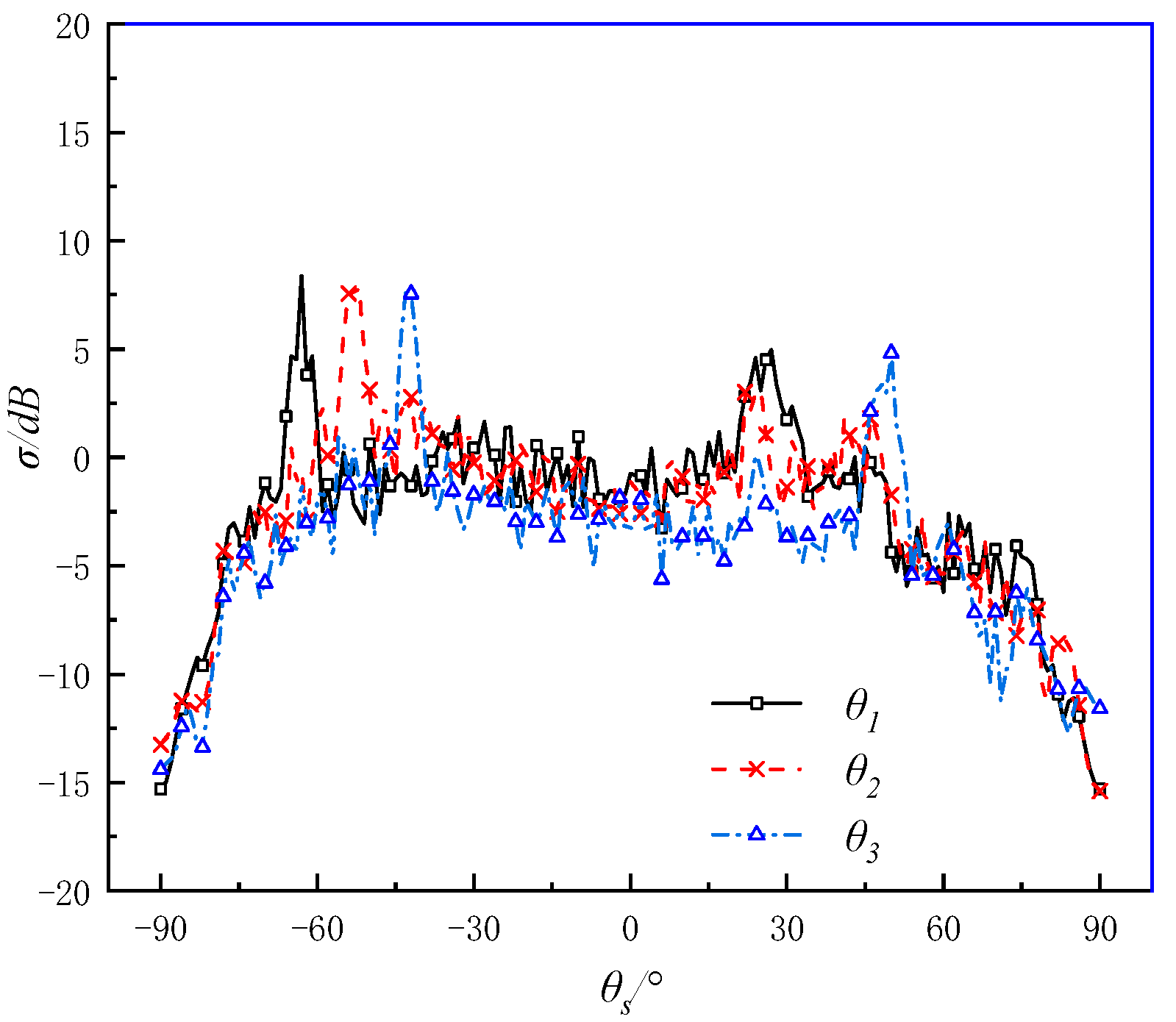
Figure 8 shows the computed results of the composite scattering coefficient σ as a function of the incident angle, under the conditions of θ i = 30 , 40 , 50 . Take θ i = 30 as θ 1 , θ i = 40 as θ 2 , θ i = 50 as θ 3 .
As shown in Figure 8, σ exhibits oscillatory variation with the scattering angle and shows a scattering enhancement effect in the specular reflection direction. θ 1 , θ 2 , and θ 3 each exhibit distinct peaks at θ s = 50 , 40 , 30 . This phenomenon is attributed to the significant influence of the rough vehicle surface on the scattering coefficient. Although θ 1 and θ 2 show relatively small differences, both differ markedly from θ 3 . Overall, σ tends to decrease with increasing incident angle across most of the angular range.

4.3. Analysis of the Composite Scattering Coefficient as a Function of Incident Frequency

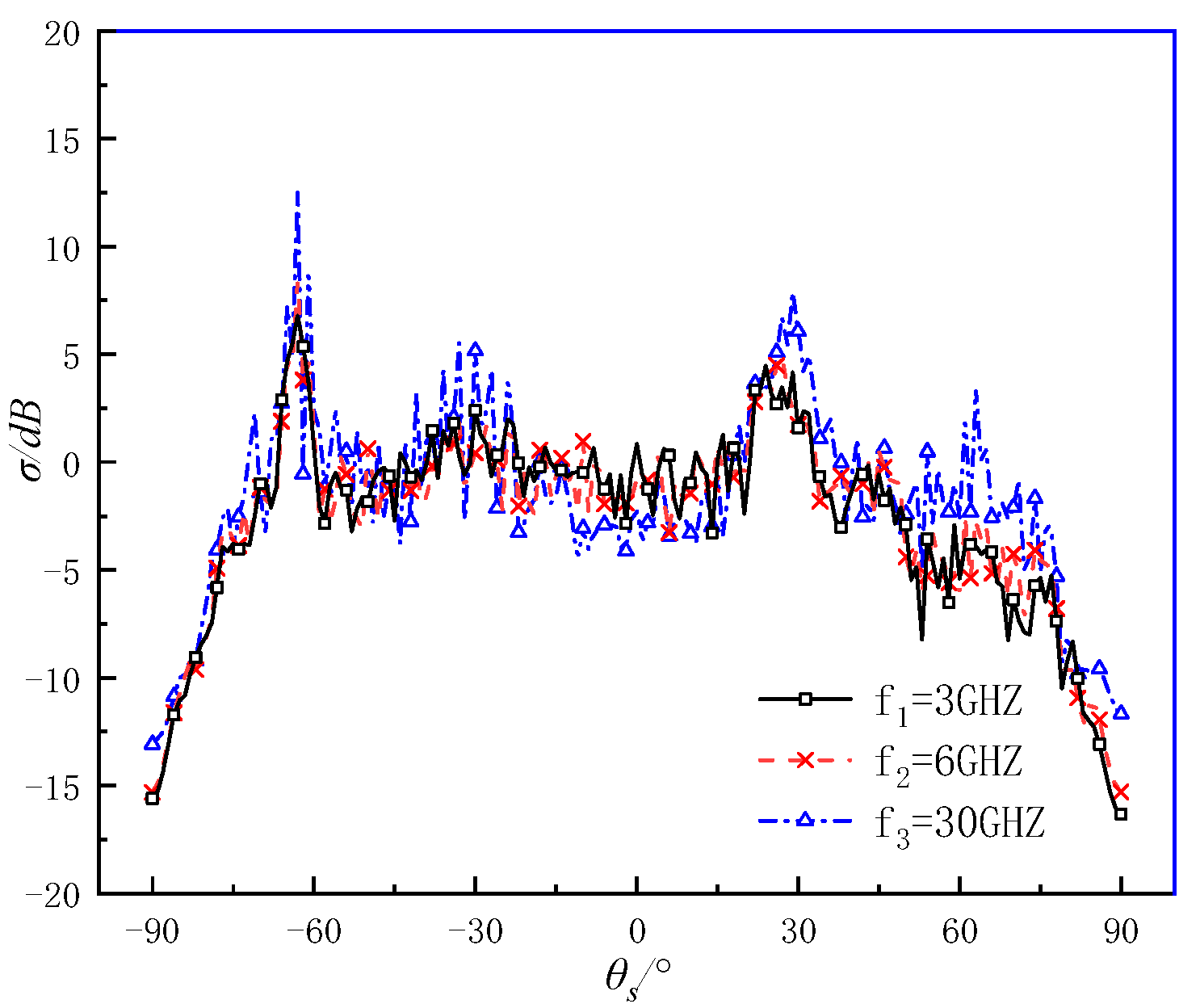
The frequencies are set to f 1 = 3 GHz, f 2 = 6 GHz, and f 3 = 30 GHz, with corresponding wavelengths λ 1 = 0.1 m, λ 2 = 0.05 m, and λ 3 = 0.01 m. Figure 9 shows the variation in σ with respect to wavelength.
As shown in Figure 9, the scattering coefficient increases with increasing frequency. This is because as the wave frequency increases, the wavelength decreases, resulting in an increase in the relative roughness of both the vehicle and the snow-covered terrain. This enhances the coherent scattering effect, thereby increasing the scattering coefficient. However, at frequency 30 < θ s < 30 , the scattering coefficient decreases with increasing frequency. This anomaly is attributed to a resonance phenomenon between the electromagnetic wavelength and the structural features of the target and terrain.

4.4. Variation in the Composite Scattering Coefficient with Different Vehicle Placement Configurations

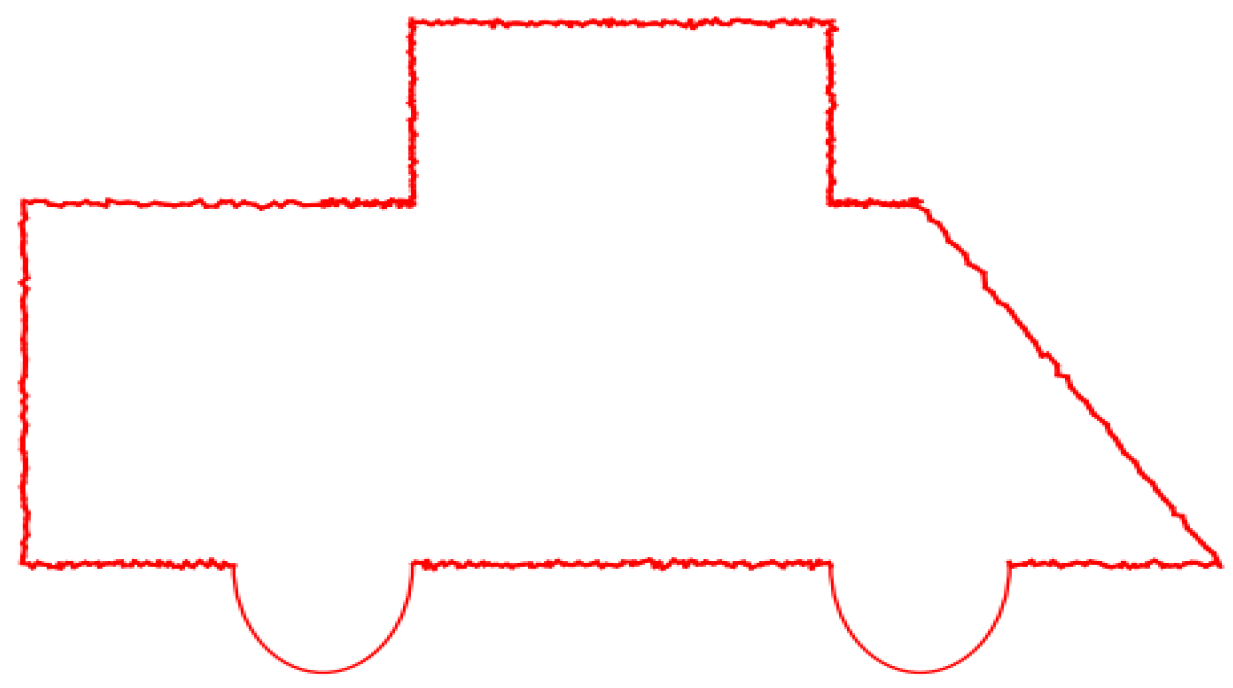
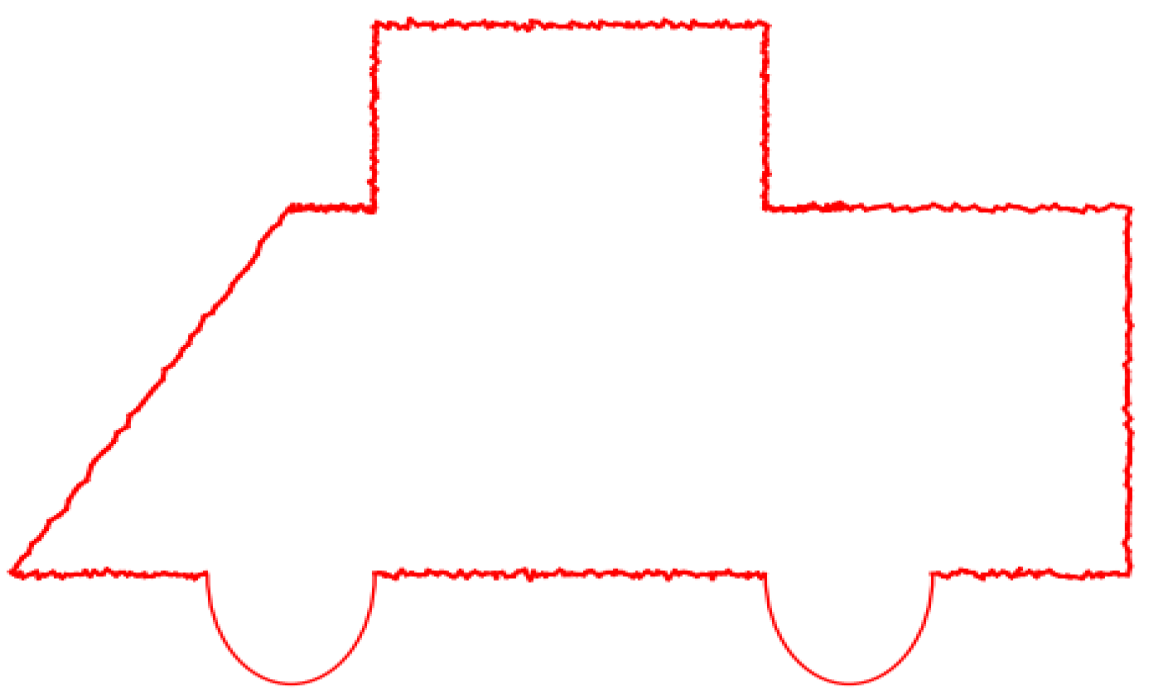
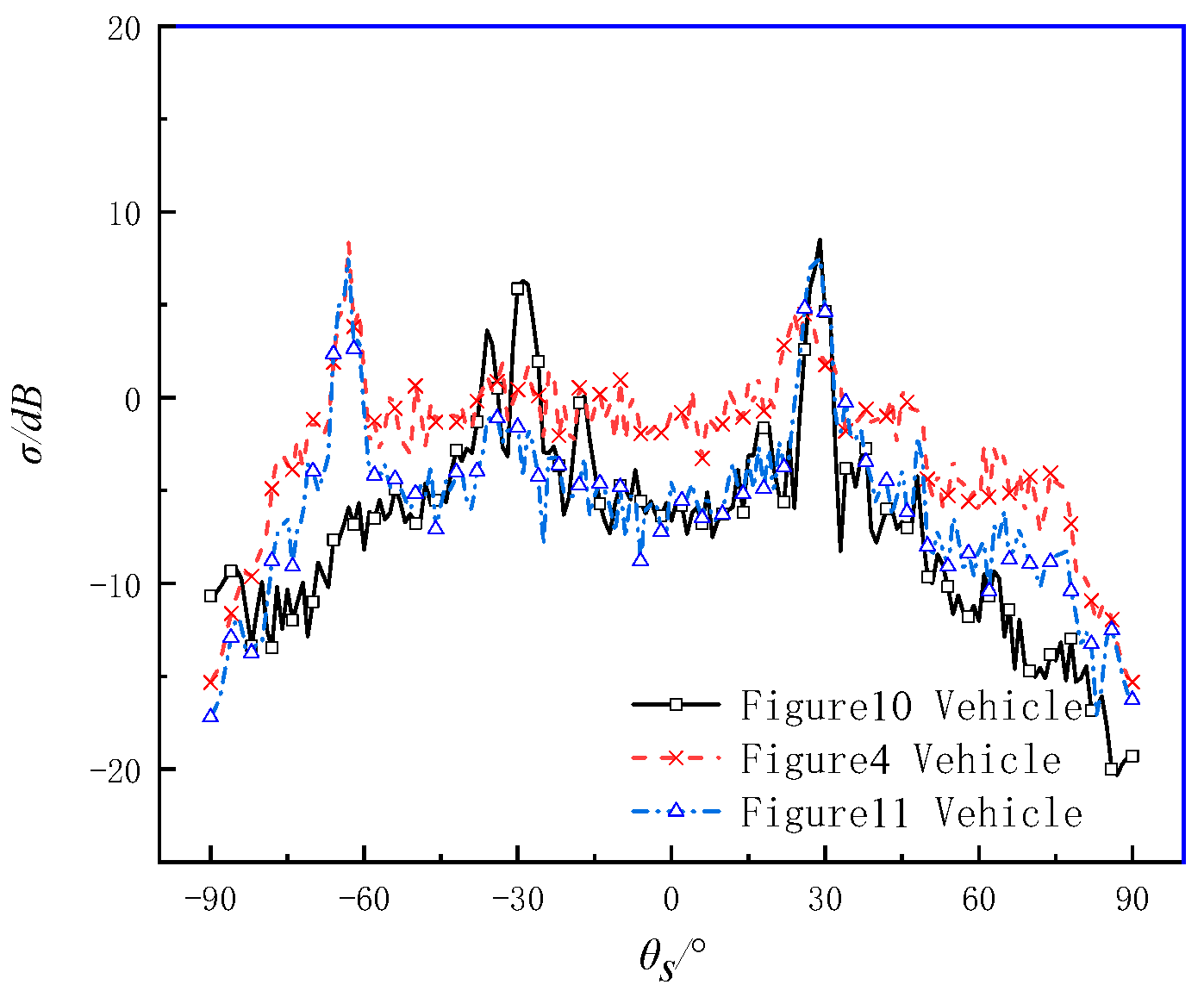
As shown in Figure 10 and Figure 11, schematic diagrams of the two vehicle parking configurations are presented. The calculated composite scattering coefficients corresponding to these configurations, as well as the angular distribution of the scattering coefficient for the vehicle shown in Figure 4, are illustrated in Figure 12.
As shown in Figure 11, the angular distribution curves of the scattering coefficient exhibit a sharp peak at angle θ s = 60 for the vehicle under the first parking configuration, while a peak appears at angle θ s = 30 for the vehicle shown in Figure 11. This indicates that the observed peaks are primarily caused by electromagnetic wave reflection from the sloped left side of the rough-surfaced vehicle. The varying inclination angles on the left side lead to irregular effects on the scattering coefficient.

4.5. Variation in the Composite Scattering Coefficient with the Root Mean Square (RMS) Height of the Vehicle Surface

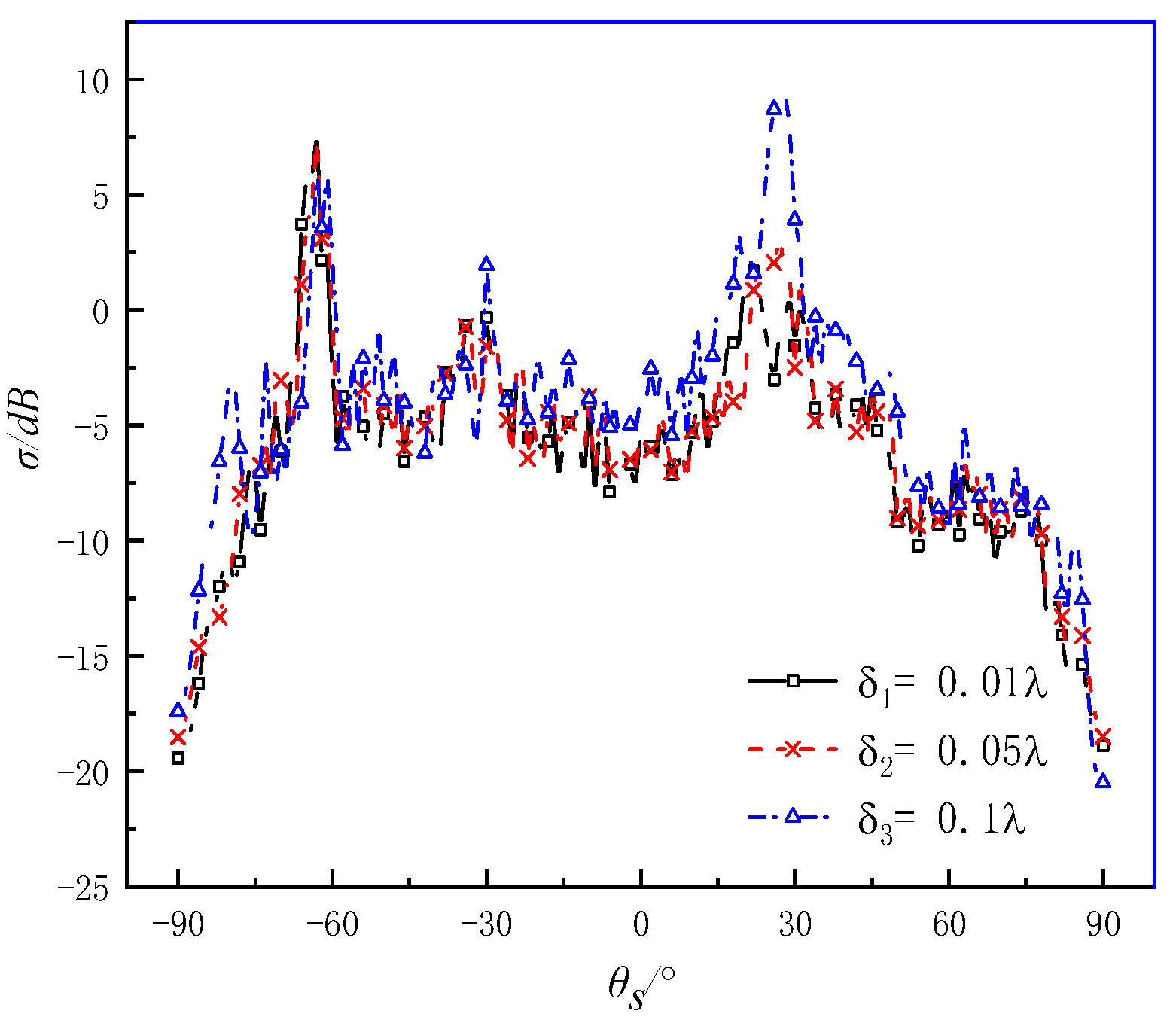
Figure 13 shows the variation in the composite scattering coefficient with surface height fluctuations of the vehicle. The root mean square (RMS) values of the surface height fluctuations are δ 1 = 0.01 λ , δ 2 = 0.05 λ , and δ 3 = 0.1 λ , respectively.
As shown in Figure 13, the composite scattering coefficient exhibits an enhanced scattering effect in the specular reflection direction σ and a sharp peak at θ s = 60 . Overall, the composite scattering coefficient increases with the rise in the root mean square (RMS) height of the surface fluctuations. This is because greater RMS values correspond to more pronounced surface irregularities, which lead to increased scattering in incoherent directions and reduced scattering in the coherent (specular) direction.

4.6. Variation in the Composite Scattering Coefficient with Snow Layer Moisture Content

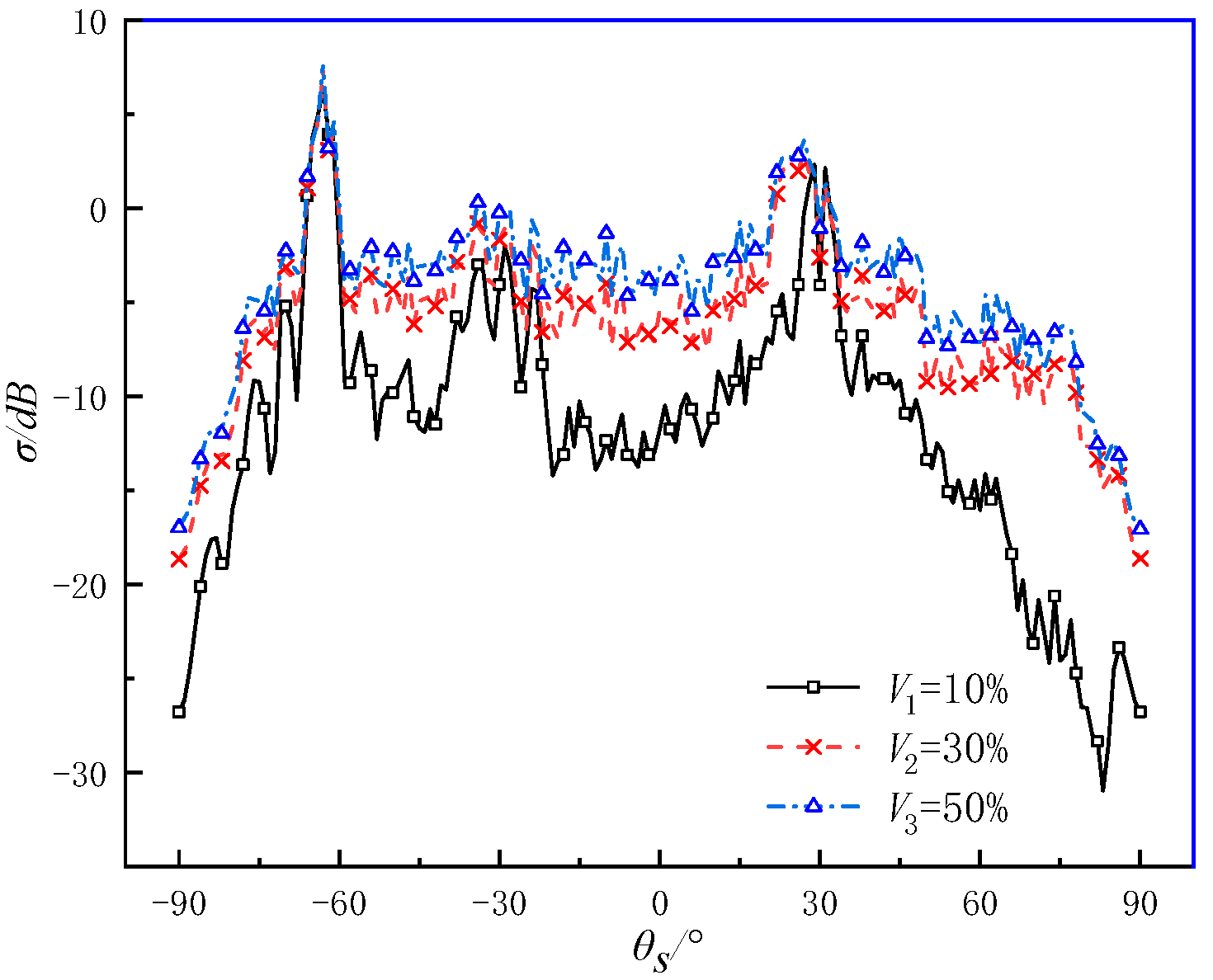
The snow moisture contents are set to V 1 = 10 % , V 2 = 30 % , and V 3 = 50 % , with corresponding relative permittivities of ε s 1 = 5.8 j 0.14 , ε s 2 = 14.8 j 0.65 , and ε s 3 = 27.9 j 1.4 , respectively. The numerical simulation results are shown in Figure 14.
As shown in Figure 14, σ exhibits oscillatory variations with the scattering angle, with an enhanced scattering effect observed in the specular reflection direction and a peak occurring at θ s = 50 (this phenomenon is consistently observed throughout this study and will not be repeated hereafter). Overall, the scattering coefficient increases with increasing snow moisture content. The scattering coefficients corresponding to V 2 = 30 % and V 3 = 50 % are relatively close, while there is a significant difference compared to V 1 = 10 % . This is because an increase in snow moisture content leads to a higher dielectric constant, thereby enhancing the snow’s scattering capability and resulting in an increase in σ . Similarly, ε s 3 and ε s 2 yield comparable scattering coefficients, which differ considerably from that of ε s 1 .

4.7. Variation in the Composite Scattering Coefficient with Snow Layer Depth

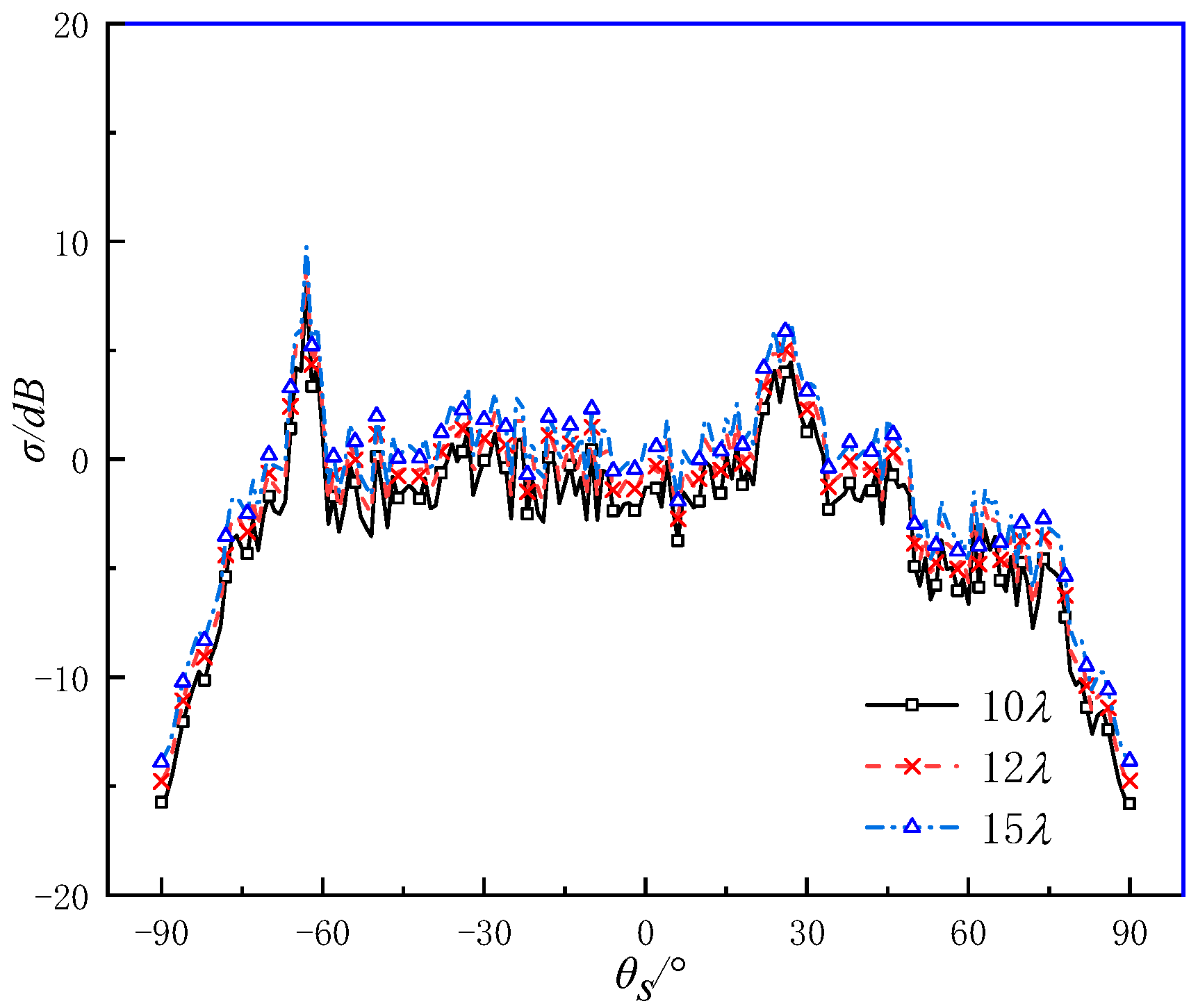
Figure 15 presents the computed results of composite scattering coefficient σ as a function of snow depth, where the snow thicknesses are set to 10 λ , 12 λ , and 15 λ .
As shown in Figure 15, the three angular distribution curves largely overlap, indicating that snow depth has minimal effect on σ . This is because the rough vehicle exhibits a stronger electromagnetic scattering capability compared to a smooth target, and the vehicle’s dielectric constant is significantly higher than that of the snow. Therefore, the snow depth has negligible influence on the scattering coefficient.

4.8. Variation in the Composite Scattering Coefficient with Soil Moisture Content

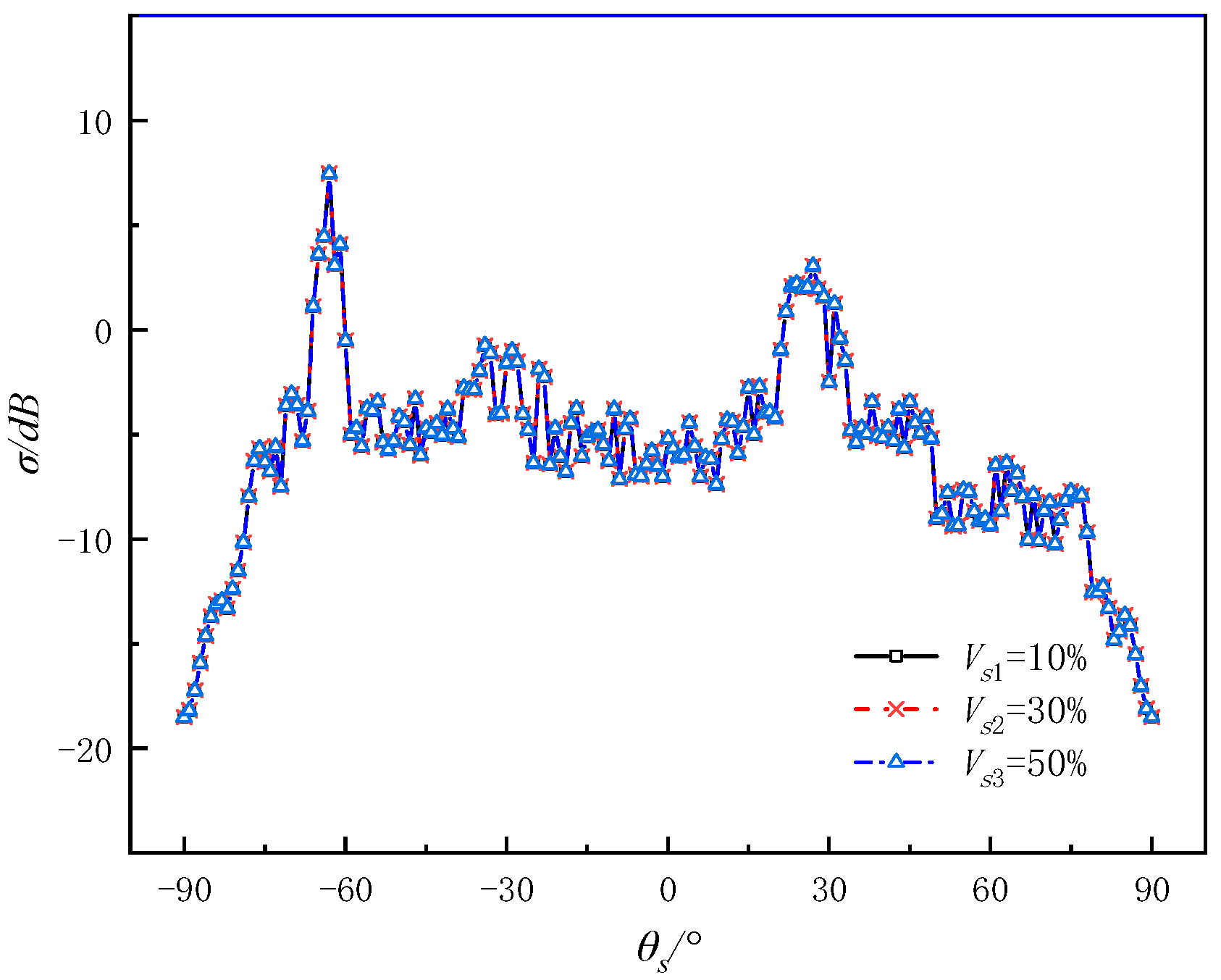
Figure 16 presents the computed results of the composite scattering coefficient σ as a function of soil moisture content, where the soil moisture levels are V s 1 = 10 % , V s 2 = 30 % , and V s 3 = 50 % , corresponding to relative permittivities of ε s 1 = 5.1 j 14.9 , ε s 2 = 8 j 37.7 , and ε s 3 = 9.5 j 50.2 , respectively.
As shown in Figure 16, overall, due to the soil’s dielectric constant being smaller compared to that of the rough vehicle and snow, its electromagnetic scattering capability is weaker. Consequently, σ exhibits only minor variations with changes in soil moisture content, and no clear pattern can be identified.

5. Conclusions

This study employs CAD software to perform geometric modeling of the vehicle and utilizes the Monte Carlo method to simulate scattering at the interfaces between air and snow, snow and soil, and the vehicle’s surface. Based on the dielectric properties of mixed media, the dielectric constant of the snow layer is modeled, while a four-component model is adopted to characterize the soil dielectric properties. Combining these with the finite-difference time-domain (FDTD) method, a simulation analysis of the composite electromagnetic scattering characteristics of a one-dimensional rough ground surface and a rough-surfaced target above it is conducted. This provides a theoretical reference for target recognition in complex electromagnetic environments and helps reveal the variation patterns of scattering characteristics of irregular targets against complex backgrounds. It holds significant practical value for the identification of rough-surfaced targets in complicated environments. For the composite electromagnetic scattering problem involving electrically large targets and backgrounds studied in this paper, the FDTD algorithm requires only about 10% of the memory used by the method of moments (MoM). Moreover, for modeling complex targets as considered in this study, the FDTD method offers greater convenience and flexibility compared to MoM. Therefore, theoretically and practically, this study offers effective solutions for addressing challenges across various engineering and technical fields. It demonstrates applicability in scenarios involving the recognition of rough-surfaced targets within complex backgrounds. At present, this study only considers simple one-dimensional rough-surfaced targets and terrain surfaces, without addressing more complex real-world terrains or composite scattering problems involving multiple targets in buried or partially buried configurations. These aspects warrant further investigation in future work.

Author Contributions

Methodology, C.Y. and X.R.; software, J.H., C.Y. and X.Z.; validation, X.R., C.Y. and X.Z.; formal analysis, C.Y.; investigation, C.Y.; resources, X.R. and Y.W.; data curation, Y.W.; writing—original draft preparation, C.Y. and X.R.; writing—review and editing, X.R.; visualization, J.H.; supervision, X.R.; project administration, C.Y. and J.H.; funding acquisition, X.R. All authors have read and agreed to the published version of the manuscript.

Funding

This research was funded by National Natural Science Foundation of China (61861043) “Research on Composite Electromagnetic Scattering of Typical Ground Objects and Targets in Northern Shaanxi”.

Institutional Review Board Statement

Not applicable for studies not involving humans or animals.

Informed Consent Statement

Informed consent was obtained from all subjects involved in the study.

Data Availability Statement

The original contributions presented in this study are included in the article. Further inquiries can be directed to the corresponding author(s).

Acknowledgments

We would like to express our sincere gratitude to all the authors for their valuable contributions to this paper.

Conflicts of Interest

The authors declare no conflicts of interest.

References

  1. Liu, J.; Zhang, Y.; Wang, L. Advanced electromagnetic scattering computation techniques for complex terrain-target scenarios in radar detection. IEEE Trans. Antennas Propag. 2024, 72, 187–201. [Google Scholar]
  2. Zheng, X.; Huang, Y.; Sun, Z. Post-collapse mine rescue using ultra-wide band radar: Electromagnetic-wave attenuation mechanisms and key influencing factors in coal, rock, and stratified composite media. Process Saf. Environ. Prot. 2025, 198, 107114. [Google Scholar] [CrossRef]
  3. Zhao, W.; Lin, T.; Chen, K. Electromagnetic scattering from composite rough surface-target models: A comprehensive analysis for modern radar applications. IEEE J. Sel. Top. Appl. Earth Obs. Remote Sens. 2024, 17, 2631–2649. [Google Scholar]
  4. Yang, M.; Wang, P.; Li, R. Enhanced target recognition algorithms for military radar systems using complex scattering characteristics. IEEE Trans. Aerosp. Electron. Syst. 2024, 60, 1257–1271. [Google Scholar]
  5. Huang, J.; Li, S.; Zhou, X. Feature extraction techniques from composite electromagnetic scattering for high-precision military target identification. IEEE Sens. J. 2024, 24, 8952–8967. [Google Scholar]
  6. Adão, F.; Pádua, L.; Sousa, J.J. Evaluating soil degradation in agricultural soil with ground-penetrating radar: A systematic review of applications and challenges. Agriculture 2025, 15, 852. [Google Scholar] [CrossRef]
  7. Yao, S.; Guan, R.; Peng, Z. Exploring radar data representations in autonomous driving: A comprehensive review. IEEE Trans. Intell. Transp. Syst. 2025, 26, 7401–7425. [Google Scholar] [CrossRef]
  8. Wu, Q.; Huang, R.; Han, F. 2-D EM Scattering and Inverse Scattering from Inhomogeneous Objects Straddling Multiple Subsurface Planar Layers with a Rough Surface. IEEE Geosci. Remote Sens. Lett. 2024, 21, 1–5. [Google Scholar] [CrossRef]
  9. Marvasti, M.; Boutayeb, H. Numerical Study of Electromagnetic Waves with Sources, Observer, and Scattering Objects in Motion. IEEE Trans. Microw. Theory Tech. 2024, 72, 4421–4430. [Google Scholar] [CrossRef]
  10. Guan, Z.; Li, J.; Han, F. 2-D Electromagnetic Scattering from Multiple Arbitrarily Anisotropic Inhomogeneities Embedded in Multilayered Biaxially Anisotropic Elliptical Cylinders Solved by the Hybrid SIM/SEM. IEEE Trans. Antennas Propag. 2024, 72, 6849–6854. [Google Scholar] [CrossRef]
  11. Li, J.; Li, Z.; Huang, R.; Han, F. Electromagnetic FWI of 2-D Inhomogeneous Objects Straddling Multiple Planar Layers by Finite-Element Boundary Integral and Levenberg–Marquardt Methods. IEEE Trans. Geosci. Remote Sens. 2025, 63, 1–12. [Google Scholar] [CrossRef]
  12. He, A.; Feng, X.; Zhang, Z.; Zhou, Y.; Wang, H.; Kong, X. Electromagnetic Propagation Characteristics of Submarine Cable Detection with Finite Element Analysis. IEEE Trans. Appl. Supercond. 2024, 34, 1–4. [Google Scholar] [CrossRef]
  13. Wu, H.; Fu, K.; Zuo, S.; Lin, Z.; Zhao, X.; Zhang, Y. An Efficient Goal-Oriented Adaptive Finite Element Method for Accurate Simulation of Complex Electromagnetic Radiation Problems. IEEE Trans. Antennas Propag. 2024, 72, 110–122. [Google Scholar] [CrossRef]
  14. Chiu, C.-C.; Chien, W.; Yu, K.-X.; Chen, P.-H.; Lim, E.H. Electromagnetic Imaging for Buried Conductors Using Deep Convolutional Neural Networks. Appl. Sci. 2023, 13, 6794. [Google Scholar] [CrossRef]
  15. Liang, D.; Xu, P.; Tsang, L.; Gui, Z.; Chen, K.-S. Electromagnetic scattering by rough surfaces with large heights and slopes with applications to microwave remote sensing of rough surface over layered media. Prog. Electromagn. Res. 2009, 95, 199–218. [Google Scholar] [CrossRef]
  16. Sutherland, I.E. Sketchpad: A Man-Machine Graphical Communication System. Simulation 1964, 2, R-3. [Google Scholar] [CrossRef]
  17. Tornincasa, S.; Di Monaco, F. The Future and Evolution of CAD. In Proceedings of the 14th International Research/Expert Conference: Trends in the Development of Machinery and Associated Technology, Mediterranean Cruise, 11–18 September 2010. [Google Scholar]
  18. Li, X.; Zhao, Q.; Wu, J. The diffusion of innovation across professional domains: Barriers and facilitators. J. Technol. Transf. 2023, 49, 267–289. [Google Scholar]
  19. Schmidt, M.; Meyer, T.; Hoffmann, R. Technological convergence and its impact on professional fields: A systematic analysis. Digit. Transform. Rev. 2024, 7, 56–71. [Google Scholar]
  20. Wang, L.; Chen, H.; Zhang, Y. Applications of artificial intelligence across multiple professional domains: A comprehensive review. J. Interdiscip. Stud. 2024, 45, 178–196. [Google Scholar]
  21. Autodesk: DXF Reference [OL]. 2021. Available online: https://help.autodesk.com/view/OARX/2021/ENU/?guid=GUID-235B22E0-A567-4CF6-92D3-38A2306D73F3 (accessed on 14 October 2024).
  22. Wagner, R.L.; Song, J.; Chew, W.C. Monte Carlo simulation of electromagnetic scattering from two-dimensional random rough surfaces. IEEE Trans. Antennas Propag. 1997, 45, 235–245. [Google Scholar] [CrossRef]
  23. Ren, X.; Guo, L.; Jiao, Y. Time-Domain Finite-Difference Method Research on Composite Electromagnetic Scattering from Snow-Covered Rough Surface with Rectangular Cross-Section Column Above. Acta Phys. Sin. 2012, 61, 165–174. [Google Scholar]
  24. Pan, X.; Han, Y.; Chun, K.P.; Zhang, J.; Ma, D.; Gao, H. On the laboratory calibration of dielectric permittivity models for agricultural soils: Effect of systematic porosity variation. Vadose Zone J. 2021, 20, e20096. [Google Scholar] [CrossRef]
  25. Wu, S.; Zhao, T.; Pan, J.; Xue, H.; Zhao, L.; Shi, J. Improvement in modeling soil dielectric properties during freeze-thaw transitions. IEEE Geosci. Remote Sens. Lett. 2022, 19, 1–5. [Google Scholar] [CrossRef]
  26. Wang, J.R.; Schmugge, T.J. An empirical model for the complex dielectric permittivity of soils as a function of water content. IEEE Trans. Geosci. Remote Sens. 1980, GE-18, 288–295. [Google Scholar] [CrossRef]
  27. Daamen, C.C.; Simmonds, L.P. Measurement of evaporation from bare soil and its estimation using surface resistance. Water Resour. Res. 1996, 32, 1393–1402. [Google Scholar] [CrossRef]
  28. Suman, S.; Srivastava, P.K.; Pandey, D.K.; Prasad, R.; Mall, R.K.; O’Neill, P. Comparison of soil dielectric mixing models for soil moisture retrieval using SMAP brightness temperature over croplands in India. J. Hydrol. 2021, 602, 126673. [Google Scholar] [CrossRef]
  29. Ge, D.; Yan, Y. Electromagnetic Wave Finite-Difference Time-Domain Method, 3rd ed.; Xi’an Electronic Science and Technology University Press: Xi’an, China, 2011. [Google Scholar]
  30. Li, L.; Peng, G.; Ren, X.-C. Study on the Characteristics of Composite Electromagnetic Scattering from Actual Terrain Surfaces with Multiple Targets. In Proceedings of the 2024 14th International Symposium on Antennas, Propagation and EM Theory (ISAPE), Hefei, China, 23–26 October 2024; pp. 1–4. [Google Scholar]
Figure 1. Schematic diagram of the composite electromagnetic scattering geometry.
Applsci 15 08140 g001
Figure 2. The FDTD model.
Applsci 15 08140 g002
Figure 3. The CAD model of the rough-surface vehicle.
Applsci 15 08140 g003
Figure 4. The rough-surface vehicle model.
Applsci 15 08140 g004
Figure 5. The point sampling results of the vehicle.
Applsci 15 08140 g005
Figure 6. The variation in the soil complex dielectric constant with moisture content.
Applsci 15 08140 g006
Figure 7. Comparison of numerical results between MoM and FDTD.
Applsci 15 08140 g007
Figure 8. Variation in the composite scattering coefficient with incident angle.
Applsci 15 08140 g008
Figure 9. Variation in the composite scattering coefficient with incident frequency.
Applsci 15 08140 g009
Figure 10. The first vehicle parking configuration.
Applsci 15 08140 g010
Figure 11. The second vehicle parking configuration.
Applsci 15 08140 g011
Figure 12. Variation in the composite scattering coefficient with the orientation of the rough-surfaced vehicle.
Applsci 15 08140 g012
Figure 13. Variation in the composite scattering coefficient with vehicle surface height fluctuations.
Applsci 15 08140 g013
Figure 14. Variation in the composite scattering coefficient with snow layer moisture content.
Applsci 15 08140 g014
Figure 15. Variation in the composite scattering coefficient with snow layer depth.
Applsci 15 08140 g015
Figure 16. Variation in the composite scattering coefficient with soil moisture content.
Applsci 15 08140 g016
Table 1. The influencing factors of each dielectric constant of soil.
The Influencing Factors of Each Dielectric Constant of Soil
Influencing FactorsFrequency of IncidenceSoil MoistureSoil Surface TemperatureSoil Sediment ContentSoil Clay Content
Symbolic representation f ( GHz ) m v ( g / cm 3 ) T ( ) S % C %
Disclaimer/Publisher’s Note: The statements, opinions and data contained in all publications are solely those of the individual author(s) and contributor(s) and not of MDPI and/or the editor(s). MDPI and/or the editor(s) disclaim responsibility for any injury to people or property resulting from any ideas, methods, instructions or products referred to in the content.