Article

GoalBERT: A Lightweight Named-Entity Recognition Model Based on Multiple Fusion

School of Information Science and Engineering, Shenyang Ligong University, Shenyang 110159, China
*
Author to whom correspondence should be addressed.
Appl. Sci. 2024, 14(23), 11003; https://doi.org/10.3390/app142311003
Submission received: 20 October 2024 / Revised: 20 November 2024 / Accepted: 25 November 2024 / Published: 26 November 2024
(This article belongs to the Special Issue Natural Language Processing (NLP) and Applications—2nd Edition)

Abstract

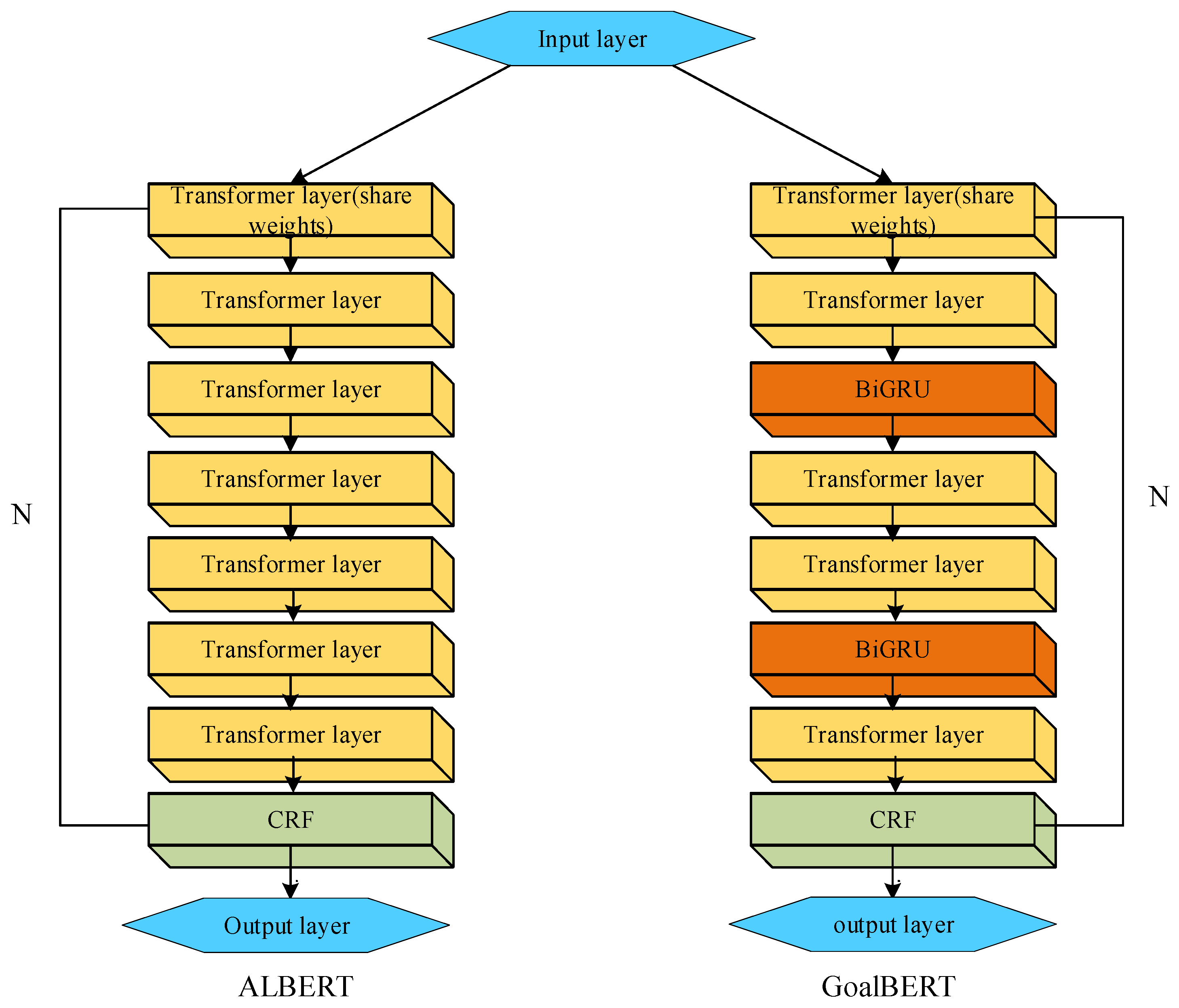
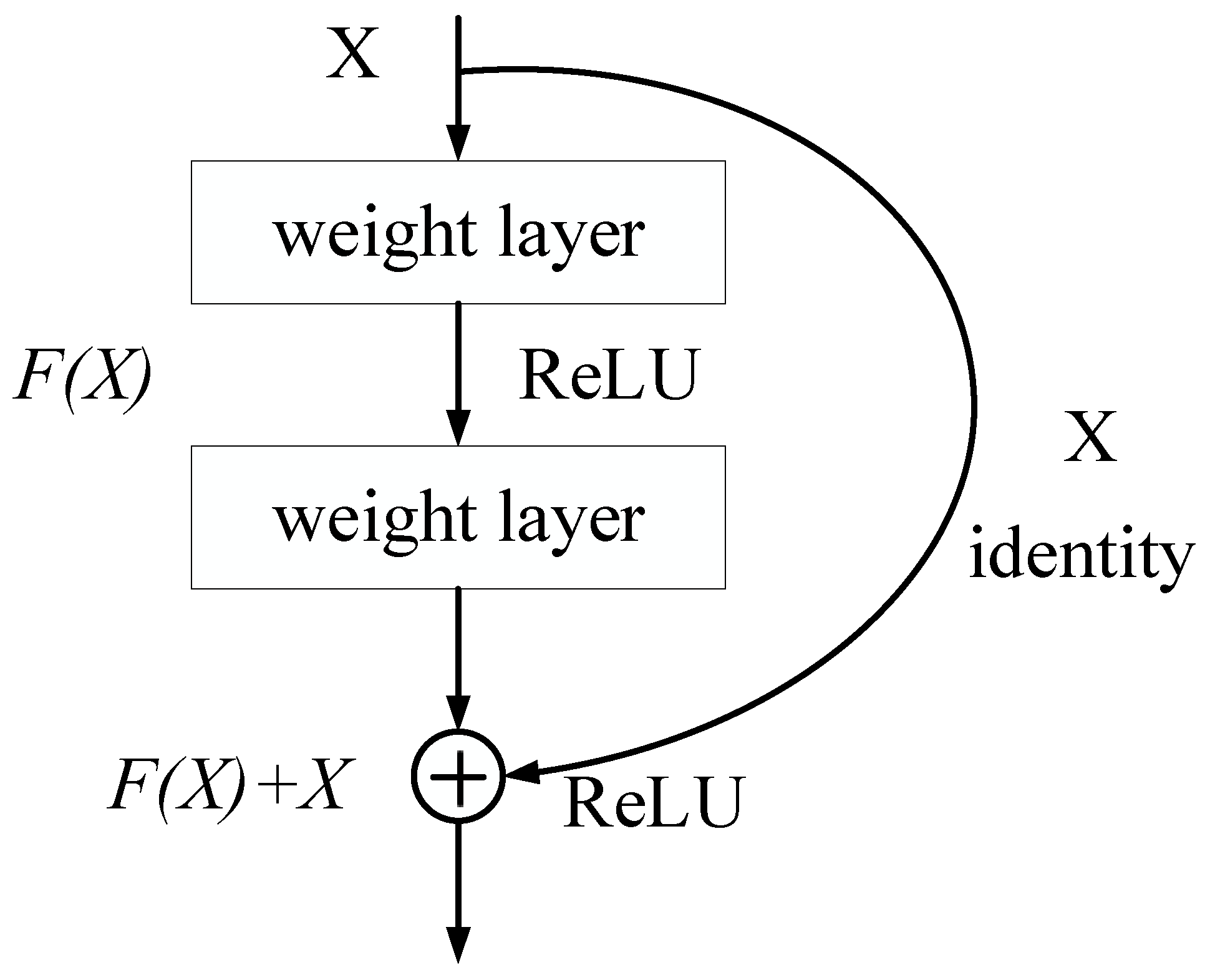
Named-Entity Recognition (NER) as a core task in Natural Language Processing (NLP) aims to automatically identify and classify specific types of entities from unstructured text. In recent years, the introduction of Transformer architecture and its derivative BERT model has pushed the performance of NER to unprecedented heights. However, these models often have high requirements for computational power and memory resources, making it difficult to train and deploy them on small computing platforms. Although ALBERT as a lightweight model uses parameter sharing and matrix decomposition strategies to reduce memory consumption to some extent consumption, it does not effectively reduce the computational load of the model. Additionally, due to its internal sharing mechanism, the model’s understanding ability of text is reduced leading to poor performance in named-entity recognition tasks. To address these challenges, this manuscript proposes an efficient lightweight model called GoalBERT. The model adopts multiple fusion technologies by integrating a lightweight and efficient BiGRU that excels at handling context into part of the Transformer’s self-attention layers. This reduces the high computational demand caused by stacking multiple self-attention layers while enhancing the model’s ability to process context information. To solve the problem of gradient disappearance and explosion during training, residual connections are added between core layers for more stable training and steady performance improvement. Experimental results show that GoalBERT demonstrates recognition accuracy comparable to standard models with accuracy surpassing ALBERT by 10% in multi-entity type scenarios. Furthermore, compared to standard models, GoalBERT reduces memory requirements by 200% and improves training speed by nearly 230%. Experimental results indicate that GoalBERT is a high-quality lightweight model.
Keywords: named entity recognition; natural language processing; lightweight model; multiple fusion technologies named entity recognition; natural language processing; lightweight model; multiple fusion technologies