


Abstract
Nandrolone, or 19-nortestosterone, is an anabolic steroid derived from testosterone, known for its androgenic and anabolic effects. Often used illicitly by athletes to boost performance, its use is banned by the World Anti-Doping Agency (WADA) in and out of competition. Nandrolone’s main metabolites, 19-norandrosterone (19-NA) and 19-noretiocholanolone (19-NE), are typically detected in urine. This systematic review, registered with PROSPERO and following PRISMA guidelines, examines nandrolone’s metabolism, factors affecting its natural production, and the analytical methods used in doping tests. Searches on PubMed, Scopus, and Web of Science yielded 517 studies, of which 57 were selected for analysis after excluding duplicates and unrelated articles. Descriptive statistics were applied to assess data on metabolic pathways, endogenous production influences, and detection techniques. Based on this review, it clearly emerges that the only technique that can distinguish endogenous production from an exogenous intake is gas chromatography/combustion/isotope ratio mass spectrometry (GC-C-IRMS). In addition, factors influencing endogenous production are considered and explored. Overall, this review provides useful information regarding nandrolone and its main metabolites.
1. Introduction
Nandrolone, or 19-nortestosterone, is an anabolic steroid originating from testosterone, known for its androgenic and muscle-building effects. It was the first anabolic steroid to be synthesized in 1953. Since 1959, it has been used in clinical practice to promote tissue growth and it is applicable in adjunctive therapy for osteoporosis, anemias, burn injuries, and muscle hypotrophy [1]. Soon, its use became an international drug abuse problem, as athletes discovered its evident anabolic properties, especially in sports requiring greater muscular strength, since it is known to increase muscle mass and strength [2]. Due to these performance-enhancing effects, the World Anti-Doping Agency (WADA) prohibits the use of nandrolone in and out of competition and has included it in its Prohibited List of substances [3]. Despite the evolution of analytical techniques that allow for an increasingly precise determination of urinary levels of nandrolone and its main metabolites, issues relating to the endogenous production of this steroid have yet to be comprehensively evaluated.
Nandrolone can be administered orally or by intramuscular injection. It is metabolized by extensive oxidative biotransformation to form glucuronide and sulfate conjugates. The main metabolites detectable in urine are 19-norandrosterone (19-NA), 19-norethiocholanolone (19-NE), and 19-norepiandrosterone [4]. The 19-NA is usually the most predominant urinary metabolite, and, for this reason, the detection of nandrolone is usually centered on the identification of this primary metabolite. One problem related to the identification of nandrolone in anti-doping controls is that this anabolic steroid is produced endogenously by the body, which means traces can be found in the urine of healthy subjects who have not metabolized exogenous nandrolone. It is well documented that during pregnancy, there is an increase in 19-norandrosterone levels in urine [5]. In addition, some contraceptive pills contain norsteroids, such as norethisterone, and can lead to urinary excretion of 19-NA [6]. Another source of contamination is the consumption of meat containing anabolic steroids due to the treatment or the natural production of animals such as boars and stallions [7]. Positive tests can also result from the ingestion of dietary supplements contaminated with steroids and prohormones not included in the list of ingredients [8]. For this reason, the World Anti-Doping Agency has issued a technical document [9] to standardize the analysis of 19-norsteroids associated with nandrolone. For instance, gas chromatography combustion isotope ratio mass spectrometry (GC/C/IRMS) is generally not required when the concentration of 19-NA exceeds 15 ng/mL, except in cases of pregnancy, where the laboratory must report an adverse analytical finding. GC/C/IRMS analysis is required for pregnant individuals if the 19-NA concentration is over 15 ng/mL. Additionally, GC/C/IRMS may be conducted when 19-NA levels range from 2.5 to 15 ng/mL to determine if nandrolone is of endogenous or exogenous origin.
The aim of this systematic review is to focus on the metabolism of nandrolone, the different factors that affect endogenous production leading to the urinary excretion of this steroid or its metabolites, and the different techniques that can be applied to detect nandrolone and discriminate between the exogenous and endogenous forms. For this purpose, all articles in the scientific literature regarding the above-mentioned issues were evaluated. The ultimate goal of this work is to produce an updated paper containing the main predisposing factors for an increased presence of nandrolone and its metabolites in urine that may lead to positives in athletes. In addition, we identify the main second-level analytical tools that can discriminate between endogenous production and exogenous intake of nandrolone.
2. Materials and Methods
This systematic review adhered to the PRISMA (Preferred Reporting Items for Systematic Reviews and Meta-analyses) guidelines [10], with the study protocol registered on PROSPERO (CRD42024512477).
A comprehensive literature search of PubMed, Scopus, and Web of Science was conducted to identify studies published in English through May 2024.
This review aimed to analyze existing research on nandrolone metabolism and factors that may affect its production, potentially leading to positive doping results. Additionally, it examined analytical methods that help differentiate between endogenous and exogenous sources of nandrolone.
The generic free-text search terms were as follows: (“Nadrolone” [All Fields] OR “19-norandrosterone” [All Fields] OR “19-noretiocholanolone” [All Fields]) AND (“endogenous” [All Fields]) AND (“human” [All Fields]) AND (“urine” [All Fields]) AND (“doping”) [All Fields]) AND (“athletes”) [All Fields]).
Two researchers independently conducted searches in PubMed, Scopus, and Web of Science, while three other researchers evaluated whether the chosen articles met the inclusion criteria. The following information was recorded from the selected studies: authors, publication year, title, analytical techniques, production and metabolism mechanisms, factors influencing endogenous production, and cut-off values. The search results were further refined based on language (English), as well as relevance in titles, abstracts, methods, and keywords. Only studies meeting the following specified inclusion criteria were ultimately selected for analysis:
- Analysis performed on human urine;
- Clarifications on the metabolism of nandrolone;
- Detection of nandrolone and its metabolites;
- Factors influencing the production of nandrolone;
- Analytical techniques used to identify and quantify nandrolone and its metabolites.
Non-inclusion and exclusion criteria were the following:
- Analysis performed on human tissues and fluids;
- Analysis performed on animals.
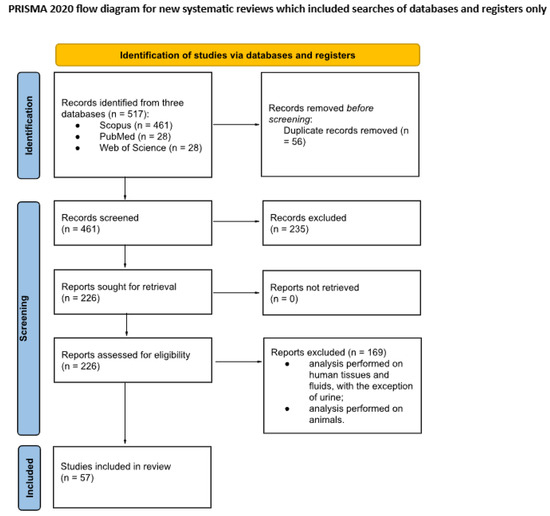
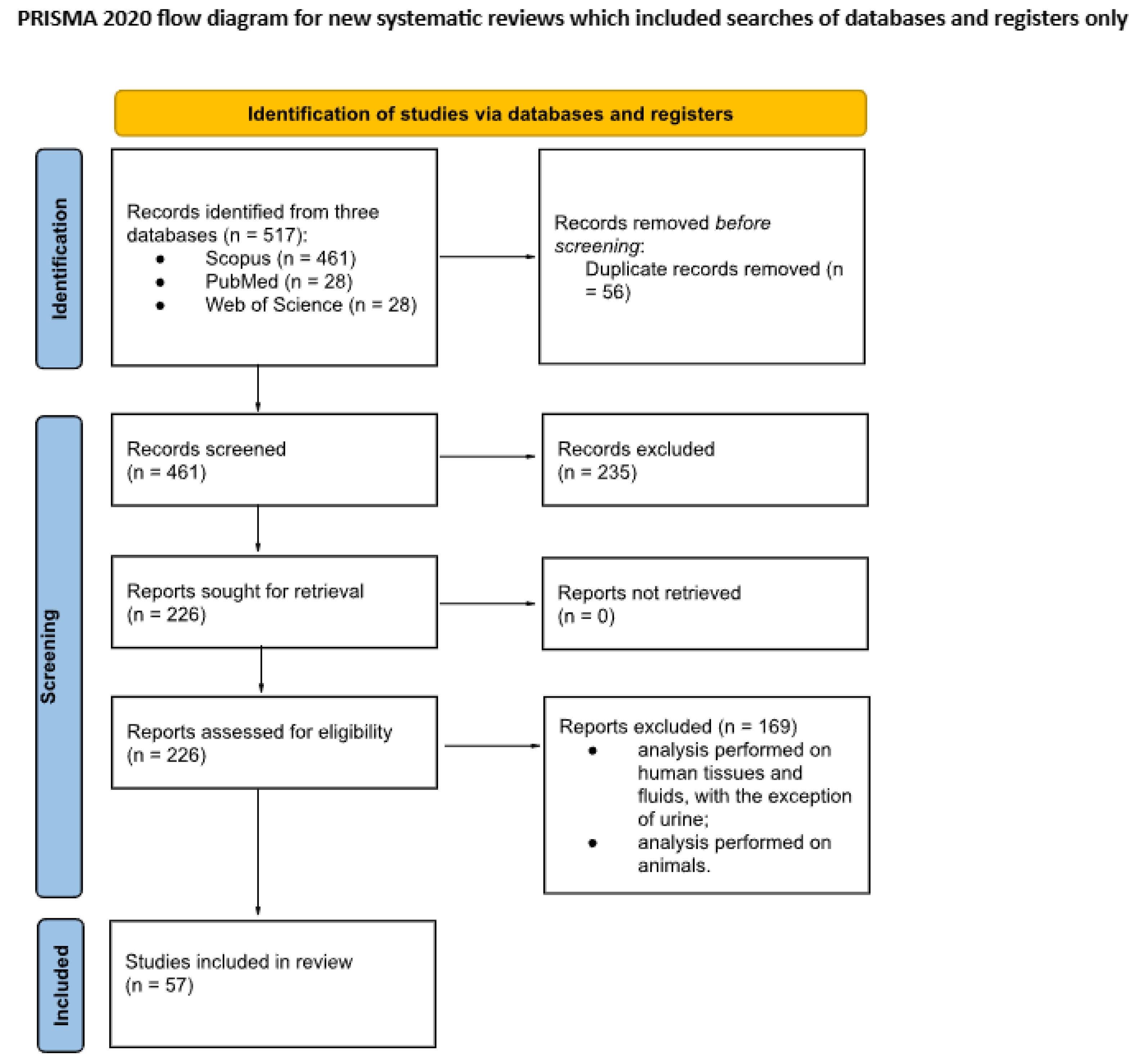
This study followed PRISMA guidelines, as illustrated in Figure 1, and descriptive statistics were applied to analyze the data. The selected articles were examined to explore factors influencing endogenous nandrolone production and to assess analytical techniques that differentiate between endogenous and exogenous nandrolone.
Figure 1.
Descriptive diagram of the paper selection process.
Before beginning the data extraction process, the items were subjected to an assessment of their quality. Specifically, the Johanna Briggs Institute’s (JBI) evaluation criteria were used. Each question on the checklist was assigned a score of 0 when the answer was “no”, 1 when it was “yes”, and “NA” when the criterion was not applicable to the work. Eighteen articles were not submitted for quality assessment because they were method validation papers. The summary table of the quality study is given in the Supplementary Materials in Table S1. We decided to include articles that reached a score of at least 4.
Data collection involved both study selection and data extraction. As noted, three researchers independently screened titles and abstracts for inclusion criteria. In cases of discrepancy in the evaluation of papers, the researchers involved conducted a joint examination of the disputed papers. These were reviewed together until a unanimous consensus was reached. Two researchers initially extracted the data, which was then reviewed by two others and subsequently validated by an additional pair of investigators.
3. Results
A total of 517 publications initially met the search criteria. After removing 56 duplicates, 235 additional studies were excluded based on primary inclusion criteria, resulting in 226 full-text articles. Studies specifically examining nandrolone’s presence in human urine were selected, leading to the exclusion of 169 more articles. Thus, 57 full-text articles ultimately met all inclusion criteria for this review. Figure 1 provides a summary of the article selection process.
Of the selected studies, authors, year of publication, analytical technique used, found concentrations of metabolites, mechanisms of production and metabolism, and factors influencing endogenous production of nandrolone are summarized in Table 1, Table 2 and Table 3.
Table 1.
Table showing the analytical techniques used in the works reviewed and the concentrations of 19-NA and 19-NE obtained with them.
Table 2.
Table showing the main information on metabolism found in the articles reviewed.
Table 3.
Table showing the main factors affecting the endogenous production of nandrolone.
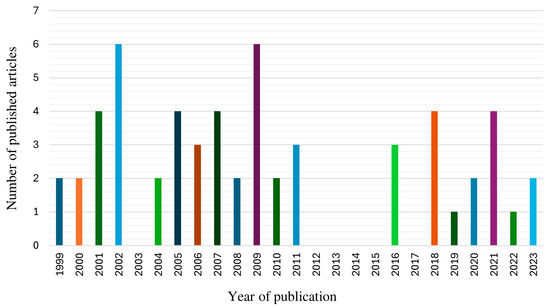
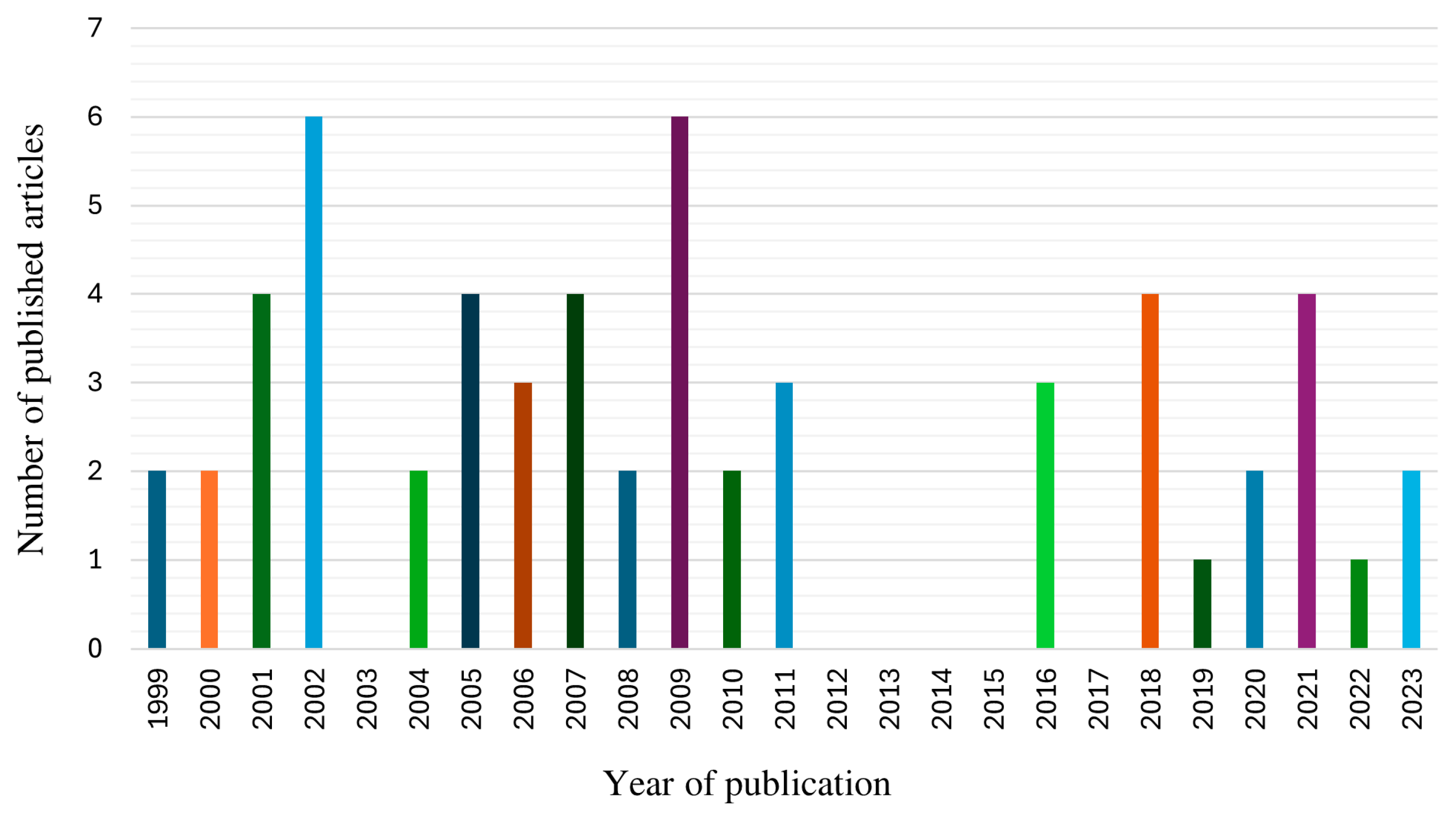
Interest in nandrolone, its metabolism, and factors influencing its endogenous production has always remained high. This review focused on a 24-year period (from 1999 to 2023), and Figure 2 shows the distribution of the publication years of the articles included in this systematic review.
Figure 2.
Distribution of publication years.
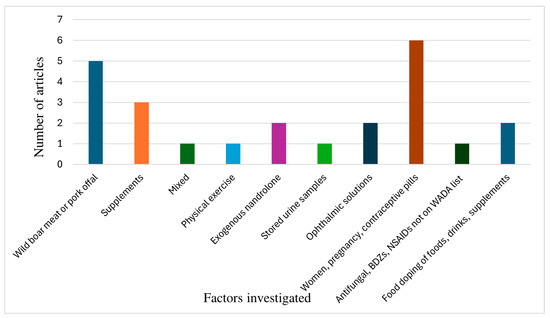
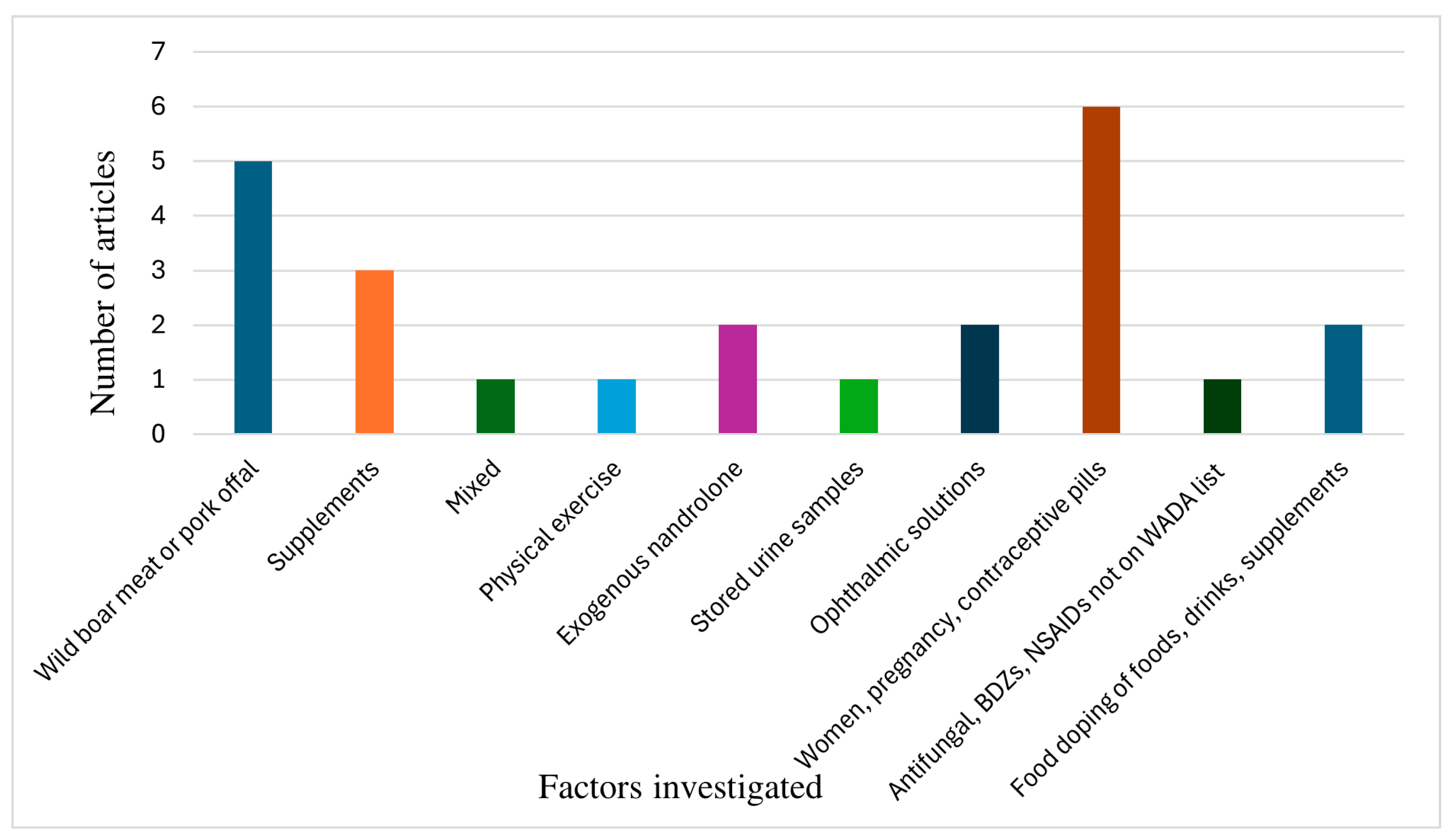
Out of a total of 57 articles, only 24 were concerned with factors influencing endogenous nandrolone production. The factors investigated in these studies are shown in Figure 3. These are as follows: wild boar meat or pork offal (5); supplements (3); mixed (post-menopausal women and male athletes) (1); physical exercise (1); exogenous nandrolone (2); stored urine samples (1); ophthalmic solutions (2); women, pregnancy, and contraceptive pills (6); antifungal, BDZs (benzodiazepines), and NSAIDs (nonsteroidal anti-inflammatory drugs) not featured on the WADA’s Prohibited List (1); and foodborne doping, including foods, drinks, and supplements (2).
Figure 3.
Factors influencing endogenous production.
4. Discussion
In this systematic review, all 57 scientific articles examined used urine as the primary biological matrix for detecting nandrolone and its metabolites. The majority of these studies concentrated solely on analytical methods designed to identify and measure molecules of interest. Eight of the studies also considered dietary variations as a potential factor that could influence urinary concentrations of nandrolone, investigating how different diets might affect these levels [13,14,29,31,39,55,59,65]. Additionally, six articles specifically addressed the endogenous production of nandrolone in women, examining physiological factors like pregnancy and the menstrual cycle that might alter metabolite concentrations [5,15,16,30,41,46,54]. Some other studies focused on measuring nandrolone and its metabolites in urine following the administration of drugs containing 19-nortestosterone or other pharmaceutical masking agents, aiming to understand how these substances impact metabolite levels. Finally, a significant portion of the selected publications reviewed and expanded upon previous research regarding nandrolone’s metabolic pathway, with an emphasis on the precise quantification of its metabolites throughout the metabolic process.
The metabolic pathway of nandrolone is well documented, culminating in its elimination through urine. While a small portion of nandrolone may be excreted unchanged, it is more commonly converted into its primary metabolites, 19-norandrosterone (19-NA) and 19-noretiocholanolone (19-NE), in forms conjugated either to glucuronic acid or sulfate. However, the detected concentrations of these metabolites alone are insufficient to definitively distinguish between nandrolone naturally produced by the body and nandrolone that may result from the intake of synthetic steroids. To make this determination with high accuracy, advanced analysis using GC-C-IRMS is required [32,40]. An important finding in this area of research is the increased excretion of conjugated 19-NA sulfate in urine over time, suggesting that time-related factors may influence urinary levels of this metabolite. This observation could be particularly relevant for improving retrospective analyses in doping control by considering time-based variations in metabolite excretion [38]. Additionally, research conducted on professional athletes has explored changes in the urinary ratio of 19-NA glucuronide to 19-NA sulfate. The findings showed that when athletes were administered exogenous nandrolone, 100% of the detected 19-NA was present in the glucuronidated form. By contrast, under normal physiological conditions, at least 30% of 19-NA was excreted as a sulfate conjugate [23]. This differentiation could offer a useful indicator in anti-doping efforts to help distinguish between endogenous production and the intake of synthetic nandrolone.
In exploring the mechanisms behind nandrolone production and metabolism, it is worth noting that several biological and lifestyle factors can significantly impact the body’s natural production of nandrolone and its metabolites. This review considered various parameters, including biological sex, pregnancy status, and levels of physical activity. For instance, it appears that pregnancy can elevate the production of 19-nortestosterone metabolites to such an extent that it suggests the need for a higher cut-off threshold for female athletes [54]. Furthermore, studies also analyzed endogenous nandrolone production following intense physical exertion or engagement in professional sports [23]. However, results from these studies displayed considerable variability between individuals, preventing researchers from establishing a clear correlation between physical activity and the increase or decrease in urinary concentrations of 19-NA and 19-NE. Additional factors were investigated for their potential effects on 19-nortestosterone metabolism, including dietary habits, the use of steroid-based medications, and drugs acting as masking agents for the main metabolites 19-NA and 19-NE. An increased presence of nandrolone metabolites in urine can create serious challenges for doping control measures, where the accepted limit is set at 2 ng/mL. For example, consuming wild boar meat has been shown to produce detectable levels of 19-NA and 19-NE in urine, which could result in disqualification for an athlete under doping regulations [65]. Similarly, certain dietary supplements containing steroids—sometimes available as over-the-counter products—can raise urinary levels of 19-NA and 19-NE [14,29]. Medications prescribed to manage menstrual cycle disorders, including those containing norethisterone, have also been found to potentially increase levels of nandrolone metabolites in urine [41]. Additionally, certain types of eye medications (ophthalmic drugs) can produce similar effects [33,43]. The use of these products may unintentionally lead to elevated concentrations of nandrolone metabolites in an athlete’s urine, thereby heightening the likelihood of a positive result in doping tests. This unintended increase in metabolite levels could pose a serious risk for athletes, as it may result in them being flagged for substances that they did not intentionally consume as performance enhancers.
What has been discussed so far is reflected in the concentrations found in the samples analyzed by the various studies. In fact, only trace amounts of 19-NA were found in most cases. However, significant increases were found following the consumption of wild boar meat. Regarding exercise, it was found that 19-NA levels generally remained low, suggesting that while exercise might influence some metabolic pathways, it does not significantly elevate nandrolone secretion. In conclusion, these results collectively underscore the complexity of analyzing nandrolone and its metabolites in urine samples.
Gas chromatography and liquid chromatography, when combined with mass spectrometry, have firmly established themselves as the preferred analytical methods for detecting nandrolone and its metabolites in urine. Specifically, techniques such as GC/MS or GC/MS/MS are frequently employed for the precise identification of these substances. Although LC/MS or LC/MS/MS methods are also utilized, they are less commonly used as stand-alone techniques for this purpose. The most significant advancement in this field is the application of GC-C-IRMS, which stands out as the only technique capable of accurately differentiating between the endogenous (naturally produced) and exogenous (externally introduced) forms of nandrolone [32]. This differentiation is based on detecting abnormal carbon-13 (13C) isotope values of 19-NA in urine. Values outside the typical endogenous steroid range, approximately between −17% and −25%, signal the intake of synthetic nandrolone [49,55]. Therefore, GC-C-IRMS offers a high degree of reliability for anti-doping testing by identifying synthetic sources of nandrolone with precision [57]. Moreover, the steps taken in sample pretreatment are crucial for ensuring the accuracy of GC-C-IRMS results, as they must prevent any potential contamination. Effective purification techniques include solid-phase extraction (SPE), liquid/liquid extraction, and immunoaffinity chromatography (IAC), often used after enzymatic hydrolysis to prepare the sample. Additionally, high-performance liquid chromatography (HPLC) separation and fractionation serve as vital pre-analytical purification steps, ensuring that the sample is sufficiently purified for reliable analysis. Together, these techniques strengthen the detection capabilities in anti-doping control by enabling clear differentiation between naturally occurring and synthetic nandrolone sources.
Study Limitations
We decided to exclude scientific works that considered biological matrices other than urine for the identification of nandrolone and its metabolites. We selected three different parameters on which to base the systematic research: the metabolic pathway of nandrolone, considering its metabolites in glucuronidated or sulfated form; the various factors that alter endogenous physiological levels; and, finally, the analytical techniques aimed at identifying this steroid. None of the scientific articles included in our review addressed these parameters simultaneously; instead, studies dealt with only one or at most two of them. It is important to highlight that the only analytical technique capable of distinguishing between exclusively endogenous quantities and exogenous intakes of nandrolone is GC-C-IRMS. In fact, in papers that addressed anti-doping controls, this technique was regularly reported. The research reported in other types of publications was not conducted in the context of competition in professional sports and, therefore, the technique was not considered essential. However, its use would have been appropriate given that different quantities of nandrolone and metabolites following drug intake were investigated.
5. Conclusions
This systematic review underscores the critical importance of accurately distinguishing between the endogenous and exogenous sources of nandrolone and its metabolites in the context of anti-doping tests. A range of factors influence the levels of 19-NA and 19-NE found in urine samples. These factors include dietary habits, physical activity, hormonal fluctuations, and the potential use of anabolic steroids or dietary supplements. Given that these metabolites can be detected in both naturally occurring levels and those resulting from supplementation, it is imperative that doping control authorities carefully take these variables into account when assessing urine samples for signs of anabolic steroid use. Moreover, the significant variability in individual responses and the temporary increases in metabolite levels following dietary consumption further complicate the interpretation of test results. This variability emphasizes the necessity for employing advanced analytical techniques, such as GC-C-IRMS, which are capable of accurately distinguishing between metabolites produced endogenously and those introduced exogenously through supplementation. It is crucial for organizations responsible for doping controls, particularly those affiliated with the WADA, to take these complexities into serious consideration. They should adopt increasingly sensitive and specific analytical methods to ensure accurate detection and interpretation of nandrolone levels. Additionally, athletes themselves need to be cognizant of the various factors that could potentially influence their urinary levels of nandrolone and its metabolites. By understanding these variables, athletes can better navigate compliance with regulatory standards and avoid unintentional violations related to anabolic steroid use.
Supplementary Materials
The following supporting information can be downloaded at: https://www.mdpi.com/article/10.3390/app142210641/s1, Table S1: Quality assessment.
Author Contributions
Conceptualization, M.C. (Marta Cippitelli); methodology, G.R.; formal analysis, R.F.; investigation, A.C.; data curation, G.M.; writing—original draft preparation, R.S.; writing—review and editing, E.B.; visualization, G.M.; supervision, M.C. (Mariano Cingolani) and R.F.; project administration, R.S. and G.R. All authors have read and agreed to the published version of the manuscript.
Funding
This work has been funded by the European Union–NextGenerationEU under the Italian Ministry of University and Research (MUR) National Innovation Ecosystem grant ECS00000041—VITALITY - CUP n D83C22000710005—https://www.safina-vitality.it (accessed on 29 August 2024).
Institutional Review Board Statement
Not applicable.
Informed Consent Statement
Not applicable.
Data Availability Statement
Not applicable.
Acknowledgments
Thanks to Jemma Dunnill for proofreading this manuscript.
Conflicts of Interest
The authors declare no conflicts of interest.
References
- Patanè, F.G.; Liberto, A.; Maria Maglitto, A.N.; Malandrino, P.; Esposito, M.; Amico, F.; Cocimano, G.; Rosi, G.L.; Condorelli, D.; Nunno, N.D.; et al. Nandrolone Decanoate: Use, Abuse and Side Effects. Medicina 2020, 56, 606. [Google Scholar] [CrossRef] [Scilit]
- Scendoni, R. Elementi di Medicina Legale Dello Sport; Giappicchelli: Piedmont, Italy, 2024. [Google Scholar]
- WADA Prohibited List. Available online: https://www.wada-ama.org/sites/default/files/2023-09/2024list_en_final_22_september_2023.pdf (accessed on 29 August 2024).
- Kohler, R.; Lambert, M. Urine Nandrolone Metabolites: False Positive Doping Test? Br. J. Sports Med. 2002, 36, 325–329. [Google Scholar] [CrossRef] [Scilit] [PubMed]
- Mareck-engelke, U.; Schultze, G.; Geyer, H.; Schänzer, W. The Appearance of Urinary 19-Norandrosterone during Pregnancy. Eur. J. Sport. Sci. 2002, 2, 1–7. [Google Scholar] [CrossRef] [Scilit]
- Mathurin, J.C.; Herrou, V.; Bourgogne, E.; Pascaud, L.; de Ceaurriz, J. Gas Chromatography-Combustion-Isotope Ratio Mass Spectrometry Analysis of 19-Norsteroids: Application to the Detection of a Nandrolone Metabolite in Urine. J. Chromatogr. B Biomed. Sci. Appl. 2001, 759, 267–275. [Google Scholar] [CrossRef] [Scilit] [PubMed]
- De Wasch, K.; Le Bizec, B.; De Brabander, H.; André, F.; Impens, S. Consequence of Boar Edible Tissue Consumption on Urinary Profiles of Nandrolone Metabolites. II. Identification and Quantification of 19-Norsteroids Responsible for 19-Norandrosterone and 19-Noretiocholanolone Excretion in Human Urine. Rapid Commun. Mass. Spectrom. 2001, 15, 1442–1447. [Google Scholar] [CrossRef] [Scilit]
- Ayotte, C. Significance of 19-Norandrosterone in Athletes’ Urine Samples. Br. J. Sports Med. 2006, 40 (Suppl. S1), i25–i29. [Google Scholar] [CrossRef] [Scilit]
- WADA Laboratory Expert Group Harmonization of Analysis and Reporting of 19-Norsteroids Relates to Nandrolone 2018. Available online: https://www.wada-ama.org/sites/default/files/resources/files/td2021na_final_eng_v2.0_m.pdf (accessed on 29 August 2024).
- PRISMA 2020 Statement. Available online: https://www.prisma-statement.org/prisma-2020-statement (accessed on 16 October 2024).
- Le Bizec, B.; Monteau, F.; Gaudin, I.; André, F. Evidence for the Presence of Endogenous 19-Norandrosterone in Human Urine. J. Chromatogr. B Biomed. Sci. Appl. 1999, 723, 157–172. [Google Scholar] [CrossRef] [Scilit] [PubMed]
- Dehennin, L.; Bonnaire, Y.; Plou, P. Urinary Excretion of 19-Norandrosterone of Endogenous Origin in Man: Quantitative Analysis by Gas Chromatography-Mass Spectrometry. J. Chromatogr. B Biomed. Sci. Appl. 1999, 721, 301–307. [Google Scholar] [CrossRef] [Scilit]
- Le Bizec, B.; Gaudin, I.; Monteau, F.; Andre, F.; Impens, S.; De Wasch, K.; De Brabander, H. Consequence of Boar Edible Tissue Consumption on Urinary Profiles of Nandrolone Metabolites. I. Mass Spectrometric Detection and Quantification of 19-Norandrosterone and 19-Noretiocholanolone in Human Urine. Rapid Commun. Mass. Spectrom. 2000, 14, 1058–1065. [Google Scholar] [CrossRef]
- Catlin, D.H.; Leder, B.Z.; Ahrens, B.; Starcevic, B.; Hatton, C.K.; Green, G.A.; Finkelstein, J.S. Trace Contamination of Over-the-Counter Androstenedione and Positive Urine Test Results for a Nandrolone Metabolite. JAMA 2000, 284, 2618–2621. [Google Scholar] [CrossRef] [Scilit]
- Van Eenoo, P.; Delbeke, F.T.; de Jong, F.H.; De Backer, P. Endogenous Origin of Norandrosterone in Female Urine: Indirect Evidence for the Production of 19-Norsteroids as by-Products in the Conversion from Androgen to Estrogen. J. Steroid Biochem. Mol. Biol. 2001, 78, 351–357. [Google Scholar] [CrossRef] [Scilit] [PubMed]
- Galán Martín, A.M.; Mariño, J.I.; García de Tiedra, M.P.; Marabé, J.J.; Caballero Loscos, M.J.; Mariño, M.M. Determination of Nandrolone and Metabolites in Urine Samples from Sedentary Persons and Sportsmen. J. Chromatogr. B Biomed. Sci. Appl. 2001, 761, 229–236. [Google Scholar] [CrossRef] [Scilit] [PubMed]
- Reznik, Y.; Dehennin, L.; Coffin, C.; Mahoudeau, J.; Leymarie, P. Urinary Nandrolone Metabolites of Endogenous Origin in Man: A Confirmation by Output Regulation under Human Chorionic Gonadotropin Stimulation. J. Clin. Endocrinol. Metab. 2001, 86, 146–150. [Google Scholar] [CrossRef]
- Robinson, N.; Taroni, F.; Saugy, M.; Ayotte, C.; Mangin, P.; Dvorak, J. Detection of Nandrolone Metabolites in Urine after a Football Game in Professional and Amateur Players: A Bayesian Comparison. Forensic Sci. Int. 2001, 122, 130–135. [Google Scholar] [CrossRef] [Scilit]
- Schmitt, N.; Flament, M.-M.; Goubault, C.; Legros, P.; Grenier-Loustalot, M.F.; Denjean, A. Nandrolone Excretion Is Not Increased by Exhaustive Exercise in Trained Athletes. Med. Sci. Sports Exerc. 2002, 34, 1436–1439. [Google Scholar] [CrossRef] [Scilit]
- Le Bizec, B.; Bryand, F.; Gaudin, I.; Monteau, F.; Poulain, F.; Andre, F. Endogenous Nandrolone Metabolites in Human Urine: Preliminary Results to Discriminate between Endogenous and Exogenous Origin. Steroids 2002, 67, 105–110. [Google Scholar] [CrossRef] [Scilit] [PubMed]
- Gambelunghe, C.; Sommavilla, M.; Rossi, R. Testing for Nandrolone Metabolites in Urine Samples of Professional Athletes and Sedentary Subjects by GC/MS/MS Analysis. Biomed. Chromatogr. 2002, 16, 508–512. [Google Scholar] [CrossRef] [Scilit]
- Desroches, M.C.; Mathurin, J.C.; Richard, Y.; Delahaut, P.; de Ceaurriz, J. Urinary 19-Norandrosterone Purification by Immunoaffinity Chromatography: Application to Gas Chromatography/Combustion/Isotope Ratio Mass Spectrometric Analysis. Rapid Commun. Mass. Spectrom. 2002, 16, 370–374. [Google Scholar] [CrossRef] [Scilit]
- Le, B.B.; Bryand, F.; Gaudin, I.; Monteau, F.; Poulain, F.; Andre, F. Endogenous Nandrolone Metabolites in Human Urine. Two-Year Monitoring of Male Professional Soccer Players. J. Anal. Toxicol. 2002, 26, 43–47. [Google Scholar] [CrossRef] [Scilit]
- de Geus, B.; Delbeke, F.; Meeusen, R.; Van Eenoo, P.; De Meirleir, K.; Busschaert, B. Norandrosterone and Noretiocholanolone Concentration before and after Submaximal Standardized Exercise. Int. J. Sports Med. 2004, 25, 528–532. [Google Scholar] [CrossRef] [Scilit]
- Baume, N.; Avois, L.; Schweizer, C.; Cardis, C.; Dvorak, J.; Cauderay, M.; Mangin, P.; Saugy, M. [13C]Nandrolone Excretion in Trained Athletes: Interindividual Variability in Metabolism. Clin. Chem. 2004, 50, 355–364. [Google Scholar] [CrossRef] [Scilit] [PubMed]
- Bagchus, W.M.; Smeets, J.M.W.; Verheul, H.A.M.; De Jager-Van Der Veen, S.M.; Port, A.; Geurts, T.B.P. Pharmacokinetic Evaluation of Three Different Intramuscular Doses of Nandrolone Decanoate: Analysis of Serum and Urine Samples in Healthy Men. J. Clin. Endocrinol. Metab. 2005, 90, 2624–2630. [Google Scholar] [CrossRef] [Scilit] [PubMed]
- Grosse, J.; Anielski, P.; Hemmersbach, P.; Lund, H.; Mueller, R.K.; Rautenberg, C.; Thieme, D. Formation of 19-Norsteroids by in Situ Demethylation of Endogenous Steroids in Stored Urine Samples. Steroids 2005, 70, 499–506. [Google Scholar] [CrossRef] [Scilit] [PubMed]
- Baume, N.; Avois, L.; Sottas, P.-E.; Dvorak, J.; Cauderay, M.; Mangin, P.; Saugy, M. Effects of High-Intensity Exercises on 13C-Nandrolone Excretion in Trained Athletes. Clin. J. Sport. Med. 2005, 15, 158–166. [Google Scholar] [CrossRef] [Scilit]
- Tseng, Y.L.; Kuo, F.-H.; Sun, K.-H. Quantification and Profiling of 19-Norandrosterone and 19-Noretiocholanolone in Human Urine after Consumption of a Nutritional Supplement and Norsteroids. J. Anal. Toxicol. 2005, 29, 124–134. [Google Scholar] [CrossRef] [Scilit]
- Hemmersbach, P.; Hågensen Jetne, A.H.; Lund, H.S. Determination of Urinary Norandrosterone Excretion in Females during One Menstrual Cycle by Gas Chromatography/Mass Spectrometry. Biomed. Chromatogr. 2006, 20, 710–717. [Google Scholar] [CrossRef] [Scilit]
- Baume, N.; Mahler, N.; Kamber, M.; Mangin, P.; Saugy, M. Research of Stimulants and Anabolic Steroids in Dietary Supplements. Scand. J. Med. Sci. Sports 2006, 16, 41–48. [Google Scholar] [CrossRef] [Scilit]
- Hebestreit, M.; Flenker, U.; Fusshöller, G.; Geyer, H.; Güntner, U.; Mareck, U.; Piper, T.; Thevis, M.; Ayotte, C.; Schänzer, W. Determination of the Origin of Urinary Norandrosterone Traces by Gas Chromatography Combustion Isotope Ratio Mass Spectrometry. Analyst 2006, 131, 1021–1026. [Google Scholar] [CrossRef] [Scilit]
- Avois, L.; Mangin, P.; Saugy, M. Concentrations of Nandrolone Metabolites in Urine after the Therapeutic Administration of an Ophthalmic Solution. J. Pharm. Biomed. Anal. 2007, 44, 173–179. [Google Scholar] [CrossRef] [Scilit]
- Cheng, W.-C.; Yau, T.-S.; Cheng, W.-N.; Cheng, K.-C.; Sin, D.W.-M. Determination of 19-Norandrosterone in Human Urine by Isotope Dilution Gas Chromatography-High Resolution Mass Spectrometry. Accred Qual. Assur. 2007, 12, 483–490. [Google Scholar] [CrossRef] [Scilit]
- Goyal, R.N.; Gupta, V.K.; Bachheti, N. Fullerene-C60-Modified Electrode as a Sensitive Voltammetric Sensor for Detection of Nandrolone--an Anabolic Steroid Used in Doping. Anal. Chim. Acta 2007, 597, 82–89. [Google Scholar] [CrossRef] [Scilit] [PubMed]
- Strahm, E.; Saudan, C.; Sottas, P.-E.; Mangin, P.; Saugy, M. Direct Detection and Quantification of 19-Norandrosterone Sulfate in Human Urine by Liquid Chromatography-Linear Ion Trap Mass Spectrometry. J. Chromatogr. B Anal. Technol. Biomed. Life Sci. 2007, 852, 491–496. [Google Scholar] [CrossRef] [Scilit] [PubMed]
- Strahm, E.; Rudaz, S.; Veuthey, J.-L.; Saugy, M.; Saudan, C. Profiling of 19-Norsteroid Sulfoconjugates in Human Urine by Liquid Chromatography Mass Spectrometry. Anal. Chim. Acta 2008, 613, 228–237. [Google Scholar] [CrossRef] [Scilit] [PubMed]
- Torrado, S.; Roig, M.; Farré, M.; Segura, J.; Ventura, R. Urinary Metabolic Profile of 19-Norsteroids in Humans: Glucuronide and Sulphate Conjugates after Oral Administration of 19-nor-4-Androstenediol. Rapid Commun. Mass. Spectrom. 2008, 22, 3035–3042. [Google Scholar] [CrossRef] [Scilit]
- Guay, C.; Goudreault, D.; Schänzer, W.; Flenker, U.; Ayotte, C. Excretion of Norsteroids’ Phase II Metabolites of Different Origin in Human. Steroids 2009, 74, 350–358. [Google Scholar] [CrossRef] [Scilit]
- Walker, C.J.; Cowan, D.A.; James, V.H.T.; Lau, J.C.Y.; Kicman, A.T. Doping in Sport--1. Excretion of 19-Norandrosterone by Healthy Women, Including Those Using Contraceptives Containing Norethisterone. Steroids 2009, 74, 329–334. [Google Scholar] [CrossRef] [Scilit]
- Walker, C.J.; Cowan, D.A.; James, V.H.T.; Lau, J.C.Y.; Kicman, A.T. Doping in Sport: 3. Metabolic Conversion of Oral Norethisterone to Urinary 19-Norandrosterone. Steroids 2009, 74, 341–349. [Google Scholar] [CrossRef] [Scilit]
- Goyal, R.N.; Chatterjee, S.; Bishnoi, S. Effect of Substrate and Embedded Metallic Impurities of Fullerene in the Determination of Nandrolone. Anal. Chim. Acta 2009, 643, 95–99. [Google Scholar] [CrossRef] [Scilit] [PubMed]
- Graham, M.; Evans, P.; Davies, B.; Thomas, N.; Baker, J. Dope Opera: Is Nandrolone a Medicine or Doping Agent? J. Exerc. Physiol. Online 2009, 12, 40–43. [Google Scholar]
- Strahm, E.; Baume, N.; Mangin, P.; Saugy, M.; Ayotte, C.; Saudan, C. Profiling of 19-Norandrosterone Sulfate and Glucuronide in Human Urine: Implications in Athlete’s Drug Testing. Steroids 2009, 74, 359–364. [Google Scholar] [CrossRef] [Scilit]
- Saito, K.; Yagi, K.; Ishizaki, A.; Kataoka, H. Determination of Anabolic Steroids in Human Urine by Automated In-Tube Solid-Phase Microextraction Coupled with Liquid Chromatography-Mass Spectrometry. J. Pharm. Biomed. Anal. 2010, 52, 727–733. [Google Scholar] [CrossRef] [Scilit] [PubMed]
- Enea, C.; Boisseau, N.; Bayle, M.L.; Flament, M.M.; Grenier-Loustalot, M.F.; Denjean, A.; Diaz, V.; Dugué, B. Nandrolone Excretion in Sedentary vs Physically Trained Young Women. Scand. J. Med. Sci. Sports 2010, 20, 90–99. [Google Scholar] [CrossRef] [Scilit] [PubMed]
- Gårevik, N.; Strahm, E.; Garle, M.; Lundmark, J.; Ståhle, L.; Ekström, L.; Rane, A. Long Term Perturbation of Endocrine Parameters and Cholesterol Metabolism after Discontinued Abuse of Anabolic Androgenic Steroids. J. Steroid Biochem. Mol. Biol. 2011, 127, 295–300. [Google Scholar] [CrossRef] [Scilit]
- Van Eenoo, P.; Van Gansbeke, W.; De Brabanter, N.; Deventer, K.; Delbeke, F.T. A Fast, Comprehensive Screening Method for Doping Agents in Urine by Gas Chromatography-Triple Quadrupole Mass Spectrometry. J. Chromatogr. A 2011, 1218, 3306–3316. [Google Scholar] [CrossRef] [Scilit]
- de la Torre, X.; Colamonici, C.; Curcio, D.; Molaioni, F.; Pizzardi, M.; Botrè, F. A Simplified Procedure for GC/C/IRMS Analysis of Underivatized 19-Norandrosterone in Urine Following HPLC Purification. Steroids 2011, 76, 471–477. [Google Scholar] [CrossRef] [Scilit]
- Palermo, A.; Alessi, B.; Botrè, F.; de la Torre, X.; Fiacco, I.; Mazzarino, M. In Vitro Evaluation of the Effects of Anti-Fungals, Benzodiazepines and Non-Steroidal Anti-Inflammatory Drugs on the Glucuronidation of 19-Norandrosterone: Implications on Doping Control Analysis. Drug Test. Anal. 2016, 8, 930–939. [Google Scholar] [CrossRef] [Scilit] [PubMed]
- Piper, T.; Schänzer, W.; Thevis, M. Revisiting the Metabolism of 19-Nortestosterone Using Isotope Ratio and High Resolution/High Accuracy Mass Spectrometry. J. Steroid Biochem. Mol. Biol. 2016, 162, 80–91. [Google Scholar] [CrossRef] [Scilit]
- Palonek, E.; Ericsson, M.; Gårevik, N.; Rane, A.; Lehtihet, M.; Ekström, L. Atypical Excretion Profile and GC/C/IRMS Findings May Last for Nine Months after a Single Dose of Nandrolone Decanoate. Steroids 2016, 108, 105–111. [Google Scholar] [CrossRef] [Scilit] [PubMed]
- Podolskiy, I.I.; Sobolevskii, T.G.; Dikunets, M.A. Determination of the Origin of 19-Norandrosterone in Urine by Gas Chromatography–Isotope-Ratio Mass Spectrometry for Doping Control. J. Anal. Chem. 2018, 73, 283–291. [Google Scholar] [CrossRef] [Scilit]
- Mullen, J.; Gadot, Y.; Eklund, E.; Andersson, A.; J Schulze, J.; Ericsson, M.; Lindén Hirschberg, A.; Rane, A.; Ekström, L. Pregnancy Greatly Affects the Steroidal Module of the Athlete Biological Passport. Drug Test. Anal. 2018, 10, 1070–1075. [Google Scholar] [CrossRef] [Scilit]
- Hülsemann, F.; Gougoulidis, V.; Schertel, T.; Fusshöller, G.; Flenker, U.; Piper, T.; Thevis, M. Case Study: Atypical Δ13 C Values of Urinary Norandrosterone. Drug Test. Anal. 2018, 10, 1728–1733. [Google Scholar] [CrossRef] [Scilit] [PubMed]
- Brailsford, A.D.; Majidin, W.N.M.; Wojek, N.; Cowan, D.A.; Walker, C. IRMS Delta Values (13 C) of Nandrolone and Testosterone Products Available in the UK: Implications for Anti-Doping. Drug Test. Anal. 2018, 10, 1722–1727. [Google Scholar] [CrossRef] [Scilit] [PubMed]
- de Oliveira, F.A.; Casilli, A.; Piper, T.; da Silva, T.R.; da Silva, C.A.; da Silva, R.V.S.; Dal Sasso, M.A.; Salgueiro, G.R.D.S.G.; Padilha, M.C.; Pereira, H.M.G.; et al. Implementation and Performance of the Gas Chromatography/Combustion/Isotope Ratio Mass Spectrometry-Based Method for the Confirmatory Analysis of Endogenous Anabolic Steroids during the Rio de Janeiro Olympic and Paralympic Games 2016. Anal. Chem. 2019, 91, 11747–11756. [Google Scholar] [CrossRef] [Scilit] [PubMed]
- Protti, M.; Marasca, C.; Cirrincione, M.; Sberna, A.E.; Mandrioli, R.; Mercolini, L. Dried Urine Microsampling Coupled to Liquid Chromatography-Tandem Mass Spectrometry (LC-MS/MS) for the Analysis of Unconjugated Anabolic Androgenic Steroids. Molecules 2020, 25, 3210. [Google Scholar] [CrossRef] [Scilit]
- Hülsemann, F.; Fußhöller, G.; Lehn, C.; Thevis, M. Excretion of 19-Norandrosterone after Consumption of Boar Meat. Drug Test. Anal. 2020, 12, 1581–1586. [Google Scholar] [CrossRef] [Scilit]
- Honesova, L.; Van Eenoo, P.; Polet, M. A Uniform Sample Preparation Procedure for Gas Chromatography Combustion Isotope Ratio Mass Spectrometry for All Human Doping Control Relevant Anabolic Steroids Using Online 2/3-Dimensional Liquid Chromatography Fraction Collection. Anal. Chim. Acta 2021, 1168, 338610. [Google Scholar] [CrossRef] [Scilit]
- Iannella, L.; Colamonici, C.; Curcio, D.; Botrè, F.; de la Torre, X. Detecting the Abuse of 19-Norsteroids in Doping Controls: A New Gas Chromatography Coupled to Isotope Ratio Mass Spectrometry Method for the Analysis of 19-Norandrosterone and 19-Noretiocholanolone. Drug Test. Anal. 2021, 13, 770–784. [Google Scholar] [CrossRef] [Scilit]
- Wen, C.; Zhu, T.; Wang, J.; Liu, X.; Wang, S.; Zhang, Y. Application of Online Two-Dimensional High-Performance Liquid Chromatography as Purification Procedure to Determine the Origin of 19-Norandrosterone in Urine by Gas Chromatography-Combustion-Isotope Ratio Mass Spectrometry. Drug Test. Anal. 2021, 13, 338–347. [Google Scholar] [CrossRef] [Scilit]
- Iannella, L.; Colamonici, C.; Curcio, D.; Botrè, F.; de la Torre, X. 5α-Reductase Inhibitors: Evaluation of Their Potential Confounding Effect on GC-C-IRMS Doping Analysis. Drug Test. Anal. 2021, 13, 1852–1861. [Google Scholar] [CrossRef] [Scilit]
- Shkembi, X.; Botero, M.L.; Skouridou, V.; Jauset-Rubio, M.; Svobodova, M.; Ballester, P.; Bashammakh, A.S.; El-Shahawi, M.S.; Alyoubi, A.O.; O’Sullivan, C.K. Novel Nandrolone Aptamer for Rapid Colorimetric Detection of Anabolic Steroids. Anal. Biochem. 2022, 658, 114937. [Google Scholar] [CrossRef] [Scilit]
- Nair, V.S.; Howa, J.D.; Morrison, M.S.; Beggs, L.; Campbell, T.; Fedoruk, M.; Ahrens, B.; Eichner, D. Δ13 C Values of Urinary 19-Norandrosterone in Antidoping Samples and Potential for Adverse Findings from Boar Offal Consumption. Drug Test. Anal. 2023, 15, 1356–1360. [Google Scholar] [CrossRef] [Scilit] [PubMed]
- Chen, C.; Xiangwei, C. ELECTROCHEMICAL SENSOR FOR ANTI-DOPING IN ATHLETES. Rev. Bras. Med. Esporte 2023, 29, e2022_0392. [Google Scholar] [CrossRef] [Scilit]

Disclaimer/Publisher’s Note: The statements, opinions and data contained in all publications are solely those of the individual author(s) and contributor(s) and not of MDPI and/or the editor(s). MDPI and/or the editor(s) disclaim responsibility for any injury to people or property resulting from any ideas, methods, instructions or products referred to in the content. |
© 2024 by the authors. Licensee MDPI, Basel, Switzerland. This article is an open access article distributed under the terms and conditions of the Creative Commons Attribution (CC BY) license (https://creativecommons.org/licenses/by/4.0/).