Article

Additional Taxi-Out Time Prediction for Flights at Busy Airports by Fusing Flow Control Information


1
College of Civil Aviation, Nanjing University of Aeronautics and Astronautics, Nanjing 211106, China
2
State Key Laboratory of Air Traffic Management System, Nanjing 211106, China
3
College of Computer Science and Technology, Nanjing University of Aeronautics and Astronautics, Nanjing 211106, China
*
Author to whom correspondence should be addressed.
Appl. Sci. 2024, 14(21), 9968; https://doi.org/10.3390/app14219968
Submission received: 30 September 2024 / Revised: 25 October 2024 / Accepted: 28 October 2024 / Published: 31 October 2024

Abstract

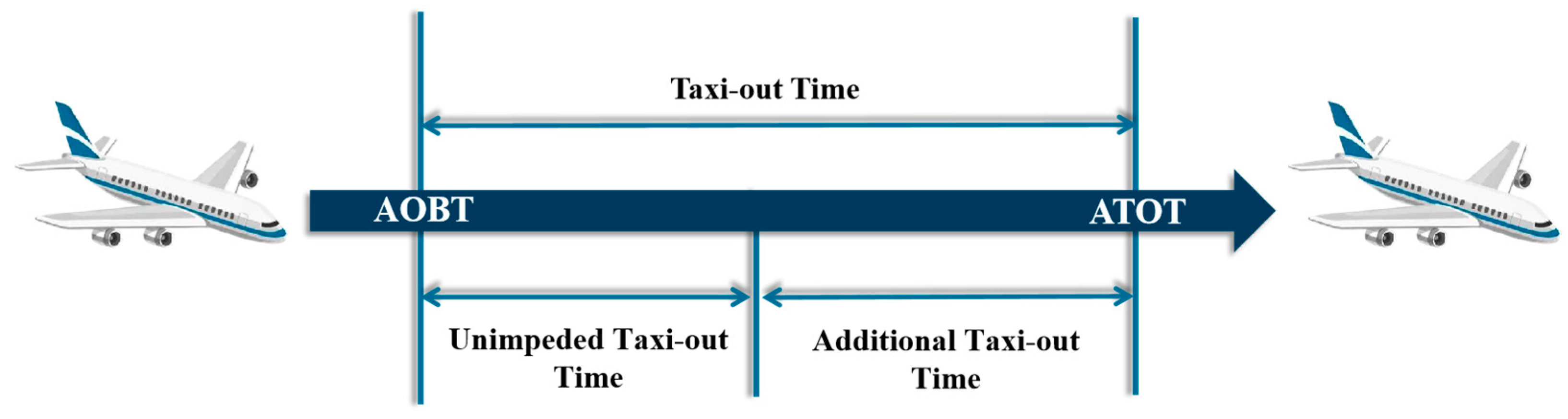
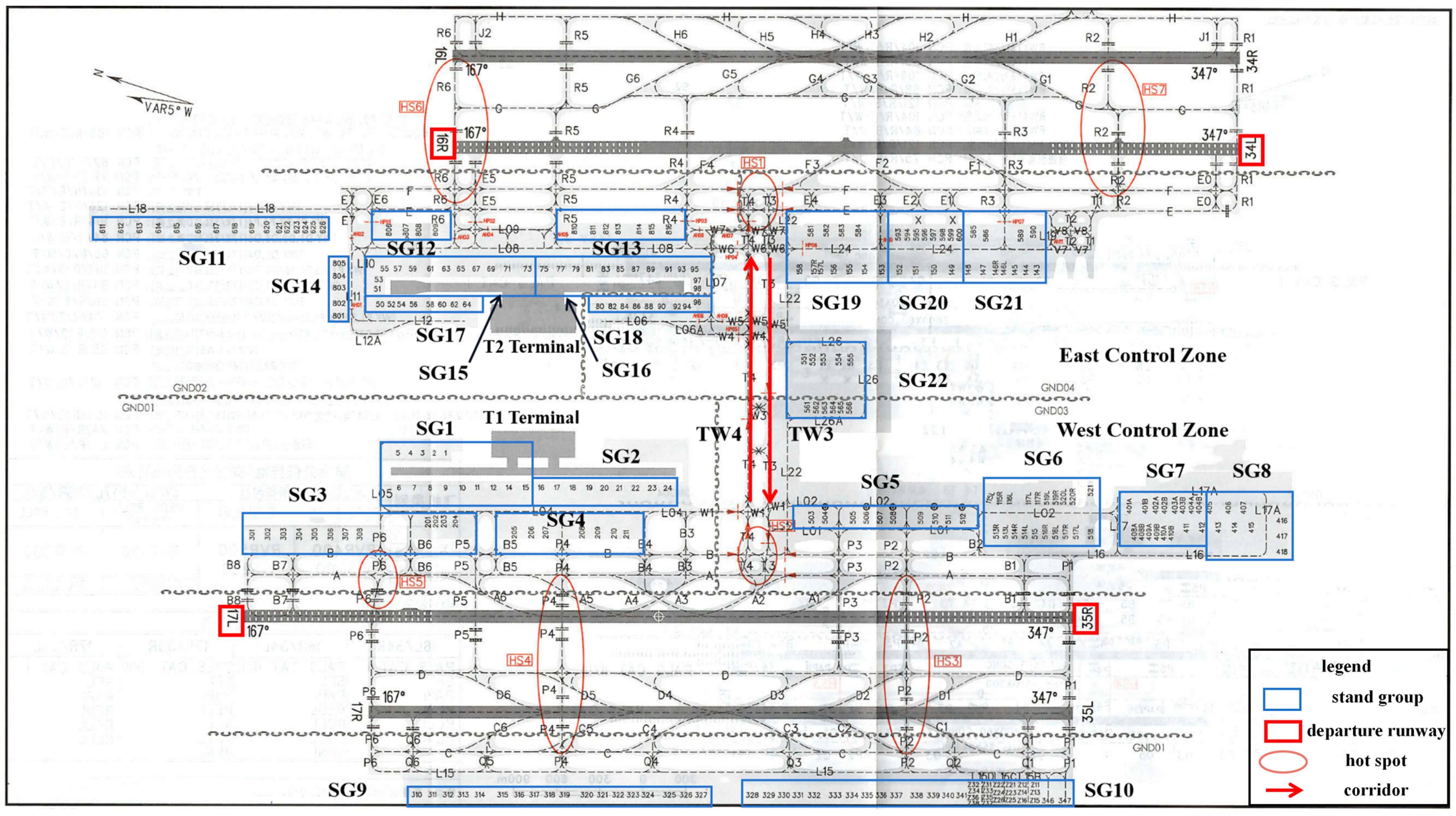
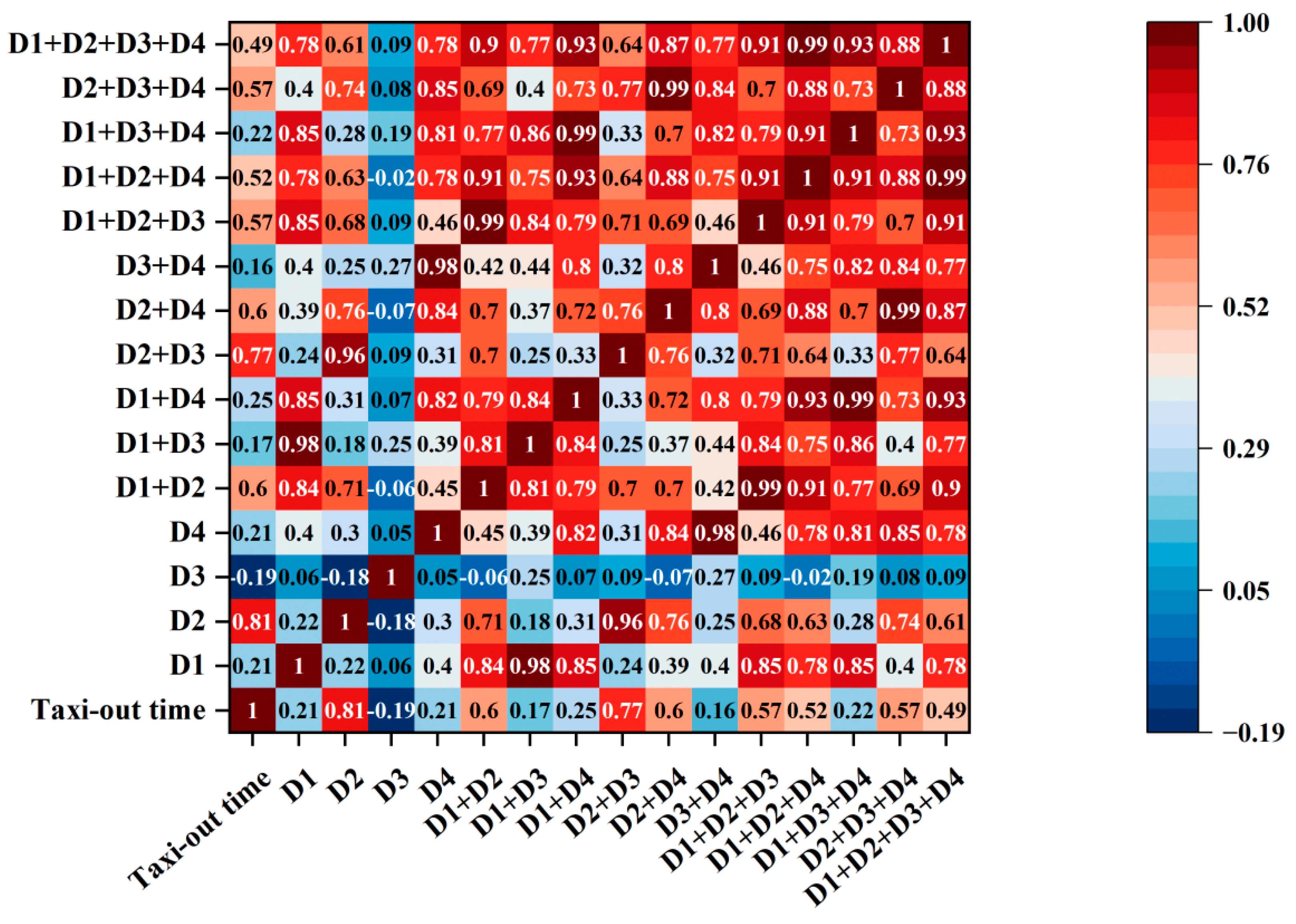
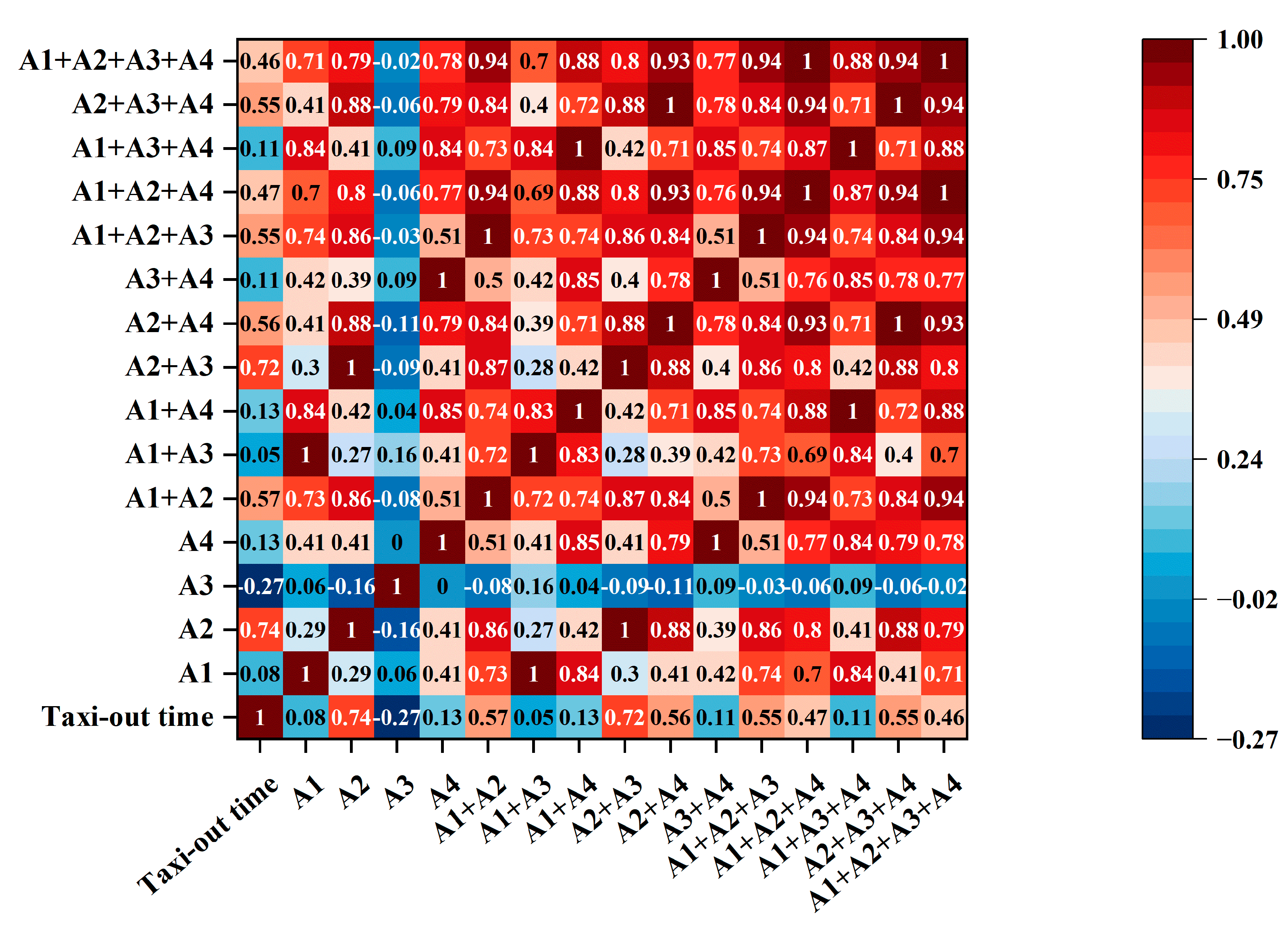
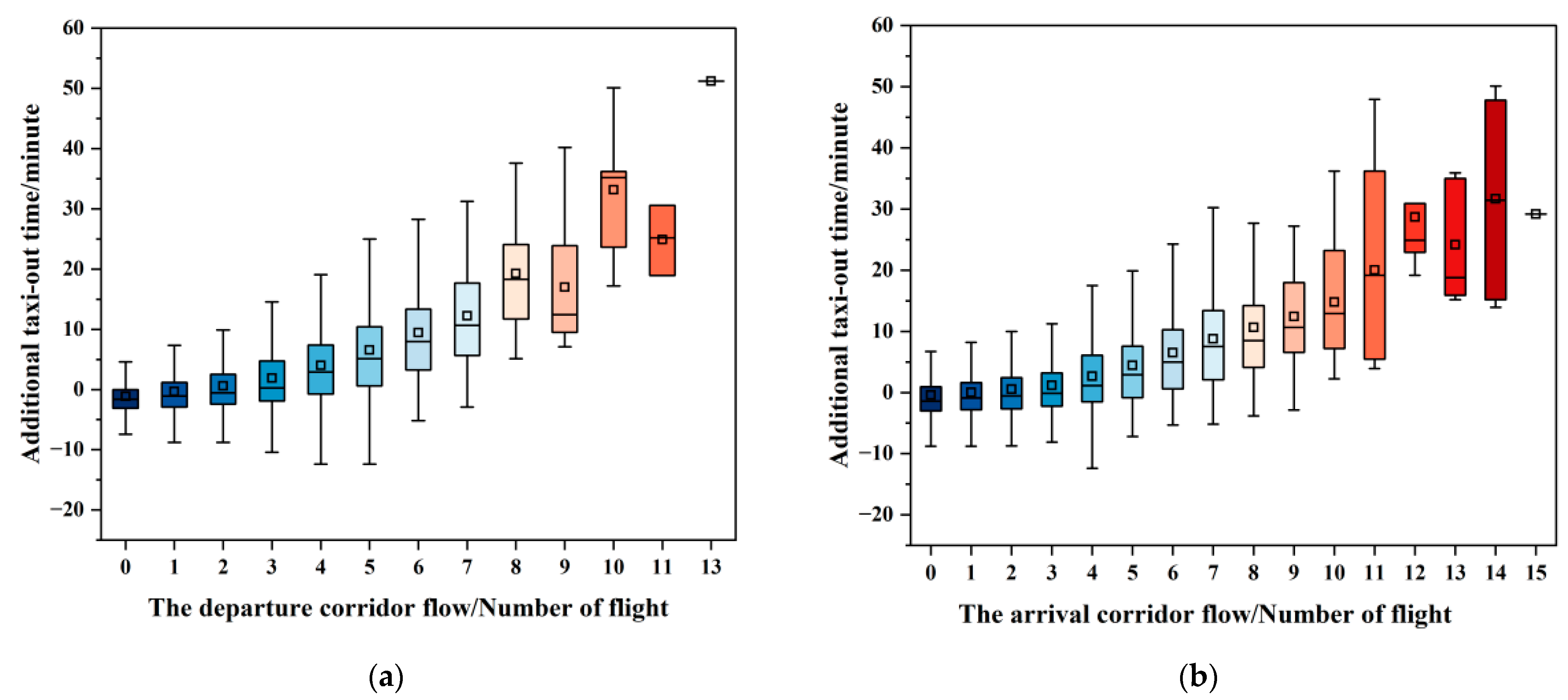
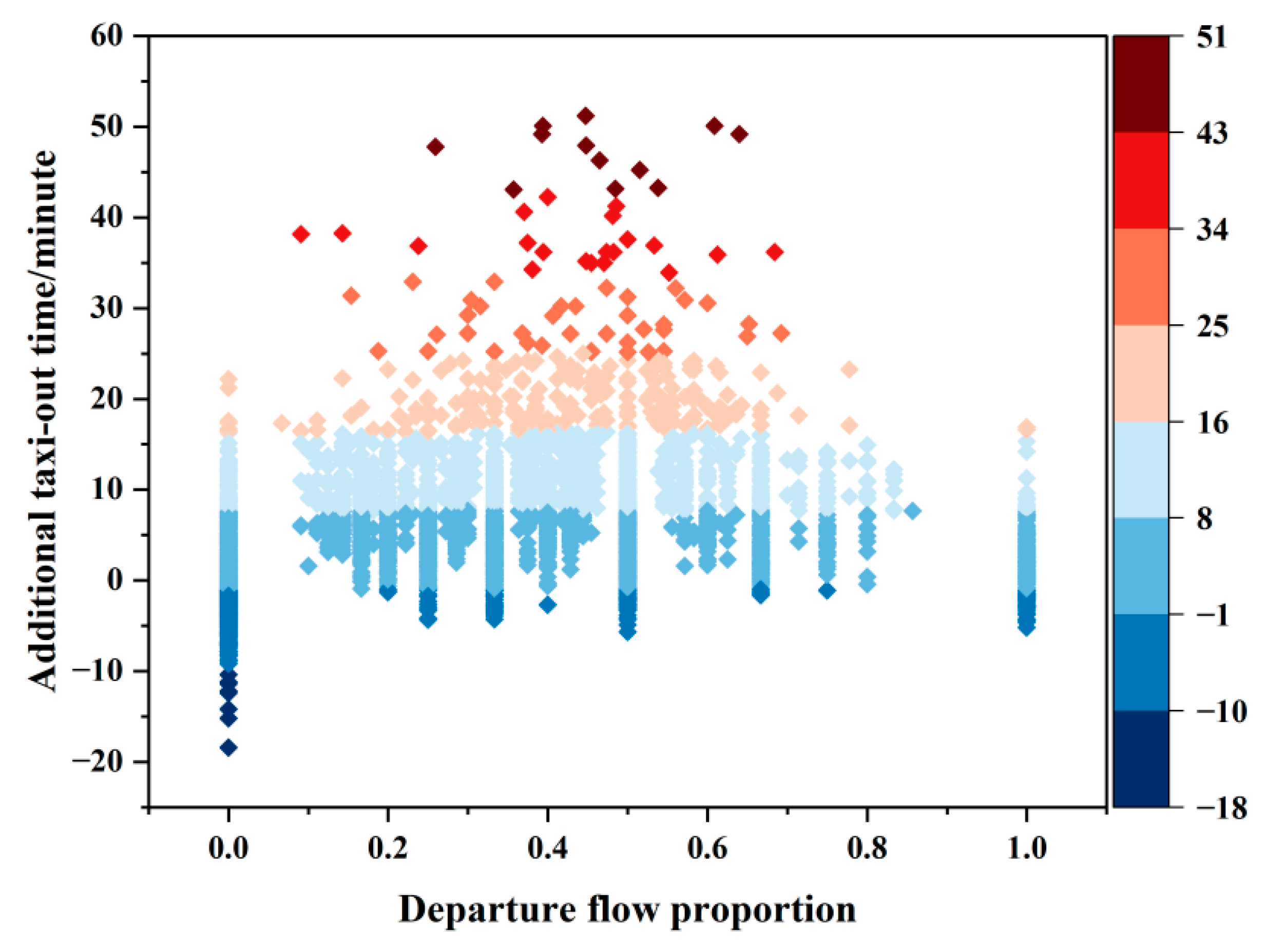
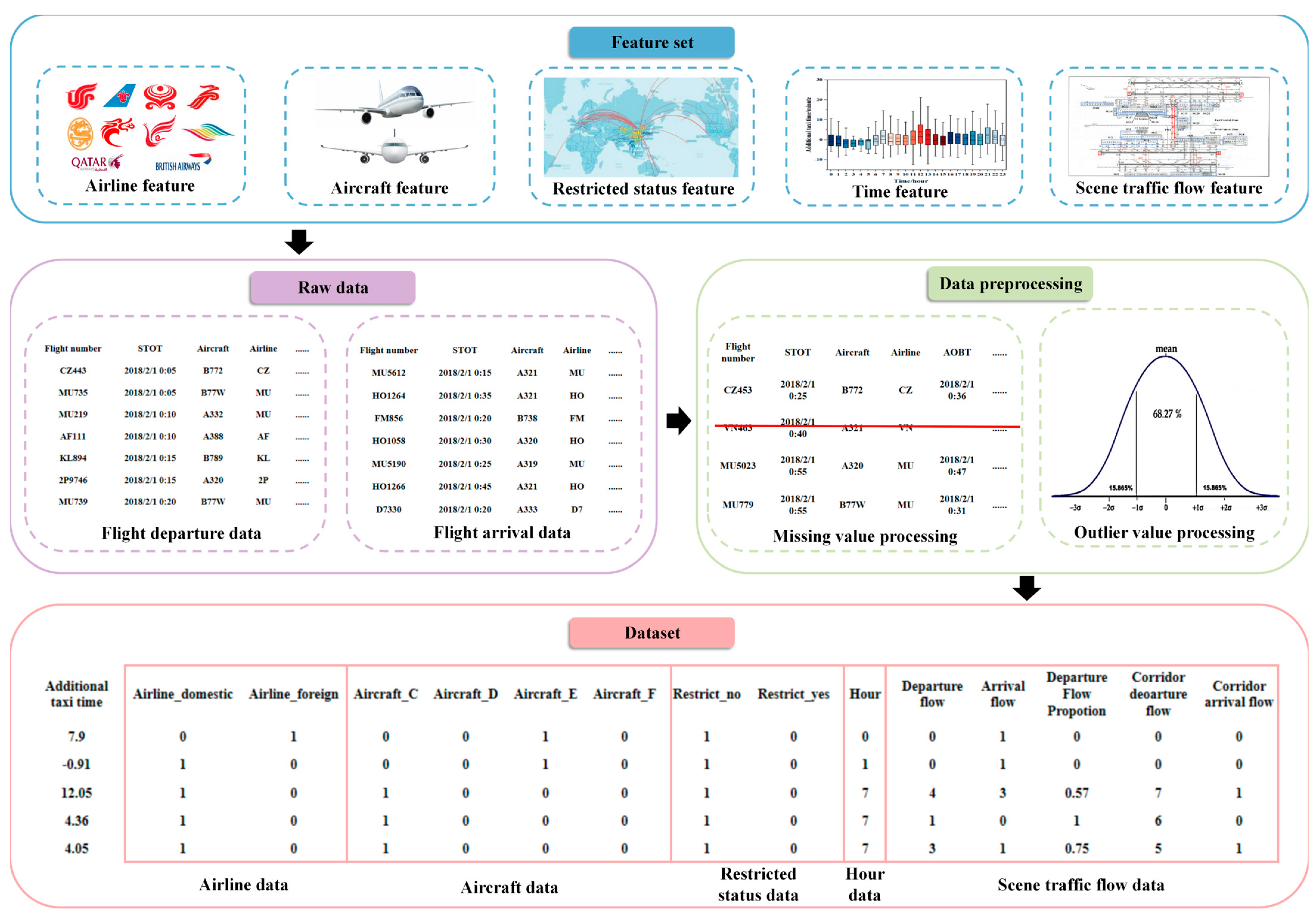
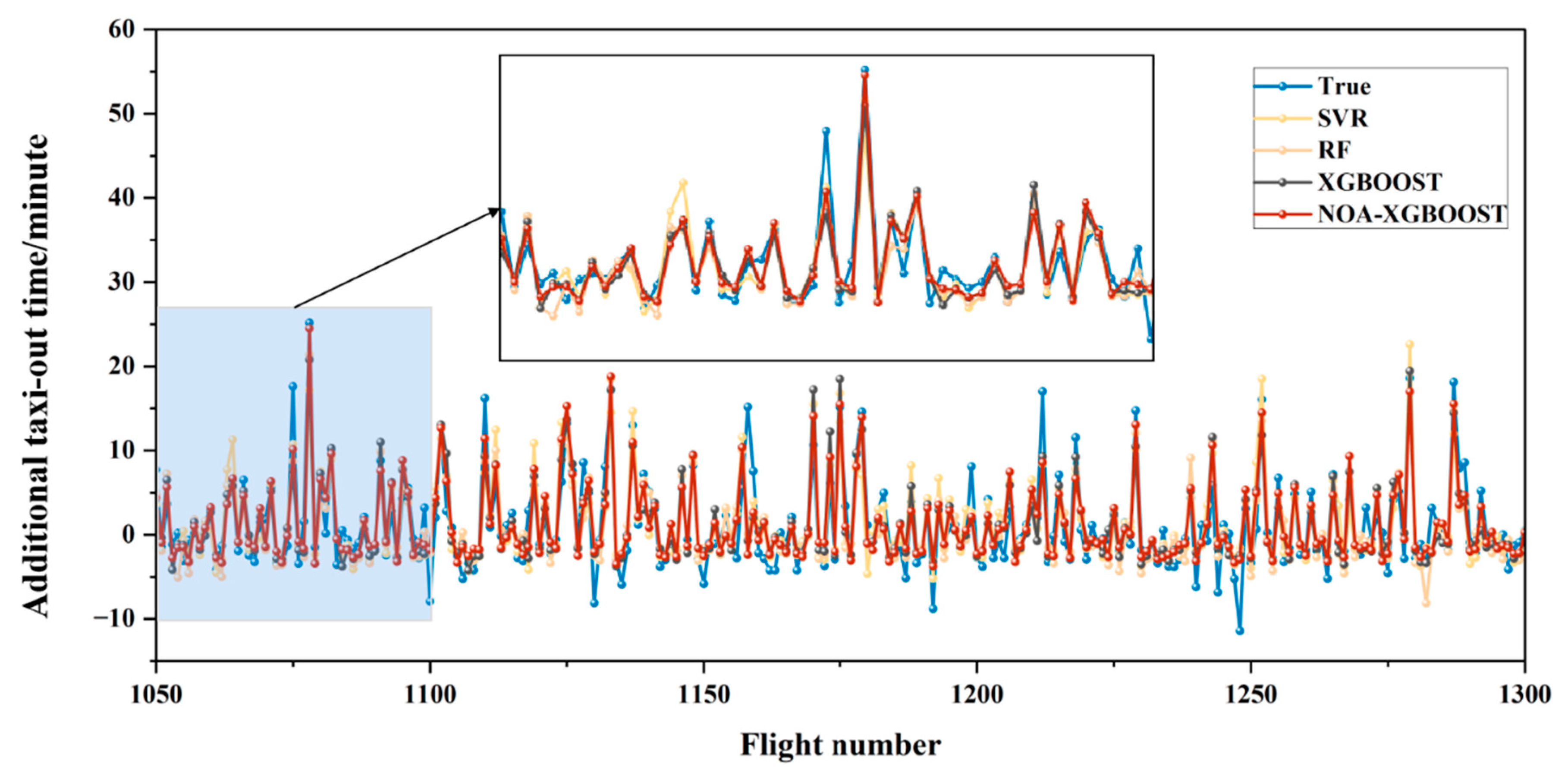
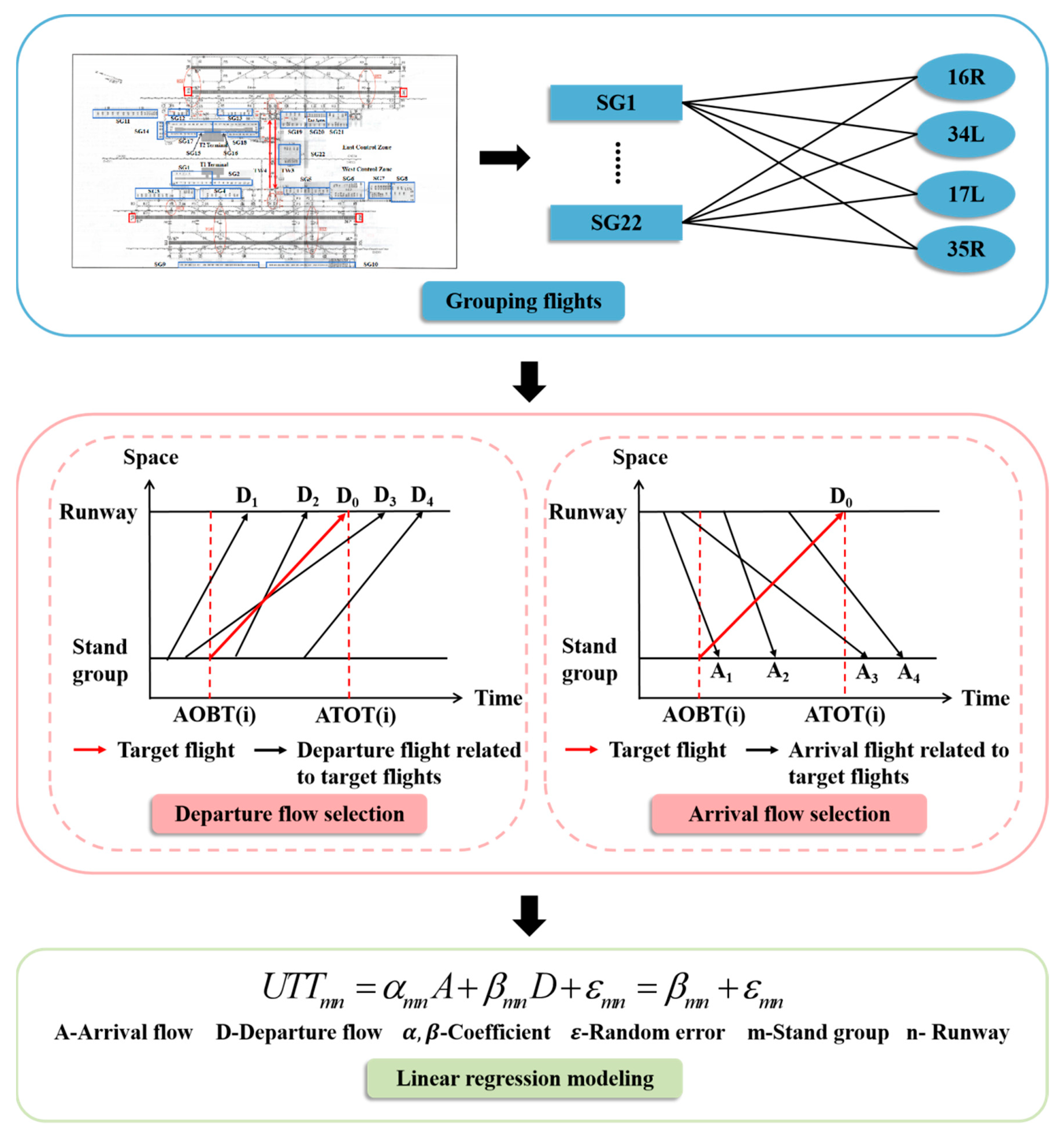
The taxi-out time of an airport scene can be categorized into the unimpeded taxi-out time and the additional taxi-out time. Usually, additional taxi-out time is used as a key index to monitor taxi-out performance, and its accurate prediction plays an important role in optimizing the allocation of time slots at an airport and improving scene operation efficiency. Taking Shanghai Pudong International Airport as the research object, we first analyze its layout and construct the origin–destination pairs (ODPs) based on the stand groups and runways. Then, we develop a multiple linear regression model based on the arrival and departure flows to calculate the unimpeded taxi-out times for all ODPs. The actual taxi-out time is then subtracted from the unimpeded taxi-out time to obtain the historical additional taxi-out time of each flight. We propose three new flow features related to the structure: the corridor departure flow, the corridor arrival flow, and the departure flow proportion of ODPs, based on which we construct a dataset for training the prediction model. We then propose an additional taxi-out time prediction model based on the nutcracker optimization algorithm (NOA) and XGBoost and run comparison experiments on the operation data of our target airport. The results show that the optimized prediction model we proposed has the best performance compared with the traditional XGBoost model and other commonly used prediction models, and the proposed structure-related features have high correlations with additional taxi-out time.
Keywords: unimpeded taxi-out time; additional taxi-out time; optimization algorithms; corridor; stand group unimpeded taxi-out time; additional taxi-out time; optimization algorithms; corridor; stand group