Article

Image Dehazing Enhancement Strategy Based on Polarization Detection of Space Targets

Changchun Institute of Optics, Fine Mechanics and Physics, Chinese Academy of Sciences, Changchun 130033, China
*
Author to whom correspondence should be addressed.
Appl. Sci. 2024, 14(21), 10042; https://doi.org/10.3390/app142110042

Submission received: 8 September 2024 / Revised: 24 October 2024 / Accepted: 29 October 2024 / Published: 4 November 2024
(This article belongs to the Section Aerospace Science and Engineering)

Abstract

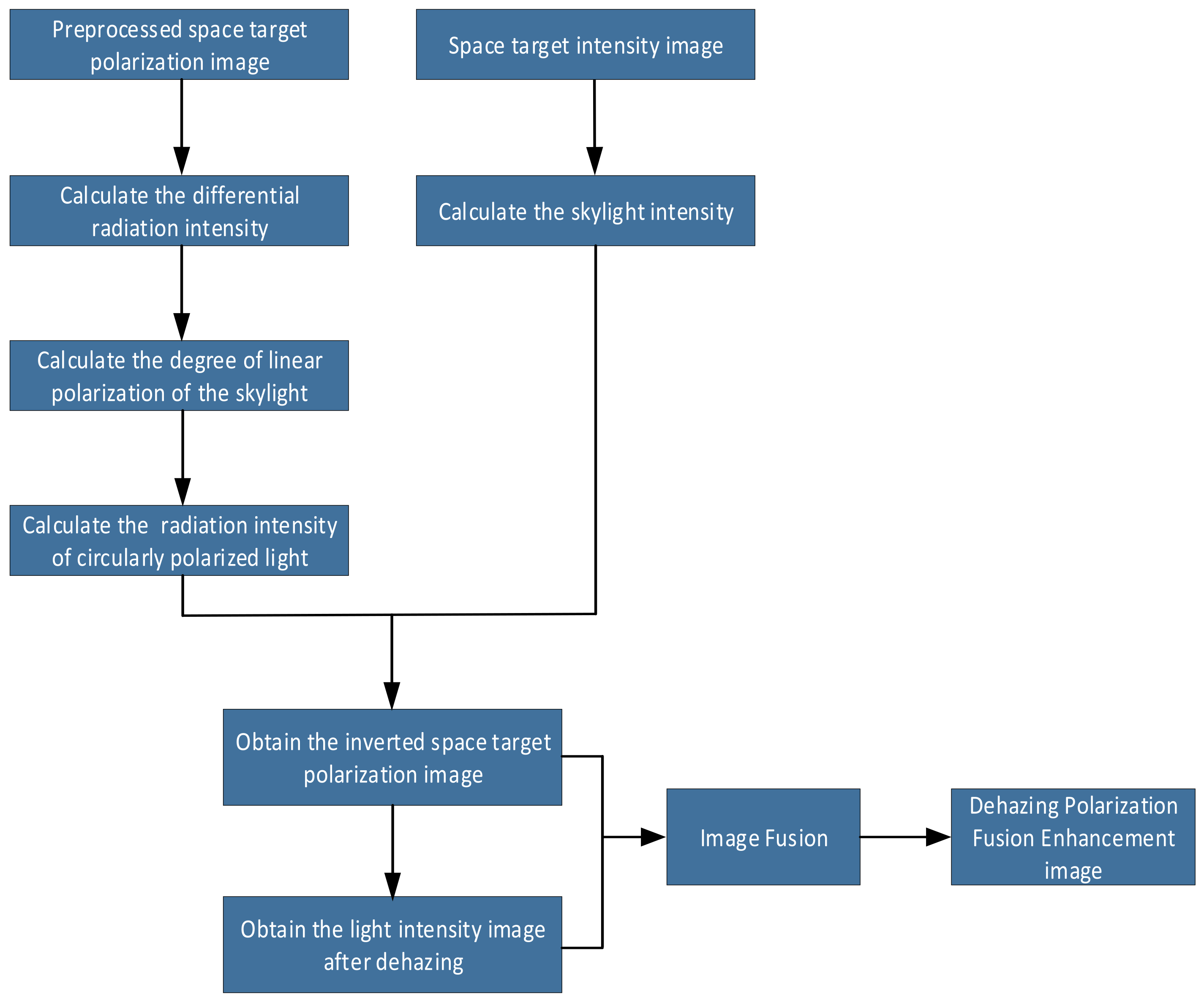
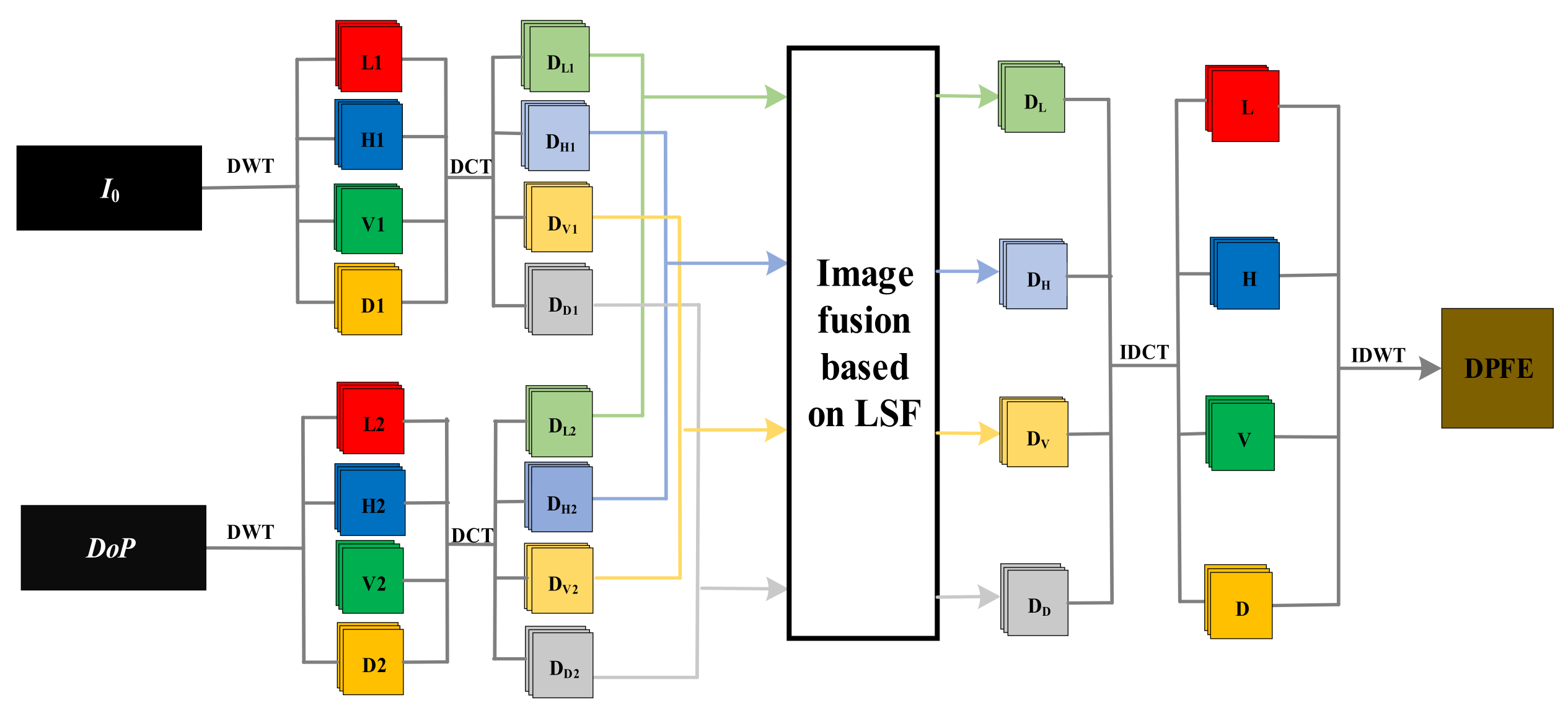
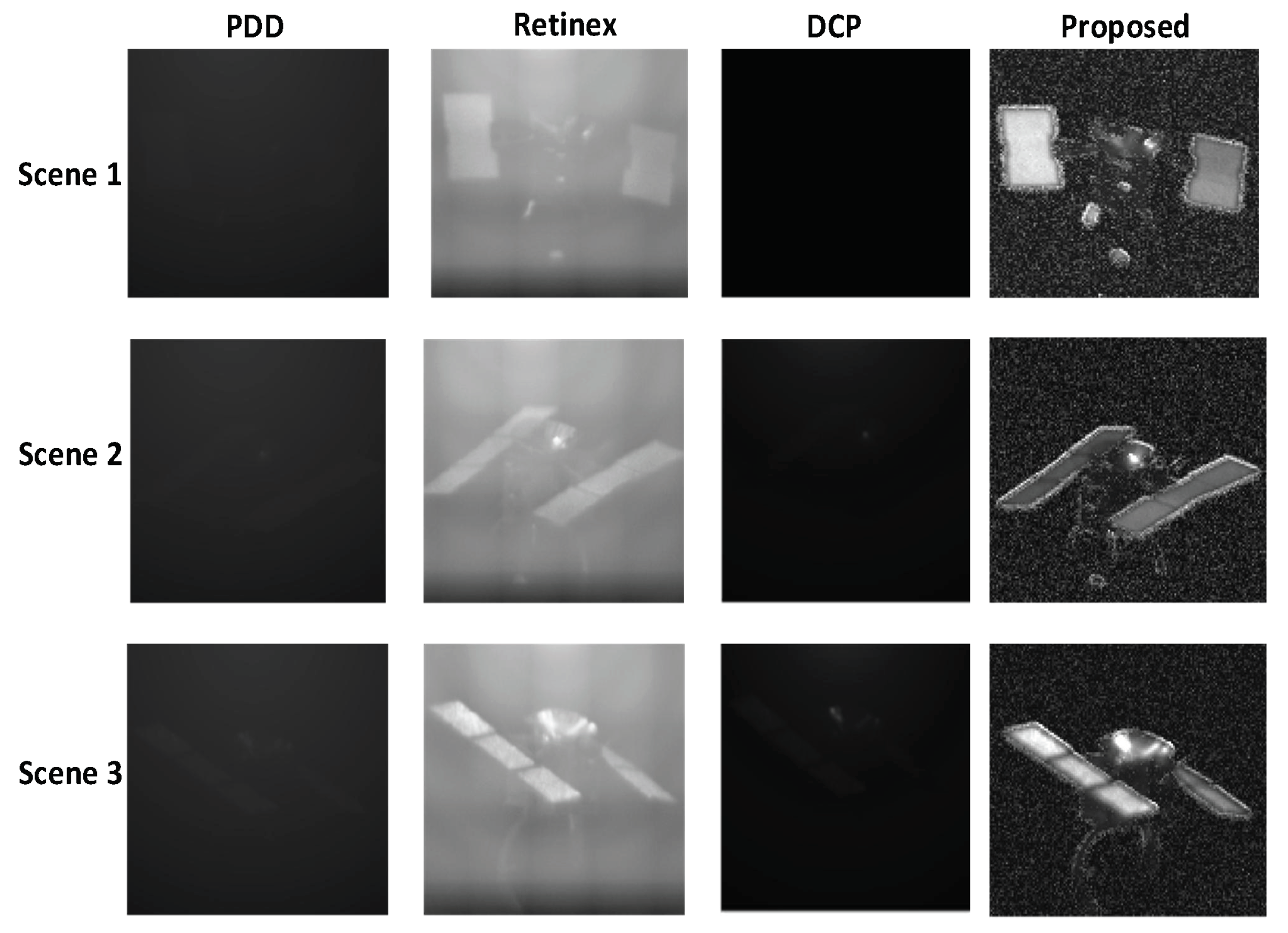
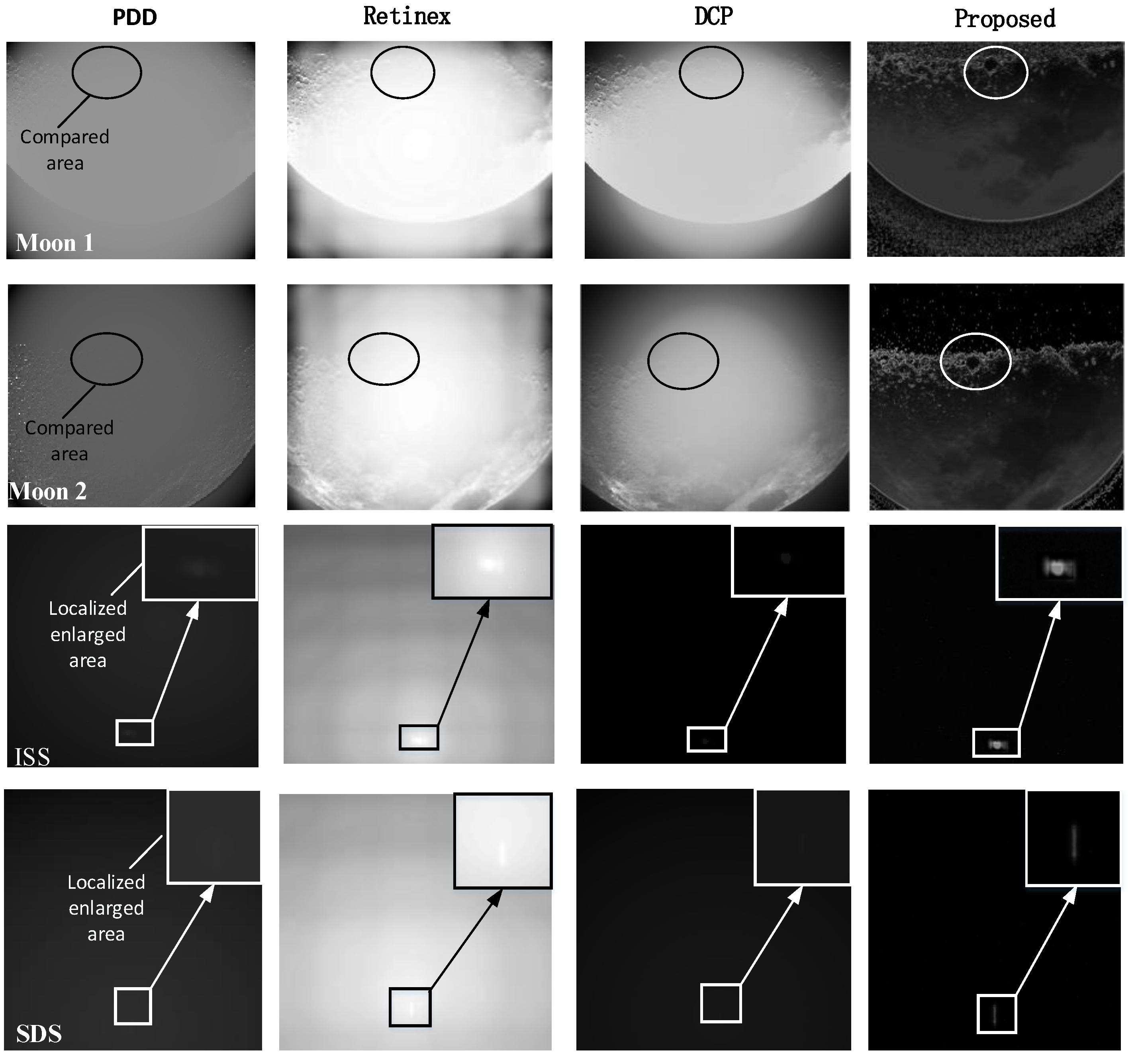
In view of the fact that the technology of polarization detection performs better at identifying targets through clouds and fog, the recognition ability of the space target detection system under haze conditions will be improved by applying the technology. However, due to the low ambient brightness and limited target radiation information during space target detection, the polarization information of space target is seriously lost, and the advantages of polarization detection technology in identifying targets through clouds and fog cannot be effectively exerted under the condition of haze detection. In order to solve the above problem, a dehazing enhancement strategy specifically applied to polarization images of space targets is proposed. Firstly, a hybrid multi-channel interpolation method based on regional correlation analysis is proposed to improve the calculation accuracy of polarization information during preprocessing. Secondly, an image processing method based on full polarization information inversion is proposed to obtain the degree of polarization of the image after inversion and the intensity of the image after dehazing. Finally, the image fusion method based on discrete cosine transform is used to obtain the dehazing polarization fusion enhancement image. The effectiveness of the proposed image processing strategy is verified by carrying out simulated and real space target detection experiments. Compared with other methods, by using the proposed image processing strategy, the quality of the polarization images of space targets obtained under the haze condition is significantly improved. Our research results have important practical implications for promoting the wide application of polarization detection technology in the field of space target detection.
Keywords: space target detection; polarization detection; polarization image dehazing; degree of polarization image space target detection; polarization detection; polarization image dehazing; degree of polarization image