Study Protocol

Effects of Different Tonic, Isometric and Isometric/Vibratory Strength Training Programs on Motor Symptomatology in People with Parkinson’s Disease: Study Protocol for a Randomized Trial


by
Oscar Andrades-Ramírez
1,
David Ulloa-Díaz
2,*,
Francisco Guede-Rojas
3,
Sergio Araya-Sierralta
4,
Gustavo Muñoz-Bustos
5,
Patricio Arroyo-Jofré
6 and
Luis-Javier Chirosa-Ríos
7
1
Facultad de Salud y Ciencias Sociales, Instituto del Deporte, Licenciatura en Ciencias de la Actividad Física, Universidad de las Américas, Concepción 4030000, Chile
2
Department of Sports Sciences and Physical Conditioning, Universidad Católica de la Santísima Concepción, Concepción 4030000, Chile
3
Exercise and Rehabilitation Sciences Institute, School of Physical Therapy, Faculty of Rehabilitation Sciences, Universidad Andres Bello, Santiago 7591538, Chile
4
Facultad de Humanidades y Educación, Universidad de Atacama, Copiapó 1531772, Chile
5
Facultad de Salud, Escuela de Nutrición y Dietética, Universidad Santo Tomas, Iquique 1100000, Chile
6
Facultad de Educación, Universidad San Sebastián, Santiago 8420524, Chile
7
Department of Physical Education and Sport, Faculty of Sport Sciences, University of Granada, 18011 Granada, Spain
*
Author to whom correspondence should be addressed.
Appl. Sci. 2024, 14(13), 5923; https://doi.org/10.3390/app14135923
Submission received: 14 June 2024 / Revised: 3 July 2024 / Accepted: 3 July 2024 / Published: 7 July 2024
(This article belongs to the Special Issue Recent Advances in Applied Biomechanics and Sports Sciences)

Abstract

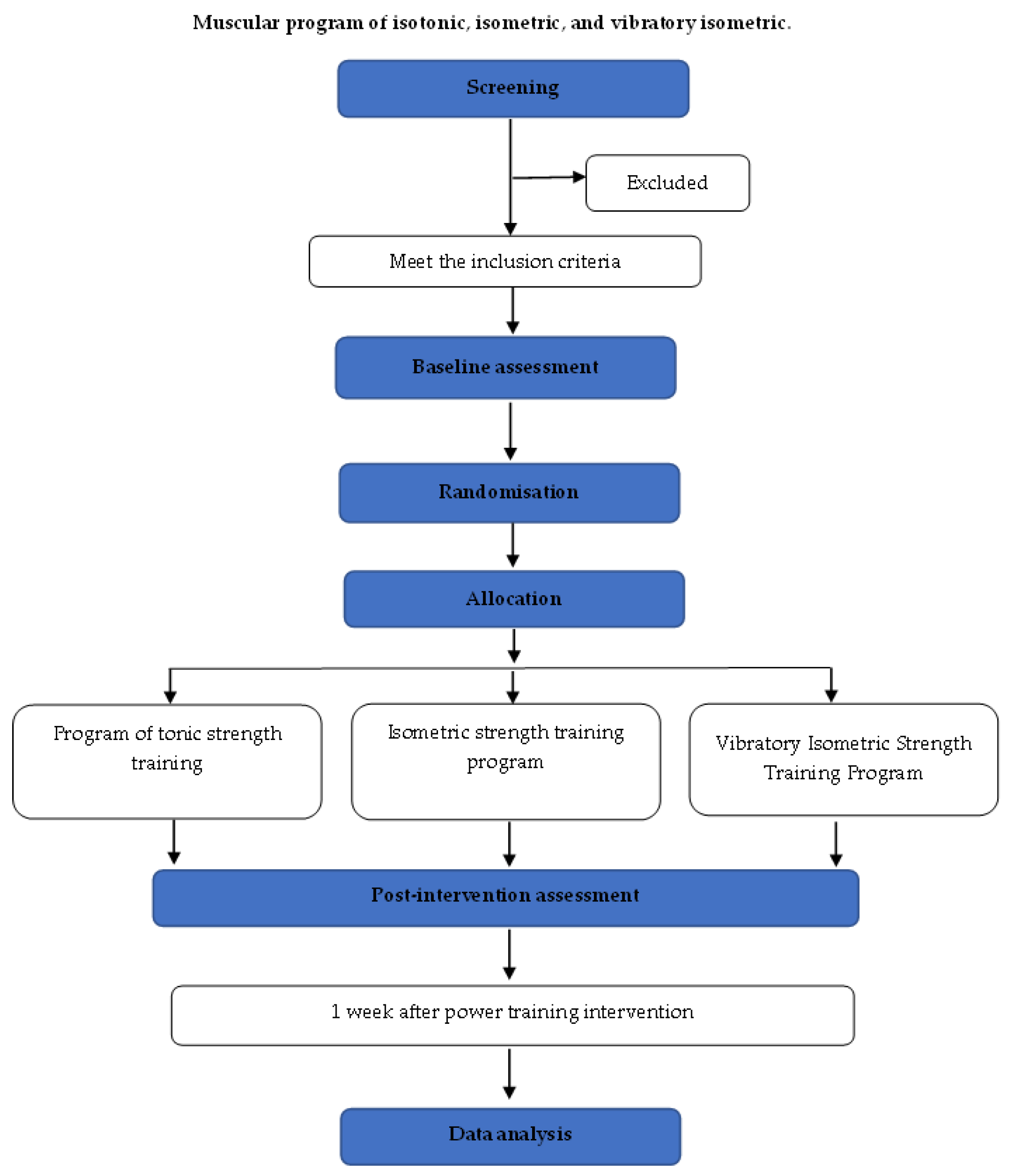
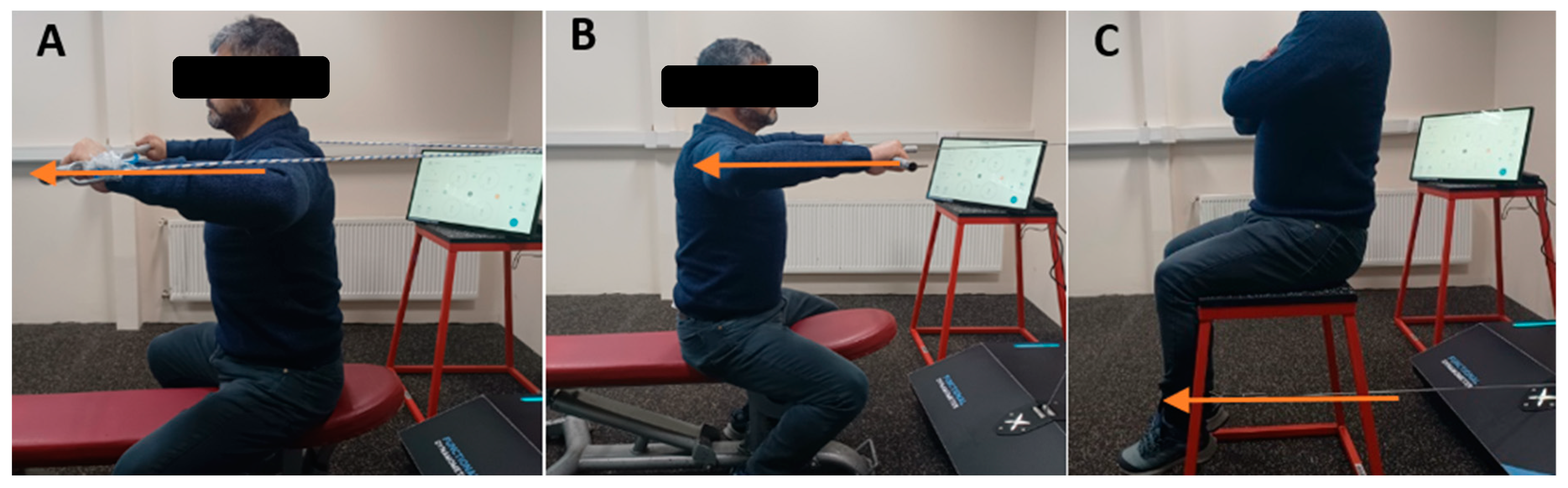
Background: The Chilean population has experienced increased longevity in recent decades, leading to an increased incidence of and mortality from neurodegenerative diseases such as Parkinson’s disease (PD). PD is a chronic degenerative condition that affects the central nervous system. The main objective of this research is to evaluate the effect of 12-week programs of tonic, isometric, and isometric/vibratory muscular strength training while controlling the manipulation of the intensity variable on motor and non-motor symptomatology in PD patients. The secondary objective is to assess the levels of muscular strength in PD patients and their relationship with motor and non-motor symptomatology. Methods: A parallel-group, randomized trial will randomly assign (n = 34) people of both sexes with Parkinson’s disease between stages I–III Hoehn and Yahr (H&Y), aged between 50 and 70 years to one of the experimental groups, in which they will undergo a total of 24 strength training sessions during 12 weeks. During the intervention period, the participants will be advised not to undertake additional exercise programs, to avoid substances that may disrupt metabolism and circadian cycles, and to maintain their medication regimen. The primary or motor evaluation of rest tremor will be performed with an accelerometer (Actigraphy), balance with the Mini-BESTest balance test, gait speed with the Ten Meters Walk Test, and non-motor symptomatology through anxiety, depression (MDS-UPDRS), and quality of life (PDQ-39) questionnaires. The Secondary evaluation of muscle strength will be performed with a functional electromechanical dynamometer. Discussion: Established as a hypothesis is that manipulating intensity variables in 12-week tonic, isometric, and isometric/vibratory muscle strength training programs has an effect on motor and non-motor symptomatology in people with Parkinson’s disease. The research will establish the extent to which controlled muscular strength training has an effect on relevant factors related to motor and non-motor symptomatology.
Keywords: neurodegenerative disease; Parkinson Disease muscular strength; rehabilitation neurodegenerative disease; Parkinson Disease muscular strength; rehabilitation