Article

A Deep Neural Networks-Based Sound Speed Reconstruction with Enhanced Generalization by Training on a Natural Image Dataset

1
Department of Bioengineering, School of Engineering, The University of Tokyo, Tokyo 113-8656, Japan
2
Lily MedTech Inc., Tokyo 113-8485, Japan
3
Department of Mechanical Engineering, School of Engineering, The University of Tokyo, Tokyo 113-8656, Japan
*
Author to whom correspondence should be addressed.
Appl. Sci. 2024, 14(1), 37; https://doi.org/10.3390/app14010037
Submission received: 12 November 2023 / Revised: 6 December 2023 / Accepted: 11 December 2023 / Published: 20 December 2023
(This article belongs to the Special Issue Computational Ultrasound Imaging and Applications, 2nd Edition)

Abstract

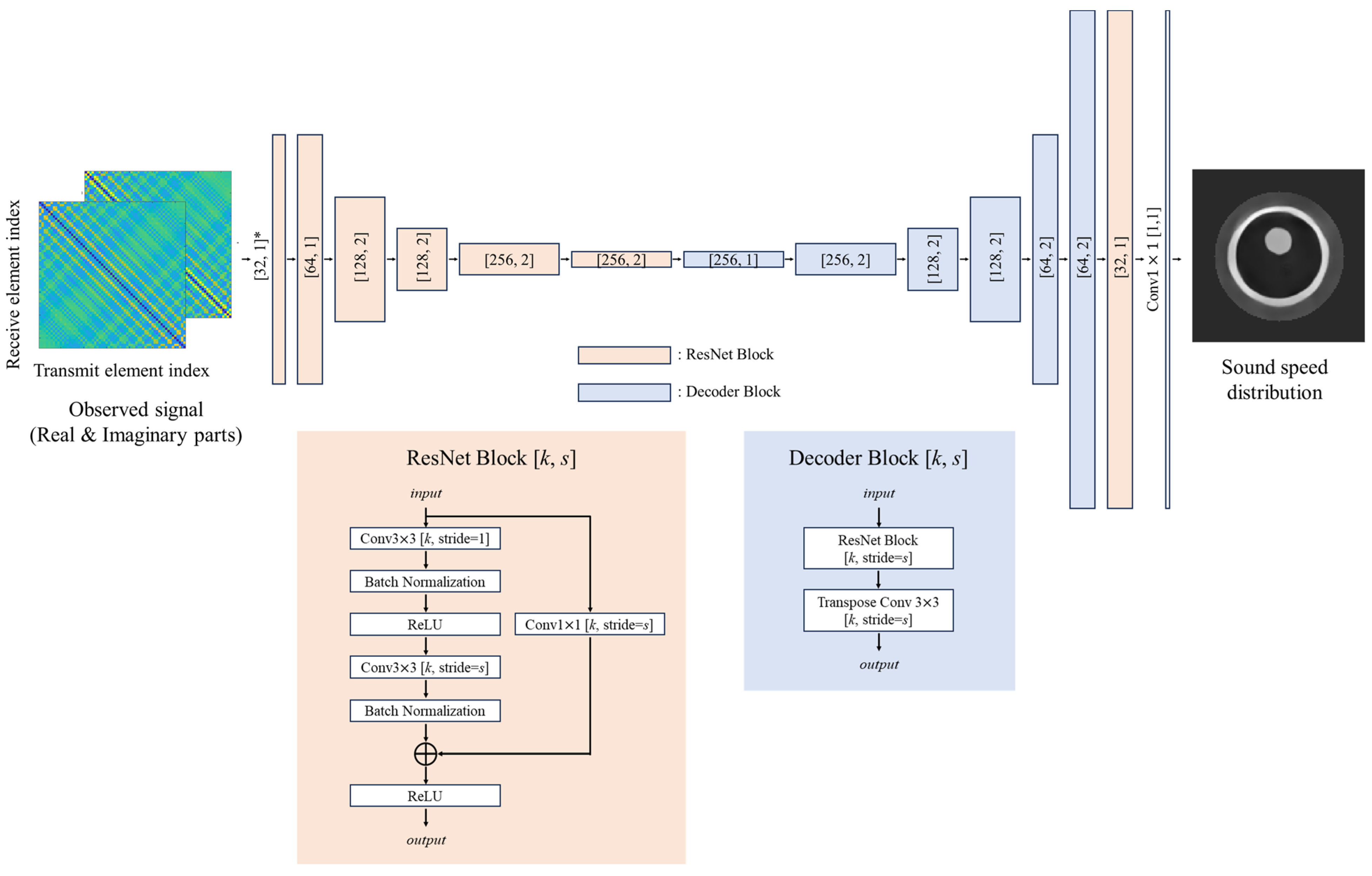
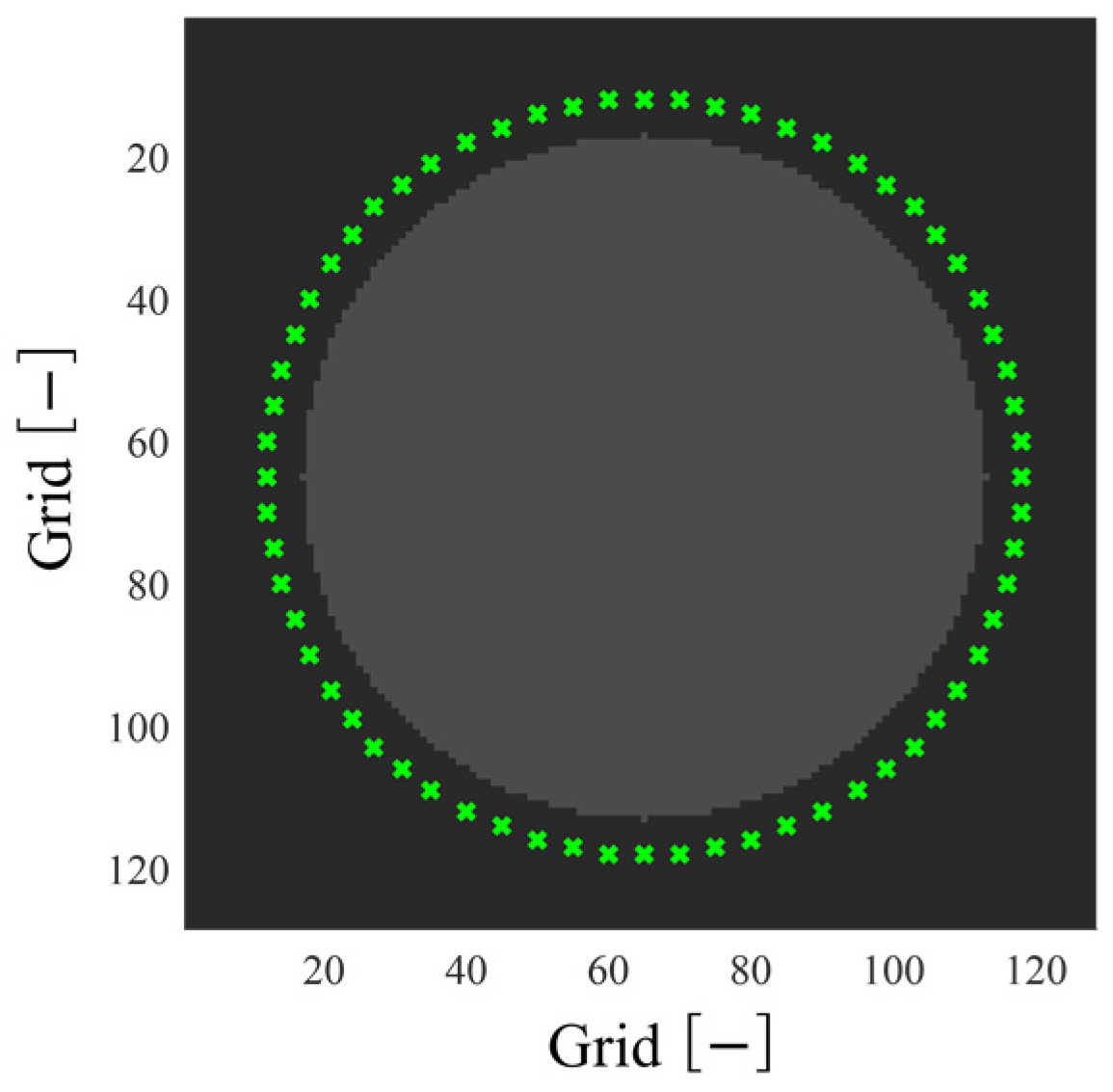
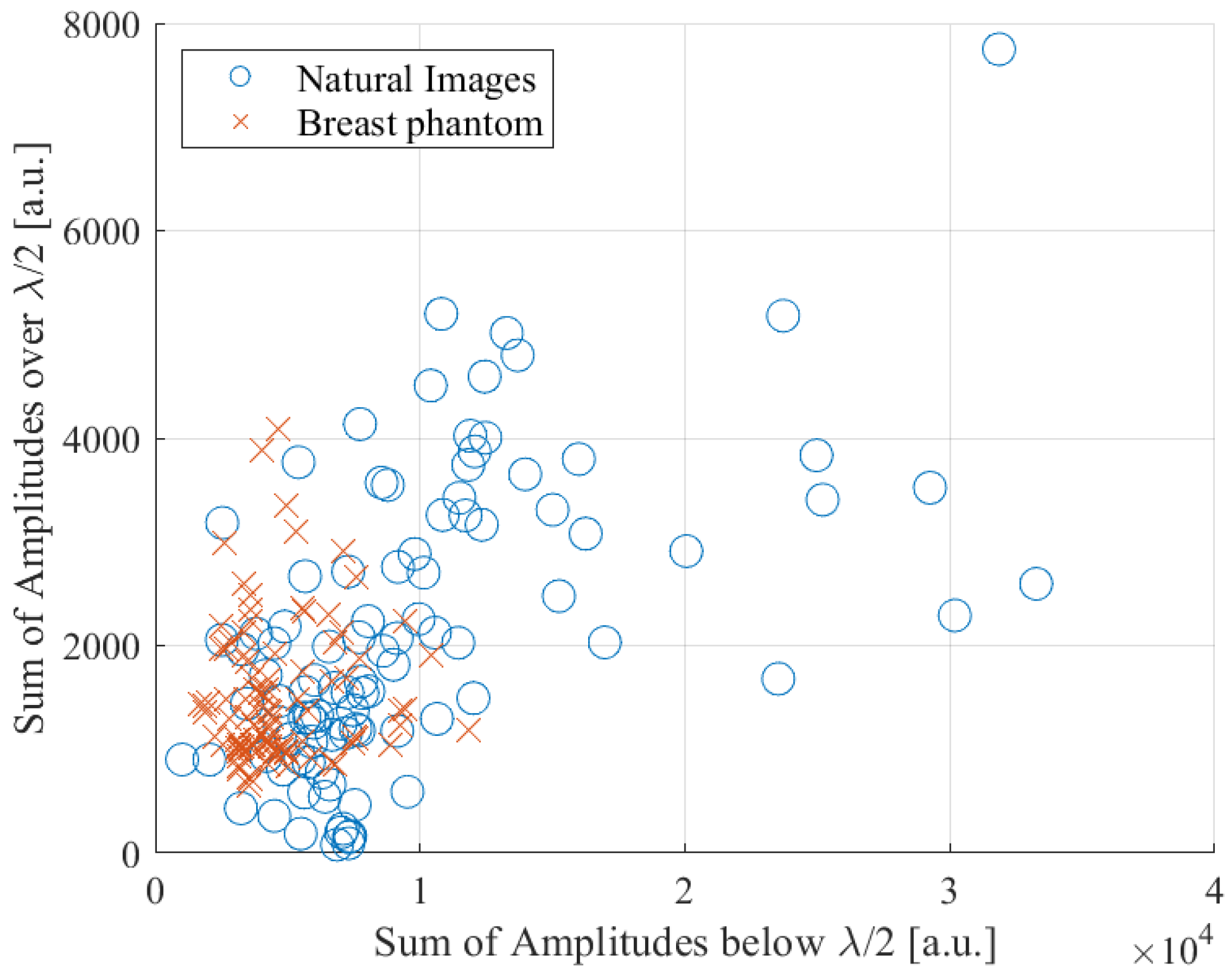
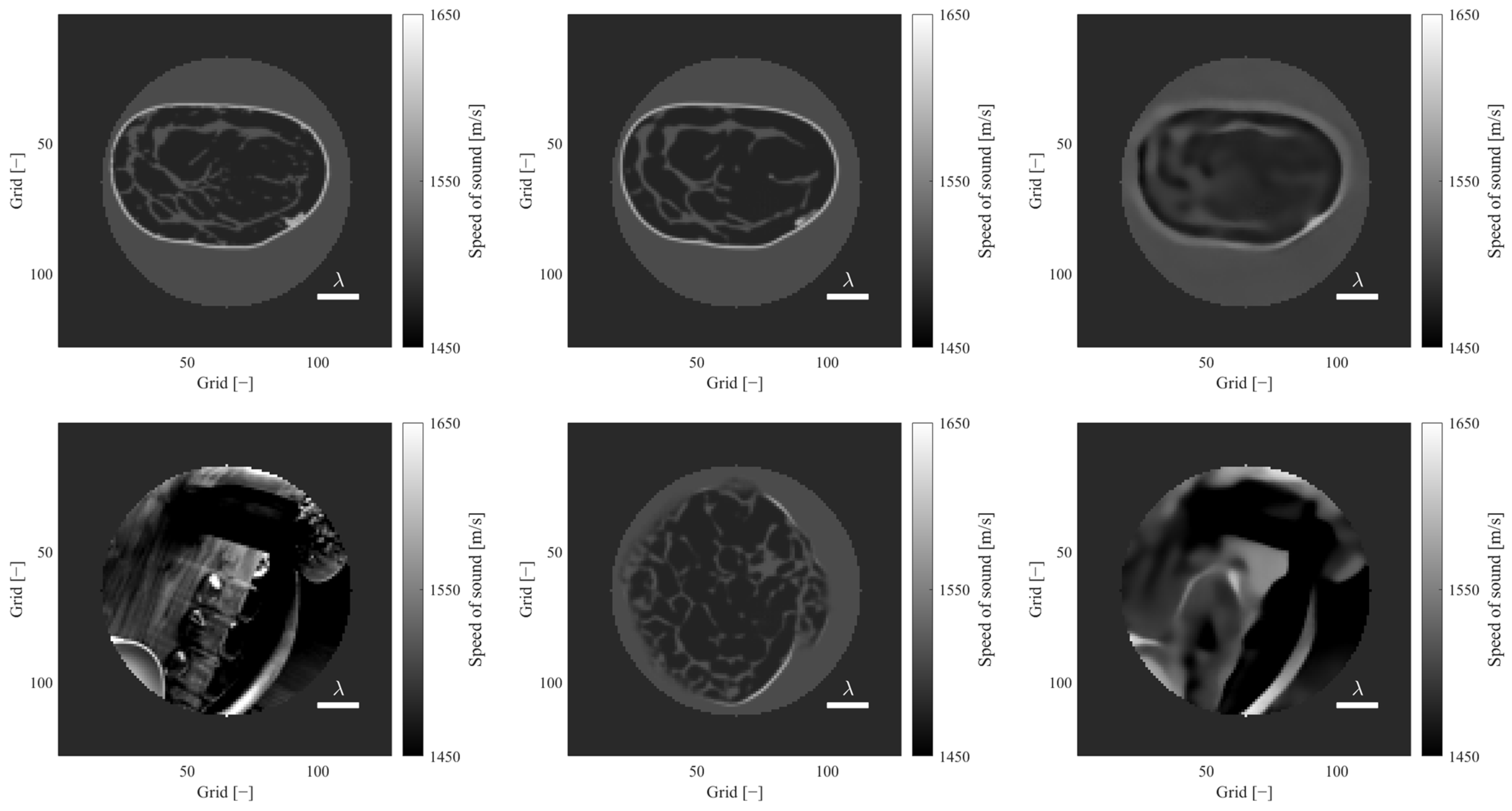
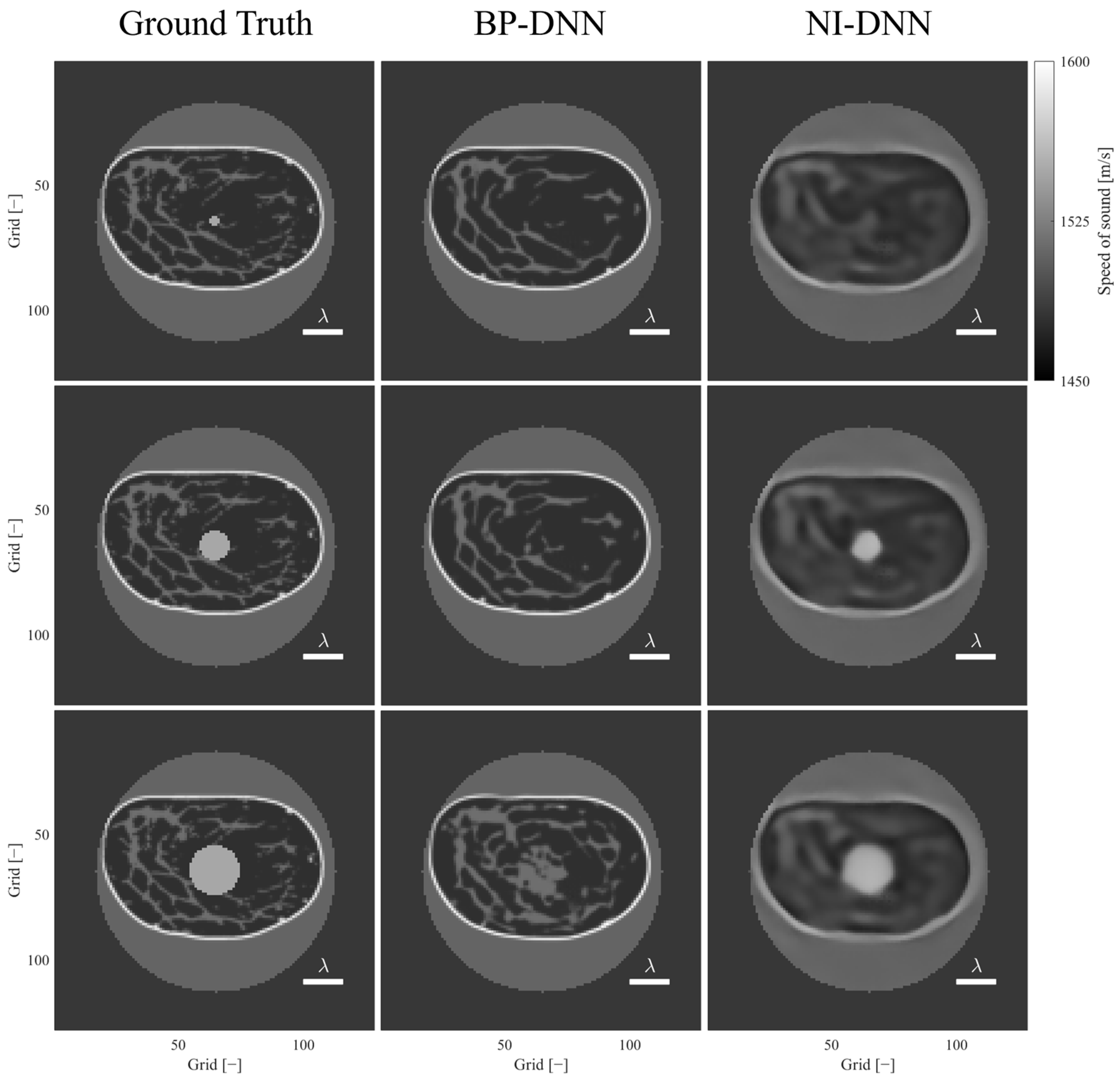
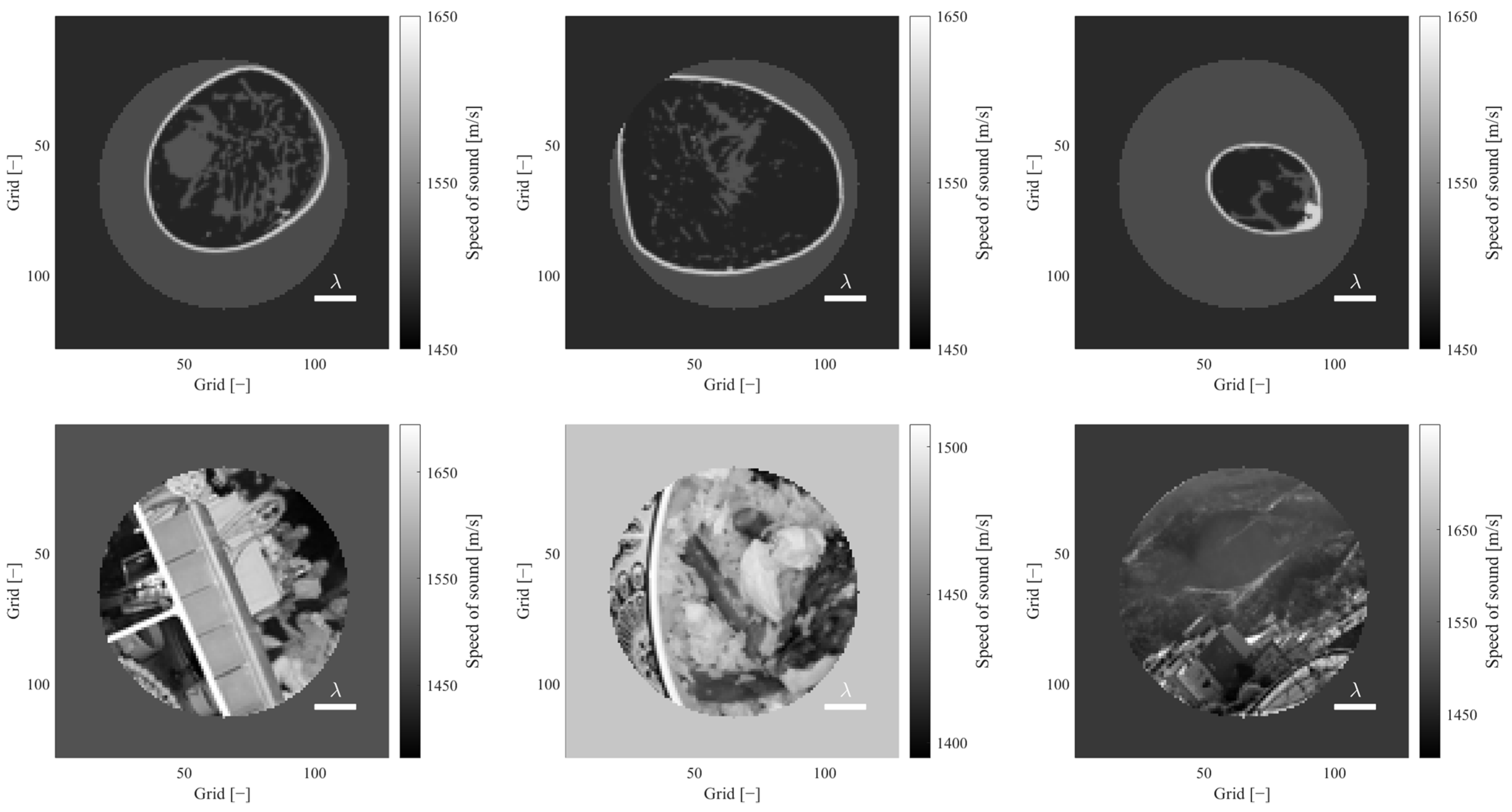
Sound speed reconstruction has been investigated for quantitative evaluation of tissue properties in breast examination. Full waveform inversion (FWI), a mainstream method for conventional sound speed reconstruction, is an iterative method that includes numerical simulation of wave propagation, resulting in high computational cost. In contrast, high-speed reconstruction of sound speed using a deep neural network (DNN) has been proposed in recent years. Although the generalization performance is highly dependent on the training data, how to generate data for sufficient generalization performance is still unclear. In this study, the quality and generalization performance of DNN-based sound speed reconstruction with a ring array transducer were evaluated on a natural image-derived dataset and a breast phantom dataset. The DNN trained on breast phantom data (BP-DNN) could not reconstruct the structures on natural image data with diverse structures. On the other hand, the DNN trained on natural image data (NI-DNN) successfully reconstructed the structures on both natural image and breast phantom test data. Furthermore, the NI-DNN successfully reconstructed tumour structures in the breast, while the BP-DNN overlooked them. From these results, it was demonstrated that natural image data enables DNNs to learn sound speed reconstruction with high generalization performance and high resolution.
Keywords: breast cancer; deep learning; natural image; numerical simulation; ultrasound computed tomography breast cancer; deep learning; natural image; numerical simulation; ultrasound computed tomography