Article

Matching the Liquid Atomization Model to Experimental Data Obtained from Selected Nozzles

by
Beata Cieniawska
1,
Stanisław Parafiniuk
2,*,
Paweł A. Kluza
3 and
Zdzisław Otachel
3
1
Institute of Agricultural Engineering, Wrocław University of Environmental and Life Sciences, 37a Józefa Chełmońskiego Street, 51-630 Wrocław, Poland
2
Department of Machinery Exploitation and Management of Production Processes, University of Life Sciences in Lublin, 20-612 Lublin, Poland
3
Department of Applied Mathematics and Computer Science, University of Life Sciences in Lublin, 20-612 Lublin, Poland
*
Author to whom correspondence should be addressed.
Appl. Sci. 2023, 13(7), 4433; https://doi.org/10.3390/app13074433
Submission received: 9 January 2023 / Revised: 28 March 2023 / Accepted: 29 March 2023 / Published: 31 March 2023
(This article belongs to the Special Issue New Development in Smart Farming for Sustainable Agriculture)

Abstract

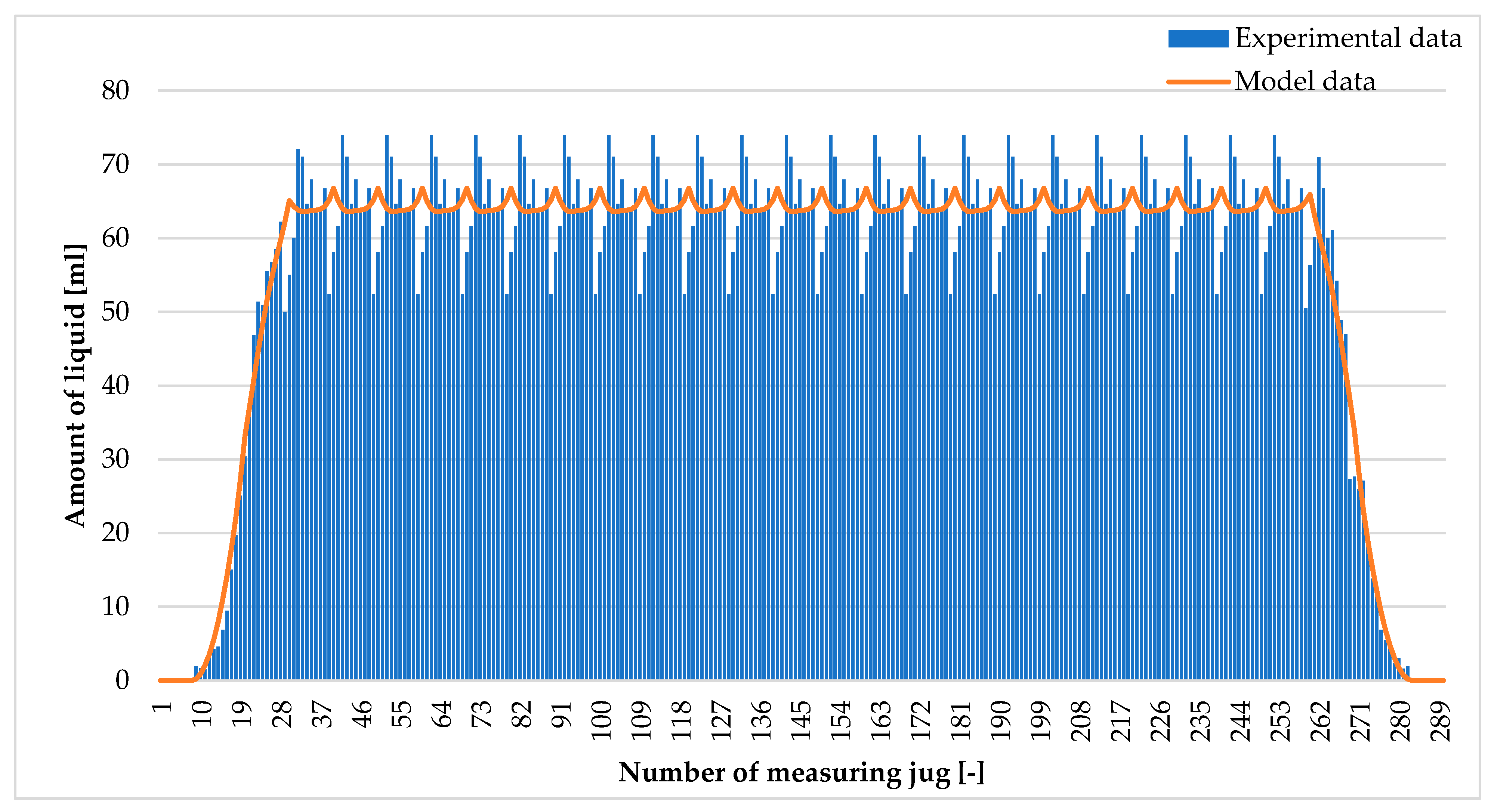
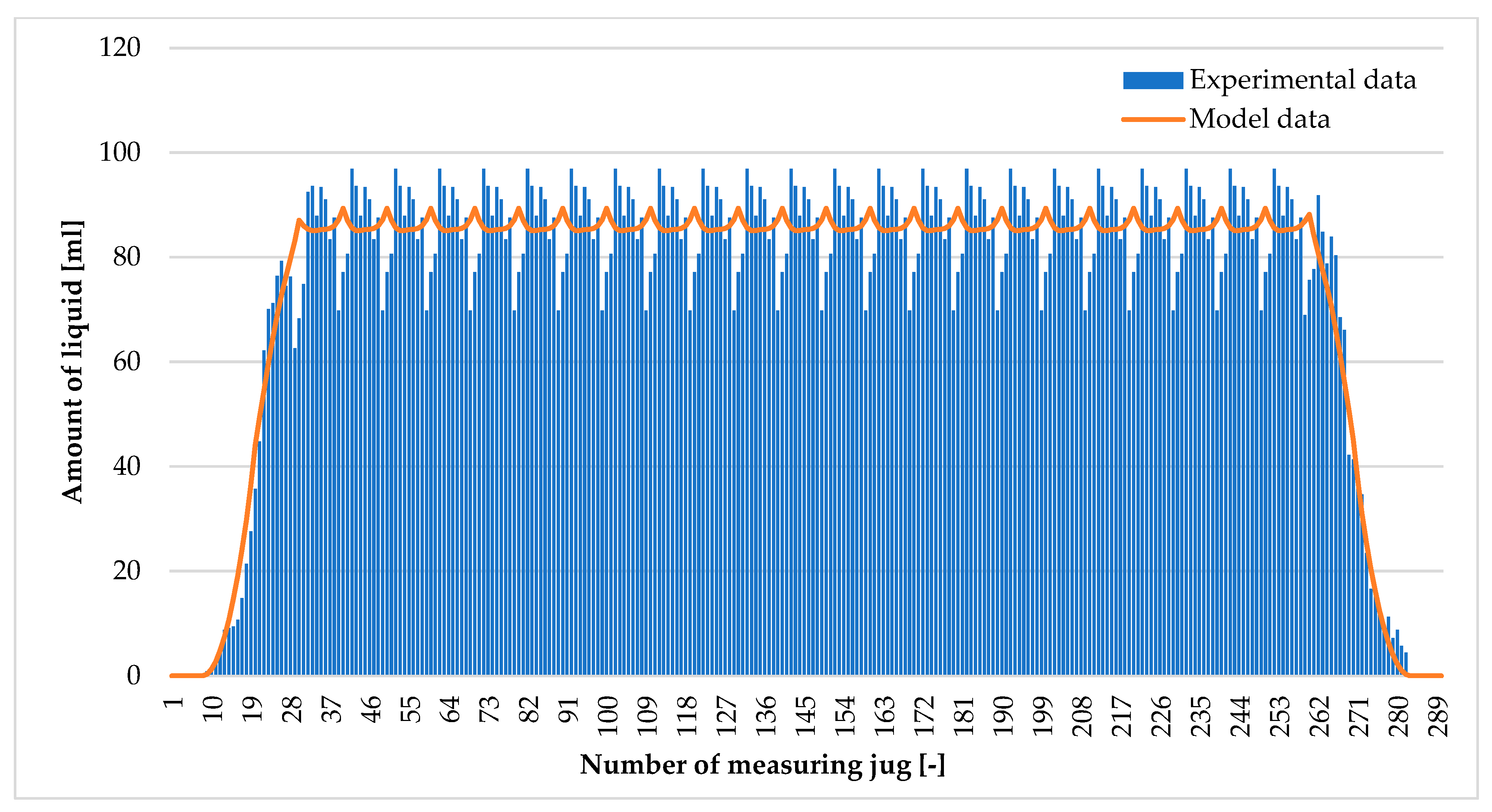
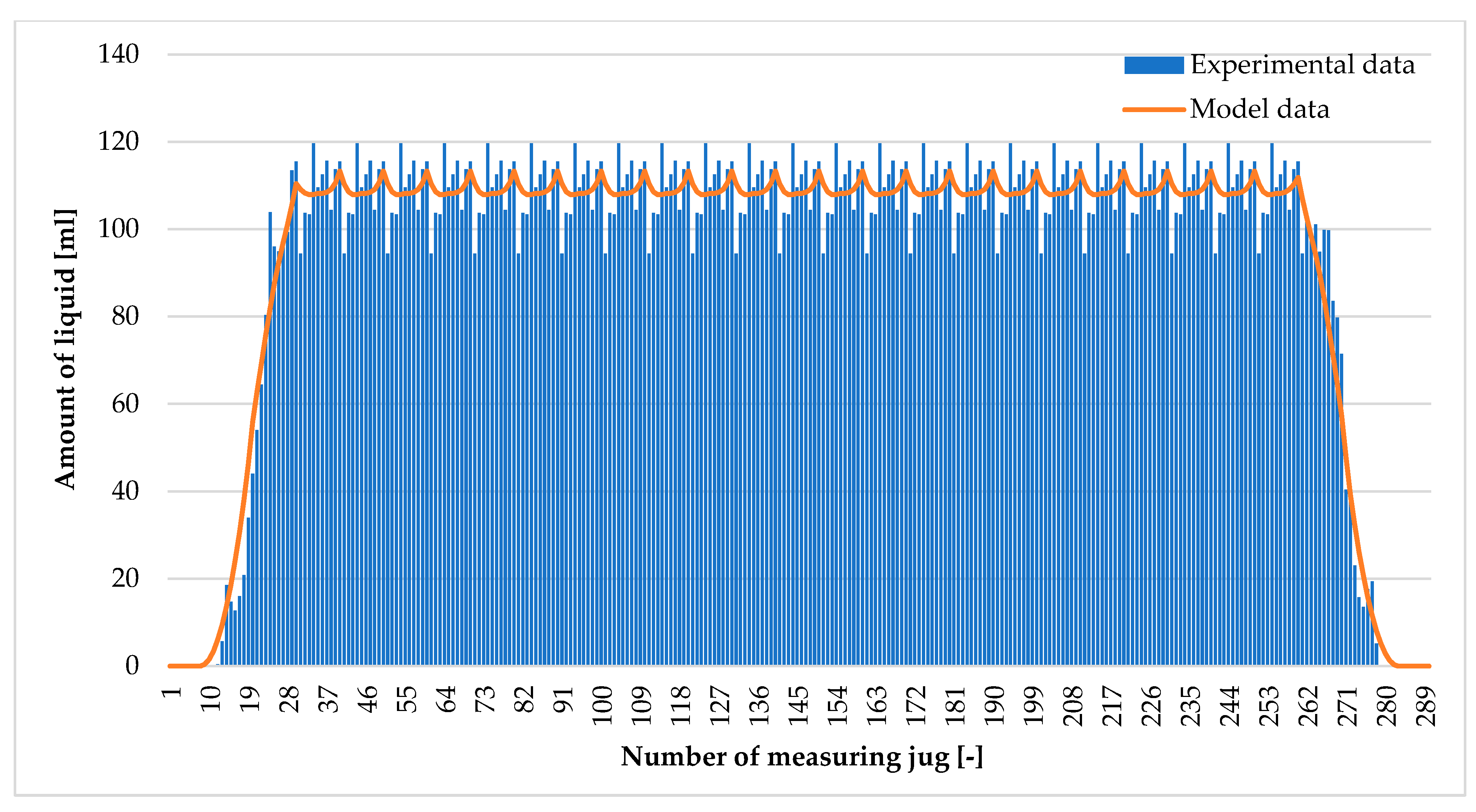
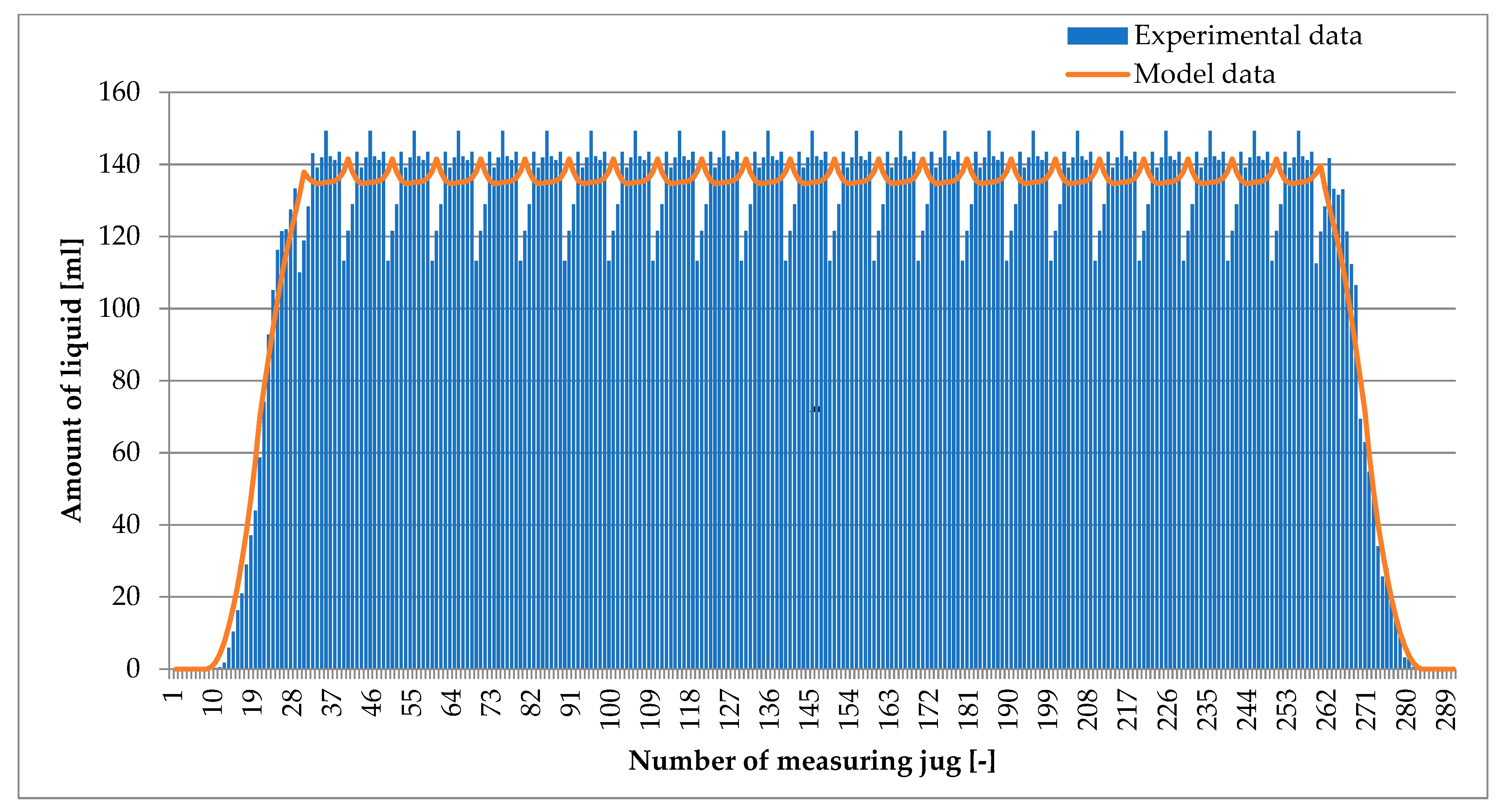
The spraying procedure is one of the most difficult operations in agricultural production. Achieving the desired effectiveness of the procedure is dependent on obtaining an appropriate level and uniformity of liquid distribution. The aim of this paper was to present a liquid decomposition model generated on the basis of experimental data. The tests were carried out on a test stand, which consisted of a container with nozzles and a grooved table. The experiments were carried out with the use of selected standard, anti-drift, and air-induction single-stream nozzles at constant liquid pressure. The optimization process was carried out in Microsoft Excel Solver. Furthermore, in order to compare the data generated by the model with the data from the virtual boom, we applied an analysis of correlation and linear regression in the Statistica 13.1 software. Based on the results obtained, it can be concluded that the model is a good fit to the experimental data (R2 > 0.95). The model, which was generated on the basis of experimental data, will facilitate control of the operation and degree of wear of nozzles, which will contribute to ensuring uniform spraying.
Keywords: uneven distribution of liquid; single-stream nozzle; boom; field sprayer; optimization uneven distribution of liquid; single-stream nozzle; boom; field sprayer; optimization