Article

Research on the Cleaning Method of Unmanned Sweeper Based on Target Distribution Situation Analysis

1
School of Transportation and Civil Engineering, Nantong University, Nantong 226019, China
2
School of Aeronautics and Astronautics, Chongqing University, Chongqing 400044, China
*
Authors to whom correspondence should be addressed.
Appl. Sci. 2023, 13(23), 12544; https://doi.org/10.3390/app132312544
Submission received: 24 October 2023 / Revised: 5 November 2023 / Accepted: 13 November 2023 / Published: 21 November 2023
(This article belongs to the Collection Advances in Automation and Robotics)

Abstract

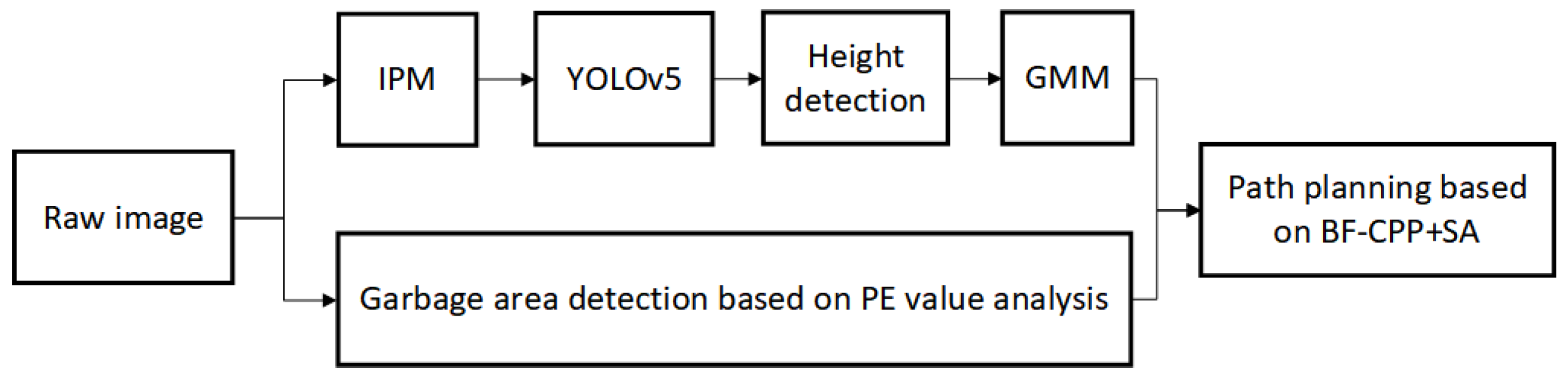
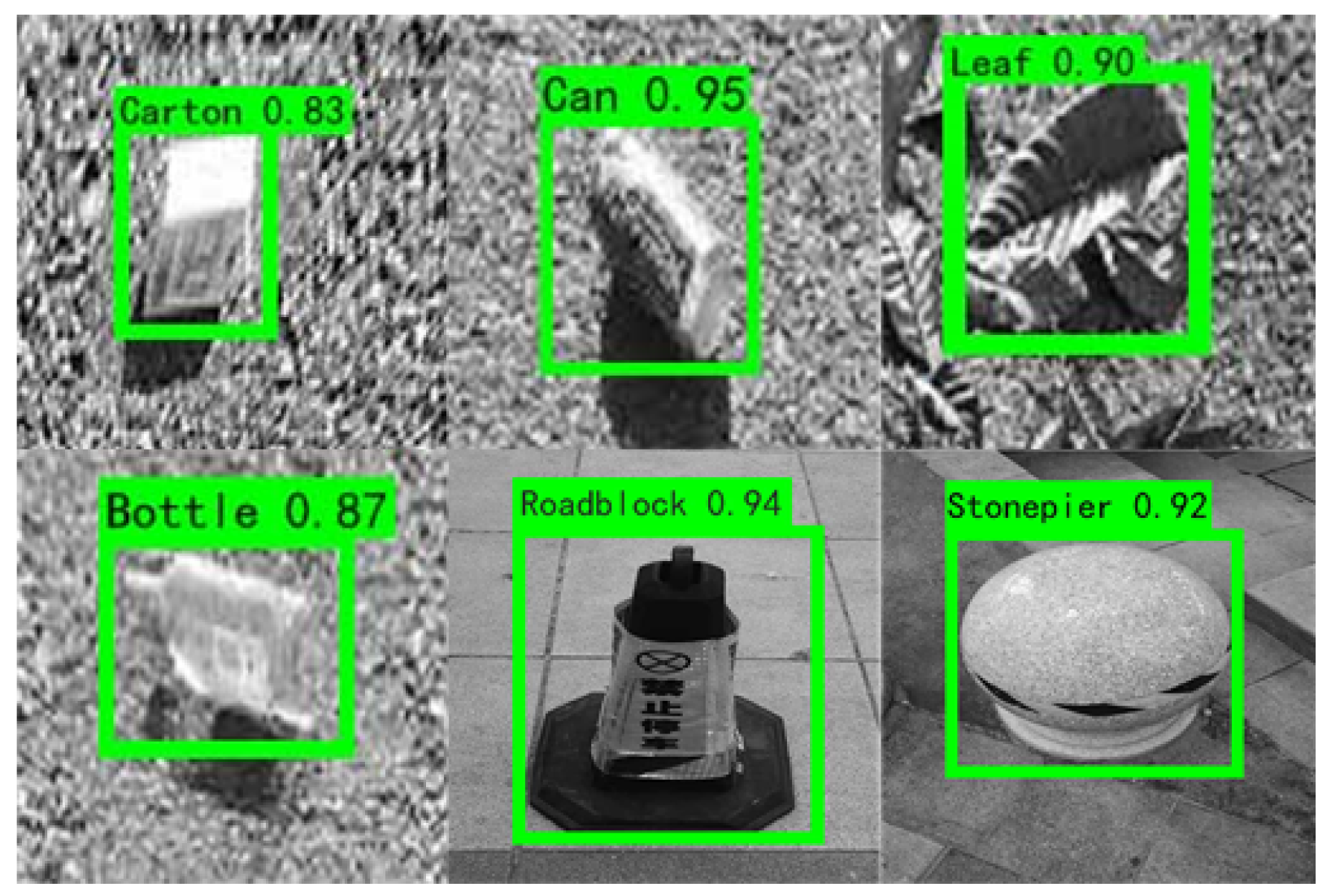
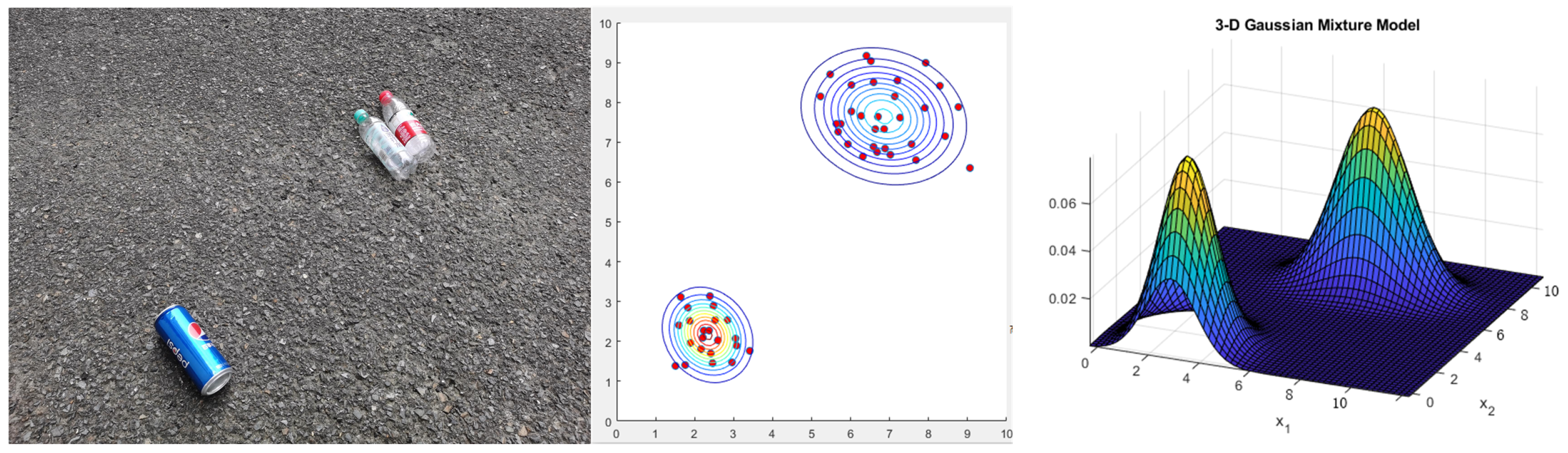
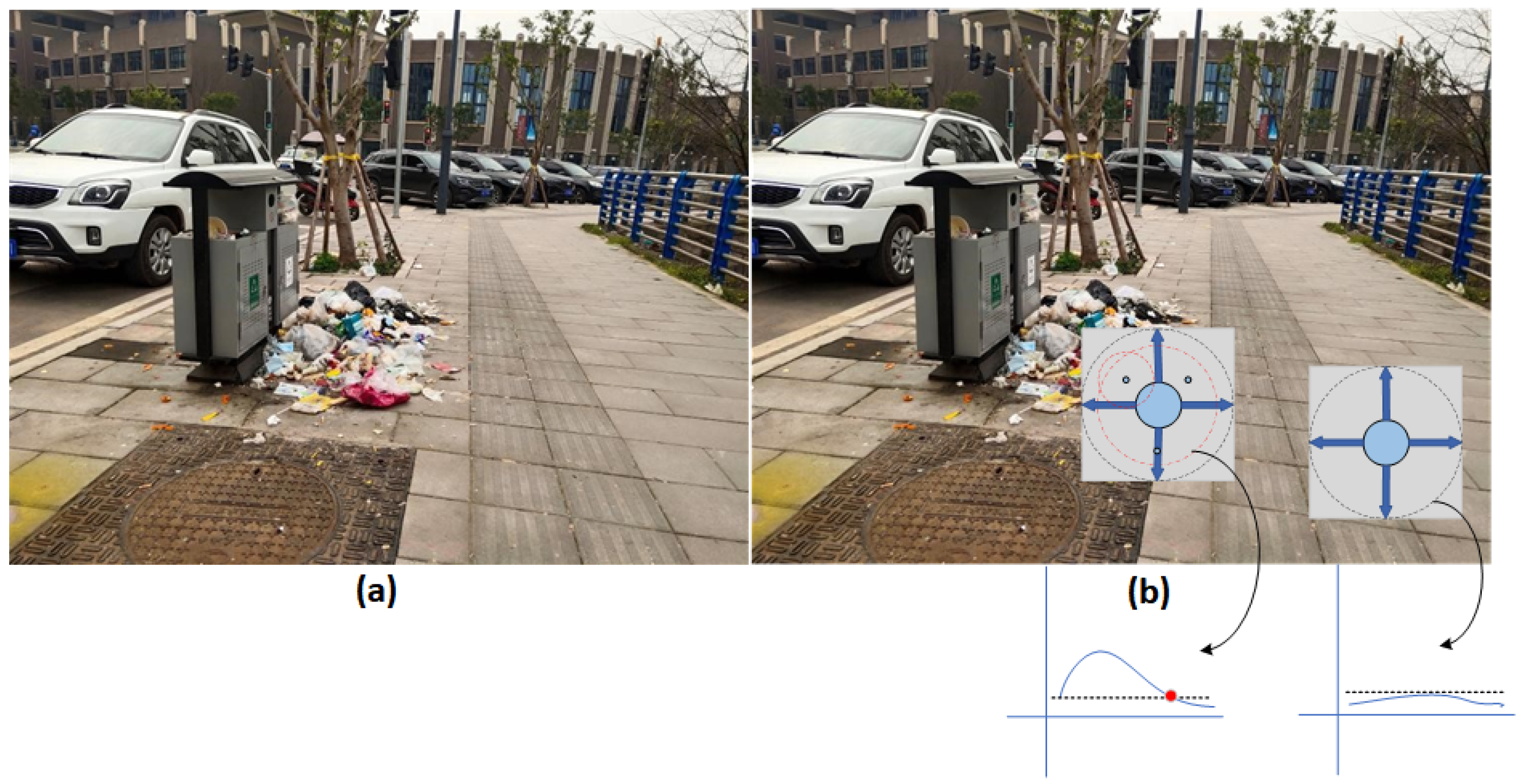
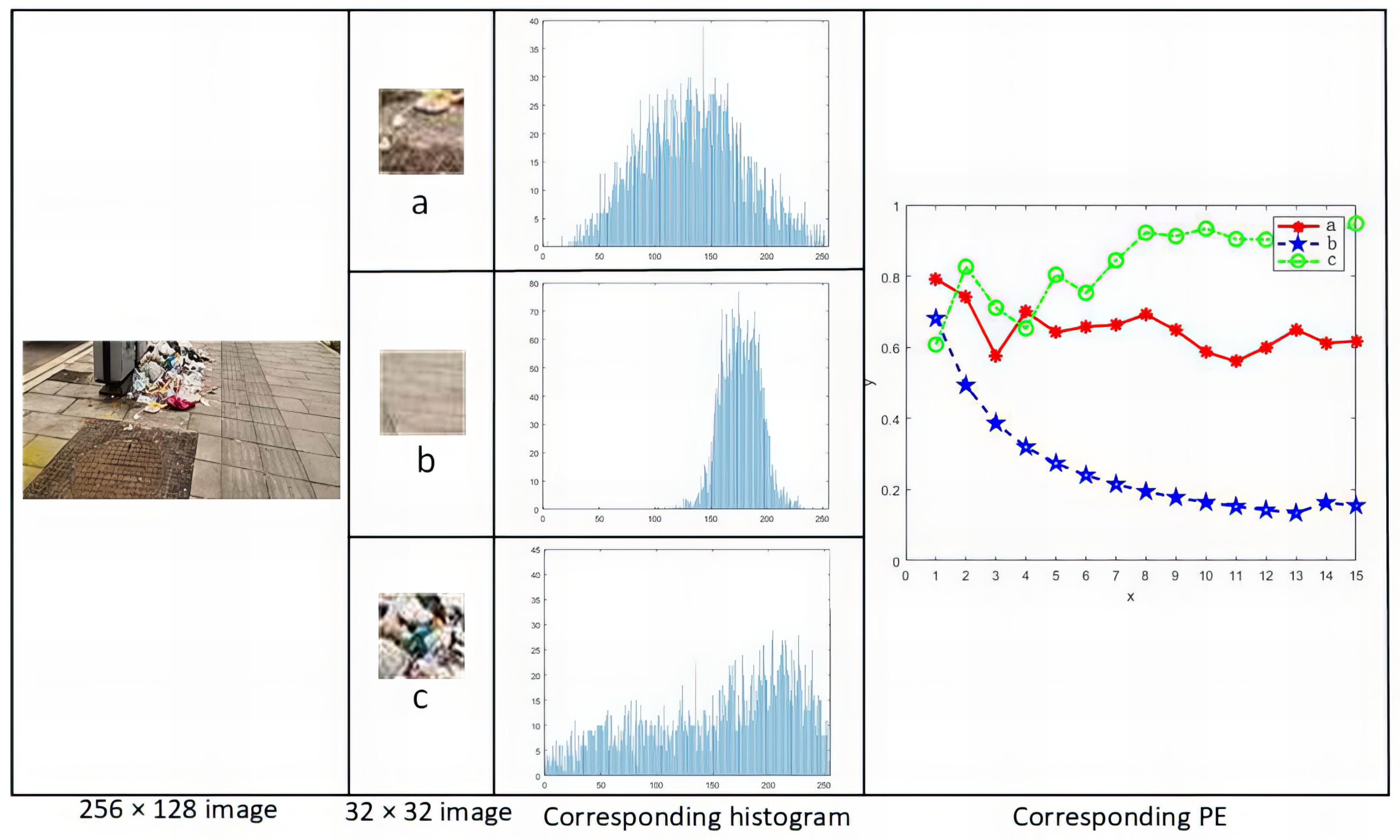
Replacing traditional manual sweeping with unmanned sweepers in closed parks can not only greatly reduce labor costs, but also improve sweeping efficiency. Efficient path planning is the key technology for unmanned sweepers to complete the sweeping task. Existing unmanned sweepers are often based on fixed path sweeping or completely traversing the sweeping mode, this mode does not have the environmental adaptability, in the actual sweeping is often high energy cost, and sweeping is not complete. In this paper, an environment-adaptive sweeping path planning method is proposed to improve the sweeping intelligence and environmental adaptability of unmanned sweepers, reduce the energy consumption of sweeping and improve the efficiency of sweeping. Specifically, in this paper, we first use YOLOv5 to complete the accurate identification of individual garbage and obstacles in the road, and then work with LIDAR and Gaussian Mixture Model(GMM) to remove redundant targets. We also propose a Permutation Entropy(PE) value-based discrimination method to complete the target distribution posture analysis of each complex garbage pile. Finally, the traditional path planning problem is transformed into a combinatorial optimization problem of garbage areas, and a sweeping path accurate method based on Simulated Annealing(SA) algorithm is proposed. Through comprehensive theoretical analysis and simulation study, the optimality and effectiveness of the proposed method are proved by comparing A star and Coverage Path Planning(CPP) algorithms in a variety of experimental scenarios.
Keywords: target distribution; situation analysis; TSP-CPP; unmanned sweeper target distribution; situation analysis; TSP-CPP; unmanned sweeper