Article

Enhanced Effect of Phytoextraction on Arsenic-Contaminated Soil by Microbial Reduction

1
College of Materials Science and Engineering, Sichuan University, Chengdu 610064, China
2
School of Minerals Processing and Bioengineering, Central South University, Changsha 410083, China
3
Key Laboratory of Hunan Province for Clean and Efficient Utilization of Strategic Calcium-Containing Mineral Resources, Central South University, Changsha 410083, China
4
Hunan International Joint Research Center for Efficient and Clean Utilization of Critical Metal Mineral Resources, Central South University, Changsha 410083, China
*
Authors to whom correspondence should be addressed.
Appl. Sci. 2023, 13(19), 10921; https://doi.org/10.3390/app131910921
Submission received: 1 September 2023 / Revised: 23 September 2023 / Accepted: 29 September 2023 / Published: 2 October 2023
(This article belongs to the Special Issue Heavy Metals in Soil: Pollution, Remediation and Ecological Risks)

Abstract

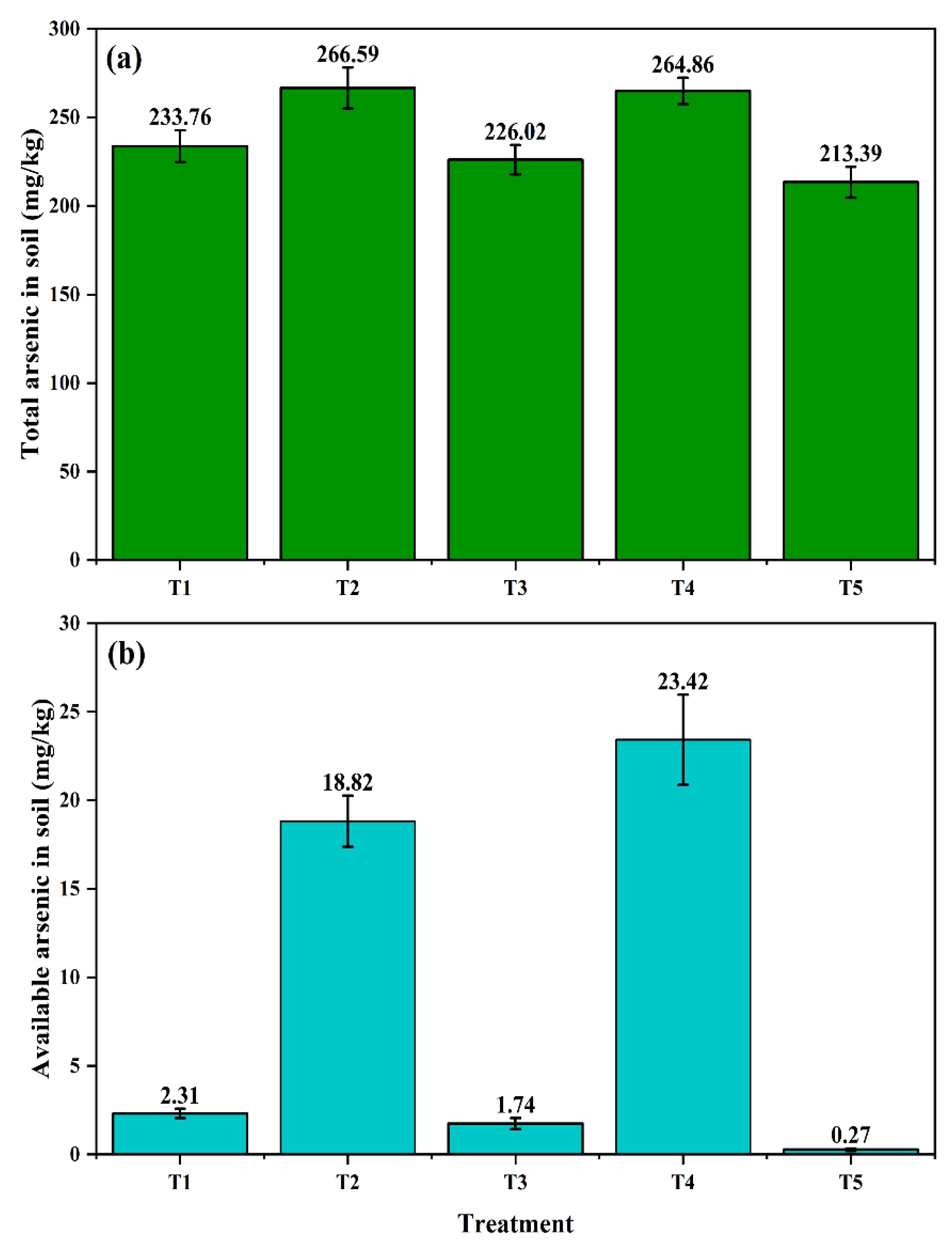
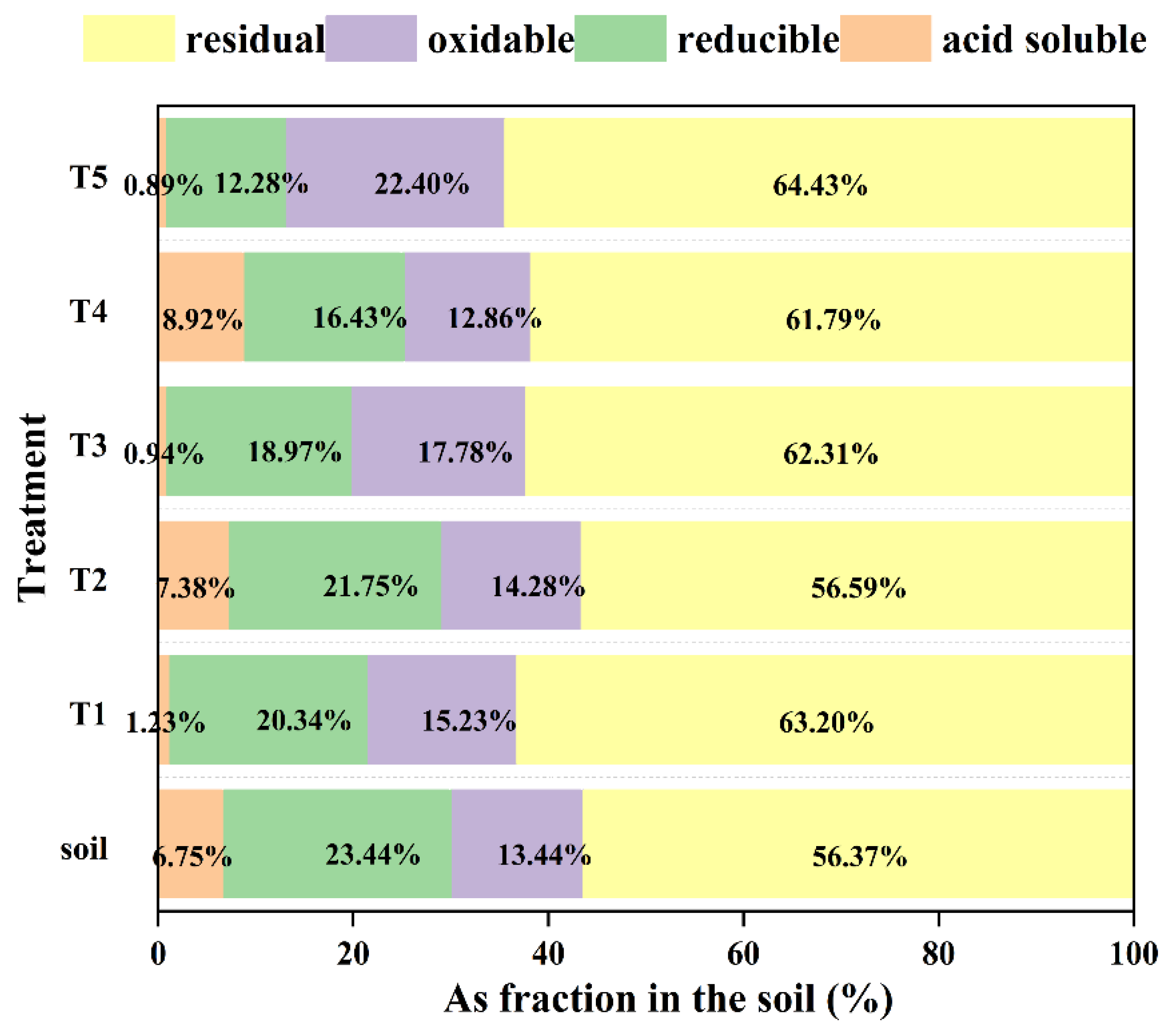
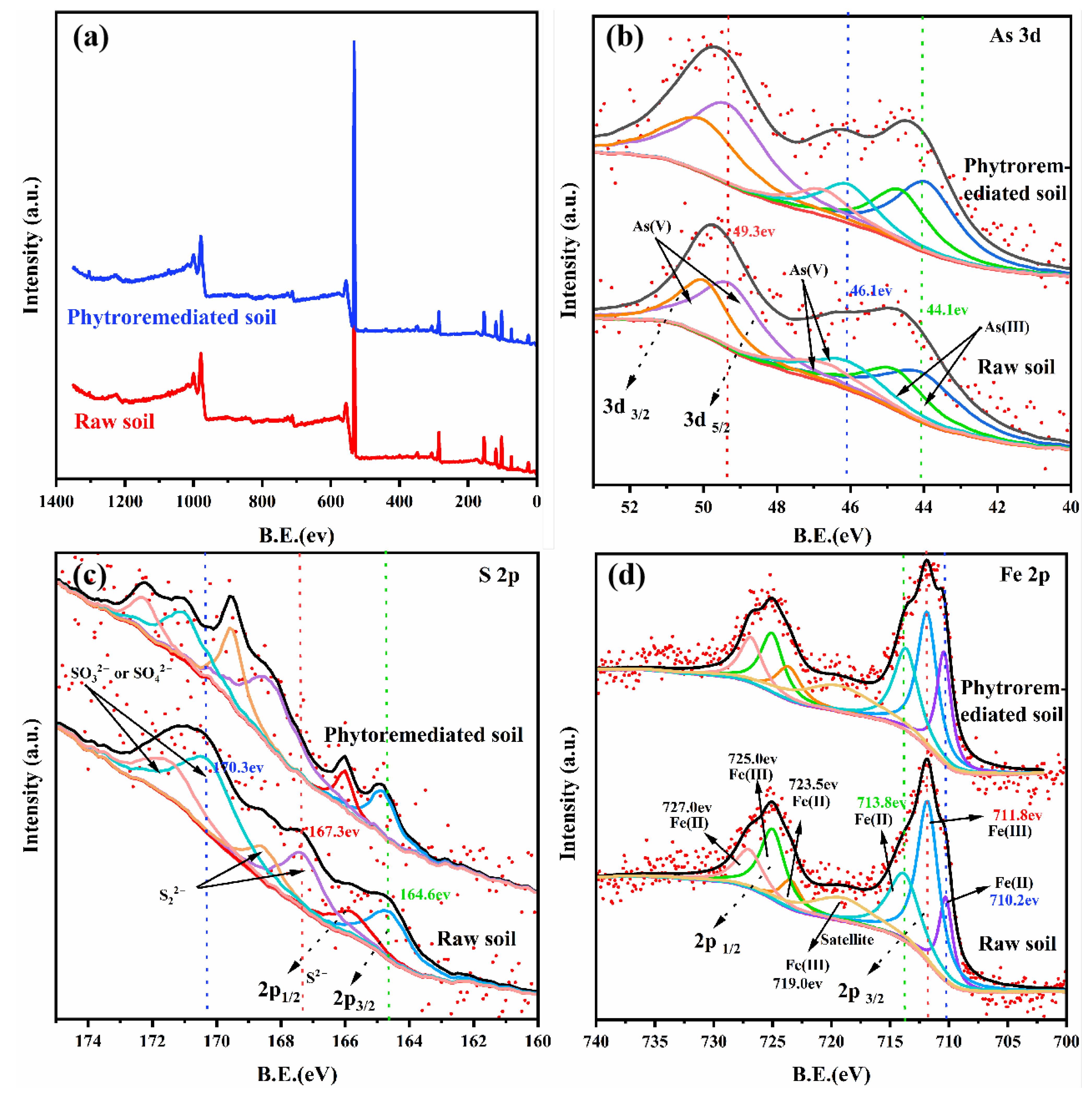
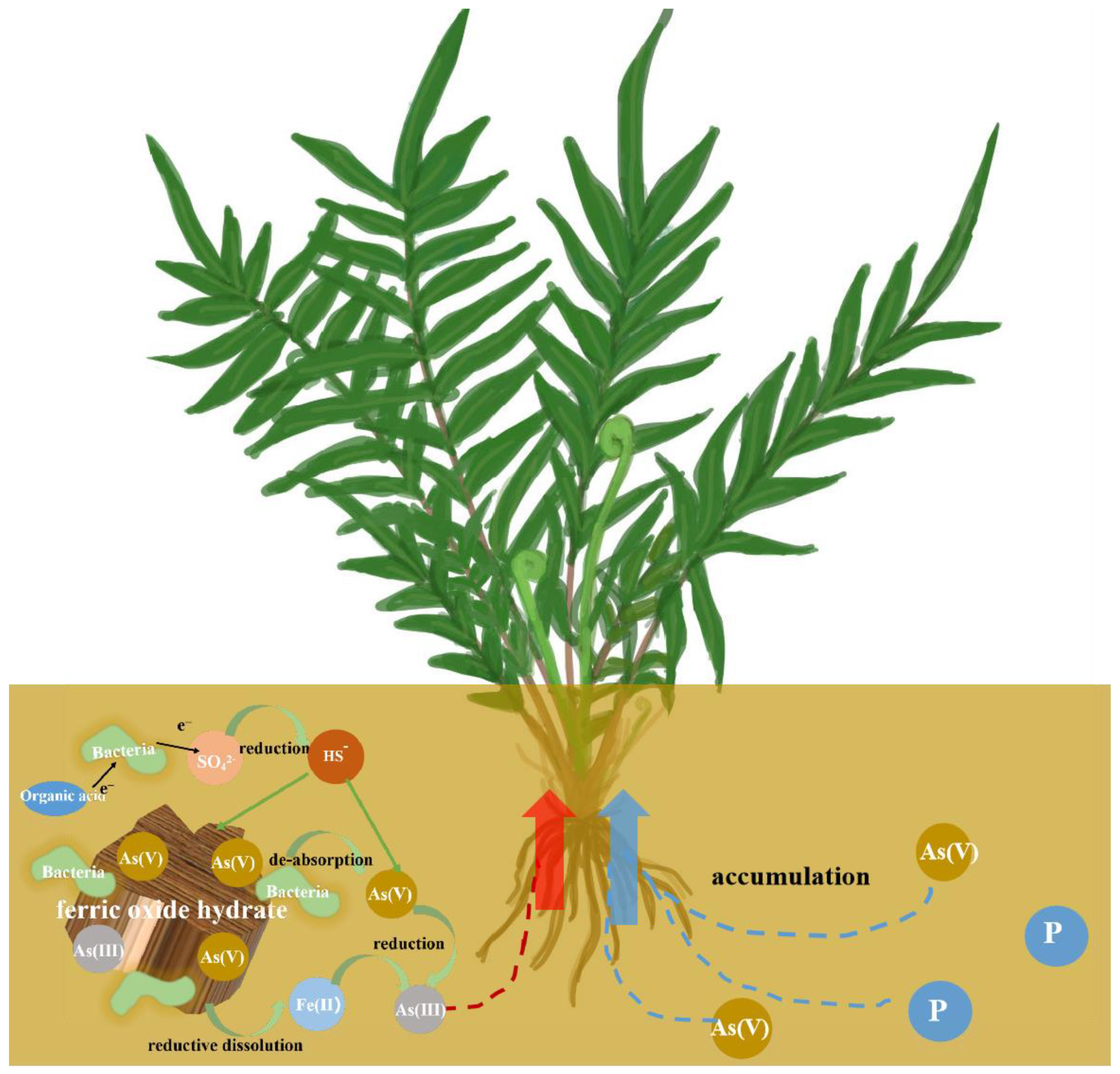
The gradually increasing presence of arsenic, a highly toxic heavy metal, poses a significant threat to both soil environmental safety and human health. Pteris vittata has long been recognized as an efficient hyperaccumulator plant for arsenic pollution. However, the pattern of arsenic accumulation in soil impacts its bioavailability and restricts the extraction efficiency of Pteris vittata. To address this issue, microorganisms have the potential to improve the arsenic accumulation efficiency of Pteris vittata. In this work, we employed anthropogenic enrichment methods to extract functional iron–sulfur-reducing bacteria from soil as a raw material. These bacteria were then utilized to assist Pteris vittata in the phytoremediation of arsenic-contaminated soil. Furthermore, the utilization of organic fertilizer produced from fermented crop straw significantly boosted the remediation effect. This led to an increase in the accumulation efficiency of arsenic by Pteris vittata by 87.56%, while simultaneously reducing the content of available arsenic in the soil by 98.36%. Finally, the experimental phenomena were studied through a soil-microbial batch leaching test and plant potting test. And the mechanism of the microorganism-catalyzed soil iron–sulfur geochemical cycle on arsenic release and transformation in soil as well as the extraction effect of Pteris vittata were systematically investigated using ICP, BCR sequential extraction and XPS analysis. The results demonstrated that using iron–sulfur-reducing microorganisms to enhance the phytoremediation effect is an effective strategy in the field of ecological restoration.
Keywords: arsenic-contaminated soil; phytoremediation; microbial reduction; Pteris vittata; iron-sulfur-reducing bacteria arsenic-contaminated soil; phytoremediation; microbial reduction; Pteris vittata; iron-sulfur-reducing bacteria