Article

Source and Accumulation Analysis of Deviation during Multi-Level Assembly of an Aircraft Rear Fuselage Frame

1
School of Mechanical and Electrical Engineering, Shenyang Aerospace University, Shenyang 110136, China
2
Key Laboratory of Fundamental Science for National Defence of Aeronautical Digital Manufacturing Process, Shenyang Aerospace University, Shenyang 110136, China
*
Author to whom correspondence should be addressed.
Appl. Sci. 2023, 13(17), 9914; https://doi.org/10.3390/app13179914
Submission received: 14 August 2023 / Revised: 26 August 2023 / Accepted: 28 August 2023 / Published: 1 September 2023

Abstract

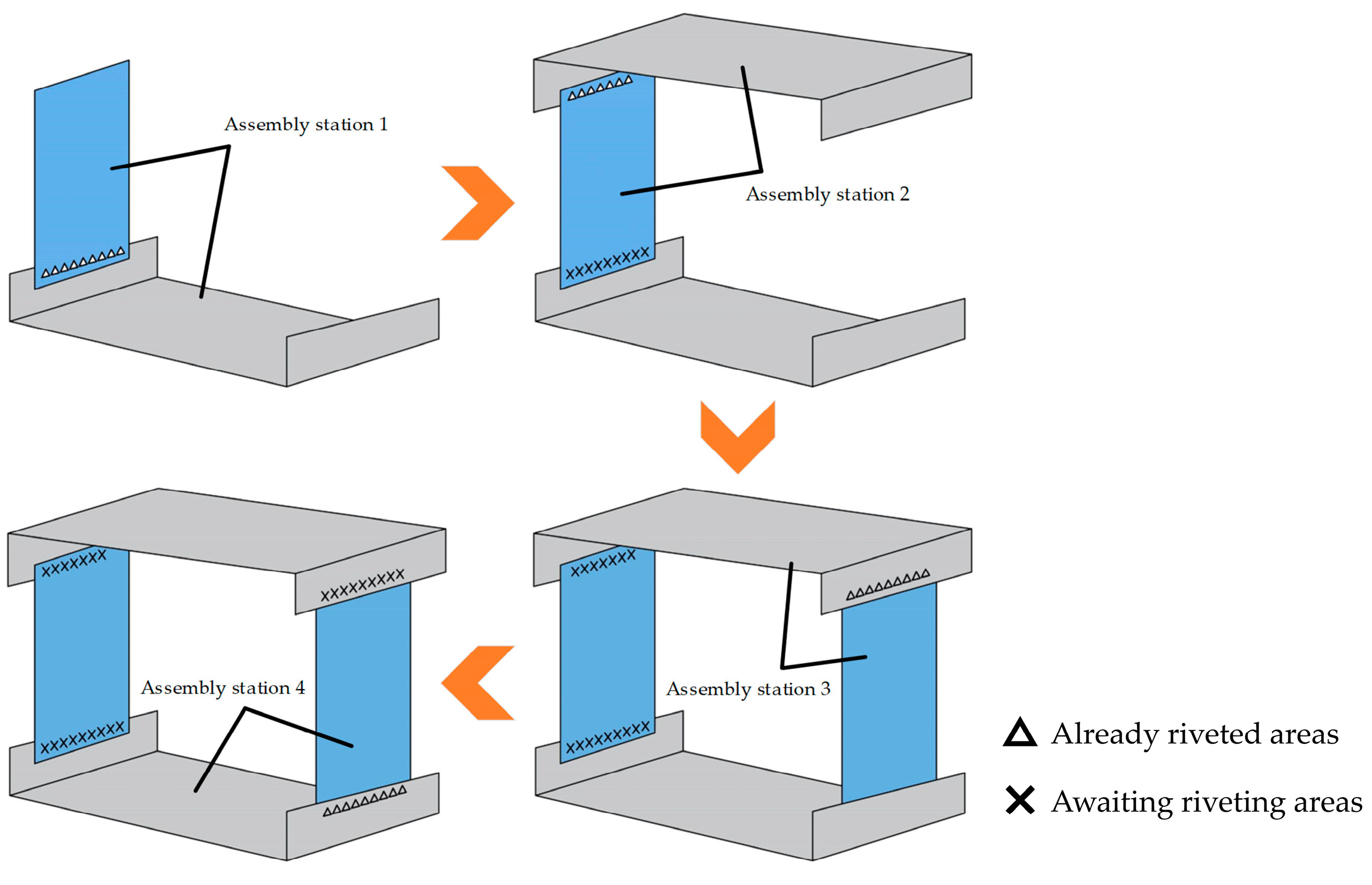
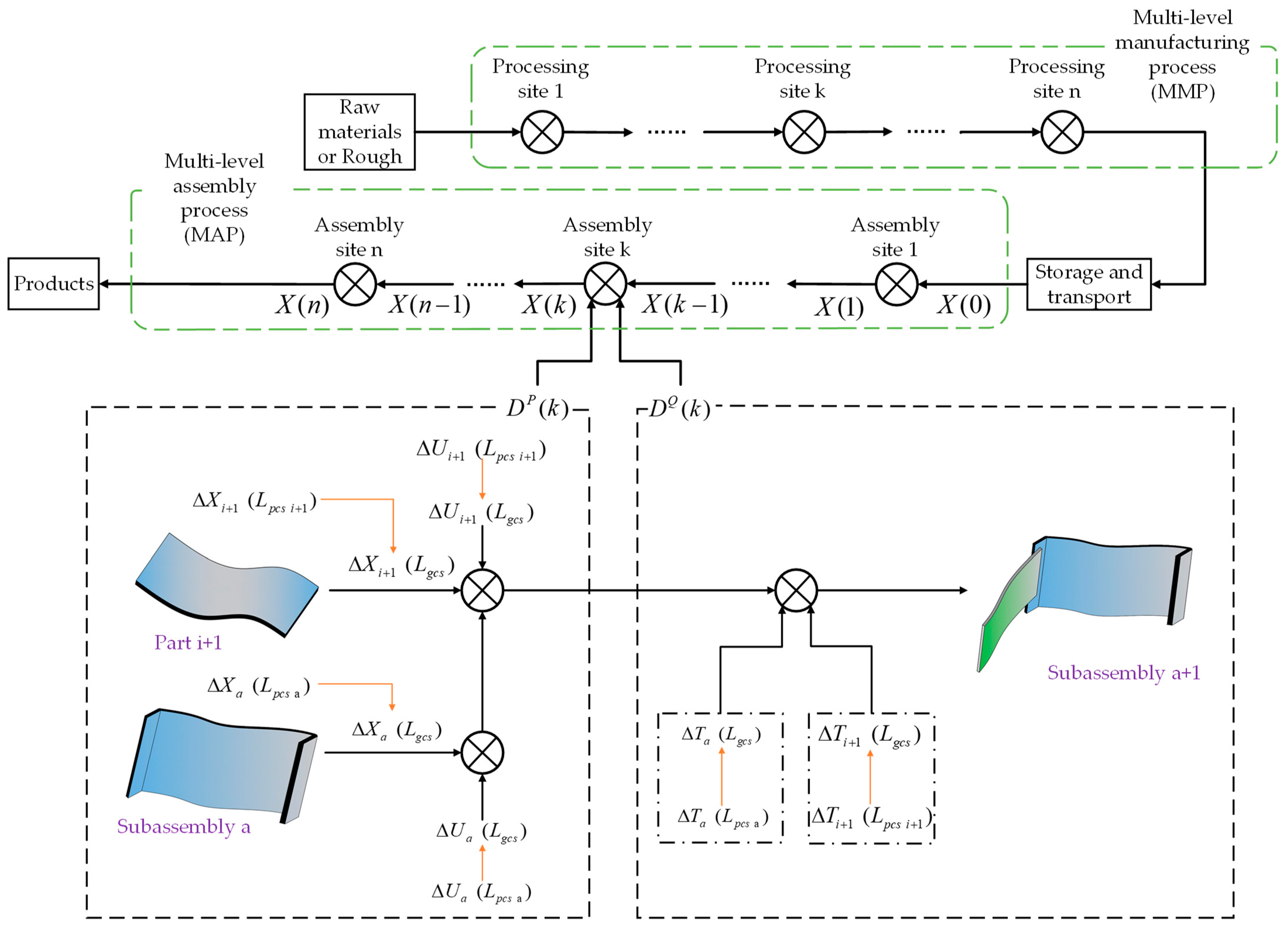
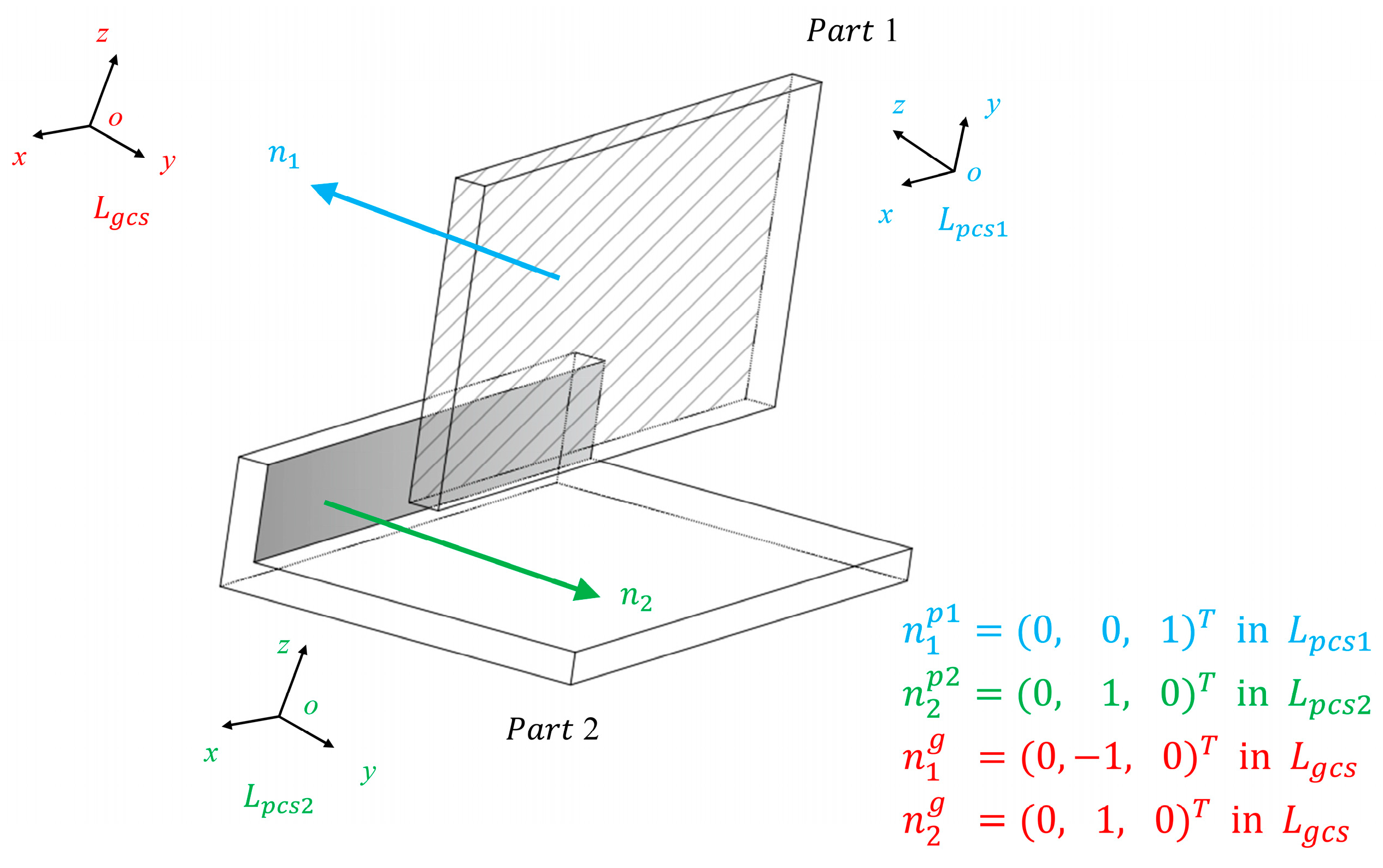
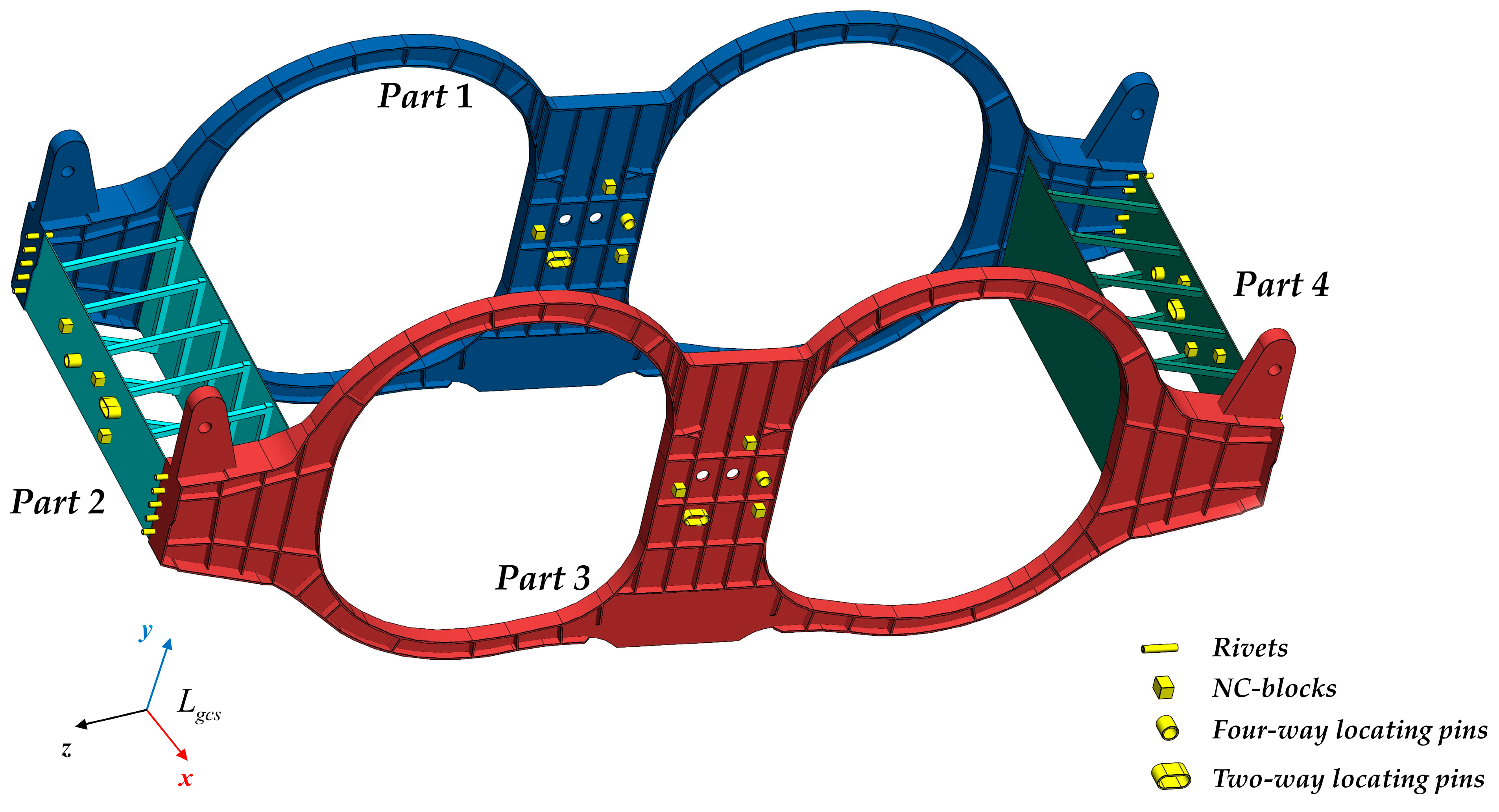
During the production process of aircraft assembly, weakly rigid parts are gradually assembled into rigid support structures in the aircraft skeleton through several assembly stations. The assembly deviations of this structure determine the quality of the aerodynamic shape of the aircraft. In this paper, we consider multiple sources of deviation (manufacturing deviation, fixture positioning deviation, assembly contact deviation) and investigate the interaction between these sources. Based on the state space approach, a state space equation is developed to reveal the transformation, accumulation and transfer of deviations in the multi-level assembly process (MAP) of weakly rigid parts, and a model is established to accurately simulate and predict the transfer of deviations in the MAP of weakly rigid parts. In this model, the part manufacturing and fixture positioning deviations in typical dimensional planes are regarded as rigid deviations, while the deviations in atypical dimensional planes are regarded as flexible deviations. A spatial triangle penetration detection algorithm based on part measurement point deviations is proposed, combined with the theory of linear elasticity, to describe the relationship between part deviations and assembly contact forces. An example analysis of the assembly process of an aircraft rear fuselage frame structure illustrates the validity of a multi-level assembly deviation transfer model for weakly rigid parts.
Keywords: multi-level assembly process; weakly rigid part; state space method; assembly contact force; rigid and compliant mixed deformation; numerical simulation analysis multi-level assembly process; weakly rigid part; state space method; assembly contact force; rigid and compliant mixed deformation; numerical simulation analysis