Article

Study on Earthquake Failure Mechanism and Failure Mode of Cable-Stayed Pipeline Bridge Considering Fluid–Structure Coupling


1
School of Civil Engineering, Xi’an Shiyou University, Xi’an 710065, China
2
Mechanical Engineering College, Xi’an Shiyou University, Xi’an 710065, China
*
Author to whom correspondence should be addressed.
Appl. Sci. 2023, 13(17), 9583; https://doi.org/10.3390/app13179583
Submission received: 27 July 2023 / Revised: 16 August 2023 / Accepted: 22 August 2023 / Published: 24 August 2023
(This article belongs to the Special Issue Seismic Assessment and Design of Structures: Volume 2)

Abstract

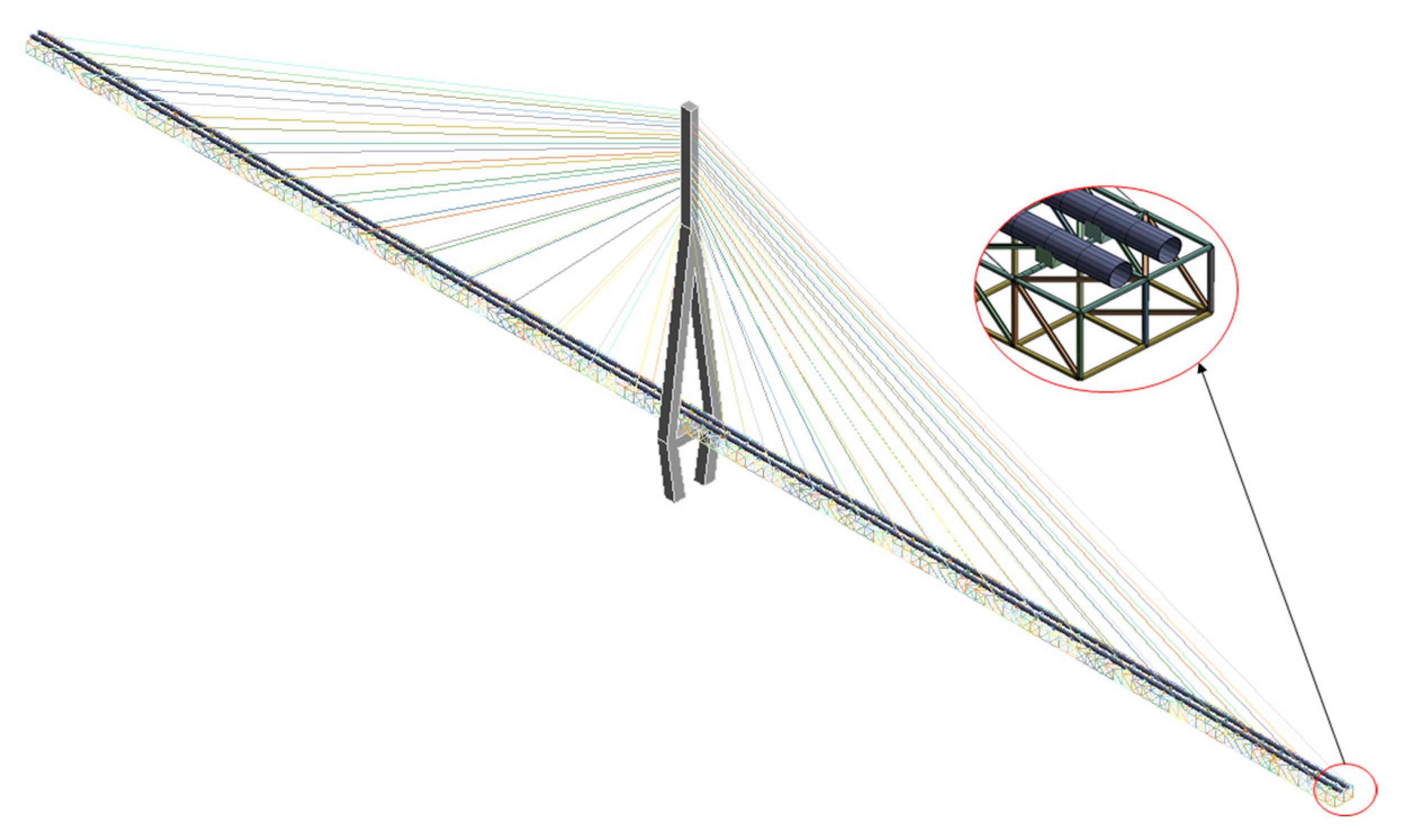
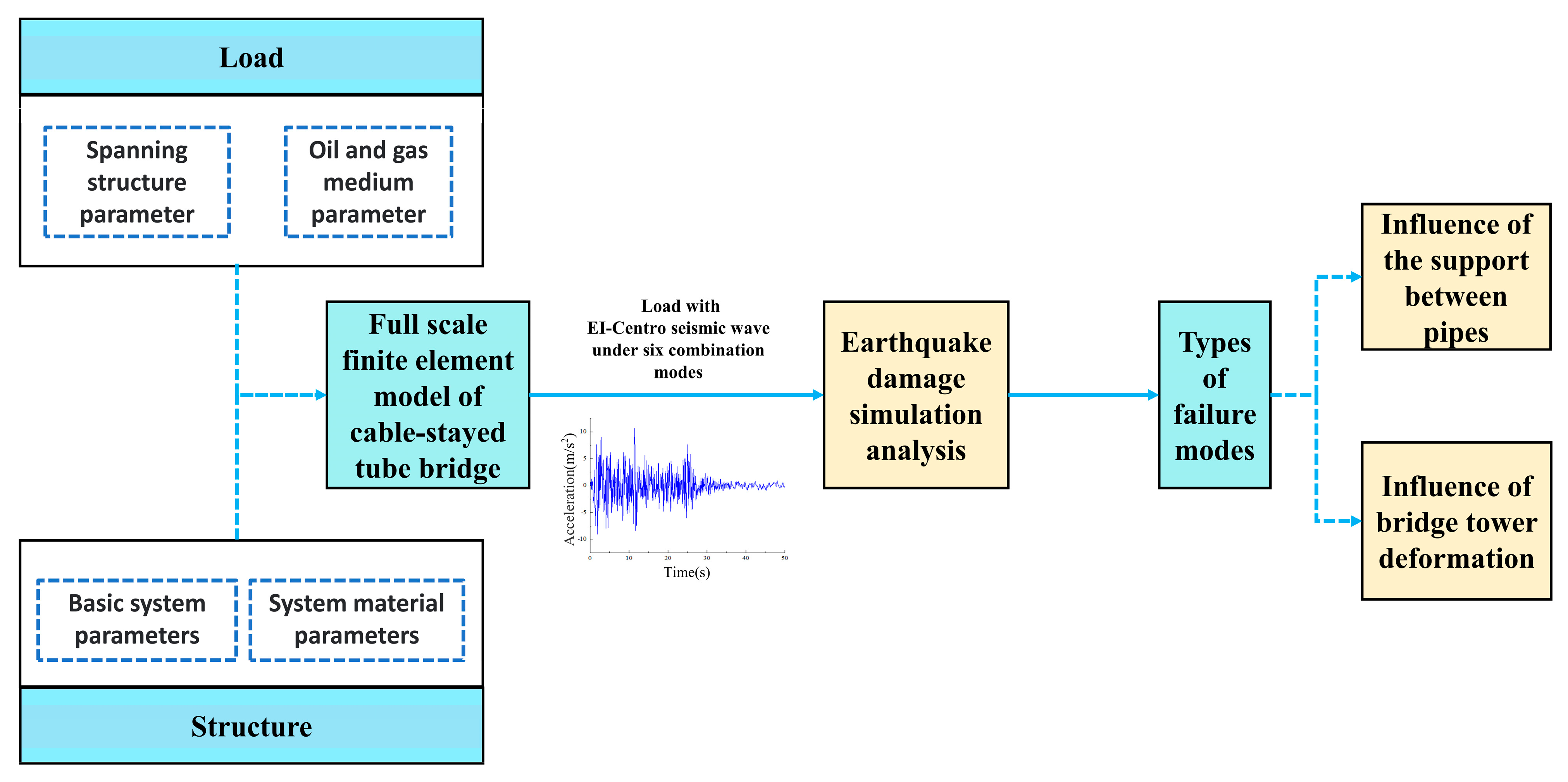
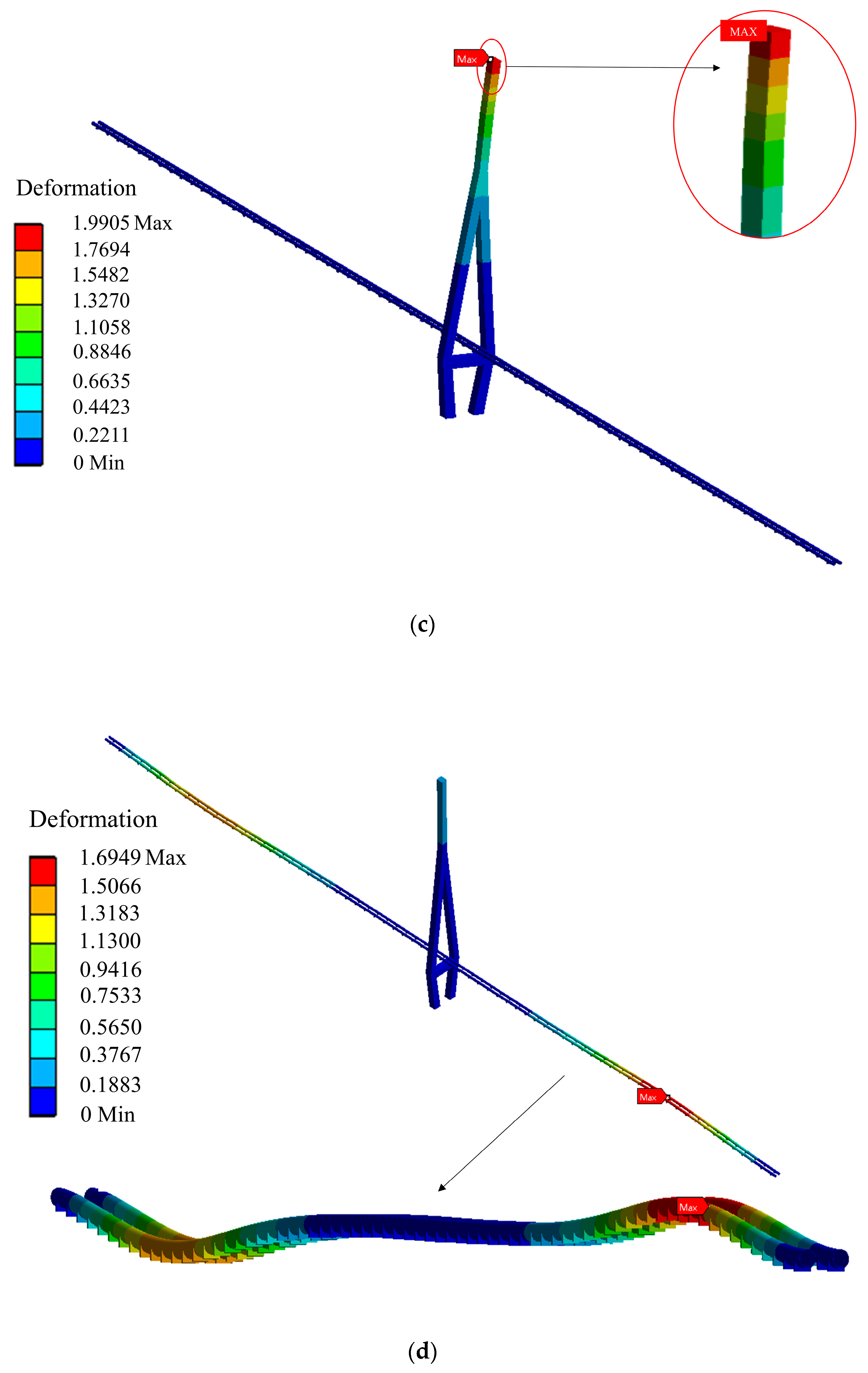
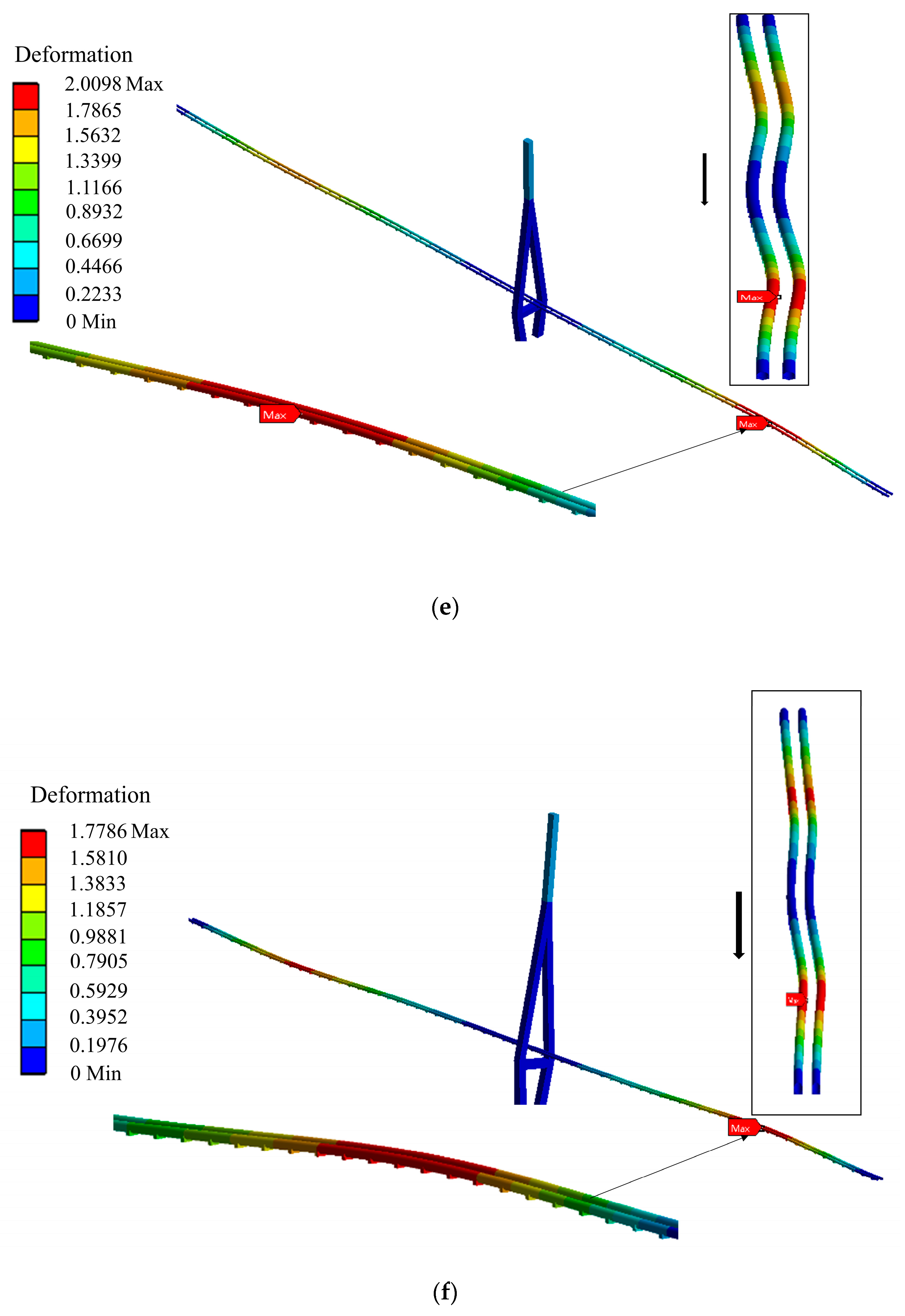
To investigate the failure mode of the cable-stayed pipeline bridge under seismic loading, this study focuses on an oil and gas cable-stayed pipeline bridge as the research subject. A full-scale finite element calculation model of the structural system is established using ANSYS Workbench 14.0 software, considering the stress characteristics and structural properties of the oil and gas pipeline. Additionally, a fluid–structure coupling effect finite element model is developed to account for the influence of medium within the pipeline. The analysis includes evaluating deformation, stress, strain, and other responses of the oil and gas pipeline subjected to seismic waves from different directions. The results indicate that the overall damage in the pipeline is consistent with maximum deformation, stress, and strain, concentrated at both the inlet/outlet ends and side spans; however, variations exist in terms of seismic damage depending on wave directionality. Furthermore, by considering interactions between various components within the oil and gas cable-stayed pipeline bridge’s structural system during strong earthquakes, this study analyzes failure mechanisms caused by the support–pipeline interaction as well as excessive displacement-induced failure patterns in bridge towers. Finally, a proposed failure mode for pipe bridge systems resulting from longitudinal slip between supports and pipelines, along with excessive displacement of bridge towers, is presented.
Keywords: oil and gas cable-stayed pipeline bridge; fluid–structure coupling; failure mechanism; failure mode oil and gas cable-stayed pipeline bridge; fluid–structure coupling; failure mechanism; failure mode