Article

Chinese Neural Question Generation: Augmenting Knowledge into Multiple Neural Encoders

1
School of Educational Technology, Faculty of Education, Southwest University, Chongqing 400716, China
2
School of Computer and Information Science, Southwest University, Chongqing 400716, China
*
Author to whom correspondence should be addressed.
Appl. Sci. 2022, 12(3), 1032; https://doi.org/10.3390/app12031032
Submission received: 30 November 2021 / Revised: 6 January 2022 / Accepted: 12 January 2022 / Published: 19 January 2022
(This article belongs to the Special Issue Technologies and Environments of Intelligent Education)

Abstract

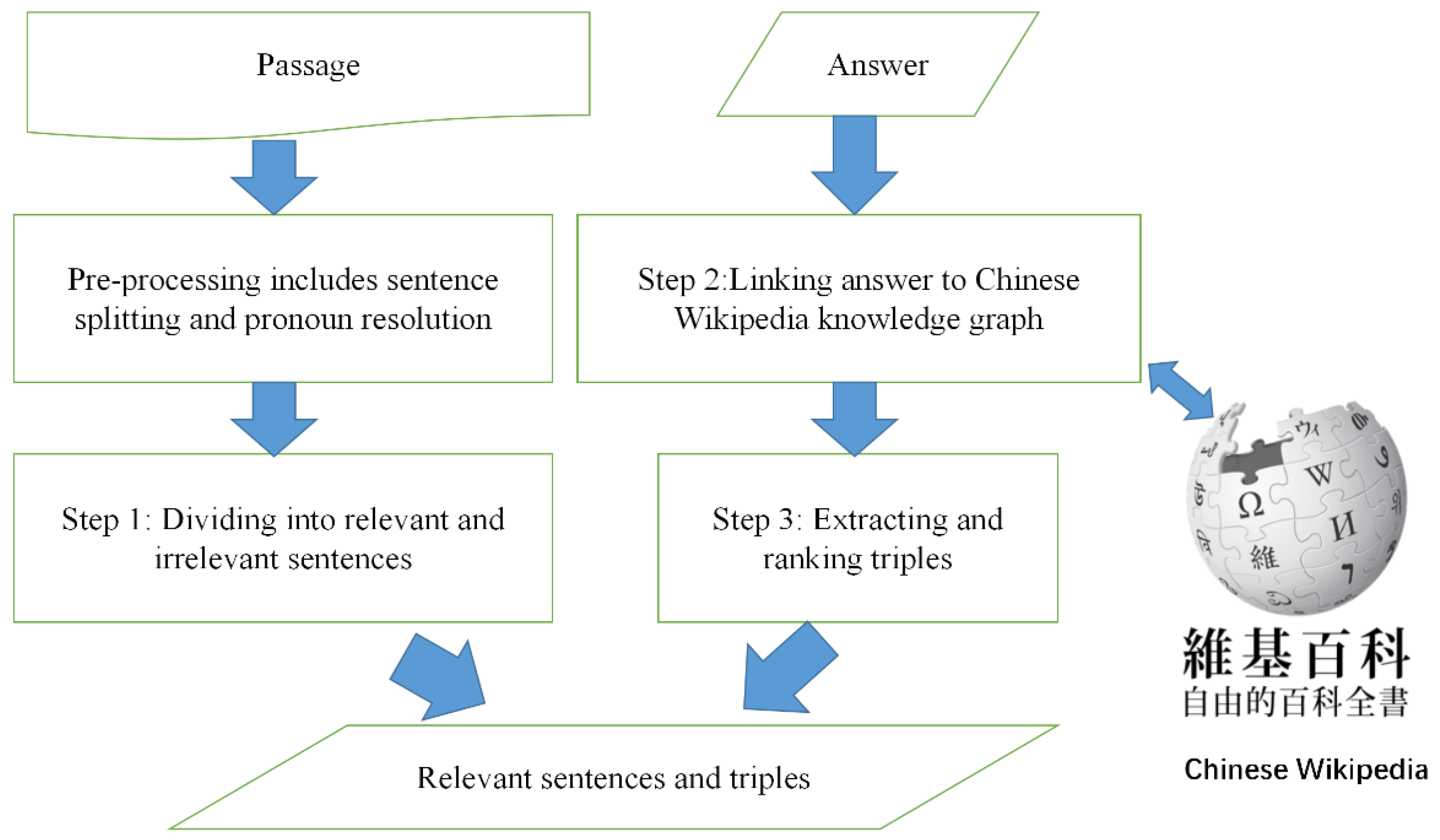
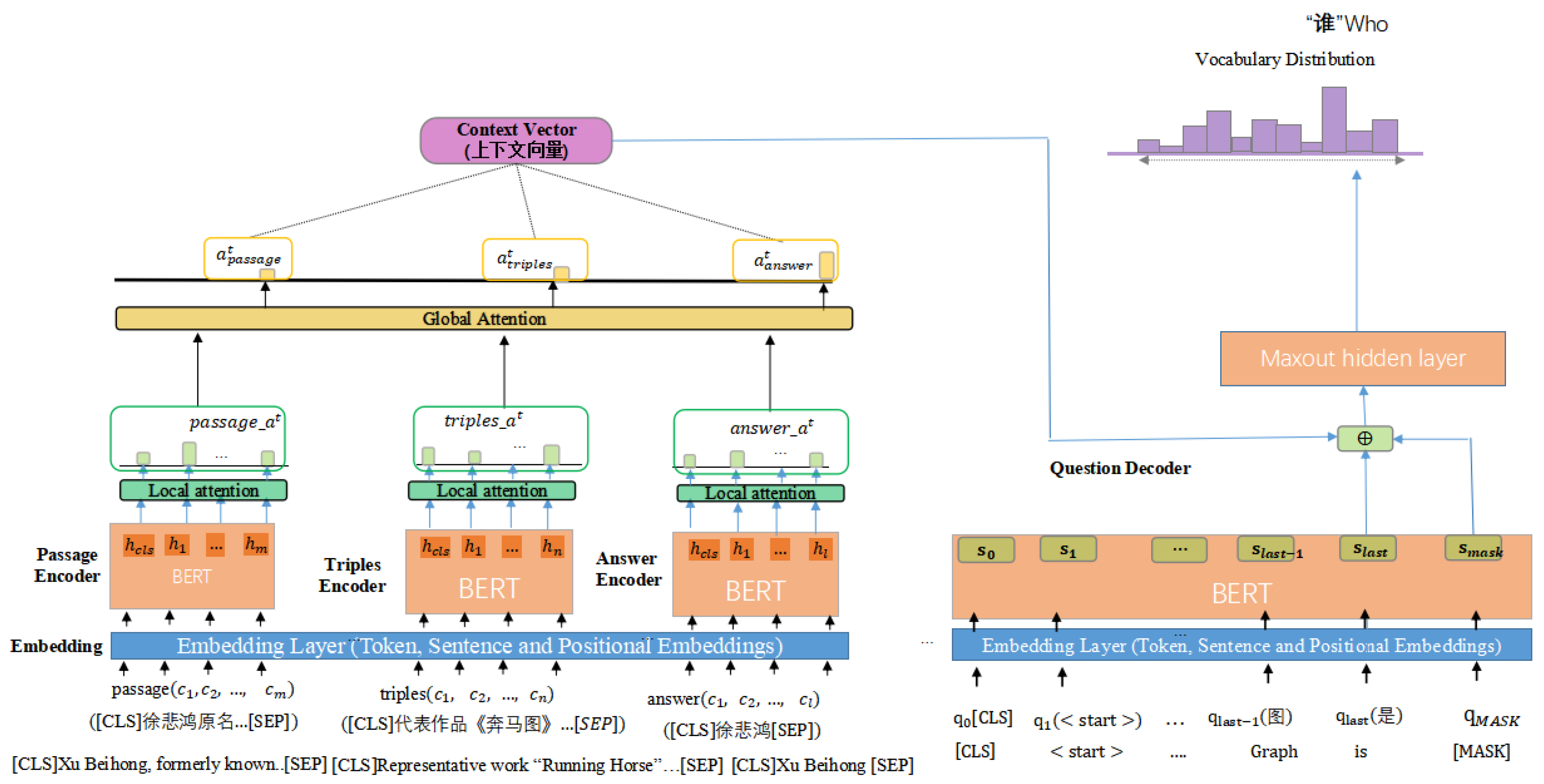
Neural question generation (NQG) is the task of automatically generating a question from a given passage and answering it with sequence-to-sequence neural models. Passage compression has been proposed to address the challenge of generating questions from a long passage text by only extracting relevant sentences containing the answer. However, it may not work well if the discarded irrelevant sentences contain the contextual information for the target question. Therefore, this study investigated how to incorporate knowledge triples into the sequence-to-sequence neural model to reduce such contextual information loss and proposed a multi-encoder neural model for Chinese question generation. This approach has been extensively evaluated in a large Chinese question and answer dataset. The study results showed that our approach outperformed the state-of-the-art NQG models by 5.938 points on the BLEU score and 7.120 points on the ROUGE-L score on the average since the proposed model is answer focused, which is helpful to produce an interrogative word matching the answer type. In addition, augmenting the information from the knowledge graph improves the BLEU score by 10.884 points. Finally, we discuss the challenges remaining for Chinese NQG.
Keywords: natural language processing; question generation; deep learning natural language processing; question generation; deep learning