Article

Experimental Research of Symmetrical Airfoil Piezoelectric Energy Harvester Excited by Vortex-Induced Flutter Coupling


School of Mechanical and Power Engineering, Zhengzhou University, Zhengzhou 450001, China
*
Author to whom correspondence should be addressed.
Appl. Sci. 2022, 12(24), 12514; https://doi.org/10.3390/app122412514
Submission received: 21 November 2022 / Revised: 5 December 2022 / Accepted: 6 December 2022 / Published: 7 December 2022

Abstract

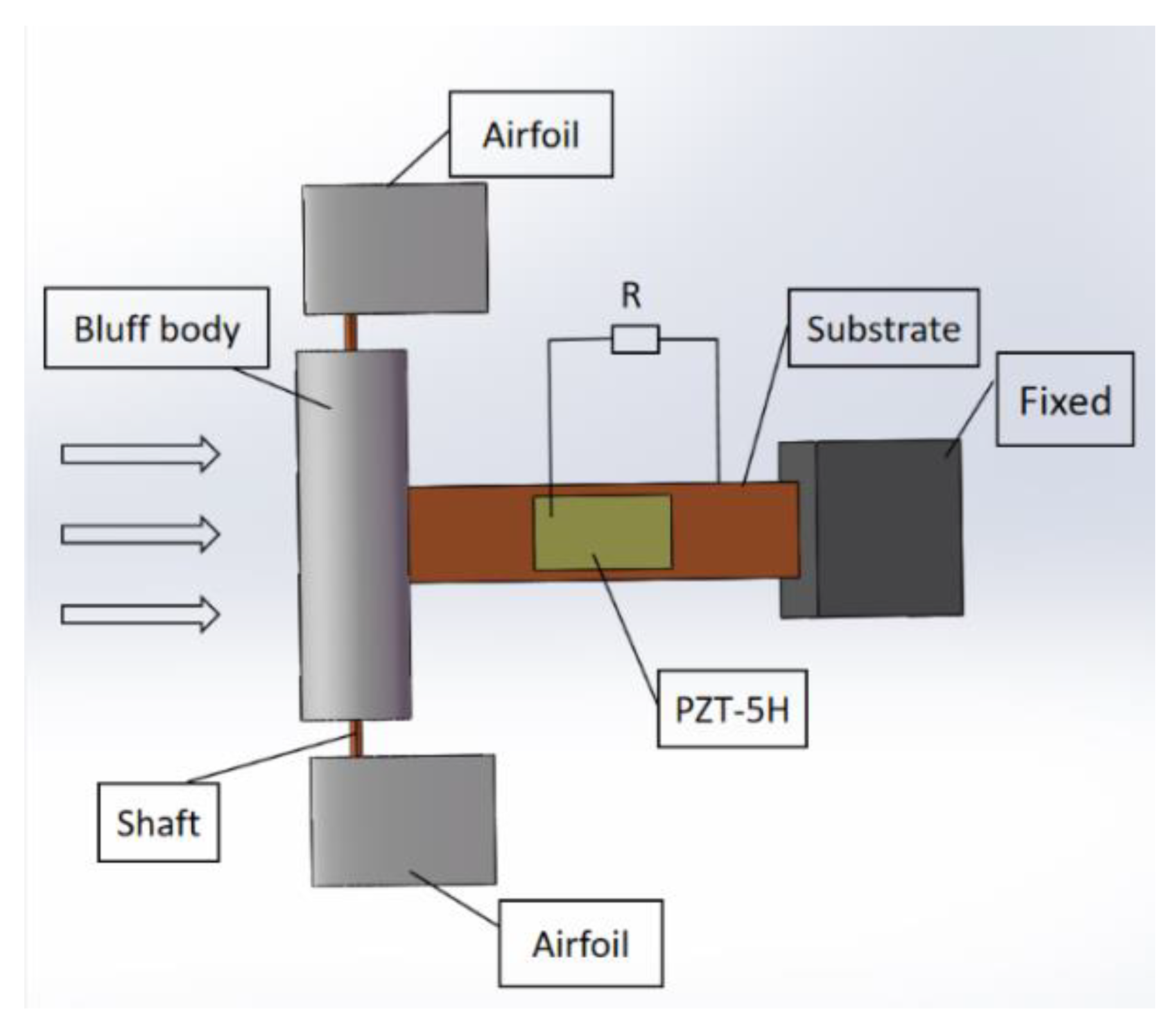
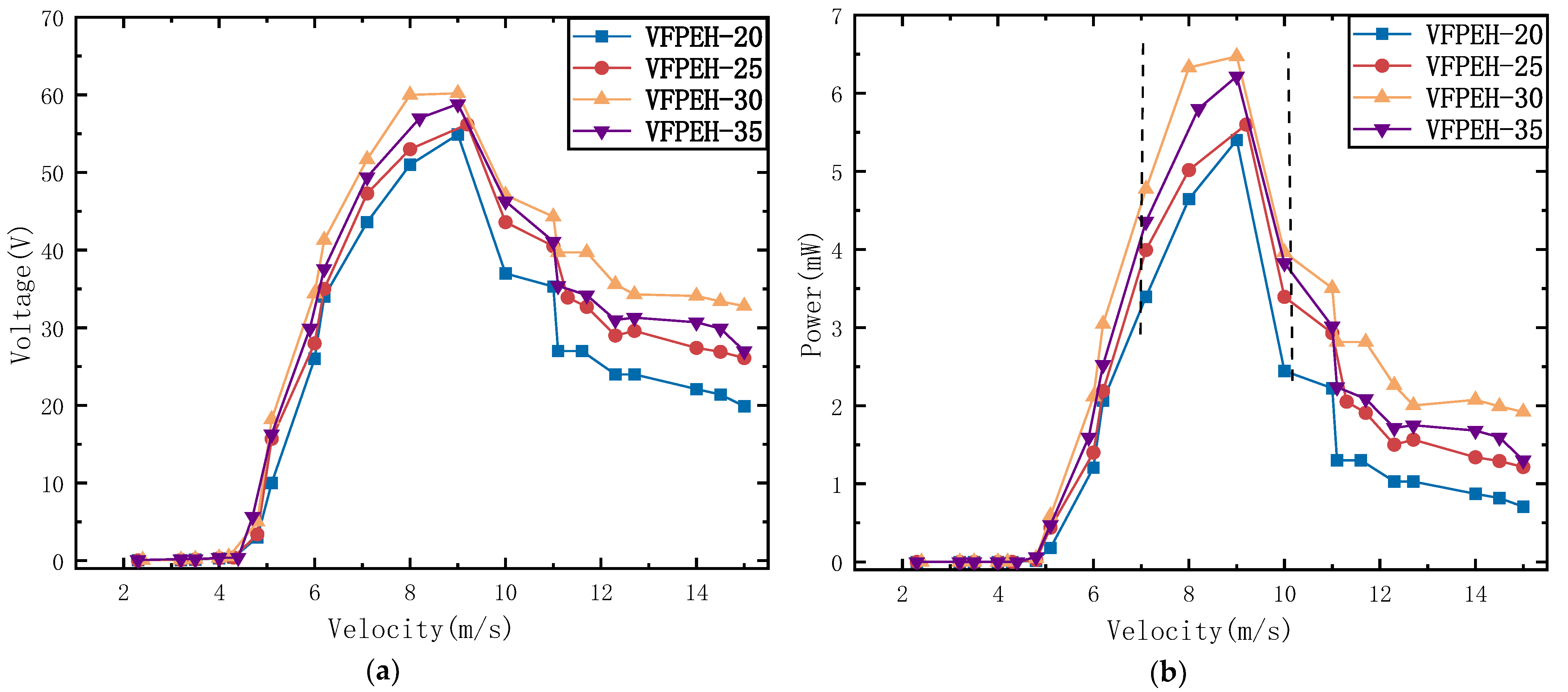
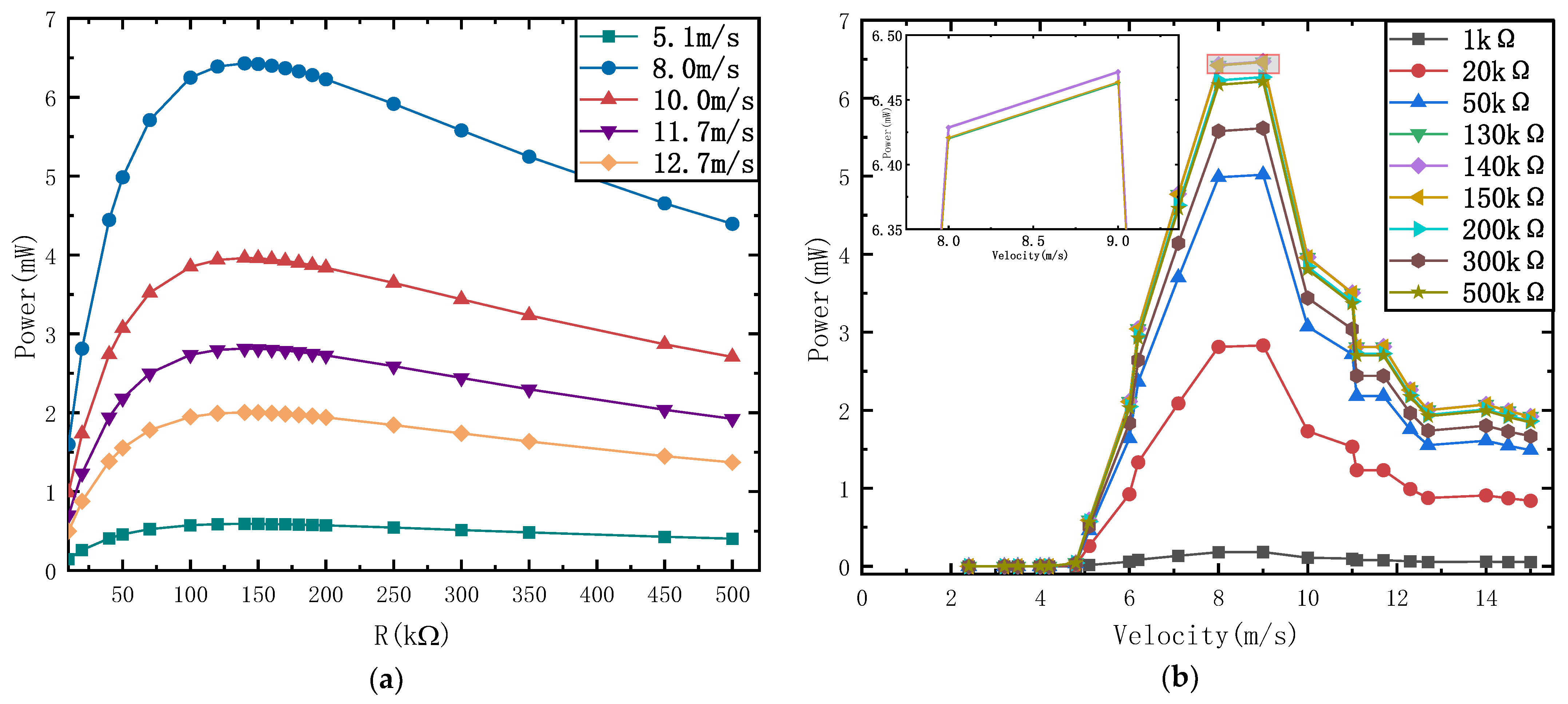
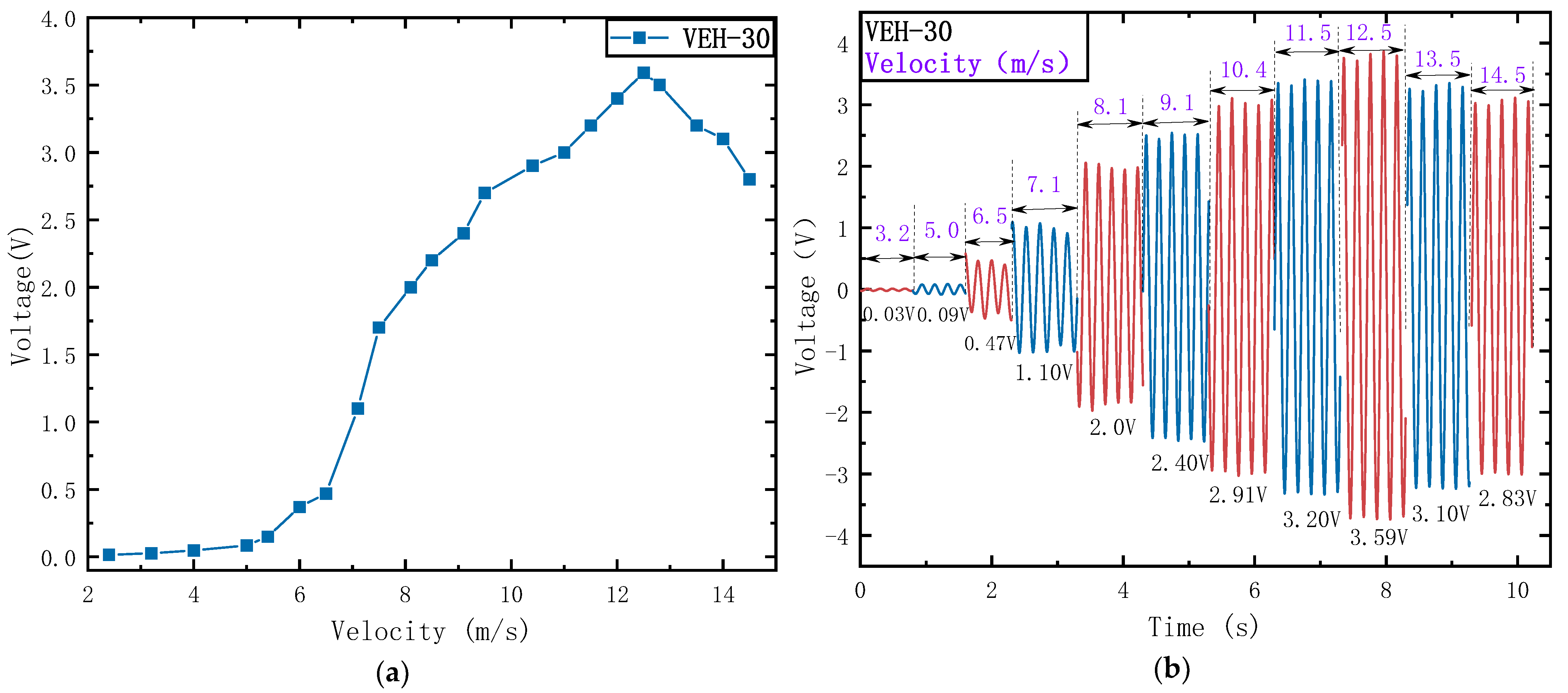
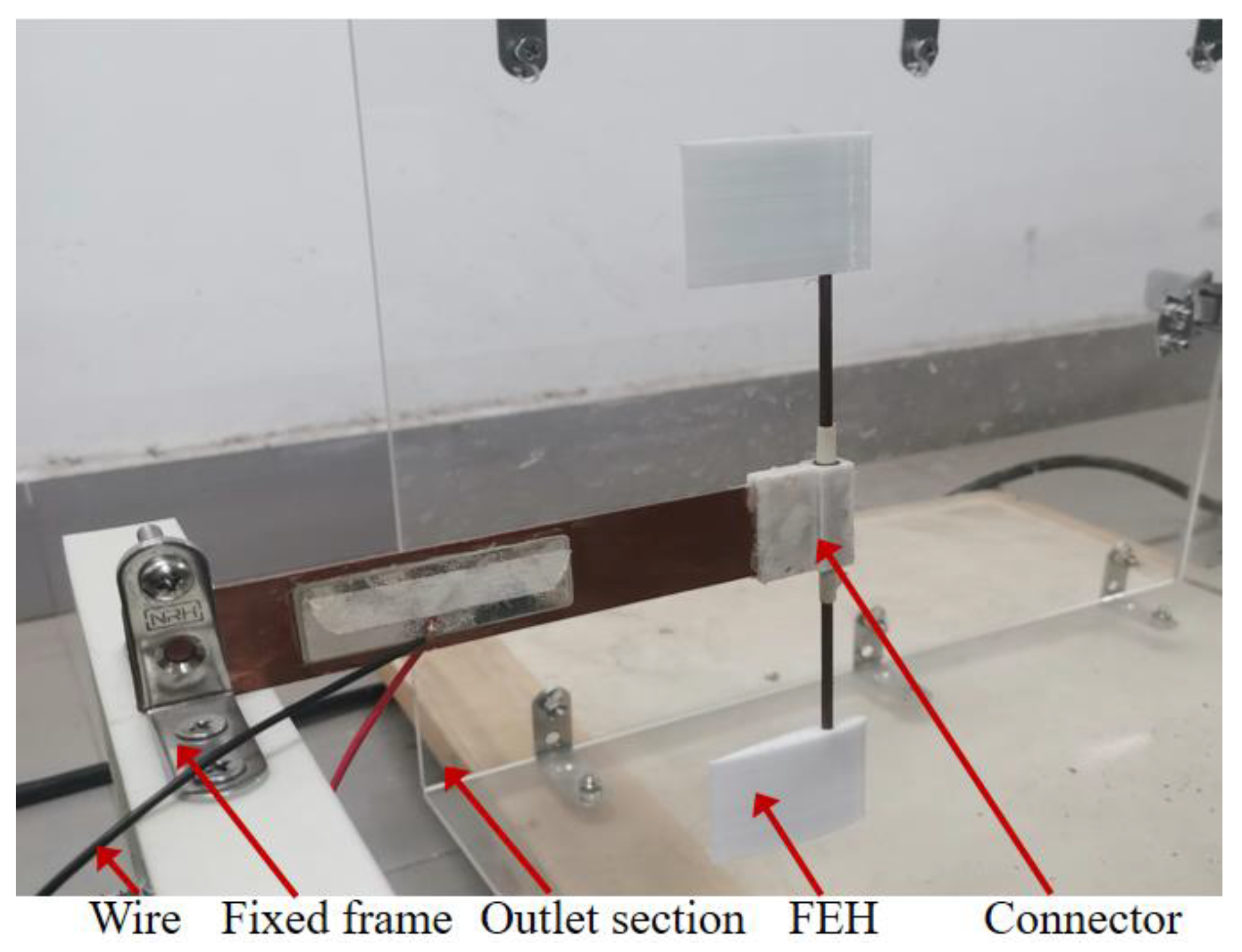
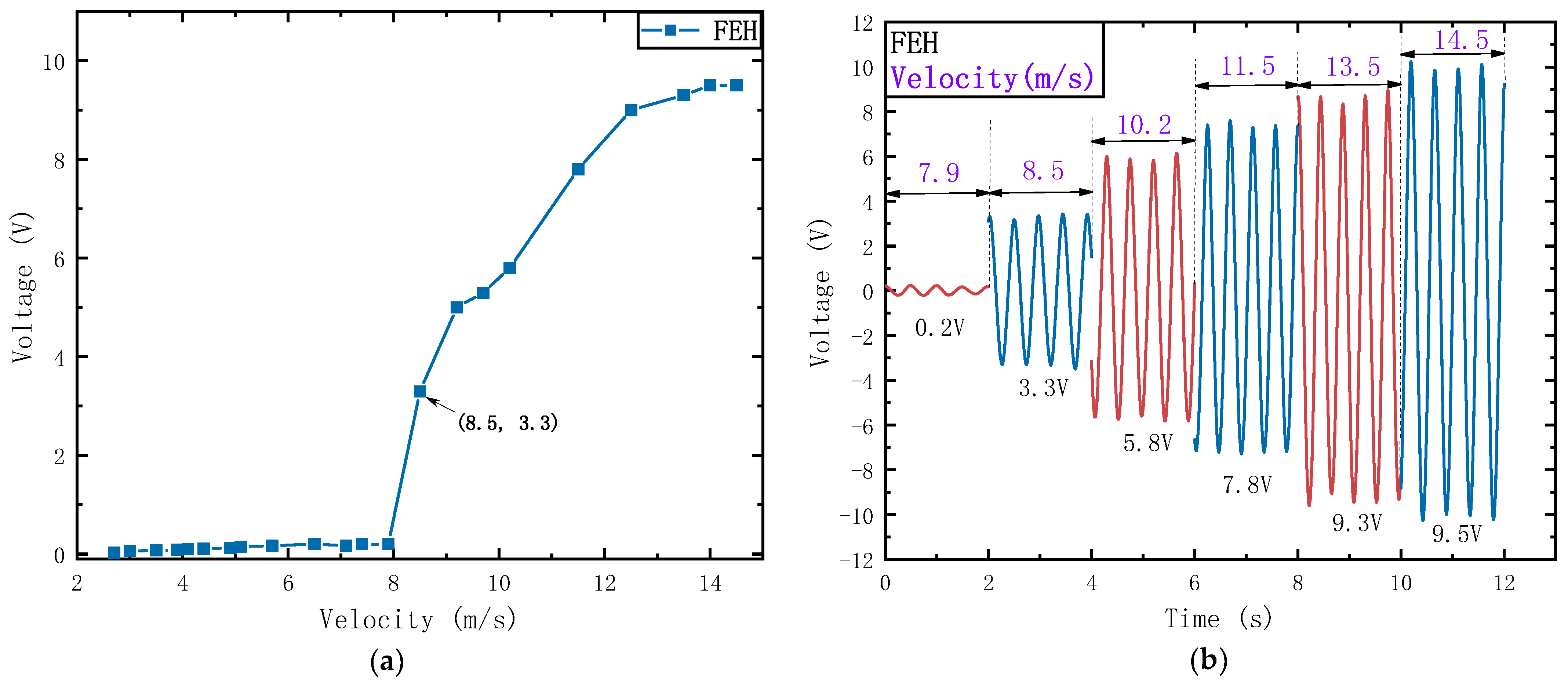
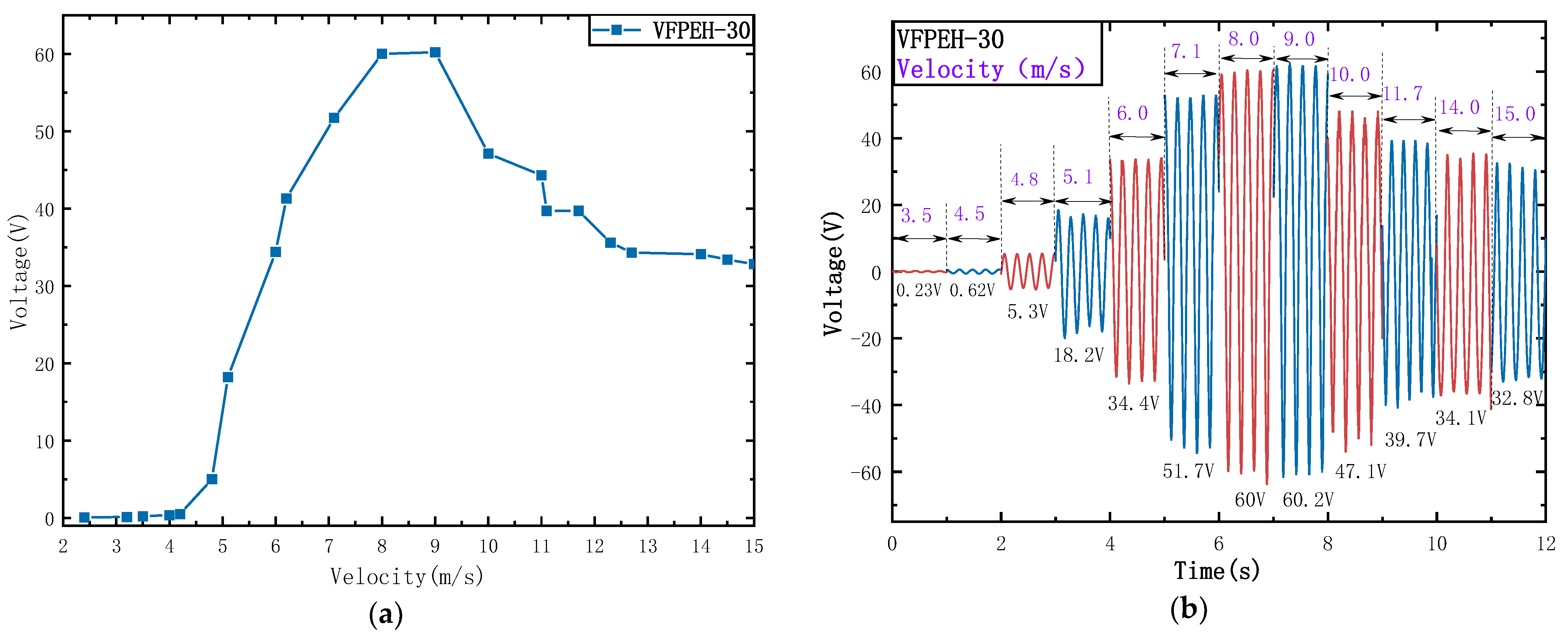
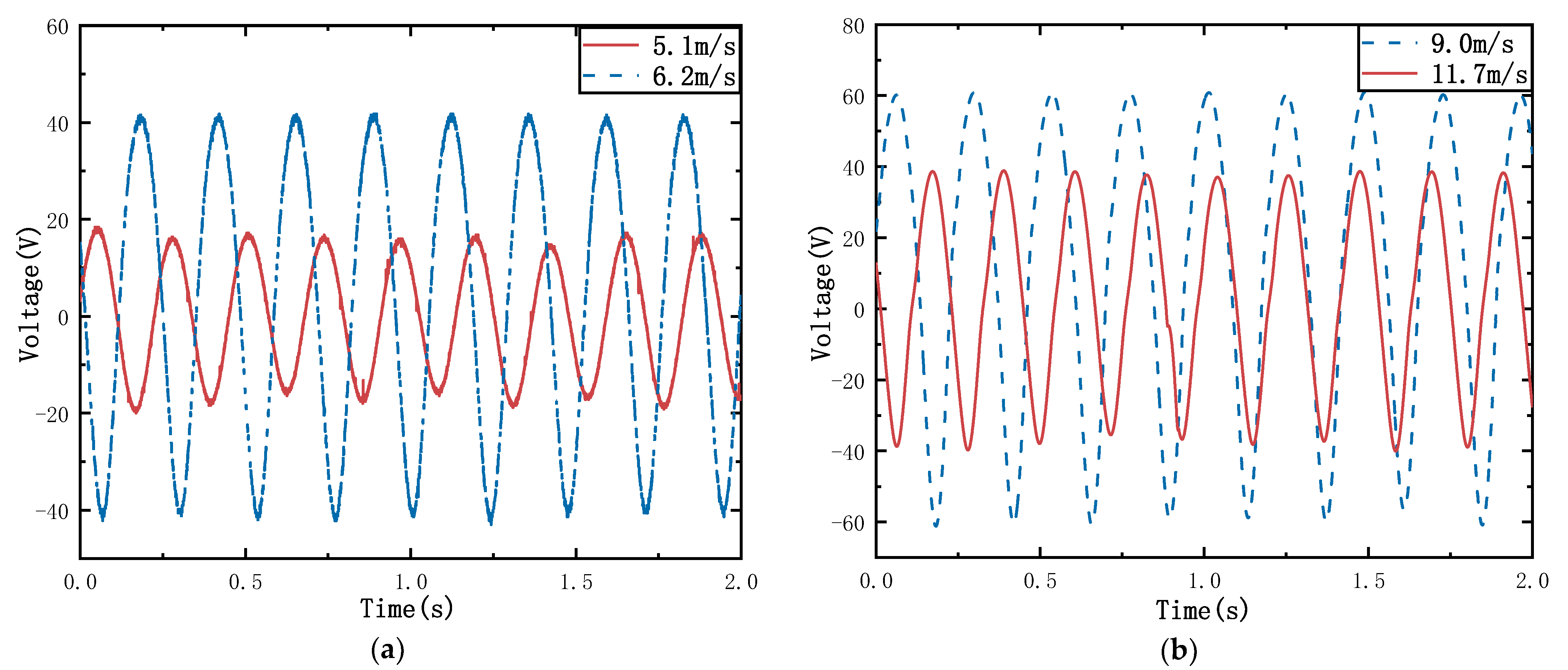
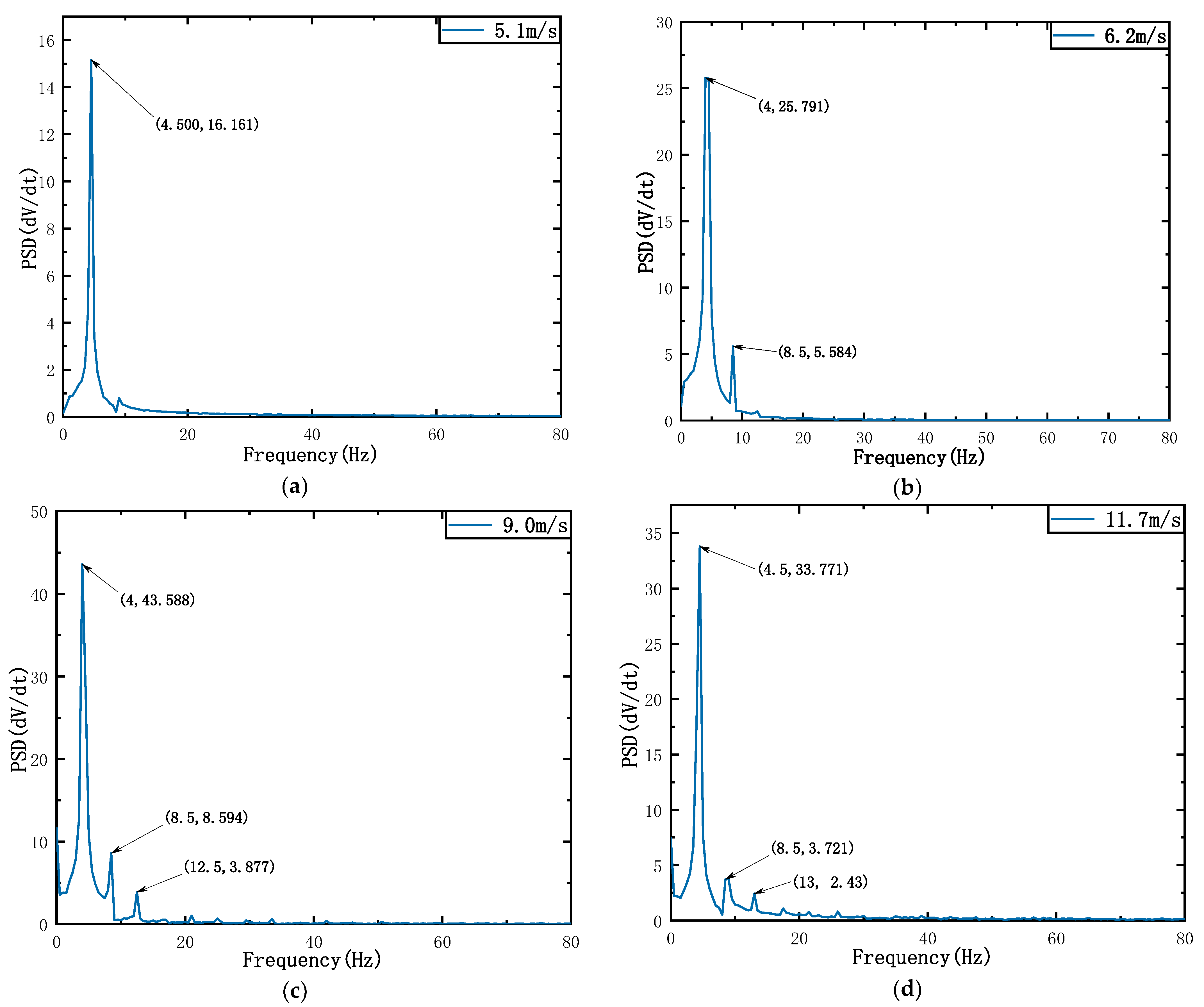
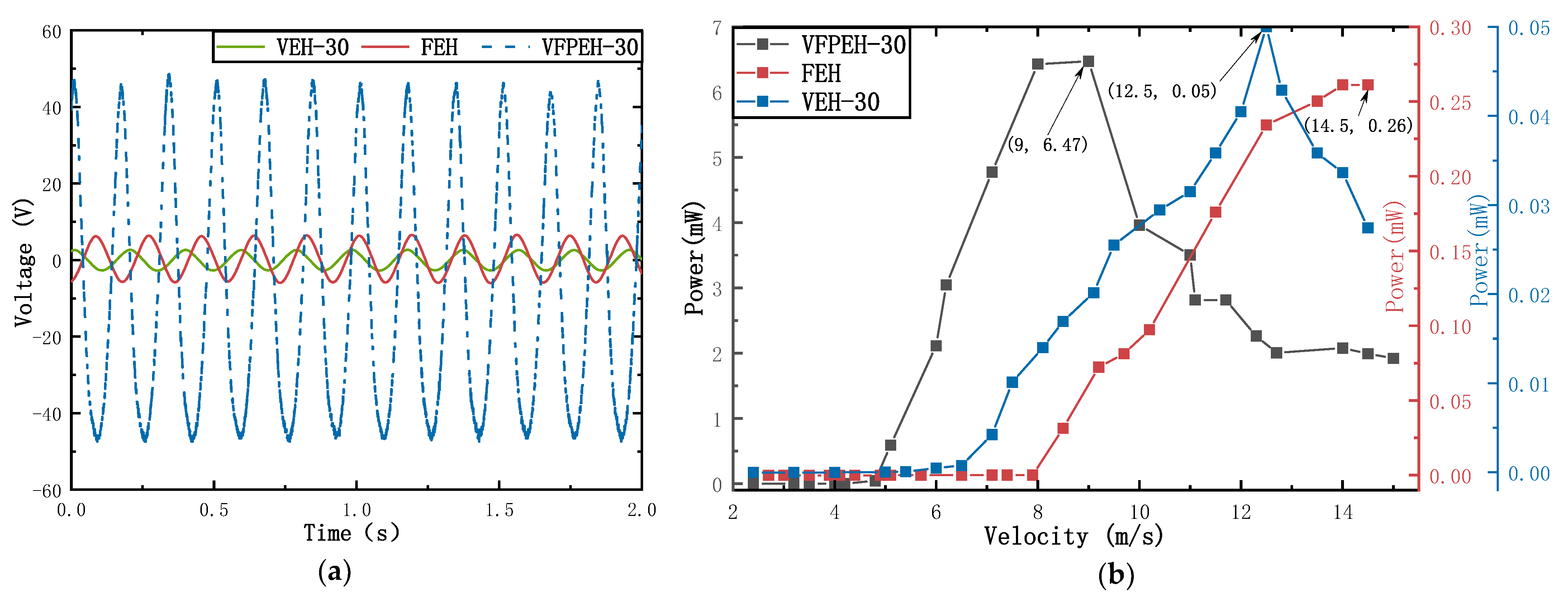
In order to solve the problem of self-energy supply of vehicle-mounted micro-sensors, bridge detection and some other low-power electronic devices in their working state, a vortex-induced flutter composite nonlinear piezoelectric energy harvester (VFPEH) with symmetrical airfoils on both sides of a cylindrical bluff body is designed. The VFPEH consists of a cantilever beam, a cylindrical bluff body connected to the free end of the cantilever beam, and two airfoil components symmetrically fixed at both ends of the shaft, which enables coupling between vortex-induced vibration and flutter. The airfoil symmetrically arranged on both sides of the cylindrical bluff body induces the cantilever beam to produce bending and torsional composite vibrations at high wind velocities, realizing energy harvest in the two degrees of freedom motion direction, which can effectively improve the output power of the energy harvester. Based on a wind tunnel experimental platform, the effect of key parameters matching impedance and the diameter of the cylindrical bluff body on the output performance of the VFPEH is investigated, together with the output performance of the classical vortex-induced energy harvester (VEH), the flutter energy harvester (FEH) and the VFPEH. The experimental results show that for the VFPEH under a combination of vortex-induced vibrations and flutter vibrations has a better output performance than the VEH and the FEH when using the same size. The coupling of vortex-induced vibration and flutter can reduce the start-up wind velocity of the VFPEH and expand the wind velocity range of the high output power of the VFPEH. The VFPEH has a better output performance at the cylindrical bluff body diameter of 30 mm and a load resistance of 140 kΩ. When the wind velocity range is 2 m/s–15 m/s, the maximum output power of the VFPEH is 6.47 mW, which is 129.4 times and 24.9 times of the maximum output power of the VEH (0.05 mW) and FEH (0.26 mW), respectively.
Keywords: wind-induced vibration; vortex-induced vibration; flutter; piezoelectric energy harvester; composite energy harvester wind-induced vibration; vortex-induced vibration; flutter; piezoelectric energy harvester; composite energy harvester