Article

Experimental Study on the Effect of Pile-End Soil on the Pile Load Transfer Law
School of Civil Engineering and Architecture, Zhejiang Sci-Tech University, Hangzhou 310018, China
*
Author to whom correspondence should be addressed.
Appl. Sci. 2022, 12(13), 6347; https://doi.org/10.3390/app12136347
Submission received: 1 June 2022 / Revised: 19 June 2022 / Accepted: 20 June 2022 / Published: 22 June 2022
(This article belongs to the Special Issue Advances in Geotechnologies in Infrastructure Engineering)

Abstract

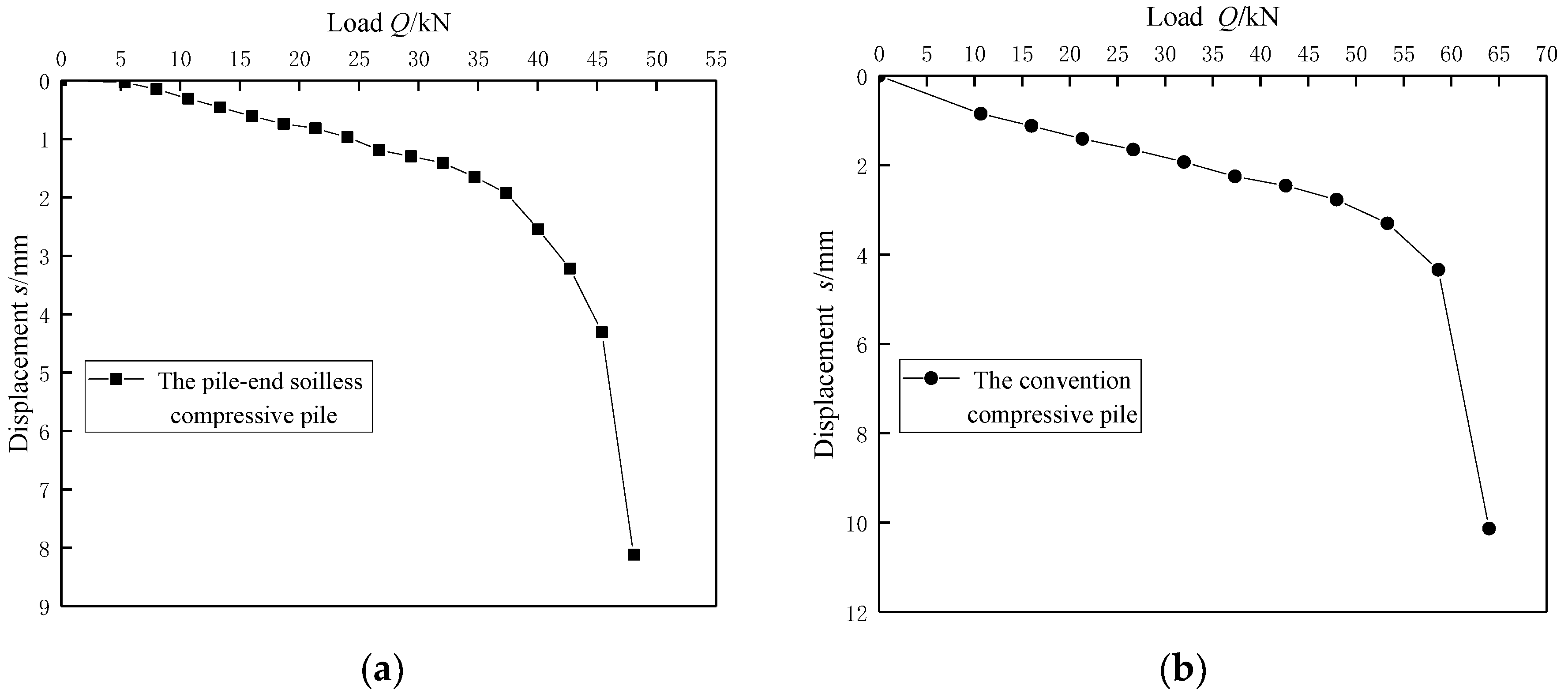
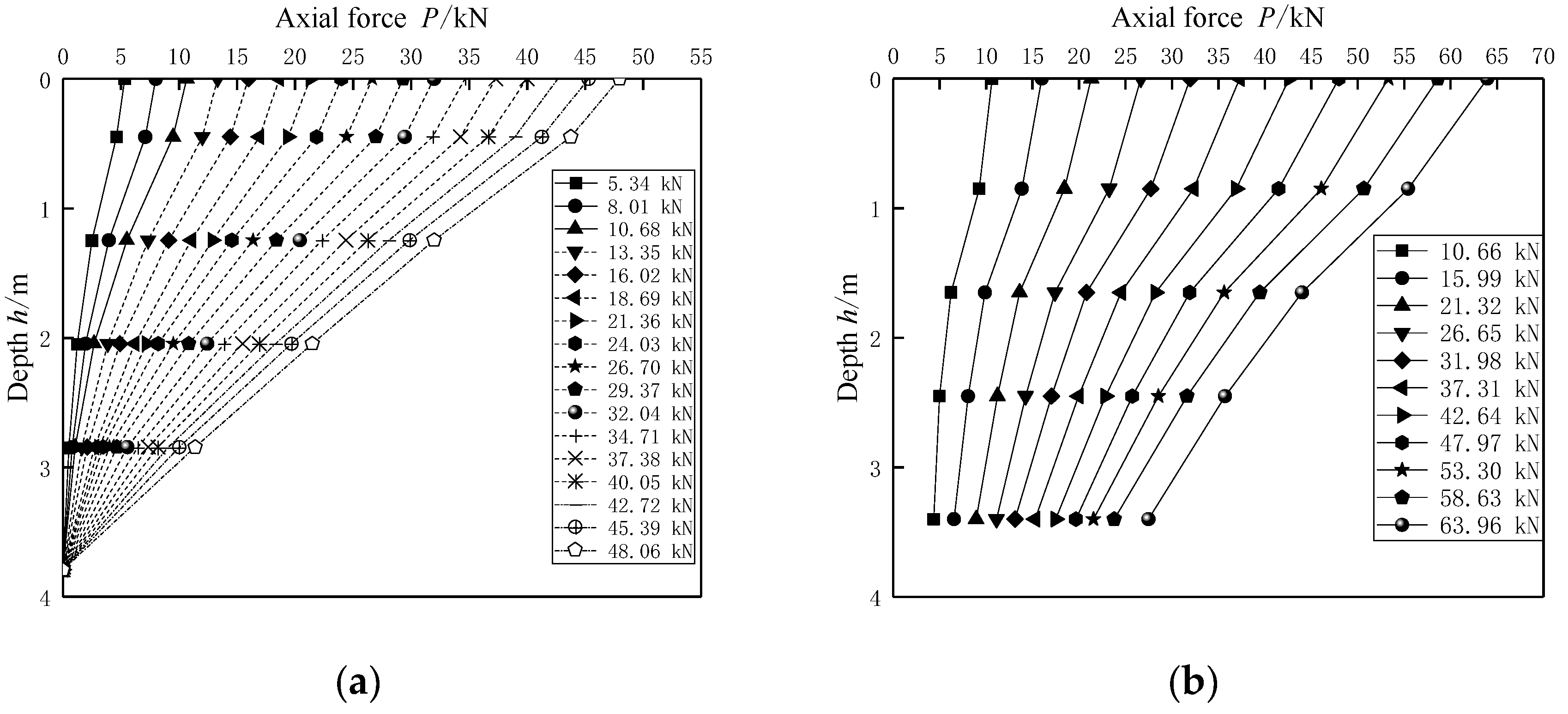
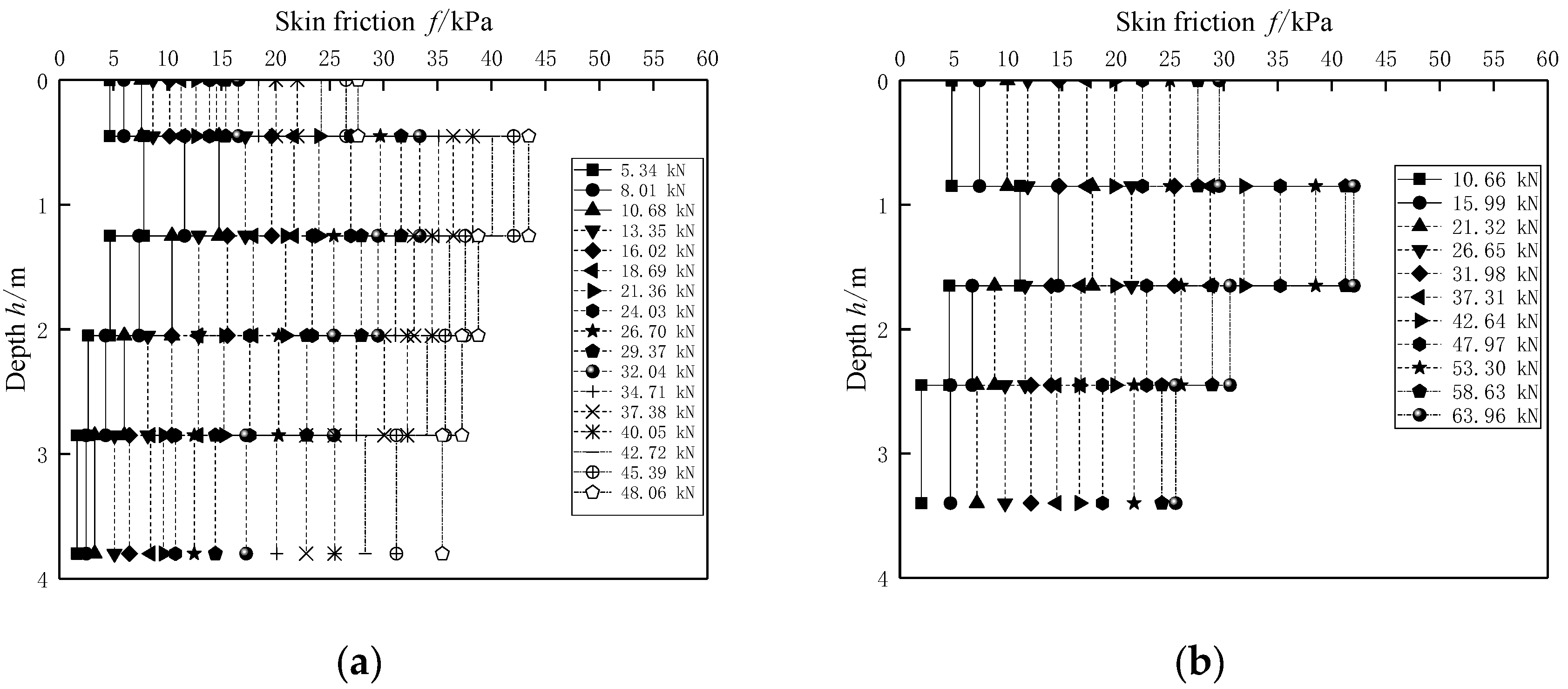
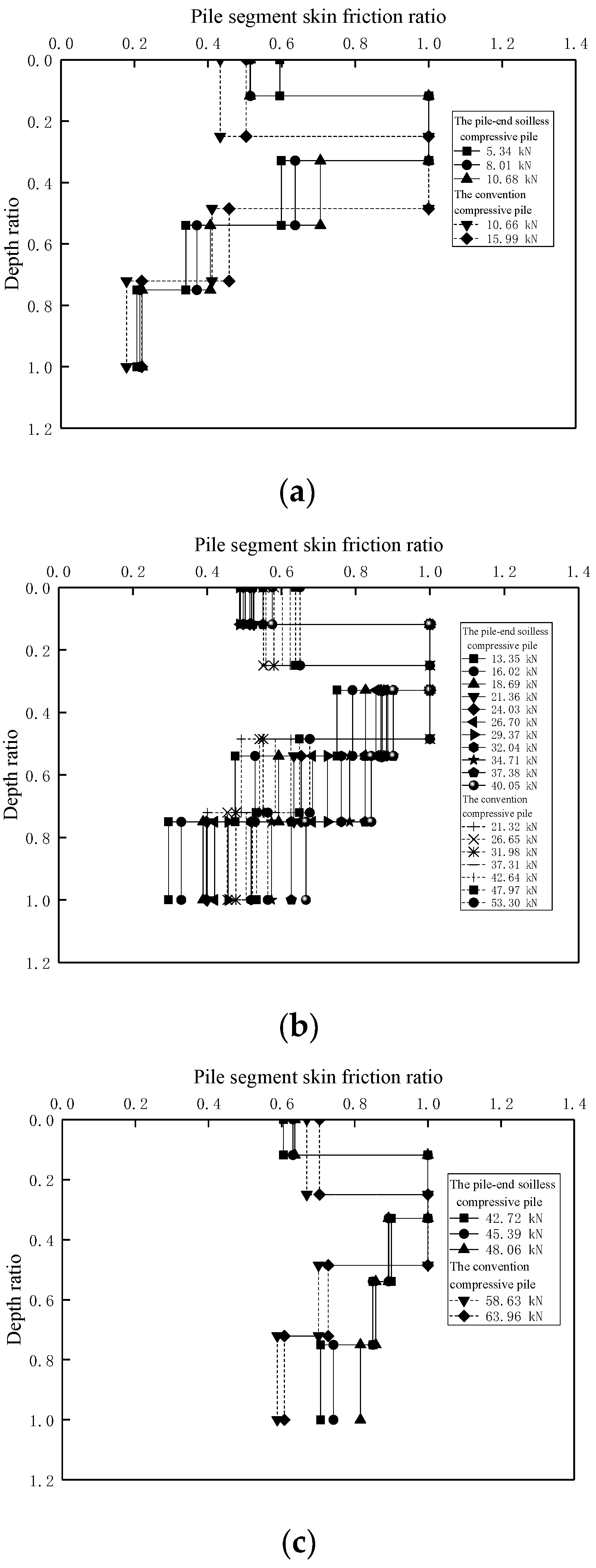
This paper compares and analyzes the difference in the skin friction between pile-end soilless compressive pile and conventional compressive pile at various stages during loading by the in situ test method. The influence of pile-end soil on the load transfer law of compressive piles in clay-dominated stratified foundations is further investigated. The results show that the overall load–displacement curves of the pile-end soilless compressive pile and the conventional compressive pile both present a slow decline followed by a steep drop. The length of the linear section on the load–displacement curve of the pile-end soilless compressive pile is less than that of the linear stage of the conventional compressive pile. Under the vertical load, the distribution laws and distribution forms of the skin friction ratio of the pile sections of the two piles are more consistent. The pile-end soil of the conventional compressive pile restricts the skin friction of the pile’s middle-lower and lower pile segments when compared to the pile-end soilless compressive pile. This restriction manifests itself as a reduction in pile skin friction, and the weakening effect decreases from bottom to top.
Keywords: compression pile; skin friction; load transfer law; weakening effect; in situ test compression pile; skin friction; load transfer law; weakening effect; in situ test