Article

Quantitative Assessment Method of Force Tracking Capabilities for Detection of Motor Intentional Disorders
1
School of Industrial Engineering, University of Ulsan, Ulsan 44610, Korea
2
Samsung Medical Center, Department of Neurology, Sungkyunkwan University School of Medicine, 81 Irwon-ro, Gangnam-gu, Seoul 06351, Korea
3
Neuroscience Center, Samsung Medical Center, 81 Irwon-ro, Gangnam-gu, Seoul 06351, Korea
4
Samsung Alzheimer Research Center, Samsung Medical Center, 81Irwon-ro, Gangnam-gu, Seoul 06351, Korea
5
Department of Intelligent Precision Healthcare Convergence, Sungkyunkwan University, Suwon 06351, Korea
6
Department of Health Sciences and Technology, SAIHST, Sungkyunkwan University, 81 Irwon-ro, Gangnam-gu, Seoul 06351, Korea
7
Hyundai Motor Company, Seoul 100-011, Korea
8
Samsung Medical Center, Stem Cell & Regenerative Medicine Institute, 81 Irwon-ro, Gangnam-gu, Seoul 06351, Korea
9
Department of Industrial and Management Engineering, Pohang University of Science and Technology, Pohang 37673, Korea
*
Author to whom correspondence should be addressed.
Appl. Sci. 2021, 11(7), 3244; https://doi.org/10.3390/app11073244
Submission received: 3 March 2021 / Revised: 22 March 2021 / Accepted: 31 March 2021 / Published: 5 April 2021
(This article belongs to the Special Issue Novel Approaches and Applications in Ergonomic Design)

Abstract

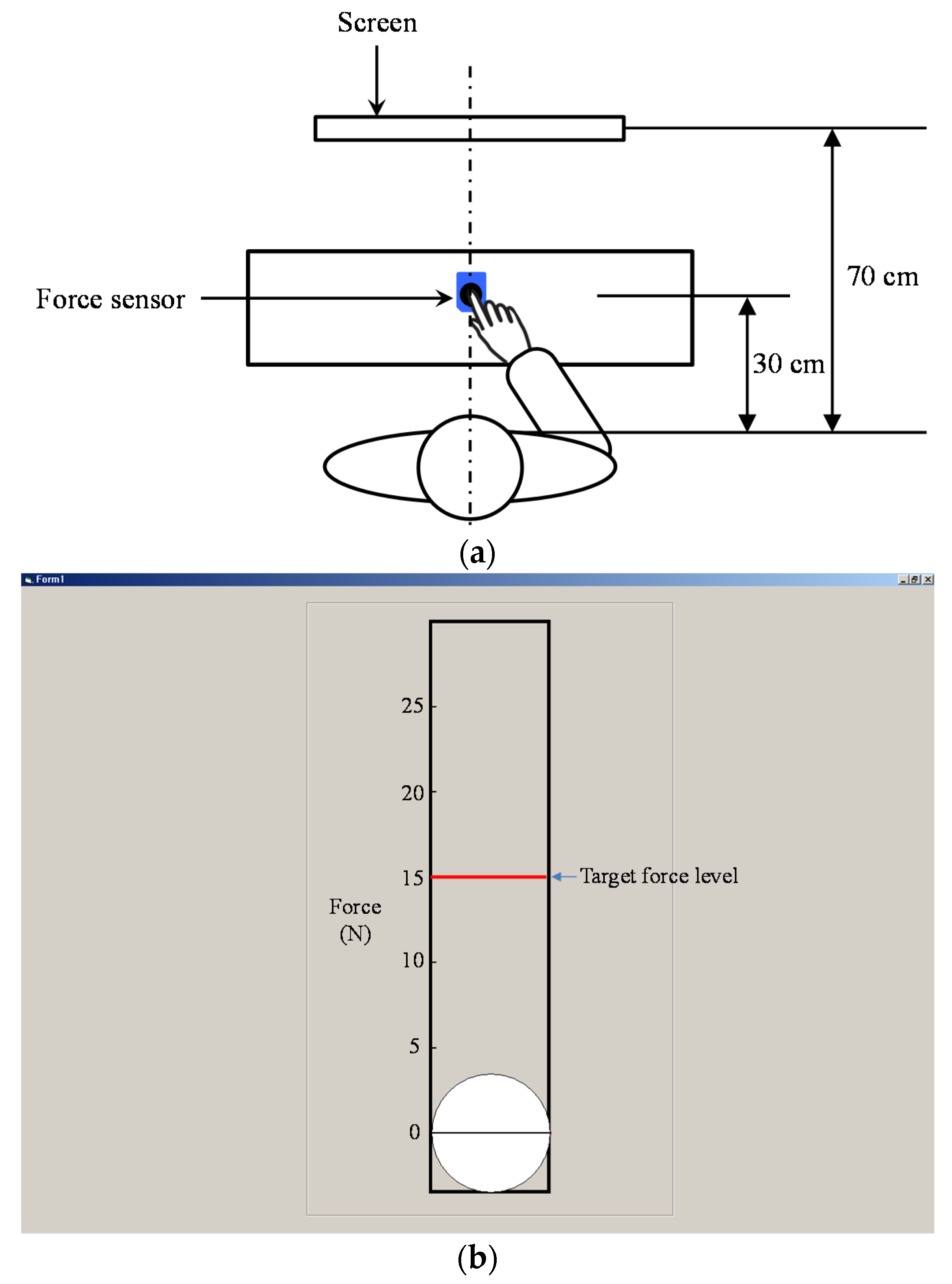
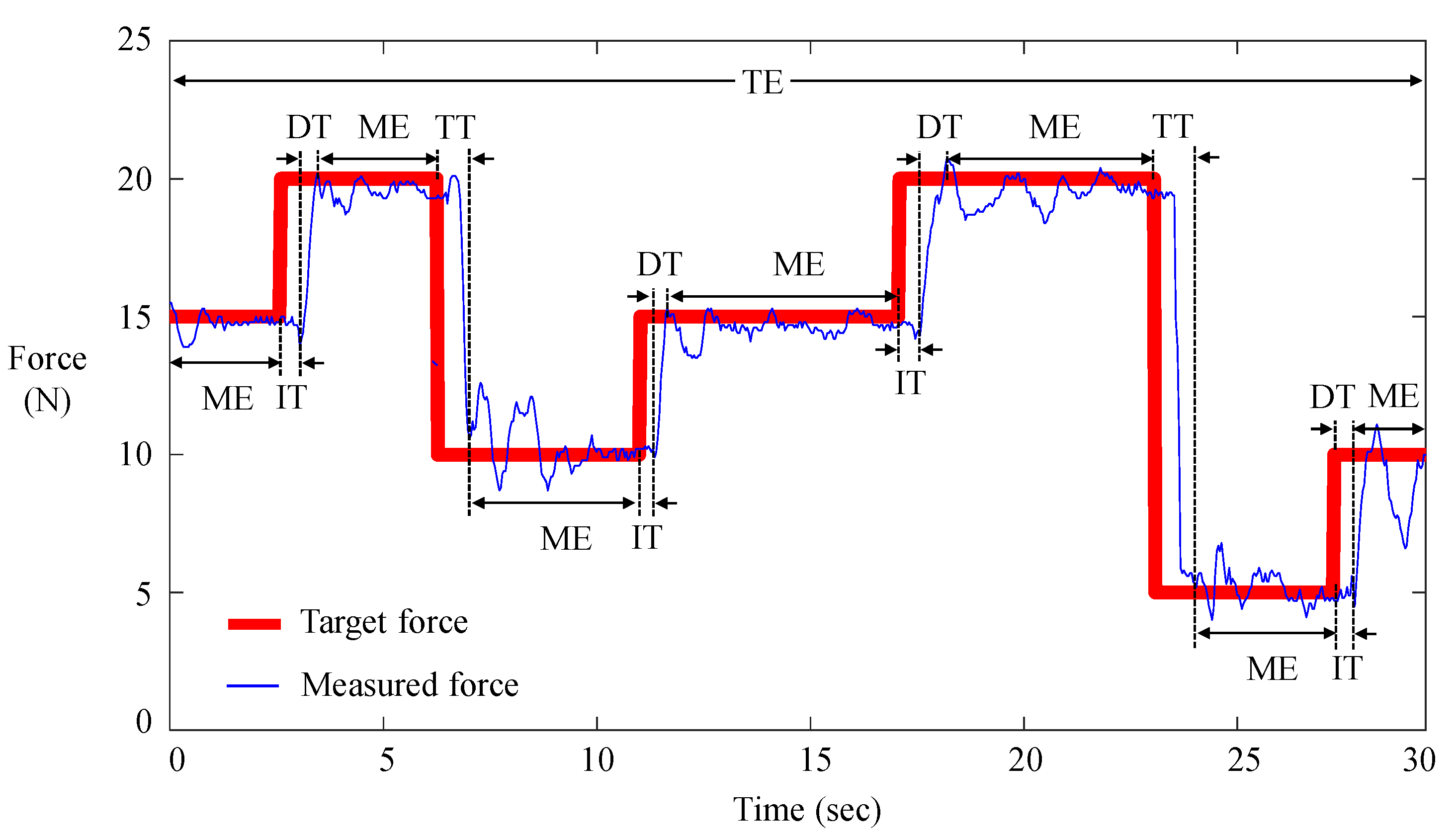
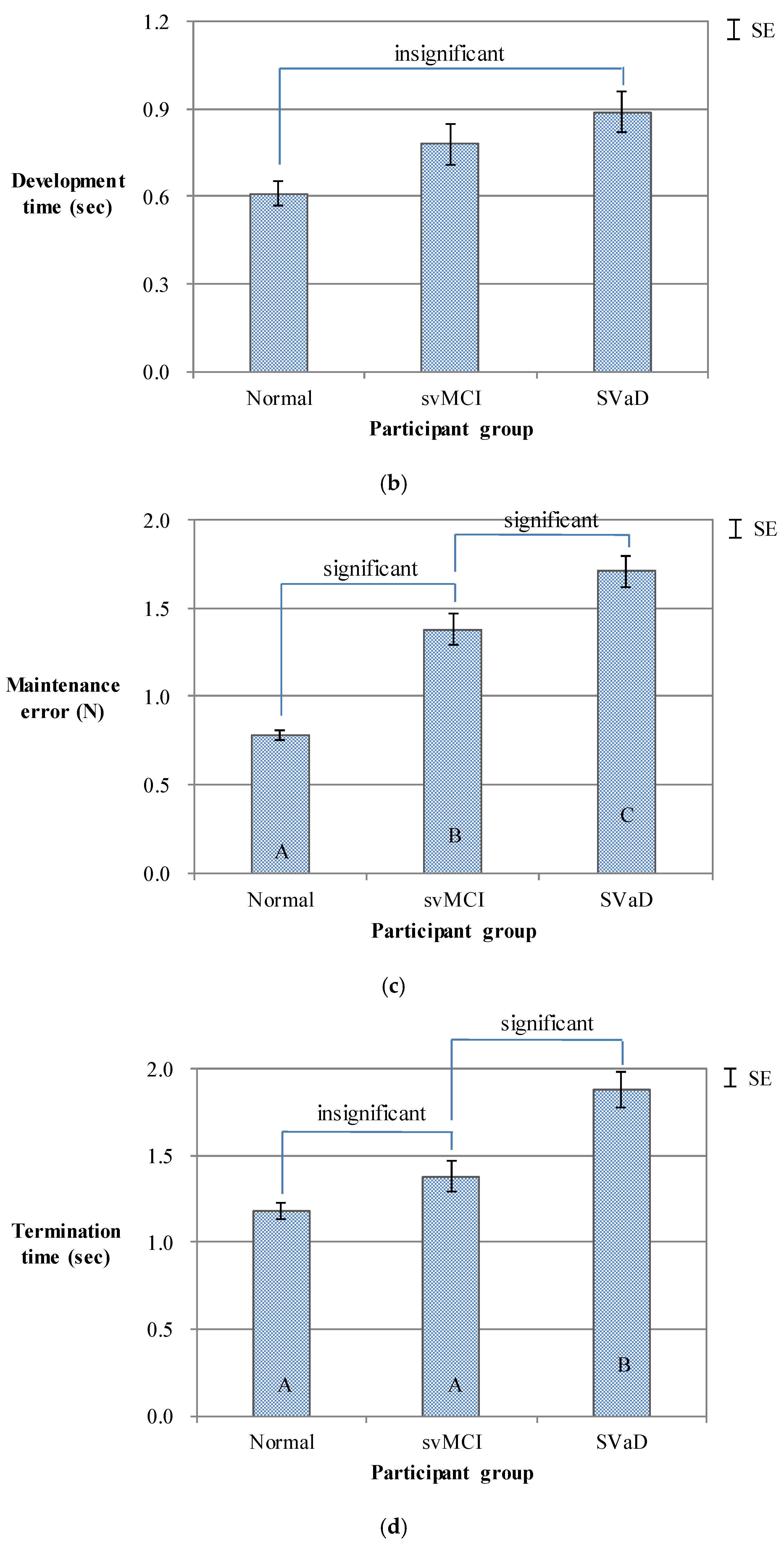
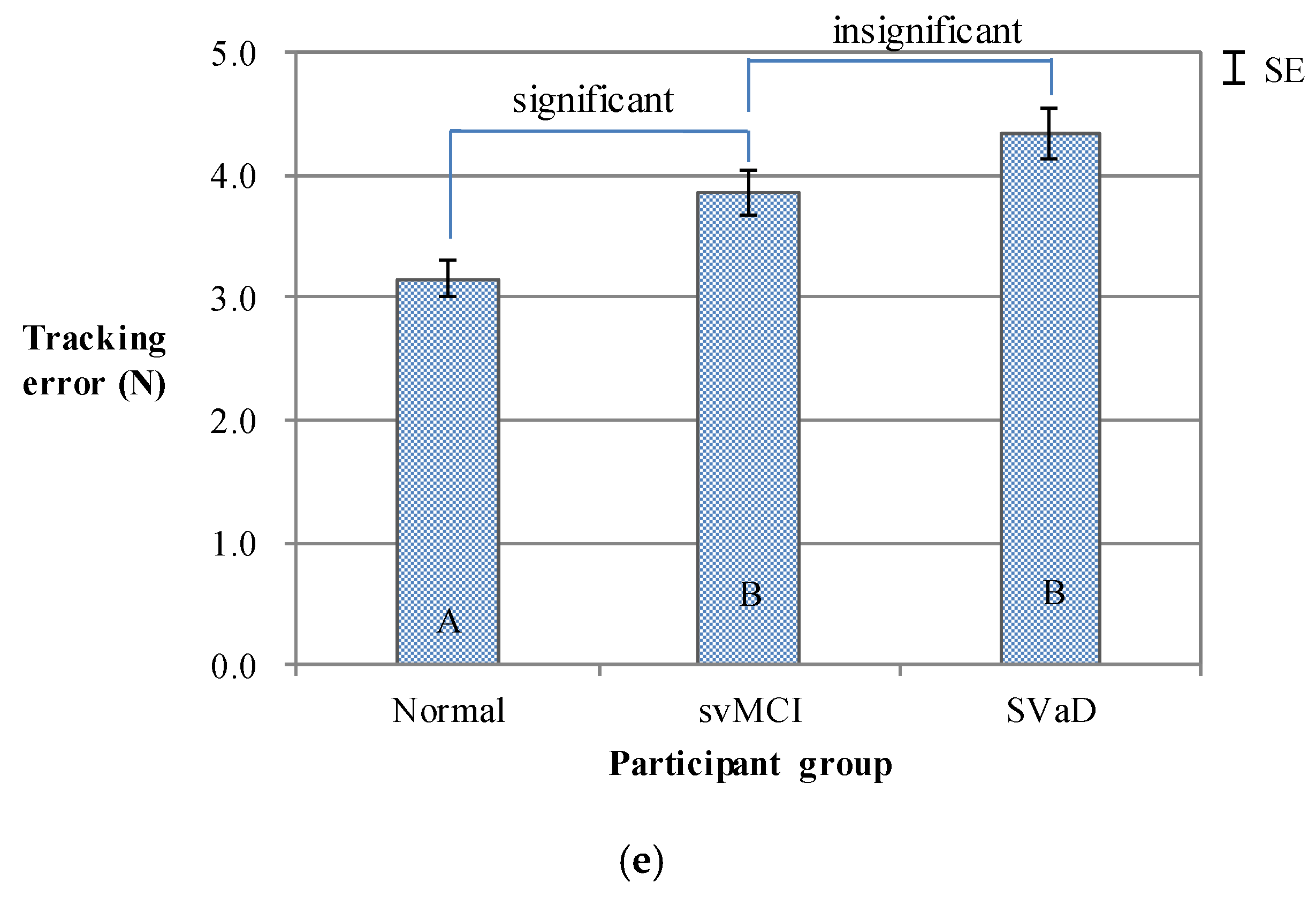
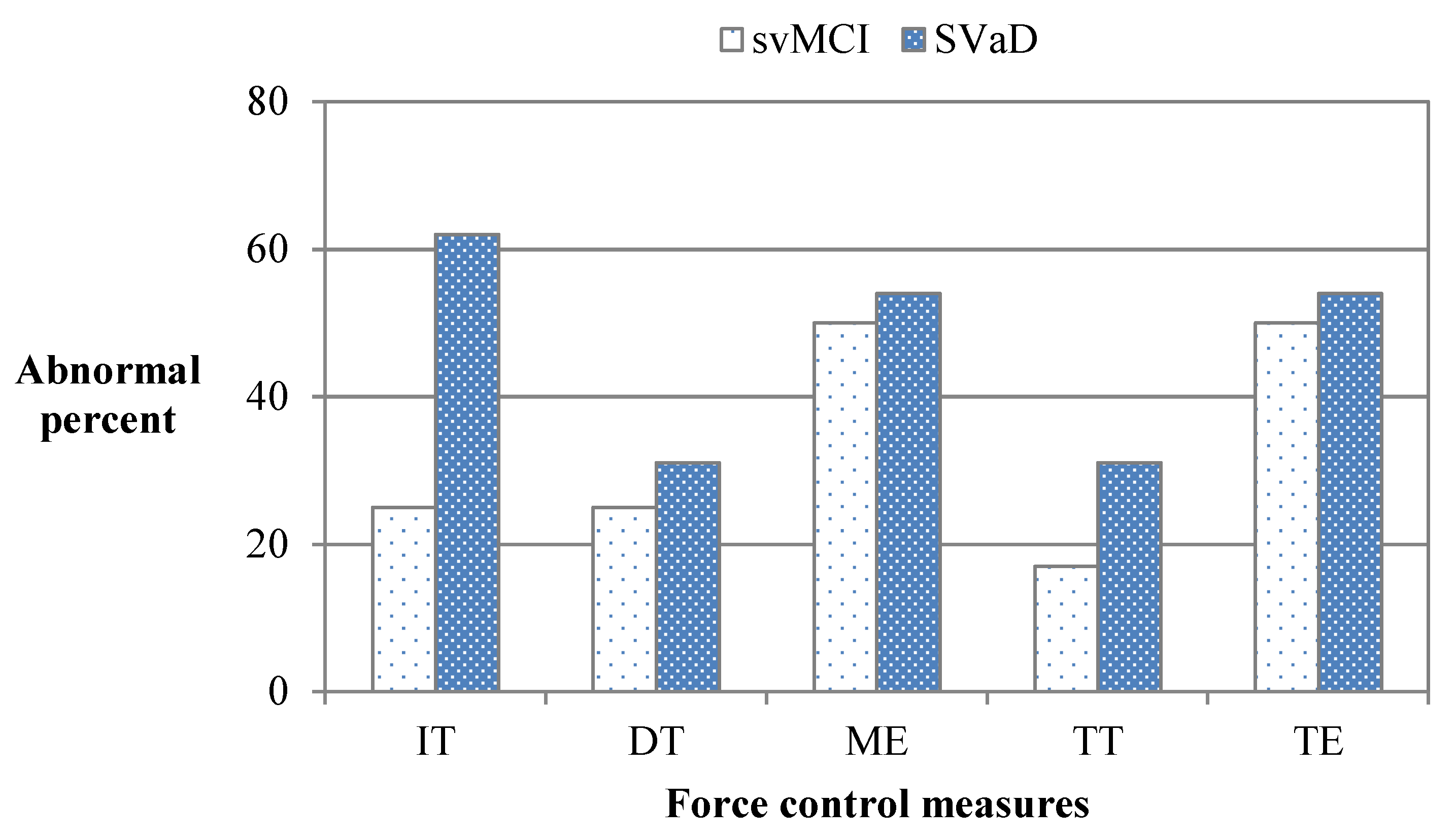
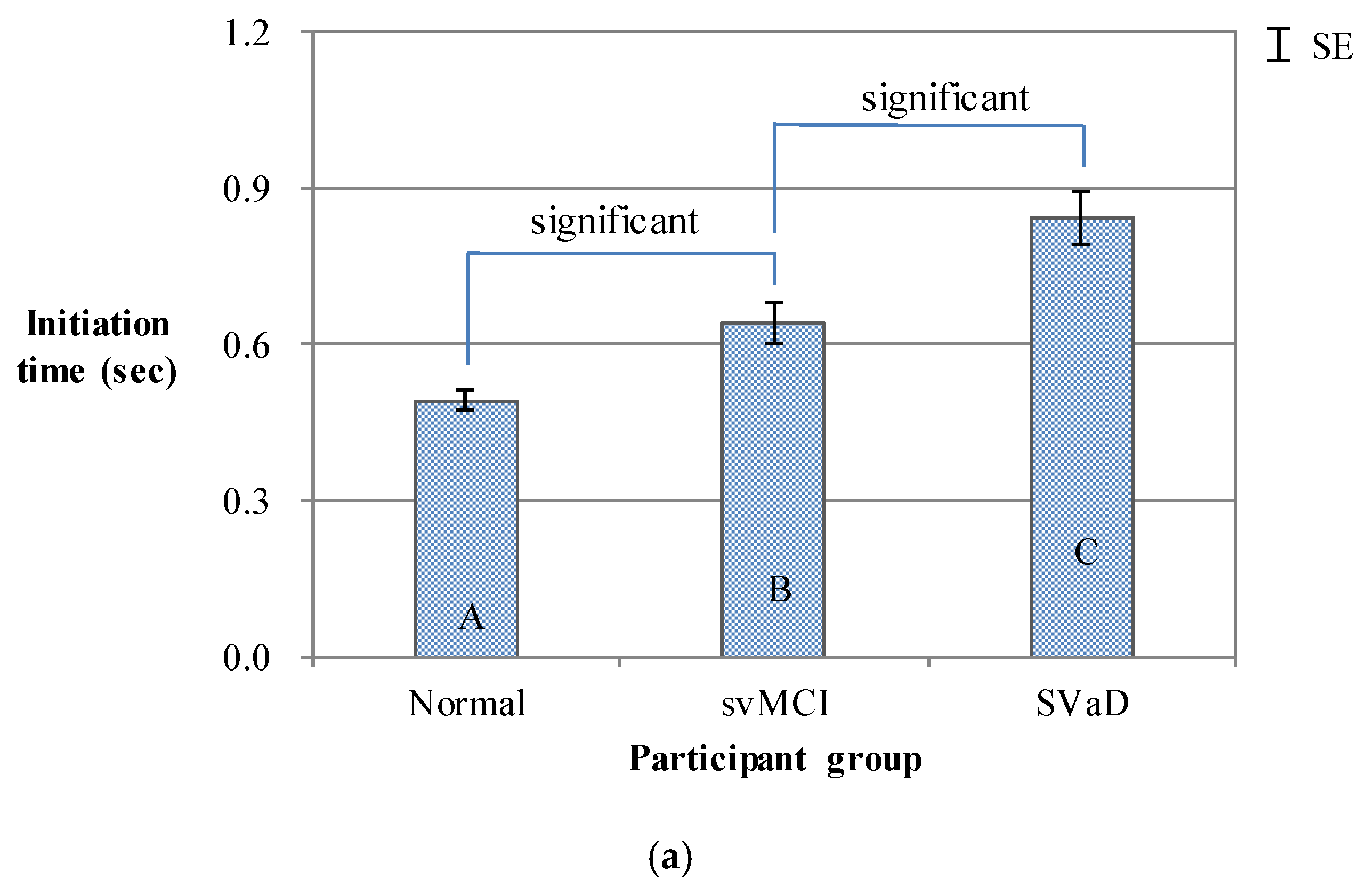
Early detection of motor intentional disorders associated with dysfunction in the action–intention system of the brain is clinically important to provide timely intervention. This study developed a force tracking system that can record forces exerted by the index finger while tracking 5 N, 10 N, 15 N, and 20 N of target forces varying over time. The force tracking system quantified force control measures (initiation time IT; development time, DT, maintenance error, ME; termination time, TT; tracking error, TE) for the individual and overall force control phases. This study evaluated the effectiveness of the force tracking system for a normal control group (n = 12) and two patient groups diagnosed with subcortical vascular mild cognitive impairment (svMCI, n = 11) and subcortical vascular dementia (SVaD, n = 13). Patients with SVaD showed significantly worse force control capabilities in IT (0.84 s) and ME (1.71 N) than those with svMCI (0.64 s in IT, and 1.38 N in ME). Patients with svMCI had significantly worse capabilities in IT, ME, and TE (3.80 N) than the control group (0.49 s in IT, 0.78 N in ME, and 3.07 N in TE). The prevalence rates of force control capabilities lower than the 99% confidence interval of the control group ranged from 17% to 62% for the two patient groups. The force tracking system can sensitively quantify the severity of the force control deficiencies caused by dysfunction in the action–intention system of the brain.
Keywords: force control capability; force tracking test; motor intentional disorders; subcortical vascular mild cognitive impairment; subcortical vascular dementia force control capability; force tracking test; motor intentional disorders; subcortical vascular mild cognitive impairment; subcortical vascular dementia