Abstract
Seismic excitations may lead to collisions between adjacent civil engineering structures, causing major damage. In this paper, an effective equation for calculating the gap size index is proposed so as to provide the optimum separation distance preventing structural pounding during different earthquakes. Evaluation of the best prediction of the required separation distance between two adjacent buildings was carried out by using the lumped mass multi-degrees of freedom models of structures. A special computer program was used to perform dynamic analyses in order to confirm the accuracy of the proposed formula. For this purpose, several different models of buildings with various properties under different earthquake excitations were analyzed. The results of the study clearly show that the proposed formula for the gap size index (based on vibration periods and damping ratios of buildings) is effective and it allows us to calculate the optimum separation between adjacent structures preventing their pounding during different earthquakes.
1. Introduction
Seismic excitations are often considered as the most dangerous and, at the same time, the most unpredictable loads that can act on civil engineering structures [1,2,3,4]. It is a common situation that collisions between two adjacent structures occur during earthquakes [5,6,7]. This phenomenon, called structural pounding, appears when the relative structural displacement exceeds the separation distance between two adjacent buildings or bridge segments [8,9,10,11,12,13]. Earthquake-induced structural pounding may lead to serious structural damages and may enlarge the number of casualties [14,15,16,17,18]. One of the methods that can be used to avoid such situations is filling the in-between gap by using viscoelastic materials (see [19,20,21]). Another approach is to increase the gap size so as to avoid structural interactions during earthquakes. A number of scientists have focused their studies on different methods devoted to estimation of the sufficient gap that provides the safety zone [22].
In order to investigate building pounding, experimental investigations concerning collisions between models of structures, with real and unreal scales, were conducted. Further, extensive numerical analyses were carried out so as to verify different effects related to the phenomenon [9,10,23]. Naderpour et al. [24] estimated impact velocity based on the coefficient of restitution and, subsequently, suggested an equation for the impact damping ratio to be used for modeling purposes. Lopez-Garcia [25,26] focused deeply on the analysis of the separation distance and suggested some parameters to prevent pounding between structures. Kiureghian [27] suggested a formula to calculate the minimum separation distance. Jeng et al. [28] proposed the spectral difference method based on random vibration theory that considers the first mode approximation for displacements of elastic multi-story buildings. Filatrault et al. [29] improved the equation of the separation distance by adding the effect of the damping ratio. Penzien et al. [30] recommended calculating the effective building vibration period to be used in calculations. Rahman et al. [31] studied different mitigation measures so as to reduce negative effects of earthquake-induced structural pounding.
Various researchers studied different methods of evaluating the separation distance for preventing structural collisions during seismic excitations. The sum of the squares of the modal response (SRSS) was often considered for these purposes [32]:
where S is the separation distance between buildings, and and denote the peak lateral displacement of buildings i and j, respectively. Jeng et al. [28] introduced a new equation, based on the SRRS formula, that can be presented as
where ρop is the gap size index (cross-correlation coefficient). It should be noted that the influence of the seismic excitation is defined in Equation (2) in the form of the peak lateral displacements and of both buildings, as obtained for a given earthquake. On the other hand, the gap size index, ρop, is assumed to depend only on the dynamic properties of adjacent structures.
The aim of this study is to propose an effective equation that can be used to calculate the gap size index ρop based on the building vibration period and damping ratio so as to provide the optimum separation distance that allows us to avoid structural pounding under different earthquakes.
2. Methodology of Proposed Formula
Different models of buildings with various properties (values of mass and stiffness of each story) were analyzed in the study under different earthquakes. The CRVK (Coefficient of Restitution, Velocity and Stiffness) program was used so as to perform dynamic analyses and solve impact problems (see [33] for details). The CRVK program is a computer program based on MATLAB software. It is mainly focused on calculating lateral displacements, velocities and accelerations of pounding-involved responses of buildings, with a different number of stories and various values of mass and stiffness of each story, under different earthquake excitations. The program is also able to determine the critical distance between colliding structures exposed to ground motions, impact force during collisions, dissipated energy, etc. It allows us to depict all figures and curves, calibrate the models and compare the results. For some cases, special functions are also possible, including neural network analysis (see [33] for details).
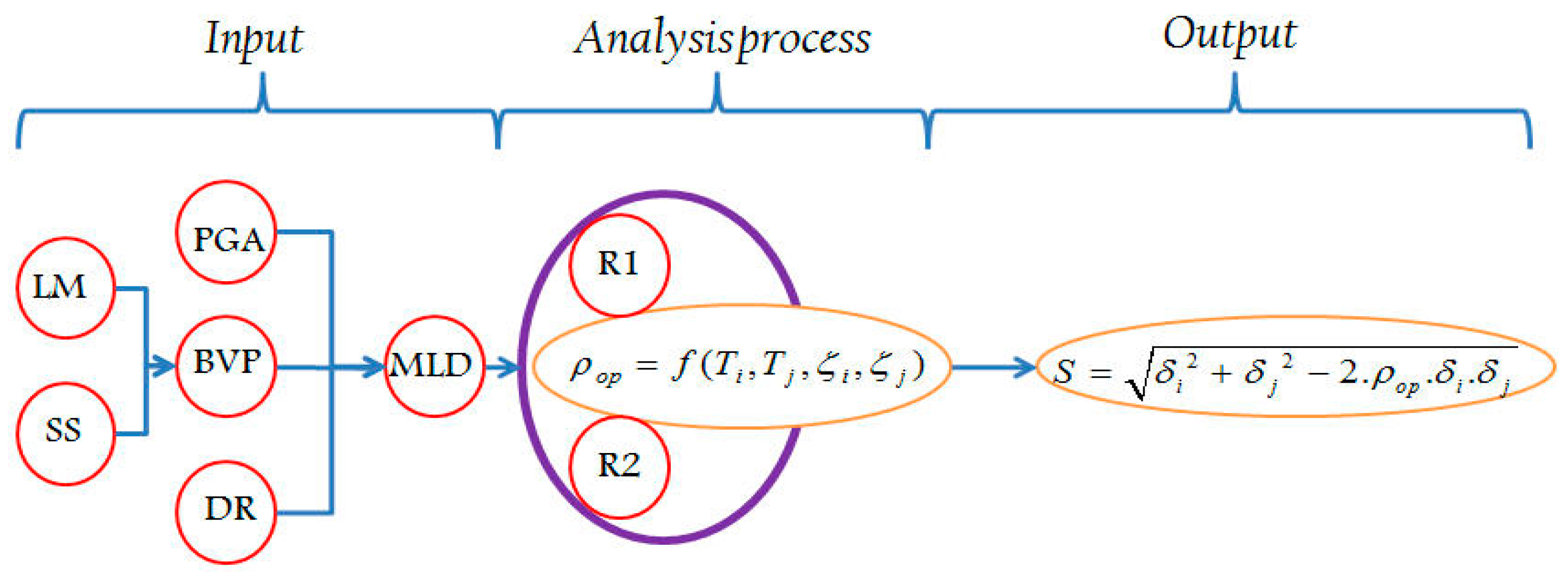
In order to create an algorithm predicting the maximum lateral structural displacements, a logical algorithm was also created. The process of such creation was divided into three basic steps: learning, validation and testing. The first step was devoted to obtaining a database that is necessary to build up the algorithm. Then, a numerical analysis, focused on collecting samples for the program, was conducted. In the last step, the created programs were presented. The maximum lateral displacements were calculated and listed for different earthquake records. The building vibration period of models (BVP), damping ratio of buildings (DR), lumped mass (LM), stiffness of each story (SS), maximum lateral displacements (MLD) and peak ground accelerations (PGA) were optimally defined as inputs and an iterative procedure was conducted by the CRVK program [33].
All inputs were listed and approximately analyzed so as to calculate the maximum lateral displacements in order to design and estimate different trends based on internal weights, R1 and R2. These two internal weights depend on two parameters of each building, i.e., on the structural vibration period and on the structural damping ratio. Since they have different meanings, they should be collected in two various packages. In other words, each parameter is collected in a separate package, and then a rational weight is proportionally calculated for all parameters in each package. The total sum of all weights in each package is equal to one. For example, if there are three buildings with vibration periods equal to 0.25, 0.65 and 1.2 s (parameters collected in the first package), the internal weights, R1, are calculated as equal to 0.119, 0.310 and 0.571, respectively. On the other hand, if these three buildings have the same structural damping ratios (parameters collected in the second package) which are equal to 0.05, for example, the internal weights, R2, are identical and equal to 0.333. The CRVK program considers both packages in the analysis. The calibration continues until the moment when the optimum sample is found, and it is repeated so as to find the best match between all parameters.
Applying the CRVK program, a new equation, based on the vibration periods and damping ratios of buildings, was suggested in order to calculate the gap size index and, consequently, the optimum separation distance between buildings during the whole time of an earthquake. The schematic architecture of the CRVK program model is presented in Figure 1.
Figure 1.
Schematic architecture of the CRVK program model.
3. Properties of Structural Models
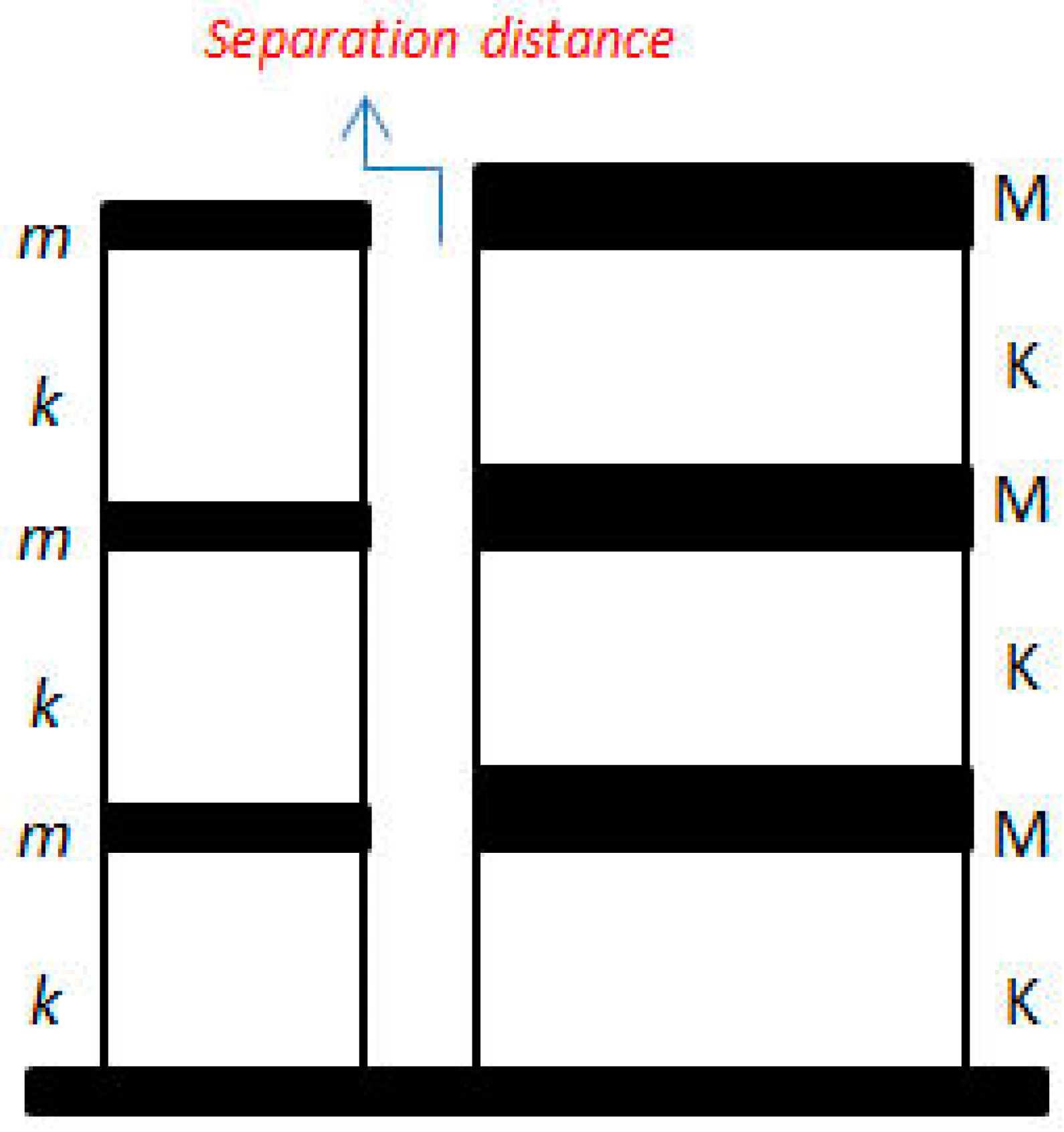
Evaluation of the best prediction of the required separation distance between two adjacent buildings during ground motion was carried out by using the lumped mass multi-degrees of freedom models of structures (see Figure 2). The structural bases were considered to be fully fixed to the ground and the soil–structure interaction effects were not taken into consideration. The damping ratio of the analyzed three-story buildings was assumed to be equal to 5% and modeled using Rayleigh’s damping. It was assumed that each model is able to capture vibrations in all directions under seismic excitation. However, the longitudinal direction was considered to be the main one and the results estimated for different cases were directly compared with each other for this direction. In the study, the height of each story of the buildings was assumed to be equal to 3.00 m and the plan of the structure was considered to be square. Table 1 shows the properties of different models used in the analyses.
Figure 2.
Schematic models of two adjacent three-story buildings.
Table 1.
Properties of five different models.
4. Numerical Study
Numerical analysis was conducted for five different earthquake records, i.e., for the El Centro (1940), Parkfield (1966), San Fernando (1971), Kobe (1995) and Kocaeli (1999) earthquakes—see Table 2. It was assumed in the analysis that the direction of ground vibrations during each earthquake (see components in Table 2) is convergent with the longitudinal direction defined for adjacent buildings. It should be added that the influence of the direction of ground vibrations can be taken into account by considering two horizontal components of each earthquake (usually NS and EW) and defining different layout angles for adjacent structures in relation to these horizontal directions. In the first stage of the investigation, all five structural models were analyzed individually. As the result of this analysis, the top story maximum lateral displacement for each model was determined under various ground motions (see Table 3). It can be seen from Table 3 that the largest maximum lateral displacement (equal to 36.18 cm) was observed for model B1 under the Kocaeli earthquake record, while the lowest value (equal to 2.95 cm) was determined in the case of model B4 under the San Fernando earthquake.
Table 2.
Ground motion records used in the analysis.
Table 3.
Maximum lateral displacement for different models under various ground motions (cm).
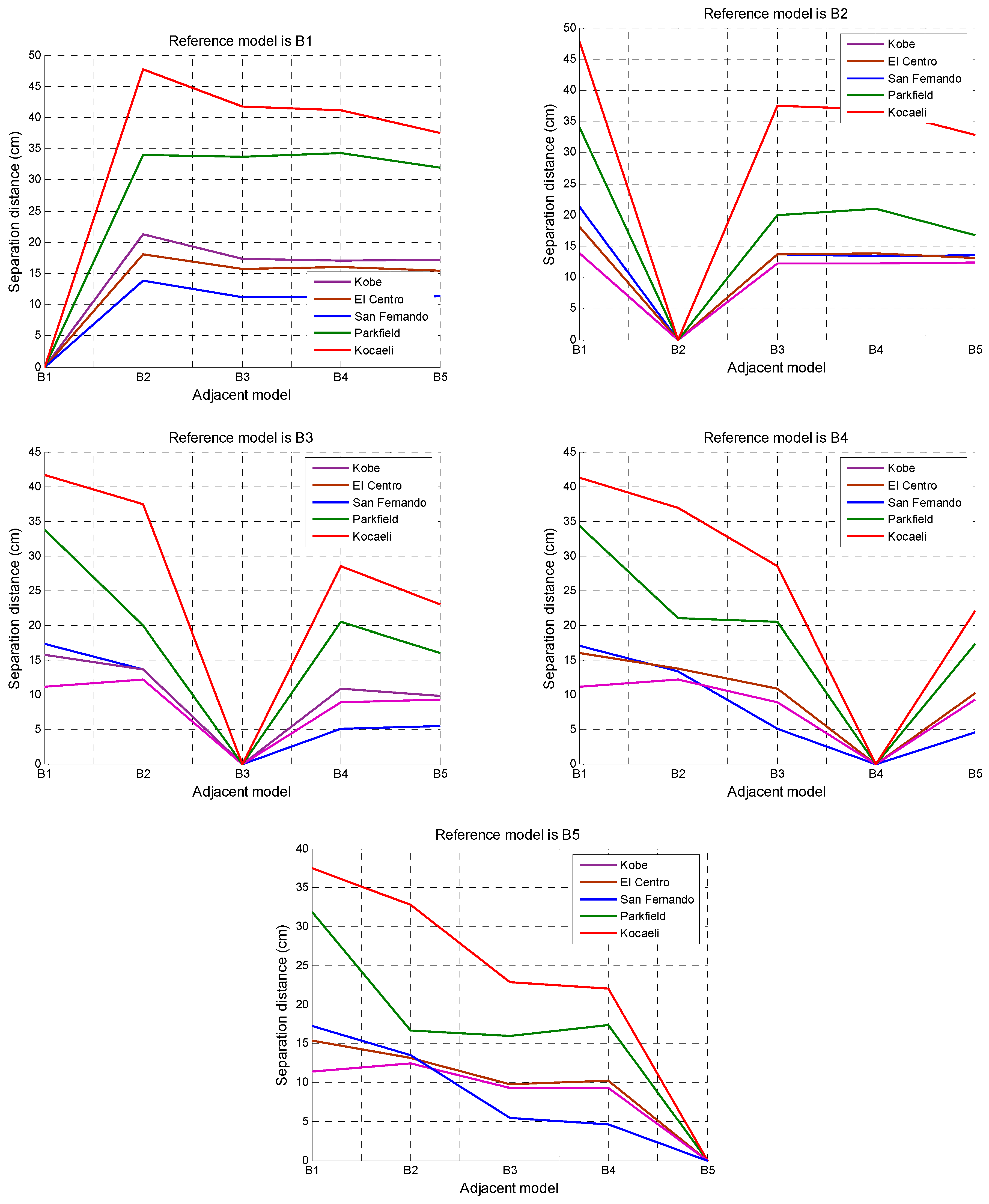
Then, Equation (1) was used to calculate the required separation distance between two models. The results of these calculations are presented in Table 4. As it can be seen from the table, the largest required separation distance (equal to 51.17 cm) was obtained for two adjacent buildings B1 exposed to the Kocaeli earthquake, while the lowest value (equal to 4.17 cm) was calculated for two adjacent buildings B4 under the San Fernando earthquake. It is quite obvious, however, that the optimal separation distance between two identical structures should be equal to zero, since they will always vibrate in-phase during the same ground motion. Therefore, in the next stage of the investigation, all combinations between two adjacent Bi and Bj models were analyzed under different earthquakes using the CRVK program, and the separation distance between them was slowly decreased by 0.01 cm. When the first impact was observed, the previous separation distance was automatically selected as the lowest possible value of the distance between buildings so as to avoid pounding during a particular ground motion. The separation distance values estimated in this way are summarized in Table 5. Moreover, for better interpretation, the results of the analysis are also presented in Figure 3. The results clearly indicate that Equation (1) may substantially overestimate the in-between gap size in some cases, since it does not take into account the relation between vibration periods of adjacent buildings. Therefore, Equation (2), with an appropriately defined gap size index, ρop, should be used instead.
Table 4.
Calculated separation distance for different models under various ground motions (cm).
Table 5.
Estimated separation distance using the CRVK program for different models under various ground motions (cm).
Figure 3.
Estimated separation distance using the CRVK program for different models under various ground motions.
5. Proposed Formula
In order to suggest an effective equation to calculate the gap size index, ρop, let us firstly consider the dynamic response of the n-degrees of freedom system in mode i [27]:
where is the effective participation factor for mode i and Si(t) denotes the i-th normal coordinate. Then, the power spectral density of R(t) can be expressed by the formula [27]
where , and are the power spectral density of a stationary input F(t), the complex frequency response function of the displacement response of mode i and the complex conjugate of , respectively. According to Equation (4), moments of the response power spectral density about the frequency origin are obtained as [27]
where is defined as [27]
where is parametrically illustrated as the gap size index. Substituting Equation (6) into Equation (5) gives
According to Kiureghian [34], the power spectral density can be written as
where G0, wg and are described to be a scale factor, circular frequency and damping ratio, respectively. Therefore, a normal equation to determine the gap size index is suggested as [34]
It should be underlined that the gap size index, ρop, expressed by Equation (9) depends only on the dynamic properties of adjacent structures (vibration periods of buildings and structural damping ratios) and it is independent from the seismic excitation used in the analysis.
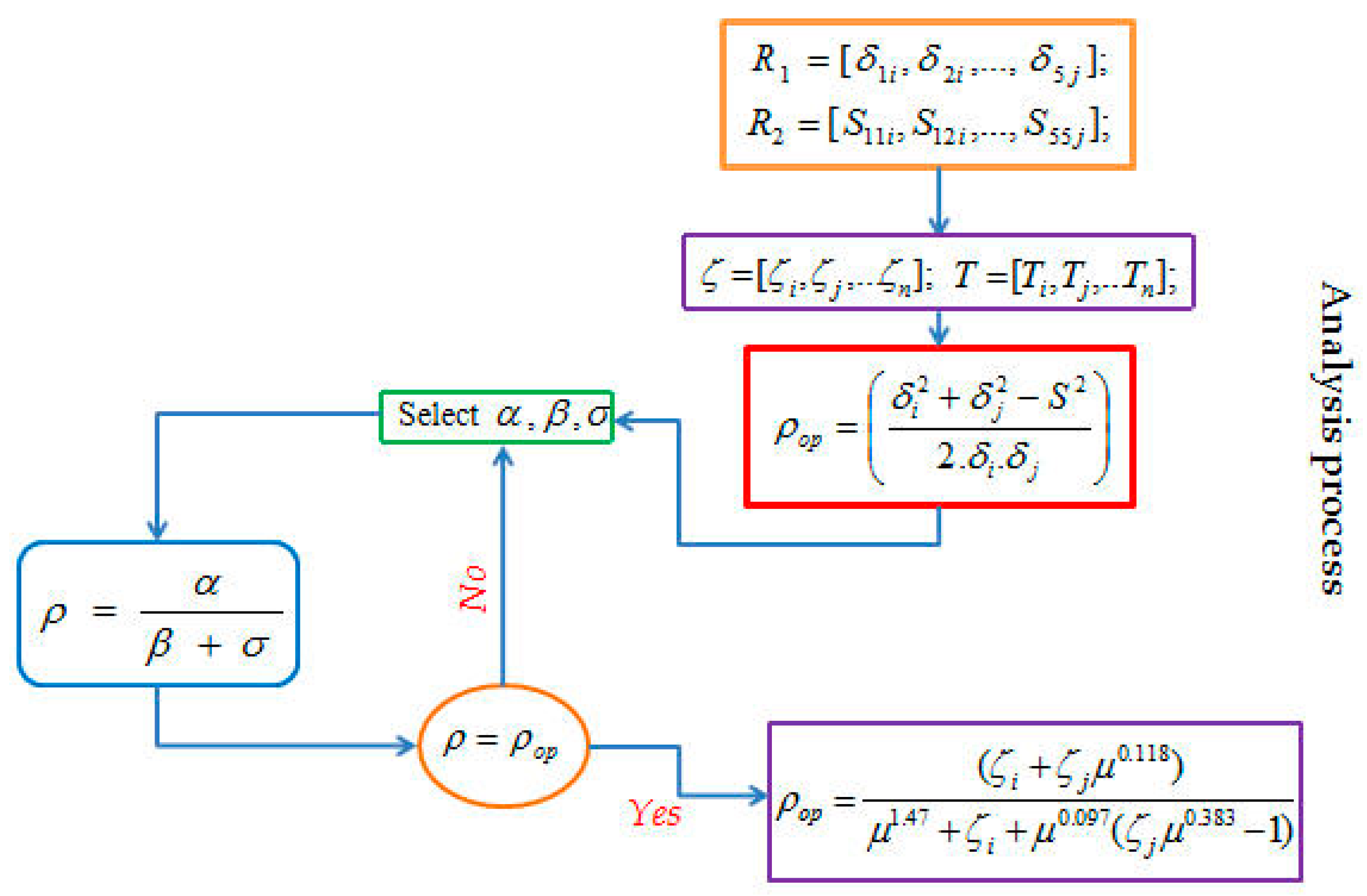
In the second stage, by using the CRVK program, all the required separation distances between two adjacent buildings were listed and the trend to predict the optimum separation distance was created. The lowest values of the distance, which prevent collisions of different models under various earthquakes (see Table 5), were used as inputs. Based on all inputs and the estimated trend of the solution, the effective equation to calculate the gap size index was determined using the process described in detail in Figure 4. It should be added that α, β and σ shown in the figure are the parameters of the iterative process which are considered by the CRVK program during the analysis.
Figure 4.
Analysis process of the schematic architecture of the CRVK program model.
The obtained formula for the gap size index, ρop, has the following form:
where is a relation between vibration periods of adjacent buildings, as defined by the formula , and and denote the damping ratios of structures. It should be underlined that the gap size index, ρop, expressed by Equation (10) depends only on the dynamic properties of adjacent structures and it is independent from the seismic excitation used in the analysis. In addition, Equation (10), as proposed by the authors in the present paper, shows the originality of the treatment described herein. It should also be mentioned that the error margins for the exponents in Equation (10) have been reduced to minimum due to the application of the process described in Figure 4.
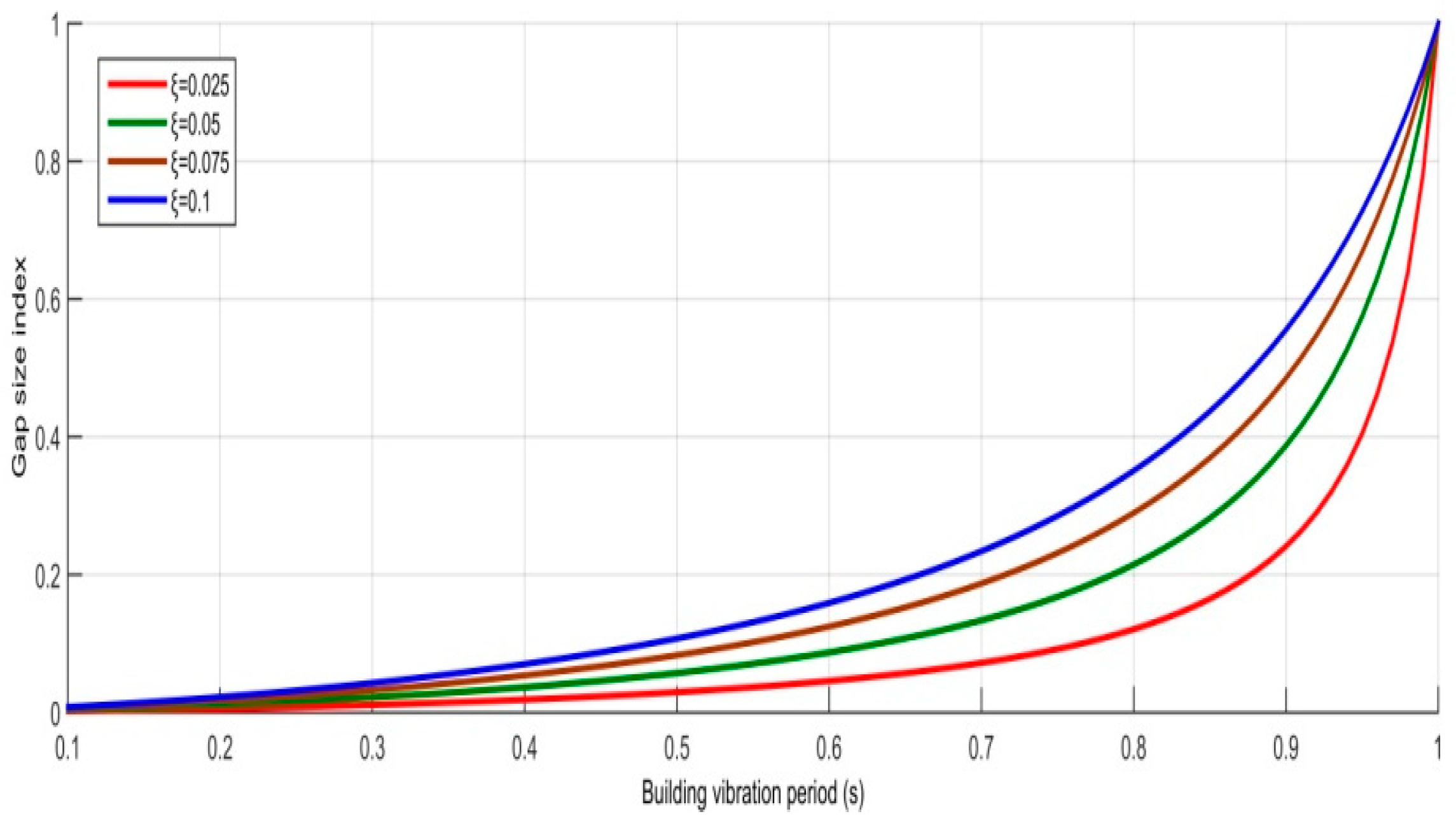
An example of the limitation of the gap size index with different damping ratios for Tj = 1 s, calculated using Equation (10), is presented in Figure 5.
Figure 5.
The limitation of the gap size index with different damping ratios for Tj = 1 s.
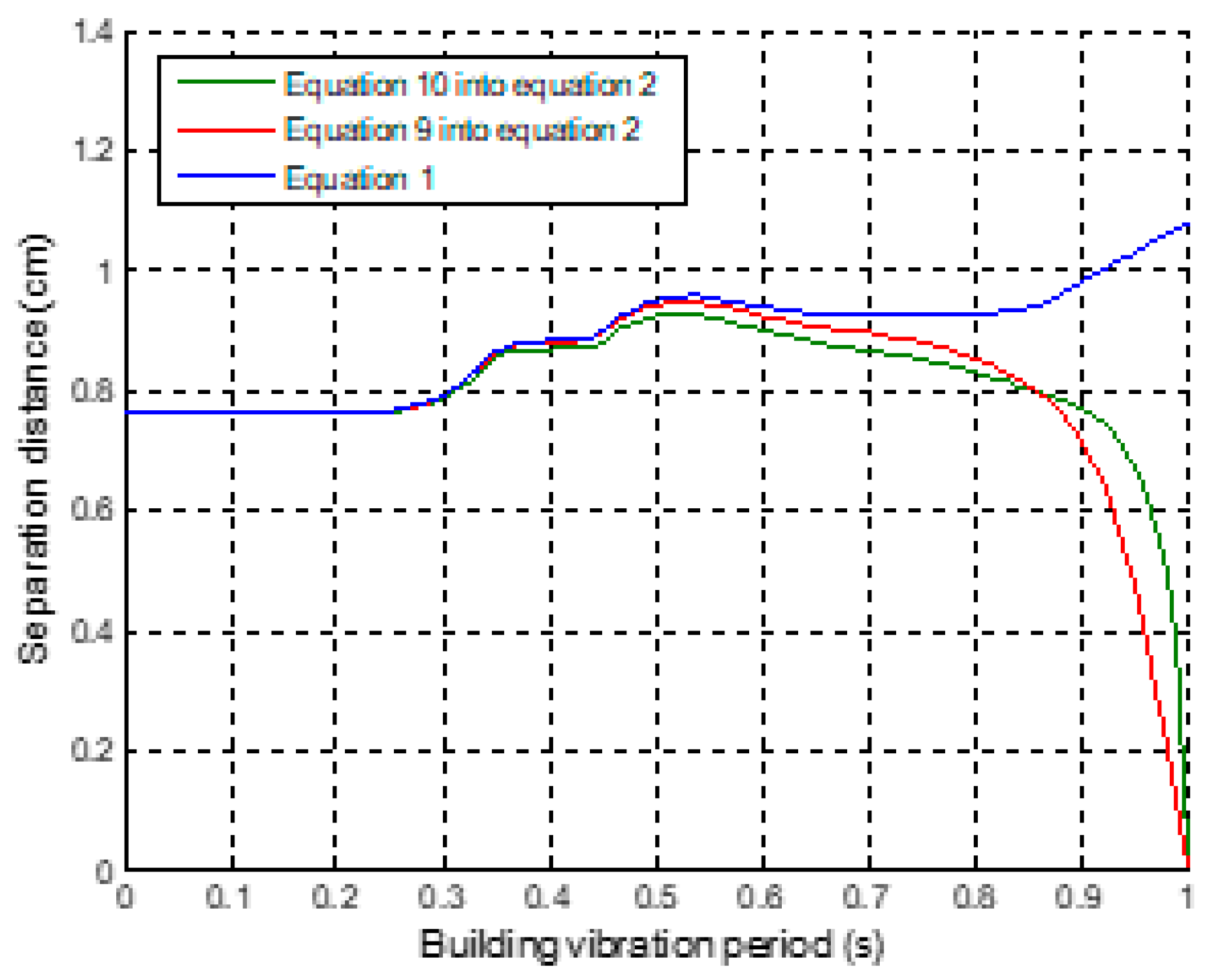
After substituting Equation (9) or Equation (10) into Equation (2), the formula for the separation distance between adjacent buildings preventing their pounding during a specified ground motion is obtained. The comparison between the separation distance based on Equation (1) and on two variants of Equation (2), calculated for the Kobe earthquake for Tj = 1 s and different values of Ti, is shown in Figure 6. It can clearly be seen from the figure that all three formulas are quite accurate when both buildings have different (substantially different) natural vibration periods. On the other hand, when two structures have natural periods close to one another, Equation (1) shows substantially different results. In particular, for the case when Ti = Tj, the separation distance calculated by Equation (1) is equal to 1.08 cm, whereas the correct value equal to zero is obtained for both formulas based on Equation (2).
Figure 6.
Comparison of the separation distance between two adjacent buildings by using three equations for Tj = 1 s and different values of Ti.
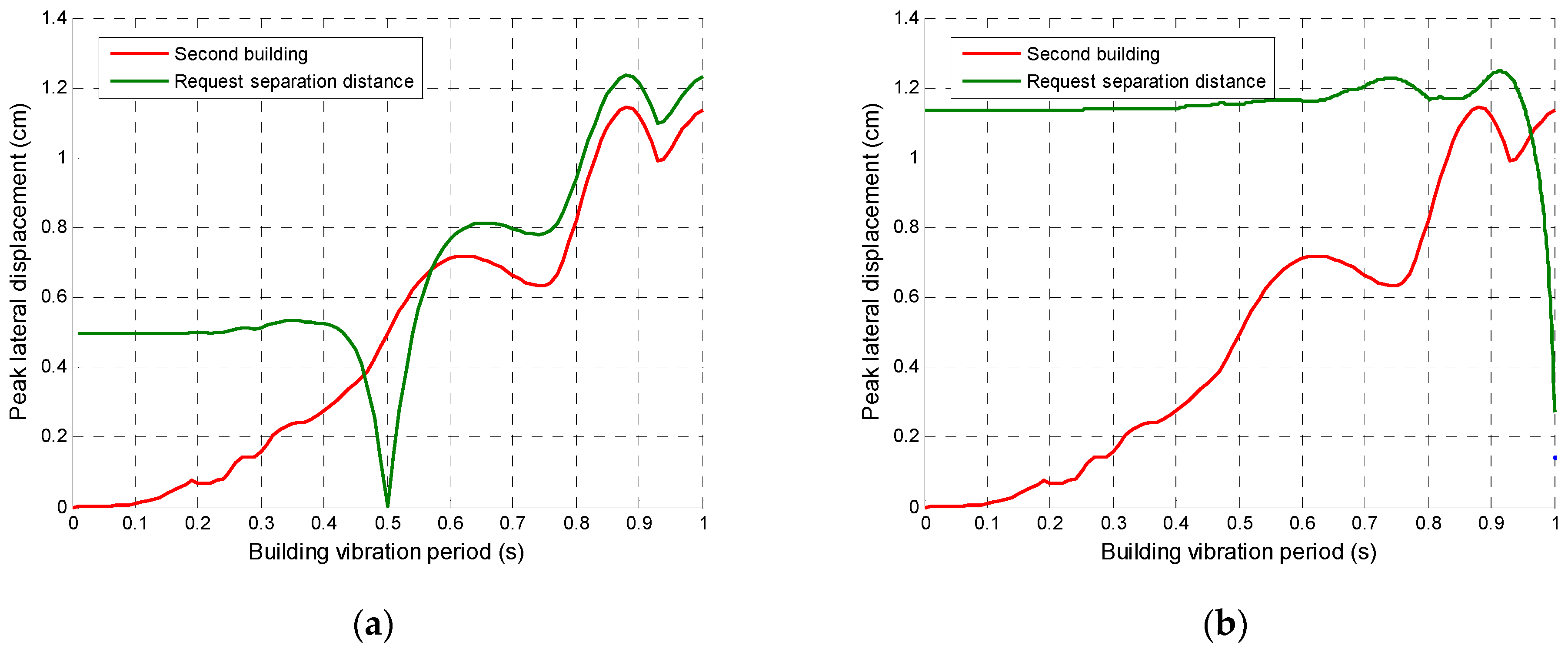
Further analysis was conducted for the case when Tj = 1 s and Tj = 0.5 s, while different values of Ti were applied, by using Equation (2) together with Equation (10), to calculate the required separation distance between adjacent buildings exposed to different earthquakes. The representative results obtained for the Parkfield earthquake are shown in Figure 7 in the form of the peak lateral displacement (red line) and the required separation distance between two adjacent buildings (green line) as a function of Ti. These results confirm the expected zero gap size value in the case when both buildings have identical natural vibration periods.
Figure 7.
The peak lateral displacement (red line) and the required separation distance between two adjacent buildings (green line) for: (a) Tj = 0.5 s, (b) Tj = 1 s and different values of Ti.
6. Investigation on the Accuracy of Proposed Formula
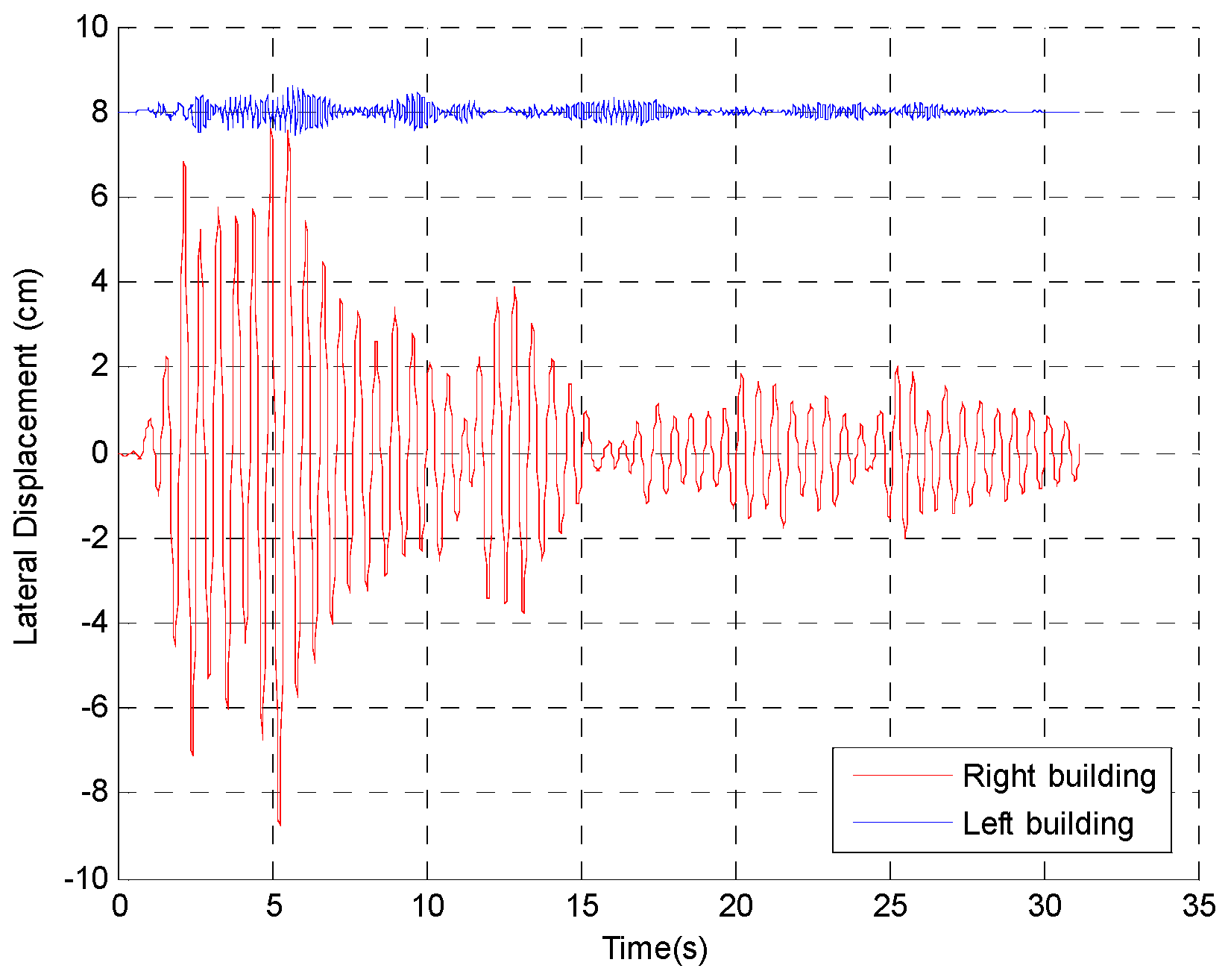
In order to investigate the accuracy of the proposed formula for the gap size index, ρop, defined in Equation (10), four different configurations were considered. In the case of the first one, two specific models of three-story buildings were analyzed: one with a lumped mass, stiffness and damping ratio of each story equal to 7500 kg, 4.65106 N/m and 0.05, respectively; the second one with a lumped mass, stiffness and damping ratio of each story equal to 15,700 kg, 1.2108 N/m and 0.05, respectively. Vibration periods of buildings were calculated as equal to 0.56 and 0.16 s, for the first and second models, respectively. Both structures have been exposed to different ground motions; however, the most representative results obtained for the El Centro earthquake excitation are shown herein. The maximum lateral displacement under this earthquake was determined as equal to 7.96 cm for the first model and 0.6 cm for the second model. The separation distance was calculated using Equations (2) and (10) as equal to 7.98 cm. The top story displacement time histories, separated by this gap size, are shown in Figure 8. It can be seen from the figure that the structures do not collide during the whole time of the seismic excitation.
Figure 8.
The lateral displacement time histories of buildings separated by the seismic gap of 7.98 cm.
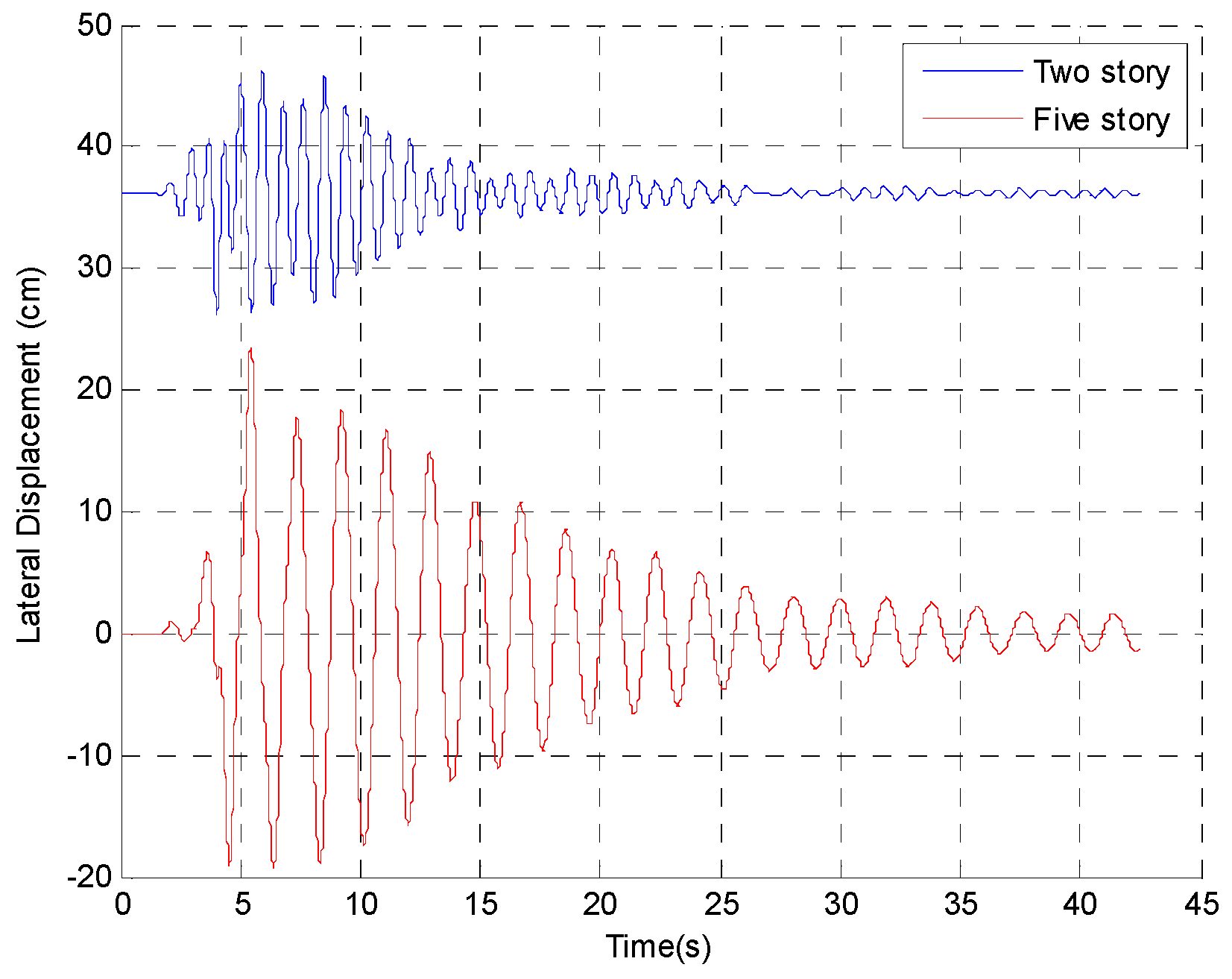
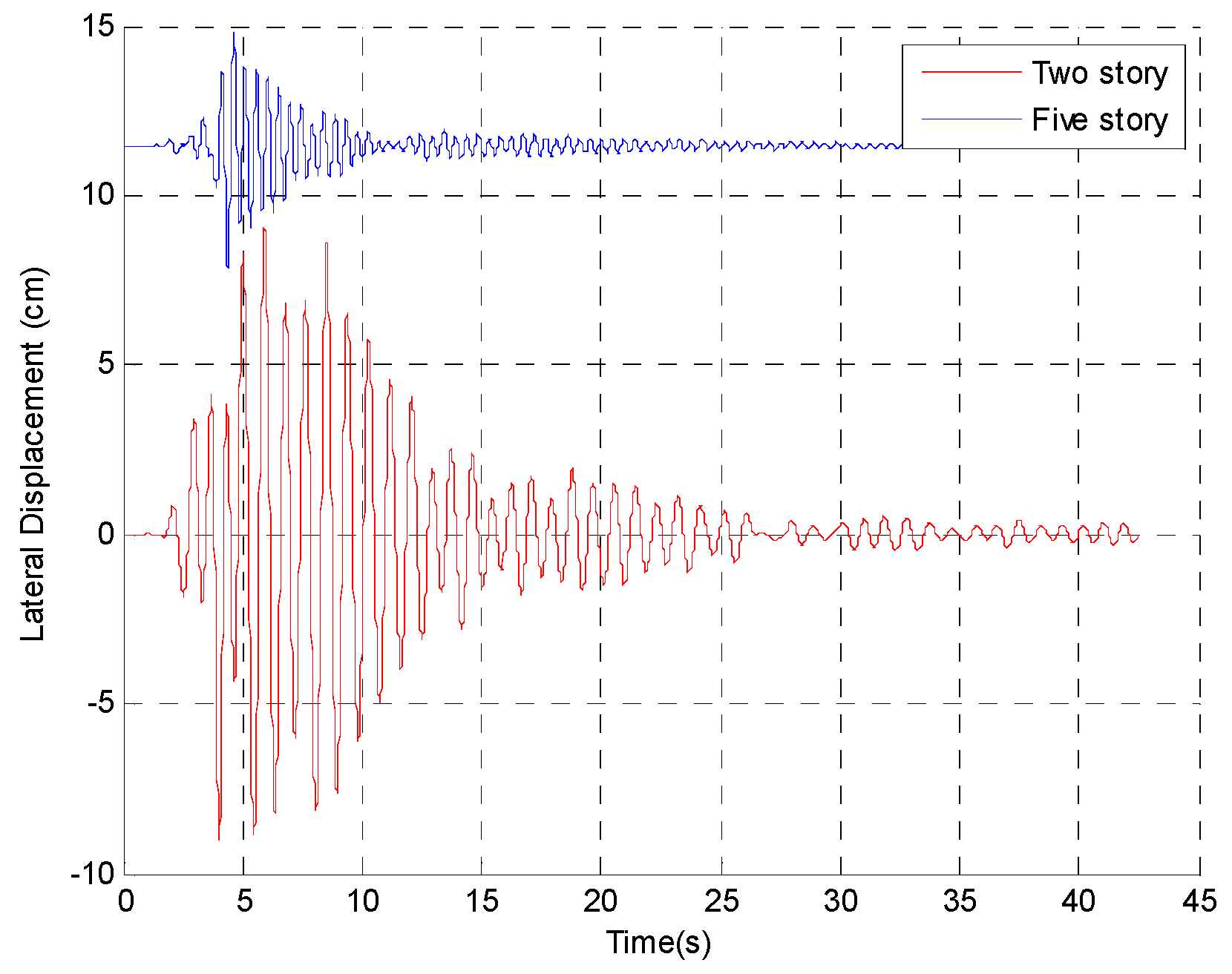
Then, a five-story building was considered to be located next to another two-story structure. Both models were analyzed for two different scenarios so as to verify the accuracy of the proposed Equation (10). Firstly, it was assumed that the properties of each story of both buildings are the same. The lumped mass, stiffness and damping ratio of all stories for both models were defined as equal to 25,000 kg, 3.46 × 10⁶ N/m and 0.05, respectively. The building vibration period was determined as equal to 0.86 s for the two-story model and 1.87 s for the five-story structure. Both structures have been exposed to different ground motions; however, the most representative results obtained for the Parkfield earthquake excitation are shown herein. The maximum lateral displacement under this earthquake was determined as equal to 9.17 cm for the two-story building and 23.45 cm for the five-story structure. The required separation distance was calculated using Equations (2) and (10) as equal to 36.14 cm. The story displacement time histories at the level of the second story, separated by this gap size, are shown in Figure 9. As it can be seen from the figure, an acceptable safety separation distance is provided between the two buildings analyzed.
Figure 9.
The lateral displacement time histories of buildings separated by the seismic gap of 36.14 cm.
The third stage of the investigation was focused on adjacent two-story and five-story buildings with substantially different values of the story mass and stiffness. The following structural properties were considered:
where , and are the lumped mass, stiffness and damping ratio of the i-th story of a j-story building, respectively, whereas denotes the natural vibration period of a j-story structure. The maximum lateral displacement under the Parkfield earthquake was determined as equal to 9.17 cm for the two-story building and 7.08 cm for the five-story structure. The required separation distance was calculated using Equations (2) and (10) as equal to 11.47 cm. The story displacement time histories at the level of the second story, separated by this gap size, are shown in Figure 10. It can be seen from the figure that the structures do not collide during the whole time of the seismic excitation.
Figure 10.
The lateral displacement time histories of two buildings separated by the seismic gap equal to 11.47 cm.
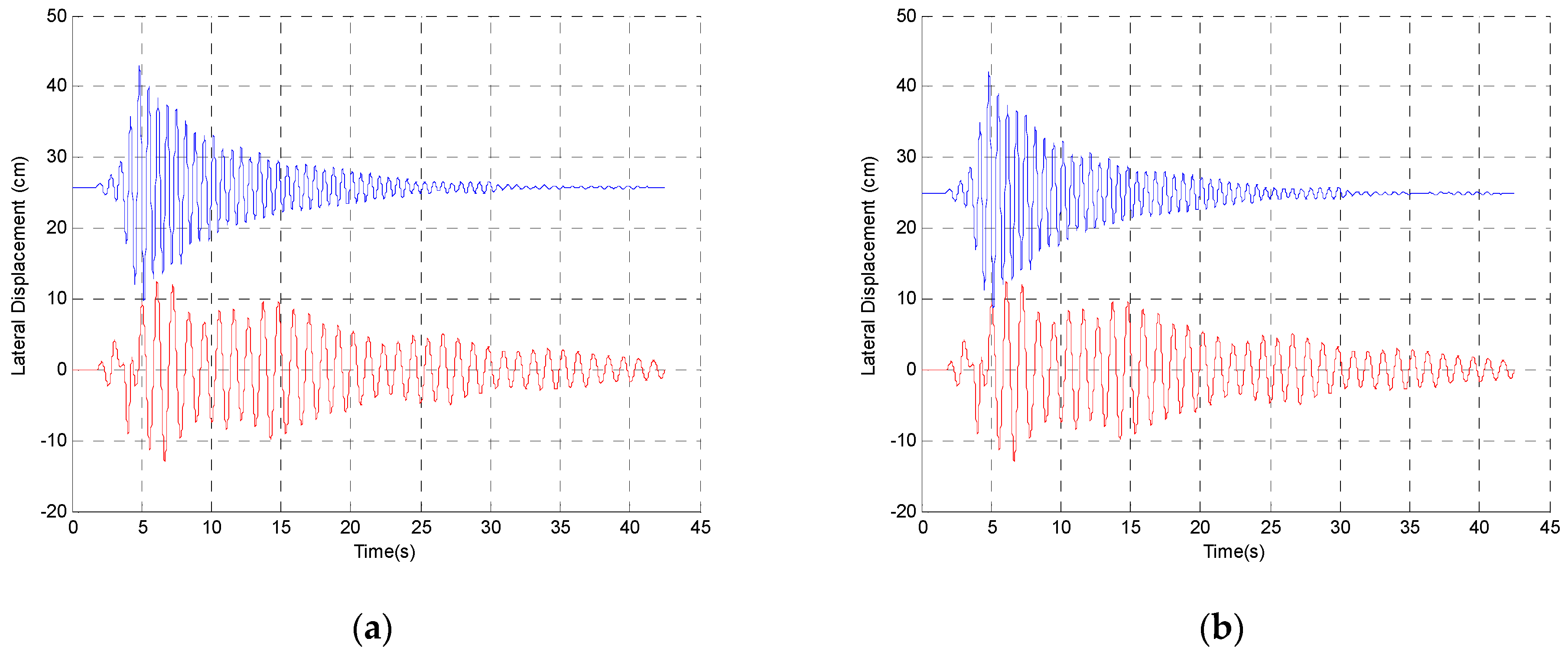
In the final analysis, in order to compare the obtained results by using Equations (9) and (10), two five-story models of buildings with different properties were studied: one with a lumped mass, stiffness and damping ratio of each story equal to 6000 kg, 6.7 × 10⁶ N/m and 0.05, respectively; the second one with a lumped mass, stiffness and damping ratio of each story equal to 9700 kg, 4.1 × 10⁶ N/m and 0.05, respectively. Vibration periods of buildings were calculated as equal to 0.66 and 1.073 s, for the first and second models, respectively. Both structures have been exposed to different ground motions; however, the most representative results obtained for the Parkfield earthquake excitation are shown herein. The maximum lateral displacement under this earthquake was determined as equal to 20.18 cm for the first model and 14.73 cm for the second model. The separation distance was calculated using Equations (2) and (9) as equal to 24.75 cm, while the separation distance of 23.85 cm was obtained based on Equations (2) and (10). The top story displacement time histories, separated by these gap sizes, are shown in Figure 11. It can be seen from the figure that the application of Equation (10) resulted in a smaller separation distance; however, it is still large enough to prevent earthquake-induced structural pounding.
Figure 11.
The lateral displacement time histories of buildings separated by the seismic gap, calculated by using Equation (2) and (a) Equation (9) or (b) Equation (10).
7. Conclusions
In this paper, an effective equation for calculating the gap size index was proposed so as to provide the optimum separation distance between two adjacent buildings preventing their pounding during different earthquakes. Evaluation of the best prediction of the required in-between gap size was carried out by using the lumped mass multi-degrees of freedom models of structures.
Firstly, different models of buildings with various properties were analyzed using the CRVK program so as to calculate the top story maximum lateral displacement under different earthquakes. Then, Equation (1) was used to calculate the required separation distance between two models. The results of the study clearly show that Equation (1) may substantially overestimate the in-between gap size in some cases, since it does not take into account the relation between vibration periods of adjacent buildings.
In the next stage of the investigation, the evaluation of the best prediction of the required separation distance between two adjacent buildings during ground motions was carried out. Numerical analysis was conducted for five different models of structures. As the result of this analysis, the required separation distance for each configuration was determined under different ground motions.
Then, the required distance between models was selected as output and all gap separations were graphically depicted so as to find a trend for estimating the safe separation distance. A new equation to calculate the gap size index (based on vibration periods and damping ratios of buildings) was suggested by the authors in Equation (10). In order to verify the accuracy of the proposed original formula, several different configurations were considered. The models of two-, three- and five-story buildings with substantially different values of story mass and stiffness were analyzed under different ground motions. The results of the study clearly show that the proposed formula for the gap size index is effective and it allows us to calculate the optimum separation between adjacent structures preventing their pounding during different earthquakes.
Author Contributions
Conceptualization, S.M.K., H.N. and S.M.N.R.; methodology, S.M.K., H.N., S.M.N.R., A.M., N.L. and R.J.; software, S.M.K. and S.M.N.R.; validation, S.M.K., H.N., S.M.N.R., A.M., N.L. and R.J.; formal analysis, S.M.K. and S.M.N.R.; investigation, S.M.K. and S.M.N.R.; writing—original draft preparation, S.M.K., H.N., S.M.N.R. and A.M.; writing—review and editing, N.L. and R.J. All authors have read and agreed to the published version of the manuscript.
Funding
This research received no external funding.
Institutional Review Board Statement
Not applicable.
Informed Consent Statement
Not applicable.
Data Availability Statement
Data is contained within the article.
Conflicts of Interest
The authors declare no conflict of interest.
References
- Chopra, A.K. Dynamics of Structures: Theory and Applications to Earthquake Engineering; Prentice Hall: Upper Saddle, NJ, USA, 1995. [Google Scholar]
- Naderpour, H.; Naji, N.; Burkacki, D.; Jankowski, R. Seismic response of high-rise buildings equipped with base isolation and non-traditional tuned mass dampers. Appl. Sci. 2019, 9, 1201. [Google Scholar] [CrossRef]
- Jaroszewicz, L.R.; Kurzych, A.; Krajewski, Z.; Marć, P.; Kowalski, J.K.; Bobra, P.; Zembaty, Z.; Sakowicz, B.; Jankowski, R. Review of the usefulness of various rotational seismometers with laboratory results of fibre-optic ones tested for engineering applications. Sensors 2016, 16, 2161. [Google Scholar] [CrossRef] [PubMed]
- Chen, W.F.; Scawthorn, C. Earthquake Engineering Handbook; CRC Press: Boca Raton, FL, USA, 2003. [Google Scholar]
- Anagnostopoulos, S.A. Pounding of building in series during earthquakes. Earthq. Eng. Struct. Dyn. 1988, 16, 443–456. [Google Scholar] [CrossRef]
- Miari, M.; Choong, K.K.; Jankowski, R. Seismic pounding between adjacent buildings: Identification of parameters, soil interaction issues and mitigation measures. Soil Dyn. Earthq. Eng. 2019, 121, 135–150. [Google Scholar] [CrossRef]
- Liu, C.; Fang, D.; Zhao, L. Reflection on earthquake damage of buildings in 2015 Nepal earthquake and seismic measures for post-earthquake reconstruction. Structures 2021, 30, 647–658. [Google Scholar] [CrossRef]
- Polycarpou, P.C.; Komodromos, P. Numerical investigation of potential mitigation measures for pounding of seismically isolated building. Earthq. Struct. 2011, 2, 1–24. [Google Scholar] [CrossRef]
- Jankowski, R. Impact force spectrum for damage assessment of earthquake-induced structural pounding. Key Eng. Mater. 2005, 293–294, 711–718. [Google Scholar] [CrossRef]
- Favvata, M.J. Minimum required separation gap for adjacent RC frames with potential inter-story seismic pounding. Eng. Struct. 2017, 152, 643–659. [Google Scholar] [CrossRef]
- Jankowski, R. Pounding between superstructure segments in multi-supported elevated bridge with three-span continuous deck under 3D non-uniform earthquake excitation. J. Earthq. Tsunami 2015, 9, 1550012. [Google Scholar] [CrossRef]
- Rezaei, H.; Moayyedi, S.A.; Jankowski, R. Probabilistic seismic assessment of RC box-girder highway bridges with unequal-height piers subjected to earthquake-induced pounding. Bull. Earthq. Eng. 2020, 18, 1547–1578. [Google Scholar] [CrossRef]
- Liu, C.Q.; Yang, W.; Yan, Z.X.; Lu, Z.; Luo, N. Base pounding model and response analysis of base-isolated structures under earthquake excitation. Appl. Sci. 2017, 7, 1238. [Google Scholar] [CrossRef]
- Rosenblueth, E.; Meli, R. The 1985 Mexico earthquake. Concr. Int. 1986, 8, 23–34. [Google Scholar]
- Kasai, K.; Maison, B.F. Building pounding damage during the 1989 Loma Prieta earthquake. Eng. Struct. 1997, 19, 195–207. [Google Scholar] [CrossRef]
- Migda, W.; Szczepański, M.; Lasowicz, N.; Jakubczyk-Gałczyńska, A.; Jankowski, R. Non-linear analysis of inter-story pounding between wood-framed buildings during ground motion. Geosciences 2019, 9, 488. [Google Scholar] [CrossRef]
- Zhao, N.; Lu, C.W.; Chen, M.Y.; Luo, N.; Liu, C.Q. Parametric study of pounding tuned mass damper based on experiment of vibration control of a traffic signal structure. J. Aerosp. Eng. 2018, 31, 04018108. [Google Scholar] [CrossRef]
- Liu, C.; Fang, D. Robustness analysis of vertical resistance to progressive collapse of diagrid structures in tall buildings. Struct. Des. Tall Spec. Build. 2020, 29, e1775. [Google Scholar] [CrossRef]
- Lasowicz, N.; Kwiecień, A.; Jankowski, R. Experimental study on the effectiveness of polyurethane flexible adhesive in reduction of structural vibrations. Polymers 2020, 12, 2364. [Google Scholar] [CrossRef] [PubMed]
- Kwiecień, A.; Gams, M.; Rousakis, T.; Viskovic, A.; Korelc, J. Validation of a new hyperviscoelastic model for deformable polymers used for joints between RC frames and masonry infills. Eng. Trans. 2017, 65, 113–121. [Google Scholar]
- Falborski, T.; Jankowski, R. Polymeric bearings—A new base isolation system to reduce structural damage during earthquakes. Key Eng. Mater. 2013, 569–570, 143–150. [Google Scholar] [CrossRef]
- Jia, H.Y.; Lan, X.L.; Zheng, S.X.; Li, L.P.; Liu, C.Q. Assessment on required separation length between adjacent bridge segments to avoid pounding. Soil Dyn. Earthq. Eng. 2019, 120, 398–407. [Google Scholar] [CrossRef]
- Naderpour, H.; Barros, R.C.; Khatami, S.M. Suggestion of an equation of motion to calculate the damping ratio during earthquake based on a cyclic procedure. J. Theor. Appl. Mech. 2016, 54, 963–973. [Google Scholar] [CrossRef][Green Version]
- Naderpour, H.; Barros, R.; Khatami, S.M.; Jankowski, R. Numerical study on pounding between two adjacent buildings under earthquake excitation. Shock Vib. 2016, 1504783. [Google Scholar] [CrossRef]
- Lopez-Garcia, D. Separation between adjacent non-linear structures for prevention of seismic pounding. In Proceedings of the 13th World Conference on Earthquake Engineering, Vancouver, BC, Canada, 1–6 August 2004. [Google Scholar]
- Lopez-Garcia, D.; Soong, T.T. Evaluation of current criteria in predicting the separation necessary to prevent seismic pounding between nonlinear hysteretic structural systems. Eng. Struct. 2009, 31, 1217–1229. [Google Scholar] [CrossRef]
- Kiureghian, A.D. A response spectrum method for random vibration analysis of MDF systems. Earthq. Eng. Struct. Dyn. 1981, 9, 419–435. [Google Scholar] [CrossRef]
- Jeng, V.; Kasai, K.; Maison, B.F. A Spectral difference method to estimate building separations to avoid pounding. Earthq. Spectra 1992, 8, 201–223. [Google Scholar] [CrossRef]
- Filiatrault, A.; Wagner, P.; Cherry, S. Analytical prediction of experimental building pounding. Earthq. Eng. Struct. Dyn. 1995, 24, 1131–1154. [Google Scholar] [CrossRef]
- Penzien, J. Evaluation of building separation distance required to prevent pounding during strong earthquakes. Earthq. Eng. Struct. Dyn. 1997, 26, 849–858. [Google Scholar] [CrossRef]
- Rahman, A.M.; Carr, A.J.; Moss, P.J. Structural pounding of adjacent multi-storey structures considering soil flexibility effects. In Proceedings of the 12th World Conference on Earthquake Engineering, Auckland, New Zealand, 30 January–4 February 2000. [Google Scholar]
- Eurocode 8: Design of Structures for Earthquake Resistance; European Committee for Standardization: Brussels, Belgium, 2003.
- Naderpour, H.; Barros, R.C.; Khatami, S.M. A new model for calculating the impact force and the energy dissipation based on CR-factor and impact velocity. Sci. Iran. 2015, 22, 59–68. [Google Scholar]
- Kiureghian, A.D. Structural response to stationary excitation. J. Eng. Mech. Div. 1980, 106, 1195–1213. [Google Scholar] [CrossRef]
Publisher’s Note: MDPI stays neutral with regard to jurisdictional claims in published maps and institutional affiliations. |
© 2021 by the authors. Licensee MDPI, Basel, Switzerland. This article is an open access article distributed under the terms and conditions of the Creative Commons Attribution (CC BY) license (http://creativecommons.org/licenses/by/4.0/).