Article

Dynamic Stall Characteristics of the Bionic Airfoil with Different Waviness Ratios
School of Energy and Power Engineering, Xi’an Jiao Tong University, Xian Ning West Road, Xi’an 710049, China
*
Author to whom correspondence should be addressed.
Appl. Sci. 2021, 11(21), 9943; https://doi.org/10.3390/app11219943
Submission received: 2 September 2021 / Revised: 1 October 2021 / Accepted: 20 October 2021 / Published: 25 October 2021

Abstract

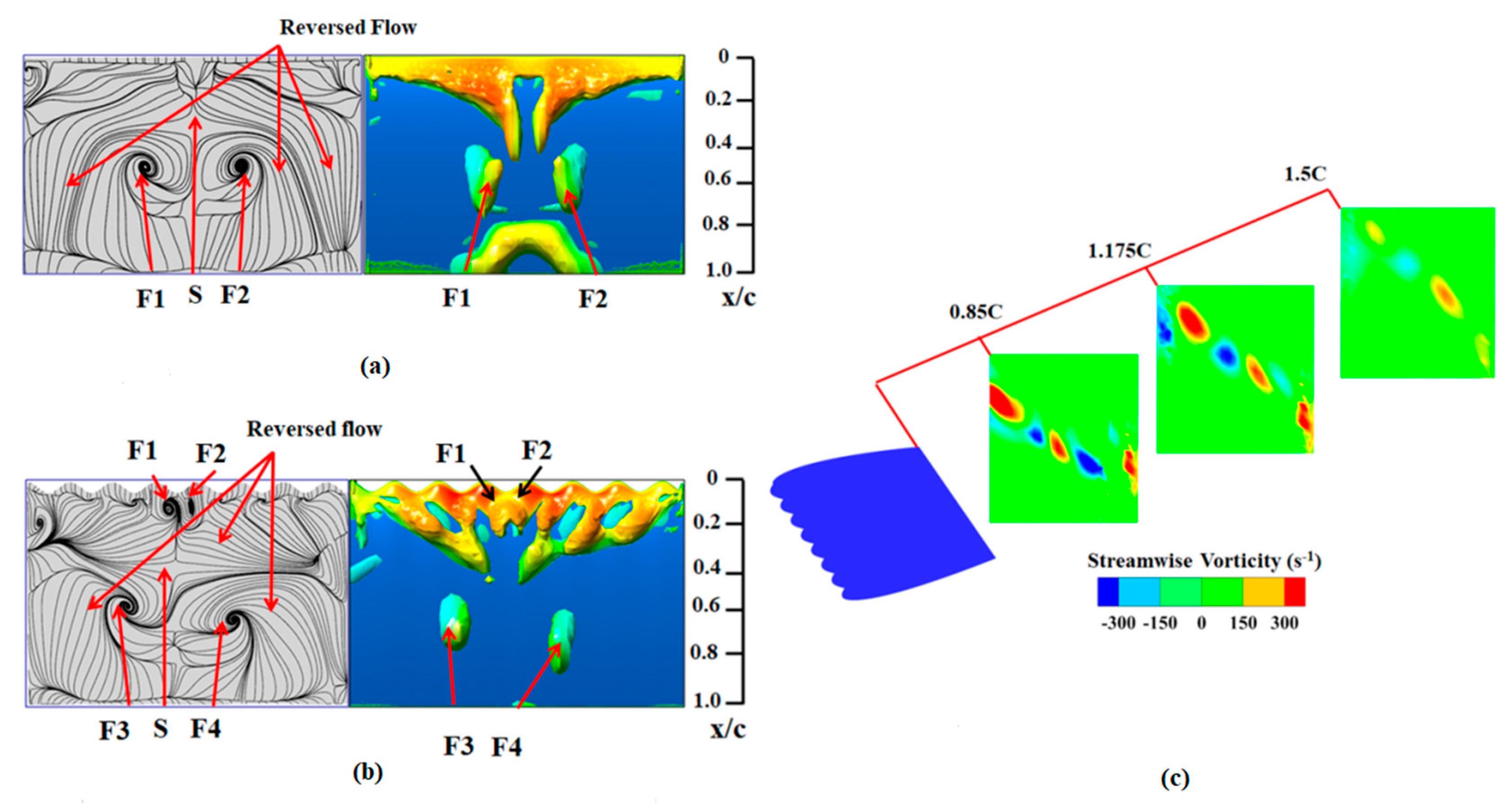
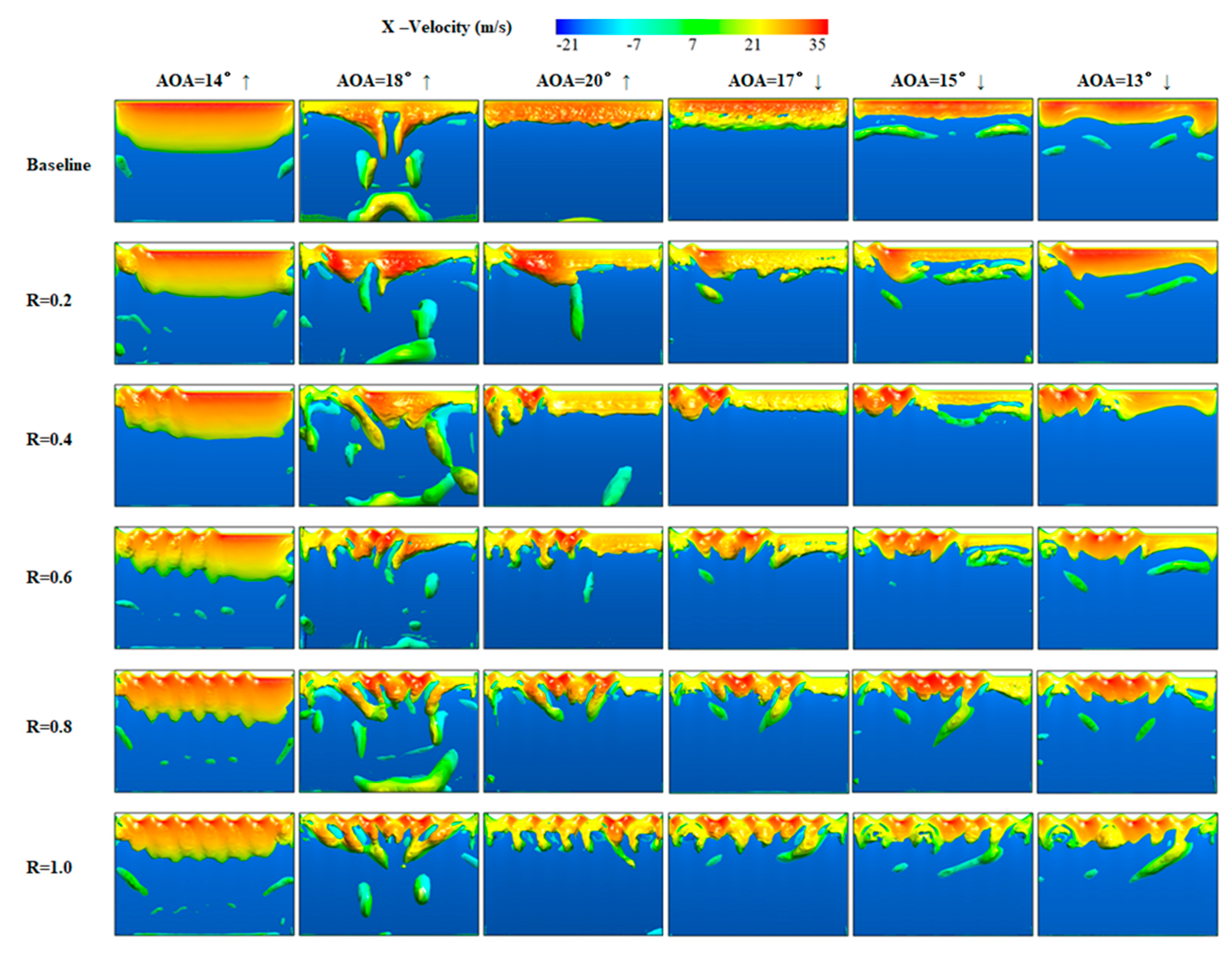
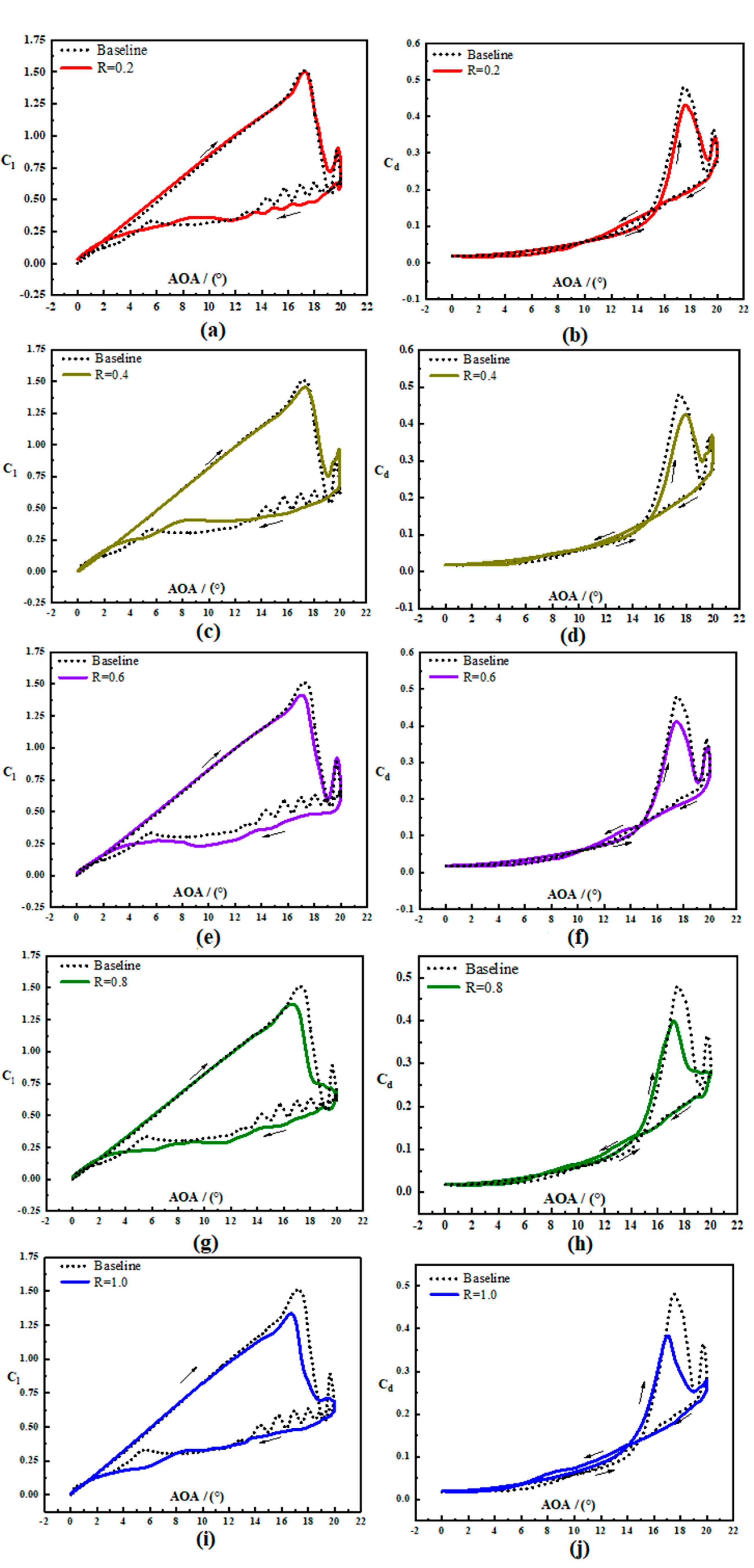
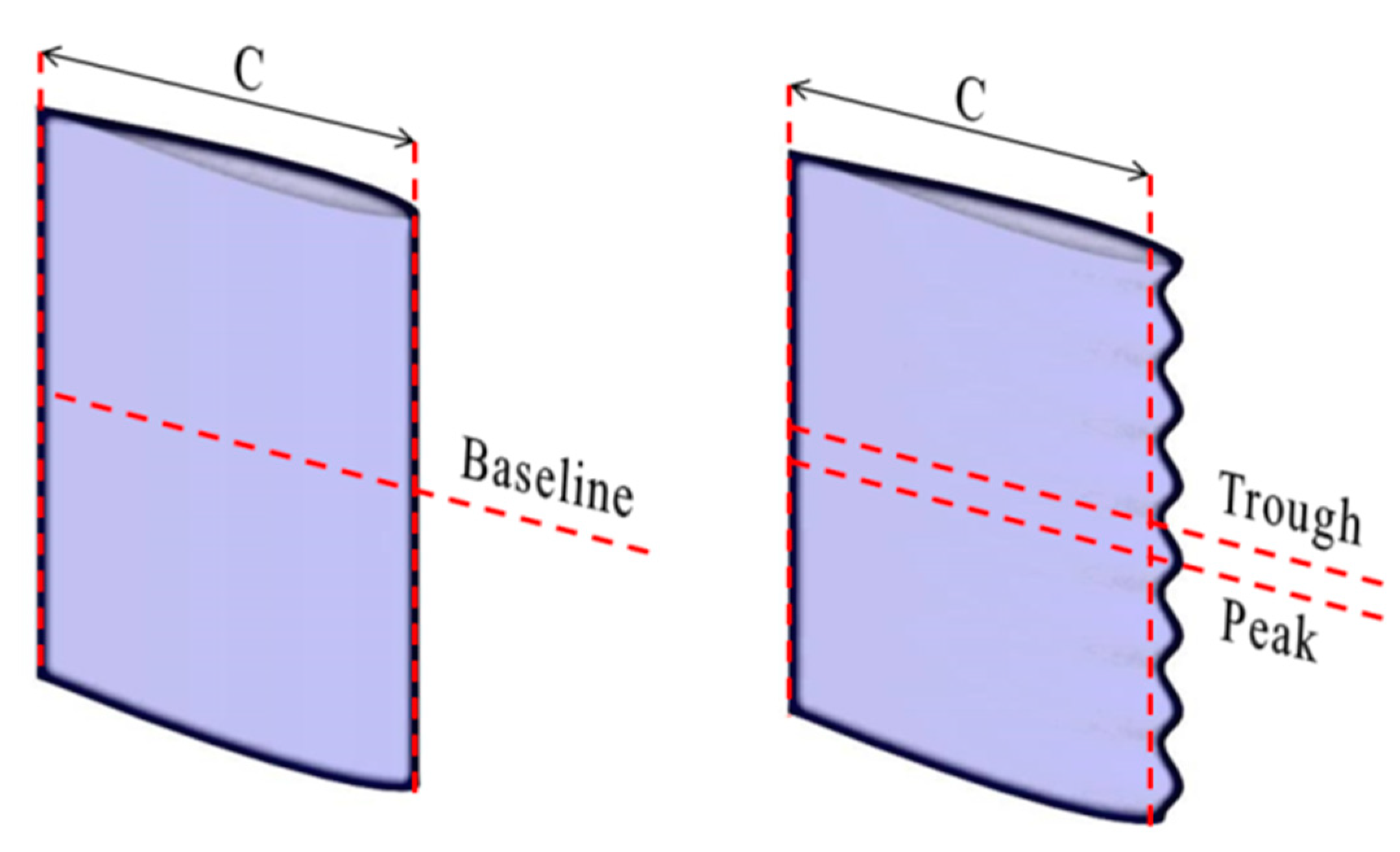
A dynamic stall will cause dramatic changes in the aerodynamic performance of the blade, resulting in a sharp increase in the blade vibration load. The bionic leading-edge airfoil with different waviness ratios, inspired by the humpback whales flipper, is adopted to solve this problem. In this study, based on the NACA0015 airfoil, the three-dimensional unsteady numerical simulation and sliding mesh technique are used to reveal the flow control mechanism on the dynamic stall of the bionic wavy leading edge. The effects of the waviness ratio on the dynamic stall characteristics of the airfoil are also investigated. The results show that the peak drag coefficient is dramatically reduced when a sinusoidal leading edge is applied to the airfoil. Although the peak lift coefficient is also reduced, the reduction is much smaller. When the waviness ratio R is 0.8, the peak drag coefficient of the airfoil is reduced by 17.14% and the peak lift coefficient of the airfoil is reduced by 9.20%. The dynamic hysteresis effect is improved gradually with an increasing waviness ratio. For the bionic airfoil with R = 1.0, the area of the hysteresis loop is the smallest.
Keywords: airfoil; bionic structure; stall characteristics; aerodynamic performance; flow control; numerical simulation airfoil; bionic structure; stall characteristics; aerodynamic performance; flow control; numerical simulation