Article

Reliability-Based Design of Driven Piles Considering Setup Effects
1
School of Civil Engineering and Architecture, Wuhan Institute of Technology, Wuhan 430074, China
2
College of Civil Engineering and Architecture, Henan University of Technology, Zhengzhou 450001, China
*
Author to whom correspondence should be addressed.
Appl. Sci. 2021, 11(18), 8609; https://doi.org/10.3390/app11188609
Submission received: 20 August 2021 / Revised: 9 September 2021 / Accepted: 14 September 2021 / Published: 16 September 2021
(This article belongs to the Special Issue Mathematical Model and Computation in Geotechnical Engineering)

Abstract

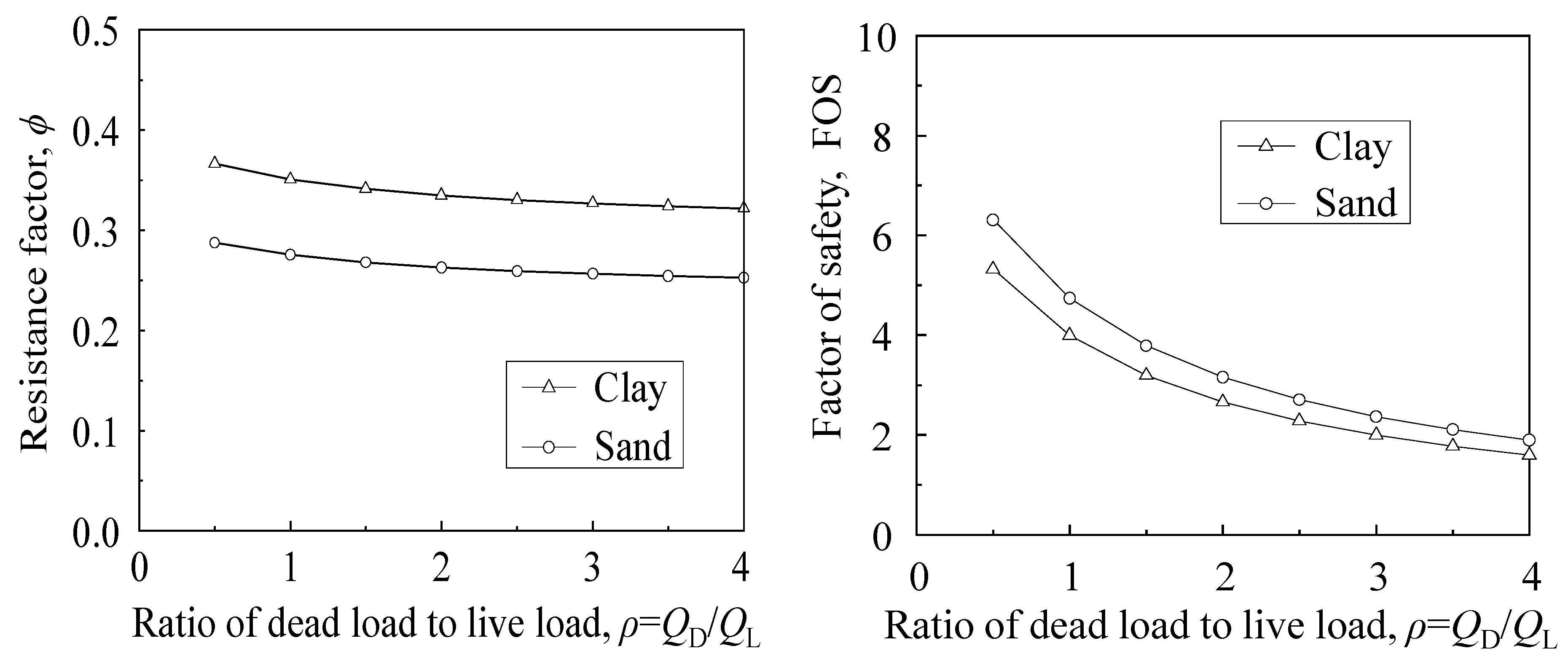
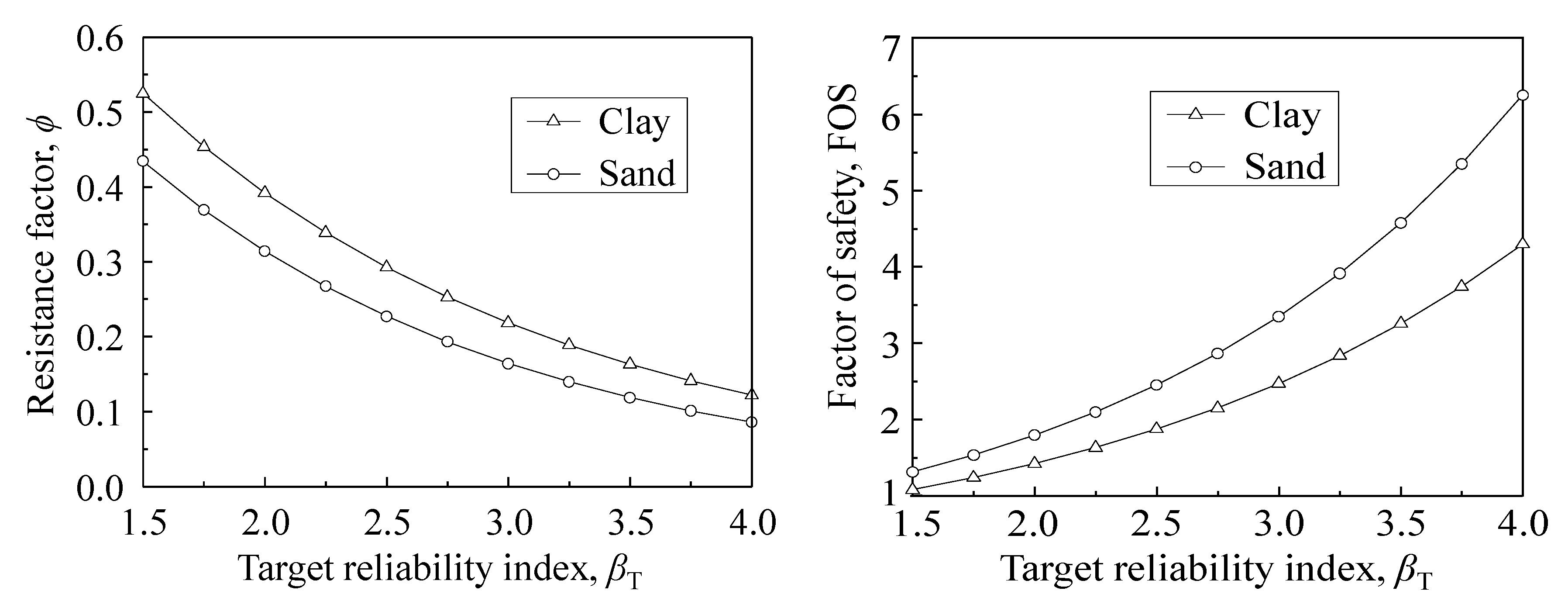
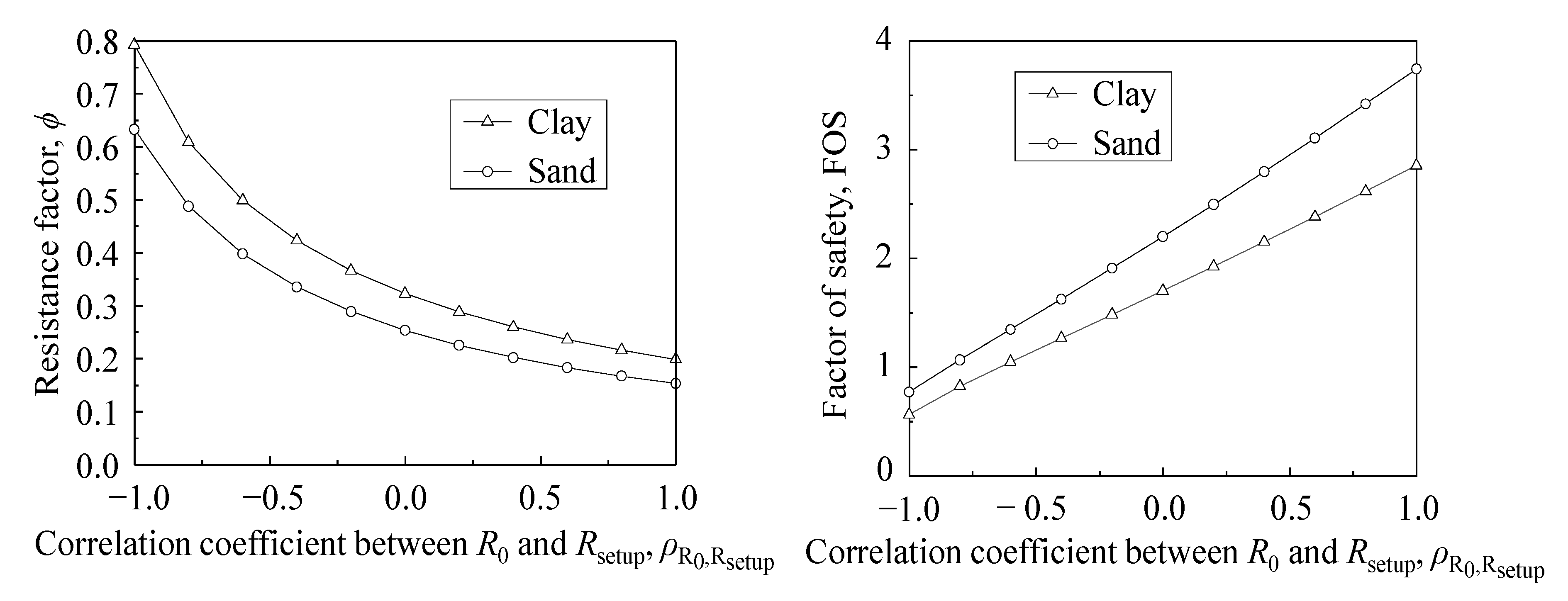
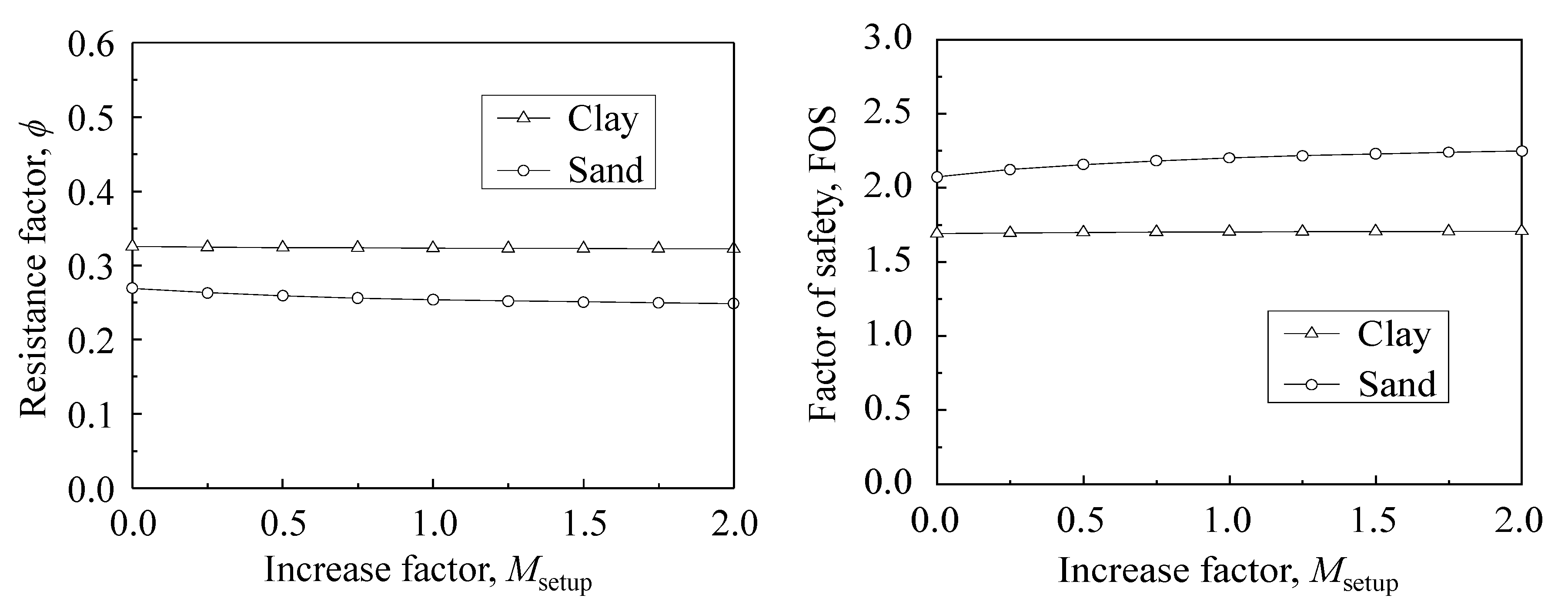
The total ultimate resistance (or bearing capacity) of driven piles considering setup effects is composed of initial ultimate resistance and setup resistance, and the setup effects of driven piles are mainly reflected by the setup resistance. In literature, a logarithmic empirical formula is generally used to quantify the setup effects of driven piles. This paper proposes an increase factor (Msetup) to modify the resistance factor and factor of safety calculation formula in accordance with the load and resistance factor design (LFRD) principle; here, the increase factor is defined as the ratio of the setup resistance (Rsetup) to the initial ultimate resistance (R0) of driven piles. Meanwhile, the correlation between R0 and Rsetup is fully considered in the resistance factor and factor of safety calculation. Finally, the influence of four key parameters (ratio of dead load to live load ρ = QD/QL, target reliability index βT, Msetup, correlation coefficient between R0 and Rsetup, ρR0,Rsetup) on the resistance factor and factor of safety are analyzed. Parametric research shows that ρ has basically no effect on the resistance factor, which can be taken as a constant in further research, and ρ has a significant influence on the factor of safety. The value of Msetup has almost no effect on the resistance factor and factor of safety. However, βT and ρR0,Rsetup have a significant influence on the resistance factor and factor of safety, so the value selection of βT and ρR0,Rsetup are crucial for reliability-based design of driven piles. Through this study, it is concluded that considering setup effects in reliability-based design of driven piles will greatly improve the prediction for design capacity.
Keywords: driven piles; reliability-based design; setup effects; load and resistance factor design (LRFD); resistance factor; factor of safety driven piles; reliability-based design; setup effects; load and resistance factor design (LRFD); resistance factor; factor of safety