Article

Equal Baseline Camera Array—Calibration, Testbed and Applications
by
Adam L. Kaczmarek
1,* and
Bernhard Blaschitz
2
1
Faculty of Electronics, Telecommunications and Informatics, Gdansk University of Technology, ul. G. Narutowicza 11/12, 80-233 Gdansk, Poland
2
Center for Vision, Automation and Control, AIT Austrian Institute of Technology GmbH, Giefinggasse 4, 1210 Vienna, Austria
*
Author to whom correspondence should be addressed.
Appl. Sci. 2021, 11(18), 8464; https://doi.org/10.3390/app11188464
Submission received: 10 August 2021 / Revised: 2 September 2021 / Accepted: 8 September 2021 / Published: 12 September 2021
(This article belongs to the Special Issue Automation Control and Robotics in Human-Machine Cooperation)

Abstract

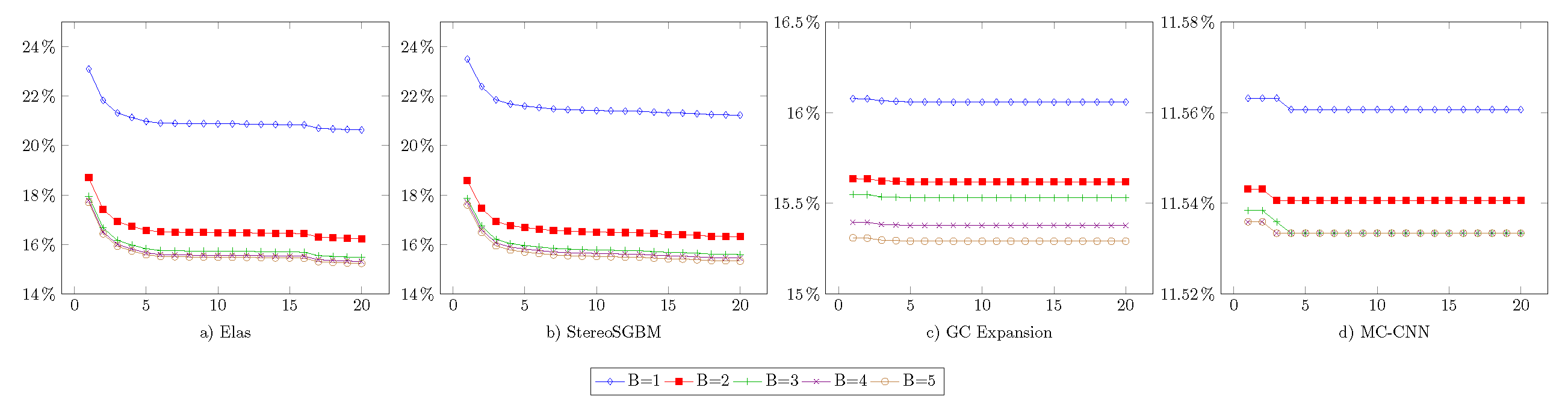
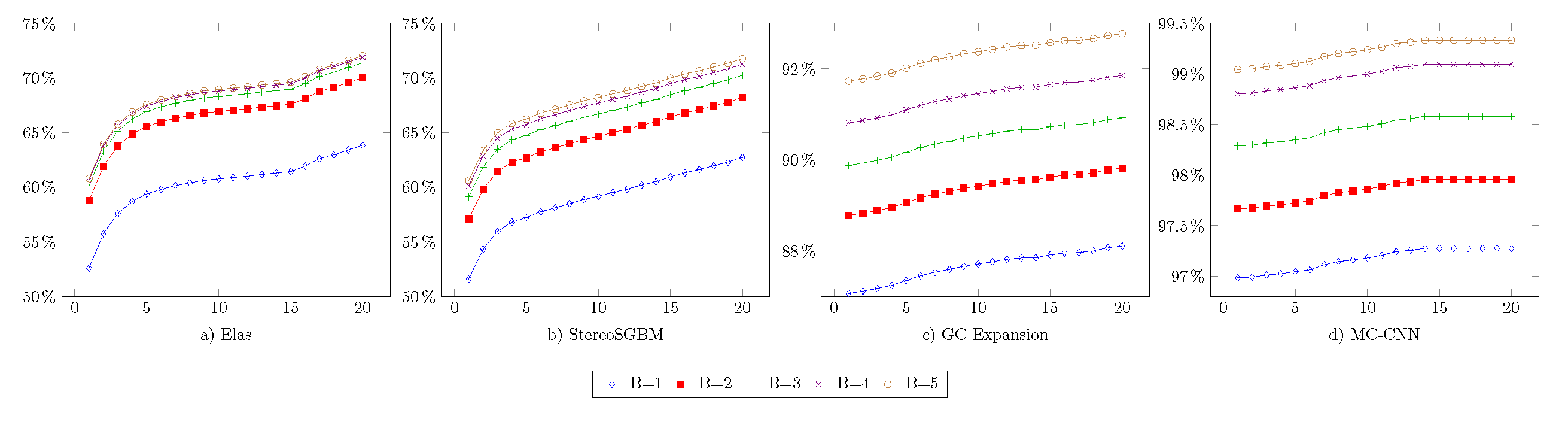
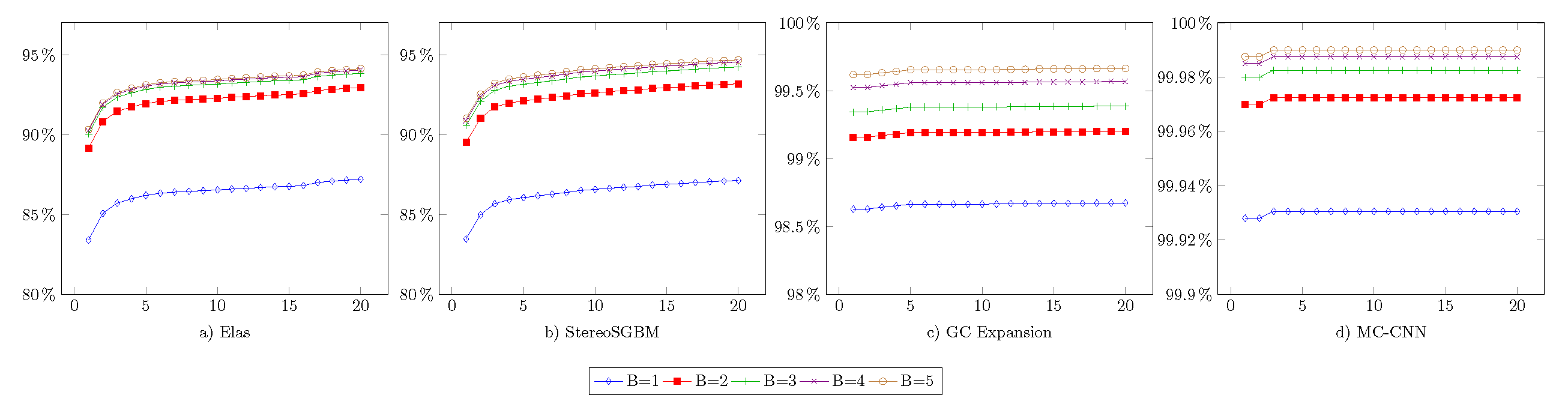
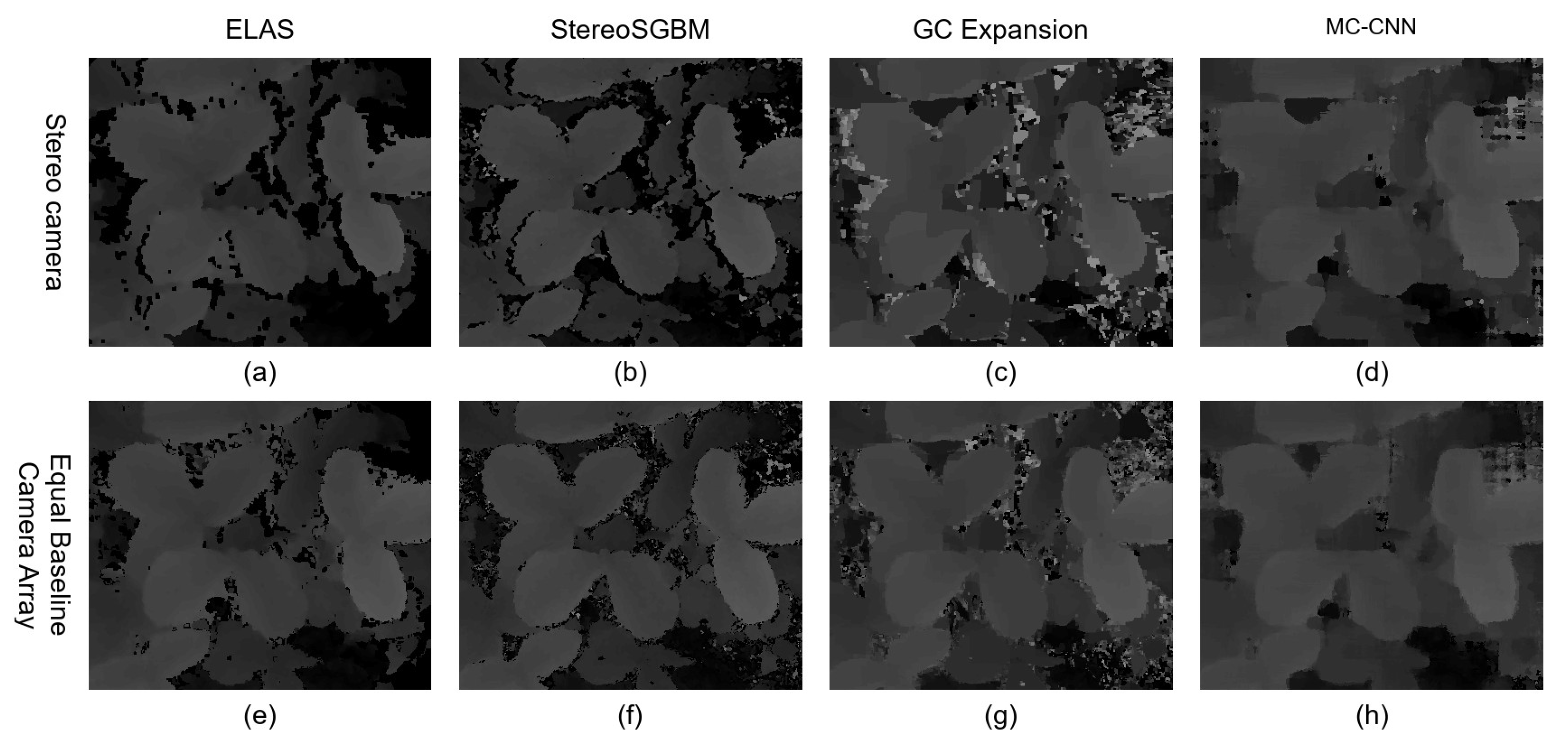
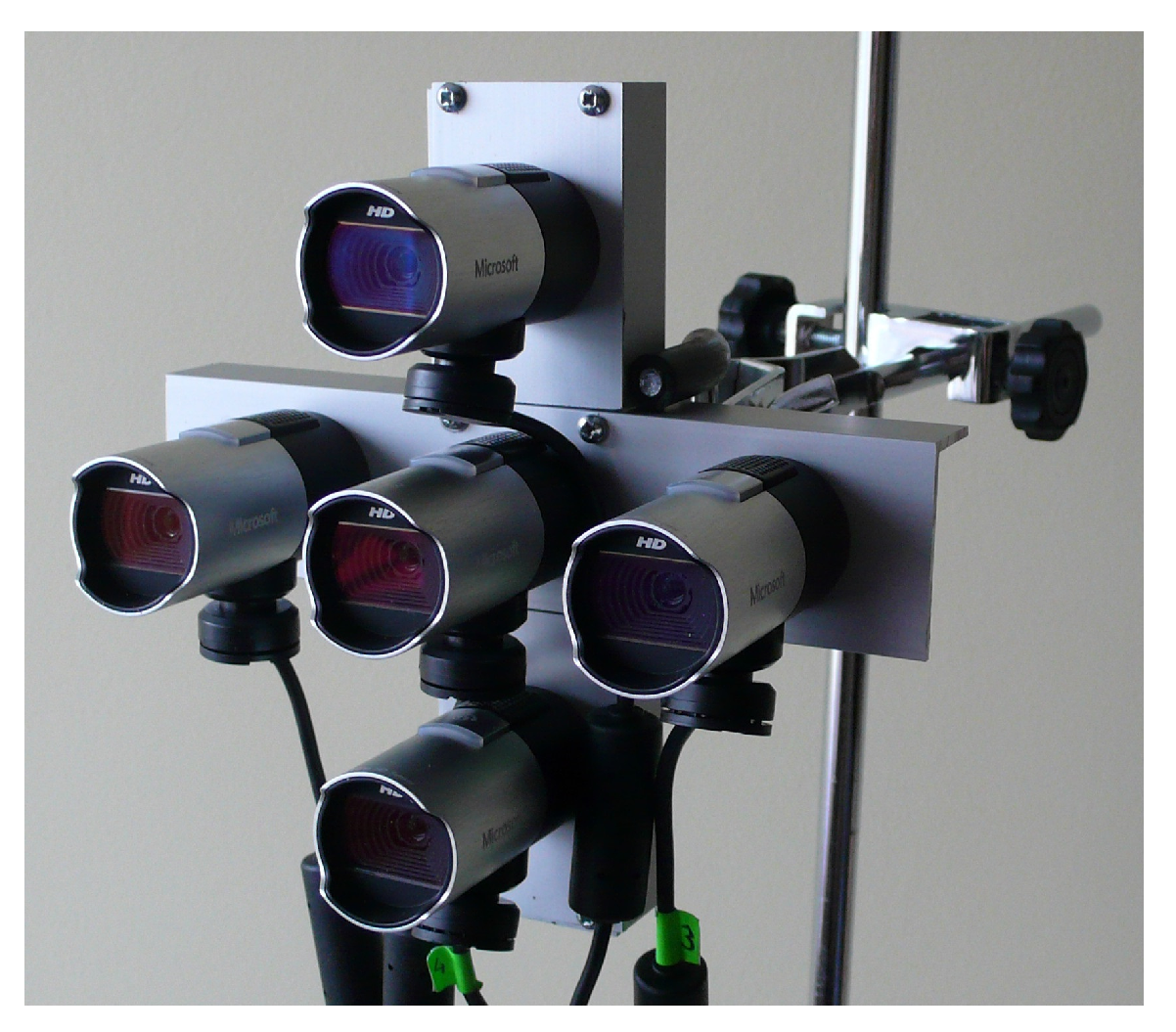
This paper presents research on 3D scanning by taking advantage of a camera array consisting of up to five adjacent cameras. Such an array makes it possible to make a disparity map with a higher precision than a stereo camera, however it preserves the advantages of a stereo camera such as a possibility to operate in wide range of distances and in highly illuminated areas. In an outdoor environment, the array is a competitive alternative to other 3D imaging equipment such as Structured-light 3D scanners or Light Detection and Ranging (LIDAR). The considered kinds of arrays are called Equal Baseline Camera Array (EBCA). This paper presents a novel approach to calibrating the array based on the use of self-calibration methods. This paper also introduces a testbed which makes it possible to develop new algorithms for obtaining 3D data from images taken by the array. The testbed was released under open-source. Moreover, this paper shows new results of using these arrays with different stereo matching algorithms including an algorithm based on a convolutional neural network and deep learning technology.
Keywords: stereo camera; camera array; depth sensor; disparity map; depth map; 3D vision; camera array calibration stereo camera; camera array; depth sensor; disparity map; depth map; 3D vision; camera array calibration