Abstract
Remote sensing for the monitoring of chlorophyll-a (Chl-a) is essential to compensate for the shortcomings of traditional water quality monitoring, strengthen red tide disaster monitoring and early warnings, and reduce marine environmental risks. In this study, a machine learning approach called the Gradient-Boosting Decision Tree (GBDT) was employed to develop an algorithm for estimating the Chl-a concentrations of the coastal waters of the Beibu Gulf in Guangxi, using Landsat 8 OLI image data as the image source in combination with field measurements of Chl-a concentrations. The GBDT model with B4, B3 + B4, B3, B1 − B4, B2 + B4, B1 + B4, and B2 − B4 as input features exhibited higher accuracy (MAE = 0.998 μg/L, MAPE = 19.413%, and RMSE = 1.626 μg/L) compared with different physics models, providing a new method for remote sensing inversion of water quality parameters. The GBDT model was used to study the spatial distribution and temporal variation of Chl-a concentrations in the coastal sea surface of the Beibu Gulf of Guangxi from 2013 to 2020. The results showed a spatial distribution with high concentrations in nearshore waters and low concentrations in offshore waters. The Chl-a concentration exhibited seasonal changes (concentration in summer > autumn > spring ≈ winter).
1. Introduction
Chlorophyll-a (Chl-a) is an important index that can reflect phytoplankton biomass and the state of eutrophication. The concentration of Chl-a increases as the phytoplankton biomass increases, and an increase in phytoplankton may cause red tides, with the potential to threaten public health [1] and wildlife [2] and being harmful to the environment [3,4]. The Beibu Gulf in Guangxi receives more than 120 small- and medium-sized inflows carrying a large amount of organic matter and inorganic salts, and it is likely to experience eutrophication and red tides. From 2014 to 2017, several abnormal water quality events occurred in the Beibu Gulf of Guangxi, including two red tides. Consequently, water quality monitoring in the Guangxi Beibu Gulf is of significance for protecting the water quality and environment of the Beibu Gulf and ensuring the health of its residents [5].
Traditional monitoring methods cannot completely reflect the spatial and temporal distribution of the water quality because of the small coverage of such methods, which are limited by high costs. However, satellite remote sensing enables automated monitoring of water quality parameters, including the Chl-a and total suspended solids. Such techniques benefit from lower costs and greater spatial and temporal coverage [6], and such studies have been undertaken overseas and in China [7,8,9,10].
In recent years, machine learning has been used to retrieve water quality. Machine learning enhances the accuracy of inversion and the generalization ability through model training and, in turn, predicting and analyzing test data [11]. This method uses internal implicit networks and structures to determine the complex characteristics of input data and obtain explicit relationships among the output variables [12,13]. Several approaches, including the decision tree [12,14], BP neural network [15,16], support vector machine model (SVM) [17,18], and extreme machine learning approaches [19], have strong adaptability, fault tolerance, and organization of data.
The optical radiometric measurement of the Chl-a concentration in coastal waters remains a challenge due to the presence of phytoplankton, suspended matter, and colored, dissolved organic matter. Some studies have revealed the advantages associated with the machine learning method applied in this field. In Galician Rias (northwest Spain), the neural network techniques were applied to estimate the Chl-a concentrations in three different water types. The results showed the capacity of the neural network to predict the Chl-a concentrations in coastal waters [20]. The Mixture Density Network (MDN) was induced for seamless retrieval of Chl-a data records in inland and coastal waters in the study of Pahlevan et al. As evidenced through image and satellite matchup analyses, the model generated realistic spatial distributions and provided a more accurate Chl-a map [21]. The Gradient-Boosting Decision Tree (GBDT) is a machine learning technique for regression, classification, and other tasks, using a decision tree flowchart approach combined with the boosting ensemble technique. The GBDT improves the capacity of the decision tree by reducing the residuals generated during the training procedure [22,23]. It has been widely applied in social science research [24,25,26,27,28] and gradually introduced into the field of natural science [1,2,3,4,5,6,7,29,30,31,32,33,34,35]. The GBDT exhibits much better performance in the retrieval of water depth compared with the single-band, dual-band, and BP neural network models [36]. Some studies have shown that the GBDT model can achieve higher simulation accuracy to the random forest (RF) algorithm and regression tree input with the same meteorological factors [37]. By constantly calculating the best fitting value and updating the classifier, the GBDT algorithm can obtain explicit relationships and features between different types of data with little prior knowledge. Considering the complex relationship between the water quality parameters and spectral characteristics, the GBDT model has the potential for faster and more accurate application of remote sensing retrieval of Chl-a concentrations in coastal waters.
In light of the above considerations, the main aim of this study was to (1) develop a machine learning algorithm for Chl-a estimation in the coastal region of the Beibu Gulf in Guangxi, exploring the potential of GBDT model in the retrieval of water quality parameters in coastal waters, (2) compare the performance of the GBDT with that of conventional models, and (3) analyze the factors determining the temporal–spatial distribution of the Chl-a concentration in the Beibu Gulf in Guangxi.
2. Materials and Methods
2.1. Study Area
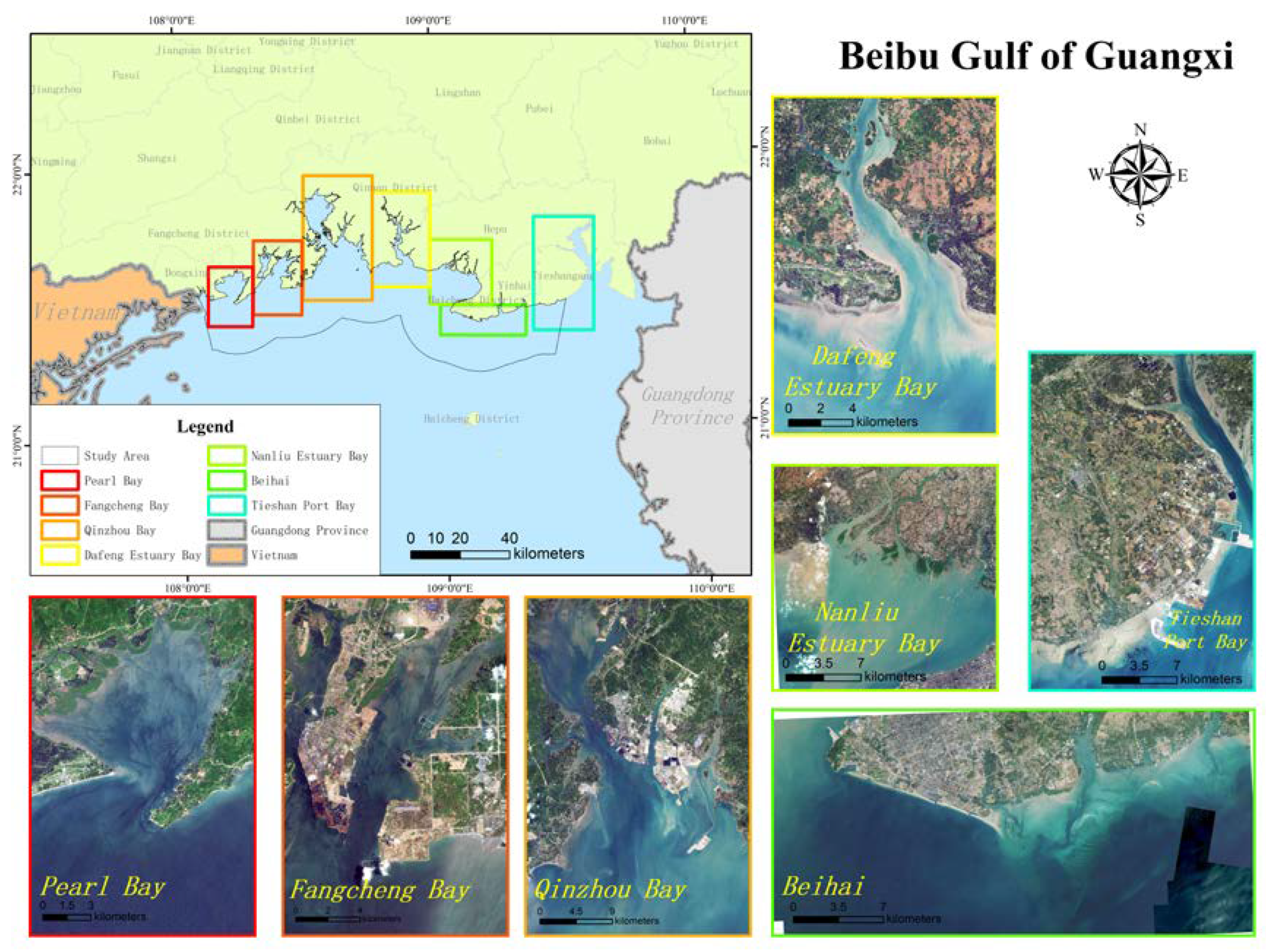
The Beibu Gulf (107°57′ E~109°48′ E, 21°00′ N~22°15′ N, Figure 1) is a coastal region in Guangxi Province, included in the administrative region of Qinzhou, Beihai, and Fangchenggang. The study area can be roughly divided into the Qinzhou Bay, Fangcheng Bay, Dafeng Estuary Bay, Nanliu Estuary Bay, Tieshan Port Bay, and Pearl Bay.
Figure 1.
Study region. The colored rectangles represent the mouths of the bays in the Beibu Gulf.
Located south of the Tropic of Cancer, the Beibu Gulf of Guangxi is dominated by a subtropical climate with an oceanic monsoon, exhibiting transitional characteristics from subtropical to tropical [38]. The average sea surface temperature in the Beibu Gulf of Guangxi is approximately 22.6 °C, with high temperatures experienced from June to August and low temperatures occurring from December to March. Rainfall is cyclical, with the wet season ranging from May to October and the dry season ranging from November to the following April. The annual average rainfall is approximately 1500 mm, and the rivers in Guangxi are mainly replenished by rainwater, particularly during the wet season and a small amount in the dry season.
2.2. Dataset
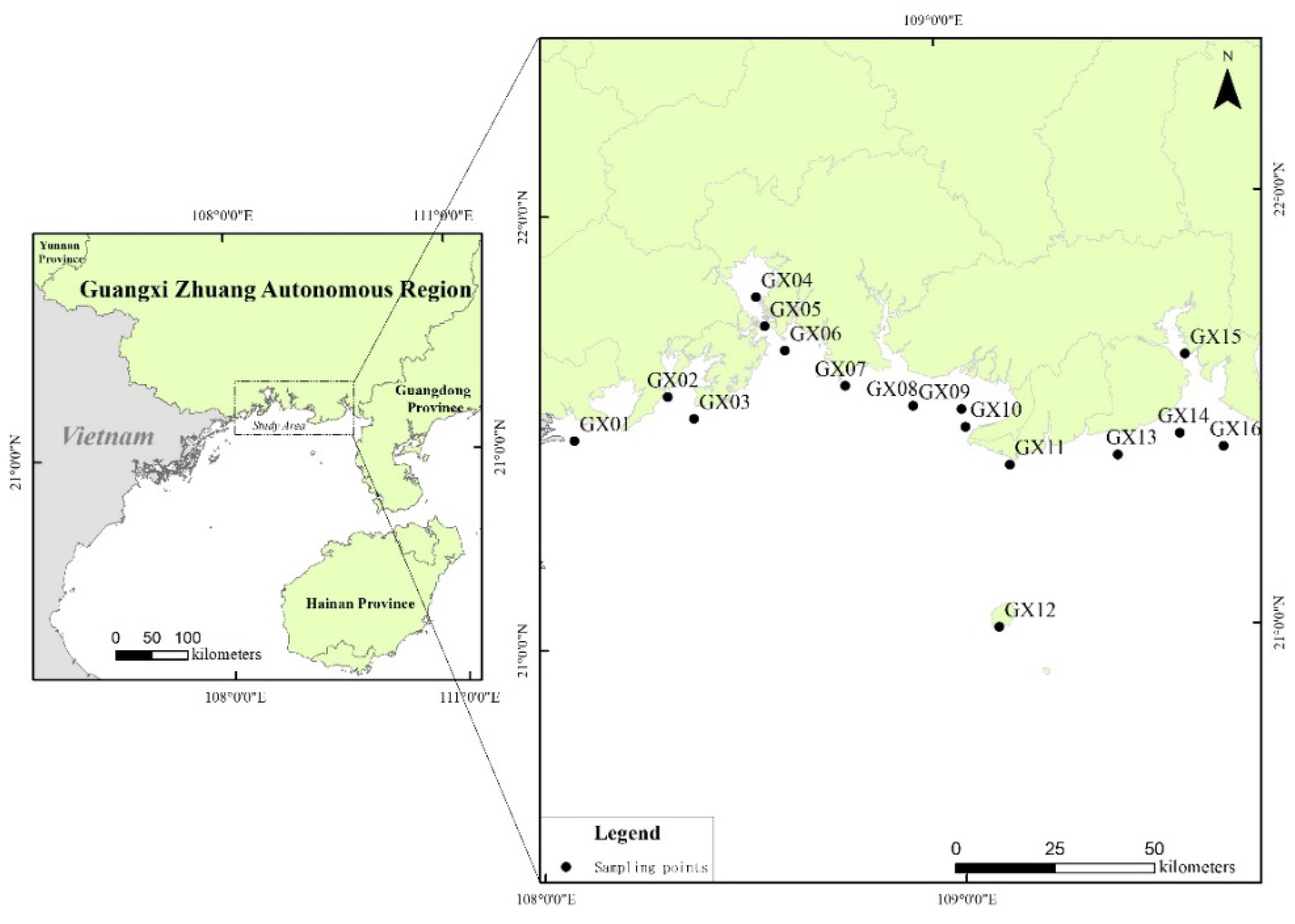
2.2.1. In Situ Data
Chl-a concentrations were measured every 30 min at the automatic monitoring station of the Marine Environmental Monitoring Center of the Guangxi Zhuang Autonomous Region [39] (Figure 2). The quality of the coastal water at a depth of 0.5 m was monitored every half an hour by a multi-parameter probe (6600V2-4, YSI, Yellow Springs, OH, USA) produced by Xylem, and the concentration of Chl-a was determined by a in vivo fluorescence method.
Figure 2.
Distribution of sampling points.
The instantaneous value of the Chl-a concentration closest to the transit time of Landsat 8 (11:11 a.m.) was selected as the model input dataset.
2.2.2. Satellite Data Acquisition and Pre-Processing
The Landsat 8 OLI satellite data with a nominal 30-m spatial resolution used in this study were accessed from the United States Geological Survey (USGS) portal (https://glovis.usgs.gov (accessed on 1 January 2021)). The images (path-row: 125-045) covered the coastal waters of the Beibu Gulf of Guangxi to the maximum extent, and the 13 automatic monitoring stations established by the Marine Environmental Monitoring Center of Guangxi are in the coverage. 34 scene images with low cloud cover were selected, ranging from 2013 to 2020 (Table 1).
Table 1.
Dates of remote sensing images.
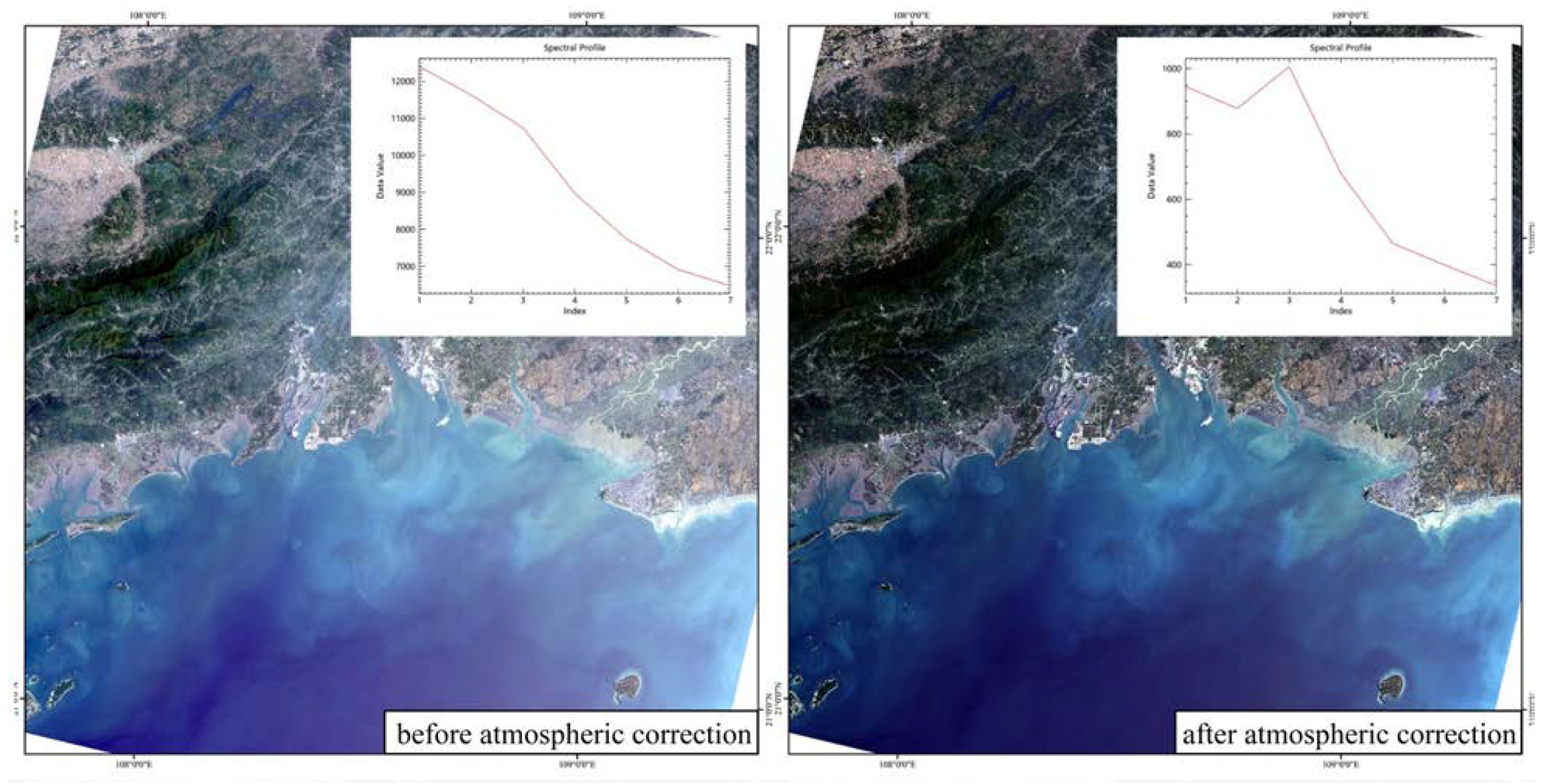
The Landsat 8 OLI satellite images were radiologically calibrated and atmospherically corrected before further processing. By radiometric calibration, the digital number (DN) recorded by the sensor could be converted into the spectral radiance and to the Top of the Atmosphere (TOA) reflectance. The surface reflectance may have changed after the atmospheric transmission, so the atmospheric correction was required. The error of reflectance reduced after atmospheric correction and could be used for the retrieval of Chl-a concentration.
In this study, all of the images were processed for radiometric calibration and atmospheric correction using the FLAASH model in the ENVI 5.3.1 software package. The corrected image reduced the influence of water vapor particles in the air and was clearer than the image before correction. The spectral curve of the pixel after atmospheric correction was closer to the actual spectral curve of the ground object and more in line with the requirements of inversion as shown in Figure 3.
Figure 3.
Comparison before and after atmospheric correction.
2.2.3. Calibration Dataset
With the pre-processing of remote sensing images accomplished by radiometric calibration and atmospheric correction of the image, the measured data of the Chl-a concentration were matched with the spectral data of the monitoring sampling points, producing 117 samples in total (Table 2).
Table 2.
Chl-a concentration and reflectance of some samples.
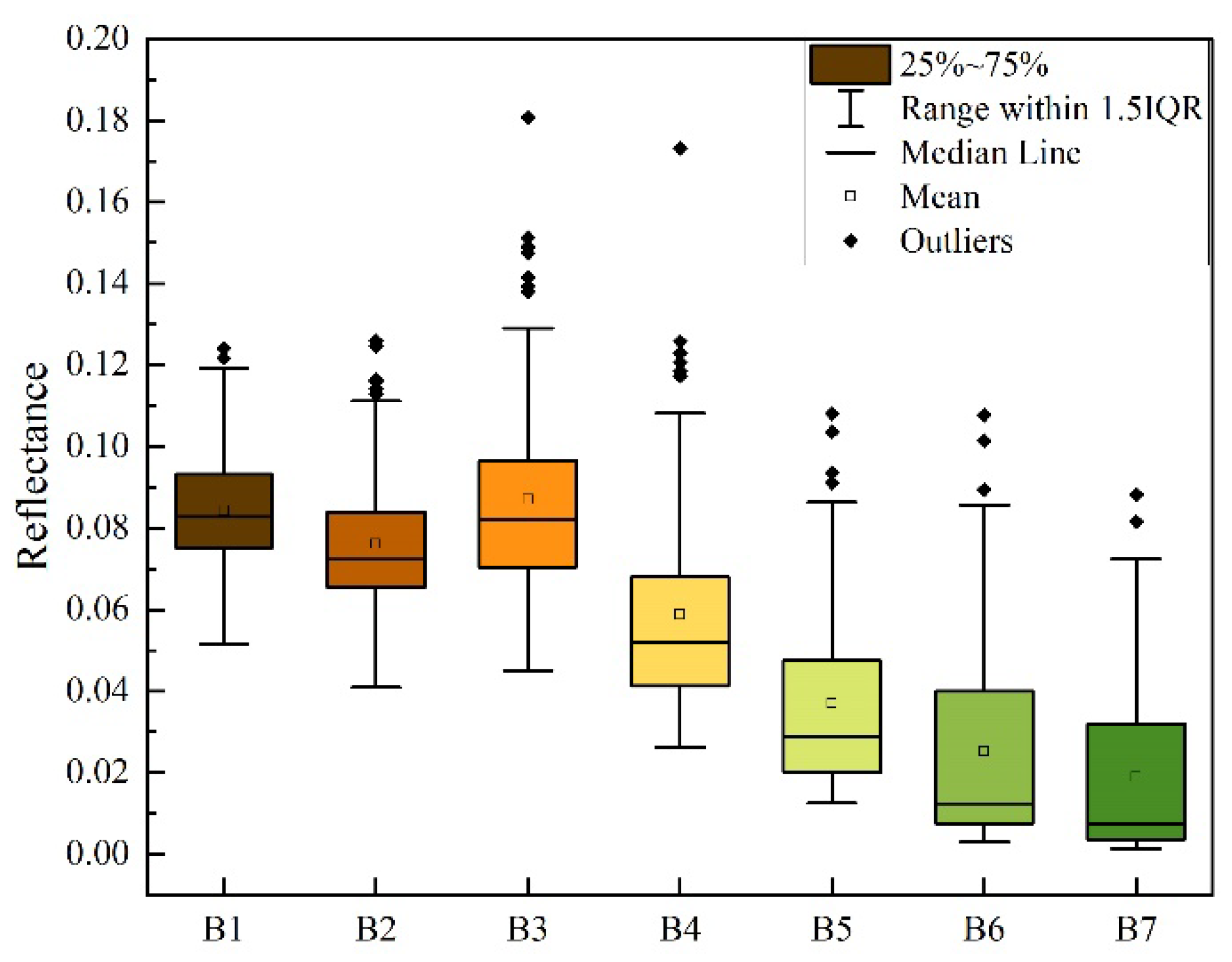
Clouds and shadows on the fog surface may have caused data anomalies, resulting in deviations between the inversion results and field data. To improve the accuracy of the inversion model, outliers needed to be removed.
A boxplot was used to filter abnormal data. The reflectance of each band for the 117 samples was calculated (Figure 4), 7 abnormal data points in the study samples were identified and removed, and 110 samples were used in the study thereafter.
Figure 4.
Reflectance boxplot of each band.
2.3. GBDT Model
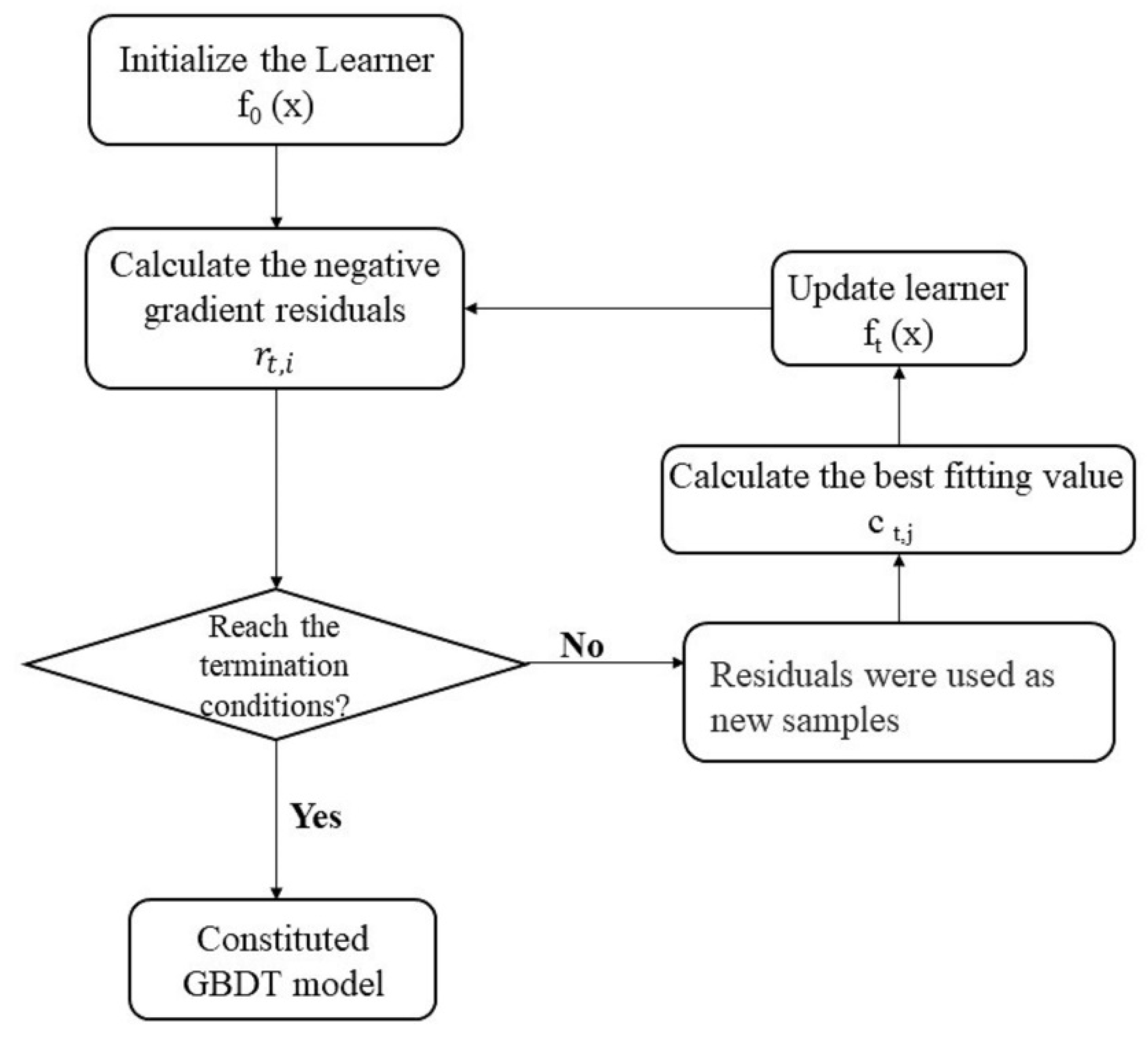
The Gradient-Boosting Decision Tree (GBDT) algorithm was proposed by Friedman in 1999 [40]. The algorithm restricts weak learners from using only the Classification and Regression Tree (CART) model, a widely used model for constructing decision trees for both classification and regression problems. When building a regression tree using the CART model, the feature selection index generally uses the node minimum sample variance. The larger the sample variance, the greater the node data scatter with low purity. The CART branches through the variance threshold of each node. When all the variance is lower than the threshold value of each node, or after reaching the set stop conditions, the CART decision tree is completed. In the GBDT algorithm, the CART decision tree is associated with the boosting algorithm. In general, the residuals are calculated and evaluated after each iteration and processed as the input by the next iteration, thus minimizing the loss function and improving the fitting accuracy of the model. When the residuals reach a lowest value, or the setting termination condition has been reached, the model is constructed, and the regression result will be exported. The specific step of the GBDT regression algorithm is shown in the following sequence of equations and in Figure 5.
Figure 5.
Flow chart of the Gradient Descent Boosting Decision Tree algorithm.
1. Initialize the cart learner:
2. In round t, the negative gradient of each sample is calculated:
3. The CART regression tree Tt is obtained by fitting (xi, rt,i), i = 1, 2, …, m, and the leaf node region is divided into Rt,j, j = 1, 2, …, J;
4. Traverse (referring to one visit to each node in the tree (or graph) along a certain search route) the node region, and calculate the output value of each leaf node Rt, namely the best fitting value ct,j:
5. Update the learner:
6. Repeat these steps until the termination condition is reached, and the final strong learner expression is obtained by adding the weak learners as follows:
To avoid over- or underfitting of the model, the setting of the GBDT model was determined by grid searching with cross-validation. By 10-fold cross-validation, the method of cross validation used in this study, the dataset was separated into 10 subsamples. After one of the subsamples was randomly used as a testing set with the rest as a training set, the GBDT model was constructed, and the performance was evaluated. This process was repeated 10 times. By grid research, all the potential setting was traversed with 10-fold cross-validation, and the parameters with best performance were given. In this study, the mean square error (MSE) was set as a loss function, and the learning rate was set as 0.1. The number of the CART decision trees was set as 100, and the max depth of the decision tree was set as 3.
The inversion accuracy of the remote sensing inversion model was assessed using the mean absolute error (MAE), mean absolute percentage error (MAPE), and root mean square error (RMSE), which are defined as follows:
where n is the number of data pairs, the subscript i denotes individual data points, and y and f represent the measured and estimated values, respectively.
The correlation coefficient (R2) was also measured to show how well the variation of one model explained the variation in the concentration of Chl-a. Generally, the largest R2 with the smallest RMSE gives the best prediction model. In this study, the models with correlation coefficients (R2) exceeding 0.7 would be selected to verify the inversion accuracy.
Theil–Sen and Mann-Kendall trend analysis were used to analyze the variation of Chl-a concentrations in the coastal sea surface of the Beibu Gulf of Guangxi. Theil–Sen and Mann-Kendall trend analysis includes Theil–Sen slope estimation and the Mann-Kendall significance test, which does not require the dataset to meet the normal distribution on the time series, nor does it require a dataset correlation between time series, which is insensitive to outliers in time series and has a strong ability to avoid measurement errors in datasets or discrete data.
The remote sensing images with sensing dates ranging from 2013 to 2020 were converted into the trained GBDT model, and the output results were imported into ArcGIS 10.5 for raster processing. After elimination of the outlier values and Inverse Distance Weighted (IDW) interpolation, the spatial and temporal distributions of chlorophyll were visualized for analysis.
3. Results
3.1. Performance Assessment
In this study, single bands and the single-band ratio, band combination, and water index of the Landsta8 OLI images in the study area were used to establish the feature library of the GBDT model. The single-sample Kolmogorov–Smirnov test (K–S test) was used in SPSS software to determine whether these variables were in line with the normal distribution. The results showed that the value of progressive significance of the test samples was greater than 0.05, proving that the variables were in line with the normal distribution. In this case, Pearson’s correlation analysis was used to test the importance of the features.
Features with high importance (correlation coefficient higher than 0.6) are shown in Table 3. The features with correlation coefficients higher than 0.7 (B4, B3 + B4, B3, B1 − B4, B2 + B4, B1 + B4, and B2 − B4) were selected as the input variables.
Table 3.
Importance of modeling features.
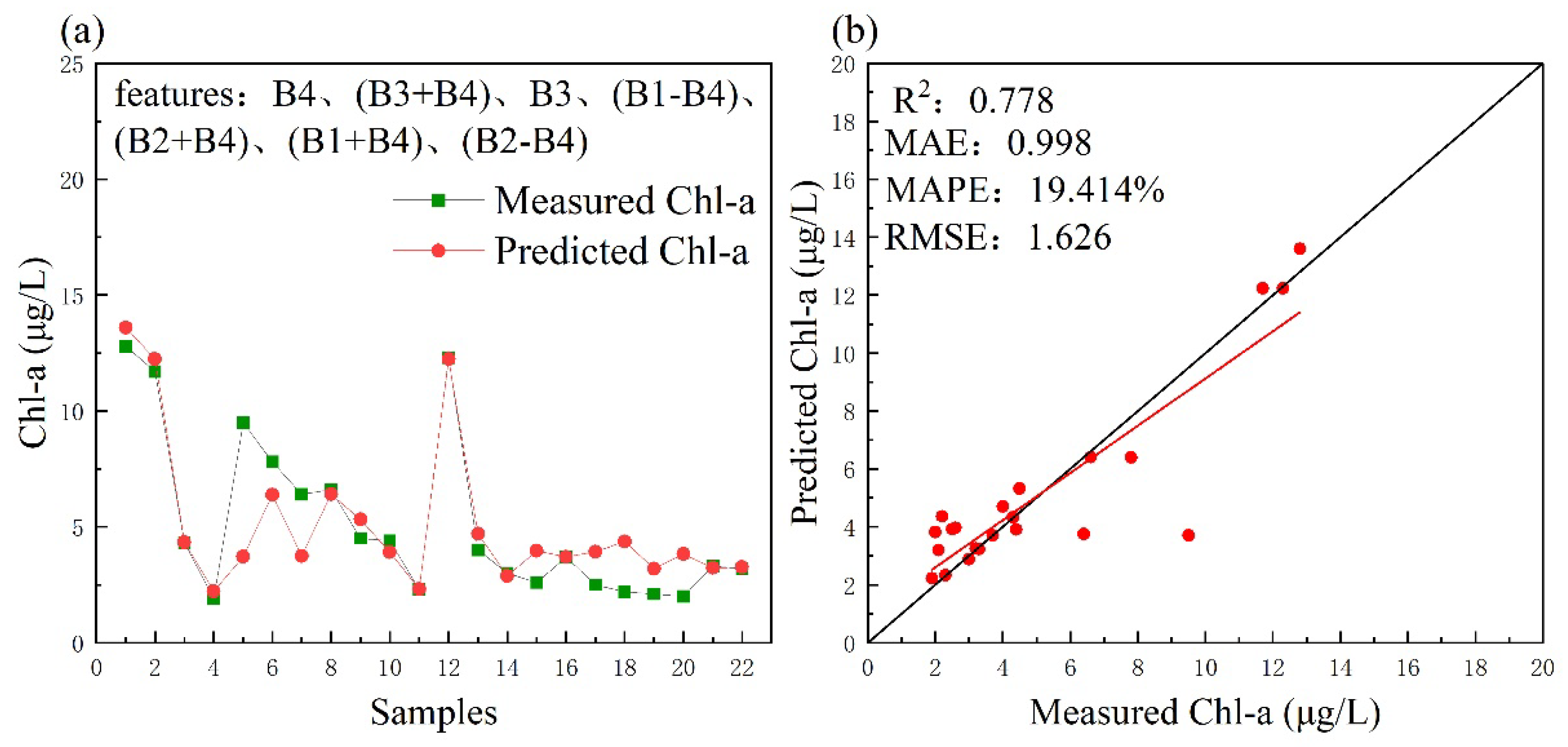
The input features of the GBDT model were added successively, and the accuracy of the inversion results was evaluated and compared (Table 4). The results demonstrated that the inversion accuracy was enhanced as more variables were added, suggesting that additional variables could significantly improve the performance of the GBDT model for the retrieval of the Chl-a concentration, and the GBDT model with all the selected variables performed with a higher accuracy (R2 = 0.778).
Table 4.
Results of assessing the accuracy of multiple feature variables.
The inversion results and the fitting of the measured values of the GBDT model constructed with B4, B3 + B4, B3, B1 − B4, B2 + B4, B1 + B4, and B2 − B4 as the input features are shown in Figure 6. The GBDT model performed well, as indicated (MAE = 0.998 μg/L, MAPE = 19.414%, RMSE = 1.626 μg/L, and R2 = 0.778).
Figure 6.
Accuracy verification results of seven characteristic variables. (a) Inversion results. (b) Fitting results.
3.2. Spatial–Temporal Distribution of Chl-a
3.2.1. Spatial Variations of Chl-a
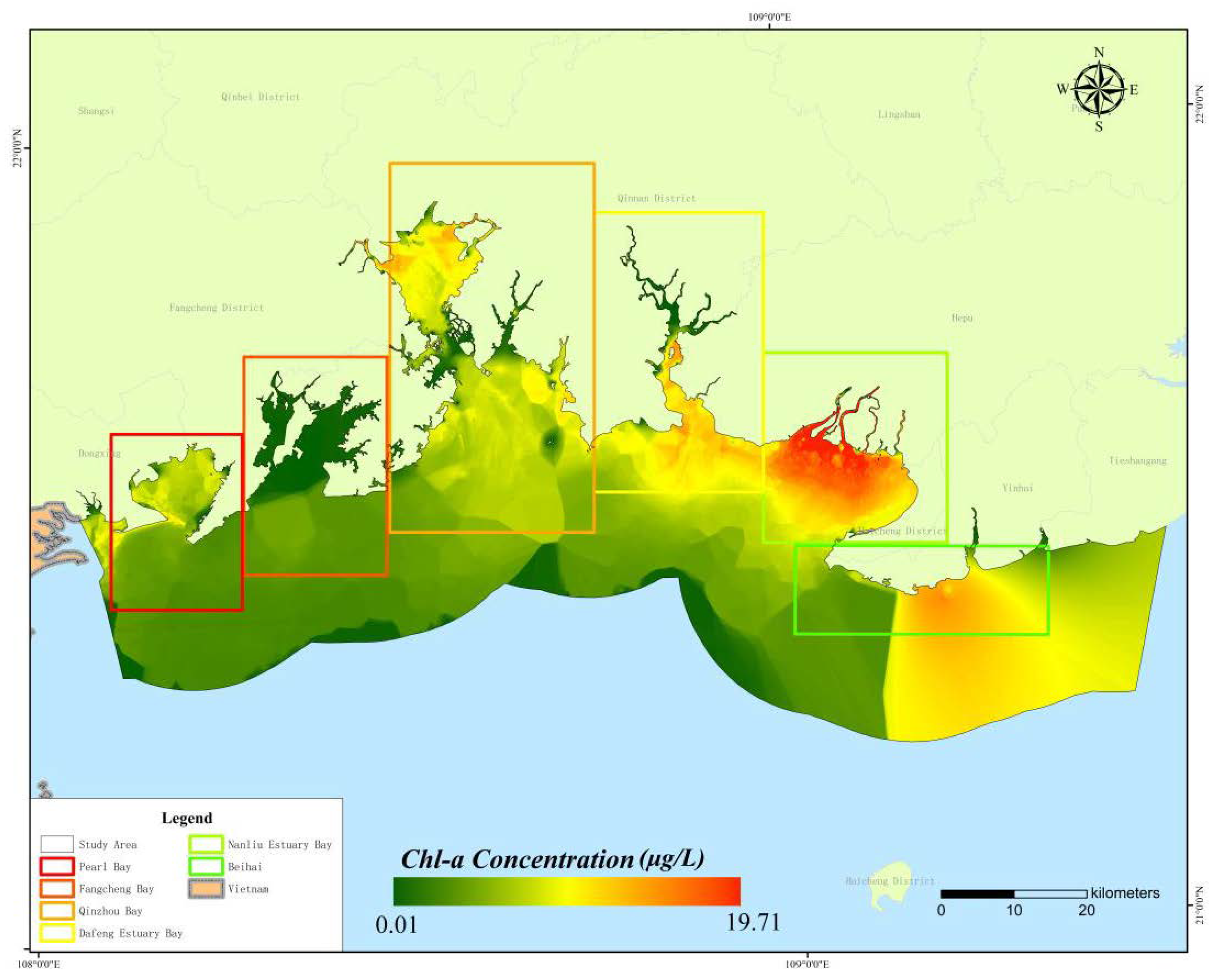
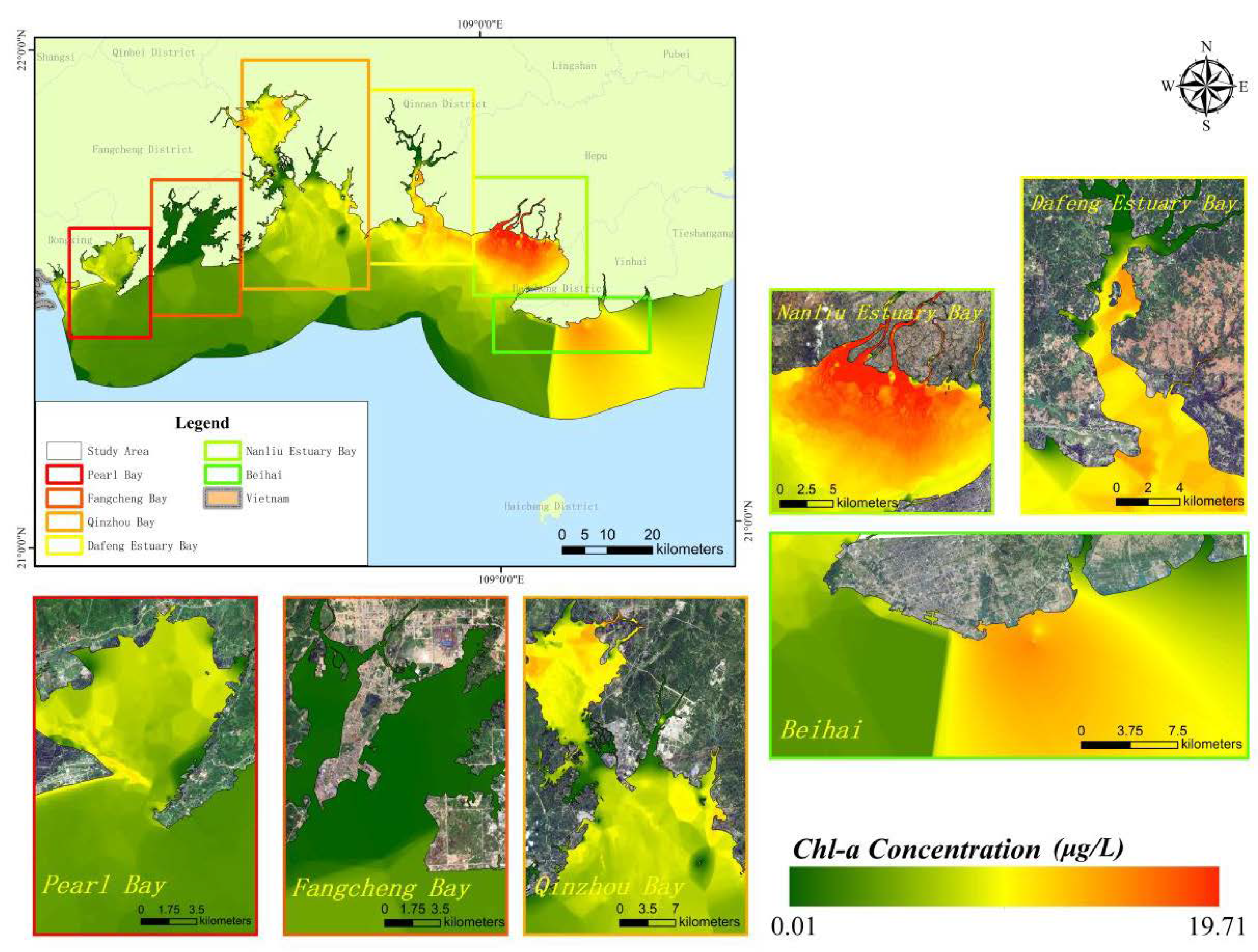
Based on the inversion results of the Chl-a concentrations from 2013 to 2020, the distribution of the Chl-a concentrations in the coastal waters of the Guangxi Beibu Gulf was obtained by taking the average value (Figure 7). The average Chl-a concentration in each bay in the coastal waters of the Guangxi Beibu Gulf from 2013 to 2020 is shown in Table 5.
Figure 7.
Distribution of Chl-a concentrations in Beibu Gulf in Guangxi.
Table 5.
Details of Chl-a concentration distribution of 2013~2020.
The concentration of Chl-a in the coastal sea surface of the Beibu Gulf of Guangxi was higher in the nearshore coastal waters and lower in the offshore waters, and it gradually decreased from north to south. The concentration of Chl-a in the Nanliu Estuary Bay was the highest, and the average of the whole region was 11.469 μg/L. The means of the Dafeng Estuary Bay, Beihai, Qinzhou Bay, Pearl Bay, and Fangcheng Bay were 8.198, 7.461, 6.600, 5.031, and 3.372 μg/L, respectively.
3.2.2. Temporal Variations of Chl-a
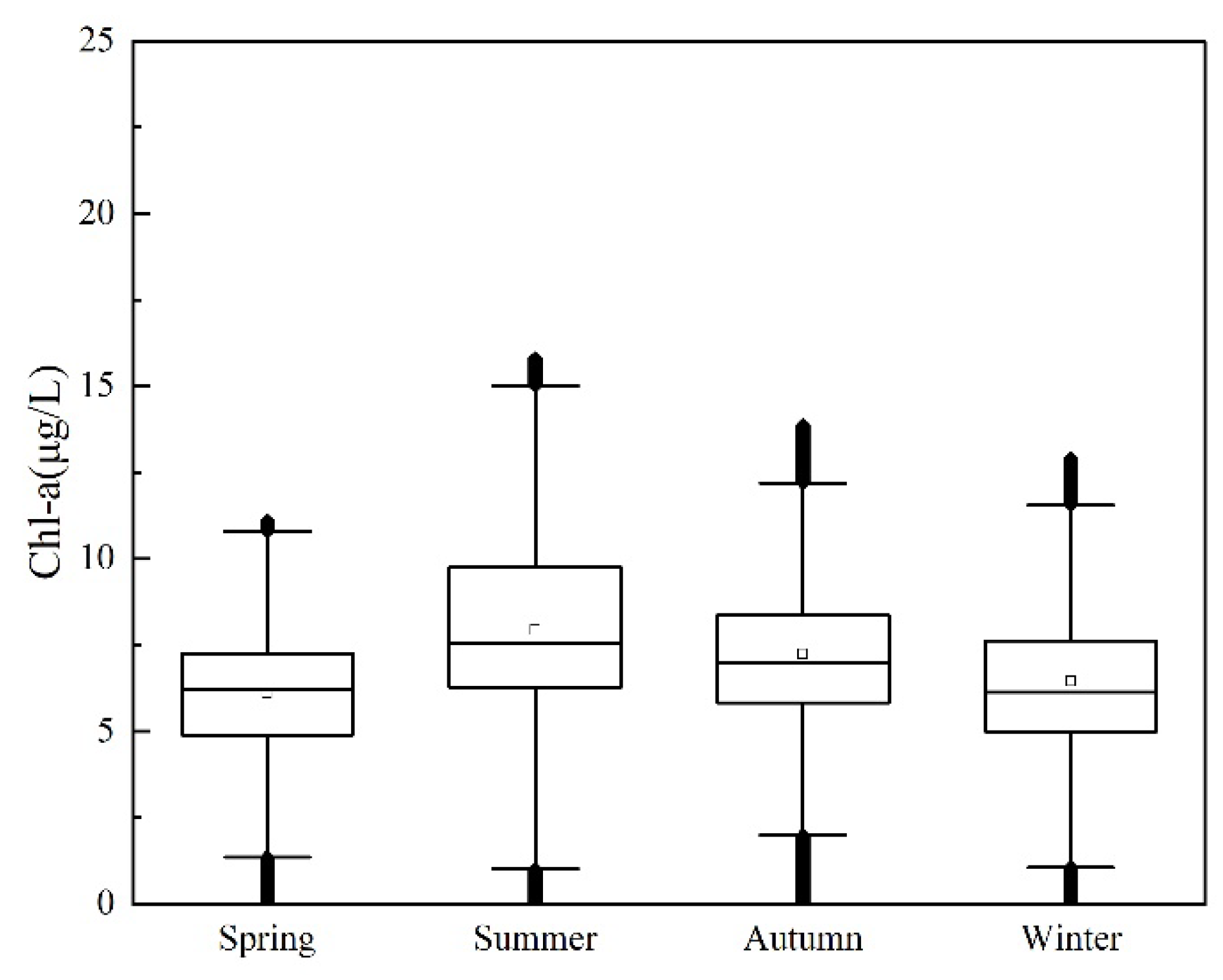
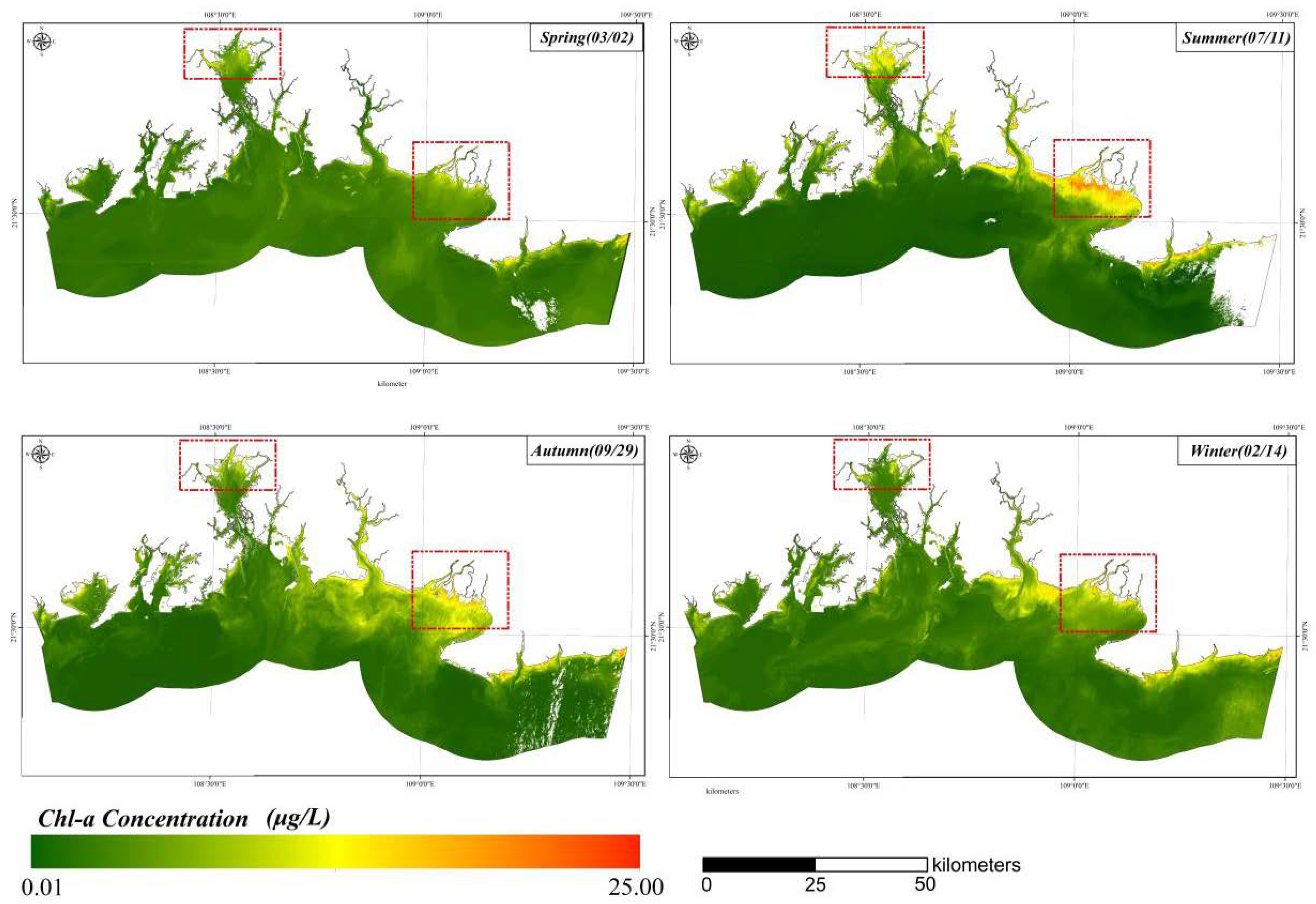
The Chl-a concentrations in the four seasons in 2019 are presented in Figure 8.
Figure 8.
Seasonal changes of Chl-a.
The thermal and dynamic structures of the sea surfaces of the Beibu Gulf of Guangxi are affected by subtropical monsoons. The spatial and temporal differences in the Chl-a concentration in the Beibu Gulf were caused by the transport of nutrients. The concentration of Chl-a in the coastal sea surface exhibited clear seasonal changes. The average concentration of Chl-a in the summer was the highest (8.312 μg/L), while it was moderate during autumn (7.714 μg/L) and spring (6.954 μg/L) and lowest in winter (6.680 μg/L).
3.3. Theil–Sen and Mann-Kendall Trend Analysis
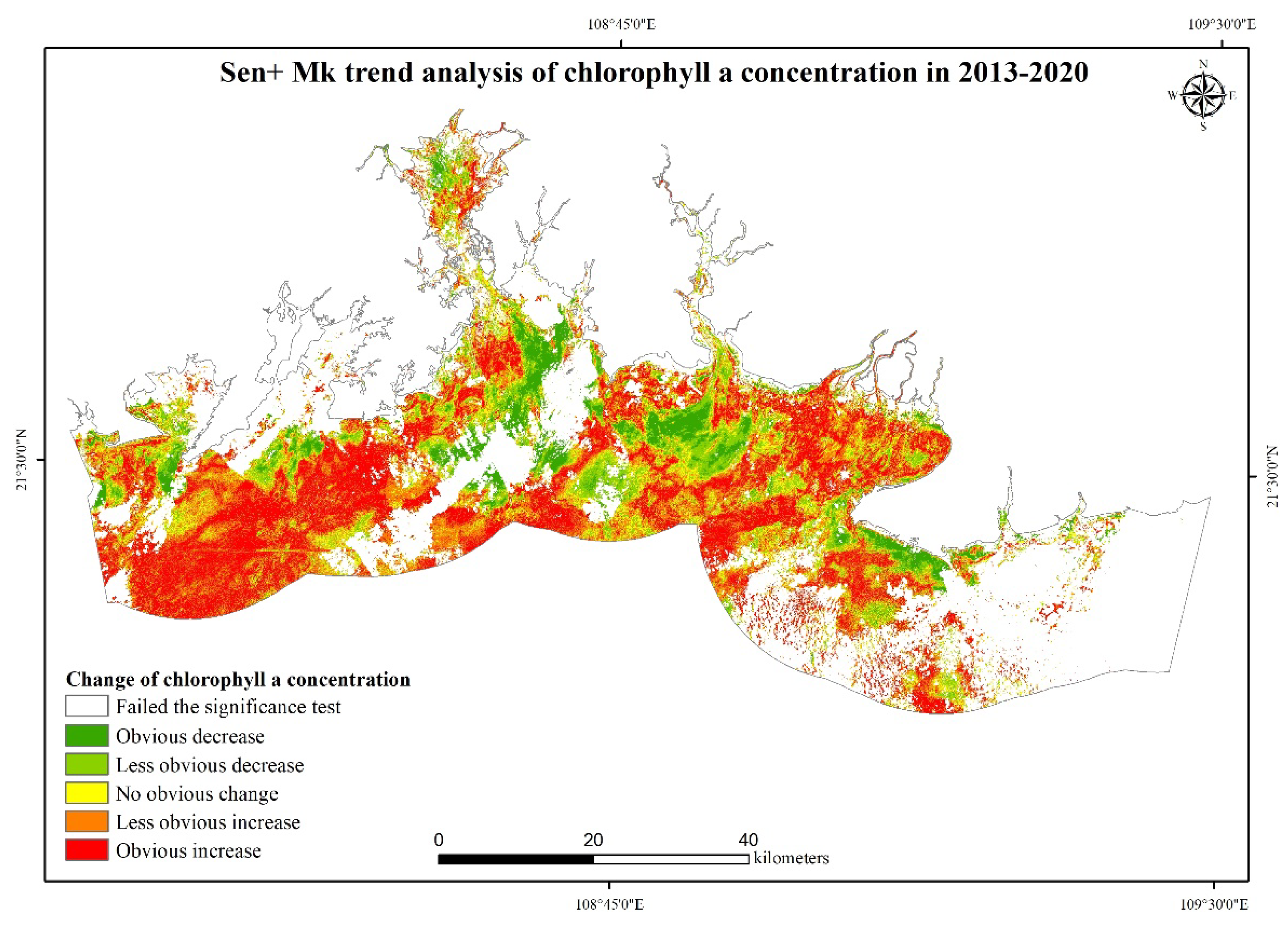
Theil–Sen and Mann-Kendall trend analysis demonstrated variations in the Chl-a concentrations in the coastal sea surfaces of the Guangxi Beibu Gulf (Figure 9), and the statistical results of each trend are shown in Table 6.
Figure 9.
Trend analysis diagram of chlorophyll concentration.
Table 6.
Statistical table of the area of each trend.
The area of this study area was 4141.8 km2, of which the area with an obvious decrease in its Chl-a concentration was 193.55 km2, the area with a less obvious decrease was 356.72 km2, the area with no obvious change was 383.69 km2, the area with a less obvious increase was 724.45 km2, and the area with an obvious increase was 761.49 km2. The remaining 1721.900 km2 in the study area showed no significant change. The concentration of Chl-a in the coastal sea surface has exhibited an increase in recent years.
This section may be divided by subheadings. It should provide a concise and precise description of the experimental results, their interpretation, as well as the experimental conclusions that can be drawn.
4. Discussion
4.1. Comparison of Different Models
Two machine learning models were used for comparison in this study. An artificial neural network is a machine learning model that can explore the nonlinear relationship between the input variables and target data though training and adjusting the inside interconnected processing neurons [41]. The features of high prediction accuracy, self-adaptation, and robustness make it widely used for retrieval in waters with complex optical characteristics [42]. The support vector machine (SVM) is a useful tool for nonlinear statistical learning and regression analysis [43], whose training provides the support vectors to separate the classes in a multidimensional attribute space (the inland water’s trophic status classification is based on machine learning and remote sensing data).
The artificial neural network and SVM model were trained in MATLAB software. Given the same input variables as the GBDT model, the performance of them for the estimation of the Chl-a concentration in the coastal waters of the Beibu Gulf in Guangxi were evaluated.
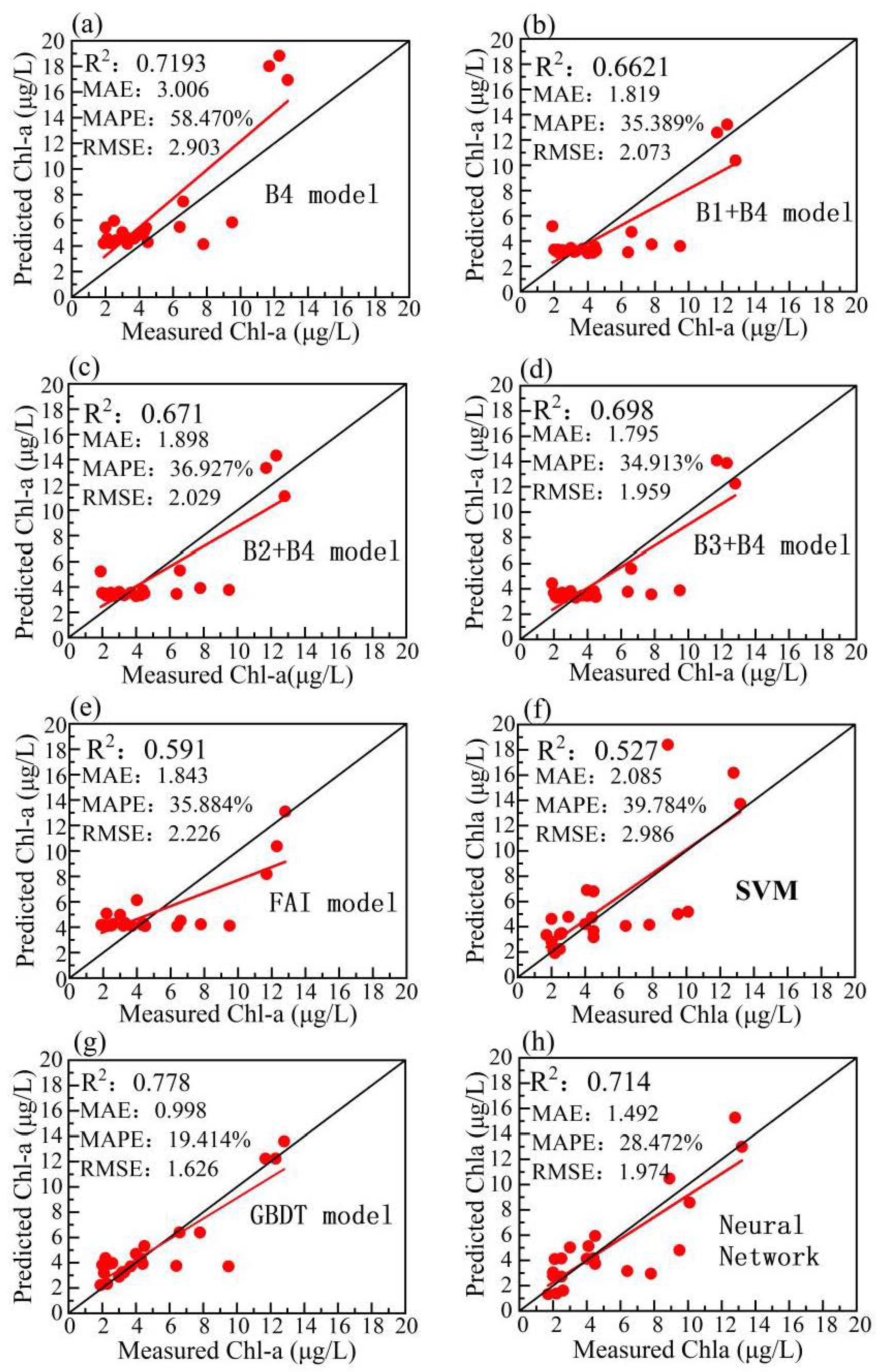
The results from verifying the accuracies of different models are compared in Figure 10 and Table 7.
Figure 10.
Performance evaluation of Chl-a retrievals using B4 model (a), B1 + B4 model (b), B2 + B4 model (c), B3 + B4 model (d), FAI model (e), SVM model (f), GBDT model (g) and neural network model (h).
Table 7.
Comparison of model accuracies.
The GBDT model performed well, as indicated in the statistical metrics. The results of the analyses of the accuracy demonstrated that the GBDT model exhibited the highest inversion accuracy for the Chl-a concentration, with an RMSE of 1.626; the remote sensing inversion model for the Chl-a concentration based on the GBDT algorithm exhibited advantages in the inversion accuracy.
The GBDT model performed better than the B4/B1 model and the other models tested. While the B4/B1 model reasonably estimated the Chl-a concentration (R2 = 0.706; Figure 10b), it exhibited deviations at high and low Chl-a concentrations. The floating algae index (FAI), a water index strongly correlated with Chl-a which was proposed by Hu in 2009 [44], exhibited a relatively large deviation from the in situ data (R2 = 0.591, RMSE = 2.226 μg/L, MAPE = 35.884%, and MAE = 1.843 μg/L) (Table 6; Figure 10f).
Among the machine learning algorithms tested, the GBDT algorithm exhibited the best performance, while the SVM had the poorest performance (R2 = 0.527, RMSE = 2.986 μg/L, MAPE = 39.784%, and MAE = 2.085 μg/L). Given the same input variables as the GBDT model, the neural network had a higher inversion accuracy than the traditional statistical models (R2 = 0.706), showing a capacity to estimate the concentration of Chl-a in the coastal water. In general, the neural network tended to underestimate the Chl-a concentration, and the reason for this might be that the samples used to train and validate the neural network were inadequate. In a previous study (Song et al. [45]), the artificial neural network performed well for the estimation of the TSM and Chl-a concentration, but it required a large dataset for training. With a smaller dataset and faster computation, the GBDT model could generate a prediction algorithm, allowing better generalization and thus making it more appropriate for estimating the temporal variation of the Chl-a concentration than other models.
The concentration of Chl-a in the coastal sea surface of the Beibu Bay of Guangxi obtained by remote sensing inversion ranged from 0 to 35 μg/L, similar to the field survey results of Yang Bin and Zhong Qiuping et al. [46], indicating that the retrieval effect of the selected remote sensing inversion model for the Chl-a concentration was close to the field data, and the remote sensing inversion results had high reference significance.
4.2. Spatial and Temporal Distribution of Chl-a
4.2.1. Spatial Difference of Chl-a
The average distribution of the Chl-a concentration in the coastal waters of the Guangxi Beibu Gulf is shown in Figure 11. The concentration of coastal sea surface chlorophyll was high in the nearshore waters and low in the offshore waters, and it gradually decreased from north to south. Nutrients in the Beibu Gulf in Guangxi are mainly transported from coastal land sources [47], and the pollution inputs from the Nanliu River are the largest. The Nanliu River basin is large, bringing together industrial, agricultural, and urban sewage from adjacent land, which carries a large amount of nutrients. According to the Marine Environment Quality Bulletin of the Guangxi Zhuang Autonomous Region, in 2016, the inflow CODCr of the Nanliu River in 2016 was 174,049 t, and the total amount of ammonia nitrogen, nitrate nitrogen, and nitrite nitrogen was 9868 t. The estuarine and coastal zones are transitional zones between land and sea with relatively shallow water depths, so river inflows with high-input terrigenous nutrient content mix with offshore salt water. The annual average SST is about 20.3~29.9 °C. High light intensity and high SST promote the growth and reproduction of phytoplankton and algae, resulting in an increase in the Chl-a concentration [48].
Figure 11.
Distribution of the Chl-a concentration in the coastal waters of the Beibu Gulf in Guangxi.
The runoff diluted water lifts the level in the nearshore sea, and the offshore sea level is relatively low; nutrients then plume out to sea from the estuary. The Beibu Gulf in Guangxi has a tropical and subtropical monsoon climate. The monsoon strengthens the emergence of a current alongshore area, which is also affected by the Coriolis force, and the seaward runoff moves westward along the coast. Therefore, from the perspective of the source, the concentration of Chl-a in the coastal waters of the Beibu Gulf in Guangxi was higher in the nearshore water and lower in the offshore water due to the input of terrestrial nutrients. From the perspective of transport, the nutrients in the Beibu Gulf in Guangxi diffuse from the estuary to the offshore sea. Under the influence of the monsoon, the nutrients flow westward along the coast, and the concentration of Chl-a gradually decreases when moving westward.
4.2.2. Temporal Variation of Chl-a
The concentration of Chl-a in the coastal sea surface of the Beibu Gulf in Guangxi exhibited strong seasonal changes, with the following ranking being apparent: summer > autumn > spring and winter (Figure 12).
Figure 12.
Distribution of Chl-a concentrations in the summer and autumn of 2018.
The Chl-a concentration in summer and autumn was mainly affected by the climate [49,50]. In summer, the Beibu Gulf receives abundant rainfall. The wet season ranges from July to September, and the average monthly precipitation exceeds 100 mm, accounting for approximately 55–70% of the total annual rainfall. River runoff is the largest in summer, and many rivers along the coast flow into the Beibu Gulf, taking agricultural and industrial wastewater into the gulf. The inflows have strong diffusion force, carrying large amounts and high concentrations of nutrients. As the sea level is raised by the runoff, the resultant concentration gradient strengthens the water exchange and increases the thickness of the mixing layer. There are high temperatures in summer, with the highest SST being up to 34.1 °C. Under such environmental conditions, phytoplankton proliferate in large numbers. Therefore, the concentration of Chl-a was the highest in the summer, and the area with a high value was concentrated in the estuarine area of the region. The southwest monsoon prevails in summer, generating a coastal component of the wind force, and it flows along the coast, driven by the monsoon [51]. The runoff raised the sea level and further promoted southwest flow along the coast by the gradient in the sea level. Therefore, in summer, nutrients along the Beibu Gulf are transported from east to west. The Chl-a concentration declined gradually from east to west. In autumn, rainfall decreases, and runoff into the sea decreases. The river-diluted water contracts to the shore, and the concentration of Chl-a decreases compared with that in the summer.
In spring and winter, the river runoff was the smallest, the terrestrial nutrient input was lower, the sea surface temperature was the lowest (19.0–24.0 °C), the growth of phytoplankton was inhibited, and the Chl-a concentration in the sea surface was the lowest. The wind is light over the Beibu Gulf in spring, and the effect of the Beibu Gulf monsoon on aquatic mixing is greatly reduced, causing a smaller mixing layer. Additionally, controlled by the reduction in flow, the Chl-a concentration is generally low in the spring and winter in the Beibu Gulf. The climate data of the sampling point (GX10 referenced as an example) on the sensing date of the satellite is shown in Table 8.
Table 8.
Climate data of the sampling point (GX10) on the sensing date of the satellite.
5. Conclusions
Using Landsat 8 OLI remote sensing images combined with measured Chl-a concentrations, the GBDT model was used to study the coastal waters of the Beibu Gulf in Guangxi and analyze the spatial–temporal distribution of the Chl-a concentration. The main research results are as follows:
- Compared with the performance of different models, the GBDT model can significantly improve the accuracy of Chl-a concentration inversion, proving that it can be a new method for remote sensing inversion of the water quality parameters. When B4, B3 + B4, B3, B1 − B4, B2 + B4, B1 + B4, and B2 − B4 were considered the characteristic variables of the GBDT model, the inversion accuracy of the model was the highest (MAE = 0.998 μg/L, MAPE = 19.413%, RMSE = 1.626 μg/L, and R2 = 0.778).
- The spatial distribution of the Chl-a concentration was highest in the nearshore and lowest in the offshore waters in the Beibu Gulf in Guangxi. The Chl-a concentration was highest in the summer, and the concentration in autumn was lower, while concentrations in spring and winter were the lowest. The ranking of Chl-a concentrations, from high to low, across multiple bays was as follows: Nanliu River Estuary Bay, Dafeng River Estuary Bay, Qinzhou Bay, Beihai Pearl Harbor, and Fangcheng Bay.
Limited by the revisiting period of the satellite and the quality of the satellite images, the data used to train and validate the GBDT model may be relatively small in size, which may have influenced the inversion accuracy of the model. To estimate and learn the spatial and temporal distribution of Chl-a concentrations more precisely, an increased amount of data may be included in future work in combination with multi-source satellite remote sensing data.
Author Contributions
Resources, H.Y.; writing—original draft preparation, Y.H.; formal analysis, Y.W.; data curation, W.Z.; visualization, K.W. All authors have read and agreed to the published version of the manuscript.
Funding
This research received no external funding.
Institutional Review Board Statement
Not applicable.
Informed Consent Statement
Not applicable.
Data Availability Statement
Landsat 8 OLI satellite data (https://glovis.usgs.gov (accessed on 1 January 2021)).
Conflicts of Interest
The authors declare no conflict of interest.
References
- Brooks, B.W.; Lazorchak, J.M.; Howard, M.D.A.; Johnson, M.V.; Morton, S.L.; Perkins, D.A.K.; Reavie, E.D.; Scott, G.I.; Smith, S.A.; Steevens, J.A. Are harmful algal blooms becoming the greatest inland water quality threat to public health and aquatic ecosystems? Environ. Toxicol. Chem. 2016, 35, 6–13. [Google Scholar] [CrossRef]
- Carmichael, W.W. Health effects of toxin-producing cyanobacteria: “The CyanoHABs”. Hum. Ecol. Risk Assess. 2001, 7, 1393–1407. [Google Scholar] [CrossRef]
- Carvalho, L.; McDonald, C.; de Hoyos, C.; Mischke, U.; Phillips, G.; Borics, G.; Poikane, S.; Skjelbred, B.; Solheim, A.L.; Van Wichelen, J.; et al. Sustaining recreational quality of European lakes: Minimizing the health risks from algal blooms through phosphorus control. J. Appl. Ecol. 2013, 50, 315–323. [Google Scholar] [CrossRef] [Green Version]
- Duan, H.; Ma, R.; Xu, X.; Kong, F.; Zhang, S.; Kong, W.; Hao, J.; Shang, L. Two-Decade Reconstruction of Algal Blooms in China’s Lake Taihu. Environ. Sci. Technol. 2009, 43, 3522–3528. [Google Scholar] [CrossRef]
- Gao, D.; Li, C.; Liu, G.; Zhang, H. The species composition and distribution of phytoplankton in the Beibu Bay. J. Zhanjiang Ocean Univ. 2001, 21, 13–18. [Google Scholar]
- Dörnhöfer, K.; Klinger, P.; Heege, T.; Oppelt, N. Multi-sensor satellite and in situ monitoring of phytoplankton development in a eutrophic-mesotrophic lake. Sci. Total Environ. 2018, 612, 1200–1214. [Google Scholar] [CrossRef]
- Li, X.; Wei, A.; Jiang, S.; Wang, T.; Ji, X.; Zhang, Y.; Jiao, X. Retrieval of chlorophyll-a and total suspended matter concentrations from sentinel-3OLCI imagery by C2RCC algorithm in south yellow sea. Environ. Monit. 2020, 12, 6–12. [Google Scholar]
- Li, Y.; Huang, J.; Wei, Y.; Lu, W. Inversing Chlorophyll Concentration of Taihu Lake by Analytic Model. Natl. Remote Sens. Bull. 2006, 10, 169–175. [Google Scholar]
- Yang, W.; Chen, J.; Mausushita, B. Algorithm for Estimating Chlorophyll-a Concentration in Case II Water Body Based on Bio-Optical Model. Spectrosc. Spectr. Anal. 2009, 29, 38–42. [Google Scholar]
- Chang, N.; Imen, S.; Vannah, B. Remote Sensing for Monitoring Surface Water Quality Status and Ecosystem State in Relation to the Nutrient Cycle: A 40-Year Perspective. Crit. Rev. Environ. Sci. Technol. 2015, 45, 101–166. [Google Scholar] [CrossRef]
- Sagan, V.; Peterson, K.T.; Maimaitijiang, M.; Sidike, P.; Sloan, J.; Greeling, B.A.; Maalouf, S.; Adams, C. Monitoring inland water quality using remote sensing: Potential and limitations of spectral indices, bio-optical simulations, machine learning, and cloud computing. Earth-Sci. Rev. 2020, 205, 103187. [Google Scholar] [CrossRef]
- Cao, Z.; Ma, R.; Duan, H.; Pahlevan, N.; Melack, J.; Shen, M.; Xue, K. A machine learning approach to estimate chlorophyll-a from Landsat-8 measurements in inland lakes. Remote Sens. Environ. 2020, 248, 111974. [Google Scholar] [CrossRef]
- Xue, K.; Zhang, Y.; Duan, H.; Ma, R.; Loiselle, S.; Zhang, M. A Remote Sensing Approach to Estimate Vertical Profile Classes of Phytoplankton in a Eutrophic Lake. Remote Sens. 2015, 7, 14403–14427. [Google Scholar] [CrossRef] [Green Version]
- Pyo, J.; Duan, H.; Baek, S.; Kim, M.S.; Jeon, T.; Kwon, Y.S.; Lee, H.; Cho, K.H. A convolutional neural network regression for quantifying cyanobacteria using hyperspectral imagery. Remote Sens. Environ. 2019, 233, 111350. [Google Scholar] [CrossRef]
- Liu, H.; Yan, L. Back-Propagation Network Model for Predicting the Change of Eutrophication of Qiandao Lake. Bull. Sci. Technol. 2008, 24, 411–416. [Google Scholar]
- Li, S.; Song, K.; Wang, S.; Liu, G.; Wen, Z.; Shang, Y.; Lyu, L.; Chen, F.; Xu, S.; Tao, H.; et al. Quantification of chlorophyll-a in typical lakes across China using Sentinel-2 MSI imagery with machine learning algorithm. Sci. Total Environ. 2021, 778, 146271. [Google Scholar] [CrossRef] [PubMed]
- Deng, L.; Zhou, W.; Cao, W.; Zheng, W.; Wang, G.; Xu, Z.; Li, C.; Yang, Y.; Hu, S.; Zhao, W. Retrieving Phytoplankton Size Class from the Absorption Coefficient and Chlorophyll A Concentration Based on Support Vector Machine. Remote Sens. 2019, 11, 1054. [Google Scholar] [CrossRef] [Green Version]
- Peterson, K.T.; Sagan, V.; Sidike, P.; Cox, A.L.; Martinez, M. Suspended Sediment Concentration Estimation from Landsat Imagery along the Lower Missouri and Middle Mississippi Rivers Using an Extreme Learning Machine. Remote Sens. 2018, 10, 1503. [Google Scholar] [CrossRef] [Green Version]
- Gonzalez Vilas, L.; Spyrakos, E.; Torres Palenzuela, J.M. Neural network estimation of chlorophyll a from MERIS full res-olution data for the coastal waters of Galician rias (NW Spain). Remote Sens. Environ. 2011, 115, 524–535. [Google Scholar] [CrossRef]
- Pahlevan, N.; Smith, B.; Schalles, J.; Binding, C.; Cao, Z.; Ma, R.; Alikas, K.; Kangro, K.; Gurlin, D.; Nguyen, H.; et al. Seamless retrievals of chlorophyll-a from Sentinel-2 (MSI) and Sentinel-3 (OLCI) in inland and coastal waters: A ma-chine-learning approach. Remote Sens. Environ. 2020, 240, 111604. [Google Scholar] [CrossRef]
- Wang, Q.; Chen, D.; Gao, X.; Wang, F.; Li, J.; Liao, W.; Wang, Z.; Xie, G. Microscopic pore structures of tight sandstone reservoirs and their diagenetic controls: A case study of the Upper Triassic Xujiahe Formation of the Western Sichuan Depression, China. Mar. Petrol. Geol. 2020, 113, 104119. [Google Scholar] [CrossRef]
- Sagi, O.; Rokach, L. Approximating XGBoost with an interpretable decision tree. Inform. Sci. 2021, 572, 522–542. [Google Scholar] [CrossRef]
- Zhang, J.; Liang, Q.; Jiang, R.; Li, X. A Feature Analysis Based Identifying Scheme Using GBDT for DDoS with Multiple Attack Vectors. Appl. Sci. 2019, 9, 4633. [Google Scholar] [CrossRef] [Green Version]
- Wang, C.; Zhang, J.; Yu, G. Cluster Analysis of Pedestrian Mobile Channels in Measurements and Simulations. Appl. Sci. 2019, 9, 886. [Google Scholar] [CrossRef] [Green Version]
- Kawatani, T.; Yamaguchi, T.; Sato, Y.; Maita, R.; Mine, T. Prediction of Bus Travel Time over Intervals between Pairs of Adjacent Bus Stops Using City Bus Probe Data. Int. J. Intell. Transp. Syst. Res. 2021, 19, 456–467. [Google Scholar]
- Hou, C.; Cao, B.; Fan, J. A data-driven method to predict service level for call centers. IET Commun. 2021, 2, 1–12. [Google Scholar] [CrossRef]
- Sun, R.; Wang, G.; Cheng, Q.; Fu, L.; Chiang, K.; Hsu, L.; Ochieng, W.Y. Improving GPS Code Phase Positioning Accuracy in Urban Environments Using Machine Learning. IEEE Internet Things J. 2021, 8, 7065–7708. [Google Scholar] [CrossRef]
- Huang, P.; Wang, L.; Hou, D.; Lin, W.; Yu, J.; Zhang, G.; Zhang, H. A feature extraction method based on the entropy-minimal description length principle and GBDT for common surface water pollution identification. J. Hydroinform. 2021, jh2021060. [Google Scholar] [CrossRef]
- Zhao, D.; Zhu, L.; Sun, H.; Li, J.; Wang, W. Fengyun-3D/MERSI-II Cloud Thermodynamic Phase Determination Using a Machine-Learning Approach. Remote Sens. 2021, 13, 2251. [Google Scholar] [CrossRef]
- Zou, Y.; Chen, Y.; Deng, H. Gradient Boosting Decision Tree for Lithology Identification with Well Logs: A Case Study of Zhaoxian Gold Deposit, Shandong Peninsula, China. Nat. Resour. Res. 2021, 1–21. [Google Scholar] [CrossRef]
- Li, R.; Cui, L.; Zhao, Y.; Zhou, W.; Fu, H. Long-term trends of ambient nitrate (NO3−) concentrations across China based on ensemble machine-learning models. Earth Syst. Sci. Data 2021, 13, 2147–2163. [Google Scholar] [CrossRef]
- Chen, J.; Huang, G.; Chen, W. Towards better flood risk management: Assessing flood risk and investigating the potential mechanism based on machine learning models. J. Environ. Manag. 2021, 293, 112810. [Google Scholar] [CrossRef]
- Wang, J.; Li, P.; Ran, R.; Che, Y.; Zhou, Y. A Short-Term Photovoltaic Power Prediction Model Based on the Gradient Boost Decision Tree. Appl. Sci. 2018, 8, 689. [Google Scholar] [CrossRef] [Green Version]
- Zhang, T.; He, W.; Zheng, H.; Cui, Y.; Song, H.; Fu, S. Satellite-based ground PM2.5 estimation using a gradient boosting decision tree. Chemosphere 2021, 268, 128801. [Google Scholar] [CrossRef] [PubMed]
- Meng, R.; Shen, W.; Ji, Q.; Rao, Y.; Hao, L. The application of GBDT model in remote sensing water depth introverse. Environ. Ecol. 2021, 3, 1–5. [Google Scholar]
- Zhang, W.; Wei, Q.; Wu, T.; Lin, J.; Shao, G.; Ding, M. Prediction models of reference crop evapotranspiration based on gradient boosting decision tree(GBDT) algorithm in Jiangsu province. Jiangsu J. Agric. Sci. 2020, 36, 1169–1180. [Google Scholar]
- Li, S.; Huang, H.; Dai, Z. Climate Change and Its Adaptation in Beibu Gulf of Guangxi in Recent 60 Years. Ocean Dev. Manag. 2017, 34, 50–55. [Google Scholar]
- Xu, J. Preliminary study on Marine water quality monitoring system in Guangxi Beibu Gulf and its application in emergency monitoring. Sci. Technol. Assoc. Forum 2012, 11, 136–137. [Google Scholar]
- Friedman, J.H. Greedy Function Approximation: A Gradient Boosting Machine. Ann. Stat. 2001, 29, 1189–1232. [Google Scholar] [CrossRef]
- Huo, S.; He, Z.; Su, J.; Xi, B.; Zhu, C. Using artificial neural network models for eutrophication prediction. Procedia Environ. Sci. 2013, 18, 310–316. [Google Scholar] [CrossRef] [Green Version]
- Li, Y. Remote Sensing Retrieval Model for Chlorophyll-A Concentration of Water in Backwater Area, Three Gorges Reservioir. Master’s Thesis, China University of Geosciences, Beijing, China, 2017. [Google Scholar]
- Ye, H.; Yang, C.; Tang, S.; Chen, C. The phytoplankton variability in the Pearl River estuary based on VIIRS imagery. Cont. Shelf Res. 2020, 207, 104228. [Google Scholar] [CrossRef]
- Hu, C. A novel ocean color index to detect floating algae in the global oceans. Remote Sens. Environ. 2009, 113, 2118–2129. [Google Scholar] [CrossRef]
- Song, K.; Li, L.; Wang, Z.; Liu, D.; Zhang, B.; Xu, J.; Du, J.; Li, L.; Li, S.; Wang, Y. Retrieval of total suspended matter (TSM) and chlorophyll-a (Chl-a) concentration from remote-sensing data for drinking water resources. Environ. Monit. Assess. 2012, 184, 1449–1470. [Google Scholar] [CrossRef] [PubMed]
- Yang, B.; Zhong, Q.; Zhang, C.; Lu, D.; Liang, Y.; Li, S. Spatio-temporal variations of chlorophyll a and primary productivity and its influence factors in Qinzhou Bay. Acta Sci. Circumstantiae 2015, 35, 1333–1340. [Google Scholar]
- Li, P.; Guo, Z.; Mo, H.; Wang, D.; Lin, M. Temporal and spatial distribution of Guangxi inshore nutrients and evaluation of its potential eutrophication. Trans. Oceanol. Limnol. 2018, 3, 148–156. [Google Scholar]
- Yu, Y.; Xing, X.; Liu, H.; Yuan, Y.; Wang, Y.; Chai, F. The variability of chlorophyll-a and its relationship with dynamic factors in the basin of the South China Sea. J. Mar. Syst. 2019, 200, 103230. [Google Scholar] [CrossRef]
- Huynh, H.T.; Alvera-Azcarate, A.; Beckers, J. Analysis of surface chlorophyll a associated with sea surface temperature and surface wind in the South China Sea. Ocean Dynam. 2020, 70, 139–161. [Google Scholar] [CrossRef]
- Wang, Y. Composite of Typhoon-Induced Sea Surface Temperature and Chlorophyll-a Responses in the South China Sea. J. Geophys. Res.-Ocean. 2020, 125, e2020JC016243. [Google Scholar] [CrossRef]
- Chen, B.; Xu, G.; Ya, H.; Chen, X.; Xu, Z.; Shi, M. Transactions of oceanology and limnology. Trans. Oceanol. Limnol. 2020, 2, 43–54. [Google Scholar]
- Liu, D.; Zhao, Q. Study on the spatial and temporal distribution of chlorophyll a concentration in Beibu gulf. J. Mar. Sci. 2019, 37, 95–102. [Google Scholar]
Publisher’s Note: MDPI stays neutral with regard to jurisdictional claims in published maps and institutional affiliations. |
© 2021 by the authors. Licensee MDPI, Basel, Switzerland. This article is an open access article distributed under the terms and conditions of the Creative Commons Attribution (CC BY) license (https://creativecommons.org/licenses/by/4.0/).