Article

Spatial Signal Analysis Based on Wave-Spectral Fractal Scaling: A Case of Urban Street Networks


Department of Geography, College of Urban and Environmental Sciences, Peking University, Beijing 100871, China
*
Author to whom correspondence should be addressed.
Appl. Sci. 2021, 11(1), 87; https://doi.org/10.3390/app11010087
Submission received: 23 November 2020 / Revised: 15 December 2020 / Accepted: 16 December 2020 / Published: 24 December 2020

Abstract

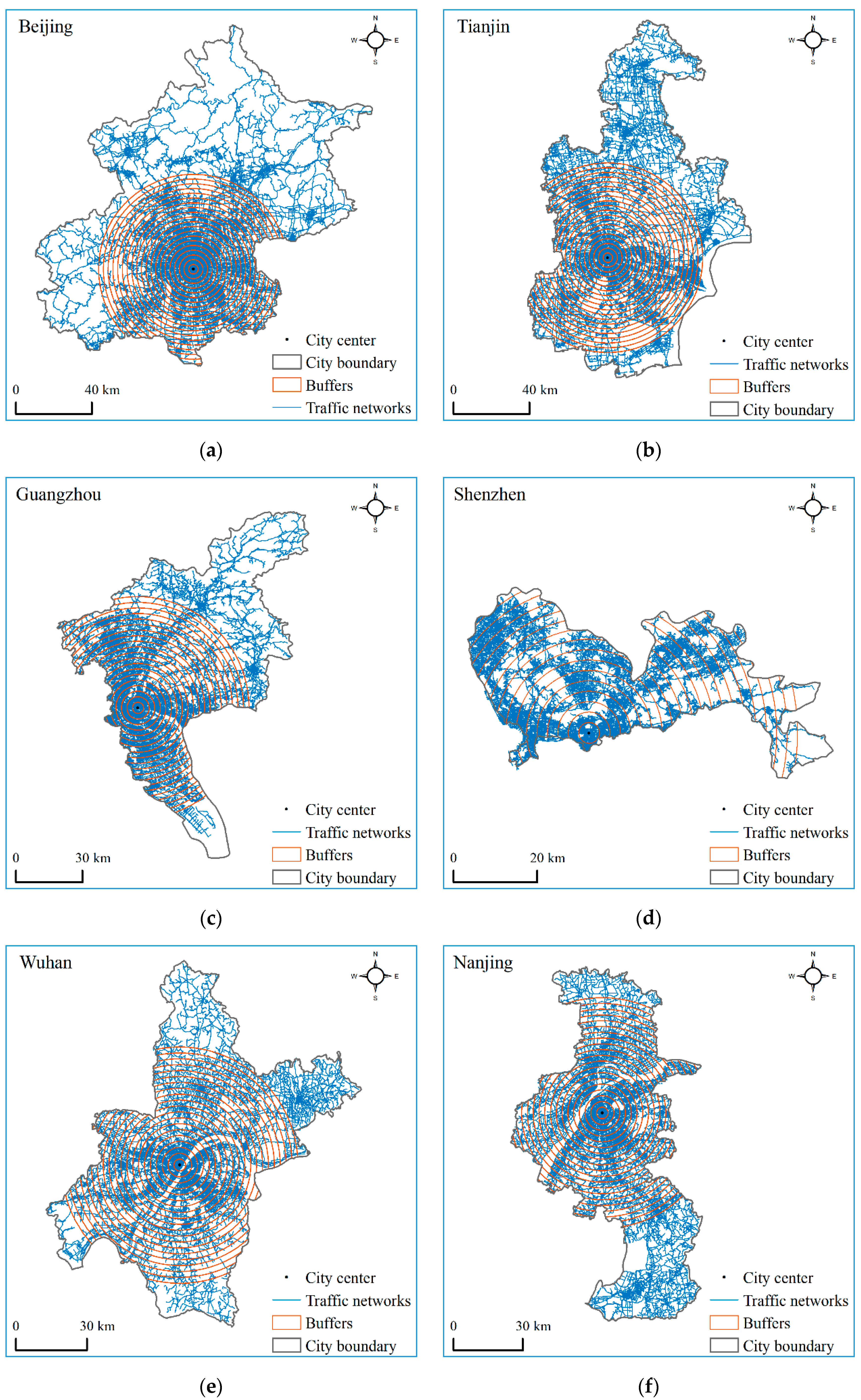
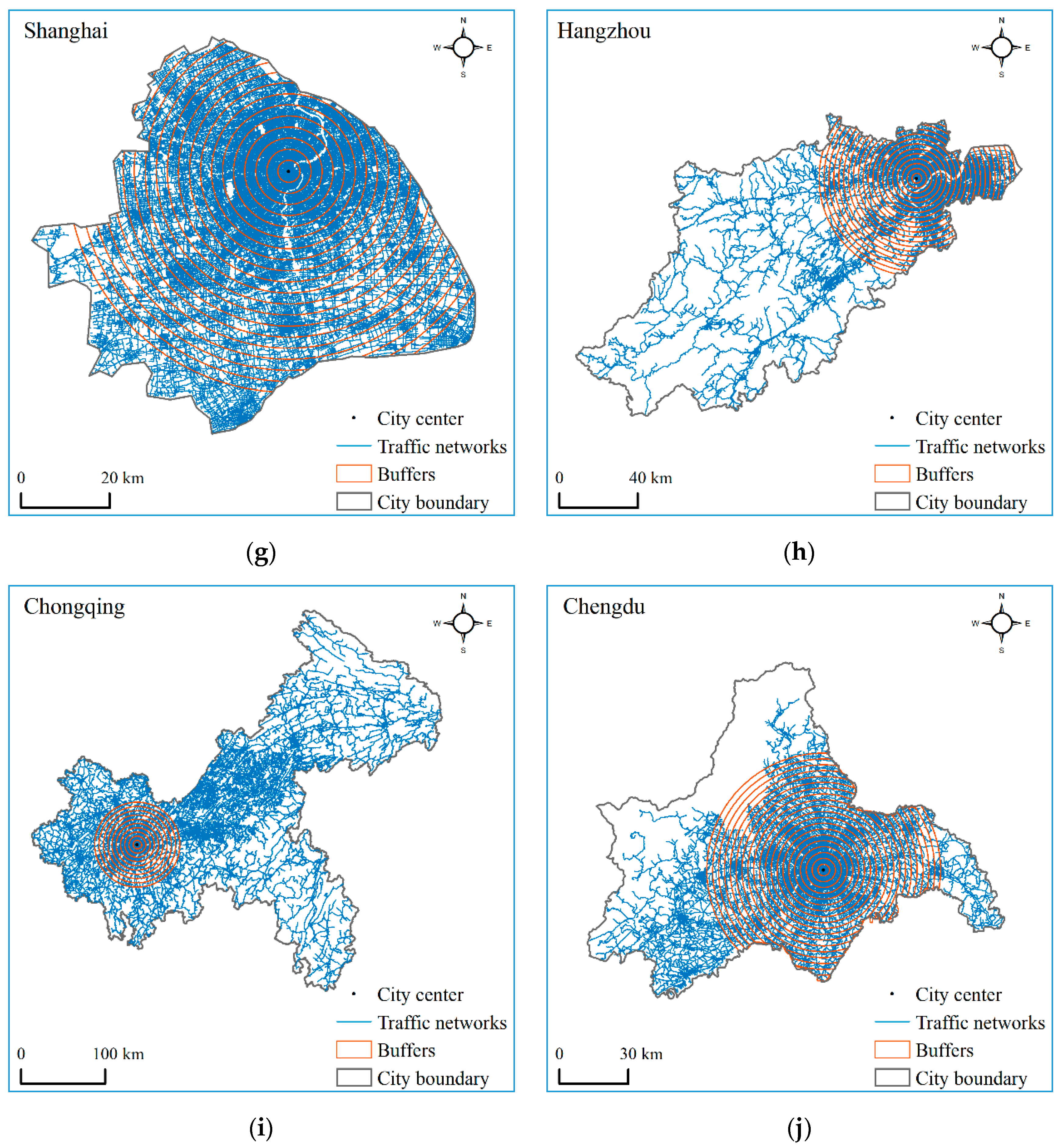
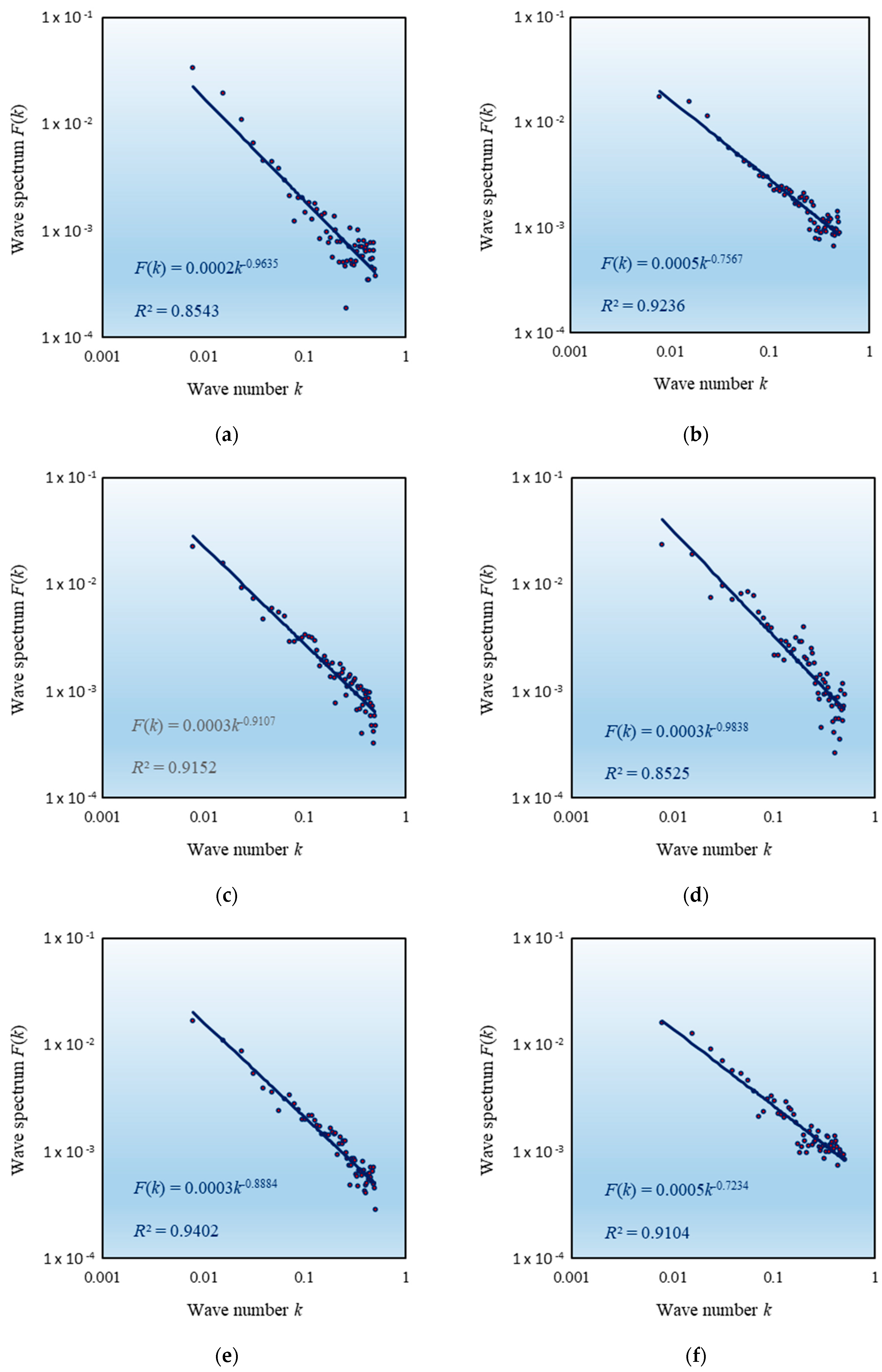
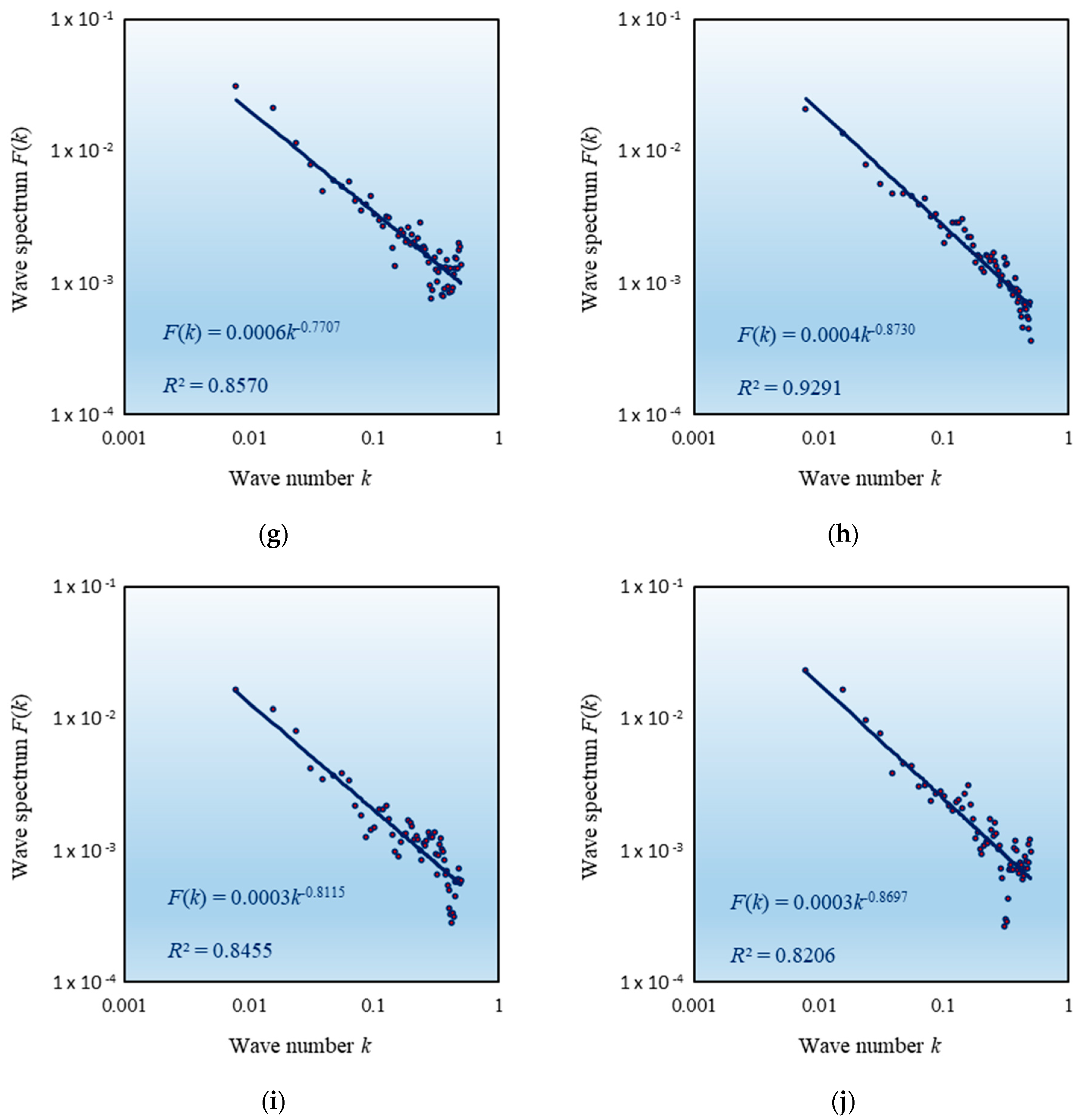
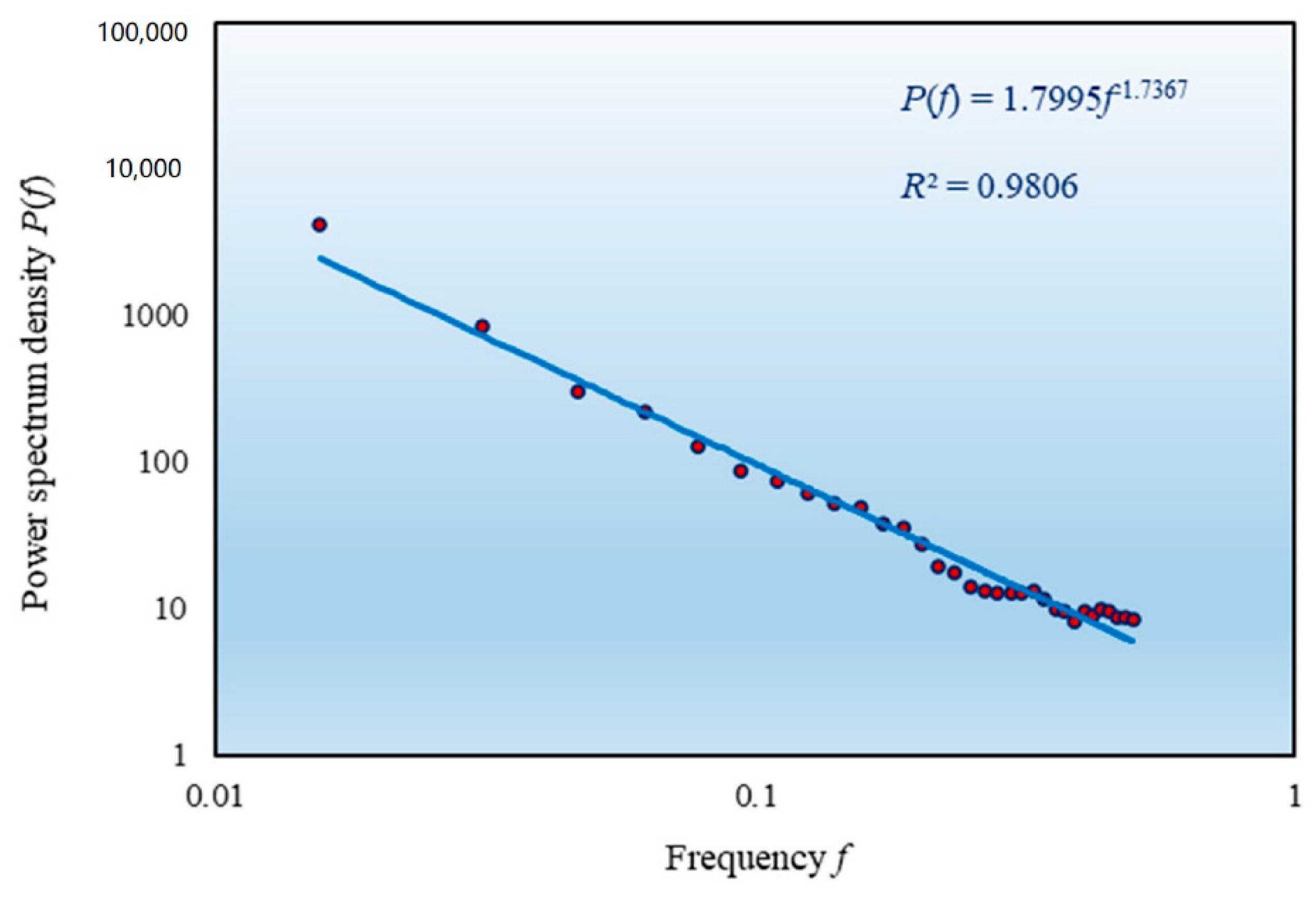
A number of mathematical methods have been developed to make temporal signal analyses based on time series. However, no effective method for spatial signal analysis, which are as important as temporal signal analyses for geographical systems, has been devised. Nonstationary spatial and temporal processes are associated with nonlinearity, and cannot be effectively analyzed by conventional analytical approaches. Fractal theory provides a powerful tool for exploring spatial complexity and is helpful for spatio-temporal signal analysis. This paper is devoted to developing an approach for analyzing spatial signals of geographical systems by means of wave-spectrum scaling. The traffic networks of 10 Chinese cities are taken as cases for positive studies. Fast Fourier transform (FFT) and ordinary least squares (OLS) regression methods are employed to calculate spectral exponents. The results show that the wave-spectrum density distribution of all these urban traffic networks follows scaling law, and that the spectral scaling exponents can be converted into fractal dimension values. Using the fractal parameters, we can make spatial analyses for the geographical signals. The wave-spectrum scaling methods can be applied to both self-similar fractal signals and self-affine fractal signals in the geographical world. This study has implications for the further development of fractal-based spatiotemporal signal analysis in the future.
Keywords: Fourier transform; wave spectrum scaling; fractal dimension; spatial signal; traffic network; Chinese cities Fourier transform; wave spectrum scaling; fractal dimension; spatial signal; traffic network; Chinese cities