Article

Performance Analysis of the Demand-Based Ventilation in a Nordic Apartment Building


1
Department of Mechanical Engineering, School of Engineering, Aalto University, 02150 Espoo, Finland
2
Department of HVAC, College of Urban Construction, Nanjing Tech University, Nanjing 211899, China
*
Author to whom correspondence should be addressed.
Appl. Sci. 2021, 11(1), 176; https://doi.org/10.3390/app11010176
Submission received: 24 November 2020 / Revised: 22 December 2020 / Accepted: 22 December 2020 / Published: 27 December 2020

Abstract

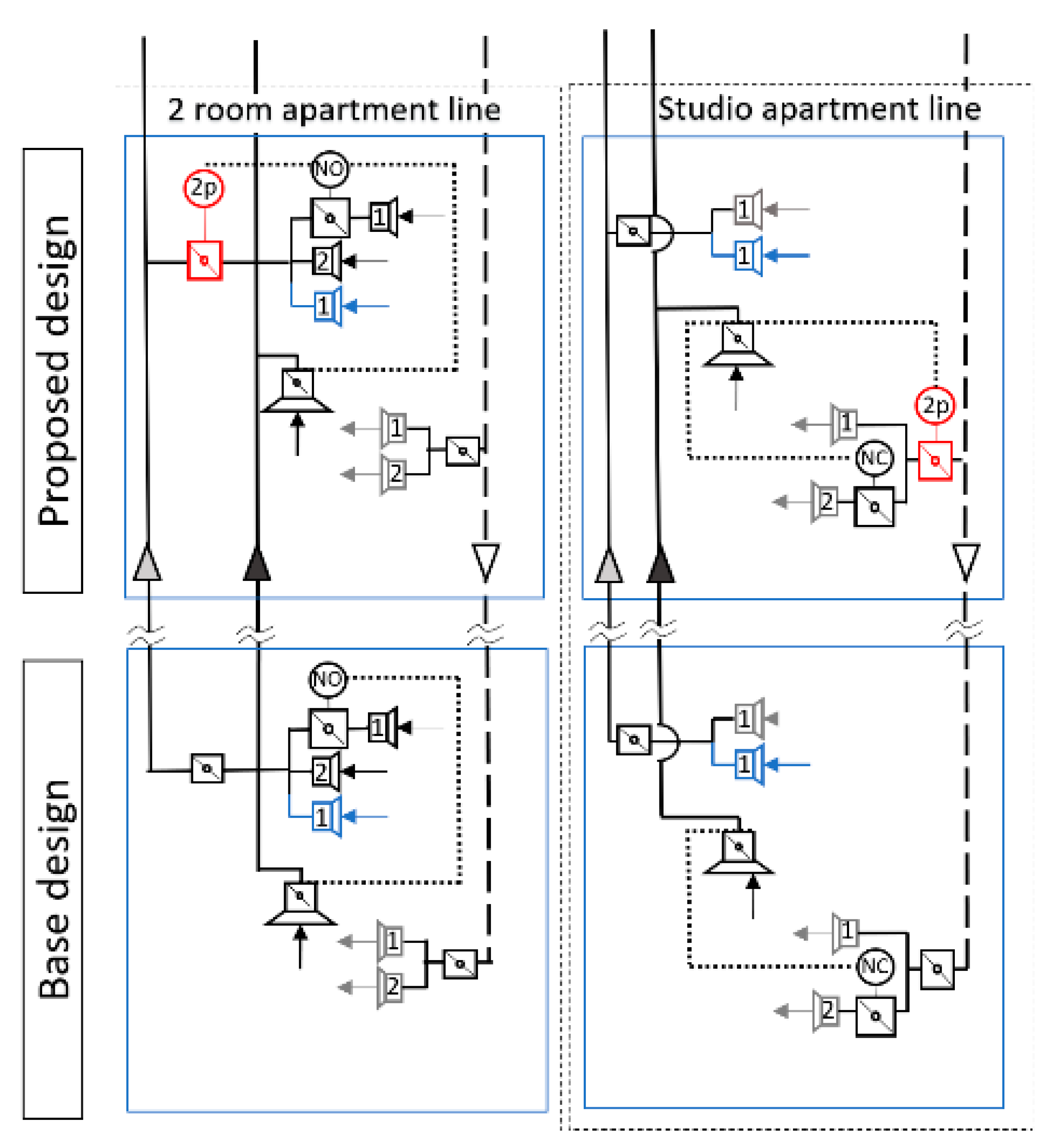
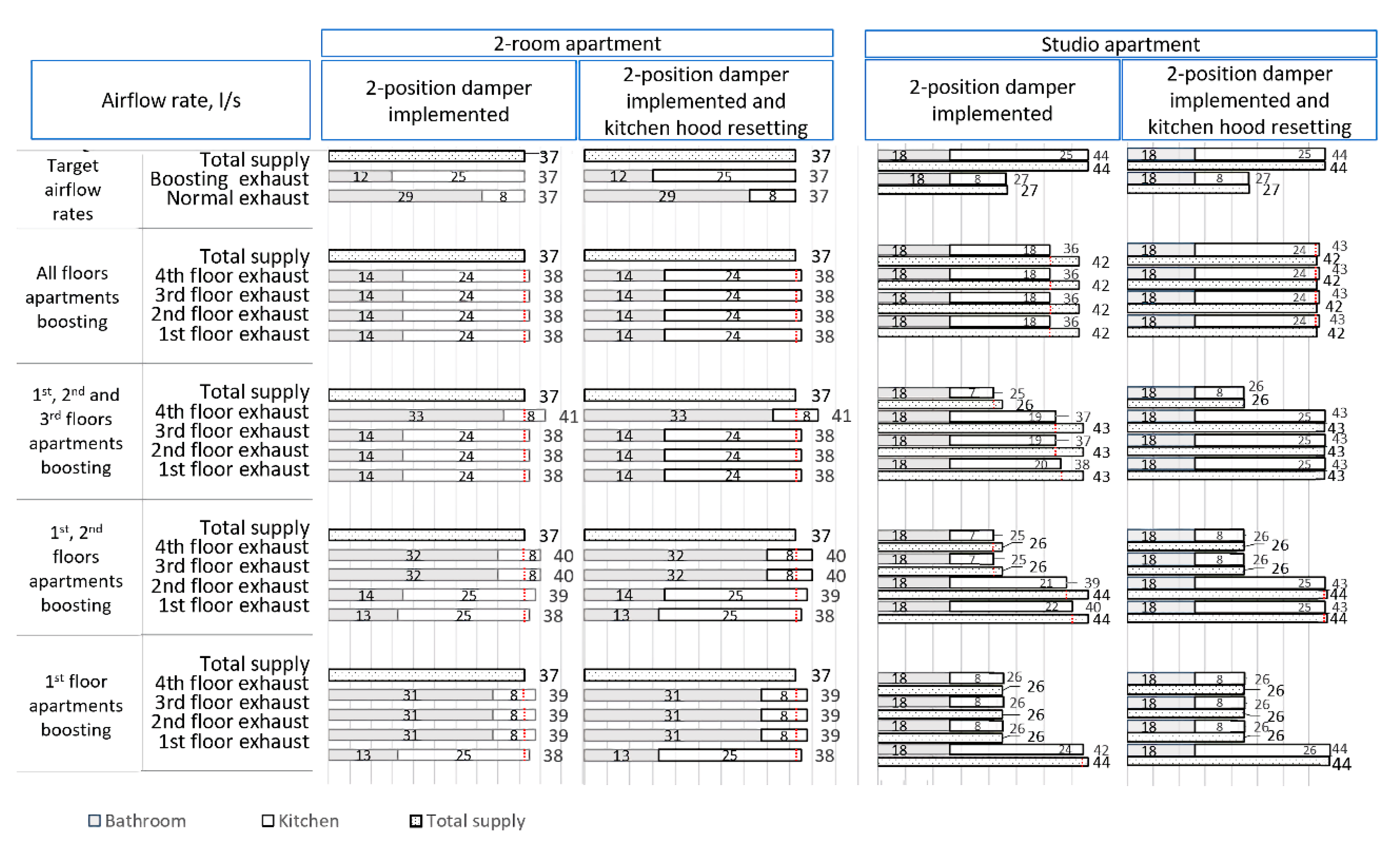
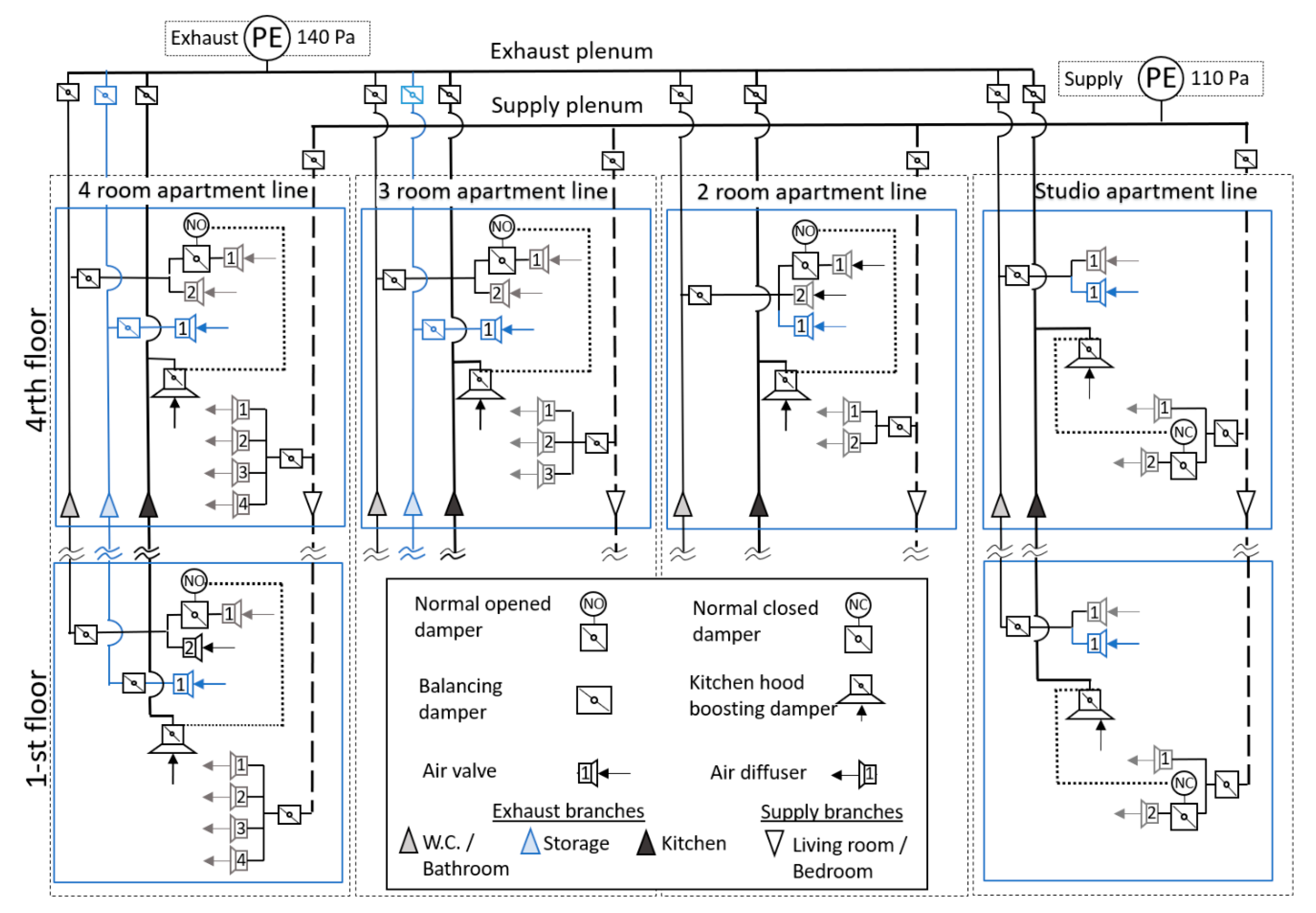
In general, new Finnish apartment buildings are equipped with mechanical balanced demand-based ventilation. The airflow rate in the kitchen hood is boosted on demand to improve pollutant extraction during cooking. However, in practice, it has been found that the system does not work as desired. The focus of the paper was to present the simulation results from a case building equipped with a ventilation system that is commonly used in Finland. In the analysis, the airflow rates are calculated for the room, apartment, and air handling unit (AHU) levels for various ventilation mode scenarios. A significant imbalance of over 10% between the supply and exhaust airflows at the room and apartment levels was observed in the boosting mode. This imbalance creates a pressure difference over the building envelope, particularly in small studio apartments. The calculated pressure difference for future buildings with high airtightness were at the warning level of 40 Pa below atmospheric level. The kitchen hood exhaust system showed a 28% lower airflow rate in certain scenarios. A new solution to guarantee the designed airflow rates was proposed and assessed. The new solution consists of replacing the apartment level flow control damper and a new balancing method for the kitchen hood exhaust branch. The proposed design was able to stay within 10% of the designed airflow rates in all operation modes.
Keywords: ventilation; demand-based ventilation; apartment building; kitchen boosting; Nordic climate ventilation; demand-based ventilation; apartment building; kitchen boosting; Nordic climate