Article

Development of a Low Cost and Path-free Autonomous Patrol System Based on Stereo Vision System and Checking Flags


Department of Electrical and Electronic Engineering, Chung Cheng Institute of Technology, National Defense University, No. 75, Shiyuan Rd., Daxi District, Taoyuan City 33551, Taiwan
*
Author to whom correspondence should be addressed.
Appl. Sci. 2020, 10(3), 974; https://doi.org/10.3390/app10030974
Submission received: 10 January 2020 / Revised: 27 January 2020 / Accepted: 31 January 2020 / Published: 2 February 2020
(This article belongs to the Special Issue Applications of Intelligent Control Methods in Mechatronic Systems)

Abstract

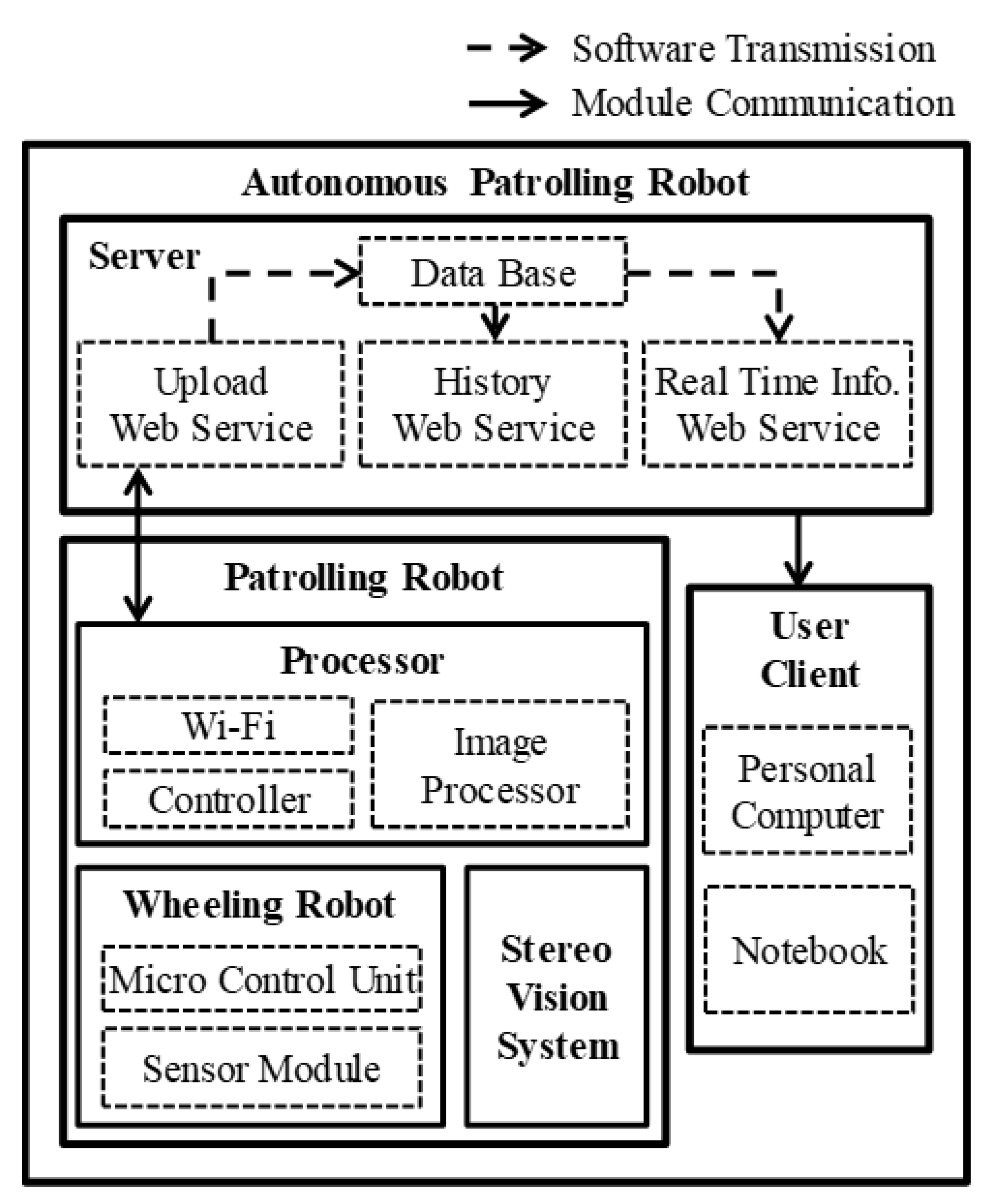
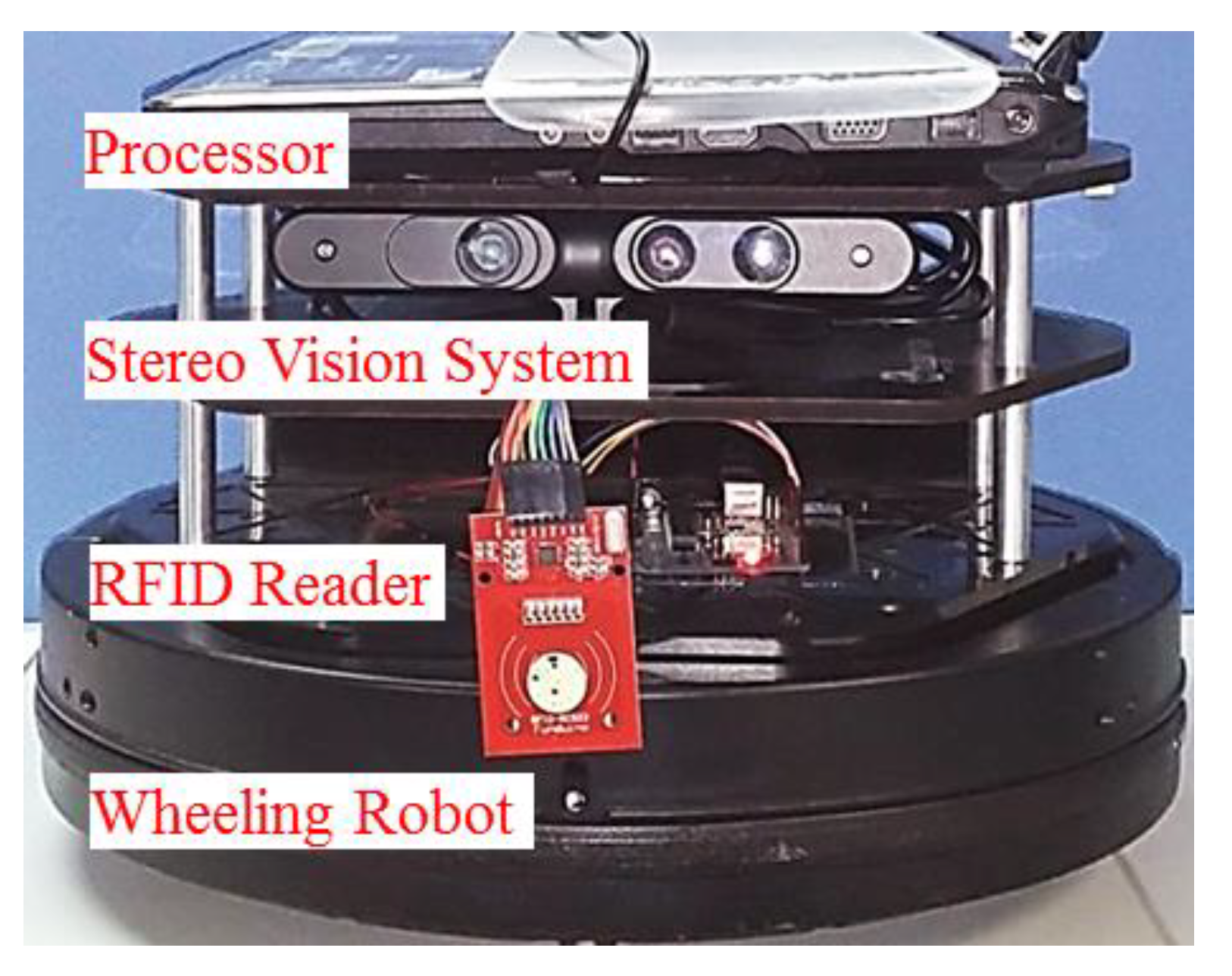
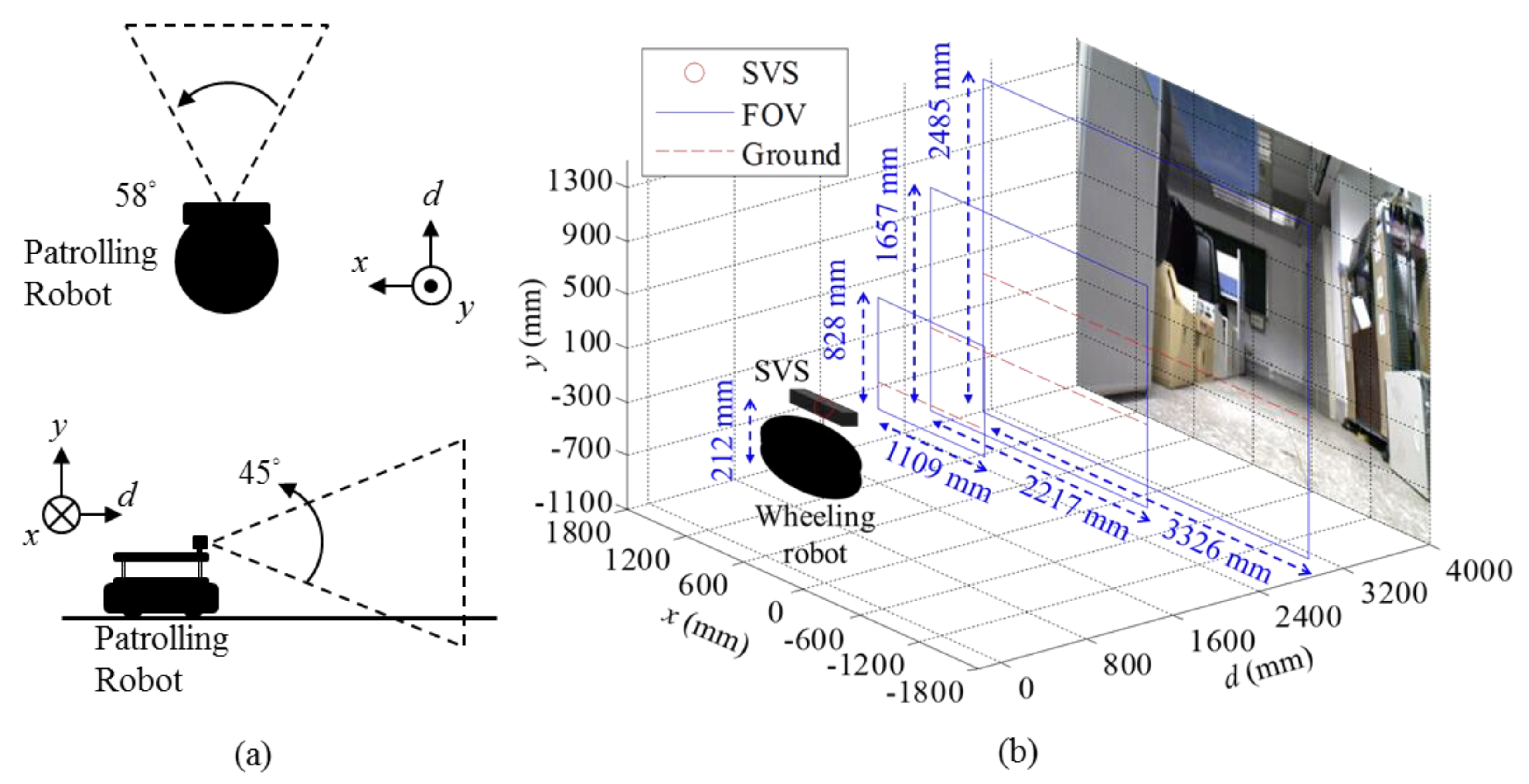
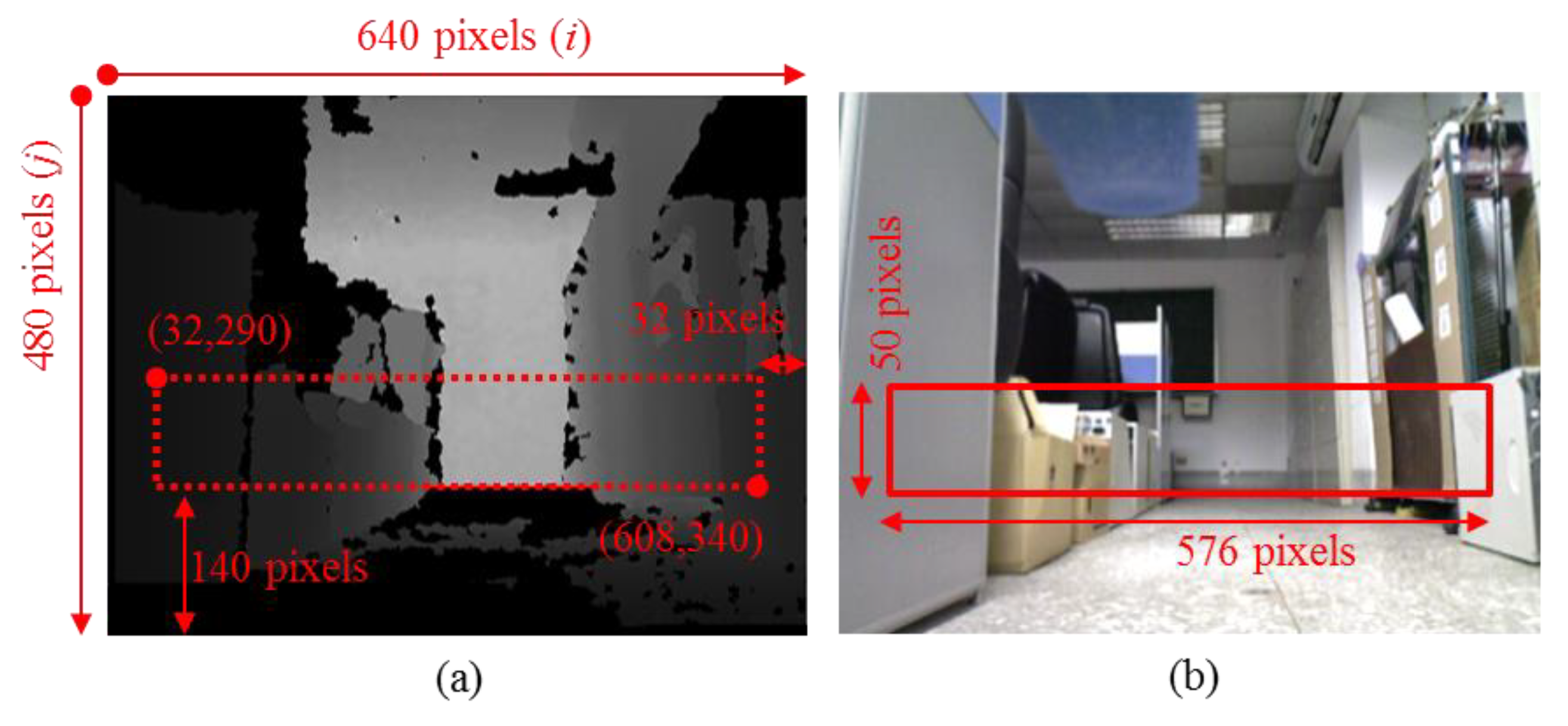
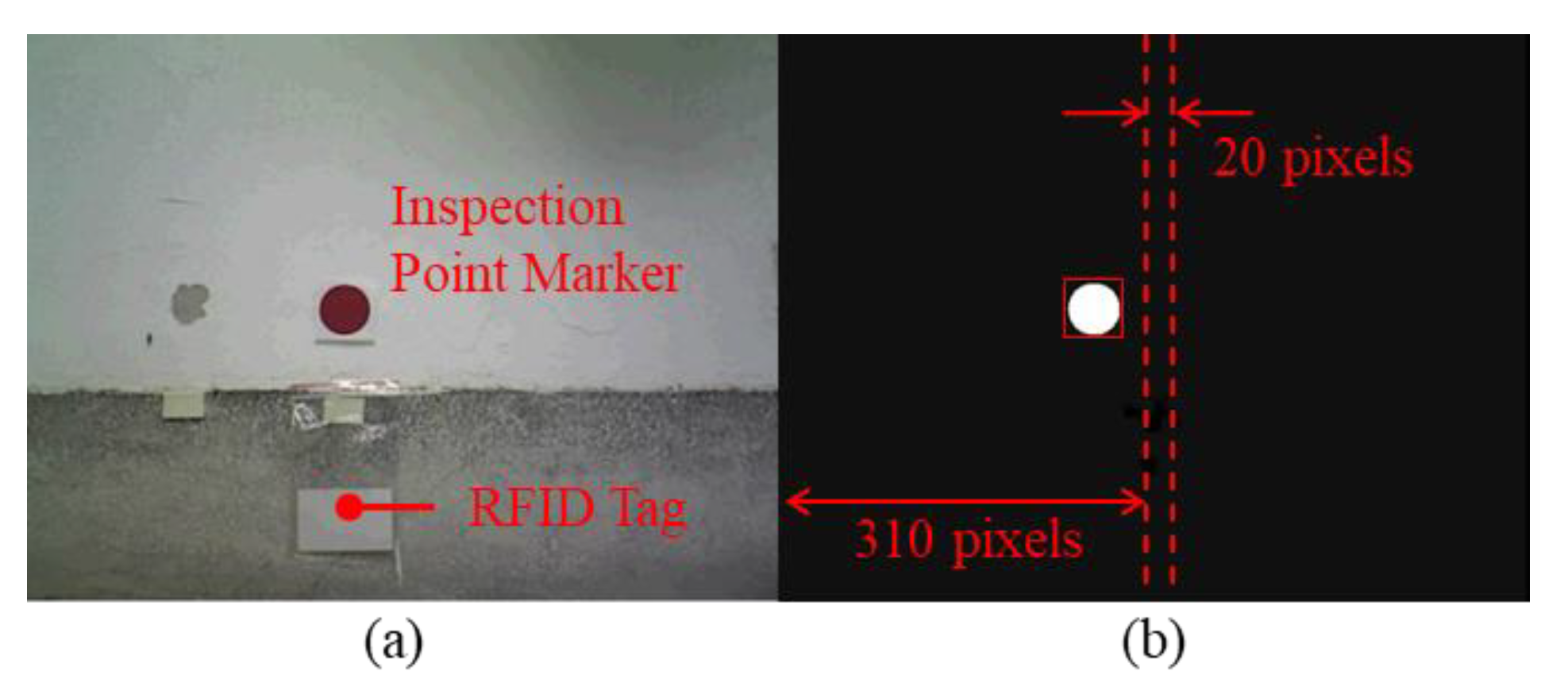
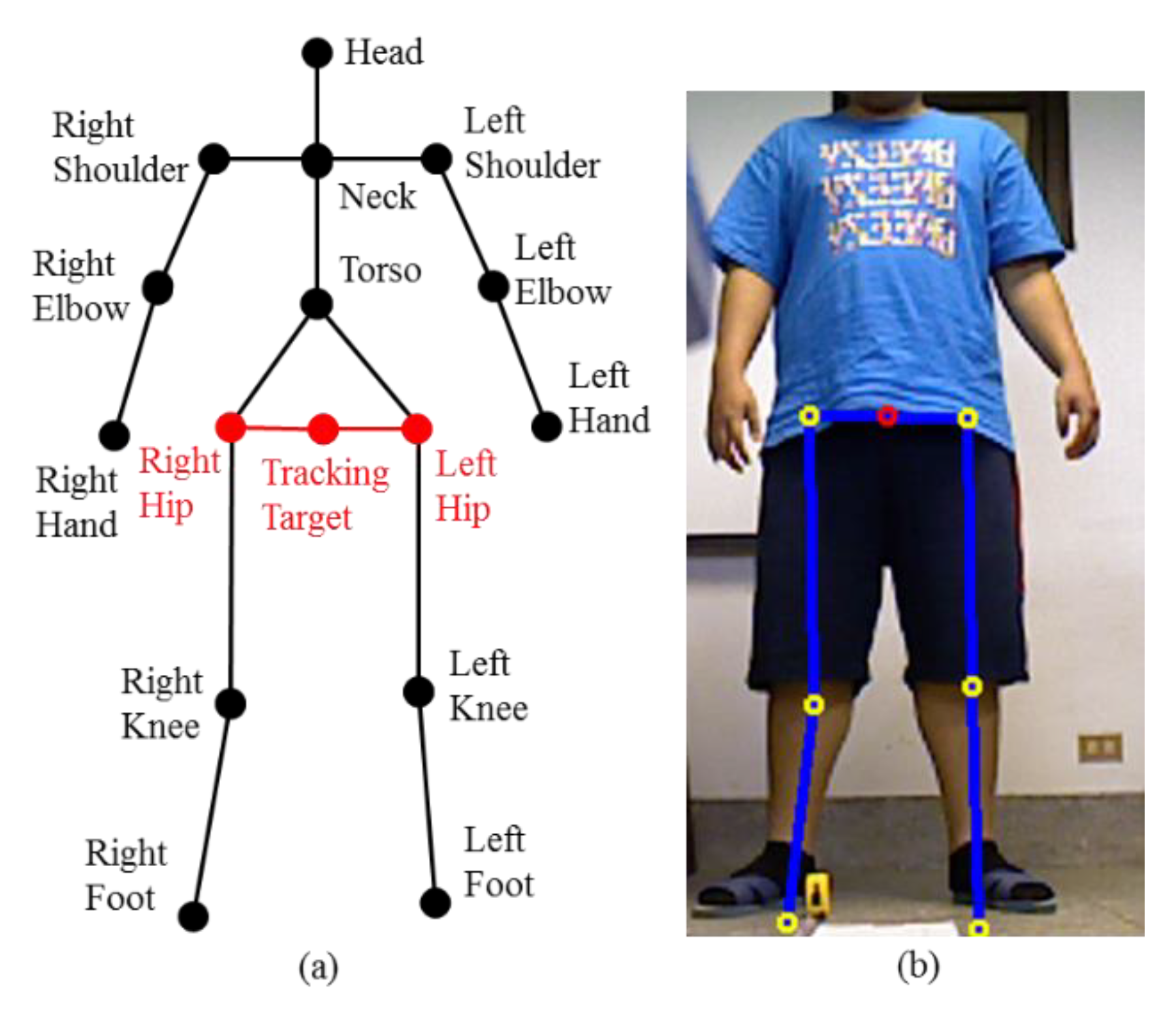
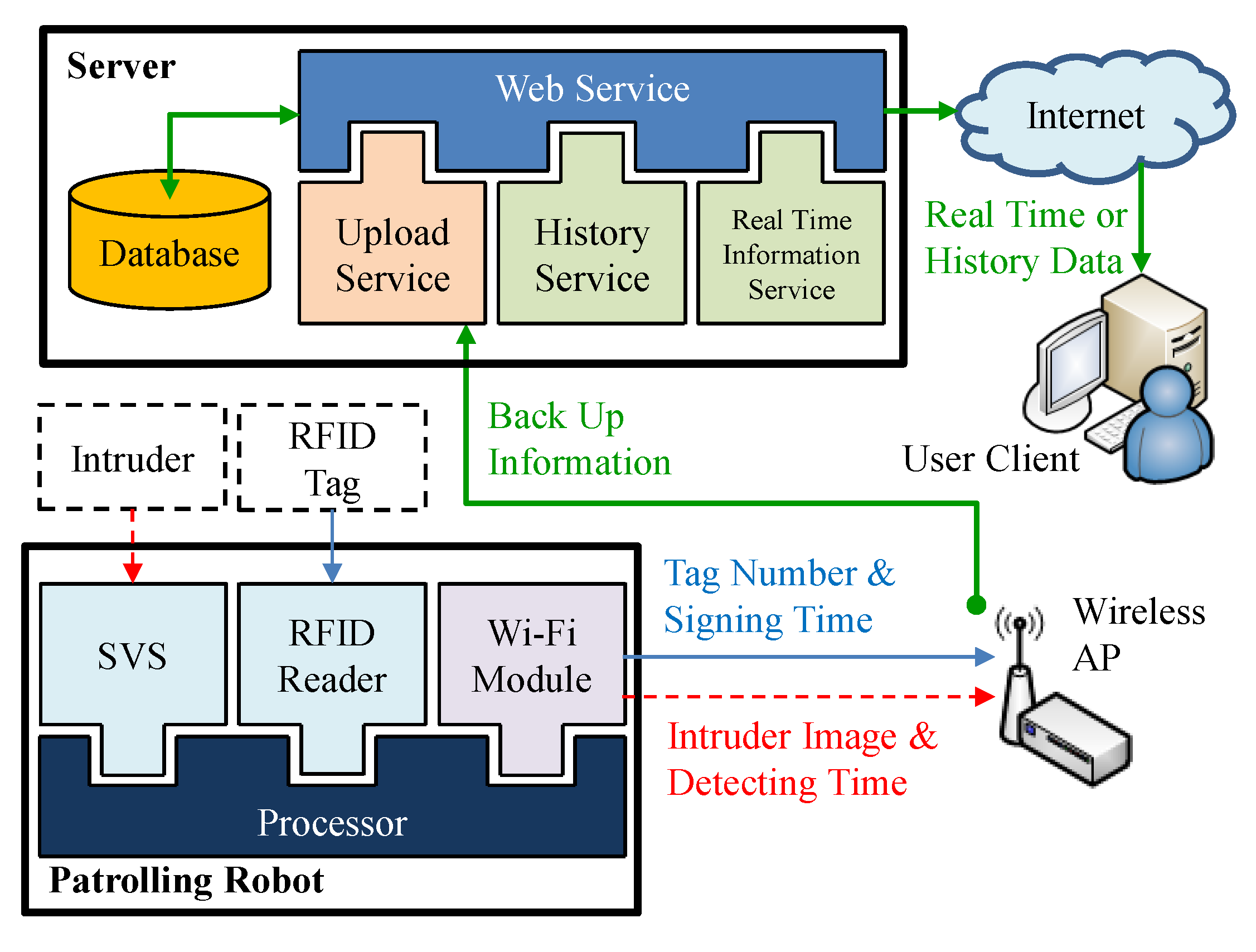
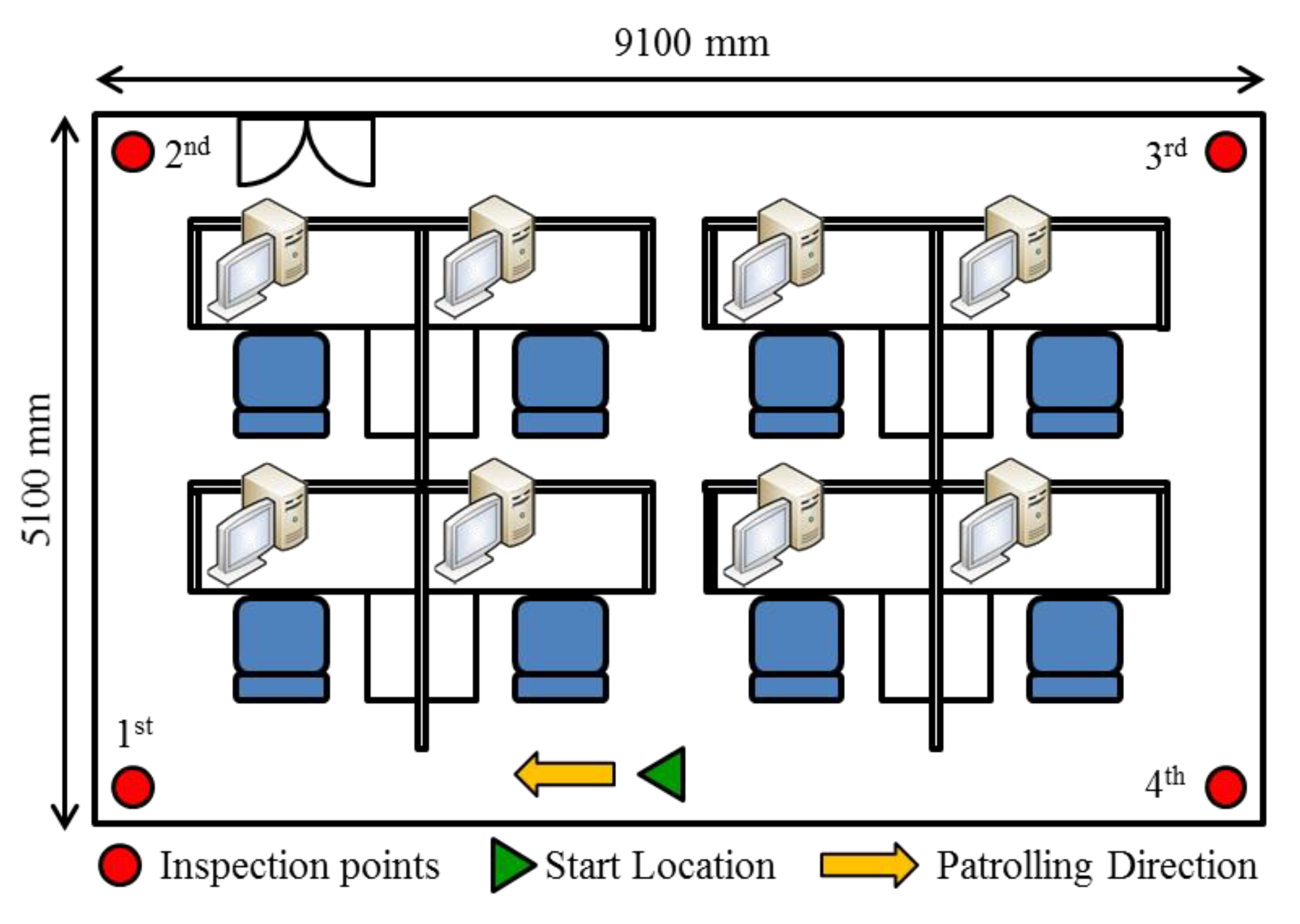
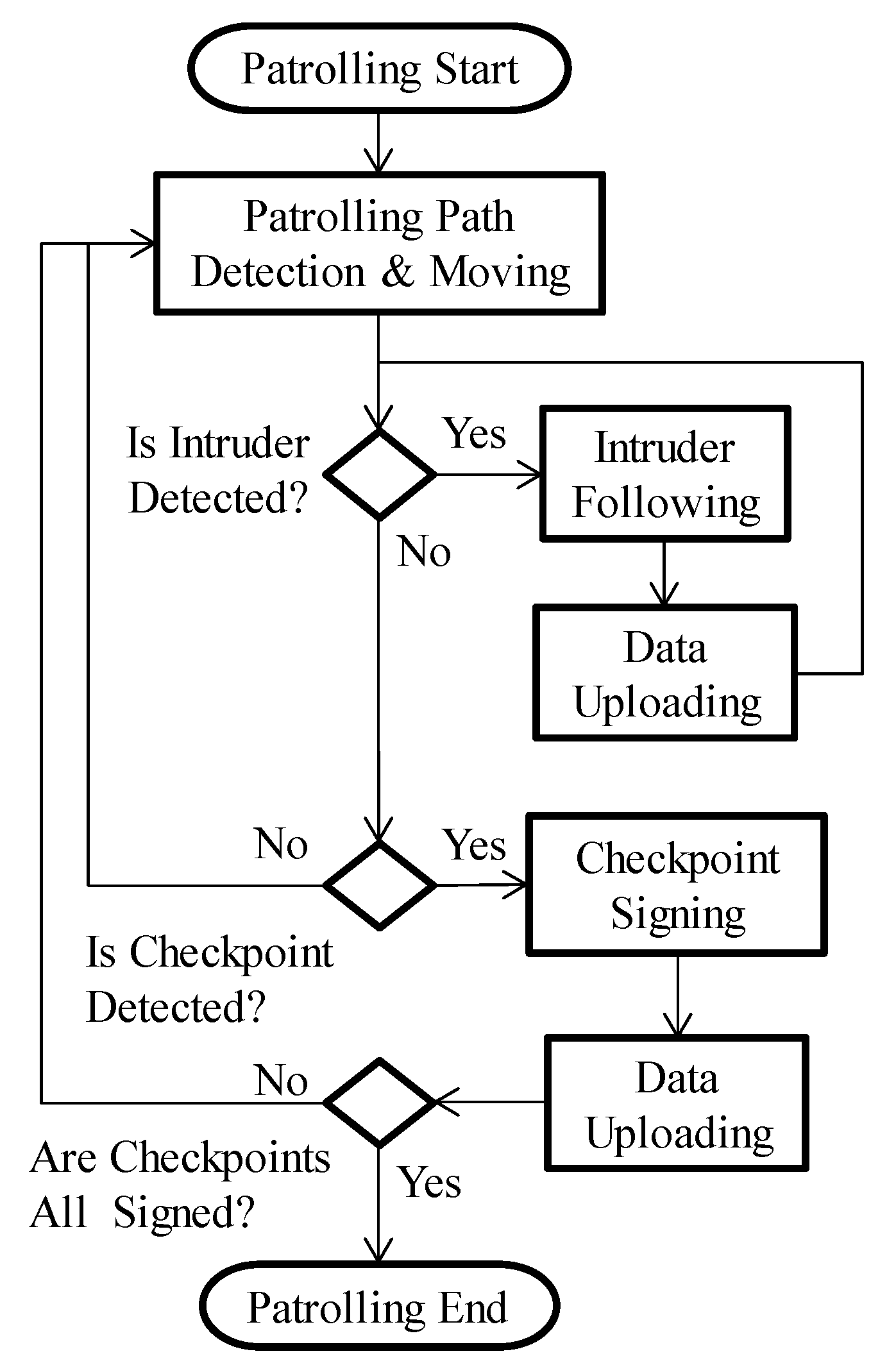
Nowadays, security guard patrol services are becoming roboticized. However, high construction prices and complex systems make patrol robots difficult to be popularized. In this research, a simplified autonomous patrolling robot is proposed, which is fabricated by upgrading a wheeling household robot with stereo vision system (SVS), radio frequency identification (RFID) module, and laptop. The robot has four functions: independent patrolling without path planning, checking, intruder detection, and wireless backup. At first, depth information of the environment is analyzed through SVS to find a passable path for independent patrolling. Moreover, the checkpoints made with RFID tag and color pattern are placed in appropriate positions within a guard area. While a color pattern is detected by the SVS, the patrolling robot is guided to approach the pattern and check its RFID tag. For more, the human identification function of SVS is used to detect an intruder. While a skeleton information of the human is analyzed by SVS, the intruder detection function is triggered, then the robot follows the intruder and record the images of the intruder. The recorded images are transmitted to a server through Wi-Fi to realize the remote backup, and users can query the recorded images from the network. Finally, an experiment is made to test the functions of the autonomous patrolling robot successfully.
Keywords: patrolling system; low cost; wheeling robot; intruder detection; web service; SLAM patrolling system; low cost; wheeling robot; intruder detection; web service; SLAM