

Article

Pedagogy over Technology: Evidence from a European Study of Generation Z Students in Entrepreneurship Education


1
Faculty of Economics and Business, RISEBA University of Applied Sciences, LV-1048 Riga, Latvia
2
Faculty of Business Management, Vilniaus Kolegija, 08105 Vilnius, Lithuania
*
Author to whom correspondence should be addressed.
Adm. Sci. 2026, 16(9), 458; https://doi.org/10.3390/admsci16090458 (registering DOI)
Submission received: 21 July 2026 / Revised: 13 September 2026 / Accepted: 15 September 2026 / Published: 18 September 2026
(This article belongs to the Section International Entrepreneurship)

Abstract

The rapid expansion of Generation Z in entrepreneurship education has intensified debates about whether educational innovation should prioritise digital technologies or pedagogical quality. Although technology-enhanced learning is widely promoted, empirical evidence comparing the relative importance of teaching methods and digital pedagogical tools in meeting students’ educational expectations remains limited. This study addresses this gap by examining the relationship between teaching methods, technology-based pedagogical tools, and students’ perceived fulfilment of expectations in entrepreneurship education. Using survey data from 2659 students across multiple European countries, hierarchical regression analysis was employed to assess the incremental explanatory power of teaching methods and digital tools beyond demographic characteristics. The findings demonstrate that teaching methods account for the largest share of explained variance, with practice relevance and integration of theory and practice emerging as the strongest predictors, while support for entrepreneurial activities and psychologically safe learning environments also showed significant positive associations with expectation fulfilment. Technology-based pedagogical tools provide only modest additional explanatory power, with positive associations observed for video platforms, artificial intelligence, and augmented reality. The results are consistent with the view that technology contributes to educational experiences primarily as a complement to coherent pedagogical design. The study contributes to entrepreneurship education by demonstrating that pedagogy, rather than technology adoption alone, remains the primary contributor to perceived educational quality for digitally native learners.

1. Introduction

In recent years, educational institutions worldwide have experienced a profound shift in their student populations, driven by a generational change. With Generation Z, born roughly between 1995 and 2010, now dominating tertiary education (Leyts, 2023; Jayatissa, 2023; McKinsey & Company, 2018), educators are being challenged to rethink traditional pedagogical approaches (McCrindle, 2025; McCrindle & Wolfinger, 2011; Seemiller & Grace, 2016). New generations of entrepreneurship students, born into an era of rapid digital advancement, global interconnectivity, and heightened social awareness, bring distinct learning preferences shaped by their environment, values, and expectations (Habibi & Zabardast, 2020). Researchers recommend that entrepreneurial education must adapt swiftly (Neck & Greene, 2011). Unlike conventional disciplines, entrepreneurship thrives on experiential, innovative, and future-focused learning models. Students in this domain not only require knowledge but also the capacity to navigate uncertainty inherent in entrepreneurial processes, solve real-world problems, and generate impact (Gibb, 2002; Gura, 2016).
Studies on Generation Z suggest a preference for active, visual, and technology-enhanced learning (Seemiller & Grace, 2016), while emerging reports highlight a strong inclination toward gamified, personalised, and immersive, technology-rich educational experiences (World Economic Forum, 2020). Given that Generation Z has grown up as digital natives (Prensky, 2001; Turner, 2015), it is expected that they have a tech-savvy learning style, as the use of technology has shaped their learning (Szymkowiak et al., 2021). To meet the educational needs of young learners, educators are called to adapt their teaching methods and incorporate innovative, technology-enhanced pedagogical tools (Shorey et al., 2021; Seemiller & Grace, 2017).
Teaching methods refer to structured pedagogical approaches that guide the design and facilitation of learning activities to achieve intended learning outcomes, whereas pedagogical tools are the concrete resources and technologies used to support and operationalise these approaches in educational practice (Biggs & Tang, 2011; Laurillard, 2012; Redecker, 2017). Still, there is a lack of empirical evidence to recommend which technology-based pedagogical tools are preferred, and researchers call for studies that specifically address educational practices and the role of technology and AI in young people’s learning (Chardonnens, 2025).
Recent reviews indicate that entrepreneurship education research has primarily focused on learning outcomes, entrepreneurial intentions (Colombelli et al., 2022), and technology acceptance, while giving comparatively little attention to students’ lived learning experiences and their evaluations of teaching methods (Wong & Chan, 2022; de Sousa et al., 2024). Although entrepreneurship education increasingly incorporates innovative teaching methods and digital technologies, empirical evidence on how these innovations meet students’ expectations remains limited. Existing studies have largely examined learning outcomes and entrepreneurial competencies (Fayolle & Gailly, 2015; Rauch & Hulsink, 2015), technology acceptance and usage intentions (Venkatesh et al., 2012), or the effectiveness of individual instructional approaches and digital tools, such as simulations, gamification, and artificial intelligence (Neck & Greene, 2011; Sousa & Rocha, 2019). However, considerably less attention has been paid to expectation fulfilment as an evaluative criterion, particularly from the learners’ perspective. Furthermore, research rarely investigates multiple innovative teaching methods and pedagogical tools within a single analytical framework, thereby limiting comparative understanding of their relative importance in ensuring fulfilment of students’ expectations (Chotisarn & Phuthong, 2026). Perceived fulfilment of expectations in entrepreneurship education refers to a student’s overall subjective evaluation of the extent to which their experienced entrepreneurship education corresponds to, or meets, their prior expectations regarding the quality, relevance, support, and learning experience provided by the programme (Oliver, 1980).
This gap is especially relevant for Generation Z students, whose learning expectations, digital fluency, and engagement patterns differ from those of previous generations (Seemiller & Grace, 2016; Mohr & Mohr, 2017). Understanding whether teaching methods and pedagogical tools align with the expectations of these digital-native learners is important for educators and curriculum designers seeking to foster entrepreneurial mindsets. When educational offerings fail to meet student expectations, they may reduce engagement, weaken learning outcomes, and limit the development of future-ready entrepreneurial talent (Eccles & Wigfield, 2002). Despite the growing body of research on educational technologies in entrepreneurship education, few studies have examined whether teaching methods fulfil students’ expectations, and almost none have compared the relative contributions of technology-based pedagogical tools within a single analytical model.
Moreover, at the European policy level, digital transformation in higher education is increasingly framed not as technology adoption per se, but as the development of high-quality, inclusive, and pedagogically purposeful digital learning environments. The European Commission’s Digital Education Action Plan 2021–2027 identifies two strategic priorities: fostering a high-performing digital education ecosystem and strengthening digital skills and competences, while emphasising institutional digital capacity, digitally competent educators, high-quality content, secure platforms, and the effective use of emerging technologies in education (European Commission, 2020). This orientation is reinforced by the European Strategy for Universities, which positions universities as key actors in the green and digital transitions and calls for strengthened digital capacity, infrastructure, and skills among students, academic staff, and researchers (European Commission, 2022). At the broader European Higher Education Area (EHEA) level, pedagogical quality remains anchored in the Standards and Guidelines for Quality Assurance in the European Higher Education Area (ESG), which apply irrespective of the mode of educational delivery and emphasise student-centred learning, appropriate teaching methods, learning support, and continuous quality enhancement (European Association for Quality Assurance in Higher Education et al., 2015). More recently, the Tirana Communiqué explicitly linked digital transformation and artificial intelligence with these quality principles, committing EHEA countries to ethical, trustworthy, responsible, and rights-based uses of AI in learning and teaching while maintaining student-centred, quality-assured provision (European Higher Education Area, 2024). Taken together, these European policy frameworks support a view of digital transformation in which technological innovation should complement rather than displace sound pedagogical design. This position is consistent with the present study’s distinction between teaching-method quality and technology-based pedagogical tools and justifies the relevance of this research.
Accordingly, the aim of this study is to examine the relative contributions of teaching methods and technology-based pedagogical tools to Generation Z students’ perceived fulfilment of expectations in entrepreneurship education. Specifically, the study examines whether teaching methods are positively associated with expectation fulfilment and whether technology-based pedagogical tools provide additional explanatory value beyond teaching methods. In this framework, Laurillard’s Conversational Framework is used to explain the pedagogical mechanisms by which technology may contribute to students’ educational experiences, rather than conceptualising technology as an independent alternative to pedagogy.
In doing so, we use survey data that were classified into two conceptual categories: teaching methods and technology-based pedagogical tools, reflecting the use of these dimensions in entrepreneurship education programmes and students’ perceptions of the fulfilment of their educational expectations. We argue that teaching methods account for most of the variance in expectation fulfilment, while technology-based pedagogical tools serve as complementary explainers, reinforcing effective pedagogical design rather than replacing it.

2. Theoretical Background

2.1. What Do Young Learners Expect from Entrepreneurship Education?

In this study, a distinction is made between entrepreneurship education, as an educational domain, and entrepreneurial pedagogy, as an approach to teaching and learning. Entrepreneurship education refers to organised educational provision, such as courses, modules, or programmes, concerned with entrepreneurship, entrepreneurial activity, venture creation, and the development of related knowledge and competencies. Entrepreneurial pedagogy, by contrast, refers to the pedagogical approaches through which such learning is facilitated, particularly experiential, action-oriented, collaborative, and practice-based methods that enable students to engage with entrepreneurial problems and processes rather than merely acquire knowledge about entrepreneurship (Fayolle & Gailly, 2008; Neck & Greene, 2011). Thus, entrepreneurship may constitute the content and context of education, whereas entrepreneurial pedagogy concerns how learning is designed and enacted. Although the two frequently overlap, they should not be treated as synonymous: an entrepreneurship course may employ conventional teaching methods, while entrepreneurial pedagogies may also be applied beyond dedicated entrepreneurship courses. In the present study, entrepreneurship education refers primarily to the curricular context in which respondents encounter entrepreneurship and business-related learning, while teaching methods and pedagogical tools capture how that education is delivered.
Generation Z (born between approximately 1995 and 2010) are digital natives (Prensky, 2001), shaped by ubiquitous technology, fast-paced media environments, and heightened awareness of global challenges (McCrindle & Wolfinger, 2011; Seemiller & Grace, 2016). Researchers state that these cohorts prioritise meaningful, tech-enabled, and socially relevant learning experiences. Generation Z is characterised by self-reliance, digital fluency, and a desire for flexibility (Turner, 2015); the youngest of them is growing up in a world that is AI-integrated, immersive, and emotionally intelligent (McCrindle, 2025; Leyts, 2023). They demonstrate a strong preference for learning environments that emphasise interactivity, personalisation, visual engagement, and real business relevance (McKinsey & Company, 2018).
Prior research highlights several consistent learning preferences relevant to entrepreneurship education, particularly regarding technological tools and teaching methods. According to Seemiller and Grace (2016, 2017), Generation Z learners expect visual and immersive content—students respond positively to video, infographics, augmented reality, and virtual reality formats, which enhance engagement and retention. They value digital and technological immersion—seamless integration of mobile platforms, digital collaboration tools, and AI-supported environments (Chardonnens, 2025; Chan & Lee, 2023).
These learners expect experiential and active learning, with project-based tasks, simulations, internships, and real-world problem-solving valued for their applied orientation and relevance to entrepreneurial skills (Gibb, 2002; Gura, 2016; Kolb, 1984). Scholars recommend emphasising personalised and adaptive learning; for example, tailored learning paths supported by gamified, AI-driven platforms enable students to progress at their own pace and boost motivation (Kassenkhan et al., 2026; Saxena & Mishra, 2021). Learning should be purpose-driven and ethical. The learning environment should be supportive, safe, and open (Shorey et al., 2021). Educational practices that integrate social responsibility, ethics, and global awareness resonate with learners’ values and increase motivation, particularly in entrepreneurship education (Seemiller & Grace, 2016; World Economic Forum, 2020). Equally important are collaborative and social learning, which include teamwork, peer-to-peer interaction, and co-creation in both face-to-face and digital settings, as these foster knowledge construction and engagement (Rylance-Graham & Ismail, 2026; Wang et al., 2024). Moreover, Generation Z learners expect instant feedback and formative assessment more than previous generations. Researchers conclude that frequent and real-time feedback mechanisms enable continuous improvement and sustain student engagement (Eccles & Wigfield, 2002).

2.2. Theoretical Framework and Hypotheses

Understanding how Generation Z evaluates entrepreneurship education requires a theoretically integrated perspective. Experiential Learning Theory (Kolb, 1984), Constructivist and Social Learning Theories (Piaget & Inhelder, 1972; Vygotsky, 1978), and Expectancy–Value Theory (Eccles & Wigfield, 2002) explain complementary dimensions of learning by addressing how students acquire knowledge, interact with others, and sustain motivation in digitally mediated educational environments. Although these theories were developed before the emergence of digital-native learners, together they provide a robust foundation for explaining how teaching methods and technology-based pedagogical tools influence students’ perceived fulfilment of educational expectations. To explain the interaction between learners and technology, the above-mentioned theories are supported by Laurillard’s Conversational Framework (Laurillard, 2002, 2012).
Experiential Learning Theory (Kolb, 1984) argues that effective learning occurs through a continuous process of concrete experience, reflective observation, abstract conceptualisation, and active experimentation. Entrepreneurial pedagogy is frequently characterised by experiential and practice-oriented learning, reflecting the view that entrepreneurial competencies are developed not only through knowledge acquisition but also through authentic activities, experimentation, and action (Gura, 2016; Neck & Greene, 2011). Within entrepreneurship education, such pedagogical approaches enable students to engage directly with entrepreneurial problems and connect theoretical knowledge with practical experience. For Generation Z students, who value learning through authentic business challenges and immediate application of knowledge (Drewery et al., 2023), teaching methods that connect theory with practice and emphasise real-world relevance should increase the perceived value of entrepreneurship education. Although digital technologies increasingly support experiential learning through rapid feedback and continuous experimentation, they do not replace the underlying pedagogical process (McCrindle, 2025). Instead, the theory suggests that students’ educational expectations are primarily fulfilled through high-quality teaching methods that provide authentic, practice-oriented learning experiences (Kolb, 1984; McCarthy, 2016).
Constructivist Learning Theory (Piaget & Inhelder, 1972) and Social Constructivism (Vygotsky, 1978) further explain that knowledge is actively constructed through exploration, interaction, and collaboration. Entrepreneurial learning therefore depends not only on practical experience but also on supportive relationships, dialogue, and opportunities for co-creation. Previous research shows that Generation Z learners prefer collaborative learning, peer interaction, and student-centred educational environments (Barnes & Noble College, 2015). While digital technologies expand opportunities for collaboration, classical constructivist principles remain applicable, as technology serves as a medium for social learning rather than a substitute for pedagogical interaction.
Together, Experiential Learning Theory and Constructivist Learning Theory indicate that pedagogical quality constitutes the primary mechanism through which entrepreneurship education creates educational value for digital-native learners. While experiential learning focuses on reflection and action, constructivist learning focuses on learning through interaction; thus, pedagogy can create an environment that fosters action, reflection, and interaction, while technological tools may help enhance interaction. Accordingly, higher perceived quality of teaching methods, including practice relevance, theory–practice integration, entrepreneurial support, and psychologically safe learning environments, is expected to increase students’ perceived fulfilment of educational expectations.
H1. 
Higher perceived quality of teaching methods is positively associated with Generation Z students’ perceived fulfilment of educational expectations.
While H1 concerns the contribution of teaching methods to expectation fulfilment, the second part of the research aim concerns whether technology-based pedagogical tools provide explanatory value beyond these pedagogical mechanisms. To theorise technology’s role, the study draws on Laurillard’s Conversational Framework (Laurillard, 2002, 2012). Rather than treating technology as an alternative source of educational value, the framework conceptualises digital tools as resources that mediate and extend interactions among learners, teachers, peers, content, and the learning environment.
The Conversational Framework conceptualises learning as an iterative process of interaction among learners, teachers, peers, and the learning environment, involving cycles of communication, action, feedback, reflection, and adaptation. Within this perspective, technology does not constitute an independent mechanism of learning; rather, it mediates and extends the interactions through which learning occurs. Digital technologies can support different forms of learning activity, including acquisition, inquiry, discussion, practice, collaboration, and production, while interactive technologies can additionally provide opportunities for action, feedback, experimentation, and reflection (Laurillard, 2012). Consequently, the educational value of a technological tool depends not simply on its presence or frequency of use, but on the learning interactions and pedagogical processes that it enables.
This perspective is particularly relevant to the present study because technology-based pedagogical tools differ substantially in the forms of learner interaction they afford. Video platforms can facilitate access to visual and explanatory content (Fyfield et al., 2019); artificial intelligence can support interactive inquiry, feedback, and problem-solving (Mujib et al., 2026); augmented reality can connect conceptual understanding with situated or experiential interaction (Ibáñez & Delgado-Kloos, 2018); and learning and collaboration platforms can facilitate dialogue, peer interaction, and co-construction of knowledge (Muukkonen et al., 2026). Conversely, technologically sophisticated tools may contribute little to learning when they do not generate meaningful interaction, feedback, reflection, or opportunities to apply knowledge (McCrindle, 2025). Laurillard’s Conversational Framework therefore provides a theoretically grounded rationale for examining whether the use of different technology-based pedagogical tools is associated with students’ perceived fulfilment of expectations.
Expectancy–Value Theory (Eccles & Wigfield, 2002) complements this perspective by explaining why students engage with learning activities. According to the theory, motivation depends on both learners’ expectations of success and the value they attach to educational tasks. Generation Z students are particularly motivated when learning is meaningful, socially relevant, and connected to future careers and societal challenges (Seemiller & Grace, 2016; World Economic Forum, 2020). Technology-based pedagogical tools—including artificial intelligence, collaborative platforms, simulations, and multimedia resources—may complement these perceptions by facilitating interaction, personalisation, accessibility, and timely feedback. However, Expectancy–Value Theory also implies that technology contributes to learning only when it increases the perceived value of educational activities. Technologies that are poorly integrated into pedagogy or adopted solely because they are innovative are unlikely to improve students’ educational experiences.
From the perspective of the Conversational Framework, technology-based pedagogical tools can enhance educational experiences by supporting meaningful learning interactions, such as inquiry, practice, dialogue, collaboration, feedback, and reflection (Laurillard, 2002, 2012). Their contribution is therefore contingent on how they are embedded within the learning process rather than on technological sophistication alone. This complements Expectancy–Value Theory by suggesting that digital tools may increase the perceived value of learning activities by making learning more interactive, relevant, accessible, or responsive. Accordingly, technology-based pedagogical tools are conceptualised in this study as complementary resources that can strengthen the pedagogical processes through which students engage with content, educators, peers, and learning environments. Because these tools operate through, rather than independently of, pedagogical design, their contribution to students’ perceived fulfilment of educational expectations is expected to be positive but smaller than that of teaching methods themselves.
H2. 
Technology-based pedagogical tools provide additional explanatory power for Generation Z students’ perceived fulfilment of educational expectations beyond teaching methods, but their contribution is smaller than that of teaching methods.
Taken together, these theoretical perspectives form the conceptual framework presented in Figure 1. The outcome of the framework is informed by the expectation–confirmation perspective (Oliver, 1980), which conceptualises individuals’ evaluations as arising from comparisons between prior expectations and experienced performance. In the present context, perceived fulfilment of expectations therefore captures students’ overall evaluation of the extent to which their experienced entrepreneurship education corresponds to what they expected from their studies.
The framework distinguishes between two explanatory domains. Teaching methods represent the primary pedagogical mechanisms through which students experience authentic, practice-oriented, supportive, and socially situated entrepreneurship education. Technology-based pedagogical tools are conceptualised as complementary resources that may strengthen these processes through interaction, inquiry, collaboration, feedback, and experimentation. Perceived fulfilment of expectations constitutes the learner-centred outcome and reflects the extent to which students perceive their educational experience as corresponding to their prior expectations. Accordingly, the framework proposes a primary association between teaching-method quality and expectation fulfilment (H1), and an additional but comparatively smaller contribution of technology-based pedagogical tools beyond teaching methods (H2). Demographic and contextual characteristics are treated as control variables. This conceptual ordering also provides the rationale for the hierarchical regression analysis, in which controls are entered first, followed by teaching methods and technology-based pedagogical tools.
Figure 1 therefore translates the theoretical perspectives into the study’s empirical model. Experiential and constructivist theories provide the basis for H1 by explaining how teaching methods create authentic, interactive, and supportive learning experiences. Laurillard’s Conversational Framework provides the principal basis for H2 by explaining how technology-based pedagogical tools can extend these learning processes through acquisition, inquiry, dialogue, practice, collaboration, feedback, and reflection. Expectancy–Value Theory further explains how such learning experiences may acquire value from the learner’s perspective, while the expectation–confirmation perspective links students’ experienced educational environment to the outcome of perceived fulfilment of expectations. The framework therefore enables the study to assess both the contribution of teaching methods and the incremental contribution of technology-based tools within a single hierarchical model.

3. Materials and Methods

This study employed a quantitative, cross-sectional survey design to examine the associations between teaching methods and technology-based pedagogical tools and students’ perceived fulfilment of expectations in entrepreneurship and business studies. The analytical approach was guided by a pedagogical framework that conceptualises teaching methods as primary explanatory factors and technology-based tools as complementary contributors. To test this framework, hierarchical linear regression analysis was used to assess the incremental explanatory power of successive blocks of predictors.
The survey captures constructs related to Gen Z students’ experiences with their current entrepreneurship education, focusing on expectations regarding learning, teaching methods, and the use of innovative technology.
The dependent variable, expectation fulfilment, is conceptualised as a learner-centred evaluative judgement reflecting the extent to which students perceive their actual entrepreneurship education experience as corresponding to their prior expectations regarding the quality, relevance, support, and learning experience provided by their studies. This conceptualisation draws on expectation–confirmation theory, according to which individuals evaluate an experience by comparing perceived performance with previously formed expectations (Oliver, 1980). It was measured using a single-item scale because it represents a global evaluative judgment comparing actual educational experiences with prior expectations, making it suitable for assessment with a single overall measure (Block & Koellinger, 2009). The use of single-item measures for such overall evaluations is well established in methodological literature and has been shown to provide reliable and valid assessments of global constructs when the concept is unidimensional and clearly understood by respondents (Wanous et al., 1997; Nagy, 2002). Respondents were asked, “To what extent do your entrepreneurship/business studies meet your expectations?” Responses were recorded on a 10-point Likert-type scale ranging from 1 (does not meet expectations at all) to 10 (fully meets expectations).
The independent variables were operationalised using two sets of questions on respondents’ experiences with (1) teaching methods and (2) use of technology-based pedagogical tools.
The selection of teaching methods and technology-based pedagogical tools included in the questionnaire was informed primarily by the authors’ accumulated teaching experience in entrepreneurship and business education. The initial item pool reflected teaching methods and digital tools that the authors had encountered, applied, or observed in entrepreneurship education settings and considered relevant to contemporary teaching practice. The distinction was informed by the entrepreneurship education and educational technology literature, which differentiates teaching methods from the technology-based tools that support and implement learning activities (Biggs & Tang, 2011; Laurillard, 2012; Redecker, 2017). Accordingly, the instrument was not intended to provide an exhaustive inventory of entrepreneurship education practices or to reproduce an established scale; rather, it was designed to capture a broad range of teaching practices and technology-based tools encountered in contemporary entrepreneurship education.
Six teaching-methods items assessed whether students perceived their current study content as relevant to real business, the extent of integration of theory and practice, whether professors are experimenting with new technologies and use technologically advanced methods, whether they provide support for entrepreneurial activities, and whether a safe and open learning environment is established. Sample items for real business relevance are: “The content of lectures and seminars is relevant to real business practices”; for technologically advanced teaching methods: “Teaching methods used during the studies are technologically advanced”; and for an inclusive, open and safe learning environment: “An open and safe study environment has been created”. Items on teaching methods were measured using five-point Likert-type scales (ranging from “strongly disagree” to “strongly agree”), enabling assessment of perceptions of the quality of their use. These items reflect key dimensions of practice-oriented pedagogy, experiential learning, and psychological safety, and were treated as continuous predictors in the regression models.
To assess the actual frequency of use of eight groups of innovative technology-based pedagogical tools (see Figure 1), respondents evaluated the extent to which thirteen tools were employed in their studies. These included artificial intelligence (AI), virtual reality (VR), augmented reality (AR), collaborative learning (e.g., teamwork and international platforms), gamification (e.g., simulation games and educational ecosystems such as Minecraft: Education Edition), video platforms, business management, visualisation and trading and fundraising platforms, and research platforms. Items on technology use employed response options ranging from “never” to “very often”, enabling frequency assessment. Responses were entered as separate predictors in the final regression model. This approach allowed us to identify which specific tools, rather than technology in general, were associated with the fulfilment of expectations.
The survey also included control variables: country, gender (male, female, prefer not to disclose), and occupation (full-time, part-time, unemployed, studying only). The survey also included current education (secondary, vocational, higher education, lifelong learning, etc.), used for descriptive purposes, and age as an open numeric entry field to ensure that all respondents represented Generation Z. Control variables are presented in Table 1.
The instrument was originally developed in English and administered digitally via Microsoft Forms to ensure accessibility, anonymity, and voluntary participation. Participants were recruited through educational institutions providing entrepreneurship or business-related education in the participating European countries. Data collection ran from May to October 2025 and was funded by the Erasmus+ project INTELLIGENT: Innovative Teaching and Learning of Generations Z and Alpha in Higher Education. The researchers used a non-probability, convenience-based sampling approach and identified participating institutions through their academic and educational networks. Institutional representatives and educators were asked to distribute an invitation to eligible students enrolled in entrepreneurship-related courses, programmes, or study activities. The invitation included a link to the online questionnaire administered through Microsoft Forms. Because participants were recruited through an open, non-probability sampling approach across participating institutions and the total number of eligible students who received or had access to the survey invitation was not systematically recorded, we could not calculate a conventional response rate.
The study followed standard ethical principles for educational research. Participation was voluntary, and students received information about the study’s purpose and the anonymous treatment of their responses before deciding whether to participate. No personally identifiable information was collected. Thus, participation depended on both institutional access and students’ voluntary response to the survey invitation.

4. Results

4.1. Participants

The final sample comprised 2659 participants enrolled in entrepreneurship education programs at several educational institutions across Europe. The sample included substantial representation from the Baltic countries, particularly Lithuania (20.1%), Latvia (21.7%), and Estonia (17.6%); this reflects the geographical reach of the participating institutions and recruitment networks and should be considered when interpreting the generalisability of the findings to the broader European Generation Z student population.
Respondents reported an average age of 20.7 years, with a mode of 19. By gender, 51.6% identified as female, 45% as male, and 3.3% preferred not to disclose.
Regarding employment status, most of the participants (67.4%) reported that they were only studying at the time of the survey. The remaining respondents were employed full-time (10.2%), employed part-time (11.8%), unemployed (10.3%), or reported other employment status (0.3%).
Participants were drawn from a range of educational contexts. Most (48.9%) were enrolled in university or college, while 8.3% were attending high school. A small proportion of students were enrolled in Vocational Education and Training (9.4%) and adult education (3.8%). An additional 29.5% indicated that they were studying at another type of institution. Table 1 presents the respondents’ demographic characteristics.
Overall, the sample represented a diverse group of Generation Z learners, with varying levels of employment and educational experience.

4.2. Analysis and Results

To identify which teaching methods and technologies contribute more to meeting expectations from studies, a hierarchical regression modelling approach was used. Three models were tested: Model 1 included only demographic (control) variables; Model 2 added teaching-method variables to assess their explanatory contribution beyond controls; and Model 3 added technology-based pedagogical tools to examine their incremental contribution beyond controls and teaching methods.
Model comparisons were based on changes in R2 (ΔR2) and F-change statistics. This approach enabled evaluation of the relative importance of pedagogical design and technology use in explaining perceived fulfilment of expectations, consistent with the study’s theoretical framework and hypotheses. All statistical tests were evaluated using conventional significance thresholds (p < 0.05). Regression coefficients are reported as unstandardized estimates with standard errors.
Hierarchical multiple regression relies on several statistical assumptions. Given a very large sample size, it is especially important to distinguish statistical significance from practical relevance. The Durbin–Watson statistic was employed to test for first-order autocorrelation in the regression residuals, thereby evaluating the assumption of error independence required for valid ordinary least squares estimation. A Durbin–Watson value of 1.95 was obtained, which falls between 1.5 and 2.5 and indicates acceptable independence of the residuals (Krämer, 2025). Collinearity diagnostics were conducted in conjunction with regression analysis, as multicollinearity can significantly distort regression results. We checked the variance inflation factor (VIF) and Tolerance. All VIF values were below 2, ranging from 1.04 to 1.61, indicating that multicollinearity was not a concern (O’Brien, 2007). Tolerance values were all >0.62, indicating little or no multicollinearity (Hair et al., 2014). Thus, the diagnostic tests indicate that the key assumptions of hierarchical multiple regression, such as independence of errors, absence of multicollinearity, approximate normality of residuals, homoscedasticity, and linearity, are sufficiently met. Although normality tests were statistically significant, this is attributable to the large sample size rather than substantive violations. Overall, the models are statistically robust, and the estimated coefficients can be interpreted with confidence. Moreover, Harman’s single-factor test revealed that the first unrotated factor accounted for only 28.7% of the total variance, indicating that common method bias is unlikely to be a significant concern in this study.
Table 2 presents the results from hierarchical regressions (Models 1–3) predicting the outcome, which was meeting expectations from the studies. This allows us to test whether teaching methods and technology-based digital tools explain additional variance beyond demographics, and which digital tools matter once core study quality is controlled for.
Model 1 included only control variables—gender, occupational status, and country. Age was collected to verify respondents’ eligibility for the Generation Z sample but was not included as a predictor in the regression. The model was statistically significant, but it explained only a small proportion of the variance in the outcome variable (Adjusted R2 = 0.039). Model 2 adds teaching methods variables. Adding these variables in Model 2 significantly improved model fit (ΔR2 = 0.299, F change = 147.42, p < 0.001), increasing explained variance to 33.9% (Adjusted R2 = 0.339). Model 3, which adds specific tools, yields a minor but statistically significant improvement in explanatory power. While the change in explained variance remained statistically significant (ΔR2 = 0.023, F change = 5.47, p < 0.001), it was very small. The overall model fit improved relative to Model 2 (Adjusted R2 = 0.358). Evidently, most of the explanatory power comes from teaching methods, not from demographics or digital tools alone.
Key findings from Model 1 are that country is the strongest contextual predictor. Gender has no meaningful effect, except for those who prefer not to disclose their gender. Employment status showed limited and inconsistent associations with expectation fulfilment. In the fully adjusted models, only full-time employment was positively associated with expectation fulfilment relative to studying only. Overall, Model 1 indicates that business study expectations vary across national contexts, but demographics and contextual controls alone offer limited explanatory power. This already supports a pedagogical, not demographic, explanation.
Model 2 results strongly support H1, showing that teaching methods account for a substantial and statistically significant share of the variance in students’ perceived fulfilment of expectations, beyond controls for demographics and study context. Key predictors included the perceived relevance of studies to real business (B = 0.422, p < 0.001), the connection between theory and practice (B = 0.215, p < 0.001), having an open and safe study environment (B = 0.097, p < 0.001) and support on how to start a business (B = 0.107, p < 0.001). Technologically advanced teaching methods show a weaker but significant impact (B = 0.089, p = 0.003).
These results highlight the critical role of experiential and psychologically safe learning environments in shaping positive educational outcomes. In sum, Model 2 highlights that authenticity and applicability, real business relevance, plus theory–practice integration are the strongest predictors of fulfilled expectations. A psychologically safe learning environment also matters, though to a lesser degree. This confirms that students’ expectations are driven primarily by meaningful, practice-oriented teaching methods rather than by technology per se.
Model 3 also supports H2, as including technology-based pedagogical tools contributed to a further, albeit smaller, significant increase in explained variance, indicating the selective, rather than universal, value of technological and digital tools. However, only three technological tools emerged as significant positive predictors. Video platforms (e.g., YouTube) appear to be the strongest digital predictors (B = 0.109, p = 0.002), followed by AI tools (e.g., ChatGPT) (B = 0.098, p = 0.002), which show significant positive effects, and augmented reality (B = 0.091, p = 0.009), with a small but meaningful effect. Learning and collaboration platforms show a positive but nonsignificant association (B = 0.05, p = 0.077). These results suggest that not all technological tools contribute equally to learners’ positive experiences. Several technologically intensive tools, including VR, showed no statistically significant association with expectation fulfilment once teaching methods and controls were accounted for. This finding indicates that technology complements expectation fulfilment only incrementally, reinforcing the conclusion that digital tools complement, rather than replace, effective teaching methods. Taken together, these results support a complementary rather than technology-deterministic interpretation: technology-based pedagogical tools provide limited additional explanatory value once teaching methods are taken into account.
The effect of control variables remains relatively stable across models. Country differences persist even after accounting for pedagogy and technology, and gender remains non-significant throughout. This suggests robust contextual effects that curriculum design alone cannot explain. However, the progressive reduction in RMSE across models indicates that including variables representing teaching methods substantially improves predictive accuracy. In contrast, adding specific digital pedagogical tools yields smaller incremental gains.
Overall, this result suggests that teaching methods are more important than innovative technology-based pedagogical tools. The findings from the study suggest that teaching methods, specifically their relevance to real business contexts, integration of theory and practice, and creation of safe learning environments, explain a substantial proportion of the variance in expectation fulfilment. While demographic characteristics have limited predictive power, specific digital tools, particularly video broadcasting, artificial intelligence, and augmented reality, were positively associated with expectation fulfilment, although their incremental explanatory contribution was small relative to that of teaching methods. However, the minimal increase in Model 3’s explanatory power underscores the need to be selective when integrating innovative technologies and focus on those with demonstrable pedagogical value.

5. Discussion

The results demonstrate that teaching methods account for the largest share of explained variance in students’ perceived fulfilment of expectations. In particular, pedagogical dimensions related to the relevance of studies to real business practice, integration of theory and practice, and the creation of an open and safe learning environment emerged as robust and statistically significant predictors. These findings are consistent with constructivist and experiential learning theories, which emphasise that learning is most effective when students actively construct knowledge through authentic, practice-oriented experiences (Kolb, 1984; Biggs & Tang, 2011). This aligns with Barnes & Noble College (2015), which reported that Generation Z students seek purpose-driven, hands-on learning experiences that closely link theory to practice.
For Gen Z learners, whose educational expectations are strongly shaped by concerns about employability and the immediate applicability of knowledge, pedagogical relevance appears especially salient. Prior research shows that younger generations value practical learning experiences that are contextualised and aligned with real-world challenges rather than abstract or purely theoretical instruction (Seemiller & Grace, 2016; Hernández-de-Menéndez et al., 2020). The strong effects observed for real-business relevance and theory–practice integration, therefore, reinforce existing evidence that entrepreneurship education outcomes are fundamentally pedagogy-driven rather than technology-driven (Fayolle & Gailly, 2015).
Interestingly, “experimenting with new technologies” was not significantly associated with expectation fulfilment in either Model 2 or Model 3, while “technologically advanced methods,” which was significant in Model 2, became non-significant after technology-based pedagogical tools were added in Model 3. This suggests that the presence of advanced or novel technology alone is not associated with higher fulfilment of expectations. This finding aligns with critiques of technological solutionism in education, which emphasise the importance of pedagogical design in determining the educational relevance of digital technologies (Selwyn, 2022).
Adding technology-based pedagogical tools in Model 3 produced a statistically significant but comparatively modest increase in explained variance, indicating that their contribution was additional but substantially smaller than that of teaching methods. Moreover, the associations were selective rather than uniform across technologies. Video broadcasting, artificial intelligence, and augmented reality showed significant positive associations with expectation fulfilment, whereas learning and collaboration platforms showed a positive but non-significant association, and several other tools, including virtual reality, trading platforms, and gaming platforms, were not significant. This pattern aligns with previous research showing that the educational value of digital and immersive technologies varies considerably across contexts and applications (Selwyn, 2022; Bower & Jong, 2020; Makransky & Petersen, 2023).
Overall, the findings indicate that teaching methods constitute the dominant explanatory domain, while technology-based pedagogical tools account for a smaller additional share of variance in expectation fulfilment. By examining perceived fulfilment of expectations rather than performance outcomes alone, the study also contributes a learner-centred perspective to evaluations of entrepreneurship education among Generation Z students.

5.1. Theoretical Contributions

The findings provide strong empirical support for a theory-integrated, digitally embedded learning model and extend existing learning theories by situating them within the lived realities of digital-native learners.
Constructivist and Social Learning in Digitally Networked Contexts. The study’s findings resonate strongly with Constructivist and Social Learning perspectives associated with Piaget and Vygotsky, particularly the emphasis on active knowledge construction and socially mediated learning. The findings suggest that selected technology-based pedagogical tools can contribute to students’ perceived fulfilment of expectations alongside high-quality teaching methods. However, this contribution was selective: video broadcasting, artificial intelligence, and augmented reality showed significant positive associations, whereas learning and collaboration platforms showed a positive but non-significant association. Importantly, the results suggest that digital-native learners do not merely value social interaction per se, but rather purposeful, co-creative, and competence-supporting collaboration. These findings nuance classical constructivist assumptions by highlighting that social learning in digital environments is increasingly decentralised, asynchronous, and algorithmically shaped. Authority, expertise, and support are no longer solely provided by instructors but are distributed across digital ecosystems. While this expands learning opportunities, it also places greater responsibility on educators to curate learning environments that foster depth, critical reflection, and epistemic rigour rather than surface-level participation.
Motivation, Value Perception, and Expectation Fulfilment. The results further extend Eccles and Wigfield’s Expectancy-Value Theory by demonstrating that technology-supported pedagogy contributes to perceived fulfilment of expectations primarily when it complements task value and perceived relevance, rather than through technology use alone. For Gen Z students, digital tools appear to function as motivational amplifiers only when they are clearly connected to real entrepreneurial challenges, personal agency, and future-oriented outcomes. At the same time, the findings caution against an overreliance on technologically convenient or entertainment-oriented solutions. While digital tools may increase short-term engagement, they do not automatically foster persistence, tolerance for ambiguity, or deep learning, competencies that are critical for entrepreneurship. This underscores a key theoretical tension identified in the literature: digital-native learners exhibit high sensitivity to perceived value but may also display lower tolerance for delayed rewards if learning environments are overly optimised for immediacy.
Integrating Pedagogy and Technology: A Generational Perspective. Taken together, the findings support a conceptual distinction between teaching methods as the primary pedagogical domain and technology-based tools as an additional explanatory domain in contemporary entrepreneurship education. This supports a complementarity perspective, in which technology does not replace pedagogy but reshapes how experiential, social, and motivational learning mechanisms operate for digital-native generations. From a generational perspective, Gen Z learners appear to evaluate entrepreneurship education through a holistic lens that integrates experiential authenticity, social connectedness, and alignment of motivational value. Theories developed in pre-digital eras remain relevant, but only insofar as they are critically adapted to account for digitally mediated cognition, interaction, and motivation.
In sum, this study contributes to the literature in three ways. First, it empirically demonstrates that classical learning theories retain explanatory power in digital contexts but require conceptual extension rather than direct application. Second, it highlights perceived fulfilment of expectations as a meaningful outcome variable that captures the intersection of learning processes and generational characteristics. Third, it advances a generationally informed pedagogical framework that bridges experiential, constructivist, and motivational theories within contemporary entrepreneurship education. In doing so, the study positions Gen Z not as passive recipients of digital instruction but as active agents whose expectations reflect broader shifts in how learning, value creation, and entrepreneurship are understood in digitally saturated environments.

5.2. Implications for Pedagogy

The findings suggest that entrepreneurship education should follow a pedagogy-first, technology-supported approach. Educators and curriculum designers should prioritise learning experiences that connect theory with authentic entrepreneurial practice through real-world cases, projects, external stakeholders, applied problem-solving, and structured reflection. Courses should also provide clear guidance, entrepreneurial support, constructive feedback, and psychologically safe learning environments. Technology selection should be guided by specific pedagogical functions, such as explanation, interaction, collaboration, experimentation, or personalised feedback, rather than by technological novelty.
For institutional administrators, the stronger contribution of teaching methods points to a clear resource-allocation priority: investment in faculty pedagogical development, curriculum redesign, and opportunities for practice-based entrepreneurship education should precede major expenditure on costly technological infrastructure. Professional development should equip educators to incorporate digital tools into experiential and student-centred learning designs rather than focusing primarily on technical proficiency.
For policymakers and higher education authorities, digitalisation funding and quality-assurance mechanisms should emphasise demonstrated pedagogical value rather than technology acquisition alone. Funding programmes could require institutions to specify how proposed technologies support student-centred, experiential, and practice-oriented learning, together with corresponding plans for faculty development and evaluation. Where resources are constrained, institutions should prioritise strengthening pedagogical capacity and scalable teaching practices over expensive technologies whose educational contribution remains uncertain. This approach is consistent with European digital-education policy, which increasingly links effective digital transformation to educators’ capacity to use technology purposefully (European Commission, 2020; Council of the European Union, 2023; European Higher Education Area, 2024).

6. Conclusions

This study examined how teaching methods and technology-based pedagogical tools relate to Generation Z students’ perceived fulfilment of expectations in entrepreneurship education. The findings indicate that pedagogical design, rather than demographic characteristics or technology adoption alone, primarily explains expectation fulfilment. The regression analysis supports both hypotheses, showing that teaching methods are the strongest predictors of expectation fulfilment, whereas technology-based pedagogical tools provide a smaller but statistically significant additional contribution.
These findings contribute to the entrepreneurship education literature by shifting attention from learning outcomes and technology adoption towards expectation fulfilment as a learner-centred indicator of educational quality. The results suggest that, despite the increasing digitalisation of higher education, Generation Z students’ expectations are shaped primarily by how learning activities are designed, facilitated, and connected to authentic entrepreneurial practice. Digital technologies therefore appear to create value not as standalone innovations, but when they support pedagogical approaches that students perceive as relevant, interactive, and practically meaningful.
Practically, the findings support a pedagogy-first, technology-supported approach in which digital investments are guided by clearly defined pedagogical needs and learning objectives.

Limitations and Future Research

Despite its contributions, this study has several limitations that should be considered when interpreting the findings and that point to meaningful directions for future research.
First, the study relies on self-reported, cross-sectional survey data, which captures students’ perceptions at a single point in time. While perceived fulfilment of expectations is a valid and increasingly important outcome in higher education research, particularly for Gen Z learners, it does not allow for causal inference. Consequently, the observed relationships between teaching methods, technology-based pedagogical tools, and expectation fulfilment should be interpreted as associative rather than causal. Future studies could employ longitudinal designs to examine how students’ expectations and perceptions evolve over time, especially as they gain greater exposure to specific pedagogical approaches and technologies.
Second, although the study examined teaching methods and technology-based pedagogical tools as separate explanatory domains, the empirical models did not include explicit interaction terms between teaching methods and individual technologies. Future research could build on this work by estimating interaction effects or using structural equation modelling to examine more explicitly how technologies strengthen, weaken, or condition the effects of pedagogical strategies on student outcomes.
Third, the measurement approach focused on a selected set of pedagogical dimensions and technological tools, which, although informed partly by the authors’ experience in entrepreneurship education and grounded in prior literature, cannot fully capture the complexity of teaching and learning environments. Some constructs, such as “technologically advanced teaching methods”, may have been interpreted differently by respondents, potentially introducing measurement ambiguity. Future research could refine these measures by developing multi-item, validated scales and by complementing survey data with qualitative methods, such as interviews or classroom observations, to better understand how students experience pedagogical design in practice.
Fourth, although the sample was relatively large, it was drawn from a specific educational and cultural context, which may limit the generalizability of the findings. Institutional norms, national education systems, and cultural attitudes toward learning and innovation shape expectations of teaching methods and technology use. Replication studies across different countries, institutional types, and disciplinary contexts would help establish the robustness of the findings and identify potential contextual moderators.
Finally, the study focuses on perceived fulfilment of expectations rather than objective learning outcomes, entrepreneurial competencies, or post-study behaviour. Although expectations are highly relevant for student engagement and satisfaction, they represent only one dimension of educational effectiveness. Future research could examine how teaching methods and pedagogical tools jointly influence learning performance, skill development, entrepreneurial intention, or employability outcomes, thereby providing a more comprehensive assessment of the impact of pedagogy and technology in entrepreneurship education.

Author Contributions

Conceptualization, I.L., I.S. and L.P.; methodology, I.S., L.P.; software, I.L.; validation, L.P., I.S. and A.K.; formal analysis, I.L.; investigation, L.P., A.K. and V.D.; resources, I.S. and L.P.; data curation, A.K. and V.D.; writing—original draft preparation, I.L.; writing—review and editing, V.D. and I.S.; supervision, I.S.; project administration, I.S. and L.P.; funding acquisition, L.P. All authors have read and agreed to the published version of the manuscript.

Funding

This research was funded by the Erasmus+ project INTELLIGENT: Innovative Teaching and Learning of Generations Z and Alpha in Higher Education (Project ID: 2024-1-LT01-KA220-HED-000256404), implemented from September 2024 to February 2027.

Institutional Review Board Statement

The study protocol was reviewed and approved on 26 September 2025, by the Institutional Review Board for the Social Sciences at RISEBA University of Applied Sciences.

Informed Consent Statement

Informed consent was obtained from all subjects involved in the study.

Data Availability Statement

The data that support the findings of this study are available from the corresponding author upon reasonable request.

Conflicts of Interest

The authors declare no conflicts of interest.

References

  1. Barnes & Noble College. (2015). Getting to know Gen Z: Exploring middle and high schoolers’ expectations for higher education. Barnes & Noble College report. Barnes & Noble College. [Google Scholar]
  2. Biggs, J., & Tang, C. (2011). Teaching for quality learning at university (4th ed.). Open University Press. [Google Scholar]
  3. Block, J., & Koellinger, P. (2009). I can’t get no satisfaction—Necessity entrepreneurship and procedural utility. Kyklos, 62(2), 191–209. [Google Scholar] [CrossRef] [Scilit]
  4. Bower, M., & Jong, M. S.-Y. (2020). Immersive virtual reality in education. British Journal of Educational Technology, 51(6), 1981–1990. [Google Scholar] [CrossRef] [Scilit]
  5. Chan, C. K., & Lee, K. K. (2023). The AI generation gap: Are Gen Z students more interested in adopting generative AI such as ChatGPT in teaching and learning than their Gen X and millennial generation teachers? Smart Learning Environments, 10, 60. [Google Scholar] [CrossRef] [Scilit]
  6. Chardonnens, S. (2025). Adapting educational practices for Generation Z: Integrating metacognitive strategies and artificial intelligence. Frontiers in Education, 10, 1504726. [Google Scholar] [CrossRef] [Scilit]
  7. Chotisarn, N., & Phuthong, T. (2026). Reducing gaps in digital entrepreneurship education: A systematic review of innovative learning strategies and their institutional impact. The International Journal of Management Education, 24(1), 101283. [Google Scholar] [CrossRef] [Scilit]
  8. Colombelli, A., Loccisano, S., Panelli, A., Pennisi, O. A., & Serraino, F. (2022). Entrepreneurship education: The effects of challenge-based learning on the entrepreneurial mindset of university students. Administrative Sciences, 12(1), 10. [Google Scholar] [CrossRef] [Scilit]
  9. Council of the European Union. (2023). Council recommendation of 23 November 2023 on the key enabling factors for successful digital education and training (C/2024/1115). Official Journal of the European Union. Document 32024H01115. Available online: http://data.europa.eu/eli/C/2024/1115/oj (accessed on 20 August 2026).
  10. de Sousa, M. M., de Almeida, D. A. R., Mansur-Alves, M., & Huziwara, E. M. (2024). Characteristics and effects of entrepreneurship education programs: A systematic review. Trends in Psychology, 32, 682–712. [Google Scholar] [CrossRef] [Scilit] [PubMed]
  11. Drewery, D., Truong, M., & Fannon, A.-M. (2023). Gen Z students’ work-integrated learning experiences and work values. Higher Education, Skills and Work-Based Learning, 13, 1023–1036. [Google Scholar] [CrossRef] [Scilit]
  12. Eccles, J. S., & Wigfield, A. (2002). Motivational beliefs, values, and goals. Annual Review of Psychology, 53, 109–132. [Google Scholar] [CrossRef] [Scilit] [PubMed]
  13. European Association for Quality Assurance in Higher Education, European Students’ Union, European University Association & European Association of Institutions in Higher Education. (2015). Standards and guidelines for quality assurance in the European higher education area (ESG). EURASHE. [Google Scholar]
  14. European Commission. (2020). Digital education action plan 2021–2027: Resetting education and training for the digital age (COM(2020) 624 final). EUR-Lex official document. European Commission. [Google Scholar]
  15. European Commission. (2022). Communication from the commission to the European parliament, the council, the European economic and social committee and the committee of the regions on a European strategy for universities (COM(2022) 16 final). EUR-Lex official document. European Commission. [Google Scholar]
  16. European Higher Education Area. (2024, May 29–30). Tirana communiqué. Ministerial Conference, Tirana, Albania. [Google Scholar]
  17. Fayolle, A., & Gailly, B. (2008). From craft to science: Teaching models and learning processes in entrepreneurship education. Journal of European Industrial Training, 32(7), 569–593. [Google Scholar] [CrossRef] [Scilit]
  18. Fayolle, A., & Gailly, B. (2015). The impact of entrepreneurship education on entrepreneurial attitudes and intention: Hysteresis and persistence. Journal of Small Business Management, 53(1), 75–93. [Google Scholar] [CrossRef] [Scilit]
  19. Fyfield, M., Henderson, M., Heinrich, E., & Redmond, P. (2019). Videos in higher education: Making the most of a good thing. Australasian Journal of Educational Technology, 35(5), 1–7. [Google Scholar] [CrossRef] [Scilit]
  20. Gibb, A. (2002). Creating conducive environments for learning and entrepreneurship. Industry and Higher Education, 16(3), 135–148. [Google Scholar] [CrossRef] [Scilit]
  21. Gura, M. (2016). Make, learn, succeed: Building a culture of creativity in your school. International Society for Technology in Education. [Google Scholar]
  22. Habibi, F., & Zabardast, M. A. (2020). Digitalization, education and economic growth: A comparative analysis of Middle East and OECD countries. Technology in Society, 63, 101370. [Google Scholar] [CrossRef] [Scilit]
  23. Hair, J. F., Black, W. C., Babin, B. J., & Anderson, R. E. (2014). Multivariate data analysis. Pearson Education Limited. [Google Scholar]
  24. Hernández-de-Menéndez, M., Díaz, C. A. E., & Morales-Menendez, R. (2020). Educational experiences with Generation Z. International Journal on Interactive Design and Manufacturing, 14, 847–859. [Google Scholar] [CrossRef] [Scilit]
  25. Ibáñez, M. B., & Delgado-Kloos, C. (2018). Augmented reality for STEM learning: A systematic review. Computers & Education, 123, 109–123. [Google Scholar] [CrossRef] [Scilit]
  26. Jayatissa, K. A. D. U. (2023). Generation Z—A new lifeline: A systematic literature review. Sri Lanka Journal of Social Sciences and Humanities, 3(2), 179–186. [Google Scholar] [CrossRef] [Scilit]
  27. Kassenkhan, A., Serbin, V., Beisembekova, R., Abshukirova, A., & Mendekina, B. (2026). AI-supported gamification in e-learning: A systematic review of adaptive architectures and cognitive outcomes. Information, 17, 282. [Google Scholar] [CrossRef] [Scilit]
  28. Kolb, D. A. (1984). Experiential learning: Experience as the source of learning and development. Prentice-Hall. [Google Scholar]
  29. Krämer, W. (2025). Durbin-Watson test. In M. Lovric (Ed.), International encyclopedia of statistical science. Springer. [Google Scholar] [CrossRef] [Scilit]
  30. Laurillard, D. (2002). Rethinking university teaching: A conversational framework for the effective use of learning technologies (2nd ed.). RoutledgeFalmer. [Google Scholar]
  31. Laurillard, D. (2012). Teaching as a design science: Building pedagogical patterns for learning and technology. Routledge. [Google Scholar] [CrossRef] [Scilit]
  32. Leyts, M. (2023). Generation ZAlpha: Connecting with the next micro-generation. LannooCampus. [Google Scholar]
  33. Makransky, G., & Petersen, G. B. (2023). The theory of immersive collaborative learning (TICOL). Educational Psychology Review, 35, 103. [Google Scholar] [CrossRef] [Scilit]
  34. McCarthy, M. (2016). Experiential learning theory: From theory to practice. Journal of Business & Economics Research, 14(3), 91–100. [Google Scholar] [CrossRef] [Scilit]
  35. McCrindle, M. (2025). The future of education. McCrindle. [Google Scholar]
  36. McCrindle, M., & Wolfinger, E. (2011). The ABC of XYZ: Understanding the global generations (Issue October). UNSW Press. [Google Scholar]
  37. McKinsey & Company. (2018). ‘True Gen’: Generation Z and its implications for companies. McKinsey & Company. Available online: https://www.mckinsey.com/industries/consumer-packaged-goods/our-insights/true-gen-generation-z-and-its-implications-for-companies (accessed on 20 August 2026).
  38. Mohr, K. A. J., & Mohr, E. S. (2017). Understanding Generation Z students to promote a contemporary learning environment. Journal on Empowering Teaching Excellence, 1(1), 84–94. [Google Scholar] [CrossRef]
  39. Mujib, M., Suherman, S., & Mardiyah, M. (2026). Evaluating the impact of AI-supported inquiry-based learning on students’ creative mathematical performance, critical problem-solving skills, and attitudes toward mathematics. Journal on Efficiency and Responsibility in Education and Science, 19(2), 142–153. [Google Scholar] [CrossRef] [Scilit]
  40. Muukkonen, H., Oshima, J., & Damşa, C. (2026). Collaborative learning: A transactional approach to examining collaborative processes and outcomes. Journal of Computer Assisted Learning, 42, e70306. [Google Scholar] [CrossRef] [Scilit]
  41. Nagy, M. S. (2002). Using a single-item approach to measure facet job satisfaction. Journal of Occupational and Organizational Psychology, 75, 77–86. [Google Scholar] [CrossRef] [Scilit]
  42. Neck, H. M., & Greene, P. G. (2011). Entrepreneurship education: Known worlds and new frontiers. Journal of Small Business Management, 49(1), 55–70. [Google Scholar] [CrossRef] [Scilit]
  43. O’Brien, R. M. (2007). A caution regarding rules of thumb for variance inflation factors. Quality & Quantity, 41(5), 673–690. [Google Scholar] [CrossRef] [Scilit]
  44. Oliver, R. L. (1980). A cognitive model of the antecedents and consequences of satisfaction decisions. Journal of Marketing Research, 17(4), 460–469. [Google Scholar] [CrossRef] [Scilit]
  45. Piaget, J., & Inhelder, B. (1972). The psychology of the child. Basic Books. [Google Scholar]
  46. Prensky, M. (2001). Digital natives, digital immigrants part 1. On the Horizon, 9(5), 1–6. [Google Scholar] [CrossRef] [Scilit]
  47. Rauch, A., & Hulsink, W. (2015). Putting entrepreneurship education where the intention to act lies: An investigation into the impact of entrepreneurship education on entrepreneurial behavior. Academy of Management Learning & Education, 14(2), 187–204. [Google Scholar] [CrossRef] [Scilit]
  48. Redecker, C. (2017). European framework for the digital competence of educators: DigCompEdu. Publications Office of the European Union. [Google Scholar] [CrossRef]
  49. Rylance-Graham, R., & Ismail, N. (2026). Generation Z and digital learning: Preference or assumption? A narrative synthesis of contemporary literature. Journal of Learning Development in Higher Education, (39). [Google Scholar] [CrossRef] [Scilit]
  50. Saxena, M., & Mishra, D. K. (2021). Gamification and Gen Z in higher education: A systematic review of literature. International Journal of Information and Communication Technology Education, 17(4), 1–22. [Google Scholar] [CrossRef] [Scilit]
  51. Seemiller, C., & Grace, M. (2016). Generation Z goes to college. Jossey-Bass. Available online: https://www.wiley.com/en-us/Generation+Z+Goes+to+College-p-9781119143451 (accessed on 5 May 2026).
  52. Seemiller, C., & Grace, M. (2017). Generation Z: Educating and engaging the next generation of students. About Campus, 22(3), 21–26. [Google Scholar] [CrossRef] [Scilit]
  53. Selwyn, N. (2022). Education and technology: Key issues and debates. Bloomsbury Academic. [Google Scholar] [CrossRef] [Scilit]
  54. Shorey, S., Chan, V., Rajendran, P., & Ang, E. (2021). Learning styles, preferences and needs of Generation Z healthcare students: Scoping review. Nurse Education in Practice, 57, 103247. [Google Scholar] [CrossRef] [Scilit] [PubMed]
  55. Sousa, M. J., & Rocha, Á. (2019). Digital learning: Developing skills for digital transformation of organizations. Future Generation Computer Systems, 91, 327–334. [Google Scholar] [CrossRef] [Scilit]
  56. Szymkowiak, A., Melović, B., Dabić, M., Jeganathan, K., & Kundi, G. S. (2021). Information technology and Gen Z: The role of teachers, the internet, and technology in the education of young people. Technology in Society, 65, 101565. [Google Scholar] [CrossRef] [Scilit]
  57. Turner, A. (2015). Generation Z: Technology and social interest. The Journal of Individual Psychology, 71(2), 103–113. [Google Scholar] [CrossRef] [Scilit]
  58. Venkatesh, V., Thong, J. Y. L., & Xu, X. (2012). Consumer acceptance and use of information technology: Extending the unified theory of acceptance and use of technology. MIS Quarterly, 36(1), 157–178. [Google Scholar] [CrossRef] [Scilit]
  59. Vygotsky, L. S. (1978). Mind in society: Development of higher psychological processes (M. Cole, V. Jolm-Steiner, S. Scribner, & E. Souberman, Eds.). Harvard University Press. [Google Scholar] [CrossRef] [Scilit]
  60. Wang, X., Song, G., & Ghannam, R. (2024). Enhancing teamwork and collaboration: A systematic review of algorithm-supported pedagogical methods. Education Sciences, 14(6), 675. [Google Scholar] [CrossRef] [Scilit]
  61. Wanous, J. P., Reichers, A. E., & Hudy, M. J. (1997). Overall job satisfaction: How good are single-item measures? Journal of Applied Psychology, 82(2), 247–252. [Google Scholar] [CrossRef] [PubMed]
  62. Wong, H. Y. H., & Chan, C. K. Y. (2022). A systematic review on the learning outcomes in entrepreneurship education within higher education settings. Assessment & Evaluation in Higher Education, 47(8), 1213–1230. [Google Scholar] [CrossRef] [Scilit]
  63. World Economic Forum. (2020). Schools of the future report: Defining new models of education for the fourth industrial revolution. World Economic Forum. [Google Scholar]
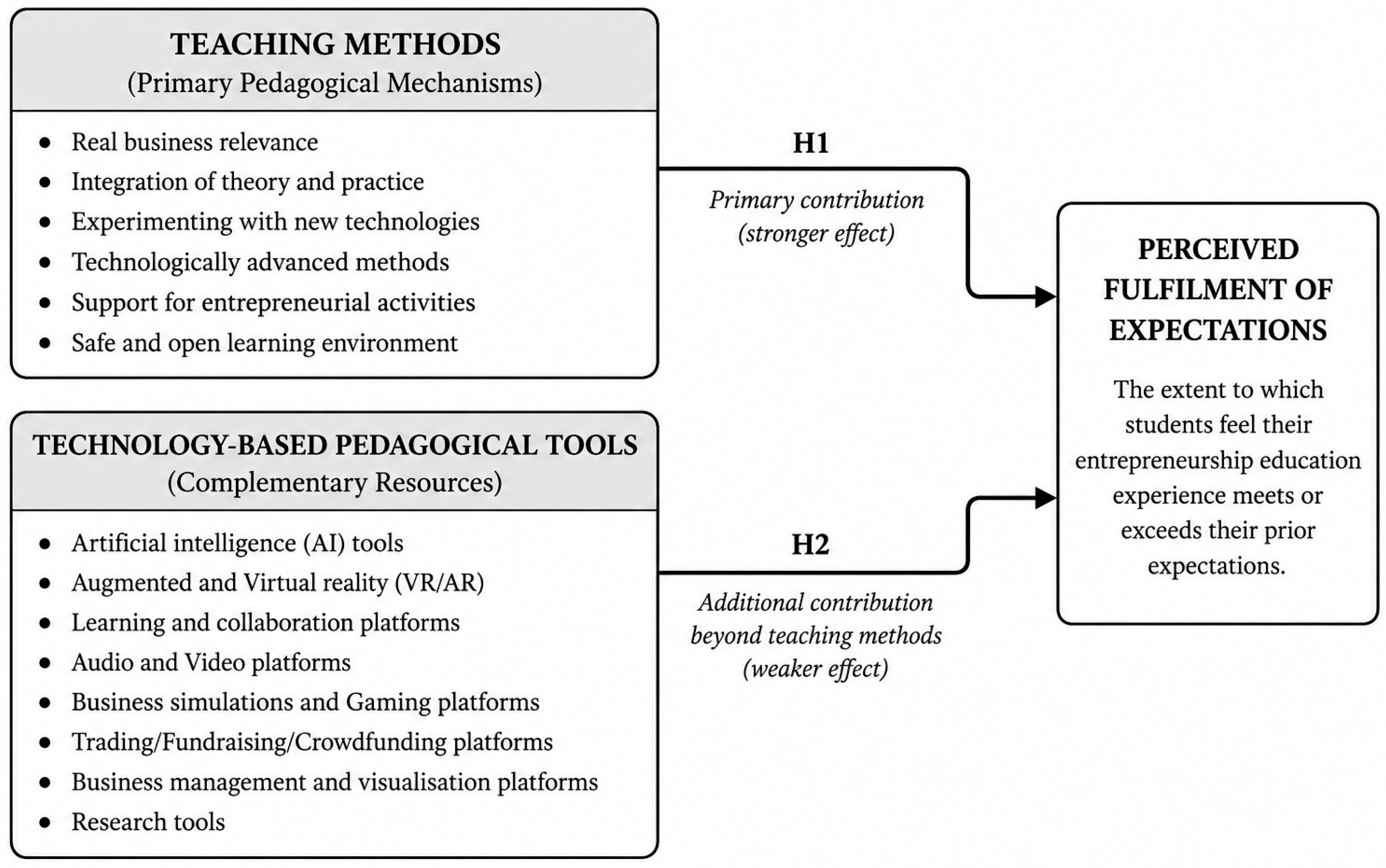
Figure 1. Conceptual framework of teaching methods, technology-based pedagogical tools, and perceived fulfilment of expectations in entrepreneurship education.
Admsci 16 00458 g001
Table 1. Respondents’ demographic characteristics (n = 2659).
VariableCategoriesCountProportion
CountryLatvia57821.7%
Lithuania53420.1%
Estonia46817.6%
Portugal1254.7%
Netherlands50018.8%
Italy30211.4%
Turkey883.3%
Kosova200.8%
Poland100.4%
Spain130.5%
Other210.8%
GenderFemale137351.6%
Male119745.0%
Prefer not to disclose893.3%
OccupationOnly studies179167.4%
Employed full-time27210.2%
Employed part-time31311.8%
Unemployed27410.3%
Other90.3%
Current educationHigh School2228.3%
Vocational Education and Training (VET)2499.4%
Higher Education—College72827.4%
Higher Education—University 57321.5%
Adult Education/Lifelong Learning1023.8%
Other78529.5%
Total2659100%
Table 2. Regression Results.
Model 1Model 2Model 3
PredictorBSEpBSEpBSEp
Intercept6.8450.139<0.0012.2070.202<0.0011.6180.214<0.001
Gender:
   Male–Female−0.0260.0780.737−0.0110.0650.867−0.0050.0650.94
   Prefer not to disclose–Female−0.8420.215<0.001−0.3850.1810.034−0.4300.1810.018
Occupation:
   Employed full-time–Only studies0.2140.1420.1330.2520.1180.0330.2520.1180.033
   Employed part-time–Only studies0.0770.1220.5270.1410.1010.1640.1080.1010.285
   Unemployed–Only studies0.2070.1580.1920.1850.1320.160.1690.1300.195
   Other–Only studies0.3840.1700.0240.1210.1410.3910.1410.1400.314
Country:
   Lithuania–Latvia−0.1590.5620.7780.6260.4670.1810.7240.4610.116
   Estonia–Latvia0.3650.1460.012−0.1140.1240.359−0.0320.1320.806
   Portugal–Latvia−0.3510.1530.021−0.0880.1290.497−0.0410.1330.757
   Netherlands–Latvia−0.4480.2140.036−0.7610.180<0.001−0.7480.182<0.001
   Italy–Latvia0.1980.1440.172−0.0020.1230.986−0.0460.1270.72
   Turkey–Latvia0.4130.1540.0070.3750.1370.0060.5040.144<0.001
   Kosova–Latvia−0.3190.2130.134−0.6200.180<0.001−0.7260.185<0.001
   Poland–Latvia1.1210.3920.0040.4090.3270.2110.6050.3290.066
   Spain–Latvia0.3500.5400.5170.3870.4490.3890.3810.4450.392
   Other–Latvia0.5060.4770.289−0.1130.3970.777−0.0960.3940.807
Real business relevance 0.4220.033<0.0010.4040.032<0.001
Integration of theory and practice 0.2150.033<0.0010.2020.033<0.001
Experimenting with new technologies 0.0120.0290.674−0.0110.0290.711
Technologically advanced methods 0.0890.0290.0030.0370.0300.219
Support for entrepreneurial activities 0.1070.025<0.0010.0860.025<0.001
Safe and open study environment 0.0970.027<0.0010.0990.028<0.001
Artificial intelligence 0.0980.0320.002
Virtual reality 0.0050.0330.881
Augmented reality 0.0910.0350.009
Learning and collaboration platforms 0.0500.0280.077
Audio recordings 0.0220.0350.536
Video platforms 0.1090.0350.002
Gaming platforms 0.0460.0380.231
Business simulation games 0.0330.0390.401
Business management platforms 0.0040.0380.911
Trading platforms −0.0350.0410.402
Fundraising/crowdfunding platforms −0.0310.0480.522
Visualization platforms −0.0130.0310.684
Research Tools 0.0220.0380.569
Adjusted R20.0390.3390.358
RMSE1.6601.381.35
ΔR2 0.2990.023
F Change 147.425.47
p-value F Change <0.001<0.001
Disclaimer/Publisher’s Note: The statements, opinions and data contained in all publications are solely those of the individual author(s) and contributor(s) and not of MDPI and/or the editor(s). MDPI and/or the editor(s) disclaim responsibility for any injury to people or property resulting from any ideas, methods, instructions or products referred to in the content.



