1. Introduction
Despite growing scholarly interest in artificial intelligence and organizational transformation, important gaps remain in understanding how AI Leadership translates into innovation outcomes (
Fang et al., 2026;
Ignjatović Pertini & Vujko, 2026a;
Munir, 2025). Existing research generally agrees that AI Leadership plays an important role in organizational transformation and innovation. However, the mechanisms through which this influence occurs remain the subject of considerable debate. Some studies suggest that AI Leadership directly enhances innovation performance, whereas others argue that its effects are indirect and depend on the development of organizational capabilities and workforce adaptation (
Islam et al., 2025;
Sharma et al., 2025;
Zhao et al., 2026). Similarly, although Digital Capability Development and Human Capital Transformation have each been recognized as important drivers of organizational innovation, they have largely been examined as independent phenomena rather than as interconnected components of a broader transformation process (
Addai, 2025;
Hui et al., 2025). As a result, limited attention has been devoted to explaining how AI Leadership is translated into innovation efficiency through sequential organizational mechanisms. Consequently, it remains unclear whether innovation outcomes emerge directly from AI Leadership or whether they are generated through intermediate processes involving Digital Capability Development and Human Capital Transformation.
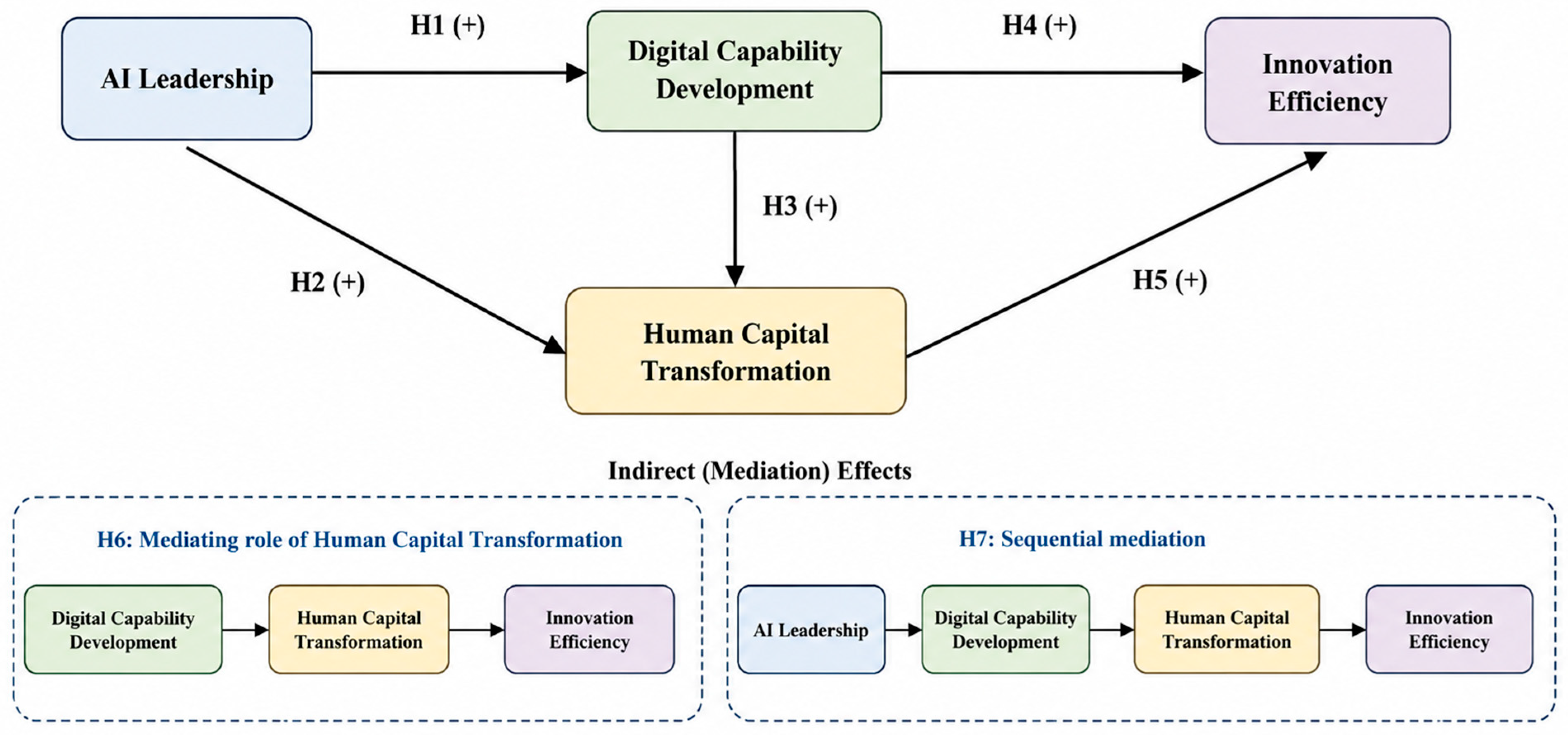
To address this gap, the present study adopts the dynamic capabilities perspective (
Teece et al., 1997) as its primary theoretical lens. Dynamic capability theory suggests that organizational performance is not determined solely by technological resources, but by the ability to develop, integrate, and reconfigure capabilities in response to changing environments (
Amin & Sivakumaran, 2026;
Cheng & Corsaro, 2026). Within this framework, AI Leadership is conceptualized as a strategic driver that stimulates Digital Capability Development (
Htet et al., 2026). These capabilities subsequently facilitate Human Capital Transformation by encouraging skill adaptation, learning, and workforce reconfiguration (
Javed et al., 2026). Innovation Efficiency is therefore viewed as the outcome of a broader organizational transformation process rather than a direct consequence of technology adoption alone (
Shahzad et al., 2026). The proposed sequence reflects the assumption that leaders create the conditions for capability development, capabilities shape workforce transformation, and transformed human capital contributes to innovation outcomes (
Ignjatović Pertini et al., 2026;
Ignjatović Pertini & Vujko, 2026b;
Panda, 2025).
Against this background, the primary objective of this study is to develop and empirically test a process-oriented model explaining how AI Leadership contributes to Innovation Efficiency through Digital Capability Development and Human Capital Transformation. Specifically, the study seeks to: (1) examine the direct effects among the proposed constructs; (2) investigate the mediating role of Human Capital Transformation in the relationship between Digital Capability Development and Innovation Efficiency; and (3) evaluate the sequential mediating effects of Digital Capability Development and Human Capital Transformation in transmitting the influence of AI Leadership on Innovation Efficiency. All proposed relationships are theoretically derived from Dynamic Capability Theory, which serves as the overarching framework for explaining how AI Leadership is translated into Innovation Efficiency through sequential organizational capability development and workforce transformation.
The study makes several contributions to the literature. First, it develops and empirically tests a process-oriented framework explaining how AI Leadership contributes to Innovation Efficiency through Digital Capability Development and Human Capital Transformation. Second, it reconceptualizes AI Leadership as a system-level coordination mechanism within AI-enabled organizations rather than as an individual leadership attribute. Third, it positions Digital Capability Development as the key organizational mechanism linking leadership with workforce transformation and innovation outcomes. Finally, by integrating leadership, digital capabilities, human capital transformation, and innovation efficiency within a dynamic capabilities perspective, the study provides a process-oriented explanation of how organizations generate value from AI-enabled transformation initiatives.
3. Methods
3.1. Data Collection and Sample
Data were collected between January 2026 and June 2026 using the Prolific academic research platform (
Douglas et al., 2023;
Peer et al., 2017). Participants were compensated through the Prolific platform in accordance with its standard participant compensation policy. The questionnaire required an average completion time of 11.70 min (median = 10.09 min). Because the objective of the study was to develop and validate a general organizational model rather than examine country-specific differences, participant recruitment was not restricted to a specific country. Prolific was selected because it provides access to diverse working populations and enables the application of detailed participant screening criteria, which is particularly important when investigating organizational phenomena related to artificial intelligence, digital transformation, and innovation processes. Given the objectives of the study, participation was restricted to individuals employed in organizational environments characterized by active use of digital technologies and AI-enabled systems. To ensure the relevance of the sample, a multi-stage screening procedure was implemented before respondents were allowed to access the main questionnaire. The first screening criterion required respondents to be currently employed either full-time or part-time. Individuals who were not employed were excluded from participation. The second criterion assessed whether respondents worked in environments involving digital systems, data-driven tools, or AI-based technologies. Participants indicating no exposure to such technologies were excluded from the study.
The third screening criterion focused on the extent of AI exposure in the workplace. Respondents were asked to evaluate the degree to which they interacted with AI-based systems, including automation tools, recommendation systems, data analytics platforms, and machine learning applications. Only individuals reporting moderate, high, or very high levels of AI exposure were retained in the final sample, while respondents indicating no exposure or very limited exposure were excluded. This criterion was introduced to ensure that participants possessed sufficient experience with AI-enabled organizational environments to provide meaningful evaluations of the investigated constructs. It should be noted that AI exposure was used exclusively as a screening criterion reflecting the frequency of interaction with AI-based systems, whereas the later descriptive measure of AI familiarity assessed respondents’ self-perceived knowledge and confidence in using such technologies. Consequently, respondents could report regular workplace exposure to AI while simultaneously indicating relatively low familiarity with AI-based systems.
The final screening criterion assessed involvement in innovation-related organizational activities. Respondents were required to indicate whether their work included participation in innovation processes, organizational development initiatives, decision-making activities, or process improvement tasks. Individuals without such involvement were excluded from the study.
The screening procedure was designed to ensure that the final sample consisted of employees with direct experience in digitally intensive organizational contexts where AI technologies, capability development, workforce adaptation, and innovation activities are relevant components of everyday work. This approach enhanced the substantive validity of the study by aligning respondent characteristics with the theoretical focus of the proposed model.
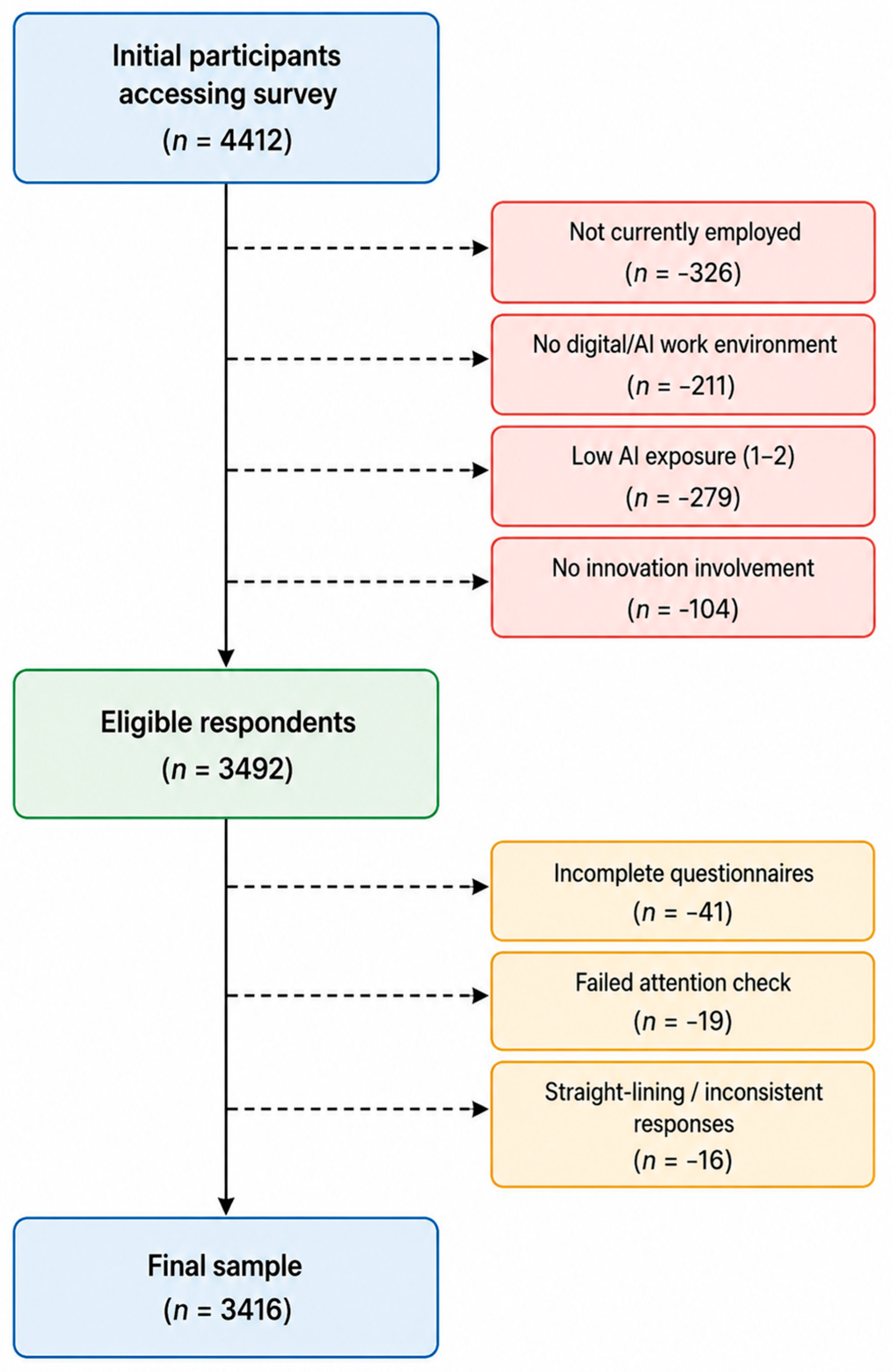
Figure 2 summarizes the participant screening, exclusion procedure, and data-cleaning process leading to the final analytical sample.
A total of 4412 individuals initially accessed the survey through the Prolific platform. During the screening stage, 326 respondents were excluded because they were not currently employed, 211 because they did not work in digitally intensive environments, 279 because they reported no or very limited workplace AI exposure, and 104 because they were not involved in innovation-related organizational activities. This resulted in 3492 eligible respondents. During data cleaning, 41 incomplete questionnaires, 19 responses failing the embedded instructional attention-check item (“To confirm that you are reading the questions carefully, please select option 4.”), and 16 cases exhibiting straight-lining behavior or excessive response inconsistency were removed, resulting in a final sample of 3416 valid respondents. Incomplete questionnaires were excluded using listwise deletion, and no data imputation procedures were performed.
Following data cleaning and validation procedures, the final sample consisted of N = 3416 valid respondents, which was subsequently divided using a random 50:50 split procedure. One subsample (n = 1708) was used for exploratory factor analysis, while the second subsample (n = 1708) was reserved for confirmatory factor analysis and structural equation modeling. This split-sample validation approach reduced the likelihood of sample-specific solutions and strengthened the robustness of the measurement and structural model evaluation. The largest proportion of participants was employed in Information Technology and Data-related sectors (28.5%), followed by Services, including tourism, hospitality, and logistics (22.3%), Marketing and Digital Communication (17.4%), Finance and Consulting (16.6%), and Research and Product Development (15.2%). This distribution ensured substantial representation from sectors characterized by varying levels of technological intensity and digital innovation. The gender structure was balanced, with 50.6% male and 49.4% female respondents, reducing the likelihood of gender-related sampling bias. In terms of age, the sample was predominantly composed of individuals in their early and mid-career stages. Respondents aged 25–34 years represented the largest group (34.5%), followed by those aged 35–44 years (25.7%) and 45–54 years (18.6%). Younger participants aged 18–24 years accounted for 11.7% of the sample, while respondents aged 55 years and above represented 9.5%.
The educational profile indicates a highly qualified respondent pool. More than three-quarters of participants possessed at least a university degree, including 39.1% holding a bachelor’s degree, 35.6% a master’s degree, and 9.2% a doctoral degree. Only 16.1% reported high-school education as their highest qualification. Such a profile is particularly relevant for examining perceptions of advanced technological systems and organizational innovation processes. Professional experience was also well distributed across career stages. The largest group reported between four and seven years of work experience (30.9%), followed by respondents with eight to twelve years (23.0%) and one to three years (20.4%). Participants with more than thirteen years of experience accounted for 16.5%, while those with less than one year represented 9.2%. This diversity provides perspectives from both emerging and established professionals operating in digitally evolving organizational environments.
Regarding occupational roles, analytical and technical positions constituted the largest category (31.9%), followed by managerial and strategic roles (24.6%), operational positions (21.8%), and creative or innovation-oriented functions (21.7%). The presence of respondents across multiple organizational levels strengthens the ability of the study to capture perceptions related to leadership, organizational climate, and technology adoption from both strategic and operational perspectives. Importantly, the sample demonstrated substantial exposure to artificial intelligence technologies. While 21.9% of respondents reported being either not familiar at all (7.3%) or only somewhat unfamiliar (14.6%) with AI-based systems, the majority indicated moderate-to-high levels of familiarity. Specifically, 27.5% reported moderate familiarity, 31.6% reported high familiarity, and 18.9% reported extreme familiarity with AI-based systems in their work. Overall, more than half of the respondents (50.5%) indicated high or very high familiarity with AI technologies, suggesting that the sample was well positioned to provide informed assessments of organizational digitalization, technology integration, and AI-related workplace practices.
3.2. Measurement Instrument
The measurement instrument was developed based on an extensive review of the literature on AI-enabled leadership, digital transformation, human capital development, and innovation performance. Because no single validated instrument simultaneously captured the four constructs as conceptualized in the proposed theoretical framework, items were adapted and integrated from the relevant literature to operationalize theoretically established concepts within a unified measurement instrument. Accordingly, the study did not develop entirely new constructs but combined and operationalized established theoretical concepts in a manner consistent with the objectives of the proposed model.
The instrument was designed to operationalize four latent constructs central to the proposed theoretical framework: AI Leadership, Digital Capability Development, Human Capital Transformation, and Innovation Efficiency. The AI Leadership construct was conceptually grounded in emerging research on AI-assisted decision-making, algorithmic management, and human–AI coordination within organizations (
Cary et al., 2026,
Dong & McIntyre, 2014). All constructs were operationalized through employees’ perceptions of organizational practices and processes, reflecting the assumption that employees are appropriate informants of organizational phenomena experienced in their everyday work environments. The construct was designed to capture the extent to which organizational leaders integrate AI systems into strategic decision-making processes, rely on AI-generated insights, and coordinate interactions between human expertise and algorithmic systems.
Digital Capability Development was derived from the digital transformation and dynamic capabilities literature (
Brrar et al., 2023;
Teece et al., 1997;
Verhoef et al., 2021). The items measured organizational investments in digital infrastructure, technology adaptation, AI-related competencies, data literacy, and the embedding of digital technologies into everyday organizational activities. Human Capital Transformation was developed from research examining workforce adaptation to technological change, organizational learning, skill reconfiguration, and AI-related labor transformation (
Kellogg et al., 2020). The construct conceptualizes transformation as the reconfiguration of workforce competencies rather than exclusively as positive skill development. Accordingly, it captures changes in employee competencies, learning requirements, evolving skill priorities, and role restructuring associated with AI adoption. Innovation Efficiency was grounded in the innovation management and organizational performance literature (
Brrar et al., 2023). In the present study, Innovation Efficiency is conceptualized as employees’ perceived efficiency of organizational innovation processes rather than as an objective input–output efficiency ratio. Accordingly, the construct assesses the extent to which AI adoption contributes to more efficient innovation processes, improved implementation speed, higher-quality outcomes, and enhanced innovation performance.
Before the main data collection, the preliminary version of the questionnaire underwent a content validation procedure. Three independent academic experts with established expertise in artificial intelligence, digital transformation, organizational management, and quantitative research methods reviewed the instrument to evaluate the clarity, relevance, and conceptual alignment of the measurement items with the proposed constructs. Based on their recommendations, several minor wording refinements were introduced to improve item clarity and reduce potential ambiguity, while preserving the original theoretical meaning. The revised questionnaire was subsequently used in the main survey.
The initial instrument consisted of 28 items. All items were measured using a five-point Likert scale ranging from 1 (“Strongly Disagree”) to 5 (“Strongly Agree”). Following exploratory factor analysis and subsequent confirmatory validation procedures, four items were removed due to insufficient psychometric performance. Item removal was guided by factor loading patterns, construct consistency, and conceptual redundancy considerations. The final measurement model retained 24 items distributed equally across the four constructs. The complete measurement instrument is presented in
Appendix A (
Table A1), while the item purification process and the rationale for item removal are reported in
Table A2.
3.3. Data Analysis Procedure
Data analysis was conducted using a two-step validation strategy combining exploratory and confirmatory procedures. All exploratory analyses were performed using IBM SPSS Statistics 27 (IBM Corp., Armonk, NY, USA), whereas confirmatory factor analysis (CFA), structural equation modeling (SEM), and mediation testing were conducted using IBM SPSS AMOS 26 (IBM Corp., Armonk, NY, USA). To enhance methodological rigor and reduce the likelihood of sample-specific factor solutions, the full sample (N = 3416) was randomly divided into two equal subsamples using a 50:50 split procedure. The first subsample (n = 1708) was used for exploratory factor analysis (EFA), while the second subsample (n = 1708) was reserved for confirmatory factor analysis and structural model evaluation.
Prior to the exploratory and confirmatory analyses, the potential influence of common method bias was assessed using two complementary procedures. First, Harman’s single-factor test was performed by conducting an unrotated principal component analysis including all measurement items on the full sample (N = 3416). The first factor accounted for 41.08% of the total variance, which is below the commonly recommended threshold of 50%, suggesting that common method variance was unlikely to represent a substantial threat. To provide a more rigorous assessment beyond Harman’s single-factor test, a Common Latent Factor (CLF) analysis was additionally performed within the confirmatory factor analysis framework. The results of the CLF analysis indicated that the inclusion of a common latent factor did not materially affect the substantive conclusions of the measurement model, providing further evidence that common method bias was unlikely to have influenced the study’s findings.
Prior to factor extraction, the full dataset was screened for missing data and univariate normality. Univariate normality was assessed using skewness and kurtosis statistics for all measurement items. As shown in
Appendix B (
Table A3), all values were well within commonly recommended thresholds, indicating no substantial departures from normality. Following these preliminary diagnostics, the suitability of the EFA subsample for factor analysis was assessed using the Kaiser–Meyer–Olkin (KMO) measure of sampling adequacy and Bartlett’s test of sphericity.
Following confirmation of data adequacy, the data were additionally screened for potential influential observations and outliers. Diagnostic statistics based on standardized residuals, Cook’s distance, and Mahalanobis distance did not indicate the presence of influential observations according to commonly applied guidelines. The corresponding diagnostic statistics are reported in
Appendix B (
Table A6). Exploratory factor analysis was performed using the Maximum Likelihood extraction method combined with Oblimin rotation and Kaiser normalization. Maximum Likelihood extraction was selected because it allows statistical estimation of latent structures and is compatible with subsequent confirmatory procedures. Oblimin rotation was employed because the proposed constructs were theoretically expected to exhibit correlations rather than complete independence. Factors with eigenvalues greater than 1.0 were retained according to the Kaiser criterion. Item retention decisions were based on factor loading magnitude, examination of cross-loadings, communalities, conceptual consistency, and contribution to construct validity. For transparency, the complete Pattern Matrix, including primary and secondary factor loadings, is provided in
Appendix B (
Table A4), while the corresponding communalities are reported in
Appendix B (
Table A5).
After establishing the preliminary factor structure, confirmatory factor analysis was conducted using the independent validation subsample. The CFA was performed to evaluate the adequacy of the measurement model and verify the latent structure identified during the exploratory stage. Reliability was assessed through Composite Reliability (CR), with values exceeding the recommended threshold of 0.70 considered satisfactory. Convergent validity was evaluated using Average Variance Extracted (AVE), with values approaching or exceeding 0.50 considered acceptable. Given that CR values exceeded recommended thresholds for all constructs, minor deviations from the conventional AVE benchmark were interpreted in accordance with established recommendations in the SEM literature.
Discriminant validity was assessed using the Heterotrait–Monotrait Ratio (HTMT) criterion. Following current methodological recommendations, HTMT values below 0.85 were interpreted as evidence that the latent constructs represented conceptually distinct dimensions. Following validation of the measurement model, structural equation modeling was employed to test the proposed theoretical framework and associated hypotheses. Model adequacy was evaluated using multiple fit indices, including the chi-square statistic (χ2), chi-square divided by degrees of freedom (χ2/df), Goodness-of-Fit Index (GFI), Adjusted Goodness-of-Fit Index (AGFI), Comparative Fit Index (CFI), Tucker–Lewis Index (TLI), Incremental Fit Index (IFI), and Root Mean Square Error of Approximation (RMSEA). Model fit was considered acceptable when the obtained values met or exceeded commonly recommended thresholds reported in the SEM literature.
Direct effects among latent constructs were assessed through standardized path coefficients (β), critical ratios (C.R.), and associated probability values. Mediation hypotheses were evaluated using bootstrap procedures with bias-corrected confidence intervals. Indirect effects were considered statistically significant when the corresponding 95% bias-corrected confidence interval did not include zero. Finally, the explanatory power of the structural model was assessed through squared multiple correlations (R2) for all endogenous constructs.
4. Results
Prior to factor extraction, the adequacy of the EFA subsample (n = 1708), obtained through a random 50:50 split of the full sample (N = 3416), was assessed using the Kaiser–Meyer–Olkin (KMO) measure and Bartlett’s test of sphericity. The KMO value was 0.977, indicating a high level of sampling adequacy, while Bartlett’s test was statistically significant (χ2 = 47,180.955; df = 378; p < 0.001). These results confirmed the suitability of the data for exploratory factor analysis.
The exploratory factor analysis conducted on the EFA subsample (
n = 1708) supported a four-factor solution, as shown in
Table 1. Four factors exhibited eigenvalues greater than 1 and were therefore retained for further interpretation. Collectively, these factors accounted for 58.687% of the total variance. The first factor explained the largest proportion of variance (40.744%), while the remaining three factors contributed an additional 17.943% of explained variance. Following Maximum Likelihood extraction, the retained factors accounted for 51.807% of the total variance. The results indicate the presence of a stable multidimensional structure underlying the retained measurement items and support the adequacy of the factor solution for subsequent measurement validation procedures.
The pattern matrix presented in
Table 2 confirmed a clear four-factor structure corresponding to AI Leadership, Digital Capability Development, Human Capital Transformation, and Innovation Efficiency. All retained items exhibited substantial loadings on their intended constructs, ranging from 0.618 to 0.765. The strongest loading was observed for Resource Efficiency (λ = 0.765), whereas Output Understanding demonstrated the lowest acceptable loading (λ = 0.618). Overall, the results support the construct validity of the proposed measurement model and indicate a stable multidimensional structure suitable for subsequent confirmatory factor analysis and structural equation modeling.
The confirmatory factor analysis (CFA) was conducted on the second randomly selected subsample (
n = 1708), which was not used during the exploratory factor analysis. This split-sample validation approach was adopted to provide an independent assessment of the measurement model and to reduce the risk of sample-specific factor solutions. As shown in
Table 3, all constructs demonstrated satisfactory internal consistency, with Composite Reliability (CR) values ranging from 0.853 to 0.900, exceeding the recommended threshold of 0.70. These findings indicate a high degree of reliability among the measurement items associated with each latent construct. The Average Variance Extracted (AVE) values ranged from 0.493 to 0.600. Human Capital Transformation (AVE = 0.562) and Innovation Efficiency (AVE = 0.600) exceeded the recommended benchmark of 0.50, confirming satisfactory convergent validity.
Although the AVE values for AI Leadership (0.497) and Digital Capability Development (0.493) were marginally below the conventional threshold of 0.50, both constructs demonstrated strong composite reliability coefficients exceeding 0.85. According to
Fornell and Larcker (
1981), convergent validity can be considered acceptable when composite reliability is high despite AVE values being slightly below 0.50. Therefore, the measurement model demonstrates satisfactory convergent validity. Overall, the results presented in
Table 3 provide evidence of adequate reliability and convergent validity.
As shown in
Table 4, the HTMT values ranged from 0.504 to 0.776, remaining below the recommended threshold of 0.85. The highest ratio was observed between Digital Capability Development and Human Capital Transformation (HTMT = 0.776), while the lowest was identified between AI Leadership and Human Capital Transformation (HTMT = 0.504). Since all values were below the recommended cutoff, the results provide evidence of satisfactory discriminant validity and confirm that the four latent constructs represent conceptually distinct dimensions of the proposed framework.
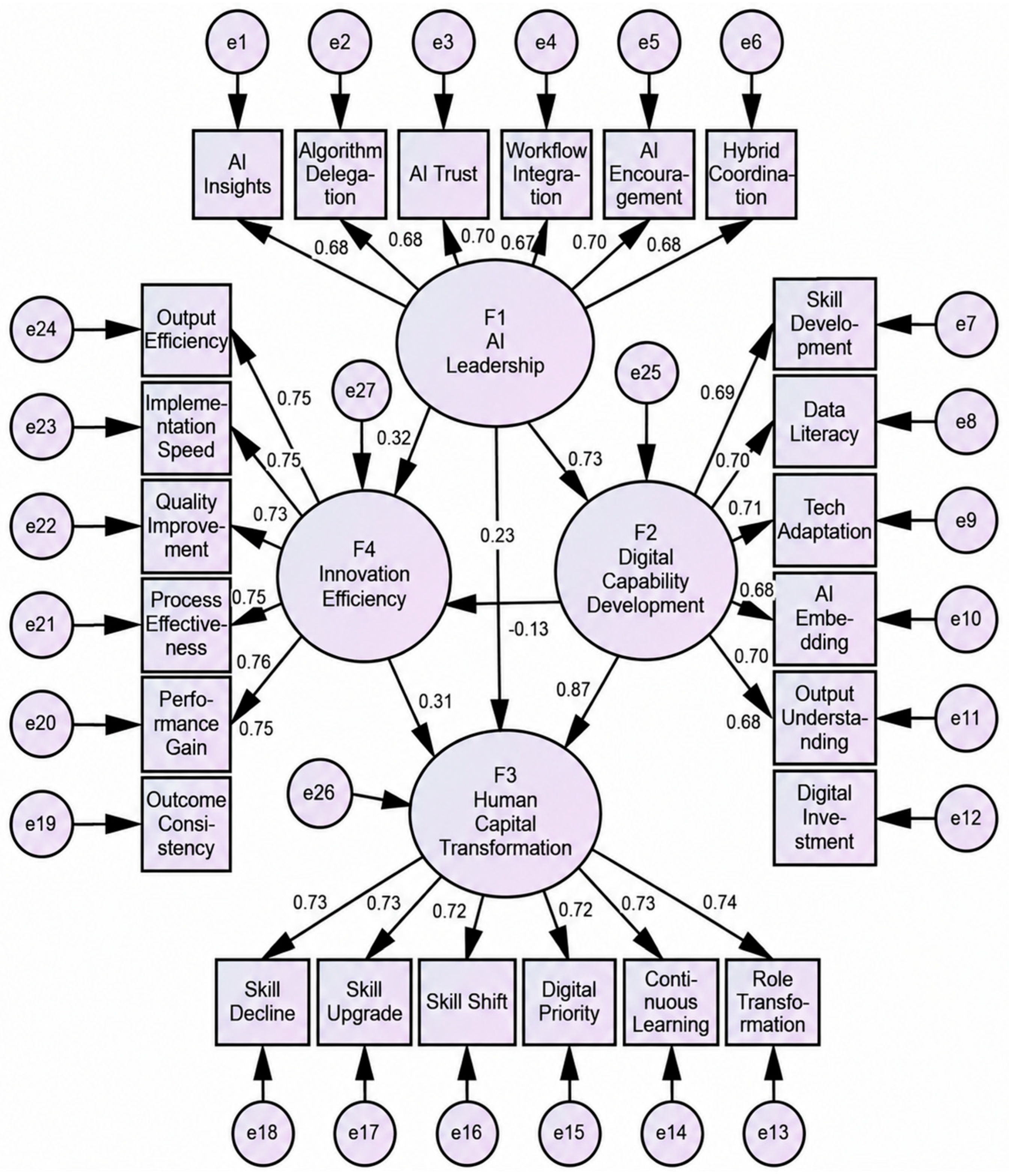
The structural model demonstrated a good fit to the data: χ2(247) = 345.104, p < 0.001, χ2/df = 1.397, GFI = 0.983, AGFI = 0.980, CFI = 0.995, TLI = 0.994, IFI = 0.995, and RMSEA = 0.015. All fit indices met or exceeded commonly recommended thresholds, indicating that the proposed model adequately represents the observed relationships among the constructs.
Figure 3 presents the final structural equation model with standardized path coefficients. The model shows that AI Leadership positively influences Digital Capability Development, which, in turn, positively affects both Human Capital Transformation and Innovation Efficiency. Human Capital Transformation also exerts a positive effect on Innovation Efficiency, whereas AI Leadership demonstrates a negative direct effect on Human Capital Transformation. The standardized estimates for all structural relationships are reported in
Table 5.
The structural model results are presented in
Table 5. AI Leadership exerted a strong positive effect on Digital Capability Development (β = 0.729, C.R. = 20.627,
p < 0.001), providing support for H1. This finding indicates that organizations characterized by higher levels of AI Leadership are more likely to develop digital capabilities across their operations. Contrary to expectations, AI Leadership demonstrated a significant negative direct effect on Human Capital Transformation (β = −0.133, C.R. = −3.497,
p < 0.001). Because the effect was opposite to the hypothesized direction, H2 was not supported. This unexpected finding is interpreted with caution and discussed in light of the overall structural model in
Section 5. Digital Capability Development exhibited a strong positive influence on Human Capital Transformation (β = 0.874, C.R. = 18.175,
p < 0.001), supporting H3. This relationship indicates that investments in organizational digital capabilities are closely linked to improvements in employee skills, adaptability, and workforce transformation. Furthermore, Digital Capability Development positively affected Innovation Efficiency (β = 0.234, C.R. = 4.190,
p < 0.001), confirming H4. Human Capital Transformation also showed a significant positive effect on Innovation Efficiency (β = 0.310, C.R. = 7.543,
p < 0.001), supporting H5. In addition, the structural model indicated a significant positive direct effect of AI Leadership on Innovation Efficiency (β = 0.317, C.R. = 8.353,
p < 0.001). Although this relationship was not specified as a formal hypothesis, it suggests that AI Leadership contributes to innovation outcomes not only indirectly through Digital Capability Development and Human Capital Transformation but also through a direct pathway. Together, these findings indicate that both Digital Capability Development and Human Capital Transformation contribute directly to organizational innovation outcomes.
To determine whether the relationship between AI Leadership and Innovation Efficiency was fully or partially mediated, an additional structural model including a direct path from AI Leadership to Innovation Efficiency was estimated. The direct effect was statistically significant (β = 0.317, C.R. = 8.353,
p < 0.001), indicating that AI Leadership contributes to Innovation Efficiency not only indirectly through Digital Capability Development and Human Capital Transformation but also through a significant direct pathway. Accordingly, the mediating mechanisms were further examined using bootstrap mediation analysis presented in
Table 6.
The mediation analysis results are presented in
Table 6. The findings indicate that Human Capital Transformation significantly mediated the relationship between Digital Capability Development and Innovation Efficiency. Specifically, Digital Capability Development exerted a significant direct effect on Innovation Efficiency (β = 0.234,
p < 0.001), while also producing a significant indirect effect through Human Capital Transformation (β = 0.163, 95% BC CI [0.096, 0.222]). Because both the direct and indirect effects were statistically significant, the results support H6 and indicate partial mediation.
To further examine H7, the specific sequential indirect effect of AI Leadership on Innovation Efficiency through Digital Capability Development and Human Capital Transformation was estimated using bias-corrected bootstrap procedures. The sequential indirect effect was statistically significant (β = 0.219, 95% BC CI [0.161, 0.286], p < 0.001), indicating that AI Leadership contributes to Innovation Efficiency through its positive effect on Digital Capability Development, which subsequently facilitates Human Capital Transformation. Because the direct effect of AI Leadership on Innovation Efficiency also remained statistically significant (β = 0.317, p < 0.001), the results support H7 and indicate partial sequential mediation.
Overall, the mediation results demonstrate that Digital Capability Development serves as an important transmission mechanism through which AI Leadership contributes to organizational innovation outcomes, while Human Capital Transformation provides an additional sequential mediating pathway that further strengthens this relationship. Furthermore, the significant direct effect of AI Leadership on Innovation Efficiency indicates that its influence is only partially transmitted through the proposed mediators, suggesting the existence of additional mechanisms linking AI Leadership to organizational innovation performance.
The explanatory power of the structural model was assessed using the squared multiple correlations (R
2) for the endogenous constructs, as presented in
Table 7. The results indicate that AI Leadership accounted for 56.8% of the variance in Digital Capability Development (R
2 = 0.568), demonstrating substantial explanatory power for organizational digital capability formation. The combined effects of AI Leadership and Digital Capability Development explained 62.6% of the variance in Human Capital Transformation (R
2 = 0.626). This represents the highest explanatory value among the endogenous constructs, suggesting that leadership practices and digital capability development play a central role in shaping workforce transformation processes. In addition, Digital Capability Development and Human Capital Transformation jointly explained 55.8% of the variance in Innovation Efficiency (R
2 = 0.558). This finding indicates that more than half of the variability in innovation outcomes can be attributed to the predictors included in the model. The R
2 values demonstrate that the proposed structural model possesses substantial explanatory power, with all endogenous constructs exhibiting variance explained above 50%, thereby supporting the model’s ability to capture key organizational mechanisms associated with digital transformation and innovation performance.
5. Discussion
The findings extend current digital transformation research by suggesting that AI Leadership should be viewed less as a direct driver of innovation and more as a strategic enabler of organizational capability development. Rather than generating innovation outcomes independently, leadership appears to influence the organizational conditions that make innovation possible. This distinction contributes to dynamic capabilities theory by positioning AI leadership as an antecedent of capability formation rather than as an isolated performance determinant. Consistent with digital transformation theory, AI Leadership appears to function as a catalyst of organizational digital maturity by facilitating technological adoption, encouraging data-driven decision-making, and creating conditions that support the development of digital competencies throughout the organization (
Alhosani & Ahmad, 2024). These findings suggest that leadership is particularly important during the early stages of transformation, where the establishment of digital capabilities creates the foundation for subsequent organizational change and innovation.
The exceptionally strong association between Digital Capability Development and Human Capital Transformation highlights the central role of organizational capabilities in shaping workforce adaptation. From a dynamic capabilities perspective (
Teece et al., 1997), technological transformation creates continuous pressure for organizations to renew employee competencies, redesign work processes, and develop new forms of expertise. Rather than occurring independently, workforce transformation appears to emerge as a direct consequence of organizational investments in digital infrastructures, technology integration, and learning-oriented environments. This finding reinforces the view that human capital transformation is fundamentally embedded within broader digital transformation processes.
A particularly noteworthy contribution of this study concerns the negative direct relationship between AI Leadership and Human Capital Transformation. This finding challenges the common assumption that technology-oriented leadership automatically promotes workforce development. One possible explanation is that organizations pursuing aggressive AI implementation strategies initially allocate managerial attention and organizational resources toward technological deployment, process redesign, and operational efficiency. Investments in employee development may therefore lag behind technological implementation until digital infrastructures become sufficiently established. This interpretation is consistent with recent research suggesting that digital transformation often creates temporary tensions between technological optimization and workforce development before complementary organizational capabilities become fully aligned.
The finding is also consistent with research on algorithmic management and organizational change, which suggests that rapid AI implementation may initially increase employee uncertainty, reduce perceived job security, and generate resistance to new work practices before employees fully adapt to AI-enabled environments. From this perspective, the observed negative relationship may reflect a transitional phase of organizational transformation rather than a stable long-term effect. As employees acquire new competencies and organizations establish structured reskilling and change management practices, the relationship between AI Leadership and human capital transformation may become more favorable over time.
Alternative interpretations should also be considered. The negative direct effect may indicate that AI leadership primarily influences workforce transformation through organizational capability-building rather than through direct investments in employee development. It is also possible that the relationship depends on contextual conditions such as organizational digital maturity, the availability of employee training programs, or the extent of employee participation in AI implementation. In organizations where AI adoption is accompanied by structured reskilling initiatives and participative change management, the direct relationship may become neutral or even positive. Conversely, organizations emphasizing technological efficiency without equivalent investments in workforce development may experience temporary misalignment between technological progress and human capital transformation.
Taken together, these interpretations are consistent with concerns raised in the algorithmic management literature, where technological systems increasingly shape decision-making and work coordination, sometimes at the expense of employee development opportunities (
Vial, 2019). The findings therefore suggest that AI Leadership alone may be insufficient to stimulate workforce transformation unless accompanied by broader capability-building initiatives, structured employee development, and participative change management.
The mediation analysis provides a more nuanced understanding of this seemingly contradictory relationship. The coexistence of a negative direct effect and a positive indirect effect suggests that AI leadership operates through multiple organizational mechanisms simultaneously. While leadership initiatives focused on AI implementation may temporarily reduce emphasis on direct workforce development, the digital capabilities created through these initiatives subsequently facilitate employee adaptation and capability renewal. This finding highlights the importance of examining indirect organizational mechanisms when evaluating AI-enabled transformation.
This pattern indicates that capability development serves as the primary mechanism through which leadership initiatives are translated into employee adaptation and skill renewal. The coexistence of a negative direct effect and a positive indirect effect further highlights the complexity of AI-enabled transformation processes and demonstrates the importance of examining indirect organizational pathways rather than relying exclusively on direct relationships.
These findings indicate that organizations derive innovation benefits from AI not through technology adoption alone but through the organizational capabilities developed around that technology. Digital capability development establishes the operational foundation that enables organizations to transform technological investments into innovation outcomes. Human capital transformation complements this process by ensuring that employees possess the competencies required to exploit newly established digital capabilities effectively.
However, the effect of Digital Capability Development was substantially stronger than that of Human Capital Transformation. This finding suggests that innovation performance depends first on the organization’s ability to establish digital infrastructures, technological competencies, and data-driven operational capabilities. Human capital transformation provides an additional contribution, but its impact appears to operate within a broader organizational environment shaped by digital capabilities. Such findings are consistent with contemporary perspectives on digital transformation, which emphasize that innovation emerges through the interaction of technological resources and human competencies rather than through either factor alone (
Verhoef et al., 2021;
Vladić et al., 2025).
The mediation results further support the sequential logic underlying the proposed framework. Human Capital Transformation partially mediated the relationship between Digital Capability Development and Innovation Efficiency, indicating that workforce adaptation represents one important mechanism through which digital capabilities generate innovation outcomes. More importantly, the mediation analysis demonstrates that AI-enabled organizational transformation should be understood as a cumulative organizational process rather than as a series of isolated relationships. AI Leadership contributes to innovation both directly and indirectly by strengthening digital capabilities, which subsequently facilitate workforce transformation and improve innovation efficiency. The significant direct effect observed alongside the indirect pathways indicates that additional organizational mechanisms beyond those examined in the present study may also connect AI Leadership with innovation outcomes. Future research should therefore investigate complementary mediators such as organizational learning capability, knowledge-sharing practices, or innovation climate.
Innovation efficiency does not emerge directly from AI Leadership. Instead, leaders first create conditions that support the development of organizational digital capabilities, these capabilities facilitate workforce transformation, and the transformed workforce subsequently contributes to enhanced innovation performance. This sequential process provides empirical evidence for a multistage pathway connecting leadership, technology, people, and innovation within contemporary organizations.
5.1. Theoretical Implications
The principal theoretical contribution of this study lies in shifting the focus of AI transformation research from technology adoption to transformation mechanisms. While prior studies have largely examined whether AI improves organizational outcomes, the present study explains how such outcomes are generated. The findings suggest that innovation efficiency is not produced by AI technologies themselves but by organizational processes that connect leadership, digital capability development, and workforce transformation.
This study advances the literature on AI-enabled organizational transformation by proposing and empirically validating an integrated framework that connects AI Leadership, Digital Capability Development, Human Capital Transformation, and Innovation Efficiency. Although these constructs have individually received considerable scholarly attention, they have rarely been examined within a unified explanatory model. The proposed framework therefore contributes to a more comprehensive understanding of how organizations generate value from AI-driven transformation initiatives. The study extends digital transformation research by shifting attention from technology adoption outcomes toward the organizational mechanisms through which transformation occurs. Existing research has frequently emphasized the strategic importance of digital technologies while providing limited insight into the processes that connect leadership initiatives with innovation outcomes (
Brrar et al., 2023;
Verhoef et al., 2021). The present framework addresses this gap by positioning digital capability development as a central organizational mechanism that links leadership actions to workforce adaptation and subsequent innovation performance.
The findings also contribute to the dynamic capabilities literature. While dynamic capability theory emphasizes the importance of sensing, seizing, and reconfiguring organizational resources in response to environmental change (
Teece et al., 1997), the present study identifies digital capabilities as a key resource through which organizations translate AI-oriented strategic initiatives into operational and innovation outcomes. In this sense, the framework provides empirical support for the argument that organizational capabilities function as critical intermediaries between leadership intentions and organizational performance. Another contribution concerns the emerging literature on AI leadership and algorithmic management. The results suggest that the relationship between technology-oriented leadership and workforce development is more complex than frequently assumed. Rather than viewing AI Leadership as inherently supportive of employee development, the findings indicate that tensions may arise between technological efficiency and human capability enhancement. This perspective contributes to ongoing debates regarding the organizational consequences of increasing reliance on AI-driven systems and algorithmic decision-making processes (
Vial, 2019).
Finally, the study contributes a process-based explanation of innovation efficiency. The proposed framework suggests that innovation outcomes emerge from the interaction of leadership, organizational capabilities, and workforce transformation rather than from isolated investments in technology or human resources. By conceptualizing innovation efficiency as the outcome of interconnected organizational processes, the study provides a theoretical foundation for future research examining AI-enabled transformation across different organizational contexts.
5.2. Practical Implications
The findings provide several practical implications for organizational leaders, human resource managers, and decision-makers responsible for digital transformation initiatives. First, the results indicate that AI leadership alone is insufficient to generate innovation efficiency. Organizations should therefore avoid viewing AI adoption as a purely technological initiative. Instead, managers should establish cross-functional AI governance teams, develop organization-wide digital capability roadmaps, monitor digital capability development using measurable performance indicators, and invest systematically in digital infrastructure, data literacy, AI-related competencies, and technology integration mechanisms. By aligning technological investments with organizational capability-building initiatives, managers can increase the likelihood that AI implementation translates into sustainable innovation outcomes rather than isolated technology projects.
Second, the strong relationship between Digital Capability Development and Human Capital Transformation suggests that workforce adaptation should be managed as an integral component of digital transformation strategies. Organizations introducing AI technologies should simultaneously invest in structured reskilling and upskilling programs, integrate AI literacy into regular employee training, and establish continuous learning systems supported by periodic competency assessments. Such initiatives can accelerate employee adaptation to evolving technological environments while reducing resistance to organizational change.
Third, the negative direct effect of AI Leadership on Human Capital Transformation highlights a potential managerial risk. Leaders focusing excessively on automation, algorithmic decision-making, and operational efficiency may unintentionally reduce attention devoted to employee development. The findings suggest that this risk may be particularly pronounced in organizations at the early stages of digital transformation or in organizations where AI implementation is not accompanied by structured workforce development initiatives. Consequently, organizations should complement AI implementation with formal change management programs, transparent communication regarding the impact of AI on work roles, employee participation in AI deployment decisions, continuous reskilling and upskilling programs, and career development initiatives that encourage continuous skill acquisition. Balancing technological implementation with workforce development can help organizations avoid temporary misalignment between digital transformation objectives and employee capability renewal.
Fourth, the mediation results indicate that innovation efficiency is achieved through a sequential process involving leadership, capability development, and workforce transformation. Managers should therefore organize AI implementation into clearly defined phases. The first phase should focus on digital infrastructure and governance, the second on workforce capability development through targeted training and organizational learning, and the third on integrating these capabilities into innovation management and performance evaluation processes.
Rather than expecting immediate innovation gains following AI implementation, organizations should first establish digital capabilities, then facilitate workforce adaptation, and finally leverage these resources to improve innovation performance. Finally, the substantial explanatory power of the model suggests that organizations can utilize the proposed framework as a strategic diagnostic tool. By assessing leadership readiness, digital capabilities, and workforce transformation simultaneously, managers can identify bottlenecks that may hinder innovation performance and allocate resources more effectively across different stages of the transformation process.
Beyond managerial implications, the findings are also relevant for policymakers responsible for national and regional digital transformation strategies. Public support programs should extend beyond investments in AI infrastructure by encouraging workforce reskilling, organizational capability development, and collaboration among universities, technology providers, and industry. Financial incentives, targeted training initiatives, and knowledge-transfer programs may help organizations, particularly small and medium-sized enterprises, develop the digital capabilities necessary to translate AI adoption into sustainable innovation outcomes.
5.3. Limitations
The findings should be interpreted in light of several limitations. The study employed a cross-sectional research design, which restricts the ability to draw definitive conclusions regarding causality among the investigated constructs. Although the proposed relationships are theoretically grounded and supported by structural equation modeling, longitudinal research would provide a stronger basis for examining the temporal dynamics underlying AI-driven organizational transformation. The analysis was based on self-reported perceptions collected through survey responses. Although the measurement model demonstrated satisfactory reliability and validity, the questionnaire was developed by adapting measurement items from the existing literature and validated within a single empirical study. Consequently, additional validation across different organizational settings, industries, and national contexts is needed to further establish the generalizability and measurement invariance of the instrument. Furthermore, the possibility of common method bias cannot be entirely eliminated. Future studies may benefit from combining perceptual measures with objective organizational indicators of digital capability development, workforce transformation, and innovation performance.
Another limitation relates to the heterogeneous nature of the sample. Respondents were drawn from organizations characterized by varying levels of AI adoption and digital maturity, which may influence the strength and direction of the observed relationships. Although the proposed constructs represent organizational phenomena, they were measured through employees’ individual perceptions, and the sampling design did not include multiple respondents nested within the same organizations. Consequently, future studies should collect organization-based samples to enable multilevel validation of the proposed framework. Consequently, the findings should be generalized with caution, as sector-specific conditions, organizational size, technological environments, and national contexts may shape digital transformation processes differently.
The proposed framework was intentionally developed as a parsimonious model focusing on the primary organizational mechanisms linking AI Leadership and Innovation Efficiency rather than as a comprehensive representation of AI-enabled organizational transformation. Consequently, the model focused on a relatively limited set of organizational factors. Although the proposed framework explained a substantial proportion of variance in the endogenous constructs, additional variables such as organizational culture, employee trust in AI systems, technological readiness, and leadership characteristics may further contribute to understanding the mechanisms linking AI Leadership and innovation outcomes. Incorporating such organizational and contextual factors would help establish the boundary conditions of the proposed framework and provide a more comprehensive understanding of AI-enabled organizational transformation.
5.4. Future Research Directions
Future studies should investigate the proposed relationships using longitudinal research designs to better understand how AI Leadership, Digital Capability Development, Human Capital Transformation, and Innovation Efficiency evolve over time. Such approaches would provide stronger evidence regarding the temporal sequencing suggested by the present findings. In addition, incorporating organizational identifiers and contextual information would enable multilevel, cross-organizational, and cross-country analyses, providing a more nuanced understanding of AI-enabled organizational transformation. Future research could also examine the measurement invariance of the proposed model and compare its structural relationships across sectors and national contexts.
The unexpected negative direct effect of AI Leadership on Human Capital Transformation warrants particular attention. Qualitative studies and mixed-method approaches may provide deeper insights into how employees perceive AI Leadership practices and how these perceptions influence learning, adaptation, and skill development processes. Finally, future models could extend the current framework by incorporating additional organizational outcomes, including employee well-being, organizational resilience, knowledge-sharing behavior, digital innovation capability, and sustainable competitive advantage. Such extensions would contribute to a more comprehensive understanding of AI-enabled organizational transformation. Future research can further explore on the present process-oriented model by examining whether AI-enabled transformation contributes to broader sustainability outcomes across social, economic, and environmental dimensions (
Milojević et al., 2024), or by testing the model under uncertainty in crises, where responsible leadership and organizational resilience become particularly important (
Mirčetić et al., 2021).



 ,
,