1. Introduction
The digitalization of public administration has accelerated markedly over the past decade, propelled by fiscal pressures, rising citizen expectations, and the promise of intelligent technologies to transform service delivery (
Zuiderwijk et al., 2021;
Wirtz et al., 2019;
Pencheva et al., 2020). Artificial intelligence (AI), encompassing machine learning, natural language processing, robotic process automation, and predictive analytics, has emerged as a central technology in this transformation, with governments at all levels investing in AI-enabled tools for process automation, decision support, and citizen interaction (
Misuraca & van Noordt, 2022;
OECD, 2023;
Margetts & Dorobantu, 2019). Recently, the diffusion of generative AI in government has reshaped public sector experimentation, raising new governance, accountability, and capability-building demands (
Bullock et al., 2024;
Mikalef et al., 2023;
Engin & Treleaven, 2024;
Madan & Ashok, 2023). Academic and institutional projections suggest that AI could constitute the most consequential productivity-enhancing technology since the diffusion of information and communications technology in the 1990s (
Brynjolfsson & McAfee, 2014;
McKinsey Global Institute, 2023;
Berryhill et al., 2019). Estimates suggest that public administration productivity could rise by approximately 9% over a decade with the widespread adoption of generative AI in Spain (
EsadeEcPol, 2025a,
2025b).
In Europe’s multilevel governance architecture, municipalities are critical nodes for service delivery and manage high-volume administrative processes, including registries, permits, social services, and inspections. The European Committee of the Regions’ 2025 Annual Report highlights how cities and regions, responsible for managing over 70% of EU policies and two-thirds of public expenditure, must respond to growing demands associated with demographic change while simultaneously addressing citizens’ expectations for accessible and high-quality services (
European Committee of the Regions, 2025). Specifically, in the public sector, AI carries the additional promise of reshaping citizen–state interactions and improving service responsiveness at scale (
Sun & Medaglia, 2019;
Agostino et al., 2022). However, despite growing policy investment and anecdotal evidence of efficiency gains, the empirical literature on the mechanisms through which AI adoption translates into measurable improvements in local government performance remains thin, particularly in Southern European contexts (
Desouza et al., 2020;
Committee of the Regions/Trilateral Research & FORMIT, 2024).
Spain presents a particularly instructive case study. The country has positioned itself as a European leader in public-sector AI through its National AI Strategy 2024 (
Government of Spain, 2024), the ALIA public AI infrastructure coordinated by the Barcelona Supercomputing Centre (
ALIA, 2025;
BSC-CNS, 2025), and substantial investments under the EU NextGenerationEU funds (
EsadeEcPol, 2024;
Digital Spain 2026, 2025). At the local level, the Ayuntamiento de Madrid has operationalised these ambitions through its Artificial Intelligence Roadmap (
Ayuntamiento de Madrid, n.d.a), Itinerario de Inteligencia Artificial (
Ayuntamiento de Madrid, n.d.b), MAIA municipal AI platform maintained by Atos (
Atos, 2025;
IoT M2M Council, 2025), and the regional Madrid Data and AI Hub launched with Cloudera in October 2025 (
Madrides Noticia, 2025;
Empresa Exterior, 2025;
IA Cluster Madrid, 2025). These developments make Spain, and specifically Madrid, an empirically rich and policy-relevant context for studying AI adoption in local government.
The current study is motivated by three gaps. First, while macro-level projections are suggestive, micro-level survey evidence linking perceptions of AI adoption to measurable efficiency and citizen service outcomes in Spanish municipalities is scarce (
EsadeEcPol, 2025a,
2025b;
Committee of the Regions/Trilateral Research & FORMIT, 2024). Second, prior studies have insufficiently theorised the role of professional development as a pathway through which AI adoption achieves both efficiency and citizen integration outcomes (
Brown & Brudney, 2003;
Madan & Ashok, 2023). Third, the moderating effect of professional development on the AI–efficiency relationship has not been empirically tested in the local government context, leaving open the question of whether capability building amplifies the efficiency gains from AI adoption (
Raisch & Krakowski, 2021;
Brynjolfsson et al., 2023;
Mikalef et al., 2023).
This study addresses these gaps through four targeted, context-specific contributions. (1) Theoretically, we integrate Digital Transformation Theory and Public Value Theory as primary explanatory frameworks, complemented by background reference to TAM and TFP logic, to construct a mediated model linking AI adoption to e-citizen integration via professional development and administrative efficiency. (2) Empirically, we provide one of the first PLS-SEM-based survey studies of AI adoption in the Spanish local government, testing this model on an original survey of 500 Spanish municipal employees. (3) Methodologically, we demonstrate the utility of PLS-SEM with formal non-linearity testing and moderation testing in public administration research, and openly report null findings as a substantive contribution. (4) Practically, we translate our findings into concrete recommendations for Spanish and European municipalities navigating AI adoption and citizen service design. We frame these as measured and context-specific contributions rather than claims of comprehensive theoretical novelty.
Complementing the micro-level PLS-SEM analysis, this study situates its findings within a TFP-informed contextual narrative rather than a direct empirical TFP estimation for the following reasons. In the classical production function Y = A · F (K, L), the Solow residual A captures technological and organisational efficiency unexplained by capital K and labour L, representing multifactor productivity (
Solow, 1957). Unlike the private sector, public administration outputs are multi-dimensional (timeliness, access, fairness, satisfaction) and not priced (
Pollitt, 2013). AI affects residual A via three mechanisms: (i) automation reduces labour per unit of output and error rates; (ii) augmentation lifts decision quality and throughput via cognitive support (
Raisch & Krakowski, 2021); and (iii) analytics (predictive/prescriptive) reallocates resources and prioritises risk, compresses cycle times, and improves service targeting (
Agrawal et al., 2019;
Brynjolfsson et al., 2023). The PLS-SEM results reported here are perceptual and survey-based; the TFP framework therefore functions as a macro-level interpretive backdrop, not as an empirically operationalised production-function estimation. We make this scope limitation explicit (see
Section 5.4).
The remainder of this paper is organised as follows.
Section 2 develops the theoretical framework and the hypotheses.
Section 3 details the methodology, including the measurement model specification, common method bias controls, and robustness procedures.
Section 4 presents the results.
Section 5 discusses the findings, policy implications, limitations, and future research.
Section 6 concludes.
2. Theoretical Framework and Hypotheses
This section develops the theoretical framework and hypotheses that underlie the empirical model. The study was conducted in four parts.
Section 2.1 sets out the conceptual foundations, drawing on Digital Transformation Theory and Public Value Theory as primary explanatory lenses, and on the Technology Acceptance Model (TAM) and Total Factor Productivity (TFP) logic as complementary background perspectives.
Section 2.2 articulates three pathways—automation, augmentation, and transformation—through which AI is theorised to influence public-sector productivity.
Section 2.3 introduces public value as an evaluative criterion that broadens, but does not redefine, productivity assessments in the public sector.
Section 2.4 specifies the structural research model and formulates six testable hypotheses, including a moderation hypothesis, the mechanism of which is detailed.
2.1. Theoretical Foundations
The conceptual framework integrates three complementary theoretical perspectives: (1) Digital Transformation Theory, (2) the Technology Acceptance Model (TAM), and (3) Public Value Theory, together with Total Factor Productivity (TFP) logic from productivity economics as a macro-level contextual backdrop. Digital Transformation Theory (
Mergel et al., 2019;
Dunleavy et al., 2006;
Pollitt & Bouckaert, 2017) holds that the organisational adoption of digital technologies is a socio-organisational process that reconfigures capabilities, workflows, and value creation logics. Digital government scholars have traced this evolution from early e-government portals (
Layne & Lee, 2001;
Fountain, 2001;
West, 2004) to the more recent paradigm of platform-based governance and intelligent automation (
Gil-Garcia, 2012;
Criado & Gil-Garcia, 2019;
Mikalef et al., 2023). The Technology Acceptance Model (TAM;
Davis, 1989;
Venkatesh et al., 2003) focuses on perceived usefulness and ease of use as the proximal drivers of technology adoption behaviour. In this study, the TAM functions as a conceptual background lens informing the interpretation of AI adoption rather than as a structurally modelled construct: the survey instrument captures perceived adoption intensity, usefulness, and integration depth, but does not directly operationalise the full TAM construct set (perceived usefulness, perceived ease of use, behavioural intention) as separate latent variables. We make this scope limitation explicit and address its implications in
Section 5.4 of this paper. Public Value Theory (
Moore, 1995;
Bryson et al., 2014;
Twizeyimana & Andersson, 2019) broadens public-sector performance evaluation beyond efficiency metrics to include transparency, equity, responsiveness, and citizen trust, which this study captures through the e-citizen integration construct. TFP logic from productivity economics (
Solow, 1957) provides a macro-level contextual frame, mapping AI mechanisms to plausible aggregate productivity outcomes. The present empirical model does not directly estimate a production function or compute the Solow residual, and TFP therefore functions as a conceptual rather than empirically operationalised framework (see
Section 5.4).
These traditions are seldom integrated into each other. Productivity economists typically apply TFP models in private-sector contexts without considering public value dimensions (
Pollitt, 2013). Public administration scholars often focus on governance and accountability without quantifying productivity outcomes (
Bryson et al., 2014). The present framework aims to bridge these strands at the conceptual level, while acknowledging that full theoretical integration, particularly between TAM’s individual-level acceptance constructs and TFP’s macroeconomic productivity logic, requires further empirical work beyond the scope of the current study.
2.2. AI Pathways to Productivity: The Integrated Model
Before specifying individual hypotheses, this subsection identifies three mechanisms through which AI is theorised to influence public sector productivity. These pathways—automation, augmentation, and transformation—are drawn from the broader literature on general-purpose technologies and provide the conceptual scaffolding for the structural relationships hypothesised in
Section 2.4. They were not separately tested as distinct constructs in the empirical model; rather, they jointly informed the operationalisation of the AI Adoption construct.
Pathway 1 (Automation): AI automates routine cognitive tasks previously requiring human labour, including document classification, data entry, eligibility verification, and standard correspondence processing. Automation affects labour productivity directly by reducing person-hours per transaction through labour reallocation, throughput expansion, and quality consistency (
Orlikowski, 1992;
Dunleavy & Carrera, 2013). Evidence from robotic process automation (RPA) implementations demonstrates a 40–70% reduction in time for specific administrative processes (
Misuraca & van Noordt, 2022).
Pathway 2 (Augmentation): AI augments professional judgement by providing data-driven insights, recommendations, or risk assessments that enhance worker effectiveness without replacing them (
Raisch & Krakowski, 2021;
Brynjolfsson et al., 2023). Examples include fraud detection algorithms that assist auditors, predictive maintenance systems that support facility managers, and case prioritisation tools that aid social workers. The effectiveness of augmentation depends critically on appropriate automation levels and user trust calibration (
Raisch & Krakowski, 2021).
Pathway 3 (Transformation): AI enables qualitatively new capabilities, services, or modes of governance that are impossible without machine learning at scale (
Orlikowski, 1992;
Bullock et al., 2024). In public administration, this encompasses real-time demand forecasting for resource allocation, natural language processing for citizen feedback analysis at scale, and simulation modelling for policy scenario testing. These effects are the hardest to quantify in the short term but potentially the most transformative over longer time horizons (
Brynjolfsson & McAfee, 2014;
Engin & Treleaven, 2024).
2.3. Public Value as an Evaluative Criterion
Public Value Theory broadens public-sector performance evaluation beyond purely technical efficiency metrics to include democratic legitimacy, equity, responsiveness, and citizen trust (
Moore, 1995). Rather than redefining productivity, it expands the evaluative criteria against which public sector performance, including AI-enabled performance, is assessed. Public value encompasses services that meet citizens’ needs, outcomes that advance democratic legitimacy, and processes that maintain trust, fairness, and accountability (
Twizeyimana & Andersson, 2019). AI productivity gains that undermine these complementary dimensions risk eroding overall public value, even when narrow efficiency metrics improve. The EU AI Act’s risk-based approach directly addresses these tensions by classifying certain public administration applications as high-risk, requiring transparency, human oversight, and bias monitoring (
European Commission, 2024;
Veale & Borgesius, 2021).
2.4. Research Model and Hypotheses
Building on the theoretical foundations developed above, this subsection specifies the structural research model and formulates six hypotheses that the empirical analysis tests. The model posits four substantive constructs: AI Adoption (AI), Professional Development (PD), Administrative Efficiency (Effic), and E-Citizen Integration (ECI), and an interaction term (PD × AI) that captures the conditional effect of AI adoption on efficiency at different levels of professional development.
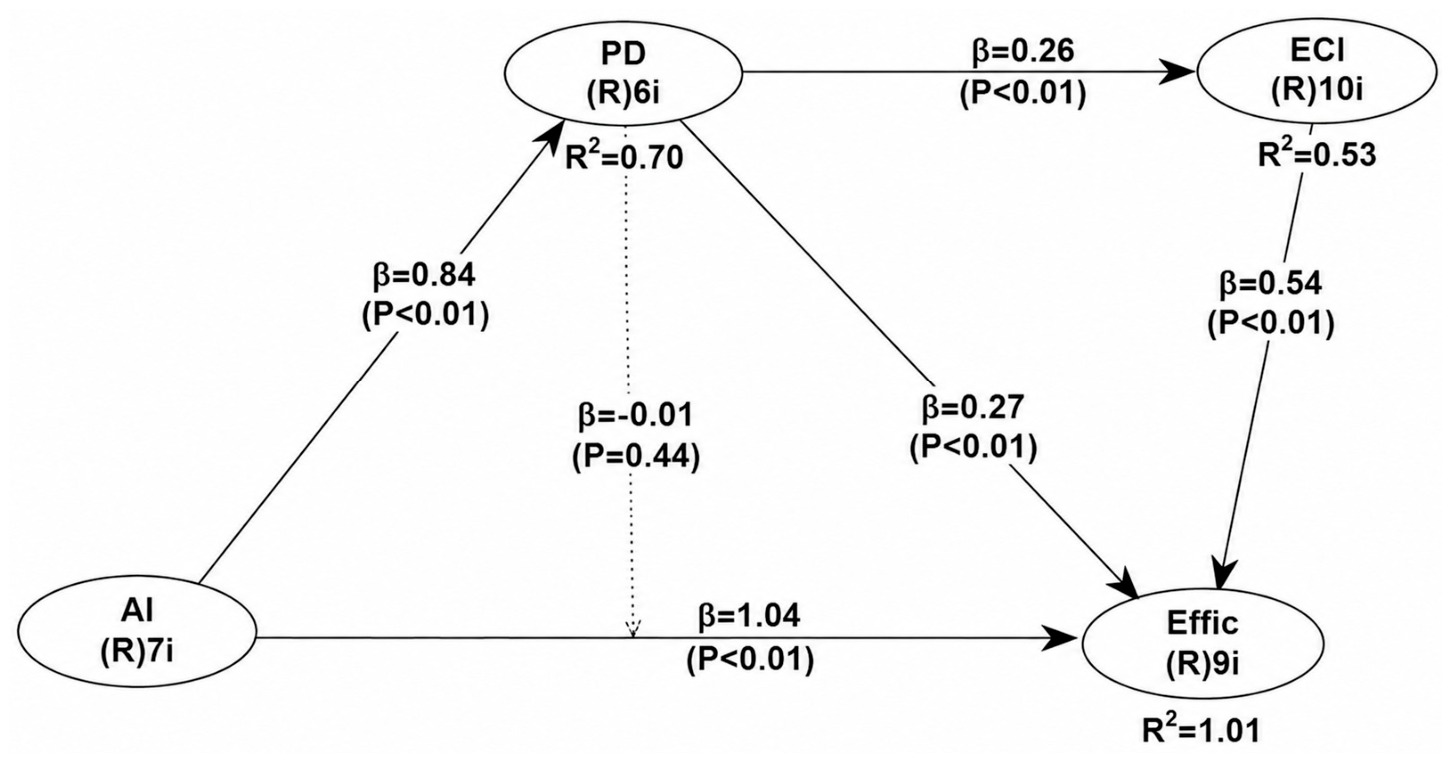
Figure 1 illustrates the structural research model.
Figure 1 illustrates the structural research model. The model posits four constructs: AI Adoption (AI), Professional Development (PD), Administrative Efficiency (Effic), and E-Citizen Integration (ECI), with the interaction term PD × AI capturing potential moderation.
H1: AI Adoption → Administrative Efficiency
AI systems reduce the labour required for routine tasks, compress service cycle times, and improve decision accuracy mechanisms that aggregate perceivable efficiency gains (
Brynjolfsson & McAfee, 2014;
Raisch & Krakowski, 2021;
Brynjolfsson et al., 2023). Macroeconomic evidence consistently associates the diffusion of general-purpose technologies with aggregate productivity improvements (
Brynjolfsson & McAfee, 2014;
Solow, 1957). In the local government setting, tools such as RPA, virtual assistants, and AI-powered permit processing directly reduce throughput time and resource expenditure per service unit (
Sun & Medaglia, 2019;
Berryhill et al., 2019). Once AI adoption achieves critical mass in Madrid through the MAIA platform, mimetic pressures reinforce efficiency perceptions across departments (
DiMaggio & Powell, 1983;
Atos, 2025).
H1. AI adoption is positively associated with perceived administrative efficiency in Spanish local government.
H2: AI Adoption → Professional Development
AI adoption creates a demand for new skills, including data literacy, algorithmic oversight, and prompt engineering, while simultaneously providing tools that augment professional capacities (
Brown & Brudney, 2003;
OECD, 2023;
Madan & Ashok, 2023). The EU AI Act now legally mandates AI literacy for public-sector adopters (
European Commission, 2024;
European Parliament, 2025), institutionalising the AI–professional development link. Institutional experience from Spain’s ALIA initiative and Madrid’s AI Roadmap demonstrates how public infrastructure deployment is coupled with large-scale employee training programmes (
ALIA, 2025;
Ayuntamiento de Madrid, n.d.a;
EsadeEcPol, 2025a).
H2. AI adoption is positively associated with the professional development of Spanish municipal employees.
H3: Professional Development → Administrative Efficiency
Human capital theory predicts that investments in employee capabilities translate into higher organisational productivity through improved task execution, reduced error rates, and more effective use of available technologies (
Neumann & Guirguis, 2022;
Pollitt, 2013). Professionally developed employees make more effective use of AI tools, reducing the productivity gap between AI capability and realised performance, a gap widely documented in digital transformation failures (
Janssen & Kuk, 2016;
Dunleavy & Carrera, 2013).
H3. Professional development is positively associated with perceived administrative efficiency.
H4: Administrative Efficiency → E-Citizen Integration
H4. Administrative efficiency is positively associated with e-citizen integration outcomes.
H5: Professional Development → E-Citizen Integration
Beyond its indirect effect via efficiency, professional development may directly facilitate e-citizen integration by equipping municipal employees with communication, digital literacy, and service design skills needed to create citizen-centric interfaces and interactions (
Pencheva et al., 2020;
Twizeyimana & Andersson, 2019). The risks of under-skilled AI deployment including bias, exclusion, and inequitable outcomes are well documented (
Eubanks, 2018;
Veale et al., 2018;
O’Neil, 2016), reinforcing the importance of professional development as a safeguard for equitable citizen integration.
H5. Professional development is positively associated with e-citizen integration.
H6: PD × AI → Administrative Efficiency (Moderation)
Beyond the additive effects captured in H1 and H3, a complementarity argument predicts that the marginal efficiency return to AI adoption is conditional on the absorptive capacity of the workforce that operates AI-enabled systems. The proposed mechanism operates through three interrelated channels. First, professionally developed employees possess the data literacy, algorithmic interpretation skills, and process-redesign capabilities required to translate AI outputs into actionable workflow improvements; without such capabilities, AI tools generate latent rather than realised efficiency gains (
Brynjolfsson et al., 2023;
Raisch & Krakowski, 2021). Second, higher levels of professional development reduce the calibration costs of human–AI collaboration, including miscalibrated trust, automation neglect, and over-reliance on algorithmic recommendations (
Raisch & Krakowski, 2021). Third, training builds the diagnostic capacity needed to identify productive use cases for AI within complex administrative processes, increasing the share of adoption that yields measurable efficiency improvements (
Madan & Ashok, 2023;
Mikalef et al., 2023). Taken together, these mechanisms generate a complementarity prediction that goes beyond simple additive effects: the AI–efficiency slope should be steeper among more developed workforces. We empirically test this moderation prediction and openly report its non-confirmation in
Section 4 as a substantive contribution. A complementarity argument predicts that the effect of AI adoption on efficiency is amplified when employees are more professionally developed a view supported by resource-based theorising on complementary assets (
Raisch & Krakowski, 2021;
Agrawal et al., 2019) and empirical work on technology–skill complementarity (
Raisch & Krakowski, 2021;
Brynjolfsson & McAfee, 2014).
H6. The positive relationship between AI adoption and administrative efficiency is stronger when professional development levels are higher.
6. Conclusions
This study advances understanding of how AI adoption shapes local government performance through a multi-construct mediated model tested on 500 Spanish municipal employees using PLS-SEM, interpreted within a TFP-informed macro-level narrative. Four principal conclusions stand out.
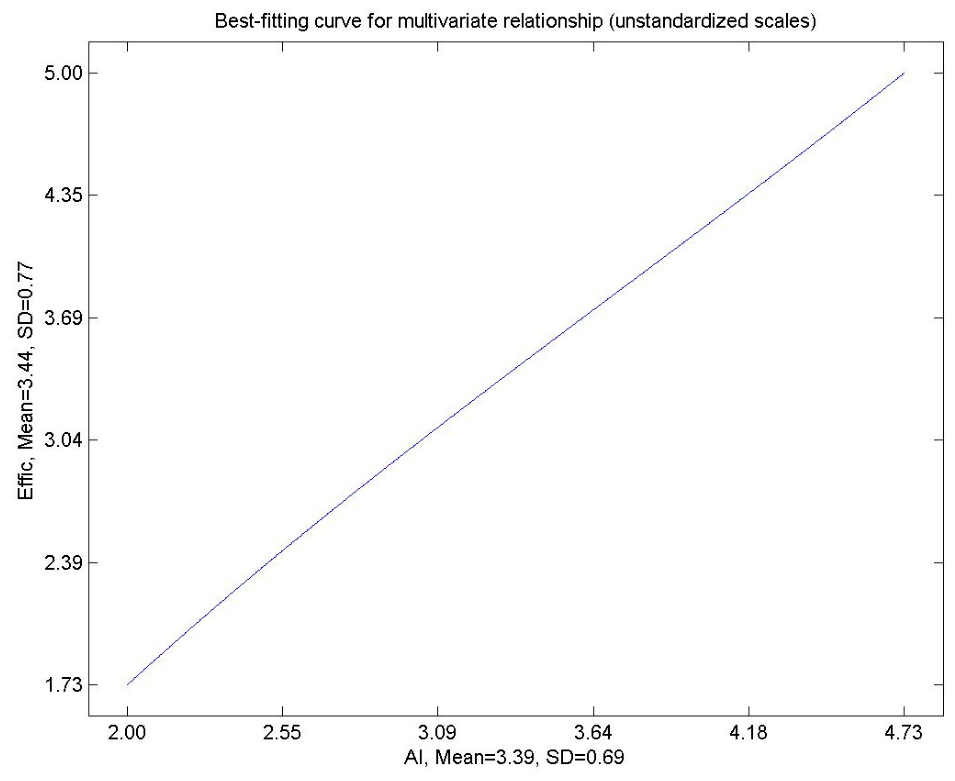
First, AI adoption is a strong direct driver of perceived administrative efficiency (β = 1.04; ≈ 0.87 in the model without the moderation term;
p < 0.001; GoF = 0.701), providing micro-empirical findings consistent with macro TFP projections of approximately 9% public sector productivity gains under widespread AI adoption in Spain (
EsadeEcPol, 2025a,
2025b). For substantive interpretation we emphasise the parsimonious estimate (β ≈ 0.87, R
2 = 0.76); the high Stone–Geisser predictive relevance (Q
2 = 0.685) confirms that this represents a strong, genuine effect rather than an overfitted one.
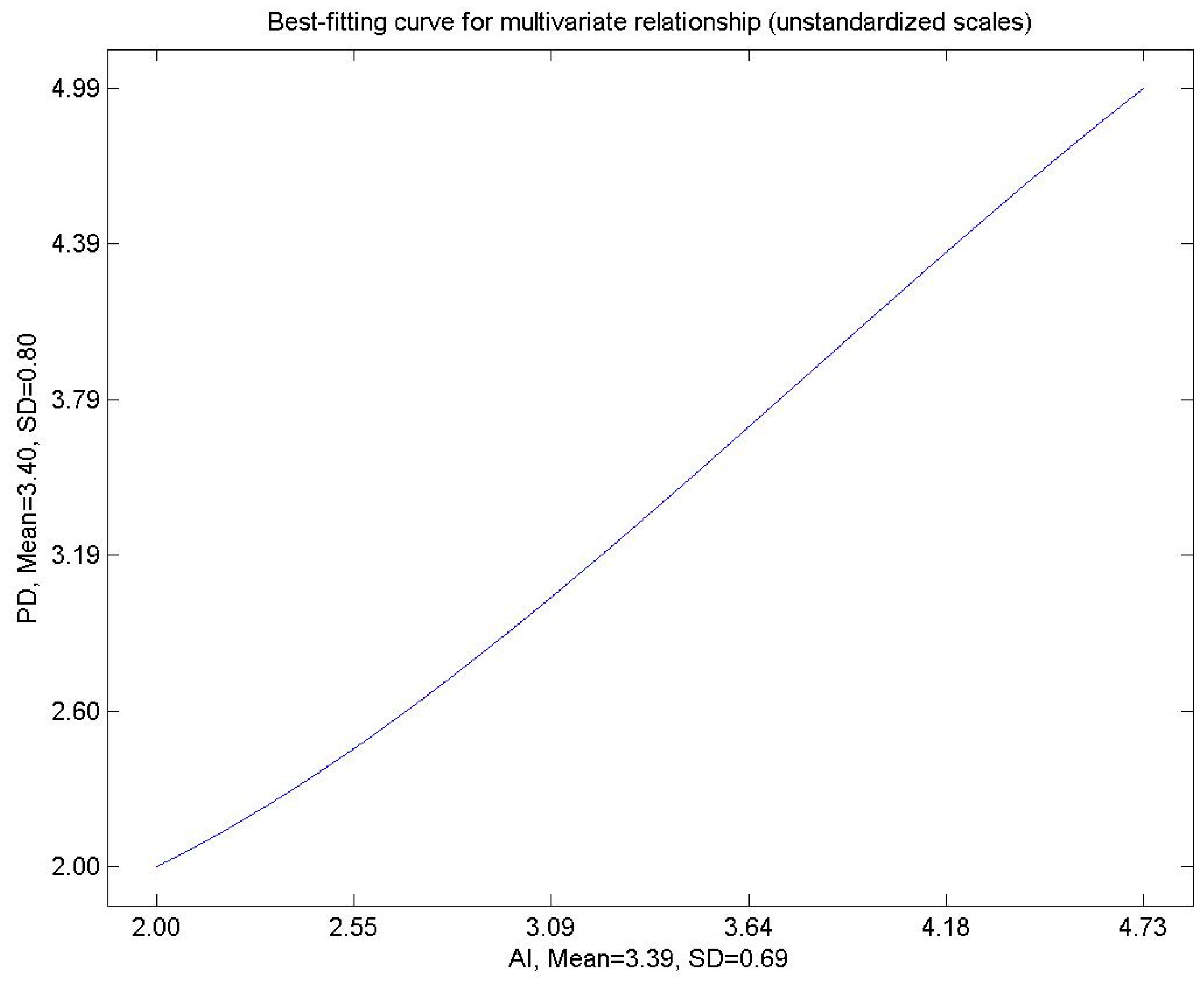
Second, AI adoption simultaneously activates a professional development pathway (β = 0.84, R
2 = 0.70) that independently contributes to both efficiency and e-citizen integration. This extends public value theory by identifying one internal organisational mechanism through which AI adoption achieves citizen-service outcomes and reinforces the EU AI Act’s mandatory AI literacy provisions (
European Commission, 2024).
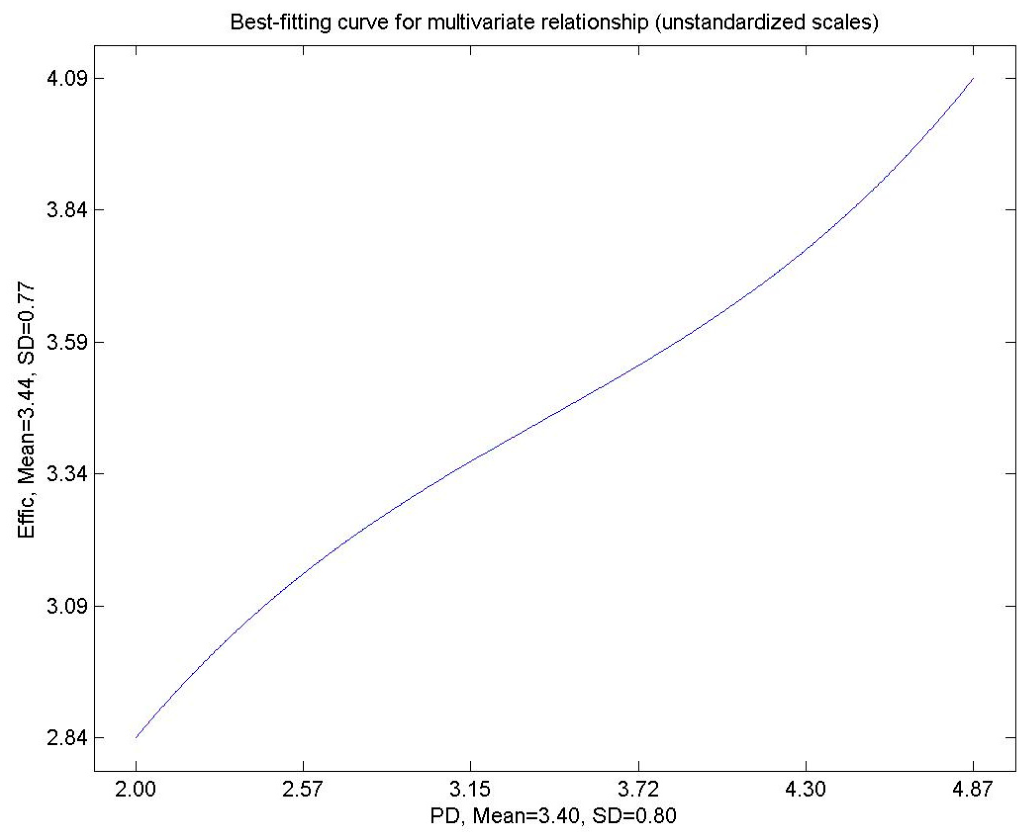
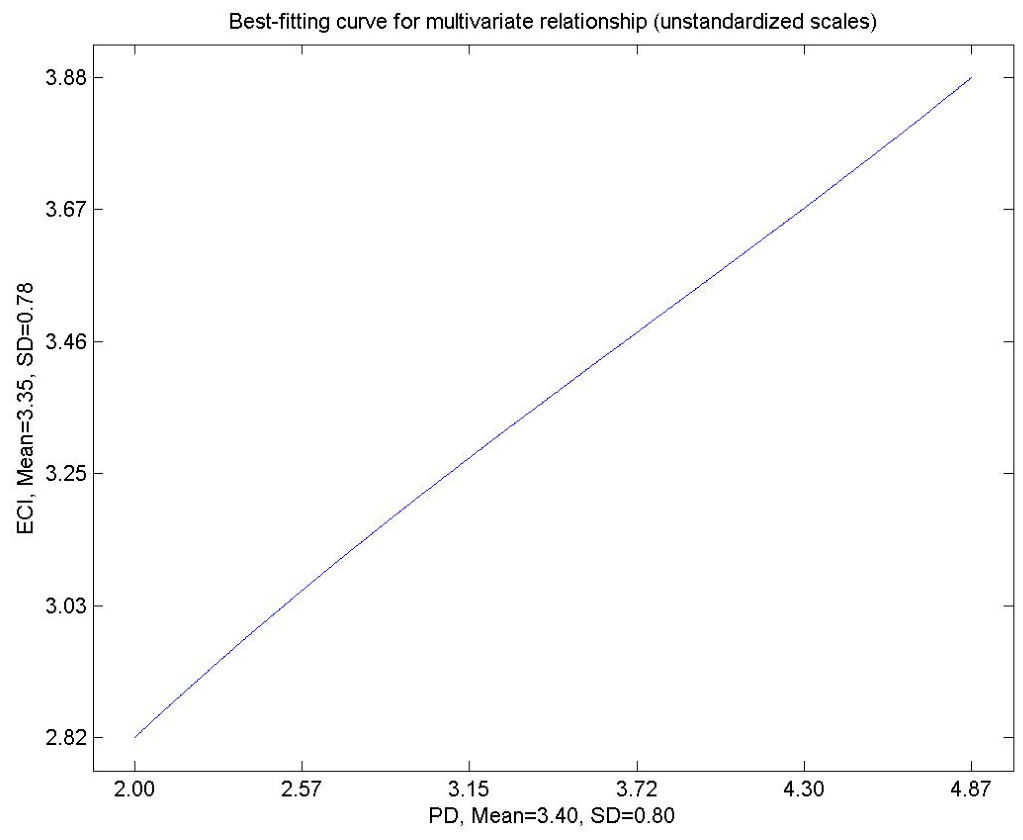
Third, efficiency is the proximal driver of e-citizen integration (β = 0.54, R
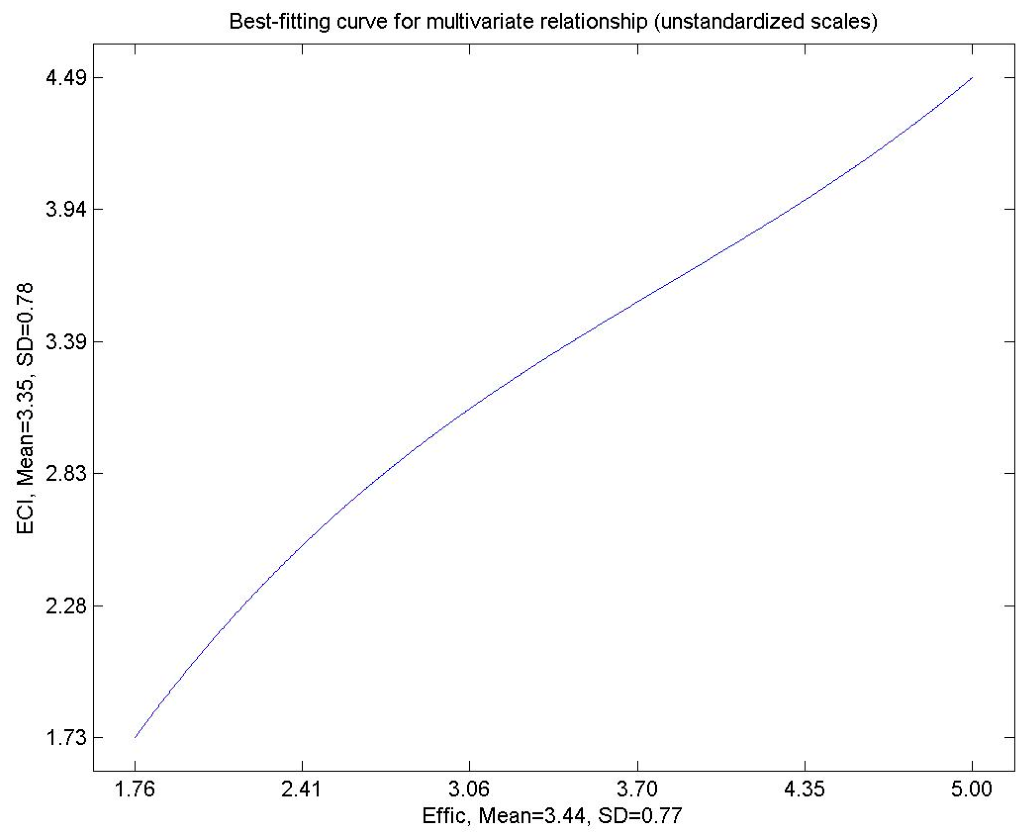
2 = 0.53), confirming that administrative modernisation precedes digital citizen engagement. The non-linear concave relationship suggests that lagging municipalities benefit most from efficiency investments, with direct implications for the targeting of NextGenerationEU and national AI infrastructure support (
EsadeEcPol, 2024;
Government of Spain, 2024).
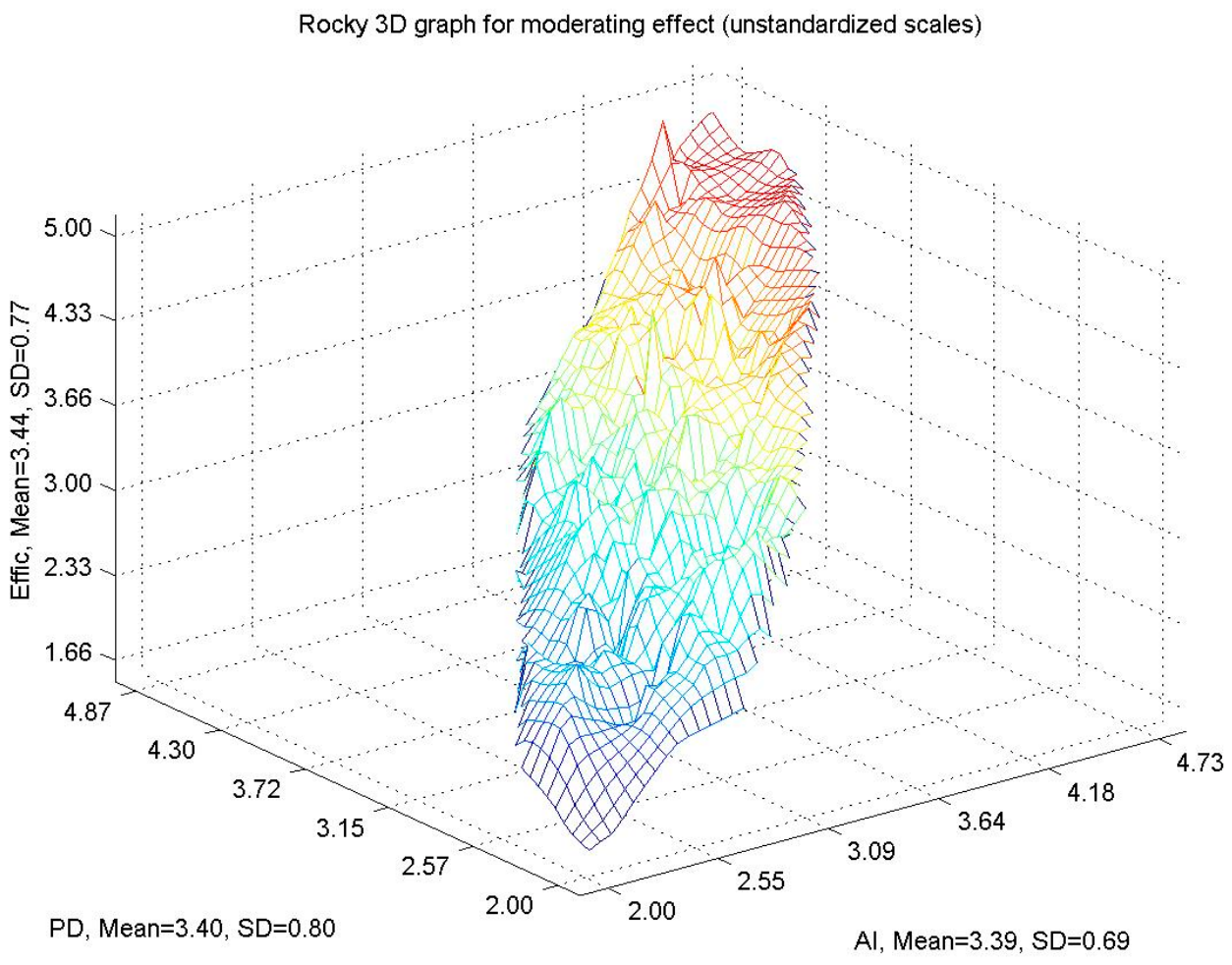
Fourth, professional development and AI adoption operate additively rather than synergistically on efficiency (β = −0.01, p = 0.44), freeing municipalities to phase these investments without sacrificing returns. This null finding contrasts with assumptions of private-sector complementarity and contributes to the distinctive public-sector AI research agenda.
Collectively, these findings characterise AI adoption as a meaningful though not deterministic lever for Spanish and European local government, with effects mediated through organisational capability building. We frame these conclusions in measured terms, acknowledging the study’s reliance on perceptual measures, its cross-sectional design, and its single-region sample. Future research should prioritise longitudinal designs, objective TFP measurement, and cross-regional comparative analysis to consolidate this evidence base, along with disaggregation of AI technology types (predictive, RPA, generative) and direct measurement of citizen-side outcomes.