


Abstract
This study sought to examine the evolution of financial technology (FinTech) and its huge influence on traditional financial systems, with particular attention to InsurTech, regulatory technology, robo-advisory services, and advertising technology. Focusing on the intersection of FinTech and small- and medium-sized enterprises (SMEs), the study employed a bibliometric analysis of 365 publications indexed in the Scopus database from 2007 to 2023. Scientific mapping techniques were used to identify key research domains, leading institutions, influential authors, and major contributing countries. The findings revealed a strong and growing interconnection between FinTech and SMEs, emphasizing the critical role of SMEs in economic development and financial inclusion. The analysis also highlighted the dominance of China in global FinTech research and identified emerging thematic trends that appeared to have shaped the field. The study concluded that FinTech innovations significantly contribute to enhancing financial system efficiency, resilience, and accessibility, thereby supporting sustainable economic growth. The insights obtained from this study may be found to be useful for policymakers, financial institutions, and SMEs whose interest is to leverage digital financial innovations for strategic decision making. This research offers a comprehensive overview of FinTech’s evolution and provides a foundation for future empirical and qualitative studies.
1. Introduction
Since the beginning of the twenty-first century, the impact of rapid technological advancements and digitalization on economic, social, and business activities has been so enormous that it has made digital technologies an indispensable component of everyday life. Financial technology (FinTech) has made it easy and fast to access financial services and funding opportunities through digital devices and online platforms (Asif et al., 2023). The FinTech scene is known for its innovative and efficient practices that have been changing the financial services landscape (I. Lee & Shin, 2018). FinTech is also seen to have unlocked the power of financial services by offering top security for investors and delivering low-cost and fast solutions (Anikina et al., 2016). Entrepreneurial ventures, encompassing both small and medium enterprises (SMEs) and startups, are thought to benefit greatly from FinTech, as it helps them to grow and contribute significantly to economic development. The services offered by the financial industry through FinTech may mitigate the occurrence of financial crises and this is one reason why FinTech has become popular.
FinTech is now regarded as a noteworthy innovation in finance (Sethi & Manocha, 2023). Its potential to change the financial landscape by delivering convenience and security in transactions has earned widespread recognition. While the FinTech industry was initially led by entrepreneurs, it has attracted the interest of scholars and is now being thoroughly examined by regulators. This term covers various innovative ideas, such as InsurTech, RegTech, Robo advisers, and AdTech. According to Gai et al. (2018), FinTech is a new technology used in the financial services sector.
The assumption that FinTechs may change banking service domains has received considerable attention in recent years. This shows the active interaction between financial technology companies and traditional banking services (Hanafizadeh & Amin, 2023). Concurrently, the rise of peer-to-peer (P2P) lending FinTechs is thought to have changed how SMEs access finance. In OECD countries from 2011 to 2018, these platforms were found to have enhanced SMEs’ financial accessibility, especially under favorable institutional conditions (Abbasi et al., 2021).
Moreover, crowdfunding (CF) has turned out to be a novel entrepreneurial finance (EF) tool. In a recent study by Abdeldayem and Aldulaimi (2023), it was confirmed that in the Middle East, crowdfunding platforms may be effective at financing new businesses. Their effectiveness in such regions indicates a promising future for FinTech. China has developed technology markets that have embraced FinTech. These markets demonstrate that FinTech can be used to promote inclusive finance. Economic studies revealed that SMEs could benefit from FinTech-based financial intermediation that enables direct financing. This may improve their access to inclusive technology-led disintermediation finance (Zhang et al., 2022). Moreover, although credit risk assessment seems to be quite complex, blockchain-based supply chain finance has been introduced to solve SME funding problems. Factors such as funding companies, core businesses, and blockchain networks were found to have influenced SME credit risk, highlighting the need to manage risks in innovative financial systems (Xiao et al., 2022).
Furthermore, a study from Indonesia found that internet usage, borrowing history, and loan utilization affect how easily MSEs can access FinTech lending. These factors are thought to influence the online trustworthiness of MSEs and their likelihood of receiving loan approval (Saptia et al., 2021). Other studies have identified the main drivers of blockchain-based lending adoption by SMEs: complexity, perceived risk, and reward sensitivity. These findings revealed the complex patterns of FinTech adoption across different financial sectors (Sun et al., 2021). Meanwhile, digital finance was seen to have affected the investment decisions of MSEs, particularly by reducing information asymmetry, which often limits business growth in China (Lin et al., 2022).
However, despite the availability of evidence that equity crowdfunding may increase innovation opportunities and support SME growth, the relationship among these dimensions can be found to have been insufficiently understood and fragmented in the existing literature. As a result of this lack of clarity, investors are more likely to grow skeptical toward crowdfunding initiatives. This may have consequences, including, but not limited to, reducing investor confidence, limiting funding accessibility for SMEs, weakening the success rate of crowdfunding campaigns, and, ultimately, constraining innovation-driven business growth (Eldridge et al., 2021). Therefore, the main research problem of this study is to address this unclear and scattered understanding of how equity crowdfunding contributes to SME innovation and growth. In order to achieve this, conducting a comprehensive scientometric investigation of the existing body of knowledge appears to be necessary. As already indicated by various studies, FinTech is changing how businesses worldwide access finance, innovate, and grow.
The structure of this article is as follows. The subsequent section presents a review of the relevant literature on financial technology and SMEs followed by the research problem, and study objectives. The next section is devoted to outlining the methodology adopted for the scientometric analysis, including data collection and analytical techniques. Then, the results and discussion sections present the key findings related to influential contributors, thematic developments, and new research trends. Finally, the current study concludes with theoretical implications, limitations, and directions for future research.
2. Literature Review
As shown in Table 1, we critically conducted a literature review on FinTech and SMEs across different countries: China, Pakistan, Bangladesh, Indonesia, Nigeria, Jordan, Cameroon, and ASEAN. In the review of the literature, we also identified methodologies, data analysis and survey, literature review, structural equation modeling, etc., to establish the need for the study. The key findings included the positive impact of FinTech on SME innovation, growth, financing, and resilience, particularly during crises like the COVID-19 pandemic. Factors such as perceived usefulness, financial literacy, and environmental context were found to influence SMEs’ adoption of FinTech services, ultimately affecting their performance and access to finance.
Table 1.
Literature review (author’s own source).
Most of the FinTech literature appeared after the year 2015 (Bajwa et al., 2022). As a result, in contemporary times, several books, papers, and conference papers have likewise scrutinized the extant FinTech literature (Gai et al., 2018; Gomber et al., 2018; Palmié et al., 2022; Puschmann, 2017; Sangwan et al., 2020). However, earlier bibliometric reviews were limited in scope or focused only on narrow topics. They did not provide much insight into the leading institutions, scholars, or key technological aspects of FinTech.
The studies above show that the potential trajectories for future research in FinTech have not been fully explored. The present study attempts to fill this gap and contribute to the extant body of literature by offering a more comprehensive bibliometric appraisal of FinTech research, including many articles that have hitherto remained unexplored. The present study seeks to answer to the following questions:
- What are the primary domains of investigation within financial technology and SMEs?
- Which institutions, nations, publications, and authors have led this field?
- Which articles and topics are most influential and currently gaining popularity?
- What are the main streams of research in the literature on FinTech and SMEs?
- What additional areas of research need further exploration?
The main objective of the present study is to provide a complete scientometric analysis of the existing FinTech and SMEs literature. In addition to identifying the major areas of research within this field, the study specifically aims to examine the most important authors, institutions, countries, and publications and explore the most impactful and new research themes. Furthermore, the study seeks to uncover the main intellectual streams shaping the SME and FinTech literature and identify potential research gaps and future directions for scholarly exploration.
This study builds on earlier bibliometric reviews of FinTech and SMEs. We conducted a thorough bibliometric examination of the literature published between 2007 and 2023. We selected the Scopus database from which a total of 365 published papers were included. After that, we performed a comprehensive bibliometric citation analysis as extensively done by leading review articles in management and social sciences (Bahoo et al., 2020). Many previous finance reviews have been found to have used traditional surveys focused on a single issue (Ballester et al., 2019; Deku et al., 2019; French & Vigne, 2019; Garner et al., 2016; Nguyen & Boateng, 2015). Nevertheless, several recent studies in finance are seen to have employed bibliometric citation techniques. For example, Helbing (2019) used this approach to study initial public offering (IPO) literature, and Paltrinieri et al. (2023) utilized it to review Sukuk literature. Paltrinieri et al. (2023) also applied bibliometric techniques to credit risk research.
What is at issue is that the current fragmentation of past studies on SMEs and FinTech over different themes, regions, and methodologies limits our understanding of the field’s intellectual knowledge and research development. Additionally, if one considers this issue from a practical point of view, he/she will come to realize that FinTech has turned to be a powerful force affecting the access of SMEs to financial services, creation, operational competence, and growth possibilities in many parts the world. Hence, in order for us to find out what the key research trends, new themes, major contributors, and unexplored areas look like in this field, conducting a scientometric assessment is clearly imperative. Hence, the present study is scientifically significant as it attempts to overtake this task.
3. Methodology
The importance of using bibliometric approach for evaluating the intellectual atmosphere, thematic development, and research trending within the literature on SMEs and financial technology cannot be understated. The bibliometric method is deemed to be the most appropriate approach for this study in the sense that it assists us in analyzing large amounts of data through making use of its quantitative and scientific mapping techniques. What is more important is that this approach is thought of as being effective in detecting important journals, institutions, emerging themes, countries, research gaps, and authors. That is, it gives us a clear picture of a fragmented and fast-changing research field.
The quantitative bibliometric analysis was used to scrutinize the literature of the past 17 years on “FinTech services and Small-Medium sized enterprises.” This process involved evaluating the annual publication count, citations, collaborative patterns, key contributors, institutions, and countries for the purpose of determining evolving trends (Donthu et al., 2021). The analysis encompassed a crucial component, namely, “scientific mapping analysis” (Thangavel & Chandra, 2023). Scientific mapping analysis looks at how the field has evolved through content analysis and co-word networks to reveal theoretical structures and keyword connections (Muñoz-Leiva et al., 2012). We based our analysis entirely on the Scopus database and used the open-source bibliometric tool Biblioshiny 4.3.1 from RStudio (Gutiérrez-Salcedo et al., 2018; Mumu et al., 2022; Zerbini et al., 2022). Biblioshiny is believed to have been offering a wide range of statistical methods that simplify scientific mapping (Gutiérrez-Salcedo et al., 2018). As an open-source R package, Biblioshiny is also found to stand out from other tools like VOSviewer or CiteSpace (Mou et al., 2019). Graphical representations for the analysis and figures were created using Canva v3.120.0, Datawrapper 2026-05, and Microsoft Excel.
The current research was conducted through a process of two phases. After classifying research contributions within the Scopus database, there followed a bibliometric analysis of these contributions using the RStudio bibliometrics package (Thangavel & Chandra, 2023). The technical phases we have undertaken in this study are shown in the flowchart below (Scheme 1).
Scheme 1.
Research framework (author’s own source).
3.1. Phase-I Documents Selection
To begin our bibliometric investigation, we set our research parameters to concentrate on FinTech services and SMEs from 2007 to 2023. We chose the database of Scopus because it is believed to contain a large number of high-quality, peer-reviewed journals across many fields, including business, management, finance, economics, technology, and social sciences. These fields are deemed central to the study of financial technology and SMEs. Since the present research involves concepts from finance, innovation, entrepreneurship, digital technology, and economic development, Scopus is found to provide broader interdisciplinary representation compared to many other databases. Furthermore, in Scopus date, one can find full bibliographic information, citation indexing, and compatibility with bibliometric analysis tools such as Biblioshiny and VOSviewer. These features make it highly suitable for conducting scientometric investigations and recognizing influential research patterns within certain research domains.
In order for this study to explore pertinent scientific documents, we used explicit keywords in the “Title-Abstract-Keyword Plus”: (“small business*” OR “small firm*” OR “small enterprise*” OR “small compan*” OR “medium-sized firm*” OR “medium-sized business*” OR “medium-sized enterprise*” OR “medium-sized compan*” OR “small and medium-sized enterprise*” OR “SME*” OR “small and medium-sized compan*” OR “small and medium-sized business*” OR “small and medium-sized firm*” AND “Fintech” OR “Financial Technology” OR “Digital Finance” OR “Robo-Advisors” OR “Cryptocurrency” OR “Blockchain Technology” OR “Peer-to-Peer Lending” OR “Mobile Payments” OR “Open Banking” OR “Neobanks” OR “RegTech (Regulatory Technology)” OR “Insurtech (Insurance Technology)” OR “AI in Finance” OR “Machine Learning in Finance” OR “Big Data in Finance” OR “Financial Inclusion” OR “Payment Innovation” OR “Financial Disruption” OR “Cybersecurity in Finance” OR “Tokenization in Finance” OR “Digital Identity in Finance” OR “Blockchain-based Smart Contracts” OR “Financial APIs” OR “Crowdfunding in Finance” OR “Alternative Lending”).
The initial unfiltered search yielded 758 documents. We employed the “subject area” filter to refine the results, focusing on economics, econometrics and finance, business, management and accounting, computer science, and social sciences. The result we got was a total of 688 documents. The year 2007 was distinguished by its being a time of the widespread use of financial technologies in society. It is, therefore, no wonder that the current study commenced its analysis with this year and extended it to 2023 with aim of encompassing articles being regarded to be important to studying the development of financial inclusion (Dholakia & Dholakia, 2004; E. Lee & Jin, 2004). The period we selected witnessed a notable progress in financial tools, the rise of smartphones, and the proliferation of mobile applications, all of which are thought to have been influencing consumer behavior in the FinTech realm to a large extent (Mollick et al., 2023). Employing the “document type” filter meant that research articles were carefully chosen, not to mention the benefits this procedure in omitting any conference papers, book chapters, conference reviews, reviews, books, errata, retracted, or editorial documents and decreasing the count to 429. Further refinement by language (English) resulted in approximately 417 articles. A final filter, “publication stage”, was applied: it restricted articles to “final” excluding those “in press”, and it eventually yielded a final set of 365 documents.
The criteria the study established for filtering are explained in detail in the flowchart above. The manual screening, being a standard practice in these bibliometric analyses to find relevant publications based on titles and abstracts, was then conducted on the 758 documents. The purpose of this step was to facilitate the process of narrowing down the document pool, where 365 articles aligning with the research objectives were identified. The selected articles were then downloaded in CSV format for further analysis.
Specifically, only peer-reviewed research articles were selected in order that we ensure the inclusion of scientifically validated and high-quality academic contributions. In this way, the current study maintained the reliability and consistency of the bibliometric analysis. The study was limited to those articles published in English because English is believed to be the leading language in international scientific communication. English also allowed broader comparability across studies. Furthermore, only final published versions were considered so that the study could ensure the accuracy and stability of bibliographic and citation information required for scientometric analysis, for in-press articles may still undergo changes before final publication.
3.2. Phase-II Bibliometric Analysis
As mentioned earlier, the methodology employed in this bibliometric analysis encompasses the main dimension of scientific mapping analysis. The use of this analysis was meant to delve into the structural and evolutionary aspects of the research field by exploring keyword co-occurrence.
The review period was divided into two segments. The initial one, usually more extensive, was utilized to pinpoint major themes (research fronts) that garnered substantial scholarly attention. The next period serves to highlight emerging or diminishing themes, which would direct the future pathway of the research field (Kipper et al., 2020). However, in our analysis, we opted to further divide the study period (2007–2023) into three distinct sub-periods, namely, 2007–2015, 2016–2021, and 2022–2023. This decision stemmed from two main considerations. Firstly, we aimed to explore whether any niche themes appeared during the period coinciding with the COVID-19 pandemic. Secondly, the years 2016–2021 are claimed to have witnessed the widespread uptake of smartphones internationally and prompted a renewed intellectual interest in the field. Consequently, these were examined separately to uncover potential perceptions about this period. The outcomes of this analysis are elucidated in the results section.
4. Results
4.1. Descriptive Statistics
The data we analyzed revealed interesting findings concerning FinTech services and SMEs. The period of 17 years the study covered offered a broad view of the subject. We included 236 unique sources as well as a collection of 365 documents for this analysis. The field saw a remarkable annual growth rate of 33.68%; this indicated a quick expansion and a seemingly increasing academic interest. The fact that the average age of documents is 2.1 years made it clear that studies on this topic are recent. Every document was found to have received an average of 11.2 citations highlighting the research had large impact and visibility in the field. The benefit of these descriptive statistics was that they helped us to assess the scope, comprehensiveness, and patterns that defined research in this sensitive sector (see Figure 1).
Figure 1.
Descriptive statistics of bibliometric data (source: Biblioshiny).
The documents contained a wide range of terms. There were 521 occurrences of Keywords Plus and 1061 occurrences of author keywords. This variety showed that research in this area covered multiple fields the most important of which were financial technology, small business entrepreneurship, invention, and digital entrepreneurship. The rich keywords can be thought to reflect the many approaches and interdisciplinary perspectives that have been shaping discussions and FinTech and SME studies (J. Liu et al., 2023).
When we examined the authorship patterns, we came up with interesting views about how researchers collaborate with each other in the sector. Among the 989 authors who contributed to the documents we analyzed, only 51 documents were observed to have been written by a single author. Most of the documents (53) showed co-authorship, and more importantly each document had an average number of 3.01 co-authors. This observation regarding co-authorship testify that knowledge was generated via collective efforts. Moreover, international collaboration was found to account for about 31.23% of co-authorships. This percentage can be understood as being an evidence of a cross-border cooperation in undertaking studies on FinTech and SME-related topics.
It should be noted here that all 365 documents in our corpus were articles. What this indicates is that there was a focus on deep analysis, empirical surveys, and theoretical contributions in this area of research. These articles also serve to disseminate knowledge, share findings or engage in academic discussions. As a whole, they add to the knowledge we have accumulated about how FinTech services are provided to SMEs. Understanding how different document types are distributed explained how scholarly communication was made and how knowledge was being shared. In summary, these descriptive statistics analyzed tendencies and how in FinTech and SMEs worked together (Pandey et al., 2023).
4.2. Scientific Mapping Analysis
Figure 2 presents the publication and citation trends in the literature on FinTech and SMEs during the period from 2007 to 2023. Apart from giving a clear idea as to the evolution, visibility, and academic influence of this domain of research, the above analysis proved that scholarly output remained low during the early years. This low output may be understood to reflect the emerging nature of FinTech research as well as the slow acceptance of digital financial technologies by SMEs. However, from 2011 onward, both publication output and citation impact were found to have begun to rise steadily. This increase can be seen as being an indication of the growing academic and practical interest in the role of FinTech in supporting SME development, financial inclusion, innovation, and digital change (Verma & Gustafsson, 2020).
Figure 2.
Publication and citation trend’s analysis (author’s own source).
The notable surge in publication and citation activity that appeared to have occurred between 2019 and 2022 may be attributed to the rapid global expansion of digital financial services, higher smartphone and internet usage, regulatory support for digital finance, and the accelerated uptake of FinTech solutions during and after the COVID-19 pandemic. The pandemic was assumed to be the reason behind the heavy reliance of SMEs on digital payments, CF platforms, mobile banking, and online financing to unprecedented levels. The high citation registered in 2019 suggests that articles published during this period dealt with such relevant issues that they led to a greater academic visibility and engagement.
In spite of the continuous rise of the publications we observed during the period after 2020, citation metrics seemed to have fluctuated in the years following that date. These variations may be partly due to the assumption that many recent articles may not have yet had enough time to accumulate citations. The changing research priorities, technological trends, and shifts in the global economic environment may have also affected citation behavior and thematic focus. The decline in citations despite increased publication volume also shows that the field is becoming more diversified. That is to say, research in this field is being expanded to incorporate multiple specialized themes instead of concentrating on a few dominant topics. As a whole, the present findings testify that FinTech and SMEs have been rapidly growing as interdisciplinary research area with increasing scholarly relevance and global academic engagement.
4.2.1. Documents’ Citation Analysis
The analysis of documents’ citation is more concerned with the intellectual impact that citation patterns may have in FinTech services and SMEs research. The scope of this analysis is seen to extend to cover a wide variety of papers discussing issues concerning adopting FinTech, SMEs, and other related topics. The more we understand about document citation patterns, the more knowledgeable we become about research reception and influence. This type of knowledge is also considered to be useful for guiding scholars, practitioners, and policymakers to key works, newly occurring trends, and promising areas for future research (Bruce et al., 2018).
As can be seen in Table 2 above, there are big differences in citation metrics among the selected publications and these disparities appear to correspond to the different subjects studied at various academic levels. Two articles were found to have received high citation rates: “Investigating the Influence of Organizational Factors on Blockchain Adoption” (164 citations) and “Small Business Awareness and Adoption of State-of-the-art Technologies” (114 citations). The fact that they are widely cited by researchers in this field shows their importance in advancing the FinTech and SMEs knowledge.
Table 2.
Documents’ citation analysis (author’s own source).
Moreover, the present study found clusters that were based on specific themes with which scholars engaged. These include, but are not limited to, using blockchain technology, digital financial inclusion and sustainable business models for SMEs. More importantly, the citation clustering revealed that owing to the high number of references they receive from numerous sources, these issues are gaining more prominence. There also appears to be a strong relationship among queries in areas connected to FinTech and SME studies. One can realize this relationship through the clustering of citations around key subjects.
Still, these citations also proved that research impact is prone to change over time. While some papers continued to be cited regularly, others were found to have experienced fluctuations. The reason behind this inconsistency may be due the changes in research priorities or popularity shifts among citing sources used in scientific writing. For example, we noticed that many articles are still being published about the effects of FinTech on bank loan availability for SMEs and about sustainability through blockchain frameworks in halal food supply chains. These works were found to have maintained consistent citation levels, and this citation consistency shows that their findings by no means remain relevant.
In general, analyzing the citation documents is considered to be valuable in that it enables researchers to estimate the academic influence of “Documents’ Citation Analysis” in relations to current trends and temporality in FinTech services and SMEs. A careful study of both influential publications and citation patterns can make it possible for researchers to better understand the constantly changing world of financial technology as well as the dynamism of SMEs and sustainability in them (Sharma et al., 2022). Further, the study contributes to future research on complex problems and new opportunities within the rapidly changing environment of the FinTech and SME ecosystem.
4.2.2. Bibliographic Coupling
The Bibliographic Coupling Analysis (BCA) methodically explores the connections and thematic clusters within FinTech Services and SMEs domain. Figure 3 aims to identify dominant themes and key ideas and their relationships among the scholarly literature. Understanding this BCA in this context is fundamental since it provides insight into the intellectual construction and knowledge movements that influence research agenda and scholastic conversations in this field (Yang et al., 2023). Co-occurring terms and theme clusters revealed underlying research question patterns on FinTech services in SMEs.
Figure 3.
Bibliographic coupling (Source: Biblioshiny).
Some thematic clusters were observed to be based on shared concepts or thematic foci. For example, thematic group 1 puts emphasis on FinTech at a crossroads with financial inclusion: China’s role in influencing FinTech environments. This cluster of themes shows how FinTech innovations improve access to finance, with a special attention to China as a leading force in global FinTech movements and developments. By putting together these words, it becomes obvious that the research in this domain contains various financial inclusion areas, especially FinTech use in new economies for financing SMEs.
Furthermore, thematic group 2 was seen to highlight the interdependence between FinTech, blockchain technology, and SME dynamics. The increasing interest in blockchain use cases within the FinTech space suggests that it can potentially revolutionize small business financing. Blockchain streamlining operations can make financial systems more inclusive, particularly for SMEs. The use of business concepts incorporated with technology has been on the rise, thus allowing small businesses to go big in solving big challenges. However, we can see that there are complementary relationships when all these aspects are well combined.
The third theme group identified by the study concerns financial inclusion and FinTech adoption for SMEs. Other interventions, such as new developments recognized as part of the measures toward achieving financial inclusion, include mobile money transfers and ICT-enabled social media banking. They also discuss different policies that can be implemented to tackle the problem. In particular, it emphasizes the efforts to digitize the economy and entrepreneurship education for young people, who are important in reducing poverty rates and promoting sustainable economic development. An increasing interest in ‘financial inclusion’, ‘FinTech’, and SMEs has established more potency to advance inclusive growth objectives and reduce the digital gap. Due to this, the current research program focuses on creating a framework for SMBs, which are at the forefront of operation in this era of profound economic digitization.
Here, under the fourth theme area, we discuss the financial constraints in SME financing decisions, the problem of information asymmetry in the SME financing market, the fin-tech phenomenon, and the role of digital finance. Out of these aspects of mobile banking, micro enterprises’ financial problems have become the greatest concern. In the case of small businesses, these technologies can enhance their overall finance ratio in that they create additional opportunities for funding and bridge existing funding gaps. As seen from these correlation notes, technological innovations in banking techniques are leading to a revolution accompanied by heightened awareness of how SMEs are financed.
That is why the conclusions drawn from Bibliographic Coupling Analysis prove the given method’s effectiveness in recognizing the topics, the contexts, and the interactions in the perspectives of knowledge about FinTech services and SMEs. When it comes to the ideas related to FinTech, SME finance, and inclusive economic development, this investigation offers new insights into what is already known by identifying the relationships between some concepts and fields of study (Łasak, 2022). This further impacts the research conducted within academic institutions, policy formulation and implementation, and organizations’ business strategies. Hence, the identified findings add to our understanding of the intellectual boundaries of this subject. They can be used in future studies addressing important questions that create value for FinTech and leverage the evolving opportunities of the dynamic environment of the FinTech-SME relationship.
4.2.3. Text Analysis
Co-Word Network Analysis provides a systematic approach for identifying conceptual relationships, thematic structures, and intellectual linkages within the literature on FinTech and SMEs (Gómez-Cruz et al., 2022). This technique, which analyses the co-occurrence of keywords, is expected to show the main research themes, emerging tendencies, and interconnections among different areas of research. Figure 4 describes the thematic organization of the field through interconnected clusters. The size of the ellipses shows the frequency as well as importance of specific keywords. The links among clusters may serve to clarify the strength of conceptual relationships and knowledge flows among themes.
Figure 4.
Co-word network analysis (Source: Biblioshiny).
The blockchain technology, cryptocurrencies, supply chain financing, digitization, and sustainability belong to the first cluster. These terms appear to be among the most prominent thematic groups due to the larger size and stronger connections of their nodes. This result is a reflection of substantial scholarly attention toward combining advanced digital technologies with sustainable financial systems and SME financing mechanisms. The strong links among these keywords show that researchers tend to view blockchain and digital finance as being “transformative” tools that are capable of improving transparency, financial accessibility, operational efficiency, and sustainability within SME settings.
With regard to the second cluster, it can be seen that it centers around adoption-related themes and regional contexts such as Indonesia and developing economies. The interconnected structure of this cluster reflects the rising academic interest in understanding how contextual factors like technological readiness, regulatory frameworks, digital literacy, and institutional support may influence FinTech acceptance across different geographical regions. The moderate node sizes within this cluster indicate that although adoption studies are expanding, the field may be argued to remain scattered across regional and contextual standpoints.
Particularly evident were entrepreneurship, microfinance, and financial technologies that all formed the third cluster: The dense connections they had highlight that the intellectual relationship between FinTech services and entrepreneurial development is necessarily strong. What these terms testify is that FinTech is largely acknowledged for being a means for promoting inclusion in finance, facilitating access to credits, supporting start-ups, and improving the resilience of SME in developing economies. The stress on these interconnected themes may also symbolize much academic concern regarding inclusive economic development and the role of SMEs in achieving financial sustainability.
Innovation, SME growth, and digitalization which appear to be two faces of the same coin are categorized under the fourth cluster that connects them. Despite their being smaller, the close association among these keywords is indicative of the possibility that digital innovation has become a chief way through which SMEs can improve competitiveness as well as their business performance. As regards the relationships between this cluster and that of other thematic groups, they can be said to further demonstrate that innovation in FinTech is not alone. The fact is that this sort of creation goes hand in hand with broader issues such as sustainability, entrepreneurship, and financial accessibility.
Finally, it can be concluded, based on the above network, that the literature of FinTech and SMEs is highly interdisciplinary and interconnected. The varying sizes of the circles confirmed the existence of differences in thematic importance. Meanwhile, the function of the links among was to justify how different research issues contribute to strengthening the knowledge on digital financial change and SME development. These findings may guide scholars, policymakers, and practitioners to recognize the prevailing themes, new areas of inquiry, and conceptual gaps requiring further scholarly studies (Harichandan et al., 2022).
Trending Topics
In an attempt to provide an in-depth analysis of FinTech services and the changing nature of SMEs, the current study placed a lot of emphasis on identifying the most influential subjects over time. These major topics are important to know because they can help us to understand what research is being conducted, what policies are being implemented, and what practices firms are adopting regarding FinTech and SME financing. One of the benefits of trending topic analysis is that it shows how emphasis has been shifting with the passage of time. This will give useful guidance to business operators and all those who are interested in investing in the FinTech and SME industry (Barroso & Laborda, 2022).
The data, as presented in Figure 5, revealed a number of key points as to trending issues in FinTech services for SMEs. Firstly, financial inclusion is shown to be the most common topic. It has a high frequency rate throughout the years with a noteworthy increase between 2019 and 2022. This status confirms that financial inclusion has come to be viewed to be an area of high concern among decision makers and all those seeking to deal with inequalities in financial access and promote inclusive economic growth.
Figure 5.
Trending topic analysis (source: Biblioshiny).
The second point is that different trend patterns appear for topics such as SME finance, microfinance, and banking and these suggest various ways to discuss SME financing models. Interest in blockchain, issues of digital finance, and cryptocurrency topics has been growing. Since there was a high interest in these new technologies, it may be then suggested that these topics have become very important for providing financial services to small businesses and for SME funding procedures.
By way of example, some items like P2P lending, CF, and financing constraints show how different sources of funds have changed across time. Alternative SME financing options can be assumed to have become more diversified through online platforms. In the meantime, the FinTech-based lending may be argued to come with challenges related to regulations, risk management practices, and credit assessment methodologies.
Lastly, in recent years, topics like FinTech, SMEs, digital finance and blockchain have turned out to be central issues. Research inquiries and industry developments can be thus understood to have been converging around these focal points. Nevertheless, the convergence of these factors highlights the large role played by the technological progress, digital change and regulatory reorganization in determining the future of FinTech services and SME finance.
What we referred to above as trending topic analysis constitutes an indispensable method for detecting new trends and guiding further research, policies and practices in the field of FinTech service as well as that of SME sector. Apart from improving strategic decision making by revealing main themes published on different dates (Cross, 2021), this method is found to have been promoting knowledge sharing and collaboration among multiple actors to address complex challenges and harness opportunities for inclusive and sustainable development in the digital world of today.
4.2.4. Thematic Analysis
As far as cluster analysis is concerned, four sections appear on this map: Niche Theme, Motor Theme, Basic Theme, and Emerging Theme (Figure 6). Every part comprises groups of words or subjects that are connected but these groups are thought to differ from each other in terms of centrality, density, thematic cohesion, and other such measures.
Figure 6.
Thematic analysis of clusters (source: Biblioshiny).
Within the broader domain, the Niche theme consists of closely related clusters of terms that are fundamental to specific subtopics. According to Di Zio et al. (2023), these clusters show high centrality and density, meaning strong thematic coherence and interrelations among the terms. For example, the “Blockchain” cluster is considered to be highly central and dense and this centrality suggests that it is a central theme within the niche theme. Terms like “supply chain finance”, “digitalization”, and “cryptocurrency” are found to be at the center of this cluster. They are key indicators for discussions on blockchain technology applications.
It is clear that the motor theme has high centralities of clusters and lower densities than those in the niche theme. These themes can influence and drive discussions although they do not appear to be as tightly connected as their counterparts in niche themes. The “FinTech” cluster, for example, shows high centrality, which confirms the role it plays in defining conversations about financial technology and creativity. As regards the “financial inclusion”, “SMEs”, and “financial literacy” terms in this cluster, they point to major areas of focus in FinTech and SME finance.
What distinguishes Basic Theme is its moderate to low importance and density of these clusters, implying that it has less cohesive thematic connections than Niche and Motor themes. These clusters tend to represent general ideas or basic theories underlying the discussions on the thematic map but may not necessarily have strong interconnections among their terms. Clusters like “Microfinance” and “Credit Scoring” have relatively low centrality and degree, which may suggest their relevance in the wider context of SME financing. However, they are not as connected as other more specific themes.
As a final suggestion, increasing centrality and density in the clusters could mean new or emerging subjects on a thematic map. It could be because these groups are identified with the issues that are current or popular in this study. For instance, notions like “Fintech Innovation” and “Digital Financial Inclusion” indicate that search terms relating to online banking, money transfer services, and sites for cryptocurrencies are popular now.
This theme mapping could not have been complete without the help of Callon Centrality and Density. This represents an important phrase by elaborating how it relates to other thematic map phrases. They help illustrate the main concepts and key themes using Callon Centrality. On the other hand, Callon Density establishes whether the segments composing the phrase set belong to sub-groups by pointing to internal interconnections in a cluster.
In conclusion, it should be noted that this map’s thematic structure gives the right perspective on the interactions between the FinTech services sector and SMEs (Biju et al., 2024). In such a way, all those involved can know what is present here concerning what is being discussed, along with any changes that may influence the decision-making process. It is important to point out that priorities for future research are to identify strategic developments or discuss suggestions for improvements in the policies in the banking industry’s effort to become more innovative and adopt better practices. Since the condition of FinTech companies is rather convoluted, these results may prove useful for future investigations and the formulation of related strategies.
Thematic Evolution: These digits are invaluable in the attempt to establish the evolution process of separate general themes of research disciplines. Based on all the dimensions discussed regarding establishing the dynamics of themes over time, it is a must that we observe the condition of technological advancement altogether (Nadkarni & Prügl, 2021).
Thus, what defines to what extent a theme remains stable across the different time intervals is the Stability Index. If the index remains high, then it may imply that the topic did not change over the time period being analyzed; if the index goes up and down, then much variation in the topic’s significance will occur. Furthermore, the occurrence metric gives quantified representation of the occurrences of a topic in terms of what is seen. Regarding dating subjects, which are evident after some time, some of the most useful resources are the Weighted Inclusion Index and the Inclusion Index.
The interchangeability of themes also means that an area involved has a flow of discussion, switching from one issue to another. For example, in the mid-1970s, the move from lending to largely centralized large companies to SMEs acted as a catalyst for change and an acceptance of FinTech. Aggregating new trends, changes in legislation and changes in the market always mean shifting priorities and expectations in that sphere.
When analyzing the choice of SMEs in terms of financial inclusion, one can observe that there is a clear and general goal of promoting an inclusive approach and economic resilience. Therefore, given that mobile money has improved, the financial access will increase, and affirmative economic policies aimed at dismantling barriers for SMEs will be implemented. Microfinance is following this strategy and is now implementing artificial intelligence into its services, such as customer relations, credit assessment, and organization enhancement.
The thematic progression shown in the dataset (see Figure 7) exemplifies how themes are interconnected and mutually dependent, which are the key features of a larger thematic architecture. The above areas of study experience new opportunities for collaboration and new challenges, which fundamentally define the evolution of their dynamics as they progress and intersect. As such, any party interested in this matter should have the information to comprehend these tweaks and shifts and watch out for new themes that could spark a new outlook on sustainable development paradigms.
Figure 7.
Thematic evolution of trending topics in different clusters (Source: Biblioshiny).
In general, the studied cases of the collected data illuminate the dynamics of the theme development in this domain. For a better grasp of the ever-changing discussions, one can consider indices like Stability Index, Occurrences, Weighted Inclusion Index and Inclusion Index (Spielman et al., 2020). Stakeholders must, therefore, adapt to changes and their intersection with other subjects, which may provide opportunities for new ideas, lead to collaborative efforts among them, and create value in the ever-changing thematic ecosystem.
5. Discussion
This study critically reviewed the research of FinTech services and small-medium enterprises from Scopus. Through comprehensive analysis of citations, text, documents, articles, and trends, we employed thematic evolution (scientific mapping) to identify document themes via keyword co-occurrence. Our analysis is structured around several key areas: research insights and contributions, identified research gaps, limitations of the current study, and future research directions. The concept chart below (Figure 8) visually summarizes these points for clarity.
Figure 8.
Concept chart (source: author’s own compilation).
5.1. Research Insights
The descriptive analysis demonstrates a rapidly growing and internationally collaborative research landscape, indicating that FinTech and SME-related issues have become a global multidisciplinary concern. The high level of international collaboration we found in the dataset supports the previous studies’ claim that the SME and digital financial developments are influenced to a large extent by cross-border technological innovation, regulatory cooperation, and global economic incorporation. At the same time, the increasing number of publications compared to fluctuating citation impact suggests that the field has diverse specialized themes. This diversity is likely to generate both chances for deeper exploration as well as challenges in maintaining conceptual unity within the literature.
The thematic and co-word analyses further revealed that financial inclusion, microfinance, blockchain technology, digital finance, and SME innovation remain the dominant intellectual streams in the field. These findings reinforced earlier research presented in Table 1, particularly studies conducted in countries such as Indonesia, Bangladesh, Nigeria, China, Pakistan, and ASEAN economies. FinTech has been widely associated with improved accessibility to financial services and SME growth opportunities in these countries. However, the present study is different from prior in that it showed these themes to be interrelated. The finding concerning the solid linkage between blockchain, sustainability, digital revolution, and SME financing proved that much of technological innovation was sought after for bringing about sustainable economic development.
One of the most outstanding findings from this study was the great deal of academic studies that are shedding light on the change in digital use that took place after the advent of COVID-19. The themes such as crowdfunding, digital financial recovery, and online finance we identified in this study suggested that many researchers tended to focus more on examining how SMEs adapt to economic uncertainty through digital financial technologies. This brings us to the next point. If external economic disruption happens, it will by no means cause the priorities of FinTech research to change and concentrate on studying the role of finance in withstanding shocks.
5.2. Research Gap, Limitations, & Direction for Future Research
In the current paper, it was revealed that the influence of FinTech grew too insistent to be ignored by researchers. In addition to providing concrete evidence showing the presence of a quite rich array of research topics and collective efforts, our study, as detailed in next paragraphs, also presented some limitations that needed to be acknowledged and recommended for further consideration. The study also introduced a number of research directions (5.2.3) for the purpose of charting a course of actions for forthcoming studies.
5.2.1. Research Gaps
Numerous research gaps, as in the case of many research papers, can be found in this study in spite of our endeavors to make it as inclusive as possible. The first is about the “geographical disparities”. In this respect, some differences were found in the distribution of research over certain places in the world. More specifically, the present study observed that the Chinese, American and European markets took the lion’s share of research. This excessive concentration on these countries seems to turn a blind eye to the swift change achieved by Sub-Saharan Africa, South-East Asia and Latin America in their use of FinTech.
These regions are renowned for their immense uptake of financial technology and the unique challenges they encounter owing to the poor levels of technological infrastructure and some other social and economic reasons. It is feared that the shortage of literature on these regions may reduce the global relevance of current findings.
There are also specific obstacles with which MSE is confronted. Small- and medium-sized enterprises face unique hurdles when using FinTech tools. However, there seems to be very little research tackling these problems. Some of the issues that are likely to be addressed include navigating complex legal structures and integrating new software with existing legacy systems. Given that SMEs are just as vulnerable to cyber threats as large organizations, dealing with these threats is necessary. Therefore, SMEs affected by the above-mentioned matters need to study broad strategies for implementing FinTech solutions that help address such problems.
Longitudinal Studies: One major limitation also relates to the scarcity of longitudinal studies available in this area of research. Our literature review revealed that most of the investigations have focused on cross-sectional data that offer only a single picture in time, and this does not capture the transition that SMEs undergo concerning FinTech adoption. Cross-sectional research is highly needed to examine the advantages and disadvantages of FinTech solutions and anticipate new and emerging utilities over the long term. For example, this can shed light on how the finance practices change in SMEs, which is helpful for determining whether the level of development in an economy is moving from a cash to a cashless society.
Impact on Financial Inclusion: Although novel developments in FinTech technologies can be viewed as beneficial from the financial inclusion perspective, there is limited systematic knowledge on how various FinTech technologies affect different gender and age groups. Further investigations should be conducted to understand how FinTech can best provide financial services to all the groups in society. Thus, there is a need to undertake more studies regarding the aspects that affect underprivileged or marginalized people. The goal of such study is to determine what specific groups of buyers can benefit in terms of accessibility, cost, simplicity, and any other benefits. It is within these dynamics that equitable delivery of FinTech solutions can empower all people.
5.2.2. Limitations
Various constraints need to be acknowledged in the study.
Data Sources: The research mainly used bibliometric data from specialized databases, which may not have covered all relevant articles. This can lead to selection bias; thus, important studies published in other databases or languages other than English may have been missed. As a result, the findings may not have captured the entire global research due to the significant absence of major contributions from different languages and geographical areas.
Citation metrics: These are numerical measures used for assessing the impact and influence of academic publications. Using citation metrics to measure research impact is naturally subject to bias. A high number of citations does not mean that a work is attached to high-quality research since there might be differences in citation patterns among disciplines or regions’ works. Consequently, it is feared that too much importance may have been placed on particular publications within the FinTech field due to limited credible sources, while influential but little-known works with potential for great change might have been overlooked.
Temporal Scope: The years the study targeted may have lost considerable works that have formed the basis for contemporary study. It is of high importance that initial seminal works be incorporated within the literature of financial technology and SME as these papers may give researchers on a concise historical background helping them in their respective studies.
Thematic Clustering: This kind of clustering is as advantageous to scholars as keyword analysis. Nonetheless, they might fail to capture all subtleties and relationships among the studies. If keywords change and research questions overlap, it will be far difficult for them to classify articles accurately. The result of experiencing this difficulty is an incomplete view as to what constitutes a given topic of study.
5.2.3. Future Directions
Now that we discussed the research limitations, we turn to present the different manners ways to be followed by future studies in finding solutions for the gaps discussed above. It now high time that future studies concentrate their efforts on covering a wide variety of developing markets that were left by past studies. Unless they expand their geographical scope, it will be far difficult for them to know the acceptance of FinTech and its implications in the whole world of today.
Furthermore, investigating the various industries and locations will entail conducting case studies on SMEs. These cases are sure to inform us of the disadvantages and advantages of using financial technology. These case studies ought to look into SMEs’ specific circumstances, approaches, and results, for these would give useful information for successful implementation. It is more likely that the provision of good understanding about the effect of FinTech on SMEs in Africa becomes a reality. Studies also had better monitor the changes that take place over time so as to be able to describe the continuing effects and possible benefits of maintaining the services provided by FinTech.
Conducting research in FinTech using qualitative and quantitative methods in areas related to SME can be useful as well. Qualitative techniques (e.g., interviews or case studies) are considered to be very detailed and specific, whereas quantitative methods may opt for generalization. Thus, combining these approaches is more than likely to lead to comprehending the impacts of FinTech.
It is also necessary to conduct more studies to comprehend the influence of regulatory frameworks on the adoption and outcomes of FinTech solutions for SMEs. In addition, cross-jurisdictional comparisons might be beneficial in that they may determine the best ways to develop the FinTech industry and protect consumers without affecting stability.
Finally, the analysis of artificial intelligence, blockchain, and machine learning as well as their potential impact on SMEs will provide useful visions about future changes. These innovations may completely change financial services. Understanding these technologies will help develop appropriate measures to guide this shift in SME financial management.
6. Implications
The present study contains several theoretical contributions and practical implications. The main contribution offered by this study is that it provides a full scientometric understanding of the growing intellectual environment of FinTech and SME research. Unlike prior studies that seemed to have primarily examined isolated dimensions of FinTech adoption or SME performance, this study involved various research streams: blockchain technology, digital finance, sustainability, entrepreneurship, financial inclusion, and innovation into a unified conceptual framework. It can be argued that by determining thematic evolution, emerging research clusters, and intellectual interconnections within the literature, the study improves the scholarly understanding of how FinTech research has grown in different geographical and disciplinary contexts. Furthermore, a number of underexplored areas were brought to light in the present study. The identification of these areas may be regarded as a foundation for future theoretical and empirical investigations in the FinTech and SME domain. It is in this sense that this study can be claimed to contribute to the existing body of knowledge on SMEs and FinTech.
In terms of practice, the present findings can help FinTech managers, SME practitioners, policymakers, financial institutions, and technology developers to become familiar with the current technological trends. It can also enable them to develop more effective digital financial policies to improve SME accessibility, operational efficiency, innovation capability, and financial flexibility. It is hoped that the study, by highlighting the growing importance of digital transformation, crowdfunding, blockchain applications, and financial inclusion initiatives, will support organizations in developing sustainable and technological business models. Additionally, policymakers as well as regulatory authorities may make the best use of these findings to formulate supportive regulatory systems, strengthen digital financial environments, and overcome challenges related to cybersecurity, digital adoption, and financial accessibility, particularly within developing and emerging economies.
Author Contributions
Conceptualization, F.U.R. and M.A.A.; methodology, F.U.R. and M.A.A.; software, F.U.R.; validation, B.A., A.S.A., A.E.E.S. and M.A.; formal analysis, F.U.R.; investigation, F.U.R. and M.A.A.; resources, M.A.A.; data curation, M.A.A.; writing—original draft preparation, M.A.A.; writing—review and editing, A.E.E.S., M.A., A.S.A. and B.A.; visualization, M.A.A.; supervision, A.S.A. and A.E.E.S.; project administration, A.E.E.S. and M.A.; funding acquisition, A.S.A. All authors have read and agreed to the published version of the manuscript.
Funding
This work was supported by the Deanship of Scientific Research, Vice Presidency for Graduate Studies and Scientific Research, King Faisal University, Saudi Arabia [KFU262101].
Institutional Review Board Statement
Not applicable.
Informed Consent Statement
Not applicable.
Data Availability Statement
Data is available on special request.
Acknowledgments
We thank the editor and the anonymous reviewers in advance for their valuable comments and suggestions that greatly improved the paper. During the preparation of this manuscript/study, the author(s) used [ChatGPT, Plus] for the purposes of refinement of content. The authors have reviewed and edited the output and take full responsibility for the content of this publication.
Conflicts of Interest
The authors declare no conflict of interest.
References
- Abbasi, K., Alam, A., Brohi, N. A., Brohi, I. A., & Nasim, S. (2021). P2P lending Fintechs and SMEs’ access to finance. Economics Letters, 204, 109890. [Google Scholar] [CrossRef] [Scilit]
- Abdeldayem, M., & Aldulaimi, S. (2023). Entrepreneurial finance and crowdfunding in the Middle East. International Journal of Organizational Analysis, 31(4), 927–944. [Google Scholar] [CrossRef] [Scilit]
- Abedifar, P., Ebrahim, S. M., Molyneux, P., & Tarazi, A. (2016). Islamic banking and finance: Recent empirical literature and directions for future research. Journal of Economic Surveys, 29, 59–91. [Google Scholar]
- Akpan, I. J., Udoh, E. A. P., & Adebisi, B. (2022). Small business awareness and adoption of state-of-the-art technologies in emerging and developing markets, and lessons from the COVID-19 pandemic. Journal of Small Business & Entrepreneurship, 34(2), 123–140. [Google Scholar] [CrossRef] [Scilit]
- Ali, M. H., Chung, L., Kumar, A., Zailani, S., & Tan, K. H. (2021). A sustainable blockchain framework for the halal food supply chain: Lessons from Malaysia. Technological Forecasting and Social Change, 170, 120870. [Google Scholar] [CrossRef] [Scilit]
- Alkhawaldeha, B. Y., Alhawamdeha, H., Al-Afeefa, M. A., Al-Smadib, A. W., Almarshadc, M., Fraihatd, B. A. M., Soumadic, M. M., Nawasrae, M., & Alaaf, A. A. (2023). The effect of financial technology on financial performance in Jordanian SMEs: The role of financial satisfaction. Uncertain Supply Chain Management, 11(3), 1019–1030. [Google Scholar] [CrossRef] [Scilit]
- Anikina, I. D., Gukova, A. V., Golodova, A. A., & Chekalkina, A. A. (2016). Methodological aspects of prioritization of financial tools for stimulation of innovative activities. European Research Studies Journal, 19(2), 100–112. [Google Scholar] [CrossRef] [Scilit]
- Asif, M., Khan, M. N., Tiwari, S., Wani, S. K., & Alam, F. (2023). The impact of fintech and digital financial services on financial inclusion in India. Journal of Risk and Financial Management, 16(2), 122. [Google Scholar] [CrossRef] [Scilit]
- Bahoo, S., Alon, I., & Paltrinieri, A. (2020). Sovereign wealth funds: Past, present and future. International Review of Financial Analysis, 67, 101418. [Google Scholar] [CrossRef] [Scilit]
- Bajwa, I. A., Ur Rehman, S., Iqbal, A., Anwer, Z., Ashiq, M., & Khan, M. A. (2022). Past, present and future of FinTech research: A bibliometric analysis. SAGE Open, 12(4), 21582440221131242. [Google Scholar] [CrossRef] [Scilit]
- Ballester, L., Díaz-Mendoza, A. C., & González-Urteaga, A. (2019). A systematic review of sovereign connectedness on emerging economies. International Review of Financial Analysis, 62, 157–163. [Google Scholar] [CrossRef] [Scilit]
- Barroso, M., & Laborda, J. (2022). Digital transformation and the emergence of the Fintech sector: Systematic literature review. Digital Business, 2(2), 100028. [Google Scholar] [CrossRef] [Scilit]
- Biju, A. K. V. N., Thomas, A. S., & Thasneem, J. (2024). Examining the research taxonomy of artificial intelligence, deep learning & machine learning in the financial sphere—A bibliometric analysis. Quality and Quantity, 58(1), 849–878. [Google Scholar] [CrossRef] [Scilit]
- Bruce, T., Elfer, P., Powell, S., & Werth, L. (2018). The Routledge international handbook of Froebel and early childhood practice: Re-articulating research and policy. Routledge. [Google Scholar]
- Chen, C., Xiao, B., Wang, J., & Ye, H. (2023). The effects of fintech development on financing constraints of small and medium-sized enterprises—Evidence from China. Managerial and Decision Economics, 44(7), 4161–4172. [Google Scholar] [CrossRef] [Scilit]
- Clohessy, T., & Acton, T. (2019). Investigating the influence of organizational factors on blockchain adoption: An innovation theory perspective. Industrial Management & Data Systems, 119(7), 1457–1491. [Google Scholar] [CrossRef] [Scilit]
- Cross, N. (2021). Engineering design methods: Strategies for product design. John Wiley & Sons. [Google Scholar]
- Deku, S. Y., Kara, A., & Zhou, Y. (2019). Securitization, bank behaviour and financial stability: A systematic review of the recent empirical literature. International Review of Financial Analysis, 61, 245–254. [Google Scholar] [CrossRef] [Scilit]
- Dholakia, R. R., & Dholakia, N. (2004). Mobility and markets: Emerging outlines of m-commerce. Journal of Business Research, 57(12), 1391–1396. [Google Scholar] [CrossRef] [Scilit]
- Di Zio, S., Tontodimamma, A., del Gobbo, E., & Fontanella, L. (2023). Exploring the research dynamics of futures studies: An analysis of six top journals. Futures, 153, 103232. [Google Scholar] [CrossRef] [Scilit]
- Donthu, N., Kumar, S., Mukherjee, D., Pandey, N., & Lim, W. M. (2021). How to conduct a bibliometric analysis: An overview and guidelines. Journal of Business Research, 133, 285–296. [Google Scholar] [CrossRef] [Scilit]
- Eldridge, D., Nisar, T. M., & Torchia, M. (2021). What impact does equity crowdfunding have on SME innovation and growth? An empirical study. Small Business Economics, 56(1), 105–120. [Google Scholar] [CrossRef] [Scilit]
- French, D., & Vigne, S. (2019). The causes and consequences of household financial strain: A systematic review. International Review of Financial Analysis 62, 150–156. [Google Scholar] [CrossRef] [Scilit]
- Gai, K., Qiu, M., & Sun, X. (2018). A survey on FinTech. Journal of Network and Computer Applications, 103, 262–273. [Google Scholar] [CrossRef] [Scilit]
- Garner, J., Humphrey, P. R., & Simkins, B. (2016). The business of sport and the sport of business: A review of the compensation literature in finance and sports. International Review of Financial Analysis, 47, 197–204. [Google Scholar] [CrossRef] [Scilit]
- Ghosh, J. (2013). Microfinance and the challenge of financial inclusion for development. Cambridge Journal of Economics, 37(6), 1203–1219. [Google Scholar] [CrossRef] [Scilit]
- Gomber, P., Kauffman, R. J., Parker, C., & Weber, B. W. (2018). On the fintech revolution: Interpreting the forces of innovation, disruption, and transformation in financial services. Journal of Management Information Systems, 35(1), 220–265. [Google Scholar] [CrossRef] [Scilit]
- Gómez-Cruz, N. A., Montes, J., & Anzola, D. (2022). Interactions between innovation and digital transformation: A Co-word analysis. IEEE Access, 10, 111607–111622. [Google Scholar] [CrossRef] [Scilit]
- Gutiérrez-Salcedo, M., Martínez, M. Á., Moral-Munoz, J. A., Herrera-Viedma, E., & Cobo, M. (2018). Some bibliometric procedures for analyzing and evaluating research fields. Applied Intelligence, 48, 1275–1287. [Google Scholar] [CrossRef] [Scilit]
- Hanafizadeh, P., & Amin, M. G. (2023). The transformative potential of banking service domains with the emergence of FinTechs. Journal of Financial Services Marketing, 28(3), 411–447. [Google Scholar] [CrossRef] [Scilit]
- Harichandan, S., Kar, S. K., Bansal, R., Mishra, S. K., Balathanigaimani, M. S., & Dash, M. (2022). Energy transition research: A bibliometric mapping of current findings and direction for future research. Cleaner Production Letters, 3, 100026. [Google Scholar] [CrossRef] [Scilit]
- Helbing, P. (2019). A review on IPO withdrawal. International Review of Financial Analysis, 62, 200–208. [Google Scholar] [CrossRef] [Scilit]
- Hoque, M. A. (2023). Fintech’s game-changing opportunities for SMEs: A study on selected SMEs in Bangladesh. Asian Economic and Financial Review, 13(5), 308–319. [Google Scholar] [CrossRef] [Scilit]
- Karim, S., Naz, F., Naeem, M. A., & Vigne, S. A. (2022). Is FinTech providing effective solutions to Small and Medium Enterprises (SMEs) in ASEAN countries? Economic Analysis and Policy, 75, 335–344. [Google Scholar] [CrossRef] [Scilit]
- Kipper, L. M., Furstenau, L. B., Hoppe, D., Frozza, R., & Iepsen, S. (2020). Scopus scientific mapping production in industry 4.0 (2011–2018): A bibliometric analysis. International Journal of Production Research, 58(6), 1605–1627. [Google Scholar] [CrossRef] [Scilit]
- Krah, R., Tetteh, L. A., Boateng, A., & Amankwa, R. F. (2024). Financial technology adoption among small and medium enterprises in Ghana. Cogent Business & Management, 11(1), 2321786. [Google Scholar] [CrossRef] [Scilit]
- Kyari, A. K., Gulani, M. G., & Waziri, B. Z. (2024). Financial technology: An alternative for financing small and medium-sized enterprises in Nigeria. International Journal of Technological Learning, Innovation and Development, 15(3), 307–328. [Google Scholar] [CrossRef] [Scilit]
- Lee, E., & Jin, J. (2004, June 25–27). A next generation intelligent mobile commerce system. Software Engineering Research and Applications: First International Conference, SERA 2003 (Selected Revised Papers 1), San Francisco, CA, USA. [Google Scholar]
- Lee, I., & Shin, Y. (2018). Fintech: Ecosystem, business models, investment decisions, and challenges. Business Horizons, 61(1), 35–46. [Google Scholar] [CrossRef] [Scilit]
- Li, H., Lu, Z., & Yin, Q. (2023). The development of Fintech and SME innovation: Empirical evidence from China. Sustainability, 15(3), 2541. [Google Scholar] [CrossRef] [Scilit]
- Li, X., Ye, Y., Liu, Z., Tao, Y., & Jiang, J. (2024). FinTech and SME’ performance: Evidence from China. Economic Analysis and Policy, 81, 670–682. [Google Scholar] [CrossRef] [Scilit]
- Lin, A., Peng, Y., & Wu, X. (2022). Digital finance and investment of micro and small enterprises: Evidence from China. China Economic Review, 75, 101846. [Google Scholar] [CrossRef] [Scilit]
- Liu, D. (2024). Can fintech promote SME innovation? Applied Economics Letters, 32, 1–6. [Google Scholar] [CrossRef] [Scilit]
- Liu, J., Yahya, M., & Saidin, S. F. (2023). A bibliometric review of FinTech’s impact on banking risk. Cuadernos de Economía, 46(132), 147–156. [Google Scholar]
- Liu, Y., Luan, L., Wu, W., Zhang, Z., & Hsu, Y. (2021). Can digital financial inclusion promote China’s economic growth? Regional Studies, Regional Science, 78, 101889. [Google Scholar] [CrossRef] [Scilit]
- Lontchi, C. B., Yang, B., & Shuaib, K. M. (2023). Effect of financial technology on SMEs performance in Cameroon amid COVID-19 recovery: The mediating effect of financial literacy. Sustainability, 15(3), 2171. [Google Scholar] [CrossRef] [Scilit]
- Łasak, P. (2022). The role of financial technology and entrepreneurial finance practices in funding small and medium-sized enterprises. Journal of Entrepreneurship, Management and Innovation, 18(1), 7–34. [Google Scholar] [CrossRef] [Scilit]
- Mhlanga, D. (2020). Industry 4.0 in finance: The impact of artificial intelligence (AI) on digital financial inclusion. International Journal of Financial Studies, 8(3), 45. [Google Scholar] [CrossRef] [Scilit]
- Mollick, J., Cutshall, R., Changchit, C., & Pham, L. (2023). Contemporary mobile commerce: Determinants of its adoption. Journal of Theoretical and Applied Electronic Commerce Research, 18(1), 501–523. [Google Scholar] [CrossRef] [Scilit]
- Moreira-Santos, D., Au-Yong-Oliveira, M., & Palma-Moreira, A. (2022). Fintech services and the drivers of their implementation in small and medium enterprises. Information, 13(9), 409. [Google Scholar] [CrossRef] [Scilit]
- Mou, J., Cui, Y., & Kurcz, K. (2019). Bibliometric and visualized analysis of research on major e-commerce journals using Citespace. Journal of Electronic Commerce Research, 20(4), 219–237. [Google Scholar]
- Mumu, J. R., Saona, P., Mamun, M. A. A., & Azad, M. A. K. (2022). Is trust gender biased? A bibliometric review of trust in E-commerce. Journal of Internet Commerce, 21(2), 217–245. [Google Scholar] [CrossRef] [Scilit]
- Muñoz-Leiva, F., Viedma-del-Jesús, M. I., Sánchez-Fernández, J., & López-Herrera, A. G. (2012). An application of co-word analysis and bibliometric maps for detecting the most highlighting themes in the consumer behaviour research from a longitudinal perspective. Quality and Quantity, 46, 1077–1095. [Google Scholar] [CrossRef] [Scilit]
- Mutamimah, M., & Indriastuti, M. (2023). Fintech, financial literacy, and financial inclusion in Indonesian SMEs. International Journal of Entrepreneurship and Innovation Management, 27(1–2), 137–150. [Google Scholar] [CrossRef] [Scilit]
- Nadkarni, S., & Prügl, R. (2021). Digital transformation: A review, synthesis and opportunities for future research. Management Review Quarterly, 71, 233–341. [Google Scholar] [CrossRef] [Scilit]
- Nguyen, V. H. T., & Boateng, A. (2015). Bank excess reserves in emerging economies: A critical review and research agenda. International Review of Financial Analysis, 39, 158–166. [Google Scholar] [CrossRef] [Scilit]
- Nugraha, D. P., Setiawan, B., Nathan, R. J., & Fekete-Farkas, M. (2022). FinTech adoption drivers for innovation for SMEs in Indonesia. Journal of Open Innovation: Technology, Market, and Complexity, 8(4), 208. [Google Scholar] [CrossRef] [Scilit]
- Nuryyev, G., Wang, Y.-P., Achyldurdyyeva, J., Jaw, B.-S., Yeh, Y.-S., Lin, H.-T., & Wu, L.-F. (2020). Blockchain technology adoption behavior and sustainability of the business in tourism and hospitality SMEs: An empirical study. Sustainability, 12(3), 1256. [Google Scholar] [CrossRef] [Scilit]
- Palmié, M., Miehé, L., Oghazi, P., Parida, V., & Wincent, J. (2022). The evolution of the digital service ecosystem and digital business model innovation in retail: The emergence of meta-ecosystems and the value of physical interactions. Technological Forecasting and Social Change, 177, 121496. [Google Scholar] [CrossRef] [Scilit]
- Paltrinieri, A., Hassan, M. K., Bahoo, S., & Khan, A. (2023). A bibliometric review of sukuk literature. International Review of Economics & Finance, 86, 897–918. [Google Scholar] [CrossRef] [Scilit]
- Pandey, D. K., Hassan, M. K., Kumari, V., Zaied, Y. B., & Rai, V. K. (2023). Mapping the landscape of FinTech in banking and finance: A bibliometric review. Research in International Business and Finance, 67, 102116. [Google Scholar] [CrossRef] [Scilit]
- Pizzi, S., Corbo, L., & Caputo, A. (2021). Fintech and SMEs sustainable business models: Reflections and considerations for a circular economy. Journal of Cleaner Production, 281, 125217. [Google Scholar] [CrossRef] [Scilit]
- Puschmann, T. (2017). Fintech. Business & Information Systems Engineering, 59, 69–76. [Google Scholar] [CrossRef] [Scilit]
- Rahadjeng, E. R., Pratikto, H., Mukhlis, I., Restuningdiah, N., & Mala, I. K. (2023). The impact of financial literacy, financial technology, and financial inclusion on SME business performance in Malang Raya, Indonesia. Journal of Social Economics Research, 10(4), 146–160. [Google Scholar] [CrossRef] [Scilit]
- Rehman, S. U., Al-Shaikh, M., Washington, P. B., Lee, E., Song, Z., Abu-AlSondos, I. A., Shehadeh, M., & Allahham, M. (2023). FinTech adoption in SMEs and bank credit supplies: A study on manufacturing SMEs. Economies, 11(8), 213. [Google Scholar] [CrossRef] [Scilit]
- Sanga, B., & Aziakpono, M. (2023). FinTech and SMEs financing: A systematic literature review and bibliometric analysis. Digital Business, 3, 100067. [Google Scholar] [CrossRef] [Scilit]
- Sangwan, V., Prakash, P., & Singh, S. (2020). Financial technology: A review of extant literature. Studies in Economics and Finance, 37(1), 71–88. [Google Scholar] [CrossRef] [Scilit]
- Saptia, Y., Nugroho, A. E., Soekarni, M., Ermawati, T., Syamsulbahri, D., Astuty, E., Suardi, I., & Yuliana, R. R. D. (2021). Determinants of accessibility to fintech lending: A case study of micro and small enterprises (MSEs) in Indonesia. The Journal of Asian Finance, Economics and Business, 8(10), 129–138. [Google Scholar]
- Sethi, P., & Manocha, R. (2023). Impact of fintech adoption on select macroeconomic variables in India: An ARDL approach. IIMS Journal of Management Science, 14(2), 155–179. [Google Scholar] [CrossRef] [Scilit]
- Sharma, G. D., Kraus, S., Srivastava, M., Chopra, R., & Kallmuenzer, A. (2022). The changing role of innovation for crisis management in times of COVID-19: An integrative literature review. Journal of Innovation & Knowledge, 7(4), 100281. [Google Scholar] [CrossRef] [Scilit]
- Sheng, T. (2021). The effect of fintech on banks’ credit provision to SMEs: Evidence from China. Finance Research Letters, 39, 101558. [Google Scholar] [CrossRef] [Scilit]
- Spielman, S. E., Tuccillo, J., Folch, D. C., Schweikert, A., Davies, R., Wood, N., & Tate, E. (2020). Evaluating social vulnerability indicators: Criteria and their application to the Social Vulnerability Index. Natural Hazards, 100, 417–436. [Google Scholar] [CrossRef] [Scilit]
- Sun, W., Dedahanov, A. T., Shin, H. Y., & Li, W. P. (2021). Using extended complexity theory to test SMEs’ adoption of Blockchain-based loan system. PLoS ONE, 16(2), e0245964. [Google Scholar] [CrossRef] [Scilit]
- Thangavel, P., & Chandra, B. (2023). Two decades of M-commerce consumer research: A bibliometric analysis using R biblioshiny. Sustainability, 15(15), 11835. [Google Scholar] [CrossRef] [Scilit]
- Utami, K. (2022). Analysis of MSMEs interest in services banking, fintech and cooperative. Quality Access to Success, 23(187). [Google Scholar] [CrossRef] [Scilit]
- Verma, S., & Gustafsson, A. (2020). Investigating the emerging COVID-19 research trends in the field of business and management: A bibliometric analysis approach. Journal of Business Research, 118, 253–261. [Google Scholar] [CrossRef] [Scilit]
- Verma, S., Shome, S., & Hassan, M. K. (2023). FinTech in small and medium enterprises (SMEs): A review and future research agenda. European Management Journal, 41, 950–971. [Google Scholar] [CrossRef] [Scilit]
- Xiao, P., Salleh, M. I. b., & Cheng, J. (2022). Research on factors affecting SMEs’ credit risk based on blockchain-driven supply chain finance. Information, 13(10), 455. [Google Scholar] [CrossRef] [Scilit]
- Yang, Y., Keivanpour, S., & Imbeau, D. (2023). Integrating X-reality and lean into end-of-life aircraft parts disassembly sequence planning: A critical review and research agenda. The International Journal of Advanced Manufacturing Technology, 127(5), 2181–2210. [Google Scholar] [CrossRef] [Scilit]
- Zerbini, C., Aiolfi, S., Bellini, S., Luceri, B., & Vergura, D. T. (2022). Mobile shopping behavior: A bibliometric analysis. Sinergie Italian Journal of Management, 40(2), 233–256. [Google Scholar] [CrossRef] [Scilit]
- Zhang, X., Zhao, T., Wang, L., & Dong, Z. (2022). Does Fintech benefit financial disintermediation? Evidence based on provinces in China from 2013 to 2018. Journal of Asian Economics, 82, 101516. [Google Scholar] [CrossRef] [Scilit]
- Zhou, N., & Sun, R. (2024). Coping with the storm: The role of fintech in SME survival. International Review of Financial Analysis, 93, 103157. [Google Scholar] [CrossRef] [Scilit]
- Zhuang, L., Zhou, H., & Chen, T. (2022). An evolution model of fintech supports technology-based SMEs innovation and growth. Discrete Dynamics in Nature and Society, 2022, 1–16. [Google Scholar] [CrossRef] [Scilit]
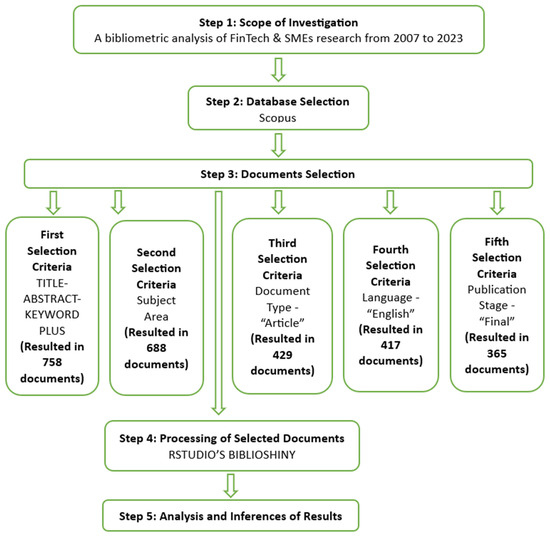
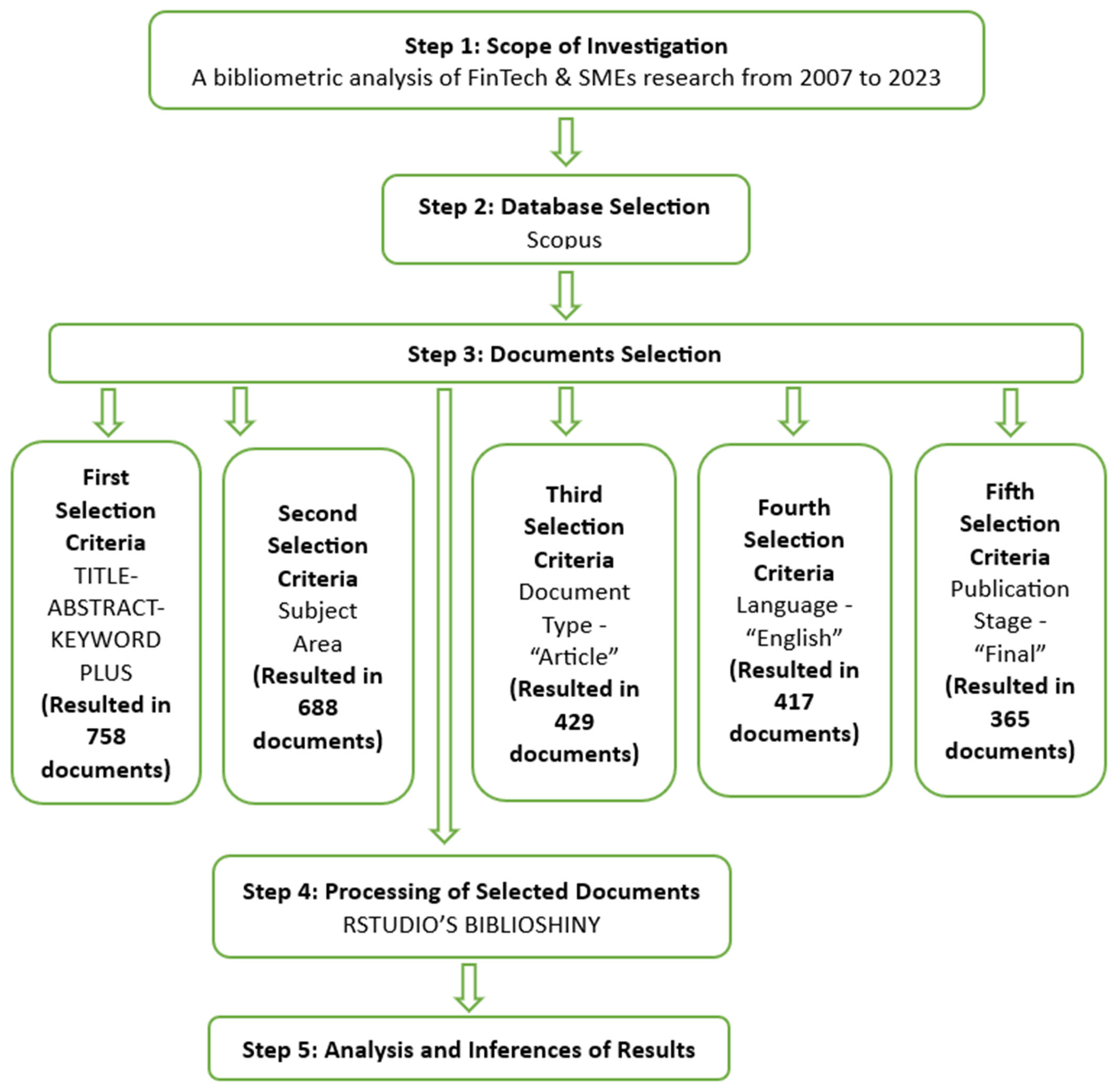
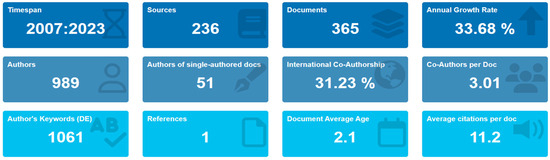
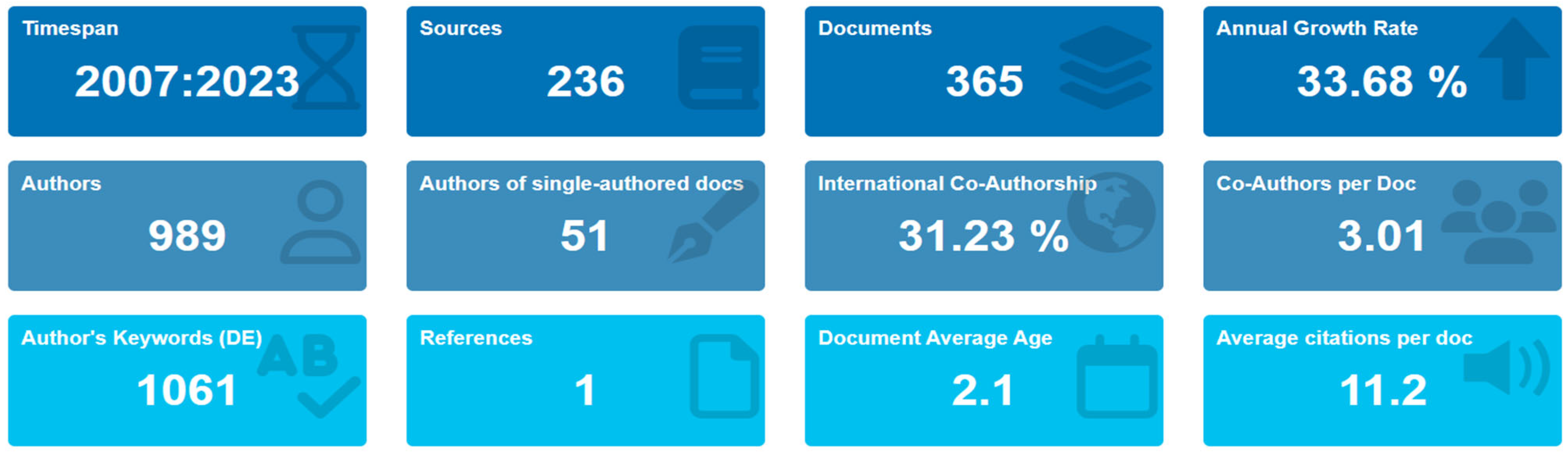
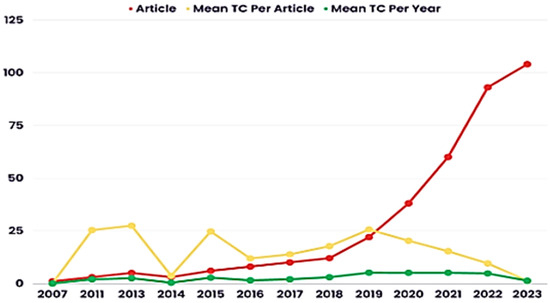
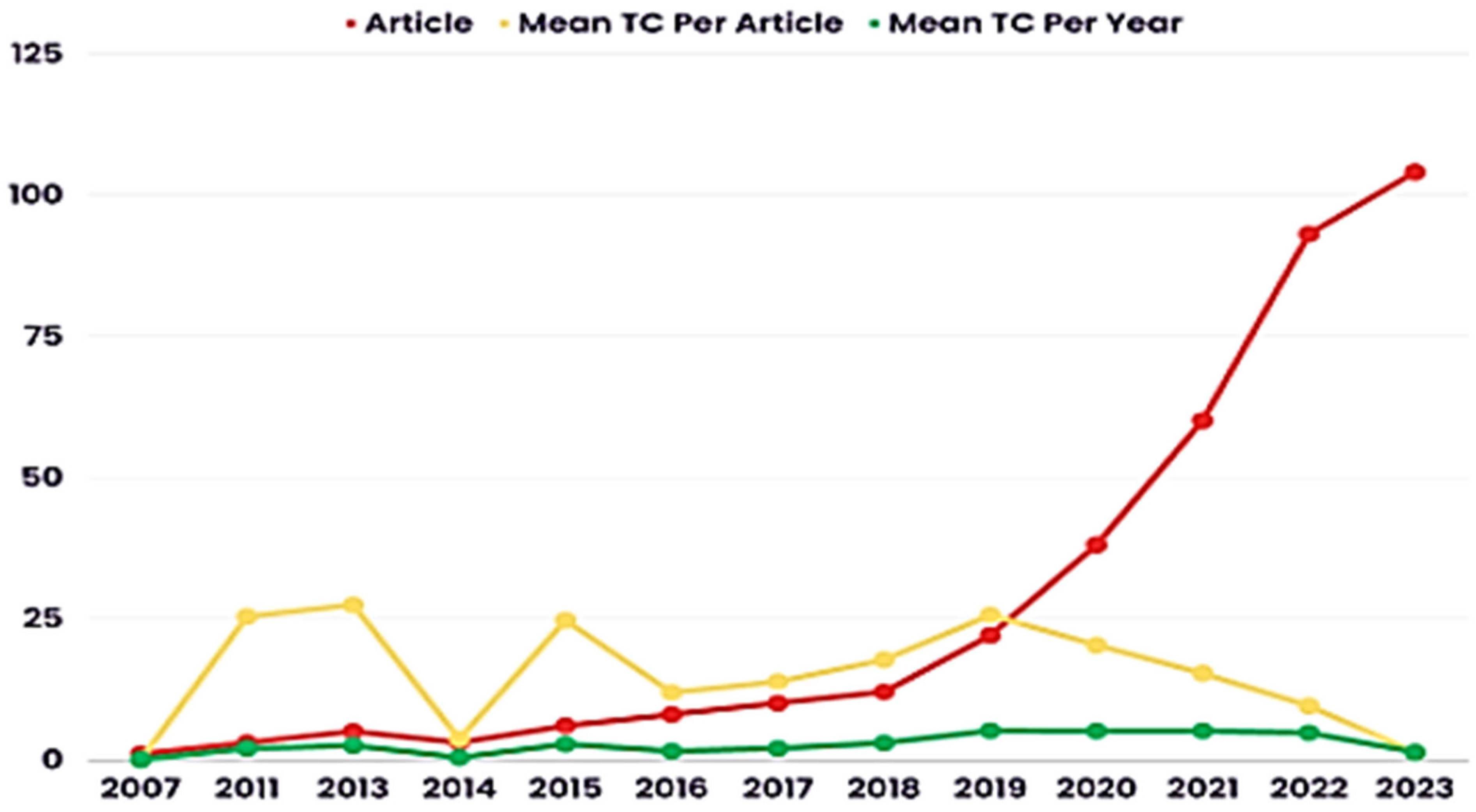
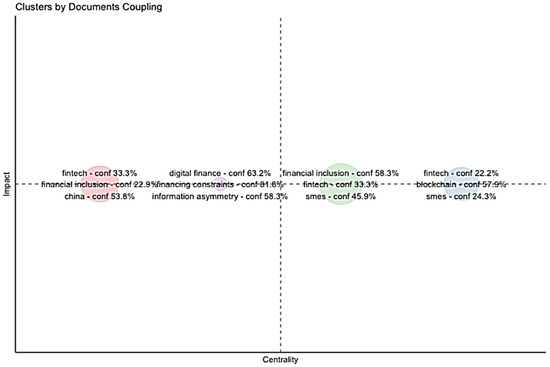
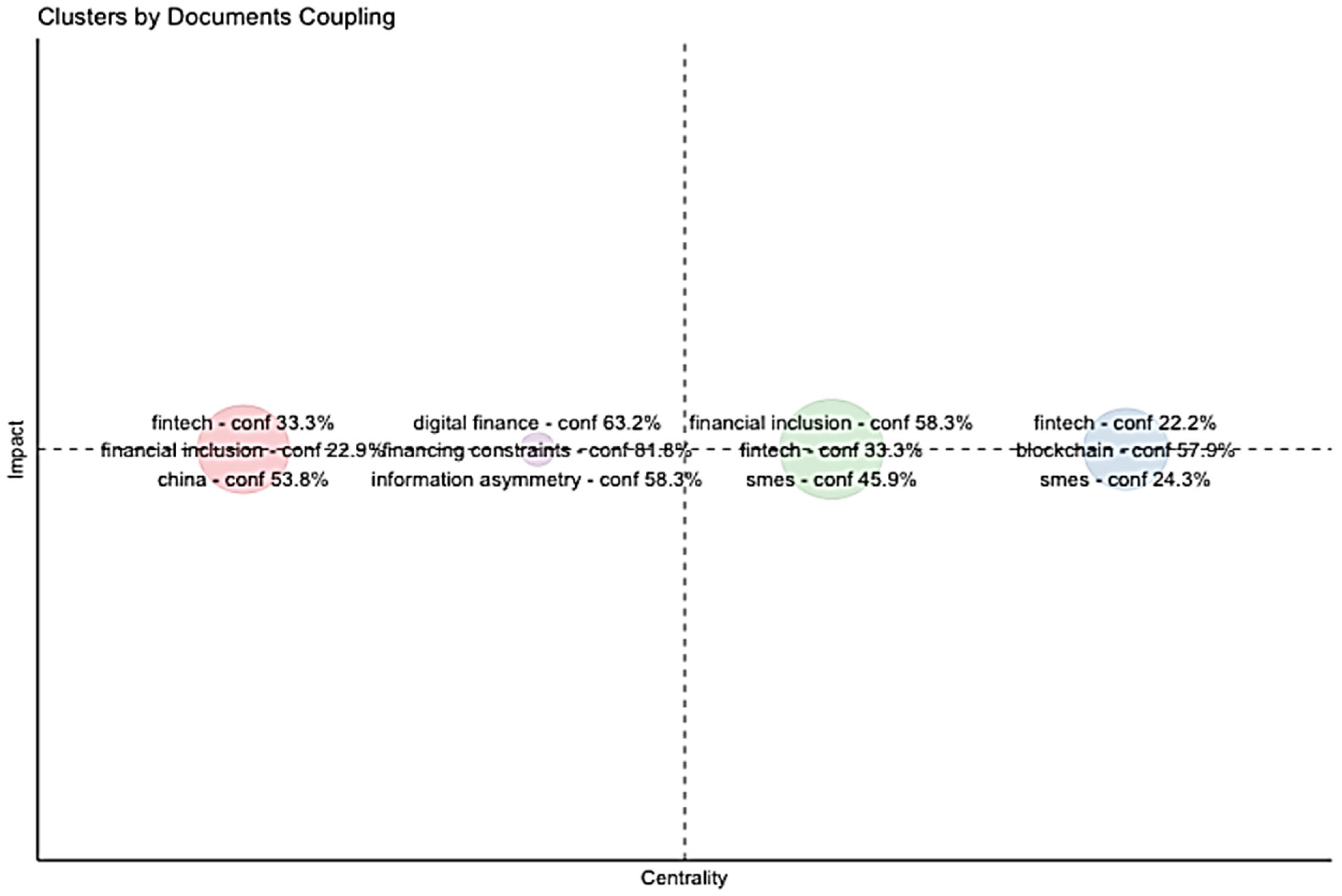
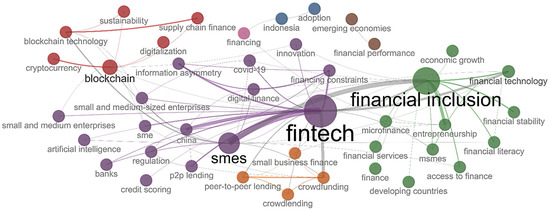
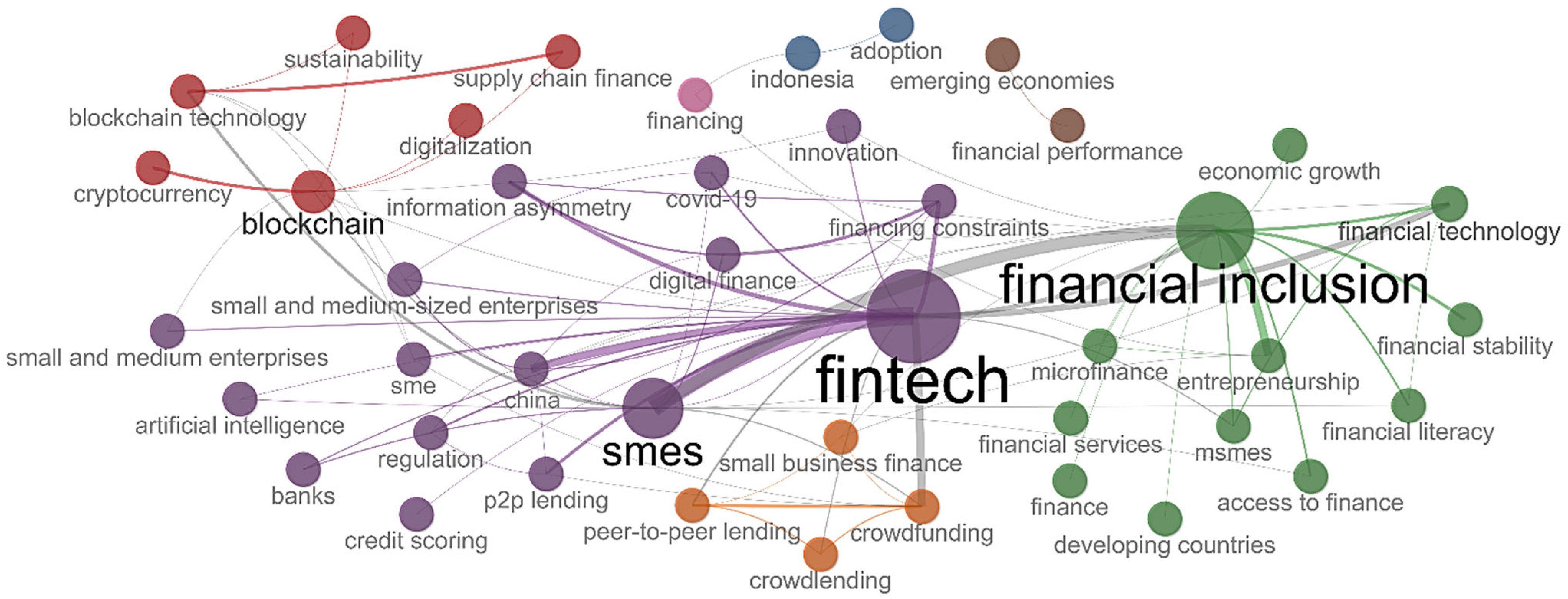
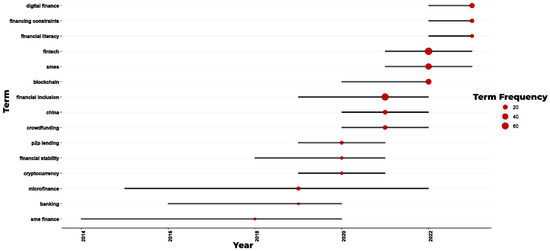
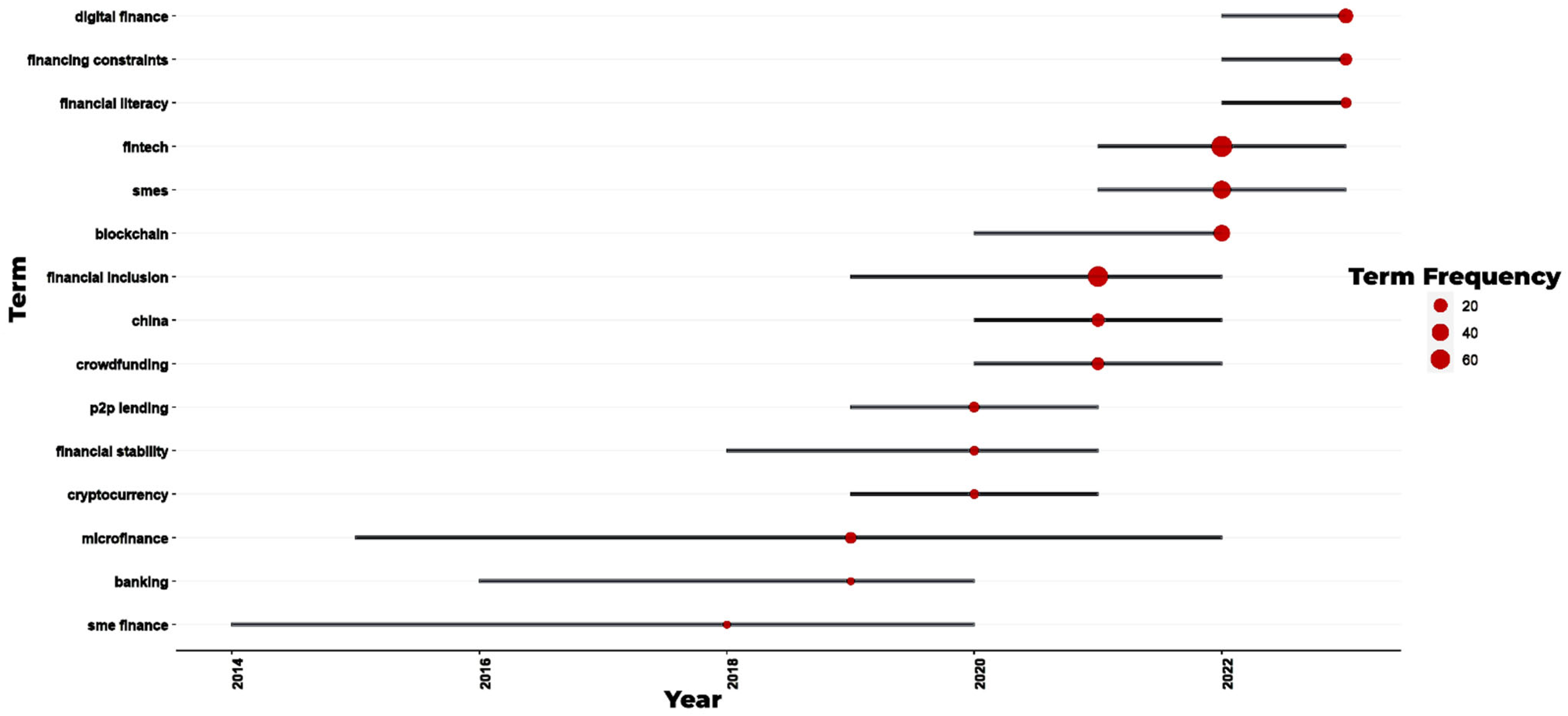
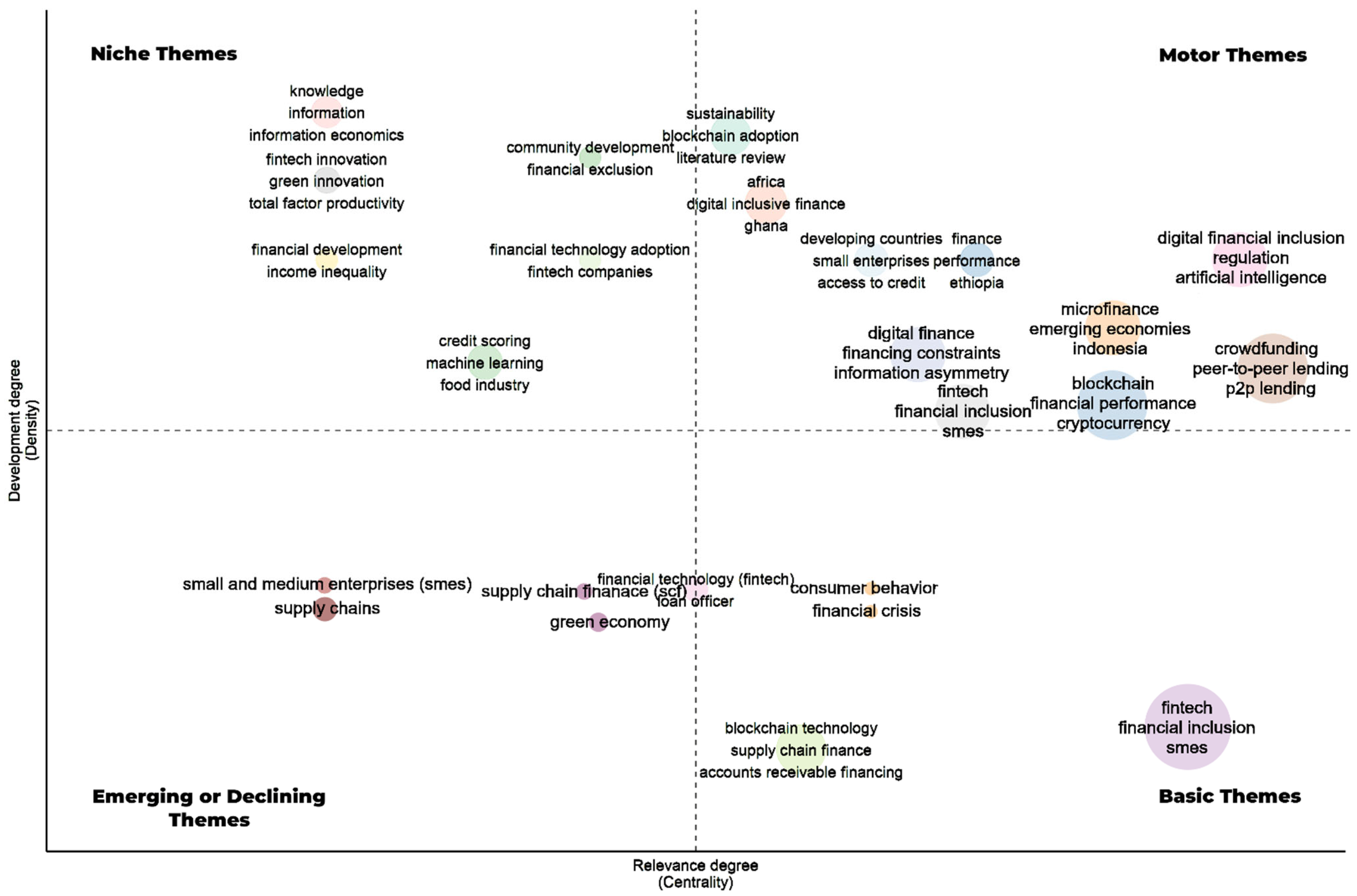
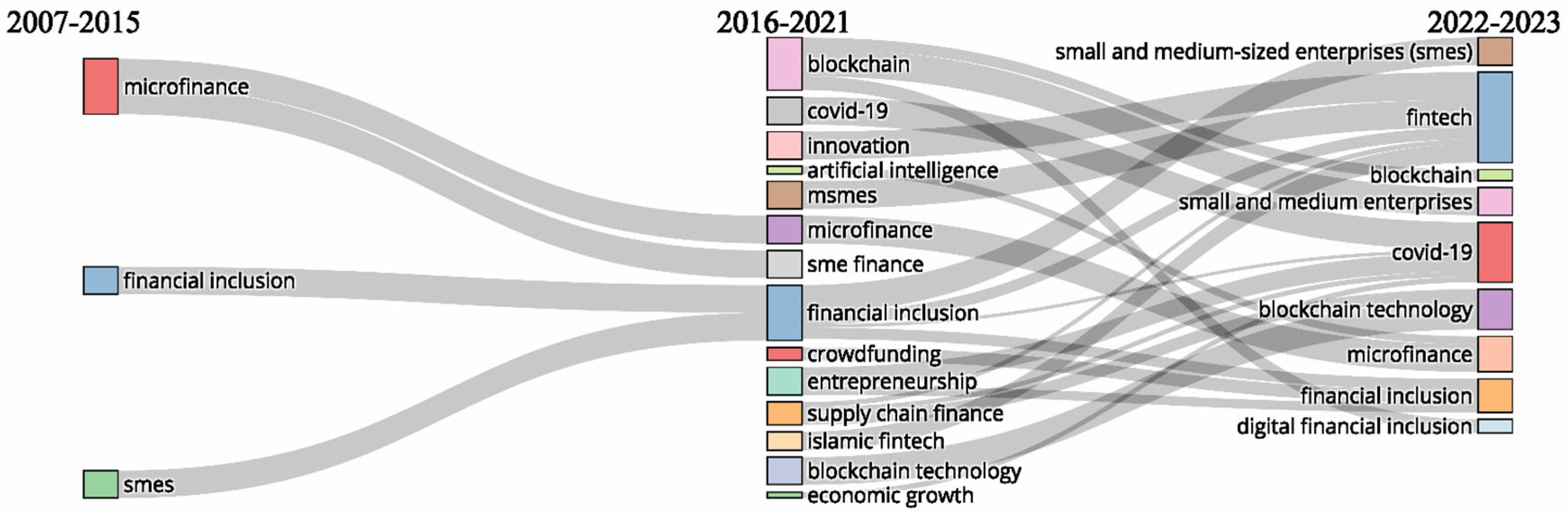
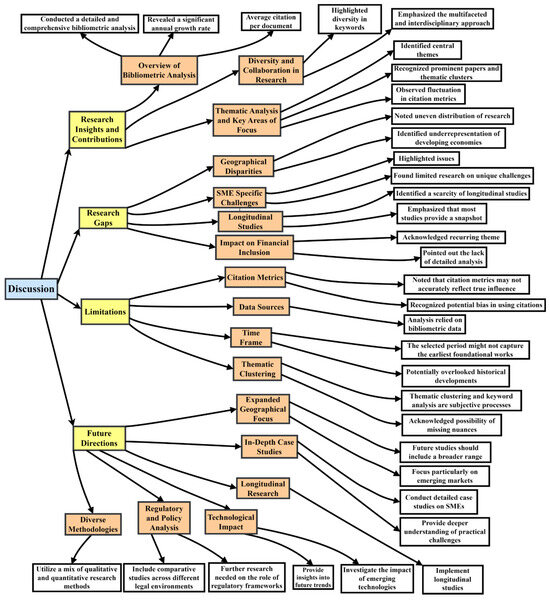
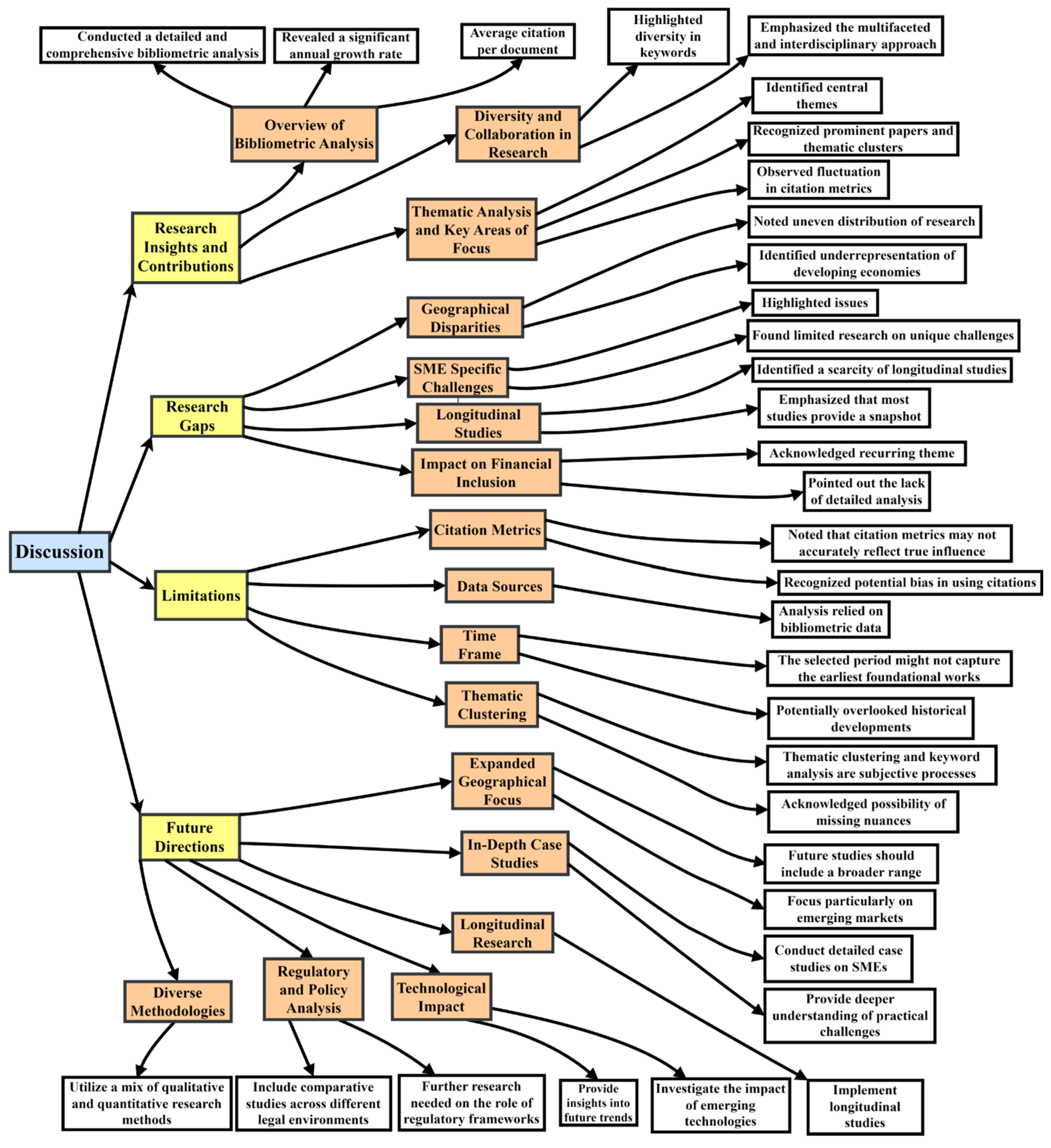

Disclaimer/Publisher’s Note: The statements, opinions and data contained in all publications are solely those of the individual author(s) and contributor(s) and not of MDPI and/or the editor(s). MDPI and/or the editor(s) disclaim responsibility for any injury to people or property resulting from any ideas, methods, instructions or products referred to in the content. |
© 2026 by the authors. Licensee MDPI, Basel, Switzerland. This article is an open access article distributed under the terms and conditions of the Creative Commons Attribution (CC BY) license.