1. Introduction
Mobile and community-based wellness services are increasingly delivered in dispersed, variable, and only partly standardized work environments. Frontline practitioners must respond to heterogeneous customer needs, improvised furniture, limited transport capacity, and spaces that were not designed for therapeutic service delivery. In such settings, service quality rests not only on professional technique but also on situated problem solving, small-scale redesign, and workers’ ability to turn recurring operational frictions into workable routines. These conditions are important for Administrative Sciences because service innovation often arises through frontline adaptation rather than through formal R&D units alone, especially where organizations and practitioners lack capital, standardized infrastructure, and centralized managerial control (
Santos-Vijande et al., 2016;
Stock et al., 2017).
Service-innovation scholarship supports this positioning.
Gallouj and Weinstein (
1997) argue that innovation in services frequently involves changes in service characteristics, delivery processes, client interfaces, and organizational arrangements rather than product invention alone. Service-dominant logic similarly treats service innovation as a collaborative process of resource integration across actors and contexts (
Lusch & Nambisan, 2015), while service research priorities identify service design, employee issues, well-being, and service-system improvement as central domains for future research (
Ostrom et al., 2015). These perspectives justify examining a portable service chair not only as an ergonomic device but as a service-support innovation through which a low-technology service system can be redesigned.
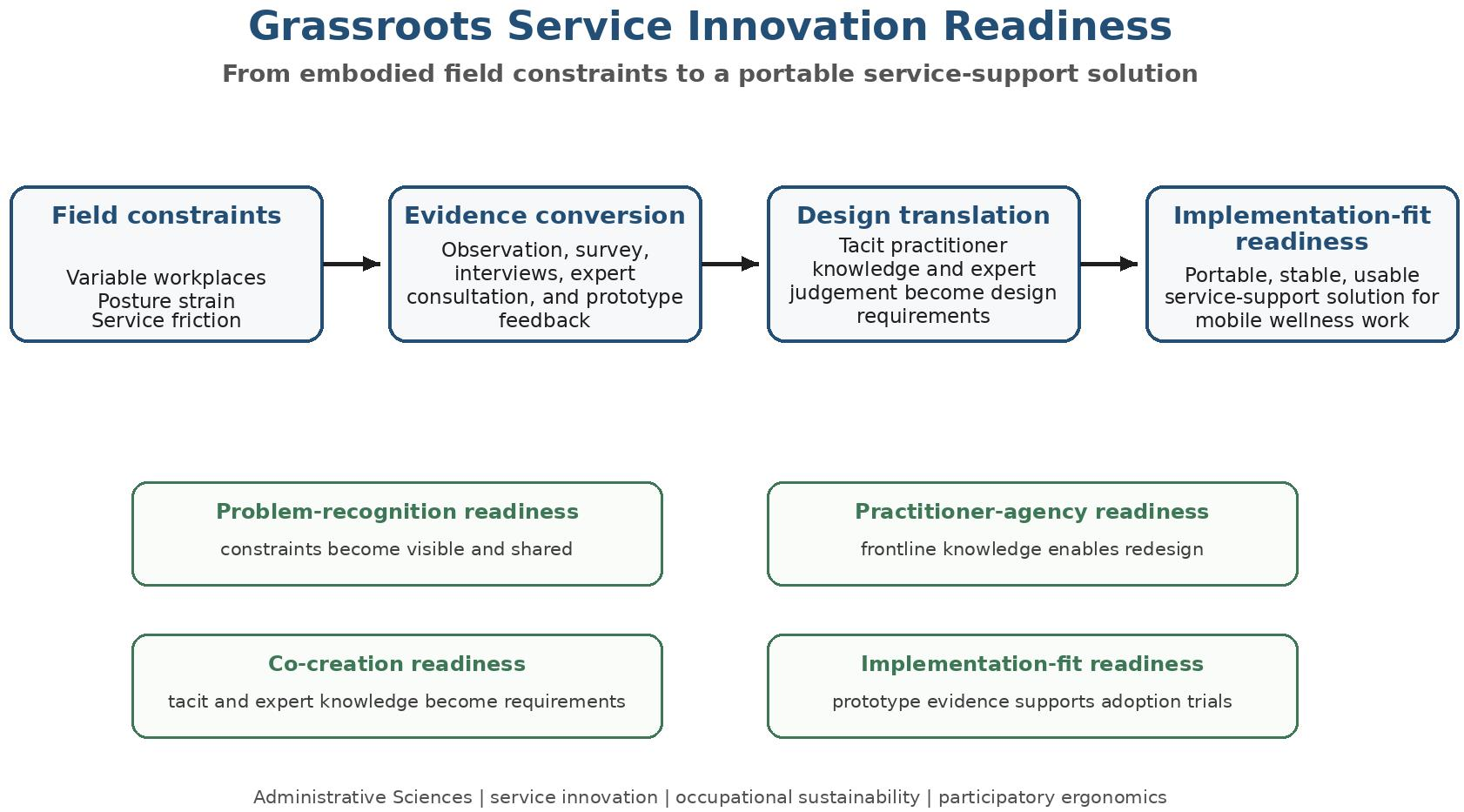
Taken together, these studies show that prior research has examined organizational readiness, service innovation, and actor participation, but has paid less attention to how embodied constraints in dispersed, low-technology service work are transformed into evidence for grassroots service innovation. This article addresses that gap by conceptualizing innovation readiness as an evidence-conversion process in which field constraints are made visible, interpreted through practitioner and expert knowledge, stabilized as design requirements, and tested for implementation fit.
Although innovation readiness is widely discussed in relation to organizational change, technology implementation, and healthcare transformation, the term is often used broadly to denote preparedness, openness, or willingness to change. That usage is too general for the present context. In mobile wellness services, readiness cannot be reduced to managerial commitment or individual attitude, since many practitioners work outside conventional organizational structures. Their readiness for innovation depends on whether a work problem can be made visible, whether practitioners have the agency and knowledge to participate in redesign, whether stakeholders can translate tacit experience into concrete requirements, and whether a proposed solution fits the constraints of mobile service delivery. In this article, innovation readiness is therefore defined as a staged condition in which field constraints are recognized, collectively interpreted, converted into design requirements, and tested for practical fit before wider adoption becomes plausible (
Weiner, 2009;
Rafferty et al., 2013;
Lahti et al., 2023;
Caci et al., 2025).
Foot reflexology in Taiwan offers a theoretically useful setting in which to examine this process. The service has expanded beyond traditional storefront and clinic-based settings into tourism, home visits, community activities, and health-promotion contexts. Yet the operational infrastructure supporting this expansion remains uneven. Therapists may work beside beds, sofas, wheelchairs, low benches, plastic stools, office chairs, or client-provided furniture while repeatedly applying force through the thumb, wrist, shoulder, trunk, and lower back. The occupation therefore makes visible a distinctive managerial problem: how can a service sector with limited formal infrastructure become ready for innovation through grassroots design rather than through top-down organizational programs?
This article asks how a practical workplace problem in a community-based service sector can be transformed into a theoretically meaningful service-innovation process. Three objectives guide the analysis: first, to clarify the field conditions that justify the need for a portable service-support innovation; second, to connect established innovation-readiness, grassroots-innovation, service co-creation, and participatory-ergonomics concepts with the empirical case; and third, to show how mixed empirical evidence can be converted into design parameters, prototype refinement, and preliminary implementation recommendations.
The research context further supports the choice of case. Taiwan has a large and diverse wellness and complementary-service market in which foot reflexology is practiced in storefront, tourism, home-visit, community-care, and health-promotion settings. Many providers, however, remain small, mobile, or semi-formal, and service delivery often depends on improvised furniture and embodied skill rather than standardized work systems. This combination of social demand, service mobility, occupational strain, and limited formal infrastructure makes the case well suited to examining how service innovation can improve both service quality and working conditions.
The novelty of the article lies not in reporting musculoskeletal discomfort alone. Its contribution is to explain how recurrent ergonomic strain becomes an innovation problem, how practitioner and expert knowledge are integrated into a service-design process, and how short-cycle prototyping can provide preliminary evidence of implementation fit. This argument addresses a gap in Administrative Sciences research. Studies of innovative entrepreneurship and leadership development often emphasize venture creation, digital platforms, high-growth firms, or formal organizational transformation. Less attention has been paid to innovation readiness in embodied, low-technology, mobile service work, where the most valuable innovation may be a modest but deployable tool that enables safer and more sustainable service delivery.
At the same time, the mainstream service-innovation literature has paid more attention to digital platforms, new-service configurations, value propositions, and organizationally managed innovation processes than to embodied micro-service work. Studies of service innovation configurations and service ecosystems show that successful innovation depends on combinations of resources, routines, actor participation, and institutional arrangements (
Ordanini et al., 2014;
Koskela-Huotari et al., 2016;
Skålén et al., 2015). The present article extends this conversation by showing how practitioner discomfort, improvised furniture, and field-level service constraints can become design knowledge in a mobile wellness-service setting.
The analysis is guided by three questions. RQ1: How do embodied field constraints in mobile foot reflexology become visible as innovation problems rather than remain framed as individual discomfort? RQ2: How do psychosocial resources, practitioner experience, and expert consultation mediate the translation of field evidence into design parameters? RQ3: How does staged prototype evaluation indicate implementation-fit readiness for a grassroots service-support innovation? Addressing these questions allows the article to develop a process model of grassroots service innovation readiness that can be analytically transferred to other small-scale wellness, care, and community-based service contexts.
In line with these objectives, the portable chair is treated not as a stand-alone product but as a service-system intervention. The research is therefore explanatory and design-oriented: it connects the literature on innovation readiness and service co-creation with the practical question of how mobile therapists can continue delivering services while reducing preventable bodily strain.
The article proceeds as follows:
Section 1 introduces the research context, theoretical gap, research objectives, and guiding research questions.
Section 2 develops the theoretical framework and presents an analytical model linking innovation readiness, grassroots innovation, knowledge co-creation, and participatory ergonomics.
Section 3 explains the sequential mixed-method design and clarifies the integration logic across observation, survey, interviews, expert consultation, and prototype evaluation.
Section 4 presents phase-specific findings and cross-phase synthesis.
Section 5 discusses the theoretical, managerial, and policy implications.
Section 6 concludes by specifying how the evidence-to-design pathway advances understanding of innovation readiness in under-researched service sectors.
2. Theoretical Framework
2.1. Innovation Readiness as a Staged Service-Design Condition
Innovation readiness generally refers to the extent to which individuals, groups, or organizations are prepared to implement and sustain change. In organizational research, readiness is often treated as a multilevel construct involving change commitment, change efficacy, resource availability, supportive routines, and shared understanding of why change is needed (
Weiner, 2009;
Rafferty et al., 2013). Recent healthcare and nursing studies likewise emphasize that readiness is not merely an individual attitude but a combination of knowledge access, resource preparedness, implementation climate, and organizational capacity (
Lahti et al., 2023;
Caci et al., 2025).
The framework draws on established concepts rather than an ad hoc reading of the case. Innovation readiness provides the change-preparedness lens; grassroots innovation explains bottom-up problem solving under resource constraints; knowledge co-creation explains how user, expert, and contextual knowledge are combined; and participatory ergonomics explains why worker involvement is essential when the innovation concerns embodied service work. These concepts are most useful here when linked to observable service-design stages rather than used as separate background labels.
To avoid treating these concepts as parallel labels, the framework specifies how they relate to one another. Innovation readiness defines the state to be explained; grassroots innovation specifies the resource-constrained origin of the solution; knowledge co-creation explains the translation of tacit and expert knowledge into design requirements; and participatory ergonomics identifies why embodied worker involvement is necessary when the intervention changes the material conditions of service delivery. The conceptual unit of analysis is therefore not the chair alone but the staged movement from constraint recognition to implementation-fit validation.
For terminology consistency, innovation readiness is used as the umbrella construct throughout the manuscript. Its four analytical stages are problem-recognition readiness, practitioner-agency readiness, co-creation readiness, and implementation-fit readiness. Service-support innovation refers to the concrete material or procedural intervention that supports service delivery, whereas evidence conversion refers to the mechanism through which field observations, practitioner narratives, expert judgment, and prototype feedback are translated into requirements. Using the terms in this hierarchy reduces overlap and keeps the claim focused on readiness as a staged translation process rather than on the chair as an isolated product.
This literature requires adaptation because mobile foot reflexology therapists do not necessarily operate within formal organizations that can mandate change. The relevant readiness question is not whether a centralized organization is ready to implement a predefined innovation. It is whether a dispersed practitioner community can recognize operational constraints, convert tacit experience into design knowledge, and evaluate a practical tool that is compatible with mobile service work. Innovation readiness is therefore conceptualized here as a staged service-design condition with four empirically observable dimensions: problem-recognition readiness, practitioner-agency readiness, co-creation readiness, and implementation-fit readiness.
This interpretation also aligns with a service-dominant and service-ecosystem view of innovation.
Lusch and Nambisan (
2015) argue that service innovation should be understood through actor networks, resource integration, and institutional arrangements rather than through a narrow goods-centered lens.
Koskela-Huotari et al. (
2016) similarly conceptualize service-ecosystem innovation as a process of breaking, making, and maintaining rules that govern resource integration. Applied to mobile reflexology, these perspectives imply that readiness is not only a psychological or organizational condition; it is also a relational and material condition involving the therapist, client-side furniture, tools, training routines, and the possibility of stabilizing a new service-support artifact.
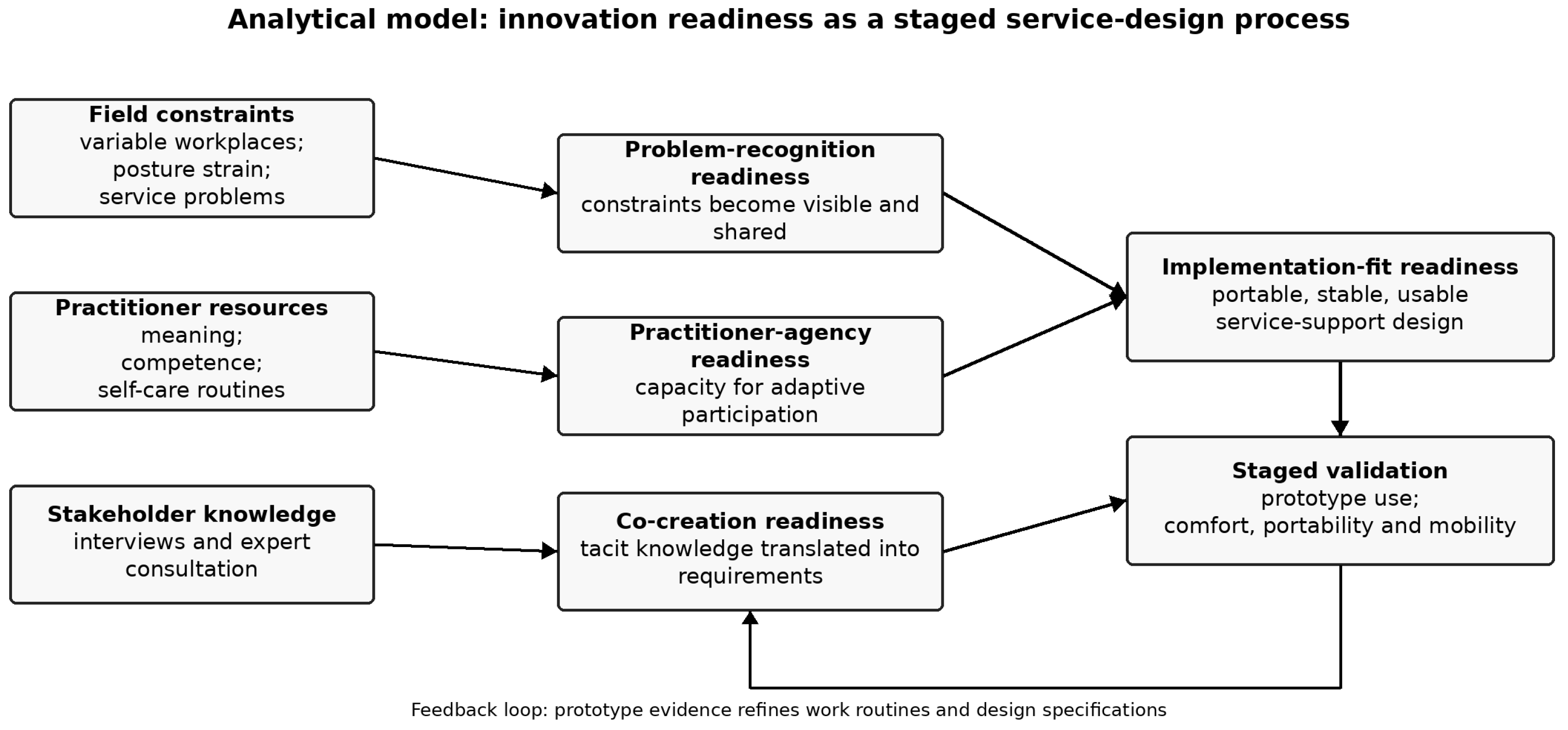
The resulting model is deliberately mechanism-based. Problem-recognition readiness links observed strain to a shared service problem; practitioner-agency readiness links psychosocial resources to the capacity to participate in redesign; co-creation readiness links stakeholder interpretation to the formation of design parameters; and implementation-fit readiness links prototype evaluation to the conditions under which a grassroots artifact can enter actual service routines. This specification responds to calls in management research for theoretical fit between exploratory field evidence, mechanism development, and the level of conceptual claim (
Eisenhardt, 1989;
Edmondson & McManus, 2007;
Gioia et al., 2013).
Problem-recognition readiness refers to the extent to which diffuse discomfort, improvised workarounds, and variable field conditions become visible as a shared operational problem. Practitioner-agency readiness refers to the extent to which therapists possess psychosocial resources, self-protective routines, and confidence to participate in safer work redesign. Co-creation readiness refers to the capacity to integrate practitioner knowledge, observation, survey findings, expert judgment, and feasibility constraints into actionable design requirements. Implementation-fit readiness refers to the degree to which a prototype appears usable, portable, stable, and comfortable enough to be adopted under realistic service conditions. These dimensions do not imply a linear technological pipeline; instead, they describe a practical readiness pathway by which a grassroots innovation can move from embodied strain to deployable service support. These four dimensions and their empirical indicators are summarized in
Table 1.
2.2. Grassroots Innovation and Knowledge Co-Creation in Resource-Constrained Services
Grassroots innovation highlights bottom-up problem solving that emerges from local needs, resource constraints, and community relevance rather than from formal technology-push strategies (
Hossain, 2016;
Smith et al., 2014). In small-scale service sectors, grassroots innovation is often incremental, embodied, and practical. Its value lies in making work more sustainable and deliverable, even when the innovation does not take the form of a high-technology product or a scalable digital platform. This is especially relevant for service workers whose bodies are central to the production of service value.
Knowledge co-creation provides the second theoretical pillar. Service innovation depends on the integration of user experience, frontline employee knowledge, managerial interpretation, and technical feasibility. Frontline employees are not only implementers; they can also be co-producers of design knowledge because they understand where service routines fail, where customers create constraints, and which solutions are likely to be adopted in practice (
Santos-Vijande et al., 2016;
Stock et al., 2017;
Centeno, 2025). User-centered assistive technology research similarly stresses contextual observation, multidisciplinary input, iterative testing, and explicit user involvement as conditions of usability and adoption (
Ma et al., 2007;
Ortiz-Escobar et al., 2023).
The co-creation component is further supported by service research showing that frontline employees and users can shape service innovation because they experience failures, workarounds, and adoption barriers directly (
Ordanini et al., 2014;
Santos-Vijande et al., 2016;
Stock et al., 2017). From this standpoint, practitioner participation is not a decorative consultation step but a condition of valid service-design knowledge: the artifact must fit the body, the work process, the client environment, and the service relationship simultaneously.
From this standpoint, the portable chair examined here is not simply an ergonomic artifact. It is an empirical site through which grassroots innovation readiness can be observed. The central theoretical issue is the translation process: how repeated service strain is named as a problem, how practitioners and experts interpret that problem, how design parameters are stabilized, and how a prototype is evaluated for use in mobile service conditions.
2.3. Biomechanical Strain, Psychosocial Resources, and Innovation Mechanisms
Work-related musculoskeletal disorders are associated with repetitive exertion, forceful hand activity, non-neutral posture, prolonged static loading, and poorly matched workstations (
Punnett & Wegman, 2004;
da Costa & Vieira, 2010). The same mechanisms are salient in foot reflexology, where therapists deliver sustained pressure through the thumb, fingers, wrist, shoulder, trunk, and lower back while adapting to client-side seating not designed for therapeutic work. Studies of related manual-therapy occupations report burdens of low-back, neck, shoulder, and hand/wrist symptoms, particularly in settings characterized by cumulative loading, awkward posture, and limited workstation adjustment (
Albert et al., 2008;
Gorce & Jacquier-Bret, 2024;
Resnick, 2024).
The present framework also treats psychosocial resources as part of readiness. Psychological empowerment theory argues that meaning, competence, self-determination, and impact influence how workers interpret their roles and participate in change (
Spreitzer, 1995;
Spreitzer et al., 1997). Meta-analytic evidence further links empowerment with adaptive behavior, effectiveness, and lower strain (
Seibert et al., 2011;
Llorente-Alonso et al., 2024). In an ergonomics context, empowerment should not be understood as a substitute for workstation redesign. Rather, it is a practitioner resource that can support pacing, use of auxiliary tools, willingness to test new routines, and participation in co-created solutions.
The article therefore develops four analytical propositions rather than formal causal hypotheses. P1: In mobile wellness services, recurring bodily discomfort and improvised work arrangements generate problem-recognition readiness when they become visible as shared operational constraints. P2: Psychological empowerment and self-protective routines generate practitioner-agency readiness by enabling therapists to interpret constraints as redesignable rather than unavoidable. P3: Interviews and expert consultation generate co-creation readiness when tacit field experience is translated into explicit design requirements. P4: Prototype evaluation generates implementation-fit readiness when users perceive that the solution fits real service conditions in terms of portability, stability, adjustability, and comfort.
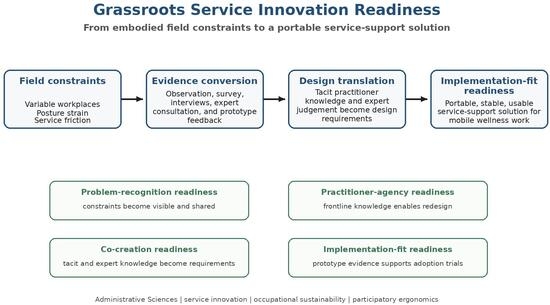
Figure 1 visualizes this staged logic by linking field constraints, practitioner resources, co-creation, and validation to innovation readiness.
3. Materials and Methods
3.1. Study Design and Ethics
A sequential mixed-method design was used, combining workplace observation, questionnaire survey, semi-structured interviews, expert consultation, and two rounds of prototype evaluation. Data were collected across northern, central, southern, and eastern Taiwan between 17 January and 5 July 2022. The protocol was approved by the National Cheng Kung University Human Research Ethics Committee (approval no. 109-584), and all participants provided informed consent. Subsequently, data were counted using SPSS V22 (International Business Machines Corporation, New York, NY, USA). Sequential mixed-method designs are appropriate when researchers need both contextual explanation and applied intervention development because they enable triangulation, complementarity, and staged integration across data sources (
Harrison et al., 2020;
Gaglio et al., 2020).
The methodological choice is also consistent with management and service research that treats mixed methods as suitable when researchers must connect theory building, field interpretation, and applied design development.
Harrison et al. (
2020) emphasize that methodological rigor in management-oriented mixed methods depends on clear integration across qualitative and quantitative strands, while service-innovation studies commonly combine user knowledge, expert assessment, and iterative validation to understand how service solutions become adoptable (
Ordanini et al., 2014;
Ostrom et al., 2015). Accordingly, this study did not use multiple tools merely for descriptive breadth; each tool was assigned a distinct inferential role in moving from field problem recognition to design translation and implementation-fit assessment.
Analytically, the study followed an abductive and pattern-matching logic rather than a simple accumulation of methods. Observation established the initial field puzzle; survey findings mapped the distribution of discomfort and practitioner resources; interviews explained why those patterns persisted in mobile work; expert consultation filtered the explanatory themes into feasible design attributes; and prototype testing examined whether the resulting artifact satisfied the adoption conditions implied by the earlier phases. This strategy is consistent with mechanism-building field research, in which conceptual contribution depends on connecting data patterns to theoretically meaningful constructs rather than merely reporting each data source separately (
Eisenhardt, 1989;
Edmondson & McManus, 2007;
Gioia et al., 2013).
The research universe was defined as practicing foot reflexology therapists in Taiwan who provided in-person foot reflexology or related foot-massage services in storefront, mobile, home-visit, community, or semi-formal service settings. Because no complete national sampling frame for this occupational group was available, participants were recruited through field access, practitioner networks, and on-site contacts. The resulting sample should not be interpreted as statistically representative of all Taiwanese therapists. Instead, it is an analytical and exploratory sample designed to capture relevant variation in region, gender, age, work tenure, work setting, and practice style.
The sampling strategy was therefore appropriate for an exploratory, mechanism-building study rather than for prevalence estimation. The sample was selected to capture therapists who actually deliver foot reflexology under variable service conditions, including storefront, mobile, home-visit, community, and semi-formal settings. This logic follows the principle that applied service-design and participatory-ergonomics studies should prioritize information-rich participants whose work exposes the target constraints, while clearly delimiting the boundary of statistical representativeness (
Rivilis et al., 2008;
van Eerd et al., 2010).
The research design started from the conceptual framework and then translated it into working variables and analysis attributes. Problem-recognition readiness was examined through observed posture, workstation mismatch, and musculoskeletal symptoms. Practitioner-agency readiness was examined through psychological empowerment, self-protective routines, and interview accounts of adaptation. Co-creation readiness was examined through interview themes, expert ratings, and evidence-to-parameter translation. Implementation-fit readiness was examined through usability, comfort, portability, stability, storage convenience, rolling mobility, and willingness-to-use indicators in the two prototype rounds.
The design was chosen because the research problem is simultaneously ergonomic, psychosocial, and managerial. Work-related musculoskeletal disorders cannot be explained by posture alone; they arise from the interaction of task repetition, force application, workstation mismatch, psychosocial resources, and work routines. Similarly, service innovation readiness cannot be inferred from prototype testing alone. It requires evidence that the problem is visible, that practitioners can engage in change, that design requirements are co-created, and that a solution demonstrates operational fit. The study therefore links occupational-health evidence to a service-design innovation pathway.
3.2. Mixed-Method Integration Logic
To make the inferential logic explicit, the study used a connecting-building-merging integration strategy. First, observation connected field exposure patterns to the survey by identifying body regions, posture constraints, and equipment mismatches that required structured measurement. Second, the survey built an anatomical and psychosocial map of the problem by identifying symptom distribution and empowerment resources. Third, interviews merged quantitative patterns with practitioner interpretations by clarifying why mobile therapists relied on tools, improvised seating, warm-up routines, and flexible service positions. Fourth, expert consultation translated these findings into design priorities by evaluating which requirements were essential for a mobile ergonomic aid. Finally, prototype evaluation tested whether those requirements produced perceived usability and comfort under short-session service-position trials.
This integration logic prevents the study from being read as a set of disconnected phases. Each phase had a specific analytical role in the readiness model. Observation and survey data addressed problem-recognition readiness; empowerment measures and interviews addressed practitioner-agency readiness; expert consultation and the evidence-to-parameter table addressed co-creation readiness; and prototype evaluation addressed implementation-fit readiness. The inferential aim was not to prove long-term ergonomic effectiveness, but to explain how multiple forms of evidence were translated into a plausible grassroots service innovation.
Table 2 summarizes the phase-by-phase integration logic and shows how each data source supports a specific readiness dimension.
3.3. Phase 1: Workplace Observation and Survey
Phase 1 included non-participant field observation and a face-to-face convenience sample survey of practicing foot reflexology therapists. Observation focused on posture, force application, joint angles, tool use, furniture mismatch, and workspace conditions. The survey included 59 therapists (31 men and 28 women). Because this occupational group is dispersed and includes mobile, semi-formal, and independent practitioners, face-to-face administration in Mandarin or Taiwanese was used to reduce missing data and support completion.
The questionnaire covered demographics, health and work status, self-protective practices, workstation conditions, musculoskeletal symptoms, and work attitude. Draft items for the occupational injury, psychological empowerment, and user-experience sections were reviewed by subject-matter experts and revised before field administration to improve wording clarity and content relevance for foot reflexology work.
The relevance of the questionnaire and interview questions was established through three safeguards. First, the survey domains were derived from the theoretical constructs and from established occupational-health and empowerment instruments. Second, the body-region symptom items followed the Nordic Musculoskeletal Questionnaire logic, while empowerment items followed Spreitzer’s four-dimension empowerment framework. Third, subject-matter experts reviewed the draft questionnaire and interview prompts to ensure that the wording matched the realities of foot reflexology work and the research objectives. The survey was intended to identify the distribution of work strain and psychosocial resources; the interviews were intended to explain the meaning of those patterns; and the expert consultation and prototype evaluation were intended to translate them into design priorities and adoption conditions.
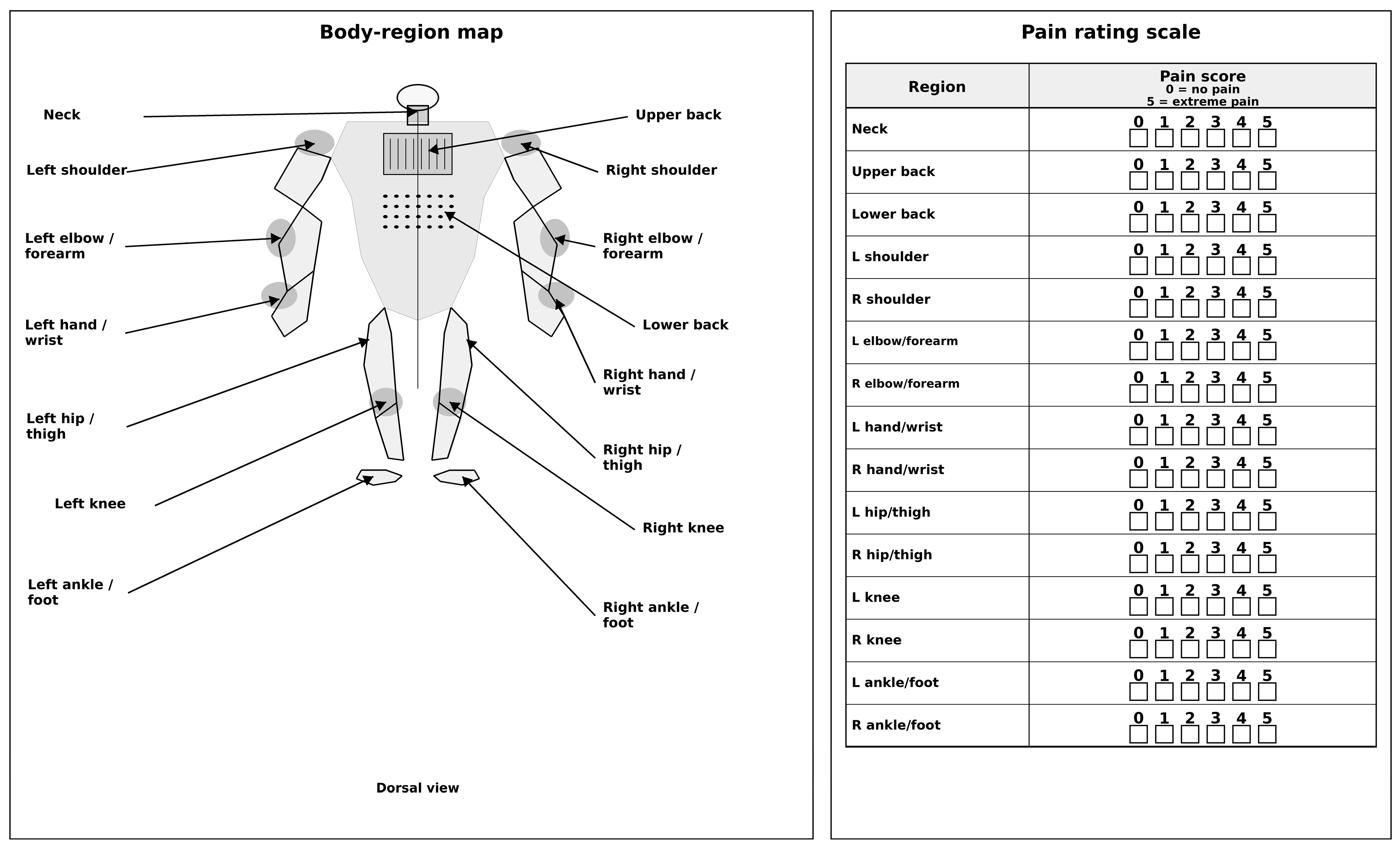
The musculoskeletal section was structured around the Nordic Musculoskeletal Questionnaire (NMQ), a standard instrument developed for ergonomic and occupational-health surveillance, cross-job comparison, and epidemiological screening rather than clinical diagnosis (
Kuorinka et al., 1987;
Crawford, 2007). The NMQ body-region framework was retained, but responses were expanded to a 0–5 severity scale to differentiate recurrent discomfort and functional interference. This adaptation is aligned with later extended NMQ applications, including the NMQ-E and NMQ-E2, which showed acceptable reliability, content validity, and usability for assessing symptom severity and consequences across occupational populations (
Dawson et al., 2009;
Pugh et al., 2015;
Gómez-Rodríguez et al., 2020).
Work attitude and psychological empowerment items were adapted from Spreitzer’s Psychological Empowerment Scale and rated on a 5-point Likert scale. The original 12-item, four-dimension structure—meaning, competence, self-determination, and impact—was retained because it provides the most established operationalization of empowerment at work and has been supported by subsequent meta-analytic evidence (
Spreitzer, 1995;
Seibert et al., 2011;
Llorente-Alonso et al., 2024). In this study, empowerment was interpreted as a psychosocial work resource that may influence self-protective behavior, adaptive pacing, and willingness to participate in safer service-design change, rather than as a substitute for exposure assessment (
Ford & Tetrick, 2011).
3.4. Phase 2: Semi-Structured Interviews
To add interpretive depth to the survey findings, 10 therapists participated in semi-structured interviews. Interview topics covered perceptions of foot reflexology, typical client groups, use of auxiliary tools, self-protective practices, mobile service conditions, and views on professional certification. The interviews were analyzed as explanatory evidence rather than as frequency counts. Their role was to identify how therapists made sense of bodily strain, why self-protective routines were adopted or neglected, and which operational conditions would influence acceptance of a portable service-support device.
The interview analysis focused on four mechanism-oriented themes: normalization of bodily strain, improvisation around client-side furniture, protective tool use as professional adaptation, and conditional acceptance of new equipment. These themes were then compared with the survey findings and expert priorities to determine which design parameters had both experiential relevance and operational feasibility.
The qualitative material was therefore not used only to illustrate the survey results. It was used to identify the interpretive mechanisms through which bodily strain became design knowledge. Statements about normalized pain, client-side furniture, tool use, and adoption conditions were compared with survey patterns and expert ratings to determine whether they supported the proposed readiness dimensions. In this sense, the interviews and expert consultation functioned as a theory-building bridge between descriptive occupational-health evidence and the service-innovation claim.
3.5. Phase 3: Expert Consultation
A separate expert consultation phase involved seven specialists drawn from nursing, mechanical/electrical engineering, and experienced foot reflexology practice. Experts rated the importance of candidate design requirements for a mobile ergonomic aid, including height adjustability, lumbar support, casters, foldability, weight, material choice, esthetics, equipment stability, and electric actuation.
The expert consultation stage was not treated simply as technical validation. It functioned as a co-creation filter by integrating user needs, biomechanical constraints, safety considerations, and engineering feasibility before prototype fabrication. In applied ergonomics and assistive device development, multidisciplinary review is useful because usability, body mechanics, context of use, safety, and manufacturing feasibility must be reconciled before formal prototyping (
Ma et al., 2007;
Ortiz-Escobar et al., 2023).
3.6. Phase 4: Design Translation and Prototype Development
Findings from observation, survey, interviews, and expert consultation were translated into a portable chair concept for home visits and community-based foot reflexology through an explicit evidence-to-parameter sequence. Field observation identified repeated trunk flexion, elevated shoulder posture, forward reach, and mismatch between therapist anthropometry and client-side furniture. The survey added anatomical specificity by showing recurrent discomfort in the shoulders, hand/wrist regions, and low back. Interviews clarified why therapists needed compact equipment that could be rapidly repositioned beside sofas, beds, wheelchairs, and improvised seating. Expert consultation then prioritized which design attributes were critical for operational adoption.
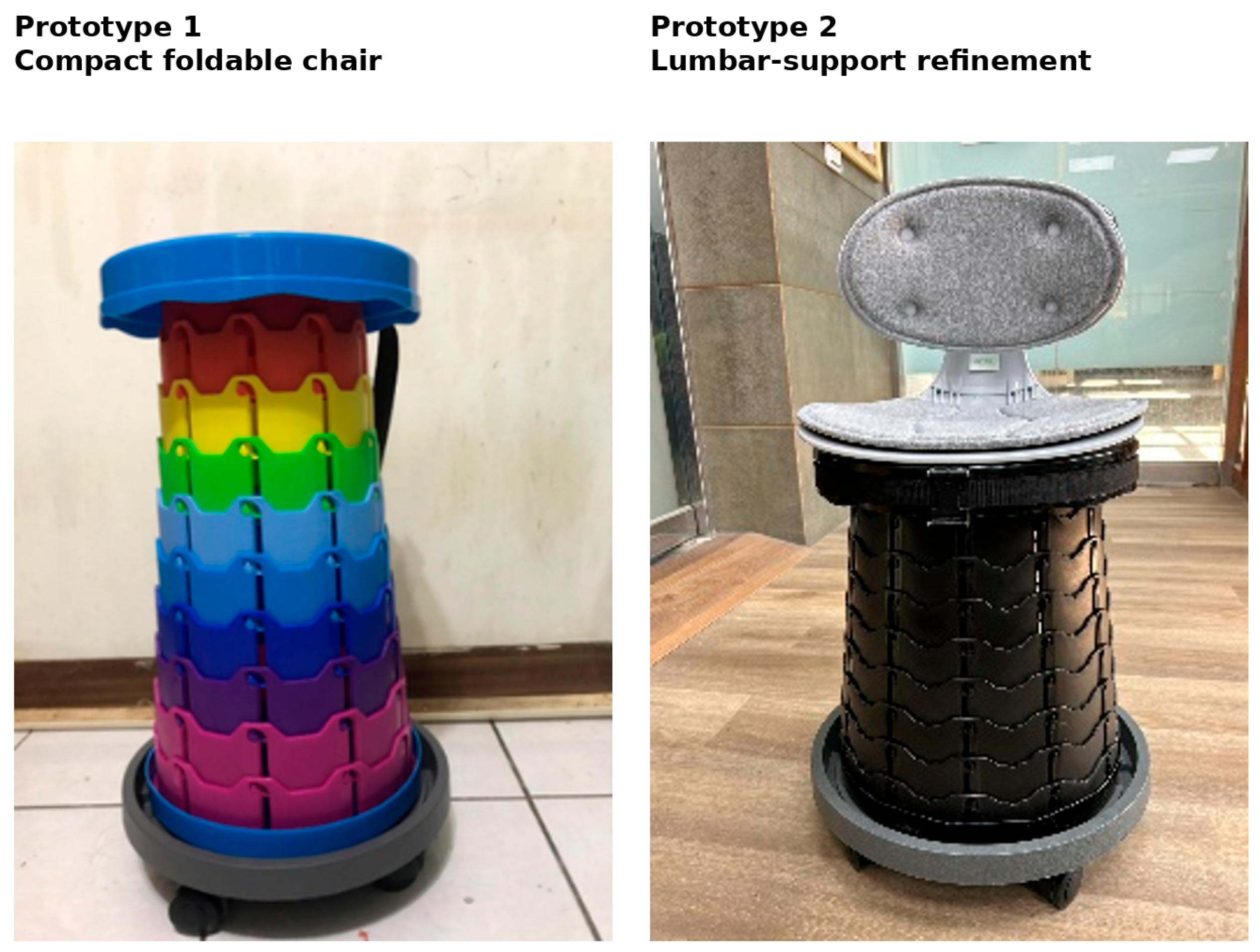
The first prototype emphasized four initial requirements: adjustable height, foldability, rolling mobility, and low carry weight. It had a compact circular base with four casters, a collapsible structure, a height range of 15–51 cm, and a weight of 1.4 kg. User testing of the first prototype involved 17 therapists (9 men, 8 women). Based on user feedback and observed stability limitations during repositioning, a refined second prototype was developed with an enlarged seat pan and base, added lumbar support, a padded seat, and a five-caster configuration to improve stability and rolling smoothness. Nineteen therapists (11 men, 8 women) evaluated the refined prototype.
Figure 2 illustrates the progression from the initial compact prototype to the refined design with lumbar support, a larger seat/base, and improved stability.
The translation logic is then made explicit in
Table 3, which details how each evidence stream was converted into a design parameter and a corresponding prototype response.
3.7. User Evaluation and Statistical Analysis
Prototype evaluation used a 7-point user experience questionnaire adapted from the User Experience Questionnaire framework (
Laugwitz et al., 2008). Items assessed learnability, perceived usefulness, comfort, portability, storage convenience, ease of operation, support for correct posture, and willingness to use the product in mobile work. Additional paired ratings compared perceived body-region comfort before and after prototype use. In each test round, participants first received a brief explanation of the chair, practiced its use, and completed short task-based sitting and service-position trials before filling out the post-use questionnaire. The evaluation therefore assessed immediate usability, perceived comfort, and operational fit rather than long-term adoption or clinical effectiveness.
The prototype evaluation was also interpreted through an implementation-fit and user-acceptance lens. In technology and service-innovation research, perceived usefulness, ease of use, compatibility with work routines, and adoption intention are commonly treated as early indicators of whether a solution is likely to move from trial to use (
Davis, 1989;
Venkatesh et al., 2003). In the present study, this logic was adapted to a low-technology ergonomic artifact: high scores for portability, storage convenience, ease of operation, stability, posture support, and willingness to use were treated as evidence of implementation-fit readiness rather than as proof of long-term clinical effectiveness.
Descriptive statistics summarized participant characteristics, work conditions, symptom patterns, qualitative themes, expert priorities, and prototype ratings. For the survey component, regional musculoskeletal scores were analyzed by body part rather than collapsed into a single total because NMQ-based items are intended to preserve anatomical specificity and may reflect heterogeneous exposure pathways (
Kuorinka et al., 1987;
Pugh et al., 2015). Psychological empowerment items were summarized at the dimension level to reflect the underlying four-cognition model. Pearson correlation analysis examined associations between empowerment dimensions and regional discomfort. Independent t-tests were used for exploratory comparisons between therapists practicing the Father Josef Eugster method (FJM) and therapists using traditional foot massage approaches. Paired-sample t-tests were used to compare pre/post comfort ratings in prototype evaluation. Statistical analyses were performed in SPSS 27, with
p < 0.05 treated as the threshold for statistical significance.
The analytical strength of the study instead lies in cross-phase convergence. Observation identified exposure patterns; survey data mapped symptom distribution and psychosocial resources; interviews clarified work routines and adoption conditions; expert consultation prioritized feasible design attributes; and two rounds of user testing assessed whether the chair improved perceived usability and comfort under realistic service-position conditions.
3.8. Embedded Supplementary Research Instruments
To present the structure and scope of the foregoing research instruments, this study includes the questionnaire structure and semi-structured interview guide as
Appendix A. The appendix reports the main questionnaire domains, representative items, response formats, the modified Nordic body-region scale, prototype evaluation items, and the interview prompts used to elicit practitioner experience. This placement allows readers to verify how the empirical instruments connect to the research objectives, working variables, and staged innovation-readiness framework.
4. Results
4.1. Cross-Phase Overview: Three Mechanisms of Innovation Readiness
Across the five empirical phases, the evidence converged around three mechanisms that explain how grassroots service innovation readiness emerged. The first was constraint visibility. Observation and survey evidence revealed a recurring pattern of mismatched workstations, sustained trunk flexion, shoulder elevation, wrist/hand loading, and low-back strain. This convergence reframed bodily discomfort from an individual issue into a shared operational problem.
The second mechanism was practitioner-mediated translation. Survey findings showed high levels of reported meaning and competence, while interviews indicated that therapists already used warm-up routines, auxiliary tools, mutual massage, and improvised seating strategies. These patterns show that practitioners were not passive recipients of a device; they possessed situated knowledge and adaptive resources that could be incorporated into the design brief.
The third mechanism was implementation-fit testing. Expert consultation and prototype evaluation clarified that adoption depended on operational compatibility: height adjustability, portability, storage, low weight, rolling mobility, stability, and bodily comfort. The two prototype rounds therefore functioned as staged validation of implementation fit rather than as evidence of long-term clinical effectiveness.
Table 4 integrates the evidence, empirical interpretation, and resulting innovation implications for each readiness mechanism.
This cross-phase synthesis is therefore treated as the main analytical result rather than a decorative summary. Constraint visibility explains why discomfort is analyzed as a service-system signal; practitioner-mediated translation explains how frontline experience becomes design knowledge; and implementation-fit testing explains why prototype outcomes are interpreted as adoption-readiness evidence. The Results section consequently moves from mechanism synthesis to body-region patterns, empowerment resources, co-creation evidence, and prototype outcomes, so that each empirical subsection contributes to the same readiness argument rather than functioning as a separate descriptive report.
4.2. Observed Ergonomic Risk Factors
Field observation identified a consistent set of non-ergonomic working postures and equipment constraints. Common patterns included excessive neck flexion/extension, sustained trunk flexion, unilateral or bilateral shoulder elevation, spinal asymmetry, forward displacement of the center of mass, and excessive elbow elevation during forceful techniques. Some therapists applied force directly through the finger joints, producing visible swelling, deformation, or callus formation. Therapists often relied on ordinary office chairs, wooden chairs, plastic stools, low benches, or self-assembled seating systems that lacked appropriate height adjustment, back support, and stable rolling mobility.
The observations show that the ergonomic problem was not limited to the therapist’s technique. Risk emerged from the interaction between therapist anthropometry, client environment, furniture mismatch, and task demands during prolonged seated work. In the readiness framework, this phase provided problem-recognition evidence: the service context lacked an operationally suitable support device, and this absence repeatedly shaped therapist posture and workarounds.
4.3. Survey Characteristics and Musculoskeletal Symptoms
The 59 surveyed therapists ranged in age from 22 to 81 years (mean 49.0, SD = 14.0). Mean height was 165.1 cm (SD = 8.8), mean weight was 68.4 kg (SD = 12.2), and mean BMI was 25.1. Participants worked an average of 5.2 days per week, 7.3 h per day, and treated 3.8 clients per day, with a mean work tenure of 9.6 years. More than half of the respondents reported that their usual work chair was fixed or otherwise not ergonomically designed.
Table 5 summarizes the demographic and work characteristics of the survey participants.
The most frequently affected body regions were the left shoulder (15/59, 25.4%), left hand/wrist (15/59, 25.4%), and low back (15/59, 25.4%), followed by the right shoulder (14/59, 23.7%) and left elbow/forearm (13/59, 22.0%). The anatomical pattern was concentrated in the upper quarter and lumbopelvic region rather than being diffusely distributed, matching the postural exposures observed during treatment tasks. Mean symptom severity scores remained low in absolute terms (0.4–0.6 on the 0–5 scale), suggesting recurrent but generally mild discomfort that may represent an early or normalized stage of work-related musculoskeletal strain rather than advanced disability.
Table 6 reports the most frequently affected body regions, prevalence values, and mean severity scores.
Self-protective behaviors were common but inconsistent. Among the surveyed therapists, 59.3% reported using auxiliary tools during treatment, 40.7% reported mutual massage as a self-care strategy, and 28.8% reported warm-up exercises. In the interview sample, all 10 participants described foot reflexology as a health-promoting practice and all reported tool use as a protective or work-facilitating strategy. The contrast between recurring discomfort and partial self-protection is important: it indicates that therapists had already developed local coping routines, but those routines did not remove the structural problem of workstation mismatch.
4.4. Psychological Empowerment and Work-Practice Differences
Psychological empowerment scores were highest for work meaning and competence, with item means around 4.5 on the 5-point scale, whereas the work-impact dimension was lower at approximately 3.1–3.2. Several empowerment indicators were negatively correlated with discomfort, particularly in the shoulders and lower back. For example, stronger perceived work meaning correlated with less discomfort in the left shoulder (r = −0.297, p = 0.023), right shoulder (r = −0.379, p = 0.003), and low back (r = −0.400, p = 0.002).
These correlations should not be read as evidence that positive work attitudes prevent ergonomic strain. Rather, they point to a practitioner-agency mechanism: therapists who experience stronger meaning and competence may be more likely to pace themselves, use protective routines, adjust technique, or engage constructively with new service-support designs. This interpretation is consistent with the interviews, in which tool use and self-protective practices were described as ways to sustain service quality while reducing bodily burden.
Exploratory subgroup analysis suggested that therapists practicing the FJM approach reported significantly lower discomfort than traditional-practice therapists in multiple body regions, including the neck, shoulders, elbows/forearms, wrists, upper back, and low back. Because these comparisons were cross-sectional and practice style was not randomized, they should be treated as hypothesis-generating rather than causal evidence. Nevertheless, the direction and breadth of the differences suggest that training, technique, pacing, and professional routines may alter ergonomic exposure and warrant further implementation research.
4.5. Interview and Expert Findings as Co-Creation Evidence
The interview material contributed four interpretive themes. First, therapists tended to normalize bodily strain as part of the occupation, which helps explain why mean severity scores could remain low while prevalence remained visible. Second, mobile service environments required continuous improvisation because therapists could not control client furniture or treatment space. Third, auxiliary tool use was not merely a health behavior but also a professional adaptation that allowed therapists to regulate force application and service continuity. Fourth, acceptance of any new service aid was conditional on practical fit: the device had to be portable, rapidly deployable, easy to store, stable near the client, and compatible with varying service positions.
Expert consultation converted these themes into a feasibility-filtered design brief. Height adjustability, caster-based mobility, low device weight, foldability, and client-side stability all received mean importance scores of 4.9–5.0 out of 5. Lumbar support and breathable materials were also rated positively, whereas electric actuation was considered less important. This pattern matters theoretically because it shows co-creation as selection and prioritization. Stakeholders did not simply endorse all possible features; they identified the minimum set of attributes required for adoption under mobile service constraints.
Together with the interview findings, the expert ratings yielded four core design requirements for the first prototype: (1) adjustable working height to fit varied client environments, (2) foldable storage, (3) rolling mobility to reduce therapist repositioning strain, and (4) low carry weight to support home visits. User feedback on the first prototype then drove a second iteration that added lumbar support, a larger seat surface, a broader base, and a fifth caster.
Table 7 summarizes the highest-priority design requirements derived from expert consultation.
4.6. Prototype Evaluation and Implementation-Fit Readiness
In the first prototype evaluation (n = 17), therapists rated the chair highly for learnability (mean 6.4/7), portability (6.5/7), storage convenience (6.4/7), ease of operation (6.2/7), and appropriateness for mobile service (6.2/7). Paired comparisons showed significant improvements in shoulder comfort (4.41 +/− 1.81 to 5.00 +/− 1.84, t = −2.42, p = 0.028) and low-back comfort (4.47 +/− 1.59 to 5.24 +/− 1.79, t = −2.43, p = 0.028). The initial design was therefore functionally acceptable and was associated with improved perceived comfort in two of the most exposed regions identified during earlier phases.
In the refined prototype evaluation (n = 19), ratings remained high for portability (6.5/7), storage convenience (6.4/7), ease of operation (6.2/7), and support for correct posture (5.8/7). The refined design produced significant improvements in low-back comfort (4.63 ± 1.57 to 5.37 ± 1.74, t = −2.59, p = 0.018), waist comfort (3.32 ± 0.48 to 6.16 ± 0.60, t = −16.20, p < 0.001), hip comfort (3.53 ± 0.70 to 6.79 ± 0.42, t = −21.77, p < 0.001), and perceived rolling mobility after adding the fifth caster (4.79 ± 0.79 to 6.63 ± 0.50, t = −7.91, p < 0.001). Relative to the first prototype, the second iteration preserved portability while improving pelvic-trunk comfort and dynamic stability, which were central goals of the redesign.
The prototype results are best interpreted as evidence of implementation-fit readiness, not as definitive proof of ergonomic effectiveness. The evaluations were short-session and perception-based; no longitudinal injury, workload, productivity, or clinical outcomes were measured. Even with that qualification, the findings are analytically useful because users recognized the design parameters derived from field evidence as usable, portable, stable, and comfort-enhancing under realistic service-position trials. Accordingly,
Table 8 is used as a readiness synthesis rather than an efficacy table: comfort and usability ratings are treated as signals that justify further implementation testing, not as surrogate clinical endpoints.
5. Discussion
5.1. Theoretical Contribution: Innovation Readiness as an Enacted Translation Process
To sharpen the contribution structure, the Discussion separates three levels of contribution. The theoretical contribution is the staged translation model of innovation readiness in resource-constrained service settings. The methodological contribution is the sequential integration of occupational-health evidence, practitioner narratives, expert consultation, and prototype feedback. The practical contribution is the identification of realistic implementation conditions for mobile wellness services, including portability, stability, storage, training, and staged field validation.
This article contributes to Administrative Sciences by shifting the analysis of innovation readiness from a generic state of preparedness to an enacted translation process. In the empirical setting examined here, innovation readiness did not begin with a managerial decision to adopt a predefined technology. It began when repeated bodily discomfort, improvised workstations, and self-protective routines became visible as a shared operational problem. This reframing matters because many community-based and mobile service sectors lack formal innovation systems, yet still need mechanisms for identifying and solving operational constraints.
This framing clarifies the article’s theoretical contribution. Innovation readiness is not inferred merely from stakeholder involvement or from the production of two prototypes. Rather, it is operationalized through observable transitions across the study: field constraints became a shared problem; practitioners demonstrated agency and tacit knowledge; expert consultation converted heterogeneous evidence into design priorities; and prototype testing examined whether the proposed solution satisfied the practical conditions of mobile service delivery. The theoretical contribution therefore lies in explaining how readiness is built through staged translation, not simply in documenting that a chair was designed.
The first contribution is conceptual. The article distinguishes four dimensions of readiness: problem-recognition readiness, practitioner-agency readiness, co-creation readiness, and implementation-fit readiness. This framework clarifies why simply observing an ergonomic problem is not enough. A sector may recognize strain but still lack the practitioner agency, knowledge integration, or feasible prototype required for adoption. Conversely, a technically promising device may fail if it does not fit mobile work routines. The readiness model therefore links organizational change theory to service-design evidence in a way that is appropriate for dispersed, low-resource service work.
This body of service-innovation and management scholarship strengthens the article’s theoretical contribution. Service-dominant logic and service-ecosystem research explain why service innovation depends on actor networks, resources, and institutionalized practices, while qualitative theory-building and methodological-fit research justify the use of field mechanisms rather than purely statistical generalization. The present article applies these perspectives to an underexamined setting in which the service worker’s body, the client’s furniture, and a portable artifact jointly shape the conditions for innovation.
The second contribution is analytical. The article demonstrates how mixed-method evidence can be integrated across stages rather than reported as disconnected descriptive findings. Observation and survey data supplied problem visibility; empowerment and interview data explained practitioner agency; expert consultation converted experience into feasible design requirements; and prototype testing assessed implementation fit. This staged logic supports the claim that the portable chair was not merely a product idea but the outcome of a grassroots co-creation process.
The third contribution concerns grassroots innovation. Existing grassroots innovation research emphasizes bottom-up problem solving under resource constraints (
Hossain, 2016;
Smith et al., 2014). The present study adds that in embodied service work, grassroots innovation often begins with normalized physical strain. Such strain is not only an occupational-health issue; it is also evidence that the service infrastructure is incomplete. The portable chair becomes theoretically meaningful because it materializes a translation from tacit bodily knowledge to a practical service-support artifact.
5.2. Methodological Contribution: Cross-Phase Integration and Mechanism Building
Methodologically, the study demonstrates how heterogeneous evidence can be sequenced into a single explanatory pathway. Observation supplied field exposure evidence; NMQ-based survey items preserved anatomical specificity; empowerment items captured practitioner resources; interviews explained the meaning of workarounds and normalized strain; expert consultation filtered user needs through feasibility and safety; and prototype testing examined short-session implementation fit. This connecting-building-merging logic is what allows the study to move beyond a descriptive ergonomic report toward a service-innovation readiness account.
The second proposition is supported by evidence that therapists possessed substantial practitioner-agency resources. High meaning and competence scores, frequent tool use, mutual massage, and warm-up practices indicate that many therapists had already developed ways to manage strain. The negative correlations between work meaning and discomfort should be interpreted cautiously, but they suggest that psychosocial resources may co-occur with safer pacing and adaptive behavior. This does not remove the need for ergonomic redesign; rather, it explains why practitioners may be capable partners in co-creation.
The third proposition is supported by the translation from interviews and expert consultation to design parameters. Interview themes clarified the operational importance of portability, storage, rapid deployment, and compatibility with diverse client-side furniture. Expert consultation then filtered these needs through feasibility and safety considerations. This is where knowledge co-creation becomes analytically visible: co-creation was not the mere presence of multiple stakeholders but the conversion of diverse knowledge into prioritized design attributes.
The fourth proposition is supported by the prototype evaluations. The chair did not demonstrate long-term reduction in musculoskeletal disorders, and the manuscript does not make that claim. However, the two evaluation rounds showed that users perceived strong usability, portability, storage convenience, and improvements in several comfort-related indicators. These outcomes are appropriate for the stated readiness claim because implementation fit is a necessary condition before longer adoption trials can be justified.
5.3. Practical Contribution: Implementation Conditions for Mobile Wellness Services
Practically, the findings specify the conditions under which a portable service-support innovation can plausibly enter mobile wellness work. Service organizers should not treat ergonomic support as a secondary welfare issue; in mobile or informal environments, it becomes part of the innovation infrastructure that enables consistent service delivery, practitioner participation, and safe adaptation of routines (
Lahti et al., 2023).
The findings also align with a broader service-management debate: innovation in services often depends on the configuration of several mutually reinforcing conditions rather than on a single feature or technology (
Ordanini et al., 2014). For mobile wellness work, the relevant configuration includes practitioner agency, ergonomic support, portability, user training, and institutional support from associations or certification bodies. This explains why the prototype should be implemented through staged adoption and feedback loops rather than distributed as an isolated product.
Second, training and certification bodies should view practitioner empowerment and continued education as managerial resources that can strengthen safer work behavior and more effective innovation uptake. The exploratory differences between FJM and traditional-practice therapists suggest that technique, pacing, and professional routines deserve further study as potential implementation moderators.
Third, policymakers concerned with small-scale health and wellness services should pay greater attention to grassroots innovation processes in which operational problems are solved through community-based experimentation and stakeholder co-creation rather than through large-scale technology programs alone (
Hossain, 2016;
Centeno, 2025). For mobile wellness work, low-cost and deployable equipment may be more immediately valuable than high-technology interventions if it addresses the actual constraints of service delivery.
5.4. Proposals and Implementation Measures
Based on the empirical findings, four practical measures are proposed. First, service organizers should introduce a portable ergonomic-support checklist before home visits or community events, including seat height, caster mobility, stability, storage, and client-side safety. Second, training and certification programs should add a short module on self-protection, posture adjustment, tool use, and recognition of early shoulder, wrist/hand, and low-back strain. Third, prototype adoption should follow a staged procedure: initial demonstration, short-session trial, structured user feedback, and refinement before wider distribution. Fourth, local associations or public agencies could support low-cost equipment trials for small service providers who lack the resources to test ergonomic innovations independently.
These measures are intentionally modest because the empirical setting is a low-resource service context. The managerial implication is not that service innovation requires advanced technology, but that small design interventions can be meaningful when they are grounded in practitioner knowledge, customer-site constraints, and repeated field validation.
Table 9 condenses these findings into an Administrative Sciences interpretation that links empirical patterns, readiness dimensions, theoretical interpretation, and practical implications.
6. Conclusions
This article set out to explain how a practical work-organization problem in mobile foot reflexology can become a service-innovation readiness process. The evidence from workplace observation, questionnaire data, practitioner interviews, expert consultation, and two rounds of prototype evaluation converges on a consistent result: the problem was not simply individual discomfort but a field-level service constraint. Mismatched client-side furniture, limited transportability of equipment, repeated upper-body loading, and fixed or poorly adjusted work chairs made shoulder, wrist/hand, and low-back discomfort visible as operational friction. At the same time, therapists’ high reported meaning and competence, their use of self-protection routines and auxiliary tools, and their feedback during prototype testing showed that practitioners possessed situated knowledge that could be mobilized for redesign.
The three objectives stated in the Introduction were addressed. The first objective, clarifying the field conditions that justified a portable service-support innovation, was addressed by documenting how mobile and community-based reflexology services depend on improvised furniture, constrained working postures, and variable client-side environments. The second objective, connecting established concepts with the empirical case, was addressed by linking innovation readiness, grassroots innovation, knowledge co-creation, participatory ergonomics, and psychological empowerment into a staged service-design framework. The third objective, showing how mixed empirical evidence can be converted into design parameters and implementation recommendations, was addressed through the evidence-to-parameter translation, expert prioritization of design requirements, and two iterative prototype evaluations.
Taken as a whole, the study advances a conditional understanding of innovation readiness in low-resource service settings. Readiness emerged through four linked conditions: problem-recognition readiness, practitioner-agency readiness, co-creation readiness, and implementation-fit readiness. The empirical pathway moved from observed posture and workstation mismatch to survey-based symptom mapping, from practitioner narratives to design requirements, and from expert feasibility screening to staged prototype refinement. The first prototype established compactness, foldability, height adjustment, and mobility as basic adoption requirements. The refined prototype preserved portability while adding lumbar support, a larger seat and base, and a five-caster configuration to improve stability and comfort during service-position trials. These results support the interpretation of the chair as a service-system intervention rather than as a stand-alone ergonomic object.
The article makes three main contributions. Conceptually, it reframes innovation readiness as an enacted translation process rather than a general willingness to change. Methodologically, it demonstrates how sequential mixed methods can connect occupational-health evidence, psychosocial resources, expert judgment, and user testing in a coherent service-design pathway. Practically, it offers implementation measures for mobile wellness services, including ergonomic-support checklists, training modules on self-protection and posture adjustment, staged prototype trials, and low-cost equipment testing supported by associations or public agencies. These contributions are particularly relevant to Administrative Sciences because they show how innovation can arise in embodied, low-technology, and under-institutionalized service work where formal R&D structures are weak.
The transferability of this argument is not confined to foot reflexology. Similar readiness pathways may apply to mobile rehabilitation support, community nursing, home-visit wellness, beauty and personal-care services, eldercare, massage therapy, and other dispersed work contexts in which small organizations must transform frontline constraints into usable service-support solutions.
The degree of novelty lies in bringing together elements that are usually treated separately: musculoskeletal strain as a signal of incomplete service infrastructure, practitioner agency as a resource for innovation, co-creation as a mechanism for translating tacit knowledge into design requirements, and prototype evaluation as preliminary evidence of implementation fit. The study therefore extends service-innovation research beyond high-technology, platform-based, or organization-led contexts and shows that modest, deployable artifacts can become meaningful innovation carriers when they are grounded in field constraints and practitioner knowledge.
By integrating these studies, the article positions its practical contribution within a mature scholarly conversation on service innovation, service ecosystems, and employee-centered implementation. The central scholarly claim is therefore sharper: grassroots innovation readiness in mobile services arises when a localized field constraint is converted into a co-created service-system adjustment that improves the conditions under which employees can deliver value.
The limitations also define the next research agenda rather than only procedural caveats. Because the sample was exploratory, future work should include broader and more stratified therapist samples; because the prototype trials were short-session evaluations, future work should test repeated use in real home-visit, community-care, and storefront settings; and because outcomes relied on perceived comfort and usability, future work should combine self-reports with objective posture, movement, workload, productivity, and injury-surveillance measures.
Future research should move from readiness evidence to longer-term implementation evidence. Larger and more diverse samples would allow stronger comparisons across regions, practice styles, employment arrangements, and organizational settings. Longitudinal or repeated-use studies should assess whether portable service-support equipment reduces accumulated discomfort, improves posture, increases work sustainability, or affects service productivity over time. Objective measures such as posture tracking, pressure mapping, electromyography, or time-motion analysis would complement self-reported comfort and usability ratings. Comparative research in eldercare, rehabilitation, beauty services, massage therapy, and community-based wellness work could also test whether the readiness pathway proposed here applies beyond foot reflexology. In policy terms, future studies should examine how training systems, certification bodies, practitioner associations, and local service ecosystems can support the diffusion of low-cost ergonomic innovations among small and mobile service providers.