1. Introduction
The International Labor Organization (
ILO, 2019) reported the following global trends in employment. A total of 3.3 billion people were employed worldwide during the period in question, while the average unemployment rate stood at 5%. Significant regional differences were observed in the field of employment. This raises the question: What was the situation in the three countries examined in our article (Czech Republic, Hungary, and Slovakia) in 2019, the last year before COVID-19? Labor shortages became increasingly significant in the developed world, including the labor markets of the three countries we analyzed (
Kézdi, 2002;
Cappelli, 2015). This trend was evident across a range of categories, affecting both highly skilled and physical labor positions, leading to increasing tension in the labor markets of these countries.
The International Labor Organization (
ILO, 2022) reported new global trends in employment, including in the three Central European countries examined. The previously mentioned unemployment figure rose to 202 million people worldwide due to the impact of COVID-19. A significant shift occurred with the widespread adoption of remote work during the pandemic, a practice that had been relatively limited in earlier years. The low prevalence of remote work was particularly notable in former Eastern Bloc countries and the newly joined EU member states. Labor shortages in Eastern Europe are not a new phenomenon (
Brunello & Wruuck, 2021). They were a constant feature of the socialist planned economy (
Kornai, 2000), particularly evident in the physical labor sector. This issue re-emerged during the second and third decades of the new capitalist systems following the transition stage (
Berglund et al., 2004;
Barr, 2005). Although the 2008–2009 crisis temporarily eased labor shortages in these countries, the phenomenon resurged with greater intensity after 2012 (
Darvas & Raposo, 2018). One of the key challenges today in these countries is the drastically increased labor shortage, influenced by various factors, including post-transition emigration, unfavorable national and regional demographic trends, economic crises, and growing wage disparities within the European Union, which combine to disadvantage these three focal nations (
Brixiova et al., 2009).
The 2004 accession of the region’s countries to the European Union, followed by the 2007 enlargement, had significant implications for the entire labor market in Central and Eastern Europe. It enabled citizens of new member states to immediately take up employment in some of the older EU member states. As labor migration within the European Union is not well documented, exact figures are difficult to establish. However, the phenomenon affected hundreds of thousands of workers in each Central and Eastern European country and millions in larger new member states like Poland and Romania. It is estimated that approximately seven million workers left the transitioning Central and Eastern European countries, including the Czech Republic, Hungary, and Slovakia, examined in our study (
Astrov, 2022;
Horbulák, 2022). As a result, alongside deteriorating demographics and other factors, regional labor shortages emerged in 2018 across various professions and positions in these countries.
Our empirical research aims to uncover the multifaceted nature of labor shortages across occupational segments and to examine evolving perceptions of robotization and artificial intelligence in the workplace in the Czech Republic, Hungary, and Slovakia, with a particular focus on changes between 2019 and 2022. To this end, the study addresses three key questions concerning the underlying drivers of labor shortages, national and temporal differences in labor market challenges, and the evolution of views on technological developments in the workplace.
RQ1a. How do the causes of labor shortages vary across occupational segments in the three countries, with a focus on highly educated professionals?
RQ1b. How do the causes of labor shortages vary across occupational segments in the three countries, with a focus on administrative staff?
RQ1c. How do the causes of labor shortages vary across occupational segments in the three countries, with a focus on blue-collar workers?
RQ2. How have organizational leaders and HR professionals perceptions of the positive impacts of robotization and artificial intelligence evolved in the three countries during the studied period?
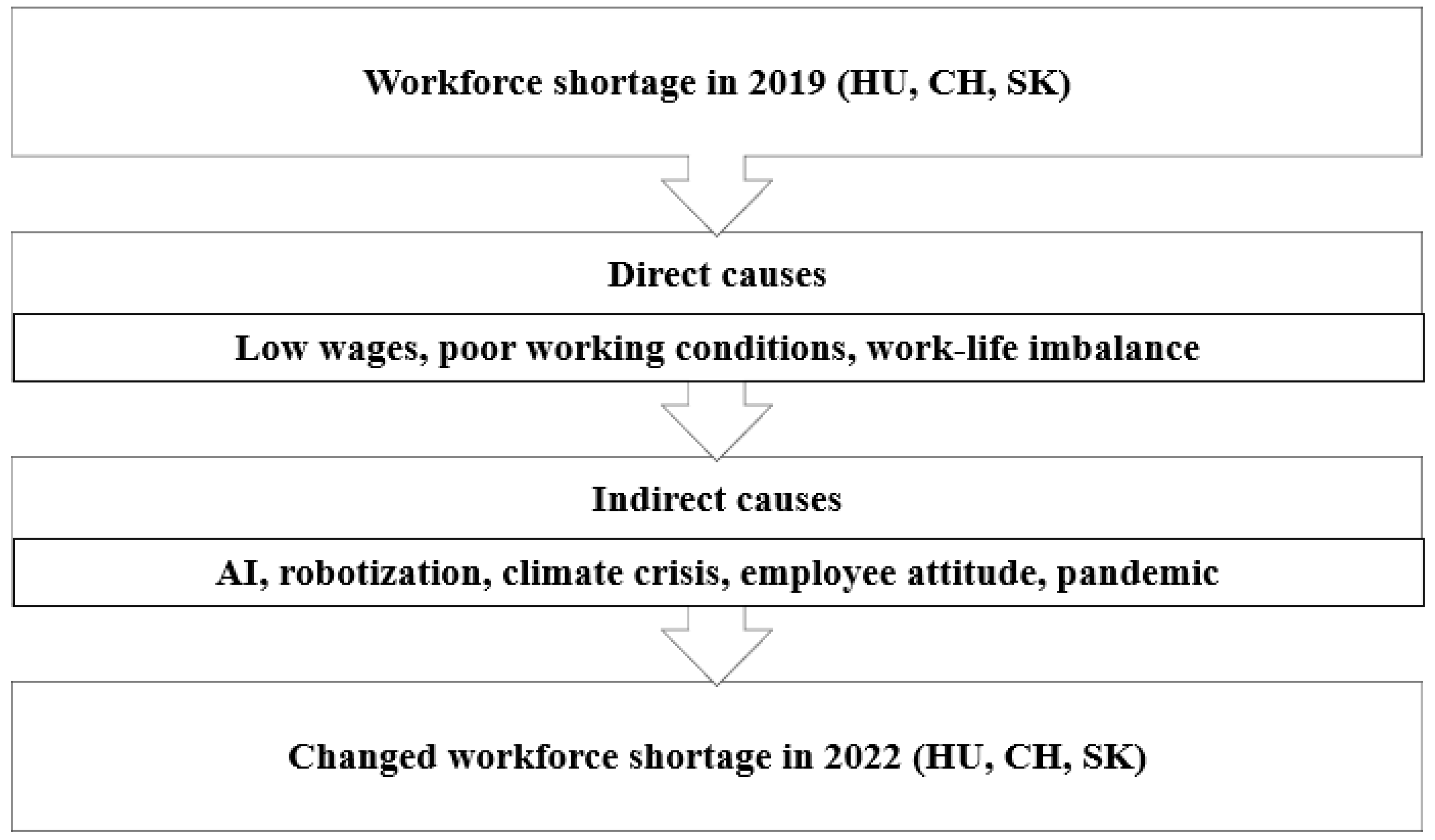
Figure 1 illustrates the conceptual framework of the factors influencing labor shortages in the examined period. Not all elements of the framework are empirically tested in this study; some are included to illustrate the broader economic and technological context of labor shortages.
The model illustrates the transformation of labor shortages between 2019 and 2022 in Hungary, the Czech Republic, and Slovakia. In 2019, labor shortages were primarily driven by direct national or regional macroeconomic factors, such as low wages, poor working conditions, and a lack of work–life balance, which themselves evolved over time and triggered further changes. Additionally, indirect factors, such as the spread of artificial intelligence and robotization, the climate crisis, shifting employee attitudes, and the pandemic, shaped the labor market in the longer term. As a result, by 2022, the causes of labor shortages had significantly shifted, reflecting the labor market’s ongoing responses to globally shared economic, social, and technological transformations. The second part of our article presents the theoretical background of our research. The third section outlines our methodological approach and the key characteristics of our sample. The fourth part includes a statistical analysis of our empirical data. The fifth section focuses on the discussion, consolidating the key research findings and highlighting the new theoretical and practical insights derived from the results and also summarizes the practical implications of the research. The concluding section presents future opportunities and highlights the study’s limitations.
Although previous studies have examined the impact of automation and robotization on labor markets, several gaps remain in the literature. Most existing research focuses on global trends or large developed economies, while relatively little attention has been paid to the specific labor market dynamics of Central and Eastern European countries. Previous research (
Szabó, 2020;
Bachmann et al., 2024) has highlighted that the introduction of automation in Central and Eastern European countries is proceeding more slowly and at different speeds (e.g., the automotive sector is a leader in this area) than in more developed countries due to lower labor costs. Furthermore, comparative analyses based on recent post-pandemic data remain limited.
This study aims to address this gap by analyzing labor market changes related to robotization in the V4 region using comparative data from 2019 and 2022. By focusing on sectoral and occupational patterns, the research provides new insights into how labor markets in Central Europe adapt to technological change.
3. Methodology
3.1. Aim of Research
This study presents findings from international questionnaire surveys conducted in the Czech Republic, Hungary, and Slovakia. We examine the drivers of labor shortages across occupational segments and the perceived labor-market effects of robotization and artificial intelligence. The partial overlap between the 2019 and 2022 survey waves informed our research design and allows cautious comparisons over time.
The analysis primarily focuses on the aggregated regional sample of the three countries (Hungary, Czech Republic and Slovakia). Country-level differences are presented mainly for illustrative purposes.
The main statistical analyses were conducted on an aggregated regional sample from Hungary, the Czech Republic, and Slovakia, while country-level values are presented primarily for descriptive and illustrative purposes.
3.2. Questionnaire
The following can be said about the questionnaire used in our research:
Many items in the questionnaire were measured using a consistent 5-point Likert scale ranging from 1 (strongly disagree) to 5 (strongly agree). This odd-numbered scale allows the inclusion of a neutral midpoint (3), which is a standard practice in both the CRANET and CEEIRT research methodologies. In addition to this scale, some variables were measured using 10-point scales, which provide a more detailed picture of respondents’ evaluations, and 4-point scales, which encourage respondents to make clearer decisions without a neutral option.
The present study builds on long-term international HR research collaborations. The research team has been a member of the CRANET international HR research network since 2004 (
Morley et al., 2020). In 2007, the authors also established the CEEIRT (Central and Eastern European International Human Resource Management) research network (
Poór et al., 2020). Since 2012, the research group has been conducting empirical studies focusing specifically on workforce-related issues in the Central and Eastern European region (
Poór et al., 2017). The questionnaires used in the current study were developed based on these earlier research instruments and served as the starting point for the present survey.
The survey instrument was translated from the original English version into Czech, Hungarian, and Slovak by native-speaking researchers. To ensure linguistic equivalence across the different language versions, a back-translation procedure was applied, and the translated questionnaires were checked for semantic consistency.
The target respondents were senior HR managers, HR professionals, business owners, or chief executive officers (CEOs) who possess a strategic overview of the organization’s workforce, including recruitment, employment practices, and workforce management. Their positions ensured that the responses reflected informed organizational perspectives.
The questionnaire was distributed through several professional channels, including chambers of commerce, LinkedIn, professional HR associations, and the authors’ networks of employed evening and correspondence students. Data collection relied on snowball and convenience sampling techniques to reach a broad range of organizations across the three countries.
Before the full deployment of the survey, a pilot test was conducted within the HR ResearchLab teaching environment with 10 HR professionals, who were also evening and correspondence students. The purpose of the pre-test was to ensure the clarity and comprehensibility of the questionnaire items and to identify potential ambiguities.
Regarding data quality procedures, cases with more than 20% missing values were excluded from the dataset. Minor missing values were handled during the data cleaning process to maintain the consistency of the analysis.
The causes of labor shortages were operationalized using a set of predefined factors included in the questionnaire, such as competition among employers, low wages, shortage of skilled labor, foreign migration, problems in the education system, poor working conditions, infrastructure deficiencies, and work–life balance challenges. Respondents were asked to evaluate the extent to which each factor contributed to labor shortages in their organization using a five-point Likert scale ranging from 1 (not at all typical) to 5 (very typical). Minor variations in item-level valid response counts (N) occurred due to missing data; however, response counts remained broadly consistent with the total sample sizes (2019: N = 436; 2022: N = 729).
3.3. Hypotheses
During the research process, the hypotheses were developed based on a thorough review of the relevant literature, ensuring that they are grounded in existing theoretical frameworks and empirical studies and are closely aligned with the research questions. The formulated hypotheses are as follows:
H1a. Among highly educated professionals, significant changes can be observed in the perceived causes of labor shortages between 2019 and 2022 across the three countries.
H1b. Among administrative staff, significant changes can be observed in the perceived causes of labor shortages between 2019 and 2022 across the three countries.
H1c. Among blue-collar (manual) workers, significant changes can be observed in the perceived causes of labor shortages between 2019 and 2022 across the three countries.
The issue of labor shortages presents distinct challenges for workers across different occupational segments. For highly skilled professionals, the primary causes include low wages, the poaching effect of competitors, and shortcomings in the education system, which fail to supply a sufficient number and quality of professionals for certain sectors (
Green et al., 2015;
Felbo-Kolding et al., 2017). In contrast, for administrative workers, digitalization and automation have drastically reduced the demand for traditional administrative roles. Meanwhile, for manual laborers, low wages, harsh working conditions, and the low prestige of their roles pose significant challenges (
Gheorghiev, 2023;
Oltean & Găvruș, 2018). The disparity between the labor market and educational systems further exacerbates the problem. Education systems are unable to keep pace with rapidly changing labor market demands, particularly in terms of technological and digital competencies. This issue is particularly pronounced in STEM (Science, Technology, Engineering, Mathematics) fields, where the lack of adequately trained labor poses significant barriers to industrial progress (
Green et al., 2015). The missing expertise is often compensated for by migrant workers, who frequently face labor market segregation and low wages, undermining their opportunities for integration (
Felbo-Kolding et al., 2017). The situation of manual laborers and migrant workers is particularly concerning, as they often find themselves in low-wage, low-prestige roles from which it is difficult to escape. Segregation exacerbates this problem, as these workers typically face worse working conditions and more precarious employment than their local counterparts (
Oltean & Găvruș, 2018;
Gheorghiev, 2023). While migration can serve as a temporary solution to address labor shortages, it also creates structural problems, as the concentration of workers in low-prestige sectors is unsustainable in the long term.
It should be noted, however, that the present analysis is based on aggregated data across the three countries, and therefore does not allow a full separation of occupational effects from country-specific influences. While the observed patterns are broadly consistent with prior studies and appear across the combined sample, potential cross-national differences in the drivers and experiences of labor market segmentation cannot be fully disentangled within the current research design. Accordingly, the findings should be interpreted primarily as occupational-level tendencies rather than country-specific causal relationships. Future studies using country-level or multilevel analyses could provide a more precise understanding of how occupational and national factors interact.
H2. In all three countries, the perception of the positive impacts of robotization and artificial intelligence among the surveyed organizations’ leaders and HR professionals improved.
Numerous studies have examined the labor market impacts of robotization and artificial intelligence over the past decade. These studies support the assertion that technological innovations, such as artificial intelligence and robotization, significantly impact organizational operations and employees’ and leaders’ attitudes toward technological changes (
Vrontis et al., 2023;
Bhargava et al., 2021).
Vrontis et al. (
2023) emphasize that artificial intelligence and robotization profoundly influence HR management, particularly in terms of collaboration between leaders and employees, highlighting diverse patterns in the acceptance of technology.
Bhargava et al. (
2021) examined the effects of AI and robotization on job satisfaction, employability, and job security in their research. Their findings indicate that these impacts are closely linked to employees’ and leaders’ perceptions.
Arslan et al. (
2022) pointed out that implementing artificial intelligence poses unique challenges for HR leaders, especially in managing interactions between employees and AI-based systems at the team level. This underscores the importance of understanding the effects of technological innovations on HR strategies.
Przytuła (
2018), in her analysis, highlighted how global labor market trends shape the future competencies of employees, emphasizing the role of robotization and AI. Based on these studies, examining the impacts of technological changes is warranted, as they have significant implications for labor market processes and organizational strategies.
3.4. Characteristics of the Sample
Data collection was conducted online in 2019 and 2022. The questionnaire covered three major thematic groups of questions. First, organizational characteristics were determined (sector, size, ownership type, and revenue). The second set of questions focused on the extent and causes of labor shortages, while the third group addressed the impacts of robotization. The survey consisted of closed-ended questions based on nominal and metric (scale) variables. The use of closed-ended questions enabled the collection of comparable quantitative data across countries and survey waves; however, this approach may limit the richness of the analysis, as respondents had fewer opportunities to provide detailed qualitative explanations regarding the causes of labor shortages. The data collected in 2019 and 2022 were analyzed using descriptive and non-parametric statistical methods. Descriptive statistics, such as frequency analysis and mean rank calculations, were employed to identify key trends and patterns. Among non-parametric statistical tests, the Mann–Whitney U test was used to compare the rankings of variables across the two survey periods, focusing on factors related to labor shortages and employee retention. These analytical methods enabled a comprehensive examination of labor shortages, employee retention strategies, and the perceived impacts of robotization and artificial intelligence on organizations in Hungary, the Czech Republic, and Slovakia. Because several Mann–Whitney tests were performed across different occupational groups and labor shortage factors, the potential inflation of Type I error due to multiple comparisons was considered. Accordingly, the results were interpreted with caution when evaluating statistical significance.
For practical reasons, data collection relied on non-probability sampling techniques, including snowball and convenience sampling (
Noy, 2008;
Ghaljaie et al., 2017). Consequently, the sample cannot be considered statistically representative of organizations in the examined countries, and the findings should be interpreted with caution.
Rather than providing generalizable estimates, the dataset enables the identification of indicative patterns and comparative tendencies across occupational groups and survey waves. The primary aim of the analysis is therefore exploratory and descriptive, not to produce population-level inferences or meta-analytic generalizations.
The questionnaires were completed voluntarily and anonymously. A total of 436 and 729 organizations from Hungary, the Czech Republic, and Slovakia participated in the surveys conducted in 2019 and 2022, respectively. The Czech Republic demonstrated relatively high respondent activity in both years, with over 200 organizations participating. Hungary consistently contributed the largest number of responses (between 200 and 400), while Slovakia showed lower participation levels (60 organizations in 2019 and 125 in 2022) (
Table 3).
Based on the Hungarian, Czech, and Slovak samples studied, significant shifts among industries were observed between 2019 and 2022. The number of respondents from the industrial sector decreased in all countries, particularly in Hungary and the Czech Republic. In contrast, the number of respondents from the service sector increased, especially in Hungary, while it declined in Slovakia. Based on the analyzed sample, the distribution of ownership types showed significant shifts between 2019 and 2022. The proportion of domestically owned private companies increased in the samples across all three countries, particularly in Slovakia, where it rose from 63.3% to 81.7%. In Hungary and the Czech Republic, the increase was more moderate but still reflected a strengthening role of domestically owned organizations in the samples. Simultaneously, the proportion of foreign-owned companies declined in all countries. The most significant drop was observed in Slovakia, where the proportion fell dramatically from 20.0% to 8.3%. There was also a notable but less drastic decrease in Hungary and the Czech Republic.
Additional information about the characteristics of the responding organizations is presented in
Appendix A, including company size, ownership structure and turnover categories.
6. Conclusions
This study demonstrates that both the perceived causes of labor shortages and their relative importance changed significantly between 2019 and 2022. These shifts were evident across all occupational groups examined (highly skilled, administrative, and blue-collar), indicating that the dynamics of labor shortages extend beyond a single segment of the labor market and reflect a broader systemic transformation.
Beyond the empirical findings, the study contributes to the literature by providing a comparative analysis of labor shortages and technological adaptation in three Central European countries before and after the COVID-19 pandemic. By combining survey data from two time periods and examining differences across occupational groups, the research offers new insights into how labor market perceptions evolve in response to economic and technological change.
Future research could examine whether, in hard-to-fill positions, artificial intelligence and robotization primarily complement human labor by augmenting and reallocating tasks or can directly substitute certain types of work. It may also explore the effectiveness of different retention strategies used to mitigate labor shortages and support organizational adaptation to technological change.
7. Limitations and Potential Future
This research is subject to several limitations that should be acknowledged. First, the sampling method applied in the study relied on snowball and convenience sampling techniques; therefore, the sample cannot be considered statistically representative of all organizations operating in the examined countries. In addition, the voluntary nature of participation and the snowball sampling procedure may have introduced self-selection bias, as organizations that are more engaged with labor market challenges or HR practices may have been more likely to respond to the survey. Although efforts were made to involve a wide range of organizations from different sectors and institutional backgrounds, the possibility of selection bias cannot be entirely excluded.
Second, the data are based on self-reported responses provided by organizational leaders, HR professionals, or senior managers. While these respondents possess a strategic overview of workforce-related issues within their organizations, their answers may still reflect subjective perceptions rather than purely objective organizational conditions.
Third, the two surveys conducted in 2019 and 2022 represent cross-sectional data collections rather than a longitudinal panel study. The participating organizations were not necessarily identical in the two waves of the survey, which means that the observed differences between the two periods may partly reflect changes in the composition of the sample rather than purely temporal developments.
Fourth, although the dataset contains information about sectoral distribution and organizational characteristics, the comparative analyses presented in this study did not explicitly control for industry differences or company size effects. Consequently, some of the observed variations may also be influenced by structural differences in the composition of the sample between the two survey waves.
Despite these limitations, the study provides valuable insights into the labor market challenges faced by organizations in the Central European region. By comparing two survey waves conducted before and after the COVID-19 pandemic, the research offers a meaningful overview of how perceptions of labor shortages and technological solutions have evolved during a period of significant economic and social transformation.
Future research could build on these findings by applying more representative sampling methods, incorporating panel data that follow the same organizations over time, and examining sectoral and firm-size differences in greater detail. Such approaches would allow a deeper understanding of how structural labor market dynamics and technological change jointly shape workforce challenges in Central Europe.