1. Introduction
In recent years, Digital Transformation 4.0 has established itself as one of the most significant organizational phenomena in today’s business environment, driven by the integration of advanced technologies such as data analytics, artificial intelligence, cloud computing, the Internet of Things (IoT), and intelligent automation. According to
Verhoef et al. (
2021), digital transformation entails a profound shift in the way organizations leverage diverse technologies to develop new business models and generate greater value. This process enables improvements in business models, enhancing organizations’ ability to compete within their respective industries. Furthermore, the adoption of digital technologies has created opportunities to improve operational efficiency, resource management, and data-driven decision-making.
Process digitalization contributes significantly to the development of new competencies within organizations and institutions, including data analysis, automation, and operational agility. These capabilities are essential for navigating highly competitive environments characterized by rapid technological change. Nevertheless, a considerable portion of the research on digital transformation has focused primarily on highly digitalized sectors or private enterprises. Particularly in developing countries, the analysis of the impact of digital transformation on public entities remains markedly limited. Public organizations typically face structural challenges of various kinds, including complex regulatory frameworks, budgetary constraints, and inflexible organizational structures, all of which may hinder the adoption and implementation of digital technologies (
Mountasser et al., 2023).
In recent years, the incorporation of digital tools in Latin American government institutions has shifted from being a secondary consideration to becoming a central element in improving both the internal functioning of the state and citizens’ experience when accessing public services. However, sufficient empirical evidence regarding the impact of digital transformation on the operational productivity of public enterprises particularly in strategic sectors such as energy and oil remains scarce. In the Ecuadorian context, public companies such as EP PETROECUADOR play a fundamental role in the national economy; therefore, the integration of digital technologies into their operational processes could contribute significantly to improvements in productive efficiency and organizational management.
Despite the growing body of research on digital transformation, three significant gaps persist in the literature. First, empirical evidence remains concentrated in private manufacturing firms and advanced economies, with studies focused on public industrial enterprises in Latin America being markedly limited (
Mountasser et al., 2023;
dos Santos et al., 2022). Second, most existing research examines the impact of digitalization on organizational performance in general terms, without focusing specifically on operational productivity as the primary outcome variable. Third, the relationship between digital transformation and sustainability-oriented performance in emerging economies has been underexplored, particularly regarding how ICT adoption intersects with efficiency and environmental dimensions (
Topcu, 2025;
Servet, 2025). These gaps collectively justify the need for context-specific, sector-oriented empirical research such as the present study. The Esmeraldas Refinery of EP PETROECUADOR was selected as the case study for several reasons. It is the largest and most strategically significant oil-refining facility in Ecuador, processing the majority of the country’s domestic fuel supply. As a public enterprise, it operates under the institutional constraints characteristic of Latin American state-owned companies, including regulatory complexity, budgetary limitations, and organizational rigidity. In recent years, the refinery has undertaken incremental steps toward digital integration, including the incorporation of process monitoring systems, automation tools in maintenance areas, and information management platforms across operational departments. This transitional context makes it a particularly relevant and underexplored setting for examining how Industry 4.0 dimensions translate into operational productivity gains within a complex public industrial organization. In line with this context, the present study aims to examine how Digital Transformation 4.0 has influenced the operational performance of this Ecuadorian public entity. The objective is to understand the relationship between the adoption of digital technologies and the levels of productivity achieved within the organization, thereby contributing concrete empirical findings to the academic debate on digitalization in Ecuador’s public sector. Accordingly, the analysis centers on the following research question: In what ways does the adoption of Digital Transformation 4.0 technologies impact the operational productivity of the Esmeraldas Refinery?
Based on the foregoing elements, this study posits that the incorporation of technologies associated with Digital Transformation 4.0 generates concrete and meaningful improvements in the operational performance of the Esmeraldas Refinery of EP PETROECUADOR, a proposition that guides the development of the study and will be subjected to empirical verification throughout the research process.
2. Literature Review and Conceptualization
Recent academic scholarship has devoted increasing attention to the effects of digital transformation on organizational functioning, particularly with regard to productive capacity and internal efficiency. The most recent studies converge on the finding that the incorporation of digital tools into business processes contributes both to improved operational management and to the sustained creation of value, given that their integration in manufacturing environments strengthens the organizational capabilities required to manage data-driven operations (
Tian et al., 2023).
A growing body of research has confirmed that the adoption of digital technologies has a notable impact on organizational outcomes, as its implementation facilitates process optimization, more rational use of available resources, and the reduction of operational costs factors that collectively translate into stronger organizational performance (
Zhai et al., 2022). This is further compounded by the fact that digital transformation fosters the development of new competencies within organizations, including data analytics, information-based decision-making, and the agility to adapt to increasingly dynamic environments (
Kraus et al., 2022).
Empirical studies have provided additional evidence of the link between digitalization and productive efficiency. Particularly noteworthy is the argument advanced by
L. Wang (
2023), who posits that digitally driven technological innovation can significantly increase total factor productivity by strengthening internal innovation processes and improving information management. This suggests that the strategic adoption of these technologies enables organizations to enhance their capabilities and improve performance in digitalized contexts, a perspective reinforced by
Llopis-Albert et al. (
2021), who argue that digitalization optimizes productive processes, stimulates innovation, and consolidates business competitiveness, while the incorporation of new technologies and digital services facilitates value chain improvement with direct impacts on productivity and organizational performance.
Nevertheless, a portion of the specialized literature cautions that the benefits derived from digital transformation do not depend exclusively on the technology adopted, but also on a set of organizational conditions that determine the success of its implementation. Among these,
Cichosz et al. (
2020) highlight the role of leadership, the existence of an adaptable organizational culture, the strengthening of digital competencies among staff, and the effective integration of technology into operational processes elements that collectively shape an organization’s capacity to fully leverage the opportunities offered by digitalization. This perspective is complemented by
Bai et al. (
2021), who argue that the incorporation of digital tools improves organizational efficiency through process optimization, data-driven management, and the cross-functional integration of information across different operational activities, while also promoting more sustainable productive practices and more robust organizational performance.
In the Latin American context, empirical evidence is also available from public organizations in the region, including the National Telecommunications Corporation of Ecuador (Corporación Nacional de Telecomunicaciones), where a study examined the effect of digital transformation on operational management through surveys administered to employees and users of the institution. The results demonstrated that the digitalization of processes such as customer service, complaint handling, and network monitoring had a positive impact on organizational productivity by reducing response times and optimizing the use of available resources (
Alava, 2025). The same study, however, identified staff training and organizational adaptation to new technologies as persistent challenges that condition the long-term sustainability of these change processes.
Along similar lines,
Romero (
2022) examined the relationship between digital transformation and business management in the Ecuadorian oil sector through a study conducted at the Exploration and Production Division of EP PETROECUADOR. Using surveys directed at personnel across different hierarchical levels, the study analyzed how this process affects internal organization and decision-making, providing relevant insights for understanding the scope of digitalization in public entities within the national energy sector. Based on statistical analysis using Spearman’s correlation coefficient, the study determined the existence of a direct relationship between both variables, concluding that digital transformation positively influences business management and supports the achievement of the organization’s strategic objectives.
The preceding evidence underscores the relevance of studying digital transformation in the Ecuadorian public industrial context. The following subsections develop the theoretical and conceptual framework that grounds the present study, covering the definition and dimensions of digital transformation, the models used to assess it, the role of operational productivity, and the documented relationship between these two constructs.
2.1. Digital Transformation
From the perspective of
Vaska et al. (
2021), digital transformation represents an organizational process of considerable complexity, as its implementation is not limited to the incorporation of new technological tools, but rather entails a profound reconfiguration of internal systems, management models, and the capabilities through which an organization operates. This means that its true scope extends beyond the purely technological dimension to become a strategic commitment oriented toward redesigning the way institutions function, create value, and drive innovation in an increasingly demanding environment.
Within the framework of Industry 4.0, digital transformation is associated with the adoption of emerging technologies that enable the interconnection of physical and digital systems. Such technologies include artificial intelligence, advanced data analytics, the Internet of Things, intelligent automation, and digital platforms that facilitate real-time exchange between organizational processes (
Javaid et al., 2022;
Nambisan et al., 2019). According to these authors, the development of digital ecosystems has fundamentally transformed the way organizations coordinate their productive activities and manage information in a strategic manner.
Recent literature has also emphasized the need to draw a conceptual distinction among digitization, digitalization, and digital transformation, as these terms represent different levels of technological adoption within organizations. According to
Reis and Nuno (
2023), digitization refers to the conversion of analog information into digital format; digitalization involves the use of digital technologies to optimize existing processes; while digital transformation represents a broader organizational change process that modifies the way organizations generate value.
Recent academic scholarship indicates that for digital transformation to materialize effectively, organizations must develop a set of internal capabilities encompassing data management and utilization, the coherent integration of technologies across different processes, and continuous institutional learning. It is precisely these competencies that enable organizations to adapt to constantly evolving environments and to realize the full potential of available digital tools (
Sjödin et al., 2020). Accordingly, Digital Transformation 4.0 may be understood as a process in which technological innovation, the redesign of internal processes, and the strengthening of organizational capabilities converge, thereby establishing a solid foundation that enables enterprises to respond with greater efficiency to the demands of highly digitalized contexts.
2.2. Dimensions of Digital Transformation
The most recent scholarship on the subject converges on the view that digital transformation cannot be approached as a uniform phenomenon; rather, it responds to a multidimensional nature encompassing distinct organizational components. Among these, digital strategy occupies a prominent position, as it reflects the degree to which an organization integrates digitalization objectives into its long-term planning, thereby enabling it to guide technological investments, articulate innovation initiatives, and ensure that the adoption of digital tools is aligned with institutional goals. This is consistent with the argument put forward by
Nadkarni and Prügl (
2020), who assert that having a robust digital strategy is indispensable for linking technological initiatives with organizational capabilities and ensuring that digitalization yields sustainable benefits over time.
A second relevant dimension concerns technological infrastructure and systems interoperability, which encompasses the set of technological resources required to sustain digital transformation processes, including information systems, digital platforms, data architectures, and analytical tools that enable the integration of the organization’s various processes. According to
Kraus et al. (
2022), having adequate infrastructure facilitates interconnection among the organization’s different systems, resulting in more efficient information flows and greater coordination capacity among the operational units involved in the institution’s day-to-day functioning.
The strategic management of data has also acquired a central role within digital transformation processes, given that in today’s business environment, information has become a high-value resource that guides decision-making, optimizes internal processes, and creates space for innovation. Digital technologies enable the collection, processing, and utilization of large volumes of data to develop analytical capabilities and generate organizational knowledge that supports value creation in digitalized contexts (
Verhoef et al., 2021;
Vial, 2019). This dimension is complemented by the transformation of organizational processes, regarding which
Hanelt et al. (
2021) argue that the incorporation of digital technologies produces profound changes in the structure and internal functioning of organizations, improving the coordination of activities, information management, and overall performance and resulting in more agile operational models with greater adaptive capacity in the face of changing environments.
Finally, organizational culture and digital talent development constitute key factors for the success of digital transformation. For digital technologies to be effectively adopted, employees must develop new technological competencies, and organizations must foster environments of continuous learning oriented toward innovation. In this regard,
Vaska et al. (
2021) indicate that digital transformation compels organizations to develop new capabilities and competencies associated with digital technologies, which entails adapting organizational knowledge, roles, and skills in order to respond to the changes brought about by digital environments.
In summary, these dimensions demonstrate that digital transformation is a complex phenomenon that demands the integration of human, organizational, technological, and strategic elements. Examining digital transformation from a multidimensional perspective therefore enables a more precise understanding of how organizations develop digital capabilities that contribute to the optimization of their operational performance.
2.3. Digital Transformation Models
The growing academic interest in digitalization has given rise to a variety of conceptual and digital maturity models, which make it possible to measure the degree of technological adoption achieved by organizations. These models aim to identify the stages of the digital transformation process while providing analytical frameworks that facilitate the implementation of digital strategies.
Among the most widely used tools for assessing the level of digital advancement in organizations are the so-called digital maturity models, which allow for the examination of various institutional dimensions, including digital strategy, technological competencies, digitally oriented organizational culture, and the structure of internal processes with the purpose of establishing a diagnosis of the organization’s current state and guiding its transformation efforts in an orderly and progressive manner (
Thordsen & Bick, 2023). This approach is complemented by models specifically designed for the Industry 4.0 context, which have been developed across different studies to evaluate organizations’ capacity to incorporate advanced technologies and consolidate intelligent productive processes (
Frank et al., 2019). These models are generally structured around graduated levels that reflect the degree of technological integration achieved by each organization throughout its transformation process.
However, some authors note that many digital transformation models present limitations with respect to their applicability across different organizational contexts. In particular, several studies underscore the need to adapt these models to the specific characteristics of each economic sector and institutional context (
Culot et al., 2020).
2.4. Operational Processes and Productivity
Operational processes constitute the set of activities through which an organization transforms resources, information, and capabilities into products or services that generate value for the organization and its users. Within the field of organizational management, these processes represent the foundation of productive activities, as they determine the manner in which organizational resources are utilized to achieve strategic objectives. In this regard, the efficiency of operational processes depends largely on the capacity of organizations to coordinate activities, manage information, and optimize the use of resources within their productive systems.
The effective management of operational processes has become a central theme in the recent literature on digital transformation and organizational management. Several studies indicate that the use of digital technologies within organizations makes it possible to redesign and optimize existing processes, facilitating greater coordination among activities and improved integration of information within organizational systems. In this regard,
Verhoef et al. (
2021) note that the digitalization of organizational processes has the capacity to increase efficiency in the execution of activities and to support the creation of organizational value, enabling firms to adapt more effectively to competitive and rapidly changing environments.
In industries characterized by complex processes, the incorporation of digital systems into operations also enables real-time monitoring of productive activities, facilitating the identification of operational deviations and enhancing the organization’s responsiveness to changes in the productive environment (
Frank et al., 2019). In this way, the integration of digital technologies into operational processes contributes to strengthening organizational efficiency and improving the performance of productive systems.
In the most recent literature on operations management, the optimization of operational processes has gained increasing relevance due to the impact that digital technologies can exert on organizational efficiency. According to
Tian et al. (
2023), the implementation of digital transformation practices in operational processes contributes to improving efficiency in resource management, optimizing the coordination of activities, and strengthening operational monitoring capabilities. These authors note that the use of digital technologies facilitates the analysis of operational information and promotes organizational performance through more efficient management of productive processes.
Likewise, in industrial and organizational contexts characterized by high levels of complexity, the incorporation of digital technologies into operational processes facilitates the supervision and control of productive activities. In this regard,
Kans and Campos (
2024) highlight that digital capabilities applied to operations management enable the real-time tracking of productive processes, which facilitates the identification of operational deviations, improves decision-making, and strengthens organizational capacity to respond to changes in the productive environment. Consequently, the digitalization of operational processes has become a key factor in improving organizational efficiency and strengthening operational productivity in industrially intensive and technologically complex enterprises.
2.5. Relationship Between Digital Transformation and Productivity
The relationship between digital transformation and organizational performance has been examined from multiple perspectives in the specialized literature, with the most recent findings consistently pointing to the conclusion that the strategic use of digital technologies can generate substantial improvements in both productivity and the efficiency of operational processes.
Dalenogare et al. (
2018) note that organizations incorporating Industry 4.0 technologies tend to record notable advances in the efficiency of their productive processes, in the reduction of operational lead times, and in the more rational utilization of available resources. This is further supported by evidence provided by
Frank et al. (
2019), who demonstrate that digitalization facilitates the interconnection of information systems and improves accessibility to operational data, resulting in better-informed decisions and more effective organizational management benefits that have also been documented in the public sector, where the digitalization of administrative processes has shown positive effects on both the quality of services delivered and the overall performance of institutions.
According to
Mergel et al. (
2019), the application of strategies oriented toward digital transformation has the potential to increase institutional efficiency, enhance transparency, and optimize the management of public resources.
The most recent literature therefore suggests that digital transformation is a key factor in improving the operational productivity of organizations, particularly in organizational contexts characterized by complex processes and high technological intensity. Beyond productivity, recent scholarship has begun to examine the intersection between digitalization and sustainability.
Topcu (
2025) demonstrates that ICT adoption is positively associated with green growth and can reduce ecological footprints in emerging economies, underscoring the dual productive and environmental value of digital transformation in industrial settings. Complementarily,
Servet (
2025) maps evolving trends in academic literature linking digitalization and sustainability, confirming that these two dimensions are increasingly treated as interrelated in contemporary organizational research. In the public sector specifically,
dos Santos et al. (
2022) identify the enabling technologies driving digital transformation in government organizations and document their impacts on service delivery and operational efficiency, providing a foundation for understanding how public enterprises such as EP PETROECUADOR can leverage technological adoption to improve performance. With respect to the role of employees in digital transformation processes,
Saygili and Öztirak (
2024) demonstrate that workers’ attitudes toward digital technology significantly shape their engagement with flexible and digitally mediated work arrangements, a finding that highlights the importance of human capital preparedness alongside infrastructure investments. This is further reinforced by
Rupeika-Apoga et al. (
2022), who document that the success of digital transformation in organizations operating in constrained contexts depends substantially on public support mechanisms and institutional enablers, a dimension that is particularly relevant for state-owned enterprises navigating digital change. Finally,
Kara (
2025) provides a comparative performance analysis of ICT levels across countries, offering a methodological framework for benchmarking technological capacity that can inform future assessments of digital infrastructure maturity in Ecuador’s public sector.
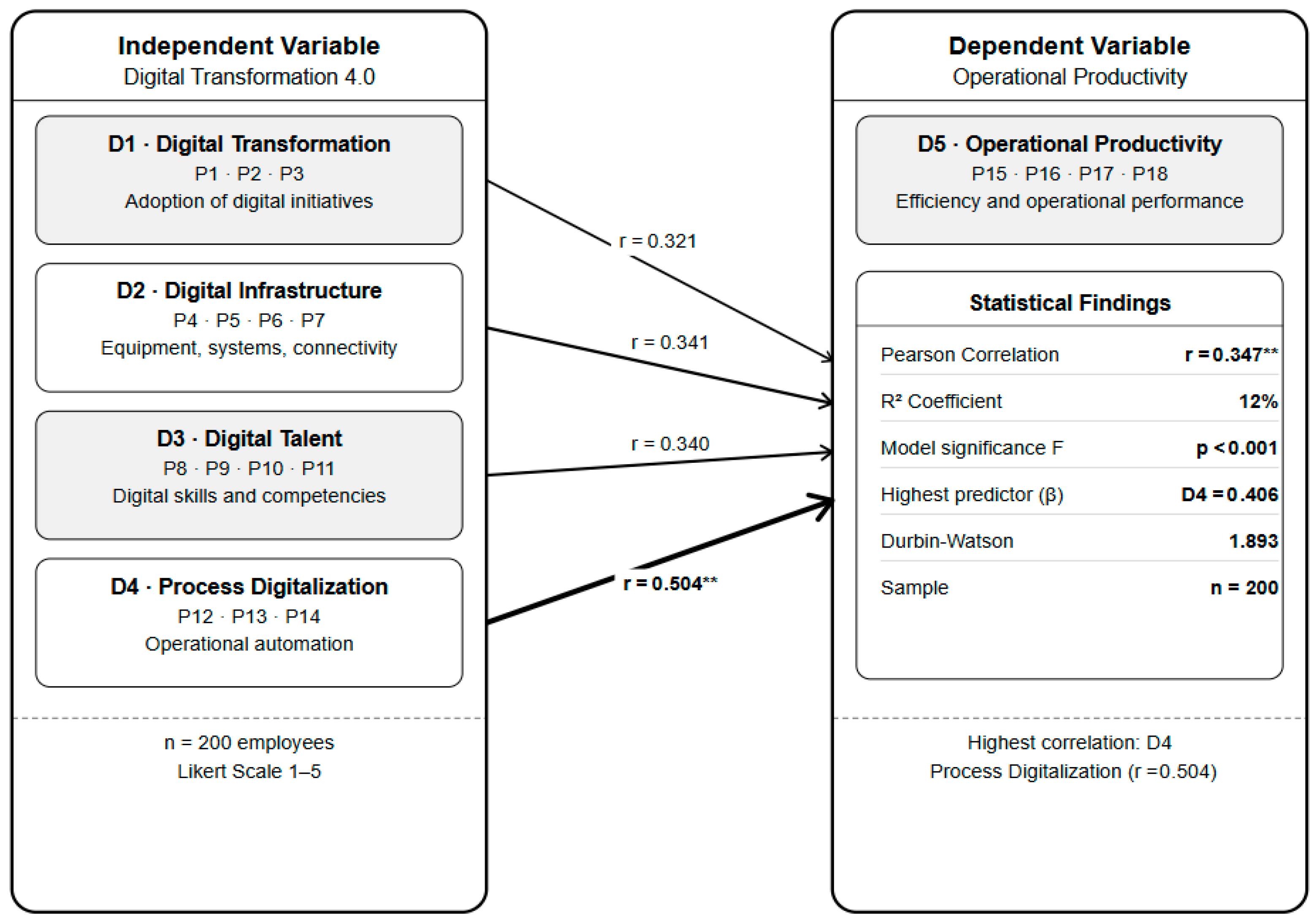
Based on the reviewed literature, the conceptual model presented in
Figure 1 is proposed. It establishes that Digital Transformation 4.0 operationalized through the dimensions of Digital Infrastructure, Digital Talent, Process Digitalization, and Digital Transformation exerts a positive influence on the Operational Productivity of organizations. This model guides the methodological design and empirical analysis of the present study.
3. Materials and Methods
3.1. Research Design
This research study adopts a quantitative orientation with the purpose of analyzing the relationship between the dimensions of Digital Transformation 4.0 and the operational productivity of the Esmeraldas Refinery of EP PETROECUADOR. The quantitative approach refers to the capacity to empirically examine relationships between variables through statistical procedures, thereby facilitating an objective analysis of the collected data (
Creswell & Creswell, 2018). The study also employs multivariate analysis techniques to examine the relationships among the constructs associated with digital transformation and operational performance (
Alamer, 2022). The study is conducted under a non-experimental, cross-sectional design, given that it is based on the observation and analysis of variables in their natural context without deliberate manipulation, and data are collected at a single point in time. This design is frequently employed in studies aimed at examining organizational perceptions and assessing the relationship between variables in real work settings (
Saunders et al., 2023). Furthermore, the study adopts an explanatory scope, as its objective is to determine how the different dimensions of digital transformation affect the operational performance of a public entity.
3.2. Research Context
The study was conducted at the Esmeraldas Refinery of EP PETROECUADOR, the most significant oil-refining facility in Ecuador. As a public entity, it plays a central role in the country’s energy system and operates through complex industrial processes that require close coordination among technical, operational, and administrative departments.
In this context, the integration of information systems, digital technologies, and automation tools has become a fundamental element for optimizing the efficiency of productive processes and strengthening data-driven decision-making. Digital transformation enables the optimization of organizational processes, improved data management, and increased operational efficiency in energy and industrial sectors, as supported by several recent studies (
Verhoef et al., 2021;
Vial, 2019).
3.3. Population and Sample
The study population comprises the personnel involved in the operational, technical, and maintenance processes of the Esmeraldas Refinery of EP PETROECUADOR. The data collection period spanned from September to November 2024, during which the structured questionnaire was administered via Google Forms. Participants were drawn from four primary organizational areas: operations (38%), technical and engineering (27%), maintenance (22%), and administrative support (13%). Employees represented varying levels of organizational tenure, grouped into three ranges: 1 to 5 years (34%), 6 to 10 years (41%), and more than 10 years (25%). Regarding educational level, the majority of respondents held undergraduate or technical degrees (62%), followed by postgraduate qualifications (28%), and technical certifications (10%). In terms of digital experience, participants were asked to self-assess their familiarity with digital tools used in their operational roles, with 44% reporting intermediate proficiency, 31% advanced proficiency, and 25% basic proficiency. These demographic variables were treated as contextual descriptors of the sample and as control variables in the analysis, ensuring that the results reflect perceptions from a diverse cross-section of the organization’s workforce with direct knowledge of operational processes and technology use.
Given the organizational characteristics of the study and the need to obtain information from individuals with direct knowledge of operational processes and the use of digital technologies, a non-probabilistic purposive sampling strategy was employed, yielding a sample of 200 participants. This type of non-probability sampling is common in organizational studies when the aim is to gather information from participants with relevant experience regarding the phenomenon under analysis (
Saunders et al., 2023).
Regarding sample size, the 200 participants are considered sufficient given that
F. Hair et al. (
2022) recommend a minimum of 10 observations per predictor variable for multiple regression analysis. Considering that the present study includes four predictor variables, the minimum required sample would be 40 participants, a threshold that the obtained sample exceeds by a considerable margin, thus ensuring the statistical robustness of the analyses performed.
3.4. Data Collection Instrument
Empirical data were collected through a structured questionnaire designed specifically to analyze the impact of Digital Transformation 4.0 on the operational productivity of EP PETROECUADOR—Esmeraldas Refinery. Data collection was carried out via this questionnaire using the Google Forms platform, which facilitated access and participation among the organization’s employees. The instrument was developed on the basis of a review of the scientific literature on digital transformation, organizational digitalization, and operational productivity, with the aim of ensuring the conceptual relevance of the variables under analysis.
The questionnaire comprised 18 items measured on a five-point Likert scale used to determine the degree of agreement among participants regarding various statements related to the use of digital technologies within the organization. The response categories included: strongly disagree, disagree, neutral, agree, and strongly agree. This type of scale allows for the systematic capture of respondents’ perceptions and assessments of organizational phenomena associated with the adoption of digital technologies.
Likert-type scales remain one of the most widely used instruments in organizational research for measuring perceptions, attitudes, and behaviors associated with processes of technological change and digital transformation, owing to their capacity to represent participants’ level of agreement with given statements along a graduated continuum (
Sarstedt et al., 2022).
The survey was structured around five analytical dimensions, which allow for the assessment of different components of digital transformation and their relationship with operational productivity within the organization. These dimensions were: (1) Digital Transformation 4.0 and technological adoption, (2) digital infrastructure, interoperability, and reliability, (3) digital talent and dynamic capabilities, (4) process digitalization and automation, and (5) operational productivity and performance. This organizational structure enabled a comprehensive analysis of how digitalization processes influence operational performance within the Esmeraldas Refinery.
From an analytical standpoint, the responses obtained were treated as scale variables, which allowed for their processing through descriptive and inferential statistical techniques. The data were subsequently analyzed using specialized statistical tools with the purpose of identifying patterns, trends, and relationships between the dimensions of Digital Transformation 4.0 and operational productivity within the organization under study.
3.5. Variables and Measurement
3.5.1. Independent Variable: Digital Transformation 4.0
The Digital Transformation 4.0 variable is operationalized through four dimensions related to technology adoption, digital infrastructure, staff digital capabilities, and the digitalization of organizational processes. These dimensions reflect the key components identified in recent organizational digital transformation literature (
Verhoef et al., 2021;
Vial, 2019).
3.5.2. Dimension 1: Digital Transformation and Technological Adoption
This dimension measures the degree to which digital transformation is regarded as a strategic priority within the organization and the extent to which technological changes have contributed to the modernization of operational activities. The items analyze aspects related to: the strategic priority of digital transformation, the modernization of operations, and senior management’s commitment to leading digital initiatives.
3.5.3. Dimension 2: Digital Infrastructure, Interoperability, and Reliability
This dimension examines the stability, integration, and availability of the technological systems employed within the organization. The items address aspects such as: accessibility of technological infrastructure, stability of digital systems, quality of technical support, systems integration, and information exchange across different organizational areas.
3.5.4. Dimension 3: Digital Talent and Dynamic Capabilities
This dimension measures the digital competency of staff and their preparedness to apply technological tools in the performance of their functions. It encompasses aspects related to: training in digital tools, the impact of training on work performance, staff digital competencies, and adaptability to technological change.
3.5.5. Dimension 4: Process Digitalization and Automation
This dimension examines how digital tools influence the optimization of operational processes. The items take into account aspects such as: reduction of errors and rework, reduction of execution times, and continuous monitoring of operational processes.
3.5.6. Dependent Variable: Operational Productivity
Operational productivity is measured through indicators linked to the performance of organizational processes. This dimension includes items related to: improvement in operational decision-making, the impact of digital tools on productivity, achievement of operational objectives, and improvement of key performance indicators (KPIs). Several studies have demonstrated that the adoption of digital technologies and process automation can give rise to significant improvements in operational efficiency and organizational productivity (
Kraus et al., 2022;
Dalenogare et al., 2018).
3.5.7. Rigor in the Quantitative Component
In the quantitative phase, the content validity of the instrument was ensured through review by experts in digital transformation, organizational management, and research methodology, who evaluated the relevance, clarity, and coherence of the items in relation to the study’s analytical dimensions: Digital Transformation, Digital Infrastructure, Digital Talent, Process Digitalization, and Operational Productivity.
The internal consistency of the instrument was assessed using Cronbach’s alpha coefficient, yielding an overall value of α = 0.89, which indicates a good level of reliability and adequate internal coherence among the items comprising the scale.
Statistical treatment was carried out through the arithmetic mean of the corresponding items, ensuring consistency between the ordinal level of measurement and the aggregation procedures employed in the analysis.
3.6. Quantitative Analysis Procedure
3.6.1. Coding of Responses
Questionnaire responses were numerically coded in IBM SPSS Statistics software v28 using a five-point Likert scale, with the following values assigned: 1 = Strongly Disagree, 2 = Disagree, 3 = Neutral, 4 = Agree, and 5 = Strongly Agree.
3.6.2. Construction of Dimensions
The items corresponding to each dimension of the study model were grouped as follows: Digital Transformation (Q1–Q3), Digital Infrastructure (Q4–Q7), Digital Talent (Q8–Q11), Process Digitalization (Q12–Q14), and Operational Productivity (Q15–Q18), thereby constituting the five dimensions analyzed in the study.
3.6.3. Variable Recoding and Establishment of Score Ranges
Once the dimensions of the study model were defined, the scores obtained for each variable were recorded with the purpose of classifying the results into interpretable evaluation levels. This procedure is common in studies employing Likert-type scales, as it allows accumulated scores across multiple items to be transformed into composite indicators that facilitate the interpretation of results (
J. F. Hair et al., 2022;
Boone & Boone, 2012).
To establish the classification ranges, the maximum possible score for each instrument was calculated as the product of the number of items comprising each variable and the maximum value of the Likert scale used. Given that the scale employed comprised five response categories (1–5), the maximum score was obtained by multiplying the number of questions by the maximum scale value (5). This procedure is widely used in quantitative studies to construct composite indices and standardize the interpretation of aggregated scores (
DeVellis, 2016).
Based on this methodological criterion, the maximum score for the independent variable was 70 points, while for the dependent variable it was 20 points. From these maximum values, classification ranges were established to categorize the results into different evaluation levels, thereby facilitating the interpretation of the data and their subsequent statistical analysis.
This approach allows multiple indicators to be synthesized into a single composite measure, contributing to greater analytical clarity and comparability of results within the quantitative analysis process (
DeVellis, 2016).
3.6.4. Configuration of the Level of Measurement
All variables were configured at the scale level of measurement in SPSS, which is consistent with the statistical treatment of aggregated scores derived from Likert scales. As
Norman (
2010) notes, composite scores obtained from multiple items acquire interval-level properties that permit the application of parametric statistical techniques.
3.6.5. Statistical Techniques Applied
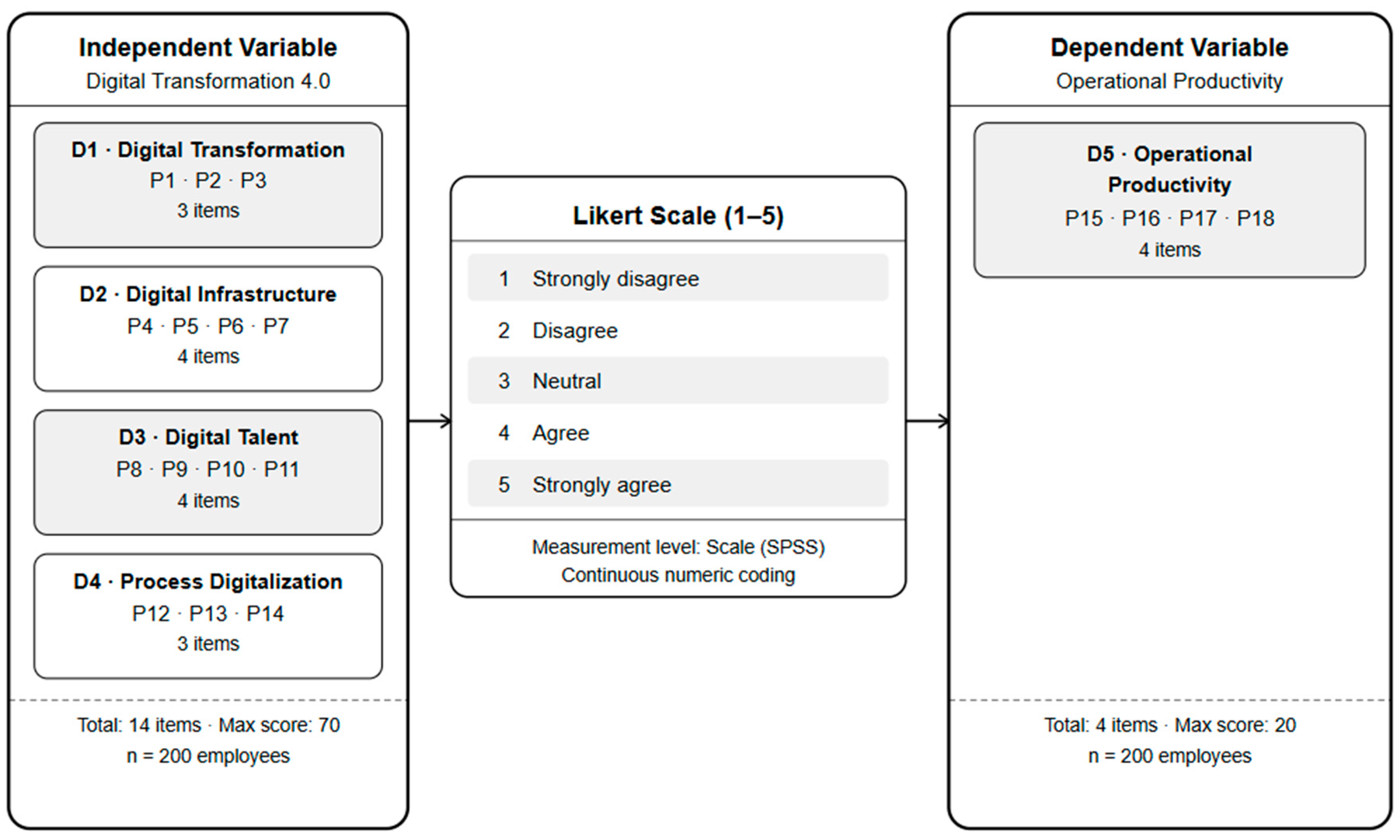
Based on the configuration described above, the following statistical techniques were applied to examine the nature and magnitude of the relationship between Digital Transformation 4.0 and Operational Productivity (
Figure 2).
First, descriptive statistics were calculated for the mean, median, mode, and standard deviation, with the purpose of characterizing the general behavior of the variables and obtaining a clear picture of both the central tendencies and the dispersion present in the collected responses (
Field, 2021).
Second, Pearson’s correlation coefficient was employed to determine the direction and strength of the linear relationship between the dimensions of Digital Transformation 4.0 and Operational Productivity. This coefficient is widely used in quantitative research when variables operate at the scale level of measurement and an approximately normal distribution is assumed (
Hernández-Sampieri & Mendoza, 2018).
Third, a simple linear regression was conducted to estimate the extent to which Digital Transformation 4.0 is capable of predicting the behavior of Operational Productivity, quantifying the proportion of variability in the dependent variable explained by the independent variable through the coefficient of determination R
2 (
F. Hair et al., 2022).
Finally, a multiple regression model was constructed to establish the individual and independent effect of each dimension of Digital Transformation 4.0 on Operational Productivity simultaneously, thereby enabling the identification of the predictors with the greatest relative weight within the model while controlling for the influence of the remaining variables included in the analysis. The selection of this statistical sequence (descriptive statistics, Pearson correlation, simple regression, and multiple regression) is consistent with established quantitative research practice in organizational management studies (
J. F. Hair et al., 2022;
Field, 2021). The non-experimental cross-sectional design was chosen because the study seeks to measure naturally occurring perceptions without intervention, at a single point in time, which is the standard approach for examining organizational phenomena such as technology adoption and performance (
Saunders et al., 2023). The use of Google Forms as the collection platform was justified by its accessibility, low cost, and suitability for reaching employees across multiple operational areas of a geographically concentrated industrial facility (
Creswell & Creswell, 2018). The choice of Pearson’s correlation is appropriate given that the composite scores derived from Likert scales, when aggregated across multiple items, acquire interval-level properties that satisfy the assumptions of parametric analysis (
Norman, 2010). Multiple regression was selected over alternative techniques because the study’s objective is to decompose the relative contribution of each dimension of digital transformation to operational productivity while controlling for inter-dimensional correlations, which is precisely the analytical function for which ordinary least squares regression is designed (
F. Hair et al., 2022).
3.6.6. Ethical Considerations
This research was conducted for strictly academic purposes within the framework of the Master of Business Administration (MBA) program with a specialization in Project Management. Accordingly, the information collected was used exclusively for the analysis of the impact of Digital Transformation 4.0 on the operational productivity of the Esmeraldas Refinery of EP PETROECUADOR.
Participation by survey respondents was entirely voluntary and anonymous. The data obtained were treated confidentially and in aggregated form, precluding any possibility of individual identification, and were not disclosed outside the academic context.
The integrity of the information was ensured at every stage of the research process, guaranteeing that the data collected were presented faithfully and objectively, without alterations or manipulations that could compromise the validity and reliability of the results obtained.
4. Results
4.1. Descriptive Statistics of the Analyzed Dimensions
The descriptive analysis was conducted on a sample of 200 employees of the Esmeraldas Refinery of EP PETROECUADOR, with no missing values recorded across any of the five dimensions evaluated: Digital Transformation, Digital Infrastructure, Digital Talent, Process Digitalization, and Operational Productivity. The completeness of the dataset ensures the consistency and reliability of the statistical results obtained.
Regarding the Digital Transformation dimension, a mean of M = 2.80 (SD = 0.437) was obtained, with a median of 3.00 and a mode of 3, placing respondents’ perceptions at a moderate level. The Digital Infrastructure dimension yielded M = 3.56 (SD = 0.685), with both a median and mode of 4, reflecting a favorable assessment of the availability of technological resources. Digital Talent recorded M = 3.45 (SD = 0.707), representing the dimension with the greatest dispersion in responses. The Process Digitalization dimension presented M = 2.85 (SD = 0.358) the lowest standard deviation in the set indicating homogeneity in respondents’ perceptions. Finally, Operational Productivity obtained the highest mean (M = 3.76; SD = 0.551), reflecting a favorable perception of operational performance. The complete descriptive statistics are presented in
Table 1.
4.2. Descriptive Statistics of the Main Study Variables
Table 2 presents the descriptive statistics for the two central variables of the study. The independent variable, Digital Transformation 4.0, yielded M = 4.34 (SD = 0.613), with values ranging from 3 to 5 on the composite scale (range 14–70), indicating a high total score of perceived digital transformation implementation across all four dimensions. The dependent variable, Operational Productivity, recorded M = 3.76 (SD = 0.551), with values ranging from 2 to 4 on the composite scale (range 4–20), reflecting a moderate-to-high perception of operational performance. The dependent variable, Operational Productivity, recorded M = 3.76 (SD = 0.551), with values ranging from 2 to 4, reflecting a moderate-to-high perception of operational performance. Both variables comprised 200 valid cases with no missing data.
4.3. Pearson Correlation Analysis
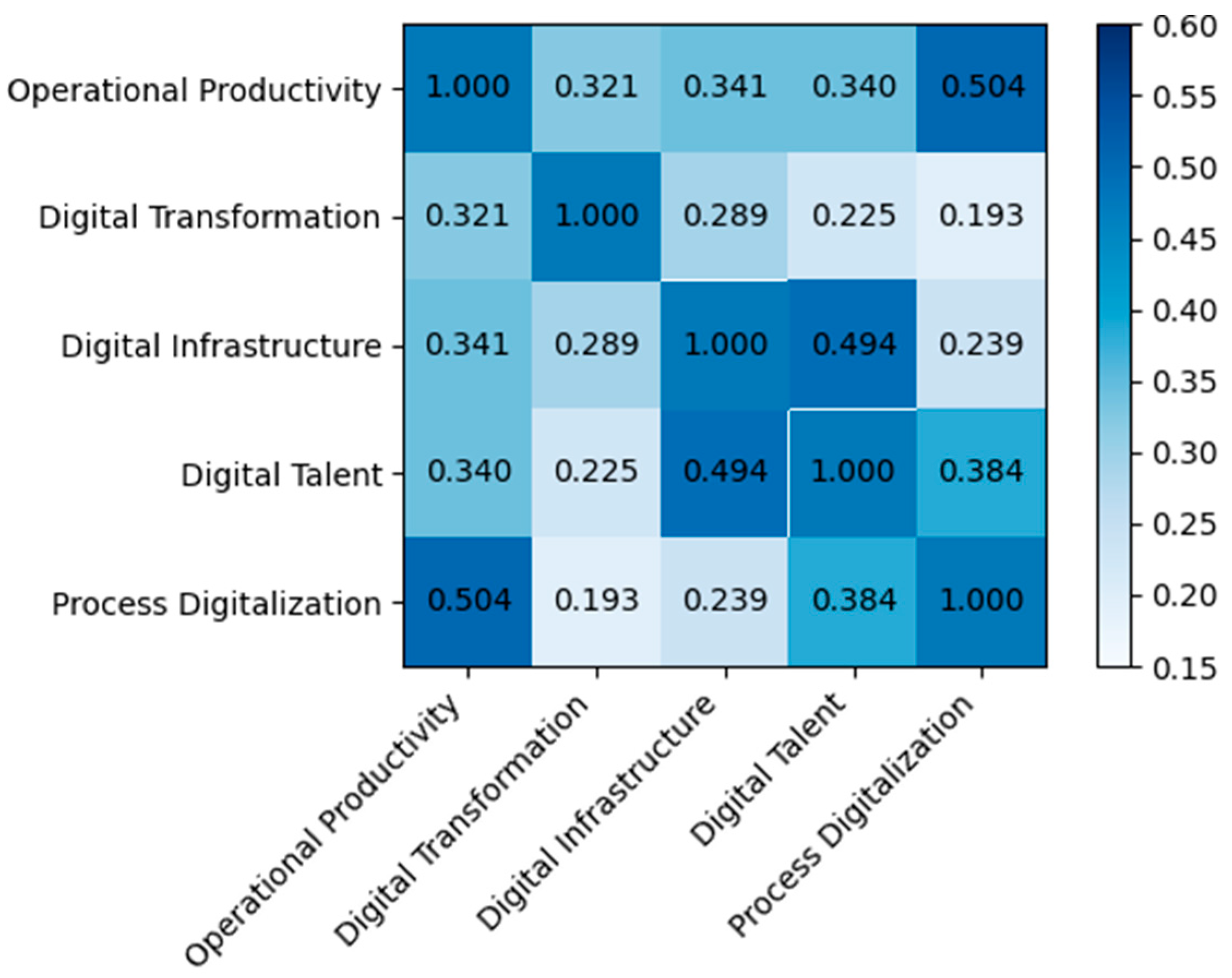
To examine the relationships between the dimensions of Digital Transformation 4.0 and Operational Productivity, a Pearson correlation analysis was conducted. The results are presented in
Table 3 and
Figure 3.
All dimensions of the independent variable exhibited positive and statistically significant correlations with Operational Productivity (p < 0.001). Process Digitalization recorded the highest correlation (r = 0.504), followed by Digital Infrastructure (r = 0.341), Digital Talent (r = 0.340), and Digital Transformation (r = 0.321). Likewise, the correlation between Digital Transformation 4.0 as a composite variable and Operational Productivity was significant (r = 0.347; p < 0.001).
4.4. Simple Linear Regression Model
To assess the predictive capacity of Digital Transformation 4.0 on Operational Productivity, a simple linear regression model was estimated. The model summary results are presented in
Table 4.
The model was statistically significant, F(1, 198) = 27.021, p < 0.001. The multiple correlation coefficient was R = 0.347, while the coefficient of determination R2 = 0.120 indicates that Digital Transformation 4.0 accounts for approximately 12% of the variability in Operational Productivity. The Durbin–Watson statistic (1.893) suggests the absence of autocorrelation in the residuals, supporting the statistical validity of the model.
The Durbin–Watson statistic evaluates one of the fundamental assumptions of the linear regression model: the independence of residuals. This index verifies that the prediction error associated with each observation is not influenced by the error of the preceding observation, a condition known as the absence of autocorrelation. Its range extends from 0 to 4, where values close to 2 indicate independence of errors, values approaching 0 signal positive autocorrelation, and values approaching 4 suggest negative autocorrelation. In the present study, the obtained value (DW = 1.893) falls within the acceptable range, confirming that the model’s residuals are independent of one another. This result implies that the responses of the 200 surveyed employees did not exhibit systematic patterns of sequential dependence, thereby ensuring that the model’s estimators are unbiased and efficient, and lending statistical robustness to the inferences drawn.
4.5. Multiple Regression Model
To determine the specific effect of each dimension of Digital Transformation 4.0 on Operational Productivity, a multiple regression model was estimated. The obtained coefficients are presented in
Table 5.
Process Digitalization exhibited the largest effect on the dependent variable (B = 0.626; β = 0.406; p < 0.001), constituting the predictor with the greatest relative weight in the model. The Digital Transformation (B = 0.230; β = 0.182; p = 0.003) and Digital Infrastructure (B = 0.129; β = 0.160; p = 0.021) dimensions also demonstrated positive and statistically significant effects. In contrast, the Digital Talent dimension did not yield a significant effect within the joint model (B = 0.050; β = 0.064; p = 0.368).
4.6. Summary of Main Findings
The results obtained allow for the identification of a set of empirically relevant findings for the case study at EP PETROECUADOR—Esmeraldas Refinery. The Digital Infrastructure (M = 3.56) and Digital Talent (M = 3.45) dimensions recorded the highest scores within the Digital Transformation 4.0 construct, while Digital Transformation (M = 2.80) and Process Digitalization (M = 2.85) exhibited moderate levels. The correlation analysis confirmed positive and significant relationships between all dimensions and Operational Productivity (p < 0.001), with Process Digitalization showing the strongest association (r = 0.504). The linear regression model demonstrated that Digital Transformation 4.0 accounts for 12% of the variance in Operational Productivity (R2 = 0.120; F = 27.021; p < 0.001). The multiple regression model identified Process Digitalization (β = 0.406), Digital Transformation (β = 0.182), and Digital Infrastructure (β = 0.160) as the predictors with significant effects, while Digital Talent did not yield a significant effect within the joint model (p = 0.368).
4.7. Cross-Analysis by Personal Attributes and Digital Transformation 4.0
The sample comprised respondents from four organizational areas: operations (38%), technical and engineering (27%), maintenance (22%), and administrative support (13%) with varying levels of tenure, educational background, and self-assessed digital proficiency. These demographic characteristics were treated as contextual descriptors of the sample, ensuring that results reflect perceptions from a diverse cross-section of the workforce with direct knowledge of operational processes and technology use.
With respect to digital proficiency, 44% of respondents reported intermediate proficiency, 31% advanced, and 25% basic. This distribution suggests that while a significant portion of the workforce possesses functional digital competencies, a considerable share remains at a basic level, which is consistent with the non-significant effect of Digital Talent in the multiple regression model (p = 0.368). Regarding educational level, 62% held undergraduate or technical degrees, 28% postgraduate qualifications, and 10% technical certifications a profile reflecting the technical–operational nature of the refinery’s workforce.
5. Discussion
The results obtained in the present study allow for a comprehensive interpretation of the relationship between Digital Transformation 4.0 and Operational Productivity at the Esmeraldas Refinery of EP PETROECUADOR. Based on the descriptive, correlational, and regression analyses applied to a sample of 200 employees, the evidence indicates that digital transformation exerts a positive and statistically significant influence on the organization’s operational performance, albeit with a moderate explanatory capacity (R2 = 0.120). This section discusses the significance of these findings in light of the recent scientific literature, identifying areas of convergence, divergence, and specific contributions emerging from the context under study.
5.1. Relationship Between Digital Transformation 4.0 and Operational Productivity
The Pearson correlation coefficient obtained between Digital Transformation 4.0 and Operational Productivity (
r = 0.347;
p < 0.001) confirms the existence of a positive and statistically significant association between both variables, a result consistent with the body of empirical evidence accumulated at the international level. In the domain of service and public utility companies, studies conducted in China have identified a favorable relationship between digital transformation and improvements in organizational performance, noting that this effect is channeled primarily through mechanisms linked to financial constraint and environmental performance (
D. Wang & Xia, 2024). In the context of manufacturing organizations, empirical studies have demonstrated that digital transformation strengthens business performance through three fundamental pathways: sales growth, reduction of production costs, and the promotion of differentiated innovation with effects that are particularly pronounced in larger firms (
Wei & Shen, 2025).
The value of R
2 = 0.120 indicates that Digital Transformation 4.0, considered as a global variable, accounts for 12% of the variance in Operational Productivity. This moderate explanatory capacity warrants explicit acknowledgment and justification, as raised in peer review. It is important to note that R
2 = 0.12 does not diminish the statistical or practical significance of the findings; rather, it reflects the inherent complexity of organizational productivity as a construct shaped by numerous factors beyond digital transformation alone, including human resource management, leadership quality, financial conditions, and operational culture. In studies conducted within complex public organizational contexts and emerging economies, moderate coefficients of determination are not only common but expected. Empirical research on digital transformation in emerging economies has shown that explanatory models analyzing the adoption and integration of digital innovations in organizations tend to yield moderate coefficients of determination. For instance, a study applied to small- and medium-sized service enterprises reported R
2 values of 0.116, 0.200, and 0.407 for different organizational variables associated with digital innovation integration, indicating that approximately 11% to 40% of the variation in these constructs is explained by factors such as IT infrastructure, digital innovation investment, and technological competencies (
Egala et al., 2024). The R
2 value obtained in this study (0.120) falls within the lower end of this documented range, which is consistent with the fact that Operational Productivity in a public industrial enterprise is a multidimensional construct shaped by a wide range of institutional, human, and operational variables beyond digital transformation alone. These include organizational culture, leadership commitment, budgetary constraints, and regulatory frameworks, factors that are not captured in the present model but are acknowledged as important avenues for future research incorporating mediating and moderating variables.
Likewise, studies on digital transformation and total factor productivity in firms have concluded that digital transformation exerts a significant influence on business productivity. The empirical evidence indicates that this effect operates primarily through the promotion of technological innovation, reflected in higher levels of investment in research and development, increased patent activity, and improvements in innovative efficiency. Furthermore, heterogeneity analyses suggest that the impact of digital transformation on productivity varies according to the nature of firm ownership, being particularly more pronounced in private enterprises compared to state-owned ones (
Lei & Wang, 2023). This finding is especially relevant to the case of EP PETROECUADOR a public enterprise whose digital transformation trajectory is shaped not only by technological factors, but also by the institutional framework of Ecuador’s public sector.
5.2. The Predominant Role of Process Digitalization
Among the most relevant findings of the study is that Process Digitalization constitutes the predictor with the greatest influence on Operational Productivity within the multiple regression model (
B = 0.626;
β = 0.406;
p < 0.001), followed by Digital Transformation (
B = 0.230;
p = 0.003) and Digital Infrastructure (
B = 0.129;
p = 0.021). This result is further reinforced by the Pearson correlation analysis, in which Process Digitalization also recorded the strongest association with Operational Productivity (
r = 0.504). These findings converge with recent research in the industrial sector, as studies applied to manufacturing firms have noted that digitalization has become an increasingly decisive factor in optimizing production processes and improving operational management with the role of digital transformation practices in operational improvement being one of the most widely discussed topics in the recent literature (
Tian et al., 2023).
From a broader perspective, a recent meta-analytic review examining the relationship between digital transformation and organizational performance found that, among the various forms of digitalization analyzed, the digitalization of business processes yields the most significant performance benefits, followed by improvements in data infrastructure, while technologies such as artificial intelligence only generate value when the organization possesses consolidated capabilities in supervision and institutional ethics (
Bindeeba et al., 2025). In this context, the oil industry acquires particular relevance, as refineries with high levels of Industry 4.0 implementation require a global database providing real-time information to support machine learning modules aimed at optimizing process control and productive efficiency (
Olaizola et al., 2022). Against this benchmark, the moderate perception of process digitalization recorded at the Esmeraldas Refinery (
M = 2.85) suggests that the institution remains in a transitional stage toward broader integration of digital systems into its operations.
Case studies in the global oil sector have documented that the adoption of digital twin technologies by leading operators has enabled significant improvements in asset reliability and maintenance efficiency, reducing downtime and optimizing production processes through the continuous analysis of performance indicators (
Sircar et al., 2023). These international experiences represent the horizon of possibilities toward which the Esmeraldas Refinery could aspire through the strategic deepening of its operational digitalization.
5.3. Digital Infrastructure and Digital Talent: Relative Strengths with Differentiated Implications
The Digital Infrastructure (M = 3.56; r = 0.341) and Digital Talent (M = 3.45; r = 0.340) dimensions yielded moderately favorable scores and significant correlations with Operational Productivity. These results indicate that the organization possesses relatively consolidated technological and human capabilities, which represent an enabling foundation for deepening the digital transformation process. Studies on digitalization in the oil and gas sector have highlighted that tools such as IoT devices, automated robotics, and digital twins enable operators to align their information technology and operational technology environments, improving business operations by integrating industrial protocols into unified platforms that ensure secure and reliable data connectivity (
Datta et al., 2023).
Nevertheless, the finding that Digital Talent was not statistically significant in the multiple regression model (
p = 0.368) warrants particular attention, as it suggests that in the presence of the other dimensions, its independent effect on operational productivity is attenuated. Research on the relationship between digital transformation and human talent management in the Latin American context has confirmed that the success of organizational digitalization processes depends largely on staff preparedness and attitude toward change, and that digital talent does not replace human capital but rather transforms it, though its impact on performance is more fully realized when it is articulated with systemic technological and organizational changes (
Maricahua et al., 2026). This implies that the digital competencies of Esmeraldas Refinery’s personnel hold productive potential, but that this potential will only be fully activated when supported by more advanced digitalization of operational processes and an integrative organizational strategy.
This interpretation is consistent with findings from the specialized literature on digital human capital. A recent systematic review on digital transformation and organizational performance measurement systems identifies the integration of digital technologies, organizational adaptation, and the development of human capabilities for managing digital environments as central themes. The results highlight that the effective leveraging of digital technologies requires aligning technological capabilities with human capital competencies and the organization’s strategic objectives, so that performance measurement systems become more flexible, dynamic, and oriented toward decision-making in digital contexts (
Cosa & Torelli, 2024). In the specific industrial domain, research on competency reskilling for the Industry 4.0 workforce has noted that the intelligent systems of this new industrial era require a shift in focus from automation toward intelligent human–machine collaboration, in which human capital development and continuous learning constitute the core of transformation (
Li, 2022).
5.4. Digital Transformation in Latin American Public Enterprises: A Context of Structural Challenges
The descriptive results reveal that the Digital Transformation dimension recorded the lowest mean among the analyzed dimension variables (M = 2.80), suggesting that strategic digitalization initiatives remain in a developmental stage within the organization. This situation reflects structural dynamics characteristic of the Latin American and Ecuadorian context. At the regional level, digital transformation responds not only to the modernization of the private sector, but also to the need to improve public management and reduce social disparities through the digitalization of essential services, although significant inequalities persist in access to technology and connectivity between rural and urban areas (
Ochoa-Romerroll, 2025).
In terms of digital government progress in the region, the OECD-IDB Digital Government Index for Latin America and the Caribbean 2023 revealed mixed and uneven progress in governmental digitalization efforts, with a regional average of 0.315 compared to the OECD average of 0.605. This reflects that, while countries in the region are advancing toward the digital transition, such progress remains significantly below the standard of developed nations (
OECD, 2024). In the specific case of Ecuador, although public policies such as the Ministry of Telecommunications’ Digital Transformation Policy 2022–2025 have established strategic foundations for advancing the development of the digital economy, structural gaps in digital infrastructure, innovation investment, and technological capabilities continue to limit the full realization of digital transformation’s potential in the country (
Morocho, 2025).
This evidence contextualizes the findings of the present study and suggests that the moderate levels of strategic digital transformation identified at the Esmeraldas Refinery do not represent a phenomenon particular to the institution, but rather reflect broader trends that characterize the Ecuadorian institutional environment as a whole. Additionally, research on the opportunities and challenges of digital transformation in Ecuador’s public sector has identified that the implementation of digital technologies in governmental organizations faces barriers related to existing infrastructure, organizational culture, and staff capabilities, requiring comprehensive strategies that articulate technological, human, and institutional dimensions (
Villao et al., 2023). This perspective reinforces the interpretation that the results of the present study are not only relevant to the Esmeraldas Refinery, but also provide empirical evidence applicable to the management of digital transformation across Ecuador’s public sector as a whole.
5.5. Implications for the Hydrocarbons Sector
The present study provides empirical evidence on the effects of Digital Transformation 4.0 in a public enterprise operating within the energy sector, a field with particular operational characteristics that condition both the pace and the depth of digital adoption. The hydrocarbons industry considers a wide range of digital technologies to improve the productivity, efficiency, and safety of its operations while minimizing capital costs and risks, with digital twin modeling serving as the foundation for the next generation of real-time production monitoring and optimization systems that integrate information, simulation, and visualization across the entire operational value chain (
Sircar et al., 2023).
The fact that Operational Productivity at the Esmeraldas Refinery recorded the highest mean in the model (M = 3.76), despite moderate levels of strategic digitalization, could be interpreted as indicative of the fact that current operational processes maintain acceptable performance on the basis of the existing technological infrastructure but that such performance could be substantially accelerated through deeper integration of Industry 4.0 technologies. Studies on the Refinery 4.0 paradigm have documented that, while the path toward data-driven refinery operations may be demanding, the benefits of exploiting data from a holistic perspective can far outweigh the costs, with the main areas of investment being advanced process control, data analytics, IoT tools, and operational cybersecurity (
Olaizola et al., 2022).
At the global level, the digitalization process in the oil and gas sector encounters systemic barriers that far exceed the mere availability of technology, underscoring the fact that the underlying challenges are organizational, cultural, and institutional in nature. Refineries are regarded as critical infrastructures in which, for reasons of safety and operational costs, the options for conducting experiments within production systems are highly limited, making these environments more evolutionary than revolutionary in their approach to technological innovation, adopting change in a gradual and incremental manner (
Sircar et al., 2023). This allows for the conclusion that the results recorded at the Esmeraldas Refinery are not isolated from a generalized trend within the sector, where the gap between the incorporation of technology and its effective integration into operations remains significant and demands planned, sustained, and organizationally tailored digital transformation strategies.
5.6. Theoretical and Practical Implications
From a theoretical perspective, the findings of this study enrich the literature on digital transformation in emerging economies by providing concrete empirical evidence of the link between Industry 4.0 dimensions and operational productivity in a public enterprise belonging to a strategic sector. Digital transformation, understood from an organizational standpoint, enables firms to improve their performance through process optimization, cost reduction, and the strengthening of innovative capabilities. The incorporation of digital technologies facilitates access to more accurate information for decision-making, improves operational performance, and promotes the development of new technological competencies that benefit both organizational functioning and long-term competitiveness (
D. Wang & Xia, 2024). The findings of the present study are fully consistent with this framework, confirming that process digitalization, understood as the systematic use of technology in operations, exerts a considerable influence on productivity, thereby supporting the notion that such improvements contribute to generating organizational capabilities that are difficult to replicate.
From a practical standpoint, the empirical results of this study offer evidence-based guidance for the management of EP PETROECUADOR. First, given that Process Digitalization was the strongest predictor of Operational Productivity (β = 0.406;
p < 0.001), investment priorities should focus on deepening the automation of operational workflows, integrating real-time monitoring systems, and reducing manual execution times in refinery processes. These are not generic recommendations, but derive directly from the strongest statistical effect identified in the regression model. Second, since Digital Infrastructure recorded the second significant effect (β = 0.160;
p = 0.021) and the most favorable mean score among all dimensions (M = 3.56), the organization should consolidate and build upon its existing technological foundation by ensuring systems interoperability and data accessibility across operational units. Third, while Digital Talent showed a positive bivariate correlation with productivity, its non-significant effect in the joint model (
p = 0.368) suggests that staff digital competencies are currently not being fully leveraged, a finding that points to the need for an integrative strategy that links training programs directly to operational digitalization initiatives rather than treating them in isolation. Finally, given that overall Digital Transformation at the strategic level recorded the lowest mean in the model (M = 2.80), institutional leadership should prioritize formalizing a digital transformation roadmap aligned with EP PETROECUADOR’s strategic objectives. These recommendations are consistent with evidence from Latin America and the Caribbean indicating that digitalization contributes to improving processes, reducing costs, and increasing operational transparency, while demanding careful management of risks such as technological dependency and cybersecurity (
Ochoa-Romerroll, 2025;
Rupeika-Apoga et al., 2022). Advancing toward deeper digital transformation in the public sector depends not solely on technological investment, but on a comprehensive institutional approach, as demonstrated by research concluding that gradual and sustained changes generate far-reaching transformations both within organizations and across society (
Haug et al., 2024).
This set of considerations is directly applicable to the case of the Esmeraldas Refinery, where Digital Transformation 4.0 retains considerable scope to continue positively impacting operational productivity. While its potential has not yet been fully realized, the organization possesses solid foundations in technological infrastructure and human capital that constitute a favorable point of departure for advancing toward more mature stages of digitalization.
6. Conclusions
The diagnostic results obtained at the Esmeraldas Refinery indicate that the organization is transitioning toward digitalization, where favorable aspects such as a relatively developed technological infrastructure (M = 3.56) and a workforce with digital competencies (M = 3.45) coexist with areas that still require attention, particularly digital transformation at the strategic level (M = 2.80) and the digitalization of internal processes (M = 2.85). This reflects the fact that the available resources, both technological and human, have yet to be articulated under a common strategic direction that would allow them to translate into concrete and sustainable improvements in operational performance, leaving open a significant window of opportunity should the institution decide to channel these capabilities toward well-defined transformation goals.
The statistical results obtained corroborate that Digital Transformation 4.0 exerts a positive and significant influence on Operational Productivity (r = 0.347; p < 0.001; R2 = 0.120), and that among the dimensions analyzed, Process Digitalization emerges as the predictor with the greatest weight in the model (β = 0.406; p < 0.001). This suggests that advancing toward deeper automation and more coherent integration of digital systems into day-to-day operations constitutes the most effective pathway for elevating the refinery’s operational performance, an orientation that should be reflected in institutional decision-making when defining investment priorities and technological planning.
The study provides quantitative empirical evidence that enriches the literature on digital transformation in public enterprises within emerging economies, confirming that the impact of Industry 4.0 on productivity is most effectively realized when technological, infrastructural, and talent dimensions are systemically articulated. At the practical level, the results offer EP PETROECUADOR’s leadership evidence-based strategic guidance for prioritizing process digitalization as the central axis of its digital transformation roadmap.