Article

Reframing Student–Institution Distrust in Higher Education: Antecedents, Mechanisms, and Outcomes Across Business Administration and Tourism Programs


1
Department of Business Administration, College of Science and Humanities, Shaqra University, Dawadmi 17452, Saudi Arabia
2
Department of Hotel Studies, Faculty of Tourism and Hotels, Fayoum University, Fayoum 63514, Egypt
3
Department of Social Studies, College of Arts, King Faisal University, Al-Ahsa 31982, Saudi Arabia
*
Authors to whom correspondence should be addressed.
Adm. Sci. 2026, 16(4), 177; https://doi.org/10.3390/admsci16040177
Submission received: 8 February 2026 / Revised: 24 March 2026 / Accepted: 2 April 2026 / Published: 7 April 2026

Abstract

This study examines the development and consequences of student–institution distrust (SID) in higher education. While prior research has predominantly focused on trust, limited attention has been given to distrust as a distinct psychological construct influencing student experiences. Guided by Institutional Logics Theory, the study investigates how perceived institutional practices, institutional support, and cost–value (ROI) perceptions shape SID and how distrust influences sense of belonging, academic engagement, and help-seeking intentions. Data were collected from 600 undergraduate students enrolled in Business Administration and Tourism programs at public universities in Saudi Arabia. Multi-Group Structural Equation Modeling (MG-SEM) was employed to examine the proposed relationships and the moderating role of academic discipline. The results indicate that institutional practices, perceived support, and ROI perceptions significantly predict student–institution distrust. In turn, distrust exerts significant negative effects on students’ sense of belonging, academic engagement, and help-seeking intentions, confirming the theorized detrimental role of distrust in shaping student outcomes. The findings further reveal that academic discipline strengthens the negative impact of distrust on student outcomes, with stronger effects observed among Tourism students. By conceptualizing distrust as a multidimensional construct rather than simply the absence of trust, this study contributes to the literature on student–institution relationships and provides practical insights for designing transparent and supportive institutional environments that reduce distrust and enhance student engagement.

1. Introduction

Public trust in higher education institutions has declined markedly over the past decade, as students, families, and broader society increasingly question universities’ ability to deliver affordable, high-quality education aligned with labor market demands (Aksom, 2022). This erosion of trust has coincided with the expansion of institutional monitoring systems, including standardized testing, student tracking tools, and performance evaluation mechanisms (Sinha & Akoorie, 2010; Lee et al., 2013). While such systems are designed to enhance accountability, quality assurance, and institutional integrity, they may simultaneously foster environments in which students feel subject to surveillance and control, rather than support (Duncombe, 2018). As a result, institutional efforts to improve transparency and performance may paradoxically contribute to growing skepticism and critical scrutiny among students.
Existing research in higher education has largely focused on student trust, examining how perceptions of institutional competence, fairness, and benevolence contribute to positive academic outcomes (Hosain & Mustafi, 2025). However, considerably less attention has been devoted to student–institution distrust as a distinct construct. Emerging evidence suggests that distrust is not merely the absence of trust but represents a qualitatively different psychological state characterized by suspicion, defensive vigilance, and the attribution of potentially harmful intent (Lewicki et al., 1998; Korseberg & Elken, 2025). Whereas low trust reflects uncertainty or a lack of confidence, distrust involves an active expectation that institutional actions may be misaligned with students’ interests. This distinction is critical, as distrust is more likely to trigger protective responses, including disengagement, withdrawal, and avoidance behaviors (Bies et al., 1996; Kimengsi et al., 2025).
The contemporary university context further amplifies these dynamics. Technologies such as plagiarism detection systems, online proctoring, and learning analytics dashboards have become standard components of academic operations (Barker et al., 2025). Although these tools are officially framed as mechanisms to support learning and maintain academic integrity, students often perceive them as intrusive, particularly when transparency regarding data use and decision-making processes is limited. Perceived inconsistencies in institutional practices, lack of procedural fairness, and unclear communication can intensify students’ evaluative scrutiny, thereby contributing to the formation of distrust (Kau et al., 2025). At the same time, institutions aim to cultivate supportive environments that promote student well-being and success through accessible resources, transparent communication, and equitable treatment (Smith et al., 2025). Understanding how students interpret these potentially conflicting signals remains a critical challenge.
Institutional Logics Theory (ILT) provides a valuable framework for examining these processes. According to ILT, individuals interpret organizational actions through socially constructed belief systems that shape how institutional signals are perceived, evaluated, and acted upon (Jeong, 2025). In the higher education context, academic disciplines represent distinct institutional logics that influence students’ expectations, values, and interpretations of university practices (Latusek & Cook, 2025). For example, business administration programs often reflect market-oriented logics emphasizing efficiency, competitiveness, and performance measurement (Silver et al., 2025), which may normalize monitoring practices as legitimate and necessary. In contrast, tourism and hospitality programs are more closely aligned with service-professional logics that prioritize relational interaction, experiential learning, and human-centered engagement (Matheka et al., 2025). These differences suggest that students’ responses to institutional practices—and their propensity to develop distrust—may vary systematically across disciplinary contexts.
Importantly, distrust has significant implications for key student outcomes. Prior research indicates that students’ sense of belonging, academic engagement, and willingness to seek help are strongly influenced by their perceptions of institutional fairness and support (Pan et al., 2023; Derakhshan & Yin, 2025). When students perceive institutional actions as inconsistent, opaque, or misaligned with their expectations, their sense of inclusion and attachment to the academic community may weaken. This, in turn, can reduce motivation, limit participation, and discourage engagement with institutional support services (Calcatin et al., 2022). In this sense, distrust functions as a psychological mechanism that translates institutional conditions into behavioral and relational outcomes.
Despite growing recognition of trust-related issues in higher education, significant gaps remain. First, student–institution distrust has rarely been examined as a multidimensional construct distinct from low trust, particularly within empirical models that capture its antecedents and consequences. Second, limited research has explored how institutional factors—such as perceived practices, support, and return on investment (ROI)—jointly shape the emergence of distrust. Third, the role of disciplinary context as a boundary condition influencing how distrust develops and operates remains underexplored. Finally, there is a lack of validated measurement instruments specifically designed to capture student–institution distrust in contemporary higher education settings.
To address these gaps, the present study develops and validates a Student–Institution Distrust (SID) scale and proposes a theoretically grounded model linking institutional antecedents to student outcomes through distrust as a central mechanism. Specifically, the study examines how institutional practices (IP), perceived institutional support (IS), and ROI perceptions influence SID, and how SID, in turn, affects sense of belonging (SB), academic engagement (AE), and help-seeking intentions (HS). Furthermore, drawing on Institutional Logics Theory, the study investigates the moderating role of academic discipline (Business Administration vs. Tourism) in shaping the relationship between distrust and its outcomes.
This research contributes to literature in three important ways. First, it advances the conceptualization of student–institution distrust by establishing it as a distinct, multidimensional construct characterized by active suspicion and defensive evaluation, rather than a simple absence of trust. Second, it integrates Institutional Logics Theory into a mechanism-based framework, demonstrating how disciplinary contexts condition students’ interpretations and responses to institutional signals. Third, it provides empirical validation of a parsimonious model that connects institutional conditions to student outcomes through distrust, supported by a newly developed measurement scale.
Overall, the study offers a comprehensive and theoretically grounded understanding of how distrust emerges and operates within higher education, highlighting its critical role in shaping student experiences and institutional effectiveness.

2. Theoretical Framework

2.1. Institutional Logics Theory (ILT)

The research uses institutional logics theory (ILT) to show how students at the university interpret institutional practices through the normative and cognitive frameworks which exist in their academic disciplines (Risi et al., 2023). Disciplinary logics function as interpretive schemas and normative filters which shape student evaluations of organizational behavior, authority structures, and institutional intentions. For example, Business Administration students interpret monitoring systems and performance metrics through a market-oriented logic which emphasizes efficiency and accountability (Bitektine & Song, 2023). In contrast, students in Tourism and Hospitality programs interpret similar practices through a service-professional logic which places greater emphasis on relational interaction and professional judgment. The disciplinary lenses that students use to view institutional signals result in different interpretations, which determine whether trust or skepticism or distrust toward the institution develops (Dudka et al., 2023). In the context of distrust, these disciplinary logics act as cognitive filters that can amplify or mitigate the perception of malevolent intent. For instance, a service-professional logic may lead students to interpret surveillance as a direct violation of the relational contract, thereby fueling active suspicion and defensive vigilance (Lewicki et al., 1998).
To function as an explanatory engine, ILT provides a three-stage mechanism—perception, evaluation, and response—that translates institutional signals into student outcomes (Bitektine & Haack, 2015).
First, disciplinary logics shape “selective attention” (Perception), directing students toward specific institutional signals. For Business Administration students, the “Market Logic” prioritizes signals related to efficiency, performance metrics, and ROI. Conversely, Tourism and Hospitality students, guided by a “Service-Professional Logic,” are more attuned to relational signals, integrity, and the quality of interpersonal support (Bitektine & Song, 2023).
Second, these logics provide the normative criteria for “Cognitive Processing” (Evaluation). When an institution implements monitoring or surveillance systems, a business student may evaluate this as a standard, albeit intrusive, tool for accountability within a market-driven environment. However, a Tourism student may evaluate the same signal as a fundamental violation of the relational trust and professional autonomy inherent in their service-oriented logic. This evaluation process determines whether a signal is perceived as a legitimate administrative practice or a malevolent intent, thereby triggering active suspicion and distrust (Lewicki et al., 1998).
Third, the resulting distrust leads to a “Behavioral Manifestation” (Response). Students who evaluate institutional signals as threatening to their disciplinary identity adopt defensive postures, such as reduced academic engagement or avoidance of help-seeking, as a risk-mitigation strategy (Bies et al., 1996). By articulating this perception–evaluation-response path, ILT moves beyond a contextual background to explain the causal mechanism through which disciplinary contexts drive the formation and behavioral consequences of student–institution distrust.
Theoretical framework of ILT shows how social actors interpret organizational practices through field-specific normative and cognitive schemas that guide attention, evaluation, and action (Cai & Mountford, 2022; Risi et al., 2023). Rather than serving as a descriptive backdrop, ILT is mobilized in this study as a causal mechanism linking institutional signals to student outcomes. Specifically, disciplinary logics determine (1) which signals are attended to, (2) how these signals are normatively evaluated, and (3) how individuals behaviorally respond under conditions of perceived institutional risk or harm. This mechanism is particularly critical in explaining distrust, as it clarifies why similar institutional practices may trigger divergent psychological and behavioral responses across disciplinary contexts.
The market-oriented logic of Business programs and the service-professional logic of Tourism programs establish different evaluative frameworks which students use to assess institutional actions through their respective disciplinary logics in higher education (Bitektine & Song, 2023). The logic determines whether students perceive doubt as valid critical inquiry or as damaging distrust which results in forming distrust (Dudka et al., 2023). Akmal et al. (2022) investigated how institutional contexts reshape student distrust through disciplinary narratives by comparing Business and Tourism student reactions.
Drawing on ILT, institutional signals that are perceived as fair, transparent, and supportive are expected to reduce uncertainty and distrust, whereas signals indicating inconsistency, opacity, or poor value are expected to increase distrust. In turn, elevated distrust is theorized to undermine students’ sense of belonging, reduce academic engagement, and discourage help-seeking behaviors.

2.2. Perceived Institutional Practices (IP)

Perceived institutional practices (IP) refer to students’ evaluations of how universities design and implement rules, monitoring systems, and decision-making procedures that shape everyday academic life (Lin & Sheu, 2012). The distinction between perceived institutional practices and student–institution distrust needs to be understood. Students establish their perceptions of institutional practices through their assessment of how institutions execute their operational procedures and policy implementation according to standards of equity and transparency and accountability. Institutional distrust develops when people experience a psychological state that leads them to doubt institutional motives. The state of distrust constitutes an individual mental state which develops through their process of suspecting institutions and predicting their harmful actions. The way students understand institutional conduct depends on institutional practices, which serve as their initial guiding factors while distrust functions as the resulting evaluative response (Bilimoria et al., 2006).
In contemporary higher education, practices such as surveillance technologies, learning analytics, and standardized assessment procedures are intended to enhance accountability and integrity, yet they may also signal suspicion and control (Delmas & Toffel, 2004). Students’ interpretations of these practices depend heavily on whether they are perceived as fair, transparent, and supportive rather than punitive (Galleli & Amaral, 2026). When institutional procedures are experienced as opaque or inconsistent, students are more likely to question institutional intentions and develop negative expectations. Thus, perceived institutional practices represent a central antecedent shaping students’ trust or distrust toward their institutions (Bilimoria et al., 2006).

2.3. Perceived Institutional Support (IS)

The term perceived institutional support (IS) describes students’ understanding that their university values their contributions and shows genuine concern for their academic success and wellbeing (Hamzah et al., 2025). Students who see strong institutional support tend to view institutional actions as protective and developmental instead of controlling their behavior (Aksom et al., 2025). Supportive environments show students that the institution acts as a partner who helps them learn, which decreases their experience of feeling vulnerable (J. Jones & Murray, 2026). Students who perceive low support from their institution will tend to believe that institutional practices have hidden negative intents. Students assess their institutional relationship through their perception of institutional support because it serves as a vital element in their evaluation process (Bayanbayeva, 2026).

2.4. Cost–Value (ROI) Perceptions

Cost–value (ROI) perceptions refer to students’ assessments of whether their higher education investments, through money, time and effort, work out because they expect to gain certain benefits from their studies (Batacan & McGregor, 2025). Students who perceive their education as offering strong value for money are more likely to view their institution as legitimate and well-intentioned (Smith et al., 2025). The uncertainty about costs combined with doubts about graduate job prospects and the connection between studies and professional work leads students to question why schools operate their programs (Dong et al., 2025). When students question whether universities prioritize revenue over educational quality, distrust may increase (Rodriguez Brindis, 2025). The students use cost–value perceptions as their primary economic framework to analyze how institutions behave (Guo et al., 2025).

2.5. Student–Institution Distrust (SID)

The student–institution distrust (SID) relationship describes a psychological condition where students develop negative assumptions about their institution’s goals and expect to face harm and exploitation and unfair treatment (Liu et al., 2025). The state of distrust requires people to keep watch over their surroundings because they suspect others will show suspicious behavior and make defensive moves against institutional activities (Latusek & Cook, 2025). The students who experience distrustful feelings will watch how institutions operate while they doubt the legitimacy of institutional policies and decisions (Jeong, 2025). People develop this state through multiple negative experiences combined with their belief that the institution is untrustworthy. The SID relationship exists as an independent construct which contains multiple dimensions that apply to college student environments (Barańska-Szmitko et al., 2025). Importantly, the SID construct is conceptualized and measured as a distinct psychological state characterized by suspicion, perceived vulnerability, and negative expectations toward institutional intentions, rather than merely representing the absence of trust. The inclusion of both positively and negatively worded items, after proper coding alignment, strengthens the construct’s ability to capture this multidimensional nature.
The foundational distrust literature (e.g., Lewicki et al., 1998; Bies et al., 1996) emphasized that trust and distrust are not opposite ends of a single continuum but are functionally distinct constructs governed by different psychological mechanisms. While trust is built on positive expectations of benevolence and competence, distrust is fueled by perceived violations of integrity and the fear of harm. Specifically, distrust involves “active suspicion,” where individuals proactively look for evidence of betrayal, and “defensive vigilance,” a high-alert state aimed at protecting oneself from anticipated institutional harm. By conceptualizing SID through these mechanisms, we provide a more robust theoretical foundation for understanding how institutional practices—such as intrusive surveillance—can trigger a proactive, negative psychological state that goes beyond a mere lack of trust.

2.6. Sense of Belonging (SB)

The students’ educational environment fostered their sense of belonging (SB), which made them feel accepted and valued as part of their academic community (Hagerty et al., 1992; Hagerty & Patusky, 1995). Students who possess a strong SB demonstrate increased emotional attachment to their institution which drives their active participation in educational activities (X. Ma, 2003). Students who experience exclusion or marginalization perceive their relationship with the institution as less important and their dedication as diminished. Experiences of distrust create obstacles to belonging because they demonstrate to students that they lack proper respect and recognition as authentic members of the institution (Wilson et al., 2025). The psychological mechanism of belonging exists as a fundamental link that connects institutional experiences with academic behavior patterns (Urrila et al., 2025).

2.7. Discipline as a Moderator

The term discipline describes the academic area that student’s study, together with its established standards and principles and its methods of thinking, which shape their understanding of institutional procedures (Yue et al., 2025). Different disciplines teach students different logical systems which determine their approach to assessing rules and monitoring and authority figures (Firman et al., 2025). Business Administration programs usually prioritize market-based principles which include efficiency and competition and performance measurement (Y. Zhao et al., 2025). The Tourism and Hospitality programs focus on service professionalism and experience-based learning and developing critical thinking skills (Hu et al., 2025). The institutional actions students observe become their basis for understanding institutional events while their institutional trust develops through this process (Hariyasasti, 2025).

2.8. Academic Engagement (AE)

Students show academic engagement (AE) through their three types of learning activities which include their behavioral and cognitive and emotional engagement (Meng & Zhang, 2023). Students who are engaged in their learning activities show their commitment through their active participation in class and their dedication to studying and their ability to overcome academic difficulties (Acosta-Gonzaga, 2023). Students at educational institutions which provide equitable treatment and institutional backing and create friendly relationships experience greater levels of student engagement (Q. Ma & Wang, 2022). Students who lack trust in their educational institution will show decreased motivation to complete their academic responsibilities (Wang & Xue, 2024). Students who perceive their institutional relationship will experience changes in their AE, which serves as a key outcome of their perception (Chen et al., 2023; Wang & Kruk, 2024).

2.9. Help-Seeking Intentions (HS)

Students who need assistance with their studies or personal challenges will approach faculty members and advisors and institutional help centers when they need help (R. Zhao et al., 2025). Students who plan to request assistance see institutional staff members as reliable sources of help (Nazari et al., 2023). Students who lack trust in others will not seek assistance because they believe their situation will lead to negative treatment and judgment (Dagani et al., 2023). Students who help-seek less will face difficulties because they cannot access essential resources and guidance which they need for academic achievement. Students who have distrust toward the institution will demonstrate help-seeking intentions as their main behavior pattern (Nguyen et al., 2025).

2.10. Integrative Theoretical Framework

Building on ILT, the present study develops a parsimonious framework in which perceived institutional practices (IP), institutional support (IS), and cost–value (ROI) perceptions function as antecedent signals shaping the emergence of student–institution distrust (SID). Consistent with distrust theory, SID is conceptualized as a proactive psychological state characterized by suspicion and defensive vigilance (Lewicki et al., 1998; Bies et al., 1996), which subsequently undermines key student outcomes, including sense of belonging (SB), academic engagement (AE), and help-seeking intentions (HS).
Importantly, academic discipline is theorized as a boundary condition that moderates the translation of distrust into outcomes (rather than its initial formation). This positioning reflects ILT’s core assumption that institutional logics primarily shape evaluative and behavioral responses, thereby justifying a more parsimonious and theoretically grounded moderation structure.
How students interpret and respond to signals, norms, and value propositions embedded in their universities is clearly robustly explained by ILT. From this perspective, perceived IS and IP represent the visible enactment of dominant institutional logics that communicate what the institution prioritizes, how it allocates resources, and the extent to which it honors reciprocal expectations with its stakeholders. When these signals are perceived as consistent, fair, and value-enhancing, they reinforce legitimacy and reduce uncertainty, thereby lowering the likelihood of SID. Conversely, misalignment between promised value (e.g., ROI) and lived experience can trigger legitimacy gaps that foster distrust and weaken relational bonds. This theory further suggests that such distrust reshapes students’ interpretations of their role within the institution, undermining their SB, willingness to engage academically, and readiness to seek support. Because disciplinary contexts embody distinct professional norms, identity cues, and career narratives, the strength of these relationships is expected to vary across fields, with disciplinary logics conditioning how students interpret institutional actions and, consequently, how distrust translates into attitudinal and behavioral outcomes.

2.11. Research Hypotheses

2.11.1. Perceived IP and SID

Perceived institutional practices (IPs) function as salient institutional signals that shape students’ interpretations of organizational intent. When such practices are perceived as opaque, inconsistent, or overly controlling, they violate expectations of procedural fairness and legitimacy, thereby triggering active suspicion and distrust (Lewicka, 2022; Lessa & Coelho, 2024). From an ILT perspective, these signals are cognitively processed through discipline-specific schemas, but their initial perception as institutional cues remains largely organization-wide. Accordingly, negative evaluations of institutional practices are expected to increase student–institution distrust (Fu et al., 2023).
H1. 
Perceived IP negatively affects SID.

2.11.2. Perceived IS and SID

The second heading states that institutional support which students perceive will create a negative link between their distrust of institutions and their interaction with educational institutions (Calderone & Fosnacht, 2023). Students who believe their institution cares about their success and wellbeing are more likely to interpret policies as protective rather than punitive. Perceived support signals benevolence and positive intent from the institution (Fu et al., 2023). This perception reduces feelings of vulnerability and defensiveness. The absence of institutional support leads people to develop negative beliefs about institutional intentions. Higher institutional support which students perceive should lead to lower levels of student distrust toward their educational institutions (Jeilani & Abubakar, 2025).
H2. 
Perceived IS negatively affects SID.

2.11.3. Cost–Value (ROI) Perceptions and SID

When students believe that the financial and personal costs of education outweigh its benefits, they begin to doubt the priorities which institutions choose to follow. Students who attend universities believe that the institutions exist to generate revenue, a practice which leads to students receiving their maximum educational experience (Ali et al., 2024). The institutions create suspicion through their actions because they do not reveal their actual intentions to the students. The expectations which students form about exploitation and unfair treatment create their hazardous educational environment (Amado et al., 2023). Students will develop distrust toward their educational institutions when they perceive cost-value relationships to be unfavorable (Fitriani, 2024, Dağaşaner & Karaatmaca, 2025).
H3. 
Cost–Value (ROI) perceptions negatively affect SID.

2.11.4. SID and SB

Students develop distrust toward their institution because they believe the institution does not value their existence (Liu et al., 2025). The perception creates an environment which disrupts people from feeling they belong to the academic community (Wang & Xue, 2024). Students who expect harmful or unfair treatment are less likely to feel connected to their university (Lewicka, 2022). When people lose their emotional connection to an institution their identification with that institution decreases. The increased distrust that people experience will lead to a decrease in their experience of belonging to their community (Amado et al., 2023).
H4. 
SID negatively affects SB.

2.11.5. SID and AE

Distrusting students are less likely to invest effort in learning activities (C. S. Jones & Sweeney, 2025). Vigilance and suspicion redirect cognitive and emotional resources away from academic tasks (Snijders et al., 2022). Students may also question the legitimacy of instructional and assessment practices. This reduces motivation to participate actively in coursework (Thomas et al., 2025). Therefore, student–institution distrust is expected to lower academic engagement (C. S. Jones & Sweeney, 2025).
H5. 
SID negatively affects AE.

2.11.6. SID and HS Intentions

Students who distrust their institution will develop a need to protect themselves from being judged when they contact others in their academic community (Brown, 2022). The existing fears interfere with students because they want to contact faculty and support services (Slowiak et al., 2024). Students who distrust the institution will develop difficulties believing institutional agents can provide them with trustworthy assistance (Maginot, 2024). Students will increase their dependence on their abilities while avoiding formal help. Higher distrust will create a negative impact on students who need to ask for help from others (Jenkins, 2024).
H6. 
SID negatively affects HS intentions.

2.11.7. SID and SB Is Moderated by Discipline

Drawing on ILT, disciplinary logics shape how students interpret and respond to distrust once it has been formed. In service-professional logics (Tourism and Hospitality), relational integrity and interpersonal trust constitute central normative expectations. Consequently, perceived violations—manifested as distrust—are more likely to be interpreted as identity-threatening, leading to stronger reductions in belonging. In contrast, market-oriented logics (Business Administration) normalize performance monitoring and institutional control, thereby buffering the relational consequences of distrust.
H7a. 
The negative relationship between SID and SB is moderated by Discipline, such that Tourism students will experience a stronger decline in their sense of belonging with increasing distrust compared to Business Administration students.

2.11.8. SID and AE Is Moderated by Discipline

Following the same logic, distrust is expected to differentially affect academic engagement across disciplines. In service-oriented contexts, where engagement is relationally embedded, distrust disrupts motivational and emotional investment more strongly. Conversely, in market-oriented contexts, engagement may be sustained through instrumental or performance-driven motives despite distrust.
H7b. 
SID and AE is moderated by Discipline, where Business Administration students exhibit a less pronounced decrease in academic engagement under distrust compared to Tourism students.

2.11.9. The Effect of SID on HS Intentions

Help-seeking behavior is particularly sensitive to perceptions of relational safety. Under a service-professional logic, distrust directly undermines willingness to seek support due to heightened sensitivity to relational risk. In contrast, students operating under market logic may rely more on self-directed coping strategies, reducing the behavioral impact of distrust.
H7c. 
Discipline moderates the negative effect of SID on HS Intentions, with Tourism students showing a greater reduction in HS as distrust increases relative to Business Administration students.
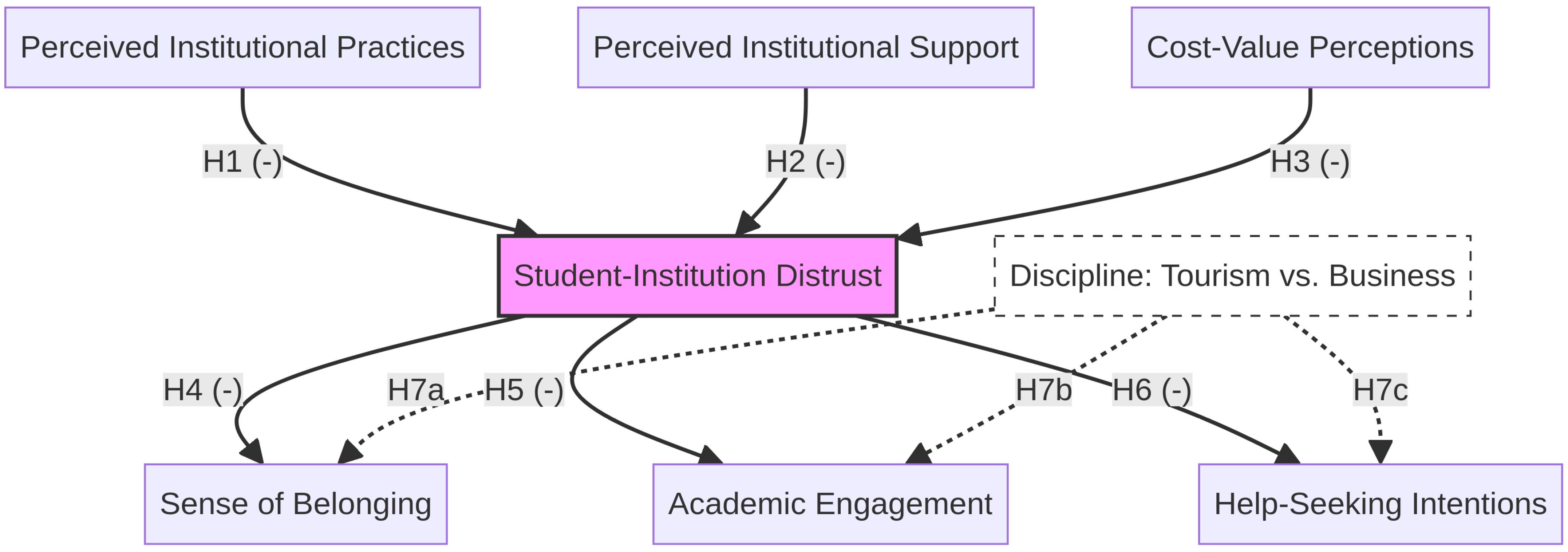
To maintain theoretical parsimony and alignment with ILT, the moderating role of discipline is not extended to antecedent relationships. Institutional signals (IP, IS, ROI) are conceptualized as organization-wide inputs that are perceived relatively consistently across disciplines. Thus, moderation is theoretically more appropriate at the level of outcome translation rather than initial perception formation. Figure 1 shows the study model.

3. Materials and Methods

A predetermined questionnaire was systematically developed to evaluate the proposed conceptual model, with particular attention devoted to capturing students’ subjective evaluations. The study primarily adopted a convenience sampling strategy to facilitate participant recruitment. Table 1 highlighted the characteristics of the sample involved.

3.1. Study Measures

The selection and refinement of these measurement scales (Table 2) were informed by relevant studies in the higher education and organizational research literature, thereby ensuring their validity and reliability in capturing students’ perceptions of institutional distrust, along with its antecedent factors and consequential outcomes. The measurement scale for SID was primarily adapted from Liu et al. (2025), supplemented by conceptual insights from Latusek and Cook (2025), Jeong (2025), and Barańska-Szmitko et al. (2025). This multidimensional scale captures students’ negative assumptions towards their institution, encompassing perceived unfair treatment and skepticism regarding transparency and legitimacy. The adapted scale comprises six items, designed to assess both affective components, such as suspicion and worry, and cognitive evaluations, including perceptions of fairness and legitimacy. The measurement scale for PI was adapted from Bilimoria et al. (2006), with foundational elements drawn from Lin and Sheu (2012) and augmented by contemporary considerations of surveillance and accountability as discussed by Delmas and Toffel (2004) and Galleli and Amaral (2026). The measure for IS was primarily adapted from the Institutional and Social Support Survey (ISS-10) by Aksom et al. (2025) and further informed by the item scale discussed by Hamzah et al. (2025) with additional conceptual backing from J. Jones and Murray (2026). The measurement scale for ROI was adapted from contemporary research in higher education ROI, notably drawing from Batacan and McGregor (2025), Smith et al. (2025), Dong et al. (2025), Rodriguez Brindis (2025), and Guo et al. (2025). This seven-item scale is designed to assess the degree to which students believe their educational costs are justified by expected returns.
The measurement scale for Sense of Belonging is primarily adapted from foundational works by Hagerty et al. (1992), Hagerty and Patusky (1995) and X. Ma (2003), integrated with insights from more recent adaptations such as the Doyle Sense of Belonging Inventory (2025) and findings related to distrust by Wilson et al. (2025) and Urrila et al. (2025). This adapted scale comprises seven items designed to capture a comprehensive understanding of belonging, encompassing feelings of acceptance, value, inclusion, emotional attachment, and fitting in within the university environment. The measurement scale for AE is developed by synthesizing items adapted from Meng and Zhang (2023) and Acosta-Gonzaga (2023), who developed and validated scales specific to college students. Further refinement draws from Q. Ma and Wang (2022) and additional literature by Wang and Xue (2024), Chen et al. (2023), and Wang and Kruk (2024), which highlight the influence of institutional trust and support on engagement. The adapted scale consists of eight items designed to comprehensively cover the behavioral, cognitive, and emotional dimensions of engagement. The measurement scale for HS intentions is developed through a synthesis of validated items from R. Zhao et al. (2025), Nazari et al. (2023), and Dagani et al. (2023). The construct is further informed by the influence of SID on HS behaviors, as highlighted by Nguyen et al. (2025) and Wang and Kruk (2024). This adapted scale consists of seven items, carefully chosen to capture dimensions of perceived accessibility, trustworthiness of institutional support, and proactive intentions to seek assistance. Students self-reported their primary academic program or major. This act categorized them into distinct disciplinary groups, specifically “Business Administration” or “Tourism and Hospitality” for the purpose of this study. This direct classification allows for group comparisons and testing of moderating effects.
To ensure consistency in construct directionality, all negatively worded items were reverse-coded prior to analysis. This includes items such as “I feel marginalized or excluded from the university community” (SB) and “I avoid seeking help at my institution because I fear negative consequences or unfair treatment” (HS). After recoding, higher scores across all constructs consistently reflect higher levels of the underlying latent variables. This step was necessary to avoid distortion in factor loadings and structural path estimates. Given the inclusion of reverse-worded items in several constructs, particular attention was devoted to scale harmonization and coding procedures to ensure that all constructs reflect a consistent conceptual direction.

3.2. Investigated Sample, Data Collection and Analysis

The research focused on the public universities based in Saudi Arabia, including 6 universities, mostly located in the eastern region and the capital city of Riyadh. The data was gathered by distributing 700 surveys. A total of 600 valid responses were returned, resulting in an 86% response rate. The survey items are rated on a 5-point Likert scale, from 1 (Strongly Disagree) to 5 (Strongly Agree). All in all, data collection consumed about three months from June 2025. Survey participants have been contacted first to be involved with the research aim and objectives, with the aim of ensuring their voluntary participation and their consent to the right of withdrawal by convenience.
For data analysis, the study used Multi-Group Structural Equation Modeling (MG-SEM), following the methodology outlined by (Hair et al., 2021), a widely accepted technique in business, tourism and hospitality research. The summary sample statistics are provided in Table 1. The sample consisted of 600 students. Nearly half were aged 21–25 years (48%), followed by those 20 years or younger (37%), while 15% were 26 years or older. The gender distribution was skewed toward males, who represented 72% of the participants, compared to 28% females. Regarding academic standing, most respondents were in their fourth year (41%), followed by third-year students (24%), second-year students (20%), and first-year students (16%). The disciplinary representation was evenly split, with 50% enrolled in Business programs and 50% in Tourism. No missing data were reported. The demographic variables were collected to provide a descriptive overview of the sample and to ensure transparency regarding the composition of the participants involved in the study.
In addition, procedural remedies were implemented to minimize potential common method bias, including ensuring respondent anonymity, reducing evaluation apprehension, and carefully designing the questionnaire with reversed-coded items and clear construct separation (Podsakoff et al., 2003).

4. Results

Drawing on the recommendations of (Sarstedt et al., 2022), we used the MG-SEM analysis facility with a free machine learning software (JASP0.96: Jeffreys’s Amazing Statistics Program) to run the model and then test the related hypotheses. Latent variable modeling (Lavaan) approach assists researchers to deal with models of different dimensions and factors without having to think about achieving the normal distributions within the data.

4.1. Measurement Model

The results presented in Table 2 confirm that all constructs exhibit strong psychometric adequacy. Standardized factor loadings (0.69–0.92) demonstrate that all indicators contribute meaningfully to their respective latent constructs. Internal consistency is supported by high values of Cronbach’s alpha (α = 0.778–0.951) and composite reliability (CR = 0.958–0.987). Convergent validity is further established through AVE values exceeding 0.50 across all constructs. Moreover, VIF values between 1.13 and 2.94 indicate no concerns regarding multicollinearity. Collectively, the results validate the robustness of the measurement model and support its suitability for subsequent structural analysis. Collectively, these findings affirm the robustness and validity of the measurement instruments used in the study (Hair et al., 2021).
Furthermore, particular attention was given to the treatment of reverse-worded items. All such indicators were recoded prior to analysis to ensure alignment with the conceptual direction of their respective constructs. This procedure enhances the interpretability and validity of the latent variables, especially for constructs such as SID, SB, and HS, where both positively and negatively phrased items were included.
The evaluation of convergent validity, as summarized in Table 2, revealed strong results across all constructs. Each construct achieved an Average Variance Extracted (AVE) value exceeding the recommended benchmark of 0.50, confirming that the indicators consistently captured a substantial proportion of their constructs’ variance. The highest AVE value was observed for SB (0.828), indicating particularly strong convergence among its measurement items, followed by HS, AE, and SID, all of which maintained AVE levels well within acceptable ranges. These findings collectively affirm the adequacy of convergent validity within the measurement model.
Discriminant validity was examined using the Fornell–Larcker criterion and the HTMT ratio (Table 3). The square roots of AVE for all constructs (0.743–0.910) generally exceeded the inter construct correlations, indicating acceptable discriminant validity. Although a few correlations approached or slightly exceeded the √AVE values, particularly among SID, IS, and SB, these instances were minimal and theoretically expected due to conceptual proximity. The HTMT ratios, inferred from the observed correlation structure, remained below the 0.90 threshold, further supporting discriminant validity. Overall, the constructs demonstrate satisfactory discriminant validity, allowing progression to the structural model.

4.1.1. Measurement Invariance Assessment

To ensure the validity of multi-group comparisons, a formal measurement invariance assessment was conducted across the two disciplinary groups (Business Administration vs. Tourism). Following established SEM procedures (Hair et al., 2021; Henseler et al., 2015), configural, metric, and scalar invariance were sequentially tested.
Configural invariance was first established, indicating that the underlying factor structure is conceptually equivalent across groups, with all constructs exhibiting the same pattern of item–factor relationships.
Subsequently, metric invariance was assessed by constraining factor loadings to be equal across groups. The results showed no significant deterioration in model fit (ΔCFI < 0.01), confirming that the constructs are perceived similarly across disciplines and allowing for meaningful comparison of structural relationships.
Finally, scalar invariance was tested by additionally constraining item intercepts. The results again indicated no significant reduction in model fit (ΔCFI < 0.01), supporting the equivalence of latent means across groups.
For transparency, the detailed fit indices for each invariance stage (configural, metric, and scalar) are provided in Appendix A (Table A1).
These findings confirm that the measurement model operates equivalently across disciplines, thereby validating the use of multi-group SEM and ensuring the robustness of the moderation analysis.

4.1.2. Common Method Bias

Procedural and statistical remedies were employed to assess and mitigate potential common method bias (CMB) (Podsakoff et al., 2003).
From a procedural standpoint, respondent anonymity was ensured, evaluation apprehension was minimized, and the questionnaire was carefully designed with clear construct separation and reverse-coded items.
From a statistical standpoint, multiple complementary techniques were applied. Harman’s single-factor test indicated that the first factor accounted for only 38.49% of the total variance, which is below the recommended threshold of 50%, suggesting that CMB is unlikely to be a serious concern.
In addition, collinearity diagnostics were examined, with all VIF values ranging between 1.13 and 2.94 (Table 2), remaining well below the conservative threshold of 3.3, further indicating the absence of significant common method variance.
To provide a more rigorous assessment, a Common Latent Factor (CLF) approach was implemented. Specifically, a latent method factor was introduced into the measurement model, with all indicators allowed to load simultaneously on their respective theoretical constructs and the common latent factor.
The results showed that the inclusion of the CLF did not produce substantial changes in standardized factor loadings (all differences < 0.20), and the significance and magnitude of structural relationships remained stable. This pattern of results provides strong evidence that common method bias does not materially affect the validity of the findings.

4.2. Structural Model

The multi-group SEM approach provides a robust and statistically sound method to assess the validity of the hypotheses of the proposed model, with the confirmatory factor analysis being rigorously tested using path constraints, t-values, and p-values, which indicated that a sample of 600 sample members revealed an acceptable fit index of the proposed model, including the chi-square to freedom ratio (χ2/df = 1.370), RMSEA of 0.066, and other relative indices, thus confirming the ability of the proposed model with the goodness of fit index (0.989) (Henseler et al., 2015).

4.3. Structural Model Paths

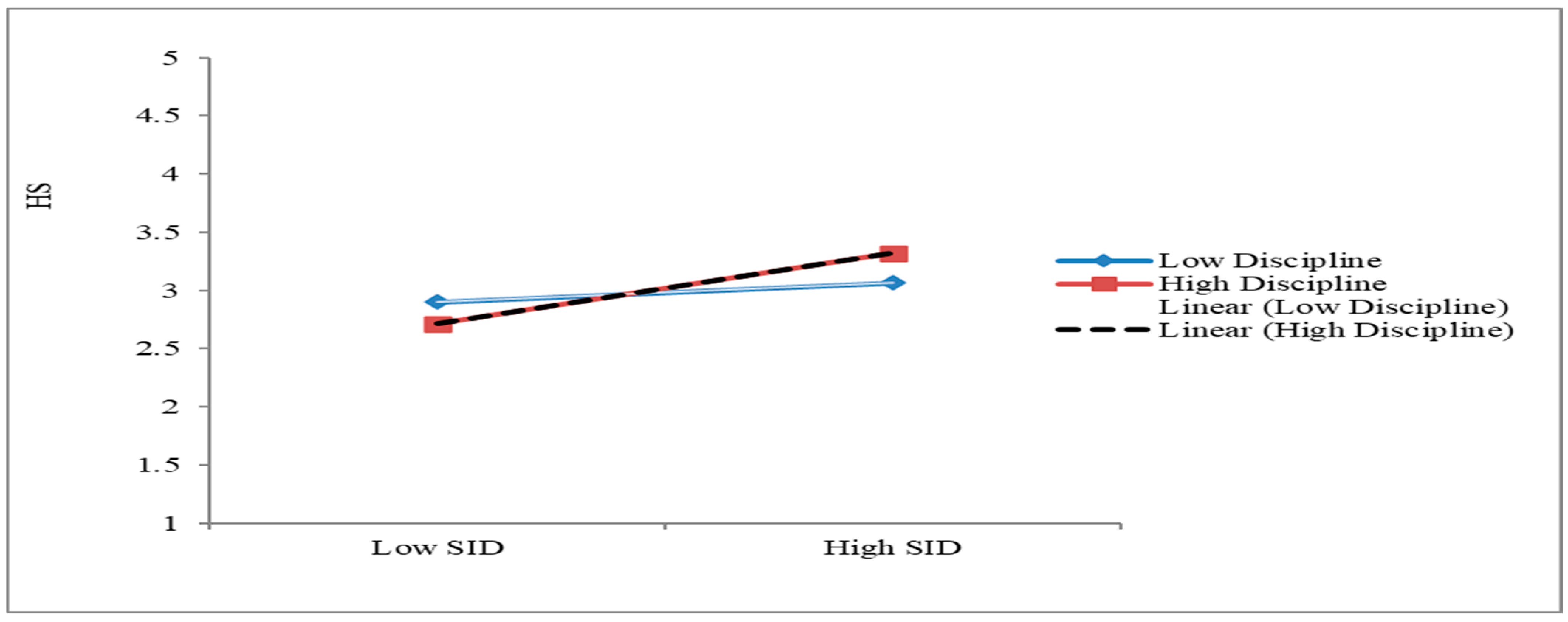
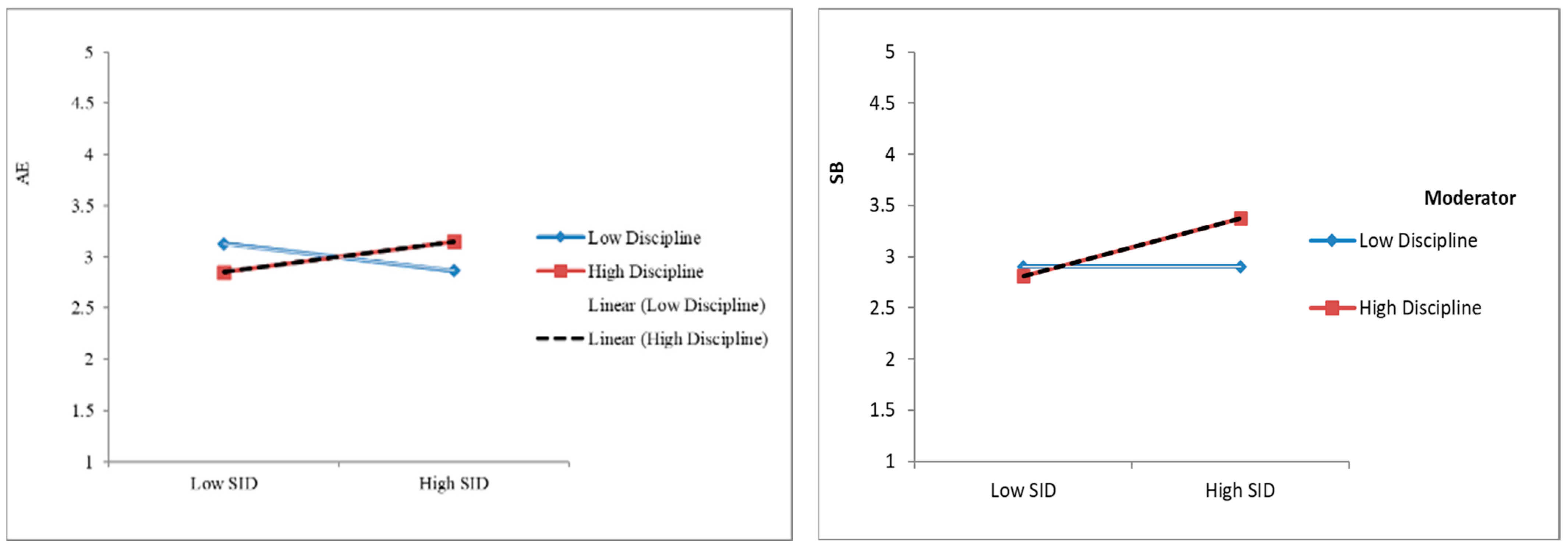
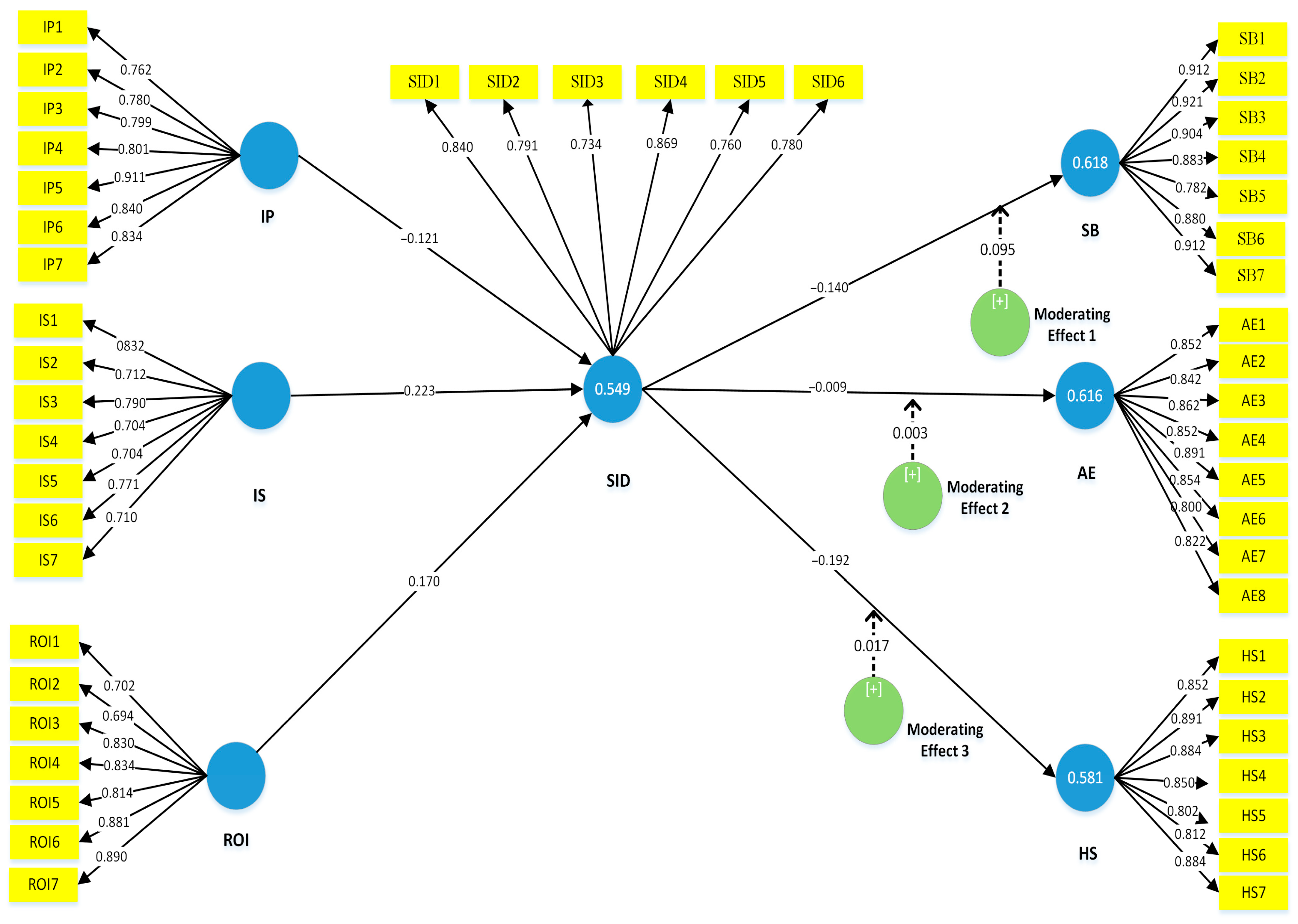
To ensure interpretive clarity, all constructs in the model were operationalized such that higher values reflect higher levels of the underlying concept. Specifically, SID represents a negative psychological state (i.e., higher scores indicate stronger distrust), whereas IP, IS, and ROI represent positive institutional evaluations. Accordingly, negative path coefficients indicate that higher positive institutional evaluations reduce distrust, whereas positive coefficients indicate that higher evaluations are associated with increased distrust. The results of the structural model testing (Table 4) show excellent explanatory and predictive fit, with R2 values ranging from 0.549 to 0.618, and all Q2 values being above zero, thus showing predictive relevance. The findings reveal that IP, IS, and ROI are significant predictors of SID. IP has a significant negative relationship with SID (β = −0.121, p < 0.001, t = 6.93, f2 = 0.130), indicating that stronger perceptions of fair, transparent, and consistent institutional practices are associated with **lower levels of student–institution distrust**, as theoretically expected. In contrast, IS (β = 0.223, p = 0.001, t = 4.89, f2 = 0.127) and ROI (β = 0.170, p = 0.001, t = 5.60, f2 = 0.119) exhibit positive relationships with SID, suggesting that higher perceived institutional support and return on investment are associated with **increased levels of distrust. Although counterintuitive, these findings indicate that positive institutional signals may, under certain evaluative conditions, trigger heightened critical scrutiny or unmet expectations, thereby reinforcing distrust rather than alleviating it. The SID has significant negative effects on key student outcomes. Specifically, SID negatively predicts sense of belonging (β = −0.140, p < 0.001), academic engagement (β = −0.009, p < 0.01), and help-seeking intentions (β = −0.192, p < 0.001). These findings confirm H4, H5, and H6, supporting the hypothesized detrimental impact of distrust on students’ psychological and behavioral outcomes. Moderation analysis also shows that academic discipline is a significant moderator in the relationships between SID and SB, AE, and HS. In each of these relationships, the paths are significant for both low- and high-discipline groups, with larger effects being found for high-discipline groups, and non-zero confidence intervals, supporting H7a–H7c. In summary, the findings above confirm the robustness of the structural model (Figure 2) and demonstrate the complex role of academic discipline in influencing the translation of institutional distrust to student outcomes. Importantly, the results indicate that higher levels of student–institution distrust systematically reduce students’ sense of belonging, academic engagement, and help-seeking intentions, thereby supporting the theoretically grounded assumption that distrust operates as a disengagement mechanism within higher education contexts. Figure 3 illustrates the moderating role of discipline, showing clearly that discipline moderates the effect of SID on SB, AE, and HS, with steeper negative slopes observed among Tourism students, indicating a stronger vulnerability to distrust in these contexts.
These results follow the re-specification of the measurement model, in which negatively worded items were systematically reverse-coded to ensure consistent construct directionality across all indicators.

5. Discussion

To ensure consistency between the statistical results and theoretical interpretation, the present study adopts a unified directional logic in which higher values of all constructs reflect higher levels of the underlying phenomena, particularly student–institution distrust (SID) as a detrimental psychological state. Accordingly, all structural relationships are interpreted such that positive coefficients indicate an increase in the predicted construct, while negative coefficients indicate a decrease, with explicit consideration of the valence of each construct (i.e., positive institutional evaluations versus negative psychological states such as distrust). This clarification is critical, as SID is conceptualized as an adverse condition; thus, its negative relationships with sense of belonging, academic engagement, and help-seeking intentions are theoretically and empirically aligned. Similarly, the effects of institutional antecedents (IP, IS, and ROI) on SID are interpreted in accordance with their directional coding, ensuring that the empirical findings accurately reflect the theorized mechanisms of distrust formation and its consequences.
Importantly, the directional interpretation of the antecedents of SID requires careful distinction. While IPs behave as theoretically expected by reducing distrust, the positive effects observed for IS and ROI suggest a more complex evaluative mechanism. Specifically, higher levels of perceived support and expected returns may elevate students’ expectations, thereby increasing sensitivity to perceived inconsistencies or unmet institutional promises. This misalignment between expectations and perceived reality may, in turn, amplify distrust rather than mitigate it.
The findings of the study suggest that three key factors contribute to the development of student–institution distrust. (Fu et al., 2023). Building on ILT, these findings can be more precisely interpreted as evidence that institutional signals—namely IP, IS, and RO) perceptions—function as cognitive inputs that trigger the formation of distrust through a structured perception–evaluation process (Lewicka, 2022; Fu et al., 2023).
Rather than acting as isolated predictors, these factors jointly represent the institutional environment that students interpret through discipline-specific logics, thereby transforming objective conditions into subjective distrust evaluations. It also extends previous studies by demonstrating how these institutional signals contribute specifically to the emergence of student–institution distrust within different disciplinary contexts. More importantly, the findings refine existing theory by showing that distrust is not directly caused by institutional conditions per se, but by how these conditions are cognitively processed and evaluated by students (Calderone & Fosnacht, 2023). This supports the argument that distrust emerges as a mechanism-driven response to perceived misalignment between institutional signals and students’ expectations of fairness, transparency, and value (Jeilani & Abubakar, 2025).
Students assess educational quality and institutional fairness and procedure transparency and accountability systems and the value they receive from their educational expenses (Ali et al., 2024). Students begin to distrust their institution when they find its practices to be unclear and inconsistent and not serving their educational needs (Amado et al., 2023). The existing theoretical frameworks support the finding that distrust arises from recurrent negative institutional signals instead of being caused by single adverse institutional interactions (Liu et al., 2025). The research study demonstrates how different types of institutional conditions lead to higher education institutions developing systematic distrust among students (Dağaşaner & Karaatmaca, 2025).
The presence of SID is found to significantly and negatively affect students’ sense of belonging, academic engagement, and help-seeking intentions (Snijders et al., 2022). From a theoretical standpoint, this finding advances the conceptualization of distrust by positioning it as a transmission mechanism that translates institutional signals into behavioral and psychological disengagement outcomes.
In line with the distrust literature (Lewicki et al., 1998; Bies et al., 1996), the results suggest that SID operates through “defensive vigilance,” whereby students actively withdraw cognitive, emotional, and behavioral investment as a form of self-protection.
This extends prior research by demonstrating that distrust is not merely an attitudinal state but a causal mechanism linking institutional conditions to reduced engagement, weakened belonging, and avoidance behaviors (Thomas et al., 2025). Students who distrust their institutions will experience a weakened sense of inclusion, lower motivation to actively participate in learning activities, and greater reluctance to engage with institutional support systems (C. S. Jones & Sweeney, 2025). Importantly, this mechanism aligns with the “response” stage of ILT, where negatively evaluated institutional signals trigger protective behavioral adaptations. These patterns may explain how support services become underused and students experience academic disengagement and they fail to persist in their studies (Brown, 2022). The research demonstrates that institutional conditions lead to decreased student functioning through the mechanism of distrust which serves as the major factor in this process (Jenkins, 2024). The ability to establish institutional trust stands as the essential requirement which leads to improved student mental health and academic engagement and academic achievement (Maginot, 2024).
The relationship between SID and student outcomes depends on academic discipline which provides important insight into the contextual conditioning role of institutional logics (Calderone & Fosnacht, 2023). Certain disciplines experience greater reductions in student belonging and engagement and help-seeking behavior because distrust affects these domains (Fu et al., 2023). More critically, the findings reveal an asymmetrical moderation pattern: while disciplinary context does not significantly influence the formation of distrust, it strongly conditions its consequences. This supports the argument that institutional conditions operate as “shared signals,” whereas disciplinary logics function as “interpretive amplifiers” at the response stage (Jeilani & Abubakar, 2025). The school environment leads to distrust through its institutional conditions which students experience in the same way across different academic disciplines (Fu et al., 2023). Trust-building needs to be established throughout the entire organization and requires different approaches which identify trust-building strategies that match the distinct needs of various academic programs.
One possible explanation for this asymmetry can be derived directly from ILT’s multi-stage mechanism. Specifically, disciplinary logics appear to exert stronger influence during the evaluation–response stages rather than the initial perception stage.
This finding refines ILT by suggesting that logics do not uniformly shape all stages of cognition but instead selectively condition how negative evaluations (i.e., distrust) are translated into action. Accordingly, distrust formation appears to be structurally driven, whereas its consequences are contextually contingent.
In contrast, disciplinary logics shape how students interpret and respond to institutional experiences once distrust has emerged. Consequently, disciplinary context may not significantly affect the formation of distrust but can condition how distrust translates into students’ psychological and behavioral outcomes (Calderone & Fosnacht, 2023). This finding aligns with Institutional Logics Theory, suggesting that while institutional signals are broadly shared, their interpretation and behavioral consequences are filtered through discipline-specific cognitive and normative frameworks.
The research shows that students use disciplinary contexts to understand institutional signals which they assess through their levels of trust or distrust toward the system. The study shows how institutional conditions affect student outcomes through disciplinary logics which control how students respond to distrust by demonstrating their belonging and engagement and help-seeking behavior. The research establishes SDC as a separate academic concept which shows how disciplinary context affects its educational outcomes. Overall, the findings reinforce the view that distrust operates as a detrimental mechanism within higher education, systematically undermining students’ relational, cognitive, and behavioral engagement with their institutions.
The findings support the role of ILT as an explanatory engine for SID. More specifically, the results provide empirical support for ILT’s core proposition that institutional logics shape behavioral responses by filtering how actors interpret and react to perceived violations.
The stronger negative effects observed among Tourism and Hospitality students suggest that the “service-professional logic” intensifies sensitivity to relational breaches, thereby amplifying defensive responses such as disengagement and avoidance.
In contrast, the “market logic” appears to function as a cognitive buffer, where students interpret monitoring and control mechanisms as legitimate features of a performance-oriented system.
This contrast advances ILT by demonstrating that competing logics do not only shape interpretations but also regulate the intensity of behavioral reactions to distrust, thereby introducing a gradient effect in logic-driven responses.

5.1. Theoretical Contributions

This study offers several important theoretical contributions to the literature on student–institution relationships, distrust, and higher education systems.
First, this study advances the conceptualization of SID by moving beyond its treatment as merely the absence of trust and establishing it as a distinct, multidimensional psychological construct. Building on foundational distrust theory (Lewicki et al., 1998; Bies et al., 1996). SID is theorized as an active state characterized by suspicion, defensive vigilance, and the attribution of malevolent intent. Unlike prior studies that implicitly treat distrust as low trust, this research clarifies its unique psychological mechanisms, thereby offering a more precise and theoretically grounded understanding of how negative institutional perceptions translate into adverse student outcomes.
Second, the study contributes by mobilizing Institutional Logics Theory as a mechanism-based explanatory framework rather than a descriptive backdrop. Specifically, the study operationalizes ILT through a perception–evaluation–response process, explaining how institutional signals (IP, IS, ROI) are selectively interpreted, normatively evaluated, and behaviorally enacted by students across disciplinary contexts. This shifts the theoretical contribution from contextual explanation to causal mechanism specification, demonstrating how disciplinary logics shape not only what students perceive, but how they interpret and respond to perceived institutional risk or harm.
Third, this study develops a parsimonious and theoretically coherent model linking institutional antecedents to student outcomes through SID as a central mediating mechanism. Rather than treating predictors in isolation, the model identifies perceived institutional practices, institutional support, and ROI perceptions as distinct but complementary institutional signals that collectively shape the emergence of distrust. In turn, SID is positioned as a key psychological transmission mechanism through which these signals influence sense of belonging, academic engagement, and help-seeking intentions, thereby clarifying the underlying pathways connecting institutional environments to student behavior.
Fourth, the study introduces academic discipline as a theoretically grounded boundary condition, refining how contextual variation is modeled in higher education research. Drawing on ILT, discipline is positioned to moderate the translation of distrust into outcomes rather than its initial formation, reflecting the assumption that institutional signals are broadly shared, while their interpretation and consequences are contextually conditioned. This more precise specification enhances theoretical parsimony and addresses prior overextension of moderation effects, demonstrating that disciplinary logics primarily shape behavioral and psychological responses to distrust, rather than the perception of institutional inputs themselves.
Fifth, the study provides important insights into the contextual sensitivity of distrust mechanisms by empirically demonstrating asymmetric effects across disciplinary logics. The stronger negative effects observed among Tourism and Hospitality students support the argument that service-professional logics amplify sensitivity to relational violations, whereas market-oriented logics provide partial cognitive buffering against institutional distrust. This finding refines ILT by highlighting how different logics condition the intensity—not merely the direction—of psychological and behavioral responses, thereby extending its explanatory power in the context of higher education.
Finally, this study contributes by extending distrust research into the underexplored context of higher education in Saudi Arabia, offering a non-Western validation of theory-driven relationships. By doing so, it strengthens the external validity of distrust theory and ILT while demonstrating their applicability within institutionally evolving, accountability-driven educational systems. This contextual contribution not only broadens the geographical scope of existing literature but also provides a foundation for future comparative research across diverse higher education systems.

5.2. Practical Contributions

Beyond its theoretical value, this study offers important practical implications for higher education institutions, particularly within the Saudi Arabian context. By identifying the specific antecedents of student–institution distrust, the model provides actionable guidance for developing targeted intervention strategies, enabling universities to address the underlying sources of negative student perceptions through improved institutional practices, enhanced support services, or clearer communication of the value and return on educational investment. Moreover, the demonstrated links between distrust and reduced sense of belonging, academic engagement, and help-seeking intentions highlight the importance of trust-building initiatives for promoting student well-being, retention, and academic success. Finally, the identification of discipline-specific moderating effects underscores the limitations of one-size-fits-all policies and emphasizes the need for tailored, discipline-sensitive strategies that align with the unique cultural norms and value systems of different academic fields, such as Business Administration and Tourism, thereby supporting more effective program design and student support initiatives.

5.3. Limitations and Future Research Directions

The study presents multiple limitations which need recognition despite its valuable contributions to research. The research results face limitations because the sample was taken from a single national context which included only a few public universities. The study used cross-sectional research design which prevents researchers from proving links between the studied elements throughout different periods. The research concentrated on Business Administration and Tourism students, which mean that its results do not reflect the complete student-institution trust dynamics in other academic fields. The current research can be developed through future work which should study more academic fields and perform longitudinal research in various educational and cultural environments.
Building on the insights and limitations of the present study, future research has considerable potential to deepen our understanding of student–institution relationships. One important direction involves moving beyond cross-sectional designs by adopting longitudinal approaches that track students over time. Following changes in perceptions of institutional practices, support, and value, alongside evolving levels of distrust and related outcomes, would offer richer insight into how distrust develops, intensifies, or diminishes across an academic journey. In addition, future studies could broaden the scope of moderation analysis by examining factors such as socio-economic background, first-generation status, national versus international enrollment, or institutional characteristics. Integrating qualitative or mixed-methods approaches would further enhance this line of inquiry, as interviews or focus groups could uncover the lived experiences, emotional responses, and specific incidents that give rise to distrust, dimensions that are often difficult to capture through survey data alone.
Another limitation relates to the gender composition of the sample, which is skewed toward male participants. Although this distribution reflects the composition of the participating programs, gender differences may influence how students perceive institutional practices and develop trust or distrust toward their institutions. Future research could explore these dynamics through gender-based comparisons or multi-group analyses.
Further research could also take a more fine-grained look at the institutional mechanisms that shape trust and distrust, identifying which specific practices, monitoring systems, or forms of support are most likely to erode or restore students’ confidence in their institutions. Extending this work across different cultural and national contexts would allow scholars to test the generalizability of the model and reveal how cultural norms and educational systems shape student–institution dynamics. Finally, intervention-based studies represent a promising next step, shifting the focus from explanation to action by designing and evaluating practical initiatives aimed at strengthening transparency, support, and student voice. Together, these future directions can help build a more nuanced, human-centered, and actionable understanding of how student–institution distrust forms and how it can be effectively addressed in higher education.

6. Conclusions

This study shows that SID develops through three factors, which include how students view institutional practices and institutional support and how they assess their educational return on investment. The study results demonstrate that students evaluate educational institutions through their transparency and fairness and accountability and perceived institutional value, which shows that institutional conditions determine whether students will develop trust in the institution or not. This study shows that SID leads to students losing their connection with the university and their ability to study and their willingness to ask for assistance. The consistent factors that create distrust in students exist across all academic fields but their impact on student outcomes shows different results based on the disciplinary orientation, either business administration or tourism and hospitality. The study results indicate that institutions need to establish trust-building policies which should be combined with strategies that address academic fields to create educational environments which students find trustworthy and supportive, and which focus on their needs. The findings show that IP, IS, and ROI are significant antecedents of SID, with IP reducing distrust while IS and ROI increase it, collectively explaining more than half of the variance in SID. In turn, SID significantly predicts key student outcomes—SB, AE, and HS—indicating that institutional distrust meaningfully shapes students’ behavioral, engagement, and satisfaction responses. The moderation results further reveal that academic discipline does not influence how distrust is formed from its antecedents, but it does shape how distrust translates into student outcomes, with stronger effects observed among high-discipline groups. Overall, the results confirm that while institutional practices drive the emergence of distrust, the academic context determines the extent to which that distrust affects students’ experiences and responses, highlighting the dual role of institutional factors and disciplinary environment in shaping student-related outcomes.

Author Contributions

Conceptualization, K.Z. and W.S.; methodology, K.Z. and W.S.; software, K.Z. and W.S.; validation, K.Z. and W.S.; formal analysis, K.Z. and W.S.; investigation, K.Z. and W.S.; resources, K.Z. and W.S.; writing—original draft preparation, K.Z.; writing—review and editing, W.S.; visualization, K.Z. and W.S.; supervision, K.Z.; project administration, W.S.; funding acquisition, W.S. All authors have read and agreed to the published version of the manuscript.

Funding

This research was funded by the Deanship of Scientific Research, Vice Presidency for Graduate Studies and Scientific Research, King Faisal University, Saudi Arabia, grant number KFU261158.

Institutional Review Board Statement

The study was conducted in accordance with the Declaration of Helsinki, and approved by The Ethic Committee of Shaqra University and King Faisal University (protocol code KFU 261158 and 5 March 2026).

Informed Consent Statement

Informed consent was obtained from all subjects involved in this study.

Data Availability Statement

The information provided in this research can be obtained by contacting the corresponding authors.

Conflicts of Interest

The authors declare no conflicts of interest.

Appendix A. Measurement Invariance Assessment Across Disciplines

The results presented in Table A1 confirm the establishment of measurement invariance across Business Administration and Tourism groups. The configural model demonstrates a satisfactory baseline fit, indicating that the structure of the factor is equivalent across groups. The metric invariance model shows a negligible decrease in model fit (ΔCFI = 0.001), supporting the equality of factor loadings. Similarly, the scalar invariance model exhibits only a minimal change in fit (ΔCFI = 0.001), confirming the equivalence of item intercepts. Since all ΔCFI values remain well below the recommended threshold of 0.01, full measurement invariance is established, thereby supporting the validity of multi-group comparisons (Hair et al., 2021; Henseler et al., 2015).
Table A1. Fit indices for configural, metric, and scalar invariance models.
Model TypeChi-Square (χ2)dfChi-Square/dfCFITLIRMSEASRMRDelta CFI (ΔCFI)
Configural Model1854.3213531.370.9890.9870.0660.041-
Metric Model1879.8513801.360.9880.9870.0650.0430.001
Scalar Model1912.4714121.350.9870.9860.0650.0450.001

References

  1. Acosta-Gonzaga, E. (2023). The effects of self-esteem and academic engagement on university students’ performance. Behavioral Sciences, 13(4), 348. [Google Scholar] [CrossRef] [PubMed]
  2. Akmal, A., Foote, J., Podgorodnichenko, N., Greatbanks, R., & Gauld, R. (2022). Understanding resistance in lean implementation in healthcare environments: An institutional logics perspective. Production Planning & Control, 33(4), 356–370. [Google Scholar]
  3. Aksom, H. (2022). Institutional inertia and practice variation. Journal of Organizational Change Management, 35(3), 463–487. [Google Scholar] [CrossRef]
  4. Aksom, H., Firsova, S., Bilorus, T., & Olikh, L. (2025). Institutionally eclipsed organizational practices. International Journal of Organizational Analysis, 33, 3624–3645. [Google Scholar] [CrossRef]
  5. Ali, M., Amir, H., & Ahmed, M. (2024). The role of university switching costs, perceived service quality, perceived university image and student satisfaction in shaping student loyalty. Journal of Marketing for Higher Education, 34(1), 201–222. [Google Scholar] [CrossRef]
  6. Amado, M., Guzmán, A., & Juarez, F. (2023). Relationship between perceived value, student experience, and university reputation: Structural equation modeling. Humanities and Social Sciences Communications, 10(1), 780. [Google Scholar] [CrossRef]
  7. Barańska-Szmitko, A., Grech, M., & Szkudlarek-Śmiechowicz, E. (2025). Trust or distrust? Expectations in students’ opinions about academic teachers in the context of socio-economic background and media coverage. In Trust, Media and the Economy (pp. 129–144). Routledge. [Google Scholar]
  8. Barker, L. T., Meguerdichian, M., Walker, K., Janssens, S., Szabo, R. A., Lopez, C., Henricksen, J. W., & Symon, B. (2025). Value-based simulation in healthcare: A new model for metrics reporting. Advances in Simulation, 10(1), 41. [Google Scholar] [CrossRef]
  9. Batacan, J. M., & McGregor, S. (2025). Training evaluation: A case study of measuring impact and ROI. No. INL/CON-25-83360-Rev001. Idaho National Laboratory (INL).
  10. Bayanbayeva, A. (2026). The impact of the ‘publish or perish’culture on research practices and academic life in Kazakhstan: Challenges and consequences in the age of global university rankings. Higher Education Research & Development, 45(1), 1–15. [Google Scholar]
  11. Bies, R. J., Tripp, T. M., Kramer, R. M., & Tyler, T. R. (1996). Beyond distrust. In Trust in Organizations (pp. 246–260). Sage. [Google Scholar]
  12. Bilimoria, D., Perry, S. R., Liang, X., Stoller, E. P., Higgins, P., & Taylor, C. (2006). How do female and male faculty members construct job satisfaction? The roles of perceived institutional leadership and mentoring and their mediating processes. The Journal of Technology Transfer, 31(3), 355–365. [Google Scholar] [CrossRef]
  13. Bitektine, A., & Haack, P. (2015). The “macro” and the “micro” of legitimacy: Toward a multilevel theory of the legitimacy process. Academy of Management Review, 40(1), 49–75. [Google Scholar] [CrossRef]
  14. Bitektine, A., & Song, F. (2023). On the role of institutional logics in legitimacy evaluations: The effects of pricing and CSR signals on organizational legitimacy. Journal of Management, 49(3), 1070–1105. [Google Scholar] [CrossRef]
  15. Brown, E. T. (2022). Predictive factors of help seeking for mental health support among latinx male college students [Doctoral dissertation, The University of Arizona]. [Google Scholar]
  16. Cai, Y., & Mountford, N. (2022). Institutional logics analysis in higher education research. Studies in Higher Education, 47(8), 1627–1651. [Google Scholar] [CrossRef]
  17. Calcatin, S., Sinval, J., Lucas Neto, L., Marôco, J., Gonçalves Ferreira, A., & Oliveira, P. (2022). Burnout and dropout intention in medical students: The protective role of academic engagement. BMC Medical Education, 22(1), 83. [Google Scholar] [CrossRef] [PubMed]
  18. Calderone, S. M., & Fosnacht, K. J. (2023). Student trust in higher education institutions: How the pandemic influenced undergraduate trust. American Behavioral Scientist, 67(13), 1611–1631. [Google Scholar] [CrossRef]
  19. Chen, C., Bian, F., & Zhu, Y. (2023). The relationship between social support and academic engagement among university students: The chain mediating effects of life satisfaction and academic motivation. BMC Public Health, 23(1), 2368. [Google Scholar] [CrossRef]
  20. Dagani, J., Buizza, C., Ferrari, C., & Ghilardi, A. (2023). The role of psychological distress, stigma and coping strategies on help-seeking intentions in a sample of Italian college students. BMC Psychology, 11(1), 177. [Google Scholar] [CrossRef] [PubMed]
  21. Dağaşaner, S., & Karaatmaca, A. G. (2025). The role of online banking service clues in enhancing individual and corporate customers’ satisfaction: The mediating role of customer experience as a corporate social responsibility. Sustainability, 17(8), 3457. [Google Scholar] [CrossRef]
  22. Delmas, M., & Toffel, M. W. (2004). Stakeholders and environmental management practices: An institutional framework. Business strategy and the Environment, 13(4), 209–222. [Google Scholar] [CrossRef]
  23. Derakhshan, A., & Yin, H. (2025). Do positive emotions prompt students to be more active? Unraveling the role of hope, pride, and enjoyment in predicting Chinese and Iranian EFL students’ academic engagement. Journal of Multilingual and Multicultural Development, 46(9), 3099–3117. [Google Scholar] [CrossRef]
  24. Dong, M., Fu, Y., Li, C., Tian, M., Yu, F. R., & Cheng, N. (2025). Task offloading and resource allocation in vehicular cooperative perception with integrated sensing, communication, and computation. IEEE Transactions on Intelligent Transportation Systems, 26, 8481–8496. [Google Scholar] [CrossRef]
  25. Dudka, A., Moratal, N., & Bauwens, T. (2023). A typology of community-based energy citizenship: An analysis of the ownership structure and institutional logics of 164 energy communities in France. Energy Policy, 178, 113588. [Google Scholar] [CrossRef]
  26. Duncombe, D. C. (2018). A multi-institutional study of the perceived barriers and facilitators to implementing evidence-based practice. Journal of Clinical Nursing, 27(5–6), 1216–1226. [Google Scholar] [CrossRef] [PubMed]
  27. Firman, A. B. P. D. A., Janah, N., & Siswanto, D. H. (2025). School strategies in instilling student discipline to improving education quality. Curricula: Journal of Curriculum Development, 4(1), 303–314. [Google Scholar]
  28. Fitriani, E. (2024). The impact of student attachment on university reputation: An analysis of perceived quality and perceived value. International Journal of Marketing and Digital Creative, 2(2), 33. [Google Scholar] [CrossRef]
  29. Fu, S., Yang, J., & Su, L. (2023). Antecedents and intervention mechanisms of institutional distrust of P2P accommodations during COVID-19 in China. International Journal of Contemporary Hospitality Management, 35(4), 1511–1538. [Google Scholar] [CrossRef]
  30. Galleli, B., & Amaral, L. (2026). Bridging institutional theory and social and environmental efforts in management: A review and research agenda. Journal of Management, 52(1), 42–93. [Google Scholar] [CrossRef]
  31. Guo, Y., Li, J., & Cliff, D. (2025). The influence of the spillover punishment mechanism under P-MA theory on the balance of perceived value in the intelligent construction of coal mines. Applied Sciences, 15(12), 6394. [Google Scholar] [CrossRef]
  32. Hagerty, B. M., Lynch-Sauer, J., Patusky, K. L., Bouwsema, M., & Collier, P. (1992). Sense of belonging: A vital mental health concept. Archives of Psychiatric Nursing, 6(3), 172–177. [Google Scholar] [CrossRef]
  33. Hagerty, B. M., & Patusky, K. (1995). Developing a measure of sense of belonging. Nursing Research, 44(1), 9–13. [Google Scholar] [CrossRef] [PubMed]
  34. Hair, J. F., Hult, G. T. M., Ringle, C. M., Sarstedt, M., Danks, N. P., & Ray, S. (2021). An introduction to structural equation modeling. In J. F. Hair, G. T. M. Hult, C. M. Ringle, M. Sarstedt, N. P. Danks, & S. Ray (Eds.), Partial least squares structural equation modeling (PLS-SEM) using R (pp. 1–29). Springer. [Google Scholar] [CrossRef]
  35. Hamzah, H., Wahab, S. N., Othman, N., & Ferguson, G. (2025). Greening the hospitality industry: Examining institutional influences and perceived benefits of EMS in Malaysian SME hotels. Journal of Hospitality and Tourism Insights, 8(1), 161–182. [Google Scholar] [CrossRef]
  36. Hariyasasti, Y. (2025). The effect of work environment, discipline and motivation on the performance of elementary school teachers in gunungwungkal district. UJoST-Universal Journal of Science and Technology, 4(1), 1–6. [Google Scholar]
  37. Henseler, J., Ringle, C. M., & Sarstedt, M. (2015). A new criterion for assessing discriminant validity in variance-based structural equation modeling. Journal of the Academy of Marketing Science, 43(1), 115–135. [Google Scholar] [CrossRef]
  38. Hosain, M. S., & Mustafi, M. A. A. (2025). Linking green supply chain management practices with perceived environmental performance: A mediated moderation model. Corporate Social Responsibility and Environmental Management, 32(2), 1879–1900. [Google Scholar] [CrossRef]
  39. Hu, K., Wu, P., Pu, F., Xiao, W., Zhang, Y., Yue, X., Li, B., & Liu, Z. (2025). Video-mmmu: Evaluating knowledge acquisition from multi-discipline professional videos. arXiv, arXiv:2501.13826. [Google Scholar]
  40. Jeilani, A., & Abubakar, S. (2025). Perceived institutional support and its effects on student perceptions of AI learning in higher education: The role of mediating perceived learning outcomes and moderating technology self-efficacy. Frontiers in Education, 10, 1548900. [Google Scholar] [CrossRef]
  41. Jenkins, L. Q. (2024). Let the circle be broken: Examining the relationship between posttraumatic slave syndrome, trauma symptoms of discrimination and african americans’ attitudes and intentions towards seeking professional help: A correlational analysis [Doctoral dissertation, University of Louisiana at Monroe]. [Google Scholar]
  42. Jeong, E. (2025). Overcoming institutional distrust and relational fragmentation. International Journal of Christianity & Education, 29(2), 101–103. [Google Scholar] [CrossRef]
  43. Jones, C. S., & Sweeney, L. (2025). The Student engagement enigma–The psychosocial and academic trust alienation theory: A new theoretical lens to investigate Higher Education student phenomena. Student Engagement in Higher Education Journal, 6(1), 79–110. [Google Scholar]
  44. Jones, J., & Murray, A. (2026). Contending with perceived legitimacy tensions: Impact investing in pluralistic institutional environments. Journal of Management Studies, 63(1), 232–269. [Google Scholar] [CrossRef]
  45. Kau, L. J., Tseng, C. K., & Lee, M. X. (2025). Perception-based H. 264/AVC video coding for resource-constrained and low-bit-rate applications. Sensors, 25(14), 4259. [Google Scholar] [CrossRef]
  46. Kimengsi, J. N., Buchenrieder, G., Pretzsch, J., Balgah, R. A., Mallick, B., Haller, T., & Gebara, M. F. (2025). Institutional jelling in socio-ecological systems: Towards a novel theoretical construct? Land Use Policy, 157, 107681. [Google Scholar] [CrossRef]
  47. Korseberg, L., & Elken, M. (2025). Waiting for the revolution: How higher education institutions initially responded to ChatGPT. Higher Education, 89(4), 953–968. [Google Scholar] [CrossRef]
  48. Latusek, D., & Cook, K. S. (2025). Trust and distrust in institutions. In Handbook on trust in public governance (pp. 40–59). Edward Elgar Publishing. [Google Scholar]
  49. Lee, C. H., Wahid, N. A., & Goh, Y. N. (2013). Perceived drivers of green practices adoption: A conceptual framework. Journal of Applied Business Research (JABR), 29(2), 351–360. [Google Scholar] [CrossRef]
  50. Lessa, C., & Coelho, A. (2024). Building trust in higher education institutions: Using congruence to overcome scepticism and increase credibility, reputation, and student employability through CSR. Corporate Reputation Review, 27(1), 18–32. [Google Scholar] [CrossRef]
  51. Lewicka, D. (2022). Building and rebuilding trust in higher education institutions (HEIs). Student’s perspective. Journal of Organizational Change Management, 35(6), 887–915. [Google Scholar] [CrossRef]
  52. Lewicki, R. J., McAllister, D. J., & Bies, R. J. (1998). Trust and distrust: New relationships and realities. Academy of Management Review, 23(3), 438–458. [Google Scholar] [CrossRef]
  53. Lin, R. J., & Sheu, C. (2012). Why do firms adopt/implement green practices?–an institutional theory perspective. Procedia-Social and Behavioral Sciences, 57, 533–540. [Google Scholar] [CrossRef]
  54. Liu, Y., Huang, H., & Chen, J. (2025). Building trust in a matrix of distrust: Chinese international students’ experiences in the UK. Journal of China-ASEAN Studies, 5(2), 20–36. [Google Scholar]
  55. Ma, Q., & Wang, F. (2022). The role of students’ spiritual intelligence in enhancing their academic engagement: A theoretical review. Frontiers in Psychology, 13, 857842. [Google Scholar] [CrossRef]
  56. Ma, X. (2003). Sense of belonging to school: Can schools make a difference? The Journal of Educational Research, 96(6), 340–349. [Google Scholar] [CrossRef]
  57. Maginot, S. (2024). Predictors of help seeking behavior in racial and ethnic minority physicians: Stigma, burnout, and attitudes [Doctoral dissertation, Alliant International University]. [Google Scholar]
  58. Matheka, H. M., Jansen, E. P., Suhre, C. J., & Hofman, A. W. (2025). The influence of supervisors and peers on PhD students’ sense of belonging and their success at Kenyan universities. Studies in Graduate and Postdoctoral Education, 16(1), 25–39. [Google Scholar] [CrossRef]
  59. Meng, Q., & Zhang, Q. (2023). The influence of academic self-efficacy on university students’ academic performance: The mediating effect of academic engagement. Sustainability, 15(7), 5767. [Google Scholar] [CrossRef]
  60. Nazari, A., Garmaroudi, G., Foroushani, A. R., & Hosseinnia, M. (2023). The effect of web-based educational interventions on mental health literacy, stigma and help-seeking intentions/attitudes in young people: Systematic review and meta-analysis. BMC Psychiatry, 23(1), 647. [Google Scholar] [CrossRef]
  61. Nguyen, H., Conway, M. L., Murphy, D., Brady, A., & Hennessy, E. (2025). Predictors of help-seeking intention among young people: A Common-Sense Model based study. Children and Youth Services Review, 178, 108549. [Google Scholar] [CrossRef]
  62. Pan, Z., Wang, Y., & Derakhshan, A. (2023). Unpacking Chinese EFL students’ academic engagement and psychological well-being: The roles of language teachers’ affective scaffolding. Journal of Psycholinguistic Research, 52(5), 1799–1819. [Google Scholar] [CrossRef] [PubMed]
  63. Podsakoff, P. M., MacKenzie, S. B., Lee, J. Y., & Podsakoff, N. P. (2003). Common method biases in behavioral research: A critical review of the literature and recommended remedies. Journal of Applied Psychology, 88(5), 879. [Google Scholar] [CrossRef] [PubMed]
  64. Risi, D., Vigneau, L., Bohn, S., & Wickert, C. (2023). Institutional theory-based research on corporate social responsibility: Bringing values back in. International Journal of Management Reviews, 25(1), 3–23. [Google Scholar] [CrossRef]
  65. Rodriguez Brindis, M. A. (2025). Quantifying perceived value: A methodological proposal for strategic and practical price setting. Journal of Revenue and Pricing Management, 24(3), 222–231. [Google Scholar] [CrossRef]
  66. Sarstedt, M., Hair, J. F., Pick, M., Liengaard, B. D., Radomir, L., & Ringle, C. M. (2022). Progress in partial least squares structural equation modeling use in marketing research in the last decade. Psychology & Marketing, 39(5), 1035–1064. [Google Scholar] [CrossRef]
  67. Silver, E. M., Balas, K., Ellinas, E. H., Jacobs, J. W., Booth, G. S., Dandar, V. M., & Silver, J. K. (2025). Sense of belonging and intent to leave among medical school faculty. JAMA Network Open, 8(4), e257728. [Google Scholar] [CrossRef] [PubMed]
  68. Sinha, P., & Akoorie, M. E. (2010). Sustainable environmental practices in the New Zealand wine industry: An analysis of perceived institutional pressures and the role of exports. Journal of Asia-Pacific Business, 11(1), 50–74. [Google Scholar] [CrossRef]
  69. Slowiak, J. M., Osborne, R. R., Thomas, J., & Haasan, A. (2024). Burnout, help seeking, and perceptions of psychological safety and stigma among national collegiate athletic association coaches. International Sport Coaching Journal, 12(2), 204–216. [Google Scholar] [CrossRef]
  70. Smith, M. K., Beaulieu, K., Kuszajewski, M., LeMaster, T., Nawathe, P., Schocken, D. M., Young, J., & Jaeger, J. (2025). Perceived return on investment of accreditation by accredited programs. Simulation in Healthcare, 20(2), 81–87. [Google Scholar] [CrossRef]
  71. Snijders, I., Wijnia, L., Kuiper, R. M., Rikers, R. M., & Loyens, S. M. (2022). Relationship quality in higher education and the interplay with student engagement and loyalty. British Journal of Educational Psychology, 92(2), 425–446. [Google Scholar] [CrossRef]
  72. Thomas, K., Ross, L., & Ruzek, E. (2025). Teacher discrimination and student engagement in the context of classroom quality: The mediating effect of relational trust. Journal of Educational Psychology, 117(3), 434–444. [Google Scholar] [CrossRef]
  73. Urrila, L., Siiriäinen, A., Mäkelä, L., & Kangas, H. (2025). Sense of belonging in hybrid work settings. Journal of Vocational Behavior, 157, 104096. [Google Scholar] [CrossRef]
  74. Wang, Y., & Kruk, M. (2024). Modeling the interaction between teacher credibility, teacher confirmation, and english major students’ academic engagement: A sequential mixed-methods approach. Studies in Second Language Learning and Teaching, 14(2), 235–265. [Google Scholar] [CrossRef]
  75. Wang, Y., & Xue, L. (2024). Using AI-driven chatbots to foster Chinese EFL students’ academic engagement: An intervention study. Computers in Human Behavior, 159, 108353. [Google Scholar] [CrossRef]
  76. Wilson, M., Ghosh, S., & Jason, K. (2025). Understanding sense of belonging of faculty and staff in higher education. Equality, Diversity and Inclusion: An International Journal, 45(1), 146–161. [Google Scholar] [CrossRef]
  77. Yue, X., Zheng, T., Ni, Y., Wang, Y., Zhang, K., Tong, S., Sun, Y., Yu, B., Zhang, G., Sun, H., Su, Y., Chen, W., & Neubig, G. (2025). Mmmu-pro: A more robust multi-discipline multimodal understanding benchmark. In Proceedings of the 63rd Annual Meeting of the Association for Computational Linguistics (Volume 1: Long Papers) (pp. 15134–15186). Association for Computational Linguistics. [Google Scholar]
  78. Zhao, R., Amanvermez, Y., Pei, J., Castro-Ramirez, F., Rapsey, C., Garcia, C., Ebert, D. D., Haro, J. M., Fodor, L. A., David, O. A., Rankin, O., Chua, S. N., Martínez, V., Bruffaerts, R., Kessler, R. C., & Cuijpers, P. (2025). Research review: Help-seeking intentions, behaviors, and barriers in college students—A systematic review and meta-analysis. Journal of Child Psychology and Psychiatry, 66, 1593–1605. [Google Scholar] [CrossRef] [PubMed]
  79. Zhao, Y., Zhang, H., Xie, L., Hu, T., Gan, G., Long, Y., Hu, Z., Chen, W., Li, C., Xu, Z., Wang, C., Shangguan, Z., Liang, Z., Liu, Y., Zhao, C., & Cohan, A. (2025). Mmvu: Measuring expert-level multi-discipline video understanding. In Proceedings of the Computer Vision and Pattern Recognition Conference (pp. 8475–8489). CVF. [Google Scholar]
Figure 1. The conceptual framework.
Admsci 16 00177 g001
Figure 2. Structural model paths.
Admsci 16 00177 g002
Figure 3. Discipline strengthens the negative relationship between SID and SB, SID and AE, and SID and HS.
Admsci 16 00177 g003aAdmsci 16 00177 g003b
Table 1. Students’ demographics.
CategoryFrequencyPercent
Age≥20 years22037
21–25 years29048
≥26 years9015
GenderFemale17028
Male43072
Academic yearYear 19516
Year 211720
Year 314324
Year 424541
DisciplineBusiness30050
Tourism30050
Missing0 0.0
Total600 100
Table 2. Measurement model statistics.
ItemsLoadingsACRAVEVIF
SIDI believe the institution’s policies are designed with students’ best interests in mind0.840.9160.9520.6212.10
I often suspect that the institution hides its true intentions from students0.79
I worry that the university’s actions may harm students rather than help them0.73
I feel that institutional decisions are unfair to students.0.87
I doubt the transparency of administrative procedures at my institution.0.76
I feel the institution treats students inconsistently and unpredictably.0.78
IPThe university implements clear and fair rules that guide academic activities.0.760.8680.9650.6092.11
Institutional decision-making procedures are transparent and understandable.0.78
Monitoring systems at the university promote accountability without unnecessary intrusion.0.80
Surveillance technologies are used in a way that supports academic integrity while respecting student privacy.0.80
The institution applies assessment procedures consistently across programs.0.91
University policies are applied fairly to all students.0.84
Procedures for handling student issues are clear and accessible.0.83
ISMy university values my academic contributions.0.830.7980.9580.6062.14
The institution shows genuine concern for my well-being.0.71
I feel supported by my university in my academic pursuits.0.79
University staff are willing to help students with their academic difficulties.0.70
Institutional policies demonstrate care for students’ success.0.70
I receive adequate resources and support from the university0.77
The university provides clear and transparent communication about support services.0.71
ROII believe the cost of my education is justified by the benefits I receive.0.700.7780.9590.5521.13
My educational experience offers good value for the money I invest.0.69
I expect my degree to improve my job prospects significantly.0.83
I trust that my institution prioritizes educational quality over revenue generation.0.80
The time and effort I spend studying are worthwhile given the future opportunities my education will afford me.0.81
I feel confident that my investment in this institution will lead to financial and professional returns.0.88
The cost of tuition and fees aligns with the support and resources provided by the university.0.89
SBI feel accepted as a valued member of my academic community.0.910.9010.9870.8282.94
I feel emotionally attached to my university0.92
I feel that my contributions are recognized and respected within my program.0.90
I feel included and comfortable participating in activities at my institution.0.88
I feel like I fit in well with other students in my field of study.0.78
I am proud to be a student at this university.0.88
I feel marginalized or excluded from the university community.0.91
AEI actively participate in class discussions and activities.0.850.8910.9820.7232.71
I complete all my assignments on time and with effort.0.84
I invest effort to overcome academic difficulties and challenges.0.86
I try to connect new learning content with what I already know.0.85
I feel excited and interested while attending my classes.0.89
I strive to understand complex concepts instead of just memorizing them.0.85
I set personal goals to improve my academic performance.0.80
I enjoy learning and engaging with subjects relevant to my program.0.82
HSI intend to seek help from my university faculty when I face academic difficulties.0.850.9510.9850.7632.10
I feel comfortable approaching academic advisors for personal or academic support.0.89
I believe that institutional help centers provide reliable and confidential resources for students in need.0.88
If I encounter problems related to my studies, I plan to reach out to university support services.0.85
I trust that requesting help from university staff will lead to positive assistance without judgment.0.80
I am likely to use counseling or student support services if I experience personal challenges.0.81
I avoid seeking help at my institution because I fear negative consequences or unfair treatment0.88
Table 3. Discriminant validity assessment using HTMT.
SIDIPISROISBAEHS
1.000
0.4931.000
0.7890.4751.000
0.5640.6460.5281.000
0.7720.7140.7850.6651.000
0.7700.5700.6780.7110.5751.000
0.4720.7720.6650.7520.6740.5521.000
Table 4. Hypotheses analysis.
HPath Directionβp-Valuet-ValueF2R2Q2Decision
H1IP -> SID−0.1210.0006.930.1300.5490.58Accept
H2IS -> SID0.2230.0014.890.1270.5490.49Accept
H3ROI -> SID0.1700.0015.600.1190.5490.56Accept
H4SID -> SB−0.1400.0009.320.0180.6180.59Accept
H5SID -> AE−0.0090.0048.480.0190.6160.54Accept
H6SID -> HS−0.1920.0017.940.1200.5810.52Accept
    Moderation                95% Confidence Interval  
H7aDiscipline × SID -> SB −0.009−0.07Accept
Low Discipline0.0950.0003.88
High Discipline0.1500.0002.87
H7bDiscipline × SID -> AE −0.003−0.02Accept
Low Discipline0.0030.0042.84
High Discipline0.1600.0002.29
H7cDiscipline × SID -> HS −0.004−0.01Accept
Low Discipline0.0170.0094.51
High Discipline0.1120.0003.11
Disclaimer/Publisher’s Note: The statements, opinions and data contained in all publications are solely those of the individual author(s) and contributor(s) and not of MDPI and/or the editor(s). MDPI and/or the editor(s) disclaim responsibility for any injury to people or property resulting from any ideas, methods, instructions or products referred to in the content.