Systematic Review

The Governance of Global Value Chains from the Perspective of Economic Competence: A Literature Review


by
Carine Dalla Valle
1,*,
João Garibaldi Almeida Viana
2 and
Andrea Cristina Dorr
2
1
Business School, Campus Pantanal, Federal University of Mato Grosso do Sul (UFMS), Avenida Rio Branco, 1.270, Bairro Universitário, Corumbá 79303-220, MS, Brazil
2
Department of Agricultural Education and Rural Extension, Federal University of Santa Maria (UFSM), Av. Roraima, 1000, Santa Maria 97105-900, RS, Brazil
*
Author to whom correspondence should be addressed.
Adm. Sci. 2026, 16(3), 138; https://doi.org/10.3390/admsci16030138

Submission received: 2 February 2026 / Revised: 3 March 2026 / Accepted: 6 March 2026 / Published: 11 March 2026

Abstract

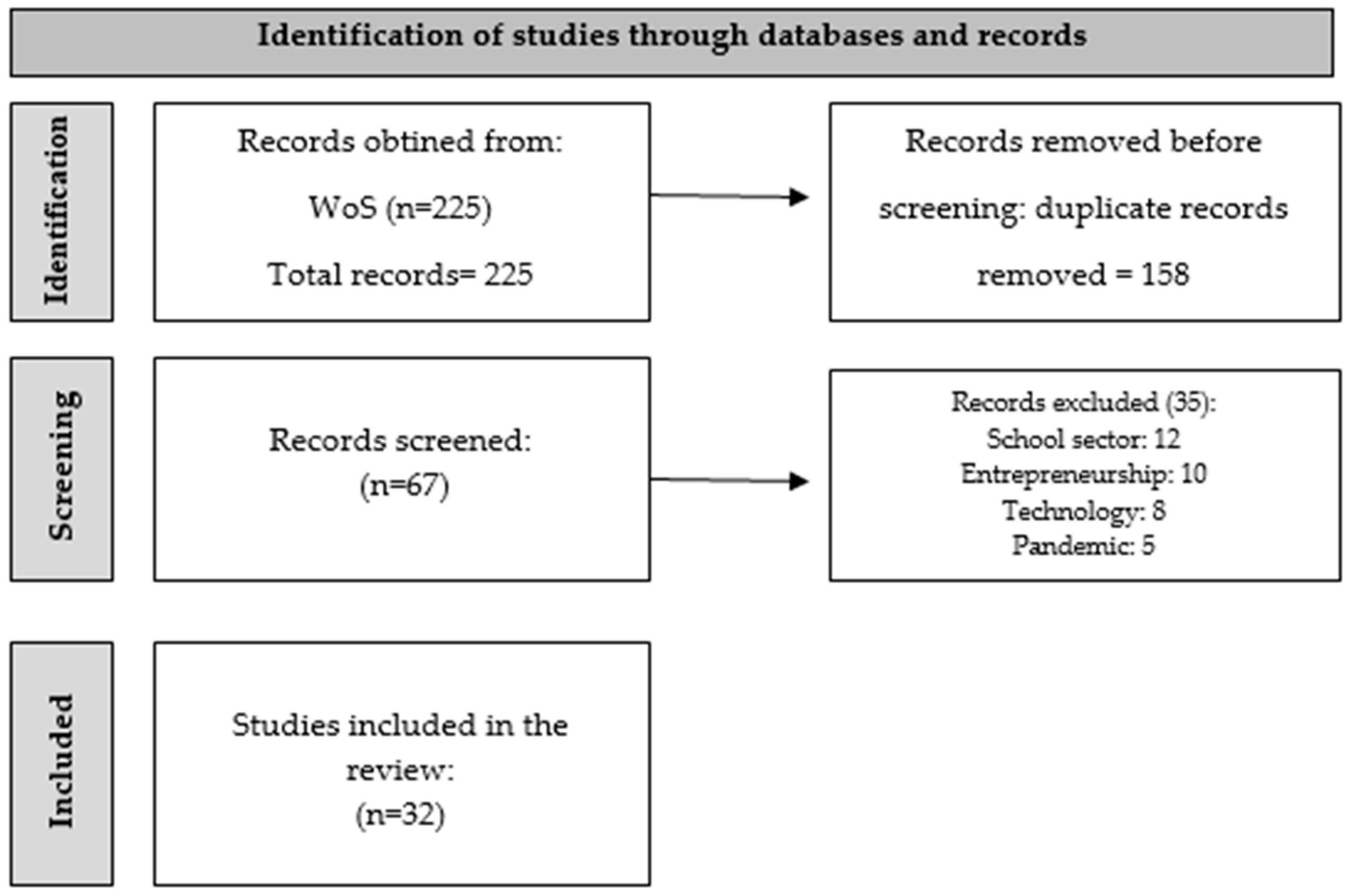
This article examines the governance of Global Value Chains (GVCs) through the lens of economic competence based on a systematic literature review of 32 selected studies. The findings show that economic competence functions as a governance-contingent construct whose effects vary across hierarchical, captive, relational, and modular governance structures. Rather than directly determining upgrading outcomes, competence dimensions operate through governance repositioning and shifts in dependence asymmetries within value chains. The review identifies recurring mechanisms—such as substitutability reduction, coordination cost mitigation, and institutional alignment—that explain how competence and governance interact. The analysis further demonstrates that economic competence is multidimensional, encompassing innovation-oriented, market-oriented, decision-making, relational, and systemic components. These dimensions operate differently depending on coordination complexity and power distribution within the chain. By advancing a contingency-based framework, the study refines GVC governance theory through a micro-foundational explanation of upgrading dynamics. From a managerial perspective, the framework offers a structured tool for aligning competence development strategies with specific governance configurations, supporting informed capability investments and improved strategic positioning. Overall, the study contributes by systematically integrating competence theory with governance typologies and power asymmetries, providing a coherent analytical model for future empirical research.
Keywords: governance; global value chains; economic competence; indicators governance; global value chains; economic competence; indicators