Article

Using Sandboxes for Testing Decisions in the Public Sector


by
Bogdan Pahonțu
*,
Florentina Pană-Micu
,
Georgiana Mădălina Mihăila
,
Luminița Movanu
and
Catalin Vrabie
*
Faculty of Public Administration, National University of Political Studies and Public Administration, 012104 Bucharest, Romania
*
Authors to whom correspondence should be addressed.
Adm. Sci. 2026, 16(2), 75; https://doi.org/10.3390/admsci16020075

Submission received: 27 November 2025 / Revised: 28 January 2026 / Accepted: 30 January 2026 / Published: 4 February 2026

Abstract

Technological advances are increasingly influencing how the public sector makes decisions according to citizens’ needs and the community’s problems. The need for a solution that facilitates the fast adaptation of administration to social context and people’s feedback becomes mandatory in order to ensure better services and implement projects that are in concordance with needs. In this paper, we propose a sandbox solution that helps public administration better understand community problems in real time, allocate public money more effectively to projects that really matter, and assess the administration’s performance. We started by collecting, filtering and analyzing social platforms posts and comments for 95 municipalities, and we extracted both the impressions/sentiment, but also the real problems that the communities are facing. Also, we categorized all cities depending on population, geographical area, and historical area to better identify common problems and create clusters of topics based on this split. We identified the most common issues communities face and integrated all the information into a sandbox that can be easily used by local administration for reactive decision-making and by central administration to provide a better overview of how public money is spent and whether the decisions align with needs. The results show that there is a real need for a sandbox to bring more clarity to the central and local administration layers and also better connect administrations with the people.

1. Introduction

The paper explores the use of social media platforms by public sector institutions as mechanisms for facilitating citizen participation and engagement with governmental bodies. Social networks such as Facebook extend the government’s presence into citizens’ digital lives into spaces for deliberate participation and introducing new complexities to democratic decision-making processes. This study is grounded in an analysis of the Facebook page content of 95 municipal city halls in Romania to demonstrate our hypothesis that citizens’ feedback and interactions with the city hall on Facebook as a sandbox environment can serve as a basis for decision-making analysis. We want to highlight that this analysis can be extended to other public sector institutions that can use such a sandbox space in different areas, as a governance mechanism for assessing needs and finding the best solutions for certain social and societal problems. The paper is especially addressed to decision-makers in public institutions, as these institutions could invest in resources and develop for implementing sandboxes and experimental approaches, adopting emerging technologies, and preparing for the future of the digital public sector and sustainable change.
The main question that guides this study is how social media can affect decision-making in public administration at both central and local governance levels. Starting with this aim, a few secondary aspects were addressed: city clustering based on 6 domains (economy, administration, environment, society, transport, and citizenship), and city clustering based on population. relief, historical context and real-time reaction based on citizen input on social networks. Even if the existing literature discusses the six domains or sandboxes in the context of Government 3.1, at this moment, there is no proposal for sandboxes that use both the domains and clustering based on so many criteria using social media posts.
In the Theoretical framework, we want to highlight the relationship between smart digital governance (Ruijer et al., 2023) and experimental public innovation enabled by new technologies, as part of a model of reflexive and collaborative governance. This model involves the reconfiguration of institutional architecture and the process of formulating and evaluating public policies. Further, sandboxes serve as learning environments for public institutions and as mechanisms for socio-emotional calibration of public decisions. In essence, they function as public innovation laboratories. The results of the analysis are integrated into formal decision-making processes, supporting evidence-based, ethical and inclusive governance. This approach strengthens the transition towards a smart public administration model in which decisions are validated through digital interaction and social feedback. Thus, the study proposes an innovative framework for policy design and implementation, positioning social networks as experimental spaces for the co-creation and testing of public decisions. In contemporary society, the legitimacy of governance is increasingly closely linked to the public sector’s ability to learn, to listen, to interpret and respond quickly to the citizens, so that these technological tools become essential for strengthening a digital social contract. The materials and methods section describes the research design, the process of data collection and methodological limitations. The results section suggests an analytical approach, with a descriptive analysis and the interpretations of results, followed by the Discussion section. In the conclusions section, the authors conclude that the implementation of sandbox solutions in the public sector becomes an important tool for testing, validating and adjusting public policy interventions before their large-scale application. Through them, the public institutions can observe the real impact of measures, identify the administrative and technological barriers and calibrate implementation strategies according to the real reactions and needs of citizens. Finally, Bibliographic References contains a significant number of studies in order to strengthen the importance of the concepts used.
Existing studies have examined social media extensively as a communication or participation tool in public administration. However, they rarely conceptualize these platforms as structured environments for testing decisions. Most analyses focus on transparency, engagement levels, or institutional image management without incorporating citizen reactions into a systematic, pre-decision evaluation process. Also, the literature on citizen participation and social media does not directly lead to the sandbox concept. This study addresses this gap by empirically conceptualizing Facebook as a decision-testing sandbox, where citizen sentiment and engagement indicators serve as early signals for evaluating and adjusting public decisions before formal implementation. By combining social media analytics with sandbox logic across 95 Romanian municipalities, this study advances the theoretical understanding and practical application of digital governance.

2. Theoretical Framework

2.1. Social Media and Citizen Participation in Public Administration

This subsection reviews how social media platforms have been conceptualized as channels for information dissemination and citizen participation in public administration, highlighting their limitations as predominantly communicative tools rather than decision-oriented mechanisms.
Social media has become an integral part of citizens’ daily lives (Wang et al., 2025), and public administrations cannot afford to ignore these channels of interaction. Recent literature highlights the significant digitalization of local governments, which is a prerequisite for transparency, communication and participation. Facebook is most often used as an informational space, occasionally for feedback or consultation, and rarely for co-decision. These limitations stem from digital inequalities, low trust, and administrations’ superficial use of social media, while genuine participation typically occurs through dedicated consultation platforms offering higher credibility, traceability, and integration into decision-making processes (Adnan et al., 2022). Such specialized infrastructures better support participatory democracy, particularly as AI becomes part of these processes (Shin et al., 2024). Therefore, social platforms, especially Facebook, remain relevant for studying public administration communication as they function as both unidirectional consultation tools and potential spaces for civic dialogue.
The existing literature has certain limitations in analyzing genuine interaction and consultation on social media, which makes the present study all the more relevant. Online platforms, particularly Facebook, can provide meaningful channels for engagement and feedback in contexts where citizens often perceive institutions as opaque or distant. This is particularly true at the local government level, as this is the tier of government that is closest to the citizens it serves.
According to Digital 2024: Romania Report (DataReportal, 2024), approximately 17.3 million out of the country’s estimated 18.1 million internet users are active on social media platforms, representing over 90% of the connected population. Facebook alone accounts for around 12.3 million active users, equivalent to over half of the country’s total population. Furthermore, online platforms have played a significant role in civic mobilization and electoral campaigns, evolving from simple communication channels into spaces for political expression and community organization. These characteristics reveal the genuine potential of using Facebook as a tool for citizen participation, despite the fact that the literature indicates that Romanian local administrations currently predominantly use it for informational purposes.
Identifying these limitations has diagnostic value and practical relevance for designing coherent public policies that enhance digital participation in decision-making processes and foster dialogue and co-decision. Using Facebook effectively to its full interactive potential does not depend solely on technological or financial resources, but also on institutional vision, coherent communication strategies, and a willingness to integrate the platform into decision-making processes for the benefit of citizens.
Specialized literature synthesizes best practices and conceptual frameworks that link institutional design, communication strategies, and social media use to citizen participation. This literature highlights the perspective of open governance and its added public value (Meijer, 2019), the role of organizational processes in the digital transformation towards participatory engagement (Luna-Reyes et al., 2021), and comparative analyses of participation and engagement across European cities (Cortés-Cediel et al., 2021).
Gellerstedt et al. (2020) analyze the correlation between the performance of municipalities on Facebook and citizens’ satisfaction with the quality of local public services. Their study suggests that an active and strategically managed social media presence can contribute to a more positive perception of local administrations, indicating that Facebook could serve as an early indicator of the quality of public services. In this context, the platform becomes an experimental space for municipalities, enabling them to trial messages and initiatives in real time. Citizens’ reactions can be assessed promptly, allowing policies to be adapted before formal decisions are made.

2.2. Engagement and Sentiment as Decision-Making Indicators

Building on participation studies, this subsection discusses how engagement metrics and citizen sentiment can be interpreted as analytical indicators reflecting early public reactions to policy initiatives.
At an international level, comparative studies of Nordic municipalities with a population of over 10,000 show that Facebook is either used as a one-way information channel or employed strategically to enhance engagement through coherent participation strategies, such as feedback campaigns, Q&A sessions, and integrated surveys. These variations emphasize the pivotal role of institutional design rather than the platform itself, while also reflecting organizational size. Although Facebook is often used primarily for disseminating information, several Nordic case studies demonstrate effective practices where feedback from citizens gathered via social media was incorporated into local decision-making processes (Zumofen et al., 2025).
Recent studies, such as Li et al.’s (2024) analysis of local governments’ digital governance capacity and Yang and Zhang’s (2023) research on digital technology adoption strategies in local governance, highlighted the importance of institutional resources and digital maturity for e-service delivery and citizen participation. These findings are consistent with municipal size and context. This research indicates that public institutions could utilize experimental digital tools, or ‘decision-making sandboxes’, to assess community responses to local issues.
Wukich (2022) distinguished between purely informative posts and those that encourage interaction. He showed that public authorities predominantly rely on informational content, which rarely generates engagement. Although interactive formats such as live sessions, Q&A events and open dialogues with citizens provide genuine opportunities for civic participation, they remain uncommon in administrative practice.
In the case of Romania, the literature confirms the above-outlined international trends, emphasizing both institutional and cultural specificities. Longitudinal studies of municipal websites (Vrabie, 2025) indicated significant progress in transparency and online service provision. However, major disparities persist between municipalities of different sizes. Recent analyses (Teiu, 2020; Vasile, 2022; Răceanu, 2024; Gherheș et al., 2023; Cernicova-Buca, 2021; Pripoaie, 2024) reinforced these findings and extended the discussion to online interaction and public participation. These analyses demonstrate that, despite a widespread social media presence, its use as a consultation space remains limited.
Although the current legislative framework is robust in terms of institutional transparency, it does not explicitly address citizen participation. Instead, it focuses on mandatory disclosure mechanisms and the right to request information (Radu & Haruța, 2025). Similarly, recent studies (Popescu et al., 2024) on citizens’ perceptions of digital services indicated that technical barriers and a lack of trust continue to limit engagement, even where digital infrastructure is already in place.
Greavu-Șerban et al. (2025) proposed a multidimensional analysis of the digitalization process within public institutions. Based on a wide range of online portal indicators, the study reveals improvements in transparency and e-service delivery. However, it also shows that participatory mechanisms in Romania are still in their infancy and are unevenly distributed. The authors conclude that institutional digitalization in Romanian public administration has advanced faster than the integration of civic participation mechanisms. This confirms the international tendency towards asymmetry between technological modernization and the use of online spaces for deliberation and participation.
Additionally, mapping the digital maturity of 103 Romanian municipalities (Vrabie, 2025) based on 23 indicators across five dimensions reveals a shift from basic digital ‘presence’ to more complex institutional ‘performance’. However, disparities in resources remain persistent. Consequently, citizen participation has not evolved in proportion to the expansion of digital infrastructure and remains marginal compared to transparency and online service provision.
Citizens’ perceptions can also be examined from a ‘demand-side’ perspective regarding digital services (Popescu et al., 2024). This shows that the adoption and use of electronic public services is conditioned by factors such as the availability of information and technical support, and the level of trust in data security. This study makes an important contribution to Romanian scholarly literature by emphasizing that the difficulty of digital participation is not only an issue of institutional supply, but also of barriers experienced by users.
Gavriluță et al. (2022) compared Romanian municipal websites from 2019 and 2022. Their study highlighted moderate improvements in accessibility and transparency, but limited progress in interactivity. Their findings support the view that technological modernization has not focused on implementing online public consultation systems. This aligns with international and national conclusions that social media and official portals predominantly serve as informational tools rather than participatory platforms.
A case study of the digital services offered by Suceava City Hall (Laura & Mihoc, 2024) revealed that, despite a relatively high level of trust and perceived security, overall satisfaction is moderate, particularly regarding active citizen involvement.
Thus, although there has been progress in infrastructure and transparency within Romanian local public administrations, encouraging citizen participation remains challenging and often receives only superficial attention in strategic documents. Consultations tend to be limited and largely symbolic, with the feedback collected seldom being integrated into actual decision-making processes. Romanian scholarly literature supports the international consensus that Facebook and other digital platforms are primarily used for disseminating information and managing institutional image rather than for deliberation or co-decision, despite their widespread use and potential to serve as participatory tools. In a study of Romanian government institutions, Zeru et al. (2023) found that, despite posting frequently on Facebook, these institutions failed to encourage significant interaction with citizens, suggesting they had not fully exploited the participatory opportunities offered by social media platforms. The study provides a quantitative analysis of central public institutions’ communication practices on Facebook, revealing that the platform is predominantly used for informational and image-based communication rather than participatory or collaborative mechanisms.
Gellerstedt et al. (2020) linked citizen satisfaction to engagement metrics measured through online interactions. They consider online civic engagement to be a proxy for satisfaction and institutional trust, functioning as an indirect yet meaningful indicator. In their analysis of Nordic municipalities, Zumofen et al. (2025) consider not only simple reactions but also the implementation of participatory consultation processes conducted through social media campaigns. Consequently, citizens’ digital interaction with local institutions via Facebook can be quantified through rapid responses such as likes, comments, and shares, as well as participation in online discussions or surveys. These represent indicators of varying intensity and depth. Analyzing these elements may provide a basis for evaluating citizens’ satisfaction and their potential involvement in designing public policies, while also promoting greater institutional transparency.

2.3. The Sandbox as a Mechanism for Public Policy Testing

The digital transformation of the public sector represents a significant change in contemporary governance, which redefines the relationships between public institutions and citizens (Baltac, 2024). E-government has evolved from the basic delivery of electronic services (version 1.0) to interactive, citizen-oriented communication via social media (version 2.0), reshaping the role of public institutions through collaborative governance (version 3.0) (Vrabie, 2023). In this context of transition to an advanced model of digital governance, the concept of e-government 3.1. is emerging as a maturity stage in the evolution of digital public services, going beyond the administrative process automation to integrate artificial intelligence (Vrabie, 2024; Sfetcu, 2021), customized service provision, and predictive analytics in decision-making (Ilieva et al., 2024).
This new model of governance implies a citizen-oriented system in which public institutions not only provide digital services but also co-create public policies with citizens, based on transparency and trust (Steinbach et al., 2019), strategically leveraging intelligent digital infrastructures and advanced data analysis solutions. Also, the studies emphasize a change in citizen roles, more precisely, a shift from passive recipients to active contributors. This new role is very important for the sandbox approach because it moves citizens and innovators from simply reacting to actively co-creating and testing solutions in a low-risk environment. In this rapidly evolving digital context, regulatory sandboxes (FCA, 2015, 2016), which are controlled testing environments, offer such adaptive tools for digital innovation (Gromova & Ivanc, 2020). This supports data-driven governance within the e-government 3.1 paradigm. Thus, sandboxes (Attrey et al., 2020) function as a tool of smart regulation, enabling experimentation in a safe environment with digital participation tools, algorithmic moderation, and feedback loops, allowing their impact on participation quality, inclusion, and policy adoption to be assessed.
This subsection introduces the sandbox concept as an experimental governance mechanism and explains how it can integrate citizen feedback into pre-decision testing processes.
These studies consequently suggest that interactive formats can transform Facebook from an informational channel into a sandbox for testing ideas prior to their adoption in formal decision-making processes.
As a short history, the concept of ‘sandbox’ was introduced by the UK’s Financial Conduct Authority (FCA) in 2015 as a ‘safe space’ for testing financial innovations in a controlled environment that minimizes systemic risks and protects consumers (FCA, 2015, 2016). This concept has since been adopted in other sectors, including energy, health, and public administration. It has also been formalized in EU legislation through the AI Act (Regulation (EU) 2024/1689), which defines AI regulatory sandboxes as supervised environments for testing artificial intelligence systems (European Union, 2024). In the literature, sandboxes are described as mechanisms of flexible regulation and digital innovation (Attrey et al., 2020). The term originated in computer science to denote isolated testing environments (NIST, 2024). Recent articles in administrative sciences and fintech areas demonstrate that the sandbox model has become a pivotal reference point in fintech (Kálmán, 2025) and other emerging public sectors (Costa et al., 2024).
A sandbox is a framework or environment that allows for the live testing of technologies or services (United Nations, 2021). The introduction of sandboxes can address various policies and regulatory gaps, promoting technology-driven innovation. Regarding the limitations of this approach, sandboxes do not provide one-size-fits-all approaches—there is no set of best practices to follow; it must be seen as a tool for flexibility and responsiveness to the needs of socio-economic situations. Social media is seen as a tool to improve public transparency and to build citizen trust. More precisely, we propose that the Facebook platform be used as a sandbox space by making the testing process transparent and controlled, fostering trust by showing a responsible approach to public innovation and management.
Recent studies suggest that Facebook has become a vital channel for institutional communication and citizen engagement, with citizens’ level of engagement serving as a key reference point. These studies suggest that, rather than merely being informative or unidirectional, posts that encourage interaction can allow Facebook to function as a communicative sandbox. Here, public administrations can experiment with different types of content and engagement mechanisms while assessing community reactions. This allows them to incorporate citizens’ views into formal governance processes (Pang et al., 2021, 2022; Chang et al., 2022; Guillaumie et al., 2024; Lin, 2021; Čičmancová & Madleňák, 2024). Recent literature suggests that online engagement encompasses not only visible reactions such as likes, comments and shares, but also more complex forms of participatory interaction, including expressing opinions, providing feedback and co-creating local solutions (Pang et al., 2021; Lin, 2021; Guillaumie et al., 2024).
During the COVID-19 pandemic, the nature of social media posts shared by public institutions generated various types of public reactions and engagement toward policy decisions (Gherheș et al., 2023). Public authorities adopted multi-platform communication strategies to promote protective measures and raise awareness of vaccination. This intensified activity, which was substantially higher than during ordinary periods, generated a significant rise in citizens’ digital participation. The global sensitivity and societal relevance of the topic stimulated active emotional involvement and extensive online discourse. National communication campaigns strategically leveraged social media platforms such as Facebook, YouTube, TikTok, and WhatsApp to enhance the dissemination of messages and encourage citizen interaction across multiple channels. This study examined these platforms to assess public engagement by analyzing citizens’ emotional expressions through emoji-based reactions, comments and posted messages. The findings reveal that engagement intensity was markedly higher on Facebook than on YouTube. Furthermore, the study highlights a long-standing challenge in institutional communication: establishing a genuinely bidirectional and participatory dynamic between public institutions and citizens, a fundamental aspect of contemporary digital governance.
The authors of this paper highlight the fact that the transition to e-Government 3.1 cannot be conceived without a deep understanding of the relationship between public institutions and citizens in the digital environment. Social networks, by their open, social, real-time and participatory nature (Magro, 2012), represent a privileged space for the manifestation of digital public opinion, offering public institutions a rich and diverse source of information on citizens’ reactions to political decisions, to increase the quality of public services and the way institutional communication is carried out.
Therefore, the integrated use of data from participatory digital spaces and sandbox environments allows for the transition from a reactive to a proactive and anticipatory governance model. In this way, a policy intelligence ecosystem is built, in which public decisions are the result of a dynamic interaction between data, algorithms and citizens’ experiences.
However, the use of new technologies is not without challenges, because the use of sentiment analysis and data generated from social networks could raise ethical issues regarding privacy, algorithmic bias and the contextual interpretation of emotions expressed online (Yu et al., 2025). In an era of data governance, where public trust is often undermined by a lack of transparency, the ability of public institutions to use these tools in an ethical, transparent and citizen-oriented manner is a key indicator of the state’s digital maturity.
The implementation of sandbox spaces requires careful methods of experimentation and a regulatory framework that ensures the balance between digital innovation and the protection of the public interest. From this perspective, e-Government 3.1 is at the intersection of technological innovation and democratic accountability, emphasizing principles such as transparency, equity and inclusion. The relationship between this concept, sandbox solutions and social networks represents one of the most promising directions for the development of contemporary digital governance, and by integrating these elements into a coherent framework, public institutions can move from a static and bureaucratic government to an empathetic, adaptive and collaborative one.
Taken together, the literature on social media participation, citizen engagement metrics, and regulatory sandboxes suggests the possibility of reconceptualizing social media platforms as structured environments for testing decisions. While previous studies examined these elements separately, integrating them provides a theoretical basis for using citizen reactions as evaluative signals early on within a sandbox framework. This integrated perspective informs the present study’s empirical design. Based on the theoretical discussion of social media as a participatory space, the interpretation of engagement and sentiment as analytical indicators, and the sandbox concept as an experimental governance mechanism, this study poses the following research questions:

3. Materials and Methods

3.1. Research Design

Based on the previous chapter, this study aims to explore the way in which public administrations in Romania use social networks, like Facebook, in their interaction with citizens, within the framework given by e-government mechanisms 3.1.
The purpose of the research is twofold: on the one hand, we analyze the mechanisms by which citizens’ feedback and interactions with the city hall on Facebook can serve as a basis for decision-making analysis. On the other hand, we aim to demonstrate Facebook’s potential as a decision-making tool, through which decision-makers in public administration can test and adjust their decisions before implementing them.
From a methodological point of view, the research is based on both qualitative analysis by processing the content of messages and comments generated by citizens in their interaction with the city hall (using sentiment analysis and text mining techniques), and quantitative analysis by descriptive analysis of the established indicators.
Thus, starting from the above, we formulate the following research objectives:
  • Identifying the presence of city halls on Facebook and the way in which interaction with citizens takes place.
  • Analyzing the way in which Facebook can be viewed as a “sandbox” for formulating and adjusting public decisions before implementing them.
The study is shaped around a research question, which we will explore throughout the paper: “Can Facebook be used as a sandbox for testing decisions, in which citizens’ reactions represent indicators for testing and adapting public decisions?”
  • The research hypothesis is: “Posts on the Facebook pages of public administrations can serve as relevant indicators for testing public decisions within a sandbox, thus enabling the evaluation and adjustment of decisions before their implementation”.
The steps we follow in the analysis aim to:
  • Identify and extract relevant data from the official pages of the city halls of the municipalities in Romania;
  • Process and clean the data so that they can be used in the analysis;
  • Perform descriptive analysis of statistical indicators;
  • Perform content analysis of posts and citizens’ comments;
  • Integrate the results into an experimental decision-making “sandbox” framework.
In our analysis, we focus on classifying municipalities based on their geographical area, development region, and economic characteristics. Subsequently, we extract other necessary indicators such as population, frequency of institutional posts and their typology (informative, consultative, promotional, etc.), level of citizen interaction, measured by likes, shares, comments, and reactions to posts, and sentiment of comments, to identify positive, negative, or neutral responses of citizens towards the administration’s decisions. Regarding Facebook posts, they are classified by domains as follows: mobility and transport, energy and environment, administration and public services, economy, society, and citizens.
In order to easily validate the usability of the sandbox, we chose to collect data from Facebook pages of Romanian institutions, as our location in Romania allows for easier and more reliable checks of the collected information.
Romania was selected as a case study because the digitalization of public administration is situated at an intermediate stage of digital maturity. Although the use of social media by local public administrations is widespread, it remains predominantly informational, which allows for the observation and analysis of intermediate stages of public sector digitalization, as well as emerging mechanisms of citizen interaction and feedback.
Romania represents an appropriate context for analyzing the decision-making sandbox, as local public administrations routinely use social media as instruments of institutional communication and interaction with citizens, without these practices being systematically integrated into formal mechanisms of participation and co-decision. Moreover, the Romanian context, characterized by a still limited formalization of digital feedback within decision-making processes, creates the necessary conditions to test the hypothesis that these platforms can serve as sandbox-type spaces for testing and adjusting public decisions before their formal implementation.
The study does not aim for statistical generalization of the results but rather proposes a methodological and analytical framework that can be applied and adapted to other countries with similar levels of institutional use of social media.
However, the sample selection that consists of a highly relevant dataset that includes a diverse range of cities from multiple categories: from each historical region of Romania (Transylvania, Moldova, Muntenia, Oltenia, Crișana, Banat, Bucovina, Dobrogea and Maramureș), depending population (from municipalities with under 50.000 citizen to municipalities with over 500.000 citizens), depending economic functions (e.g., administrative, industrial, touristic, maritime, historical) or depending on geographic position (e.g., mountains, hills, plains). By incorporating a diverse set of data collected according to multiple criteria, the sandbox successfully integrates domain-specific information, offering a comprehensive and relevant perspective for each municipality type. This proves valuable for both local and central public administrations, enabling the identification of municipality-specific challenges.

3.2. Variables and Indicators

To analyze the potential of Facebook as a sandbox environment for testing administrative decisions, the study operationalized indicators as:
  • To measure citizen engagement on Facebook pages, the number of likes, comments, and shares was collected. Citizen engagement was measured using standardized Facebook interaction indicators proposed by Bonsón and Ratkai (2013): popularity (average number of likes per post per 1000 fans), commitment (average number of comments per post per 1000 fans), and virality (average number of shares per post per 1000 fans). An aggregated engagement index (E) was calculated as the sum of these three components (Bonsón et al., 2014).
  • Citizen sentiment was assessed using sentiment analysis of user-generated comments and reactions.
  • Comments were classified into positive, negative, and neutral sentiment categories based on emotional polarity. Positive sentiment indicates approval or support for administrative actions, whereas negative sentiment reflects dissatisfaction or criticism.
  • Posts were classified into policy domains, including infrastructure, public services, economy, society, transport, and citizenship, enabling a comparative analysis of citizen reactions across areas of administrative intervention.
Within this logic, institutional posts are treated as experimental inputs, while citizen reactions are interpreted as feedback relevant for evaluating and adjusting decisions before formal implementation.

3.3. Data Collection and Processing Process

The data were collected during the period October—December 2024, from the official Facebook pages of the mayors of all municipalities in Romania (a sample of 95 municipalities). The dataset is composed of three categories of information:
  • institutional content, including all posts published by the mayors during the observation period;
  • user-generated content, represented by citizen comments associated with each post;
  • engagement indicators, namely the number of likes, shares, comments, and reaction types (e.g., like, love, angry).
Data was collected using both manual and semi-automated extraction processes in compliance with platform access constraints and ethical standards.
To ensure the sustainability of the analysis, the data was collected using licensed AI-based analytical tools provided by ChatGPT v4.5. The stages included:
  • data cleaning (duplicates, incomplete records and non-relevant data were removed);
  • The data was interpreted multiple times and clustered based on six domains (economy, administration, environment, society, transport, and citizenship) in an iterative process.
The data analysis methods included the descriptive analysis of institutional presence, sentiment analysis to identify a correlation between the type of post and the impact on citizens (more precisely, testing the hypothesis that the sentiment of the comments (positive/negative) is influenced by the typology of content published by the administration) and ultimately the integration of the data into an experimental “sandbox” type framework for testing and achieving the research objectives.
This study used a combined descriptive and inferential approach. First, a descriptive analysis examined the online presence of local administrations and their posting patterns across municipalities. Next, citizen comments were analyzed using sentiment analysis and classified as positive or negative. This process allowed the testing of the main hypothesis, which assumes that the sentiment expressed by citizens is influenced by the type of content published by local authorities.
The relationship between content type and citizen response was further examined by linking sentiment results with engagement metrics, providing evidence on how different communication strategies affect public reactions.
To enhance methodological robustness, validation was conducted at multiple levels. Sentiment classification results were cross-checked on a representative subset of comments through manual review, ensuring consistency with automated outputs.

3.4. Methodological Limitations

Although the data collected provides a comprehensive perspective on how Facebook interacts with users when city halls take place, there are also methodological limitations, such as:
  • Access to data, as some posts may have restrictions for posts and comments from citizens, and may also be deleted;
  • Data quality, as some data may be altered or may contain ambiguities and mistakes that become difficult to interpret;
  • Data representativeness as the results cannot be generalized to the entire population of a municipality, but mainly reflect only active users on Facebook;
  • Disparities between large and small cities exist because in smaller municipalities, comments tend to be predominantly positive, possibly due to lower engagement levels on Facebook;
  • The study only tracks data for a specified period; for a more in-depth analysis, it is necessary to track evolution over time.

4. Results

4.1. Descriptive Analysis

The analysis was based on a database created during the information parsing and interpretation process using AI tools containing data on the online activity of city halls and mayors on Facebook in Romania. The data regarding posts was extracted and classified by domain, including economy, administration, environment, society, and citizens.
The database included both quantitative indicators, such as population size, number of posts, and number of comments, as well as qualitative indicators, such as the tone of the post, critical themes, and positive themes of the post, aiming to provide a comprehensive picture of the highly relevant information that Facebook posts can offer.
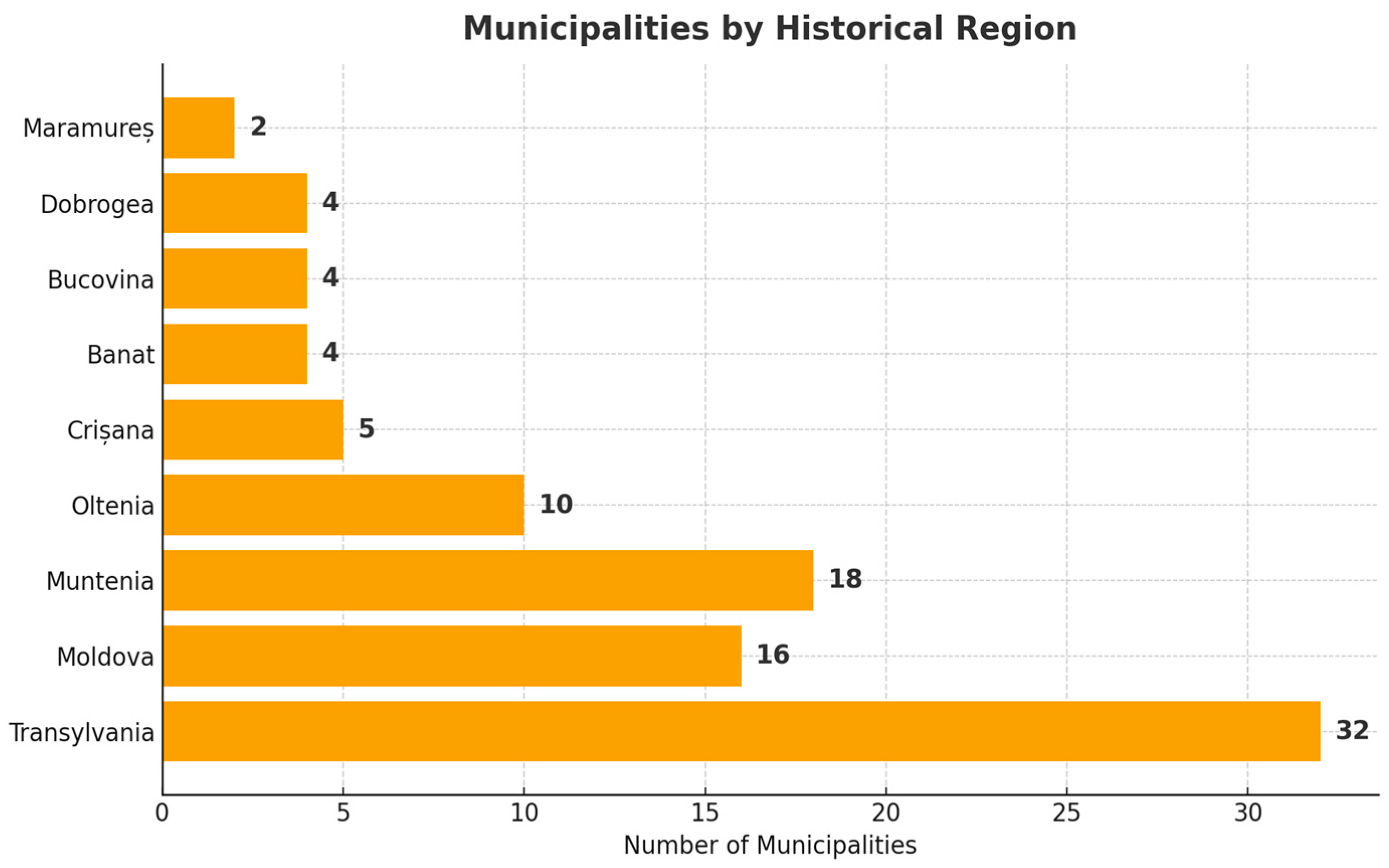
In our analysis, 95 municipalities were included and distributed as shown in Figure 1.
Historical distribution is important for our study, as depending on each region, the cities inherit specific geographical characteristics that influence their economy, sustainability and even citizen lifestyle and behavior. As presented in the previous figure, 32 municipalities are situated in Transylvania, 16 municipalities in Moldova, 18 municipalities in Muntenia, 10 municipalities in Oltenia, 5 municipalities in Crișana, 4 municipalities in Banat, 4 municipalities in Bucovina, 4 municipalities in Dobrogea, and 2 municipalities in Maramureș.
The distribution of municipalities across historical regions is particularly important for the structure of the decision-testing sandbox, as geographical and socio-economic differences shape both administrative priorities and the level of citizens’ civic engagement.
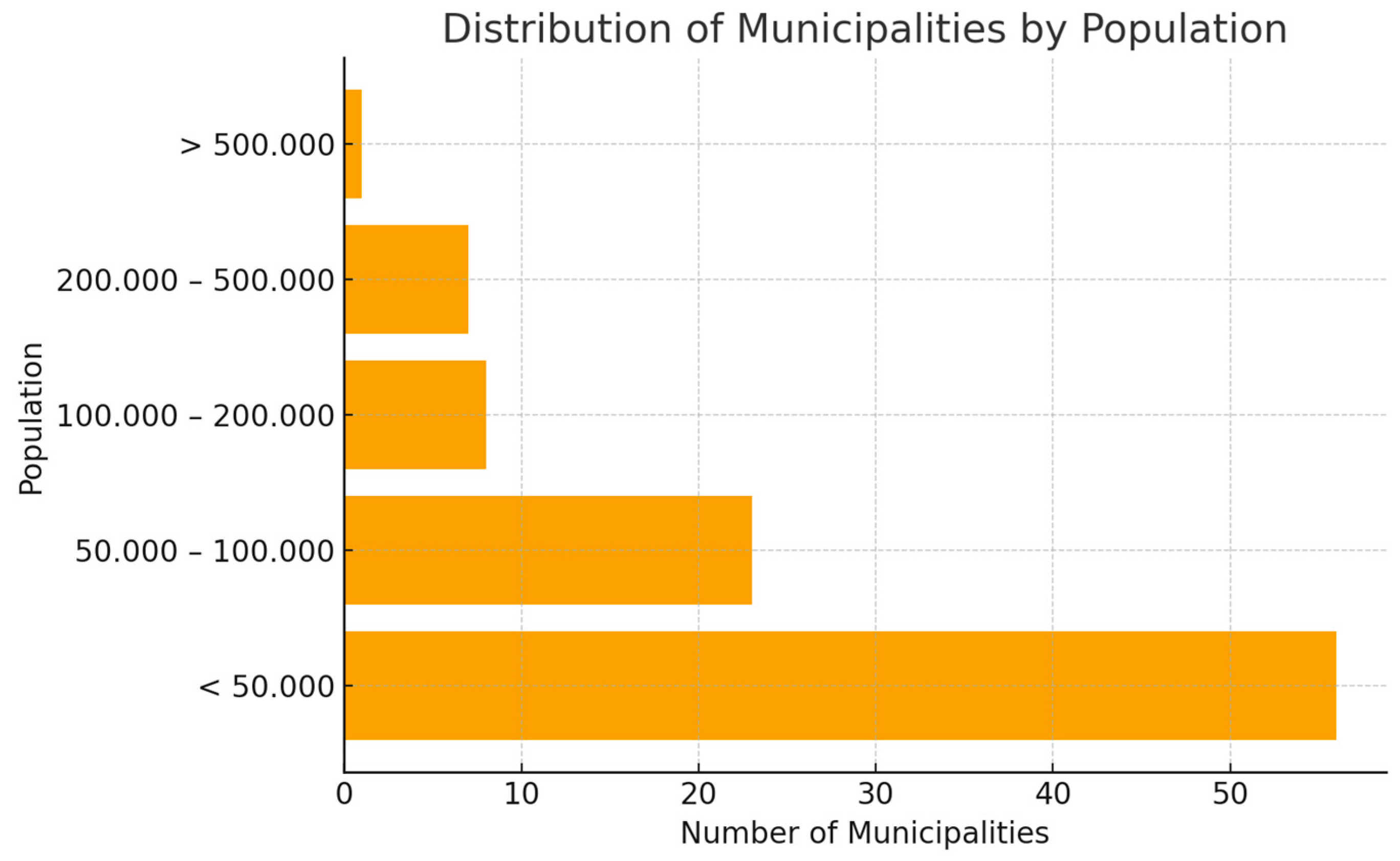
Another very important aspect that influences all the analyzed metrics refers to the number of citizens (presented in Figure 2). Depending on the population of each city, the budget that is annually allocated by the government for local investments may significantly increase. The figure below shows the distribution of cities by number of inhabitants, split into the following ranges: municipalities with fewer than 50,000 inhabitants, municipalities with 50,000–100,000 inhabitants, municipalities with 100,000–200,000 inhabitants, 7 municipalities with 200,000–500,000 inhabitants, and one municipality with more than 500,000 inhabitants.
From a decision-testing sandbox perspective, cities with larger populations provide a richer analytical environment, as they generate a more consistent flow of reactions to institutional posts. At the same time, lower levels of engagement in smaller cities should be interpreted cautiously and should not be automatically equated with a lack of citizen response or acceptance.
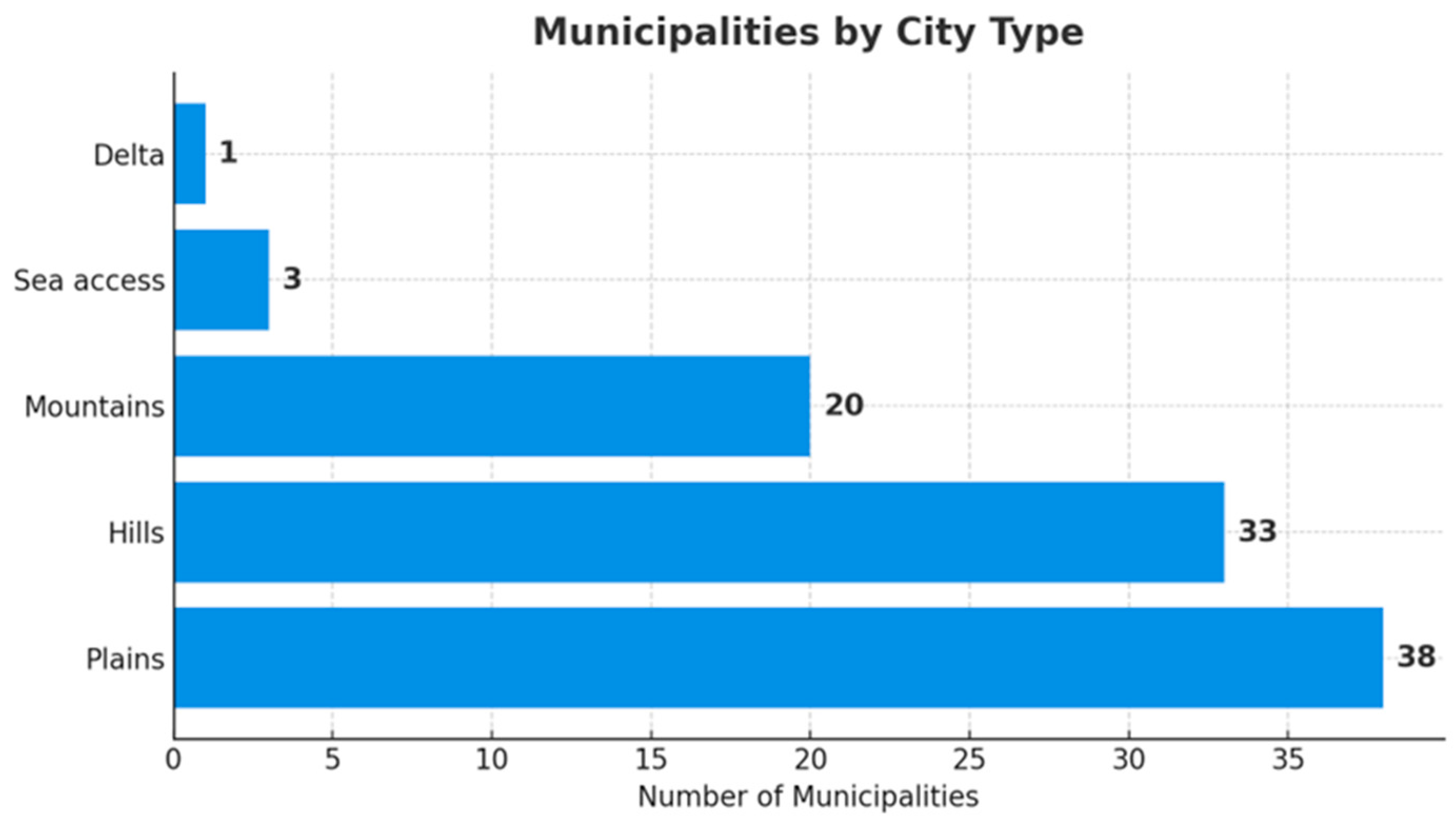
Geographical areas play a very important role in citizens’ behaviors, needs, and, most importantly, the topics tracked in the municipality’s public accounts. The analyzed cities have the following distribution from this point of view: 38 municipalities are located in plains, 33 municipalities are located in hills, 20 municipalities are in mountainous areas, 3 municipalities have sea access, and 1 municipality is in the delta.
The type of geographical area shapes both the topics addressed by local administrations and the way citizens respond to them, as citizens’ needs may vary depending on territorial characteristics. This analysis enables contextualized decision testing within the sandbox framework by examining citizen reactions in relation to the specific territorial context. This geographical distribution is presented in Figure 3.
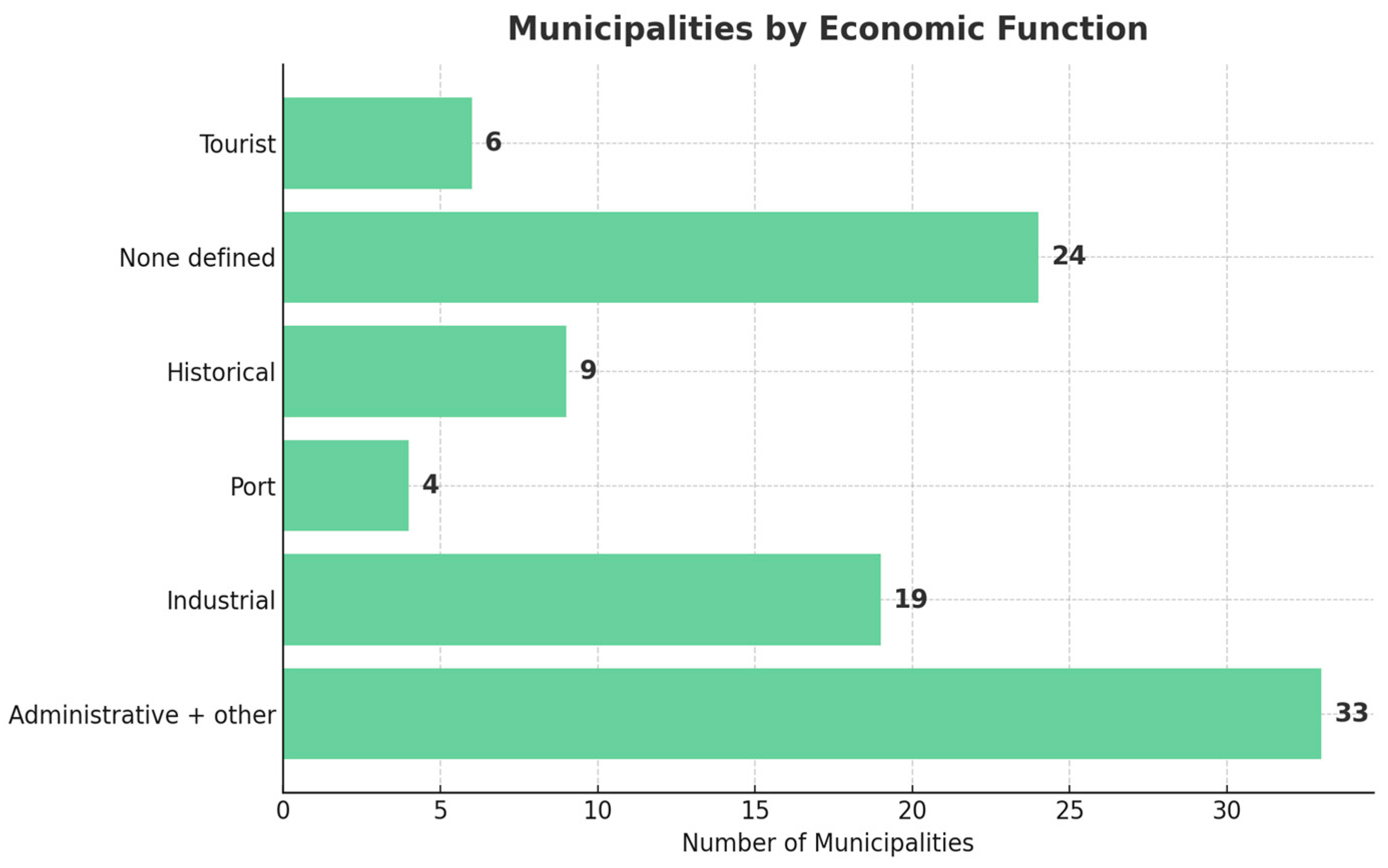
Last, but not least, our analysis took into account the economic function (represented in Figure 4) that each municipality may have, considering that a municipality can fulfill multiple functions simultaneously or none at all. This resulted in 33 municipalities combining administrative functions with another economic function, such as tourism, port, commerce, historical, or university functions, 19 municipalities with an industrial function, 4 municipalities with a port function, 9 municipalities with a historical function, 24 municipalities that do not fall into the defined economic functions, and 6 tourist municipalities. Differences between municipalities with industrial, port, tourism, or university functions allow for the identification of differentiated patterns of citizen reactions and the topics addressed by local administrations. Within the sandbox framework, this differentiation enables the identification of sensitivities specific to each economic profile, whereby certain administrative decisions may generate higher levels of citizen engagement or contestation depending on the local context.
We further analyzed the posts at the municipal level to assess the engagement of the citizens on the social platform. The table below shows how the number of posts varies according to the population size:
As we can observe in Table 1, the average number of posts increases with the population size, with larger cities (>50,000 inhabitants) having a higher average number of posts. Moreover, the total volume of posts depends not only on the average number of posts but also on the way the analyzed database was constructed. The largest number of posts comes from small towns (<50,000 inhabitants), which represent 56 out of the 95 municipalities included in the analysis.
As we can see from Table 2, large municipalities with over 100,000 inhabitants generate more interaction with citizens than smaller towns. This may suggest that a larger user base influences the level of engagement (number of comments); therefore, the greater the population of the municipality, the higher the number of comments on posts.
The results presented in Table 1 and Table 2 have relevant implications for the use of Facebook as a decision-testing sandbox, as higher levels of citizen interaction increase the likelihood of identifying diverse viewpoints, critical feedback, and early signals of contestation regarding administrative actions.
Furthermore, lower levels of engagement observed in smaller cities should not be automatically interpreted as public acceptance or lack of interest, but may instead reflect structural factors such as a smaller user base or lower levels of digital participation

4.2. Content Analysis of Posts and Comments

Starting from the research hypothesis: “Posts on the Facebook pages of public administrations can serve as relevant indicators for testing public decisions within a ‘sandbox,’ thus enabling the evaluation and adjustment of decisions before their implementation,” we used content analysis to examine the public Facebook posts of municipalities and mayors, as well as citizen comments, across the 95 municipalities included in the study.
Our focus was on identifying the most frequent themes addressed in the posts—within the domains of economy, administration, environment, society, transport, and citizenship—as well as distinguishing between critical and positive themes and analyzing the tone distribution of the posts to determine patterns that generate positive or negative reactions from citizens.
A substantial proportion of the posts (approximately 60%) were informational, while the remaining 30–40% consisted of participatory posts that invited citizens to express opinions or reactions. Furthermore, the tone of most posts was positive and institutional, reflecting a formal and constructive communication style typical of public administration pages.
According to the previous table (Table 3), the distribution of positive comments reaches approximately 70–80%, but there are also critical comments addressing the following issues:
  • Traffic and the lack of mobility alternatives;
  • Delays in district heating works;
  • Cleanliness and park management;
  • Quality of public works and the slow pace of construction sites;
  • Politicization of the mayor’s Facebook page;
  • Lack of heating and delays in the gas network;
  • Employment opportunities;
  • Local taxes;
  • Lack of real investments.
In some municipalities within the analyzed sample, although the administration emphasizes concepts such as “sustainable development” and “modernization” in online posts about the use of PNRR funds and the expansion of the lighting network, citizens complain about poor execution of works and chaotic management of administrative issues.
Additionally, in certain municipalities, citizen comments show strong engagement with “green” initiatives but harsh criticism regarding snow management and sanitation.
Within this research, we also identified types of sensitive posts that generate a wave of reactions from citizens, including:
  • In some localities, posts about infrastructure, traffic, and the economy trigger critical responses, with citizen comments being predominantly negative and focused on poor quality of work, chaotic traffic, malfunctioning traffic lights, and road conditions.
  • Conversely, citizens respond appreciatively to cultural and social initiatives, as well as posts on educational topics.
  • In conclusion, the results presented are oriented toward addressing the study’s research question and indicate that Facebook can function as a sandbox for testing public decisions. The identified patterns of citizen engagement and sentiment, differentiated by municipal characteristics and policy domains, can be interpreted as relevant indicators for evaluating public decisions, levels of acceptance, and potential risks of contestation before formal implementation.

4.3. Sandbox Proposal

In the previous sections, we described the entire flow of retrieving the information from Facebook, information processing using Artificial Intelligence tools, but also the way in which all this processed data can be used. In order to optimize and fully benefit from the collected information, the usage of a data sandbox is mandatory in this context.
First, the sandbox will contain all 95 municipalities/cities. From this point, it is very important to know which cluster each city belongs to by historical region, population, economic function, or type.
Depending on the clusters, the sandbox may offer various dashboards and metrics that are very useful for central administration about what’s happening in the country. The topics discussed in the posts/comments for cities may be tidily linked with the region of each city (for example, in the posts on pages from cities in Moldavia, there is an interest in the construction of a new highway). Furthermore, depending on the population, there may be different problems that are raised by the community (for example, traffic jams in crowded cities).
From the central administration point of view, the sandbox represents a single point of view from all the projects, impediments and feedback for all cities in the country, a place based on which the government can make decisions for investing public money depending on the real needs of the people in the communities.
The sandbox can also be a very useful tool for local administration and mayors who can easily see the community feedback and opinion about the local investments, can adapt very fast based on the most urgent needs and can make better decisions to optimize the spending of public money.
All the previously presented charts, tables and much more dashboards and even AI-based decision support agents can be integrated into the sandbox to support central and local administrations.
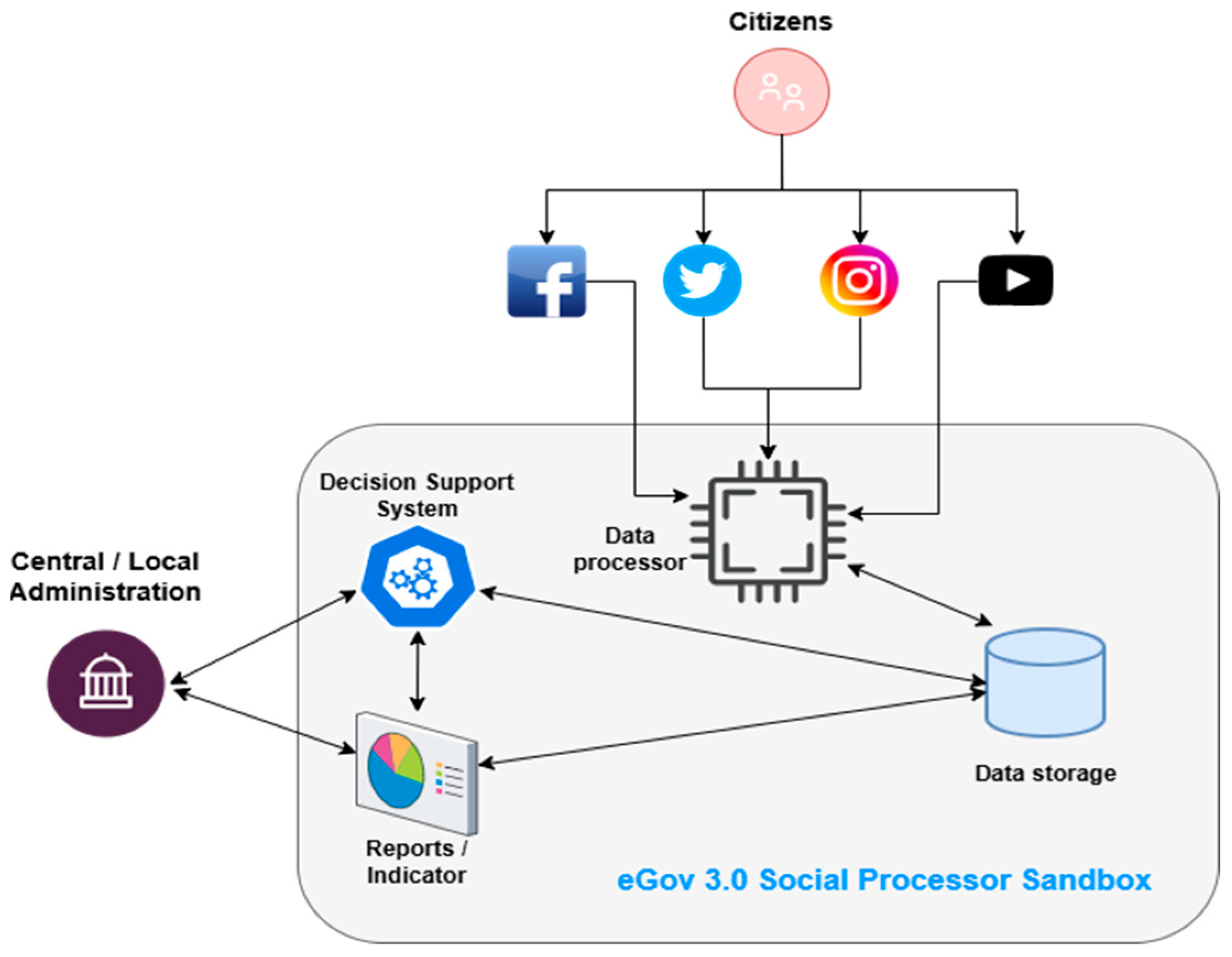
In order to aggregate all this information collected for social platforms, the solution available for both central and local administration that facilitates the “understanding” of the community sentiment and impediments and translates into certain reports or possible decisions suggestion will implement only the areas that matters for the community, adapt fast to the citizen needs and have a real time reaction to the real problems that may appear.
As presented in the previous figure (Figure 5), all the social media data is feeding the sandbox Data processor, where data is anonymized, aggregated and systematically analyzed. Historical datasets, including messages and comments, are transformed into measurable indicators to assess participation patterns and the evolution of citizens’ opinions. The processed data is stored in the sandbox data storage in order to be further used for reports and decision suggestions.
For this data to be useful, the sandbox may provide both real-time reports and indicators, but also AI-based decision suggestions about the local or central projects based on citizen comments. Both central and local administrations will be real-time connected with the people’s opinions and thoughts.
When discussing local administration, it is clear that community reactions in posts and comments reflect citizens’ appreciation for local projects and investments, their standard of living, daily challenges, and many other relevant topics for the local community.
From the local governance point of view, integrating all this data into a sandbox and having real-time feedback from the community may be a game-changer for their local initiatives when talking about local investments, spending public money and applying for projects that really matter for the community.
As previously mentioned, when talking about central government and allocation of the public money for local projects, it is very important to spend the money on projects that really matter for the local communities, for projects that solve the real problems, but also assess the performance of the local administrations.

5. Discussion

The previous chapter presented a summarized view of the collected information and the results after processing the data using AI tools. According to our findings, there are two categories of topics that can be extracted and used by public administration in order to make decisions: data that is used in order to identify the current problems and take the citizen opinion about what are the real impediments in the local communities and data to assess the proposed projects, their relevance and impact for the community depending on the needs, local infrastructure, social context, geographical position and much more. Optionally, the data can also be used as an assessor for people’s happiness and well-being in their local environment.
Previous studies, such as Zeru et al. (2023) and Gavriluță et al. (2022), have shown that local public administrations predominantly use social media as informational tools, while interactive formats and co-decision mechanisms remain limited. The findings of the present study confirm this unidirectional communication style, indicating the persistence of a model oriented more toward information dissemination than toward dialogue and active participation.
The proposed sandbox is expected to serve as a powerful tool for public sector innovation. It would offer localized reports highlighting the challenges local administrations face, as well as a broader, out-of-the-box view of the entire country, segmented by region, population, geographic area, and more. Researchers such as Attrey et al. (2020) have written about the sandbox as a tool for innovation and flexibility to have better service results and public policies. Español and Koenig (2025) argued that regulatory sandboxes should be understood primarily as mechanisms for improving policymakers’ comprehension of emerging technologies, rather than merely as experimental environments designed to foster innovation.
The results of this research highlight the importance of public reactions on Facebook (comments, likes), as they express social opinion and serve as a quick barometer for testing it. Thus, our research underlines the analysis made by the authors Gellerstedt et al. (2020), indicating that Facebook could serve as an early indicator of the quality of public services and that an active and strategically managed social media presence can contribute to a more positive perception of local institutions. Studies from recent years suggest that online engagement on social media encompasses complex forms of participatory interaction and co-creating to local solutions (Pang et al., 2021; Lin, 2021; Guillaumie et al., 2024).
As observed, posts related to infrastructure projects, traffic, or the economy generate constructive reactions and comments from citizens, which can serve as a basis for testing and adapting public decisions.
Zumofen et al. (2025) have also demonstrated in their studies from several Nordic countries that feedback from citizens gathered via social media could be used for local decision-making processes.
From the data analysis, we can conclude that citizen reactions through comments provide qualitative content that should be leveraged, as they contain signals about specific local issues, allowing administrations to identify the real needs of citizens.
Furthermore, the speed of citizen reactions to Facebook posts enables a much faster evaluation of the impact of decisions on the public, making Facebook a suitable environment for testing policy measures.
Thus, from the analysis of data collected from the Facebook pages of the 95 municipalities in Romania included in the sample, it emerges that this social platform can be used not only for information but also as a medium for testing and adjusting public decisions, as it provides a comprehensive view of citizens’ needs.
These resources were integrated using AI tools and advanced IT technology into a single application, defined as a sandbox that can offer both a zoom-in/zoom-out view for central administration and reactive feedback on the local administration level, i.e., a much more important tool that can support decision-making.
At the local level, public administrations can use data generated on Facebook and citizen engagement indicators to identify early citizen reactions to initiatives or projects in the planning phase. In addition, the collection and processing of engagement and sentiment indicators within a sandbox framework can support decision-makers in the continuous monitoring of citizen responses. Such an instrument can serve both to inform the formulation of context-adapted public policies and to enable comparative analysis across municipalities with different profiles. This comparative perspective can provide relevant insights for calibrating national-level interventions and for anticipating potential implementation challenges.
To translate these findings into actionable guidance, the proposed sandbox framework can be operationalized through a step-by-step implementation process:
  • Data Acquisition and Monitoring
    Local administrations should establish a continuous mechanism for collecting publicly available social media data from official communication channels, focusing on posts, citizen comments, and engagement indicators. This enables real-time or near-real-time monitoring of public reactions.
  • Content Typology and Sentiment Mapping
    Institutional posts should be categorized by topic (e.g., infrastructure, mobility, economy, social services). Sentiment analysis can then be applied to citizen comments to identify dominant perceptions and emotional responses associated with each policy domain.
  • Issue Identification and Prioritization
    Qualitative signals extracted from comments can be used to identify recurrent local issues and emerging concerns. These insights support evidence-based prioritization of policy actions and resource allocation.
  • Policy Testing and Feedback Loops
    Facebook reactions (comments, likes, shares) act as a rapid feedback mechanism, allowing administrations to test proposed measures or communication strategies before full-scale implementation. This iterative process reduces decision-making uncertainty and enhances policy responsiveness.
  • Reporting and Decision Support
    The sandbox generates localized analytical reports for individual municipalities, as well as aggregated, comparative views at the regional or national level. Such multi-scale visualization supports both local decision-making and central-level strategic planning.
For practical deployment, the sandbox concept should be piloted in municipalities of varying size, demographic structure, and geographic location. Testing the framework in both large urban centers and smaller municipalities allows the identification of context-specific patterns, engagement disparities, and scalability constraints. These pilot studies would contribute to refining analytical parameters and ensuring adaptability across heterogeneous administrative environments. Markellos et al. (2024) conducted a comprehensive analysis of sandboxes, and they indicated that the main groups of design choices are: objectives, participant benefits, governance and administration. The common objectives for testing sandboxes included sustainability, innovation, improving services, cost minimization for citizens and influencing future regulation and policy.
The implementation of the sandbox requires several enabling conditions. From a technical perspective, administrations need access to basic IT infrastructure, including data storage capabilities, analytical software, and licensed AI tools. Organizationally, the approach necessitates the development of interdisciplinary teams, combining policy experts, data analysts, and communication specialists. Clear internal procedures for data interpretation and decision escalation are also essential. Martin and Balestra (2019) present an analysis of regulatory sandboxes, their challenges, benefits and risks. Chen and Taeihagh (2025) present a framework for policymakers to design a sandbox. Johnson (2023) offers a framework to describe the regulatory sandboxes in different sectors.
Best practices emerging from this study include maintaining transparency in institutional communication, actively responding to citizen feedback, and integrating social media insights into formal decision-making workflows rather than treating them as ad hoc signals.

5.1. Limitations

Beyond the methodological limitations previously discussed in Section 3.4, the study is subject to several additional limitations:
  • The results of the sentiment analysis should be interpreted as indicative measures of public evaluation rather than exhaustive representations of citizens’ attitudes, as automated tools may have difficulties accurately identifying irony, sarcasm, or language patterns specific to the Romanian language.
  • The absence of direct qualitative data obtained through interviews or surveys limits the ability to interpret in depth the meaning and motivations underlying the reactions identified through quantitative analysis.
  • Local administrations differ significantly in terms of communication style, posting frequency, and communication strategies. These differences may influence levels of citizen engagement and sentiment, thereby complicating direct comparative analysis across municipalities.
  • Given the exploratory nature of the study, the results do not allow for the formulation of causal conclusions regarding the direct impact of social media use on the quality of administrative decision-making.

5.2. Future Research

Future research can further develop the findings of this study by extending the analysis to other social media platforms, in order to compare citizen reactions across different digital environments and to assess whether the sandbox logic identified for Facebook is transferable to other platforms. In addition, the analysis of citizen engagement and sentiment in relation to administrative decisions can be deepened through the monitoring of reactions before and after decision adjustments, thereby contributing to the improvement of the sandbox design.
Building on these extensions, future studies may also expand upon the exploratory nature of this study by incorporating more advanced quantitative indicators and comparative analytical techniques. While this paper takes a descriptive and conceptual approach, future studies could operationalize sentiment scores, topic prevalence, or engagement indices as measurable variables. They could then apply statistical tests to examine the potential relationships between these variables and administrative performance indicators. These extensions would improve the explanatory power and generalizability of the sandbox framework without changing the current study’s conceptual contribution.

6. Conclusions

Living in the era of technology is an extraordinary advantage for both citizens and public administration. Information is one of the most valuable assets that can be used in order to improve the public sector services, offer more sustainable cities for local communities and assess the performance of both local and central administration.
This study examined the feasibility of integrating social media data into a sandbox-based analytical framework aligned with the principles of e-Government 3.1. The empirical analysis relied on the collection of publicly available data from the Facebook pages of mayors and public institutions, which were subsequently processed through multiple AI-based techniques for aggregation, classification, and thematic analysis.
The data processing showed that there are various problems that local communities are facing, and there is a discrepancy between the real impediments and the political directions, both from local and central government layers.
The results demonstrate that social media data can be systematically structured and analyzed to extract recurring themes related to local community issues.
The proposed approach to solve this situation is a customized sandbox in which data is collected from social platforms, aggregated, saved locally and then presented to public institutions as reports, indicators or decision suggestions. By using this sandbox, the public money will be spent more specifically on problems that really matter for the communities, the authorities will have a real-time pulse of the citizens, and the decisions may be adapted according to the most recent needs. The sandbox may offer a zoom-in/zoom-out view, from the country level, deep into each city, split by regions, geographic areas, city types, and number of citizens, but also depending on various topics such as the economy, administration, environment, society, transport, and citizenship.
The main contribution of this work is the design and empirical validation of a customized sandbox architecture that supports end-to-end data handling, including data acquisition, local storage, iterative AI-based processing, and the generation of structured analytical outputs.
Future work will address automation of the data ingestion process, extension to additional social media platforms, and further refinement of analytical metrics to enhance reproducibility, scalability, and integration with existing public administration information systems.

Author Contributions

Conceptualization, B.P., F.P.-M., G.M.M., L.M. and C.V.; methodology, F.P.-M.; software, B.P.; validation, B.P., F.P.-M., G.M.M., L.M. and C.V.; formal analysis, B.P., F.P.-M., G.M.M., L.M. and C.V.; investigation, B.P., F.P.-M., G.M.M., L.M. and C.V.; resources, B.P., F.P.-M., G.M.M., L.M. and C.V.; data curation, B.P.; writing—original draft preparation, B.P., F.P.-M., G.M.M., L.M. and C.V.; writing—review and editing, B.P., F.P.-M., G.M.M., L.M. and C.V.; visualization, B.P., F.P.-M., G.M.M., L.M. and C.V.; supervision, B.P., F.P.-M., G.M.M., L.M. and C.V. All authors have read and agreed to the published version of the manuscript.

Funding

This research received no external funding.

Institutional Review Board Statement

Not applicable.

Informed Consent Statement

Not applicable.

Data Availability Statement

The original contributions presented in this study are included in the article. Further inquiries can be directed to the corresponding author.

Acknowledgments

This article was developed within the Smart-EDU Hub@SNSPA. The authors, as members of the Hub, benefited from structured knowledge exchange and critical peer engagement that informed the study’s conceptual framing and analysis. The authors gratefully acknowledge this positive environment.

Conflicts of Interest

The authors declare no conflict of interest.

References

  1. Adnan, M., Ghazali, M., & Othman, N. Z. S. (2022). E-participation within the context of e-government initiatives: A comprehensive systematic review. Telematics and Informatics Reports, 8, 100015. [Google Scholar] [CrossRef]
  2. Attrey, A., Lesher, M., & Lomax, C. (2020). The role of sandboxes in promoting flexibility and innovation in the digital age (OECD Going Digital Toolkit Notes No. 2). OECD Publishing. [Google Scholar]
  3. Baltac, V. (2024). e-Guvernarea. Transformarea digitală a administrației publice/e-Government. Digital transformation of public administration. Publisher Pro Universitaria. [Google Scholar]
  4. Bonsón, E., & Ratkai, M. (2013). A set of metrics to assess stakeholder engagement and social legitimacy on a corporate Facebook page. Online Information Review, 37(5), 787–803. [Google Scholar] [CrossRef]
  5. Bonsón, E., Royo, S., & Ratkai, M. (2014). Citizens’ engagement on local governments’ Facebook sites. An empirical analysis: The impact of different media and content types in Western Europe. Government Information Quarterly. [Google Scholar]
  6. Cernicova-Buca, M. (2021). An appraisal of communication practices demonstrated by Romanian health authorities during the COVID-19 lockdown. Sustainability, 13(5), 2500. [Google Scholar]
  7. Chang, A., Leung, K., Tam, G., & Yao, S. (2022). Health communication through positive and solidarity messages on government Facebook pages in Macao during COVID-19. International Journal of Environmental Research and Public Health, 19(10), 6159. [Google Scholar]
  8. Chen, G. K. H., & Taeihagh, A. (2025). Designing regulatory sandboxes: A comprehensive framework for aligning functionalities and objectives. Policy Design and Practice, 9(1), 1–15. [Google Scholar] [CrossRef]
  9. Cortés-Cediel, M. E., Benito-Ferri, J., & Rodríguez-Bolívar, M. P. (2021). Analyzing citizen participation and engagement in European smart cities. Social Science Computer Review, 39(6), 1195–1216. [Google Scholar] [CrossRef]
  10. Costa, M., da Silva, J. F., Santos, V., & Moreira, A. (2024). FinTech and the regulatory sandbox: A systematic literature review. Administrative Sciences, 14(2), 86. [Google Scholar]
  11. Čičmancová, E., & Madleňák, R. (2024). The sustainability of local governments—Evidence from online communication with citizens in Slovakia. Sustainability, 16(17), 7310. [Google Scholar]
  12. DataReportal. (2024). Digital 2024: Romania. Available online: https://datareportal.com/reports/digital-2024-romania (accessed on 2 November 2025).
  13. Español, A. G., & Koenig, P. D. (2025). Regulatory sandboxes for AI in the majority world: A learning-centric approach to legal adaptation. In Cambridge forum on AI: Law and governance (vol. 1, pp. 1–20). Cambridge University Press. [Google Scholar]
  14. European Union. (2024). Regulation (EU) 2024/1689 of the European parliament and of the council on artificial intelligence (AI act) (Official Journal of the European Union, L 2024/1689). European Union. [Google Scholar]
  15. Financial Conduct Authority. (2015). Regulatory sandbox. Project Innovate: Call for input. FCA. [Google Scholar]
  16. Financial Conduct Authority. (2016). Regulatory sandbox opens to applications. FCA. [Google Scholar]
  17. Gavriluță, N., Stoica, V., & Fârte, G. I. (2022). The official website as an essential e-governance tool: A comparative analysis of the Romanian cities’ websites in 2019 and 2022. Sustainability, 14(11), 6863. [Google Scholar] [CrossRef]
  18. Gellerstedt, M., Norström, L., Bernhard, I., Gråsjö, U., & Snis, U. L. (2020). Do municipal facebook performance and citizen satisfaction go hand in hand? Electronic Journal of e-Government, 18(1), 30–42. [Google Scholar] [CrossRef]
  19. Gherheș, V., Cernicova-Buca, M., & Fărcasiu, M. A. (2023). Public engagement with Romanian government social media accounts during the COVID-19 pandemic. International Journal of Environmental Research and Public Health, 20(3), 2372. [Google Scholar] [CrossRef]
  20. Greavu-Șerban, V., Gheorghiu, A., & Ungureanu, C. (2025). A multidimensional perspective of digitization in Romanian public institutions. World Development, 191, 106996. [Google Scholar] [CrossRef]
  21. Gromova, E., & Ivanc, T. (2020). Regulatory sandboxes (experimental legal regimes) for digital innovations in BRICS. BRICS Law Journal, 7(2), 10–36. [Google Scholar] [CrossRef]
  22. Guillaumie, L., Vezina-Im, L. A., Bourque, L., Boiral, O., Talbot, D., & Harb, E. (2024). Best practices for municipalities to promote online citizen participation and engagement on Facebook: A narrative review of the literature. Social Sciences, 13(3), 127. [Google Scholar] [CrossRef]
  23. Ilieva, G., Yankova, T., Ruseva, M., Dzharova, Y., Zhekova, V., Klisarova-Belcheva, S., Mollova, T., & Dimitrov, A. (2024). Factors influencing user perception and adoption of E-Government services. Administrative Sciences, 14(3), 54. [Google Scholar] [CrossRef]
  24. Johnson, W. G. (2023). Caught in quicksand? Compliance and legitimacy challenges in using regulatory sandboxes to manage emerging technologies. Regulation & Governance, 17, 709–725. [Google Scholar]
  25. Kálmán, J. (2025). The role of regulatory sandboxes in FinTech innovation: A comparative case study of the UK, Singapore, and Hungary. FinTech, 4(2), 26. [Google Scholar] [CrossRef]
  26. Laura, M. R., & Mihoc, N. I. (2024). Quality assessment of online administrative public services provided by municipalities. Applied Research in Administrative Sciences, 5(3), 4–15. [Google Scholar]
  27. Li, X., Wang, Y., & Chen, L. (2024). Evaluation of local government digital governance ability. Sustainability, 16(14), 6084. [Google Scholar] [CrossRef]
  28. Lin, Y. (2021). Using social media for citizen participation: Contexts, empowerment, and inclusion. Sustainability, 13(12), 6635. [Google Scholar] [CrossRef]
  29. Luna-Reyes, L. F., Gil-García, J. R., & Pardo, T. A. (2021). Sensemaking and social processes in digital government transformation. Government Information Quarterly, 38(4), 101592. [Google Scholar] [CrossRef]
  30. Magro, M. (2012). A review of social media use in E-Government. Administrative Sciences, 2(2), 148–161. [Google Scholar] [CrossRef]
  31. Markellos, R., Ennis, S., Enstone, B., Manos., A., Pazaitis, D., & Psychoyios, D. (2024). Worldwide adoption of regulatory sandboxes: Drivers, constraints and policies. University of East Anglia, Centre for Competition Policy. [Google Scholar]
  32. Martin, A., & Balestra, G. (2019). Using regulatory sandboxes to support responsible innovation in the humanitarian sector. Global Policy, 10(4), 733–736. [Google Scholar] [CrossRef]
  33. Meijer, A. J. (2019). Open governance: A new paradigm for understanding urban governance in an information age. Frontiers in Sustainable Cities, 1, 3. [Google Scholar] [CrossRef]
  34. National Institute of Standards and Technology. (2024). Computer security resource center—Glossary: Sandbox. U.S. Department of Commerce.
  35. Pang, P. C.-I., Cai, Q., Jiang, W., & Chan, K. S. (2021). Engagement of government social media on Facebook during the COVID-19 pandemic: The Case of Hong Kong. International Journal of Environmental Research and Public Health, 18(7), 3508. [Google Scholar] [CrossRef]
  36. Pang, P. C.-I., Chan, K. S., & Fung, I. C.-H. (2022). Social media engagement in two governmental schemes during COVID-19: Evidence from Facebook in Macao. International Journal of Environmental Research and Public Health, 19(15), 8976. [Google Scholar] [CrossRef] [PubMed]
  37. Popescu, M. A. M., Barbu, A., Moiceanu, G., Costea-Marcu, I.-C., Militaru, G., & Simion, P. C. (2024). Citizens’ perception of digital public services: A case study among Romanian citizens. Administrative Sciences, 14(10), 259. [Google Scholar] [CrossRef]
  38. Pripoaie, R. (2024). Post-Pandemic Exploratory Analysis of the Romanian Public Administration Digitalization. Sustainability, 16(11), 4652. [Google Scholar] [CrossRef]
  39. Radu, B. V., & Haruța, C. (2025). Citizen participation after the fall of communism in Romania: Evolving perceptions and practices in local decision-making and governance. Transylvanian Review of Administrative Sciences, 21(75), 93–113. [Google Scholar] [CrossRef]
  40. Răceanu, R. A. (2024). Social media communication of municipalities in Romania—Fostering government public relations. Journal of Public Administration, Finance & Law, (31), 347–370. [Google Scholar] [CrossRef]
  41. Ruijer, E., Twist, A. V., Haaker, T., Tartarin, T., Schuurman, N., Melenhorts, M., & Meijer, A. (2023). Smart governance toolbox: A systematic literature review. Smart Cities, 6(2), 878–896. [Google Scholar] [CrossRef]
  42. Sfetcu, N. (2021). Introducere in inteligenta artificiala/ introduction to artificial intelligence. Publisher Multimedia Publishing. [Google Scholar]
  43. Shin, B., Floch, J., Rask, M., Baeck, P., Edgar, C., Berditchevskaia, A., Mesure, P., & Branlat, M. (2024). A systematic analysis of digital tools for citizen participation. Government Information Quarterly, 41(3), 101954. [Google Scholar] [CrossRef]
  44. Steinbach, M., Siewekeb, J., & Süß, S. (2019). The diffusion of e-participation in public administrations: A systematic literature review. Journal of Organizational Computing and Electronic Commerce, 29(2), 61–95. [Google Scholar] [CrossRef]
  45. Teiu, C. (2020). The social media presence of Romania’s main municipalities. Journal of Public Administration, Finance and Law, (17), 130–135. [Google Scholar]
  46. United Nations. (2021). Sandboxing and experimenting digital technologies for sustainable development (Policy Brief no. 123) (pp. 1–6). Available online: https://desapublications.un.org/policy-briefs/un-desa-policy-brief-no-123-sandboxing-and-experimenting-digital-technologies (accessed on 23 November 2025).
  47. Vasile, M. S. (2022). Analiza comunicării prin social media în administraţia publică locală din România. Revista Ars Aequi, 12(1), 309–315. [Google Scholar]
  48. Vrabie, C. (2023). E-Government 3.0: An AI model to use for enhanced local democracies. Sustainability, 15, 9572. [Google Scholar] [CrossRef]
  49. Vrabie, C. (2024). AI de la idee la implementare volumul 1/AI from idea to implementation volume 1. Publisher PRO Universitaria. [Google Scholar]
  50. Vrabie, C. (2025). From presence to performance: Mapping the digital maturity of Romanian municipalities. Administrative Sciences, 15(4), 147. [Google Scholar] [CrossRef]
  51. Wang, Z., Abdullah, Z., & Hu, W. (2025). A systematic review of the impact of social media on project-based learning. Sustainability, 17(8), 3680. [Google Scholar] [CrossRef]
  52. Wukich, C. (2022). Social media engagement forms in government: A structure-content framework. Government Information Quarterly, 39(2), 101684. [Google Scholar] [CrossRef]
  53. Yang, J., & Zhang, Y. (2023). Understanding local government digital technology adoption strategies: A PRISMA review. Sustainability, 15(12), 9645. [Google Scholar] [CrossRef]
  54. Yu, T., Tian, Y., Chen, Y., Huang, Y., Pan, Y., & Jang, W. (2025). How do ethical factors affect user trust and adoption intentions of AI-generated content tools? Evidence from a risk-trust perspective. Systems, 13(6), 461. [Google Scholar] [CrossRef]
  55. Zeru, F., Balaban, D. C., & Bârgăoanu, A. (2023). Beyond self-presentation. An analysis of the Romanian governmental communications on Facebook. Transylvanian Review of Administrative Sciences, 19(70), 156–172. [Google Scholar] [CrossRef]
  56. Zumofen, R., Mabillard, V., & Pasquier, M. (2025). Citizen engagement on social media government pages: Insights from Nordic municipalities. Scandinavian Political Studies, 48(3), e70016. [Google Scholar] [CrossRef]
Figure 1. Analyzed cities’ distribution.
Admsci 16 00075 g001
Figure 2. Analyzed cities’ distribution.
Admsci 16 00075 g002
Figure 3. City type distribution.
Admsci 16 00075 g003
Figure 4. Economic function distribution.
Admsci 16 00075 g004
Figure 5. Social processor sandbox.
Admsci 16 00075 g005
Table 1. Distribution of the total number of posts according to the number of inhabitants.
Population CategoryNumber of MunicipalitiesTotal PostsAverage PostsMinimum PostsMaximum Posts
<50.00056156127.90180
50.000–100.00023103344.90120
100.000–200.000839148.915175
200.000–500.000744062.910160
>500.000170---
Table 2. Distribution of the total number of comments on posts according to the number of inhabitants.
Population CategoryNumber of MunicipalitiesNumber of Citizen Comments
<50.00056approximately 150–5000
50.000–100.00023approximately 400–6000
100.000–200.0008approximately 2500–30.000
200.000–500.0007approximately 5000–15.000
>500.0001Approximately 3000
Table 3. Dominant themes of posts across the six defined domains.
EconomyAdministration and Public ServicesEnvironmentSocietyTransportCitizens
Investment projects and European fundsTransparency and communicationCleanliness and sanitationEducation and local youth programsPublic lighting and roadsCommunity dialogue
Job creationFunds for infrastructure modernizationEnvironmental campaignsLocal cultural and civic eventsInfrastructureCivic
engagement
Supporting SMEsInstitutional relationsGreen spacesSocial/charitable campaignsTransport network modernizationCommunity issues
Regional and institutional cooperation/collaborationMandate validationGreen energyLocal social issuesLocal transport-related issuesCalls for civic
mobilization
Local budgetElectoral campaignEcological maintenanceSolidarity and social supportParking spacesPublic events
Disclaimer/Publisher’s Note: The statements, opinions and data contained in all publications are solely those of the individual author(s) and contributor(s) and not of MDPI and/or the editor(s). MDPI and/or the editor(s) disclaim responsibility for any injury to people or property resulting from any ideas, methods, instructions or products referred to in the content.