Systematic Review

Cost Management in Healthcare: A PRISMA-Based Systematic Review of International Research


by
Sofia Nair Barbosa
1,*,
Amélia Cristina Ferreira Silva
2,
Isabel Maldonado
2 and
Pedro Gaspar
3
1
Business Sciences, REMIT (Research on Economics Management and Information Technologies), Portucalente Infante D. Henrique University, Asprela, 4200-072 Porto, Portugal
2
Accounting and Administration, Instituto Superior de Contabilidade e Administração do Porto, CEOS.PP (Centro de Estudos Organizacionais e Sociais.Politécnico do Porto), São Mamede Infeste, 4465-004 Porto, Portugal
3
Economic and Management, REMIT (Research on Economics Management and Information Technologies), Portucalente Infante D. Henrique University, 4200-072 Porto, Portugal
*
Author to whom correspondence should be addressed.
Adm. Sci. 2026, 16(1), 46; https://doi.org/10.3390/admsci16010046
Submission received: 24 November 2025 / Revised: 23 December 2025 / Accepted: 1 January 2026 / Published: 16 January 2026
(This article belongs to the Section Strategic Management)

Abstract

The growing economic pressures on healthcare systems have heightened the need for effective and sustainable cost management strategies. This study presents a PRISMA-based systematic review of 210 peer-reviewed articles published between 1974 and 2024, retrieved from the Scopus and Web of Science databases. Following a structured selection and screening process, the articles were analysed to identify dominant cost control tools, contextual applications, and methodological trends across diverse health systems. The findings highlight a strong prevalence of Activity-Based Costing (ABC), Diagnosis-Related Groups (DRG), and benchmarking practices, predominantly in public hospital settings. However, significant thematic gaps remain, particularly concerning low-income countries, interdisciplinary integration, and the evaluation of digital technologies for financial optimisation. This review provides a comprehensive thematic synthesis of international research, consolidating knowledge in healthcare cost management and offering evidence-based recommendations to guide future empirical research, policy design, and strategic planning in health finance.

1. Introduction

The issue of cost management in the healthcare sector has become a growing concern for researchers and practitioners. This is due to the increasing pressure to ensure financial sustainability while maintaining service quality and accessibility. Healthcare systems face complex challenges that require efficient resource use and innovative management tools to maintain operational balance.
While the academic literature on healthcare cost management has expanded considerably, it remains fragmented across disciplines and methodological approaches. Most previous studies focus on individual tools or institutional experiences, lacking integrated overviews that assess how these approaches contribute to sustainable healthcare systems.
In response to this gap, the present study conducts a systematic review of the international literature on cost management in healthcare, guided by the PRISMA 2020 framework (Page et al., 2021) and using Bibliometrix package in R (version 4.3.1, 16 June 2023) (Aria & Cuccurullo, 2017). This approach ensures methodological transparency and enables a structured synthesis of findings on cost-control tools, study contexts, and evidence-based practices. A meta-analysis was not conducted due to the high heterogeneity of study designs, cost measures, institutional contexts, and methodological approaches across the included studies. Given this diversity, a thematic synthesis was considered more appropriate to capture conceptual patterns and contextual insights rather than aggregating effect sizes. By examining research trends, management models, and patterns of international collaboration in healthcare cost management, this study provides a comprehensive overview of how cost management practices have evolved and where future research efforts should be directed.
Compared with prior systematic reviews in this field, most notably Leusder et al. (2022), which focus primarily on cost measurement within value-based healthcare, this study adopts a broader temporal scope (1974–2024) and a wider analytical lens on healthcare cost management. By integrating bibliometric analysis with a thematic synthesis, the review goes beyond the assessment of specific costing methods to examine institutional contexts, geographic patterns, and recurring implementation challenges. This approach enables a more comprehensive understanding of how cost management practices have evolved across health systems and identifies underexplored areas for future research. Moreover, this review differs from prior bibliometric efforts by prioritising qualitative depth over quantitative mapping. Rather than identifying clusters through citation linkages, this study extracts and synthesises core themes, including the use of accounting tools, strategic frameworks, and digital innovations across diverse health systems.
A comprehensive search of two major scientific databases, Web of Science and Scopus, was conducted using a combination of keywords, including “cost,” “management,” “accounting,” “healthcare,” and “hospital.” Following the merging of the datasets and the removal of duplicates, a total of 210 relevant articles were retained based on defined eligibility criteria aligned with PRISMA standards. These articles constitute the empirical foundation for the thematic synthesis presented in this study, replacing earlier reliance on co-citation networks and bibliometric visualisations.
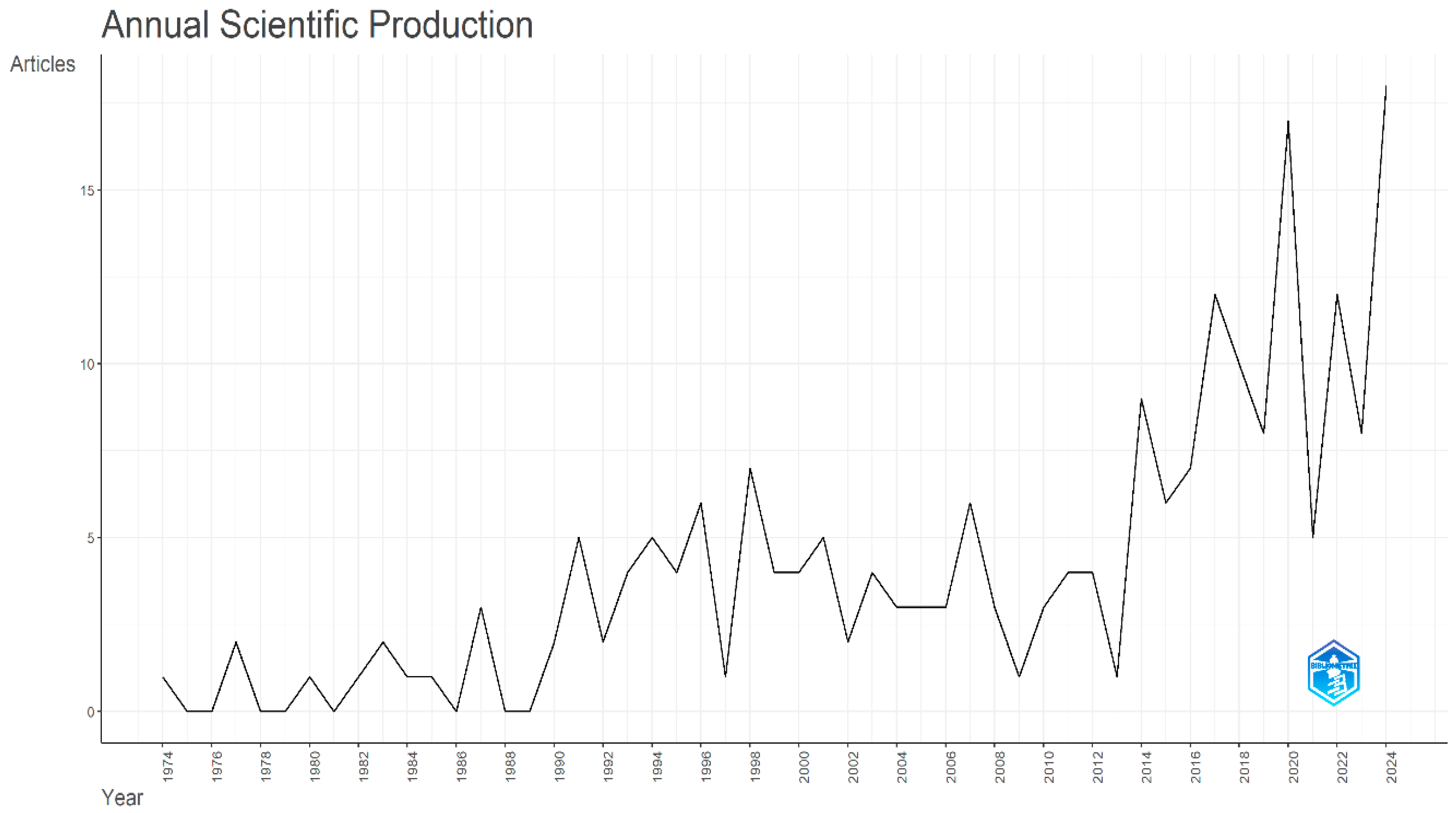
The quantitative evolution of the field, as shown in Figure 1, demonstrates a continuous increase in the number of publications over the past decades, thereby confirming the growing academic interest in this topic.
The results of this systematic review allow for the identification of dominant cost control mechanisms, such as Activity-Based Costing (ABC), which provides more accurate cost allocation based on resource consumption (Quesado & Silva, 2021), Enterprise Resource Planning (ERP) systems, which integrate processes and improve decision-making agility (Visweswara, 2023), as well as institutional patterns and research gaps.
Recent contributions also highlight the growing relevance of Customer Relationship Management (CRM) and Business Process Management (BPM) systems, emphasising the importance of digitalisation and stakeholder orientation in modern healthcare management (Guerola-Navarro et al., 2022). In addition, methodologies inspired by continuous improvement, Lean Management, Kaizen, and Six Sigma, have gained prominence by promoting efficiency, waste reduction, and process consistency (Clark et al., 2013). A particular focus is given to the representation of public versus private contexts, geographic diversity, and recurring methodological limitations.
Collectively, these tools illustrate the evolution of healthcare management from a purely financial control perspective towards a broader, strategic, and multidisciplinary framework that integrates accounting, operational performance, and innovation. Despite the relevance of individual contributions, the literature lacks systematised thematic reviews that consolidate existing knowledge and offer policy-relevant insights—a void that this study aims to address.
By offering a structured synthesis of evidence across four decades of research, this review contributes to academic and policy debates concerning cost control in healthcare. It proposes new directions for empirical validation and cross-national comparison.
The remainder of this paper is organised as follows. The second section of the text presents the methodological framework that was utilised in the study. The third section discusses the main bibliometric findings, while the fourth and final section outlines the conclusions and implications for research and practice.
The present study seeks to address the following research question:
The following question is posed for investigation: what developments have occurred in the field of international research on cost management in healthcare over the past five decades with regard to the tools employed, the institutional settings in which the research is conducted, the geographical distribution of said research, and the implementation challenges that have been encountered?

2. Methodological Framework

This study adopts a systematic literature review methodology, structured in accordance with the PRISMA 2020 guidelines (Page et al., 2021), to map and synthesise international research on cost management in healthcare. The objective is to provide a comprehensive thematic overview of tools, institutional contexts, and methodological approaches used across diverse health systems.
To ensure the reliability and scientific rigour of this study, data were collected from two leading scientific databases, Web of Science and Scopus, which were chosen for their extensive coverage of high-impact publications and advanced bibliometric analysis tools (Goktas, 2024). The search query was constructed to capture research focused on cost management practices in healthcare settings. The terms applied were: (“cost management” OR “cost control” OR “cost accounting”) AND (“healthcare” OR “health sector” OR “hospital”), applied to titles, abstracts, and keywords. The search was limited to peer-reviewed journal articles published between January 1974 and March 2024, in English. This systematic review was not registered in PROSPERO. Registration was deemed unnecessary because the study does not assess clinical interventions or health outcomes but instead provides a thematic and bibliometric synthesis of management and cost control research in healthcare.
Our inclusion strategy was to include articles based on the following criteria: focus on healthcare cost management in public or private institutions; presentation of empirical findings, conceptual frameworks, or applied methodologies; peer-reviewed journal publications; and studies describing or evaluating specific tools, frameworks, or policies related to cost control. The exclusion criteria were: (A) studies without direct reference to cost management practices, focused exclusively on pharmaceutical pricing or patient billing, without organisational-level cost control; (B) studies irrelevant to the health care context; and (C) non-empirical studies or review-based nature.
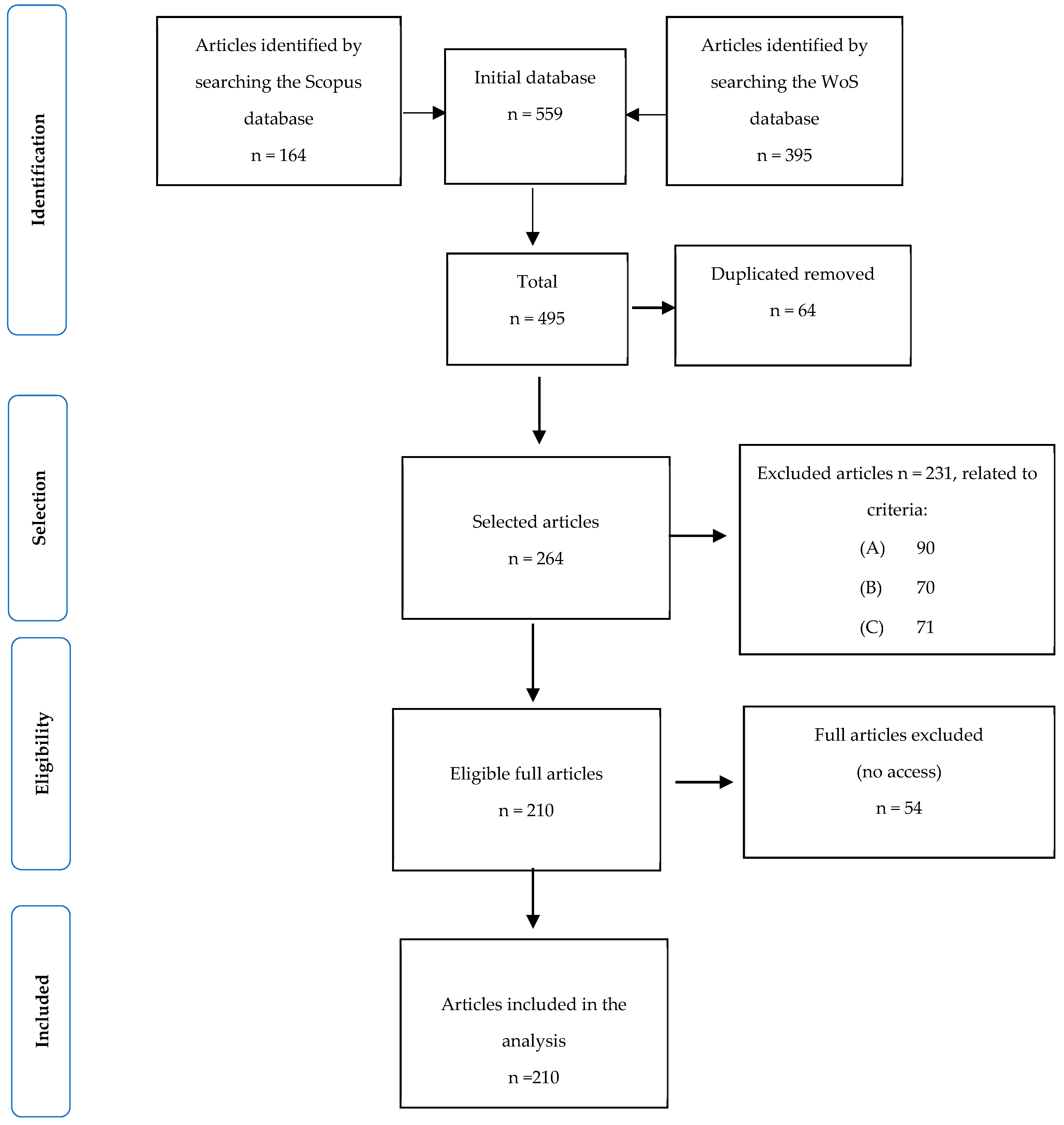
A total of 395 articles were initially retrieved from Web of Science and 164 from Scopus (total of 559 articles). Following the integration of the datasets within the R statistical computing environment, and the subsequent elimination of duplicates (64 articles), a combined corpus of 495 publications was obtained. The abstract screening process was implemented with the objective of ensuring thematic alignment with the domain of healthcare cost management. This approach resulted in the exclusion of 158 articles that lacked direct relevance to the subject, empirical grounding, or full-text access. Following a two-stage filtration process—first based on abstracts and then on full-text review—210 articles were retained as the final sample. The selection process is illustrated in Figure 2, following the standard PRISMA 2020 flow diagram.
Given the heterogeneous and predominantly non-clinical nature of the included studies, a formal risk of bias assessment tool designed for clinical or intervention studies was not applied. Instead, the assessment of potential bias focused on identifying and mitigating risks related to study selection, selective reporting, and interpretative bias, which are particularly relevant in reviews synthesising heterogeneous management and accounting research. These risks were addressed through methodological safeguards embedded in the review process.
To ensure methodological consistency and reliability, a standardised data extraction protocol was developed prior to full-text review. This protocol guided the systematic documentation of relevant information from each included study. The following data fields were collected: Author and year of publication; Country and institutional context; Study design; Cost management tool or framework employed; Key findings and reported outcomes, including effectiveness, applicability, and implementation conditions; Stated limitations and identified research gaps, as reported by the original authors. Each study was reviewed independently by two researchers, with discrepancies resolved through discussion. Data were entered into an Excel matrix, enabling both quantitative tabulation and qualitative synthesis. This approach is consistent with PRISMA 2020 guidance for systematic reviews synthesising heterogeneous evidence.
Following extraction, a thematic synthesis approach was employed following the guidelines proposed by Thomas and Harden (2008) to classify and interpret the studies’ core contributions. This process entailed reading and coding the abstracts, findings, and discussion sections of each article to identify recurring patterns across the dataset.
The thematic synthesis focused on four key analytical dimensions:
  • Geographic distribution (identifying dominant regions and underrepresented countries)
  • Types of cost management tools (e.g., ABC, DRG, Lean, ERP, balanced scorecard, etc.)
  • Healthcare settings (e.g., public hospitals, private clinics, primary care networks)
  • Common implementation challenges and methodological limitations (e.g., lack of longitudinal evaluation, absence of digital integration, scalability issues)
This approach allowed for the integration of heterogeneous evidence while maintaining a focus on practical relevance and conceptual coherence. This synthesis complements the bibliometric technique. The adopted method prioritises interpretative depth, contextual diversity, and policy relevance, providing a more grounded understanding of the evolution of cost management practices in the healthcare sector.

3. Thematic Synthesis of Literature

Scientific Landscape and Collaboration Patterns in Healthcare Cost Management. The bibliometric analysis is employed as a contextual layer to situate the thematic synthesis, by identifying where research is produced, which institutions shape the field, and how knowledge diffuses internationally. These insights support the interpretation of the thematic findings rather than constituting the primary analytical objective.
To provide a structured overview of the scientific development in the field of healthcare cost management, this section presents the main findings from the bibliometric analysis. It focuses on patterns of international collaboration, institutional influence, publication sources, and conceptual structures identified through network-based metrics. Drawing on indicators such as betweenness, closeness, and PageRank centrality, the analysis maps the global distribution of academic contributions and highlights the leading countries, institutions, and journals shaping the field. Additionally, keyword co-occurrence analysis offers insights into the underlying thematic clusters and emerging research directions. Together, these findings delineate the evolution of a multidisciplinary research landscape characterised by growing international cooperation, methodological convergence, and integration between accounting, healthcare management, and public policy.
The first stage of analysis explores the international distribution of research activity through collaboration networks between countries. These networks reveal both structural asymmetries and regional dynamics in knowledge production, highlighting the relative centrality and influence of specific nations in shaping the field.
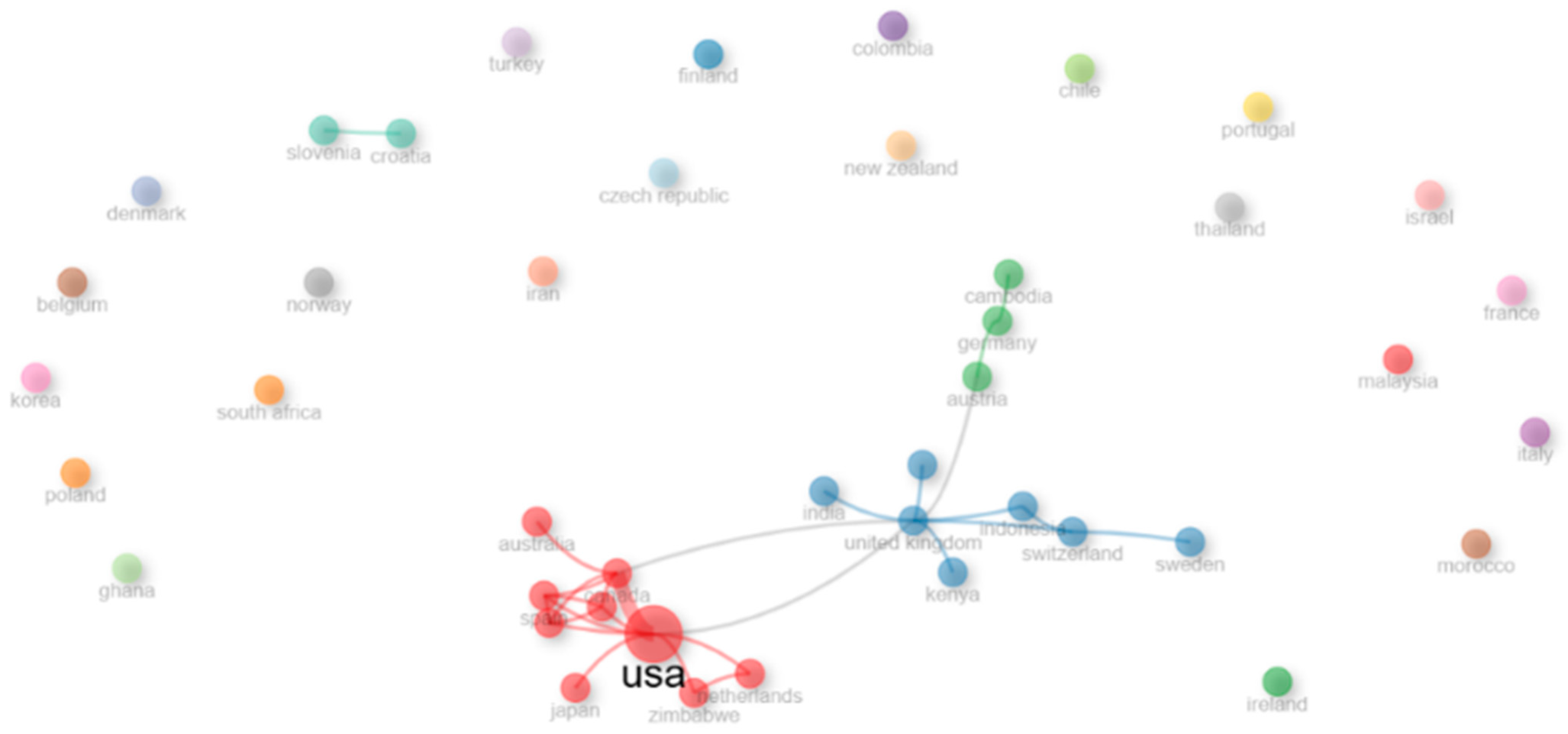
Figure 3 and Table 1 illustrate the global network of collaboration, where the size of each node represents the centrality index of the respective country. A higher centrality value is indicative of greater influence and connectivity within the scientific network (Pepe et al., 2024). The analysis yielded four primary clusters of collaboration (Sainaghi & Mauri, 2018), thereby demonstrating asymmetrical patterns of international cooperation. Cluster 1, which includes the United Kingdom, Switzerland, India, Indonesia, Sweden, and Kenya, demonstrates the establishment of robust transcontinental partnerships. Cluster 2, comprising the United States, Canada, Japan, Spain, Australia, and the Netherlands, demonstrates the densest intercontinental exchanges, thus highlighting the preeminence of Anglo-Saxon leadership in global research. Cluster 3 (Cambodia, Germany, Austria) and Cluster 4 (Slovenia, Croatia) are comparatively diminutive, regionally focused groups with restricted external connections. A study of the datasets revealed that, across all clusters, the United Kingdom and the United States were dominant in terms of betweenness and PageRank.
These metrics do not evaluate research quality; rather, they signal structural influence and knowledge brokerage, thus elucidating why certain cost management approaches predominate in the literature and disseminate across health systems.
This finding confirms their pivotal role as knowledge brokers in global collaboration. Betweenness centrality (Leydesdorff et al., 2017) is a measure of a country’s capacity to connect distinct research communities. The UK holds the highest value (111), followed by the USA (62), Canada, and Switzerland. This finding suggests that these nations function as intermediaries for knowledge diffusion and cross-border partnerships. Concerning closeness, which captures efficiency in accessing other nodes, Slovenia and Croatia demonstrate high internal proximity (1.000), but limited external integration, reflecting isolation within Cluster 4. The United Kingdom (0.034), the USA (0.031), and Canada (0.029) demonstrate a high level of global reach and robust integration across clusters. These results are reinforced by PageRank analysis, which identifies the UK (0.135) and USA (0.120) as the most influential countries in the field. The collective analysis of these metrics reveals a hierarchical network structure, with Anglophone countries at the helm, followed by European and emerging economies exhibiting increasing participation.
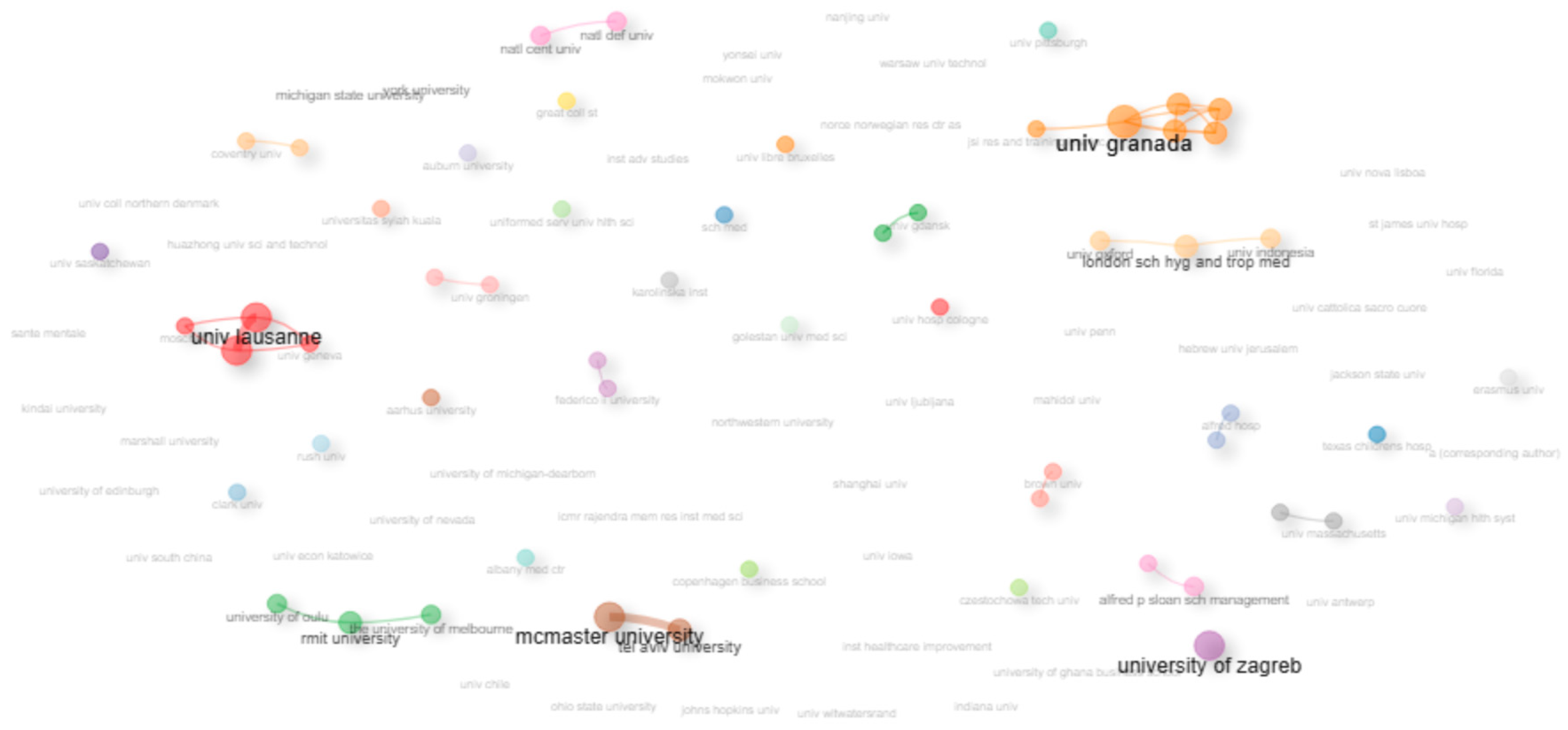
Beyond country-level dynamics, institutional collaboration offers a more particular view of how academic hubs facilitate interdisciplinary exchange. Thus, we analyse institutional-level centrality metrics to identify leading universities and research centres that function as critical intermediaries and drivers of innovation in the global cost management discourse. The institutional collaboration network presented in Figure 4 further refines these insights.
Fifteen institutions demonstrated the highest centrality values, notably the London School of Hygiene & Tropical Medicine, University of Granada, Karolinska Institute, Oxford University, and the University of Melbourne (Table 2). It is evident that these institutions function as global hubs, thereby establishing connections between thematic research clusters and facilitating interdisciplinary cooperation. The University of Granada and the London School of Hygiene & Tropical Medicine have been determined to have the highest betweenness (18 and 16, respectively). This is indicative of their intermediary roles in relation to bridging distinct research areas. Institutions such as Kindai University and Aarhus University, which have the highest closeness values (0.500), are well-positioned for rapid information exchange. This suggests that they are characterised by high operational efficiency and responsiveness within their networks.
The London School of Hygiene & Tropical Medicine has also been identified as a leading institution in PageRank (0.0071), thereby confirming its global influence in cost management research and its strong citation performance. It is evident that European universities, notably those in Britain, Scandinavia, and Iberia, serve as pivotal anchors in international collaboration. These institutions proactively integrate methodological innovation with policy-oriented research, thereby contributing significantly to the global academic landscape.
In parallel with network centrality, the analysis of publication sources offers insight into the field’s intellectual anchoring. By evaluating citation-based metrics across journals, this segment identifies key disciplinary platforms and emerging venues that have supported the development and dissemination of cost management research in healthcare (Table 3).
Health Care Management Review was identified as the most impactful journal, with the highest h-index (7) and g-index (14), reflecting sustained scholarly relevance since 1977. The academic journals Accounting, Organizations and Society (203 citations) and Management Accounting Research (148 citations) illustrate the connection between accounting theory and healthcare management. Harvard Business Review serves as a conduit between the academic and practitioner domains, offering applied managerial perspectives. Concurrently, journals such as BMJ Quality & Safety and BMJ Open demonstrate high m-index values, signifying recent yet substantial growth in visibility and relevance.
The emergence of interdisciplinary outlets, such as Cogent Business and Management (m-index = 1.000), has opened new avenues for dialogue among business, accounting, and health management. Concurrently, Social Science & Medicine and Sociologie du Travail illustrate the incorporation of social and organisational dimensions into cost management research. These findings confirm the inherent interdisciplinary nature of the field, combining insights from accounting, public health, and social sciences.
The impact-centrality analysis (Porcel & Liesa, 2022) reveals three categories of journals: The first category is characterised by high-impact and high-centrality journals, such as the Harvard Business Review and the Health Care Management Review, which function as cross-disciplinary connectors. The second category includes high-impact but lower-centrality journals, including Accounting, Organizations and Society and Social Science & Medicine. These journals are influential within their own disciplines but less integrated across fields. The third category consists of highly central but lower-impact journals, such as BMJ Open, that serve as emerging integrators of new research areas. Collectively, these categories delineate a dynamic publication ecosystem where established outlets consolidate theory while new journals foster methodological diversity (Table 3).
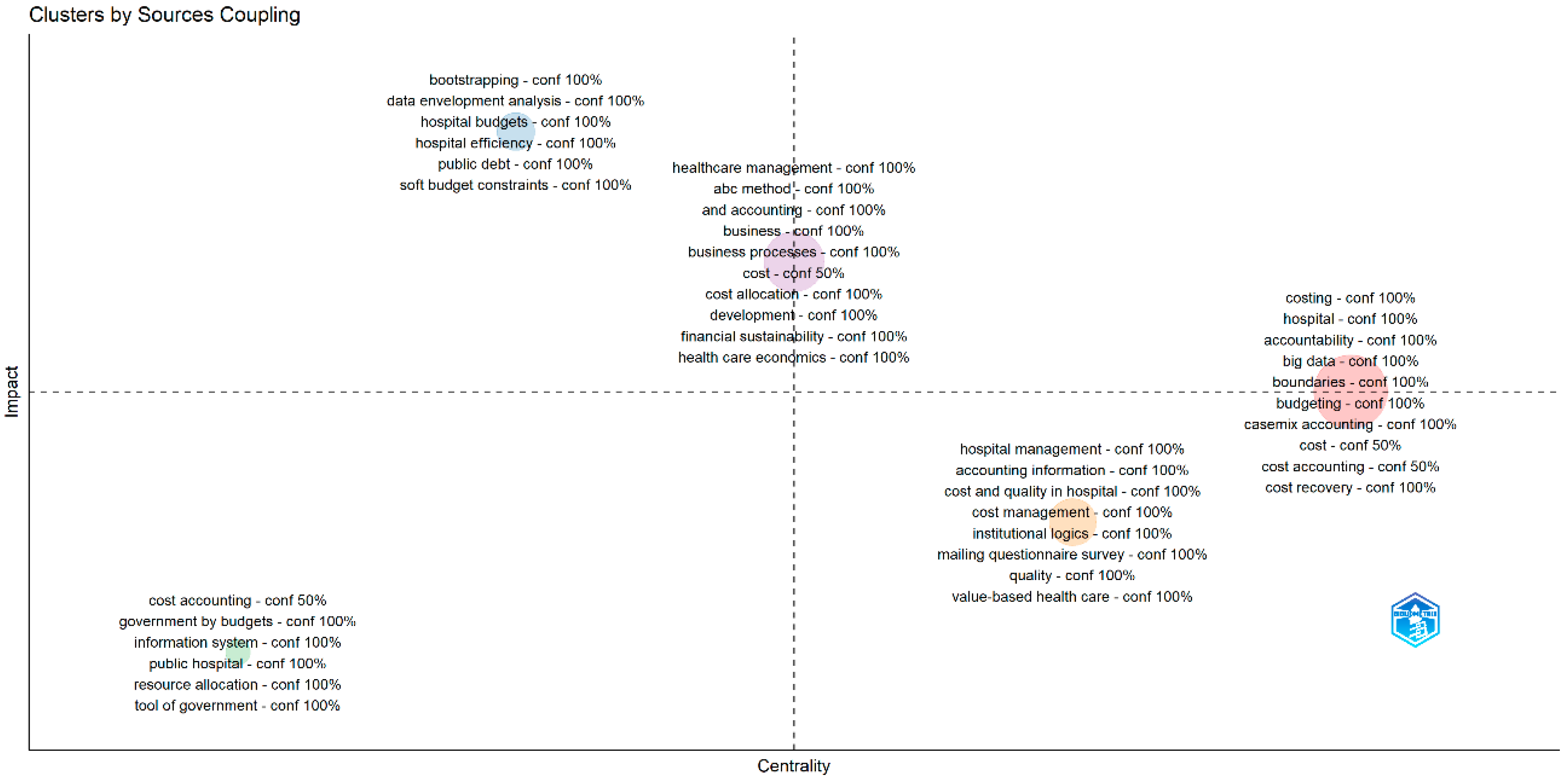
To complement the structural and institutional perspectives, a keyword co-occurrence analysis was conducted to uncover the conceptual architecture of the field. This approach allows for the identification of dominant thematic clusters and emerging topics, offering a window into how the field has evolved theoretically and methodologically over time (Figure 5)
Five dominant clusters were identified, each representing a distinct yet interrelated research stream: The following five areas are of particular interest in the field of healthcare management:
The focus of this area is hospital accounting systems and cost control mechanisms, as explored in cluster 1, “Cost Management in Healthcare Organisations”. Cluster 1, “Intersection of Social Sciences and Health Accounting”, addresses the influence of institutional, cultural, and power dynamics on accounting practices. Cluster 3, “Financial and Community Performance in Hospitals”, centres on governance, adaptability, and the balance between social mission and economic sustainability. Cluster 4, “Quality, Safety, and Costs in Healthcare”, examines the relationship between operational efficiency and clinical outcomes. Cluster 5, “Accounting and Strategic Management in the Health Sector”, explores the alignment between accounting reforms, strategic decision-making, and organisational resilience. The increasing utilisation of keywords such as “value-based healthcare”, “financial sustainability”, “innovation”, “resource allocation”, and “big data” signifies a paradigm shift from conventional cost control towards digitally enabled, evidence-based, and outcome-oriented management frameworks. This thematic configuration underscores the growing convergence between accounting, management, and public policy in addressing efficiency and sustainability challenges in the healthcare domain.
Our analysis reveals a structured yet evolving research landscape led by the United Kingdom and the United States, supported by a network of European and Asia-Pacific institutions. The collaboration between scholars specialising in accounting, management and health policy has enhanced interdisciplinary approaches to healthcare cost management. The integration of advanced costing methodologies, continuous improvement frameworks, and digital transformation tools represent the next frontier of research in achieving efficiency, quality, and sustainability within healthcare systems.
Collectively, the bibliometric evidence illustrates a research domain characterised by increasing internationalisation, disciplinary integration, and methodological diversification. The convergence of accounting, health economics, and public administration perspectives suggests a growing maturity in the field, while also revealing areas, particularly digital transformation and value-based care, that warrant deeper empirical engagement in future research.
The systematic review and thematic synthesis of the selected literature revealed five major clusters that represent distinct yet interrelated research streams in healthcare cost and management accounting. These clusters reflect the evolution of conceptual frameworks, operational tools, and contextual challenges faced by health institutions worldwide.
The first cluster, Cost Management in Healthcare Organisations, encompasses 33 studies that investigate accounting practices and systems designed to enhance financial control and resource allocation in healthcare institutions, particularly hospitals. The extant literature on the subject is extensive. It includes historical analyses, such as those conducted by Funnell et al. (2014), who examined cost accounting at the 19th-century Newcastle Infirmary, as well as more contemporary approaches such as the dual-rate allocation model proposed by Goldschmidt and Gafni (1990), and the application of Activity-Based Costing (Udpa, 1996) and Resource Consumption Accounting (Ozyapici & Tanis, 2016). The extant literature underscores the pivotal role of cost systems in identifying inefficiencies, enhancing decision-making processes, and cultivating organisational efficiency. Nevertheless, persistent challenges—such as resistance to innovation, lack of system standardisation, and the complexity of healthcare operations—limit their effectiveness. Furthermore, the limited integration of complementary frameworks such as Lean, Balanced Scorecard, and Kaizen (Ghoshal, 2005; Mazur et al., 2017; Nawanir et al., 2020) suggests an underexplored opportunity to link cost accounting with broader performance and quality improvement initiatives.
The second cluster, Intersection of Social Sciences and Health Accounting, explores the interactions among accounting practices, power structures, cultural values, and professional dynamics within hospitals. Coombs (1987) emphasised the persistent discord between medical ethics and financial control, while Abernethy and Vagnoni (2004) demonstrated that both formal and informal authority structures influence cost awareness and the utilisation of accounting information systems (AISs) in Italian hospitals. Research into hospital financial fragility (Oswald et al., 1992) and prospective payment systems (Rayburn & Rayburn, 1996) has exposed the economic vulnerabilities of institutions operating under financial pressure. Recent analyses, such as Berger et al. (2020), suggest that external fiscal shocks can serve as catalysts for efficiency, thereby counteracting the adverse effects of soft budget constraints. Collectively, these findings emphasise that hospital accounting practices are embedded within socio-institutional contexts where power, culture and economic pressures jointly determine their implementation and effectiveness.
The third cluster, Financial and Community Performance in Hospitals, examines the interplay between financial outcomes, strategic flexibility, and community orientation. Research indicates that independent hospitals demonstrate superior performance when they implement effective financial management, maintain robust liquidity, and operate within favourable market conditions (McCue & Diana, 2007). However, community orientation, defined as the commitment to local health promotion, often exerts an adverse short-term financial effect, while strategic flexibility enhances adaptability and economic performance (Ginn et al., 2006). It has been demonstrated that public hospitals, particularly those subject to soft budget constraints, tend to exhibit limited incentives for efficiency (Juven, 2017). However, external macroeconomic shocks, such as the European debt crisis, have been shown to stimulate reform and productivity improvements (Juven, 2017). The crux of this cluster lies in balancing the social mission of healthcare institutions with financial sustainability. This underscores the pertinence of adaptive management strategies that align economic discipline with community accountability.
The fourth cluster, Quality, Safety and Costs in Healthcare, integrates 15 studies examining the relationships among cost management, operational efficiency, and care quality. Research demonstrates that methodologies such as Activity-Based Costing (ABC) and Time-Driven Activity-Based Costing (TDABC) enhance transparency and optimise resources (Neriz et al., 2014; Keel et al., 2020; Leusder et al., 2022). Empirical evidence from diverse contexts, including Croatia, Belgium, and Rwanda, confirms significant cost reductions without compromising quality (Dragija & Lutilsky, 2017; Bruyneel et al., 2023; Ngabonzima et al., 2022). Continuous improvement approaches, such as value-based management and Continuous Value Management (Chatfield et al., 2019; Mate et al., 2020), further demonstrate measurable efficiency gains and higher staff satisfaction. Furthermore, studies on malpractice costs (Vainieri et al., 2024) and strategic partnerships in emerging markets (Rinenggo et al., 2024) underscore the multifaceted nature of financial sustainability in healthcare. The findings emphasise that innovation, accurate cost planning, and proactive leadership are essential to maintaining both economic and clinical performance.
The fifth cluster, entitled ‘Accounting and Strategic Management in the Health Sector’, explores the relationship between management accounting systems, institutional reforms, and organisational sustainability. Research into case-based and global budget payment systems illustrates the complexity of large-scale reforms, which require contextual adaptation and stakeholder alignment (Pettersen, 2001; Malmmose & Fouladi, 2019). A review of the literature on the NHS and California hospitals indicates that the adoption of advanced costing systems is influenced by power dynamics, competition, and regulatory pressure (Guven-Uslu & Conrad, 2011; Hsu & Qu, 2012). Activity-Based Costing remains a recurrent theme, offering greater budget precision under competitive conditions (King et al., 1994; Hill, 2000). The advent of value-based healthcare (Møberg & Malmmose, 2024) and innovative frameworks such as Delta Management, inspired by Toyota’s management model (Imai, 2022), underscores the shift towards long-term resilience, risk tolerance and strategic adaptability. Collectively, this cluster underscores management accounting’s role as a driver of financial efficiency, institutional learning, and strategic alignment in modern healthcare systems.
Collectively, these thematic clusters highlight the multifaceted nature of cost management in healthcare, encompassing operational, strategic, institutional, and sociocultural dimensions. The synthesis confirms the growing convergence between financial efficiency and organisational sustainability and underscores the importance of integrated approaches that align cost control with quality of care and stakeholder accountability. These findings provide a conceptual foundation for future empirical studies and inform policy development to optimise resource use across diverse healthcare contexts.

4. Conclusions

This systematic review provides a comprehensive synthesis of international research on cost management in healthcare, integrating insights from accounting, strategic management, and operational performance. By analysing 210 peer-reviewed studies across multiple institutional contexts, this work identifies five major thematic clusters that reveal the evolving nature of healthcare cost control: from technical accounting systems to broader frameworks of organisational transformation.
The findings highlight the growing relevance of Activity-Based Costing (ABC) and Time-Driven ABC (TDABC) in improving resource allocation and transparency. However, persistent barriers, such as institutional inertia, professional resistance, and limited standardisation, undermine the full deployment of these tools, particularly in settings where clinical autonomy and financial oversight remain in tension (Udpa, 1996).
Beyond cost accounting, the synthesis highlights the impact of continuous improvement frameworks, including Lean, Six Sigma, and Kaizen, in aligning financial objectives with quality outcomes. Empirical evidence supports their effectiveness in reducing inefficiencies, improving diagnostic precision, and enhancing service delivery (Chatfield et al., 2019). Also, the Balanced Scorecard (BSC), as proposed by Kaplan and colleagues, emerges as a key integrative framework that links strategic goals with multidimensional performance indicators (Inamdar et al., 2002).
Despite these advances, significant gaps remain in the literature, especially regarding the integration of digital tools, value-based healthcare models, and socio-cultural variables that shape adoption across different systems. The study recommends developing interdisciplinary models that integrate management accounting techniques with healthcare quality frameworks, supported by empirical validation across diverse cultural and institutional settings.
This review also recognises methodological limitations, including the exclusive reliance on Scopus and Web of Science databases, which may omit relevant regional or non-indexed contributions. Additionally, the absence of meta-analytical aggregation limits the quantification of effect sizes across interventions. Future research should explore the role of digital transformation, big data, and AI-driven analytics in cost optimisation and strategic planning.
In conclusion, cost management in healthcare is no longer confined to financial control; it is a multidimensional endeavour that intersects with innovation, patient care, and system resilience. Advancing this field will require context-sensitive, interdisciplinary, and digitally enabled strategies that promote long-term sustainability while safeguarding healthcare quality and equity.

Author Contributions

Conceptualization, S.N.B., A.C.F.S., I.M. and P.G.; Methodology, S.N.B., A.C.F.S. and I.M.; Data curation, S.N.B., A.C.F.S. and I.M.; Formal analysis, S.N.B.; Writing—original draft preparation, S.N.B.; Writing—review and editing, A.C.F.S., I.M. and P.G. All authors have read and agreed to the published version of the manuscript.

Funding

This research was funded by Portuguese national funds through FCT—Fundação para a Ciência e Tecnologia, under the project UID/05422/2025.

Institutional Review Board Statement

Not applicable.

Informed Consent Statement

Not applicable.

Data Availability Statement

The original data presented in the study are not publicly available due to data source restrictions but are available from the corresponding author upon reasonable request. Figure 1: Annual evolution of articles published on this subject—Source: Bibliometrix R: Biblioshiny; Figure 2: PRISMA flow diagram representing the screening and selection process of the analyzed studies. Source: Own elaboration based on Page et al. (2021); Figure 3: International collaboration network among countries in healthcare cost management research. Source: Bibliometrix R—Biblioshiny; Figure 4: Institutional collaboration network illustrating interconnections among leading research institutions. Source: Bibliometrix R—Biblioshiny; Figure 5: Main research themes and keyword clusters related to healthcare cost management—Source: Bibliometrix R—Biblioshiny; Table 1: Centrality metrics (Betweenness, Closeness, and PageRank) by country and collaboration cluster. Source: Bibliometrix R—Biblioshiny; Table 2: Centrality metrics by institution and cluster (Top 15), indicating relative influence and connectivity; Table 3: Main sources and journals contributing to the field of healthcare cost management.

Conflicts of Interest

The authors declare no conflicts of interest. The funder had no role in the design of the study; in the collection, analyses, or interpretation of data; in the writing of the manuscript; or in the decision to publish the results.

Abbreviations

The following abbreviations are used in this manuscript:
USAUnited States of America
UK United Kingdom
ERP Enterprise Resource Planning
ABCActivity-Based Costing
BSCBalance Scorecard
CRMCustomer Relationship Management
BPMBusiness Process Management
TDABCTime-Driven Activity-Based Costing

References

  1. Abernethy, M. A., & Vagnoni, E. (2004). Power, organization design and managerial behaviour. Accounting, Organizations and Society, 29(3), 207–225. [Google Scholar] [CrossRef]
  2. Aria, M., & Cuccurullo, C. (2017). Bibliometrix: An R-tool for comprehensive science mapping analysis. Journal of Informetrics, 11(4), 959–975. [Google Scholar] [CrossRef]
  3. Berger, M., Sommersguter-Reichmann, M., & Czypionka, T. (2020). Determinants of soft budget constraints: How public debt affects hospital performance in Austria. Social Science & Medicine, 249, 112855. [Google Scholar] [CrossRef] [PubMed]
  4. Bruyneel, A., Larcin, L., Martins, D., Van Den Bulcke, J., Leclercq, P., & Pirson, M. (2023). Cost comparisons and factors related to cost per stay in intensive care units in Belgium. BMC Health Services Research, 23(1), 986. [Google Scholar] [CrossRef] [PubMed]
  5. Chatfield, S. C., Volpicelli, F. M., Adler, N. M., Kim, K. L., Jones, S. A., Francois, F., Shah, P. C., Press, R. A., & Horwitz, L. I. (2019). Bending the cost curve: Time series analysis of a value transformation programme at an academic medical centre. BMJ Quality & Safety, 28(6), 449–458. [Google Scholar] [CrossRef]
  6. Clark, D., Silvester, K., & Knowles, S. (2013). Lean management systems: Creating a culture of continuous quality improvement. Journal of Clinical Pathology, 66, 638–643. [Google Scholar] [CrossRef]
  7. Coombs, R. W. (1987). Accounting for the control of doctors: Management information systems in hospitals. Accounting, Organizations and Society, 12(4), 389–404. [Google Scholar] [CrossRef]
  8. Dragija, M., & Lutilsky, I. D. (2017). ABC method in healthcare institutions based on business processes. In M. H. Bilgin, H. Danis, E. Demir, & U. Can (Eds.), Country experiences in economic development, management and entrepreneurship (pp. 539–551). Springer International Publishing. [Google Scholar]
  9. Funnell, W., Holden, A., & Oldroyd, D. (2014). Costing in the newcastle infirmary, 1840–1888. Accounting, Auditing & Accountability Journal, 27(3), 465–488. [Google Scholar] [CrossRef]
  10. Ghoshal, S. (2005). Bad management theories are destroying good management practices. IEEE Engineering Management Review, 33(3), 79. [Google Scholar] [CrossRef]
  11. Ginn, G. O., Lee, R. P., & Ellis, T. (2006). Community orientation, strategic flexibility, and financial performance in hospitals. Journal of Healthcare Management/American College of Healthcare Executives, 51, 111–122. [Google Scholar] [CrossRef][Green Version]
  12. Goktas, P. (2024). Ethics, transparency, and explainability in generative ai decision-making systems: A comprehensive bibliometric study. Journal of Decision Systems, 1–29. [Google Scholar] [CrossRef]
  13. Goldschmidt, Y., & Gafni, A. (1990). A managerial approach to allocating indirect fixed costs in health care organizations. Health Care Management Review, 15(2), 43–51. [Google Scholar] [CrossRef]
  14. Guerola-Navarro, V., Gil-Gomez, H., Oltra-Badenes, R., & Soto-Acosta, P. (2022). Customer relationship management and its impact on entrepreneurial marketing: A literature review. International Entrepreneurship and Management Journal, 20, 507–547. [Google Scholar] [CrossRef]
  15. Guven-Uslu, P., & Conrad, L. (2011). A longitudinal study of change in the English national health service. Financial Accountability and Management, 27(4), 385–408. [Google Scholar] [CrossRef]
  16. Hill, N. T. (2000). Adoption of costing systems in US hospitals: An event history analysis 1980 ± 1990. Journal of Accounting and Public Policy, 19, 41–71. [Google Scholar] [CrossRef]
  17. Hsu, S. H., & Qu, S. Q. (2012). Strategic cost management and institutional changes in hospitals. European Accounting Review, 21(3), 499–531. [Google Scholar] [CrossRef]
  18. Imai, N. (2022). The concept of delta management: Important aspects of toyota profit management and its significance for healthcare organizations. In Management scorecards in healthcare provider organizations. World Scientific. [Google Scholar]
  19. Inamdar, N., Kaplan, R. S., & Bower, M. (2002). Applying the balanced scorecard in healthcare provider organizations. Journal of Healthcare Management/American College of Healthcare Executives, 47(3), 179–196. [Google Scholar] [CrossRef] [PubMed]
  20. Juven, P. A. (2017). Gouverner avec tact et mesure. L’ajustement des budgets hospitaliers à la marge (1983–2003). In Sociologie du travail (Vol. 59, Issue 2). Centre de Sociologie des Organisations. [Google Scholar] [CrossRef]
  21. Keel, G., Muhammad, R., Savage, C., Spaak, J., Gonzalez, I., Lindgren, P., Guttmann, C., & Mazzocato, P. (2020). Time-driven activity-based costing for patients with multiple chronic conditions: A mixed-method study to cost care in a multidisciplinary and integrated care delivery centre at a university-affiliated tertiary teaching hospital in Stockholm, Sweden. BMJ Open, 10(6), e032573. [Google Scholar] [CrossRef]
  22. King, M., Lapsley, I., Mitchell, F., & Moyes, J. (1994). Costing needs and practices in a changing environment: The potential for ABC in the NHS. Financial Accountability & Management, 10(2), 143–160. [Google Scholar] [CrossRef]
  23. Leusder, M., Porte, P., Ahaus, K., & van Elten, H. (2022). Cost measurement in value-based healthcare: A systematic review. BMJ Open, 12(12), e066568. [Google Scholar] [CrossRef]
  24. Leydesdorff, L., Wagner, C. S., & Bornmann, L. (2017). Betweenness and diversity in journal citation networks as measures of interdisciplinarity—A tribute to Eugene Garfield. Scientometrics, 114(2), 567–592. [Google Scholar] [CrossRef] [PubMed]
  25. Malmmose, M., & Fouladi, N. (2019). Accounting facilitating sociopolitical aims: The case of Maryland hospitals. Financial Accountability and Management, 35(4), 413–429. [Google Scholar] [CrossRef]
  26. Mate, K. S., Rakover, J., Cordiner, K., Noble, A., & Hassan, N. (2020). Novel quality improvement method to reduce cost while improving the quality of patient care: Retrospective observational study. BMJ Quality & Safety, 29(7), 586–594. [Google Scholar] [CrossRef] [PubMed]
  27. Mazur, L. M., Johnson, K., Pooya, P., Chadwick, J., & McCreery, J. (2017). Integrating lean exploration loops into healthcare facility design: Programming phase. HERD: Health Environments Research & Design Journal, 10(3), 116–130. [Google Scholar] [CrossRef]
  28. McCue, M. J., & Diana, M. L. (2007). Assessing the performance of freestanding hospitals. Journal of Healthcare Management/American College of Healthcare Executives, 52(5), 299–307. Available online: https://journals.lww.com/jhmonline/fulltext/2007/09000/assessing_the_performance_of_freestanding.5.aspx (accessed on 31 December 2025). [CrossRef]
  29. Møberg, K. D., & Malmmose, M. (2024). A value-based healthcare approach: Patchy institutionalized logics infusing managers’ VBHC perceptions. Financial Accountability and Management, 41(1), 19–41. [Google Scholar] [CrossRef]
  30. Nawanir, G., Lim, K. T., Ramayah, T., Mahmud, F., Lee, K. L., & Maarof, M. G. (2020). Synergistic effect of lean practices on lead time reduction: Mediating role of manufacturing flexibility. Benchmarking: An International Journal, 27(5), 1815–1842. [Google Scholar] [CrossRef]
  31. Neriz, L., Núñez, A., & Ramis, F. (2014). A cost management model for hospital food and nutrition in a public hospital. BMC Health Services Research, 14(1), 542. [Google Scholar] [CrossRef]
  32. Ngabonzima, A., Asingizwe, D., Cechetto, D., Mukunde, G., Nyalihama, A., Gakwerere, M., & Epstein, D. M. (2022). Evaluating the medical direct costs associated with prematurity during the initial hospitalization in Rwanda: A prevalence-based cost of illness study. BMC Health Services Research, 22(1), 953. [Google Scholar] [CrossRef]
  33. Oswald, S., Gardiner, L., & Jahera, J. S. (1992). Indicators of hospital closure under PPS and Blue Cross/Blue Shield cost-based reimbursements. Journal of Hospital Marketing, 6(2), 149–182. [Google Scholar] [CrossRef]
  34. Ozyapici, H., & Tanis, V. N. (2016). Improving health care costing with resource consumption accounting. International Journal of Health Care Quality Assurance, 29(6), 646–663. [Google Scholar] [CrossRef]
  35. Page, M. J., McKenzie, J. E., Bossuyt, P. M., Boutron, I., Hoffmann, T. C., Mulrow, C. D., Shamseer, L., Tetzlaff, J. M., Akl, E. A., Brennan, S. E., Chou, R., Glanville, J., Grimshaw, J. M., Hróbjartsson, A., Lalu, M. M., Li, T., Loder, E. W., Mayo-Wilson, E., McDonald, S., … Moher, D. (2021). The PRISMA 2020 statement: An updated guideline for reporting systematic reviews. BMJ (Clinical Research Ed.), 372, n71. [Google Scholar] [CrossRef]
  36. Pepe, C. G. E., Fonseca, M. V. A., & Marques, C. F. S. (2024). International collaboration towards innovation management: A network perspective and the Global Innovation Index. Journal of Innovation and Entrepreneurship, 13, 32. [Google Scholar] [CrossRef]
  37. Pettersen, I. J. (2001). Implementing management accounting reforms in the public sector: The difficult journey from intentions to effects. European Accounting Review, 10(3), 561–581. [Google Scholar] [CrossRef]
  38. Porcel, J. M., & Liesa, L. (2022). Author-level metrics: H-index and beyond. Spanish Journal of Medicine. Available online: https://api.semanticscholar.org/CorpusID:254480806 (accessed on 31 December 2025). [CrossRef]
  39. Quesado, P., & Silva, R. (2021). Activity-based costing (ABC) and its implication for open innovation. Journal of Open Innovation: Technology, Market, and Complexity, 7(1), 41. [Google Scholar] [CrossRef]
  40. Rayburn, J. M., & Rayburn, L. G. (1996). The changing power equation in hospitals. Journal of Hospital Marketing, 11(2), 115–132. [Google Scholar] [CrossRef]
  41. Rinenggo, A., Sudiro, A., Sunaryo, & Hussein, A. S. (2024). Trustworthiness in Indonesia healthcare: Fostering loyalty in B2B relationships. Cogent Business & Management, 11(1), 2371991. [Google Scholar] [CrossRef]
  42. Sainaghi, R., & Mauri, A. (2018). The Milan world expo 2015: Hospitality operating performance and seasonality effects. International Journal of Hospitality Management, 72, 32–46. [Google Scholar] [CrossRef]
  43. Thomas, J., & Harden, A. (2008). Methods for the thematic synthesis of qualitative research in systematic reviews. BMC Medical Research Methodology, 8, 45. [Google Scholar] [CrossRef]
  44. Udpa, S. (1996). Activity-based costing for hospitals. Health Care Management Review, 21(3), 83–96. Available online: http://www.jstor.org/stable/44950784 (accessed on 31 December 2025). [PubMed]
  45. Vainieri, M., Vandelli, A., & Trinchese, D. (2024). Tricky choices between short or long-term financial sustainability: Cost allocation for medical malpractice claims in Italy. Cogent Business & Management, 11(1), 2423894. [Google Scholar] [CrossRef]
  46. Visweswara, S. (2023). An agile enterprise architecture methodology for digital transformation [Master’s thesis, University of Twente]. Available online: http://essay.utwente.nl/96720/ (accessed on 31 December 2025).
Figure 1. Annual evolution of published articles on healthcare cost management. Source: Bibliometrix R—Biblioshiny.
Admsci 16 00046 g001
Figure 2. PRISMA flow diagram representing the screening and selection process of the analysed studies. Source: Own elaboration based on Page et al. (2021).
Admsci 16 00046 g002
Figure 3. International collaboration network among countries in healthcare cost management research. Source: Bibliometrix R—Biblioshiny.
Admsci 16 00046 g003
Figure 4. Institutional collaboration network illustrating interconnections among leading research institutions. Source: Bibliometrix R—Biblioshiny.
Admsci 16 00046 g004
Figure 5. Main research themes and keyword clusters related to healthcare cost management. Source: Bibliometrix R—Biblioshiny.
Admsci 16 00046 g005
Table 1. Centrality metrics (Betweenness, Closeness, and PageRank) by country and collaboration cluster. Source: Bibliometrix R—Biblioshiny.
NodeClusterBetweennessClosenessPageRank
United Kingdom11110.0340.135
Switerzland1170.0230.057
USA2620.0310.120
Canada2320.0290.093
Germany3170.0180.049
Austria3320.0240.042
Slovenia4010.048
Croatia4010.048
Table 2. Centrality metrics by institution and cluster (Top 15), indicating relative influence and connectivity.
NodeBetweennessClosenessPageRank
The Royal Melbourne Institute of Technology University (RMIT University)60.16670.0058
The University of Melbourne40.1250.0037
Oxford University70.08330.0048
The London School of Hygiene & Tropical Medicine160.11110.0071
National Defense University40.14290.0053
National Center University60.16670.0066
Granada University180.11110.0067
Karolinska Institute60.20.0065
Copenhagen Business School20.33330.006
Michigan State University20.33330.006
University of Zagreb20.33330.006
Kindai University10.50.006
Aarhus University10.50.006
University of Lausanne10.250.0055
Lausanne University Hospital10.250.0055
Table 3. Main sources and journals contributing to the field of healthcare cost management.
Elementh_Indexg_Indexm_IndexTCNPPY_Start
JOURNAL OF MENTAL HEALTH POLICY AND ECONOMICS110.05342212006
HEALTH CARE MANAGEMENT REVIEW7140.146303141977
ACCOUNTING, ORGANIZATIONS AND SOCIETY220.05320321987
HARVARD BUSINESS REVIEW340.06719541980
MANAGEMENT ACCOUNTING RESEARCH440.13814841996
JOURNAL OF ACCOUNTING AND PUBLIC POLICY220.0808422000
EUROPEAN ACCOUNTING REVIEW220.0836122001
SOCIAL SCIENCE & MEDICINE220.0874822002
JOURNAL OF HEALTHCARE MANAGEMENT220.1054122006
FINANCIAL ACCOUNTABILITY AND MANAGEMENT340.0973841994
INTERNATIONAL JOURNAL OF HEALTH CARE QUALITY ASSURANCE220.1432122011
BMC HEALTH SERVICES RESEARCH230.1821732014
BMJ QUALITY & SAFETY220.3331722019
BMJ OPEN220.4001622020
HEALTH POLICY AND PLANNING120.0421622001
JOURNAL OF ACCOUNTING AND ORGANIZATIONAL CHANGE120.0911422014
ACCOUNTING, AUDITING AND ACCOUNTABILITY JOURNAL120.091822014
JOURNAL OF HEALTH CARE MARKETING120.024721983
JOURNAL OF HOSPITAL MARKETING220.061421992
SOCIOLOGIE DU TRAVAIL120.125422017
COGENT BUSINESS AND MANAGEMENT111.000122024
Disclaimer/Publisher’s Note: The statements, opinions and data contained in all publications are solely those of the individual author(s) and contributor(s) and not of MDPI and/or the editor(s). MDPI and/or the editor(s) disclaim responsibility for any injury to people or property resulting from any ideas, methods, instructions or products referred to in the content.