Article

Digital Maturity and Digital Transformation Strategy among Greek Small and Medium Enterprises


by
Antonios Kargas
1,*,
Emmanouil Gialeris
2,
Faidon Komisopoulos
1,
Anastasios Lymperiou
3 and
Ioannis Salmon
1
1
Department of Business Administration, University of West Attica, 12243 Athens, Greece
2
Department of Informatics and Telecommunications, National and Kapodistrian University of Athens, 15772 Athens, Greece
3
Department of Public Administration, Panteion University of Social and Political Sciences, 17671 Athens, Greece
*
Author to whom correspondence should be addressed.
Adm. Sci. 2023, 13(11), 236; https://doi.org/10.3390/admsci13110236

Submission received: 25 September 2023 / Revised: 26 October 2023 / Accepted: 30 October 2023 / Published: 3 November 2023
(This article belongs to the Section Strategic Management)

Abstract

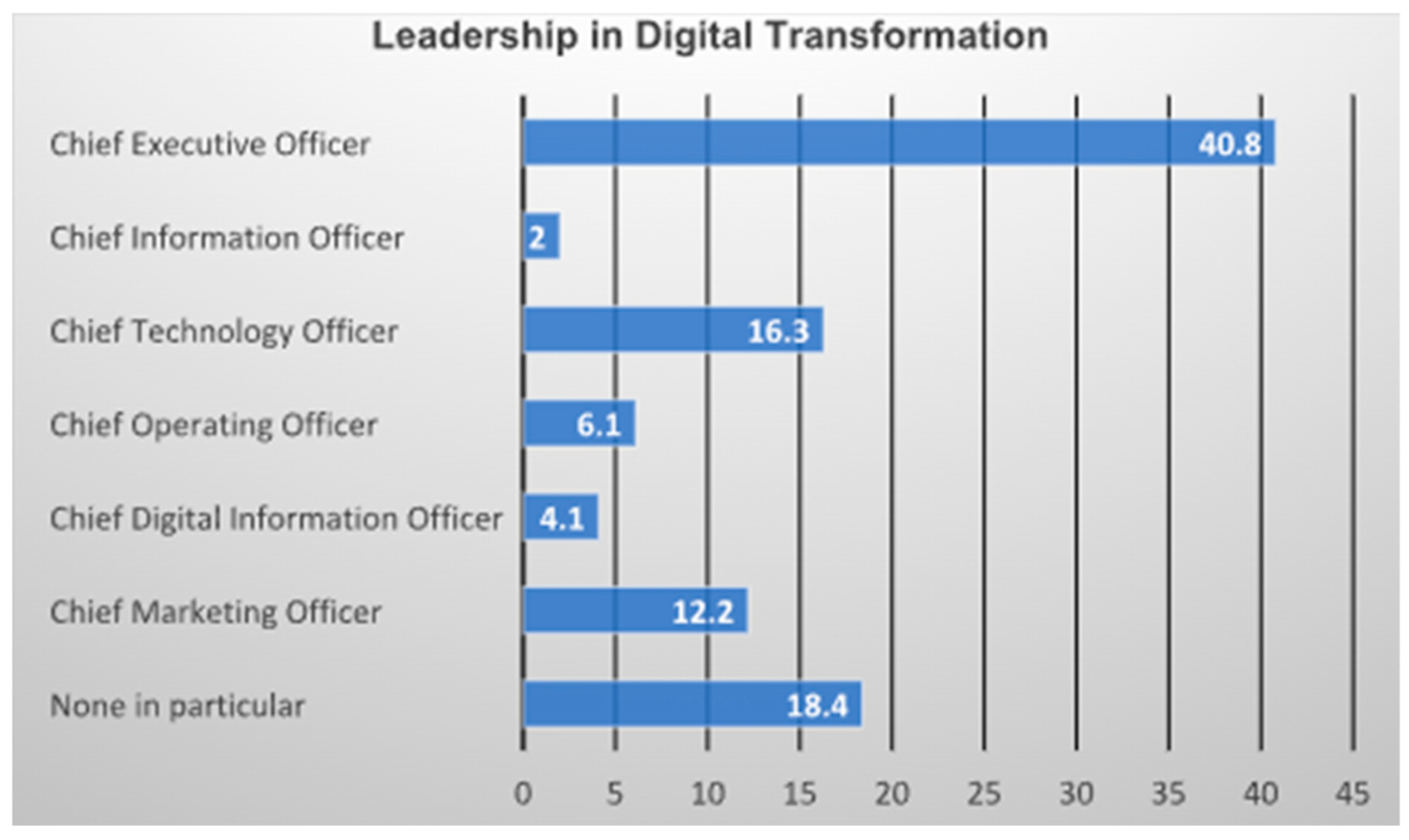
The proposed study aims to investigate the digital transformation of Greek small and medium enterprises (SMEs), with a particular focus on their digital maturity and the strategic and organizational factors contributing to digital transformation. The research issue of digital transformation has been attracting considerable interest among academics and business practicians since COVID-19 accelerated the procedure of implementing Industry 4.0 principles all over global economies. Quantitative research on 147 Greek SMEs revealed the most important issues on how these businesses implement digital transformation, factors accelerating or decelerating the process, barriers and expected outcomes. The results indicate that digital maturity, digital transformation strategy and digital business models are strongly interconnected, while the main barriers of successfully implementing them is a lack of funding, cultural issues and the management’s engagement with the whole procedure. Greek SMEs are regarding digital transformation as a part of their customers’ satisfaction rather than as a holistic procedure of reshaping their operation. In almost 20% of Greek SMEs, there is no person who is responsible for the digital transformation procedure, while key drivers are suppliers and customers rather than competitors and the government. The results can be valuable for stakeholders who are enabled to the digital transformation process from both the business and academic points of view, while there exist aspects that can contribute to policy makers/motivation developers on the state’s level as well.
Keywords: digital transformation; small and medium enterprises; SMEs; Greece; quantitative research; digital maturity; factors of digital transformation digital transformation; small and medium enterprises; SMEs; Greece; quantitative research; digital maturity; factors of digital transformation