Article

Adsorption–Catalysis Dual-Function Nitrogen-Doped Carbon/CoFe2O4 Composite for Efficient Tetracycline Removal


1
School of Materials Science and Engineering, Anhui University of Science and Technology, Huainan 232001, China
2
Anhui Generic Technology Research Center for New Materials from Coal-Based Solid Wastes, Anhui University of Science and Technology, Huainan 232001, China
3
School of Earth and Environment, Anhui University of Science and Technology, Huainan 232001, China
*
Author to whom correspondence should be addressed.
Environments 2026, 13(8), 426; https://doi.org/10.3390/environments13080426
Submission received: 15 June 2026 / Revised: 24 July 2026 / Accepted: 25 July 2026 / Published: 28 July 2026

Abstract

Efficient removal of tetracycline (TC) from antibiotic-contaminated wastewater remains a significant challenge. In this study, a nitrogen-doped carbon modified cobalt ferrite (C@CoFe2O4, CF) composite was synthesized via a one-step hydrothermal method, and its adsorption–catalysis dual-function performance was systematically evaluated. Structural characterization revealed that CoFe2O4 nanoparticles were locally encapsulated by an N-doped carbonaceous layer, providing a high specific surface area and abundant nitrogen-containing active sites. Under optimized conditions, the CF-3/PMS system achieved 93.44% TC removal within 45 min, while CF-3 exhibited a maximum adsorption capacity of 486.5 mg·g−1. Radical quenching experiments suggested that singlet oxygen (1O2) and superoxide radicals (O2) played major roles in TC oxidation, while sulfate radicals (SO4) and hydroxyl radicals (HO•) also contributed, indicating the coexistence of radical and non-radical oxidation pathways. TC adsorption was driven by surface complexation, π–π electron donor–acceptor interactions, and hydrogen bonding. The enhanced TC removal performance may arise from the cooperative contributions of N-containing carbon sites, accessible Co/Fe-containing regions, and interfacial electronic interactions, which promote TC enrichment and PMS-mediated oxidation. This work provides a promising strategy for designing bifunctional materials for antibiotic wastewater treatment.

1. Introduction

The extensive and long-term use of antibiotics has led to their widespread occurrence in aquatic environments, posing significant risks to ecosystems, public health, and drinking water safety through the dissemination of antibiotic resistance and ecological toxicity [1]. Tetracycline (TC), one of the most widely used broad-spectrum antibiotics, is characterized by high water solubility, poor biodegradability, and large consumption. It can enter aquatic environments through livestock effluents, medical wastewater, and surface runoff, resulting in persistent environmental contamination [2]. Therefore, the development of efficient, economical, and environmentally friendly technologies for TC removal is of great importance.
Adsorption and advanced oxidation processes (AOPs) are among the most widely employed technologies for antibiotic wastewater treatment. Adsorption is attractive because of its operational simplicity and low cost; however, its practical application is often limited by insufficient adsorption capacity, reduced efficiency toward low-concentration pollutants, and difficulties in adsorbent regeneration [3,4]. In contrast, peroxymonosulfate (PMS)-based AOPs have received considerable attention due to their ability to generate multiple reactive oxygen species in situ and achieve efficient degradation of refractory organic contaminants. Nevertheless, the efficiency of PMS activation strongly depends on the catalyst structure and surface electronic properties. Insufficient catalytic activity not only lowers oxidant utilization efficiency but also increases treatment costs [5].
Although significant progress has been achieved in PMS-based catalytic systems, the rational integration of adsorption and catalytic functions remains a major challenge. In many conventional catalysts, strong adsorption capacity and high catalytic activity are difficult to simultaneously achieve. Highly crystalline metal oxides generally possess favorable electron-transfer pathways and redox activity but often suffer from limited surface area and insufficient pollutant enrichment capability [6,7]. In contrast, amorphous carbon materials provide abundant surface functional groups and adsorption sites but usually lack efficient catalytic centers for pollutant degradation [8,9]. Consequently, a trade-off frequently exists between pollutant enrichment and catalytic oxidation. Constructing core–shell architectures that integrate a catalytic core with an adsorption shell offers a promising strategy to spatially separate adsorption and catalytic sites, thereby enhancing their synergistic performance.
Spinel cobalt ferrite (CoFe2O4) has been widely investigated for PMS activation owing to its excellent magnetic recoverability, chemical stability, and redox activity [10,11]. However, the aggregation tendency of CoFe2O4 nanoparticles and their limited adsorption affinity toward TC restrict their practical application. Carbon-based materials have attracted extensive interest because of their high specific surface area and abundant surface functional groups, which facilitate pollutant enrichment and interfacial electron transfer. Moreover, nitrogen doping can effectively tailor the electronic structure of carbon materials, improve pollutant adsorption, and promote PMS activation through enhanced electron transport [12,13,14,15]. Nitrogen-containing functionalities, such as C=N and C–N groups, have been reported to strengthen TC adsorption through π–π interactions, hydrogen bonding, and electron donor–acceptor (EDA) interactions.
In this study, a nitrogen-doped carbon modified CoFe2O4 (CF) composite was synthesized via a one-step hydrothermal method. The structural characteristics, adsorption performance, and catalytic activity of the composite toward TC removal were systematically investigated. Furthermore, the adsorption–catalysis synergistic mechanism was elucidated through XRD, FT-IR, XPS analyses, adsorption controls, and quenching tests. This work provides insight into the design of bifunctional materials that integrate pollutant enrichment and catalytic degradation for efficient antibiotic wastewater treatment.

2. Materials and Methods

2.1. Chemicals

All chemicals used were of analytical-reagent (AR) grade and were purchased from Sinopharm Chemical Reagent Co., Ltd. (Shanghai, China). and Aladdin Reagent Co., Ltd. (Shanghai, China), including the following: Co(NO3)2·6H2O, Fe(NO3)3·9H2O, NH3·H2O (25%), ethanol (C2H5OH), and NaOH. Tetracycline (TC, purity ≥ 95%) was used as the model pollutant for adsorption and degradation experiments, and peroxymonosulfate (PMS, KHSO5·0.5KHSO4·0.5K2SO4) served as the oxidant. All chemicals were of analytical grade and used without further purification.

2.2. Synthesis of CF Composites

CF composites were prepared via a one-step hydrothermal method. Fe(NO3)3·9H2O (3.232 g, 0.008 mol) and Co(NO3)2·6H2O (1.164 g, 0.004 mol) were dissolved in 55 mL deionized water under magnetic stirring until fully dissolved. Glucose (0.5–2.0 g), ethanol (0 or 5 mL), and 20 mL ammonia solution were sequentially added, and the pH was adjusted to above 10 using NaOH solution (2 g NaOH in 20 mL water). The mixture was stirred for an additional 30 min before transferring into a Teflon-lined stainless steel autoclave and heated at 180 °C for 10 h. After the reaction, the resulting precipitate was washed several times with deionized water and ethanol, and dried at 60 °C for 12 h. By adjusting the glucose dosage and solvent conditions, four CF samples were obtained and denoted as CF-1, CF-2, CF-3, and CF-4. Detailed precursor amounts are listed in Table 1.

2.3. Characterization

The crystal structure of the samples was analyzed using X-ray diffraction (XRD, SmartLab SE, Rigaku Corporation, Akishima, Tokyo, Japan) with Cu Kα radiation (λ = 1.5406 Å). The morphology and elemental distribution were characterized by scanning electron microscopy (SEM, GeminiSEM 500, Carl Zeiss Microscopy GmbH, Oberkochen, Germany) equipped with energy-dispersive X-ray spectroscopy (EDS). Surface functional groups were identified using Fourier transform infrared spectroscopy (FT-IR, Nicolet iS50, Thermo Fisher Scientific, Waltham, MA, USA) in the range of 400–4000 cm−1. The surface elemental composition and chemical states were analyzed by X-ray photoelectron spectroscopy (XPS, ESCALAB Xi+, Thermo Fisher Scientific, Waltham, MA, USA). Specific surface area and pore size distribution were determined by N2 adsorption–desorption measurements (V-Sorb 2800P, Gold APP Instruments Corporation, Beijing, China). Thermogravimetric analysis (TG–DSC; instrument model, manufacturer, city, and country to be verified against the original laboratory record) was conducted under a N2 atmosphere from room temperature to 1100 °C at a heating rate of 10 °C min−1. Solid-state 13C magic-angle spinning nuclear magnetic resonance (13C MAS NMR) spectra were acquired on a AVANCE 400 MHz WB spectrometer, Bruker BioSpin GmbH, Rheinstetten, Germany using 4 mm zirconia rotors at a spinning rate of 15 kHz. The concentration of solution was measured by ICP-AES techniques using an ICP-AES_OPTIMA7000DV equipment.

2.4. Catalytic Degradation Experiments

TC degradation experiments were conducted in 200 mL of TC solution (50 mg L−1) under continuous stirring at 400 rpm. The initial solution pH was adjusted using 0.1 mol L−1 HCl or NaOH solution. Subsequently, a predetermined amount of catalyst (0.01–0.06 g) was dispersed in the TC solution, and the catalytic degradation reaction was initiated by adding PMS (0.0307–0.123 g). During the reaction, 3 mL aliquots were withdrawn at predetermined time intervals (0–45 min), filtered through a 0.22 μm membrane, and analyzed using a UV–Vis spectrophotometer (UV-5100, Shanghai Metash Instruments Co., Ltd., Shanghai, China) at 357 nm. The raw absorbance data at 357 nm for a representative degradation experiment are provided in Table S2. For the reusability test, five consecutive cycles were conducted under the optimized conditions; after each cycle, CF-3 was recovered by filtration, washed three times with deionized water, dried at 60 °C, and directly reused in the subsequent cycle. The Co concentration in the filtrate collected after the first cycle was quantified by ICP-OES. All degradation experiments were performed in triplicate, and the reported values represent the averages of three independent measurements. The TC removal efficiency (Re) was calculated according to Equation (1):
  R e = C 0 - C t C 0 × 100 %

2.5. Radical Quenching Procedures and Reactive-Species Assessment

Radical quenching experiments were conducted under the same conditions as the catalytic degradation experiments at pH = 7.0. MeOH, TBA, p-BQ, and FFA were added before PMS addition to quench SO4/HO•, HO•, O2, and 1O2, respectively, with corresponding concentrations of 100, 100, 10, and 10 mmol L−1. Samples were collected at predetermined intervals, filtered through a 0.22 μm membrane, and analyzed at 357 nm by UV–Vis spectrophotometry. A control experiment without scavenger was performed for comparison. The manufacturer, city, and country for MeOH, TBA, p-BQ, and FFA should be verified against the original purchase records before final approval.

2.6. Adsorption Experiments

Adsorption experiments were conducted by adding 0.02 g of CF into TC solutions (70 mL) with different initial concentrations (50–500 mg L−1) at pH =7. The suspensions were continuously stirred, and aliquots were collected at predetermined time intervals to investigate the adsorption behavior of TC. All adsorption experiments were performed in triplicate, and the reported values represent the averages of three independent measurements. The equilibrium adsorption capacity (Qe) was calculated using Equation (2):
Q e = ( C 0 - C e ) V m
where C0 and Ce are the initial and equilibrium concentrations of TC (mg L−1), respectively; V is the solution volume (L); and m is the mass of adsorbent (g).

2.7. Adsorption and Thermodynamic Experiments

Adsorption experiments were conducted by adding 0.02 g of CF-3 to 70 mL of TC solutions with initial concentrations ranging from 50 to 500 mg L−1 at pH 7.0. The suspensions were continuously stirred, and aliquots were collected at predetermined time intervals. All adsorption experiments were performed in triplicate, and the results are presented as the mean values of three independent measurements. For the temperature-dependent adsorption experiments, the initial TC concentration was fixed at 200 mg L−1, and the experiments were conducted at 298, 303, and 308 K. Based on the adsorption kinetic results, an equilibration time of 30 min was employed to ensure that adsorption equilibrium was reached. The standard thermodynamic parameters, including the standard Gibbs free-energy change (ΔG°), standard enthalpy change (ΔH°), and standard entropy change (ΔS°), were calculated according to the equations and procedures provided in Texts S1–S3 of the Supplementary Materials.

3. Results and Discussion

3.1. Crystal and Chemical Structure

Phase Structure Analysis

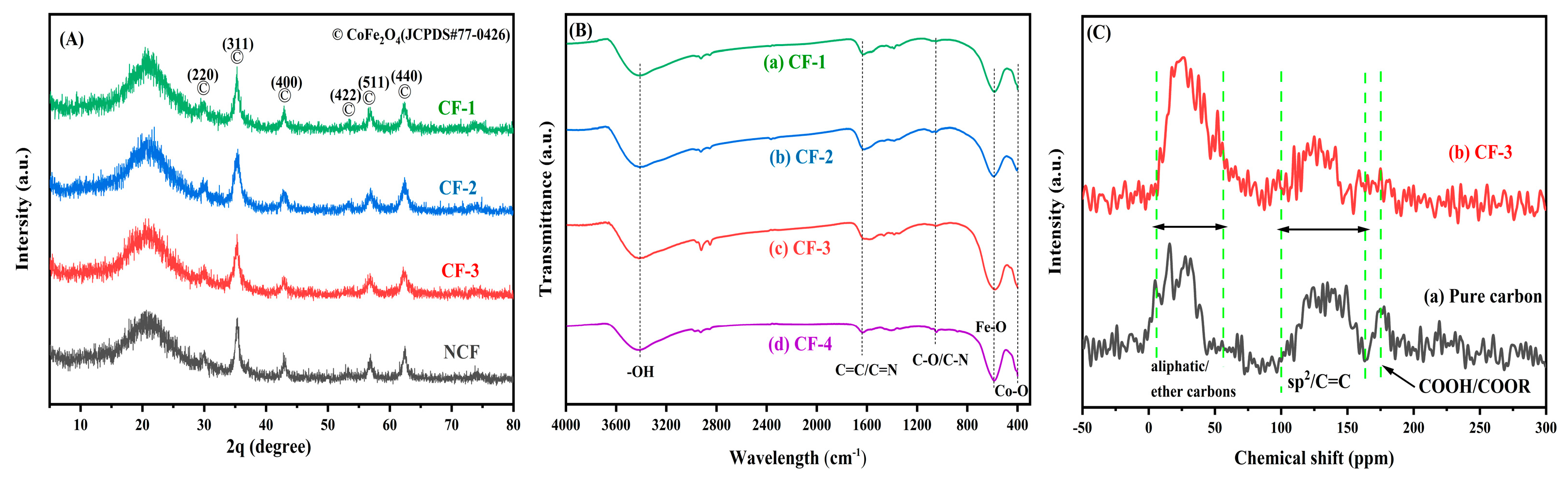
The phase structures of the as-prepared samples synthesized under different conditions were analyzed by X-ray diffraction (XRD), as shown in Figure 1A. All samples exhibit sharp and well-defined diffraction peaks, indicating good crystallinity of the formed CoFe2O4 phase. The diffraction peaks located at 2θ values of 30.0°, 35.4°, 43.0°, 53.5°, 56.9°, and 62.5° are assigned to the (220), (311), (400), (422), (511), and (440) crystal planes, respectively, which are consistent with the standard spinel CoFe2O4 structure (JCPDS No. 77-0426). The similar diffraction patterns observed for all samples suggest that variations in glucose dosage and solvent conditions do not alter the intrinsic crystal structure of CoFe2O4. The broad diffraction hump at around 20–25° can be attributed to the amorphous carbonaceous component derived from hydrothermal carbonization of glucose, indicating the low graphitization degree of the carbon layer [16]. Notably, CF-3 exhibits slightly lower diffraction peak intensities than the other samples, which can be associated with the presence of a relatively higher amount of amorphous carbon and the resulting decrease in the relative proportion of the crystalline CoFe2O4 phase [17].
Fourier transform infrared (FT-IR) spectra of all samples are shown in Figure 1B. Taking CF-3 as a representative example, the absorption bands observed at 402 cm−1 and 579 cm−1 correspond to Co–O/Fe–O stretching vibrations at tetrahedral and octahedral sites of the spinel CoFe2O4 structure, confirming the successful formation of the spinel phase. The bands at 1448 cm−1 and 1602 cm−1 are attributed to vibrations of the N-doped carbon framework and the C=C/C=N stretching modes, respectively, indicating successful incorporation of nitrogen into the carbon matrix [13,18]. The presence of the peak at 1602 cm−1 further suggests the existence of nitrogen configurations such as pyridinic N and graphitic N within the carbon structure. The broad absorption band centered at 3388 cm−1 is assigned to O–H stretching vibrations of surface hydroxyl groups, indicating the presence of abundant hydrophilic functional groups on the catalyst surface.
A hydrothermal carbon sphere was synthesized according to Table 1, and solid-state 13C NMR spectroscopy was used to analyze both pure hydrothermal carbon and CFx to determine the carbon species. As demonstrated in our previous study [16], ethanol mainly regulates the morphology and dispersion of hydrothermal carbon without altering its principal chemical composition; therefore, CF-3 was selected as a representative sample for 13C NMR analysis. The 13C NMR spectra show highly similar features, indicating that the carbon in CF retains a structure comparable to that of hydrothermal carbon spheres. The carbon species are mainly assigned to aliphatic carbon, ether carbon, C=C, and carboxyl groups, confirming the presence of abundant oxygen-containing functional groups introduced by the one-step hydrothermal process. The lower signal intensity observed for CF is attributed to its reduced carbon content, which weakens the overall NMR response (Figure 1C).

3.2. Morphological and Physicochemical Properties

3.2.1. Morphology and Elemental Distribution

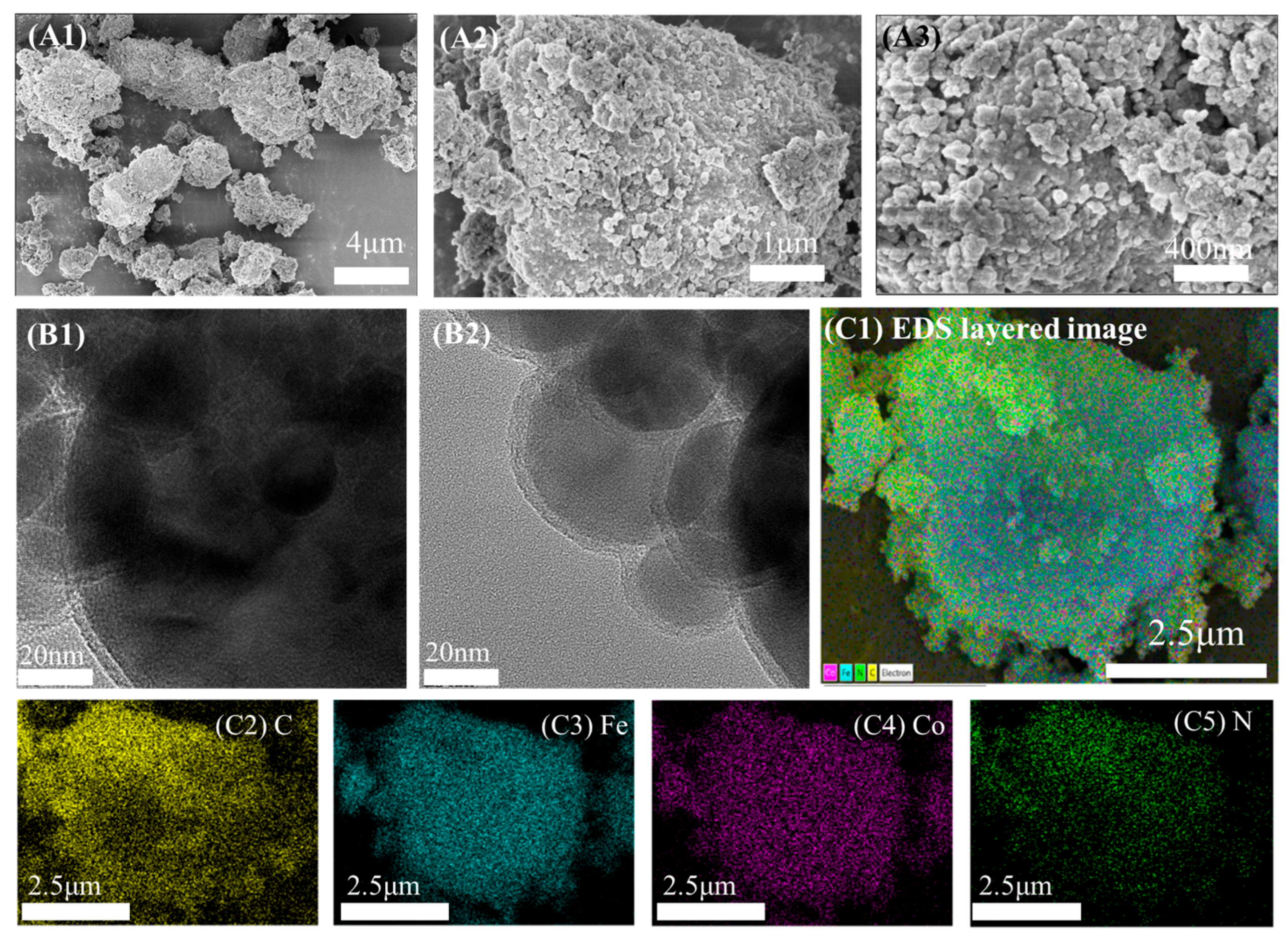
The morphology and elemental distribution of the CF-3 samples were characterized by scanning electron microscopy (SEM) and energy-dispersive X-ray spectroscopy (EDS), as shown in Figure 2. The SEM images reveal that amorphous hydrothermal carbon is uniformly anchored on the surface of CoFe2O4 nanoparticles, forming a loosely structured porous composite. The introduction of ethanol effectively suppresses carbon aggregation, facilitating the formation of smaller and more uniformly dispersed amorphous carbon derived from glucose decomposition [19].
Elemental mapping further confirms the homogeneous distribution of Fe, Co, C, and N throughout the catalyst. The colocalization of C and N indicates that nitrogen atoms introduced via ammonia during the hydrothermal process are successfully incorporated into the carbon framework. Because CF-1–CF-4 were prepared using the same types of precursors and a similar synthesis procedure (Table 1), with differences mainly in the glucose and ethanol dosages, CF-3 was selected as a representative sample for elemental mapping analysis. This N-doped carbon layer not only enhances the adsorption capability toward TC, but also improves the dispersion and stability of CoFe2O4 active nanoparticles. Meanwhile, the intimate interfacial contact between the carbon matrix and CoFe2O4 is expected to promote interfacial electron transfer, thereby facilitating catalytic performance [16,20].

3.2.2. Thermal Analysis and Carbon Content

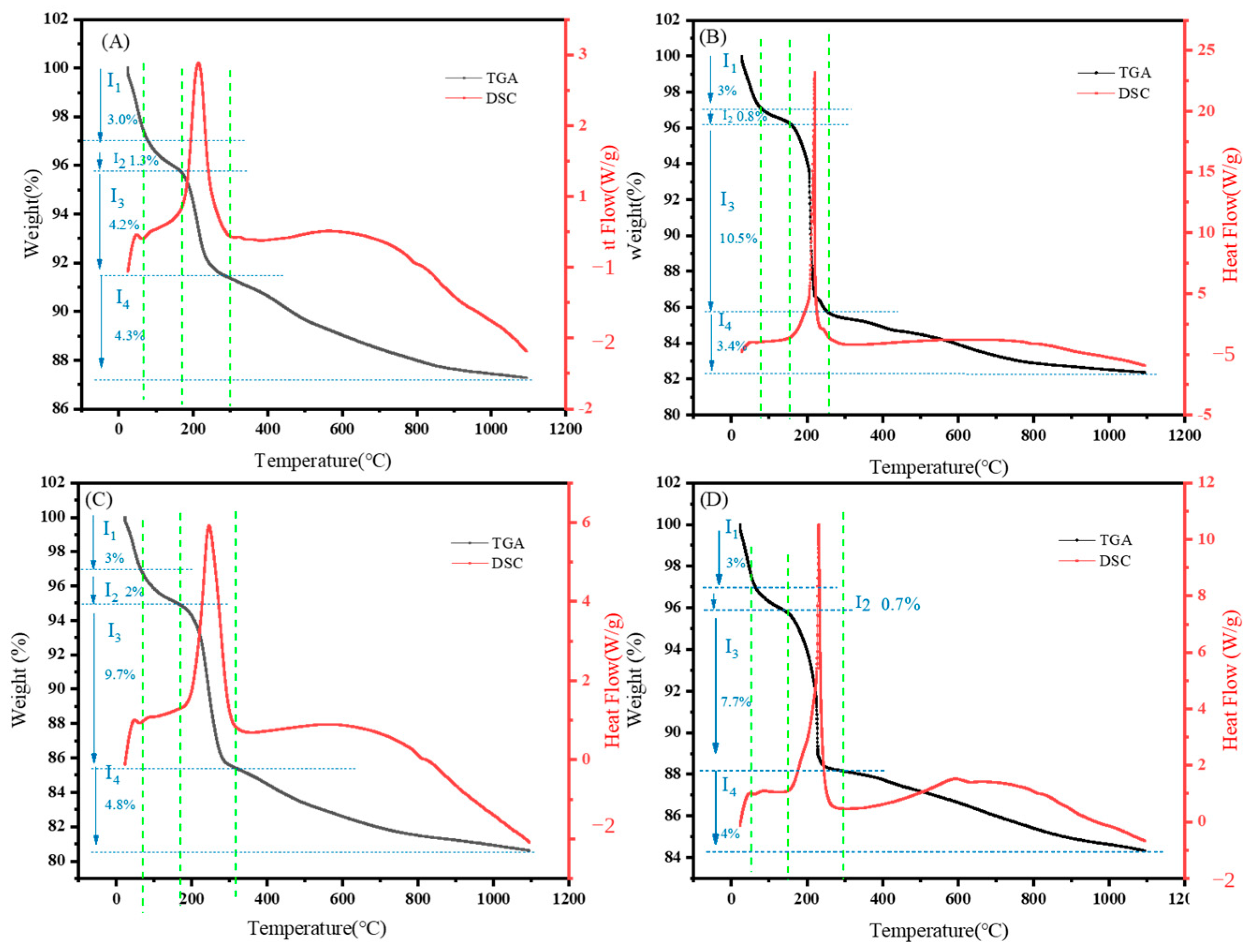
Thermogravimetric–differential scanning calorimetry (TG–DSC) curves of CF-1 to CF-4 are shown in Figure 3. All samples exhibit similar thermal behaviors and can be divided into four distinct stages. The first stage (30–50 °C) is associated with the removal of physically adsorbed water accompanied by a weak endothermic signal. The second stage (50–150 °C) corresponds to the elimination of bound water within the structure.
The third stage (150–300 °C) is characterized by a pronounced endothermic peak and significant mass loss (4.2–10.5%), which is attributed to dehydration–condensation reactions, C–O bond cleavage, and structural rearrangement of the hydrothermal carbon component. The fourth stage (>300 °C) reflects the progressive pyrolysis, carbonization, and decomposition of carbonaceous species under nitrogen atmosphere, accompanied by substantial mass loss (35–50%) due to the release of volatile decomposition products. Since the TG–DSC measurements were conducted under nitrogen rather than air, the carbonaceous species were not expected to be completely oxidized before 500 °C; therefore, the absence of a clear plateau is reasonable. Based on the mass loss in the third and fourth stages, the apparent carbon-related mass-loss fractions of CF-1, CF-2, CF-3, and CF-4 were estimated to be 8.5%, 13.4%, 15.5%, and 11.7%, respectively. Among all samples, CF-3 exhibits the highest apparent carbon-related mass-loss fraction, indicating more effective carbon formation during hydrothermal synthesis [21]. Overall, the results suggest that the addition of ammonia and ethanol facilitate the conversion of glucose into hydrothermal carbon, and the carbon source dosage has an important influence on the apparent carbon-related mass-loss fraction of the composites.

3.2.3. Specific Surface Area and Pore Structure

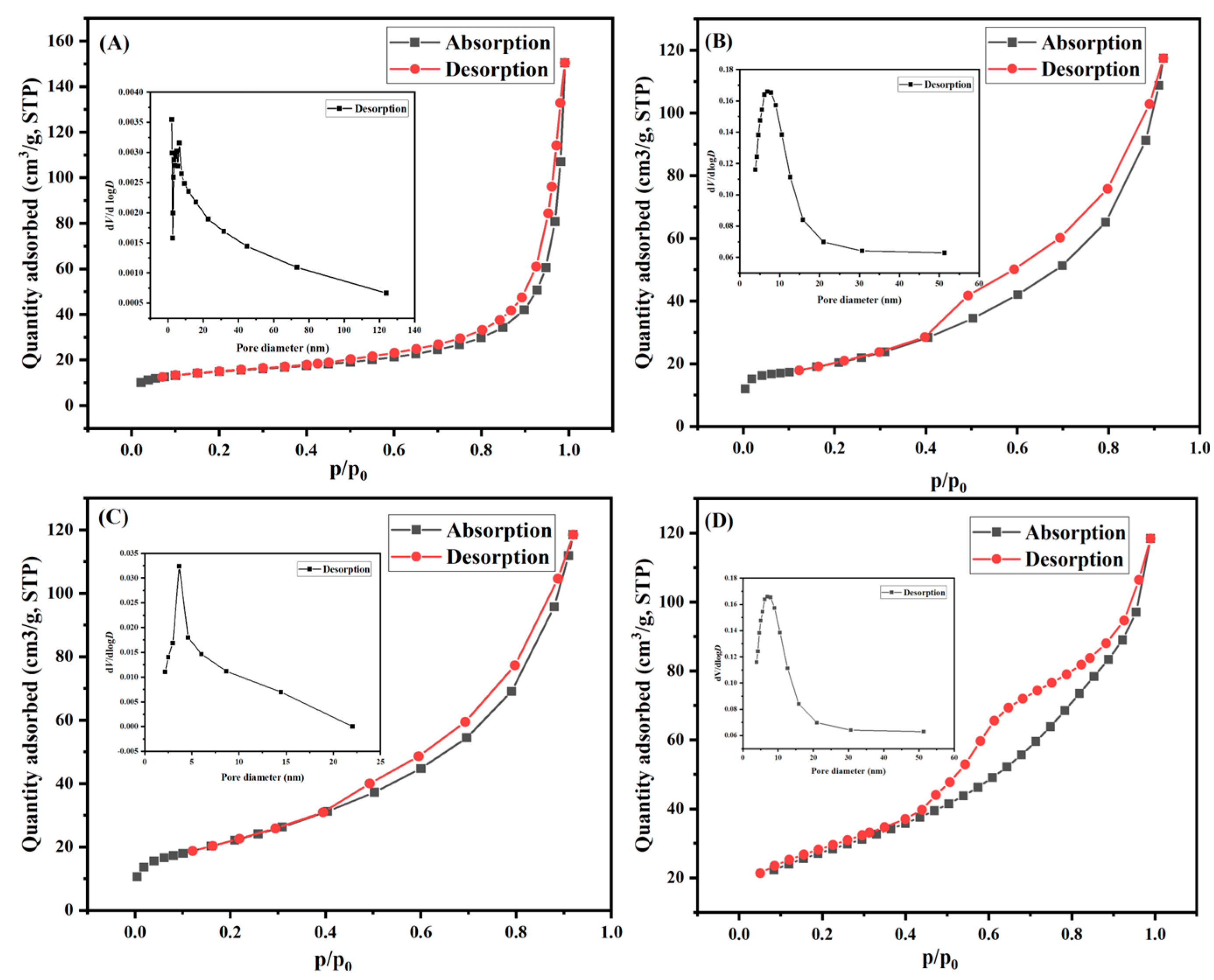
Nitrogen adsorption–desorption isotherms of the CF samples are shown in Figure 4. The specific surface areas of CF-1, CF-2, CF-3, and CF-4 are 81, 98, 94, and 72 m2 g−1, respectively. All samples exhibit typical type IV isotherms with H3-type hysteresis loops, indicating the presence of mesoporous structures with pore sizes mainly distributed in the range of 0–25 nm. The variation in specific surface area is closely related to the carbon content in the composites. At relatively low carbon loading, the hydrothermal carbon contributes to pore formation and enhances the surface area [11,22]. However, excessive carbon leads to aggregation and surface coverage on CoFe2O4 particles, which partially blocks pore development and results in a decrease in surface area. In addition, the comparison between CF-2 and CF-4 indicates that ethanol addition facilitates pore structure optimization by reducing solvent surface tension and suppressing carbon aggregation, thereby promoting the formation of smaller carbon domains and a more accessible porous network. In contrast, the slight decrease in surface area from CF-2 to CF-3 is mainly associated with the increased glucose-derived carbonaceous component, which may partially cover CoFe2O4 particles and block pore development.
The developed mesoporous structure and relatively high surface area provide abundant accessible active sites for tetracycline adsorption and facilitate mass transfer of PMS and reactive species within the pore channels, thereby enhancing both adsorption and catalytic oxidation performance.

3.3. Catalytic Performance and Influencing Factors

3.3.1. Effect of PMS and Catalyst Dosage

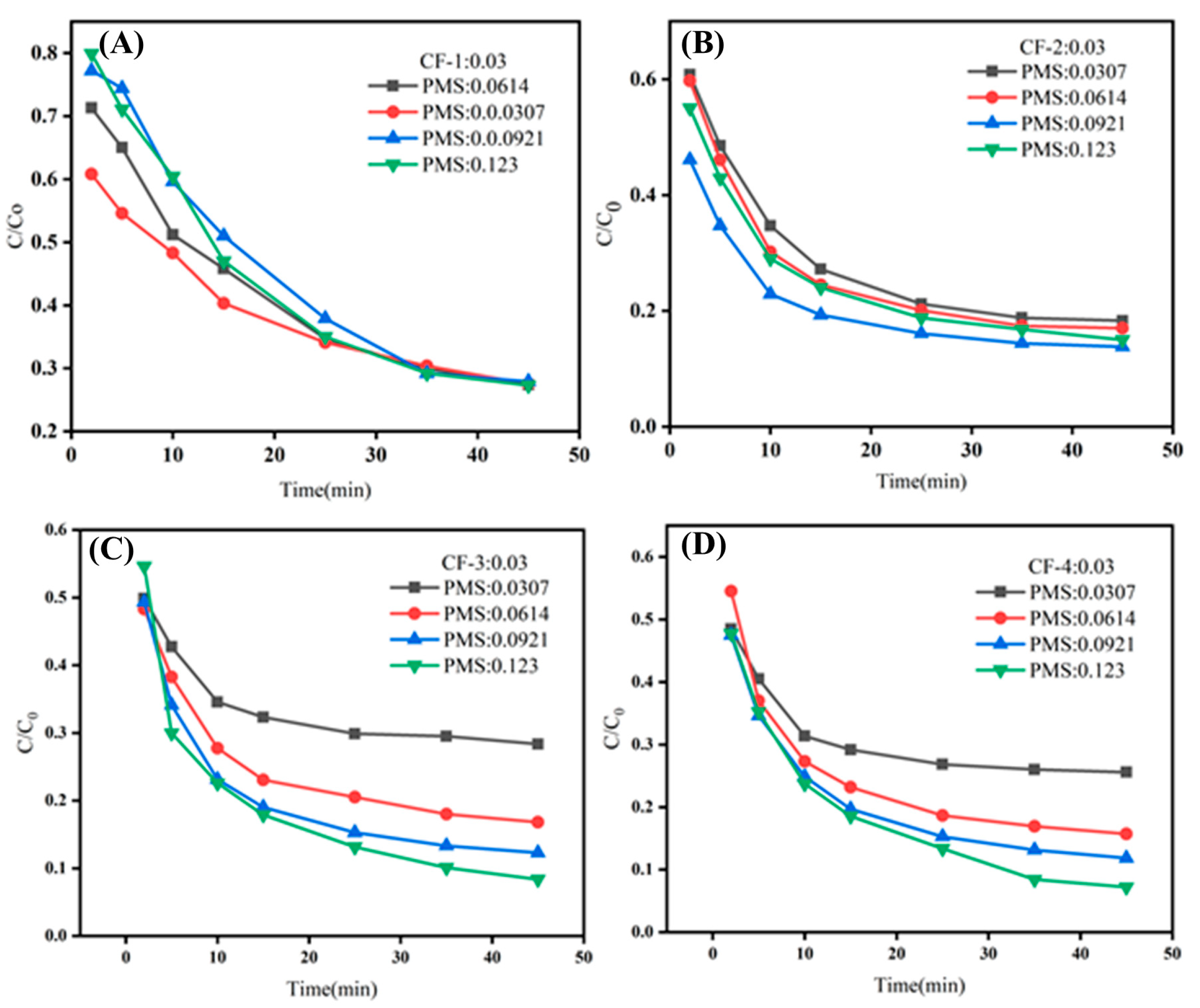
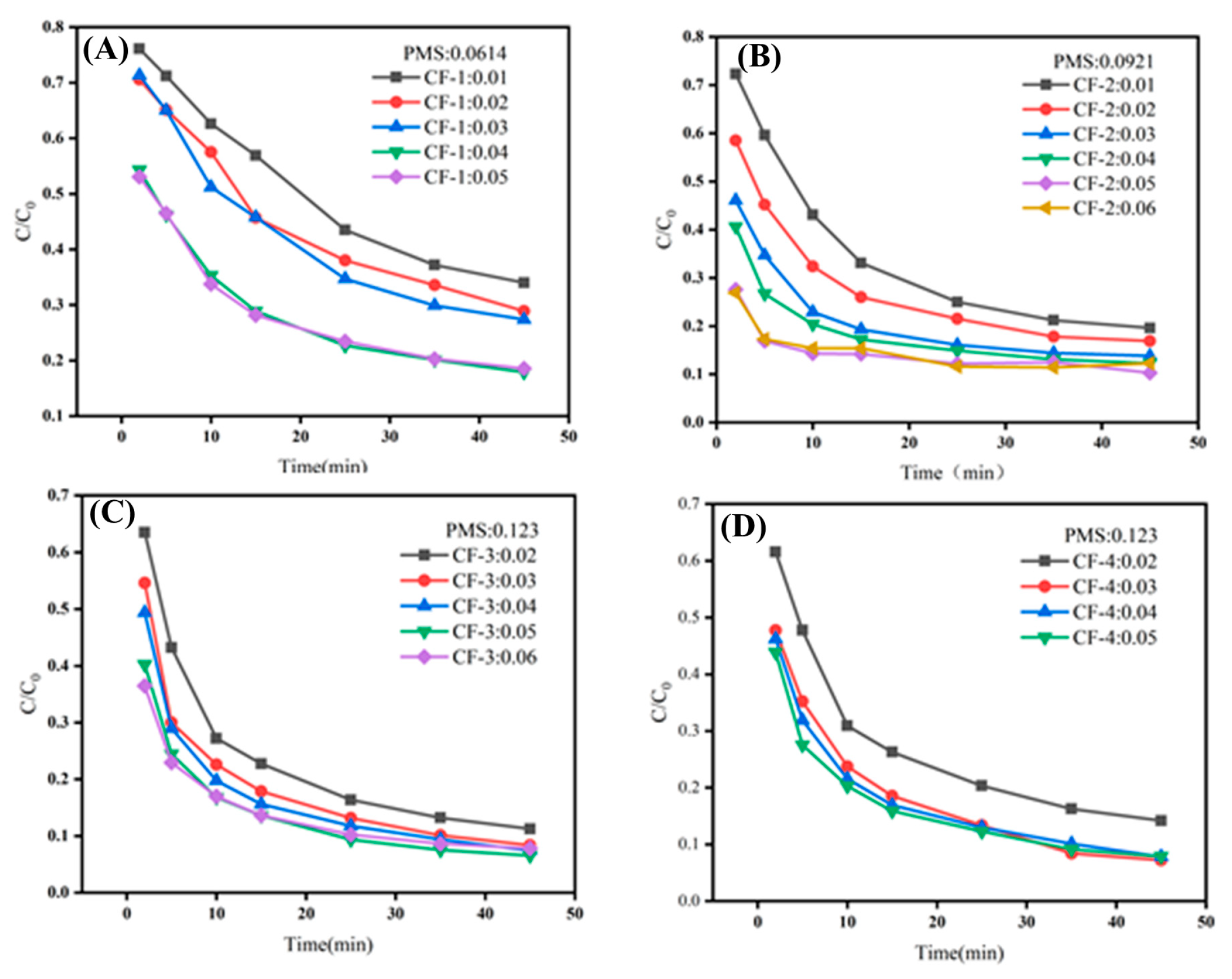
As shown in Figure 5, when the catalyst dosage was fixed at 0.03 g, the overall aqueous-phase TC removal increased with increasing PMS dosage from 0.0307 g to 0.123 g, indicating that a higher oxidant concentration increased the availability of PMS-derived oxidizing species within an appropriate concentration range [23]. Because the scavenger experiments are confounded by substantial adsorption and possible probe–surface interactions, these dosage data are not used to rank individual reactive species. Accordingly, 0.123 g was selected as the working PMS dosage, at which the CF-3/PMS system achieved the highest overall TC removal within 45 min. However, for CF-1 and CF-2, excessive PMS led to a slight decrease in overall removal, which may be associated with oxidant self-consumption or scavenging reactions at elevated PMS concentrations.
However, for CF-1 and CF-2, excessive PMS led to a slight decrease in degradation efficiency, which can be attributed to the self-scavenging effect of excess PMS, resulting in reduced concentrations of reactive oxygen species in the system [24,25].
The effect of catalyst dosage on TC removal was further investigated, as shown in Figure 6. With increasing CF dosage, the number of available active sites increased, thereby enhancing PMS decomposition and interfacial electron transfer, which collectively promoted TC degradation. For CF-1, the removal efficiency increased from 66.09% to 81.94% when the dosage was raised from 0.01 to 0.04 g. Similarly, CF-2 showed an increase from 80.25% to 89.51% as the dosage increased from 0.01 to 0.05 g. For CF-3, the efficiency improved from 88.75% to 93.44% with an increase in dosage from 0.02 to 0.05 g. CF-4 exhibited an increase from 85.81% to 92.78% when the dosage was raised from 0.02 to 0.03 g. However, further increase in catalyst dosage led to a slight decline in degradation efficiency, which may be attributed to radical scavenging and recombination effects induced by excessive active sites [26]. Overall, the CF-3/PMS system achieved the highest TC removal efficiency of 93.44% at a catalyst dosage of 0.05 g and a PMS dosage of 0.123 g, indicating its superior catalytic performance.
To evaluate the overall TC-removal performance of the CF-x/PMS systems, matched reaction systems were compared (Figure S1). After 45 min, the CF-1/PMS, CF-2/PMS, CF-3/PMS, and CF-4/PMS systems achieved overall aqueous-phase TC removals of 82.11%, 89.74%, 93.44%, and 92.78%, respectively. Under the same conditions, PMS alone and CF-3 without PMS achieved removals of 38.28% and 67.61%, respectively. The substantial adsorption-only value demonstrates that the CF-3/PMS endpoint combines adsorption with PMS-mediated oxidation. Because the adsorption-only and PMS-only percentages are referenced to the same initial TC inventory and are not independent additive fractions, they were not summed and no quantitative synergy factor was calculated. The CF-3/PMS value was approximately 2.4 times the PMS-only value, supporting catalyst-assisted PMS conversion, while CF-3 was selected for subsequent experiments on the basis of its slightly higher mean overall removal and balanced adsorption/PMS performance.

3.3.2. Effect of Initial pH and Coexisting Anions

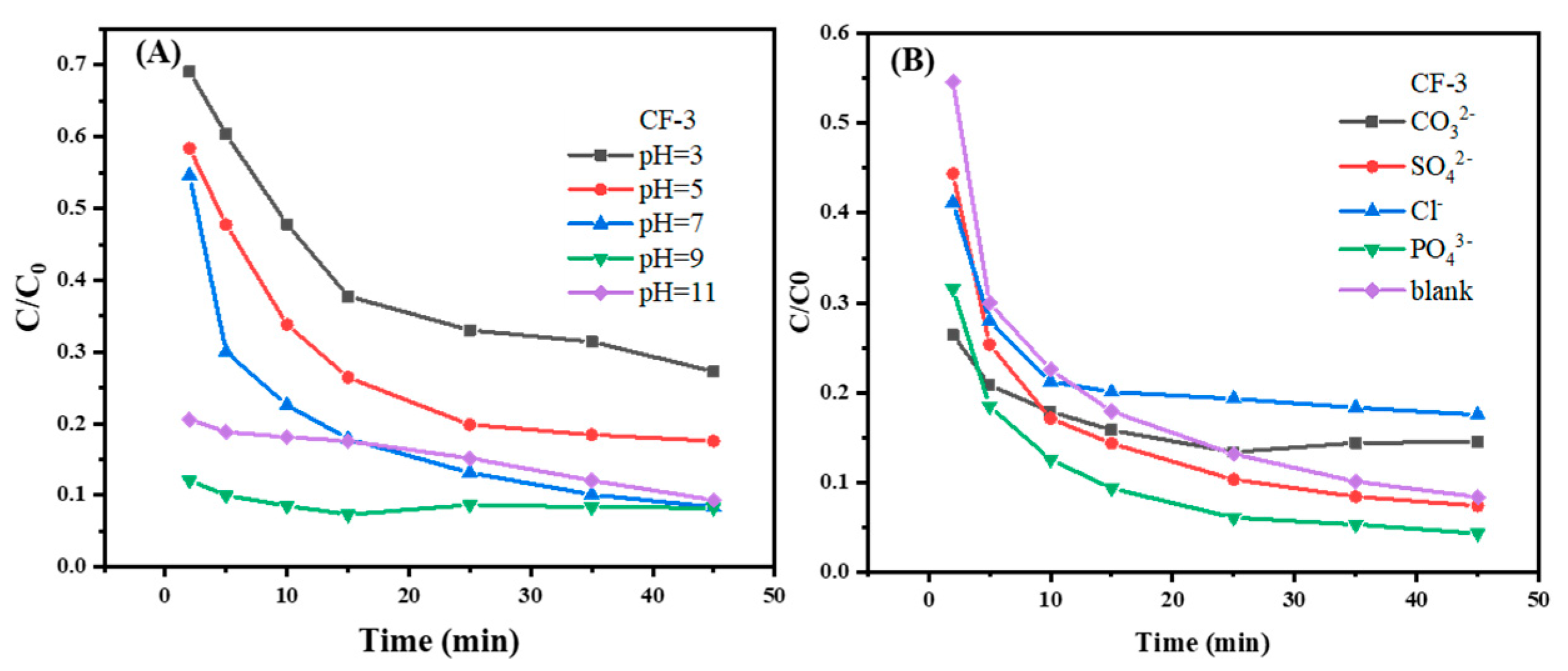
The effect of initial pH on TC degradation in the CF-3/PMS system was investigated over a pH range of 3–11, as shown in Figure 7A. The degradation efficiency exhibited a volcano-type trend, increasing first and then decreasing with rising pH. Under acidic conditions (pH = 3 and 5), the TC removal efficiencies were 72.73% and 82.43%, respectively, indicating suppressed catalytic activity. The highest removal efficiency of 93.44% was achieved at neutral pH (pH = 7). When the solution became alkaline (pH = 9 and 11), the efficiencies slightly decreased to 91.75% and 90.66%, respectively. The reduced performance under acidic conditions can be attributed to the excessive consumption of reactive oxygen species (ROS) by H+, which inhibits the effective participation of SO4 and HO• in TC degradation. In alkaline media, SO4 can be partially converted into •OH through reaction with OH, accompanied by the formation of SO42−. The generated •OH is less selective and more easily consumed under alkaline conditions, thereby decreasing the effective oxidation efficiency toward TC [27]. Overall, the CF-3/PMS system exhibits optimal performance under near-neutral conditions.
Common inorganic anions in natural waters and antibiotic-containing wastewater may influence PMS-based oxidation by interacting with reactive oxygen species or altering the reaction environment [28,29]. Therefore, CO32−, SO42−, Cl, and PO43− were selected as representative anions to evaluate the tolerance of the CF-3/PMS system to complex water matrices. The influence of coexisting anions was further evaluated by introducing CO32−, SO42−, Cl, and PO43− into the reaction system (Figure 7B). The effect on TC removal followed the order: PO43− (95.67%) > SO42− (92.62%) > CO32− (85.48%) > Cl (82.49%). Among them, PO43− slightly enhanced TC degradation, while CO32− and Cl significantly inhibited the process. The inhibitory effect of CO32− and Cl can be attributed to their strong scavenging of reactive radicals, resulting in the formation of less reactive secondary species and reduced oxidation capacity toward TC. In contrast, the negligible or slightly positive effect of SO42− and PO43− may be associated with weaker radical quenching and possible surface interaction effects. These results demonstrate that competitive adsorption and radical scavenging by coexisting anions play a crucial role in regulating PMS-based oxidation performance in complex water matrices [28,30].

3.3.3. Reusability and Co Leaching of CF-3

The reusability of CF-3 was evaluated over five consecutive cycles. As shown in Figure S2, the overall TC removal efficiency decreased from 93.44% in the first cycle to 83.31% in the fifth cycle, indicating that CF-3 retained satisfactory removal performance after repeated use. The gradual decrease may be attributed to catalyst loss during recovery and partial occupation of active sites by adsorbed species or reaction intermediates. The Co concentration in the filtrate after the first cycle was 0.74 mg L−1, indicating limited but measurable Co leaching under the investigated conditions. These results demonstrate the reasonable short-term stability of CF-3, while further investigations are still required to minimize metal release during long-term application.

3.3.4. Radical Quenching Experiments and Reactive Species Identification

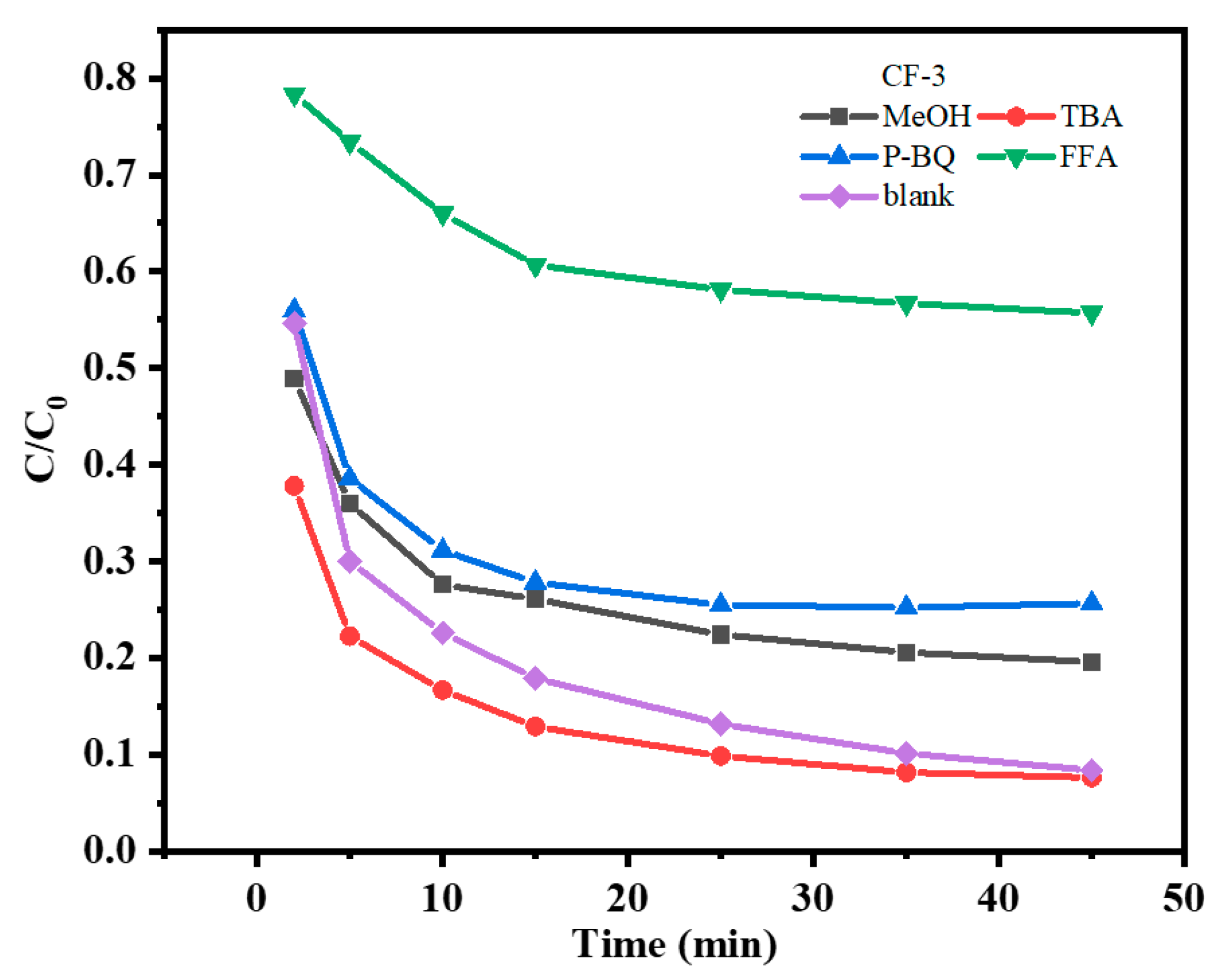
To elucidate the activation mechanism of PMS in the CF system for TC degradation, radical quenching experiments were conducted using methanol (MeOH), tert-butanol (TBA), p-benzoquinone (p-BQ), and furfuryl alcohol (FFA) as scavengers for SO4/HO•, HO•, O2, and 1O2, respectively. As shown in Figure 8, the addition of MeOH decreased the TC removal efficiency to 80.42%, while the presence of TBA only slightly affected the degradation efficiency (92.40%), indicating that HO• plays a secondary role in the reaction system. In contrast, the addition of p-BQ and FFA led to significant decreases in TC removal efficiency to 74.37% and 44.29%, respectively, suggesting that O2 and especially 1O2 are the dominant reactive species responsible for TC degradation [23,29]. Overall, the CF/PMS system does not follow a single radical-dominated pathway. Instead, TC degradation is governed by a synergistic oxidation process involving SO4, O2, and 1O2, with non-radical species (1O2) playing a particularly crucial role in the reaction system.

3.4. Adsorption Behavior and Performance of CF-3 Toward TC

3.4.1. Adsorption Capacity of TC on CF-3

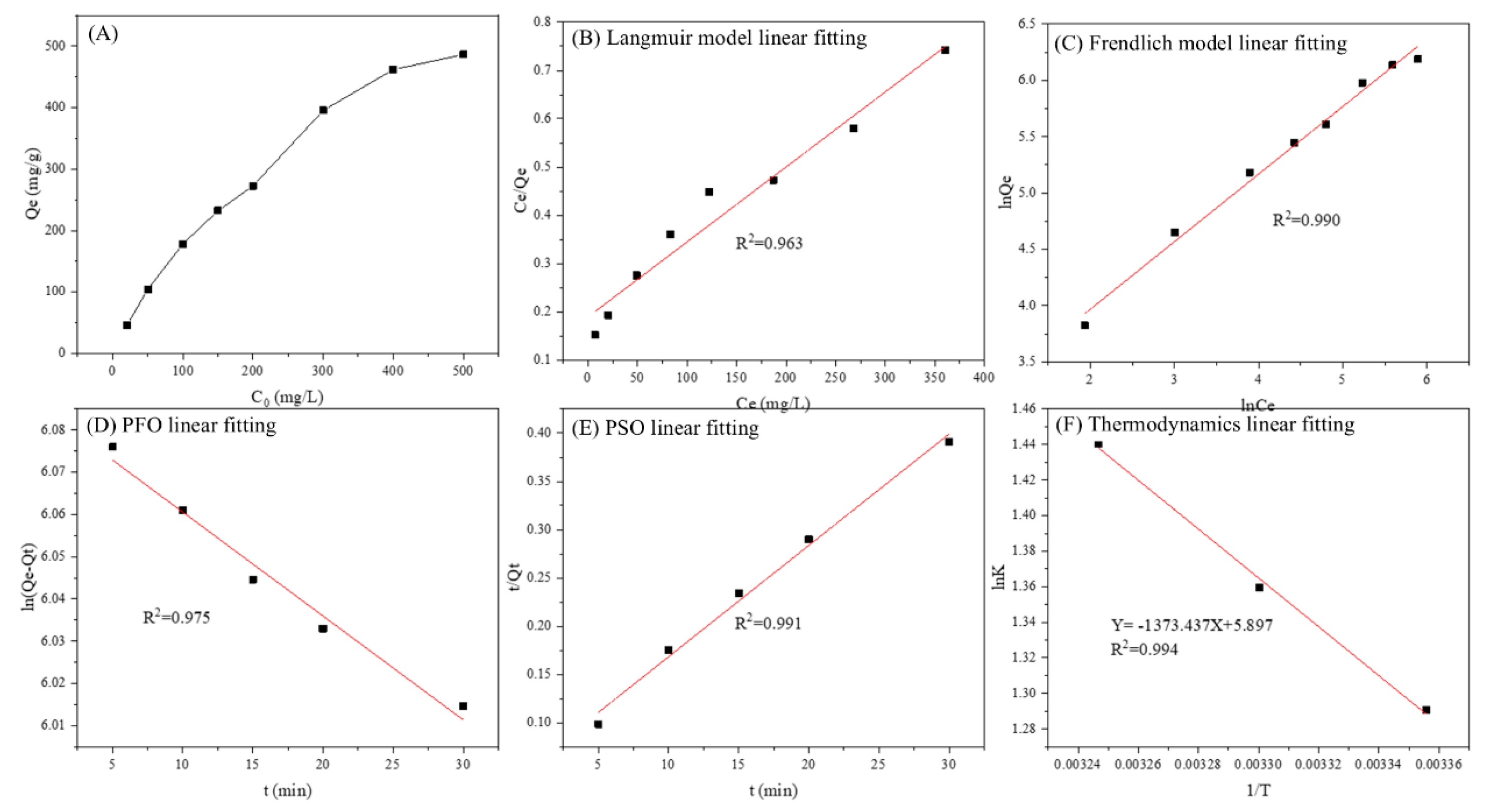
To better simulate real-water conditions, adsorption experiments were conducted at pH = 7, consistent with the optimal pH identified in catalytic tests. As shown in Figure 9A, the equilibrium adsorption capacity of CF-3 for TC increases with increasing initial concentration and gradually reaches saturation at approximately 500 mg L−1. CF-3 exhibits the highest maximum adsorption capacity of 486.5 mg g−1. At lower initial concentrations (50–300 mg L−1), the adsorption capacity increases rapidly with concentration due to the abundant availability of active surface sites. As the concentration further increases (300–500 mg L−1), the adsorption rate gradually slows down and approaches equilibrium, which can be attributed to the progressive occupation of active sites and surface saturation. Compared with reported iron-based adsorbents (Table S1), the superior adsorption performance of CF-3 can be ascribed to its locally encapsulated N-doped carbon/CoFe2O4 structure and enriched surface functional groups, which provide abundant interaction sites for TC adsorption.

3.4.2. Adsorption Isotherms, Kinetics and Thermodynamics

Adsorption isotherm, kinetic, and thermodynamic analyses were conducted to clarify the adsorption behavior of TC on CF-3. Detailed equations and parameter definitions for the corresponding models are provided in Texts S1–S3 of the Supplementary Materials. The adsorption isotherm results (Figure 9B,C) indicate that the Freundlich model provides a better fit than the Langmuir model, suggesting that TC adsorption on CF is a heterogeneous multilayer process involving energetically different adsorption sites. The kinetic fitting results (Figure 9D,E) show that the pseudo-second-order model (R2 = 0.991) fits the experimental data better than the pseudo-first-order model (R2 = 0.975), suggesting that the adsorption process is strongly influenced by the availability of surface adsorptive sites and the progressive occupation of these sites during TC removal.
Thermodynamic analysis (Figure 9F, Table S3) reveals that the adsorption of TC on CF-3 is spontaneous, as indicated by negative ΔG values. The positive ΔH value (11.42 kJ mol−1) suggests that the adsorption process is endothermic, implying that higher temperatures favor TC uptake. The positive ΔS value (0.049 kJ mol−1 K−1) indicates increased disorder at the solid–liquid interface during adsorption. Considering the multiple interactions between TC and the surface functional groups of hydrothermal carbon phase in CF-3, the positive entropy change may be associated with adsorption-induced reorganization of interfacial species [16,31]. Overall, the favorable entropy contribution (TΔS = 14.6 kJ mol−1, T = 298K) outweighs the positive enthalpy term (ΔH = 11.42 kJ mol−1), resulting in a negative ΔG. Therefore, the apparent spontaneous adsorption of TC on CF-3 is primarily driven by the entropy contribution.

3.5. Removal Mechanism of TC over CF-3

3.5.1. FT-IR Analysis

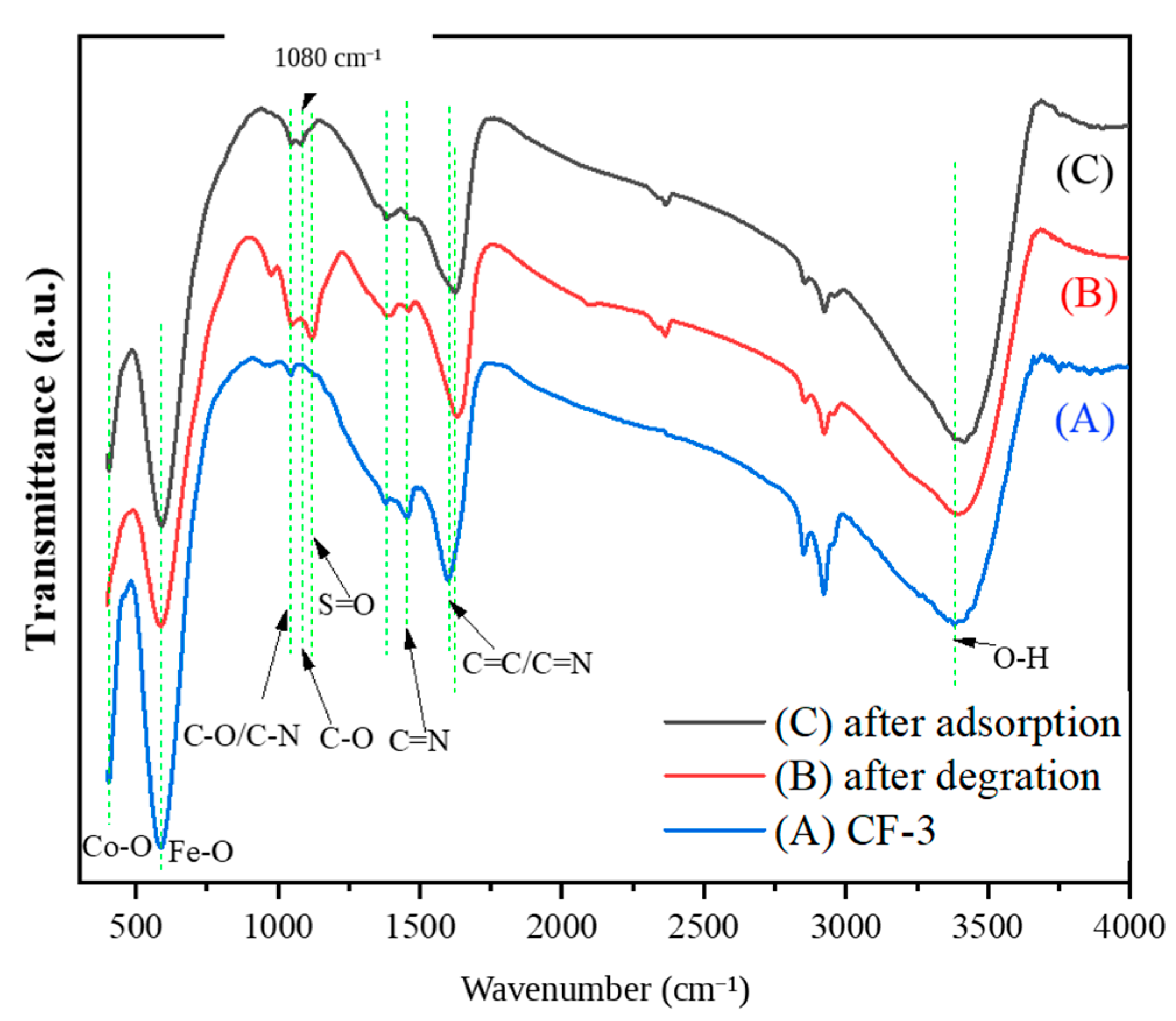
FT-IR results (Figure 10) reveal the surface interactions and reaction pathways of CF-3 during TC adsorption and degradation. The bands at 402 and 579 cm−1 correspond to Co–O/Fe–O vibrations of CoFe2O4, whose decreased intensity after reaction indicates the involvement of Co/Fe sites in TC complexation and redox cycling during PMS activation. The appearance of the 1080 cm−1 band after adsorption (Figure 10 (C)), assigned to the C–O stretching vibration of TC, supports TC adsorption on the CF-3 surface, while its disappearance after reaction (Figure 10 (B)) suggests the degradation or transformation of adsorbed TC [19,31]. A new band at 1122 cm−1 appears only after reaction, confirming PMS activation on metal sites. The weakened 1448 cm−1 band suggests changes in the local environment of N–C structures during the PMS activation reaction. The C=N band shifts from 1602 to 1630 cm−1 after adsorption and remains shifted after reaction, indicating strong π–π EDA interactions and dynamic electronic modulation induced by Co(II)/Co(III) and Fe(II)/Fe(III) cycling. The N-doped carbon framework may serve as an electron transport pathway and facilitate interfacial charge transfer, as suggested by previous studies [16,20]. The O–H band at 3388 cm−1 strengthens after adsorption, indicating hydrogen bonding, and remains stable after reaction, consistent with ROS analysis.

3.5.2. XPS Analysis

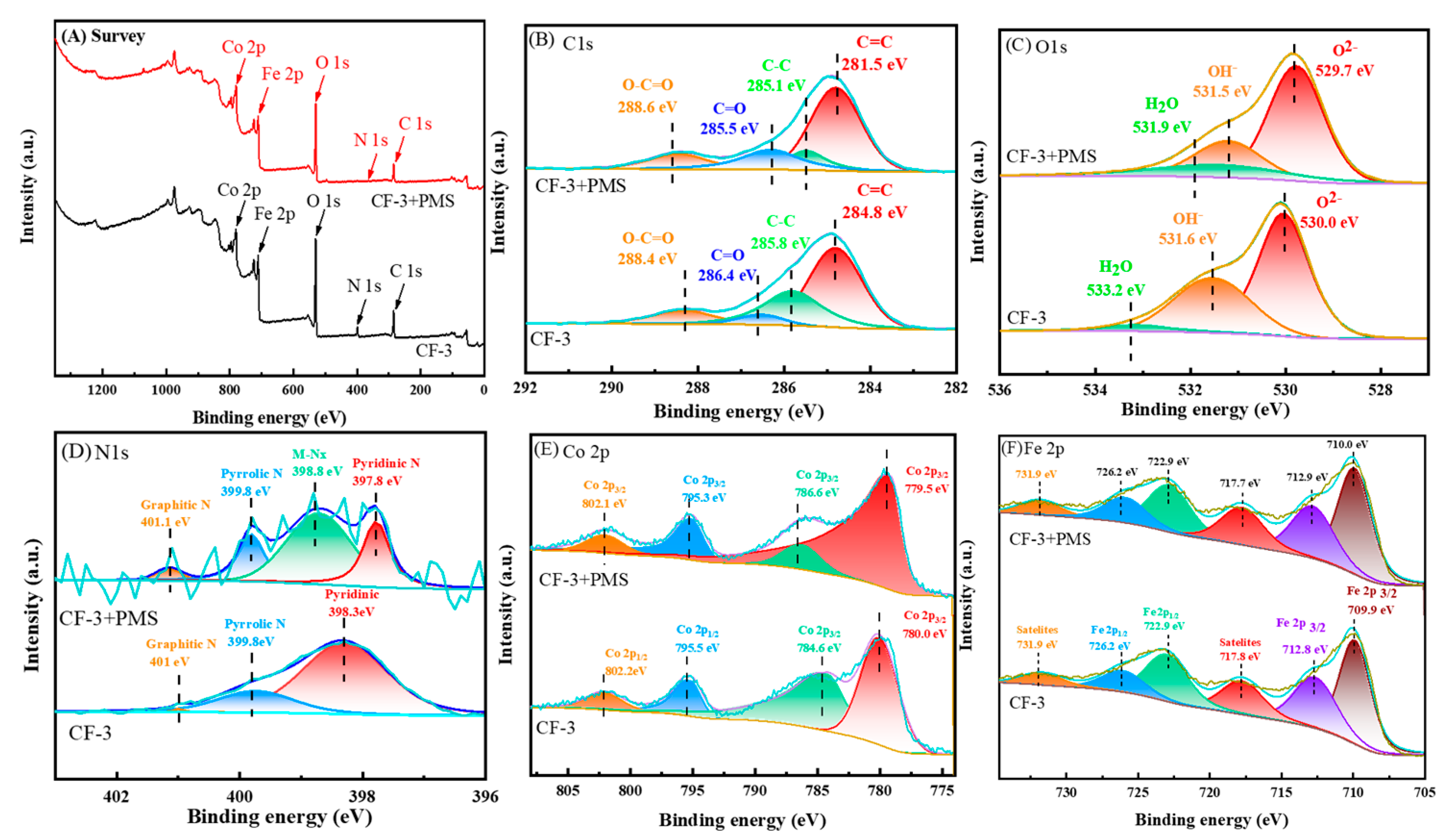
Both CF-3 and CF-3 + TC exhibit characteristic peaks of C, O, N, Co, and Fe in the survey spectra (Figure 11A), indicating that no obvious change occurred in the overall surface elemental composition after the PMS reaction. As shown in Figure 11B–F, the high-resolution C 1s spectra, peaks at 284.8 eV (C=C), 285.1–285.8 eV (C–C/C–N), 286.4–287.5 eV (C–O/C=N), and 288.4–288.6 eV (O–C=O) are observed. After reaction, the increased intensity of oxygenated carbon species suggests enrichment of polar functional groups on the carbonaceous layer, which may enhance surface polarity and favor TC/PMS adsorption. Combined with the preceding analyses, this observation is consistent with the proposed role of the N-doped carbon framework in interfacial electron transfer [16,20]. The O 1s spectra show lattice oxygen (529.7–530.0 eV), surface –OH/defective oxygen (531.5 eV), and adsorbed water/carboxyl oxygen (533.2–531.9 eV). The increased proportion of high-binding-energy oxygen species in CF-3 + PMS indicates an increased abundance of surface hydroxyl groups and defect-associated oxygen species, which may provide additional sites for PMS adsorption and activation. In the N 1s spectra, pyridinic N (~398.3 eV), pyrrolic N (~399.8 eV), and graphitic N (~401.0 eV) are identified. After reaction, the pyridinic N peak shifts to 397.8 eV, corresponding to a negative shift of 0.5 eV, whereas the pyrrolic N peak remains at 399.8 eV and the graphitic N peak shifts slightly from 401.0 to 401.1 eV. In addition, an M–Nx component is fitted at 398.8 eV. These changes suggest variations in the local electronic and coordination environments of the N species. Together with the above FT-IR analysis, these changes are associated with the involvement of M–Nx sites in electron transfer during PMS activation [12,13,14,15]. For Co 2p, four fitted components are observed at 780.0, 784.6, 795.5, and 802.2 eV for CF-3, and at 779.5, 784.6, 795.3, and 802.1 eV for CF-3 + PMS. After reaction, the main Co 2p peaks shift slightly toward lower binding energies. In contrast, Fe 2p spectra (709.8 and 723.7 eV) exhibit a slight positive shift. These opposite shifts suggest changes in the local electronic environments of Co and Fe and reflect electron redistribution between the two metal centers during PMS activation. Together with the catalytic results, these spectral changes are consistent with the involvement of Co/Fe redox transformations in PMS activation [10,11].

3.5.3. Adsorption–Catalysis Synergy

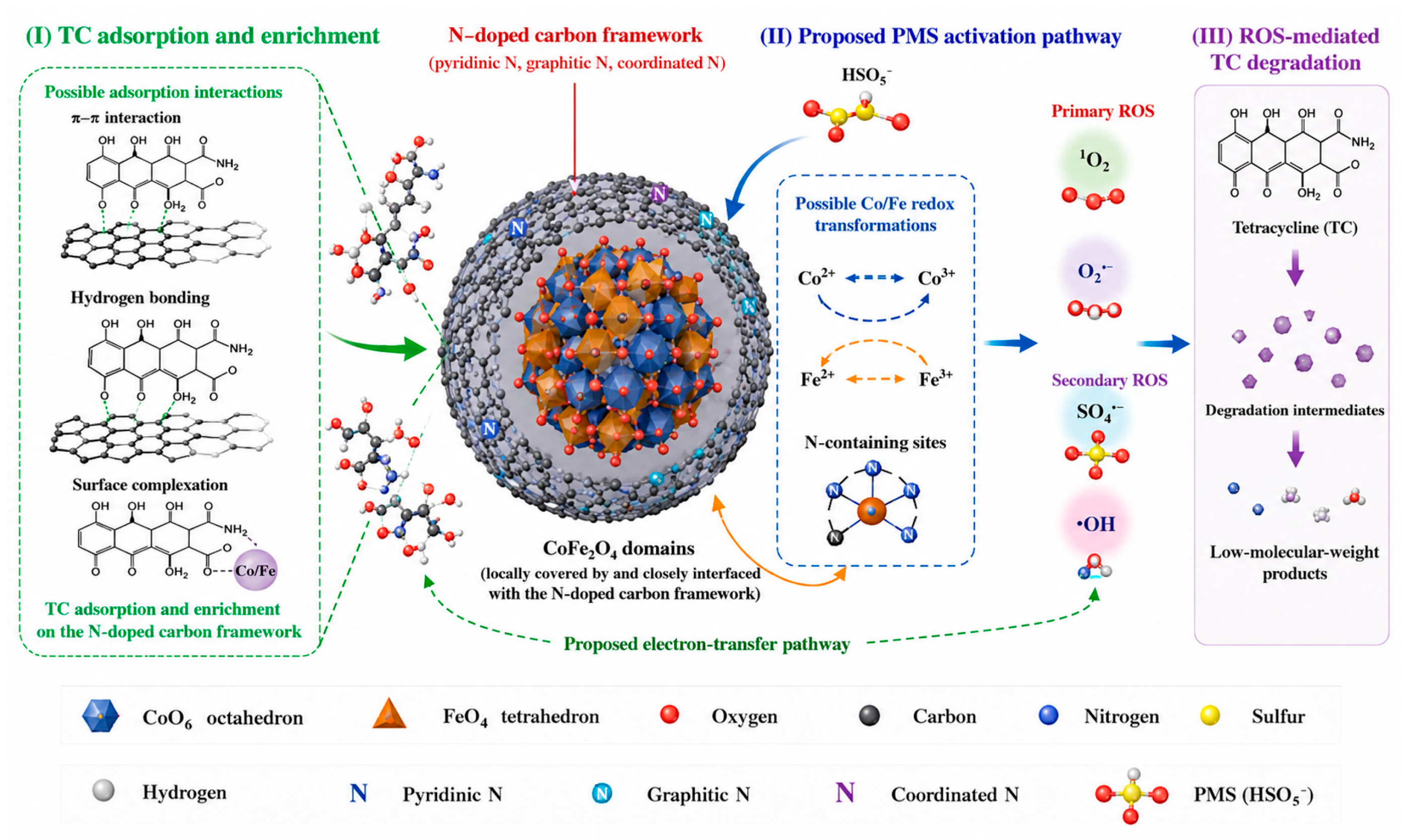
CF-3 integrates adsorption enrichment and PMS-driven catalytic oxidation for efficient TC removal (Figure 12). The N-doped carbon framework and Co/Fe sites contribute to TC enrichment via π–π interactions, hydrogen bonding, and surface complexation. The CoFe2O4/N-doped carbon interface is proposed to serve as an important region for PMS activation. Changes in the Co 2p and Fe 2p spectra, together with the catalytic results, are consistent with the involvement of Co/Fe redox transformations in PMS activation. Together with the preceding FTIR and XPS analyses, the observed changes may be associated with electron transfer involving N-containing/M–Nx sites during PMS activation. Quenching results indicate that 1O2 and O2 dominate TC degradation, with SO4 and •OH as auxiliaries. The high adsorption capacity (486.5 mg g−1) enriches TC at the interface and facilitates subsequent PMS-driven catalytic oxidation. The spatial distribution of CoFe2O4 and N-doped carbon domains partially differentiate adsorption-dominant regions from PMS-activation sites and thereby alleviate their competition. Accordingly, a proposed “pre-concentration–activation–degradation” pathway is illustrated in Figure 12. This integrated adsorption-assisted catalytic process achieved a TC removal efficiency of 93.44%.

4. Conclusions

A series of N-doped carbon-modified CoFe2O4 composites (CF-1–CF-4) were successfully prepared via a one-step hydrothermal method. Comparison among CF-1–CF-4 indicated that the glucose and ethanol dosages influenced the carbon content, pore structure, and TC removal performance in the presence of PMS, with CF-3 exhibiting the highest mean removal efficiency. CF-3 exhibited efficient dual-function performance for tetracycline (TC) removal through synergistic adsorption and catalytic oxidation. CF-3 possesses a high surface area (93.94 m2 g−1), mesoporous structure, and well-integrated spinel CoFe2O4/N-doped carbon architecture with an appropriate carbon content (~15.5%). Under optimal conditions, CF-3/PMS system achieved 93.44% TC removal within 45 min, while CF-3 exhibited a maximum adsorption capacity of 486.5 mg g−1. The adsorption process was spontaneous and endothermic, while quenching experiments suggested that TC oxidation involved both radical and non-radical pathways, with 1O2 and O2 playing major roles and SO4 and •OH also contributing. The catalytic activity may arise from the cooperative contributions of N-containing carbon sites, accessible Co/Fe-containing regions, and interfacial electronic interactions, which facilitate PMS activation and electron transfer. The locally encapsulated carbonaceous structure may favor the coupling of TC adsorption with PMS-mediated oxidation, rather than indicating a strict spatial separation of adsorption and catalytic sites. Overall, CF-3 provides an effective strategy for antibiotic wastewater treatment with strong adsorption–catalysis synergy and application potential.

Supplementary Materials

The following supporting information can be downloaded at: https://www.mdpi.com/article/10.3390/environments13080426/s1, Figure S1. Overall TC removal in different reaction systems; Figure S2. Reusability of CF-3 in the CF-3/PMS system; Table S1. Comparison of TC adsorption capacities of conventional ferrites and ferrite-based composites; Table S2. Raw UV–Vis absorbance data at 357 nm for a representative TC-removal experiment; Table S3. Apparent thermodynamic parameters for TC adsorption on CF-3 derived from the current Van’t Hoff fitting; Text S1. Adsorption isotherm models; Text S2. Adsorption kinetic models; Text S3. Adsorption thermodynamic calculations [32,33,34,35,36].

Author Contributions

X.W.: Conceptualization, Data curation, Formal analysis, Investigation, Methodology, Visualization, Writing—original draft, supervision and revision. M.Z.: Conceptualization, Writing—Review & Editing. X.M.: Visualization, Writing—original draft and Revision. K.L.: Methodology, Formal analysis, Data Curation, Writing—Original Draft. L.M.: Writing—Review & Editing, Visualization. L.Z.: Conceptualization, Methodology, Investigation, Validation. J.L.: Methodology, Formal analysis, Validation, Supervision. All authors have read and agreed to the published version of the manuscript.

Funding

This work was financially supported by the Natural Science Research Projects of Anhui Universities (2023AH051204), the Introduction of Talent Research Start-up Fund of Anhui University of Science and Technology (2023yjrc23 and 13230028), and the University Synergy Innovation Program of Anhui Province (GXXT-2022-083).

Data Availability Statement

The data from this study are available from the authors upon reasonable request.

Conflicts of Interest

The authors declare no conflicts of interest.

References

  1. Rajasulochana, P.; Preethy, V. Comparison on efficiency of various techniques in treatment of waste and sewage water—A comprehensive review. Resour.-Effic. Technol. 2016, 2, 175–184. [Google Scholar] [CrossRef] [Scilit]
  2. Zhang, X.; Zhang, Y.; Jia, X.; Zhang, N.; Xia, R.; Zhang, X.; Wang, Z.; Yu, M. In situ fabrication of a novel S-scheme heterojunction photocatalyst Bi2O3/P-C3N4 to enhance levofloxacin removal from water. Sep. Purif. Technol. 2021, 268, 118691. [Google Scholar] [CrossRef] [Scilit]
  3. Lien, L.T.Q.; Hoa, N.Q.; Chuc, N.T.K.; Thoa, N.T.M.; Phuc, H.D.; Diwan, V.; Dat, N.T.; Tamhankar, A.J.; Lundborg, C.S. Antibiotics in wastewater of a rural and an urban hospital before and after wastewater treatment, and the relationship with antibiotic use—A one-year study from Vietnam. Int. J. Environ. Res. Public Health 2016, 13, 588. [Google Scholar] [CrossRef] [Scilit] [PubMed]
  4. Wang, S.; Ding, G.; Liu, Y.; Dou, Z.; Chen, H.; Ya, M.; Lin, X.; Li, Q.; Li, Y.; Wang, X. Legacy and emerging persistent organic pollutants in the marginal seas of China: Occurrence and phase partitioning. Sci. Total Environ. 2022, 827, 154274. [Google Scholar] [CrossRef] [Scilit] [PubMed]
  5. Burch, K.D.; Han, B.; Pichtel, J.; Zubkov, T. Removal efficiency of commonly prescribed antibiotics via tertiary wastewater treatment. Environ. Sci. Pollut. Res. 2019, 26, 6301–6310. [Google Scholar] [CrossRef] [Scilit] [PubMed]
  6. Liu, X.; Steele, J.C.; Meng, X.Z. Usage, residue, and human health risk of antibiotics in Chinese aquaculture: A review. Environ. Pollut. 2017, 223, 161–169. [Google Scholar] [CrossRef] [Scilit] [PubMed]
  7. Gaballah, M.S.; Guo, J.; Sun, H.; Aboagye, D.; Sobhi, M.; Muhmood, A.; Dong, R. A review targeting veterinary antibiotics removal from livestock manure management systems and future outlook. Bioresour. Technol. 2021, 333, 125069. [Google Scholar] [CrossRef] [Scilit] [PubMed]
  8. Yang, M.; He, J.; He, J.; Cao, J. Removal of tetracycline and ciprofloxacin from aqueous solutions using magnetic copper ferrite nanoparticles. J. Sci. Adv. Mater. Devices. 2024, 9, 100717. [Google Scholar] [CrossRef] [Scilit]
  9. Fan, Z.; Yang, S.; Zhu, Q.; Zhu, X. Effects of different oxygen conditions on pollutants removal and the abundances of tetracycline resistance genes in activated sludge systems. Chemosphere 2022, 291, 132681. [Google Scholar] [CrossRef] [Scilit] [PubMed]
  10. Hubeny, J.; Harnisz, M.; Korzeniewska, E.; Buta, M.; Zieliński, W.; Rolbiecki, D.; Giebułtowicz, J.; Nałęcz-Jawecki, G.; Płaza, G. Industrialization as a source of heavy metals and antibiotics which can enhance the antibiotic resistance in wastewater, sewage sludge and river water. PLoS ONE 2021, 16, e0252691. [Google Scholar] [CrossRef] [Scilit] [PubMed]
  11. Wang, W.; Huang, J.; Wu, T.; Ren, X.; Zhao, X. Research on the preparation of biochar from waste and its application in environmental remediation. Water 2023, 15, 3387. [Google Scholar] [CrossRef] [Scilit]
  12. Feng, Q.; Guo, K.; Liu, B.; Wang, C.; Yan, B.; Yue, Q.; Gao, Y.; Gao, B. Recent advances and prospects in antibiotics removal by coagulation technique: A systematic review. J. Clean. Prod. 2025, 514, 145825. [Google Scholar] [CrossRef] [Scilit]
  13. Cacace, D.; Fatta-Kassinos, D.; Manaia, C.M.; Cytryn, E.; Kreuzinger, N.; Rizzo, L.; Karaolia, P.; Schwartz, T.; Alexander, J.; Merlin, C.; et al. Antibiotic resistance genes in treated wastewater and in the receiving water bodies: A pan-European survey of urban settings. Water Res. 2019, 162, 320–330. [Google Scholar] [CrossRef] [Scilit] [PubMed]
  14. Guo, D.G.; Ni, L.; Wang, L.; Shao, L. Separation and determination of tetracycline hydrochloride in real water samples using binary small molecule alcohol-salt aqueous two-phase system coupled with high-performance liquid chromatography. Chirality 2019, 31, 658–668. [Google Scholar] [CrossRef] [Scilit] [PubMed]
  15. Nordin, A.H.; Norfarhana, A.S.; Noor, S.F.M.; Paiman, S.H.; Nordin, M.L.; Husna, S.M.N.; Ilyas, R.A.; Ngadi, N.; Bakar, A.A.; Ahmad, Z.; et al. Recent advances in using adsorbent derived from agricultural waste for antibiotics and non-steroidal anti-inflammatory wastewater treatment: A review. Separations 2023, 10, 300. [Google Scholar] [CrossRef] [Scilit]
  16. Wang, X.; Wang, J.; Li, J.; Du, Y.; Wu, J.; He, H. Fabrication of nitrogen-doped carbon@magnesium silicate composite by one-step hydrothermal method and its high-efficiency adsorption of As(V) and tetracycline. Materials 2023, 16, 5338. [Google Scholar] [CrossRef] [Scilit] [PubMed]
  17. Kang, W.; Cui, Y.; Yang, Y.; Guo, M.; Zhao, Z.; Wang, X.; Liu, X. Preparation of nitrogen-doped hollow carbon nanosphere/graphene composite aerogel for efficient removal of quinoline from wastewater. J. Hazard. Mater. 2021, 417, 126160. [Google Scholar] [CrossRef] [Scilit] [PubMed]
  18. Liu, S.; Du, X.L.; Ma, C.; Ji, X.X.; Ma, M.G.; Li, J.F. Synthesis of magnetic carbon/iron oxide nanocomposites in ethylene glycol/water mixed solvents and their highly adsorption performance. Sci. Adv. Mater. 2019, 11, 33–40. [Google Scholar] [CrossRef] [Scilit]
  19. Huang, N.; Wang, T.; Wu, Y.; Wang, F.; Zhang, D.; Zhou, R.; Kong, C.; Yang, Z.; Zhang, H.; Zhu, H. Preparation of magnetically recyclable hierarchical porous sludge-pine needle derived biochar loaded CoFe2O4 nanoparticles for rapid degradation of tetracycline by activated PMS. Mater. Today Commun. 2023, 35, 106313. [Google Scholar] [CrossRef] [Scilit]
  20. Liu, M.; Almatrafi, E.; Zhang, Y.; Xu, P.; Song, B.; Zhou, C.; Zeng, G.; Zhu, Y. A critical review of biochar-based materials for the remediation of heavy metal contaminated environment: Applications and practical evaluations. Sci. Total Environ. 2022, 806, 150531. [Google Scholar] [CrossRef] [Scilit] [PubMed]
  21. Guo, T.; Zhang, Y.; Geng, Y.; Chen, J.; Zhu, Z.; Bedane, A.H.; Du, Y. Surface oxidation modification of nitrogen doping biochar for enhancing CO2 adsorption. Ind. Crops Prod. 2023, 206, 117582. [Google Scholar] [CrossRef] [Scilit]
  22. Liang, Y.; Li, L.; Yang, C.; Ma, L.; Mao, W.; Yu, H. Bimetallic zeolitic imidazolate framework-derived nitrogen-doped porous carbon-coated CoFe2O4 core-shell composite with high catalytic performance for peroxymonosulfate activation in Rhodamine B degradation. J. Alloys Compd. 2022, 907, 164504. [Google Scholar] [CrossRef] [Scilit]
  23. Arzate, S.; Pfister, S.; Oberschelp, C.; Sánchez-Pérez, J.A. Environmental impacts of an advanced oxidation process as tertiary treatment in a wastewater treatment plant. Sci. Total Environ. 2019, 694, 133572. [Google Scholar] [CrossRef] [Scilit] [PubMed]
  24. Mahdi, M.H.; Mohammed, T.J.; Al-Najar, J.A. Advanced oxidation processes (AOPs) for treatment of antibiotics in wastewater: A review. IOP Conf. Ser. Earth Environ. Sci. 2021, 779, 012109. [Google Scholar] [CrossRef] [Scilit]
  25. Meng, T.; Bai, Y.; Chen, J.; Du, Y. Multicomponent transformation mechanisms in swine wastewater hydrothermal carbonization: A molecular dynamics approach to process optimization. Fuel 2026, 405, 136489. [Google Scholar] [CrossRef] [Scilit]
  26. Wang, L.; Li, J.; Jin, M.; Wang, X.; Xu, L.; Oh, W.C.; Xue, C.; Yang, B. Design of a novel magnetic composite catalyst with highly efficient cobalt circulation for activating peroxymonosulfate to degrade tetracycline. J. Ind. Eng. Chem. 2024, 134, 112–122. [Google Scholar] [CrossRef] [Scilit]
  27. Hooriabad Saboor, F.; Nasirpour, N.; Shahsavari, S.; Kazemian, H. The effectiveness of MOFs for the removal of pharmaceuticals from aquatic environments: A review focused on antibiotics removal. Chem. Asian J. 2022, 17, e202101105. [Google Scholar] [CrossRef] [Scilit] [PubMed]
  28. Zhu, T.; Su, Z.; Lai, W.; Zhang, Y.; Liu, Y. Insights into the fate and removal of antibiotics and antibiotic resistance genes using biological wastewater treatment technology. Sci. Total Environ. 2021, 776, 145906. [Google Scholar] [CrossRef] [Scilit]
  29. Hübner, U.; Spahr, S.; Lutze, H.; Wieland, A.; Rüting, S.; Gernjak, W.; Wenk, J. Advanced oxidation processes for water and wastewater treatment—Guidance for systematic future research. Heliyon 2024, 10, e30402. [Google Scholar] [CrossRef] [Scilit] [PubMed]
  30. Löffler, P.; Escher, B.I.; Baduel, C.; Virta, M.P.; Lai, F.Y. Antimicrobial transformation products in the aquatic environment: Global occurrence, ecotoxicological risks, and potential of antibiotic resistance. Environ. Sci. Technol. 2023, 57, 9474–9494. [Google Scholar] [CrossRef] [Scilit] [PubMed]
  31. Qiu, C.; Sun, H.; Ni, Y.; Dou, Z.; Xia, M.; Fei, Z.; Zhang, Z.; Cui, M.; Liu, Q.; Qiao, X. Removal of tetracycline by La(OH)3 modified MIL-101(Cr) adsorbent with multiple adsorption sites. Mater. Today Commun. 2024, 40, 109613. [Google Scholar] [CrossRef] [Scilit]
  32. Idehara, J.Y.D.A.; Fagundes, D.A.; Leonel, L.V.; Fernandez-Outon, L.E.; de Mendonça, R.; Albuquerque, A.S.; Ardisson, J.D. Investigation of the adsorption of the tetracycline antibiotic by NiFe2O4 and CoFe2O4 nanoparticles. Environ. Nanotechnol. Monit. Manag. 2023, 20, 100830. [Google Scholar] [CrossRef] [Scilit]
  33. Kaveh, R.; Alijani, H.; Beyki, M.H.; Pirouz, M.J. Adsorption and oxidation of dye and tetracycline over hydrothermally synthesized polyresorcinol–ferrite nanoparticles. Desalin. Water Treat. 2021, 212, 376–389. [Google Scholar] [CrossRef] [Scilit]
  34. Zhang, J.; Khan, M.A.; Xia, M.; Abdo, A.M.; Lei, W.; Liao, C.; Wang, F. Facile hydrothermal synthesis of magnetic adsorbent CoFe2O4/MMT to eliminate antibiotics in aqueous phase: Tetracycline and ciprofloxacin. Environ. Sci. Pollut. Res. 2019, 26, 215–226. [Google Scholar] [CrossRef] [Scilit] [PubMed]
  35. Chen, Z.; Mu, D.; Chen, F.; Tan, N. NiFe2O4@nitrogen-doped carbon hollow spheres with highly efficient and recyclable adsorption of tetracycline. RSC Adv. 2019, 9, 10445–10453. [Google Scholar] [CrossRef] [Scilit] [PubMed]
  36. Liang, H.; Zhu, C.; Wang, A.; Chen, F. Facile preparation of NiFe2O4/biochar composite adsorbent for efficient adsorption removal of antibiotics in water. Carbon Res. 2024, 3, 2. [Google Scholar] [CrossRef] [Scilit]
Figure 1. XRD patterns (A), FT-IR spectra (B), and solid-state 13C NMR spectra (C) of the synthesized samples.
Environments 13 00426 g001
Figure 2. (A1A3) SEM images, (B1,B2) High-magnification TEM image and (C1C5) EDS layered image and elemental mapping of Fe, Co, C, and N of sample CF-3.
Environments 13 00426 g002
Figure 3. TG–DSC curves of (A) CF-1; (B) CF-2; (C) CF-3; and (D) CF-4.
Environments 13 00426 g003
Figure 4. Nitrogen adsorption–desorption isotherms and pore-size distributions of (A) CF-1; (B) CF-2; (C) CF-3; and (D) CF-4.
Environments 13 00426 g004
Figure 5. Effect of PMS dosage on overall TC removal efficiency for (A) CF-1; (B) CF-2; (C) CF-3; and (D) CF-4 at a fixed catalyst dosage of 0.03 g.
Environments 13 00426 g005
Figure 6. Effect of catalyst dosage on overall TC removal for (A) CF-1 at 0.0614 g PMS; (B) CF-2 at 0.0921 g PMS; (C) CF-3 at 0.123 g PMS; and (D) CF-4 at 0.123 g PMS, at pH 7.
Environments 13 00426 g006
Figure 7. (A) Effect of initial pH on overall TC removal in the CF-3/PMS system; (B) effect of CO32−, SO42−, Cl, and PO43− on overall TC removal at pH 7.
Environments 13 00426 g007
Figure 8. Effects of different scavengers on overall TC removal in the CF-3/PMS system; the curves include adsorption and oxidation contributions.
Environments 13 00426 g008
Figure 9. Adsorption isotherm, kinetic, and thermodynamic analyses of TC adsorption on CF-3: (A) adsorption isotherm data; (B) Langmuir isotherm fitting; (C) Freundlich isotherm fitting; (D) PFO kinetic fitting; (E) PSO kinetic fitting; and (F) Van’t Hoff plot for thermodynamic analysis.
Environments 13 00426 g009
Figure 10. FT-IR spectra of CF-3: (A) pristine CF-3; (B) CF-3 after PMS-mediated treatment of TC; and (C) CF-3 after TC adsorption.
Environments 13 00426 g010
Figure 11. (A) Full XPS spectra of CF-3 and CF-3 + PMS; (BF) C 1s, O 1s, N 1s, Co 2p and Fe 2p spectra of CF-3 and CF-3 + PMS.
Environments 13 00426 g011
Figure 12. Cautious conceptual illustration of coupled TC adsorption and PMS-mediated oxidative transformation by CF-3.
Environments 13 00426 g012
Table 1. Raw materials used in the fabrication process.
NumberFe(NO3)3·9H2O (g)Co(NO3)2·6H2O (g)Glucose (g)Ammonia (mL)Ethanol (mL)NaOH (mL)
CF-13.2321.1640.520520
CF-23.2321.164120520
CF-33.2321.164220520
CF-43.2321.164120020
Pure hydrothermal carbon000.52050
Disclaimer/Publisher’s Note: The statements, opinions and data contained in all publications are solely those of the individual author(s) and contributor(s) and not of MDPI and/or the editor(s). MDPI and/or the editor(s) disclaim responsibility for any injury to people or property resulting from any ideas, methods, instructions or products referred to in the content.