1. Introduction
Lighting plays a decisive role in the energy performance and indoor environmental quality of educational buildings. In classrooms, adequate illuminance is required to support reading, writing, concentration and other visual tasks throughout the academic day. Lighting commonly accounts for 20–40% of total electricity consumption in educational buildings, depending on building typology, orientation, occupancy patterns, daylight availability and system efficiency [
1,
2,
3]. In the context of nearly Zero-Energy Buildings (nZEBs) and progressively decarbonised building stocks, lighting strategies must reduce energy demand while maintaining visual comfort, occupant well-being, and learning performance [
4,
5].
Recent classroom lighting research has emphasised the need for multi-parameter approaches. Aghajari and Chen [
6] showed that classroom lighting optimisation requires consideration of luminaire configuration, mounting height, and surface reflectance, while Mahgoub et al. [
7] demonstrated that daylight access, glare perception, window characteristics, and occupant preferences jointly influence visual comfort in university classrooms. Daylighting and smart LED control are increasingly recognised as complementary strategies for improving lighting performance, reducing electricity demand and supporting visual comfort in educational buildings [
8,
9,
10,
11,
12,
13,
14,
15]. Therefore, daylight should not be assessed only as an energy resource, but also as a dynamic environmental factor that affects visual comfort, perceived lighting quality and classroom usability during teaching and learning activities [
16,
17,
18,
19,
20,
21,
22,
23,
24,
25]. In Mediterranean climates, this issue is especially relevant. High daylight availability offers considerable energy-saving potential, but it can also produce glare, over-illumination, excessive luminance contrasts and non-uniform daylight distribution [
26,
27].
In parallel, LED technology and lighting control systems have transformed artificial lighting design in buildings. Lighting controls can substantially reduce electricity use when properly implemented [
28], while current standards define illuminance, glare, and uniformity requirements for indoor educational spaces [
29]. The phase-out of inefficient lighting products and the adoption of high-efficiency LED systems have further accelerated lighting retrofits in public and educational buildings [
30,
31]. However, the performance of LED retrofits depends not only on luminaire efficiency, but also on how electric lighting is integrated with daylight availability, control logic, occupancy patterns and user requirements [
32,
33,
34,
35].
Despite these advances, many existing university classrooms still operate with limited daylight management, manual switching systems, or lighting strategies that do not fully account for user perception and behavioural response [
36,
37,
38,
39]. In addition, much of the literature addresses daylighting, LED retrofits, lighting controls, energy performance, or visual comfort as separate topics. This fragmented approach limits understanding of how daylight and electric lighting interact under operational classroom conditions, and how measured lighting performance relates to perceived visual comfort and user behaviour [
40,
41].
The present study addresses this gap through a case study of university classrooms located in Madrid, Spain. A climate-based, user-centred, and data-informed methodology was applied, combining daylight availability analysis, DIALux Evo 12.1 simulations, in situ illuminance measurements, energy performance estimation, and structured student surveys. Specifically, the study investigates:
- (1)
the adequacy of existing lighting installations;
- (2)
the role of daylight in visual comfort and user satisfaction;
- (3)
the performance of high-efficiency LED luminaires under real classroom conditions; and
- (4)
the potential of daylight-responsive control strategies to reduce lighting energy demand.
By analysing daylight availability, LED lighting behaviour, energy performance, and user perception within real university classrooms, this study contributes to climate-responsive and user-centred lighting retrofit research under Mediterranean climatic conditions.
2. Conceptual Basis for the Integrated Assessment Framework
Section 2 establishes the conceptual basis of the integrated assessment framework by reviewing the main dimensions summarised in
Table 1: building energy context, climate-based daylight modelling, daylighting in educational buildings, Mediterranean solar conditions, LED retrofits, smart controls and user-centred visual comfort.
In the current decarbonisation context, lighting retrofit in educational buildings has become relevant not only as an efficiency measure, but also as part of broader nearly zero-energy building (nZEB) and carbon-reduction strategies [
1,
2,
3,
4,
5,
22,
30,
35]. Lighting remains a relevant share of electricity use in educational facilities, and its reduction can contribute directly to operational energy savings and lower associated CO
2 emissions. For this reason, lighting performance should be assessed not only in terms of installed power, but also in relation to operational use, daylight contribution and lighting-control potential.
Daylight assessment requires a climate-based approach because indoor daylight conditions vary with façade orientation, window geometry, glazing transmittance, sky conditions, interior reflectance, room geometry and local climate [
8,
9,
13,
14,
21,
38,
42]. Climate-Based Daylight Modelling (CBDM) and indicators such as illuminance distribution, Daylight Factor, Useful Daylight Illuminance (UDI) and uniformity allow daylight to be evaluated as a dynamic resource rather than as a fixed design condition. This is essential for identifying whether daylight contributes useful illumination or generates excessive illuminance, uneven distribution or glare-prone conditions.
In educational buildings, daylight has additional relevance because students and teachers remain indoors for long periods and lighting conditions can affect visual comfort, concentration, well-being and learning-related outcomes [
10,
11,
15,
25,
36,
39,
42]. Therefore, daylighting strategies must balance daylight availability with visual comfort, spatial uniformity and solar-control requirements [
43]. In Mediterranean contexts such as Madrid, high solar availability creates a dual condition: it can reduce electric lighting demand, but it can also increase glare, over-illumination and luminance contrasts if daylight is not properly controlled [
25,
26,
27,
39,
44,
45,
46].
LED retrofitting has improved the efficiency and controllability of artificial lighting systems, but replacing luminaires alone does not ensure optimal classroom lighting performance [
3,
30,
31,
42]. Luminaire layout, room proportions, surface reflectance, operating schedules and interaction with daylight strongly influence both energy use and visual comfort. Standards such as UNE-EN 12464-1 define requirements for illuminance, glare limitation and uniformity, but compliance with these criteria increasingly requires integrated design and control strategies [
29].
Smart lighting controls address this limitation by linking electric lighting operation to daylight availability and classroom occupancy [
28,
31,
32,
33,
34,
40,
41,
45]. Daylight-responsive dimming and occupancy-based controls can reduce unnecessary operation and over-illumination, particularly when daylight contribution varies across the room or throughout the day. However, their effectiveness depends on control logic, sensor configuration, façade exposure and the spatial distribution of daylight.
User perception adds a further layer to lighting assessment, since technically compliant lighting conditions are not always perceived as comfortable or functional [
6,
7,
12,
16,
17,
18,
19,
20,
23,
24,
25,
27,
37,
38,
47]. Glare perception, seating behaviour, daylight preference, visibility of teaching surfaces and acceptance of automated controls can influence both perceived comfort and actual system performance. Structured user feedback is therefore useful for identifying whether lighting strategies should prioritise glare reduction, visual-task clarity, daylight access or energy savings.
Table 1 situates the present study within the existing literature and identifies the methodological gap addressed by the proposed integrated framework. Previous research has often examined these dimensions separately or with limited integration between technical performance, energy/CO
2 indicators, and user perception. The present study addresses this gap by combining field measurements, climate-based simulation, LED performance assessment, daylight-responsive control potential, energy and CO
2 evaluation, and student perception within a real university case study under Mediterranean climatic conditions.
Table 1.
Comparative overview of representative studies on daylighting, LED lighting systems, smart controls, user perception, simulation approaches and energy/CO2 assessment in educational buildings.
Table 1.
Comparative overview of representative studies on daylighting, LED lighting systems, smart controls, user perception, simulation approaches and energy/CO2 assessment in educational buildings.
| Thematic Area | References | Daylight | LED | Control | User | Case | Simulation | Energy/CO2 |
|---|
| Building energy, policy and decarbonisation context | [1,2,3,4,5,22,30,35,40,41] | L | SF | L | L | L | NA | PF |
| Climate-based daylight modelling and daylight standards | [8,9,13,14,21,38,43,44] | PF | NA | L | L | SF | PF | L |
| Daylighting in educational buildings | [10,11,15,25,36,38,39,43] | PF | L | L | SF | PF | SF | SF |
| Mediterranean daylighting, solar availability and shading | [25,26,27,39,44,45,46] | PF | NA | SF | L | PF | L | SF |
| LED retrofit and lighting efficiency | [3,30,31,41,42] | L | PF | SF | L | PF | SF | PF |
| Smart lighting and daylight-linked controls | [28,31,32,33,34,40,41,45] | SF | SF | PF | SF | PF | SF | PF |
| Visual comfort, health and human factors | [6,7,12,16,17,18,19,20,23,24,25,27,37,38,47] | SF | L | L | PF | PF | L | L |
| Present study | — | PF | PF | PF | PF | PF | PF | PF |
3. Methodology
3.1. Research Design and Study Context
This study adopts a mixed-method research design integrating:
- (i)
in situ illuminance field measurements,
- (ii)
daylight and electric-lighting simulations,
- (iii)
lighting-related energy performance assessments and
- (iv)
structured user-perception surveys.
This integrated methodological approach was selected to evaluate classroom lighting performance from complementary technical, operational and user-centred perspectives. In educational environments, reliable lighting assessment requires the combination of objective photometric measurements, climate-based simulation and occupant-related evaluation. Previous studies have shown that physical metrics alone cannot fully characterise luminous quality, since perceived visual comfort and behavioural responses can significantly influence real lighting performance and energy use [
8,
31,
36]. Recent classroom research also confirms that visual comfort is shaped by multiple interacting factors, including daylight access, glare perception, window characteristics, lighting quality and occupant preferences [
7].
Climate-based daylight modelling provides a structured basis for estimating annual luminous conditions and comparing daylight performance under different sky and orientation scenarios [
8,
9], while field measurements support a trend-based consistency assessment and compliance checking with lighting standards. Complementarily, user surveys capture perceived visual comfort, daylight preference and acceptance of lighting conditions, which are essential dimensions in user-centred lighting assessment [
7,
20].
The primary objective of this study is to evaluate the combined performance of daylight availability and LED-based lighting systems in university classrooms at the Escuela Técnica Superior de Ingeniería de Montes, Forestal y del Medio Natural, Universidad Politécnica de Madrid (UPM), Spain, under real academic operating conditions. The study specifically examines how daylight penetration, electric lighting contribution, classroom orientation, spatial configuration and user perception interact in operational educational spaces. The methodology integrates field illuminance measurements, climate-based daylight modelling, lighting energy performance estimation, compliance verification with educational lighting standards and structured occupant-perception surveys.
The study site is located in a Mediterranean climate zone characterised by high annual solar irradiance. Climate-based solar resource datasets report average global horizontal irradiance values of approximately 4.7–4.8 kWh/m
2·day for the Madrid region, consistent with solar-resource assessments reported for Spain [
44]. This condition strongly influences daylight availability and visual performance in educational spaces [
25].
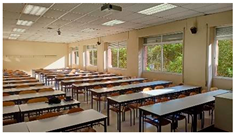
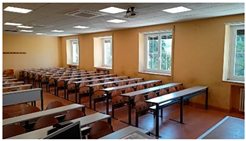
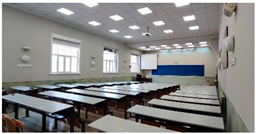
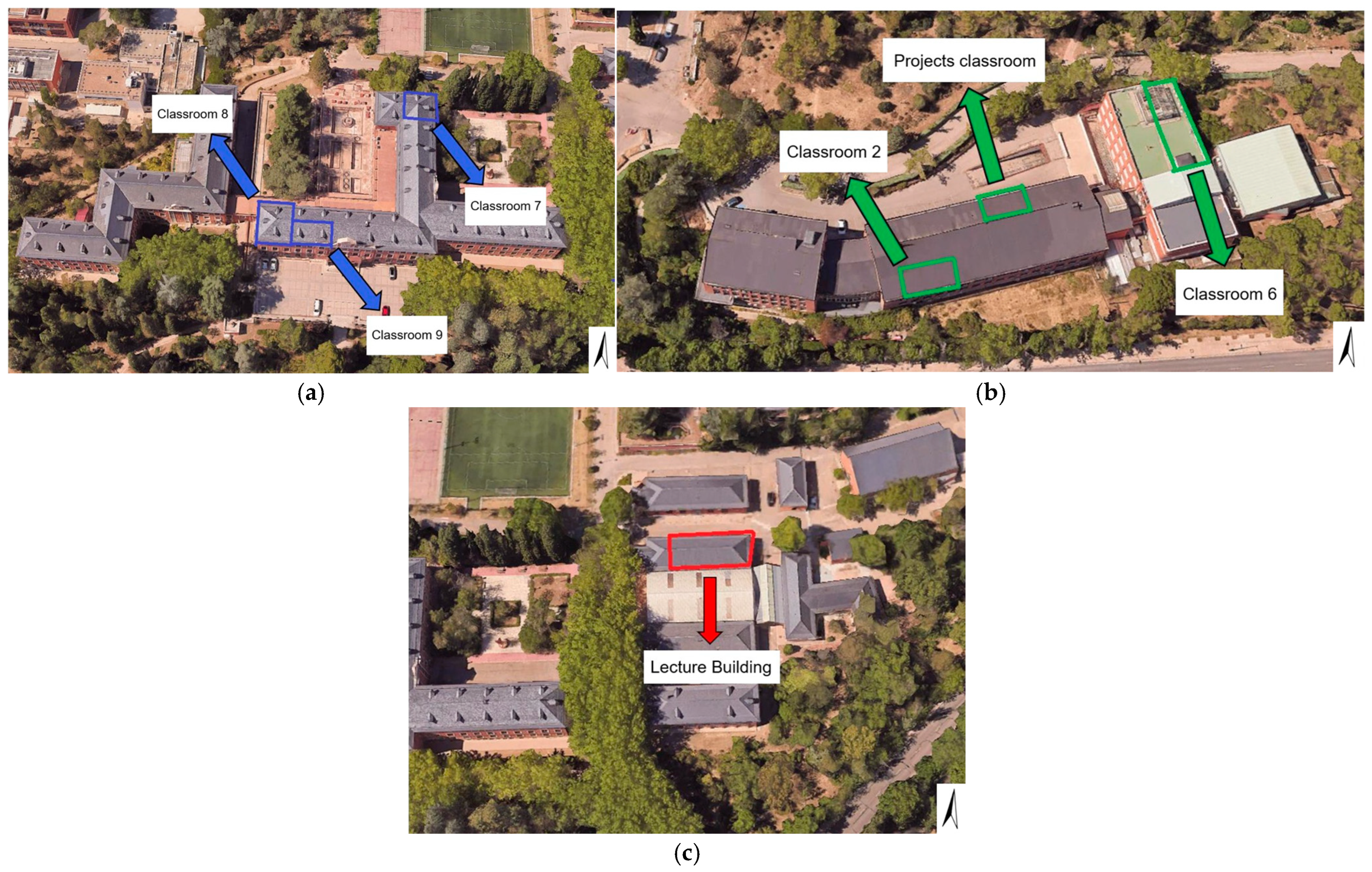
The analysed classrooms present architectural characteristics representative of university teaching spaces in the region, including rectangular floor plans, single or dual main façades and large windows with different orientations: north, south, east, northwest and combined exposures (
Figure 1). Interior reflectance values were measured or estimated for each classroom and are reported in
Table 2. All selected spaces are equipped with LED luminaires, which replaced previous fluorescent systems as part of a recent lighting upgrade.
These classrooms provide a representative operational framework for analysing how daylight availability, electric-lighting performance and spatial configuration interact under diverse façade orientations and real academic-use conditions.
3.2. Daylight Assessment and Experimental Illuminance Measurements
Daylighting conditions were characterised using TMY climate data and solar geometry analysis. These data were used to identify seasonal variations, direct solar exposure, potential glare periods and differences in daylight penetration according to classroom orientation [
8,
44].
Field illuminance measurements were conducted using a calibrated portable illuminance meter (TES 1335; TES Electrical Electronic Corp., Taipei, Taiwan; factory-calibrated), in accordance with EN 13032-1 [
48].and UNE-EN 12464-1 [
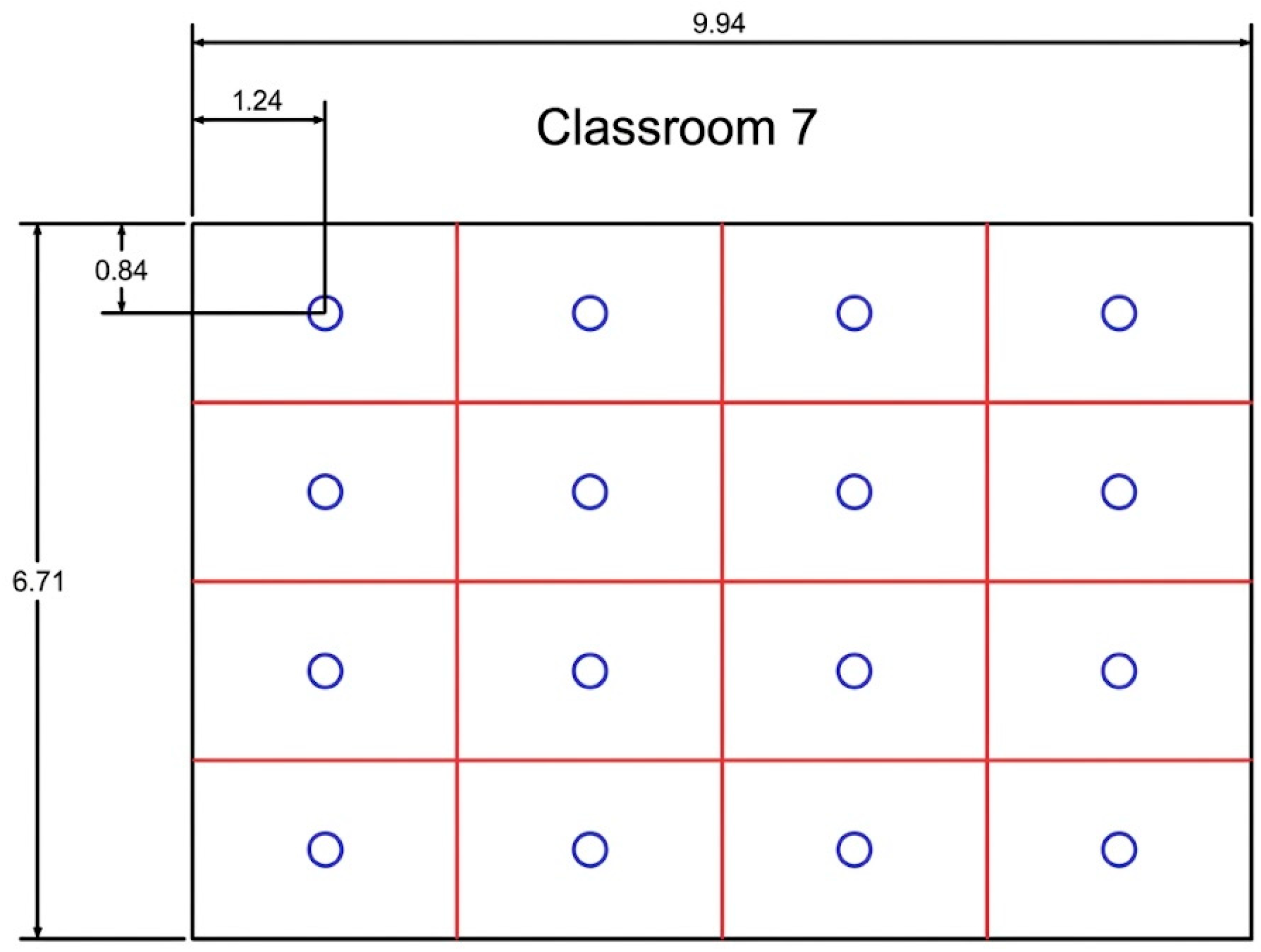
29]. Measurements were taken on a regular spatial grid at a working-plane height of 0.80 m above floor level, corresponding approximately to desk height, to ensure representative coverage of the occupied area (
Figure 2).
The illuminance acquisitions were carried out sequentially. For each classroom, the sensor was positioned successively at each measurement point defined by the grid shown in
Figure 2. The 16 measurement points were not monitored simultaneously; instead, readings were taken point by point under stable indoor and daylight conditions. All measurements within each classroom were completed within a short and controlled interval of approximately 10 min to minimise temporal variability in daylight conditions. The same procedure was applied to the seven selected classrooms.
To ensure methodological clarity and reproducibility, the experimental protocol was organised into three operating conditions according to the specific objective of each test:
- -
daylight-only conditions, with the electric lighting system switched off during daytime;
- -
electric-lighting-only conditions, measured either under night-time conditions or with daylight contribution minimised, in order to isolate the performance of the LED lighting system;
- -
combined daylight–electric lighting conditions, with the electric lighting system switched on during daytime, representing normal classroom operation.
This protocol enabled the separate characterisation of daylight contribution and electric lighting performance, while also allowing the assessment of the combined luminous environment experienced by occupants under typical academic use. Measured values were used to generate interpolated illuminance maps representing actual classroom conditions. These field-measured illuminance maps were then compared with DIALux Evo outputs as a trend-based consistency check, rather than as a strict point-by-point validation, since exact sky conditions, timing and transient operational factors may differ between measurements and simulations. This approach therefore provided a consistent basis for comparing measured conditions, simulation outputs and subsequent energy-control scenarios.
To account for daily and seasonal variability, field measurements sessions were performed at different times of day, including morning, solar noon and afternoon. The experimental sessions covered several dates between late February and June, allowing the assessment of daylight behaviour under late-winter, spring and early-summer conditions. This period was selected because it includes situations of increasing solar altitude and elevated daylight exposure, which are particularly relevant for evaluating daylight contribution, glare risk and potential lighting-control benefits in Mediterranean educational buildings. The temporal sampling strategy was applied to the three operating conditions described above and enabled the characterisation of variations in daylight contribution and spatial illuminance distribution within the classroom environment [
25,
31].
As summarised in
Table 3, the analysed classrooms include a range of orientations and lighting configurations that condition their daylighting behaviour. Photographic documentation was used to identify façade characteristics, window dimensions, shading elements, and surrounding obstructions. This contextual information supported the interpretation of measured and simulated lighting behaviour by relating illuminance patterns to façade exposure, shading conditions and surrounding obstructions.
3.3. Lighting Simulation and Energy Performance Assessment
Three-dimensional digital models of the analysed classrooms were developed using DIALux Evo. The models incorporated geometric dimensions, window configuration, surface reflectance values, luminaire layout and lighting-system characteristics. Photometric data for the installed LED luminaires were implemented using manufacturer-provided photometric files, where available, ensuring consistency between the simulated and real lighting systems [
29].
The simulation models included the main parameters affecting photometric lighting performance: classroom geometry, façade orientation, glazing configuration, working-plane height, surface reflectance, luminaire position, luminous flux and photometric distribution. These parameters were defined to reproduce the actual classroom conditions as closely as possible.
The analysed classrooms were equipped with LED lighting systems.
Table 4 summarises the main technical characteristics of the installed luminaires, including luminaire type, number of units, rated power, total installed power, mounting height, colour temperature, and calculated lighting power density (LPD). LPD was calculated as the ratio between total installed lighting power and classroom floor area, allowing comparison of installed lighting load across spaces with different sizes and luminaire configurations.
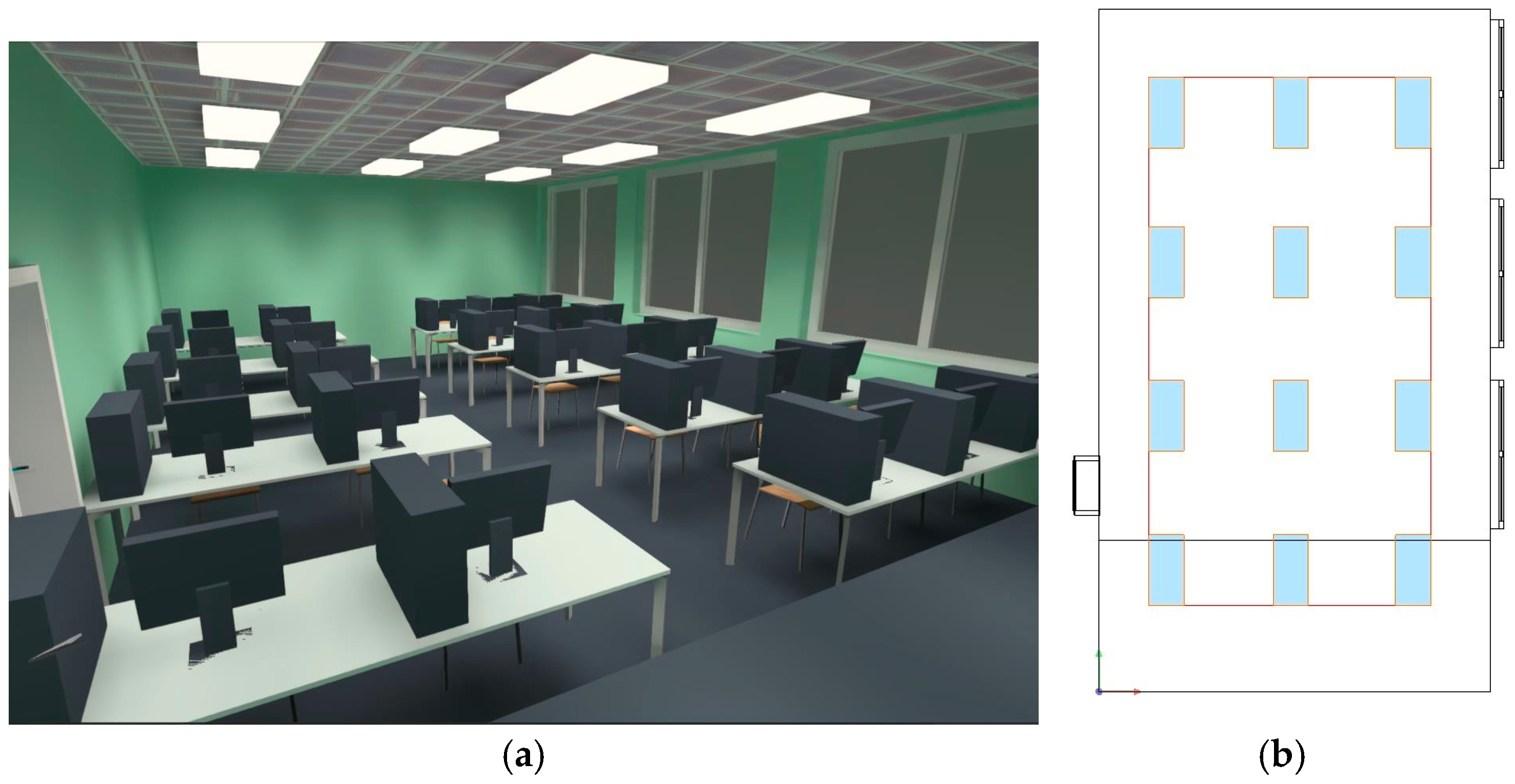
Figure 3 illustrates the DIALux Evo simulation model used to assess the electric lighting performance of Classroom 2. The simulation was configured under night-time conditions to isolate the contribution of the LED lighting system, using the actual luminaire layout, surface reflectance values and working-plane height. The simulation incorporated the actual luminaire layout, surface reflectance values and working-plane height. Inputs parameters were derived from the physical and geometrical characteristics of each classroom, as detailed in
Table 2 and
Table 4, ensuring consistency between measured conditions and simulation models.
Lighting simulations were performed to assess daylight and electric lighting performance using photometric and climate-based indicators, including Daylight Factor (DF), Useful Daylight Illuminance (UDI), Daylight Autonomy (DA), and Unified Glare Rating (UGR), where applicable. DF was used as a reference indicator under standard overcast conditions, while UDI and DA enabled the evaluation of annual daylight availability and its interaction with the electric lighting system. This combined set of indicators allowed both static and dynamic lighting performance to be assessed, following established climate-based daylight modelling and lighting-control assessment approaches [
8,
9,
34].
To support the reliability of the simulation-derived results, field-measured illuminance maps were compared with DIALux Evo outputs under comparable operating conditions. Given the sequential measurement protocol and the variability of daylight conditions, this comparison was used as a trend-based consistency assessment rather than as a strict point-by-point validation. The comparison focused on whether the simulations reproduced the main spatial lighting patterns, daylight-distribution trends and orientation-dependent differences observed during the field measurements before applying the models to annual daylight and energy-control scenarios.
Annual lighting electricity consumption was estimated using the energy calculation module implemented in DIALux Evo. The calculation considered installed lighting power, classroom operating schedules, academic occupancy patterns and daylight availability. The assumed schedules and control logic were defined according to typical academic use patterns described in the following sections. The resulting indicators were expressed as annual electricity consumption in kWh/year and evaluated against the limits defined by the Spanish Technical Building Code for lighting energy efficiency, CTE HE3 [
35].
The energy assessment considered different operating scenarios: baseline LED operation, daylight contribution and daylight-responsive control strategies. This scenario-based approach enabled the potential impact of adaptive lighting operation on energy demand to be quantified.
To translate lighting-related energy savings into environmental indicators, nationally defined electricity carbon emission factors were applied to convert electricity reductions into greenhouse gas emission savings [
1,
2]. This approach enabled the estimation of potential CO
2 emission reductions associated with daylighting and high-efficiency LED lighting strategies, particularly in regions with high solar availability [
26,
44].
3.4. User-Perception Survey
A structured questionnaire was administered to undergraduate and Master’s students who regularly attended classes in the analysed classrooms. The survey followed post-occupancy evaluation approaches commonly applied in classroom lighting studies, where user feedback is essential for interpreting measured photometric conditions [
11]. The questionnaire was designed to complement the objective lighting assessment by capturing students’ perceived visual comfort, daylight preference, glare perception and behavioural responses, thereby linking technical lighting indicators with occupant experience. In this study, the survey was used as a user-centred diagnostic layer rather than as a direct optimisation algorithm, allowing perceived illuminance adequacy, glare, visual satisfaction, daylight preference and seating-related constraints to be interpreted alongside measured and simulated lighting indicators. This approach is consistent with recent user-centred studies on classroom visual comfort [
7].
The surveyed population consisted of 185 students enrolled in the Bachelor’s Degree in Environmental Technologies Engineering, the Bachelor’s Degree in Natural Environment Engineering, and Master’s programmes. Participants were aged between 18 and 40 years, and the sample comprised 48% female and 52% male respondents. Participation was voluntary and anonymous, and the questionnaire was conducted during regular teaching periods to ensure representative occupancy conditions.
The questionnaire structure was aligned with visual comfort assessment criteria defined in lighting evaluation guidelines [
13] and included perceptual indicators commonly used in indoor environmental quality research, such as glare sensation, brightness satisfaction and overall luminous comfort [
7,
20,
24,
27]. The questionnaire consisted of eight items. Responses to Questions Q1–Q7 were collected using a five-point Likert scale, where 1 represented very low agreement or intensity and 5 represented very high agreement or intensity. Question Q8 was included as a categorical item to identify the main factor influencing students’ seating choices, allowing behavioural preferences to be compared with daylight availability and visual task requirements.
The survey included the following items:
Q1. “At my workstation, I feel that there is enough light.”
Q2. “To what extent do you notice glare while in the classroom?”
Q3. “How satisfied are you with the visual comfort provided by the lighting at your workstation?”
Q4. “During academic activities, how much attention do you pay to whether lighting is natural or artificial?”
Q5. “To what extent do you believe that natural light improves your academic performance?”
Q6. “During your academic activities, do you prefer classrooms with higher availability of natural light?”
Q7. “To what extent do you prefer classrooms with views of vegetation or outdoor greenery?”
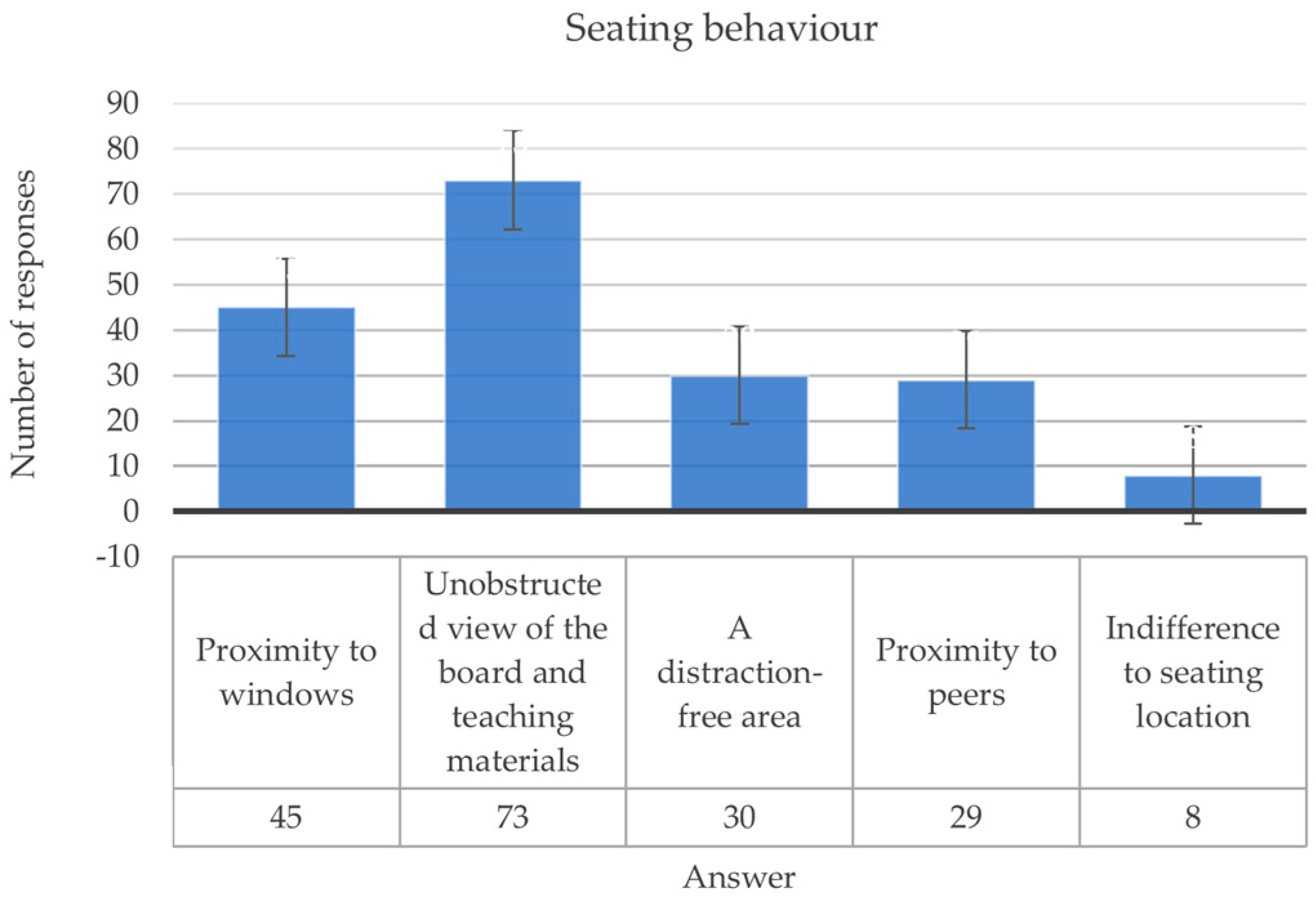
An additional multiple-choice item, Q8, addressed seating behaviour in the classroom. Students were asked to indicate the primary factor influencing their seat selection, choosing among: (i) unobstructed view of the board and teaching materials; (ii) a distraction-free area; (iii) proximity to peers; (iv) proximity to windows; or (v) indifference to seating location.
Survey data were analysed using descriptive statistics, including frequency distributions, percentage shares, mean values and standard deviations. Mean values and standard deviations were calculated only for Likert-scale items Q1–Q7, while Q8 was analysed through categorical response frequencies. In addition, exploratory cross-tabulations were used to identify relationships between perceived visual comfort, glare perception, daylight preference and seating behaviour. Where appropriate, survey responses were compared with objective lighting performance indicators to explore consistency between measured lighting conditions and user perception.
The questionnaire was conducted anonymously through an online platform to encourage unbiased responses and facilitate participation. This user-centred component provides complementary evidence to the measured and simulated lighting data, supporting a more comprehensive evaluation of classroom lighting performance under real academic conditions. In particular, the survey results were used to interpret whether daylight availability was perceived as beneficial, excessive, or insufficient, and whether lighting-control strategies should prioritise glare reduction, visual task clarity, or energy savings. Thus, user feedback provided operational criteria for interpreting adaptive lighting-control needs, ensuring that potential energy-saving strategies remained aligned with perceived visual comfort and classroom-use requirements.
3.5. Methodological Integration and Trend-Based Consistency Assessment
The integration of field measurement sessions, simulation outputs, energy performance assessment and user-perception data provides the methodological basis of the proposed framework. This approach allows classroom lighting performance to be evaluated from complementary perspectives: measured photometric conditions, simulation-derived daylight and energy behaviour, and perceived visual comfort under real academic use.
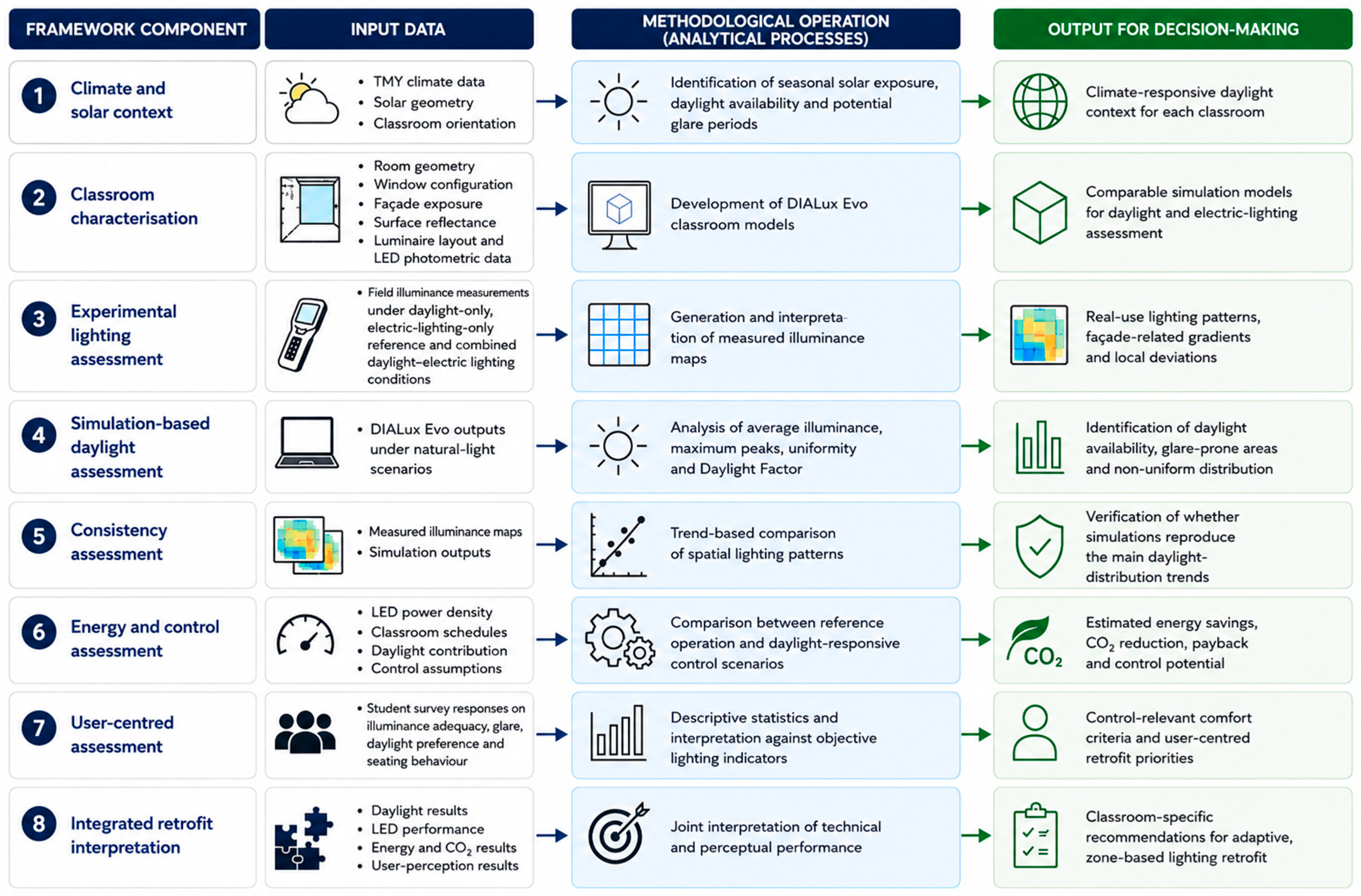
Figure 4 operationalises the proposed framework by showing how climate data, classroom characterisation, field measurements, simulation outputs, energy-control assessment, and user-perception data are connected within a single workflow. The framework follows an input–process–output structure: input data are first used to characterise the climatic, architectural and lighting context; methodological operations then include experimental assessment, simulation-based daylight analysis, trend-based consistency assessment, energy-control evaluation and survey interpretation; finally, the outputs support classroom-specific retrofit recommendations. This structure clarifies how the study links technical lighting performance, energy implications and occupant-centred criteria within a decision-support approach for classroom retrofit.
The field measurements were used to characterise existing lighting conditions and to support a trend-based consistency assessment of the simulation outputs. Measured illuminance maps were compared with simulated outputs under comparable operating conditions to assess whether the model reproduced the main spatial lighting patterns and daylight-distribution trends. This comparison was carried out before using the simulation model for annual daylight availability, energy demand and control-scenario assessment. The simulation outputs were then used to estimate annual daylight availability, lighting energy demand and the potential savings associated with daylight-responsive control strategies.
Alignment with established standards, including UNE-EN 12464-1 and EN 17037, supports the reproducibility and comparability of the findings with other studies on educational lighting environments [
14,
29]. In addition, the integration of structured user surveys provides complementary evidence on visual comfort, glare perception and daylight preference, helping to determine whether technically compliant lighting conditions are also perceived as satisfactory by occupants [
7,
20]. This is particularly relevant for user-centred lighting assessment, since compliance with illuminance thresholds alone does not necessarily guarantee perceived visual comfort or acceptance of lighting conditions.
Overall, this integrated methodological approach provides a transparent basis for evaluating lighting performance and formulating evidence-based recommendations aimed at improving energy efficiency and visual comfort in university classrooms. By combining measured data, climate-based simulation, energy assessment and occupant feedback, the methodology addresses the interaction between daylight availability, adaptive LED lighting and user perception in real educational environments. This integration also responds to the need for operational frameworks capable of linking technical lighting performance with user experience and retrofit decision-making.
4. Results and Discussion
The results are presented following the integrated workflow described in
Figure 4, linking field-measured illuminance, simulation-derived daylight indicators, energy-control assessment and user perception.
4.1. Daylight Contribution and Illuminance Performance
Daylight behaviour was analysed by integrating field illuminance measurements with DIALux Evo simulations. Field measurements were used to characterise the actual luminous conditions of the classrooms during the monitoring campaign, whereas simulations extended the analysis to comparable daylight scenarios, seasonal behaviour and orientation-based performance. This distinction avoids conflating real-use measurements with simulation-derived indicators.
The field-measured illuminance maps revealed marked differences between classrooms, particularly in relation to façade orientation, window exposure, external obstructions and shading conditions. DIALux Evo simulations complemented these measurements by providing a comparable assessment of daylight distribution, illuminance uniformity and Daylight Factor (DF) across the analysed classrooms. The simulations generated three-dimensional illuminance maps that revealed strong spatial heterogeneity associated with window orientation, room geometry, interior surface reflectance, façade exposure, furniture layout and external obstructions. This spatial variability is particularly relevant because high average daylight availability does not necessarily imply adequate visual comfort or uniform illuminance distribution.
In
Table 5, illuminance uniformity (Um) is defined as the ratio between minimum illuminance and average illuminance over the analysed working plane (Um = Emin/Eavg), providing an indicator of the spatial distribution of light within the classroom. Lower uniformity values indicate greater spatial variability and may be associated with visual discomfort or glare-prone conditions. The Daylight Factor (DF) is defined as the ratio between indoor illuminance at the working plane and simultaneous outdoor horizontal illuminance under standard overcast-sky conditions, expressed as a percentage. Higher DF values indicate greater daylight penetration into the indoor space.
Table 5 summarises the simulation-derived daylight indicators under natural-light conditions according to classroom orientation. North-facing classrooms, including the Projects classroom and Classroom 13, showed the most stable behaviour, with average natural illuminance values between 381 and 624 lux, maximum peaks between 617 and 1345 lux, uniformity values between 0.62 and 0.81, and Daylight Factor values between 3.14% and 3.44%. These results indicate a moderate but reliable daylight contribution, low glare risk and comparatively favourable visual comfort conditions. However, their more controlled daylight contribution also suggests that greater electric lighting support may be required during periods of lower daylight availability.
South-facing classrooms, Classrooms 2 and 9, showed stronger seasonal variability. Although their average natural illuminance ranged between 244 and 509 lux, maximum illuminance peaks reached 17,457–45,616 lux, with uniformity values between 0.05 and 0.53 and Daylight Factor values between 1.35% and 3.21%. Classroom 2, characterised by large south-facing windows, showed the highest façade-related peaks, confirming the risk of excessive luminance contrast under direct solar penetration. Under these conditions, electric lighting cannot fully compensate for the uneven daylight distribution, since direct sunlight dominates the luminous environment. By contrast, Classroom 9 showed a relatively low Daylight Factor despite its south-facing orientation, which can be attributed to partial shading, façade conditions and uneven daylight distribution. This contrast demonstrates that façade orientation alone is insufficient to predict effective daylight penetration.
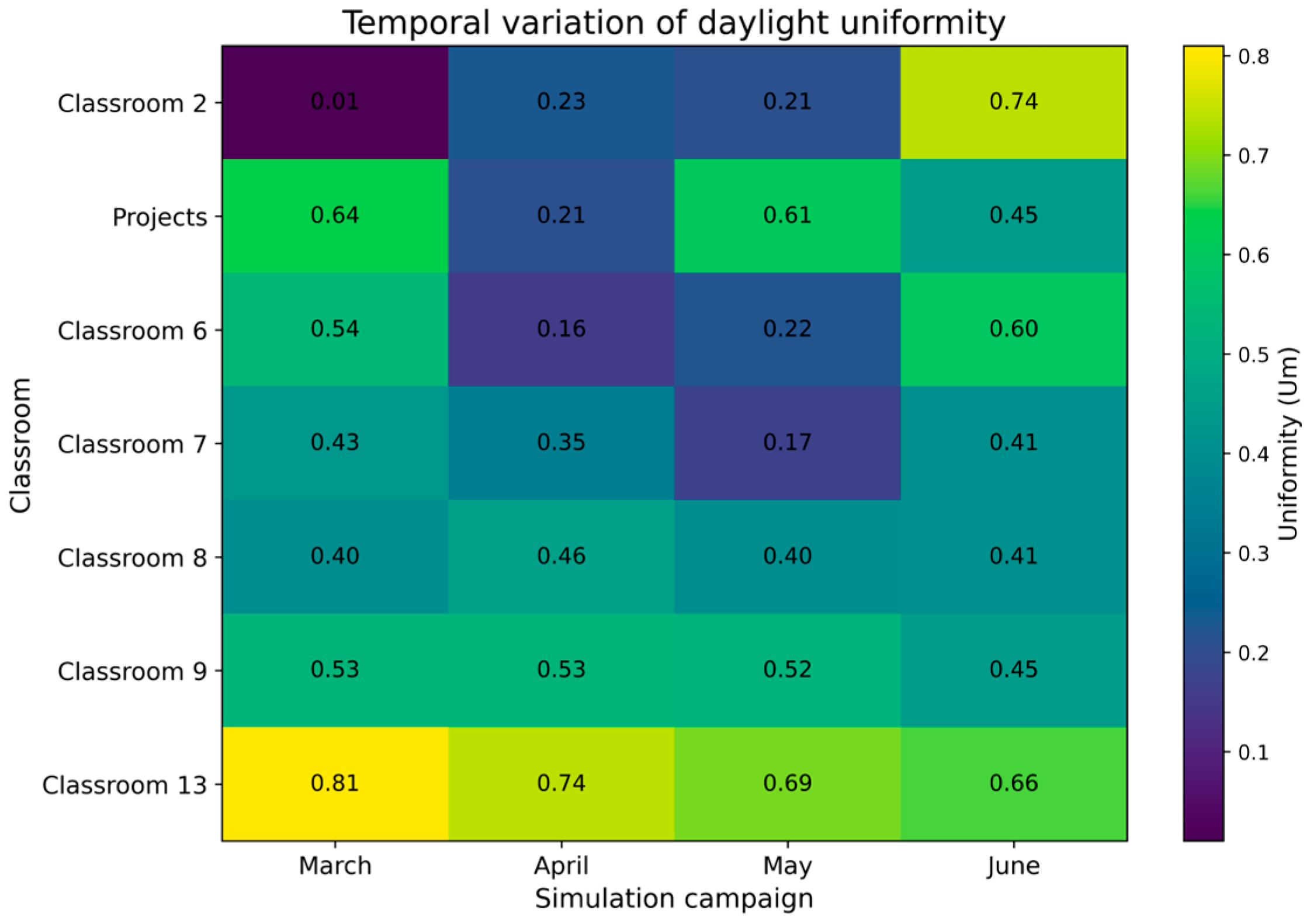
Classroom 6 presented the highest daylight exposure, with average natural illuminance values between 1114 and 8529 lux, maximum peaks of 56,746–65,788 lux, uniformity values between 0.16 and 0.54 and a Daylight Factor of 4.87%. These results indicate strong energy-saving potential, but also extreme illuminance levels and poor spatial uniformity. Therefore, this classroom is highly dependent on effective daylight regulation, including shading and daylight-responsive control, to avoid over-illumination and glare-prone conditions.
Classroom 7, with north–west orientation, showed average natural illuminance values between 571 and 1075 lux, maximum peaks between 34,634 and 47,470 lux, uniformity values between 0.17 and 0.43 and a Daylight Factor of 3.36%. This indicates directional daylight penetration and fluctuating comfort conditions, especially during periods of direct solar exposure. Classroom 8, with north–south orientation, showed average natural illuminance values between 245 and 914 lux, maximum peaks between 18,917 and 19,316 lux, uniformity values between 0.25 and 0.52 and a Daylight Factor of 3.36%. This confirms asymmetric daylight behaviour caused by different daylight contributions from opposite façades, supporting the need for zoned or façade-based control.
Overall, the results show that daylight performance cannot be inferred from orientation alone. Average illuminance, peak illuminance, uniformity and Daylight Factor must be interpreted together to distinguish useful daylight contribution from over-illumination, glare risk and uneven spatial distribution. The comparison between field illuminance maps and DIALux Evo simulations further highlights the value of combining both approaches. Simulations reproduced the main spatial trends associated with façade orientation, daylight penetration and room geometry, while the field-measured maps revealed local deviations caused by real-use conditions, such as external obstructions, furniture layout, shading position or transient sky conditions. These differences provide operational information for identifying where lighting-control strategies should be more adaptive, particularly in glare-prone façade areas and deeper classroom zones with insufficient illuminance.
These findings confirm that window size, external obstructions, shading conditions, room depth and interior reflectance strongly influence daylight distribution and visual comfort. The observed variability supports the need for tailored, zone-based lighting control strategies rather than uniform classroom-wide operation. These results confirm that daylight performance should not be assessed only in terms of illuminance availability, but also through spatial distribution, uniformity and visual comfort criteria [
15,
38].
4.2. Seasonal Behaviour and Implications for Lighting Performance
The seasonal analysis revealed that daylight availability did not affect all classrooms uniformly. During late winter and early spring, lower daylight contribution increased dependence on electric lighting, resulting in more stable illuminance levels but higher lighting energy demand. In contrast, spring and early summer were characterised by sharp increases in daylight penetration, producing excessive illuminance peaks, reduced uniformity and increased glare risk, particularly in classrooms with direct solar exposure.
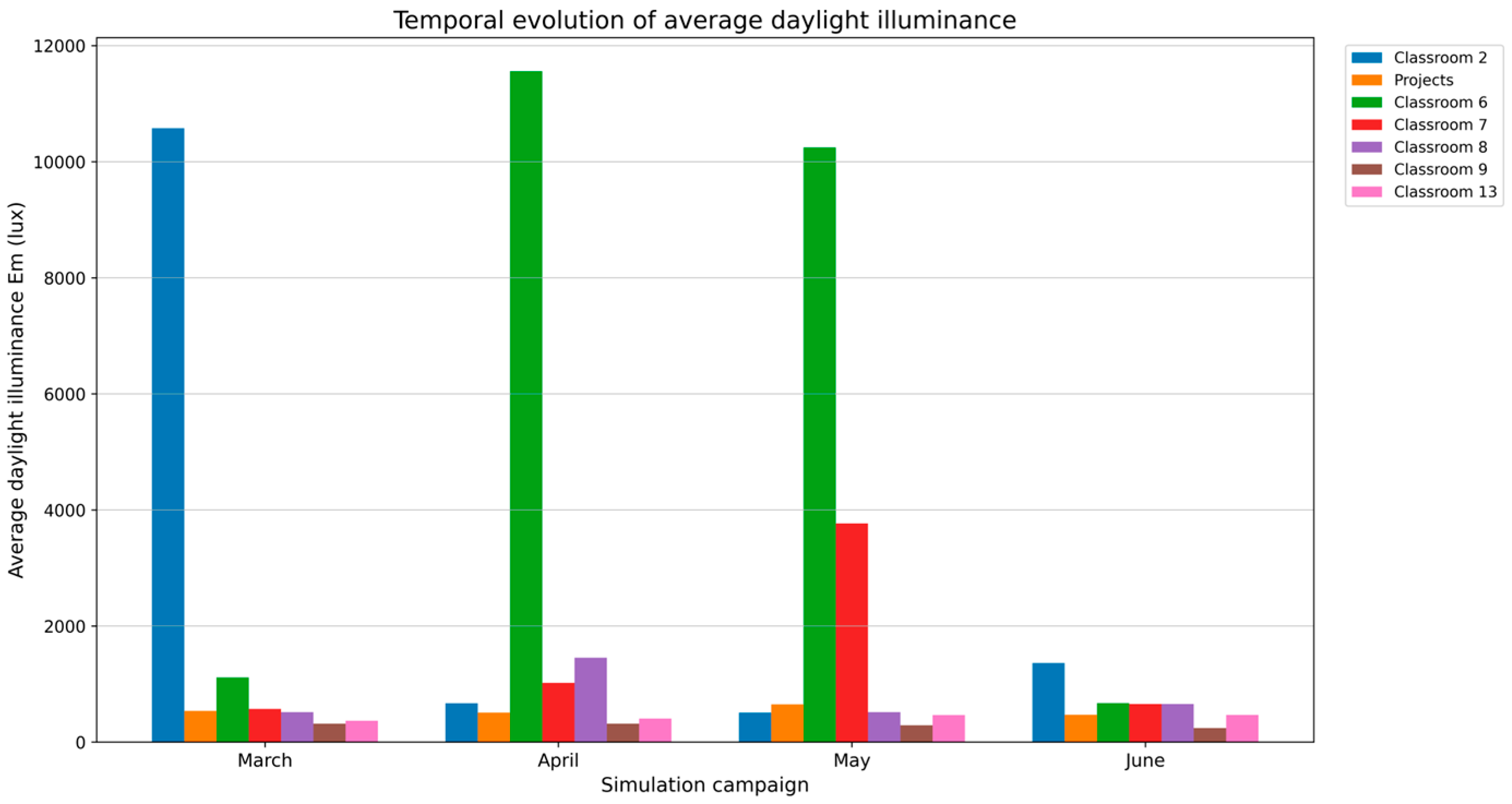
The temporal variation of simulated average daylight illuminance is shown in
Figure 5. The results reveal significant differences among classrooms and simulation scenarios, reflecting the combined influence of façade orientation, solar exposure, room geometry and seasonal daylight variability. High illuminance peaks were observed in some exposed classrooms, whereas north-oriented or more shaded spaces showed more stable daylight behaviour.
Figure 6 shows the temporal variation of daylight uniformity across the analysed classrooms. The results indicate that high daylight availability does not necessarily imply uniform illuminance distribution. Some classrooms with high average illuminance values showed reduced uniformity, confirming the need to assess daylight quantity and spatial quality jointly when evaluating visual comfort and lighting-control strategies.
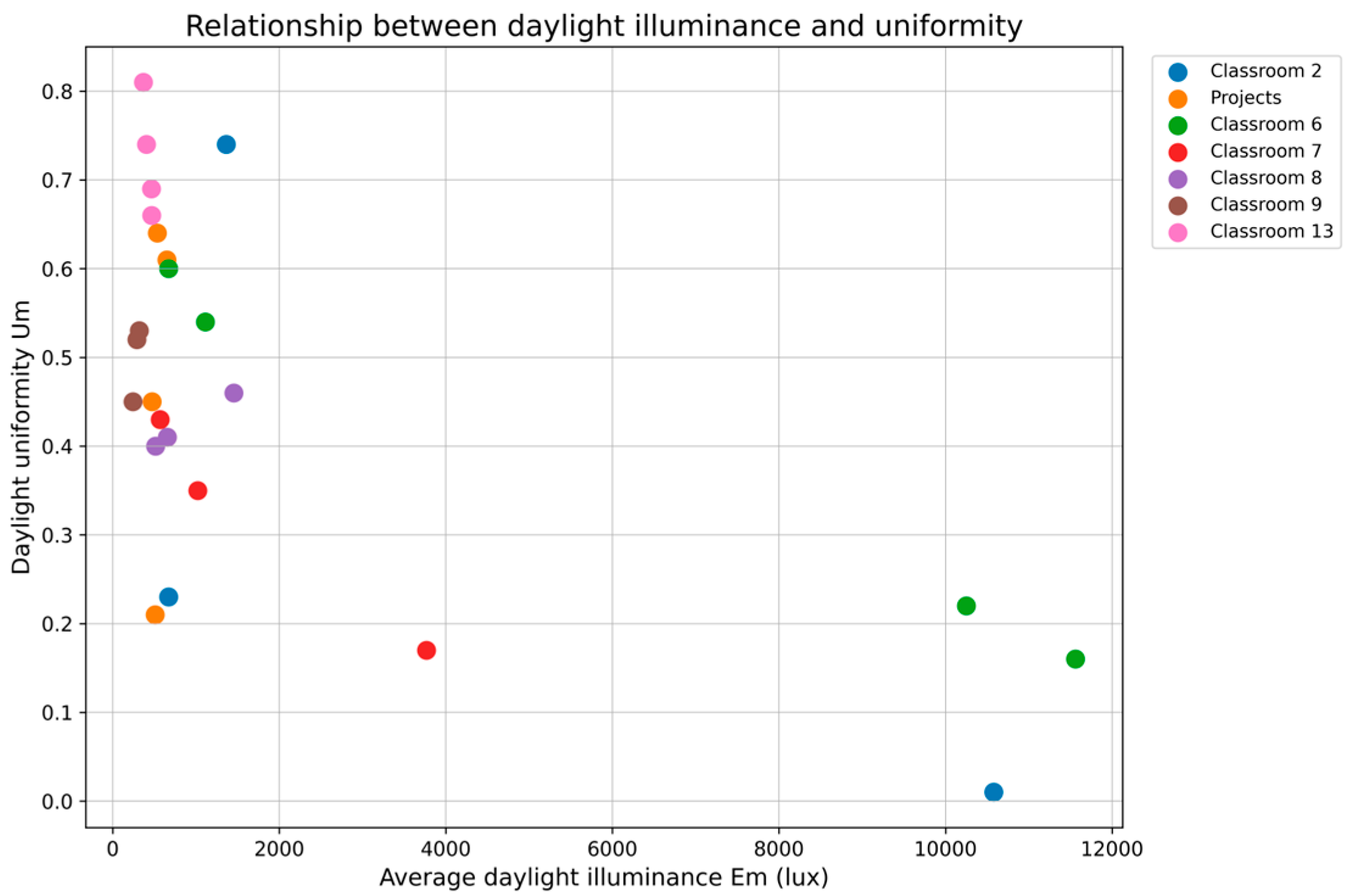
Figure 7 shows the relationship between simulated average daylight illuminance and daylight uniformity across the analysed classrooms and simulations scenarios. The results indicate that very high daylight availability is often associated with reduced uniformity, confirming that daylight quantity and spatial lighting quality should be assessed jointly when evaluating visual comfort and daylight-responsive control strategies.
The main finding is that daylight availability alone is not a guarantee of better lighting performance. In Mediterranean classrooms, high daylight levels can reduce electric lighting demand, but they can also generate strong spatial imbalance, glare risk and discomfort if they are not actively controlled.
By early summer, although daylight levels remained high, illuminance distribution became more balanced in some classrooms due to higher solar altitude. This suggests that seasonal solar geometry plays a critical role in determining whether daylight acts as a useful lighting resource or as a source of visual discomfort. These findings highlight the limitations of passive daylighting alone in highly exposed classrooms and underline the potential benefits of daylight-responsive dimming and automated shading systems. Such strategies can reduce unnecessary electric lighting use while mitigating glare and maintaining stable illuminance conditions.
Although a general seasonal pattern was observed, its impact varied significantly among classrooms due to differences in orientation, window-to-wall ratio, external obstructions, room depth and interior layout. Classrooms with direct or asymmetric solar exposure, such as Classrooms 2, 6, 7 and 8, experienced the most pronounced seasonal fluctuations, whereas north-oriented or partially shaded spaces, such as the Projects classroom and Classroom 13, maintained more stable conditions throughout the analysed period.
These results confirm that daylight behaviour is strongly room-dependent and cannot be adequately addressed through uniform retrofit solutions. Therefore, lighting retrofit strategies should not rely solely on installed LED power or generic control assumptions, but should consider each classroom’s orientation, daylight access, occupancy profile, spatial illuminance distribution and glare risk. Seasonal variability further affects daylight quality, visual stability and spatial uniformity, reinforcing the need for classroom-specific daylighting assessment and adaptive, zone-based control strategies [
39].
4.3. Student Survey Results: Visual Comfort and Preferences
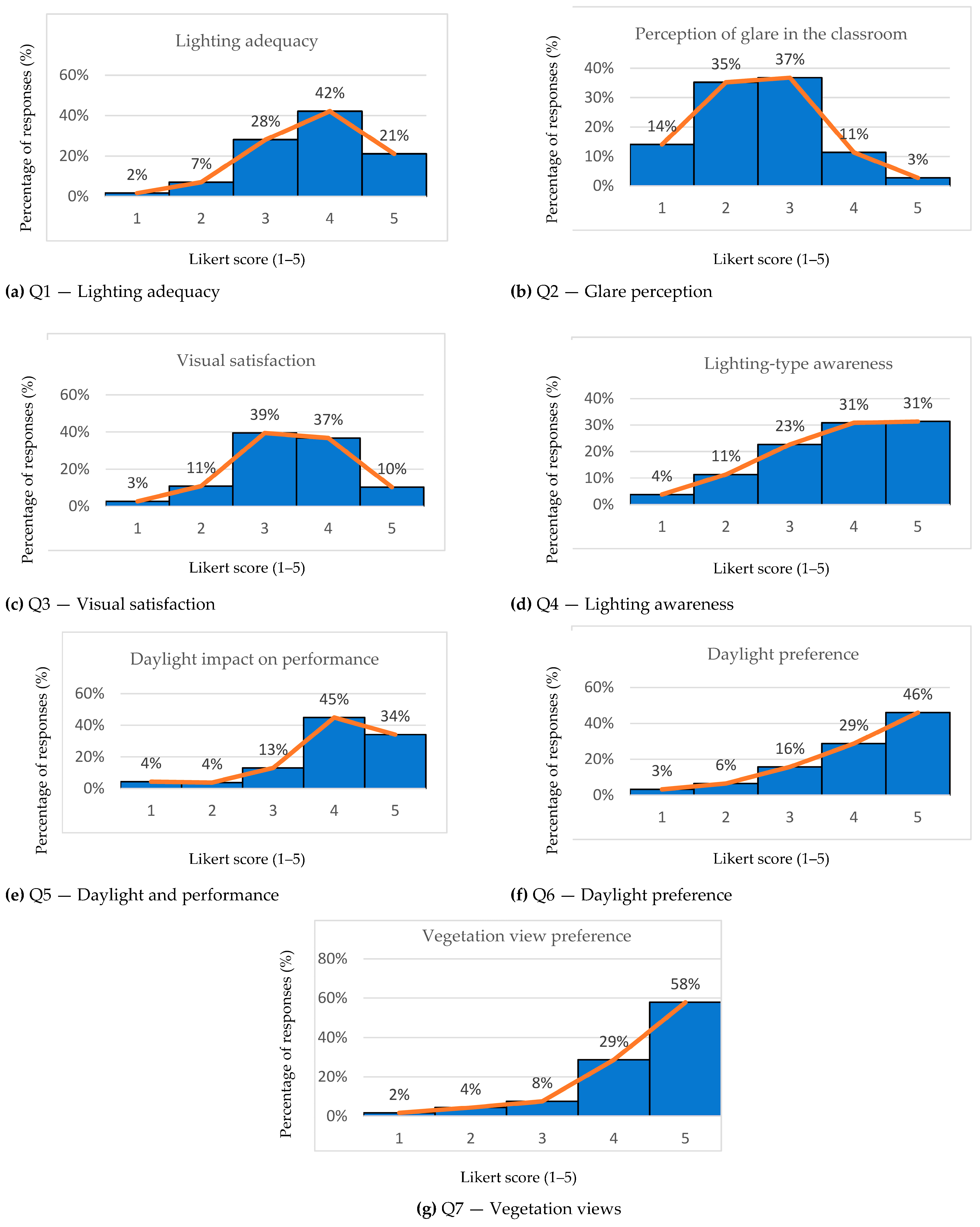
Survey responses indicate that most students perceived the lighting conditions at their workstations as adequate. A total of 63% rated illuminance levels as high, while an additional 28% reported neutral satisfaction. Glare perception was generally limited, with 49% of respondents reporting low glare perception and only 14% indicating frequent glare-related discomfort. These results suggest that the existing combination of daylight and LED lighting provides acceptable visual conditions for most students, although glare remains relevant for a smaller group of users, particularly in highly exposed seating areas (
Table 6).
Regarding overall visual comfort, responses were predominantly concentrated in the neutral to high categories. Forty-seven percent of students expressed high satisfaction, while thirty-nine percent reported moderate comfort levels. This indicates a generally positive perception of the luminous environment. A substantial proportion of respondents also reported awareness of the type of lighting, natural versus artificial, with 62% indicating a high level of attention during academic activities. This confirms that lighting quality is not perceived merely as a background condition, but as an environmental factor that students actively notice during learning tasks.
A strong preference for daylight was consistently observed. Seventy-nine percent of respondents considered natural light to have a positive influence on concentration and academic performance, while seventy-five percent expressed a clear preference for classrooms with higher daylight availability. Additionally, 86% of students reported a strong preference for classrooms with views of vegetation or outdoor greenery. These results suggest that perceived comfort is influenced not only by illuminance levels, but also by the qualitative experience of daylight and visual connection with the outdoor environment. This interpretation is consistent with previous research showing that daylight access, window characteristics and occupant preferences interactively shape perceived visual comfort in university classrooms [
7].
The results of the user-perception survey are summarised in
Table 6,
Table 7 and
Table 8 and
Figure 8 and
Figure 9.
Table 6 presents the distribution of responses for the Likert-scale questionnaire items Q1–Q7, while
Table 7 summarises the categorical responses for Q8 on seating behaviour.
Table 8 reports the mean values and standard deviations for Q1–Q7. Since Q8 corresponds to a categorical response, it is not associated with mean or standard deviation values.
Figure 5 shows the response distribution for Q1–Q7, whereas
Figure 8 shows the response distribution for Q1–Q7, whereas
Figure 9 illustrates the main factors influencing students’ seating choices.
The descriptive statistics confirm the generally positive perception of lighting conditions and the strong preference for daylight in the analysed classrooms. Perceived illuminance adequacy shows a relatively high mean value (M = 3.73, SD = 0.92), indicating that most students considered the available light levels sufficient for academic tasks. In contrast, glare perception presents the lowest mean score (M = 2.54, SD = 0.96), suggesting that glare was present but was not perceived as a major source of discomfort for most users.
Visual comfort satisfaction was also positively rated (M = 3.41, SD = 0.91), although with moderate dispersion, which may reflect differences in classroom orientation, daylight exposure, seating position and individual sensitivity to glare. Students also reported relatively high awareness of the type of lighting, natural versus artificial, during academic activities (M = 3.75, SD = 1.13), highlighting the perceptual relevance of lighting conditions in learning environments.
A particularly strong trend was observed in relation to daylight preference. The perceived influence of daylight on academic performance was high (M = 4.01, SD = 1.01), while preference for classrooms with greater daylight availability (M = 4.08, SD = 1.08) and views of vegetation (M = 4.37, SD = 0.92) reached the highest values among all items. These results indicate that daylight is valued not only for visual performance, but also for its qualitative and perceptual benefits.
Results from Q8 indicate that seating behaviour is primarily driven by functional visual requirements. An unobstructed view of the teaching board was identified as the main factor by 40% of participants, followed by proximity to windows and access to daylight, selected by 24%. Reduced distractions and proximity to peers each accounted for 16% of responses, while only 4% of students reported no specific seating preference. This suggests that although daylight availability influences seating behaviour, students primarily prioritise visual task clarity.
Overall, the survey results confirm that current lighting conditions are generally acceptable, but user perception is strongly influenced by access to daylight, external views and the visibility of teaching surfaces. Therefore, classroom lighting design should balance daylight provision with clear visibility, glare control and appropriate luminance distribution. Rather than treating user feedback as an independent satisfaction measure, the survey was used to interpret operational lighting needs from the occupant perspective. Responses related to glare, visual satisfaction and seating behaviour helped identify where adaptive lighting strategies should prioritise visual-task stability, glare mitigation and preservation of teaching-surface visibility over energy reduction alone.
These findings reinforce the need for integrated daylight–electric lighting strategies that address both quantitative performance and user-centred visual comfort in educational buildings. In particular, adaptive lighting controls should not be designed only to minimise electricity consumption, but also to maintain stable illuminance conditions, reduce glare risk and support the visual requirements of teaching and learning activities.
4.4. Energy Consumption and Environmental Impact
Annual lighting energy consumption for the analysed LED-equipped classrooms was estimated using DIALux Evo. The software provides an annual consumption range for each classroom; therefore, the lower and upper values were reported, and the mean value was used to characterise the baseline annual lighting demand. Energy demand varied depending mainly on installed lighting power, classroom area, daylight availability, classroom use patterns and spatial configuration.
The calculated LPD values ranged from 4.38 to 12.47 W/m2, showing notable variability among classrooms despite the use of LED technology. This indicates that lighting efficiency depends not only on luminaire type, but also on classroom area, number of luminaires and spatial lighting design.
Based on the nationally defined electricity emission factor of 0.357 kg CO2/kWh, the corresponding CO2 emissions were estimated from the mean annual DIALux consumption values. Assuming a representative electricity price of EUR 0.10 /kWh, annual lighting operating costs were also calculated. Although these absolute costs are modest at classroom scale, their cumulative impact becomes significant when extrapolated to entire buildings or university campuses.
Table 9 summarises the annual lighting energy demand, associated CO
2 emissions and operating costs for each analysed classroom under the baseline LED operating scenario. This scenario represents the estimated annual demand of the existing LED installations under typical academic schedules and daylight-utilisation conditions, without daylight-responsive dimming or occupancy-based control. Average values correspond to the mean performance across all analysed classrooms and are provided for comparative purposes.
For completeness, a complementary assessment of gross annual lighting demand without daylight contribution is included in the
Supplementary Materials (Supplementary Material S1). These values represent the theoretical reference demand under full electric-lighting operation and are therefore higher than the baseline LED consumption reported in
Table 9.
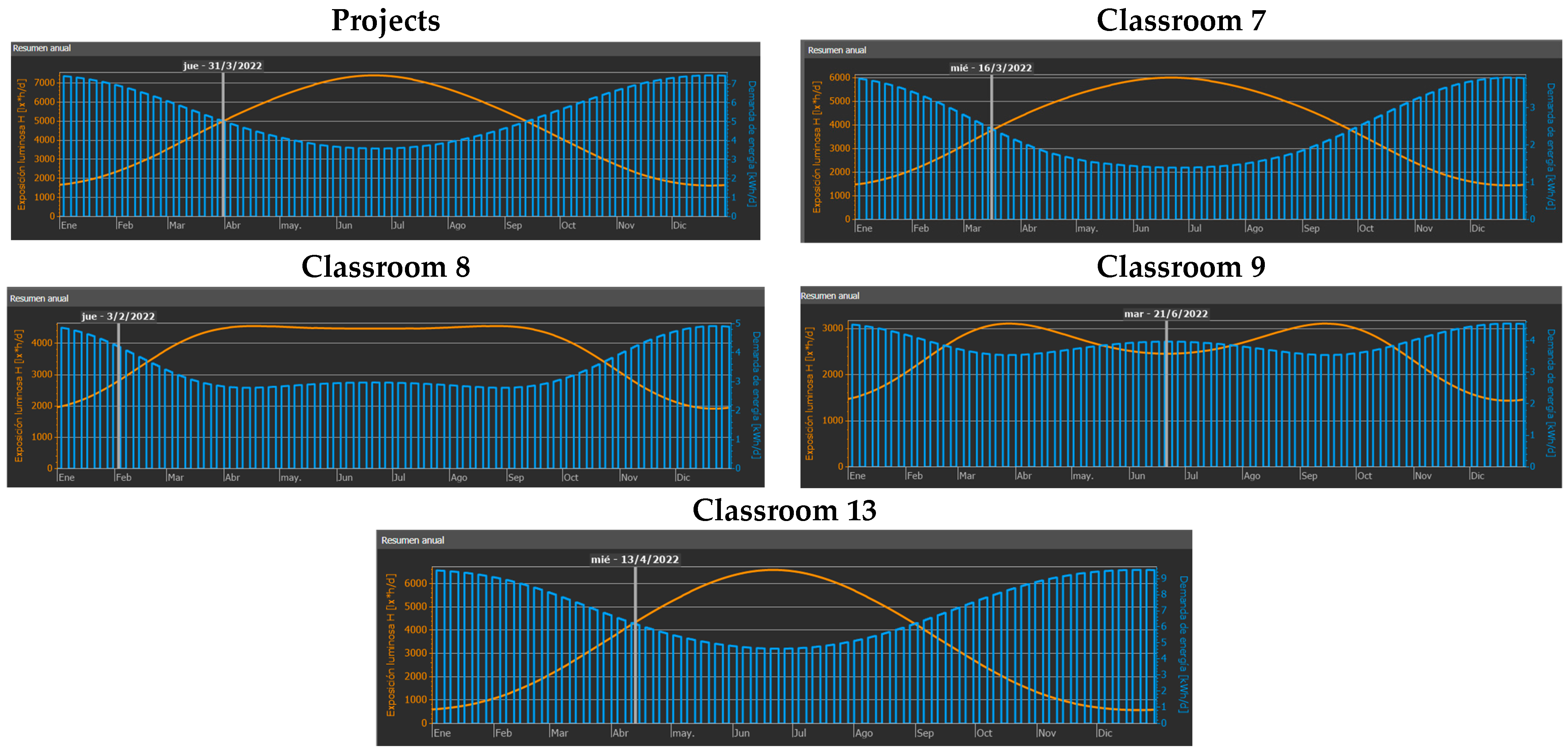
Figure 10 shows the annual profiles of combined daylight availability and electric-lighting demand for representative classrooms. These profiles illustrate how daylight contribution and electric-lighting demand vary according to orientation, façade exposure and classroom configuration. The results reveal a clear inverse relationship: as daylight availability increases during spring and early summer, electric-lighting demand decreases. Conversely, periods with lower daylight contribution require greater support from the electric lighting system. This behaviour highlights the limitations of static lighting schedules and supports the need for daylight-responsive control strategies capable of adapting to seasonal and daily daylight variations.
These profiles complement the temporal illuminance and uniformity analyses presented above, confirming that energy performance cannot be interpreted independently from daylight distribution and visual comfort conditions. Overall, the baseline results indicate that LED retrofitting provides an important efficiency improvement, but that further reductions in energy demand require adaptive lighting controls capable of responding to daylight availability, spatial illuminance distribution and occupancy patterns. This transition from static LED operation towards integrated daylight–electric lighting control is analysed in the following section.
4.5. Potential Energy Savings Through Lighting Control Systems
Simulations of daylight-responsive lighting control systems revealed substantial potential for reducing electricity consumption in the analysed classrooms. Annual energy savings ranged from 27% to 47% relative to the reference non-controlled lighting scenario, with an average saving of approximately 37%, corresponding to a total potential annual reduction of 2685 kWh/year for the analysed classrooms.
At classroom level, annual energy savings ranged from 307 to 669 kWh/year, corresponding to CO2 reductions of approximately 110–239 kg CO2/year and annual cost savings of EUR 30.70–66.90.
Energy savings were calculated as the difference between the reference non-controlled annual lighting demand and the annual lighting demand obtained with daylight-responsive control:
The percentage saving was calculated as:
CO
2 reductions and economic savings were calculated as:
Classrooms with favourable daylight access and more balanced illuminance distribution achieved higher energy savings, whereas spaces with limited, uneven or highly directional daylight contribution showed lower control effectiveness. These findings are consistent with previous studies demonstrating that lighting controls can substantially reduce electricity consumption, although their performance depends on control type, occupancy patterns, sensor configuration and implementation conditions [
28,
31,
34]. Recent research on adaptive, integrative and daylight-linked LED dimming systems further confirms that savings are strongly influenced by daylight availability, control logic, façade exposure and room-specific operating conditions [
32,
33,
40,
41]. Overall, the results suggest that the greatest retrofit potential is achieved not through LED replacement alone, but through the intelligent integration of daylight harvesting, adaptive controls and user-centred lighting criteria.
Table 10 summarises the estimated energy, environmental and economic benefits of the proposed adaptive control scenario. This scenario was modelled in DIALux Evo as a daylight-responsive lighting-control strategy, in which illuminance sensors regulate the electric lighting output according to the available daylight contribution in order to maintain the target illuminance level while avoiding unnecessary over-illumination. The strategy was also considered compatible with occupancy-based switching or dimming during periods of classroom non-use.
The assumed cost of EUR 255 per classroom corresponds to the photosensor-based control equipment considered in this preliminary assessment. Installation labour, electrical modifications, commissioning, system integration, calibration and maintenance were not included; therefore, the payback values should be interpreted as preliminary estimates rather than as complete life-cycle cost results.
CO2 reductions were calculated from the estimated electricity savings using the national electricity emission factor published by MITECO, equal to 0.357 kg CO2/kWh. Economic savings and simple payback periods were estimated using an electricity price of EUR 0.10/kWh. A conservative electricity price was intentionally adopted in order to avoid overestimating the economic benefits associated with the proposed control strategy.
For example, the Projects classroom showed an estimated saving of 669 kWh/year, corresponding to a 37% reduction, 239 kg CO2/year avoided, annual cost savings of EUR 66.90/year and a simple payback period of 3.81 years. Classroom 8 achieved an estimated saving of 627 kWh/year, equivalent to a 46% reduction, 224 kg CO2/year avoided, annual cost savings of EUR 62.70/year and a payback period of 4.07 years.
These results indicate that classrooms with stable and usable daylight availability present the highest potential for cost-effective implementation of lighting control systems. In contrast, classrooms with limited or highly variable daylight access, such as Classroom 9, exhibited longer payback periods. This confirms that the economic feasibility of smart lighting controls is strongly dependent on room-specific daylight conditions, façade orientation and the effectiveness of the control strategy in reducing unnecessary electric lighting use.
5. Conclusions
This study presents an integrated assessment of daylighting performance, LED lighting behaviour, energy efficiency and user perception in university classrooms at the Escuela Técnica Superior de Ingeniería de Montes, Forestal y del Medio Natural, Universidad Politécnica de Madrid, located in a Mediterranean climate. By combining in situ illuminance measurements, climate-based daylight simulations, lighting energy assessment and student surveys, the research provides a comprehensive evaluation of lighting conditions and their implications for visual comfort, energy use and sustainability.
The results show that the analysed classrooms have significant daylighting potential, particularly in areas close to façades. However, daylight distribution is highly dependent on orientation, room geometry, window configuration and external obstructions. In several cases, high daylight availability produced uneven illuminance patterns, localised glare risk and insufficient lighting levels in deeper areas of the room. These findings confirm that daylight should not be evaluated only in terms of availability, but also in terms of spatial distribution, uniformity and visual comfort [
15,
38].
The existing LED lighting systems improved illuminance levels and contributed to compliance with lighting requirements. Nevertheless, their ability to compensate for daylight imbalance was limited in spaces exposed to direct solar radiation, where excessive luminance contrasts may exceed the corrective capacity of electric lighting. This highlights the need to combine efficient LED systems with architectural shading, glare-control measures and daylight-responsive control strategies. The variability in LPD values confirms that LED retrofitting should be accompanied by classroom-specific lighting design and control strategies to optimise both energy performance and visual comfort.
The energy assessment confirms that the existing LED installations provide a relevant efficiency baseline, while additional savings can be achieved through adaptive lighting controls. Daylight-responsive dimming and occupancy-based strategies can reduce lighting electricity consumption by 27–47%, depending on classroom orientation, daylight availability and spatial daylight distribution. This represents a potential annual reduction of 2685 kWh/year for the analysed classrooms, with associated CO2 reductions of approximately 110–239 kg CO2/year per classroom, supporting institutional decarbonisation objectives.
Student feedback confirmed a clear preference for natural light and exterior views. In particular, 79% of respondents considered that natural lighting improves academic performance, reinforcing the relevance of daylight for well-being, attention and satisfaction in learning environments. However, reported discomfort in certain conditions shows that daylight access must be carefully balanced with glare control and visual stability. User feedback therefore provides operational criteria for adaptive lighting control, ensuring that energy-saving strategies remain aligned with perceived visual comfort and classroom-use requirements. These results are consistent with previous studies highlighting the role of daylight, window characteristics and occupant preferences in perceived visual comfort [
7,
27].
Beyond these specific results, the study provides a methodological contribution by applying an integrated framework that combines daylight analysis, LED lighting performance, control strategy assessment, energy/CO2 evaluation and user perception within real university classrooms. The main value of the study lies not only in the case-study findings, but in the integrated assessment approach, which links field measurements, climate-based simulation, LED operation, energy savings and student perception to support evidence-based lighting retrofit decisions.
Overall, the results demonstrate that energy efficiency and visual comfort should not be treated as separate objectives in classroom lighting design. These findings suggest that classroom lighting retrofit should evolve from component-based replacement strategies towards adaptive, daylight-driven and user-centred systems capable of balancing energy efficiency, visual comfort and real-use conditions.
6. Limitations and Future Work
Despite the integrated methodological approach adopted in this study, several limitations should be acknowledged. First, the analysis is limited to a relatively small number of classrooms within a specific climatic, architectural and functional context, which may restrict the generalisability of the results. Future research should apply the proposed methodology to a broader range of educational buildings, spatial configurations and climatic regions in order to strengthen the robustness and transferability of the findings.
Second, daylight measurements were conducted during selected representative periods rather than through continuous year-long monitoring. Although climate-based simulations partially address this limitation, long-term monitoring would provide a more detailed understanding of annual daylight variability, glare occurrence and user exposure under different sky conditions. Future monitoring should also include continuous records of electric-lighting operation, occupancy patterns and blind or shading use, in order to better characterise actual classroom behaviour.
Third, the evaluated lighting system is based on LED luminaires and simplified control assumptions. While this configuration allows for a clear assessment of baseline performance and potential savings, future studies should experimentally investigate advanced lighting-control solutions, including continuous dimming, occupancy-based modulation, daylight-responsive control and data-driven adaptive algorithms. The combined performance of shading devices and adaptive lighting controls should also be assessed, particularly in classrooms exposed to direct solar radiation, where passive solar protection can reduce localised glare and improve visual comfort.
Fourth, the economic assessment was based on simplified cost assumptions and did not include installation labour, electrical network modifications, commissioning, maintenance or long-term reliability of control systems. Future research should therefore incorporate a more complete life-cycle cost analysis to evaluate the economic feasibility of smart lighting retrofits.
Fifth, the survey analysis was mainly based on descriptive statistics and exploratory relationships between user perception and lighting conditions. Future work could include larger samples and more advanced statistical analyses to better quantify the relationship between measured lighting parameters, perceived visual comfort and behavioural responses. In particular, future studies could explore correlations between measured illuminance, uniformity, glare indicators, seating position and perceived comfort.
Finally, the thermal implications of lighting retrofits were not explicitly addressed in this study. In Mediterranean climates, internal heat gains from electric lighting and solar gains associated with daylight availability can influence cooling demand and overall building energy performance. Future work should therefore integrate thermal modelling, HVAC interaction analysis and adaptive comfort assessment to evaluate the combined visual, thermal and energy impact of lighting interventions in educational buildings. Multi-criteria decision analysis (MCDA) methods could also be incorporated to integrate energy performance, visual comfort, user perception, economic feasibility and environmental indicators into a unified evaluation framework for daylight-responsive smart LED retrofits.