


Abstract
Antimicrobial resistance (AMR) is a global health threat that continues to concern scientists because it can be driven not only by antibiotic misuse but also by environmental factors. Mining-related heavy metal pollution can apply strong selective pressure on microbial communities, leading to a significant increase and spread of antibiotic resistance genes (ARGs) in the environmental ecosystems. Here, we critically review the emerging role of mining environments as hotspots of environmental resistomes and the mechanisms by which heavy metal contamination drives co-selection of antibiotic resistance. There is also evidence that mining environments, such as AMD systems, mine tailings, contaminated sediments, and mining-impacted soils, harbor highly diverse microbiomes enriched with different resistance determinants. Heavy metals such as copper, zinc, cadmium, mercury, and arsenic promote ARG co-selection through co-resistance, cross-resistance, and co-regulation mechanisms. Widespread co-occurrence of metal- and antibiotic-resistance genes on mobile genetic elements such as plasmids, integrons, and transposons has been demonstrated in metagenomic studies. Environmental dissemination pathways, such as water systems, agricultural soils, wildlife interactions, and occupational exposure, may promote the spread of resistance genes outside mining sites. Mining ecosystems are underrecognized and potentially important reservoirs of antimicrobial resistance. This review highlights the importance of integrating environmental resistome surveillance into existing global AMR monitoring frameworks to understand underlying ecological drivers of resistance evolution. Tackling metal-driven antibiotic resistance requires innovative, solution-based interdisciplinary research, enhanced environmental screening and soil and water testing practices, and sustainable mining practices within the One Health paradigm.
1. Introduction
Antimicrobial resistance (AMR) is driven not only by antibiotic misuse but also by environmental selective pressures that promote the persistence and dissemination of antibiotic resistance genes (ARGs), making it a major global health challenge [1,2]. Soils, sediments, wastewater, and aquatic systems are increasingly identified as important reservoirs of resistance determinants (RDs) and mobile genetic elements (MGEs), which promote horizontal gene transfer (HGT) between microbial communities [1,2]. Environmental microbiomes, therefore, contribute to the dissemination of AMR across interconnected environmental, animal, and human systems [3].
Unlike antibiotics, which may degrade over time, heavy metals persist in environmental matrices and impose long-term selective pressures that can maintain AMR even in the absence of direct antibiotic exposure [4,5,6]. However, metals such as copper (Cu), zinc (Zn), cadmium (Cd), mercury (Hg), and arsenic (As) can also co-select for ARGs through mechanisms of co-resistance, cross-resistance, and co-regulation [7,8,9,10]. These mechanisms are ecologically significant because metal resistance genes (MRGs) and antibiotic resistance genes are frequently co-localized on mobile genetic elements, enabling simultaneous selection and horizontal dissemination under chronic metal exposure [11].
This is particularly relevant to mining environments characterized by a long history of heavy metal pollution, acid mine drainage (AMD), and extreme physicochemical conditions that strongly influence microbial community structure and function [11,12]. These ecosystems harbor specialized microbiomes adapted to metal toxicity, oxidative stress, and acidic conditions, thereby creating favorable conditions for the enrichment and exchange of RDs [13,14]. The presence of various metal resistance genes, together with ARGs, in mining-influenced soils, sediments, and water resources shapes the impact of metagenomic studies across distinct geographic areas [15]. Also, RDs are often found in environments with only limited exposure to antibiotics, and heavy metals can serve as an independent driver of resistance selection [16,17,18].
Despite increasing recognition of environmental AMR, most existing reviews and surveillance frameworks have focused primarily on wastewater systems, agricultural environments, and clinical reservoirs, while mining ecosystems remain comparatively underrepresented despite their unique ecological conditions and chronic heavy metal contamination [1,2]. Unlike other contaminated environments, mining ecosystems are characterized by persistent metal exposure, AMD, oxidative stress, and long-term ecological selection pressures that may independently sustain RDs even in the absence of direct antibiotic exposure. This review provides a focused synthesis of current evidence linking mining-associated heavy metal contamination to environmental resistomes, microbial adaptation, co-selection mechanisms, and resistance dissemination pathways within a One Health framework. In addition to summarizing metagenomic evidence, this review critically evaluates methodological limitations, ecological knowledge gaps, surveillance deficiencies, and future research priorities relevant to mining-associated antimicrobial resistance. By integrating environmental microbiology, microbial ecology, metagenomics, and public health perspectives, this review highlights mining ecosystems as underrecognized but potentially important contributors to the global evolution and dissemination of antimicrobial resistance.
2. Mining Environments as Unique Microbial Ecosystems
Mining environments are highly specialized ecological systems characterized by extreme physicochemical conditions, high heavy metal concentrations, and permanent anthropogenic disturbance [12]. They derive from active and abandoned mining operations, including mine tailings AMD systems that contaminate soils and sediments, and mine wastewater. Such habitats exert very strong selective pressure on microbial communities, leading to the enrichment of microorganisms adapted to survive, or even metabolize, high levels (>1000 times normal) of toxic metals and other environmental stressors [14]. Consequently, microbial assemblages in mining ecosystems are unique and differ significantly from those in surrounding natural environments [19,20].
Mining produces massive amounts of waste, especially tailings, the finely ground rock remaining after ore is processed. Such tailings frequently hold toxic heavy metals, including copper, zinc, cadmium, arsenic, and lead. Wildlife species inhabiting mining regions may be exposed to AMD, an acidic environment with high dissolved metal content, formed when sulfide minerals are weathered by oxygen and water. Microbial communities inhabiting such extreme environments contribute to studies of microbial adaptation to metal toxicity and acidic pH [19,21]. In mining regions, microbial communities are highly resilient, with high richness in members such as Proteobacteria, Actinobacteria, Firmicutes, Acidobacteria, and acidophilic groups including Acidithiobacillus spp., Leptospirillum spp., and Ferroplasma. These microorganisms are involved in metal-cycling processes and can be considered drivers of geochemical activity in mining ecosystems [20,22].
3. Heavy Metal Contamination and Co-Selection of Antibiotic Resistance in Mining Environments
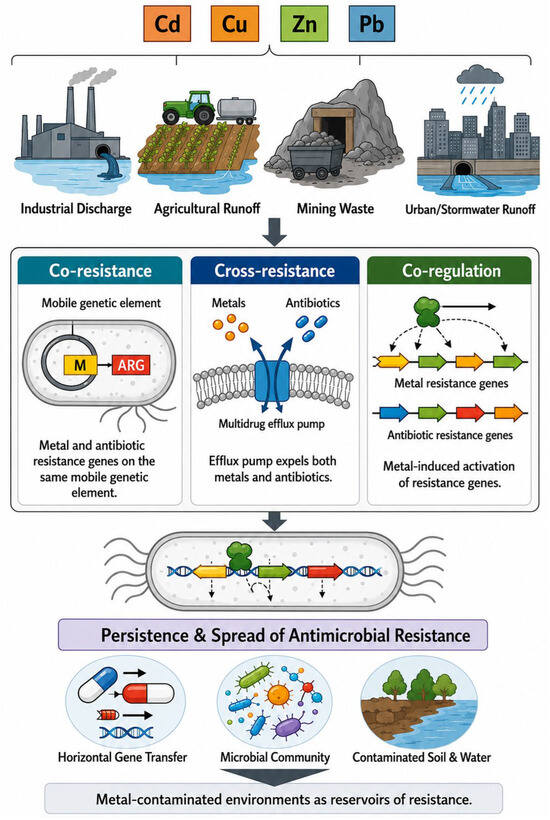
Heavy metal contamination in mining ecosystems is a persistent ecological driver of AMR because metals persist in environmental matrices and exert sustained selective pressure on microbial communities [4,5,6]. Unlike antibiotics, which can degrade over time, metals accumulate in soils, sediments, and AMD systems, creating long-term conditions favorable for microorganisms carrying MRGs alongside ARGs [16,17]. Thus, mining environments can preserve and enrich environmental resistomes even in the absence of direct antibiotic exposure [18,19,20]. Heavy metal contamination promotes AMR through interconnected mechanisms of co-resistance, cross-resistance, and co-regulation (Figure 1) [7,8].
Figure 1.
Mechanisms underlying heavy metal–driven co-selection of antibiotic resistance. Heavy metal contamination promotes antimicrobial resistance through three primary mechanisms: co-resistance, cross-resistance, and co-regulation. The figure was conceptually designed by the authors in BioRender (available online: https://www.biorender.com, accessed on 22 May 2026). and Adobe Illustrator version 28.5, based on mechanisms described in the published literature.
Co-resistance is the most widely documented mechanism linking heavy metals to antimicrobial resistance. In this process, MRGs and ARGs are physically linked on the same plasmids, integrons, or transposons, enabling simultaneous selection and horizontal transfer under heavy metal exposure [7]. For example, mercury RDs associated with the mer operon have been identified on plasmids carrying β-lactam resistance genes, whereas zinc and cadmium resistance systems encoded by czc genes frequently co-occur with tetracycline and sulfonamide RDs [23,24]. This genetic linkage is ecologically important because metal contamination can indirectly maintain antibiotic resistance even in the absence of antimicrobial compounds. Metagenomic studies of mining-impacted environments have repeatedly shown the co-occurrence of ARGs, MRGs, and mobile genetic elements, providing further evidence that heavy metals are persistent selective agents that help maintain resistance [25].
Resistance enrichment in mining microbiomes is also promoted through cross-resistance mediated by common cellular defense systems. Multidrug efflux pumps, such as CzcCBA and other membrane-associated transport systems, can export both toxic metal ions and structurally unrelated antibiotics, thereby conferring tolerance to multiple stressors [26]. Experimental studies have demonstrated that prolonged exposure to elevated. Metal concentrations can upregulate these transport systems, thereby promoting bacterial survival under antibiotic stress [27]. These mechanisms are particularly relevant in mining ecosystems where microbial communities are exposed to combined oxidative stress, acidity, and metal toxicity.
Co-regulation is another mechanism linking heavy metals and antimicrobial resistance, as metal exposure can activate global stress-response pathways that influence ARG expression and horizontal gene transfer [28]. Metal-induced oxidative stress responses may promote bacterial adaptation, biofilm formation, and plasmid mobility, thereby facilitating dissemination of RDs within microbial communities [29]. Experimental evidence further suggests that subinhibitory concentrations of metals can increase the conjugative transfer of plasmid-borne ARGs, supporting an ecological role for heavy metals in the evolution of resistance [30].
Importantly, studies of mining ecosystems have shown that heavy metal contamination is not only a selective pressure on resistant microorganisms but also actively shapes microbial community structure and resistome composition [14]. Metagenomic studies of mining-impacted soils, sediments, and AMD systems have consistently demonstrated enrichment of ARGs associated with β-lactams, tetracyclines, sulfonamides, and macrolides, as well as genes involved in metal detoxification and metal transport pathways [15]. However, most studies still rely predominantly on short-read metagenomics, thereby limiting accurate reconstruction of mobile genetic elements and direct characterization of resistance transfer dynamics [31].
Overall, current evidence supports the view that mining-associated heavy metal contamination functions as an important ecological driver of antimicrobial resistance. By promoting co-selection, horizontal gene transfer, and long-term persistence of resistance determinants, mining ecosystems may contribute to the expansion of environmental resistomes with potential implications for environmental, animal, and human health within a One Health framework.
4. Genetic Determinants of Metal and Antibiotic Resistance in Mining Environments
The co-selection of antibiotic resistance in metal-contaminated environments is predominantly influenced by the genetic architecture of microbial RDs [18]. Mining ecosystems are rich in microbial populations that harbor a variety of MRGs and ARGs, which are commonly located within mobile genetic elements that facilitate horizontal gene transfer among bacteria [32]. These key genetic components are involved in the genesis of complex environmental resistomes that persistently evolve under selective pressure from heavy metals [23,33].
4.1. Microbiomes Associated with Metal Resistance in Mining
Bioremediation is the process of using organisms to degrade or detoxify pollutants, and this resistance provides microorganisms with the mechanisms to tolerate or detoxify toxic metal ions. In mining environments, several well-characterized MRGs have been identified. Such MRGs include cop genes, which encode ATP-mediated efflux pumps and copper-binding proteins that confer copper resistance. Similarly, the czc gene mediates resistance to cobalt, zinc, and cadmium via cation efflux transporters that remove toxic cationic metal ions from the bacterial cytoplasm [34]. The mer operon, which encodes enzymes that reduce toxic Hg2+ to less harmful elemental mercury, is commonly responsible for mercury resistance [35]. Detoxification in bacteria is mediated by arsenite efflux and reduction pathways, involving arsenic resistance genes such as arsB and arsC [36].
These resistance systems are common among environmental bacteria inhabiting metal-polluted environments, such as acid mine drainage communities and mine tailings microbiomes. Table 1 summarizes global MRGs and representative antibiotic RDs detected in environmental microbiomes, demonstrating the molecular mechanisms underlying the co-occurrence of metal and antibiotic resistance in contaminated environments.
Table 1.
Representative metal resistance genes and associated antibiotic resistance determinants detected in environmental microbiomes.
4.2. Antibiotic Resistance Genes Present in Mining Environments
Besides MRGs, numerous ARGs associated with multi-class antibiotic resistance have been detected in mining environments. Metagenomic studies reported that genes conferring resistance to β-lactams, tetracyclines, sulfonamides, macrolides, and aminoglycoside antibiotics can be present in soil and sediment samples affected by mining activities. Notably, prevalent ARGs include bla genes encoding aerobically produced β-lactamases that hydrolyze a wide range of β-lactam antibiotics, tet genes conferring tetracycline ribosomal protection or efflux, and sul genes conferring sulfonamide resistance through modification of dihydropteroate synthase. Metal-contaminated environmental microbiomes are also frequently enriched in macrolide resistance genes (e.g., erm genes) [23]. Most importantly, many of these ARGs are still detected at high frequencies in environments where there is limited or no direct exposure to antibiotics (for instance, soils or sediments), suggesting that the persistence and distribution of these genes may be sustained not only by the occurrence of and co-selection through antibiotics but also heavy metals in our surroundings.
4.3. Mobile Genetic Elements and Dissemination of Resistance
Mobile genetic elements, including plasmids, integrons, transposons, and genomic islands, play a crucial role in the co-transmission and global dissemination of metal- and antibiotic-resistance genes in environmental microbiomes [40]. Among the diverse types of MGEs, plasmids, transposons, integrons, and genomic islands are important elements that facilitate the transfer of genetic material within environmental microbiomes. Repeated discoveries of plasmids harboring both MRGs and ARGs support the occurrence of co-selection and subsequent co-transfer during conjugation events, especially in environments with heavy metal contamination. Alternatively, integrons comprise advanced genetic units with an exceptional capacity to capture and express a wide variety of gene cassettes, thereby facilitating the accumulation and dissemination of antibiotic resistance genes in environmental bacteria [41]. A separate group of these mobile genetic elements, transposons, is highly effective at transferring resistance genes between plasmids and chromosomal deoxyribonucleic acid (DNA), creating a background for high levels of genetic exchange. This assertive HGT underpins the rapid evolution and diversification of environmental resistomes, particularly in mining environments characterized by strong selective pressures.
4.4. Gene Transfer in Mining Microbiomes
In environmental bacteria, HGT mechanisms may play a significant role in the dissemination of resistance genes. HGT is accomplished through three mechanisms: conjugation, transformation, and transduction. Conjugation, a generalized mechanism that mediates the transfer of plasmids between two neighboring cells in direct cellular contact, has long been recognized as possibly the most powerful route for MGEs [42]. Transformation is the uptake of extracellular DNA liberated from lysed cells, and gene transfer mediated by a bacteriophage is referred to as transduction [43]. Bacterial stress responses triggered, for example, by heavy metals can enhance horizontal gene transfer and the mobilization of genetic elements.
Plasmid transfer and horizontal acquisition of ARGs among bacteria have been demonstrated in experimental studies to be stimulated by subinhibitory concentrations of metals [44]. Mining environments with high microbial density support biofilm formation and create conditions favorable for horizontal gene transfer. By encompassing these elements, they further enhance, diversify, and increase the abundance of antimicrobial-resistant genes in environmental microbial communities, reinforcing the role of mining systems as a potential reservoir of antimicrobial resistance.
5. Metagenomic Evidence of Environmental Resistomes in Mining Ecosystems
The development of metagenomic sequencing has greatly improved the knowledge of environmental resistomes in mining-related ecosystems, enabling the characterization of microbial communities, resistance determinants, and mobile genetic elements directly from environmental samples without the need for culture [45]. Compared with traditional culture-based methods, metagenomics offers a more comprehensive view of microbial diversity and helps identify coexisting ARGs, MRGs, and horizontal gene transfer mechanisms in complex environmental microbiomes [46].
Mining ecosystems, such as AMD systems, mine tailings, contaminated sediments, and mining-impacted soils, are increasingly recognized as important environmental reservoirs of AMR due to the combination of chronic heavy metal contamination and strong ecological selection pressures [47]. Metagenomic studies consistently show enrichment of RDs associated with β-lactams, tetracyclines, sulfonamides, macrolides, and aminoglycosides in microbial communities exposed to elevated concentrations of copper, zinc, cadmium, arsenic, and lead [48,49]. Importantly, many of these RDs co-occur with MRGs and mobile genetic elements, supporting the hypothesis that heavy metals may independently sustain AMR even in environments with limited direct antibiotic exposure [18]. Furthermore, recent evidence shows that mining-associated resistomes are shaped not only by metal toxicity but also by microbial adaptation to extreme physicochemical conditions, such as acidity, oxidative stress, and nutrient limitation [50]. Metagenomic surveys have detected genes involved in metal transport, oxidative stress response, sulfur and iron metabolism, biofilm formation, and multidrug efflux systems, suggesting that microbial adaptation and the evolution of resistance are closely interconnected processes in mining microbiomes [51].
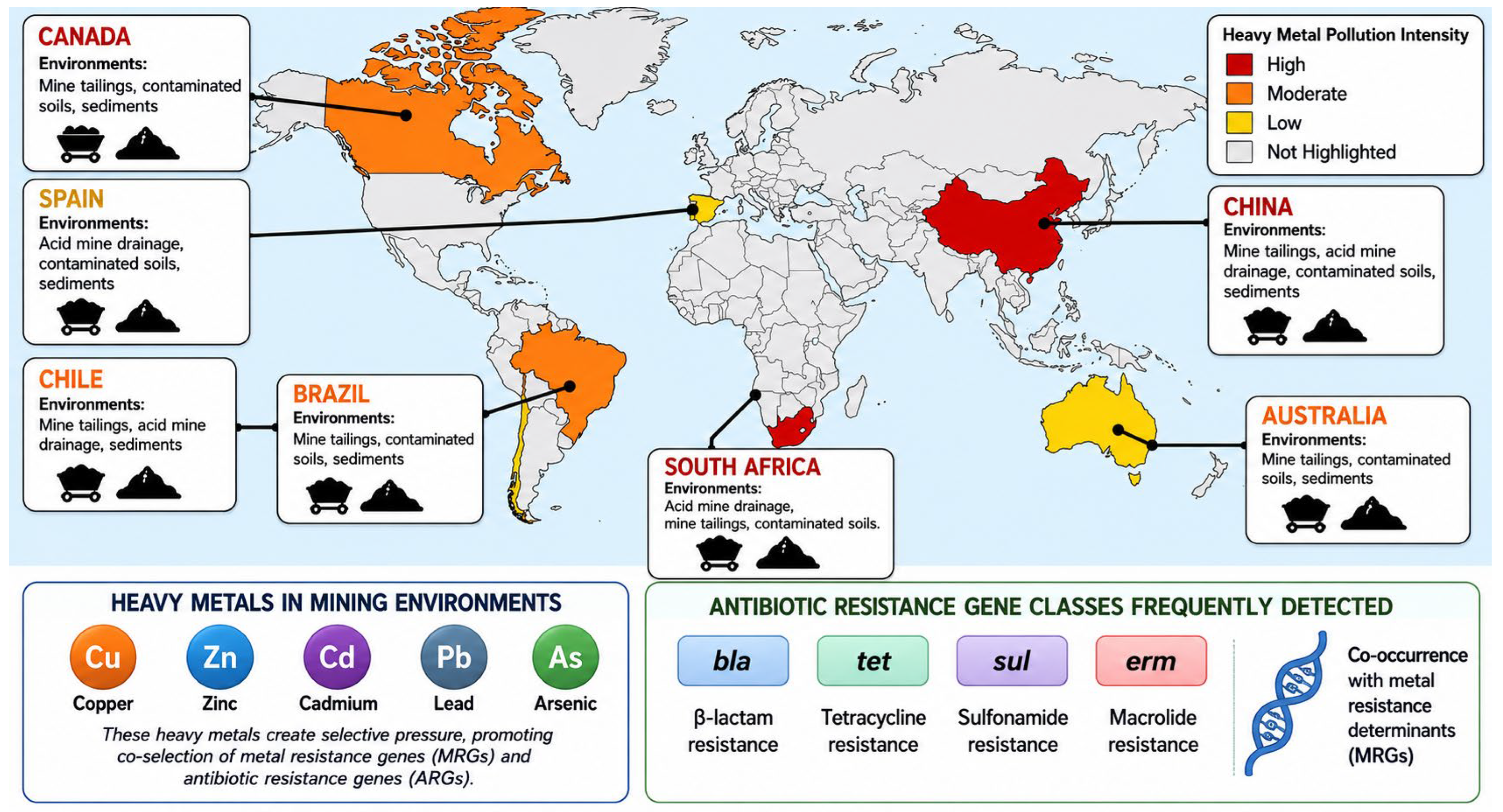
Table 2 summarizes representative studies that report ARGs in mining-associated environments across geographic locations, sample types, and metal contamination scenarios. Figure 2 illustrates the global distribution of mining-associated resistome studies. Despite variations in mining operations, environmental settings, and sampling approaches, studies from geographically different mining regions have consistently reported similar co-occurrence patterns of ARGs and MRGs associated with metal transport and detoxification pathways in mining-affected environments [48,52,53]. Collectively, these findings suggest that heavy metal contamination may function as a globally important ecological driver of environmental resistomes. Current surveillance remains geographically uneven, with limited representation from Africa, Central Asia, and several low- and middle-income regions.
Figure 2.
Global occurrence of mining-associated antibiotic resistance genes and heavy metal pollution. Countries reporting ARGs in mining-impacted environments include China, Spain, Brazil, South Africa, Canada, Chile, and Australia. Heavy metals (e.g., Cu, Zn, Cd, Pb, As) exert selective pressure that enriches microbial communities carrying ARGs and MRGs, highlighting mining ecosystems as environmental reservoirs of antimicrobial resistance. The figure was created by the authors using publicly available data and designed with BioRender and Adobe Illustrator.
Despite important advances, several methodological and ecological limitations remain. Most available studies rely predominantly on short-read metagenomic sequencing, which limits accurate reconstruction of plasmids, integrons, transposons, and other mobile genetic elements involved in the dissemination of resistance. Therefore, co-occurrence analyses provide strong support for metal-driven co-selection, but direct evidence for the transfer of specific RDs via active horizontal transfer pathways remains lacking. Differences in sampling strategies, sequencing depth, and bioinformatic workflows also complicate direct comparison between studies.
Another important limitation is the lack of longitudinal and functional studies on mining-associated resistomes. Most available studies are cross-sectional and descriptive, providing little information on the dynamics of resistomes over time, microbial adaptation, and ecological persistence under changing environmental conditions [54]. In addition, the detection of RDs by sequence homology does not necessarily confirm phenotypic resistance or transfer potential, underscoring the need for complementary functional metagenomics, transcriptomics, and cultivation-based validation [55].
Therefore, there is increasing metagenomic evidence supporting the idea that mining ecosystems are underappreciated reservoirs of environmental resistomes driven by chronic heavy metal exposure and microbial adaptation. However, there are significant knowledge gaps regarding the global distribution, ecological connectivity, transfer dynamics, and public health implications of mining-associated resistance determinants. These limitations will necessitate the development of standardized environmental surveillance frameworks, enhanced long-read sequencing approaches, integrated functional analyses, and enhanced geographic representation in future environmental AMR studies.
Table 2.
Representative studies reporting antibiotic resistance genes in mining-impacted environments.
6. Environmental Pathways Linking Mining Resistomes to Human and Animal Health
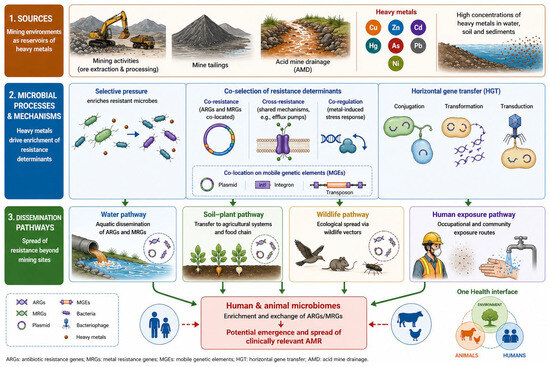
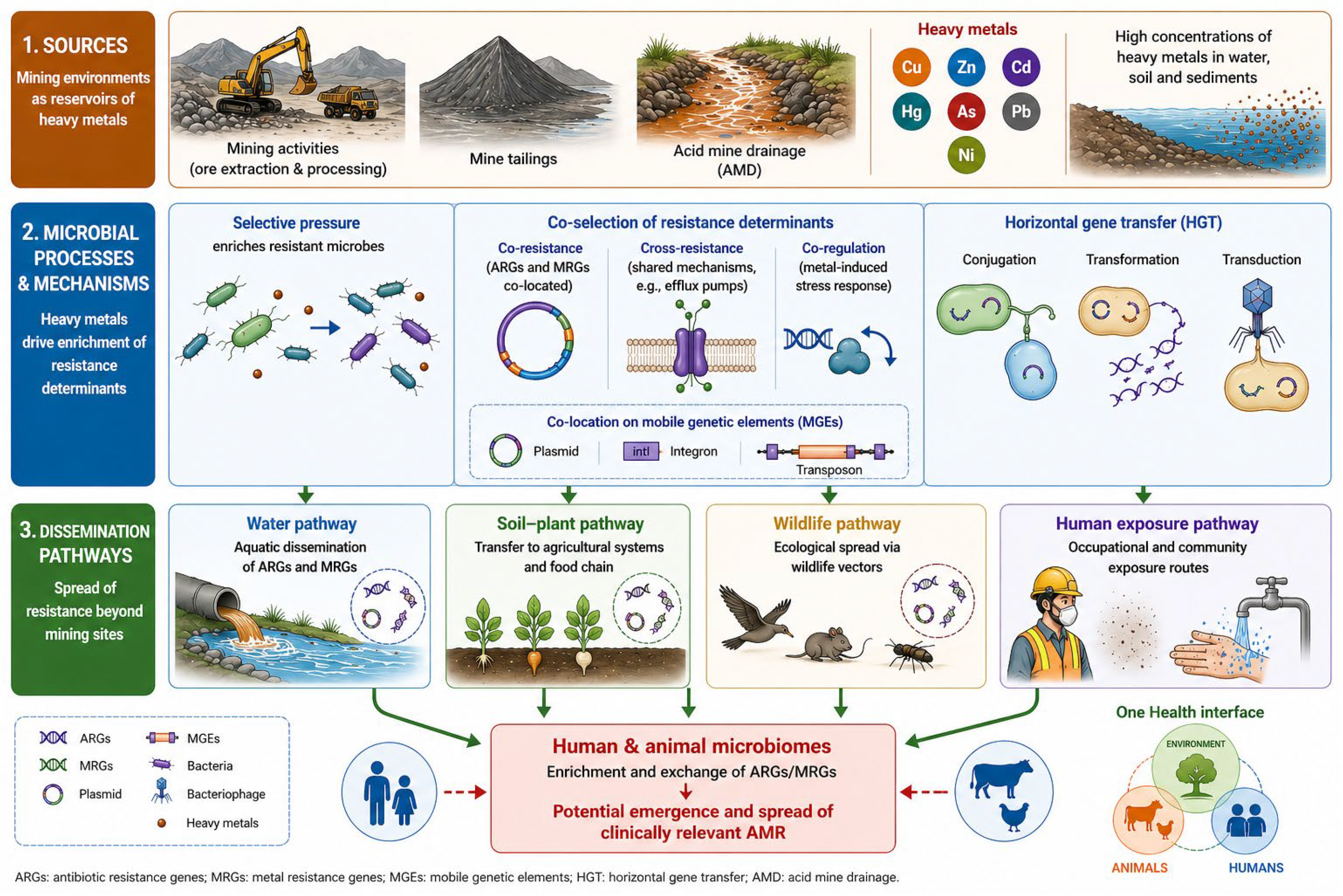
Mining-impacted environments may act as reservoirs of ARGs that disseminate across environmental, animal, and human microbiomes through interconnected ecological pathways [19,61]. Mining-related heavy metal contamination promotes the dissemination of RDs through interconnected environmental pathways linking environmental, animal, and human microbiomes (Figure 3).
Figure 3.
Environmental pathways linking heavy metal contamination in mining ecosystems to the dissemination of antimicrobial resistance within a One Health framework. Heavy metal contamination in mining environments promotes co-selection of MRGs and ARGs, often co-localized on MGEs and disseminated via HGT. These RDs spread through water systems, soil–plant interactions, wildlife, and human exposure, linking environmental reservoirs to human and animal microbiomes within a One Health context. The figure was created by the authors using publicly available data and designed with BioRender and Adobe Illustrator.
6.1. Water-Mediated Dissemination
Aquatic systems are among the most important pathways for the transport of RDs from mining environments. AMD and mining effluents often contain elevated concentrations of dissolved metals and microbial communities enriched with MRGs and ARGs. These contaminants may enter rivers, groundwater systems, and downstream sediments, where microbial populations can persist and exchange genetic material through horizontal gene transfer [19]. Sediments downstream of mining sites frequently accumulate both metals and resistance determinants, creating stable environmental reservoirs that facilitate the long-term persistence of environmental resistomes [18].
6.2. Soil Contamination and Transfer to Crops
Mining operations produce a massive amount of metal-rich waste material (tailings) and particulate matter that may contaminate neighboring soils. Heavy metal contamination from agricultural activities in those soils may alter soil microbial communities, thereby favoring the enrichment of ARGs through metal-driven co-selection mechanisms. Plant-associated microbiomes can obtain resistant bacteria from contaminated soils, which can serve as routes for ARGs to enter food chains and agricultural ecosystems [15].
6.3. Wildlife-Mediated Dissemination
Antimicrobial resistance can spread ecologically through wildlife in mining areas. For example, resistant microorganisms can be acquired by animals such as birds, rodents, and insects from contaminated soils or water sources, enabling them to cross ecological boundaries. Wildlife may also migrate their associated bacteria, carrying ARGs, into new and naïve ecosystems, introducing environmental resistomes to geographic regions where they were previously absent [62].
6.4. Occupational and Community Exposure
At this stage, human exposure to resistant microorganisms in mining environments can occur through inhalation of contaminated dust, dermal contact with contaminated soils or water, and ingestion of contaminated water. Consequently, mining workers and adjacent populations may be exposed to microbial communities enriched in ARGs and MRGs. Whether this will have direct clinical significance is still being examined, but environmental reservoirs of resistance genes are increasingly implicated in the global pool of AMR to human health [61].
6.5. One Health Implications
The interconnected transmission pathways linking environmental reservoirs, wildlife, agriculture, and human populations emphasize the importance of a One Health approach to AMR surveillance. Environmental resistomes associated with mining ecosystems may contribute RDs to broader microbial communities through ecological connectivity and horizontal gene transfer [61]. Integrating environmental monitoring of resistance genes into existing AMR surveillance frameworks could therefore improve early detection of emerging resistance hotspots and support strategies to mitigate environmental drivers of antimicrobial resistance. Although direct evidence of transmission remains limited, increasing genomic and metagenomic studies have identified shared mobile genetic elements and homologous resistance genes between environmental and clinical bacteria, supporting potential ecological connectivity and enabling tracing through approaches such as whole-genome sequencing and resistome profiling. For example, comparative genomic analyses have demonstrated similarities between plasmids carrying ARGs in environmental isolates and those found in clinical pathogens.
7. Surveillance Strategies for Detecting Mining-Associated Resistome
Effective surveillance of AMR in mining ecosystems is still limited, even though heavy metal contamination is increasingly recognized as a significant ecological driver of environmental resistomes [26,48]. Existing environmental surveillance frameworks are dominated by clinical wastewater, agricultural systems, and urban pollution, with mining-associated environments being relatively underrepresented in global AMR surveillance programs [48]. This disparity is important because mining ecosystems differ fundamentally from other contaminated environments due to the long-term persistence of heavy metals, extreme physicochemical conditions, and strong ecological selection pressures that may independently sustain resistance determinants.
Metagenomics, whole-genome sequencing, transcriptomics, and bioinformatics have significantly advanced the characterization of microbial communities and RDs in complex environmental systems [63]. These approaches enable simultaneous detection of ARGs, MRGs, mobile genetic elements, and microbial taxonomic diversity directly from environmental samples without cultivation. As a result, high-throughput sequencing technologies have expanded the understanding of resistome composition and co-selection mechanisms in mining-impacted environments [64]. However, important methodological and interpretative limitations remain to hinder effective surveillance of mining-associated resistomes. Most studies still rely on short-read sequencing approaches, limiting accurate reconstruction of mobile genetic elements and direct assessment of horizontal gene transfer dynamics [65]. Furthermore, heterogeneity in sampling designs, sequencing depths, resistance gene annotation databases, and bioinformatic pipelines complicates comparisons of studies and contributes to disparate resistome estimates across environmental settings [18].
Another major challenge is the absence of standardized surveillance frameworks for mining ecosystems. Standard environmental monitoring programs typically focus on chemical contamination and ecological toxicity but do not consider microbial RDs or resistome dynamics [66]. Consequently, important ecological interactions among microbial adaptation, metal contamination, and the dissemination of resistance may remain undetected. Mining-associated resistome surveillance remains geographically uneven, particularly in Africa, Central Asia, and other underrepresented low- and middle-income regions (Figure 2). This geographical imbalance hampers global understanding of mining-associated AMR and may lead to underestimation of environmental dissemination risks in heavily mined regions with limited monitoring infrastructure. Functional interpretation of environmental resistomes also remains challenging. Detection of ARGs based solely on sequence homology does not necessarily indicate phenotypic resistance, ecological fitness, or transfer potential [67]. Similarly, the presence of mobile genetic elements does not confirm active horizontal gene transfer under environmental conditions. Integrating metagenomics with functional metagenomics, transcriptomics, proteomics, and cultivation-based validation approaches may therefore provide more accurate insight into resistance activity, microbial adaptation, and ecological risk [68].
Environmental surveillance in mining ecosystems is further complicated by their ecological complexity. Factors such as metal speciation, pH, temperature, oxidative stress, nutrient limitation, hydrological connectivity, and microbial community structure can influence resistance selection and dissemination [50]. Hence, resistome dynamics could differ significantly between mining sites, even within comparable geographic regions. Longitudinal studies investigating temporal variation, seasonal dynamics, and environmental disturbance are relatively scarce, limiting our understanding of the persistence of resistance and ecological stability over time. Poor surveillance of mining-associated resistomes within a One Health framework could also have broad public health implications. Pathways such as contaminated water systems, agricultural soils, wildlife, occupational exposure, and the human microbiome are possible routes of dissemination for RDs originating in mining environments [69]. However, direct evidence linking environmental resistomes from mining ecosystems to clinical AMR is limited, underscoring the importance of interdisciplinary surveillance approaches that encompass environmental, veterinary, and human health sectors.
8. Knowledge Gaps and Research Priorities
Despite increasing recognition of mining ecosystems as important environmental reservoirs of antimicrobial resistance, substantial scientific, methodological, and surveillance gaps remain. Current understanding of mining-associated resistomes remains fragmented, geographically restricted, and dominated by cross-sectional descriptive investigations [15]. Consequently, important ecological and evolutionary processes underlying the persistence, dissemination, and adaptation of resistance in mining environments remain incompletely understood.
One major limitation in current research is the uneven distribution of available studies across regions. Current mining-associated resistome studies remain concentrated in a limited number of industrialized regions, with substantial underrepresentation of many low- and middle-income settings [15,48]. This imbalance limits global understanding of environmental resistome diversity and may underestimate the risks of resistance dissemination in regions where mining activities are expanding rapidly, but environmental surveillance infrastructure remains limited.
Another major gap involves the incomplete characterization of horizontal gene transfer dynamics within mining microbiomes. Although co-occurrence analyses consistently demonstrate associations among ARGs, MRGs, and mobile genetic elements, direct evidence linking these determinants to active ecological transfer pathways remains limited [70]. Most studies still rely on short-read metagenomics, thereby limiting direct characterization of mobile genetic elements and resistance transfer pathways [71].
Functional interpretation of environmental resistomes also remains challenging. Detection of RDs based solely on sequence homology does not necessarily indicate phenotypic resistance, ecological fitness, or transfer potential [72]. Similarly, the ecological significance of low-abundance resistance genes within mining microbiomes remains poorly understood. Integrating metagenomics with functional metagenomics, transcriptomics, proteomics, metabolomics, and cultivation-based validation approaches may therefore provide more accurate insight into microbial adaptation, resistance expression, and ecological risk [63].
Longitudinal investigations examining temporal variation and environmental stability of mining-associated resistomes are also comparatively scarce. Most of the currently available studies are cross-sectional and provide limited information on seasonal variation, ecological succession, environmental disturbance, or the long-term persistence of RDs under fluctuating environmental conditions [73]. This limitation is particularly important because mining ecosystems are dynamic environments influenced by changes in metal concentrations, hydrology, pH, climate, and mining activities, all of which may alter microbial community composition and selection pressures for resistance over time.
Another unresolved issue concerns the ecological and public health significance of environmental resistomes originating from mining ecosystems. Although environmental dissemination pathways involving contaminated water systems, soils, wildlife, and occupational exposure have been proposed, direct evidence linking mining-associated resistomes to clinically relevant AMR remains limited [48]. Consequently, important questions remain regarding the extent to which RDs originating from mining environments contribute to broader environmental, veterinary, and human-associated microbiomes within a One Health framework.
Standardization also remains a major challenge in environmental AMR research. Variability in sampling strategies, sequencing platforms, resistance gene annotation databases, and bioinformatic pipelines complicates direct comparison among studies and may contribute to inconsistent resistome estimates across mining environments [66]. The development of standardized surveillance protocols, harmonized bioinformatic workflows, and integrated environmental monitoring frameworks will therefore be essential to improving the reproducibility and global comparability of mining-associated resistome studies.
Future research should prioritize interdisciplinary approaches integrating microbial ecology, environmental microbiology, genomics, geochemistry, toxicology, and public health. Expanded geographical surveillance, long-read sequencing technologies, functional validation studies, and longitudinal ecological investigations will be particularly important for improving understanding of the dissemination pathways of resistance and ecological persistence in mining environments. In addition, incorporation of mining ecosystems into broader One Health AMR surveillance frameworks may improve early detection of emerging environmental resistomes and strengthen global environmental risk assessment strategies. Current evidence strongly suggests that mining ecosystems represent underrecognized but potentially important contributors to environmental antimicrobial resistance. However, resolving the substantial ecological, methodological, and surveillance gaps identified in this review will be essential for accurately defining the role of mining-associated resistomes in the global evolution and dissemination of antimicrobial resistance.
9. Environmental Management and Mitigation Strategies
The measures to address AMR in the mining ecosystem should be integrated with environmental management measures to address pathways for the dissemination of resistance and heavy metal contamination. Conventional antimicrobial stewardship is insufficient to counteract the evolution of environmentally driven resistance, given the long-term persistence of heavy metals in environmental matrices and their continuous selective pressure on microbial communities [7,18]. Therefore, the best mitigation strategies should include environmental remediation, sustainable mining practices, resistome surveillance, and interdisciplinary One Health approaches that bridge environmental, animal, and human health systems.
Reducing metal contamination in mining environments remains one of the most important long-term strategies to prevent the co-selection of AMR. Mining activities generate large volumes of tailings, wastewaters, and contaminated sediments frequently characterized by elevated concentrations of copper, zinc, cadmium, arsenic, mercury, and lead. Poor containment and management of these materials may result in the spread of RDs into adjacent soils, aquatic systems, agricultural settings, and wildlife habitats. Improvements in waste stabilization, encapsulation of mine tailings, and AMD containment systems may reduce the mobility of heavy metals in the environment and reduce ecological selection pressures for the development of resistant microbial populations.
Bioremediation and phytoremediation approaches are also promising for remediating heavy metal contamination and restoring ecosystems affected by mining activities. Metal-tolerant microbes, such as bacteria and fungi, can be involved in metal sequestration, bioaccumulation, biosorption, and biotransformation, and can help to detoxify contaminated environments [69]. Likewise, phytoremediation using metal-accumulating plant species can reduce metal bioavailability, immobilize contaminated soils, and promote ecological restoration of degraded mining sites [61]. However, applying these approaches remains challenging due to the high variability in remediation outcomes, which depends on metal concentration, environmental factors, microbial community composition, and long-term ecosystem resilience. In addition, environmental surveillance should be expanded to include monitoring of ARGs, MRGs, and mobile genetic elements in mining-related ecosystems. Current environmental monitoring programs rarely incorporate resistome surveillance or the study of microbial resistance dynamics [66]. The integration of metagenomic surveillance, long-read sequencing technologies, functional metagenomics, and environmental risk assessment approaches into routine mining surveillance programs could improve early detection of emerging resistance hotspots and improve understanding of resistance dissemination pathways [67,68]. Standardized surveillance protocols and harmonized bioinformatic pipelines will also be critical for improving comparability and reproducibility among environmental resistome studies.
From a policy perspective, the environmental aspects of AMR are still poorly integrated into existing regulatory frameworks. Mining and environmental protection policies currently mainly focus on chemical toxicity thresholds and ecological restoration but rarely consider resistance selection as a persistent environmental consequence of heavy metal contamination [61]. As such, integrating resistome monitoring and microbial risk assessment into environmental impact assessments could enhance the assessment of ecological and public health risks associated with mining activities, while stricter regulatory controls on mining waste management, wastewater discharge, and environmental remediation practices could help contain the dissemination of RDs into neighboring ecosystems.
Mitigating mining-associated resistomes will require multidisciplinary collaboration within a One Health framework, involving environmental microbiologists, ecologists, public health specialists, mining engineers, toxicologists, veterinarians, and policymakers. Environmental dissemination pathways involving contaminated water systems, agricultural soils, wildlife, and occupational exposure demonstrate the interconnected nature of the resistance transmission across environmental, animal, and human systems [61,69]. Accordingly, integrating environmental resistome surveillance into broader AMR monitoring programs may improve understanding of ecological connectivity and support prevention strategies targeting the environmental drivers of resistance evolution. In general, effective management of mining-associated AMR will depend on a combination of sustainable mining practices, environmental remediation, standardized surveillance systems, and multidisciplinary policy frameworks. Thus, addressing heavy metal contamination as an ecological driver of AMR could be an important component of future global strategies to curb the expansion of the environmental resistome and reduce long-term public health risks.
10. Conclusions and Future Perspectives
Mining ecosystems are increasingly recognized as underexplored environmental reservoirs of antimicrobial resistance, driven by persistent heavy metal contamination and chronic ecological selection pressures. Current evidence indicates that heavy metals can sustain and enrich environmental resistomes through interconnected mechanisms of co-resistance, cross-resistance, and co-regulation, even in environments with limited direct antibiotic exposure. Metagenomic studies consistently demonstrate co-occurrence of antibiotic resistance genes, MRGs, and mobile genetic elements across mining-associated microbiomes, supporting the ecological importance of metal-driven resistance selection.
A major contribution of this review is the integration of ecological, microbiological, metagenomic, and One Health perspectives to demonstrate how mining environments differ fundamentally from other contaminated ecosystems in their capacity to maintain long-term resistance to selection pressures. The evidence synthesized here suggests that mining-associated resistomes should not be viewed solely as localized environmental phenomena, but as potentially important contributors to the broader global environmental resistome.
However, important limitations remain in current knowledge, particularly regarding the expression of functional resistance, the dynamics of horizontal gene transfer, longitudinal ecological stability, and the direct links between mining-associated resistomes and clinically relevant antimicrobial resistance. Existing surveillance efforts also remain geographically uneven and methodologically inconsistent.
Future progress will require standardized environmental surveillance frameworks, expanded geographical monitoring, integration of long-read and functional metagenomics, and stronger interdisciplinary collaboration across environmental, veterinary, and human health sectors. Incorporating mining ecosystems into global AMR surveillance and environmental risk assessment strategies may improve understanding of ecological drivers of resistance evolution and support more effective long-term mitigation efforts within a One Health framework.
Author Contributions
Conceptualization, S.A.H. and E.A.M.; methodology, S.A.H.; validation, S.A.H., E.A.M. and A.O.J.; formal analysis, S.A.H.; investigation, S.A.H., E.A.M. and G.M.A.; resources, G.M.A.; data curation, S.A.H.; writing—original draft preparation, S.A.H.; writing—review and editing, S.A.H., E.A.M., G.M.A. and A.O.J.; visualization, S.A.H.; supervision, S.A.H.; project administration, S.A.H.; funding acquisition, S.A.H. All authors have read and agreed to the published version of the manuscript.
Funding
This research was funded by Northern Border University, Arar, Saudi Arabia, through the Center for Health Research Project Number NBU-CRP-2026-3770.
Data Availability Statement
Data sharing is not applicable to this article as no new data were created or analyzed in this study.
Acknowledgments
The authors extend their appreciation to Northern Border University, Saudi Arabia, for supporting this work through project number NBU-CRP-2026-3770. During the preparation of this manuscript, the authors used Grammarly Premium (Version 1.2.98), QuillBot Premium (Version 4.18.0), and ChatGPT (OpenAI, GPT-5.5) to enhance English grammar, improve language clarity, and assist with figure design. The authors carefully reviewed and edited the generated output and take full responsibility for the content of this publication.
Conflicts of Interest
The authors declare no conflicts of interest.
Abbreviations
The following abbreviations are used in this manuscript:
| AMR | Antimicrobial resistance |
| ARGs | Antibiotic resistance genes |
| MRGs | Metal resistance genes |
| MGEs | Mobile genetic elements |
| AMD | Acid mine drainage |
| HGT | Horizontal gene transfer |
| Cu | Copper |
| Zn | Zinc |
| Cd | Cadmium |
| Hg | Mercury |
| Pb | Lead |
| As | Arsenic |
| Ni | Nickel |
| DNA | Deoxyribonucleic acid |
References
- Zhu, C.; Wu, L.; Ning, D.; Tian, R.; Gao, S.; Zhang, B.; Zhao, J.; Zhang, Y.; Xiao, N.; Wang, Y.; et al. Global diversity and distribution of antibiotic resistance genes in human wastewater treatment systems. Nat. Commun. 2025, 16, 4006. [Google Scholar] [CrossRef] [Scilit]
- Bradshaw, A. Mobile genetic elements and wastewater treatment: Contaminants of emerging concern, climate change, and trophic transmission. Front. Microbiol. 2025, 16, 1699325. [Google Scholar] [CrossRef] [Scilit]
- Huang, H.; Wei, L.; Li, L.; He, Z.; Zhang, K.; Bao, M.; Sun, W.; Li, X.; Zhang, J.; Yu, P.; et al. Microbial interactions as the key to understanding and controlling environmental spread of antibiotic resistance genes. npj Antimicrob. Resist. 2025, 3, 97. [Google Scholar] [CrossRef] [Scilit]
- Briffa, J.; Sinagra, E.; Blundell, R. Heavy metal pollution in the environment and their toxicological effects on humans. Heliyon 2020, 6, e04691. [Google Scholar] [CrossRef] [Scilit] [PubMed]
- Chen, X.; Zhao, Y.; Zhao, X.; Wu, J.; Zhu, L.; Zhang, X.; Wei, Z.; Liu, Y.; He, P. Selective pressures of heavy metals on microbial community determine microbial functional roles during composting: Sensitive, resistant and actor. J. Hazard. Mater. 2020, 398, 122858. [Google Scholar] [CrossRef] [Scilit]
- Sorour, A.A.; Khairy, H.; Zaghloul, E.H.; Zaghloul, H.A.H. Microbe- plant interaction as a sustainable tool for mopping up heavy metal contaminated sites. BMC Microbiol. 2022, 22, 174. [Google Scholar] [CrossRef] [Scilit]
- Murray, L.M.; Hayes, A.; Snape, J.; Kasprzyk-Hordern, B.; Gaze, W.H.; Murray, A.K. Co-selection for antibiotic resistance by environmental contaminants. npj Antimicrob. Resist. 2024, 2, 9. [Google Scholar] [CrossRef] [Scilit]
- Huo, M.; Xu, X.; Mi, K.; Ma, W.; Zhou, Q.; Lin, X.; Cheng, G.; Huang, L. Co-selection mechanism for bacterial resistance to major chemical pollutants in the environment. Sci. Total Environ. 2024, 912, 169223. [Google Scholar] [CrossRef] [Scilit]
- McGowen, K.; Funck, T.; Wang, X.; Zinga, S.; Wolf, I.D.; Akusobi, C.; Denkinger, C.M.; Rubin, E.J.; Sullivan, M.R. Efflux pumps and membrane permeability contribute to intrinsic antibiotic resistance in Mycobacterium abscessus. PLoS Pathog. 2025, 21, e1013027. [Google Scholar] [CrossRef] [Scilit]
- Sincak, M.; Šoltisová, K.; Luptakova, A.; Sedlakova-Kadukova, J. Overproduction of Efflux Pumps as a Mechanism of Metal and Antibiotic Cross-Resistance in the Natural Environment. Sustainability 2023, 15, 8767. [Google Scholar] [CrossRef] [Scilit]
- Gomes, P.; Valente, T. Seasonal impact of acid mine drainage on water quality and potential ecological risk in an old sulfide exploitation. Environ. Sci. Pollut. Res. 2024, 31, 21124–21135. [Google Scholar] [CrossRef] [Scilit]
- Gabarrón, M.; Zornoza, R.; Acosta, J.A.; Faz, Á.; Martínez-Martínez, S. Chapter Five—Mining environments. In Advances in Chemical Pollution, Environmental Management and Protection; Pereira, P., Ed.; Elsevier: Amsterdam, The Netherlands, 2019; Volume 4, pp. 157–205. [Google Scholar]
- Rojas, M.A.; Serrano, G.; Torres, J.; Ortega, J.; Gálvez, G.; Vilches, E.; Parra, V.; Reyes-Jara, A.; Maracaja-Coutinho, V.; Pizarro, L.; et al. Genome-resolved metagenomics and evolutionary analysis reveal conserved metabolic adaptations in extremophile communities from a copper mining tailing. Environ. Microbiome 2025, 20, 153. [Google Scholar] [CrossRef] [Scilit]
- Wang, Z.; Deng, G.; Hu, C.; Hou, X.; Zhang, X.; Fan, Z.; Zhao, Y.; Peng, M. Microbial diversity and community assembly in heavy metal-contaminated soils: Insights from selenium-impacted mining areas. Front. Microbiol. 2025, 16, 1561678. [Google Scholar] [CrossRef] [Scilit] [PubMed]
- Zou, H.-Y.; Gao, F.-Z.; He, L.-Y.; Zhang, M.; Liu, Y.-S.; Qi, J.; Ying, G.-G. Prevalence of antibiotic resistance genes in mining-impacted farmland environments. Ecotoxicol. Environ. Saf. 2025, 289, 117651. [Google Scholar] [CrossRef] [Scilit]
- Wang, X.; Lan, B.; Fei, H.; Wang, S.; Zhu, G. Heavy metal could drive co-selection of antibiotic resistance in terrestrial subsurface soils. J. Hazard. Mater. 2021, 411, 124848. [Google Scholar] [CrossRef] [Scilit]
- Engin, A.B.; Engin, E.D.; Engin, A. Effects of co-selection of antibiotic-resistance and metal-resistance genes on antibiotic-resistance potency of environmental bacteria and related ecological risk factors. Environ. Toxicol. Pharmacol. 2023, 98, 104081. [Google Scholar] [CrossRef] [Scilit]
- Gillieatt, B.F.; Coleman, N.V. Unravelling the mechanisms of antibiotic and heavy metal resistance co-selection in environmental bacteria. FEMS Microbiol. Rev. 2024, 48, fuae017. [Google Scholar] [CrossRef] [Scilit] [PubMed]
- Johnson, D.B.; Hallberg, K.B. Acid mine drainage remediation options: A review. Sci. Total Environ. 2005, 338, 3–14. [Google Scholar] [CrossRef] [Scilit] [PubMed]
- Méndez-García, C.; Peláez, A.; Mesa, V.; Sánchez, J.; Golyshina, O.; Ferrer, M. Microbial diversity and metabolic networks in acid mine drainage habitats. Front. Microbiol. 2015, 6, 475. [Google Scholar] [CrossRef] [Scilit]
- Baker, B.J.; Banfield, J.F. Microbial communities in acid mine drainage. FEMS Microbiol. Ecol. 2003, 44, 139–152. [Google Scholar] [CrossRef] [Scilit]
- Chen, L.-X.; Huang, L.-N.; Méndez-García, C.; Kuang, J.-L.; Hua, Z.-S.; Liu, J.; Shu, W.-S. Microbial communities, processes and functions in acid mine drainage ecosystems. Curr. Opin. Biotechnol. 2016, 38, 150–158. [Google Scholar] [CrossRef] [Scilit] [PubMed]
- Pal, C.; Asiani, K.; Arya, S.; Rensing, C.; Stekel, D.J.; Larsson, D.J.; Hobman, J.L. Metal resistance and its association with antibiotic resistance. Adv. Microb. Physiol. 2017, 70, 261–313. [Google Scholar]
- Pal, C.; Bengtsson-Palme, J.; Kristiansson, E.; Larsson, D.G.J. Co-occurrence of resistance genes to antibiotics, biocides and metals reveals novel insights into their co-selection potential. BMC Genom. 2015, 16, 964. [Google Scholar] [CrossRef] [Scilit]
- Naccache, C.; Ibrahim, C.; Hassen, A.; Mezghani Khemakhem, M. Metagenomics-based analysis of mobile genetic elements and antibiotic/metal resistance genes carried by treated wastewater. PeerJ 2025, 13, e19682. [Google Scholar] [CrossRef] [Scilit]
- Prochaska, J.; Reitner, H.; Benold, C.; Stadtschnitzer, A.; Choijilsuren, B.; Sofka, D.; Hilbert, F.; Pacífico, C. Antimicrobial and Metal Resistance Genes in Bacteria Isolated from Mine Water in Austria. Antibiotics 2025, 14, 262. [Google Scholar] [CrossRef] [Scilit] [PubMed]
- Lemire, J.A.; Harrison, J.J.; Turner, R.J. Antimicrobial activity of metals: Mechanisms, molecular targets and applications. Nat. Rev. Microbiol. 2013, 11, 371–384. [Google Scholar] [CrossRef] [Scilit]
- Jin, L.; Li, C.; Addou, A.M.; Zhang, S.; Li, H. Global heavy metal-antibiotic co-pollution: Distribution, ARG co-selection, toxic synergism, and AOPs-mediated remediation with focus on non-radical pathways. J. Hazard. Mater. 2026, 506, 141601. [Google Scholar] [CrossRef] [Scilit]
- Zhang, W.; Wang, Y.; Lee, O.; Tian, R.; Cao, H.; Gao, Z.; Li, Y.; Yu, L.; Xu, Y.; Qian, P. Adaptation of intertidal biofilm communities is driven by metal ion and oxidative stresses. Sci. Rep. 2013, 3, 3180. [Google Scholar] [CrossRef] [Scilit]
- Wang, Q.; Liu, L.; Hou, Z.; Wang, L.; Ma, D.; Yang, G.; Guo, S.; Luo, J.; Qi, L.; Luo, Y. Heavy metal copper accelerates the conjugative transfer of antibiotic resistance genes in freshwater microcosms. Sci. Total Environ. 2020, 717, 137055. [Google Scholar] [CrossRef] [Scilit] [PubMed]
- Kerkvliet, J.; Bossers, A.; Kers, J.; Meneses, R.; Willems, R.; Schürch, A. Metagenomic assembly is the main bottleneck in the identification of mobile genetic elements. PeerJ 2024, 12, e16695. [Google Scholar] [CrossRef] [Scilit]
- Xiao, E.; Sun, W.; Ning, Z.; Wang, Y.; Meng, F.; Deng, J.; Fan, W.; Xiao, T. Occurrence and dissemination of antibiotic resistance genes in mine soil ecosystems. Appl. Microbiol. Biotechnol. 2022, 106, 6289–6299. [Google Scholar] [CrossRef] [Scilit] [PubMed]
- Seiler, C.; Berendonk, T. Heavy metal driven co-selection of antibiotic resistance in soil and water bodies impacted by agriculture and aquaculture. Front. Microbiol. 2012, 3, 399. [Google Scholar] [CrossRef] [Scilit] [PubMed]
- Li, L.; Liu, Z.; Meng, D.; Liu, X.; Li, X.; Zhang, M.; Tao, J.; Gu, Y.; Zhong, S.; Yin, H. Comparative Genomic Analysis Reveals the Distribution, Organization, and Evolution of Metal Resistance Genes in the Genus Acidithiobacillus. Appl. Environ. Microbiol. 2019, 85, e02153-18. [Google Scholar] [CrossRef] [Scilit]
- Nascimento, A.M.; Chartone-Souza, E. Operon mer: Bacterial resistance to mercury and potential for bioremediation of contaminated environments. Genet. Mol. Res. 2003, 2, 92–101. [Google Scholar]
- Oleńska, E.; Małek, W.; Swiecicka, I.; Wójcik, M.; Thijs, S.; Vangronsveld, J. Bacteria Under Metal Stress-Molecular Mechanisms of Metal Tolerance. Int. J. Mol. Sci. 2025, 26, 5716. [Google Scholar] [CrossRef] [Scilit] [PubMed]
- Nies, D.H. Efflux-mediated heavy metal resistance in prokaryotes. FEMS Microbiol. Rev. 2003, 27, 313–339. [Google Scholar] [CrossRef] [Scilit] [PubMed]
- Bhat, A.; Sharma, R.; Desigan, K.; Lucas, M.M.; Mishra, A.; Bowers, R.M.; Woyke, T.; Epstein, B.; Tiffin, P.; Pueyo, J.J.; et al. Horizontal gene transfer of the Mer operon is associated with large effects on the transcriptome and increased tolerance to mercury in nitrogen-fixing bacteria. BMC Microbiol. 2024, 24, 247. [Google Scholar] [CrossRef] [Scilit]
- Kushwaha, R.; Singh, R.S.; Mohan, D. Bacterial interactions with arsenic: Metabolic pathways, resistance mechanisms, and bioremediation approaches. Sci. Total Environ. 2025, 1002, 180608. [Google Scholar] [CrossRef] [Scilit]
- Soucy, S.M.; Huang, J.; Gogarten, J.P. Horizontal gene transfer: Building the web of life. Nat. Rev. Genet. 2015, 16, 472–482. [Google Scholar] [CrossRef] [Scilit]
- Gillings, M.R. Integrons: Past, present, and future. Microbiol. Mol. Biol. Rev. 2014, 78, 257–277. [Google Scholar] [CrossRef] [Scilit]
- Goh, Y.-X.; Anupoju, S.M.B.; Nguyen, A.; Zhang, H.; Ponder, M.; Krometis, L.-A.; Pruden, A.; Liao, J. Evidence of horizontal gene transfer and environmental selection impacting antibiotic resistance evolution in soil-dwelling Listeria. Nat. Commun. 2024, 15, 10034. [Google Scholar] [CrossRef] [Scilit]
- Frost, L.S.; Leplae, R.; Summers, A.O.; Toussaint, A. Mobile genetic elements: The agents of open source evolution. Nat. Rev. Microbiol. 2005, 3, 722–732. [Google Scholar] [CrossRef] [Scilit]
- Zhang, Y.; Gu, A.Z.; Cen, T.; Li, X.; He, M.; Li, D.; Chen, J. Sub-inhibitory concentrations of heavy metals facilitate the horizontal transfer of plasmid-mediated antibiotic resistance genes in water environment. Environ. Pollut. 2018, 237, 74–82. [Google Scholar] [CrossRef] [Scilit]
- Nowrotek, M.; Jałowiecki, Ł.; Harnisz, M.; Płaza, G.A. Culturomics and metagenomics: In understanding of environmental resistome. Front. Environ. Sci. Eng. 2019, 13, 40. [Google Scholar] [CrossRef] [Scilit]
- Peng, H.; Andreu-Sanchez, S.; Ruiz-Moreno, A.; Fernández-Pato, A.; Wu, J.; Gacesa, R.; Zhernakova, A.; Wang, D.; Fu, J. Longitudinal gut microbiota tracking reveals the dynamics of horizontal gene transfer. Nat. Commun. 2025, 16, 11543. [Google Scholar] [CrossRef] [Scilit]
- Palomo, A.; Li, B.; Huang, Z.; Ma, Y.; Peng, W.; Wang, W.; Zheng, Y.; Wen, Y.; Yang, L. Microdiversity and fine-scale niche differentiation support persistence and coexistence of acidophiles in acid mine drainage. Front. Microbiol. 2025, 16, 1697424. [Google Scholar] [CrossRef] [Scilit]
- Yi, X.; Liang, J.L.; Su, J.Q.; Jia, P.; Lu, J.L.; Zheng, J.; Wang, Z.; Feng, S.W.; Luo, Z.H.; Ai, H.X.; et al. Globally distributed mining-impacted environments are underexplored hotspots of multidrug resistance genes. ISME J. 2022, 16, 2099–2113. [Google Scholar] [CrossRef] [Scilit]
- Jiang, X.; Liu, W.; Xu, H.; Cui, X.; Li, J.; Chen, J.; Zheng, B. Characterizations of heavy metal contamination, microbial community, and resistance genes in a tailing of the largest copper mine in China. Environ. Pollut. 2021, 280, 116947. [Google Scholar] [CrossRef] [Scilit]
- Newsome, L.; Falagán, C. The Microbiology of Metal Mine Waste: Bioremediation Applications and Implications for Planetary Health. Geohealth 2021, 5, e2020GH000380. [Google Scholar] [CrossRef] [Scilit]
- Dunivin, T.K.; Yeh, S.Y.; Shade, A. A global survey of arsenic-related genes in soil microbiomes. BMC Biol. 2019, 17, 45. [Google Scholar] [CrossRef] [Scilit]
- Gastauer, M.; Vera, M.P.O.; de Souza, K.P.; Pires, E.S.; Alves, R.; Caldeira, C.F.; Ramos, S.J.; Oliveira, G. A metagenomic survey of soil microbial communities along a rehabilitation chronosequence after iron ore mining. Sci. Data 2019, 6, 190008. [Google Scholar] [CrossRef] [Scilit] [PubMed]
- Bosch, J.; Bezuidenhout, C.; Coertze, R.; Molale-Tom, L. Metal- and antibiotic-resistant heterotrophic plate count bacteria from a gold mine impacted river: The Mooi River system, South Africa. Environ. Sci. Pollut. Res. Int. 2023, 30, 31605–31619. [Google Scholar] [CrossRef] [Scilit]
- Peng, H.; Ruiz-Moreno, A.J.; Fu, J. Multi-dimensional metagenomics. Nat. Rev. Bioeng. 2025, 3, 1057–1072. [Google Scholar] [CrossRef] [Scilit]
- Kim, N.; Ma, J.; Kim, W.; Kim, J.; Belenky, P.; Lee, I. Genome-resolved metagenomics: A game changer for microbiome medicine. Exp. Mol. Med. 2024, 56, 1501–1512. [Google Scholar] [CrossRef] [Scilit]
- Sidikjan, N.; Li, Y.; Chen, Y.; Guo, X.-p.; Liu, M.; Huang, Y. Multimedia profiling of metal resistance genes in the Yangtze Estuary: Biofilm dominance and community-driven regulatory pathways. Ecotoxicol. Environ. Saf. 2026, 310, 119769. [Google Scholar] [CrossRef] [Scilit] [PubMed]
- Huang, Q.; Huang, Y.; Li, B.; Li, X.; Guo, Y.; Jiang, Z.; Liu, X.; Yang, Z.; Ning, Z.; Xiao, T.; et al. Metagenomic analysis characterizes resistomes of an acidic, multimetal(loid)-enriched coal source mine drainage treatment system. J. Hazard. Mater. 2023, 448, 130898. [Google Scholar] [CrossRef] [Scilit]
- Kumar, R.; Vasić, T.P.; Živković, S.P.; Panneerselvam, P.; Santoyo, G.; de los Santos Villalobos, S.; Olatunbosun, A.N.; Pandit, A.; Koolman, L.; Mitra, D.; et al. Mechanistic Role of Heavy Metals in Driving Antimicrobial Resistance: From Rhizosphere to Phyllosphere. Appl. Microbiol. 2025, 5, 79. [Google Scholar] [CrossRef] [Scilit]
- Liu, Z.-T.; Ma, R.-A.; Zhu, D.; Konstantinidis, K.T.; Zhu, Y.-G.; Zhang, S.-Y. Organic fertilization co-selects genetically linked antibiotic and metal(loid) resistance genes in global soil microbiome. Nat. Commun. 2024, 15, 5168. [Google Scholar] [CrossRef] [Scilit]
- Su, H.-C.; Pan, C.-G.; Ying, G.-G.; Zhao, J.-L.; Zhou, L.-J.; Liu, Y.-S.; Tao, R.; Zhang, R.-Q.; He, L.-Y. Contamination profiles of antibiotic resistance genes in the sediments at a catchment scale. Sci. Total Environ. 2014, 490, 708–714. [Google Scholar] [CrossRef] [Scilit]
- Berendonk, T.U.; Manaia, C.M.; Merlin, C.; Fatta-Kassinos, D.; Cytryn, E.; Walsh, F.; Bürgmann, H.; Sørum, H.; Norström, M.; Pons, M.-N. Tackling antibiotic resistance: The environmental framework. Nat. Rev. Microbiol. 2015, 13, 310–317. [Google Scholar] [CrossRef] [Scilit] [PubMed]
- Allen, H.K.; Donato, J.; Wang, H.H.; Cloud-Hansen, K.A.; Davies, J.; Handelsman, J. Call of the wild: Antibiotic resistance genes in natural environments. Nat. Rev. Microbiol. 2010, 8, 251–259. [Google Scholar] [CrossRef] [Scilit]
- Saggu, S.K.; Kumar, M.; Kumar, S. Metagenomics and its impact on environmental and therapeutic microbiology. Arch. Microbiol. 2025, 208, 24. [Google Scholar] [CrossRef] [Scilit]
- Li, B.; Chang, C.; Sun, C.; Zhao, D.; Hu, E.; Li, M. Multi-habitat distribution and coalescence of resistomes at the watershed scale based on metagenomics. J. Hazard. Mater. 2024, 477, 135349. [Google Scholar] [CrossRef] [Scilit]
- Tokuda, M.; Shintani, M. Microbial evolution through horizontal gene transfer by mobile genetic elements. Microb. Biotechnol. 2024, 17, e14408. [Google Scholar] [CrossRef] [Scilit] [PubMed]
- Mao, X.; Yin, X.; Yang, Y.; Che, Y.; Xu, X.; Deng, Y.; Li, L.; Zhang, T. Standardization in global environmental antibiotic resistance genes (ARGs) surveillance. Crit. Rev. Environ. Sci. Technol. 2024, 54, 1633–1650. [Google Scholar] [CrossRef] [Scilit]
- Cooper, A.; Low, A.; Wong, A.; Tamber, S.; Blais, B.; Carrillo, C. Modeling the limits of detection for antimicrobial resistance genes in agri-food samples: A comparative analysis of bioinformatics tools. BMC Microbiol. 2024, 24, 31. [Google Scholar] [CrossRef] [Scilit] [PubMed]
- Nam, N.N.; Do, H.D.K.; Loan Trinh, K.T.; Lee, N.Y. Metagenomics: An Effective Approach for Exploring Microbial Diversity and Functions. Foods 2023, 12, 2140. [Google Scholar] [CrossRef] [Scilit]
- Grama, V.; Ceylin Ecer, Z.; Curtis, C. Applying the One Health Framework to Historical Mining Activities: Interconnected Ecosystem and Community Health Impacts of Acid Mine Drainage in the Witwatersrand. Water 2026, 18, 520. [Google Scholar] [CrossRef] [Scilit]
- Zhao, Y.; Cocerva, T.; Cox, S.; Tardif, S.; Su, J.-Q.; Zhu, Y.-G.; Brandt, K.K. Evidence for co-selection of antibiotic resistance genes and mobile genetic elements in metal polluted urban soils. Sci. Total Environ. 2019, 656, 512–520. [Google Scholar] [CrossRef] [Scilit]
- Suzuki, Y.; Nishijima, S.; Furuta, Y.; Yoshimura, J.; Suda, W.; Oshima, K.; Hattori, M.; Morishita, S. Long-read metagenomic exploration of extrachromosomal mobile genetic elements in the human gut. Microbiome 2019, 7, 119. [Google Scholar] [CrossRef] [Scilit]
- Crofts, T.S.; Gasparrini, A.J.; Dantas, G. Next-generation approaches to understand and combat the antibiotic resistome. Nat. Rev. Microbiol. 2017, 15, 422–434. [Google Scholar] [CrossRef] [Scilit]
- Huang, Q.; Liu, Z.; Guo, Y.; Li, B.; Yang, Z.; Liu, X.; Ni, J.; Li, X.; Zhang, X.; Zhou, N.; et al. Coal-source acid mine drainage reduced the soil multidrug-dominated antibiotic resistome but increased the heavy metal(loid) resistome and energy production-related metabolism. Sci. Total Environ. 2023, 873, 162330. [Google Scholar] [CrossRef] [Scilit]

Disclaimer/Publisher’s Note: The statements, opinions and data contained in all publications are solely those of the individual author(s) and contributor(s) and not of MDPI and/or the editor(s). MDPI and/or the editor(s) disclaim responsibility for any injury to people or property resulting from any ideas, methods, instructions or products referred to in the content. |
© 2026 by the authors. Licensee MDPI, Basel, Switzerland. This article is an open access article distributed under the terms and conditions of the Creative Commons Attribution (CC BY) license.