
Article

Hidden Lineage Diversity in Hydrochara (Coleoptera: Hydrophilidae): An Integrative Study from Floodplain Ecosystems of South-Eastern Europe


by
Nataša Turić
1,
Goran Vignjević
1,*,
Nataša Bušić
1,
Martina Temunović
2 and
Branka Bruvo Mađarić
3
1
Department of Biology, Josip Juraj Strossmayer University of Osijek, HR31000 Osijek, Croatia
2
Department of Forest Genetics, Dendrology and Botany, Faculty of Forestry and Wood Technology, University of Zagreb, HR10000 Zagreb, Croatia
3
Department of Molecular Biology, Ruđer Bošković Institute, HR10000 Zagreb, Croatia
*
Author to whom correspondence should be addressed.
Environments 2026, 13(5), 266; https://doi.org/10.3390/environments13050266
Submission received: 27 March 2026 / Revised: 4 May 2026 / Accepted: 7 May 2026 / Published: 9 May 2026

Abstract

The genus Hydrochara (Coleoptera: Hydrophilidae) comprises large-bodied water beetles associated with shallow, well-vegetated freshwater habitats and is characterised by considerable taxonomic complexity. While Hydrochara caraboides is relatively well studied in western and central Europe, lineage diversity and species boundaries within the genus remain poorly resolved in eastern and south-eastern Europe. This study uses an integrative approach combining mitochondrial DNA data, morphometric analyses, and male genital morphology to investigate Hydrochara populations in continental Croatia. Specimens were collected from floodplain and lowland aquatic habitats across major river basins, morphologically identified and verified using cytochrome oxidase subunit I (16S) sequences through comparison with reference data from public databases (GenBank and BOLD). Molecular analyses confirmed the presence of H. caraboides and Hydrochara flavipes in continental Croatia. A single specimen from the upper Drava River basin (CROH030-26) formed a distinct mitochondrial lineage positioned between H. caraboides and Hydrochara dichroma in the COI phylogeny. Morphometric analyses showed extensive overlap between this specimen and H. caraboides, indicating no clear differentiation in external body size. In contrast, examination of male genitalia revealed an intermediate aedeagus morphology with transitional characters between H. caraboides and H. dichroma. Haplotype network analysis revealed a star-like structure with a dominant central haplotype shared by most H. caraboides specimens and several low-frequency variants, while the divergent specimen occupies a peripheral position, separated from the main cluster by multiple mutational steps. These results indicate that H. caraboides is a genetically heterogeneous taxon comprising multiple divergent mitochondrial lineages, suggesting that lineage diversity within this species may be underestimated. By integrating molecular and morphological evidence, this study provides new insights into the lineage diversity of Hydrochara in floodplain ecosystems of south-eastern Europe and highlights the importance of integrative approaches for resolving species boundaries and informing freshwater biodiversity conservation.

1. Introduction

Water beetles represent a diverse and ecologically important group of aquatic insects that contribute to nutrient cycling, decomposition, and trophic interactions in aquatic ecosystems. Due to their diversity, abundance, and sensitivity to habitat degradation, they are widely used as bioindicators in ecological monitoring and water quality assessments [1,2]. Within the order Coleoptera, the family Hydrophilidae (water scavenger beetles) includes more than 3000 species worldwide and occupies a wide range of aquatic and semi-aquatic environments, such as ponds, lakes, marshes, floodplains, and slow-flowing streams [3,4]. Morphological traits such as streamlined bodies, natatorial hind legs, and hydrofuge pubescence facilitate locomotion and respiration in aquatic habitats. Most hydrophilid larvae are specialized predators, while adults are typically omnivorous or detritivorous, feeding on algae, detritus, and decomposing organic matter, thus contributing to energy transfer within freshwater food webs [2,3,4].
In Europe, the genus Hydrochara (tribe Hydrophilini) is traditionally represented by three widely recognized species: Hydrochara caraboides Linnaeus, 1758, H. flavipes Steven, 1808, and H. dichroma Fairmaire, 1892 [5,6]. However, additional species have been reported from the south-eastern and eastern margins of Europe, including Hydrochara semenowi Zaitzev, 1908 and H. affinis Sharp, 1873, primarily from regions such as the Caucasus and southern European Russia [7,8]. These records highlight a broader regional diversity of the genus, although their distribution remains largely restricted to eastern parts of the European continent.
Hydrochara species typically inhabit shallow, stagnant or slow-flowing freshwater habitats rich in organic material, such as ponds, ditches, marshes, and temporary pools [5,9]. A key ecological requirement across the genus is the presence of well-developed littoral zones with submerged or emergent macrophytes that provide shelter, oviposition sites, and feeding opportunities [10,11]. In Europe, H. caraboides is considered a habitat specialist of very shallow, still waters with high organic content and minimal flow, such as ditches and ephemeral pools [9,10]. Excessive eutrophication and dense surface coverage by duckweed (Lemna spp.) may reduce habitat suitability by limiting oxygen availability and oviposition sites [10,12].
In Croatia, H. caraboides has historically been considered the only confirmed representative of the genus [13,14,15]. The presence of H. flavipes in continental Croatia is confirmed here for the first time based on integrative morphological and molecular evidence. The morphological similarity among Hydrochara species, particularly in body size and coloration, makes reliable identification challenging and may obscure the presence of cryptic taxa, a phenomenon increasingly revealed in water beetles through integrative approaches combining morphological and molecular data [16,17]. Species delimitation within the genus has therefore traditionally relied on male genital morphology, as external morphological characters often show substantial overlap among taxa.
In Europe, conservation concerns within the genus Hydrochara are mainly associated with H. caraboides, which is strongly dependent on shallow, well-vegetated freshwater habitats that have declined substantially due to drainage, river regulation, and agricultural intensification [9,10]. As a result, the species is included in national or regional Red Lists in several European countries, particularly in western and central Europe where populations are often highly localized and associated with traditionally managed wetlands and floodplain systems [18,19]. In contrast, information from eastern and south-eastern Europe remains comparatively scarce, and the conservation status and genetic diversity of Hydrochara populations in this region are still poorly understood.
Floodplain systems of large lowland rivers in south-eastern Europe represent extensive but still under-studied habitats for Hydrochara species. Within the genus, the H. caraboides species group, comprising H. caraboides, H. flavipes, and H. dichroma, is characterized by pronounced morphological similarity and has long presented taxonomic challenges [5,16]. Because integrative studies from this region remain scarce, combined morphological and molecular approaches are necessary to clarify lineage diversity and species boundaries. Molecular methods have therefore become increasingly important for resolving taxonomic relationships within Hydrophilidae. Mitochondrial markers such as cytochrome c oxidase subunit I (COI) and 16S rRNA genes are widely used for species identification and for detecting genetic structuring within water beetle populations [16,17].
The main objectives of this study were to (1) confirm the presence of H. caraboides in continental Croatia, (2) test whether H. flavipes occurs in this region using integrative morphological and molecular evidence, and (3) investigate the genetic differentiation of one distinct specimen (CROH030-26) detected during sampling in the upper Drava River basin. To address these objectives, molecular identification based on two mitochondrial markers (COI and 16S rRNA) was combined with morphometric and genital morphological analyses. This study examines whether this genetic divergence is associated with differences in morphometrics, male genital morphology, or ecological context, and evaluates its relevance for species delimitation within the genus Hydrochara. By integrating molecular and morphological data, this study provides new insights into the lineage diversity of Hydrochara in floodplain ecosystems of the Pannonian and continental regions of south-eastern Europe, where faunistic and genetic data remain limited.

2. Materials and Methods

2.1. Study Area and Sampling Methods

The study was conducted in continental Croatia, within the catchment areas of the Sava, Drava, Mura, and Danube rivers, all of which are part of the Black Sea drainage basin. These river systems are the main hydrographic units of northern and central Croatia and are characterized by extensive floodplains, oxbow lakes, and seasonally inundated wetlands that provide suitable habitats for aquatic beetles, including species of the genus Hydrochara.
The Sava River holds a central position in the Croatian hydrographic network, covering approximately 26,000 km2 and serving as the largest tributary of the Danube within Croatia. The Drava River, with a basin of about 7000 km2 within Croatian territory, is an alpine river that flows along the northern border with Hungary before joining the Danube. Its largest tributary, the Mura River, forms part of the Croatian–Hungarian border and drains an extensive network of wetlands and backwaters.
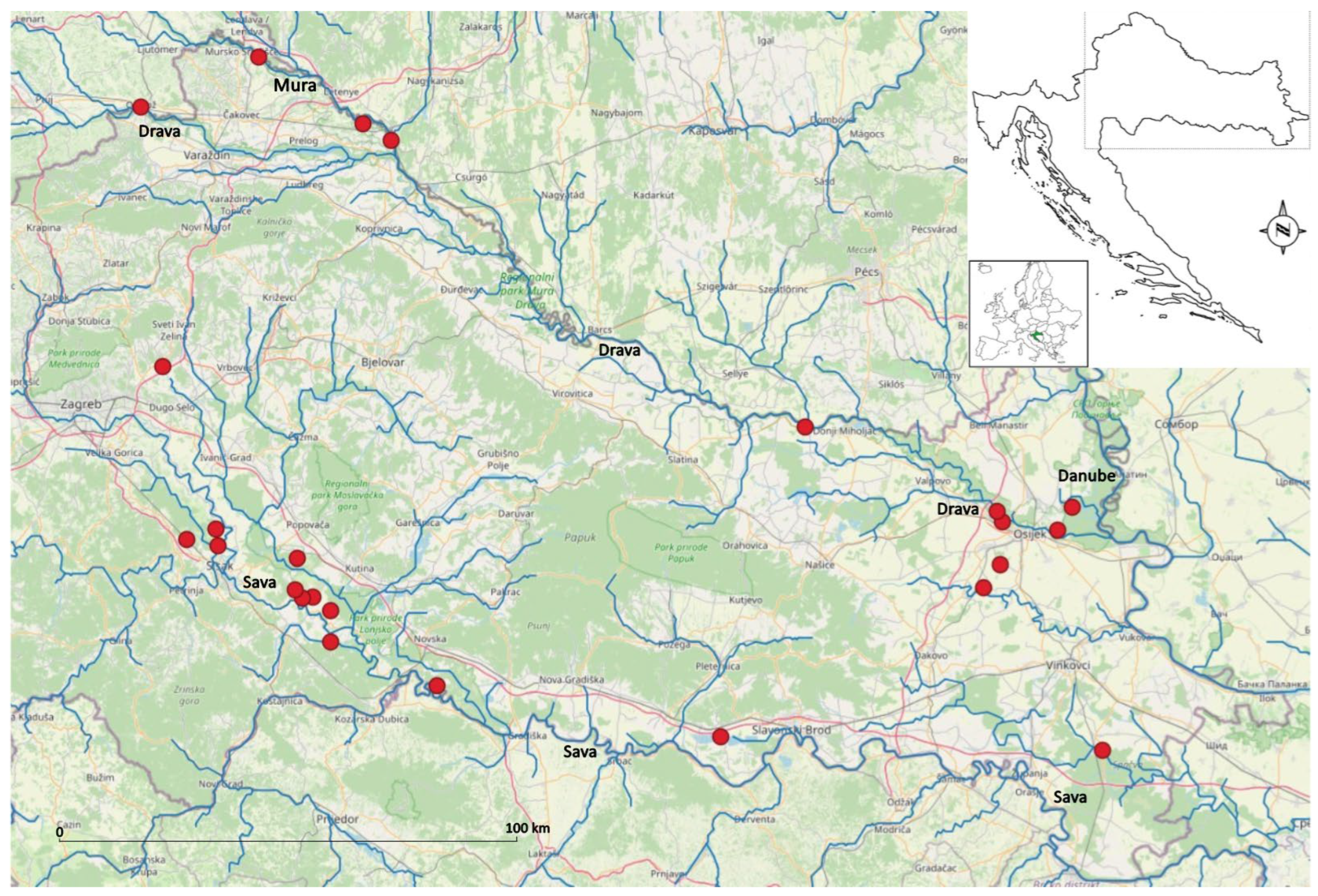
Sampling was conducted at numerous sites along the Sava, Drava, Mura, and Danube river systems, covering a wide range of floodplain and lowland aquatic habitats, including stagnant ponds, slow-flowing channels, river side arms, and periodically flooded meadows. From this extensive sampling effort, Hydrochara specimens were recorded at several localities; however, only sites where Hydrochara individuals were collected and subsequently included in morphological and molecular analyses are shown on the map (Figure 1). These habitats are characterized by dynamic hydrological regimes and pronounced habitat heterogeneity, conditions known to support high diversity and population variability of water beetles in large river floodplains.
Water beetles were collected from various aquatic habitats using an entomological net and traps baited with either canned cat food or canned tuna, following the methodology described in Turić et al. [15]. Specimens were preserved in 96% ethanol to maintain DNA integrity for further molecular analyses. Sampling of Hydrochara species was performed as part of a three-year survey (2010–2013) focused on the presence and monitoring of the dytiscid Graphoderus bilineatus De Geer, 1774 in floodplain and wetland habitats of continental Croatia. Morphological determination and morphometric measurements (body length and maximum body width, in mm) were obtained from 51 adult specimens, including 47 individuals of H. caraboides, three individuals of H. flavipes, and one divergent specimen (CROH030-26). Each specimen was photographed and measured using an Olympus DP25 digital camera (Olympus, Tokyo, Japan) mounted on an Olympus SZX16 stereomicroscope (Olympus, Tokyo, Japan), and images were processed using Cell^D software v5.1 (Olympus, Tokyo, Japan). Morphometric measurements included total body length (from the anterior margin of the clypeus to the apex of the elytra) and maximum body width, recorded to the nearest 0.01 mm. Male genitalia (aedeagus) were dissected, cleared, and photographed for comparative analysis. Genital morphology was compared with reference material of H. caraboides and published descriptions of H. dichroma and related forms [5,16,20].

2.2. Molecular Analysis

Genomic DNA was extracted from the legs of individual beetles using the DNeasy® Blood & Tissue Kit (Qiagen, Hilden, Germany) according to the manufacturer’s protocol. Extracted DNA was stored at 4 °C until further use, and its concentration and purity were measured spectrophotometrically with a NanoPhotometer P330 (Implen, München, Germany).
Two mitochondrial markers, cytochrome c oxidase subunit I (COI) and 16S ribosomal RNA (16S rRNA) genes, were amplified using the universal primer pairs LCO1490/HCO2198 and 16SA/16SB, respectively [21,22]. PCR amplifications were performed in a 25 µL reaction volume using EmeraldAmp® MAX PCR Master Mix (Takara Biotechnology, Kusatsu, Shiga, Japan). For COI, the thermal cycling profile consisted of an initial denaturation at 94 °C for 3 min, followed by 39 cycles of 94 °C for 20 s, 50 °C for 20 s, and 72 °C for 30 s, with a final extension at 72 °C for 5 min. Amplification of 16S rRNA included an initial denaturation at 94 °C for 2 min, followed by 40 cycles of 94 °C for 20 s, 50 °C for 35 s, and 65 °C for 35 s, with a final extension at 72 °C for 3 min. PCR products were visualized on 2% agarose gels, purified, and sequenced bidirectionally by Macrogen Inc. (Amsterdam, Netherlands). Voucher specimens of all barcoded individuals are deposited at the Department of Biology, Josip Juraj Strossmayer University of Osijek.

2.3. Data Analysis

Descriptive statistics were calculated for body length and maximum body width of Hydrochara specimens. Morphometric variation and overlap among species and across river basins were visualized using a scatterplot based on raw measurements.
Statistical analyses and graphical visualizations were performed in the Python v3.11 programming environment [23]. Data handling, cleaning, and calculation of descriptive statistics were conducted using the pandas library (v1.5; [24]), which organized morphometric measurements and associated metadata into structured data frames. The scatterplot visualizing morphometric relationships was generated using the matplotlib package v3.7 [25]. Due to unequal sample sizes among species and river basins, all analyses were exploratory and descriptive, and no inferential statistical tests were applied.
Consensus sequences obtained from both mitochondrial markers (COI and 16S rRNA) were manually checked, edited, and aligned using BioEdit v7.2.5 [26] and subsequently deposited in the NCBI GenBank and the Barcode of Life Data System (BOLD) (GenBank accession numbers will be provided upon acceptance; BOLD ID numbers are listed in Table 1). Alignments were inspected to ensure the absence of stop codons, insertions, or ambiguous sites. Sequence identity and taxonomic assignment were verified using the BLASTn algorithm in the NCBI GenBank database [27] and by cross-referencing with the Barcode of Life Data System (BOLD) [28].
Genetic distances within and between taxa were estimated using the Kimura 2-Parameter (K2P) model in MEGA 11 software [29], as this model is widely used in DNA barcoding studies to facilitate comparisons among COI datasets. Phylogenetic relationships among Hydrochara specimens were inferred using Maximum Likelihood (ML) algorithms implemented in the same software, with 500 bootstrap replications to assess branch support. The best-fit nucleotide substitution model was identified using the Model Selection tool in MEGA. The resulting phylogenetic trees were visualized and edited in FigTree v1.4.3. [30]. The haplotype network was constructed using PopART v.1.7. [31], applying the median-joining algorithm. The phylogenetic tree and haplotype network were graphically edited in InkScape v1.4.2.
Species delimitation was assessed using three complementary approaches based on the COI dataset to verify the assignment of specimens to Molecular Operational Taxonomic Units (MOTUs). Automatic Barcode Gap Discovery (ASAP) [32] was used to identify potential species partitions based on pairwise genetic distances, with the MAFFT alignment as input. Additionally, the tree-based Bayesian Poisson Tree Processes (bPTP) [33] method was applied to the inferred maximum likelihood (ML) phylogenetic tree to delimit species based on branching patterns. Barcode Index Numbers (BINs), assigned using the RESL algorithm within the Barcode of Life Data System (BOLD) [28], served as an additional reference for species assignment and comparison. The results of all approaches were compared to evaluate the congruence between molecular clusters and morphologically identified taxa and are presented on a combined ML tree that includes all newly barcoded specimens.

3. Results

A total of 51 specimens of the genus Hydrochara were collected and analysed in this study (Table 1). The most abundant species was H. caraboides, represented by 47 individuals. Three individuals were identified as H. flavipes, and one male specimen was treated as Hydrochara sp. due to uncertain morphological characters that prevented reliable identification (BOLD ID: CROH030-26). Additional information for each specimen is provided in the public BOLD dataset CROH. Molecular analyses yielded 51 consensus sequences of the COI marker and 20 sequences of the 16S rRNA marker. Because 16S rRNA sequences were obtained for only a limited number of specimens and comparable reference data for Hydrochara are largely lacking in public databases, this marker was excluded from subsequent phylogenetic and population-level analyses.

3.1. Morphometric Variation

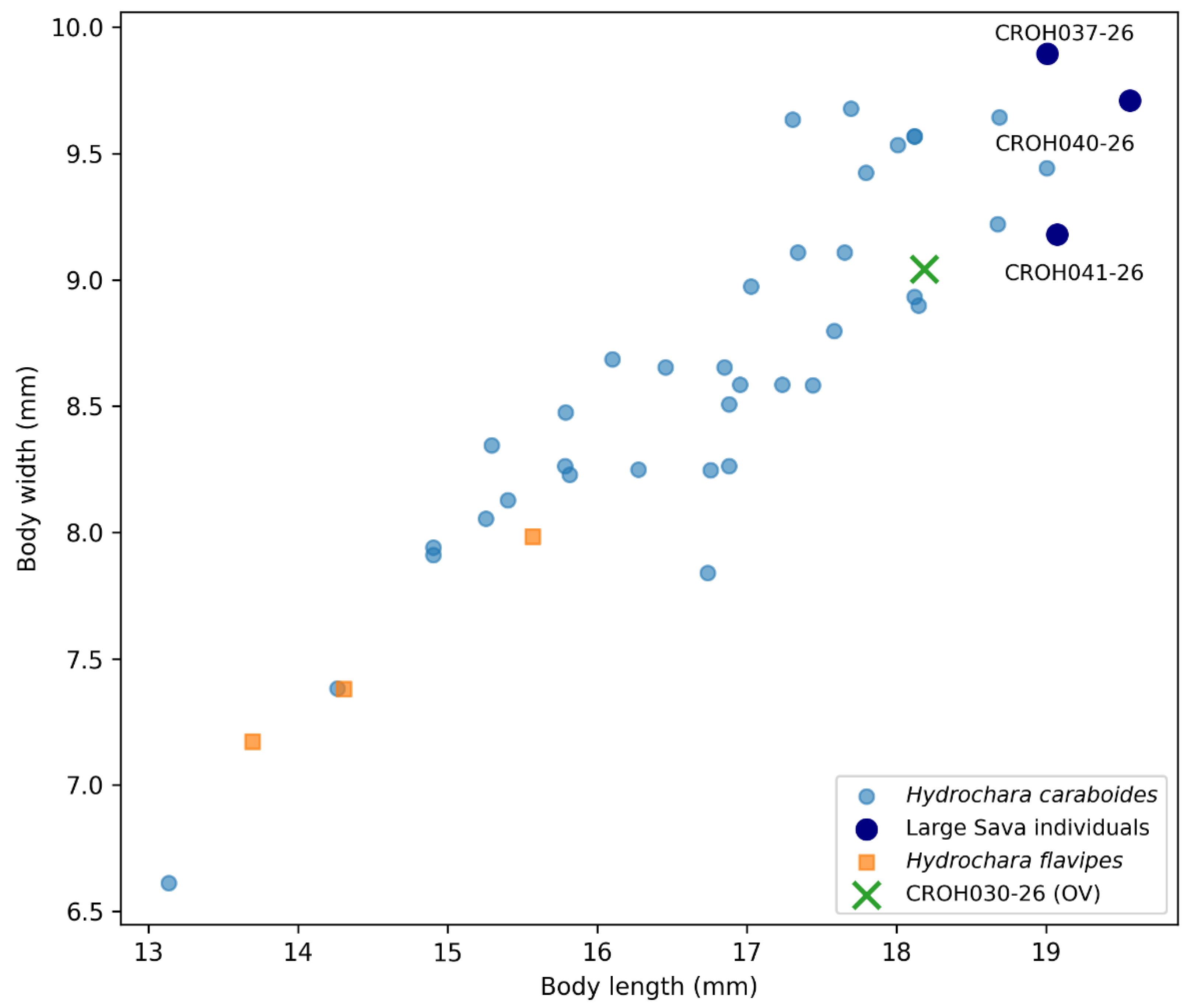
The distribution of body length and maximum body width in Hydrochara specimens is summarized in Table 1 and illustrated in Figure 2. Across all sampled river basins, H. caraboides exhibits continuous morphometric variation, with body length ranging from approximately 13.1 to 19.6 mm and body width from 6.6 to 9.9 mm. Substantial overlap in body size is observed among river basins, with no clear separation according to drainage systems. The largest individuals were recorded in the Sava basin (CROH037-26, CROH040-26, CROH041-26), representing the upper range of body size variation within H. caraboides (body length ≥ 19 mm).
The distribution of body size indicates that specimens collected from ponds generally occupy the lower size range, whereas individuals from natural, periodically flooded habitats tend to be larger. This pattern reflects continuous variation rather than discrete morphometric groups. The specimen CROH030-26 falls within the observed morphometric range of floodplain populations and does not represent an extreme value. Specimens of H. flavipes occupy the lower to intermediate size range and partially overlap with smaller individuals of H. caraboides. All examined specimens were initially identified to species level based on external morphological characters, including body size, shape, coloration, general habitus, and male genitalia, following published identification keys [5,34,35]. With the exception of a single specimen (CROH030-26), all individuals were unambiguously assigned to H. caraboides or H. flavipes based on consistent external morphology and molecular identification.
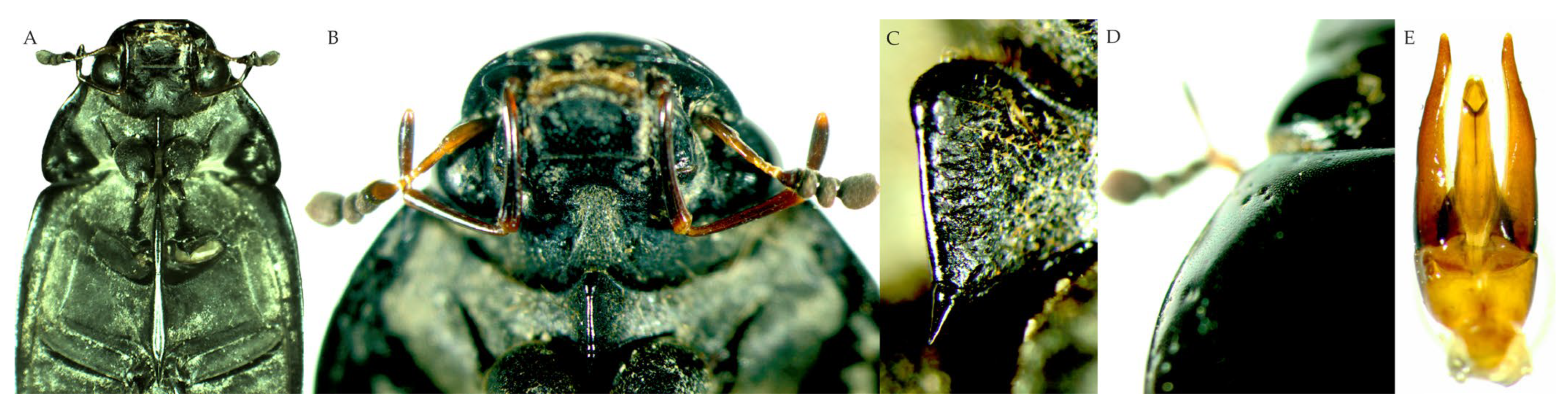
The specimen CROH030-26 exhibits external morphology typical of large-bodied H. caraboides and falls within the observed range of variation in continental Croatian populations (Figure 2). Based on standard morphological identification characteristics, it cannot be reliably distinguished from H. caraboides (Figure 3). In contrast, examination of the male genitalia revealed clear differences in aedeagus morphology. The parameres are long and nearly parallel, resembling those of H. caraboides, while the apical part of the penis shows a more pronounced incision, appearing intermediate between H. caraboides and H. dichroma. This comparison is based on illustrations of Hydrochara genitalia [5,7] (Figure 3).

3.2. Genetic Distances

Pairwise p-distances based on COI sequences (Table 2) revealed low intraspecific genetic variation within H. caraboides and H. flavipes, with most values ranging from 0.00 to 0.01. Slightly higher intraspecific distances were detected among some H. caraboides individuals, reaching up to approximately 0.06. Interspecific p-distances were higher, particularly between H. caraboides and H. flavipes (0.08–0.09), with no overlap between intra- and interspecific distance ranges. H. dichroma showed intermediate genetic distances relative to H. caraboides, while Hydrochara sp. (CROH030-26) exhibited moderate divergence from H. caraboides (approximately 0.04).

3.3. Phylogenetic Analysis and Species Delimitation

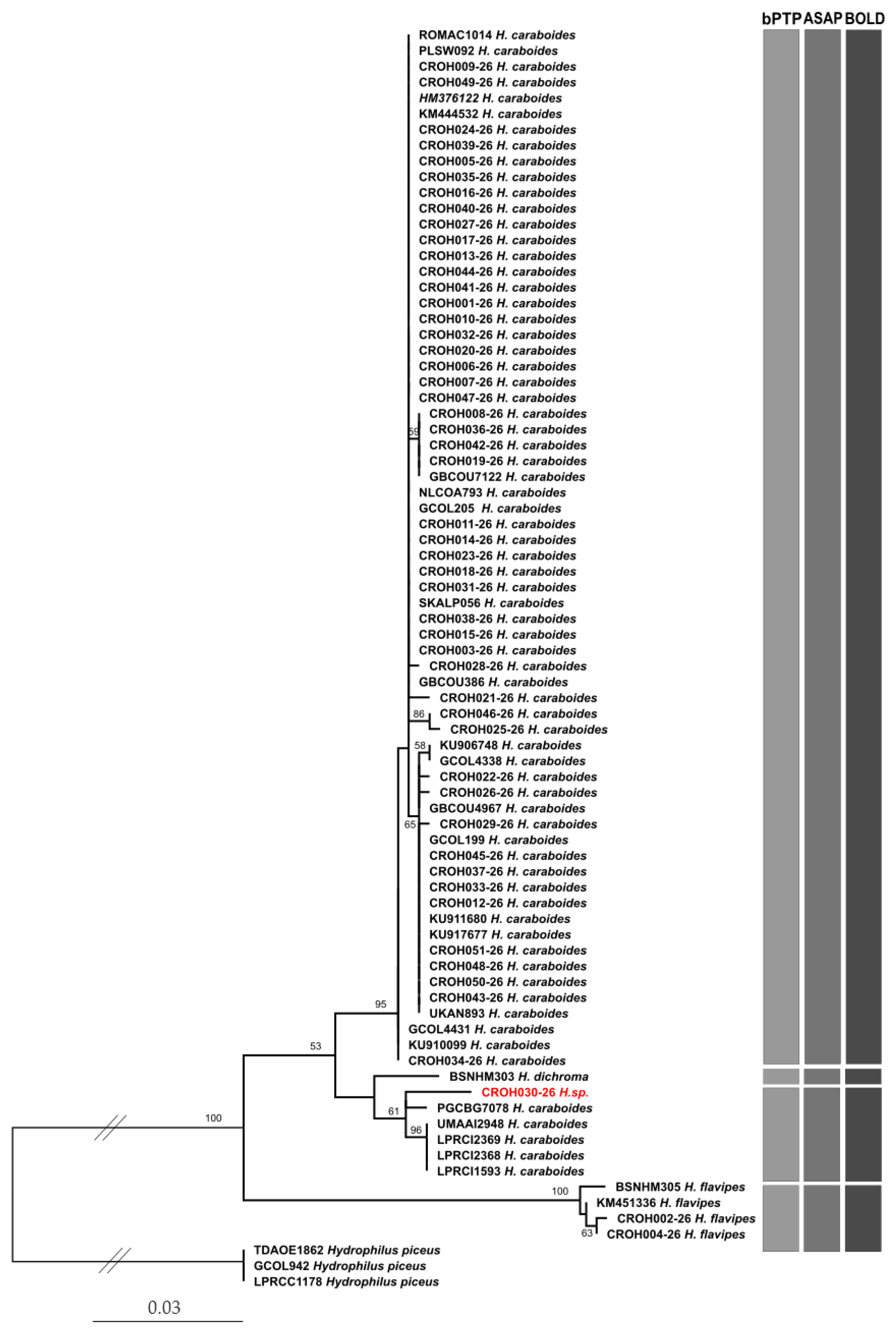
Phylogenetic relationships were inferred using the maximum likelihood method based on COI sequences (Figure 4). Specimens from this study are labelled with sample IDs, while reference sequences retrieved from public databases are indicated by accession numbers. Sequences of Hydrophilus piceus Linnaeus, 1758 were used as an outgroup. Results of species delimitation methods are shown as vertical bars.
The analysis recovered well-supported clades corresponding to H. caraboides and H. flavipes, forming clearly separated lineages with high bootstrap support. All Croatian specimens identified morphologically and molecularly as H. flavipes clustered with reference sequences from public databases, forming a distinct and strongly supported clade. Most specimens identified as H. caraboides grouped within a large, monophyletic assemblage. This clade shows internal structuring, with several moderately to well-supported subclades that include specimens from different geographic regions, indicating considerable mitochondrial variation within H. caraboides.
Specimen CROH030-26 did not group within the main H. caraboides clade. Instead it is nested within a separate clade containing several specimens of H. caraboides, as well as the only representative of H. dichroma, which forms a longer basal branch within this group. This clade is supported by moderate bootstrap values and indicates the existence of distinct mitochondrial lineages within H. caraboides, differentiated from typical representatives of that species. Species delimitation methods (Figure 5) suggest the split of H. caraboides into two separate MOTUs, consistent with the two observed clades, with the H. dichroma specimen being part of the smaller clade.
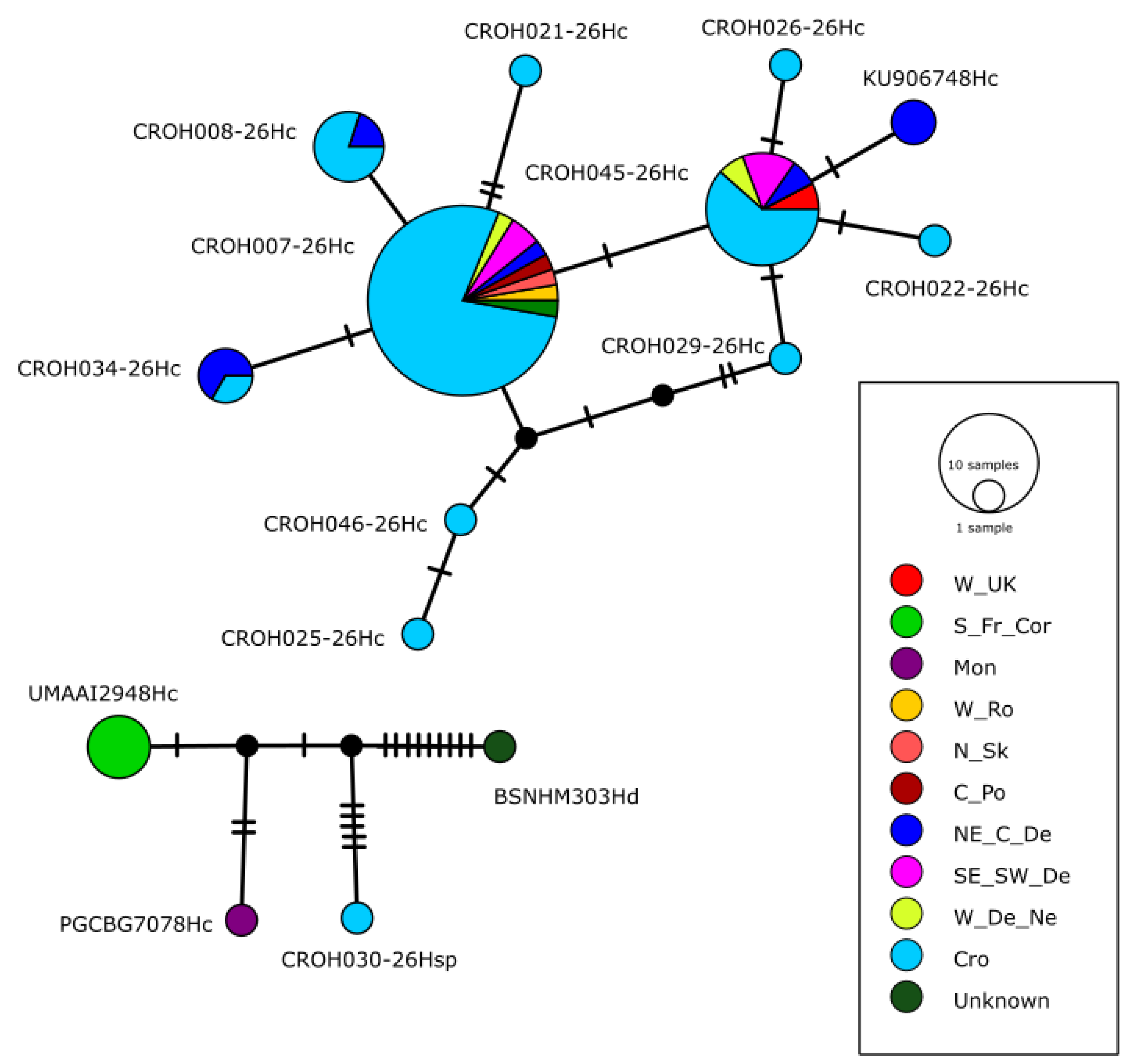
A median-joining COI haplotype network (Figure 5) shows the genetic relationships among sampled H. caraboides individuals, with light blue haplotypes representing samples from Croatia and other colours indicating samples from various European countries. The haplotype network reveals a central cluster consisting of closely related haplotypes shared across different geographic regions, with no evident geographic structuring. Croatian haplotypes are largely distributed throughout the network rather than forming a distinct, isolated cluster. In addition, a small cluster (consistent with a small H. caraboides subclade in the phylogenetic tree) is separated from the main cluster by a large number of mutational steps. This group includes four haplotypes from geographically distant regions (Croatia, Montenegro, and France–Corsica), separated by multiple mutational steps, among which a haplotype from Croatia (CROH030-26) shows no direct connection to other haplotypes within this subgroup.

4. Discussion

This study presents an integrative assessment of molecular, morphometric, and genital morphological variation within the genus Hydrochara in continental Croatia, focusing on the taxonomic placement of a genetically divergent specimen (CROH030-26). Using mitochondrial markers, morphometric analyses, and detailed examination of male genitalia, we show that most specimens can be confidently assigned to H. caraboides or H. flavipes, while substantial genetic and morphological heterogeneity exists within H. caraboides.
Morphometric analyses indicate substantial overlap in body size among H. caraboides specimens from different river basins based on descriptive statistics and visual inspection, without formal statistical testing due to unequal sample sizes. Therefore, no conclusions about statistically significant differences between river basins or sexes were drawn. Additionally, there were no distinct clusters corresponding to genetic lineages from different river basins. The specimen CROH030-26 falls within the size range of large-bodied H. caraboides, indicating that external morphology alone provides limited resolution for distinguishing closely related lineages within the genus. Similar patterns of broad morphometric overlap have been reported in Hydrochara and other water beetles, where body size is strongly influenced by environmental conditions and habitat productivity rather than by taxonomic boundaries [36,37,38,39].
In contrast, examination of the male genitalia revealed subtle but consistent differences. The aedeagus of CROH030-26 shows an intermediate morphology, combining features typical of H. caraboides with characteristics approaching those described for H. dichroma. The long, nearly parallel parameres resemble H. caraboides, while the more pronounced apical incision of the penis differs from typical H. caraboides morphology but remains broader and less angular than in H. dichroma. This pattern closely matches previous studies, which documented transitional genital morphologies and suggested that genital characters within the H. caraboidesH. dichroma lineage may vary continuously rather than discretely [16]. Although genital morphology provides additional structural information, the primary signal of divergence in this study comes from mitochondrial genetic data.
This pattern is also reflected in the pairwise genetic distance analyses. Most H. caraboides specimens exhibited very low intraspecific divergence; however, comparisons of pairwise distances within COI sequences reached values of up to 0.06. Notably, certain distances within the H. caraboides clade exceeded those observed between some H. caraboides specimens and H. dichroma, indicating substantial mitochondrial variability within the species. The divergence of CROH030-26 from typical H. caraboides exceeds most observed intraspecific values but remains below the interspecific distances separating H. caraboides and H. flavipes. Similar patterns of intermediate genetic divergence have been interpreted in other beetle taxa as reflecting unresolved lineage diversity rather than definitive evidence for cryptic species [40,41,42,43].
The COI-based phylogenetic analyses identified well-supported clades corresponding to H. caraboides and H. flavipes. However, both the ML and network analyses reveal that H. caraboides does not form a genetically homogeneous lineage like H. flavipes. Instead, the species exhibits pronounced internal structuring, with two well-separated clades: one main, well-supported clade that includes specimens from different geographic regions, and a separate, peripheral clade represented by a comparatively smaller number of sequences, but from same geographic region. Also, the results of the ML phylogenetic and network analyses were consistent with species delimitation approaches (ASAP, bPTP, and BOLD), supporting similar delineation patterns across methods. The haplotype network provides additional support for this pattern, revealing a star-like structure with a dominant central haplotype shared by most H. caraboides specimens and several low-frequency variants distributed across different geographic regions. Croatian haplotypes are widely dispersed within the network and do not form a distinct cluster, indicating the absence of strong geographic structuring and suggesting a shared genetic background among European populations.
The specimen CROH030-26 does not cluster within the main clade but is positioned within this peripheral lineage together with specimens from geographically distant regions, including France and Montenegro, and in proximity to the only available H. dichroma sequence. Species delimitation analyses (ASAP, bPTP, and BOLD) were consistent with these patterns.
The overall network structure suggests a relatively low level of genetic differentiation and a shared genetic background of H. caraboides populations across Europe within the main clade, with no strong geographic structuring. This may reflect historical connectivity or ongoing gene flow, although this remains hypothetical in the absence of direct data on dispersal capacity in Hydrochara. Nevertheless, dispersal by active flight is well documented in water beetles, including both Hydrophilidae and Dytiscidae. Field observations and light-trapping studies have shown that many Hydrophilid species are capable of regular flight activity, particularly during dispersal phases and colonisation of newly available or temporary aquatic habitats [44]. Water beetles are frequently associated with dynamic and fragmented freshwater systems, and dispersal ability has been identified as a key ecological trait shaping large-scale distribution patterns and genetic connectivity in freshwater invertebrates [45,46]. In particular, studies on Hydrophilidae indicate that dispersal capacity can strongly influence species range size and population connectivity across lentic and lotic habitats [47]. These traits are considered key ecological adaptations that facilitate connectivity among populations across heterogeneous and spatially structured freshwater landscapes. However, the existence of an additional, distinct evolutionary lineage with a higher level of genetic differentiation may indicate historical isolation with limited gene flow, resulting in geographically or ecologically isolated populations of H. caraboides. This pattern suggests that the genetic distinctiveness of CROH030-26 is unlikely to represent a purely local phenomenon and may instead reflect a broader, yet insufficiently sampled lineage within the H. caraboides group. In addition, H. dichroma is represented in public databases by only a single COI sequence from the Natural History Museum (London, UK), highlighting a significant limitation in currently available reference data. Such uneven taxonomic and geographic representation in DNA barcode databases is well recognized and requires cautious interpretation of phylogenetic relationships, since the relatively small number of samples from Europe may influence both the observed network structure and the respective conclusions, as limited sampling can lead to an underestimation of haplotype diversity [48]. The intermediate position of CROH030-26 should therefore be interpreted in the context of limited comparative data rather than as definitive evidence of species-level divergence.
Taken together, phylogenetic analysis, species delimitation methods, morphometric data, and genital morphological evidence indicate previously unrecognised lineage diversity within the species and show that H. caraboides is a genetically heterogeneous, possibly even non-monophyletic taxon comprising multiple divergent mitochondrial lineages. The close phylogenetic affinity and partial morphological continuity observed between H. caraboides and H. dichroma further suggest that species boundaries within this lineage may be less discrete than currently assumed, as also indicated by intermediate genital morphologies reported in previous studies [16]. These observations raise the possibility that the H. caraboidesH. dichroma lineage represents a more complex evolutionary assemblage than currently recognized.
In contrast, H. flavipes forms a well-supported and genetically distinct lineage, with no evidence of intermediate genetic or morphological characters. This clear separation indicates that the observed complexity is restricted to the H. caraboidesH. dichroma lineage and does not extend across the entire genus, a pattern consistent with findings in H. affinis [39] and other hydrophilid beetles [49]. The intermediate genital morphology observed in specimen CROH030-26, together with its distinct position in the COI phylogeny, may indicate either hybridisation between closely related lineages or incomplete lineage sorting. Similar situations have been reported in aquatic beetles, particularly in Helophorus, where overlapping morphological characters and intermediate forms have been interpreted as a result of hybridisation or recent divergence [50,51]. Although these findings refer to Helophoridae, they may also be relevant for other Hydrophiloidea, especially given the dispersal ability of many aquatic beetles and the dynamic nature of their habitats, which can facilitate secondary contact between populations. At the same time, it should be emphasised that mitochondrial markers alone cannot distinguish between these processes, as both can produce similar phylogenetic patterns. The lack of comparable nuclear data further limits interpretation. Therefore, although the pattern observed in CROH030-26 is intriguing, it should be treated with caution until additional data become available.
The ecological context of the sampled locality further informs the interpretation of these findings. Specimen CROH030-26 was collected from a semi-isolated side arm of the upper Drava River prior to hydrological revitalization. Floodplain habitats of large lowland rivers are characterized by dynamic hydrological regimes, including periodic isolation and reconnection of aquatic habitats, which can promote episodic isolation and local differentiation of aquatic organisms [38,52]. Although adult Hydrochara are capable fliers, historical fragmentation and long-term habitat dynamics within floodplain systems may have contributed to the observed genetic structuring within H. caraboides, as documented for other floodplain-associated aquatic insects [41,42,43,53].
The results of this study have important implications for the conservation of H. caraboides and floodplain-associated water beetle communities. The pronounced genetic structuring observed within H. caraboides, including the presence of geographically widespread but genetically differentiated lineages, suggests that populations currently treated as a single taxonomic unit may represent evolutionarily significant units (ESUs) [54,55]. Failure to recognize such hidden diversity may lead to underestimation of biodiversity and inadequate conservation prioritization. Based on the available molecular and morphological evidence, specimen CROH030-26 most likely represents a genetically differentiated lineage within H. caraboides, rather than a clearly distinct species. Further clarification of its evolutionary and taxonomic status will require broader geographic sampling, improved representation of H. dichroma, and the inclusion of nuclear markers [40,56].
Given the conservation status of H. caraboides in several European countries and its strong association with traditionally managed wetland habitats, maintaining a network of heterogeneous floodplain habitats is likely essential for preserving both demographic and genetic resilience of populations [9,10]. Integrative studies that combine molecular and morphological data, such as the present study, can provide valuable guidance for conservation planning by identifying lineages and habitats of high evolutionary and ecological significance.
Floodplain habitats of large lowland rivers, such as the Drava, Sava, and Danube, are among the most threatened freshwater ecosystems in Europe due to river regulation, drainage, and changes in land use [38,52]. These river–floodplain systems are increasingly recognized as biodiversity hotspots and key areas for maintaining evolutionary processes and genetic diversity in freshwater organisms. These floodplain systems also form part of the Natura 2000 network and represent key refugia for many specialized aquatic organisms, highlighting the importance of understanding hidden lineage diversity when evaluating freshwater biodiversity and conservation priorities. Semi-isolated side arms and periodically flooded wetlands, such as the habitat from which the CROH030-26 specimen was collected, may serve as refugia for genetically distinct lineages and therefore warrant particular conservation attention [53]. Restoration and revitalization measures aimed at improving hydrological connectivity should consider the potential role of such habitats in maintaining intraspecific genetic diversity.

Author Contributions

Conceptualization, N.T.; Methodology, N.T., G.V. and M.T.; Investigation, N.T. and G.V.; Formal analysis B.B.M., G.V. and N.B.; Data curation, G.V. and M.T.; Writing—original draft preparation, N.T.; Writing—review and editing, N.T., G.V., N.B. and B.B.M.; Supervision, N.T. All authors have read and agreed to the published version of the manuscript.

Funding

This research was funded by Department of Biology, Josip Juraj Strossmayer University of Osijek, grant No. OZB-ZP2018, “Diversity and distribution of aquatic beetles (Coleoptera, Hydrophilidae) in Croatia”.

Data Availability Statement

BOLD ID numbers are listed in Table 1. GenBank accession numbers will be provided upon acceptance. Other data presented in this study are available from the corresponding author upon reasonable request.

Acknowledgments

The authors thank all colleagues from Department of biology and Biom organization who contributed to field sampling. Also, the authors acknowledge the use of artificial intelligence (AI)-assisted tools for assistance in summarising and describing body size variation data and improvement of text clarity. The authors reviewed and edited the output as necessary and take full responsibility for the content of this publication.

Conflicts of Interest

The authors declare no conflicts of interest.

References

  1. Short, A.E.Z.; Fikáček, M. Molecular Phylogeny, Evolution and Classification of the Hydrophilidae (Coleoptera). Syst. Entomol. 2013, 38, 723–752. [Google Scholar] [CrossRef] [Scilit]
  2. Girón, J.C.; Short, A.E.Z. The Acidocerinae (Coleoptera, Hydrophilidae): Taxonomy, Classification, and Catalog of Species. ZooKeys 2021, 1045, 1–236. [Google Scholar] [CrossRef] [Scilit]
  3. Hansen, M. The Hydrophiloid Beetles: Phylogeny, Classification and a Revision of the Genera (Coleoptera, Hydrophiloidea); Kongelige Danske Videnskabernes Selskab: Copenhagen, Denmark, 1991; Volume 40. [Google Scholar]
  4. Short, A.E.Z.; Fikáček, M. World Catalogue of the Hydrophiloidea (Coleoptera): Additions and Corrections II (2006–2010). Acta Entomol. Musei Natl. Pragae 2011, 51, 83–122. [Google Scholar] [CrossRef]
  5. Smetana, A. Revision of the Genus GENUS Hydrochara Berth. (Coleoptera: Hydrophilidae). Mem. Entomol. Soc. Can. 1980, 112, 1–100. [Google Scholar] [CrossRef] [Scilit]
  6. Audisio, P.; Zarazaga, M.-A.A.; Slipinski, A.; Nilsson, A.; Jelínek, J.; Taglianti, A.V.; Turco, F.; Otero, C.; Canepari, C.; Kral, D.; et al. Fauna Europaea: Coleoptera 2 (Excl. Series Elateriformia, Scarabaeiformia, Staphyliniformia and Superfamily Curculionoidea). Biodivers. Data J. 2015, 3, e4750. [Google Scholar] [CrossRef] [Scilit]
  7. Shatrovsky, A.G. Water Beetles of the Genus Hydrochara (Coleoptera, Hydrophilidae) of the USSR Fauna. Vestn. Zool. 1986, 4, 29–33. [Google Scholar]
  8. Przewoźny, M. Catalogue of Palearctic Hydrophiloidea (Coleoptera); Brill: Leiden, The Netherlands, 2022. [Google Scholar]
  9. Foster, G.N. A Review of the Scarce and Threatened Coleoptera of Great Britain; Species Status; Joint Nature Conservation Committee: Peterborough, UK, 2010. [Google Scholar]
  10. Boyce, D.C. A Study of the Distribution and Ecology of the Lesser Silver Water Beetle Hydrochara caraboides on the Somerset Levels; English Nature: Taunton, UK, 2004. [Google Scholar]
  11. Im, S.; Lee, B.E.; Lee, H.G.; Bae, Y.J.; Kim, J.G. Perennial Emergent Macrophytes as the Main Determinant of Hydrochara affinis Inhabitation. J. Asia-Pac. Entomol. 2019, 22, 1070–1081. [Google Scholar] [CrossRef] [Scilit]
  12. Sutton, P.G. The Lesser Silver Water Beetle Hydrochara caraboides—Observations of Habitat Preferences and Further Evidence of Carrion-Feeding Behaviour. Latissimus 2015, 36, 2–21. [Google Scholar]
  13. Krčmar, S. List of Insect Fauna (Insecta) of Kopački Rit Nature Park (NE Croatia). Türkiye Entomoloji Bülteni 2014, 4, 15–39. [Google Scholar] [CrossRef] [Scilit]
  14. Merdić, E.; Keža, N.; Csabai, Z. Aquatic Insects in Kopački Rit Nature Park (Heteroptera: Nepomorpha, Gerromorpha and Coleoptera: Hydradephaga, Hydrophiloidea). Nat. Croat. Period. Musei Hist. Nat. Croat. 2005, 14, 263–272. [Google Scholar]
  15. Turić, N.; Temunović, M.; Vignjević, G.; Antunović Dunić, J.; Merdić, E. A Comparison of Methods for Sampling Aquatic Insects (Heteroptera and Coleoptera) of Different Body Sizes, in Different Habitats Using Different Baits. Eur. J. EÈntomol. 2017, 114, 123–132. [Google Scholar] [CrossRef] [Scilit]
  16. Bruvo Mađarić, B.; Mičetić Stanković, V.; Čorak, L.; Ugarković, Đ.; Komarek, A. Contributions to Molecular Systematics of Water Scavenger Beetles (Hydrophilidae, Coleoptera). J. Zool. Syst. Evol. Res. 2013, 51, 165–171. [Google Scholar] [CrossRef] [Scilit]
  17. Arriaga-Varela, E.; Sýkora, V.; Fikáček, M. Molecular Phylogeny of Megasternini Terrestrial Water Scavenger Beetles (Hydrophilidae) Reveals Repeated Continental Interchange during Paleocene-Eocene Thermal Maximum. Syst. Entomol. 2021, 46, 570–591. [Google Scholar] [CrossRef] [Scilit]
  18. Drost, M.B.P.; Cuppen, H.P.J.J.; van Nieukerken, E.J.; Schreijer, M. De Waterkevers van Nederland; Natuurhistorische Bibliotheek van de Koninklijke Nederlandse Natuurhistorische Vereniging: Utrecht, The Netherlands, 1992. [Google Scholar]
  19. Geiser, R. Rote Liste Der Käfer (Coleoptera). In Rote Liste Gefährdeter Tiere Deutschlands; Binot, M., Bless, R., Boye, P., Gruttke, H., Pretscher, P., Eds.; Bundesamt für Naturschutz: Bonn, Germany, 1998; pp. 168–230. [Google Scholar]
  20. Hansen, M. The Hydrophiloidea (Coleoptera) of Fennoscandia and Denmark; Brill: Leiden, The Netherlands, 1987; p. 254. [Google Scholar]
  21. Folmer, O.; Black, M.; Hoeh, W.; Lutz, R.; Vrijenhoek, R. DNA Primers for Amplification of Mitochondrial Cytochrome c Oxidase Subunit I from Diverse Metazoan Invertebrates. Mol. Mar. Biol. Biotechnol. 1994, 3, 294–299. [Google Scholar]
  22. Palumbi, S.R. Nucleic Acids II: The Polymerase Chain Reaction. In Molecular Systematics; Hillis, D.M., Moritz, C., Mable, B.K., Eds.; Sinauer Associates: Sunderland, MA, USA, 1996; pp. 205–247. [Google Scholar]
  23. Python, v3.11. Python Software Foundation: Wilmington, DE, USA, 2023.
  24. McKinney, W. Data Structures for Statistical Computing in Python. In Proceedings of the 9th Python in Science Conference (SciPy 2010), Austin, TX, USA, 1 May 2010; pp. 51–56. [Google Scholar]
  25. Hunter, J.D. Matplotlib: A 2D Graphics Environment. Comput. Sci. Eng. 2007, 9, 90–95. [Google Scholar] [CrossRef] [Scilit]
  26. Hall, T.A. BioEdit: A User-Friendly Biological Sequence Alignment Editor and Analysis Program for Windows 95/98/NT. In Proceedings of the Nucleic Acids Symposium Series; Oxford University Press: New York, NY, USA, 1999; Volume 41, pp. 95–98. [Google Scholar]
  27. Altschul, S.F.; Gish, W.; Miller, W.; Myers, E.W.; Lipman, D.J. Basic Local Alignment Search Tool. J. Mol. Biol. 1990, 215, 403–410. [Google Scholar] [CrossRef] [PubMed]
  28. Ratnasingham, S.; Hebert, P.D.N. Bold: The Barcode of Life Data System (http://www.boldsystems.org). Mol. Ecol. Notes 2007, 7, 355–364. [Google Scholar] [CrossRef] [Scilit] [PubMed]
  29. Tamura, K.; Stecher, G.; Kumar, S. MEGA11: Molecular Evolutionary Genetics Analysis Version 11. Mol. Biol. Evol. 2021, 38, 3022–3027. [Google Scholar] [CrossRef] [Scilit]
  30. Rambaut, A. FigTree, v1.4.4; Institute of Evolutionary Biology, University of Edinburgh: Edinburgh, UK, 2018. [Google Scholar]
  31. Leigh, J.W.; Bryant, D. POPART: Full-Feature Software for Haplotype Network Construction. Methods Ecol. Evol. 2015, 6, 1110–1116. [Google Scholar] [CrossRef] [Scilit]
  32. Puillandre, N.; Brouillet, S.; Achaz, G. ASAP: Assemble Species by Automatic Partitioning. Mol. Ecol. Resour. 2021, 21, 609–620. [Google Scholar] [CrossRef] [Scilit]
  33. Zhang, J.; Kapli, P.; Pavlidis, P.; Stamatakis, A. A General Species Delimitation Method with Applications to Phylogenetic Placements. Bioinformatics 2013, 29, 2869–2876. [Google Scholar] [CrossRef] [Scilit]
  34. Hansen, M. Hydrophilidae. In Aquatic Insects of North Europe: A Taxonomic Handbook; Nilsson, A.N., Ed.; Apollo Books: Stenstrup, Denmark, 1996; pp. 221–243. [Google Scholar]
  35. Csabai, Z.; Gidó, Z.; Szél, G. Identification Guide for Aquatic Beetles of Hungary II. (Hydrophiloidea); Környezetgazdálkodási Intézet: Budapest, Hungary, 2002. [Google Scholar]
  36. Nilsson, A.N.; Holmen, M. The Aquatic Adephaga (Coleoptera) of Fennoscandia and Denmark, Volume II. Dytiscidea; Fauna Entomologica Scandinavica; Brill: Leiden, The Netherlands, 1995; p. 192. [Google Scholar]
  37. Bektaş, M. Between Intact and Urban Freshwater: Comparıson of Morphometric Scale on Hydrochara caraboides (Lınnaeus, 1758) by Support of Molecular Identification; İksad Yayınevi: Ankara, Turkey, 2021. [Google Scholar]
  38. Tockner, K.; Stanford, J.A. Riverine Flood Plains: Present State and Future Trends. Environ. Conserv. 2002, 29, 308–330. [Google Scholar] [CrossRef] [Scilit]
  39. Kang, J.H.; Lim, C.; Park, S.H.; Kim, W.G.; Sareein, N.; Bae, Y.J. Genetic and Morphologic Variation in a Potential Mosquito Biocontrol Agent, Hydrochara affinis (Coleoptera: Hydrophilidae). Sustainability 2020, 12, 5481. [Google Scholar] [CrossRef] [Scilit]
  40. Funk, D.J.; Omland, K.E. Species-Level Paraphyly and Polyphyly: Frequency, Causes, and Consequences, with Insights from Animal Mitochondrial DNA. Annu. Rev. Ecol. Evol. Syst. 2003, 34, 397–423. [Google Scholar] [CrossRef] [Scilit]
  41. Toussaint, E.F.A.; Bloom, D.; Short, A.E.Z. Cretaceous West Gondwana Vicariance Shaped Giant Water Scavenger Beetle Biogeography. J. Biogeogr. 2017, 44, 1952–1965. [Google Scholar] [CrossRef] [Scilit]
  42. Bergsten, J.; Bilton, D.T.; Fujisawa, T.; Elliott, M.; Monaghan, M.T.; Balke, M.; Hendrich, L.; Geijer, J.; Herrmann, J.; Foster, G.N.; et al. The Effect of Geographical Scale of Sampling on DNA Barcoding. Syst. Biol. 2012, 61, 851–869. [Google Scholar] [CrossRef] [Scilit] [PubMed]
  43. Hendrich, L.; Pons, J.; Ribera, I.; Balke, M. Mitochondrial Cox1 Sequence Data Reliably Uncover Patterns of Insect Diversity but Suffer from High Lineage-Idiosyncratic Error Rates. PLoS ONE 2010, 5, e14448. [Google Scholar] [CrossRef] [Scilit]
  44. Šustek, Z. Flight of Dytiscidae, Hydrophilidae and Staphylinidae (Coleoptera) on Light in Centre of a Great City. Entomofauna Carpathica 2002, 14, 59–63. [Google Scholar]
  45. Bilton, D.T.; Freeland, J.R.; Okamura, B. Dispersal in Freshwater Invertebrates. Annu. Rev. Ecol. Evol. Syst. 2001, 32, 159–181. [Google Scholar] [CrossRef] [Scilit]
  46. Ribera, I.; Vogler, A.P. Habitat Type as a Determinant of Species Range Sizes: The Example of Lotic–Lentic Differences in Aquatic Coleoptera. Biol. J. Linn. Soc. 2000, 71, 33–52. [Google Scholar] [CrossRef] [Scilit]
  47. Arribas, P.; Velasco, J.; Abellán, P.; Sánchez-Fernández, D.; Andújar, C.; Calosi, P.; Millán, A.; Ribera, I.; Bilton, D.T. Dispersal Ability Rather than Ecological Tolerance Drives Differences in Range Size between Lentic and Lotic Water Beetles (Coleoptera: Hydrophilidae). J. Biogeogr. 2012, 39, 984–994. [Google Scholar] [CrossRef] [Scilit]
  48. Phillips, J.D.; Gillis, D.J.; Hanner, R.H. Incomplete Estimates of Genetic Diversity within Species: Implications for DNA Barcoding. Ecol. Evol. 2019, 9, 2996–3010. [Google Scholar] [CrossRef] [Scilit] [PubMed]
  49. Fossen, E.I.F.; Ekrem, T.; Nilsson, A.; Bergsten, J. Species Delimitation in Northern European Water Scavenger Beetles of the Genus Hydrobius (Coleoptera, Hydrophilidae). ZooKeys 2016, 564, 71–120. [Google Scholar] [CrossRef] [Scilit]
  50. Angus, R.B. A New Sibling Species of Helophorus f. (Coleoptera: Hydrophilidae), Revealed by Chromosome Analysis and Hybridisation Experiments. Aquat. Insects 1988, 10, 171–183. [Google Scholar] [CrossRef] [Scilit]
  51. Angus, R.B. Revision of the Palaearctic Species of the Helophorus Minutus Group (Coleoptera: Hydrophilidae), with Chromosome Analysis and Hybridization Experiments. Syst. Entomol. 1986, 11, 133–163. [Google Scholar] [CrossRef] [Scilit]
  52. Ward, J.V.; Tockner, K.; Arscott, D.B.; Claret, C. Riverine Landscape Diversity. Freshw. Biol. 2002, 47, 517–539. [Google Scholar] [CrossRef] [Scilit]
  53. Hughes, J.M.; Schmidt, D.J.; Finn, D.S. Genes in Streams: Using DNA to Understand the Movement of Freshwater Fauna and Their Riverine Habitat. BioScience 2009, 59, 573–583. [Google Scholar] [CrossRef] [Scilit]
  54. Moritz, C. Defining ‘Evolutionarily Significant Units’ for Conservation. Trends Ecol. Evol. 1994, 9, 373–375. [Google Scholar] [CrossRef] [Scilit]
  55. Fraser, D.J.; Bernatchez, L. Adaptive Evolutionary Conservation: Towards a Unified Concept for Defining Conservation Units. Mol. Ecol. 2001, 10, 2741–2752. [Google Scholar] [CrossRef] [PubMed]
  56. Fujita, M.K.; Leaché, A.D.; Burbrink, F.T.; McGuire, J.A.; Moritz, C. Coalescent-Based Species Delimitation in an Integrative Taxonomy. Trends Ecol. Evol. 2012, 27, 480–488. [Google Scholar] [CrossRef] [Scilit] [PubMed]
Figure 1. Study area in continental Croatia showing the sampling sites where Hydrochara specimens were collected and included in morphological and molecular analyses. The localities are situated along the major rivers basins (blue lines) of the Black Sea catchment (Sava, Drava, Mura and Danube). Red dots indicate sampling sites.
Environments 13 00266 g001
Figure 2. Relationship between body length and maximum body width (mm) in Hydrochara specimens analysed in this study. Symbols indicate species identity and colours represent river basins. The position of the CROH030-26 specimen is shown relative to H. caraboides and H. flavipes. Large-bodied specimens from the Sava River basin (CROH037-26, CROH040-26, CROH041-26) represent the upper range of morphometric variation within H. caraboides.
Environments 13 00266 g002
Figure 3. Morphological characteristics of specimen CROH030-26: (A) meso and metasterna, (B) palpomeres, (C) prosternal process (D) systematic punctures (trichobotriae) of pronotum (E) aedeagus.
Environments 13 00266 g003
Figure 4. Maximum likelihood phylogenetic tree based on COI sequences of Hydrochara specimens analysed in this study and reference sequences obtained from public databases. Bootstrap support values (≥50%) are shown at the nodes. Specimens from this study are labeled with sample IDs (CROH), while reference sequences are indicated by database accession numbers. Hydrophilus piceus was used as an outgroup. The scale bar represents the number of substitutions per site. Vertical bars on the right represent the results of species delimitation analyses using different approaches (bPTP, ASAP and BOLD), with each column corresponding to one method and indicating the inferred grouping of sequences into putative species-level clusters.
Environments 13 00266 g004
Figure 5. Haplotype network based on COI sequences of Hydrochara caraboides (Hc) and H. dichroma (Hd) included in this study and reference sequences from public databases. H. sp. haplotype from Croatia (Hsp) and H. dichroma haplotype (unknown locality) are marked with full haplotype names; other haplotypes are not specified by name. Circle size is proportional to haplotype frequency, and colours represent the geographic origin of the samples (W_UK—West United Kingdom, S_Fr_Cor—South France and Corsica, Mon—Montenegro, W_Ro—West Romania, N_Sk—North Slovakia, C_Po—Central Poland, NE_C_De—North-East and Central Germany, SE_SW_De—South-East and South-West Germany, W_De_Ne—West Germany and Netherlands, Cro—Croatia). Each small single line between haplotypes corresponds to a single mutational step; black dots represent missing haplotypes.
Environments 13 00266 g005
Table 1. Sampling data and morphometrics (body length and maximum body width in mm) for Hydrochara specimens analysed in this study.
Field IDSample IDProcess IDHydrochara SpeciesLength/Width (mm)HabitatGPS (N)GPS (E)River Basin
GK 2CROH1CROH001-26H. caraboides13.14/6.61flooded45.56230516.363167Sava
C2aCROH2CROH002-26H. flavipes15.57/7.98fishpond45.4900318.609629Drava
LaCROH3CROH003-26H. caraboides14.26/7.38flooded45.4398616.591667Sava
DCROH4CROH004-26H. flavipes14.31/7.38fishpond45.4446118.561806Drava
V2CROH5CROH005-26H. caraboides15.40/8.13pond45.76619318.051556Drava
BP2CROH6CROH006-26H. caraboides14.91/7.94flooded45.33466716.691639Sava
KR2CROH7CROH007-26H. caraboides14.91/7.91flooded45.5590318.775444Danube
KrCROH8CROH008-26H. caraboides16.74/7.84flooded45.56230516.363167Sava
G2CROH9CROH009-26H. caraboides15.81/8.23flooded45.5411716.279907Sava
GK1CROH10CROH010-26H. caraboides15.26/8.06flooded45.5411716.279907Sava
PA2CROH11CROH011-26H. caraboides15.79/8.26drainage canal45.8866416.212255Sava
L2bCROH12CROH012-26H. caraboides16.28/8.25flooded45.4398616.591667Sava
L1bCROH13CROH013-26H. caraboides16.76/8.25flooded45.4398616.591667Sava
Lc1CROH14CROH014-26H. caraboides17.44/8.58flooded45.4261416.642628Sava
PE2CROH15CROH015-26H. caraboides16.95/8.59flooded46.50152616.486187Mura
P2CROH16CROH016-26H. caraboides16.88/8.26flooded45.2461616.996922Sava
LcCROH17CROH017-26H. caraboides16.88/8.51flooded45.4232216.611044Sava
G1CROH18CROH018-26H. caraboides15.79/8.48flooded45.5411716.279907Sava
S2CROH19CROH019-26H. caraboides15.29/8.35lake45.1155318.90325Sava
CNCROH20CROH020-26H. caraboides16.10/8.69flooded45.4261416.642628Sava
KR1CROH21CROH021-26H. caraboides17.35/8.58flooded45.5590318.775444Danube
OCROH22CROH022-26H. caraboides16.85/8.65flooded45.56230516.363167Sava
SOCROH23CROH023-26H. caraboides16.46/8.65side channel45.52769516.368778Sava
VN2CROH24CROH024-26H. caraboides17.59/8.80side channel45.59630618.601667Drava
SD2CROH25CROH025-26H. caraboides18.15/8.90drainage canal45.5752818.614695Drava
C1CROH26CROH026-26H. caraboides17.03/8.98fishpond45.4900318.609629Drava
OS2CROH27CROH027-26H. caraboides17.24/8.59flooded45.50305616.596056Sava
PA1CROH28CROH028-26H. caraboides18.12/8.93drainage canal45.8866416.212255Sava
SD1CROH29CROH029-26H. caraboides17.65/9.11side channel45.5752818.614695Drava
OVCROH30CROH030-26H. sp.18.19/9.04side channel46.4025916.149216Drava
V1CROH31CROH031-26H. caraboides17.78/9.42drainage canal45.76619318.051556Drava
DDCROH32CROH032-26H. caraboides17.31/9.64flooded46.3365916.864916Mura
KL1CROH33CROH033-26H. caraboides18.01/9.54flooded45.3989616.690935Sava
GCROH34CROH034-26H. caraboides18.12/9.57flooded45.5411716.279907Sava
SRCROH35CROH035-26H. caraboides17.69/9.68side channel46.36979316.786165Mura
LCROH36CROH036-26H. caraboides18.12/9.57flooded45.4398616.591667Sava
BP1CROH37CROH037-26H. caraboides19.01/9.90flooded45.33466716.691639Sava
OS1CROH38CROH038-26H. caraboides18.68/9.22flooded45.50305616.596056Sava
VN1CROH39CROH039-26H. caraboides19.01/9.44flooded45.59630618.601667Drava
P1CROH40CROH040-26H. caraboides19.56/9.71flooded45.2461616.996922Sava
J1CROH41CROH041-26H. caraboides19.07/9.18flooded45.1442517.810621Sava
S1CROH42CROH042-26H. caraboides18.69/9.65flooded45.1155318.90325Sava
K1CROH43CROH043-26H. caraboides17.34/9.11flooded45.5590318.775444Danube
K2CROH44CROH044-26H. caraboides17.99/8.72flooded45.5590318.775444Danube
K3CROH45CROH045-26H. caraboides18.01/9.60flooded45.5590318.775444Danube
K4CROH46CROH046-26H. caraboides17.13/8.87flooded45.5590318.775444Danube
K5CROH47CROH047-26H. caraboides16.89/9.18flooded45.5590318.775444Danube
K6CROH48CROH048-26H. caraboides17.16/9.18flooded45.5590318.775444Danube
K7CROH49CROH049-26H. caraboides16.45/8.69flooded45.5590318.775444Danube
K8CROH50CROH050-26H. caraboides16.36/8.48flooded45.5590318.775444Danube
K9CROH51CROH051-26H. caraboides17.20/8.93flooded45.5590318.775444Danube
Table 2. Pairwise genetic distances (p-distances) based on COI sequences among Hydrochara taxa. Background colour corresponds to the species and haplotypes within H. caraboides respectively, while used sequences are indicated by database accession numbers.
H. caraboidesH. caraboidesH. caraboidesH. caraboidesH. caraboidesH. sp.H. caraboidesH. caraboidesH. caraboidesH. dichromaH. caraboidesH. caraboidesH. flavipesH. flavipesH. flavipesH. flavipes
H. caraboides (CROH024-26)
H. caraboides (GBCOU386)0.00
H. caraboides (GCOL205)0.000.00
H. caraboides (CROH025-26)0.010.010.01
H. caraboides (CROH021-26)0.000.000.000.01
H. sp. (CROH030-26)0.040.040.040.040.04
H. caraboides (UMAAI2948)0.030.030.030.030.030.02
H. caraboides (LPRCI2369)0.030.030.030.030.030.020.00
H. caraboides (PGCBG7078)0.030.030.030.030.030.020.010.01
H. dichroma (BSNHM303)0.030.030.030.030.040.030.020.020.02
H. caraboides (TTCFW111)0.050.050.050.050.050.050.050.050.050.06
H. caraboides (TTCFW056)0.050.050.050.050.060.060.050.050.050.060.010.01
H. flavipes (CROH002-26)0.090.090.090.090.090.080.080.080.080.080.080.090.09
H. flavipes (CROH004-26)0.090.090.090.090.090.080.080.080.080.080.080.090.090.00
H. flavipes (KM451336)0.080.080.080.090.090.080.080.080.080.080.080.080.090.000.00
H. flavipes (BSNHM305)0.080.080.080.090.090.080.080.080.080.080.080.080.090.010.010.01
Disclaimer/Publisher’s Note: The statements, opinions and data contained in all publications are solely those of the individual author(s) and contributor(s) and not of MDPI and/or the editor(s). MDPI and/or the editor(s) disclaim responsibility for any injury to people or property resulting from any ideas, methods, instructions or products referred to in the content.