1. Introduction
Soil contamination by petroleum hydrocarbons remains a major environmental concern in regions affected by oil production, transportation, and storage. Petroleum-derived compounds can persist in soils for long periods, altering their physicochemical properties, suppressing biological activity, and impairing key ecological functions, thereby posing risks to terrestrial ecosystems and human health [
1,
2,
3]. These impacts are particularly pronounced in cold and boreal regions, where low temperatures, limited nutrient availability, and seasonal freezing significantly slow natural attenuation and biodegradation processes [
4,
5]. Under such conditions, petroleum hydrocarbon contamination often requires long-term monitoring and carefully justified remediation strategies. Consequently, reliable and comparable methods for assessing petroleum-contaminated soils are essential for environmental risk evaluation and for supporting remediation decision-making. Environmental impacts of the petroleum sector arise not only from surface spills and storage losses but also from upstream production processes, including the use of chemical additives, which may contribute to petroleum-derived environmental burdens and reinforce the need for reliable assessment tools for contaminated soils consistent with aqueous-extract-based assessment [
6,
7,
8,
9,
10,
11].
In addition to production-related impacts, petroleum-derived contamination is frequently reported in urban and peri-urban settings, particularly near petrol stations, fuel storage facilities, and distribution nodes, where chronic low-intensity leaks and surface runoff can contribute to long-term soil pollution [
10,
11]. In this context, extending extraction–spectroscopic screening approaches from crude oil to refined petroleum fuels (e.g., diesel and gasoline fractions) represents an important direction for future field-oriented validation.
Chemical and biological approaches are widely applied to assess petroleum hydrocarbon contamination in soils. Chemical analytical methods, including gas chromatography and Fourier-transform infrared (FTIR) spectroscopy, are commonly used to quantify petroleum hydrocarbons due to their robustness, analytical sensitivity, and suitability for large-scale screening and routine environmental monitoring [
12,
13,
14]. In parallel, biological toxicity assessment methods based on bioassays are increasingly employed to evaluate the ecological relevance and potential biological effects of soil contamination [
15,
16]. Such biological approaches typically rely on aqueous soil extracts, reflecting water-soluble fractions of contaminants that are considered relevant for bioavailability and organism exposure.
Soils represent a highly heterogeneous and reactive matrix, combining mineral particles, organic matter, pore water, and diverse biota. Petroleum hydrocarbons can undergo partitioning, sorption, and transformation processes mediated by organic matter and microbially active components, which complicates both extraction and interpretation of chemical signals [
10,
17,
18,
19,
20]. Consequently, the extraction medium strongly influences the apparent contaminant fraction captured by analytical versus bioassay-based approaches. Despite their complementary roles, chemical and biological assessment approaches often yield results that are difficult to compare directly. Chemical analyses generally employ non-polar organic solvents, such as hexane, chlorinated solvents, or other non-polar extractants, to efficiently extract hydrophobic petroleum hydrocarbons from soils [
13,
21]. Carbon tetrachloride has historically been used in regulatory FTIR protocols [
22], but it is environmentally hazardous [
23]. In contrast, water-based extraction used in biological assays may substantially underestimate the presence and potential impact of poorly soluble hydrocarbon components [
15,
16]. This fundamental difference in extraction media creates a methodological gap between chemical measurements and biological toxicity assessment, complicating integrated evaluation of soil contamination levels and the effectiveness of remediation measures [
10,
11,
24].
FTIR spectroscopy represents a rapid and cost-effective tool for routine monitoring of petroleum hydrocarbons in soils and sediments, and its applicability has been demonstrated in both laboratory and field-based studies [
13,
14]. However, traditional FTIR methods often rely on hazardous organic solvents, raising concerns related to laboratory safety, environmental impact, and compatibility with biologically oriented assessment frameworks [
12,
22,
23]. These limitations highlight the need for alternative extraction approaches that maintain analytical sensitivity while reducing chemical hazards and improving conceptual alignment with aqueous-based biological assessments.
Dimethyl sulfoxide (DMSO) is a polar aprotic solvent that is fully miscible with water and widely used in chemical, biochemical, and toxicological applications to solubilize hydrophobic compounds at moderate concentrations [
25,
26]. Among water-miscible organic solvents, DMSO is widely used because of its relatively low volatility, comparatively low toxicity, and broad acceptance in analytical and biological applications. Previous studies have demonstrated that DMSO can effectively enhance the solubility of hydrophobic organic compounds in mixed aqueous systems while preserving partial compatibility with water-based environments [
27,
28]. However, systematic evaluation of aqueous DMSO as an extraction medium for FTIR-based monitoring of petroleum-contaminated soils remains limited. These properties suggest that aqueous DMSO solutions may serve as a compromise extraction medium, helping to reduce the methodological gap between conventional chemical extraction and water-based biological assessment approaches.
The aim of this study was to develop and evaluate an FTIR-based method using an aqueous DMSO solution for the assessment of petroleum hydrocarbon contamination in sandy podzolic soils. By comparing the extraction performance of distilled water and aqueous DMSO solutions of different concentrations, this work seeks to improve comparability between chemical monitoring and aqueous-based biological assessment approaches. The proposed method provides a lower-hazard alternative to traditional solvent-based FTIR analysis and may support more consistent interpretation of chemical monitoring data in the context of soil contamination assessment and remediation effectiveness studies.
2. Materials and Methods
2.1. Soil Sampling and Characterization
Soil samples were collected from the northern taiga zone of Western Siberia (61°20′24.3″ N, 73°21′27.9″ E) within the Surgut district of the Khanty-Mansi Autonomous Okrug-Yugra (Russia) [
29]. The study site is located on the third above-floodplain terrace of the Ob River and is characterized by alluvial quartz sands with a thickness exceeding 1.5 m. Vegetation at the site is represented by a mixed pine-spruce forest with a shrub understory.
The investigated soil was classified as an iron-illuvial podzol with low organic matter content according to the Russian soil classification system [
30]. According to the World Reference Base for Soil Resources [
31], the soil corresponds to a Podzol, consistent with the presence of a coarse-textured mineral horizon and diagnostic illuvial features.
For the present model study, a soil sample was taken from the middle horizon collected at a depth of 30–50 cm. This depth was selected to minimize variability associated with fresh litter inputs and heterogeneous surface organic layers while representing a mineral matrix potentially affected by vertical migration of petroleum hydrocarbons. The use of this horizon improves reproducibility for method development by reducing interference from plant residues and highly variable surface soil organic matter.
Particle-size distribution analysis showed a predominance of fine sand (0.1–0.5 mm), accounting for more than 97% of the total mass, with negligible contributions from silt and clay fractions (<0.5%). This granulometric composition reflects the low sorption capacity typical of sandy soils and their high vulnerability to petroleum hydrocarbon contamination [
10,
20].
Key physicochemical properties were determined to characterize the investigated soil. Soil pH in water (1:2.5 soil-to-solution ratio) was 6.24, determined according to [
32]. Soil organic carbon (SOC) was 0.40%, as determined by the Tyurin oxidation method [
33]. All measurements were carried out at the Shared Research Facility of Surgut State University.
Prior to experimental treatments, soil samples were air-dried at room temperature, homogenized, and sieved through a 2 mm mesh to remove coarse fragments and plant residues.
2.2. Preparation of Model Contaminated Soils
Model soil samples were prepared by artificial contamination with crude oil (unrefined petroleum) as a complex multicomponent mixture to simulate petroleum-derived hydrocarbon contamination under controlled laboratory conditions. In the present manuscript, the term “petroleum hydrocarbons” refers to the hydrocarbon fraction originating from crude oil that is extracted into the liquid phase and quantified by FTIR in the 2800–3100 cm−1 region (i.e., an operationally defined TPH-like fraction). Crude oil was thoroughly mixed with pre-treated soil to achieve target contamination levels of 25, 50, and 100 g kg−1 (dry weight). The contaminated samples were incubated for 24 h to allow stabilization of the oil-soil system and were subsequently returned to an air-dry state prior to extraction.
This experimental design enabled controlled and reproducible comparison of extraction efficiency between different extraction media.
The soil was contaminated with freshly added crude oil to ensure controlled and reproducible concentration levels. The authors acknowledge that weathering/aging in field conditions can alter hydrocarbon partitioning and matrix interactions, potentially affecting extractability.
2.3. Extraction Procedures
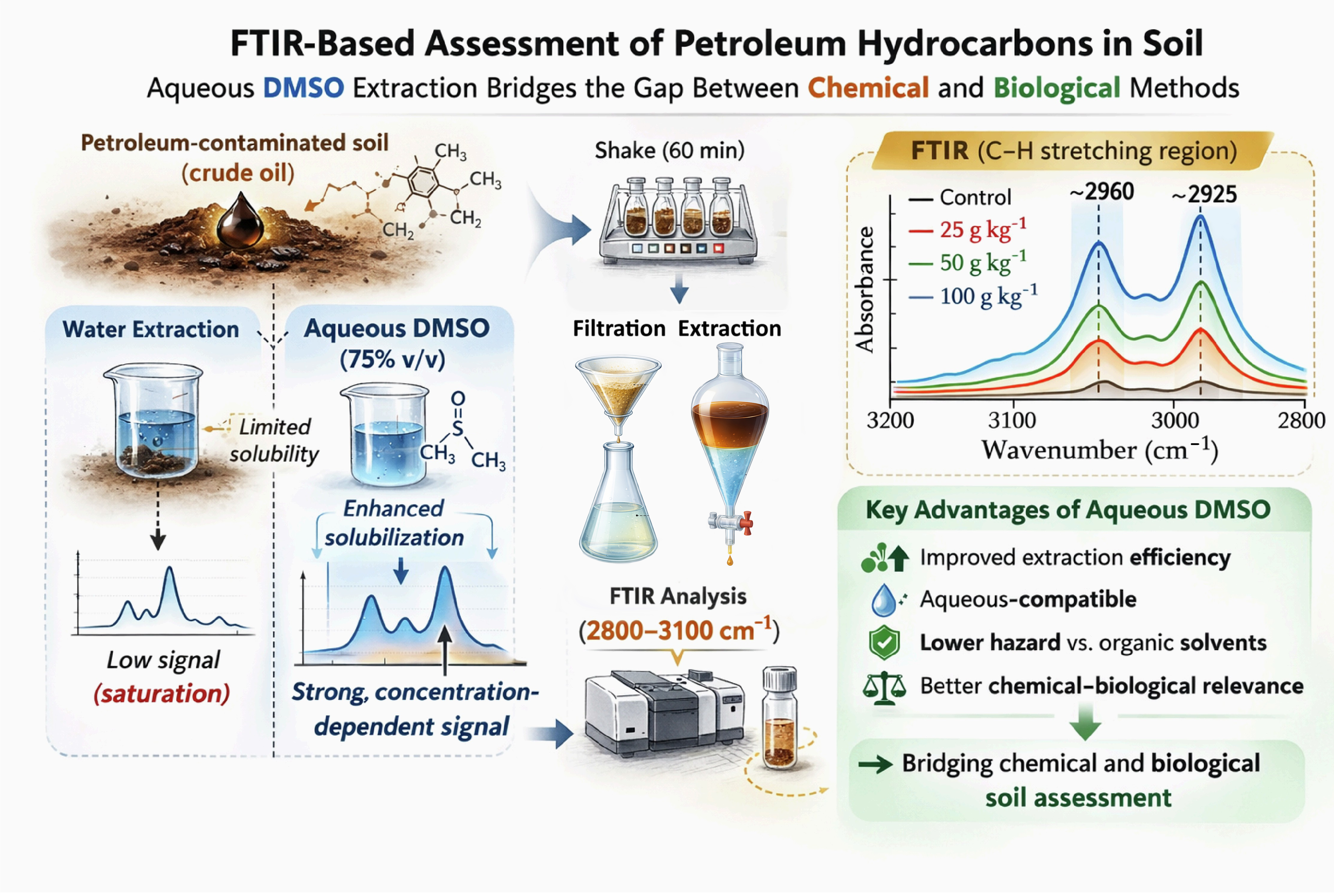
Two extraction media were evaluated: distilled water and DMSO solutions of different concentrations. Based on preliminary optimization experiments, particular attention was given to a 75% (v/v) aqueous DMSO solution.
For each extraction, an air-dried soil sample (5.0–10.0 g, depending on the expected contamination level) was placed into a 100 mL glass flask with a ground-glass stopper. The soil was mixed with 30–40 mL of the selected extraction medium, ensuring complete wetting of the solid phase. The flasks were sealed and shaken on a mechanical shaker for 60 min at controlled room temperature (22–24 °C) to promote transfer of petroleum hydrocarbons into the liquid phase. The shaking time and temperature were selected as a practical compromise between extraction completeness and procedural reproducibility: 60 min provides sufficient contact time for mass transfer to approach a stable spectral response in a batch system, while room temperature conditions minimize variability and support alignment with common laboratory practice used for preparing aqueous extracts in bioassays.
Following extraction, the suspension was filtered through dense paper filters (“white ribbon” grade). To improve extraction completeness, the procedure was repeated twice using fresh portions of the extraction medium (20–30 mL each). All three extracts were combined into a single flask for further analysis.
For DMSO-based extracts, petroleum hydrocarbons were back-extracted into an organic phase prior to FTIR measurements following the general workflow of PND F 16.1:2.2.22-98 [
22]. The resulting organic phase was used for transmission FTIR measurements in the 2700–3200 cm
−1 region. However, trace DMSO carryover into the organic phase may occur (e.g., due to incomplete phase separation or microemulsion formation) and may affect the local spectral background in the C–H region.
2.4. FTIR Spectroscopic Analysis
The FTIR procedure was adapted from the standard method PND F 16.1:2.2.22-98 with modification of the extraction solvent [
22]. Spectra were recorded using an FTIR spectrometer (Shimadzu IRAffinity-1S, Kyoto, Japan) in transmission mode with IR-transparent liquid cells (optical path length 1 cm).
During acquisition, 32 scans per sample were collected at a spectral resolution of 2 cm−1. A background spectrum was recorded under identical instrumental conditions and automatically subtracted prior to sample measurement. IR spectra were processed using LabSolutions software (ver. 2.25, Shimadzu, Kyoto, Japan). A standard atmospheric correction function was applied to remove contributions from CO2 and H2O vapor.
No additional mathematical baseline correction was applied, as the baseline was stable for the carbon tetrachloride extracts and for model DMSO solutions recorded under identical conditions; for DMSO-based soil extracts, potential solvent-related background variability was handled by consistent use of identical spectral windows and peak positions.
Infrared absorption spectra were collected in the range of 2700–3200 cm
−1, corresponding to characteristic C–H stretching vibrations of aliphatic hydrocarbons [
12]. For data interpretation, the C–H stretching window (2800–3100 cm
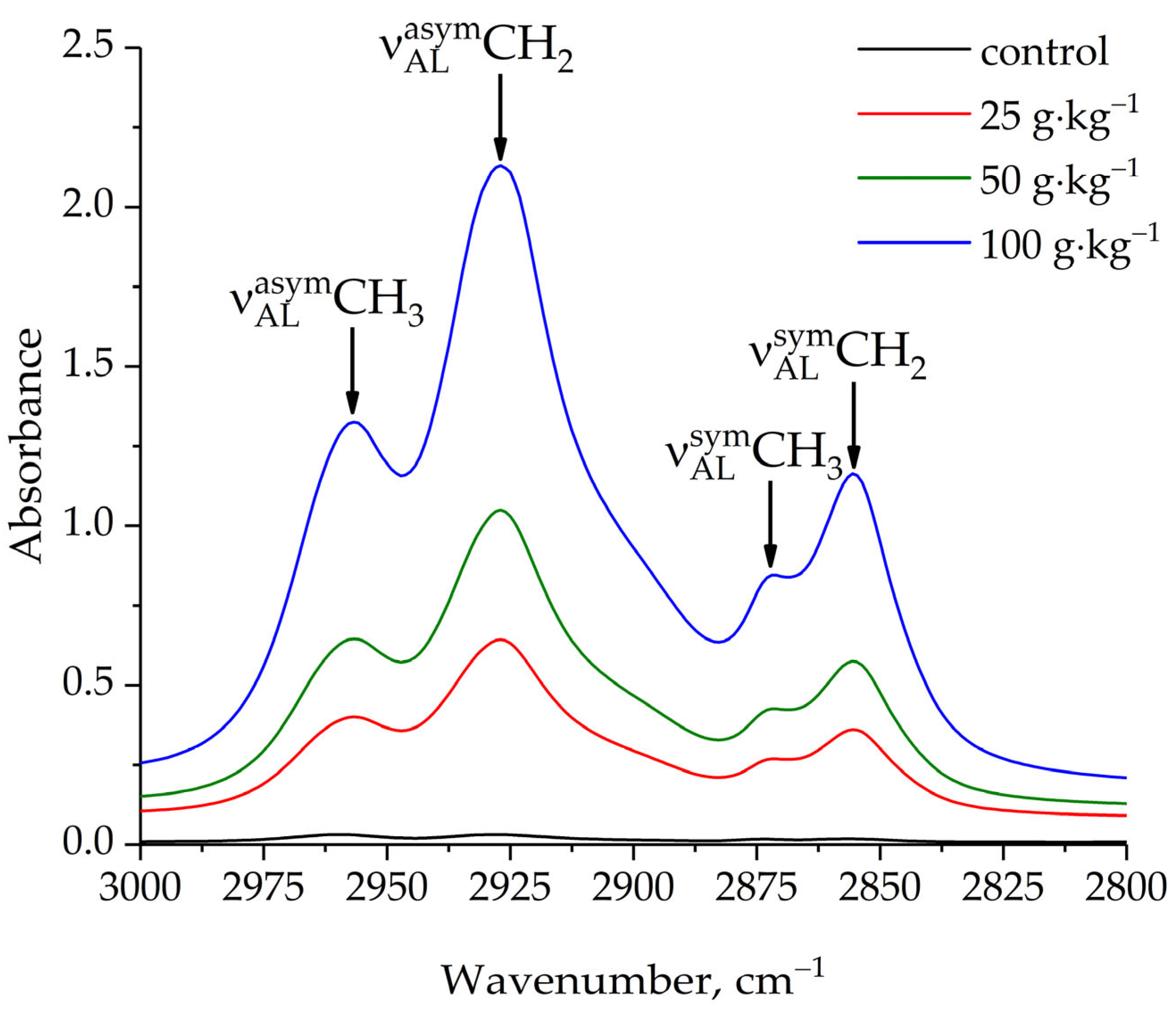
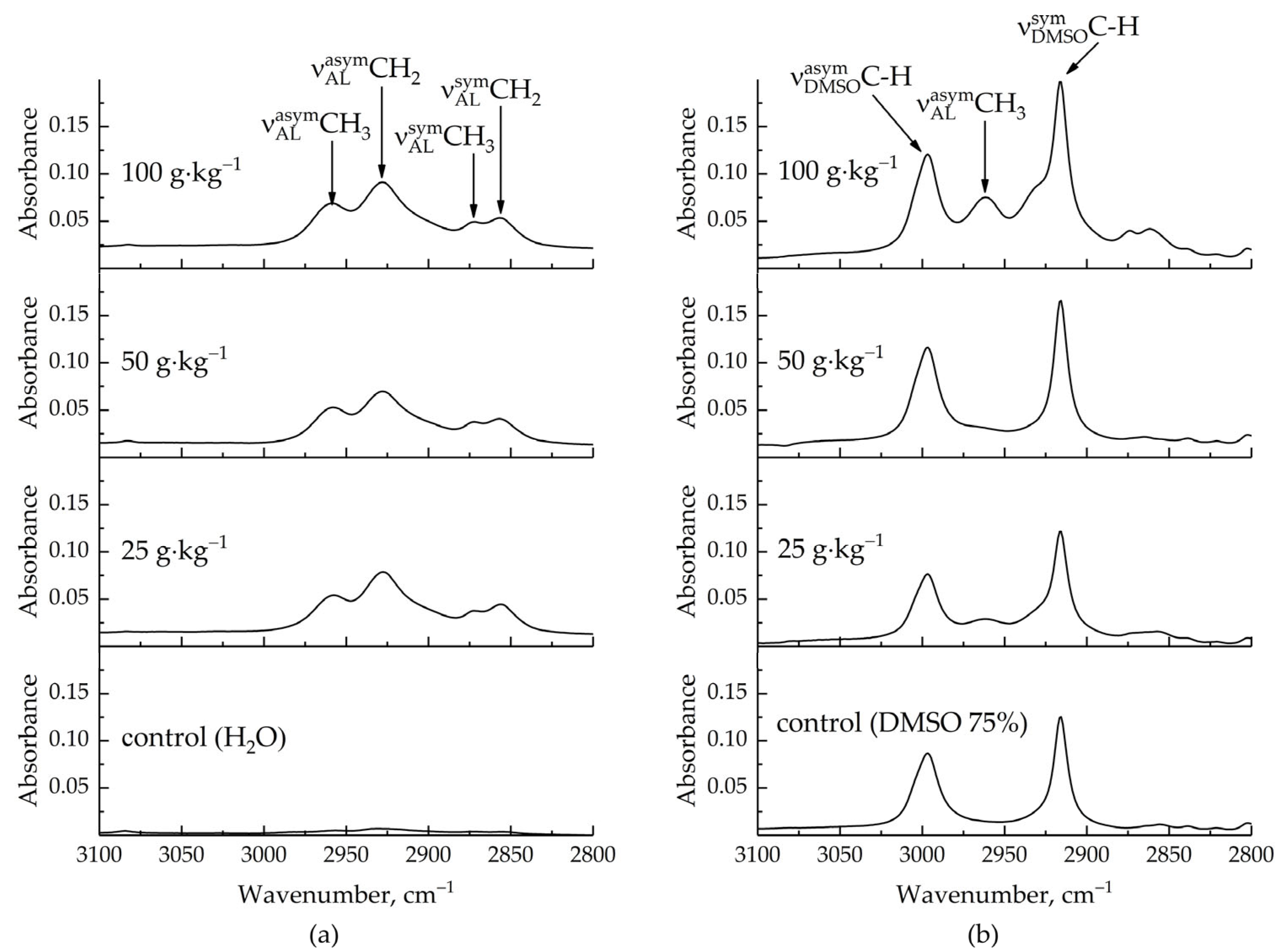
−1) was used as the primary analytical region. Particular attention was paid to absorption bands near 2855, 2870, 2925, and 2960 cm
−1, which were used as diagnostic features for petroleum hydrocarbon detection [
12].
All measurements were conducted under identical instrumental conditions to ensure comparability of spectral intensities. Extraction efficiency was evaluated based on the intensity and concentration dependence of the characteristic absorption bands.
2.5. Data Processing and Statistical Analysis
All extraction experiments and FTIR measurements were performed in triplicate using independently prepared soil samples. The obtained spectral data were processed by averaging replicate measurements for each experimental condition. Results are presented as mean values with corresponding standard deviations (SD). Data processing and graphical analysis were performed using Microsoft Excel (ver. 2108) and LabSolutions software (ver. 2.25) for FTIR spectral analysis software.
4. Discussion
The present study addresses a persistent challenge in soil contamination assessment, namely the limited comparability between chemical and biological approaches caused by the use of fundamentally different extraction media. Chemical analyses of petroleum hydrocarbons typically rely on non-polar organic solvents to ensure high extraction efficiency, whereas biological and ecotoxicological assays are predominantly based on aqueous soil extracts, reflecting water-soluble and potentially bioavailable contaminant fractions. This discrepancy complicates integrated interpretation of analytical data and hampers consistent evaluation of contamination severity and remediation effectiveness [
10,
17,
18,
19].
The results demonstrate that conventional FTIR analysis using carbon tetrachloride provides a clear and concentration-dependent response for petroleum hydrocarbons in sandy soils, supporting its suitability as a reference analytical approach. The absence of interfering soil-derived absorption features in the 2800–3000 cm
−1 range highlights the analytical robustness of this method for non-polar hydrocarbon detection. However, the toxicological and environmental hazards associated with chlorinated solvents limit their applicability beyond purely chemical measurements and preclude their use in biologically oriented assessment frameworks [
13,
23].
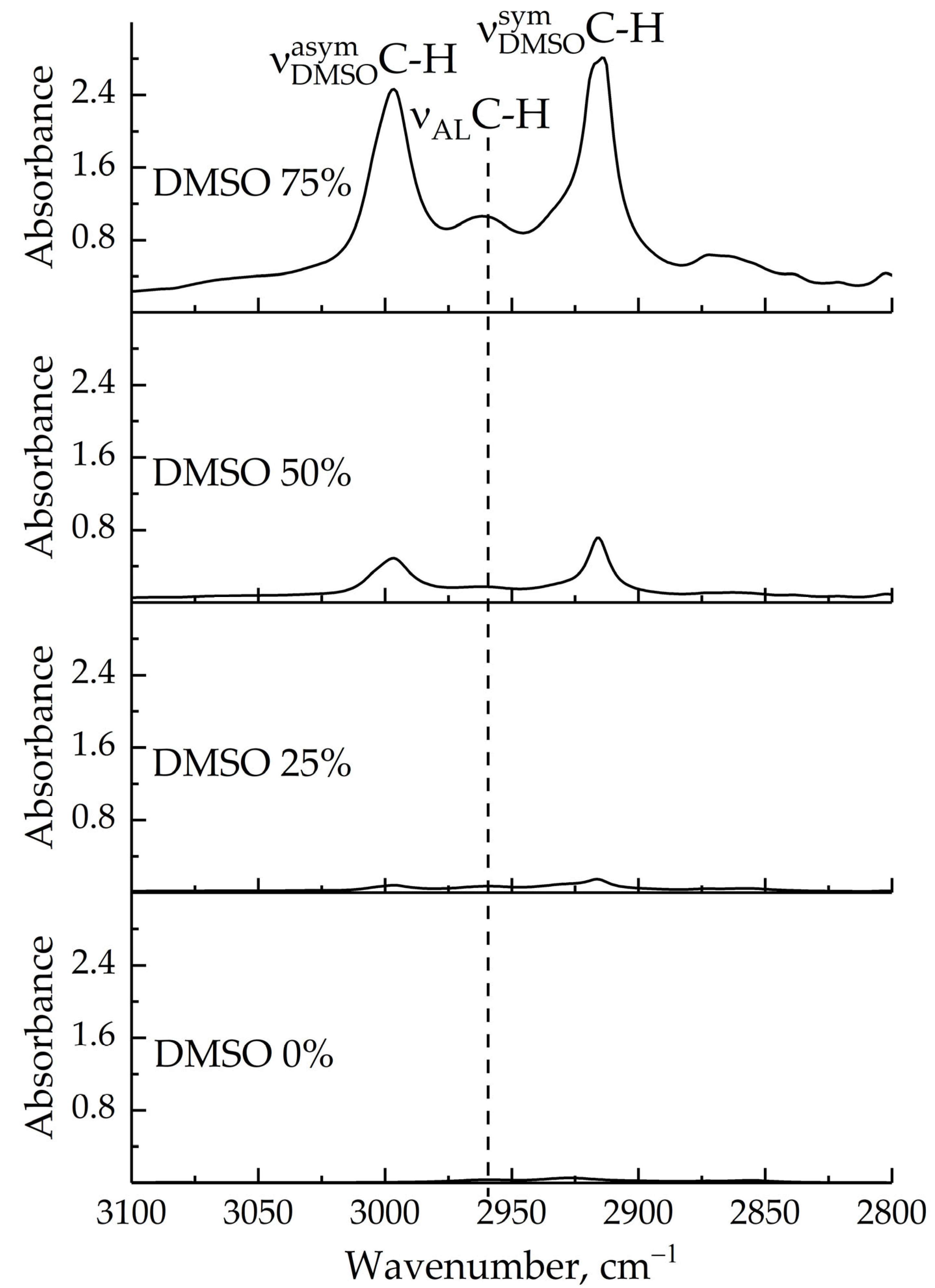
Water-based extraction, which underpins most bioassay protocols, exhibited rapid saturation and a lack of concentration-dependent FTIR response even at relatively low levels of petroleum contamination. This finding is consistent with the low aqueous solubility of non-polar hydrocarbons and confirms that water extracts may substantially underestimate hydrocarbon availability when interpreted solely on a chemical basis [
17,
18,
19,
20]. From an ecological perspective, this observation aligns with the concept that water extracts represent only a narrow fraction of contaminant pools and do not account for compounds that may become bioavailable through membrane partitioning or solvent-mediated transport processes.
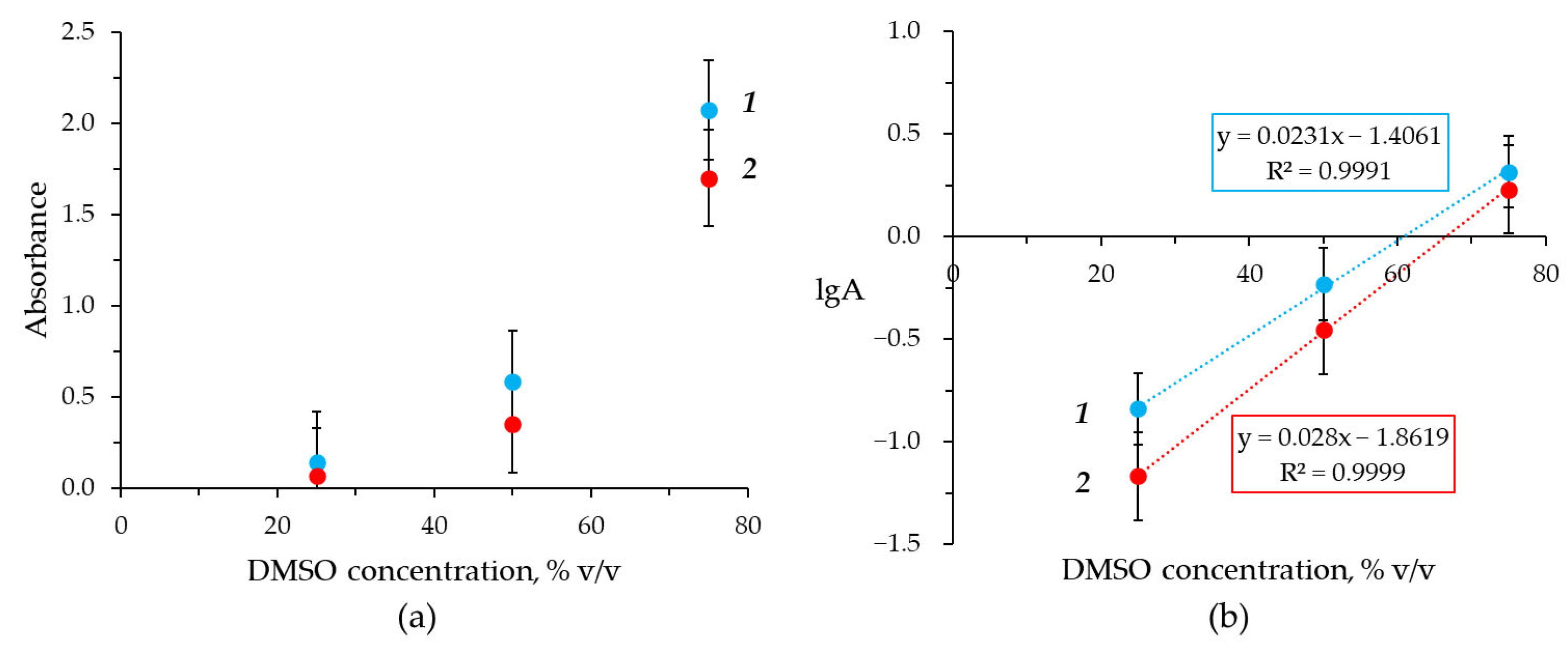
Aqueous dimethyl sulfoxide represents a practical compromise extraction medium that can partially bridge this methodological gap. The non-linear dependence of hydrocarbon absorbance on DMSO concentration, with a pronounced increase at 75% (
v/
v), indicates enhanced solubilization of hydrophobic compounds in mixed aqueous–organic systems. This behavior may reflect a shift from water-dominated to co-solvent-dominated solvation, where DMSO disrupts structured hydration around hydrophobic molecules and increases their apparent solubility, facilitating transfer into the liquid phase [
27,
28].
In contrast to water, DMSO-based extraction preserved sensitivity to changes in petroleum hydrocarbon content, enabling discrimination between different contamination levels at the qualitative/semi-quantitative level. Importantly, hydrocarbons extracted by aqueous DMSO were subsequently transferred into an organic phase for FTIR analysis using the same analytical procedure as the reference method, ensuring consistency and comparability of spectral interpretation. Although the analytical window (2700–3200 cm−1) is dominated by hydrocarbon C–H stretching, trace DMSO carryover may influence the local spectral background and introduce minor overlapping contributions depending on concentration and optical path length. In the present study, spectra were recorded under strictly identical instrumental conditions, and consistent spectral windows and peak positions were used to ensure consistent comparative interpretation without applying additional mathematical baseline correction. Therefore, the present implementation is positioned as qualitative/semi-quantitative; fully quantitative calibration for DMSO-extracted soil samples will require improved solvent removal and/or chemometric correction. In future implementations, particularly for more complex or field-contaminated matrices, refinement strategies such as solvent-blank subtraction, integration of band areas using a locally defined baseline, or multivariate correction (e.g., partial least squares calibration) may improve quantitative robustness and further reduce DMSO-related variability.
From the standpoint of environmental assessment, the proposed method occupies an intermediate position between purely chemical and purely biological approaches. While it does not directly quantify biological effects, it provides chemical data derived from an extraction medium that is substantially closer to aqueous systems than conventional non-polar solvents. This feature may facilitate more consistent interpretation of chemical monitoring results alongside bioassay data, particularly in studies aiming to link contaminant concentrations with ecological risk indicators [
11,
17,
18,
19,
34]. Importantly, the proposed approach does not aim to replace biological assays but rather to improve the interpretability of chemical data when used alongside water-based ecotoxicological tests.
Several limitations of the present study should be acknowledged. Experiments were conducted using artificially contaminated soils with freshly added crude oil, which ensures controlled conditions but does not fully replicate the complexity of field-contaminated soils. Importantly, extraction efficiency is expected to differ between freshly spiked and aged (weathered) petroleum residues. During aging, lighter fractions volatilize or biodegrade, while heavier components may become increasingly associated with soil organic matter and mineral surfaces and can enter less accessible domains of the matrix. As a result, water-based extracts may become even less responsive, whereas co-solvent systems such as aqueous DMSO may retain higher extraction potential but with altered spectral patterns and potentially weaker concentration–response slopes. Therefore, calibration and method performance should be re-evaluated for field-contaminated and aged soils, including time-series aging experiments and comparison across soil textures and SOM levels. Weathering, aging, microbial transformation, and interactions with soil organic matter can substantially alter hydrocarbon extractability and spectral characteristics [
17,
18,
19,
20]. Moreover, only sandy podzolic soil with low organic carbon content (SOC = 0.40%) was investigated; soils with higher organic matter content (e.g., >4–5% SOM); note that SOC and SOM are related but not identical metrics. Such soils or those with finer texture may exhibit stronger sorption and different extraction behavior. Therefore, the method is currently most applicable to coarse-textured soils with low organic carbon content, where matrix interference is minimal and hydrocarbon mobility is relatively high. Future validation should include finer-textured and higher-SOM soils (e.g., loams and clay-containing soils), where sorption, matrix effects, and extract composition are expected to differ substantially from quartz-dominated sands.
Future research should therefore focus on validating the aqueous DMSO-based FTIR approach using field-contaminated soils, aged hydrocarbon residues, and mixed pollutant systems. Integration of the proposed extraction method with biological toxicity assays represents a particularly promising direction, as it may allow direct comparison between chemical indicators and biological responses derived from comparable extraction media. Such integration would strengthen the methodological framework for soil contamination assessment and support more holistic evaluation of remediation outcomes [
17,
18,
19,
20,
35].
In summary, this study demonstrates that aqueous DMSO can effectively enhance the extraction of petroleum hydrocarbons from sandy soils while remaining conceptually compatible with water-based assessment approaches. By reducing the methodological gap between chemical and biological soil evaluation, the proposed FTIR-based approach may contribute to the development of lower-hazard and methodologically consistent tools for FTIR-based monitoring of petroleum-contaminated soils. Such extensions may improve the ecological relevance of the approach while preserving its methodological simplicity.
5. Conclusions
This study demonstrates that an aqueous DMSO-based extraction approach can effectively improve FTIR-based assessment of petroleum hydrocarbons in sandy soils. Conventional water extraction exhibited rapid saturation and failed to provide concentration-dependent analytical responses, whereas aqueous DMSO enhanced hydrocarbon solubilization and preserved sensitivity across a wide range of contamination levels.
The results show that a 75% (v/v) aqueous DMSO solution represents a practical compromise between extraction efficiency and proximity to aqueous conditions, producing reproducible and concentration-dependent FTIR responses. The pronounced non-linear enhancement observed at this concentration highlights the role of mixed aqueous co-solvent systems in mobilizing hydrophobic petroleum hydrocarbons from the soil matrix.
By applying DMSO as an intermediate extraction medium, the proposed method reduces the methodological gap between chemical analyses based on non-polar organic solvents and water-based assessment approaches commonly used in ecological and biological studies. Although the method does not directly quantify biological effects, it provides chemically robust data derived from an extraction environment that is conceptually closer to aqueous systems than traditional organic solvents.
Overall, the proposed FTIR-based approach using aqueous DMSO provides a lower-hazard and methodologically coherent alternative for monitoring petroleum-contaminated soils. At present, its applicability is best suited for coarse-textured sandy soils with low organic carbon content, where matrix-related interference is minimal. Future research should focus on validation using aged and field-contaminated soils, extension to other soil types, and integration with biological toxicity assays to support field validation and improve comparability between chemical indicators and aqueous-based biological assessment results.





 ,
,