Article

Assessing Fe and Zn Content in Egeria densa: Sample Treatment, Spatio-Temporal Distribution, and Wetland Herbivory Implications


by
Claudio Bravo-Linares
1,
Esteban Delgado
1,
Marcela Cañoles-Zambrano
1,
Enrique Muñoz-Arcos
1,
Jorge A. Tomasevic
2,
Alexander Neaman
3 and
Ignacio Rodriguez-Jorquera
2,*
1
Facultad de Ciencias, Instituto de Ciencias Químicas, Universidad Austral de Chile, Independencia 631, Valdivia 5090000, Chile
2
CEHUM Centro de Humedales Río Cruces, Universidad Austral de Chile, Valdivia 5090000, Chile
3
Facultad de Ciencias Agronómicas, Universidad de Tarapacá, Arica 1000000, Chile
*
Author to whom correspondence should be addressed.
Environments 2026, 13(1), 9; https://doi.org/10.3390/environments13010009
Submission received: 27 November 2025 / Revised: 19 December 2025 / Accepted: 21 December 2025 / Published: 23 December 2025

Abstract

Wetlands are delicate ecosystems that host diverse species and face ongoing environmental stress. The “Carlos Anwandter” Ramsar Site in Valdivia, Chile, is the world’s main breeding ground for the black-necked swan, which strongly relies on the aquatic plant Egeria densa. This area has been impacted by anthropogenic activities that have increased particulate iron (Fe) and zinc (Zn) deposition. However, standard protocols for metal analysis encourage eliminating any particles on the plant’s surface, neglecting the contribution of deposited particulate contaminants. Appropriate sample treatment is therefore essential to quantify metal concentrations and the potential impact on herbivore species. This study aimed to evaluate how sample treatments and plant sectioning affect Fe and Zn concentrations in E. densa. Samples were collected from both the Ramsar site (Cruces River) and a control site (Calle-Calle River). Results showed that washing samples (both in the field and lab) significantly reduced reported metal concentrations, underscoring the importance of standardised sampling and pre-treatment protocols. Fe concentrations were notably higher at the Ramsar site (11,155 mg kg−1) compared to the control (3783 mg kg−1). The same is true for Zn (108 mg kg−1 and 60 mg kg−1, respectively). Over time, Fe concentrations remained stable, while Zn concentrations declined, suggesting a consistent Fe input and a decreasing Zn trend in the wetland. These findings are crucial for interpreting metal pollution and understanding spatial–temporal variability in aquatic plant contamination.

1. Introduction

Wetlands provide numerous ecosystem services, many modulated by aquatic plants [1,2,3,4]. They serve as water reservoirs, buffering floods and droughts as well as providing habitat for many species, especially breeding areas for migratory birds [5,6]. The Cruces River Wetland is part of the “Carlos Anwandter” Ramsar site in southern Chile. This wetland has tidal influence and is within Valdivia’s river estuarine system, of which the Cruces and Calle-Calle rivers are the main tributaries. This area presents a high diversity of birds and aquatic plants, and it is a crucial breeding area for the black-necked swan (Cygnus melancoryphus) and other birds due to the high abundance of the Brazilian waterweed -Egeria densa- [7,8], which is the main food supply for this swan [9].
In 2004, a significant reduction in the abundance of E. densa in the Cruces River Wetland was observed due to industrial pollution, which resulted in a decrease in the abundance of the Cygnus melancoryphus and other aquatic birds in this area due to mortality and emigration, which consequently produced a considerable decrease in nests and offspring [10,11]. Subsequent studies showed that stems and leaves of the E. densa collected in the wetland presented a dark coloration due to apparent necrotic tissue, which is characteristic of plants exposed to high levels of iron [12]. Plants also presented a sediment crust adhered to the surface, which may hinder the absorption of sunlight and, consequently, their photosynthetic capacity [13]. Iron analysis in samples of E. densa during 2004 presented concentrations twice as high as in samples of the same plant outside the sanctuary [14]. In addition, liver samples of Cygnus melancoryphus presented specific staining for iron. They showed signs of malnutrition [15,16], with iron concentrations that were at least three times higher than in liver samples of swans from other regions [14,16]. Consequently, herbivorous birds (i.e., swans, coots, and ducks) migrated due to food scarcity in this area. Specimens that could not migrate died due to histopathological alterations, possibly from iron and other trace metals poisoning after feeding on E. densa with high amount of sediments deposited on them [10]. A report concluded that the high concentrations of iron and other toxic elements in the aquatic plants were related to a decrease in the water quality of the Cruces River [17], caused by the opening of a pulp mill factory positioned 25 km upstream from the sanctuary in February 2004. Among the changes in water quality, an increase in sulphate and aluminium concentration was observed, which is coincident with the chemicals used as coagulating agents for the treatment of wastewaters generated by the pulp mill, causing precipitation of various soluble metals and subsequent deposition on the surface of the aquatic plants [17]. Recent studies have demonstrated that several physiological parameters on black-necked swans did not return to levels observed prior to the 2004 pollution episode [18].
Iron is an important trace element in most known life forms and in vertebrates. It is considered essential in vertebrates since it acts as an oxygen transporter via haemoglobin in the blood [19]. This process controls the absorption and accumulation of iron in organisms, maintaining a delicate balance between absorbed and stored iron [20]. On the other hand, the processes of iron excretion also have some limitations; consequently, it is essential to maintain iron homeostasis, as an excess in the body of some organisms also results in serious physiological disorders [21]. Zinc is a relevant element of wetland biota physiology [22,23] and can interact with iron, modulating its absorption [24]. At high levels, Zn can be toxic to wetland biota [25,26,27,28], and it has been associated with biochemical changes in waterbirds’ blood at low concentrations [29].
There is a gap regarding standard methodologies during sample collection and preparation for metal quantification in aquatic plants. Different sample treatments and subsampling procedures can reduce representativeness and reproducibility, leading to different conclusions regarding the level of contamination and the potential impacts on herbivore species. Some standard protocols for metal analysis in agricultural plant material encourage eliminating any residual particulate matter on the plant’s surface, since the target is to quantify a specific analyte within the plant tissue [30]. However, this methodology neglects the contribution of particulate contaminants deposited on the plant’s surface that are ingested by herbivores. Accordingly, a comprehensive understanding of the potential variability due to sampling, sample processing, and analysis is crucial to understanding the influence of deposited particles on reported metal concentrations in aquatic plants. Therefore, correctly quantifying metal concentration in aquatic plants is essential to understanding metal exposure and potential ecotoxicological effects on wetland herbivores. As such, the choice of an appropriate sample treatment should be aligned to the specific study objectives, i.e., assessing internal metal accumulation or evaluating total exposure, including surface deposits, in aquatic plants.
In order to address the research gaps identified above, the following specific objectives are proposed: (1) to compare the effects of different sample treatments and section subsampling on the quantification of Fe and Zn in E. densa; (2) to assess their spatial and temporal distribution; (3) to discuss the potential implications of metal exposure to waterbird herbivory.

2. Materials and Methods

2.1. Sampling Site and Sampling Strategy

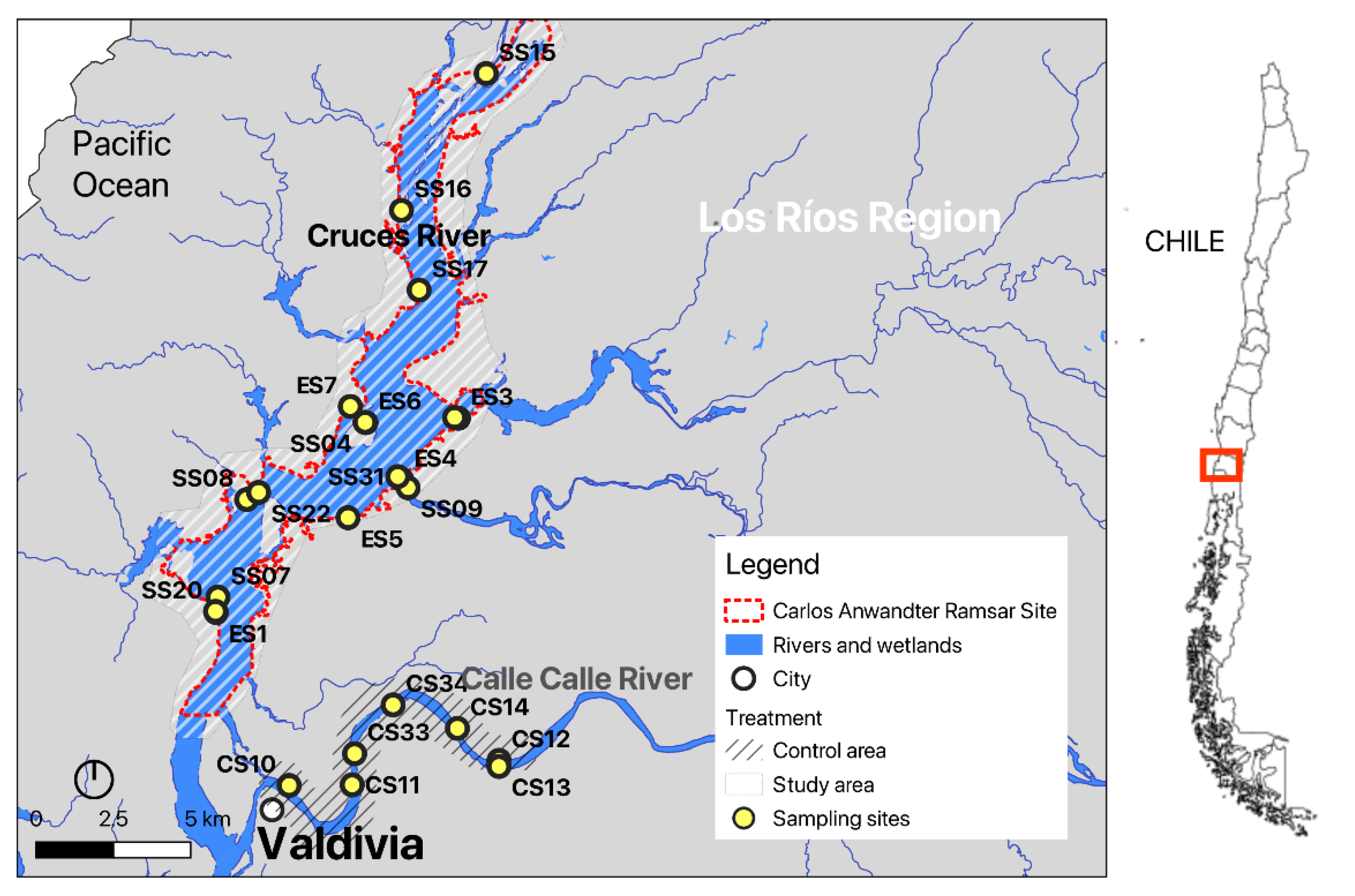
Samples were collected at two sites: (1) the study site, which corresponds to the Carlos Anwandter Ramsar site within the river Cruces catchment, and (2) the control site, located in the Calle-Calle River (Figure 1). Eight sampling campaigns were undertaken from May 2022 to April 2024 (see sample information in Table S1). The first three were performed to evaluate the effects of sampling strategies, subsampling, and sample treatment methodologies on the quantification of Fe and Zn. After defining the methodology, the remaining campaigns were carried out to evaluate the concentrations of Fe and Zn in E. densa in the study and control sites. Plant material was collected using an outboard motorboat equipped with an articulated anchor and a hook. The sampling procedure was performed in shallow waters (up to 3 m depth) using the boat’s anchor and hook to carefully extract the plants minimising sediment resuspension.

2.2. Sample Type Selection and Pre-Treatment

The collected E. densa was immersed three times in the river water to remove any potential loose sediment excess due to the sampling procedure. Subsamples were taken by hand, separating green sections (Green, G) of the plants without evidence of sediment deposition on the surface, as well as abnormal dark-coloured sections (Black, B) with sometimes-evident sediment crusts. Roots and other minor aquatic plants were discarded and only leaves and stems were analysed. The subsamples were placed in clean polyethylene bags, labelled accordingly, and transported to the laboratory. Once in the lab, the samples were stored in a fridge at 4 °C before treatment and analysis.
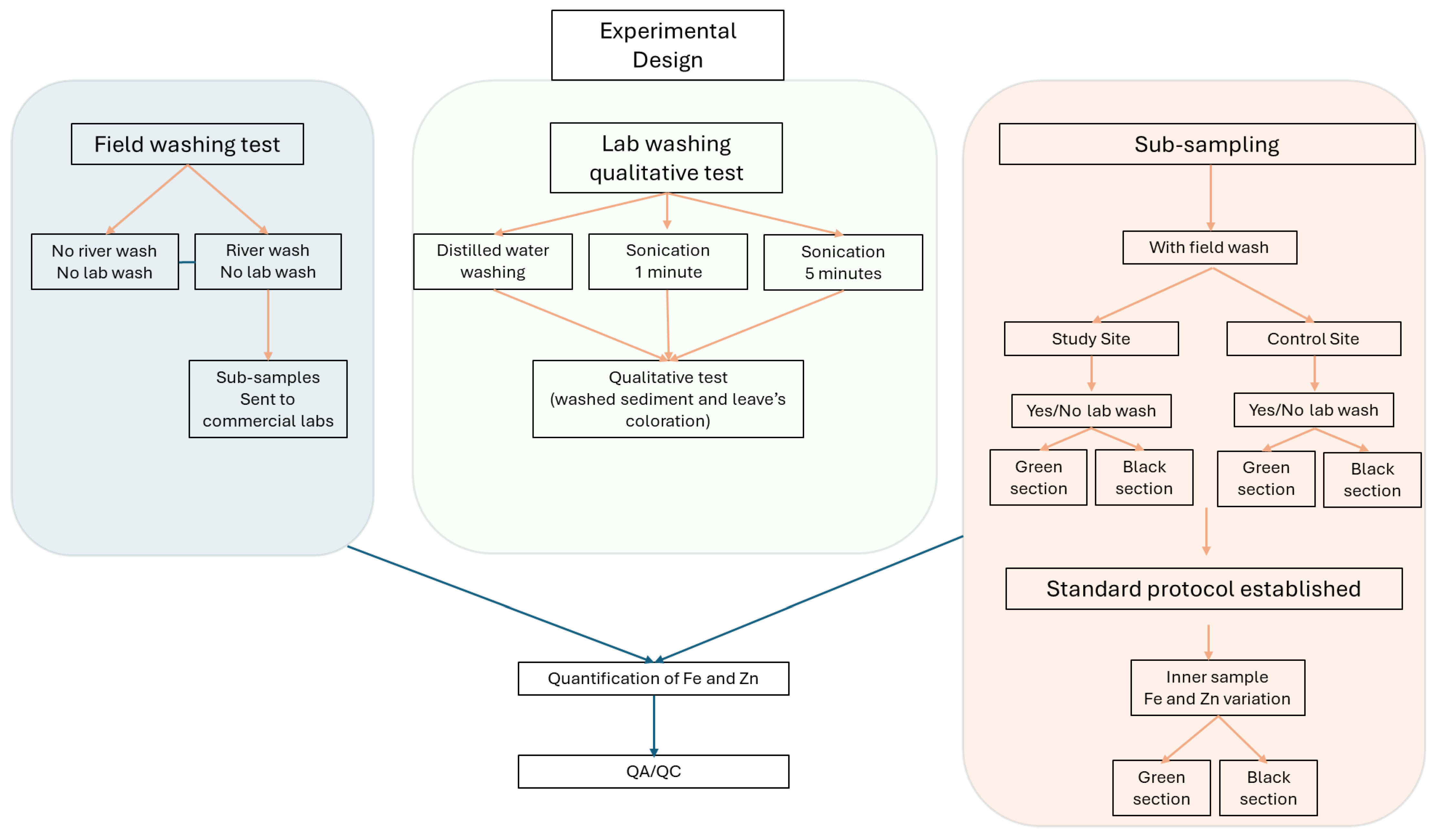
The experimental design to test the effect of sample treatment on the Fe and Zn concentrations is summarised in Figure 2. In brief, a preliminary experiment was performed to examine the effect of field washing with river water on the concentrations of Fe and Zn. For this purpose, two sample pre-treatments were evaluated: (1) samples without a field washing step (n = 19) and (2) samples with an in situ field washing (n = 13). When testing field washing, green and black sections of the same sample of E. densa (n = 15) were sent to two independent laboratories for Fe and Zn analysis. Samples were processed using the protocols established by the National Accreditation Commission (CNA)—SCHCS for laboratory 1 and the AOAC 985.35 ed 2012, S. methods 3030 C, E and S. Methods 3120 of 2005 for laboratory 2.
A third set of river-washed samples were tested for a laboratory pre-treatment. Here, three cleaning procedures were tested: (1) gentle rinsing with distilled water using a washing bottle, (2) sonication in distilled water for 1 min, and (3) sonication in distilled water for 5 min. The plant material and the resulting washing waters were visually inspected for colour and apparent water turbidity. After defining a suitable lab pre-treatment, a further experiment was performed to investigate the effect of laboratory washing on the type of leaf.

2.3. Sample Analysis

2.3.1. Microscopic Analysis

An optical microscope was used to evaluate morphological aspects of the different parts of the aquatic plant E. densa (in the study and control sites). Also, a scanning electron microscope (Variable Pressure Scanning Electron Microscope Zeiss® (EVO MA10, Carl Zeiss, Oberkochen, Germany) was employed. Complementarily, a Scanning Electron Microscope coupled to an electron dispersive X-ray spectroscopy detector (EDS; X-ACT, Oxford Instruments, Abingdon, UK) was used to estimate the relative abundances of some elements within different parts of the aquatic plant.

2.3.2. Determination of Fe and Zn Content

All labware employed during leaching, filtration, and analysis were placed in an acid bath (HNO3 10%) for 24 h, rinsed thoroughly with ultrapure water (Milli-Q), and dried. The samples were dried at 105 °C for 24 h, ground using a mortar and pestle, placed in plastic bags, and stored in a desiccator. Subsamples of about 0.5 g were weighed into Teflon beakers. The process was repeated to prepare at least three replicates per sample. Then, 7 mL of HNO3 65% and 1 mL of H2O2 30% (for analysis, EMSURE®, Merck, Darmstadt, Germany) were added to each sample and placed into a microwave digestion system (START-D, Milestone Srl, Sorisole, Bergamo, Italy) as follows: heating ramp to 220 °C, maintained for 20 min, and left to cool to room temperature for 1 h. The digests were quantitatively transferred to 10 mL volumetric flasks and made up to the mark with ultrapure water (Milli-Q). The samples were then filtered and transferred to clean 50 mL HDPE bottles before analysis.
The samples were analysed for Fe and Zn content using an atomic absorption spectrophotometer (iCE 3000 Series, Thermo Scientific, Cambridge, UK) operated with an air/acetylene gas mixture. Fe and Zn were analysed at the 248.3 and 213.9 nm absorption lines, respectively. Calibration curves were prepared from a certified standard solution (Titrisol® 1000 mg L−1) in the range from 0.3 to 10 mg L−1 for Fe and from 0.1 to 1.5 mg L−1 for Zn. Calibration checks were run before every analysis batch using a certified reference material (CRM) of wastewater (EnviroMAT™ QX102848, SCP Science, Baie-D’Urfé, QC, Canada). Method blanks were prepared in the same fashion as the samples, and method performance was evaluated using the EnviroMAT SS-2, SCP Science-contaminated soil (EnviroMAT™ SS-2, SCP Science, Baie-D’Urfé, QC, Canada), CRM (n = 4), with recovery percentages of 96% and 87%, as well as a relative standard deviation (RSD) of 2.0% and 5.5% for Fe and Zn, respectively. Both CRMs provided ranges for confidence and tolerance intervals that were used to inform the instrument and method performances (Table S2). Additionally, triplicates were run every 10 samples to assess method repeatability (% RSD = 0.5–13.2% for Fe and 0.1–8.3% for Zn), and a standard of known concentration was used to check instrument stability (% RSD = 0.1–1.8% for Fe and 0.2–2.7% for Zn).

2.4. Statistical Analysis

The sample pre-treatments and the plant sections were compared statistically to assess the effects of river and lab washing as well as the difference between green and black sections, respectively. For this purpose, the grouped data by sample pre-treatment and plant sections were tested for normality and homoscedasticity. Depending on the outcome, a two-sample t-test or a Wilcoxon (Mann–Whitney U-test) was performed. The significance level was set at α = 0.05.

3. Results and Discussion

3.1. Comparison Between Commercial Laboratory Analyses

The first samples collected were sent to two independent laboratories to assess the concentration of Fe and Zn in the samples. However, Fe and Zn concentrations from the same section of the plant presented significant differences for both elements (Wilcoxon test, p < 0.001), showing relative differences ranging from 134 to 3190% and 540 to 2700% for Fe and Zn, respectively (Figure S1 and Table S3). These results highlighted that the lack of an established protocol for sample treatment in aquatic plants may lead to completely different results for the same sample. Laboratory 1 performed a gentle wash with distilled water, and laboratory 2 did not wash the samples prior to analysis. Nonetheless, the results obtained by the laboratory that performed the sample wash were significantly higher than the one that did not wash the samples. Consequently, reported differences may be attributed to other factors.

3.2. Field Washing Experiments

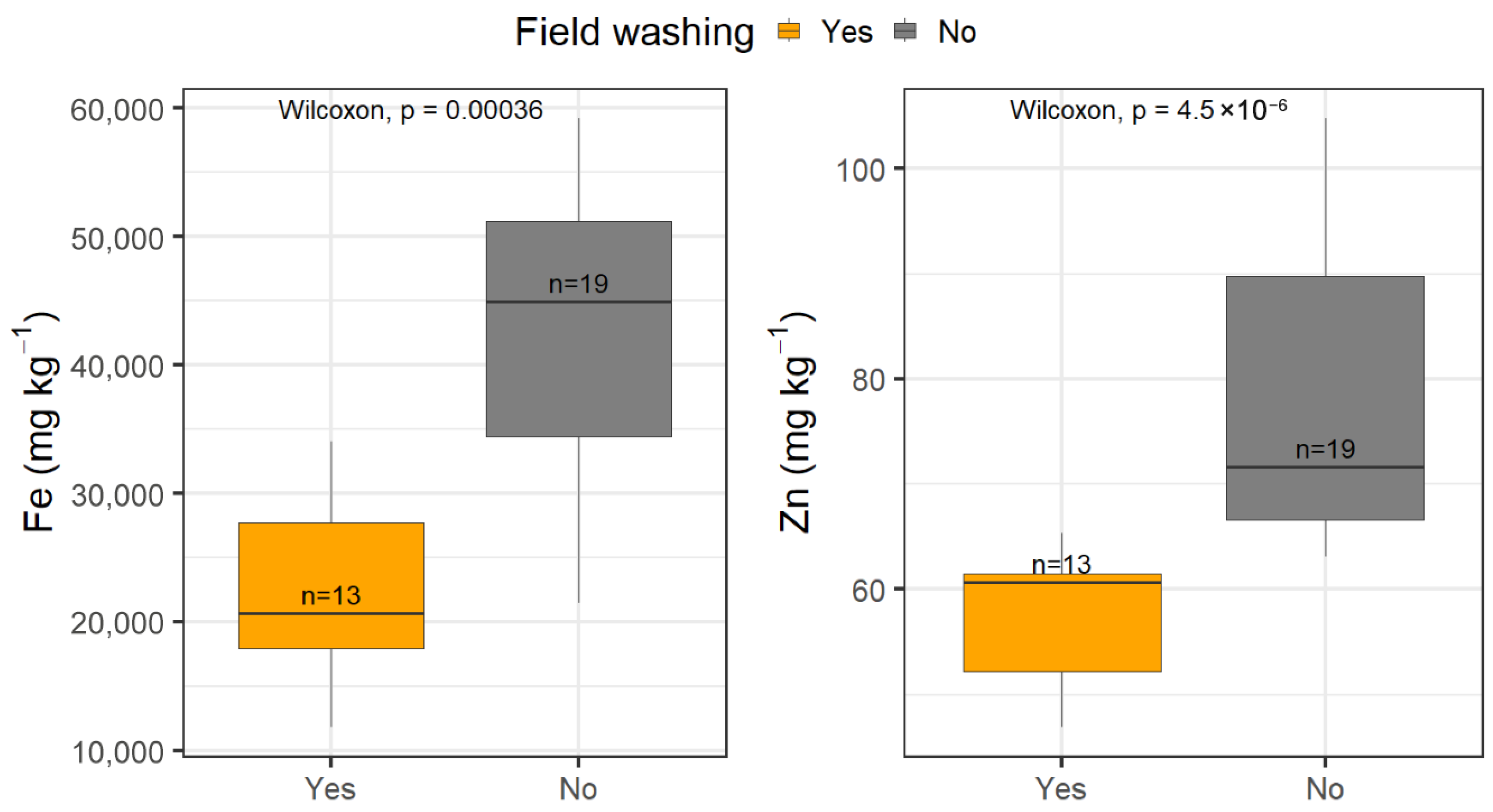
The field washing procedure significantly affected the quantified metals (Figure 3 and Table S4). For example, Fe concentrations averaged at 42,501 ± 13,186 mg kg−1 in the samples that were not washed in the field, while the samples that were washed in the river averaged at 22,202 ± 7311 mg kg−1, which was two times lower. The Fe concentration distributions between these two groups differed significantly (U-test, p = 3.59 × 10⁻⁴). On the other hand, Zn concentrations averaged at 78.4 ± 15.4 mg kg−1 in the samples that were not subjected to washing compared to the ones washed in the field, which averaged at 57.7 ± 6.1 mg kg−1, a ~1.5-fold decrease. Zn concentrations between these two treatments were also significantly different (U-test, p = 4.51 × 10⁻⁶). These results highlighted that rinsing the sample in the field during sample collection is an important aspect to be considered. Neglecting this step can result in significantly higher concentrations in the analysed material.
The distilled water washing step is the common procedure before the quantification of metals in aquatic plants [14,31]. A qualitative test was performed on the samples to investigate the potential effects of distilled water washing. This test showed that sonication effectively eliminated the sediment adhered on the plant’s surface (Figure S2). However, the experiment also showed that after 1 and 5 min of sonication, the plants were not only free of recently deposited sediments during sampling but also from the older sediment crust (Figure S2b,c). Complete cleaning of E. densa, therefore, is not representative of the environmental conditions at which this food source is available to the swans and other herbivores.

3.3. Laboratory Washing Experiments

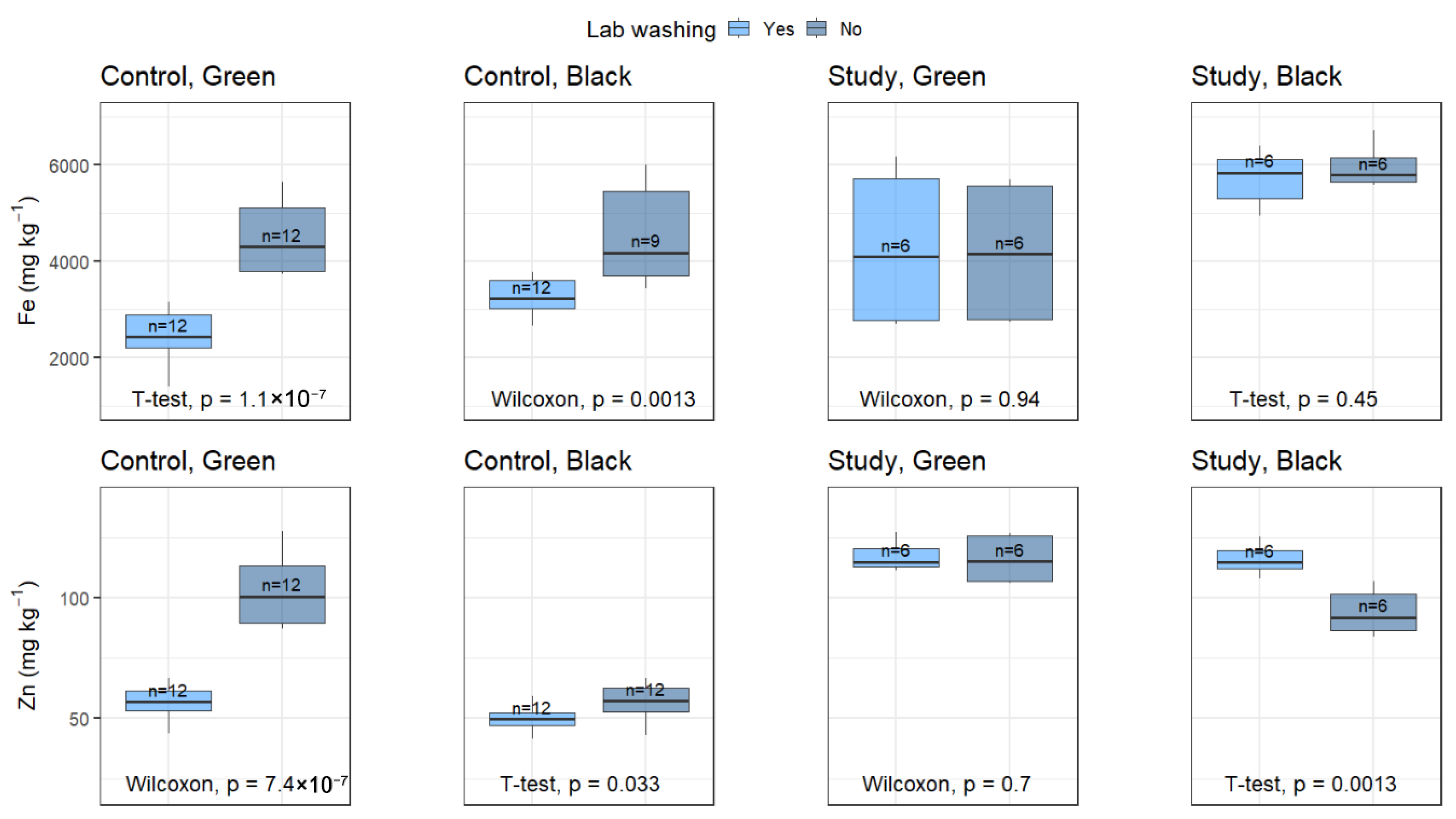
The laboratory washing procedure was assessed in samples previously washed in the field. Fe and Zn were quantified in samples that were washed and not washed in the laboratory from both the control and study sites (Figure 4 and Table S5). Fe concentrations in the control site significantly differed between the washed and non-washed samples, regardless of the plant section (t-test, p = 1.1 × 10⁻⁷ and Wilcoxon test, p = 0.0013, respectively). However, in the study site, there were no statistically significant differences between both treatments (Wilcoxon test, p = 0.94; and t-test, p = 0.45 for the green and black sections, respectively). The difference might be attributed to the fact that the samples collected in the control site did not show significant amount of fine sediment deposited, and if it were, the washing process might have eliminated most of it. On the contrary, in the study site, the plants have been exposed to significant sediment deposition, and the crusts were firmly adhered to the leaves not removed during the field and laboratory wash.
Zinc concentrations for lab-washed and non-washed samples in the green and black sections in the control site were significantly different (Wilcoxon, p = 7.4 × 10⁻⁷ and t-test, p = 0.033, respectively, Figure 4). In addition, washing treatment in the green sections of the plant was not significantly different in the study site (Wilcoxon test, p = 0.7). In contrast, the black sections showed significant differences (t-test, p = 0.0013). Zn concentrations followed similar trends as Fe for the green and black sections in the control site. However, in the study site, no clear trend is observed.
The laboratory washing procedure with distilled water significantly influenced metal quantification, particularly for the control site. In an area that might be more influenced by fine sediment pollution, the difference might not be as significant due to sediment incrustation into the plant tissue. Consequently, the laboratory washing step should be carefully considered before carrying out an environmental impact assessment of metals on submerged aquatic plants.

3.4. Microscopic and Spectroscopic Analysis

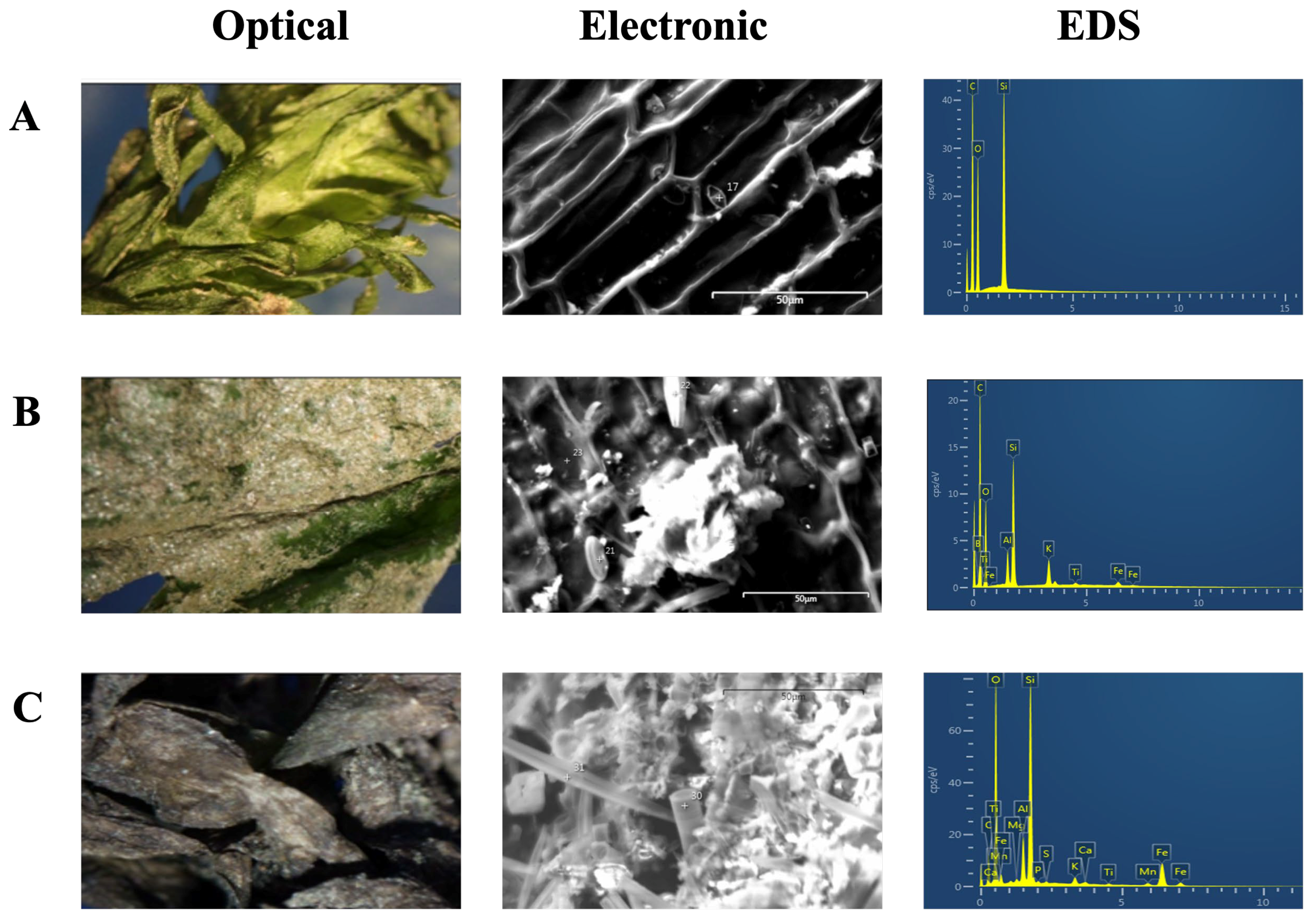
Microscopy (optical and electronic) and EDS analysis (see Figure 5) indicated that healthy plants presented the typical green colour, with silicon as the most abundant element. Fractions of the plants with sediments presented more relative abundance of elements such as Al, Ti, and Fe, among others. Finally, the black sections with sediment crusts showed much and more abundant elements.

3.5. Fe and Zn Content in Green and Black Sections of the Plant

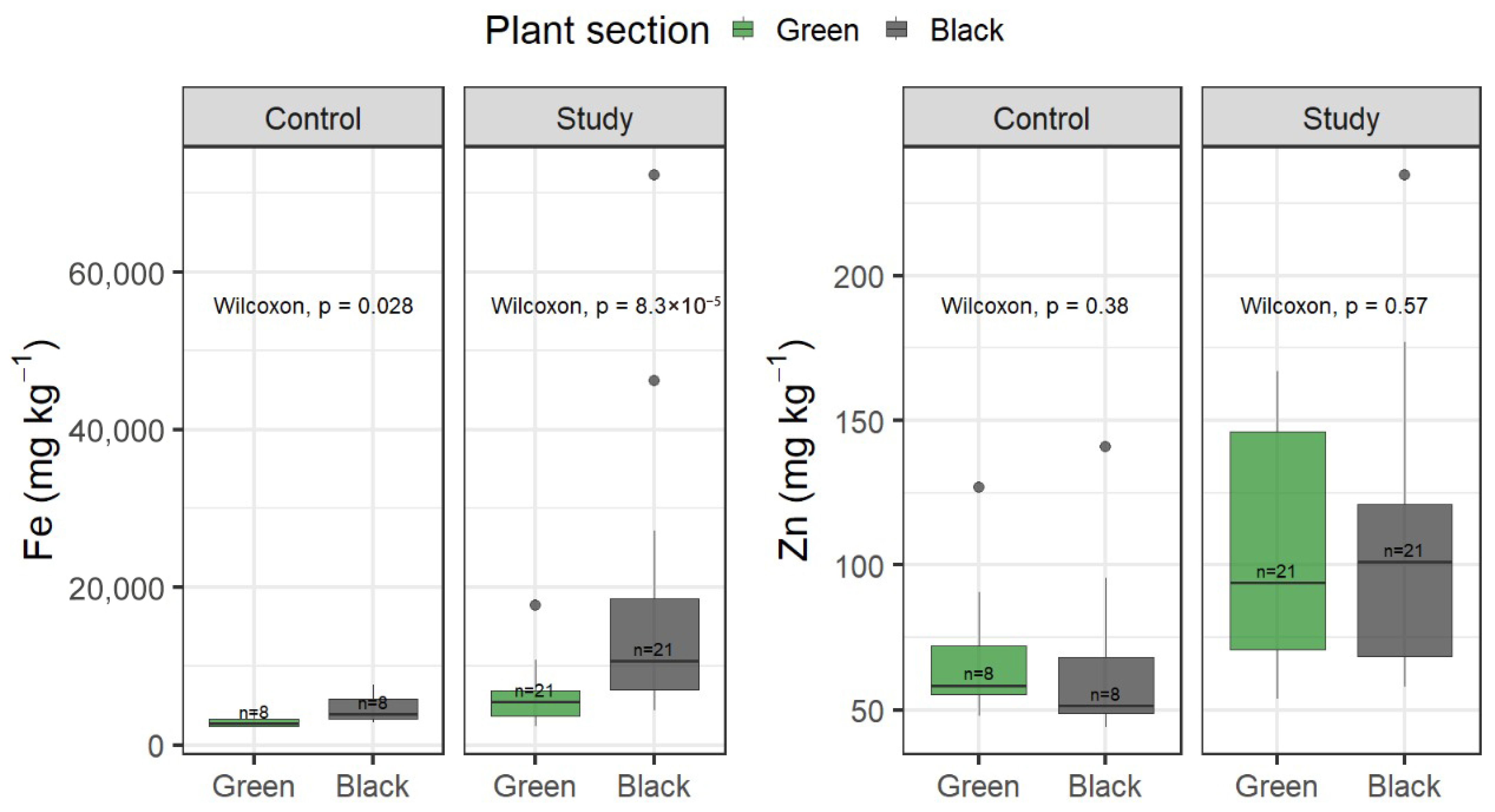
The concentration of Fe in both green and black sections of the plant (Figure 6) showed significant differences in the control and in the study sites (Wilcoxon test, p = 0.028; and Wilcoxon test, p = 8.3 × 10⁻⁵, for the control and study sites, respectively). Zn concentrations in both green and black sections of the plants in both sites were not significantly different (Wilcoxon test p = 0.38 and p = 0.57 for control and study sites, respectively). This suggests that the subsampling procedure might influence reported Fe concentrations. In addition, Fe concentrations varied from 57% to 95% in the study site and from 25% to 41% for the control site. Zinc, on the other hand, presented lower variation (from 37 to 42% and 38 to 50% for the study and control sites, respectively). High variability in reported Fe and Zn concentrations might be associated with different riverine dynamics influencing particle deposition, e.g., meandering versus straight channel areas. Nevertheless, the presence of outliers might have influenced these values.

3.6. Temporal Trends of Fe and Zn in Egeria densa

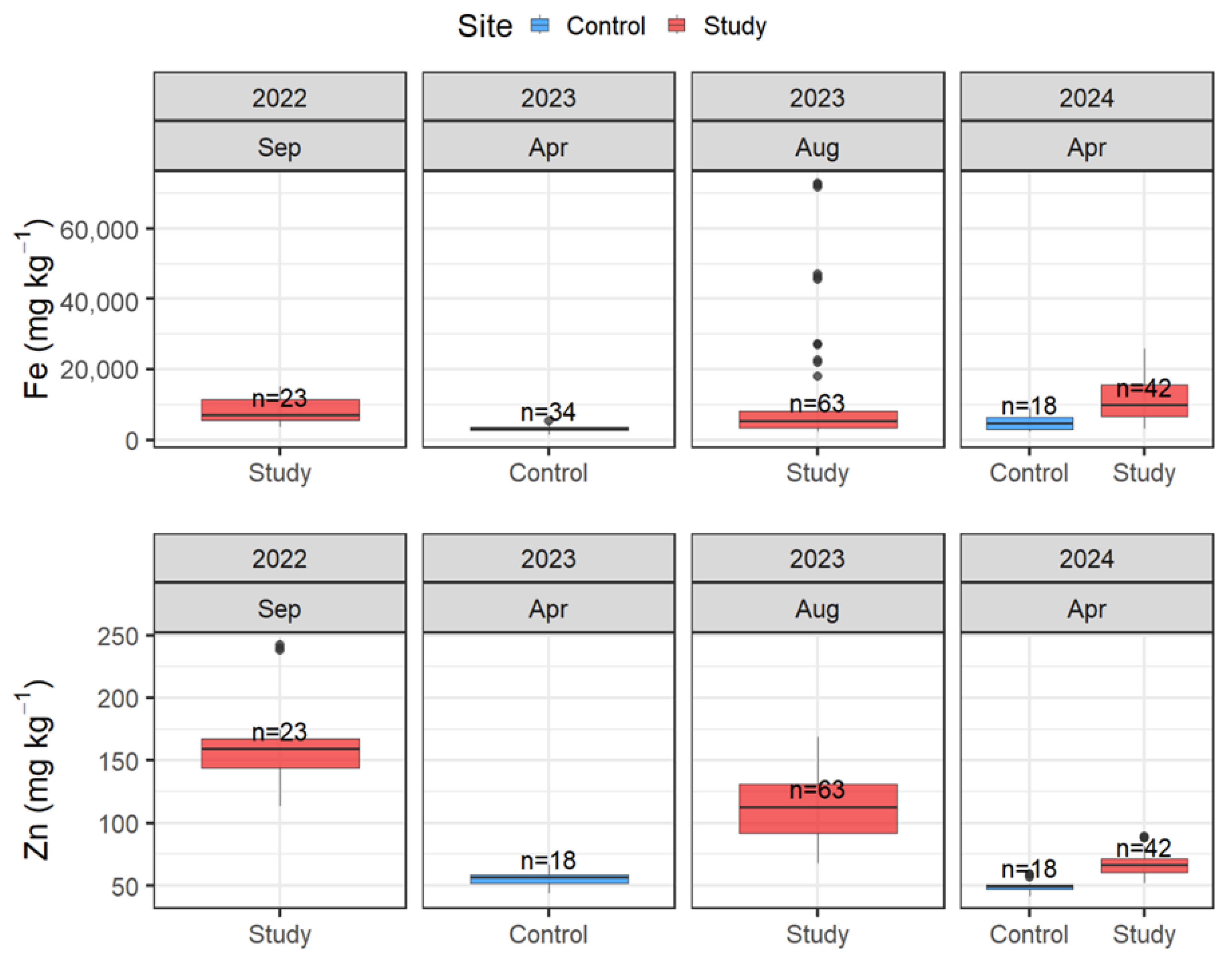
Iron concentrations in the study site were notably higher than the control site (see Figure 7). Concentrations of this metal averaged 11,155 mg kg−1 in the study site, while an average concentration of 3783 mg kg−1 at the control site, a 3-fold increase, was found. The same is true for Zn (see Figure 7), where concentrations averaged 60 mg kg−1 in the control site, whereas study site concentrations averaged at 108 mg kg−1, almost twice the average concentration in the control site. On the other hand, Fe concentrations for all samples (Figure 7) did not show consistent trends, although they showed significant differences across years for both the study and control sites (Kruskal–Wallis test, p-value = 0.0008953; and Wilcoxon rank sum test, p-value = 0.005002 for the study and control sites, respectively). Zinc concentrations in the study showed a consistent and significant decrease over the years for both the study and control sites (Kruskal–Wallis test, p-value < 2.2 × 10⁻¹⁶; and Wilcoxon rank sum test, p-value = 0.004173 for the control and study sites, respectively). These trends suggest that the plant assimilates these two elements differently. Iron appears to be consistently adsorbed by the plant, forming crusts that remain for a long time [12], whereas zinc is apparently directly incorporated and is not related to external accumulation as Fe.
In a study carried out in the sanctuary in 2004 (see Table 1), damaged plants averaged at 40,090 mg kg−1 of Fe compared to 13,251 mg kg−1 in healthy plants [14]. The same study presented average concentrations of Zn in the Cruces River of 66.3 mg kg−1 [14], again very similar to those reported in the control site. Another study presented average values during 2004–2005 of 31,000 mg kg−1 in the sanctuary and 9800 mg kg−1 for a control site outside the sanctuary (Table 1) [32]. Our average Fe concentrations in the study site were comparable to those reported from non-damaged tissue and for the control site in the previous studies. However, the difference can be attributed to the sample treatment as no full details regarding river and/or lab prewashing are reported. Only gently rinsing with distilled water is mentioned in these studies [14,32]. Furthermore, frequent wastewater releases to the river from the upstream paper mill company in the past can be an additional factor. Values without washing (river and/or lab washing) may increase iron concentrations to approximately 42,000 mg kg−1, which is similar to those reported for damaged tissue in the Cruces River [14]. Nevertheless, and as stated above, the decrease in Fe concentrations may also be associated with a reduced input from the pollution sources, as the incident in 2004 was apparently more detrimental than those reported in 2014 and 2020.
Several hypotheses have been discussed to account for the source of increase particulate matter on the aquatic plants: (1) Changes in Fe concentrations in the study site can be attributed to drastic changes in water pH as a result of upstream industrial discharges [33]. Unpublished results have demonstrated that the release of “green liquor” (a strongly alkaline solution mainly comprising sodium hydroxide and sodium sulphide) can turn river water highly alkaline for a short period of time promoting iron oxides precipitation [34]. (2) Increased fine sediment delivery to the wetland due to increasing forestry activities in the surrounding area [35]. (3) Natural factors such as saline intrusion from the sea [36] leave more shallow waters, thereby increasing turbidity [37]. The fact that aquatic plants from the Cruces River were more affected by iron deposition, with visible tissue damage and sediment crusts, supports the first.

3.7. Implication on Herbivory and Metal Exposure

E. densa has been reported as a virtuous natural sediment trap, and in an environment where sediments are almost saturated, iron and other metals become more available to the plant [12]. It has been reported that macrophytes naturally create iron crusts, affect plant physiology, and in some cases, show evident problems such as plant growth, leaf mortality, and necrotic leaves [12,14,37]. E. densa has a key role as aquatic submerged plants in wetland ecosystems, providing food, shelter, and habitat for fish and macroinvertebrates [38,39], and it has been identified as the primary, and virtually the only, food source for the Black-necked swan [9], the most abundant waterfowl in the Cruces River and the reason this site was declared a RAMSAR wetland of international importance. Thus, understanding the complexity of metal deposition is crucial to assessing the concentration of metal exposure for herbivores. Moreover, the impact of the metal deposition on E. densa physiology may cause important changes in this large estuarine wetland due to the ecosystemic role of this aquatic plant in food, shelter, carbon storage, and sediment trapping [40]. Despite Fe concentrations being lower than those reported in 2004, the Fe input is still significant, affecting E. densa and potentially the herbivores that feed on them.

3.8. Methodological Recommendations for Future Studies

To better assess the field concentrations that accurately represent metal exposure to herbivorous wetland biota, future studies should consider the following procedures when assessing concentrations of metals in aquatic plants:
  • Use sampling devices/methods that avoid bottom sediment to be added during the macrophyte extraction.
  • Thoroughly clean the aquatic plants in the field with water from the wetland under research (i.e., river/lake) before subsampling.
  • Plant section selection should address the sample heterogeneity by collecting representative sections of healthy and non-healthy plants.
  • Once in the laboratory, pursuing the objective of obtaining an accurate representation of metal exposure to herbivores, using a gentle wash with distilled water or, preferentially, Milli-Q water to eliminate the excess of loose sediment but not those that might be available for herbivores.
  • Sample collection from different areas should also be considered to account for spatial variability.
  • Follow strict quality assurance and quality control procedures.

4. Conclusions

This study aimed to compare different sample treatments and plant section subsampling of E. densa to assess their effects on the quantification of Fe and Zn. For this purpose, sample treatments were compared, and samples were analysed for Fe and Zn concentrations. Results indicated that washing the samples in the field and in the laboratory significantly reduced Fe and Zn concentrations. These findings highlighted the importance of establishing standard methodologies for sample treatment in aquatic plants’ metal analysis. The same is true when sampling different sections of the plant, particularly for samples collected in areas under anthropogenic stress. The plant section sampling and the further washing procedures directly impacted metal pollution assessment, particularly the accuracy of estimating metal exposure concentration to herbivorous wetland biota.
Our data demonstrated that the deposition of metals, particularly Fe, can significantly influence both the determination of the metal concentration and the exposure to the wetland’s herbivores. For instance, to better determine a realistic exposure concentration for black-necked swans and any other herbivore that feeds on E. densa, researchers must pay attention to field sampling and laboratory procedures (i.e., washing methodologies) to better understand realistic metal concentrations and animal exposures. Future studies should therefore consider the implications demonstrated in this study, allowing unbiassed comparison between studies as well as better assessment of aquatic plant pollution and subsequent consequences to herbivores. Finally, despite Fe concentrations being lower than those reported in 2004, the Fe input is still significant, potentially affecting E. densa and, subsequently, the herbivores that fed on them.

Supplementary Materials

The following supporting information can be downloaded at https://www.mdpi.com/article/10.3390/environments13010009/s1, Figure S1: Box-plots for Fe (left) and Zn (right), showing the differences between the two commercial labs reported results. Figure S2: Photographs of the plants before (left image) and after (right image) treatment with (a) gentle streams of distilled water, (b) 1 min of sonication, (c) 5 min of sonication, and (d) photograph of the appearance of water collected after plant washings in a, b, and c. The first tube is distilled water (control). Table S1: Sample information for the different sampling campaigns performed during this study. ES: Exploratory Sampling; SS: Study Site; CS: Control Site. Table S2: Quality control parameters for Fe and Zn obtained from repeated analysis of EnviroMAT SS-2. All values are in mg kg−1 unless stated otherwise. Table S3: Concentrations of Fe and Zn in E. densa (mg kg−1) from two different commercial laboratories. G: green, B: black sections. Table S4: Field washing experiment results for Fe and Zn (mg kg−1). Table S5. Laboratory washing using small jets of distilled water in both sites (study and control). G: green portion, B: black portion. CS: Control site, SS: Sampling site.

Author Contributions

C.B.-L.: Conceptualisation, Data curation, Formal analysis, Investigation, Methodology, Supervision, Validation, Visualisation, Writing—original draft, Writing—review and editing. E.D.: Data curation, Formal analysis, Methodology, Software. M.C.-Z.: Data curation, Formal analysis, Methodology, Software. E.M.-A.: Data curation; Formal analysis, Writing—review and editing. J.A.T.: Investigation, Methodology, Sampling, Data collection, Field Work, Formal analysis, Visualisation, Writing—review and editing. A.N.: Writing—review and editing. I.R.-J.: Conceptualization, Formal analysis, Funding acquisition, Investigation, Sampling, Data collection, Field Work, Methodology, Project administration, Resources, Writing—review and editing. All authors have read and agreed to the published version of the manuscript.

Funding

This research was funded by the Chilean Government via ANID Fondecyt Project ID 11221213.

Data Availability Statement

The original contributions presented in this study are included in the article/Supplementary Materials. Further inquiries can be directed to the corresponding author.

Acknowledgments

This work was supported by the Chilean Government via ANID Fondecyt Project ID 11221213. The authors are also grateful for the support during sampling to CONAF Region de Los Ríos and its park rangers.

Conflicts of Interest

The authors declare no conflicts of interest.

References

  1. Mitsch, W.J.; Bernal, B.; Nahlik, A.M.; Mander, Ü.; Zhang, L.; Anderson, C.J.; Jørgensen, S.E.; Brix, H. Wetlands, Carbon, and Climate Change. Landsc. Ecol. 2013, 28, 583–597. [Google Scholar] [CrossRef]
  2. Muneepeerakul, C.P.; Miralles-Wilhelm, F.; Tamea, S.; Rinaldo, A.; Rodriguez-Iturbe, I. Coupled Hydrologic and Vegetation Dynamics in Wetland Ecosystems. Water Resour. Res. 2008, 44, W07421. [Google Scholar] [CrossRef]
  3. Spieles, D.J. Vegetation Development in Created, Restored, and Enhanced Mitigation Wetland Banks of the United States. Wetlands 2005, 25, 51–63. [Google Scholar] [CrossRef]
  4. Butt, M.A.; Zafar, M.; Ahmed, M.; Shaheen, S.; Sultana, S. Wetland and Wetland Plants. In Wetland Plants: A Source of Nutrition and Ethno-Medicines; Butt, M.A., Zafar, M., Ahmed, M., Shaheen, S., Sultana, S., Eds.; Springer International Publishing: Cham, Switzerland, 2021; pp. 1–15. ISBN 978-3-030-69258-2. [Google Scholar]
  5. Salimi, S.; Almuktar, S.A.A.A.N.; Scholz, M. Impact of Climate Change on Wetland Ecosystems: A Critical Review of Experimental Wetlands. J. Environ. Manag. 2021, 286, 112160. [Google Scholar] [CrossRef]
  6. Navedo, J.G.; Piersma, T. Do 50-Year-Old Ramsar Criteria Still Do the Best Possible Job? A Plea for Broadened Scientific Underpinning of the Global Protection of Wetlands and Migratory Waterbirds. Conserv. Lett. 2023, 16, e12941. [Google Scholar] [CrossRef]
  7. Velásquez, C.; Jaramillo, E.; Camus, P.; Labra, F.; Martín, C.S. Dietary Habits of the Black-Necked Swan Cygnus melancoryphus (Birds: Anatidae) and Variability of the Aquatic Macrophyte Cover in the Río Cruces Wetland, Southern Chile. PLoS ONE 2019, 14, e0226331. [Google Scholar] [CrossRef]
  8. Labra, F.A.; Jaramillo, E.; Labra, F.A.; Jaramillo, E. Biodiversity Dynamics in a Ramsar Wetland: Assessing How Climate and Hydrology Shape the Distribution of Dominant Native and Alien Macrophytes. Plants 2025, 14, 1116. [Google Scholar] [CrossRef]
  9. Corti, P.; Schlatter, R. Feeding Ecology of the Black-Necked Swan Cygnus Melancoryphus in Two Wetlands of Southern Chile. Stud. Neotrop. Fauna Environ. 2002, 37, 9–14. [Google Scholar] [CrossRef]
  10. Lopetegui, E.J.; Vollman, R.S.; Contreras, H.C.; Valenzuela, C.D.; Suarez, N.L.; Herbach, E.P.; Huepe, J.U.; Jaramillo, G.V.; Leischner, B.P.; Riveros, R.S. Emigration and Mortality of Black-Necked Swans (Cygnus melancoryphus) and Disappearance of the Macrophyte Egeria densa in a Ramsar Wetland Site of Southern Chile. AMBIO J. Hum. Environ. 2007, 36, 607–610. [Google Scholar]
  11. Marín, V.H.; Tironi, A.; Delgado, L.E.; Contreras, M.; Novoa, F.; Torres-Gómez, M.; Garreaud, R.; Vila, I.; Serey, I. On the Sudden Disappearance of Egeria densa from a Ramsar Wetland Site of Southern Chile: A Climatic Event Trigger Model. Ecol. Model. 2009, 220, 1752–1763. [Google Scholar] [CrossRef]
  12. Yarrow, M.; Marin, V.H.; Finlayson, C.; Tironi, A.; Delgado, L.E.; Fischer, F. The Ecology of Egeria densa Planchon (Liliopsida: Alismatales): A Wetland Ecosystem Engineer? Rev. Chil. Hist. Nat. 2009, 82, 299–313. [Google Scholar] [CrossRef]
  13. Sand-Jensen, K.A.J. Environmental Variables and Their Effect on Photosynthesis of Aquatic Plant Communities. Aquat. Bot. 1989, 34, 5–25. [Google Scholar] [CrossRef]
  14. Pinochet, D.; Ramírez, C.; MacDonald, R.; Riedel, L. Concentraciones de Elementos Minerales En Egeria densa Planch Colectada En El Santuario de La Naturaleza Carlos Anwandter, Valdivia, Chile. Agro Sur 2004, 32, 80–86. [Google Scholar] [CrossRef]
  15. Artacho, P.; Soto-Gamboa, M.; Verdugo, C.; Nespolo, R.F. Using Haematological Parameters to Infer the Health and Nutritional Status of an Endangered Black-Necked Swan Population. Comp. Biochem. Physiol. Part A Mol. Integr. Physiol. 2007, 147, 1060–1066. [Google Scholar] [CrossRef] [PubMed]
  16. Artacho, P.; Soto-Gamboa, M.; Verdugo, C.; Nespolo, R.F. Blood Biochemistry Reveals Malnutrition in Black-Necked Swans (Cygnus melanocoryphus) Living in a Conservation Priority Area. Comp. Biochem. Physiol. Part A Mol. Integr. Physiol. 2007, 146, 283–290. [Google Scholar] [CrossRef]
  17. UACh. Estudio Sobre Origen de Mortalidades y Disminución Poblacional de Aves Acuáticas En El Santuario de La Naturaleza Carlos Anwandter, En La Provincia de Valdivia; Universidad Austral de Chile: Valdivia, Chile, 2005; p. 540. [Google Scholar]
  18. Rodríguez-Jorquera, I.A.; Lenzi, J.; Maturana, M.; Biscarra, G.; Ruiz, J.; Navedo, J.G. Exploring the Recovery of a Large Wetland Using Black-Necked Swan Blood Parameters and Body Condition 16 Years After a Pollution-Induced Disturbance. Integr. Environ. Assess. Manag. 2023, 19, 663–675. [Google Scholar] [CrossRef]
  19. Kwiecień, M.; Samolińska, W.; Bujanowicz-Haraś, B. Effects of Iron–Glycine Chelate on Growth, Carcass Characteristic, Liver Mineral Concentrations and Haematological and Biochemical Blood Parameters in Broilers. J. Anim. Physiol. Anim. Nutr. 2015, 99, 1184–1196. [Google Scholar] [CrossRef] [PubMed]
  20. Chung, J.; Wessling-Resnick, M. Molecular Mechanisms and Regulation of Iron Transport. Crit. Rev. Clin. Lab. Sci. 2003, 40, 151–182. [Google Scholar] [CrossRef]
  21. Rouault, T.A. Hepatic Iron Overload in Alcoholic Liver Disease: Why Does It Occur and What Is Its Role in Pathogenesis? Alcohol 2003, 30, 103–106. [Google Scholar] [CrossRef]
  22. Kosik-Bogacka, D.I.; Łanocha-Arendarczyk, N. Zinc, Zn. In Mammals and Birds as Bioindicators of Trace Element Contaminations in Terrestrial Environments; Springer: Cham, Switzerland, 2019; pp. 363–411. ISBN 978-3-030-00121-6. [Google Scholar]
  23. Maret, W. Zinc and the Zinc Proteome. Met. Ions Life Sci. 2013, 12, 479–501. [Google Scholar] [CrossRef]
  24. Doyle, M.O.; Otte, M.L. Organism-Induced Accumulation of Iron, Zinc and Arsenic in Wetland Soils. Environ. Pollut. 1997, 96, 1–11. [Google Scholar] [CrossRef]
  25. Carpenter, J.W.; Andrews, G.A.; Beyer, W.N. Zinc Toxicosis in a Free-Flying Trumpeter Swan (Cygnus Buccinator). J. Wildl. Dis. 2004, 40, 769–774. [Google Scholar] [CrossRef][Green Version]
  26. Eisler, R. Zinc Hazards to Fish, Wildlife, and Invertebrates: A Synoptic Review; Contaminant Hazard Reviews; U.S. Department of the Interior, Fish and Wildlife Service: Laurel, MD, USA, 1993. [Google Scholar]
  27. Kamal, M.; Ghaly, A.E.; Mahmoud, N.; Côté, R. Phytoaccumulation of Heavy Metals by Aquatic Plants. Environ. Int. 2004, 29, 1029–1039. [Google Scholar] [CrossRef]
  28. Sharma, M.; Kant, R.; Sharma, A.K.; Sharma, A.K. Exploring the Impact of Heavy Metals Toxicity in the Aquatic Ecosystem. Int. J. Energy Water Res. 2025, 9, 267–280. [Google Scholar] [CrossRef]
  29. Nzabanita, D.; Mulder, R.A.; Lettoof, D.C.; Grist, S.; Hampton, J.O.; Hufschmid, J.; Nugegoda, D. Interactions Between Heavy Metal Exposure and Blood Biochemistry in an Urban Population of the Black Swan (Cygnus atratus) in Australia. Arch. Environ. Contam. Toxicol. 2024, 86, 178–186. [Google Scholar] [CrossRef]
  30. Sadzawka, A.; Carrasco, M.A.; Demanet, R.; Flores, H.; Grez, R.; Mora, M.L.; Neaman, A. Métodos de Análisis de Tejidos Vegetales. Ser. Actas INIA 2007, 40, 140. [Google Scholar]
  31. Saldivia, M. Determinación de Metales Pesados (As, Cd, Cr, Cu, Fe, Mn, Hg, Ni, Pb y Zn) En Hígado y Riñón de Cisne de Cuello Negro (Cygnus melancoryphus), Luchecillo (Egeria densa), Sedimento y Agua, Recolectados En El Santuario de La Naturaleza Carlos Andwandter y Humedales Adyacentes a La Provincia de Valdivia. Master’s Thesis, Universidad Austral de Chile, Valdivia, Chile, 2005. [Google Scholar]
  32. Palma-Fleming, H.; Foitzick, M.; Palma-Larrea, X.; Quiroz-Reyes, E. The Fate of α-Pinene in Sediments of a Wetland Polluted by Bleached Pulp Mill Effluent: Is It a New Clue on the “Carlos Anwandter” Nature Sanctuary Wetland Case, Valdivia, South of Chile? Water Air Soil Pollut 2013, 224, 1729. [Google Scholar] [CrossRef]
  33. Furcas, F.E.; Mundra, S.; Lothenbach, B.; Angst, U.M. Speciation Controls the Kinetics of Iron Hydroxide Precipitation and Transformation at Alkaline pH. Environ. Sci. Technol. 2024, 58, 19851–19860. [Google Scholar] [CrossRef]
  34. Oyarzun, C.E.; Peña, L. Soil Erosion and Overland Flow in Forested Areas with Pine Plantations at Coastal Mountain Range, Central Chile. Hydrol. Process. 1995, 9, 111–118. [Google Scholar] [CrossRef]
  35. Machado, R.; Bianchini, I., Jr.; Cunha-Santino, M.B. Temperature and Turbidity as Drive Forces to the Growth of Egeria densa (Planchon) Under to Controlled Conditions. Aquat. Bot. 2020, 164, 103234. [Google Scholar] [CrossRef]
  36. Lagos, N.A.; Paolini, P.; Jaramillo, E.; Lovengreen, C.; Duarte, C.; Contreras, H. Environmental Processes, Water Quality Degradation, and Decline of Waterbird Populations in the Rio Cruces Wetland, Chile. Wetlands 2008, 28, 938–950. [Google Scholar] [CrossRef]
  37. Sinha, S.; Basant, A.; Malik, A.; Singh, K.P. Iron-Induced Oxidative Stress in a Macrophyte: A Chemometric Approach. Ecotoxicol. Environ. Saf. 2009, 72, 585–595. [Google Scholar] [CrossRef]
  38. Schein, A.; Courtenay, S.C.; Crane, C.S.; Teather, K.L.; van den Heuvel, M.R. The Role of Submerged Aquatic Vegetation in Structuring the Nearshore Fish Community Within an Estuary of the Southern Gulf of St. Lawrence. Estuaries Coasts 2012, 35, 799–810. [Google Scholar] [CrossRef]
  39. Strayer, D.L. Submersed Vegetation as Habitat for Invertebrates in the Hudson River Estuary. Estuaries Coasts 2007, 30, 253–264. [Google Scholar] [CrossRef]
  40. Drexler, J.Z.; Khanna, S.; Lacy, J.R. Carbon Storage and Sediment Trapping by Egeria densa Planch., a Globally Invasive, Freshwater Macrophyte. Sci. Total Environ. 2021, 755, 142602. [Google Scholar] [CrossRef] [PubMed]
Figure 1. Map of the study and control areas within the Carlos Anwandter Ramsar Site.
Environments 13 00009 g001
Figure 2. The experimental design proposed in this research to study the influence of different sample treatments in E. densa.
Environments 13 00009 g002
Figure 3. Concentrations of Fe and Zn (mg kg−1) for the field washing procedure: field washed (orange) and not field washed (grey).
Environments 13 00009 g003
Figure 4. Comparison of Fe and Zn concentrations analysed in the different plant sections when washed, “Yes”, and not washed, “No”, in the laboratory from both sites, i.e., control and study sites.
Environments 13 00009 g004
Figure 5. Optical, electronic, and EDS images of the different health status of dry samples of Egeria densa. (A) Healthy plant (Green). (B) Plant with a crust of sediment on top and (C) damaged tissue (Black).
Environments 13 00009 g005
Figure 6. Concentrations of Fe and Zn for the green and black sections of the E. densa in the sampling sites. Green bars: Green section. Grey bars: Black section.
Environments 13 00009 g006
Figure 7. Concentrations of Fe and Zn for all E. densa samples.
Environments 13 00009 g007
Table 1. Average concentrations of Fe and Zn reported in the literature for E. densa at different years within the study site and control site.
Year
2004 [14]2004–2005 [32]2004 [31]2022–2024
(This Study)
Fe (mg kg−1) Study site40,09031,00033,44511,155
Control Site13,251980011,3753783
Zn (mg kg−1)Study site66.3 108
Control Site 60
Disclaimer/Publisher’s Note: The statements, opinions and data contained in all publications are solely those of the individual author(s) and contributor(s) and not of MDPI and/or the editor(s). MDPI and/or the editor(s) disclaim responsibility for any injury to people or property resulting from any ideas, methods, instructions or products referred to in the content.